
A wooden coffee table sounds simple until the shape is wrong, the finish fights the sofa, or there is nowhere for the normal living-room stuff to land. The best ones here feel like they belong in the room: enough wood grain to warm everything up, enough surface for trays and books, and enough space left around the rug to actually walk.
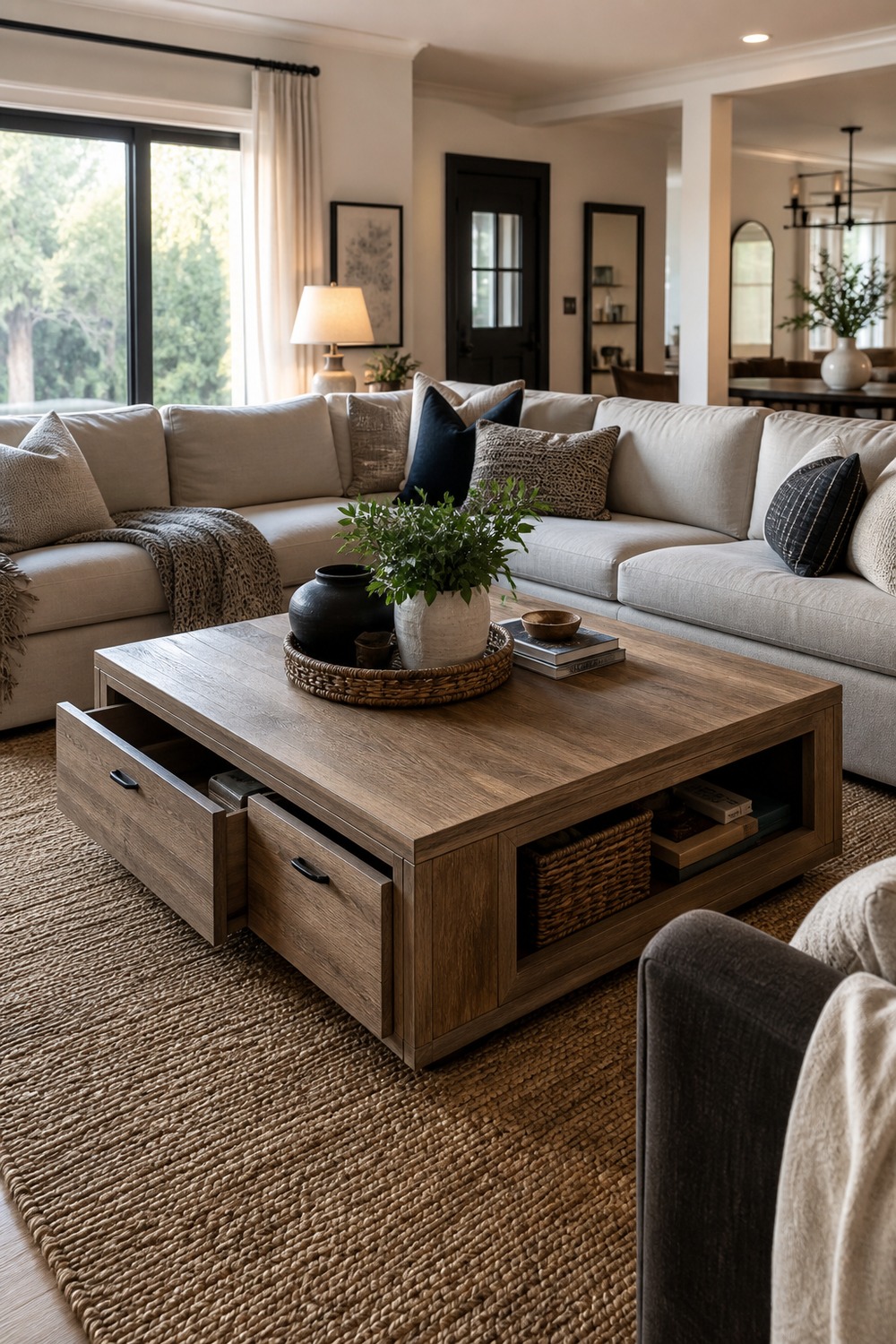
A chunky square table works best when the room has enough sofa around it to balance the weight. Hidden drawers or a low shelf make this feel practical, especially if blankets, controllers, and magazines always end up near the couch.
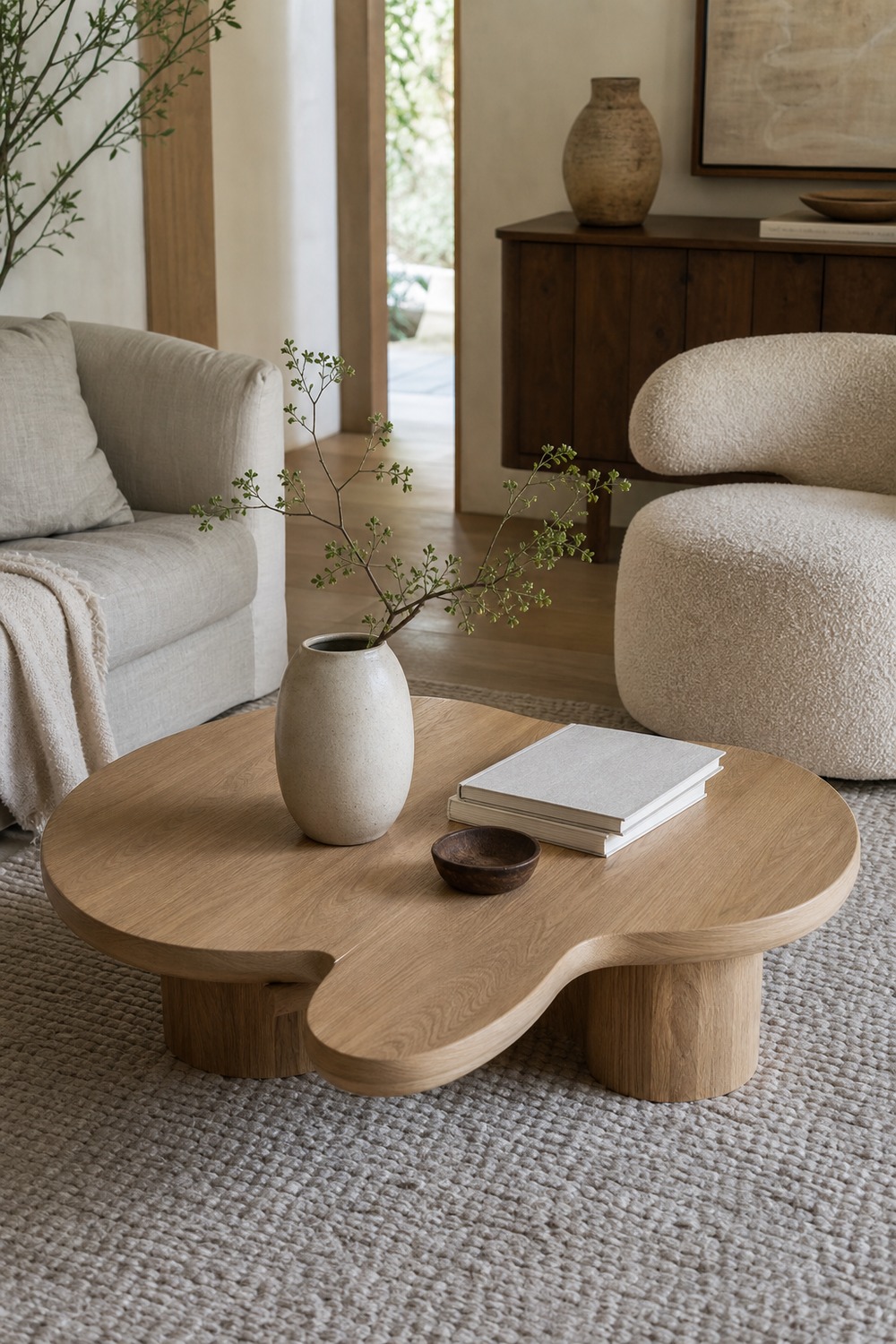
This light oak shape feels a little more designed than a basic rectangle, but it still reads like a real living-room table. The pale grain, curved edges, and quiet styling make the whole seating area feel softer.
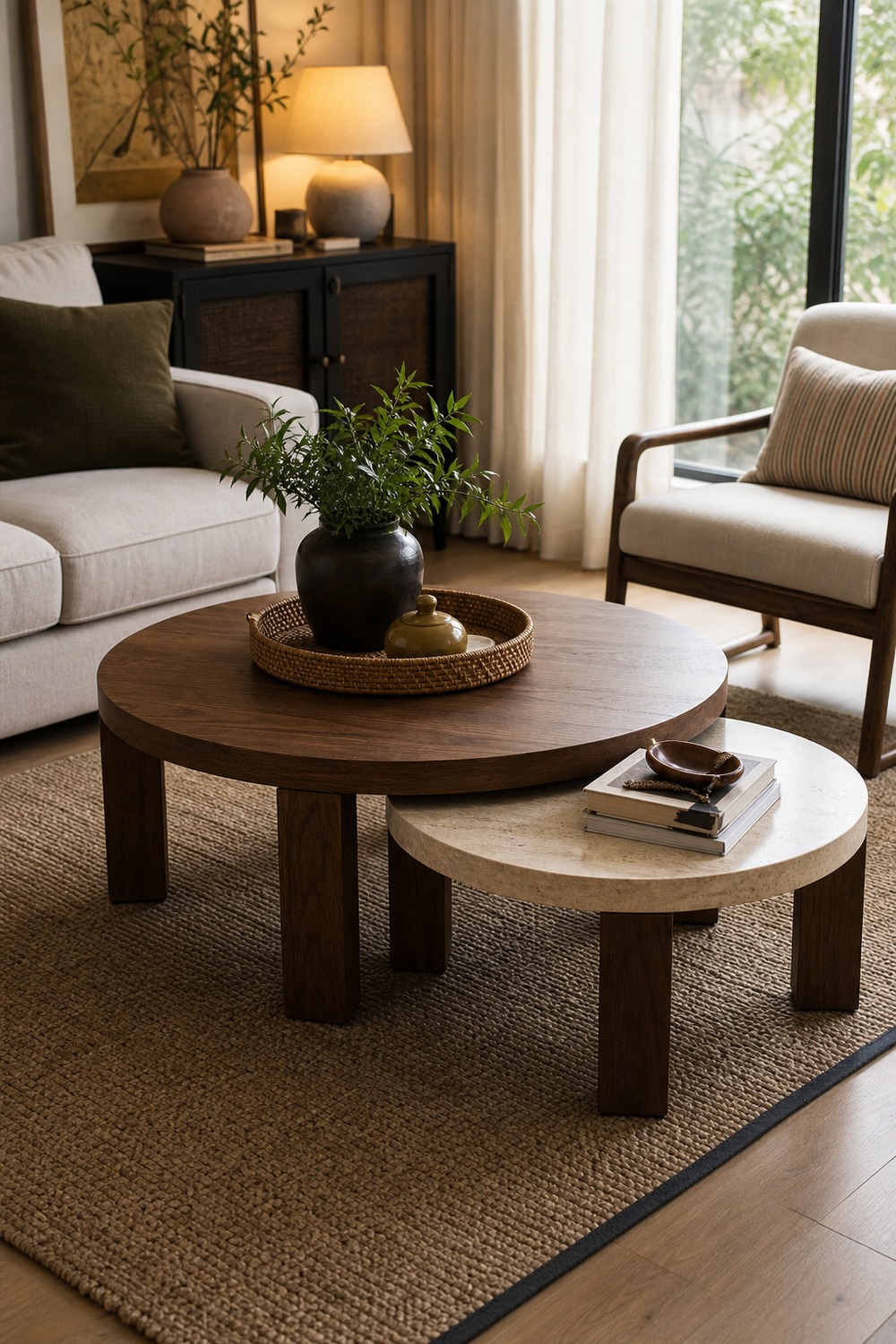
Nested wood tables are helpful when the room needs flexibility. One piece can hold the lamp or books while the smaller table pulls closer for drinks, snacks, or the spot where someone is actually sitting.
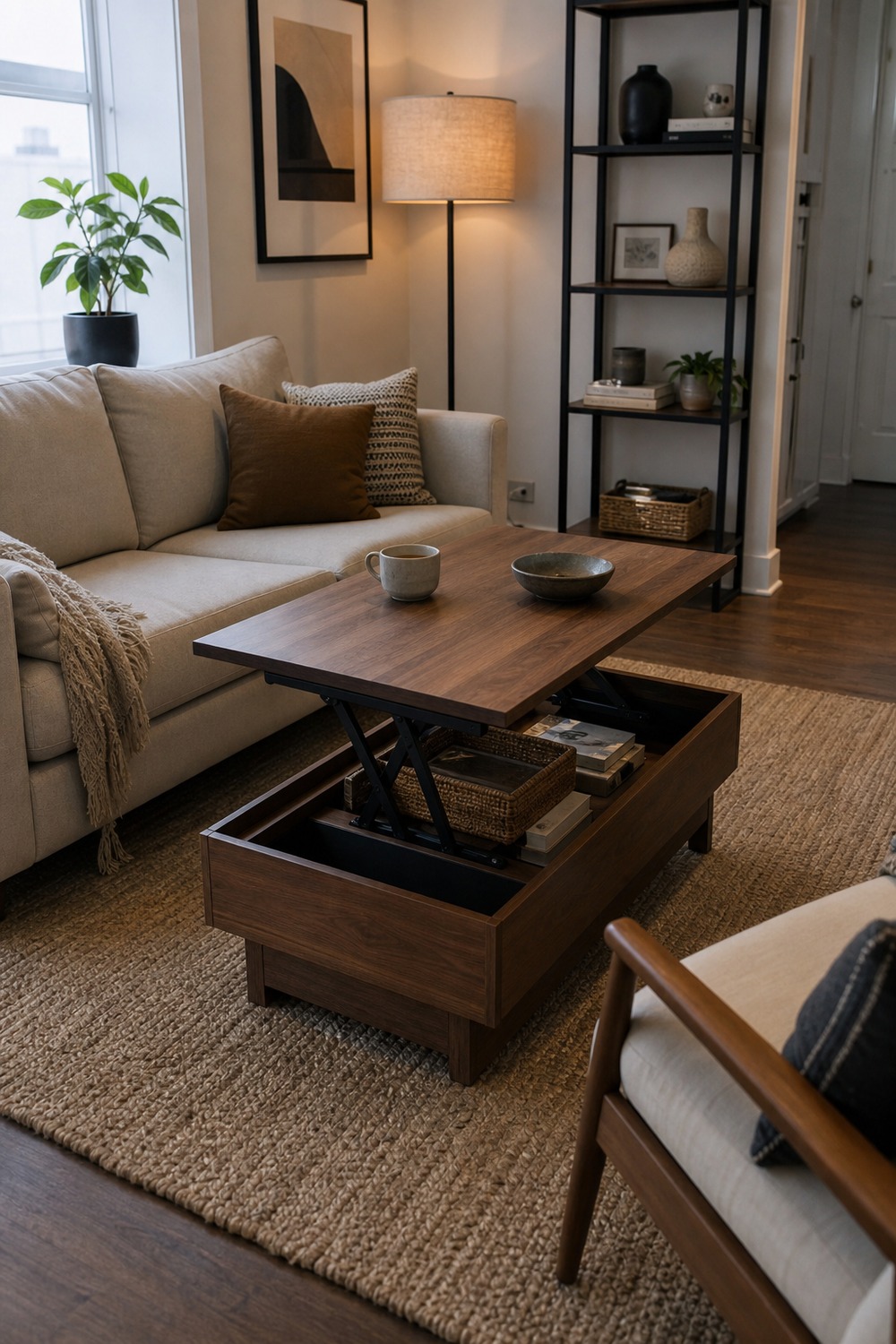
A lift-top wooden coffee table is not always the prettiest idea, but this version keeps the function tucked into a clean shape. It is the kind of table that makes sense if the living room also becomes a laptop, dinner, or paperwork zone.
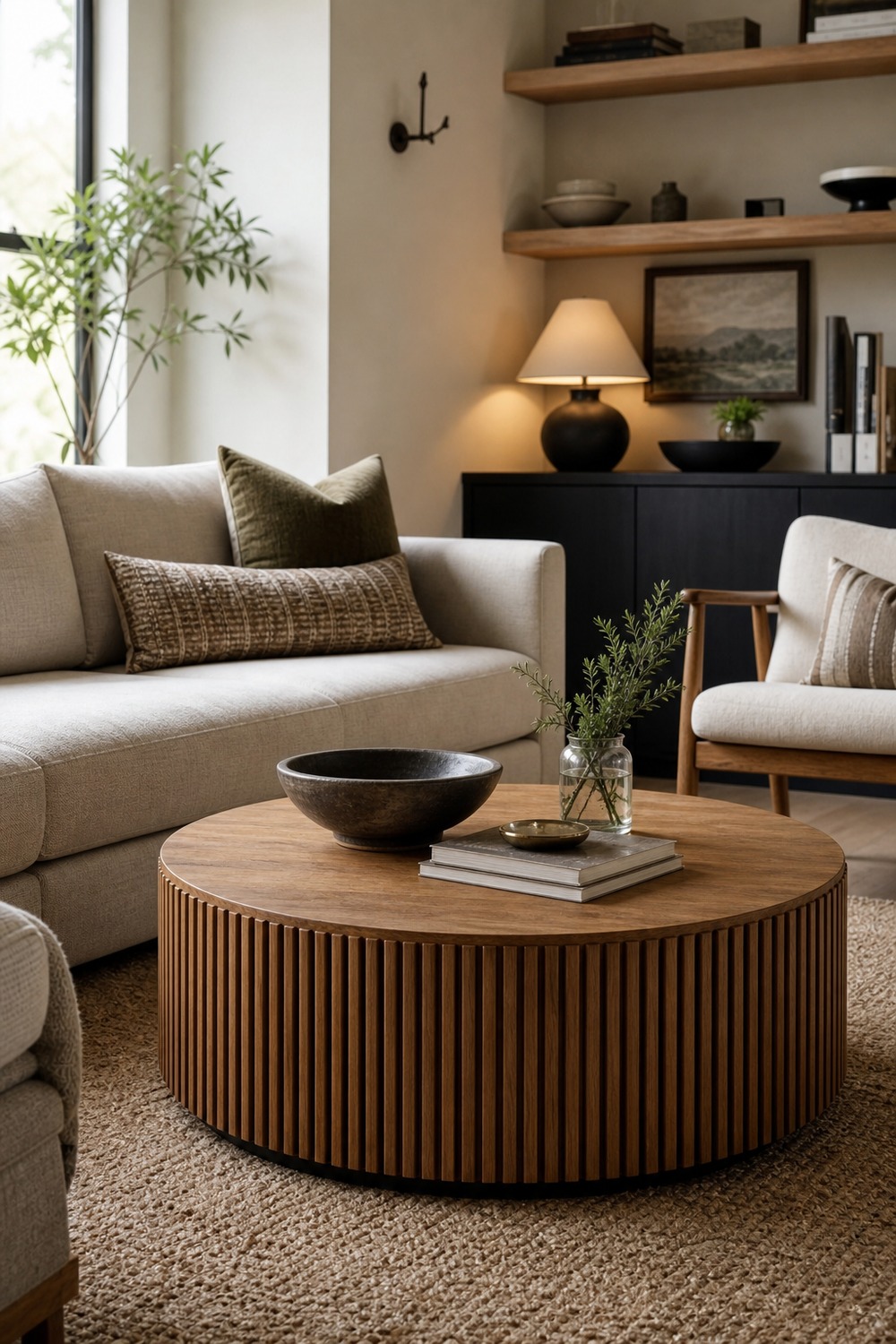
The fluted wood texture does a lot here without needing extra decor. Those ribbed sides catch the light, so the table feels interesting even with just a small vase, a book stack, and a simple rug underneath.
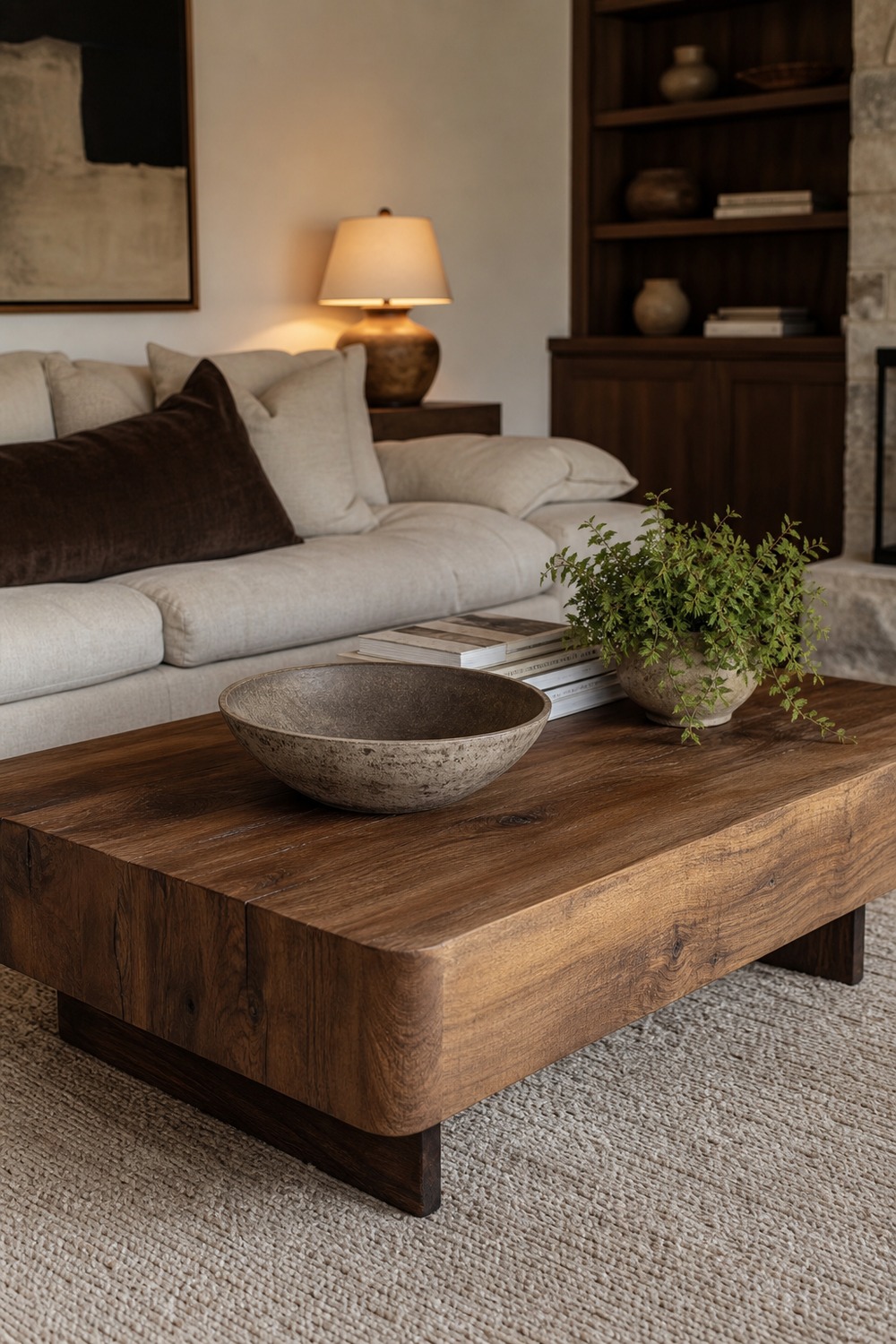
Reclaimed wood brings a heavier, more lived-in mood to the room. The worn grain and thick top make the table feel grounded, while the lighter sofa and rug keep it from turning too dark.
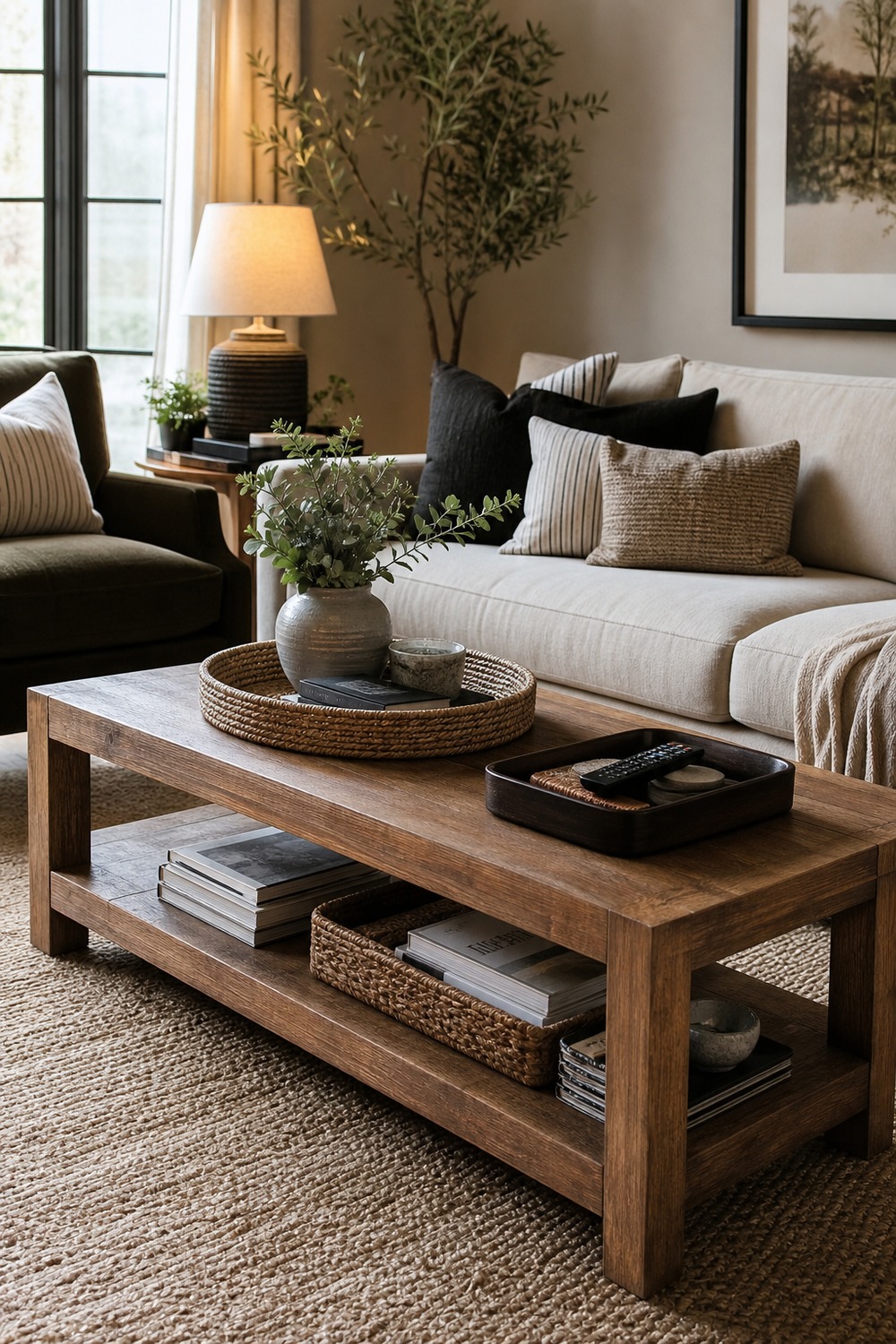
A two-tier wooden table is great when the top needs to stay clear but the room still needs storage. Books, remotes, and a basket can sit underneath while the tray on top keeps the everyday clutter contained.
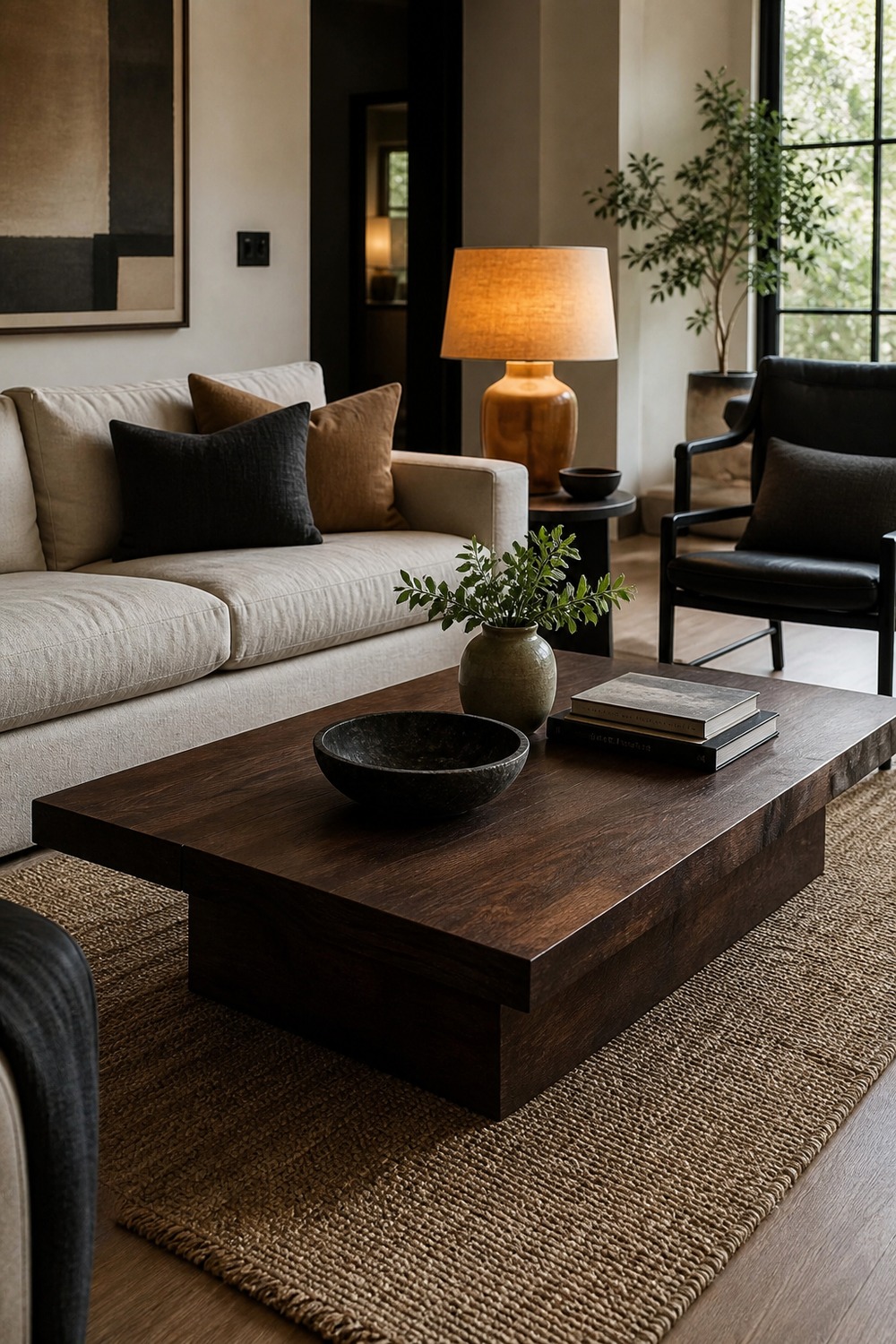
Dark walnut is one of those finishes that can make a neutral living room feel more intentional. The contrast against the pale sofa gives the seating area shape, and the long rectangular top works well with a larger couch.
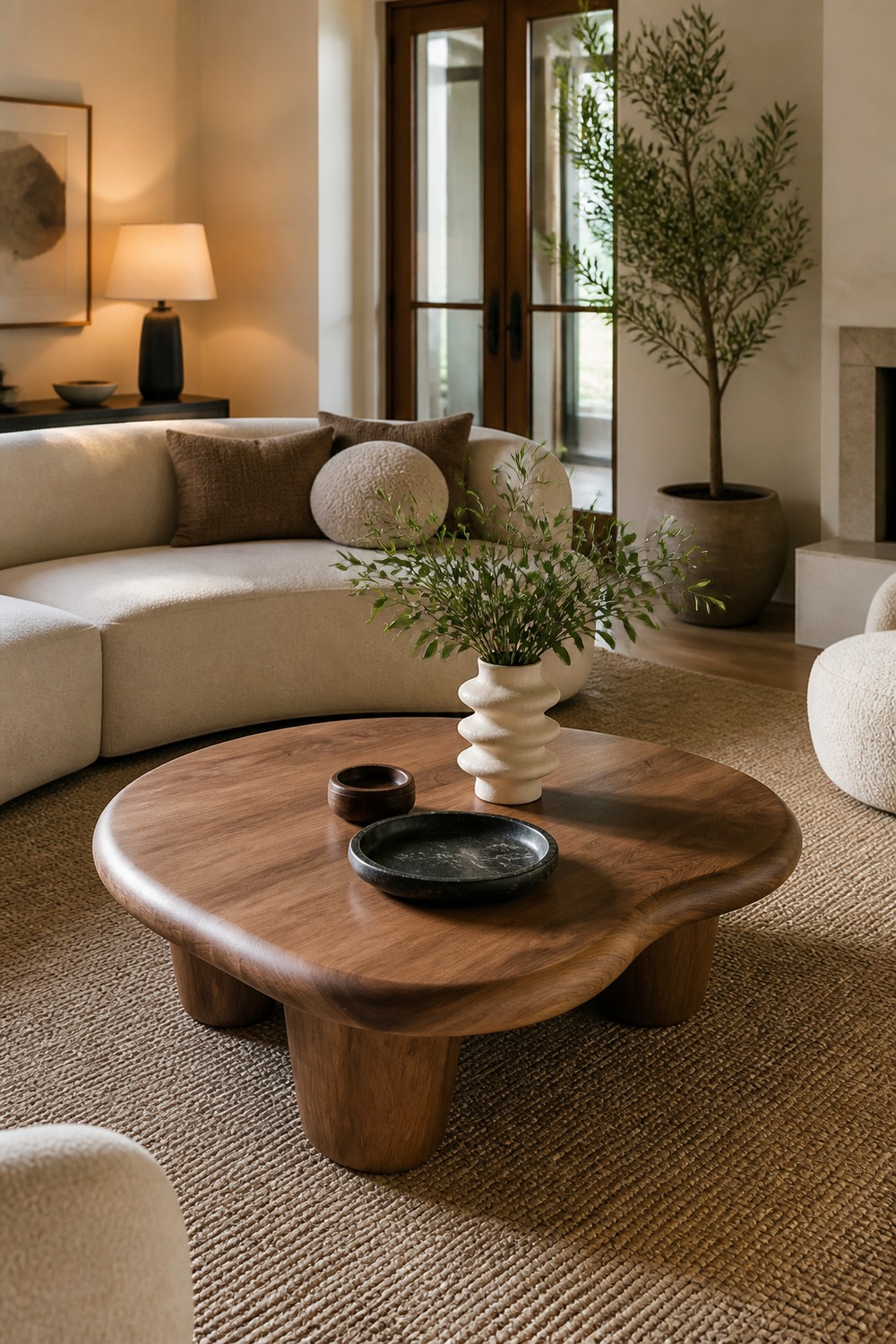
The rounded wood shape makes this setup feel less boxy. I like how it breaks up the straight sofa lines, and the low profile keeps the room relaxed instead of making the table feel like a bulky centerpiece.
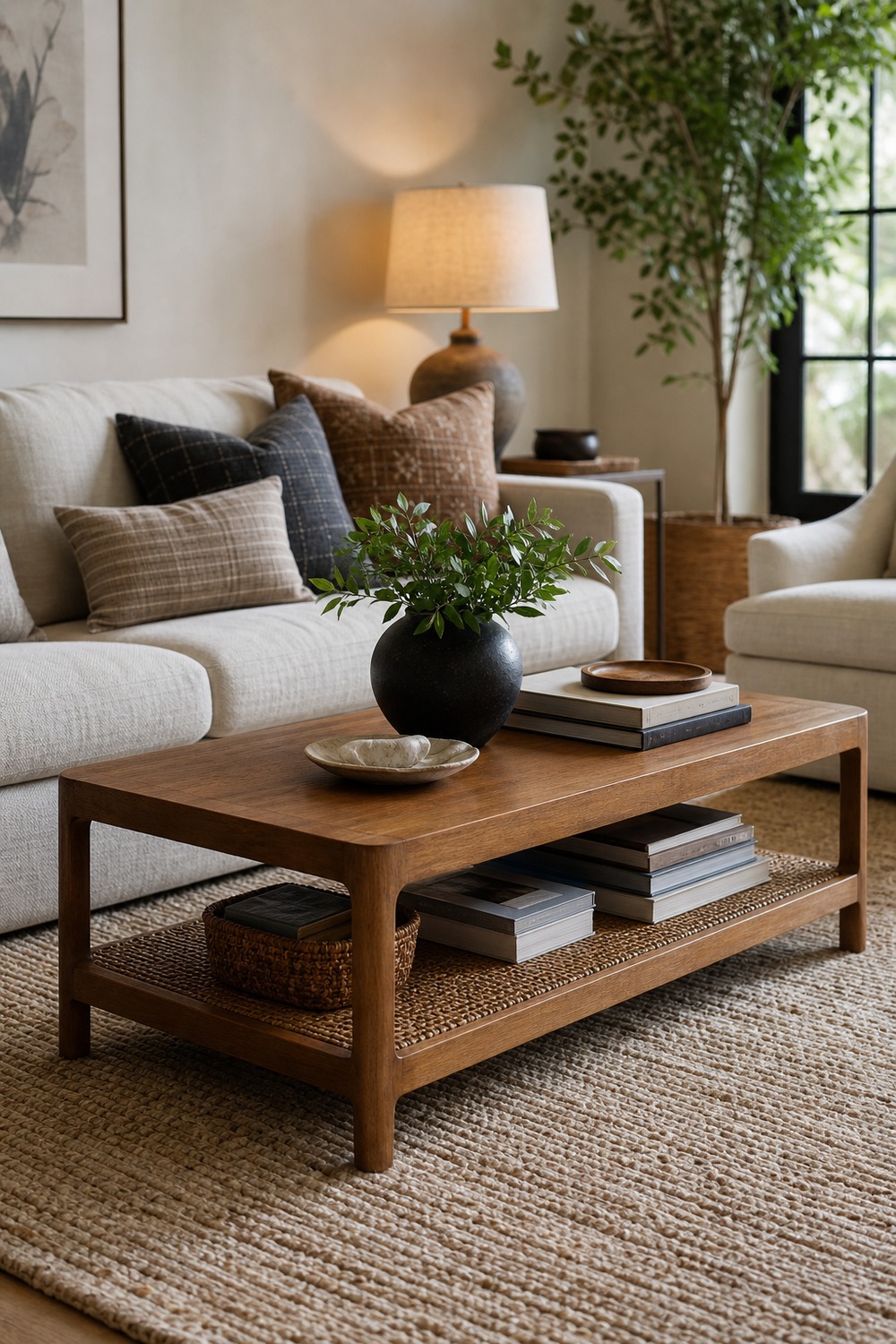
The woven shelf is the detail that makes this table feel more casual. It adds texture under the wood top and gives baskets, books, or extra throws a place to go without piling everything on the surface.
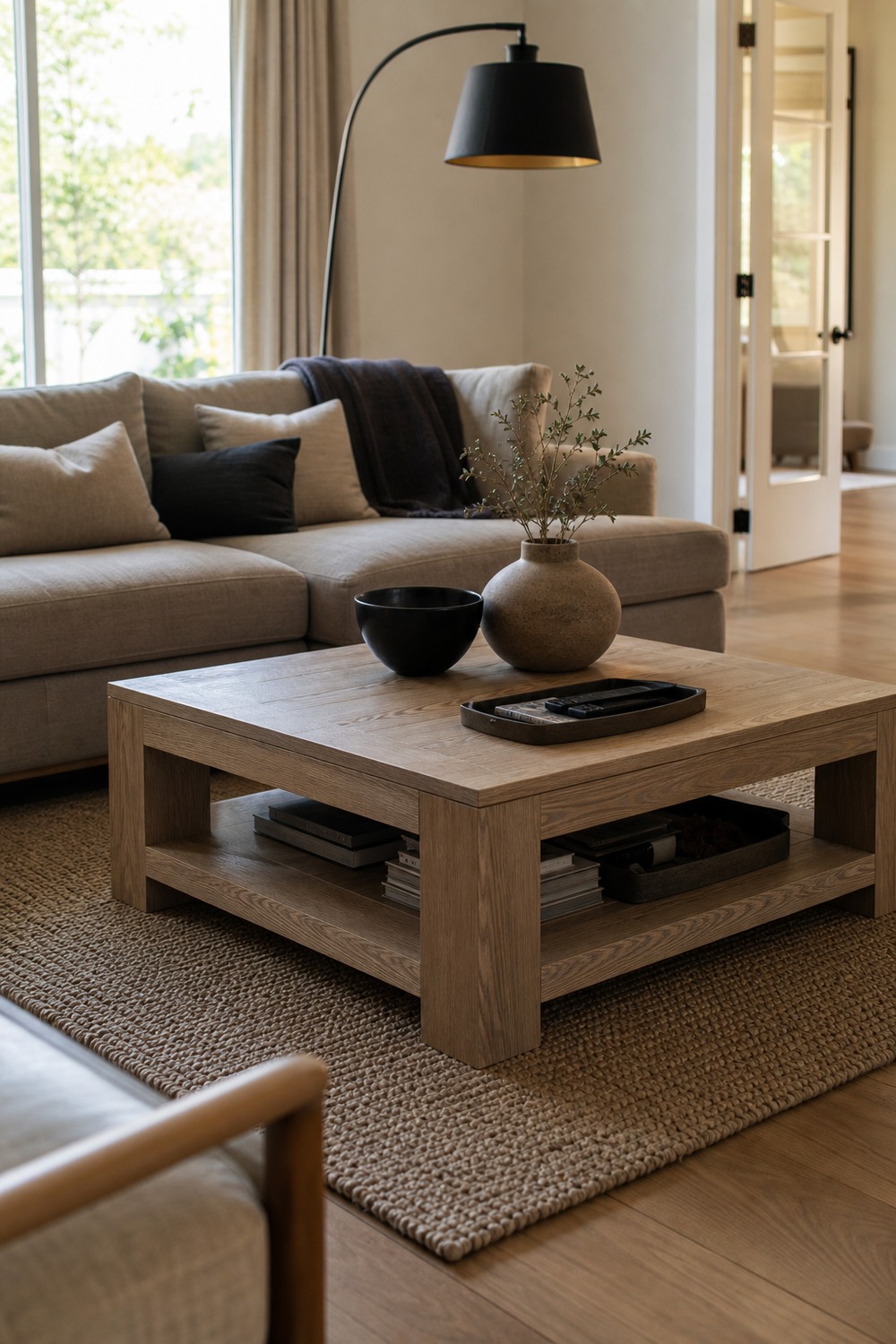
A square ash table works well when the seating wraps around the rug. The pale wood keeps the large shape from feeling heavy, and the open shelf is useful for the things that usually get pushed under the sofa.
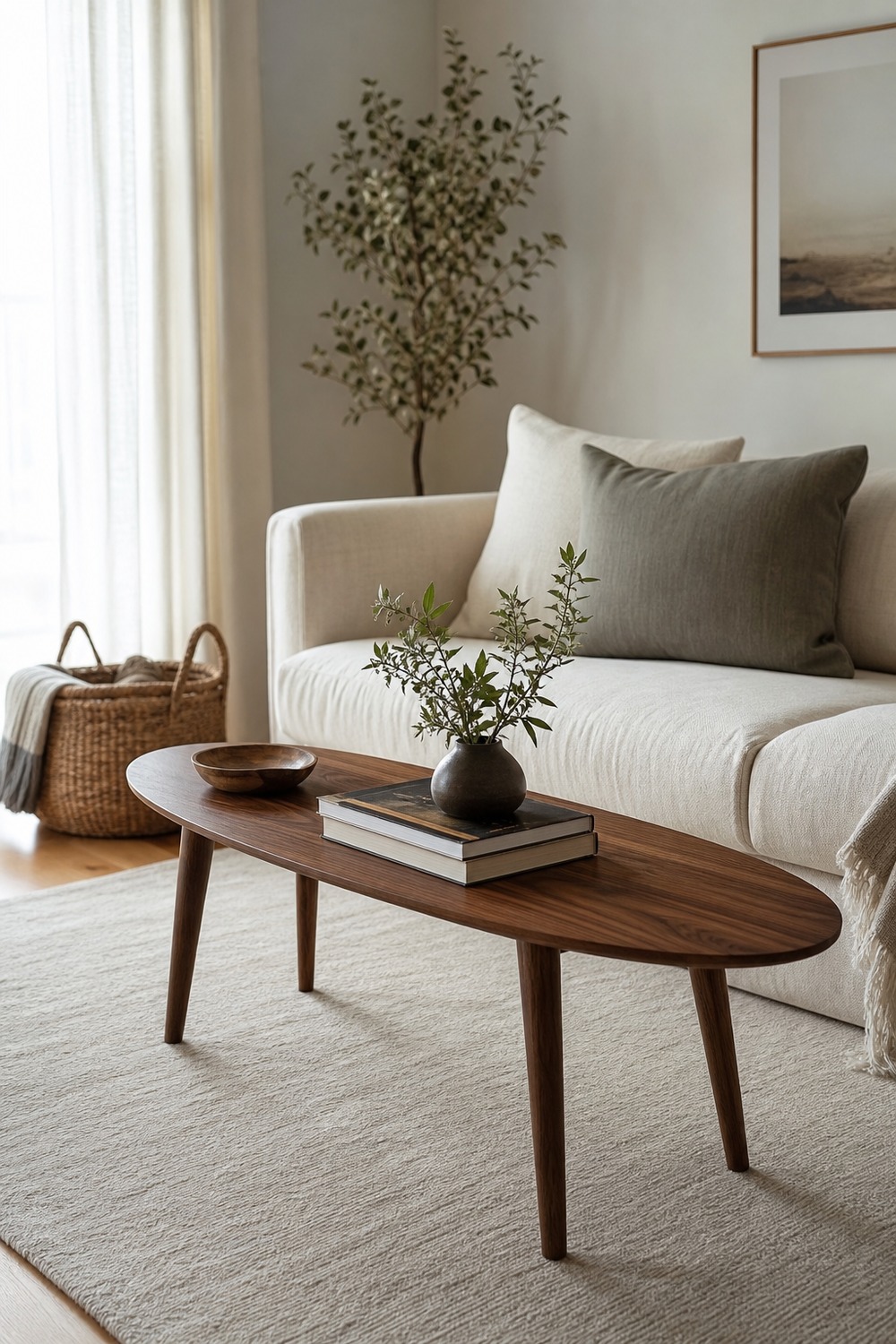
This narrow oval walnut table is a good answer for a tighter living room. It still has enough surface for a tray and a couple of books, but the tapered legs and rounded ends make the room easier to move through.
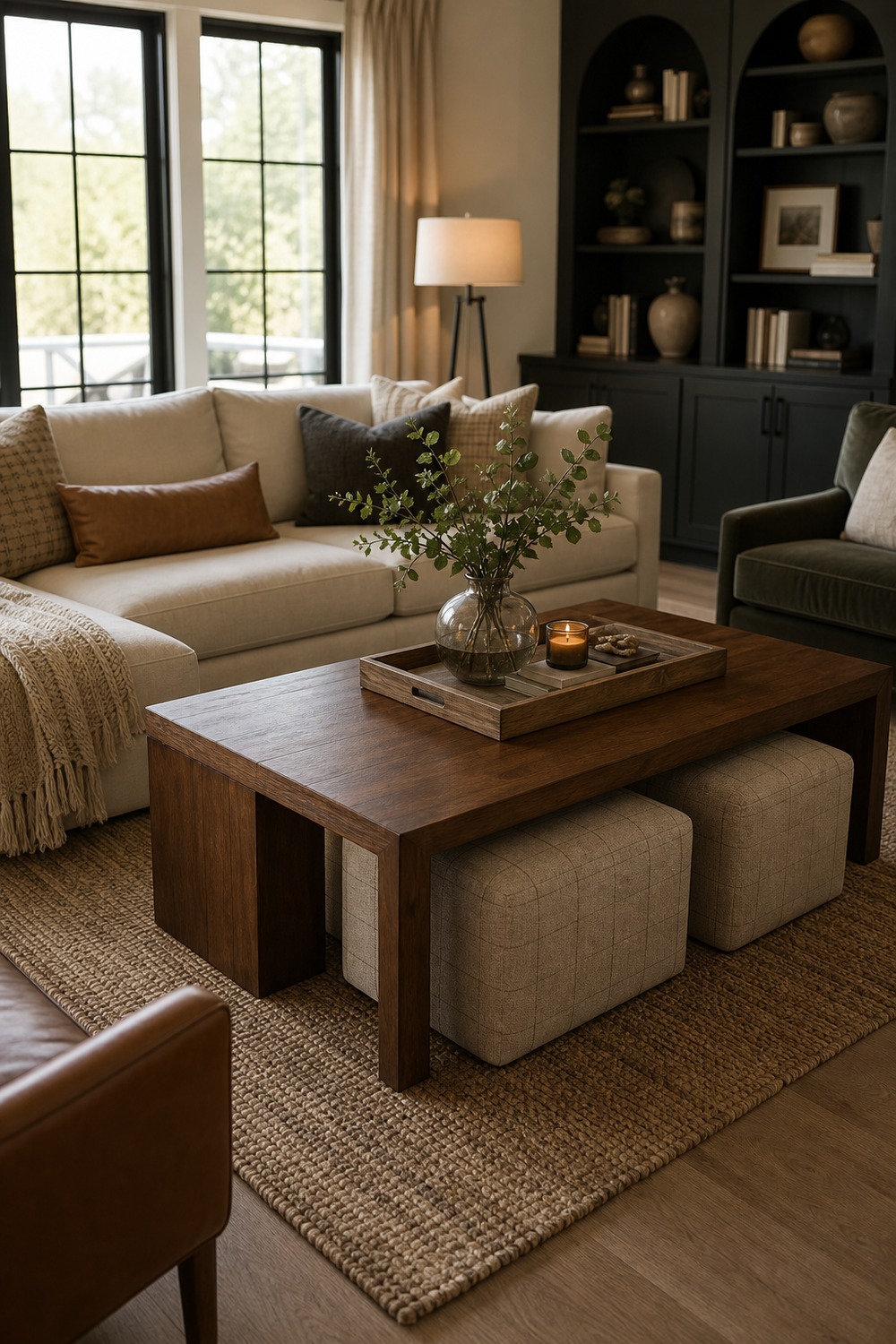
Pairing a wooden coffee table with small ottomans makes the room feel more useful for guests. The tray keeps the table functional, and the tucked-in seats give the layout a little extra flexibility without adding another bulky chair.
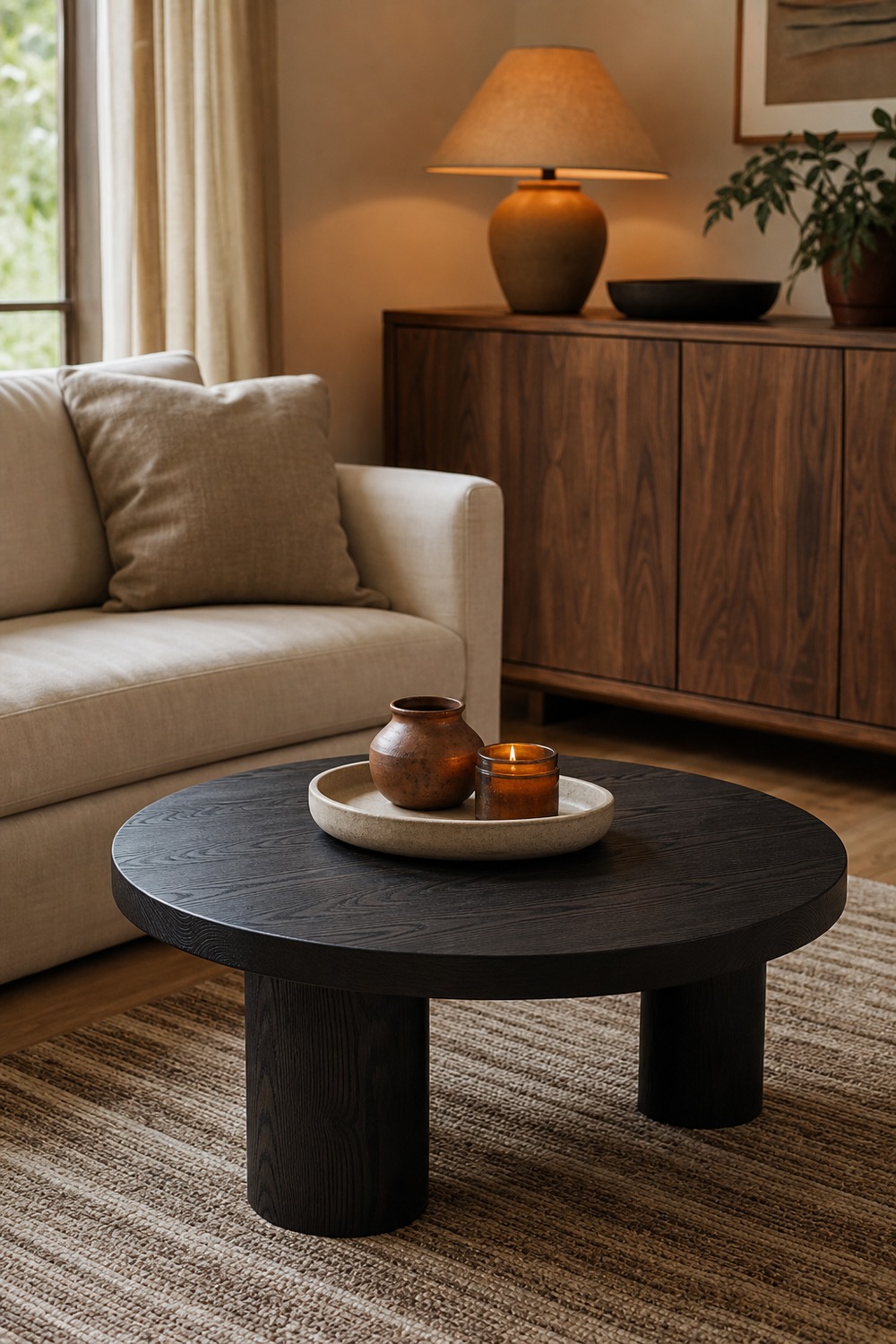
A black-stained oak table can look sharp as long as the wood texture still shows. Here it adds contrast against the cream sofa, while the warm cabinet and soft rug keep the whole room from feeling too stark.
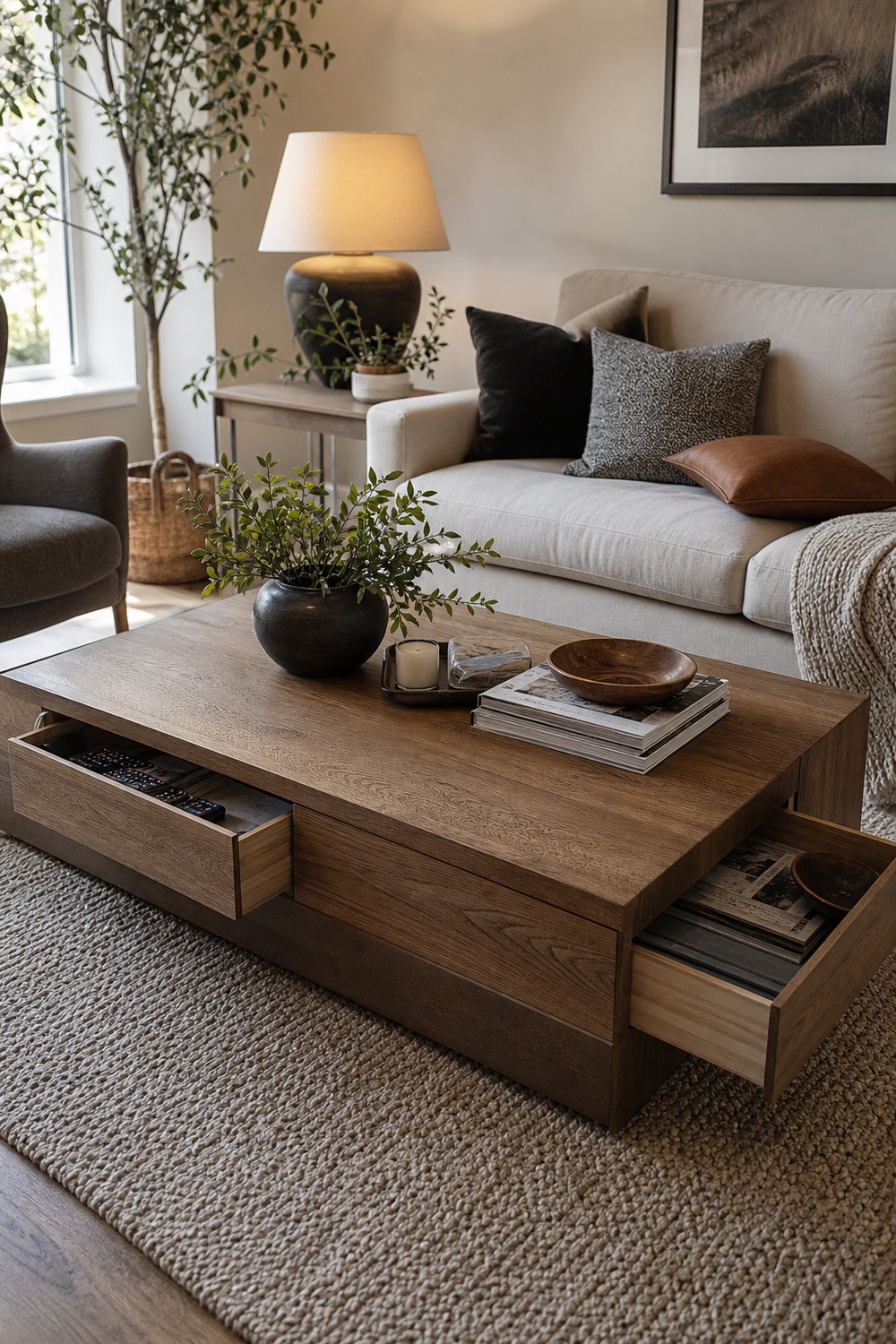
Drawers are underrated in a living-room coffee table. They hide the remote-and-charger mess, which lets the wood top stay clean enough for a tray, a candle, or whatever actually gets used every night.
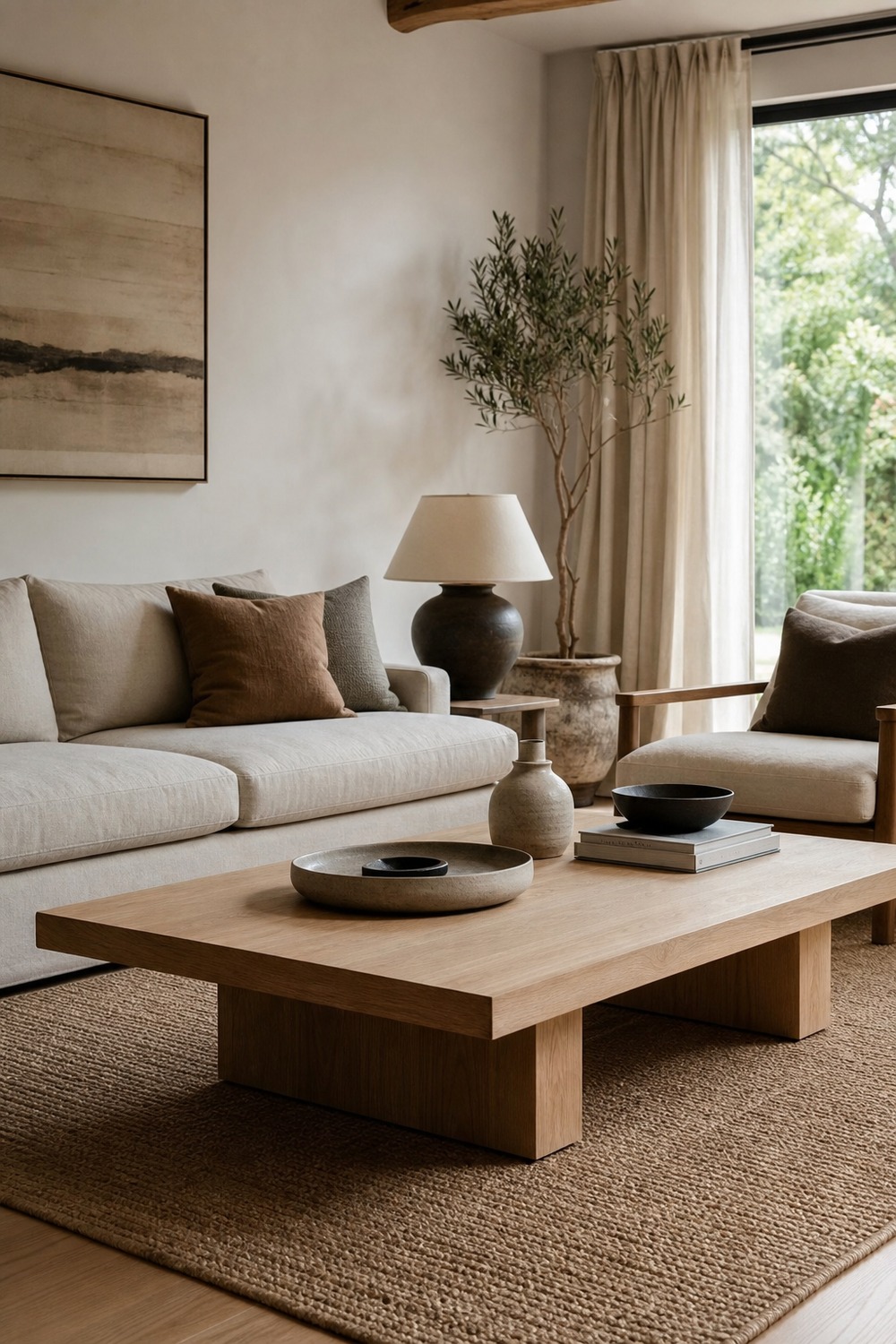
This pale wood table has that quiet Japandi feel without looking too empty. The low profile, woven rug, and simple ceramics make the room feel edited, but not so perfect that you would be afraid to set a mug down.
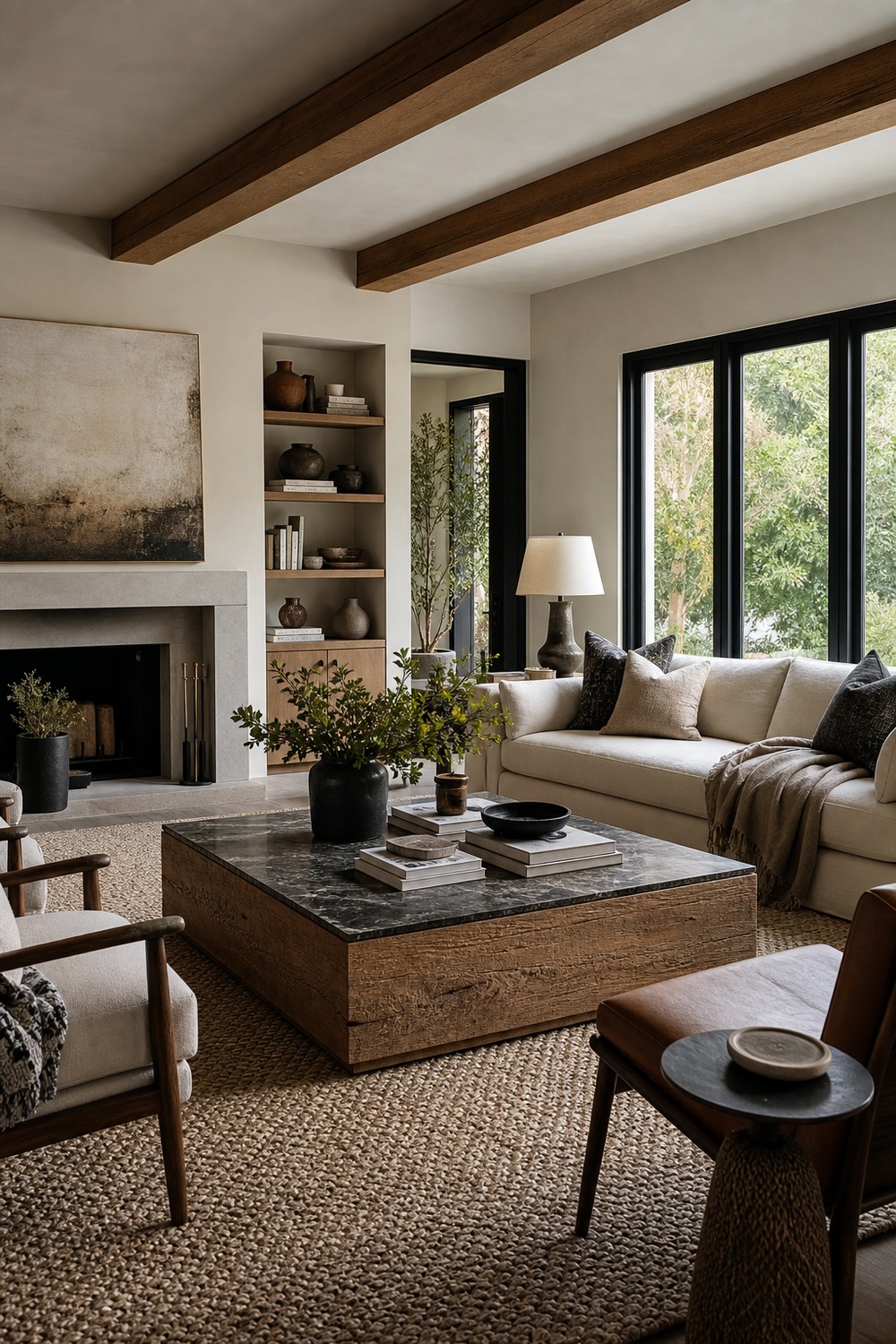
A statement wooden coffee table works when the rest of the room gives it enough breathing space. The mixed wood tones, balanced seating, and simple styling let the table be the focal point without fighting everything around it.
The nicest wooden coffee tables are not just pretty blocks in the middle of the room. Shape, finish, storage, and scale all matter because this is the piece everyone uses whether the room is perfectly styled or not.
Leave a comment