
Two monitors are useful right up until they swallow the whole desk. These setups keep both screens comfortable to use while leaving room for a keyboard, a lamp, cable control, and an actual chair path in a small home office.
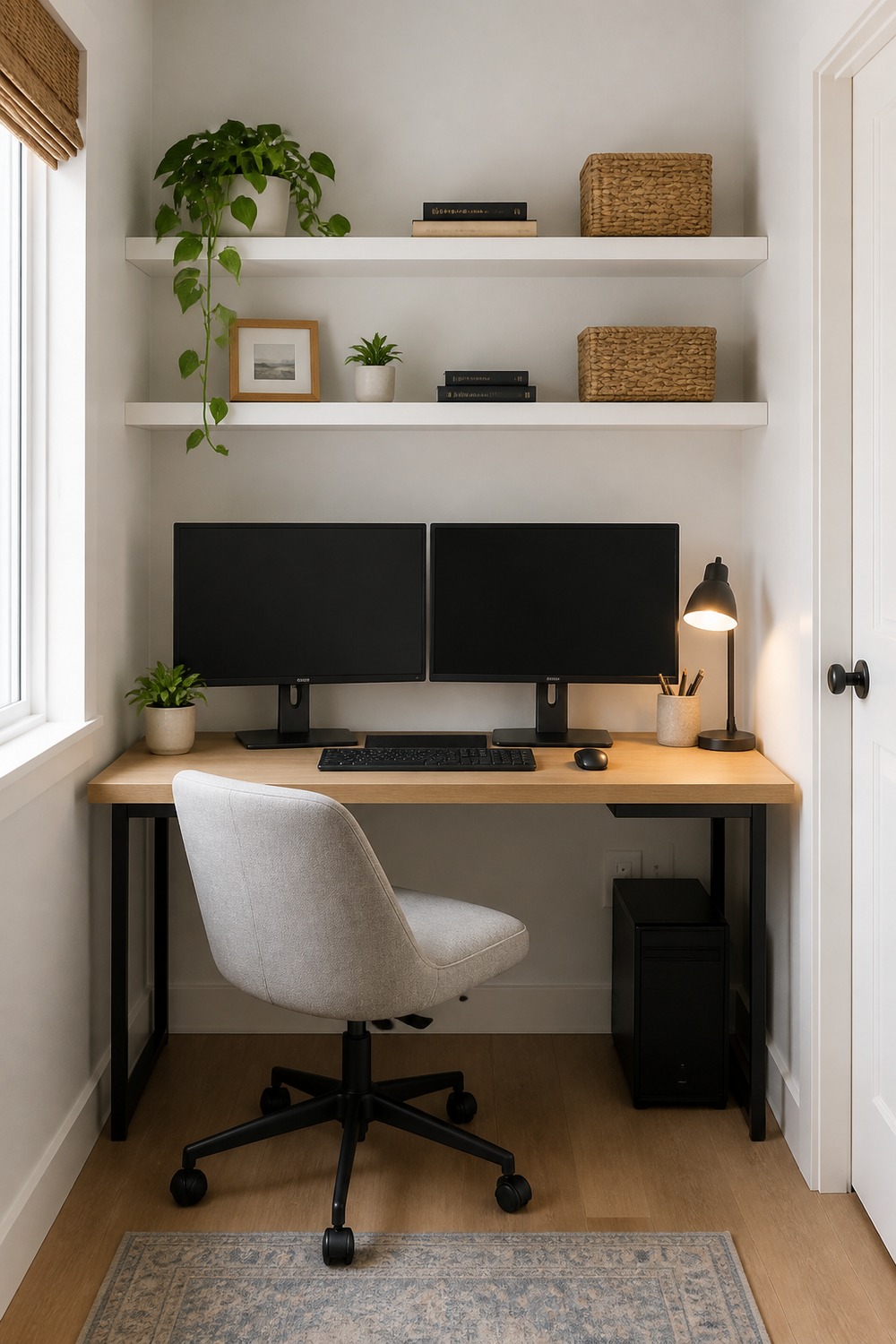
Floating shelves use the wall without pressing down on the desk. I like the pale wood surface here because the two black screens stay visually tidy, and the baskets above can hold chargers or notebooks that would otherwise crowd the keyboard.
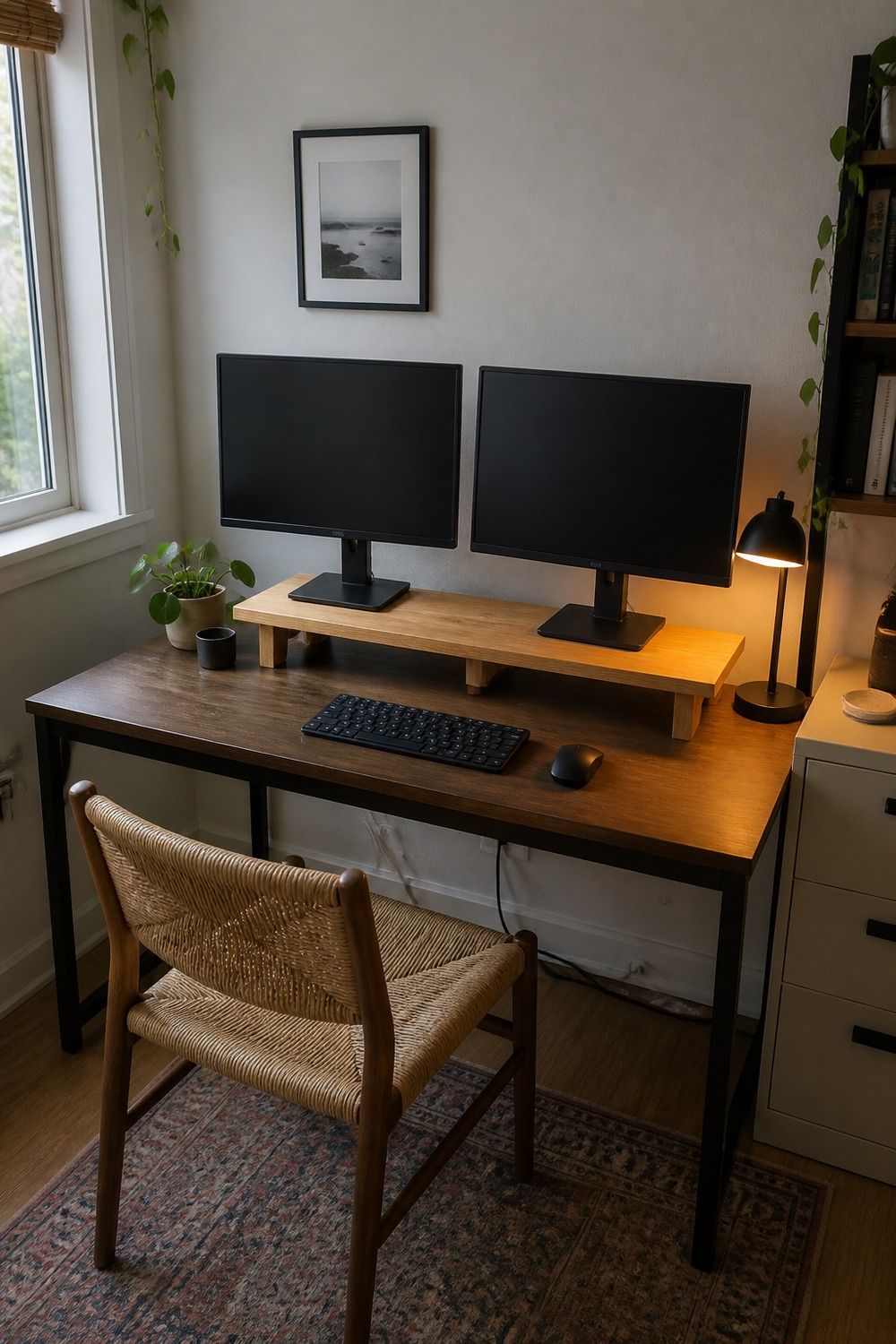
One oak riser gives both monitors the same sightline and frees a useful strip of desk underneath. The woven chair and window light keep this from looking like office furniture squeezed into a spare room.
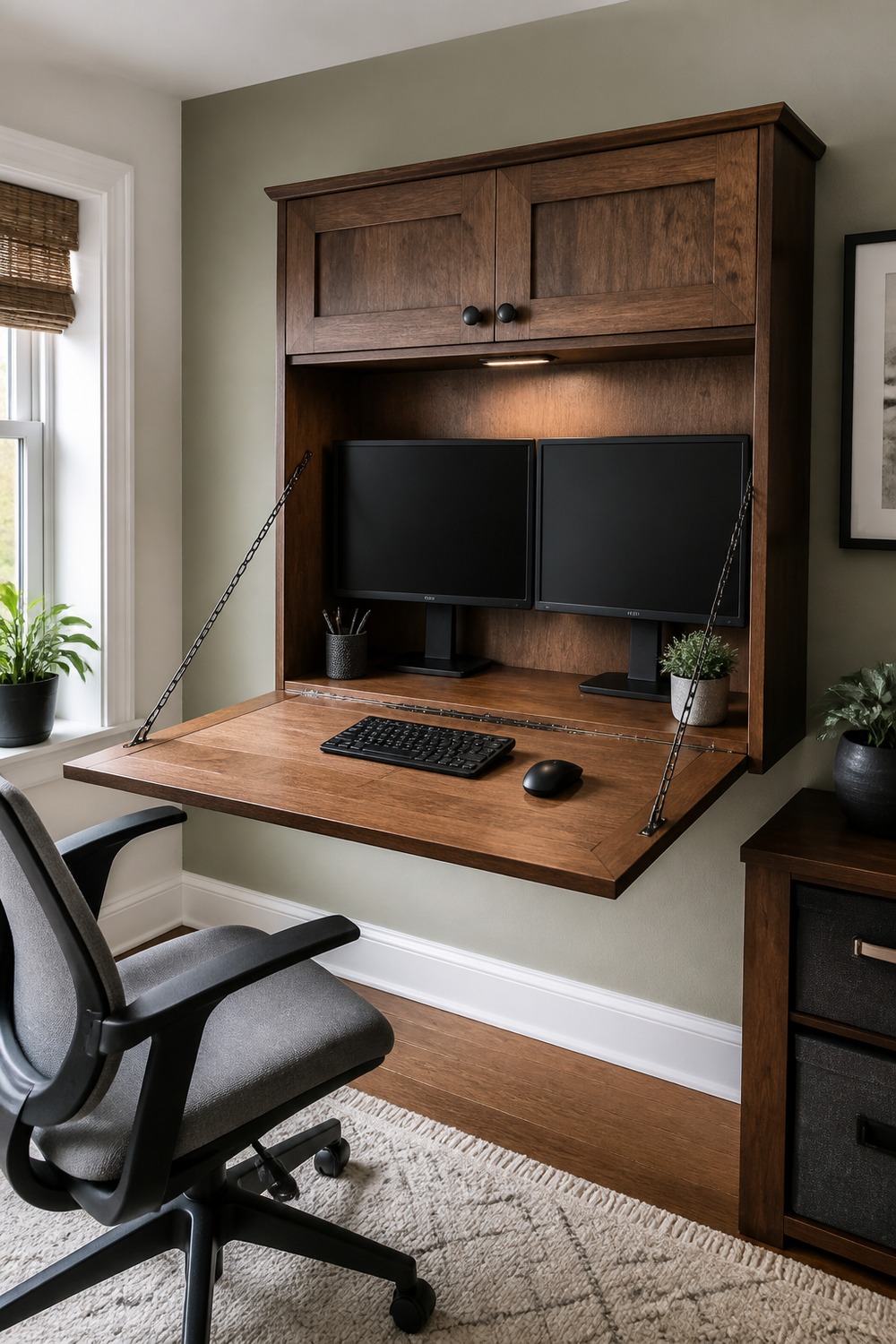
The fold-down desk is the clever part here. It creates enough width for two slim screens, then the wall cabinet handles small supplies so the floor stays open when the chair rolls back.
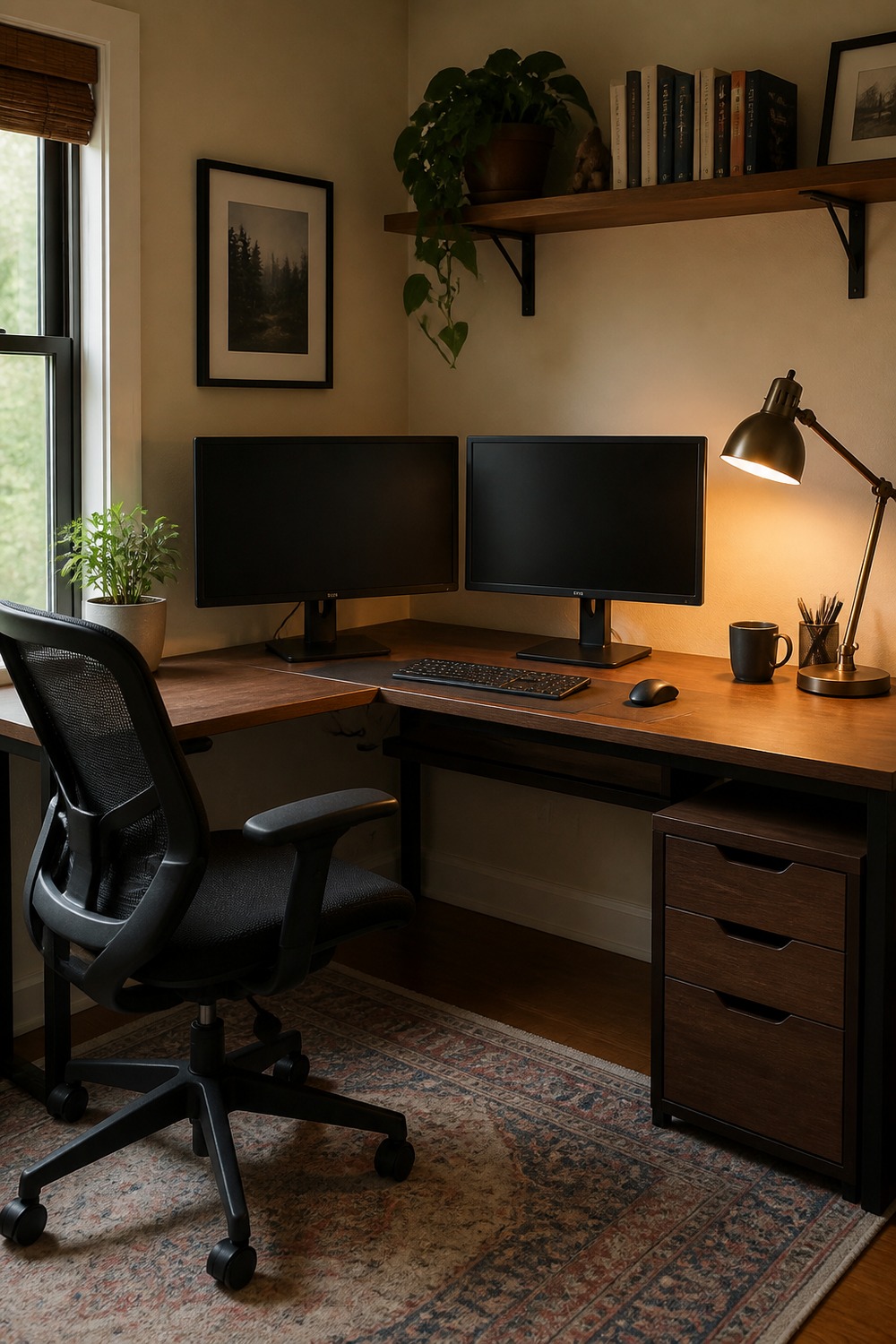
Warm lamplight makes this corner easier on the eyes after daylight fades. The walnut drawers give paper and cables somewhere to disappear, while the cream wall keeps the double-monitor setup from feeling heavy.
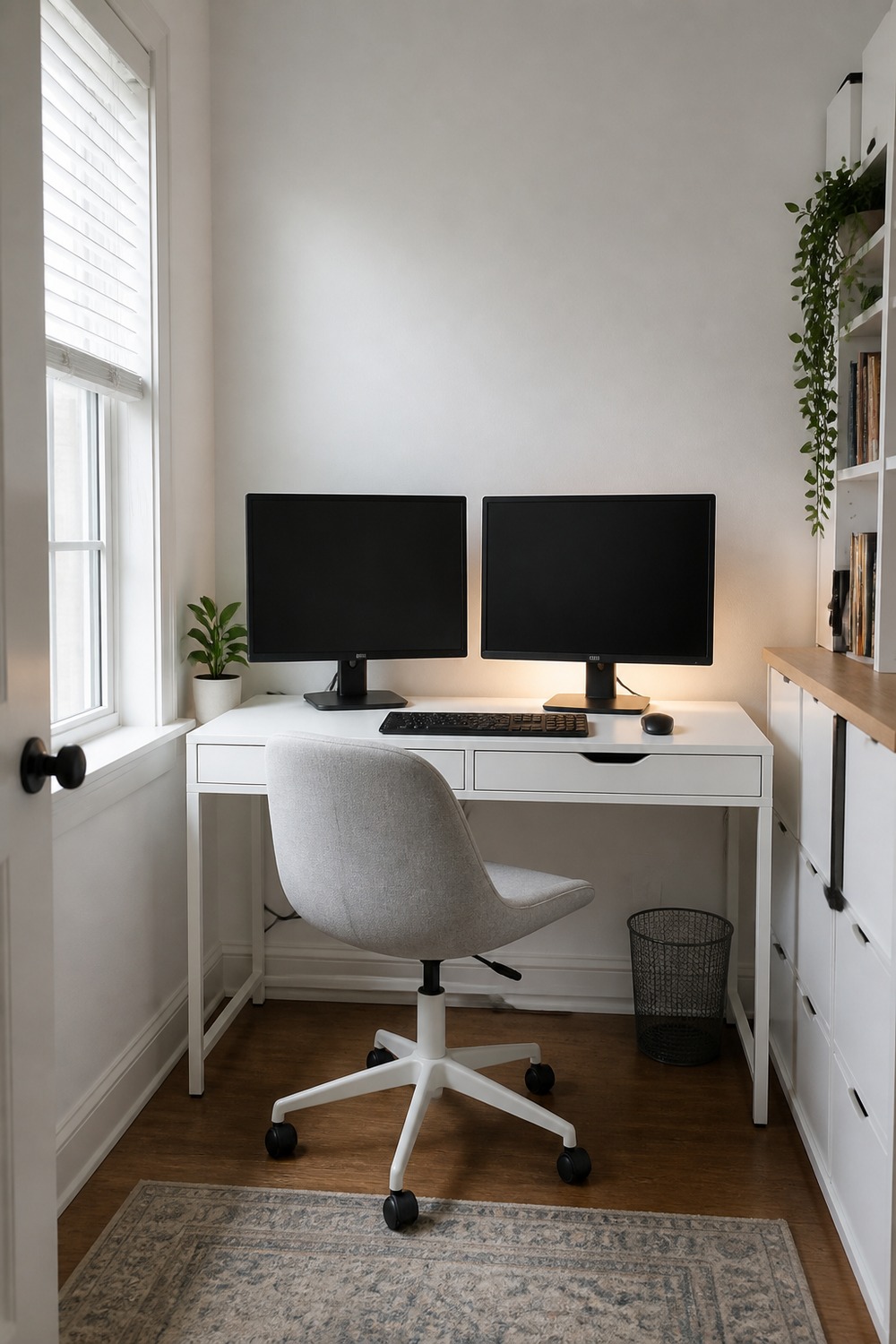
This white setup is almost bare, but it is not impractical. Slim drawers sit close to the chair, the two screens have breathing room, and there is still clear desk space for a notebook or drink.
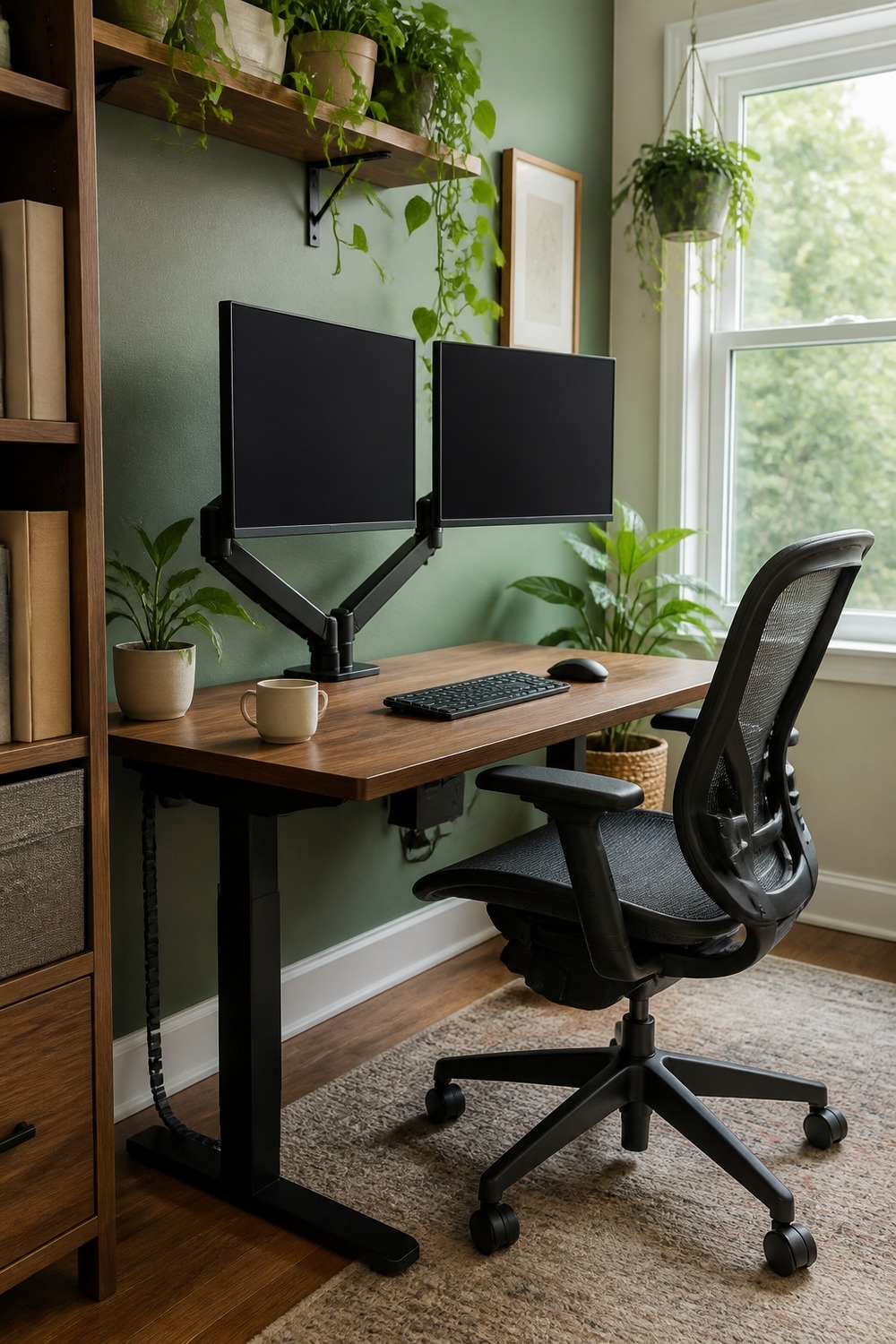
A dual monitor arm is doing real work in this plant-filled office. It lifts both screens off the desktop, leaves the keyboard zone clean, and makes the sit-stand base feel useful rather than bulky.
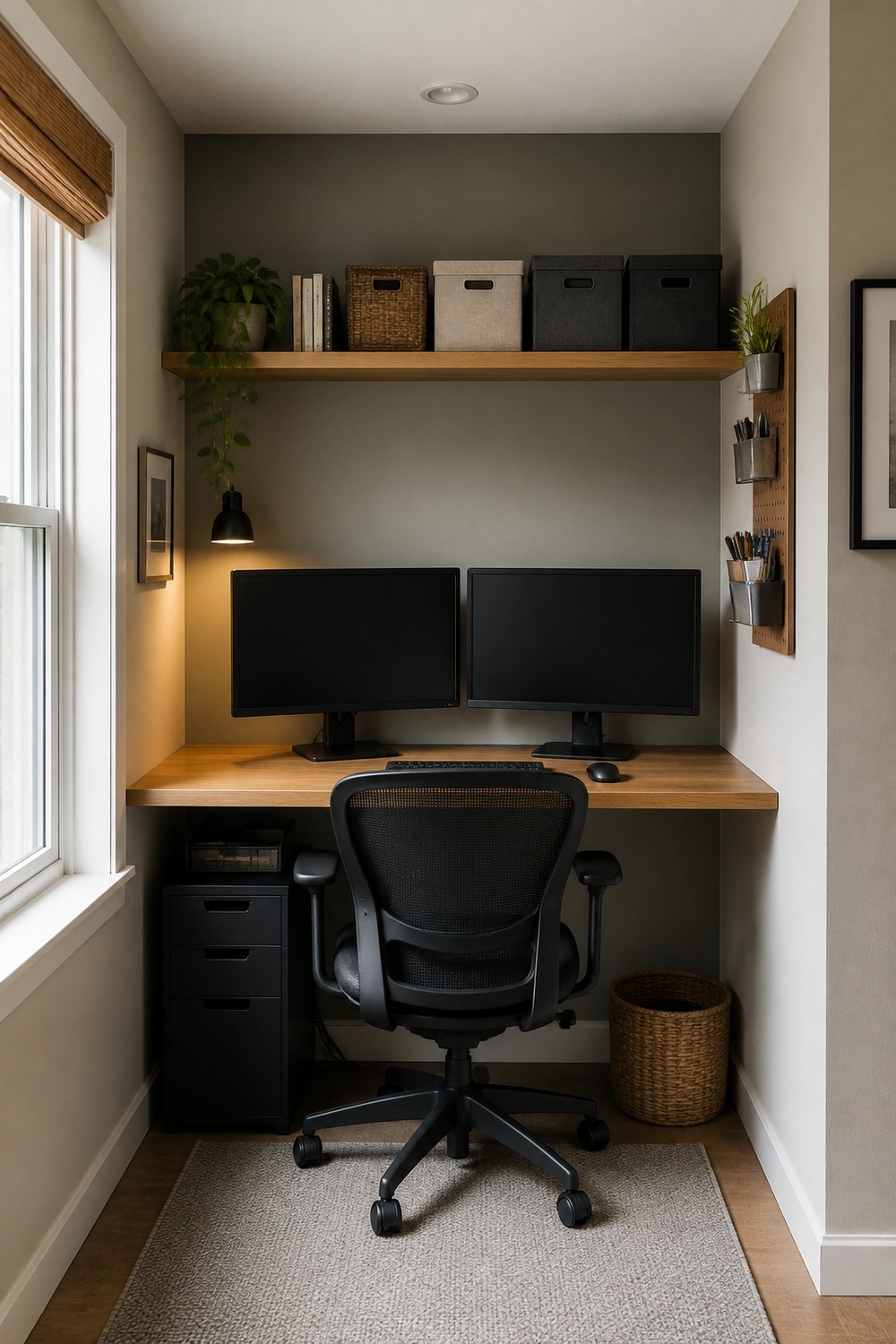
The shallow shelf above the monitors adds storage without stealing screen clearance. This is the kind of narrow alcove where a full bookcase would be too much, but a few boxes and one lamp fit comfortably.
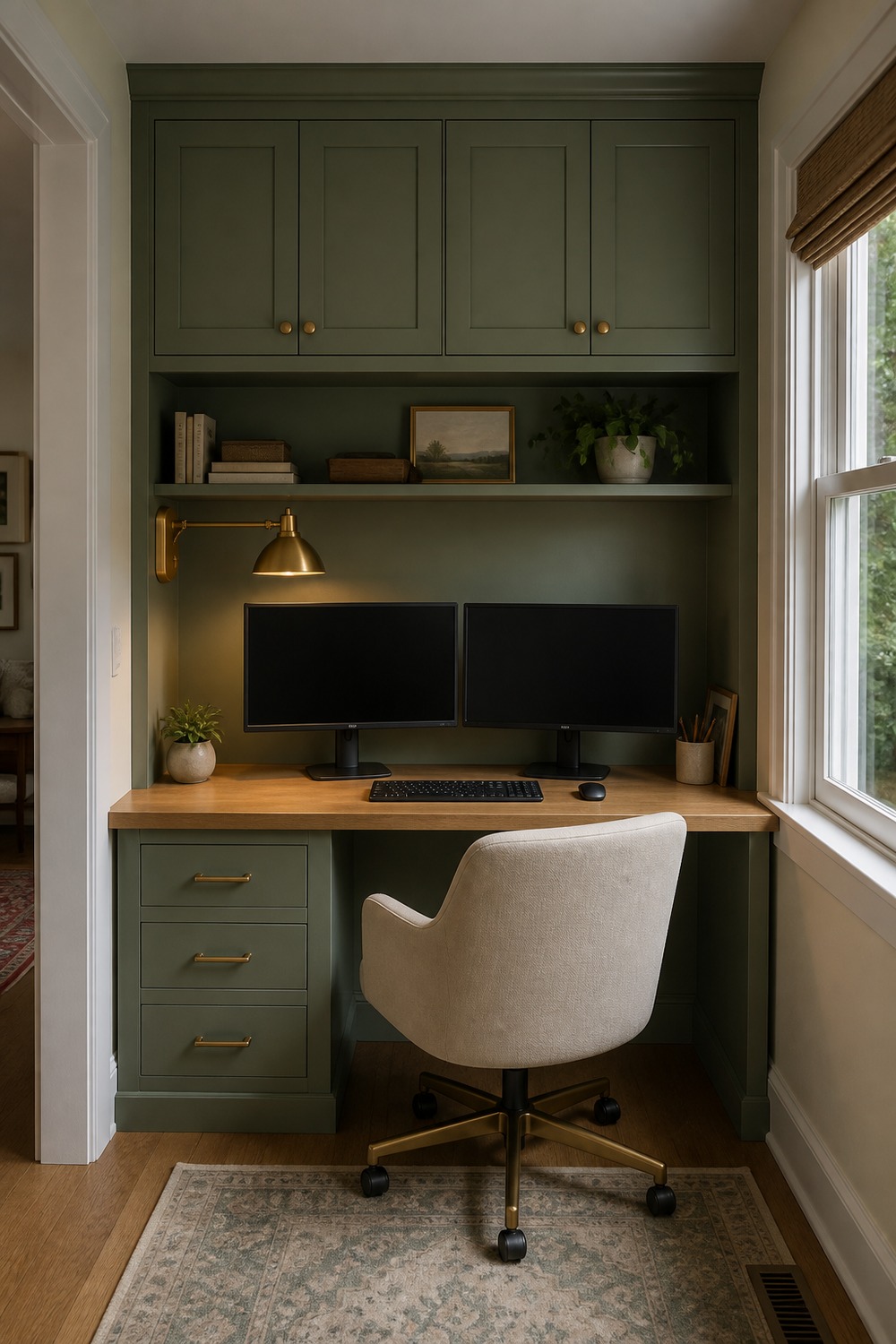
Sage cabinetry turns the workstation into part of the room instead of a loose desk against a wall. Closed cupboards hide the less attractive gear, and the brass lamp adds enough warmth beside the two dark screens.
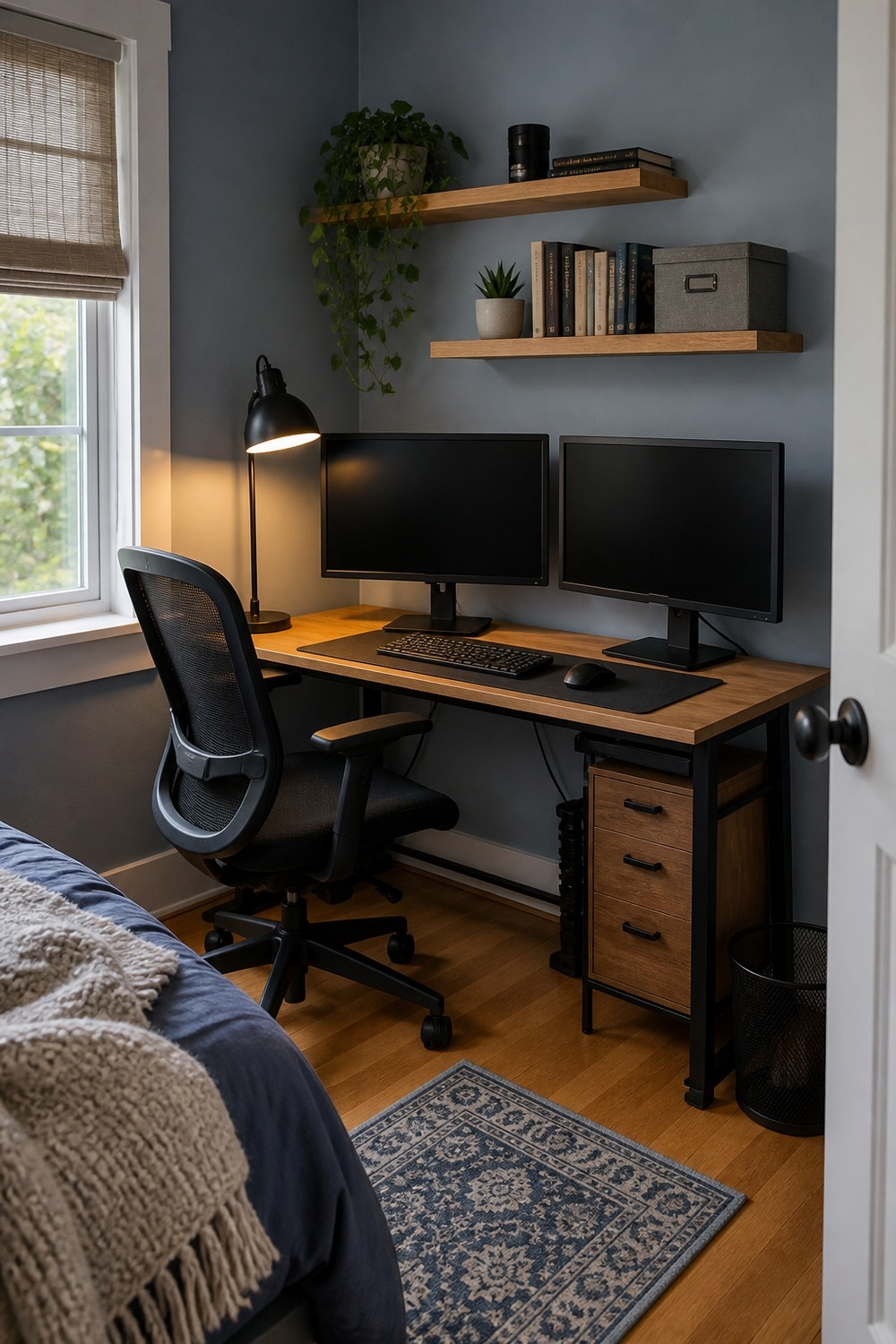
A bedroom office needs a clear boundary, even when there is no spare room. Here the rug, compact drawers, and focused wall shelves make the double-monitor desk read as its own zone without creeping toward the bed.
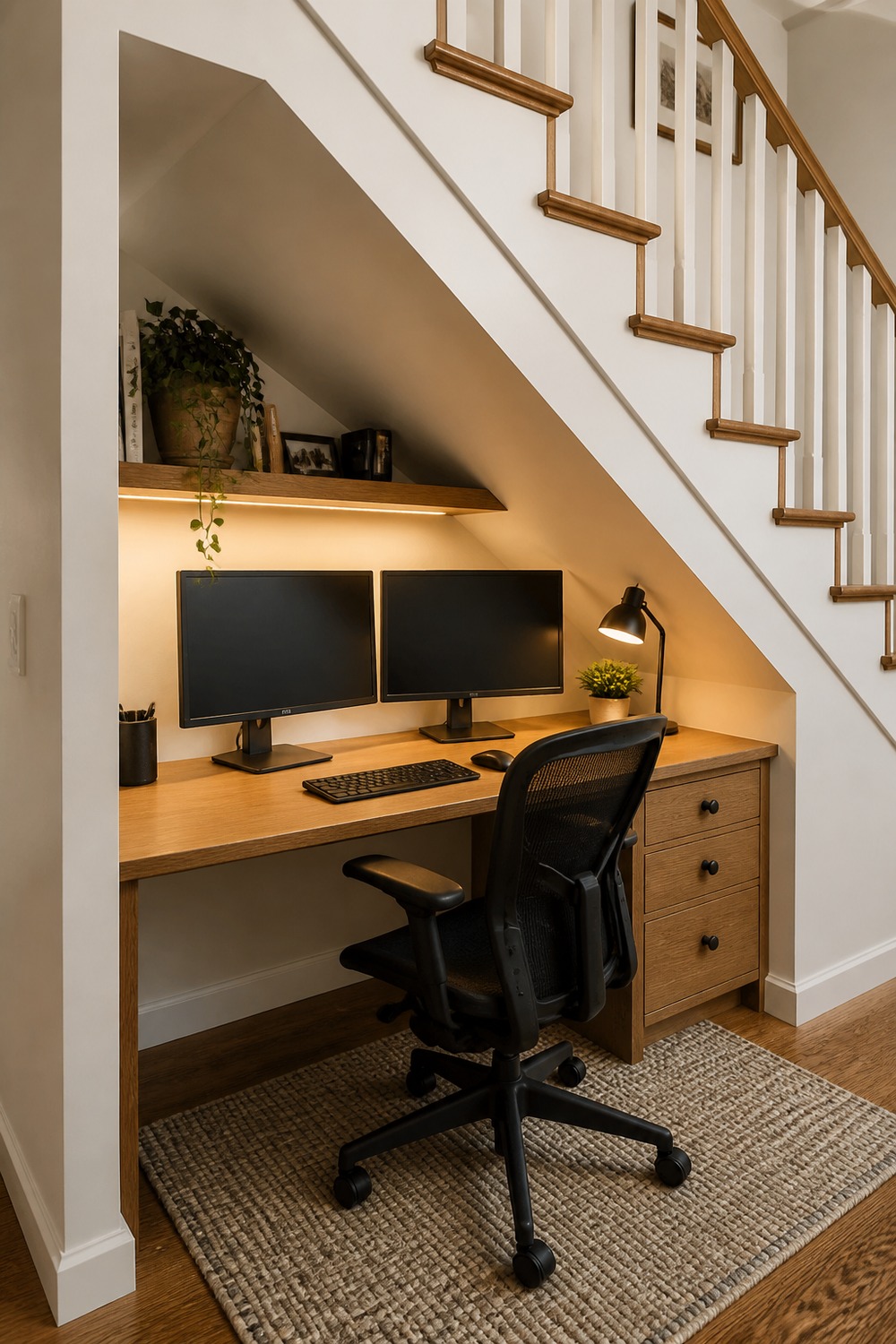
Using the space beneath the stairs is smart because the desktop follows the available width. Fitted drawers keep the sloped area useful, while both monitors sit where the ceiling height is most comfortable.
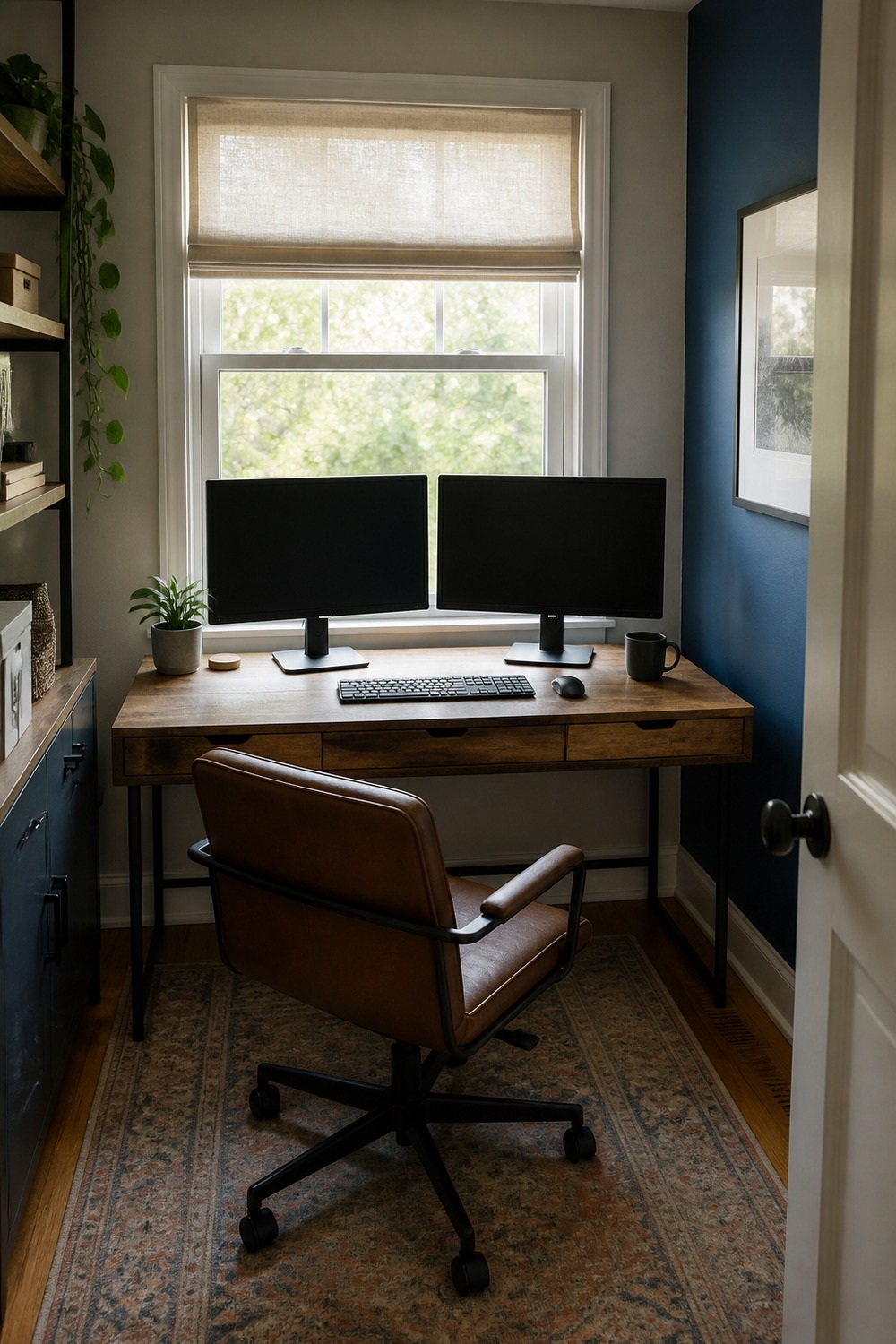
Placing the screens below the window line keeps daylight nearby without putting glare directly behind them. The bookcases frame the desk, and the open center leaves a proper path for the chair.
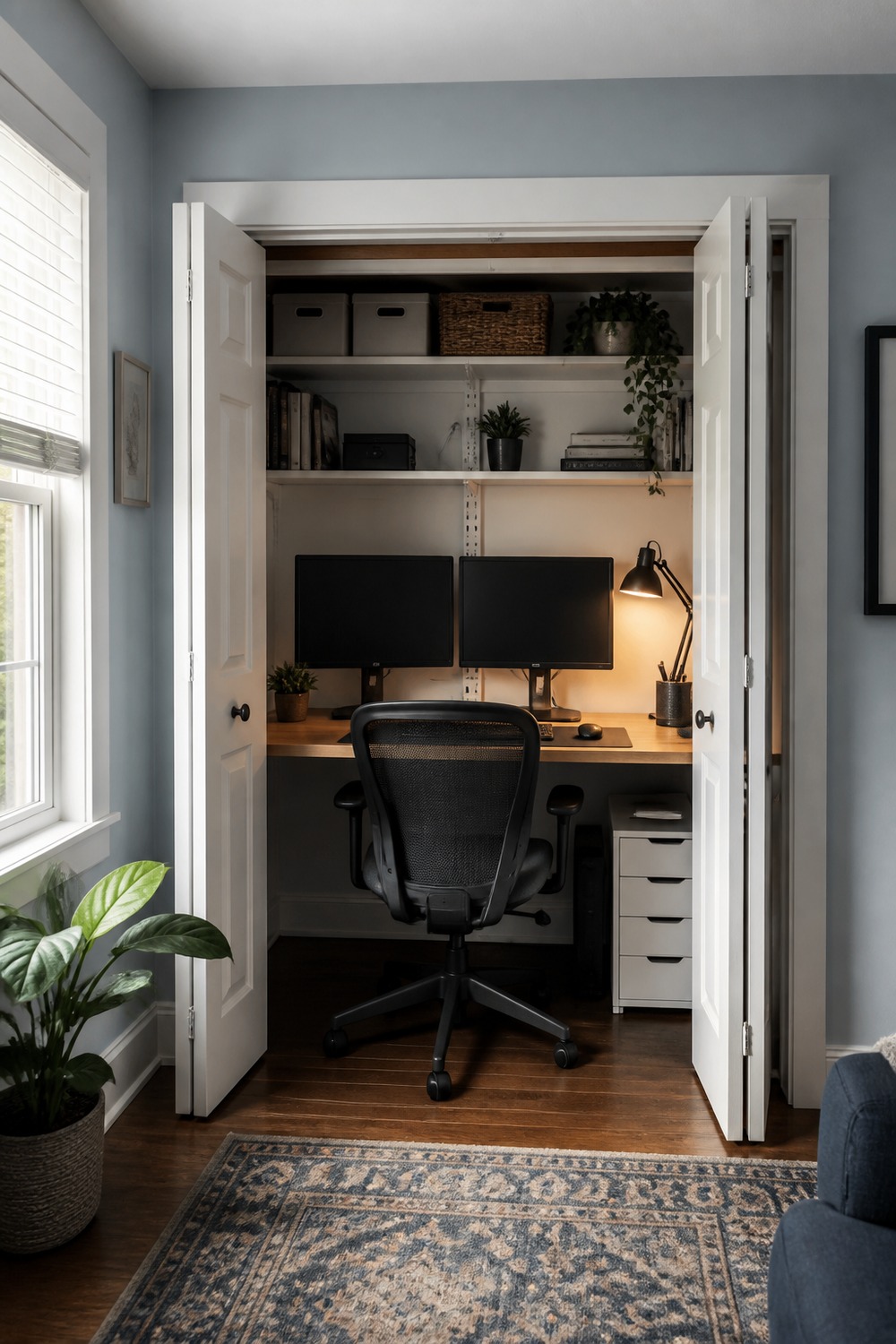
This closet conversion can close when work is over, which is a huge advantage in a small home. Shelves handle files and boxes, while the shallow desktop still gives two monitors enough room to sit side by side.
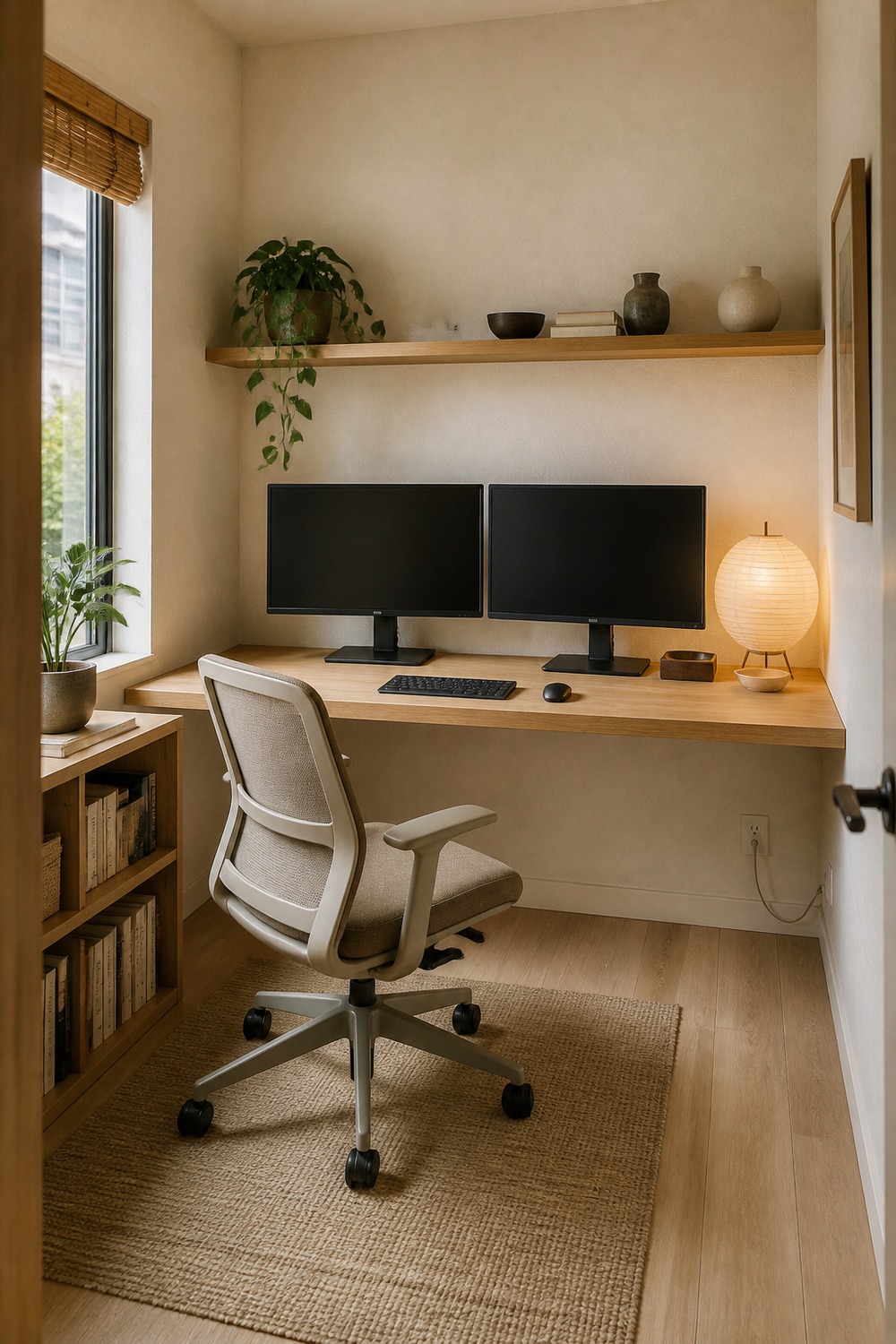
The pale oak wall desk feels lighter than a chunky workstation. A paper lamp softens the screen-heavy setup, and the floating shelf adds just enough display space without becoming a clutter ledge.
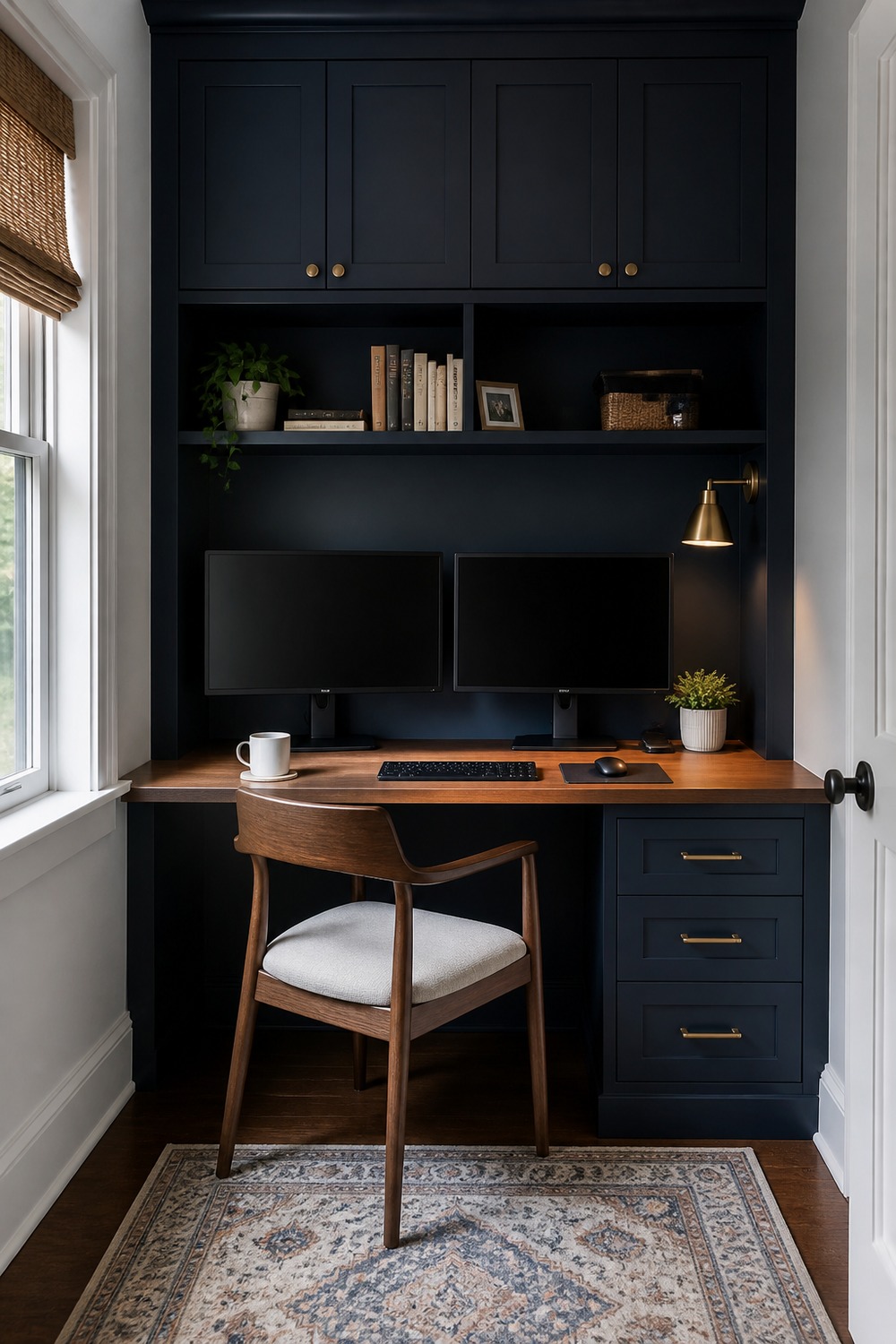
Navy built-ins make the monitors blend into the cabinetry instead of dominating the wall. The brass light and warm wood desktop stop the dark color from flattening the room, and the drawers keep cables close at hand.
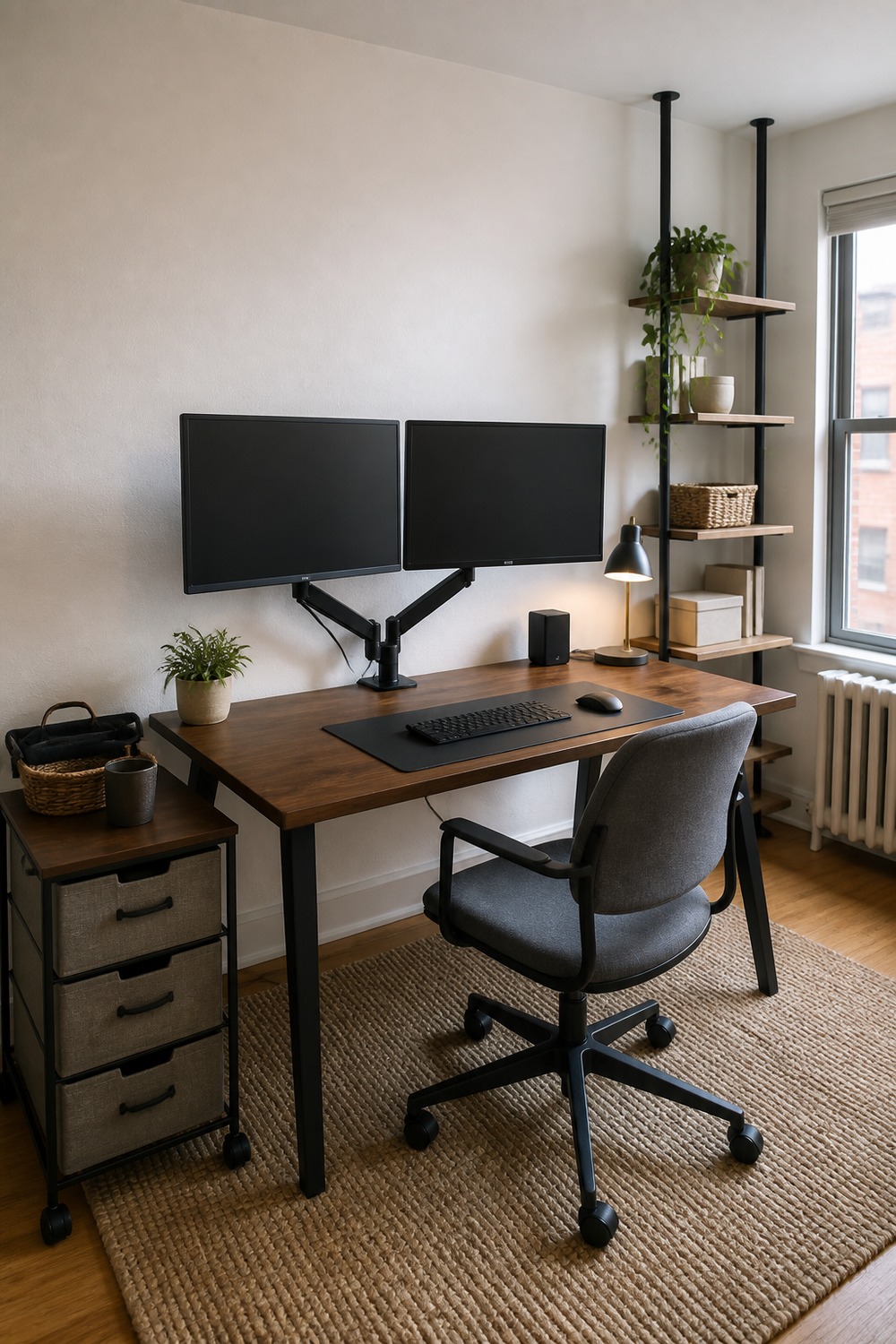
Nothing here depends on permanent carpentry, which makes it useful for a rental. The freestanding desk, slim drawer unit, and removable shelves can move later without giving up the comfort of a proper two-screen setup.
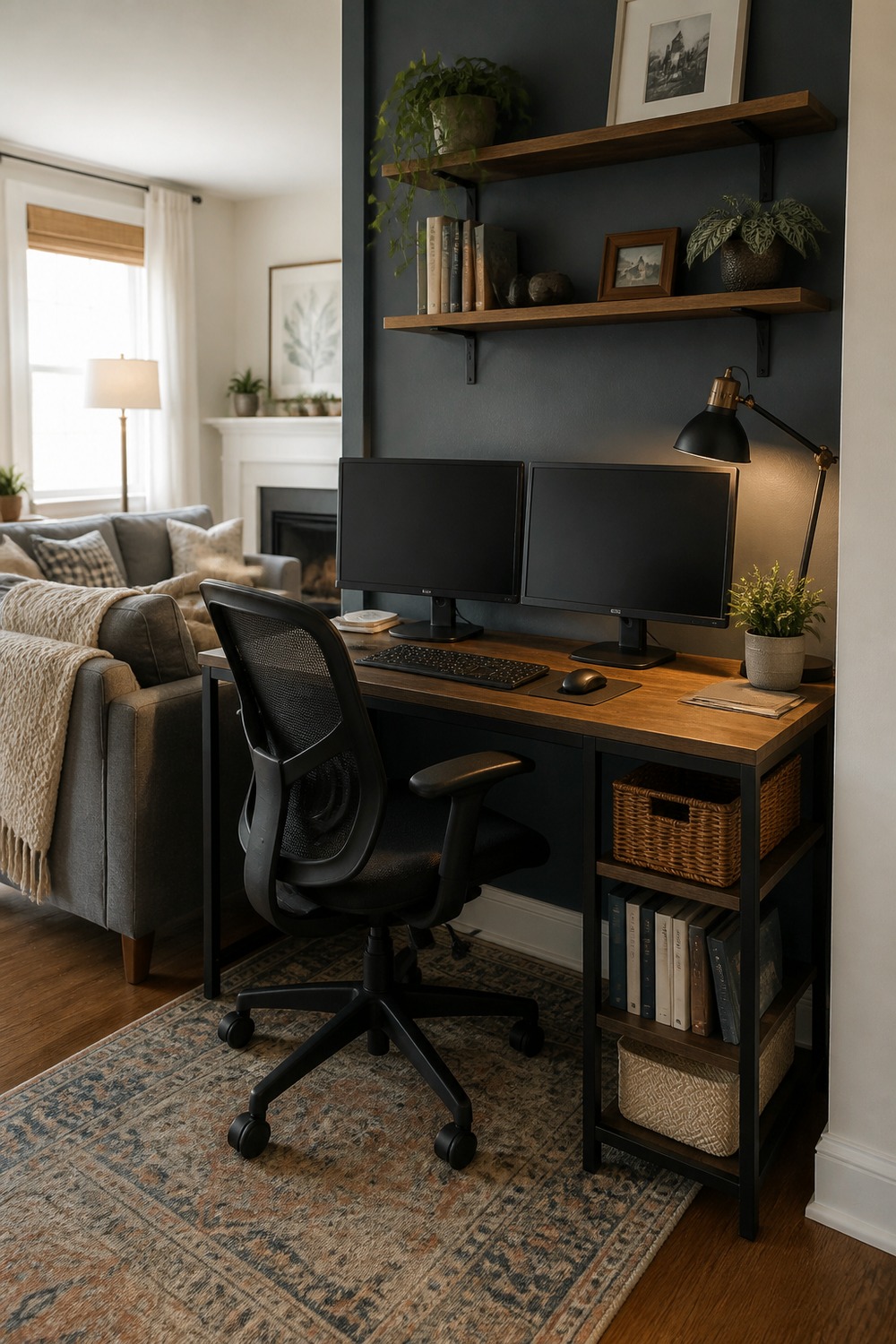
This desk borrows the edge of the living room without pretending the sofa is office seating. Open shelves and baskets keep work supplies contained, and the two monitors stay on one compact surface away from the main walkway.
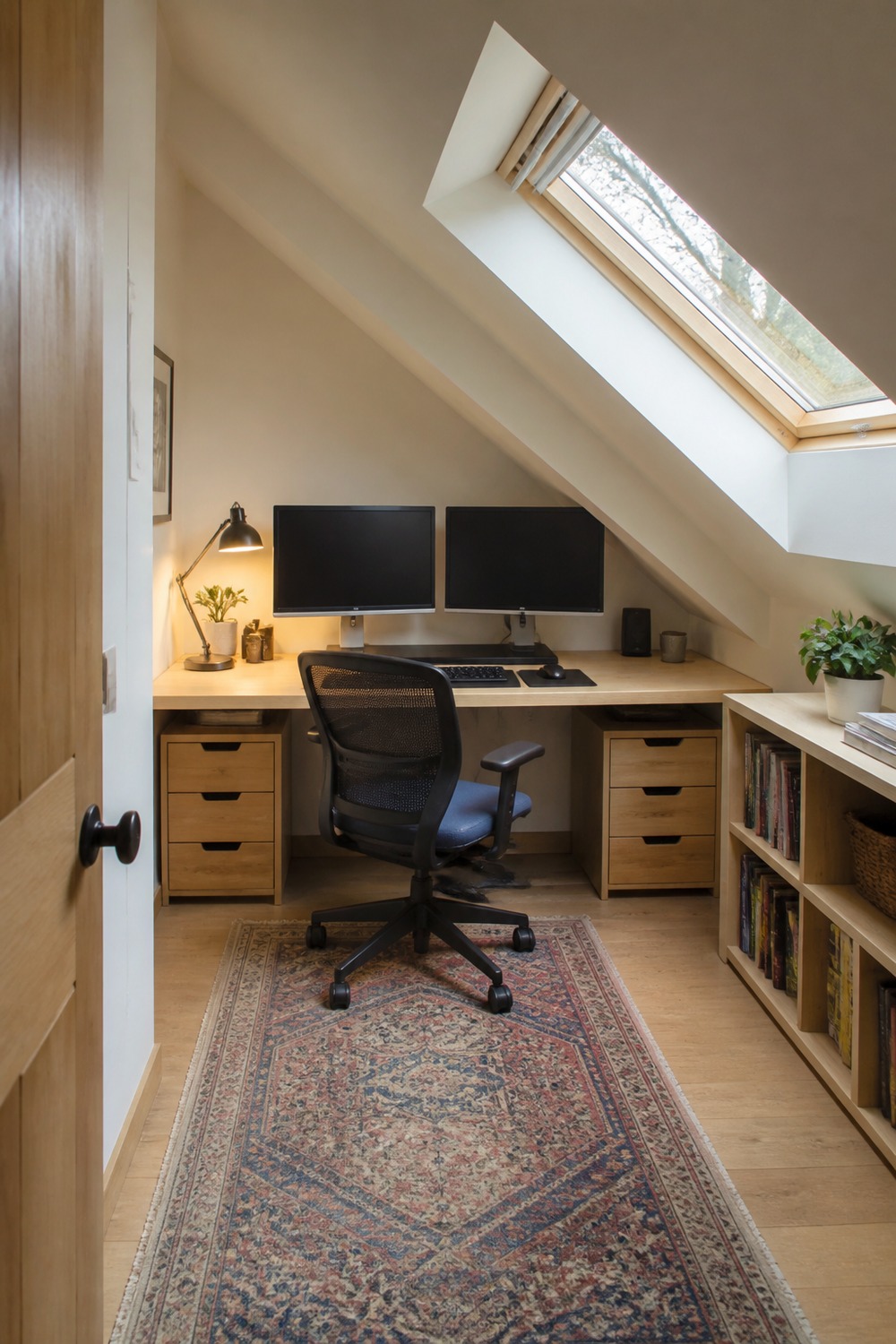
Sloped ceilings are awkward for tall storage but surprisingly good for a long, low desk. The skylight brings in daylight, and the drawers at both ends leave the center clear for knees and chair movement.
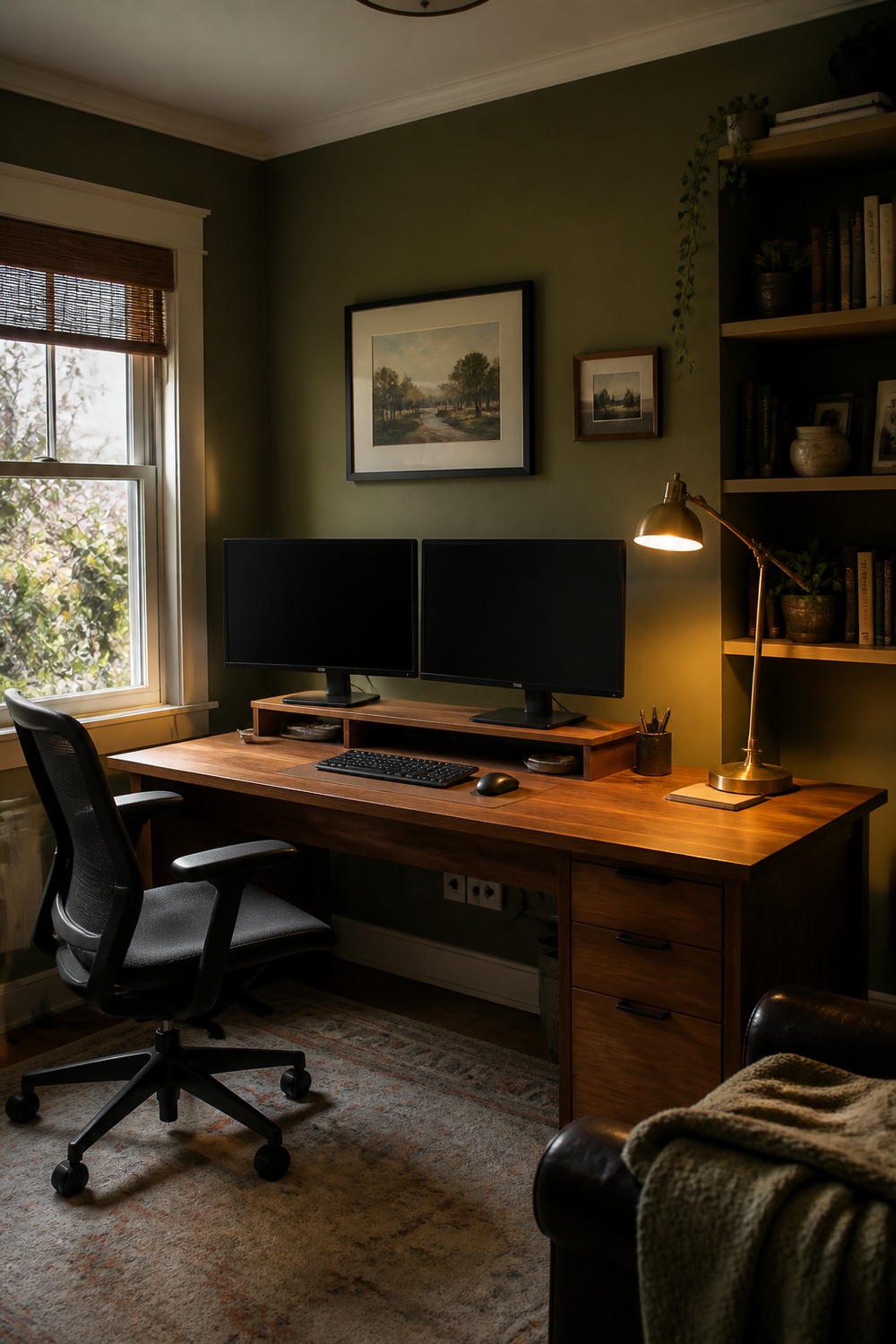
The olive wall and walnut desk give this little study more depth than another white workspace. A brass lamp adds a warm pool of light, while the two screens stay aligned and easy to scan.
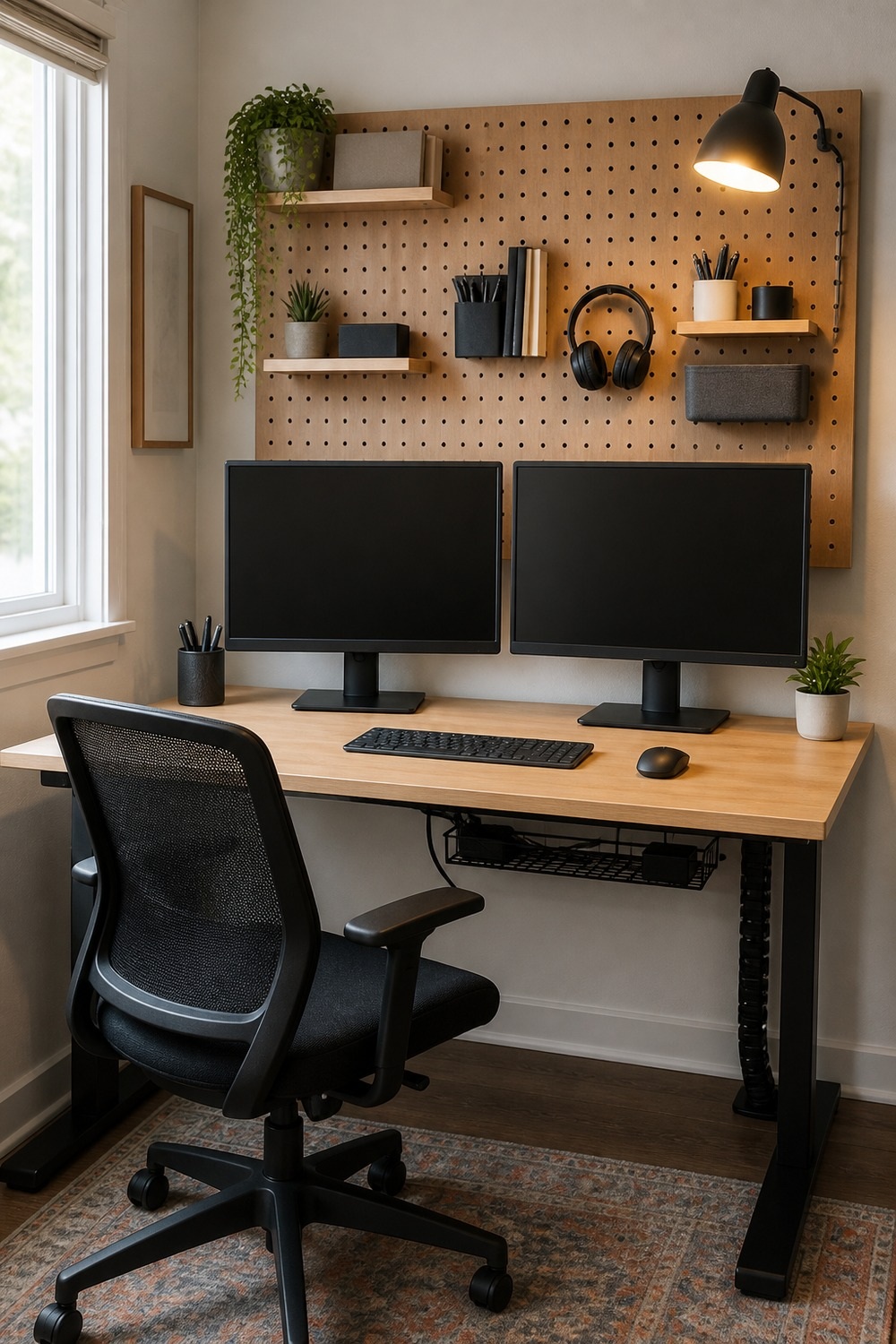
A pegboard is a practical answer when the desktop cannot hold much. Headphones, notes, and small tools can move around as needed, leaving the double-monitor work surface focused on the keyboard and mouse.
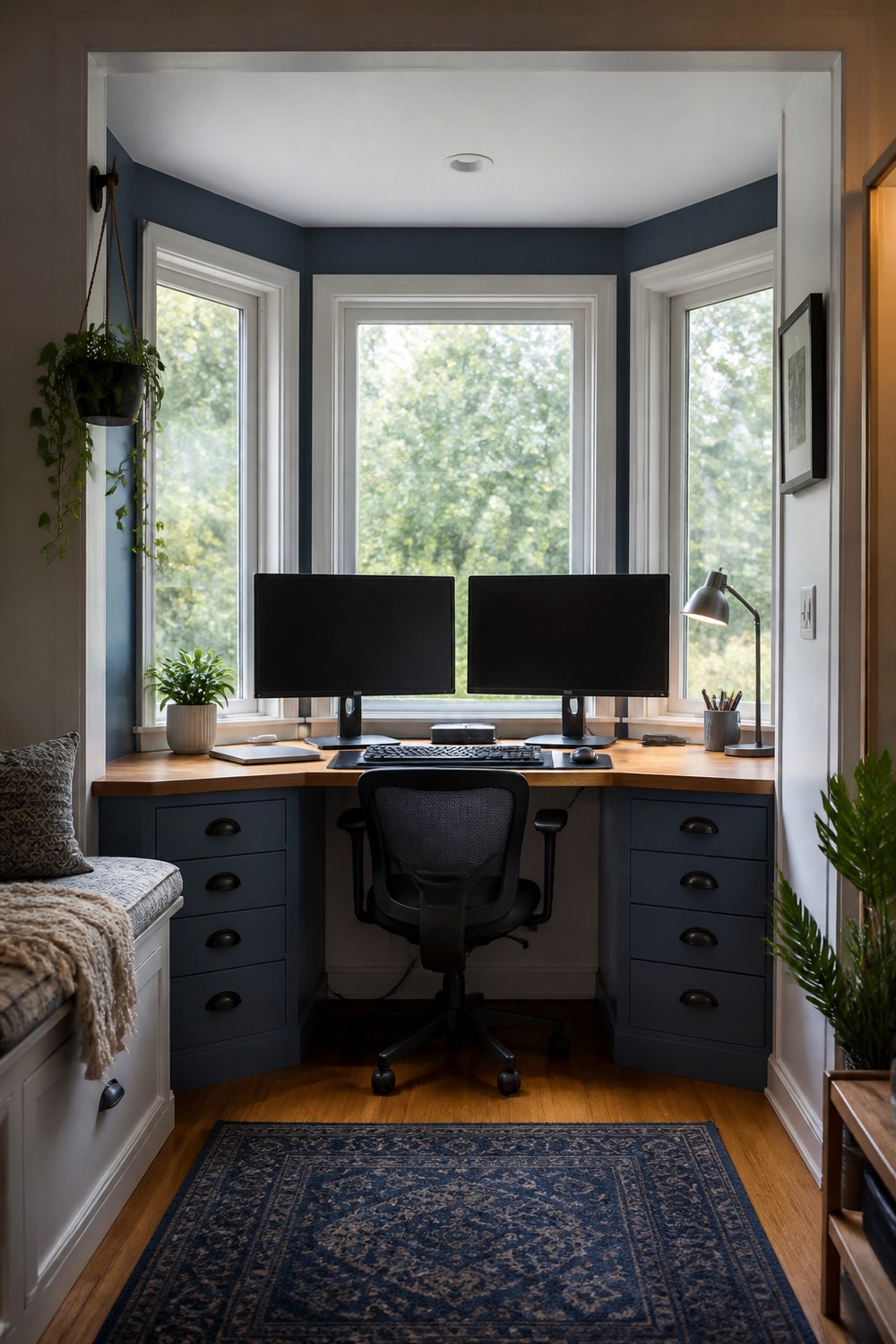
The bay window makes a natural workstation because the side drawers follow the recess. Both monitors remain centered, plants get real light, and the chair still has a clean route into the room.
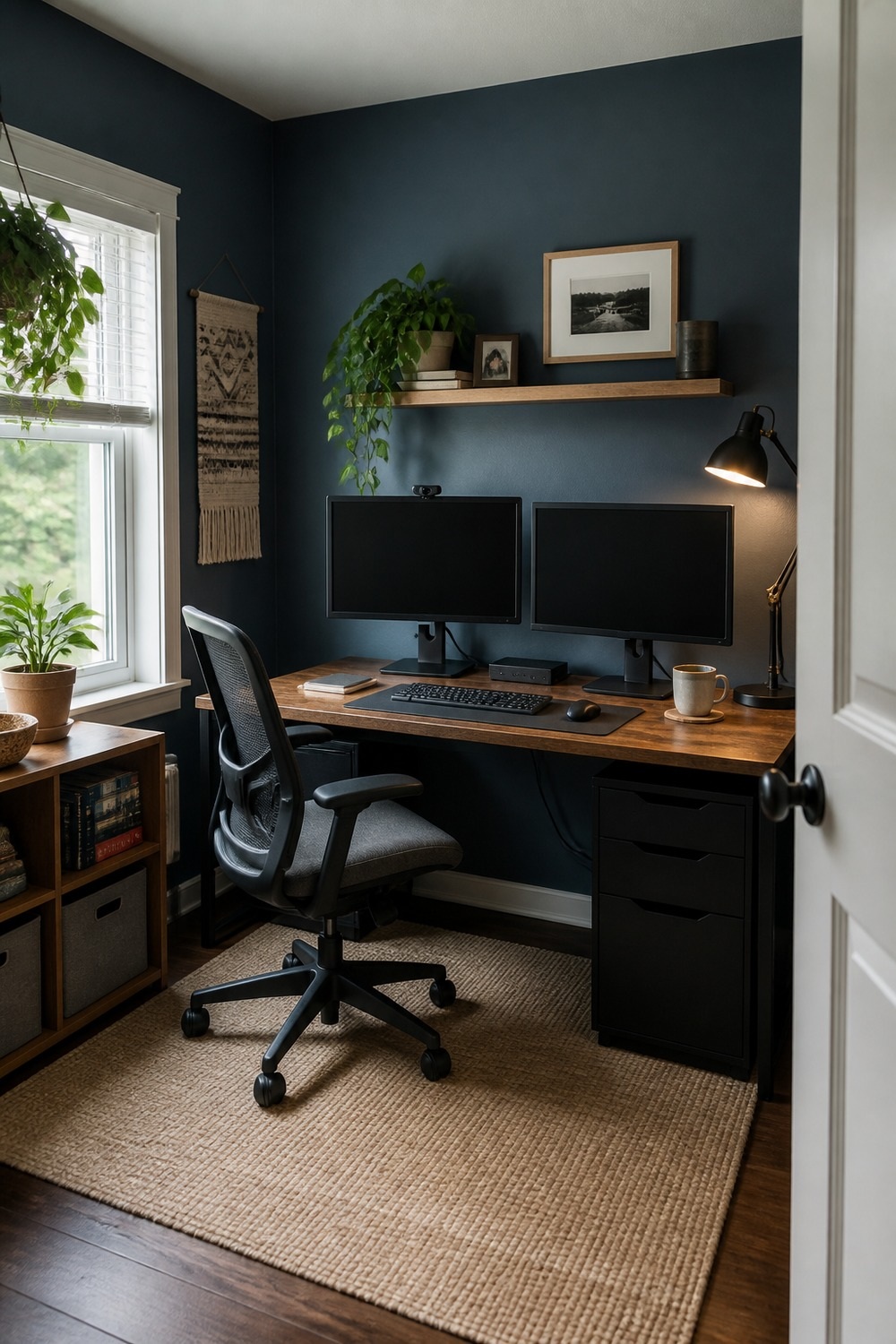
This final room feels finished without hiding the practical parts. Dark blue walls reduce the visual weight of the screens, a woven rug softens the rolling-chair zone, and the storage stays within reach without surrounding the desk.
The strongest setups are not always the biggest ones. Two well-positioned screens, a clear chair path, controlled cables, and one useful storage move can make a small home office feel calm instead of crowded.
Leave a comment