
A couple of floating shelves rarely fix a tiny office. These rooms make the shelving part of the architecture—around windows, beneath stairs, inside awkward alcoves, and above fitted desks—so the books have a real home without taking over the chair path.
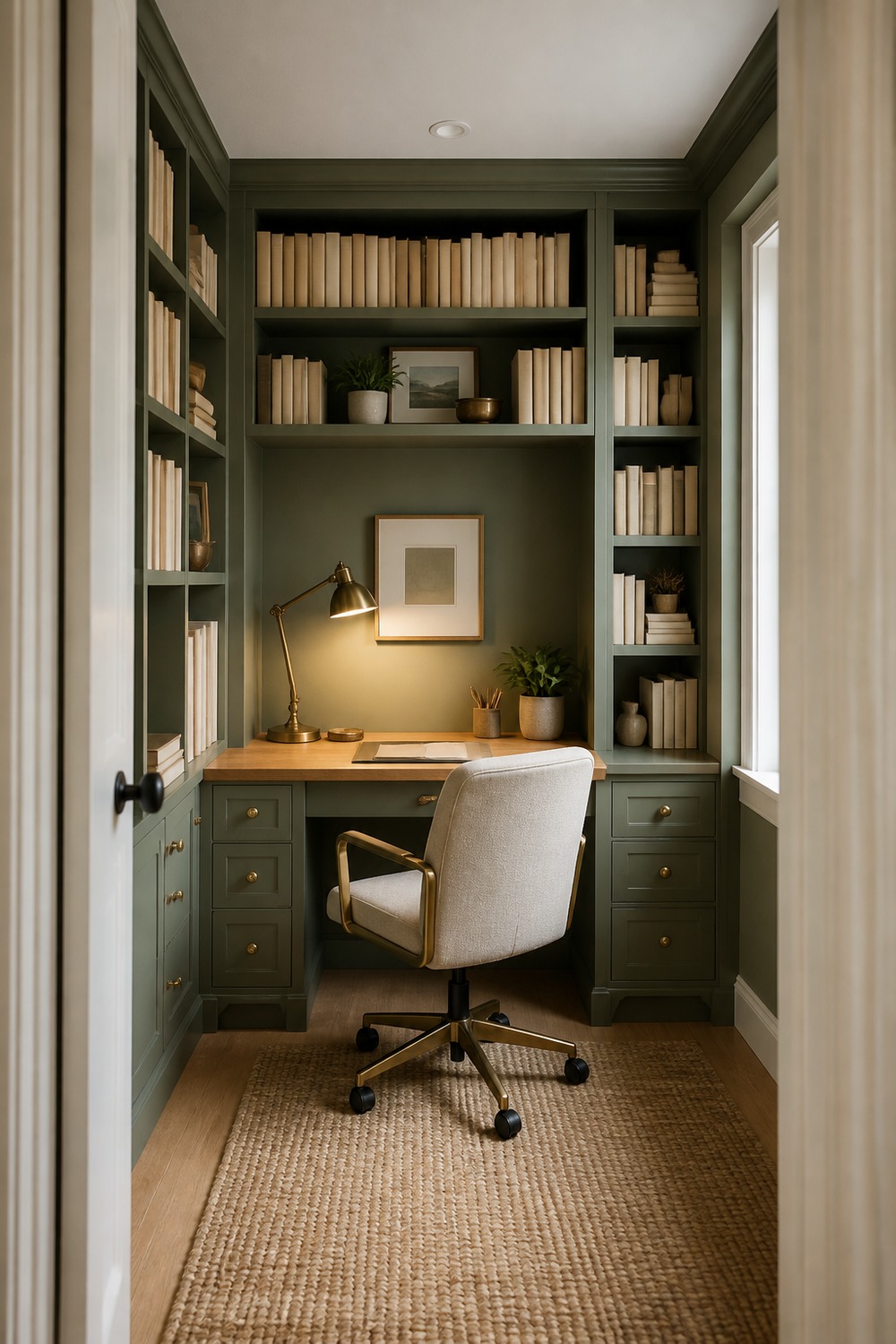
Sage paint gives this narrow alcove some character without making it feel boxed in. The oak desktop breaks up the cabinetry, while the drawers below keep paper and chargers from crowding the work surface.
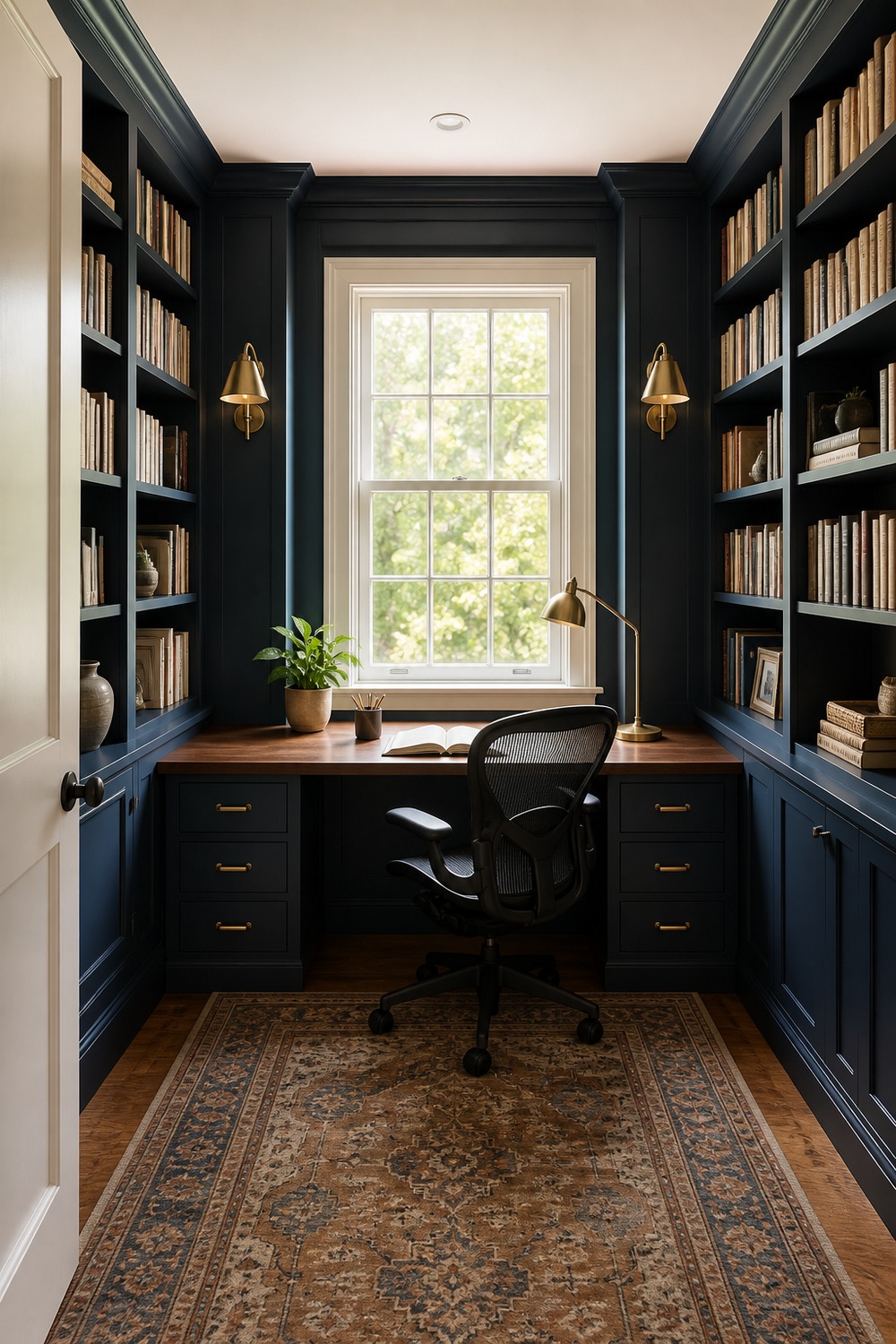
The window does the hard work here, bringing daylight directly onto the walnut desktop. Navy book towers frame the view, and the brass sconces mean the desk still has useful light after sunset.
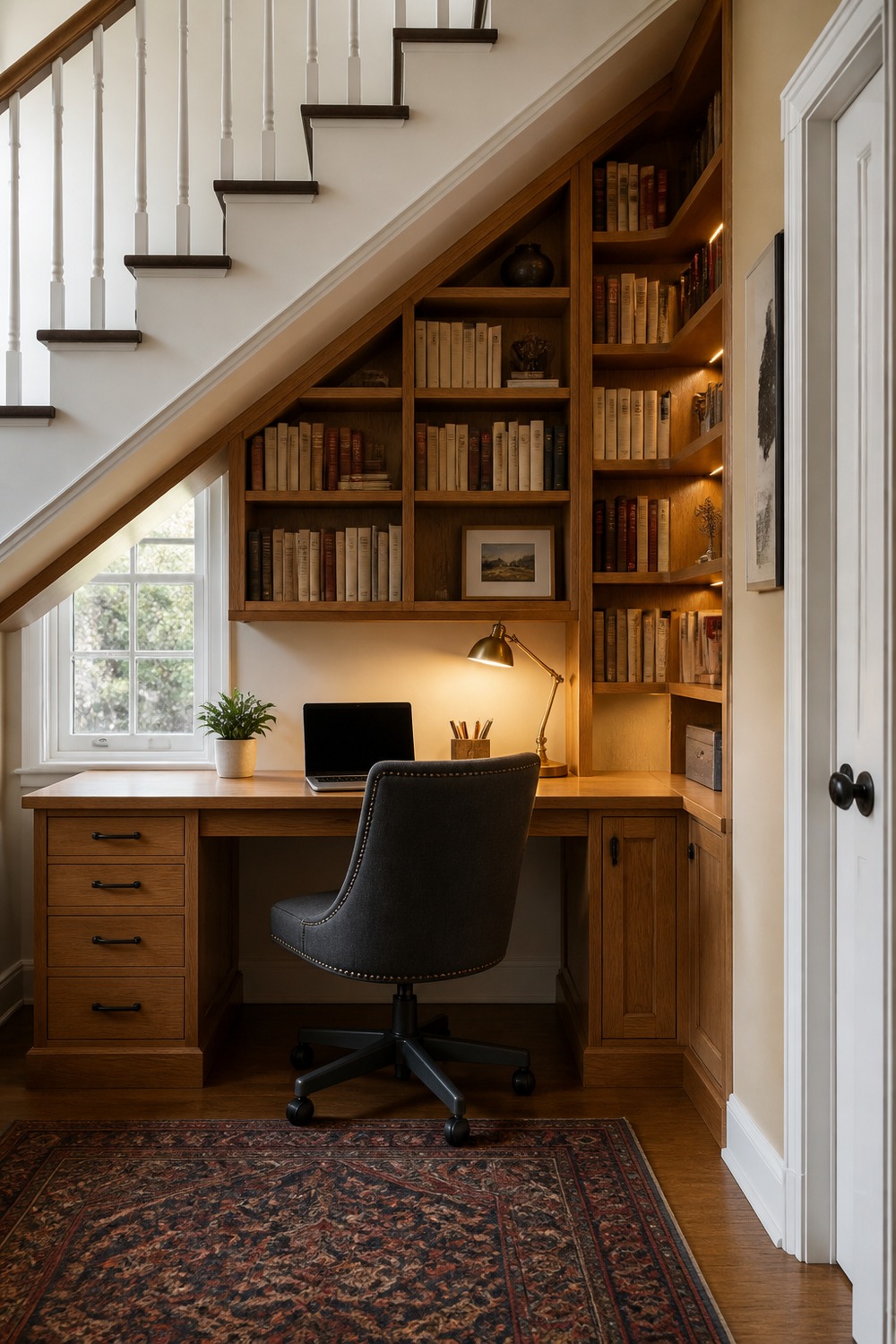
Following the stair slope is much smarter than forcing a standard cabinet into this spot. The fitted shelves use the awkward height, and the open floor beside the desk leaves a believable route through the room.
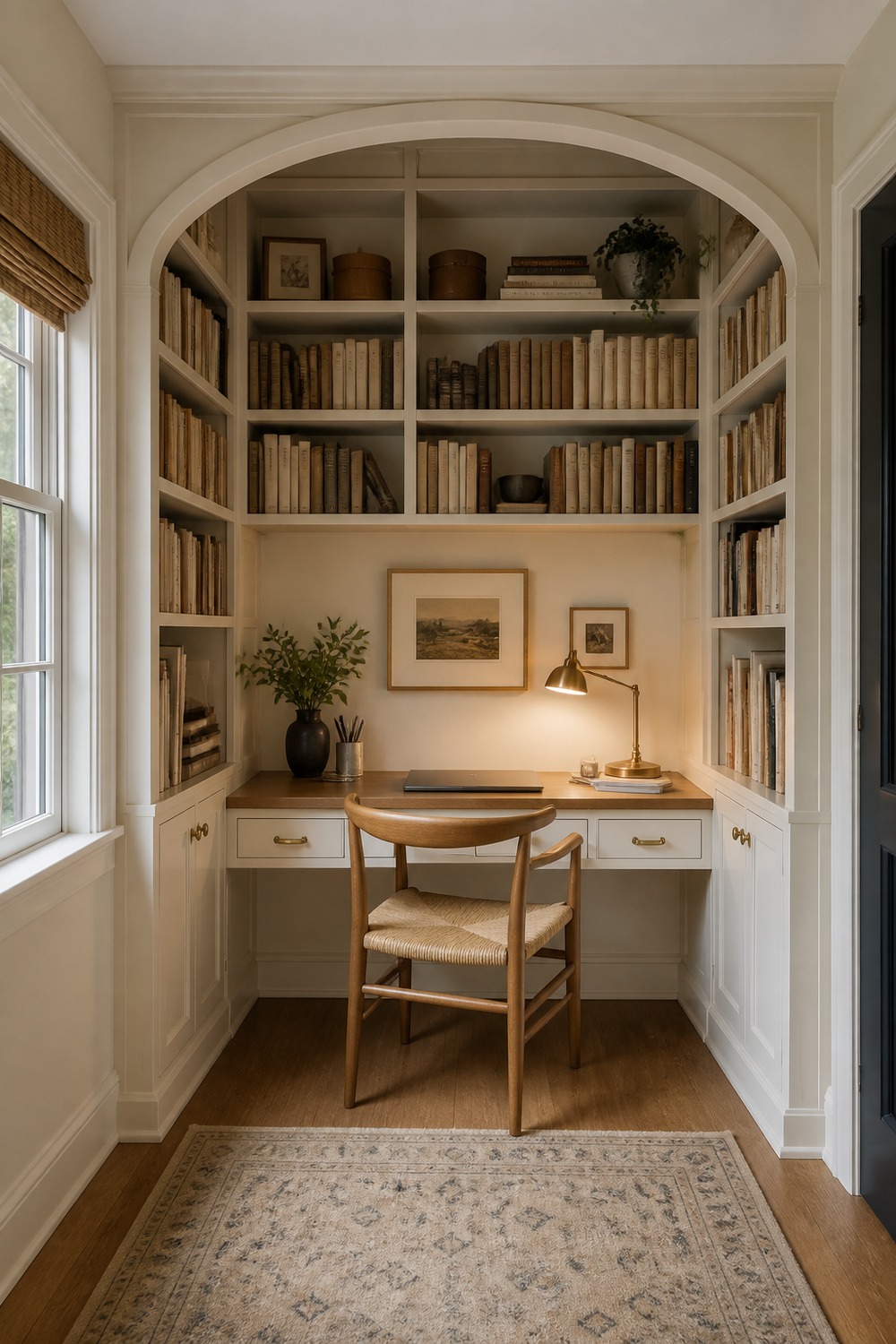
That shallow arch turns a plain work niche into the focal point of the room. Cream millwork keeps the book wall from feeling heavy, and the base cupboards give cords and printer paper a discreet place to go.
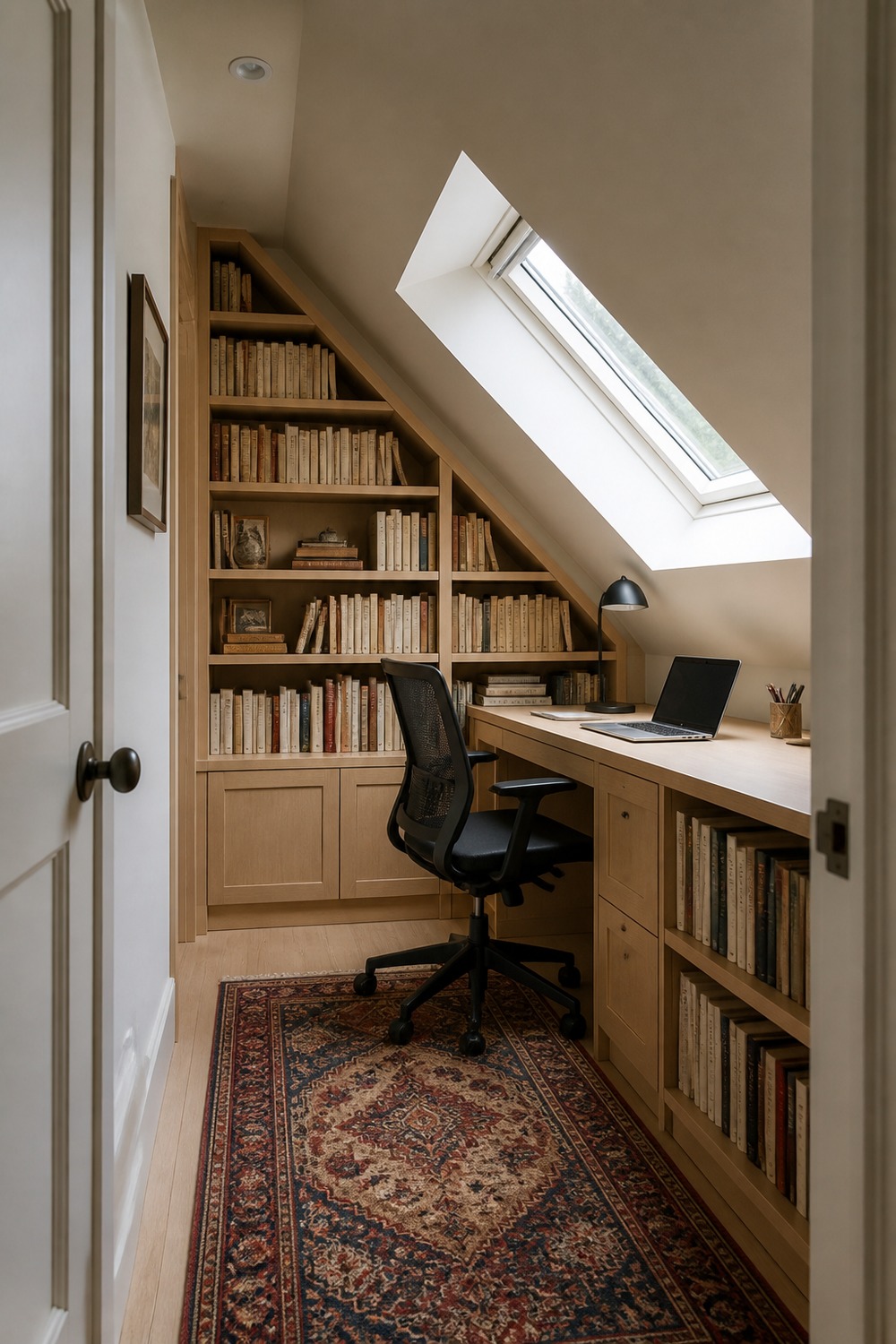
Low bookcases make sense under attic eaves because they use the space where standing height is already limited. The skylight lands right over the desk, so this little setup would not need much extra lighting during the day.
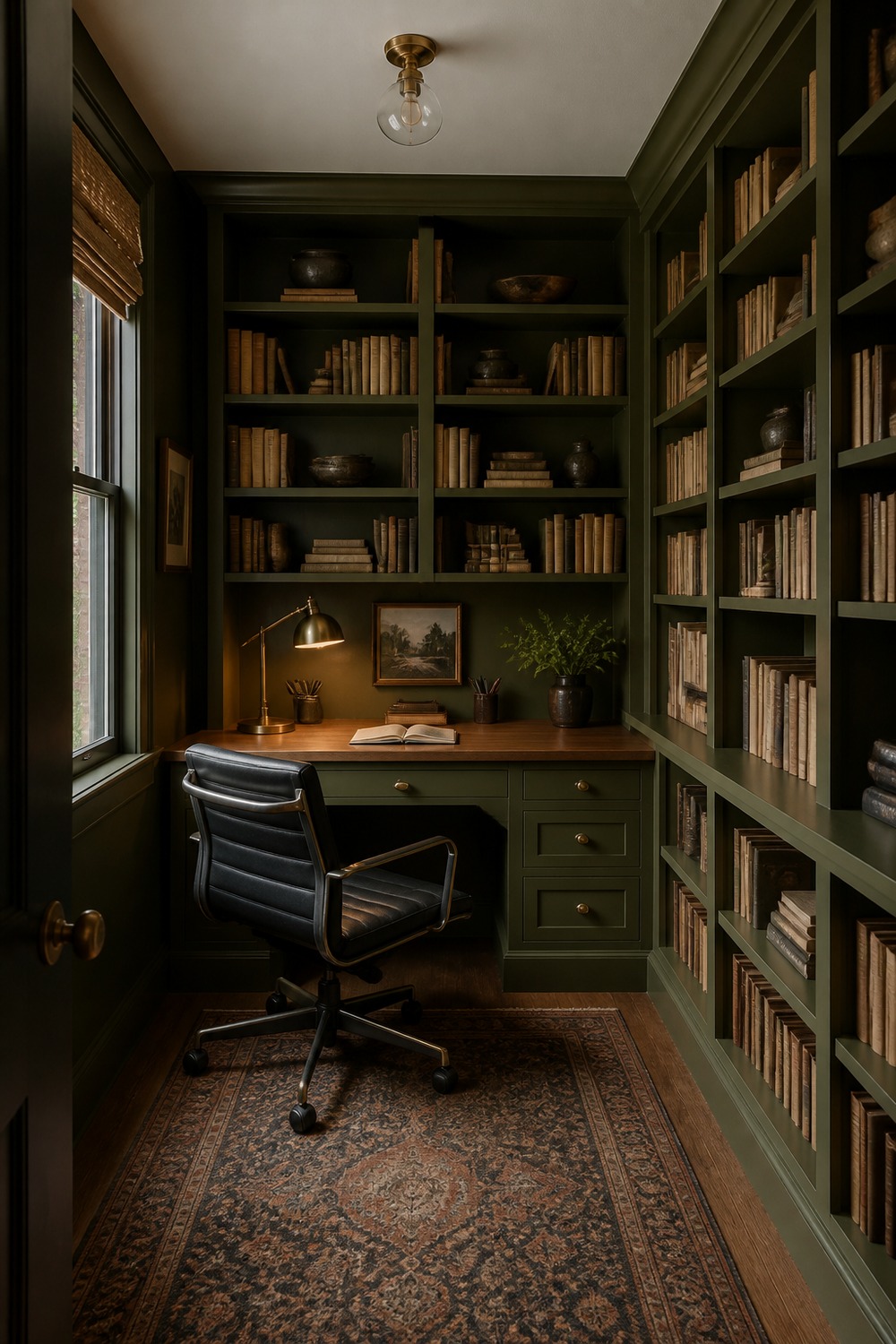
Olive cabinetry and a walnut worktop give this office a proper library mood without slipping into theme-room territory. The black chair and aged-brass light add contrast, but the window keeps the dark color from swallowing the room.
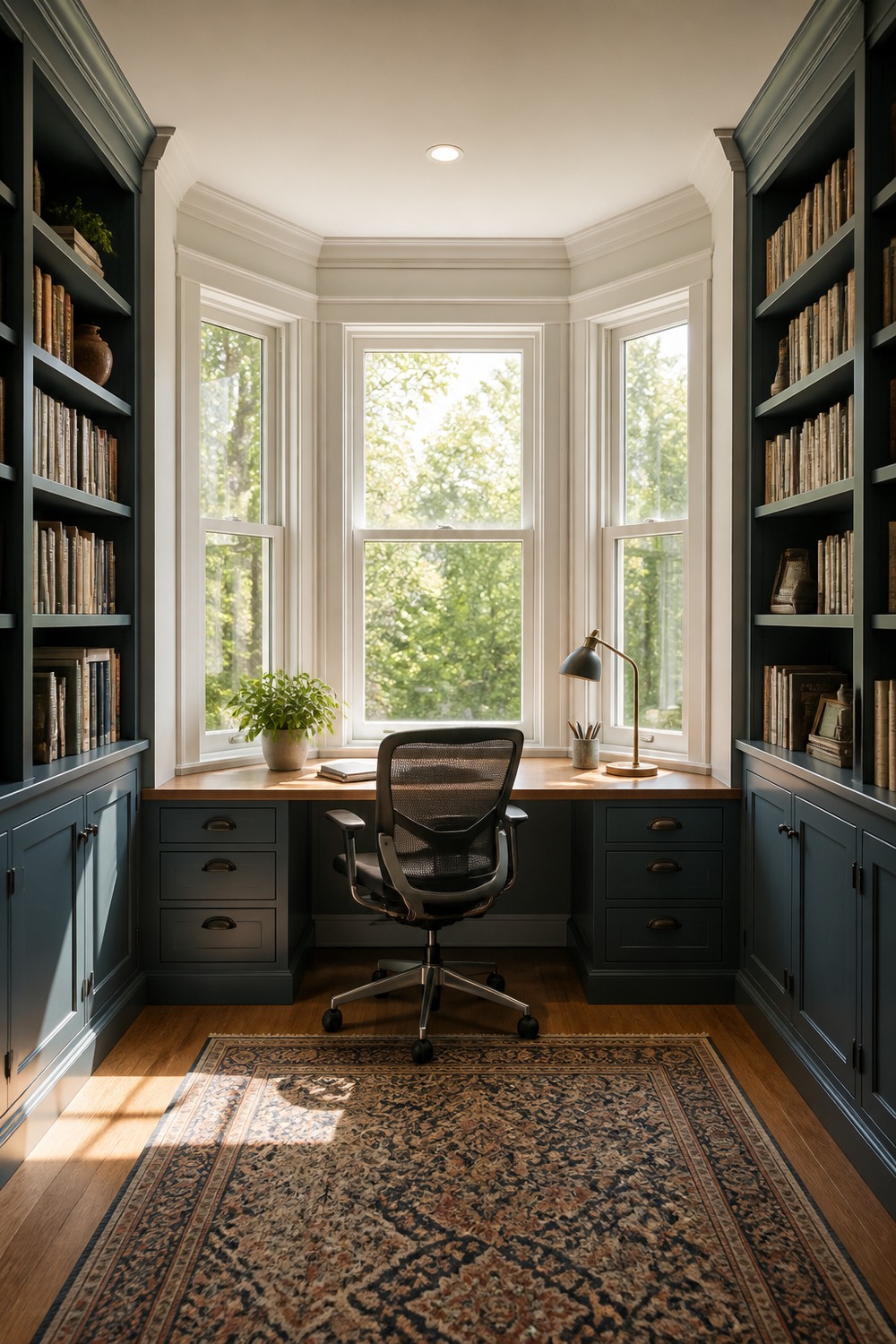
Building the desk into the bay keeps the center of the room open and gives the chair a generous turning area. Side bookcases hold the storage vertically, while the drawers beneath the window deal with smaller work gear.
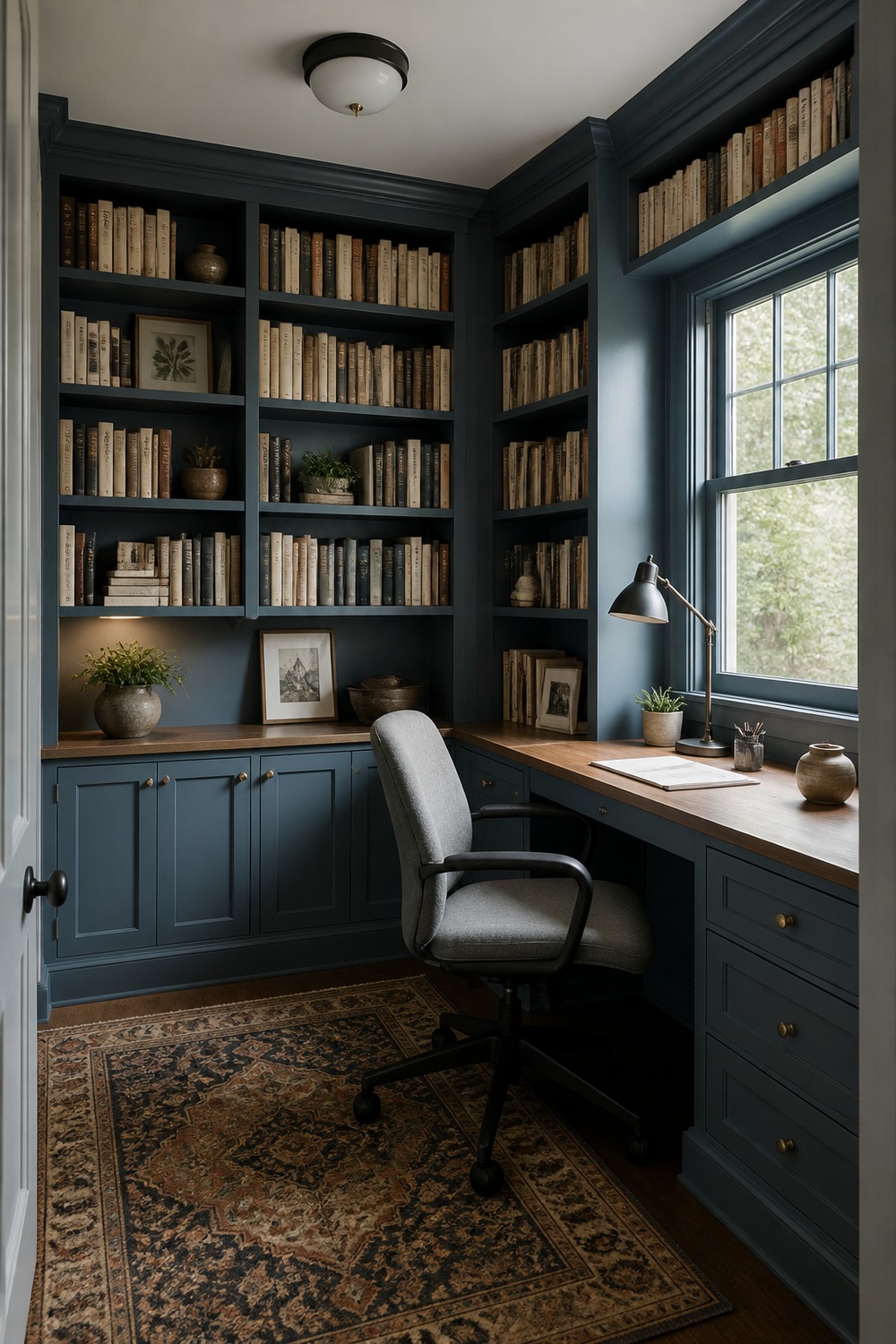
A corner layout creates more desktop without requiring a deeper room. The blue-gray shelves wrap the workspace neatly, and the closed lower units stop the book wall from looking visually busy all the way to the floor.
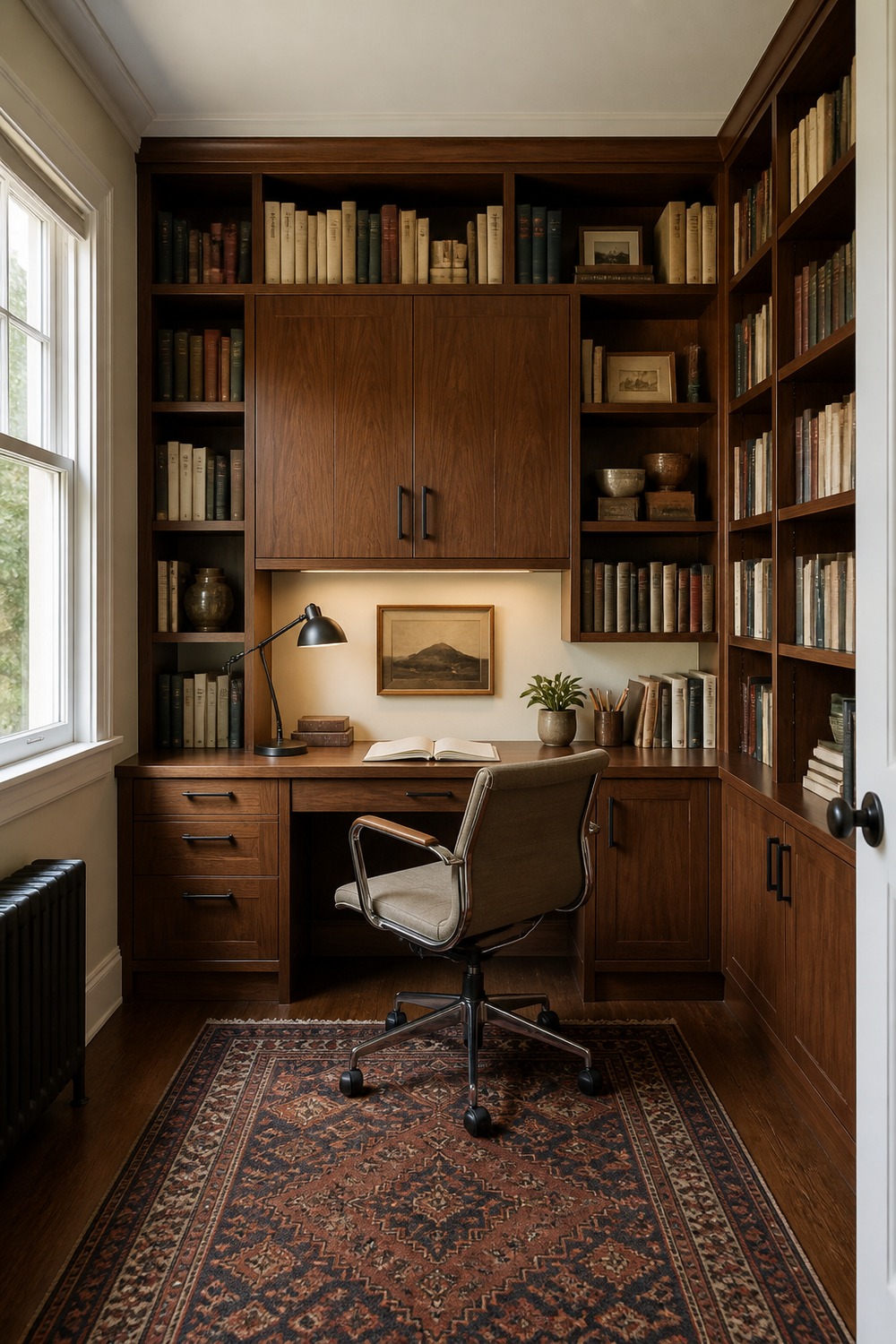
This walnut wall unit feels warmer and less formal than painted library cabinetry. Open book bays sit where they are easy to reach, while the closed sections above and below can hide files, cables, and less attractive equipment.
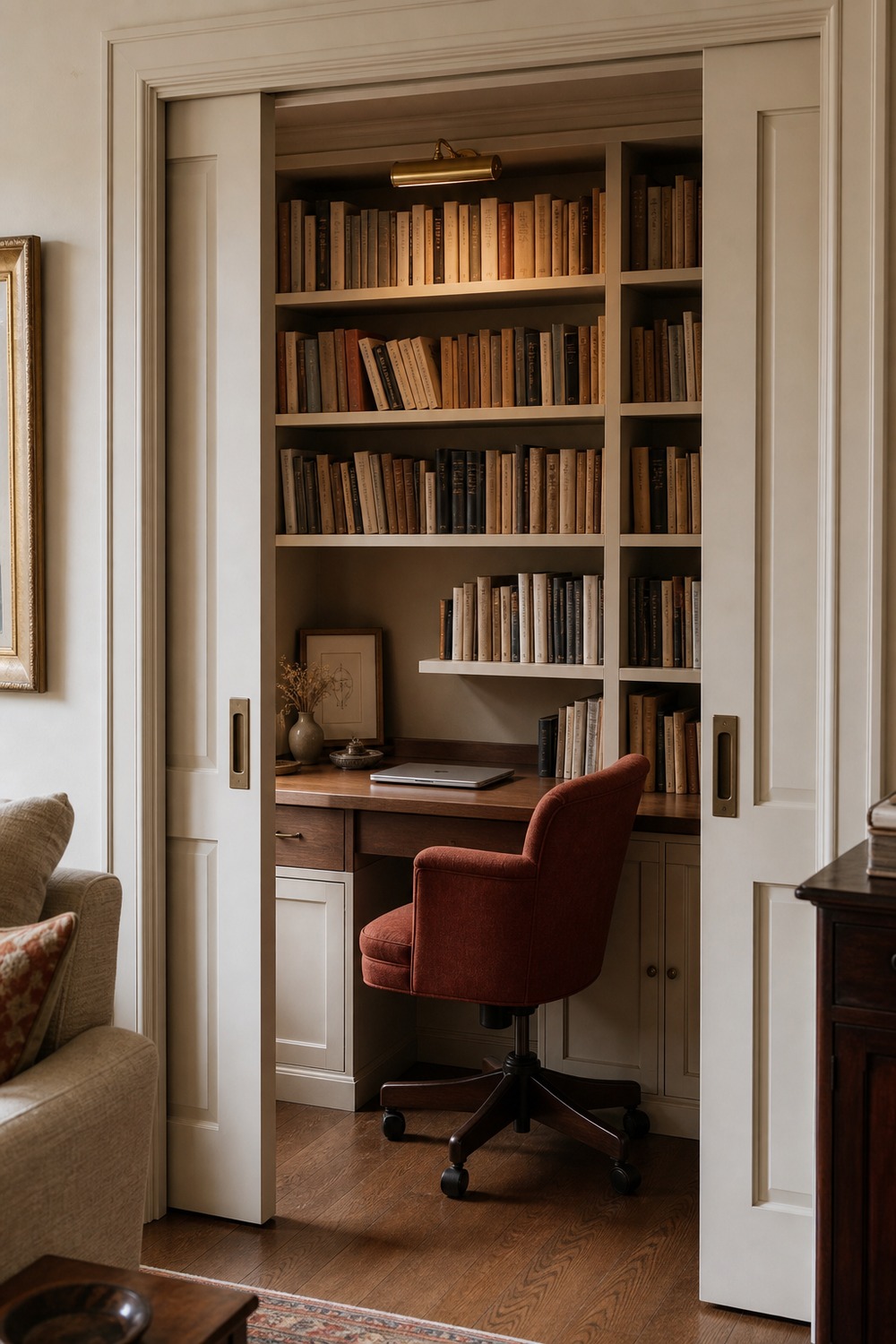
Pocket doors make this compact library office easy to close off when work is finished. Inside, the rust chair and walnut desktop warm up the cream shelves, and the cupboards keep the small nook from becoming a wall of clutter.
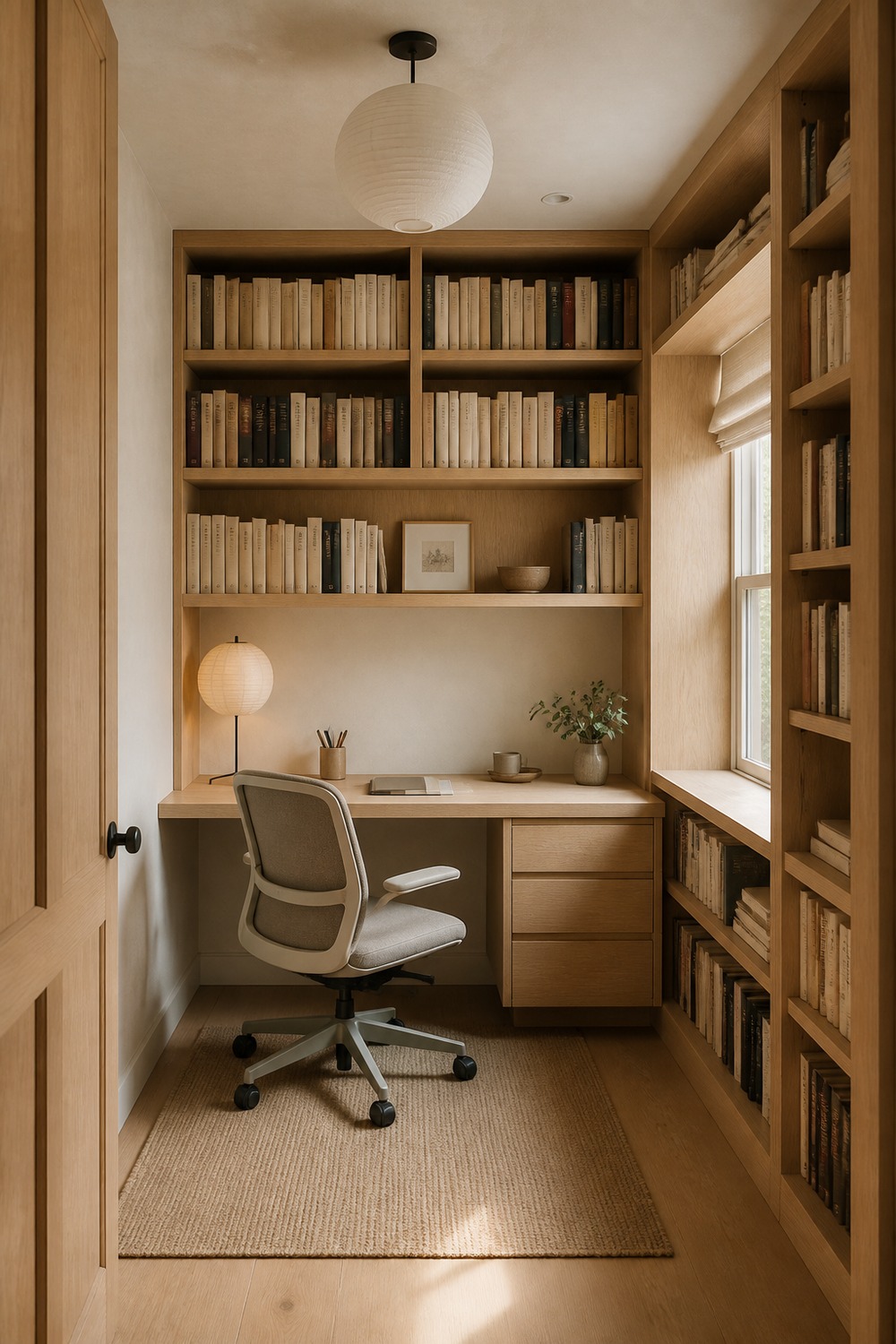
Pale oak is a good choice when the shelving fills nearly every inch of wall. The floating desk preserves legroom, and the restrained book rows leave enough breathing space for the room to feel calm rather than overfilled.
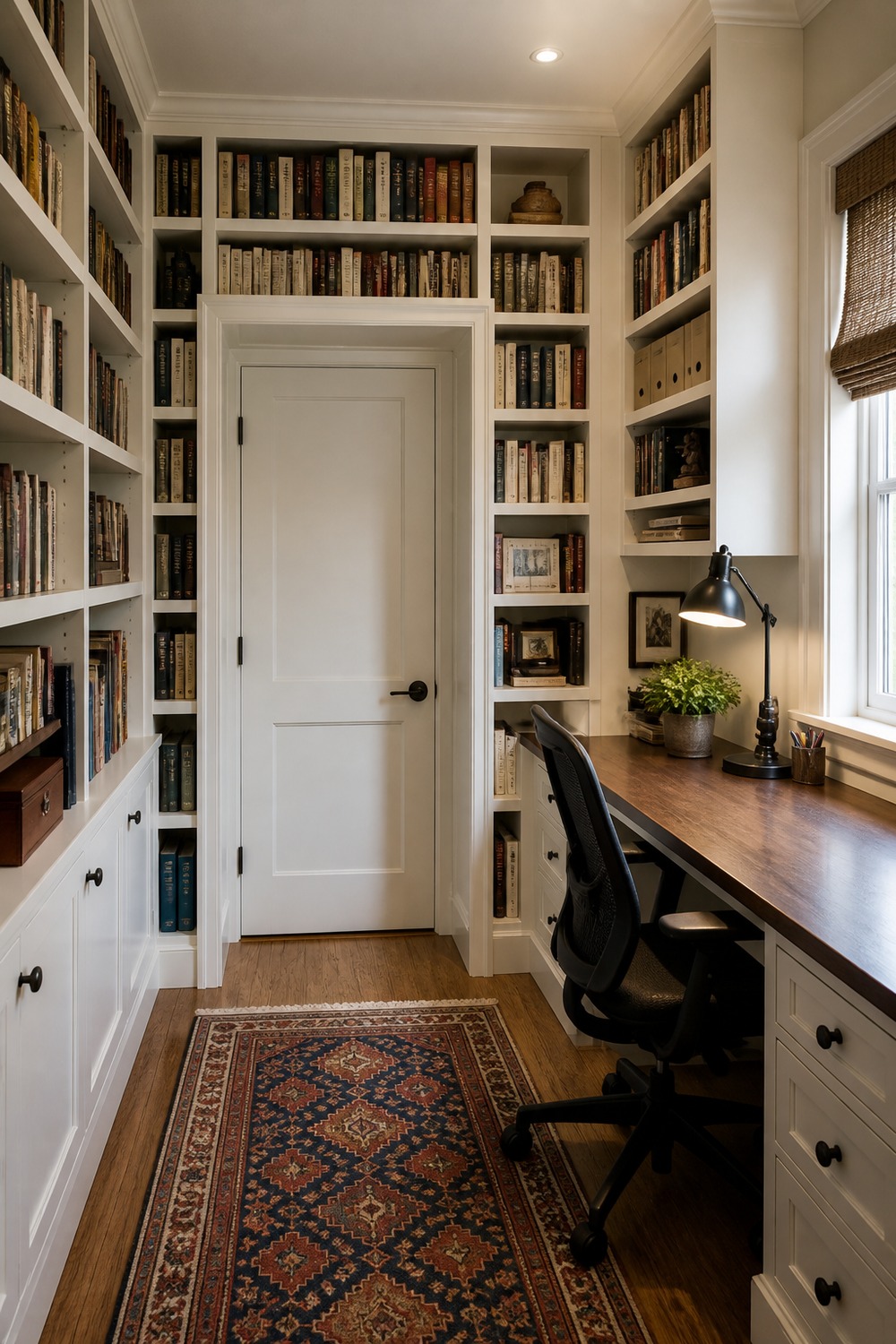
Wrapping bookcases around an interior door uses a section of wall that is usually wasted. The side desk still gets window light, and the continuous millwork makes the doorway look like part of the design instead of an interruption.
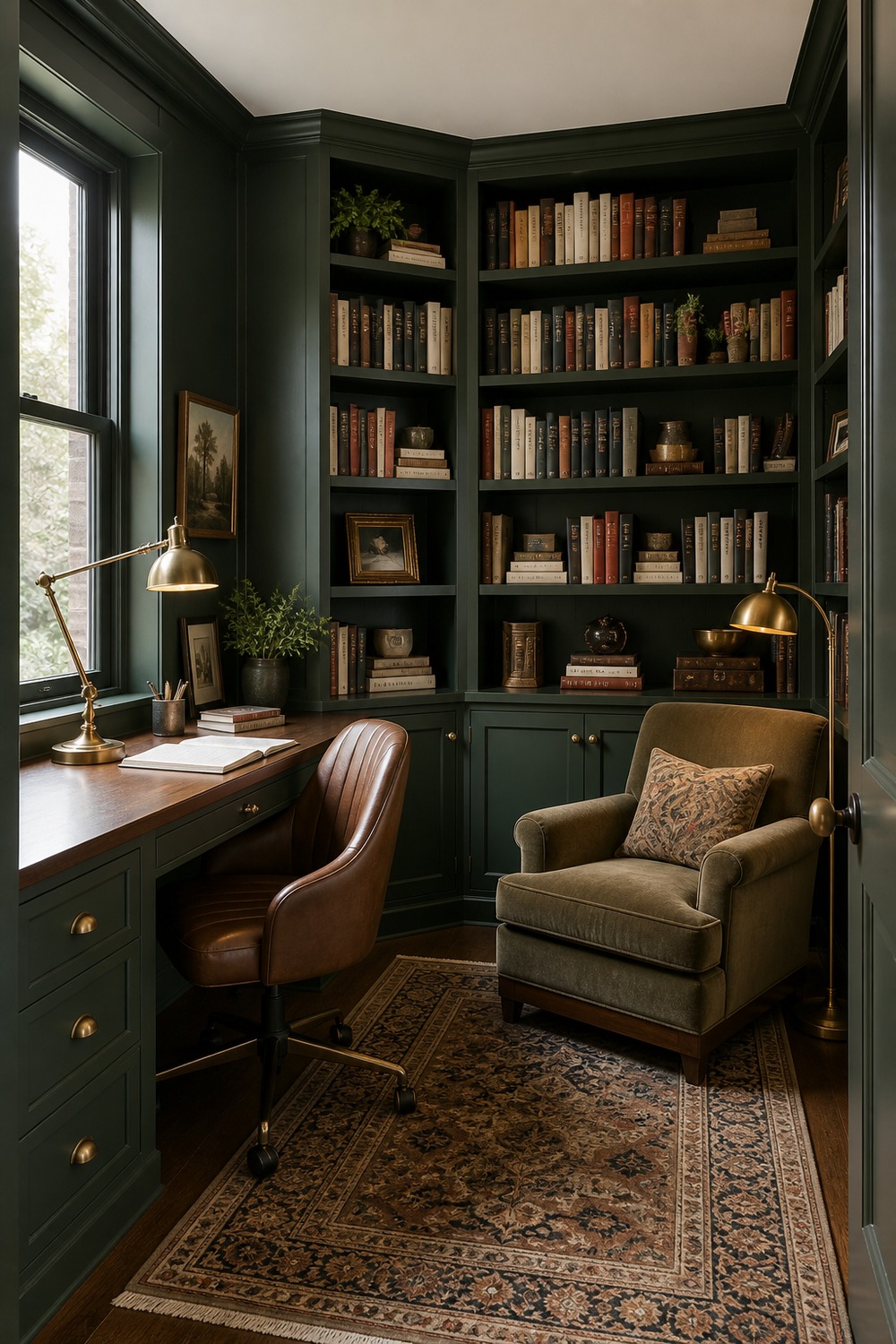
This corner splits the room into two jobs without adding more furniture than it can handle. The fitted desk covers work hours, while the reading chair gives the book collection a purpose beyond simply filling shelves.
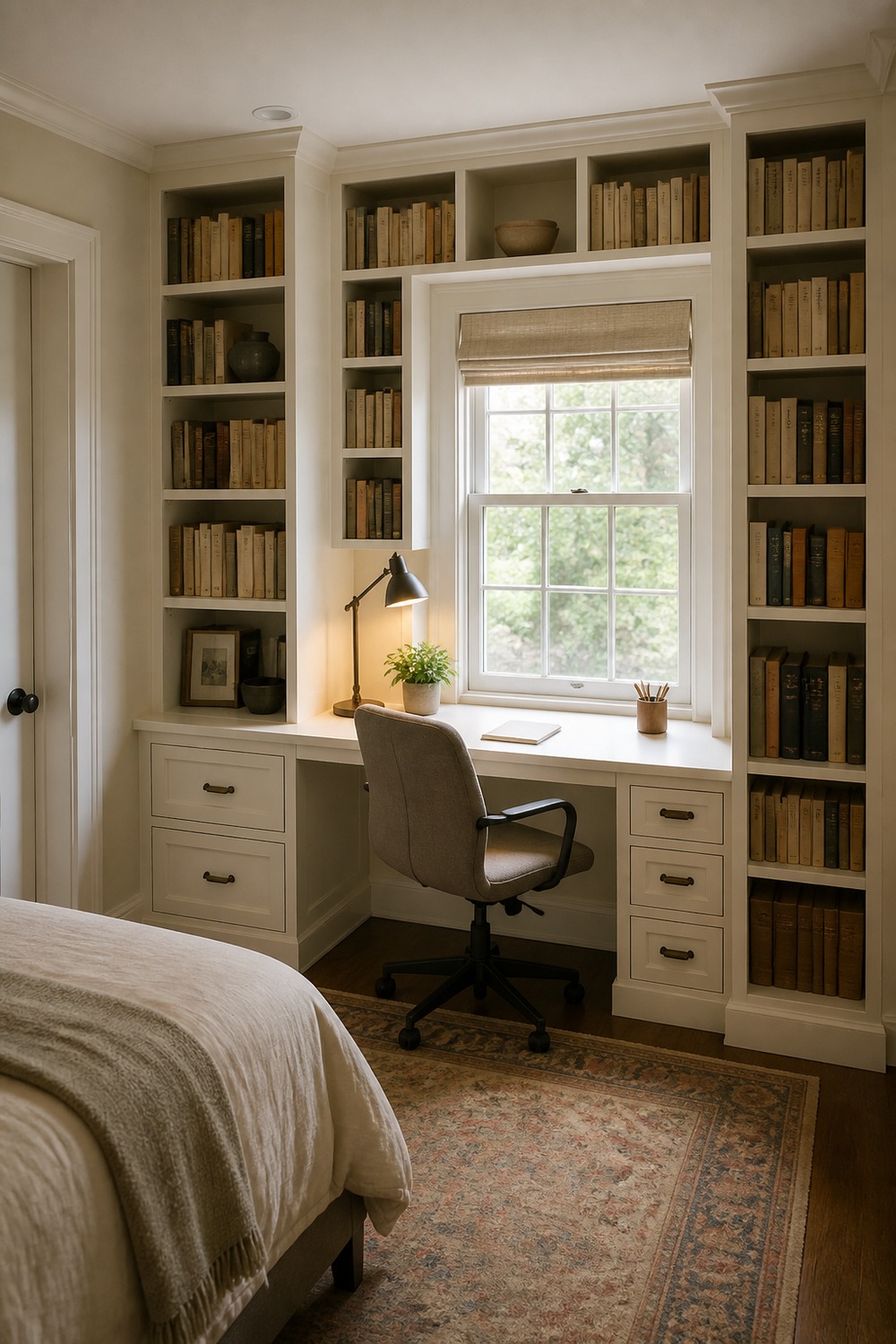
Using the edge of a bedroom for built-ins is more convincing than dropping a freestanding desk beside the bed. The white cabinetry blends into the wall, and the window-centered worktop gives the office zone its own visual boundary.
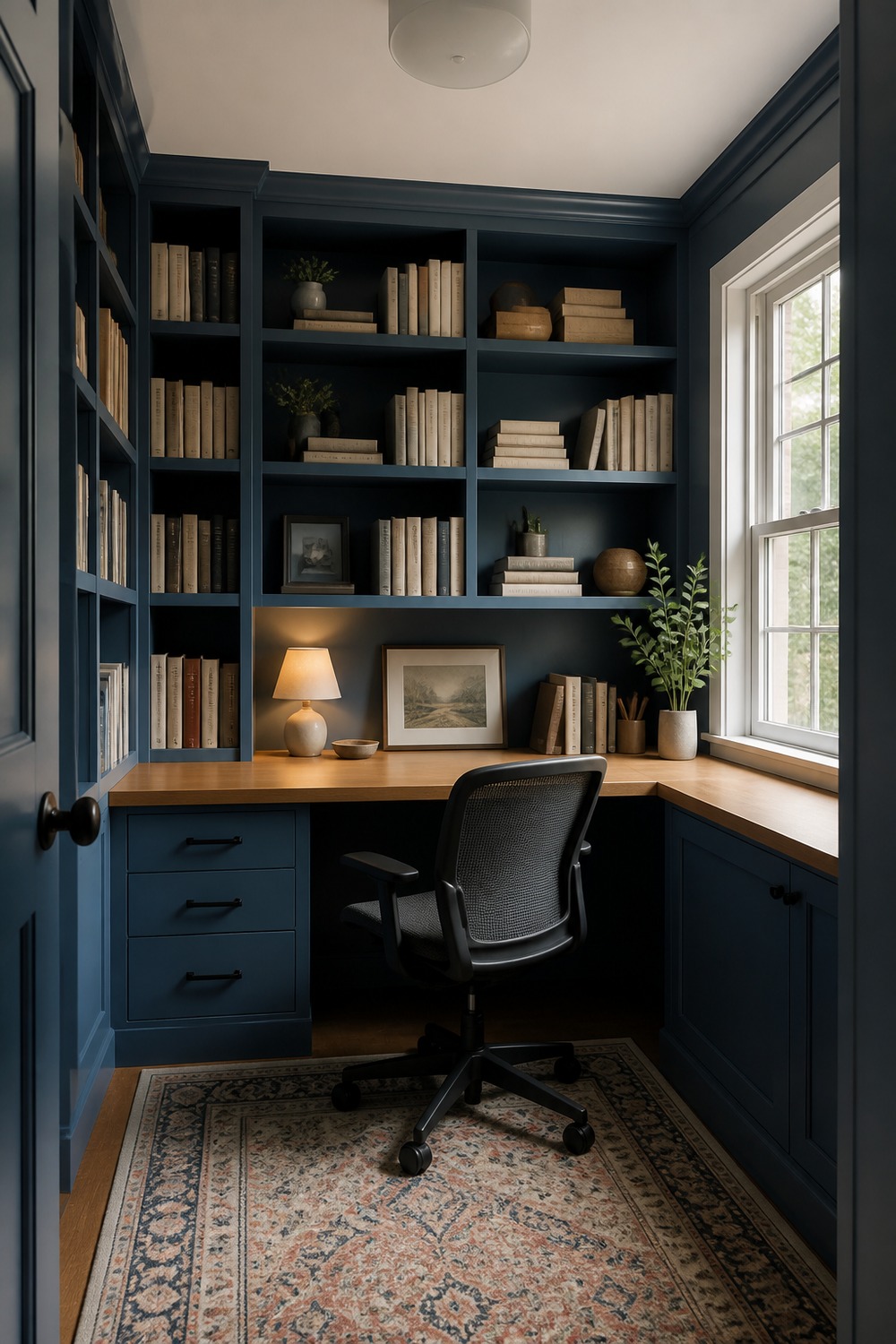
Muted blue cabinets make the oak desktop stand out as a clean working strip. File drawers below handle the practical storage, and the mix of lamp light and window light prevents the deep color from feeling flat.
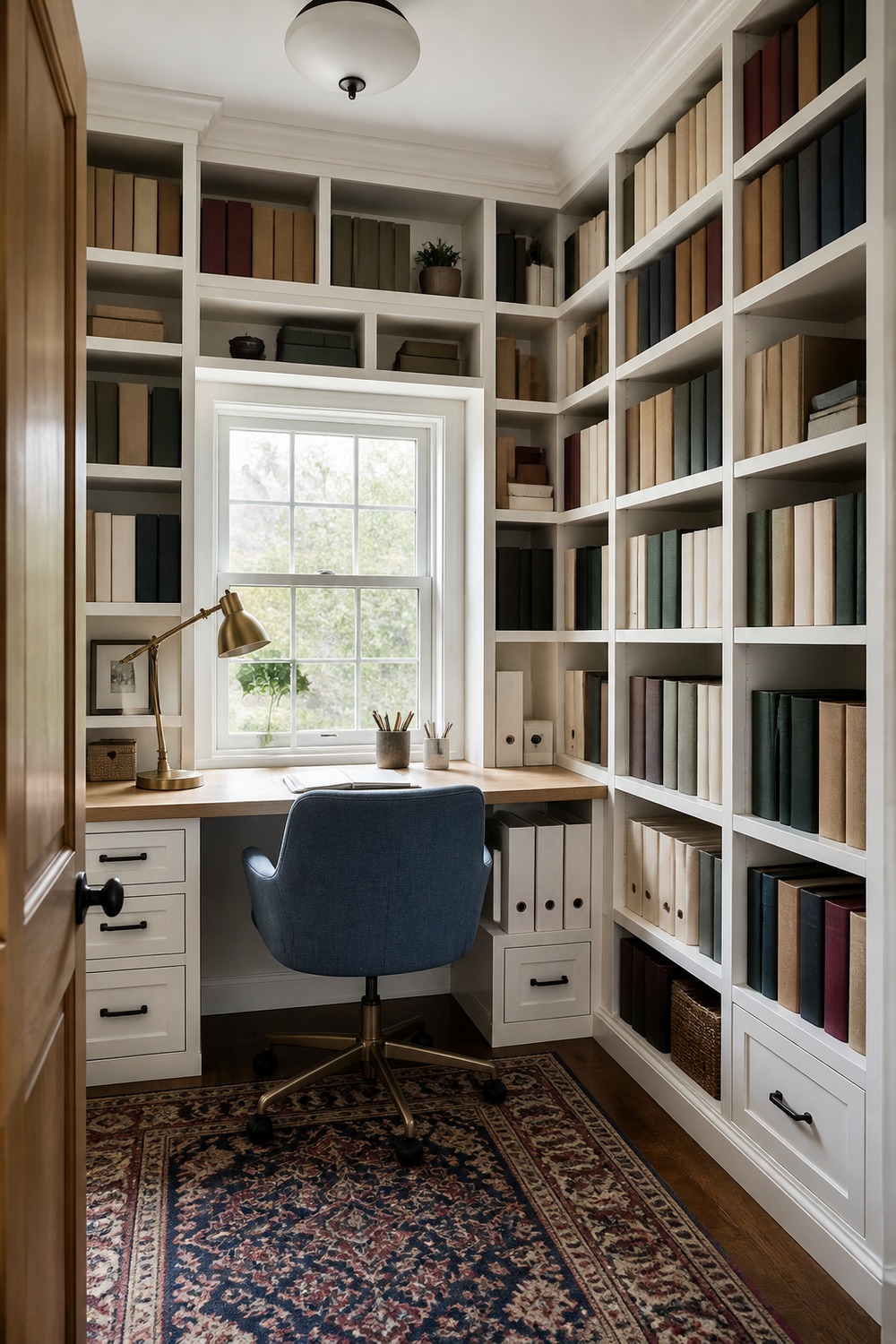
White shelving keeps this book-heavy office bright, while the navy chair and patterned rug bring in enough color to avoid a sterile look. Baskets and boxes on the upper shelves are practical for the loose items that never stack neatly.
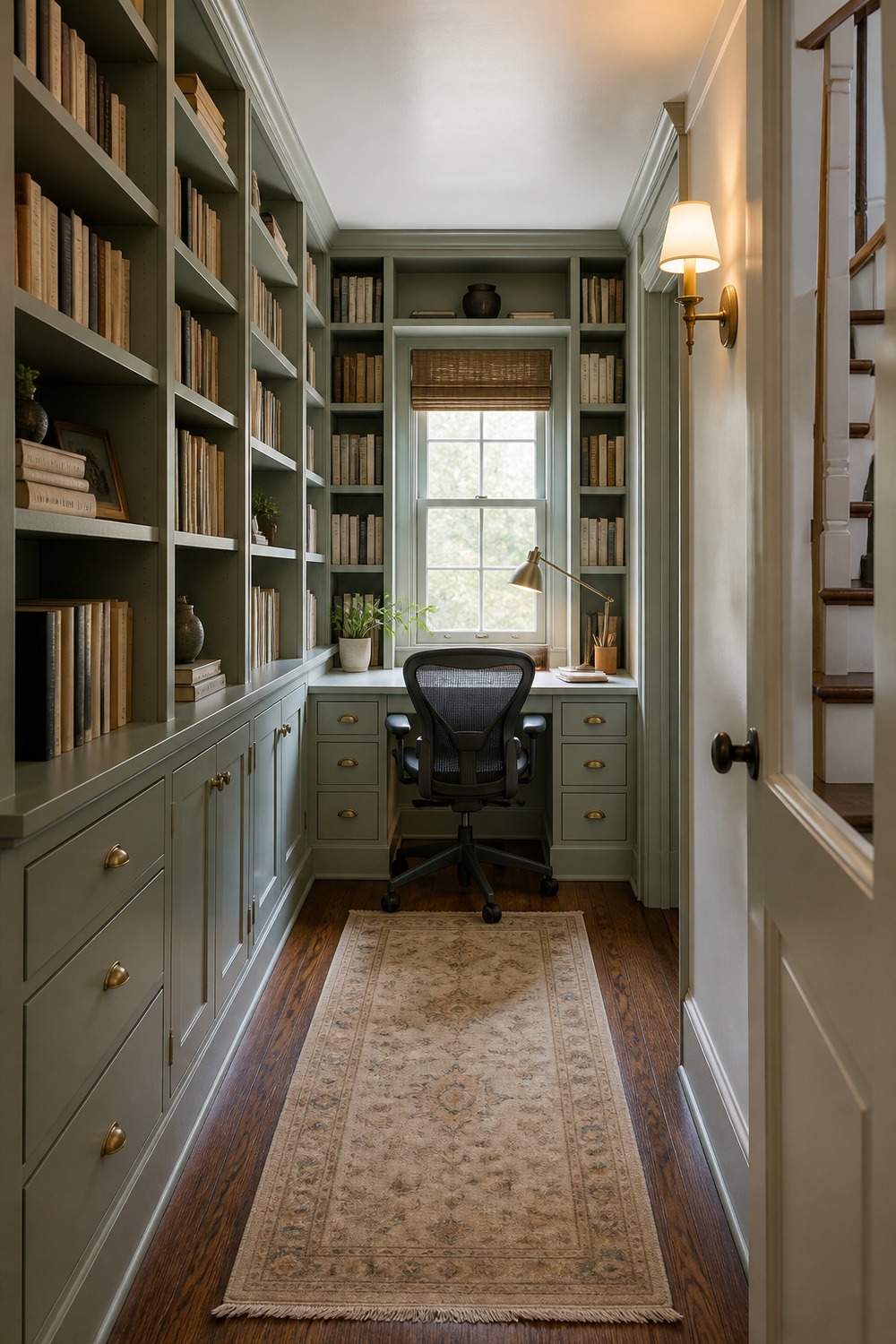
A dead-end hallway can become useful without losing its sense of passage. Shallow shelves line the approach, and the desk sits at the brightest point under the window instead of projecting into the walking lane.
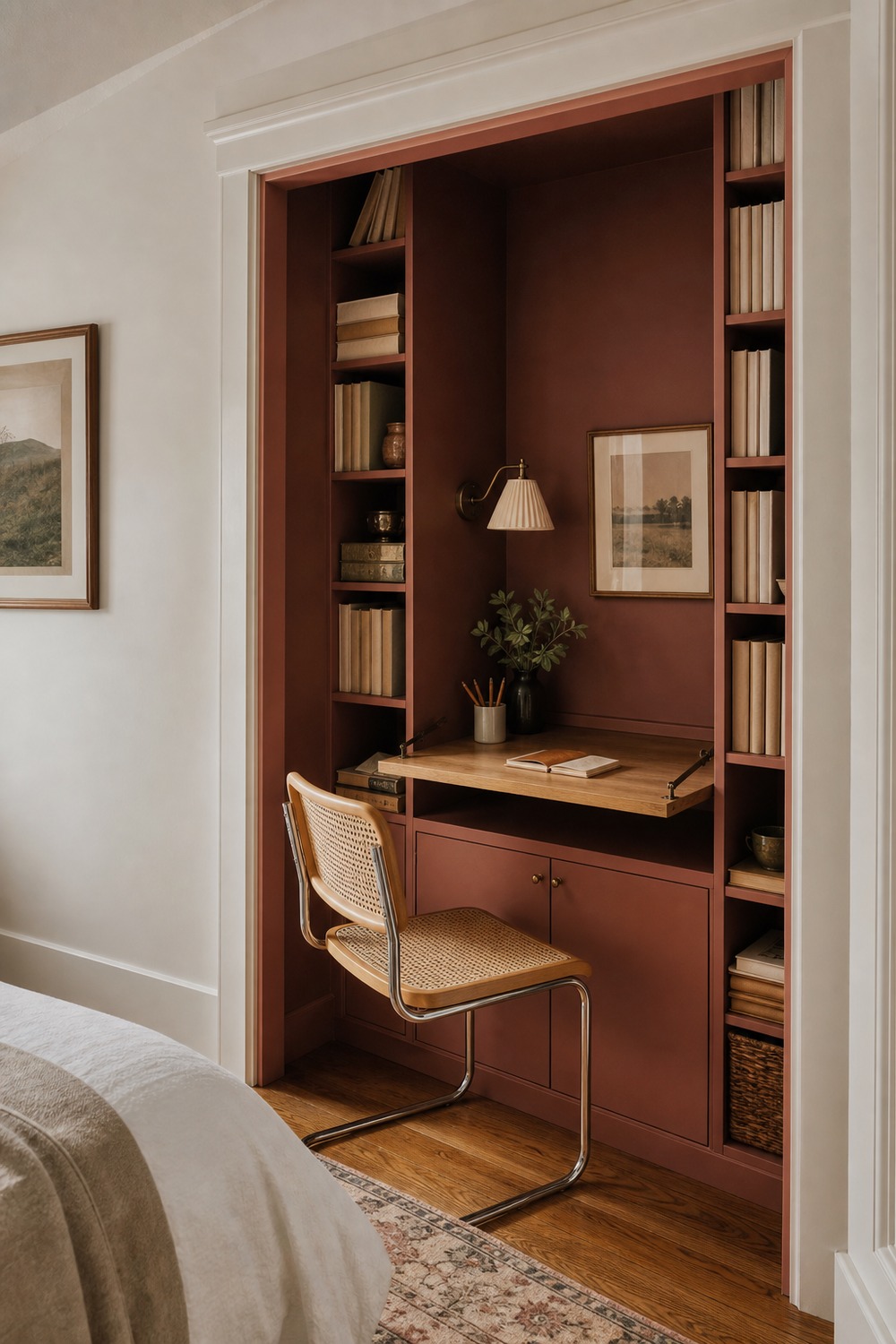
Terracotta makes this former closet feel like a deliberate little room rather than leftover bedroom space. The oak writing surface softens the color, and closed cupboards below keep the compact opening tidy when viewed from the bed.
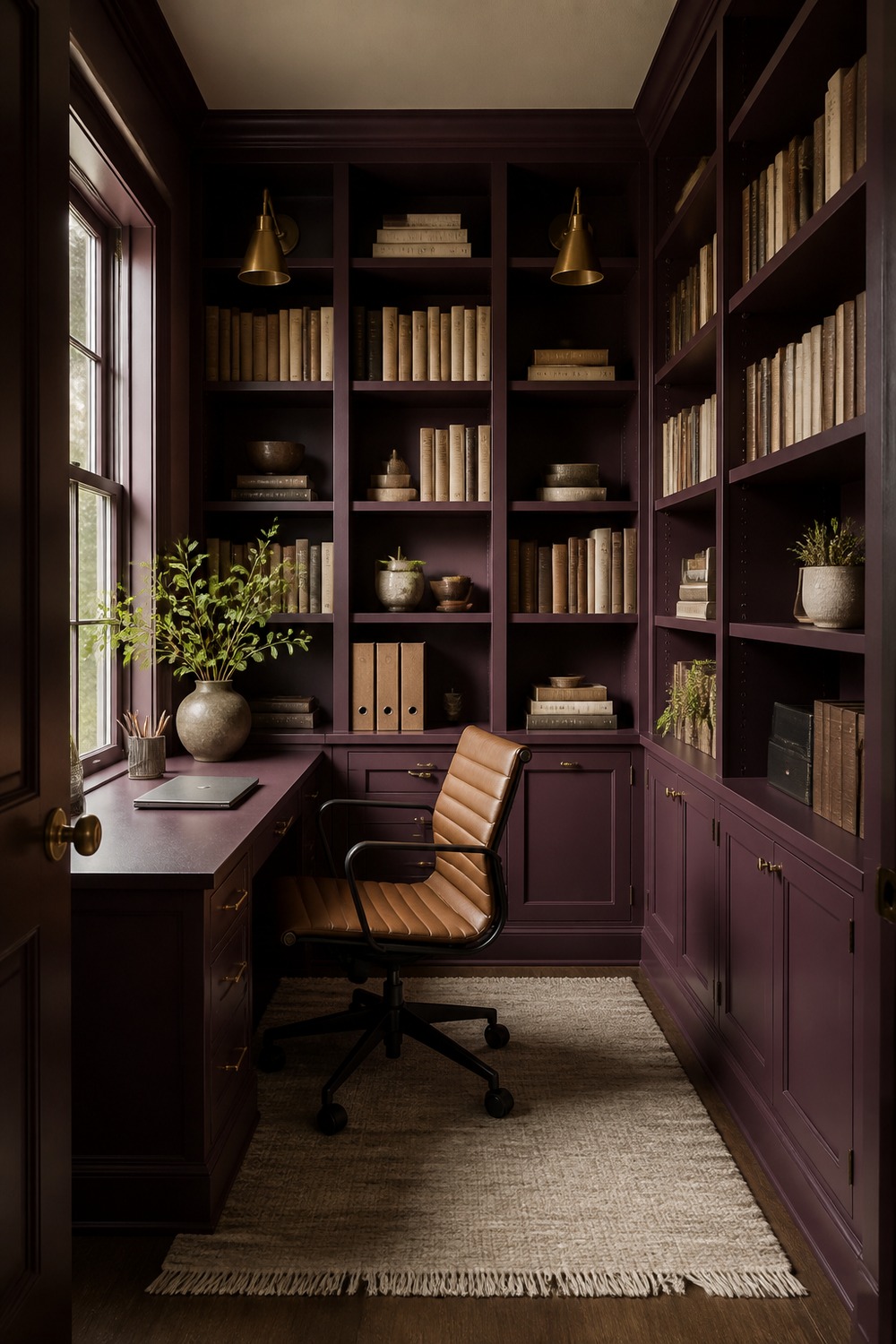
Deep plum is bold, but the pale rug and daylight stop the room from becoming gloomy. Paired brass sconces free the desktop from lamp bases and spread light evenly across the shelves and work area.
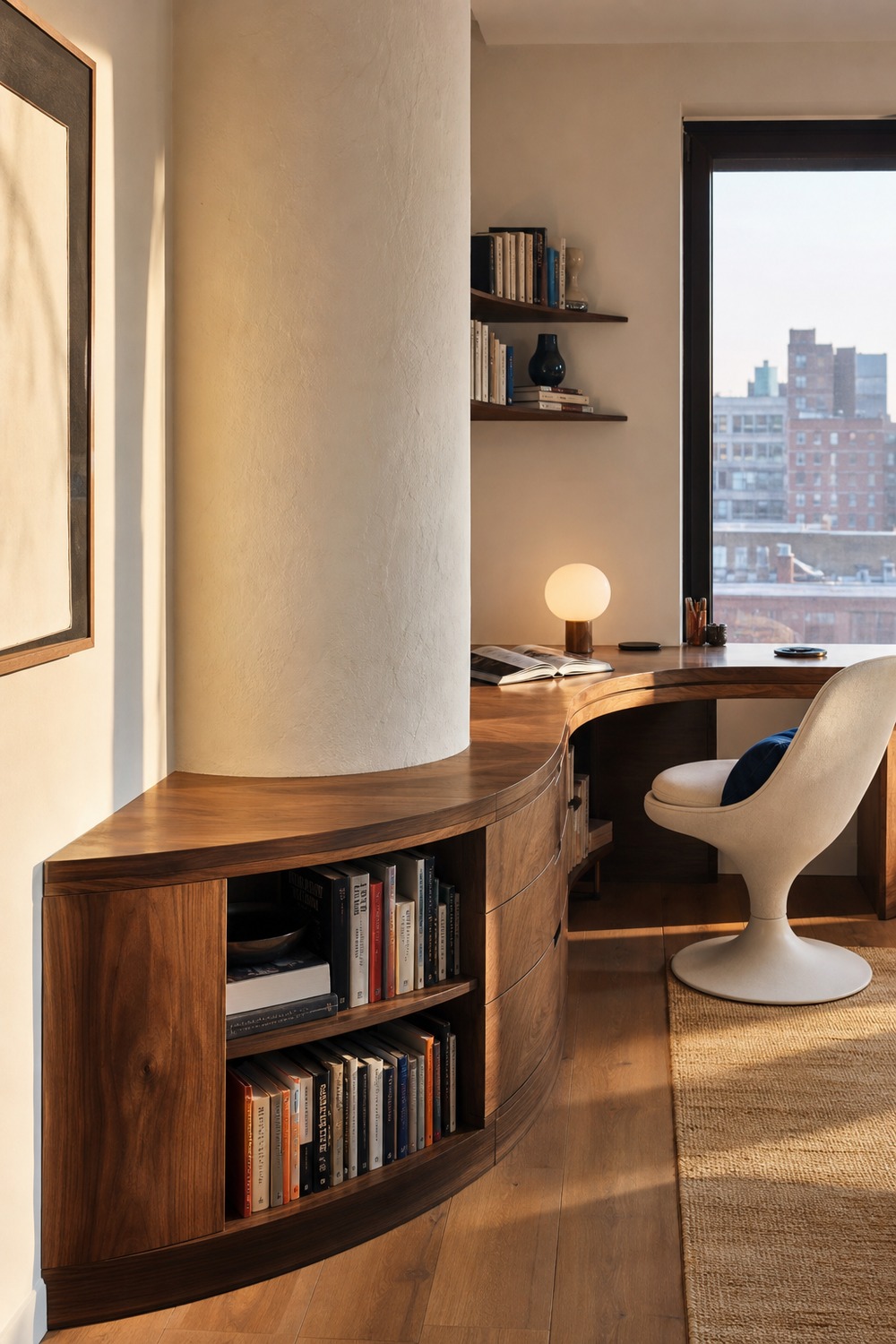
Curved walnut shelving is a clever response to a structural column that might otherwise waste the corner. The low book ledge follows the architecture, and the compact desk beyond still has drawers and a clear place for the chair.
The strongest built-in offices make the desk, shelves, and lower cabinets read as one useful piece of the room. Even a landing or shallow closet can become a comfortable work zone when the chair still moves freely and everyday clutter has somewhere to disappear.
Leave a comment