
A small office-library gets frustrating when the desk swallows the floor and the books become background clutter. The better rooms give shelves, task light, chair clearance, and closed storage equal attention, so reading and working can comfortably share a modest footprint.
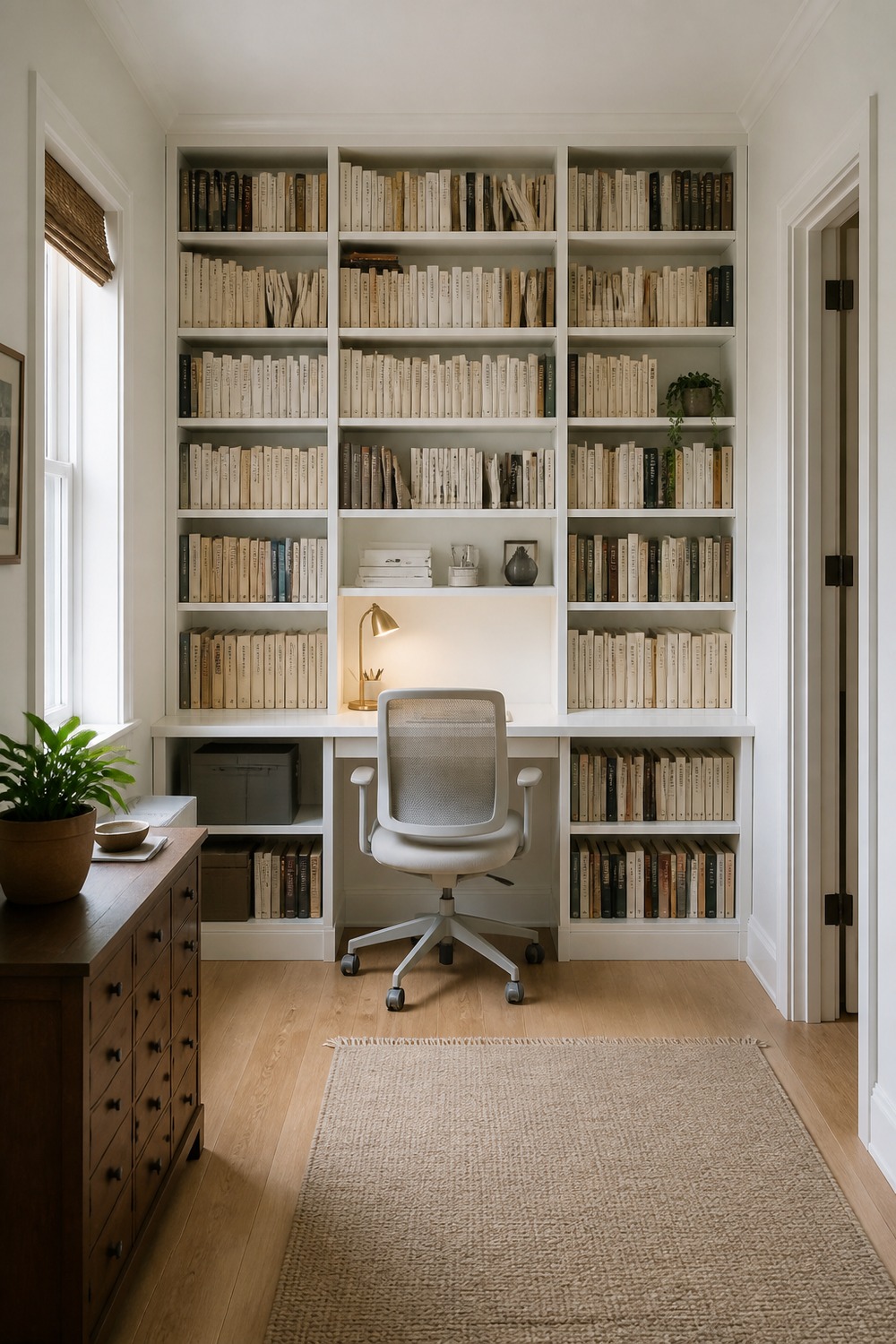
A full wall of white shelving gives the books a proper home while the slim desk keeps the center of the room open. The pale oak floor and small task chair stop all that cabinetry from feeling heavy.
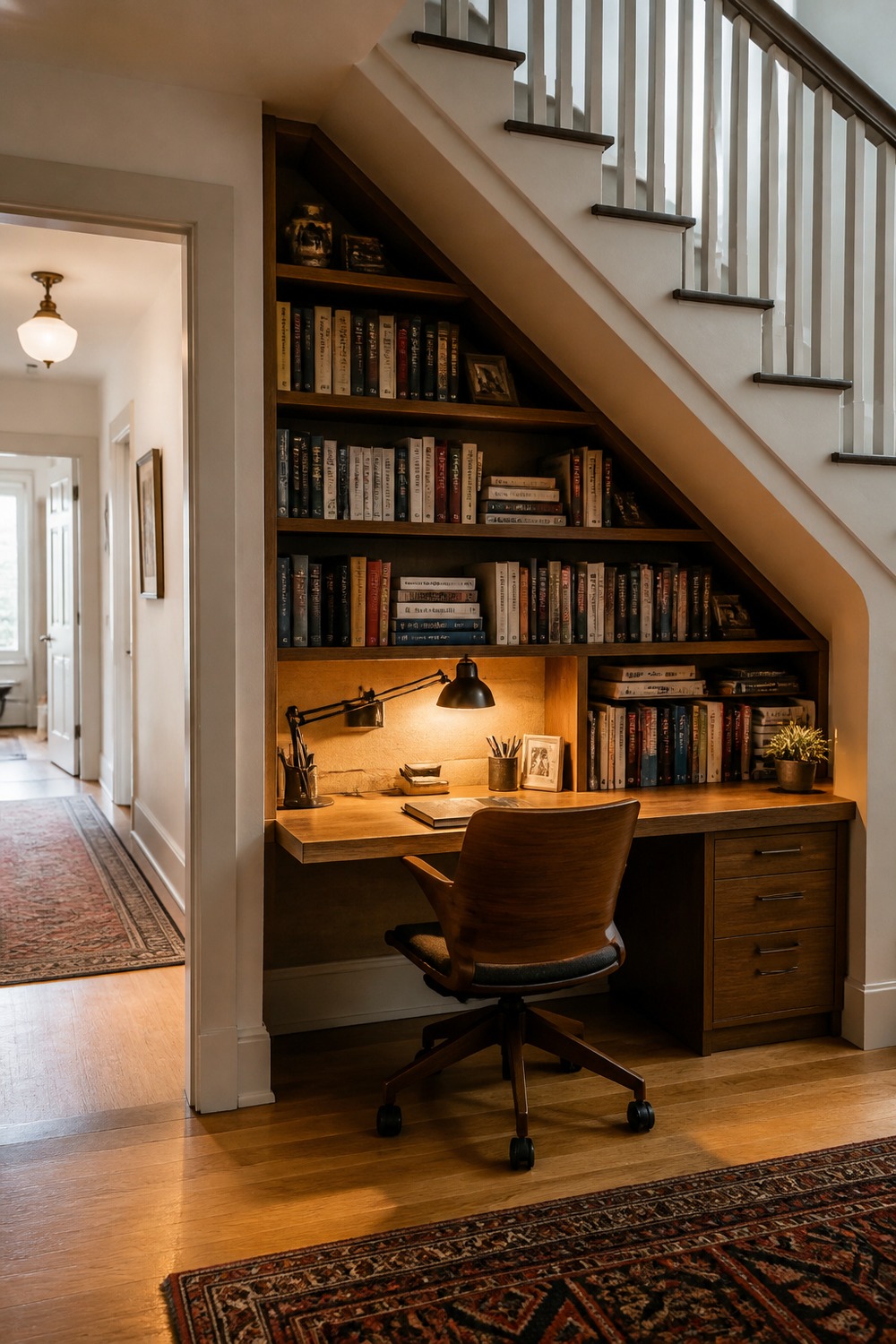
Fitting the shelves to the stair slope uses an awkward pocket without sacrificing headroom at the desk. A focused reading lamp makes this tucked-away spot useful after the hallway daylight fades.
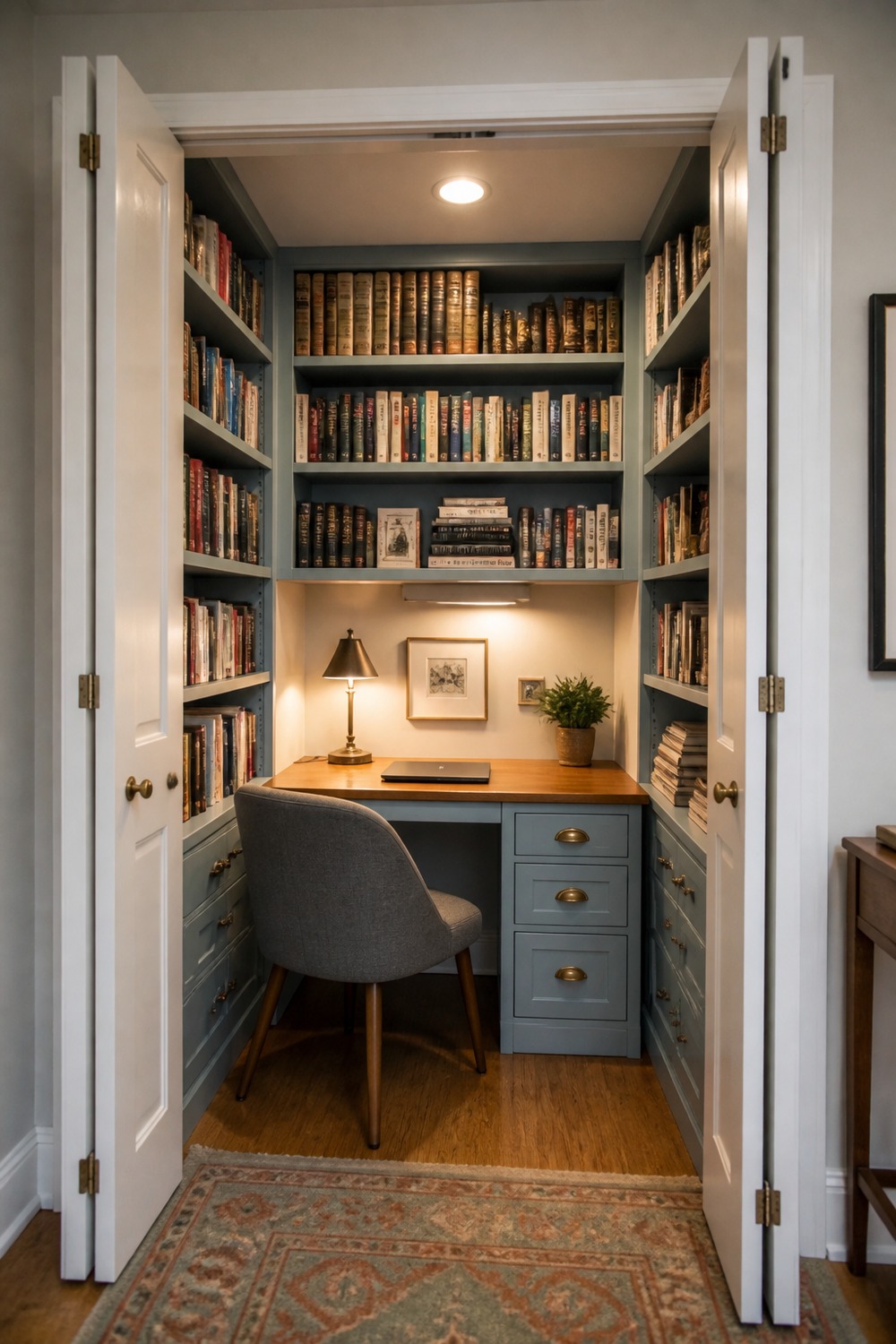
Folded-back doors let this closet office disappear when work is over, but the shelving inside is substantial enough for more than a few decorative books. Pale blue cabinetry also gives the tiny niche some depth.
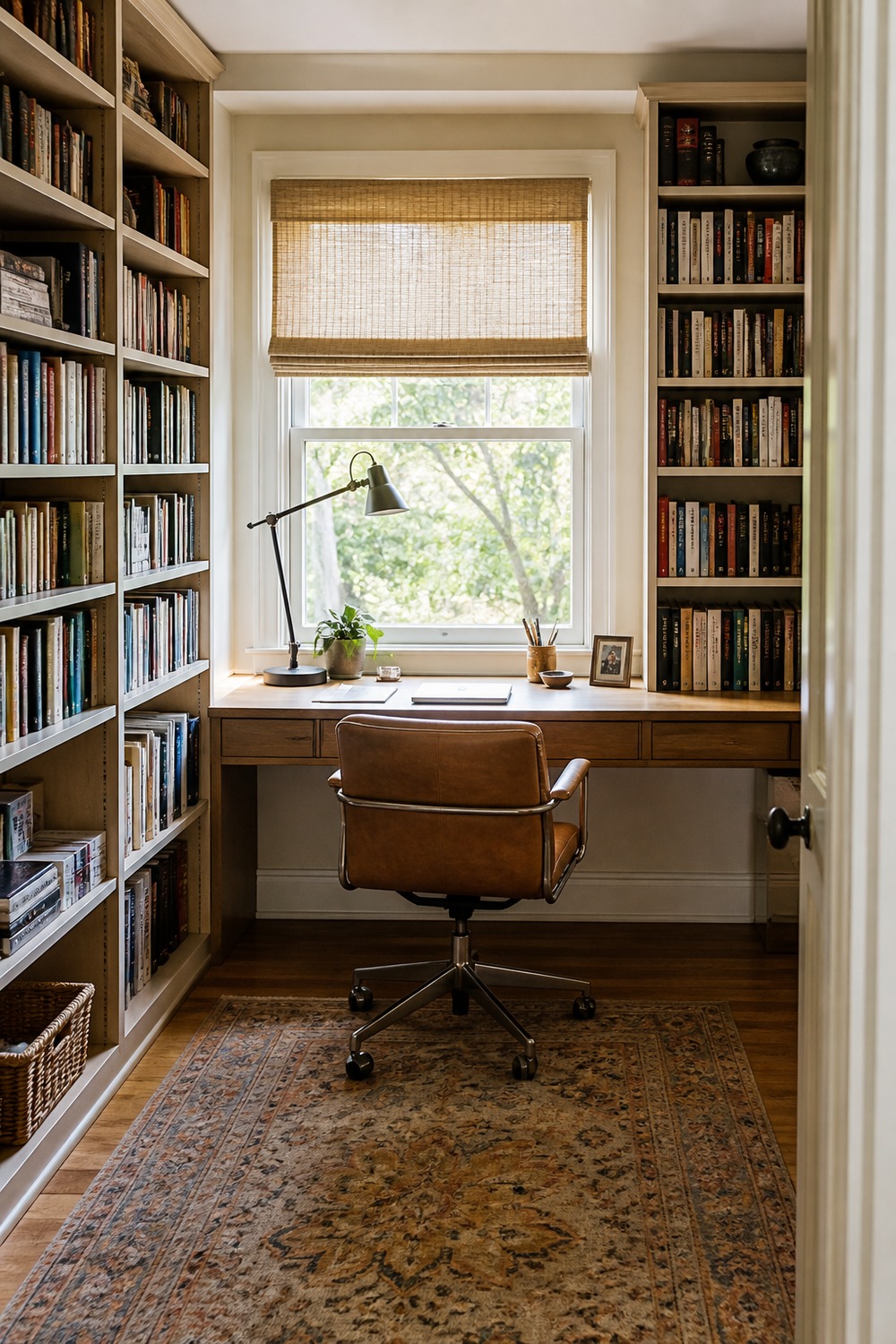
Placing the desk under the window solves two problems at once: daylight lands where it is needed, and tall bookcases can occupy both sides. The linen shade keeps glare under control without closing off the view.
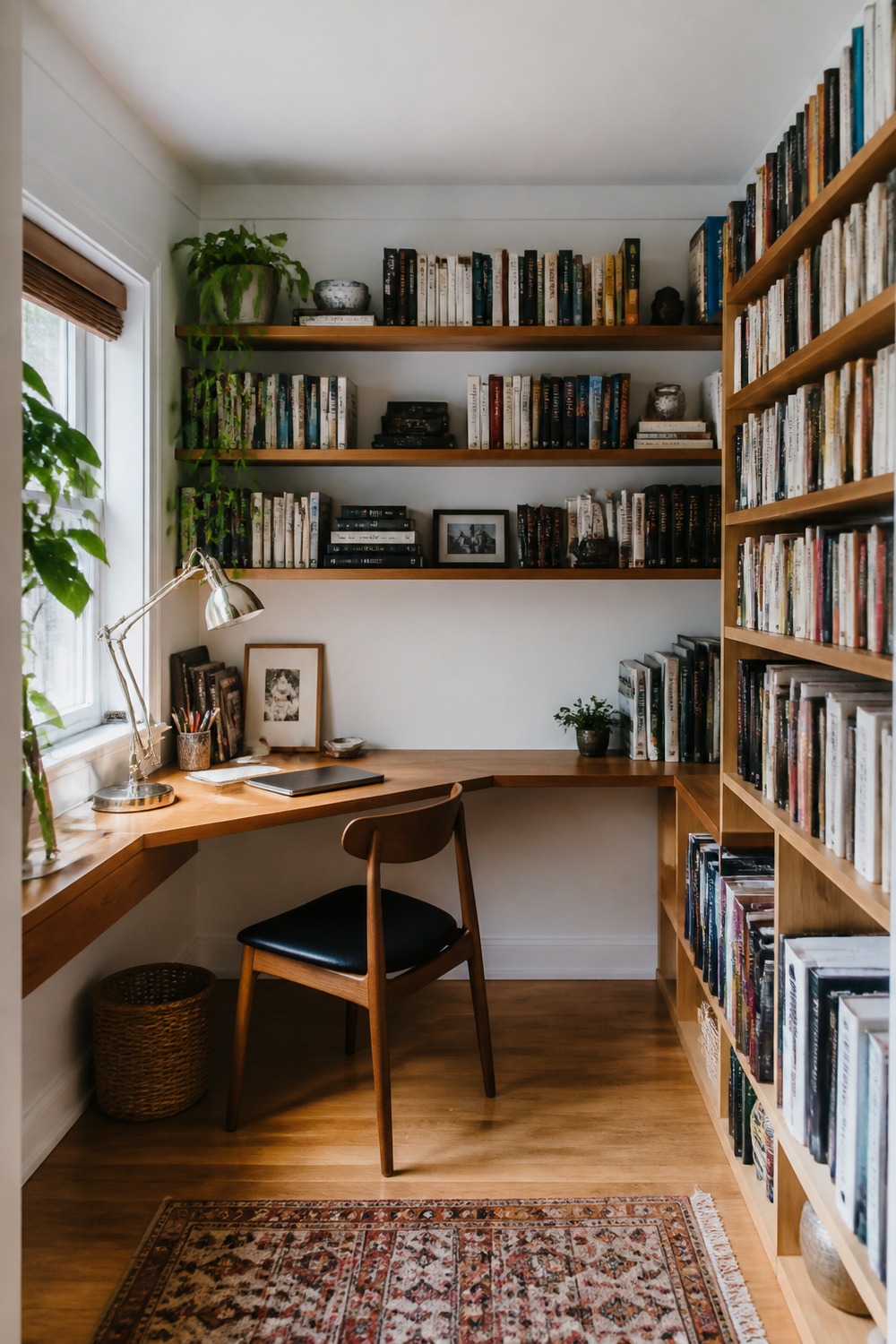
The wall-mounted desktop leaves the floor visually quiet and makes chair clearance much easier in a tight corner. Open oak shelves above hold reference books without turning the work surface into storage.
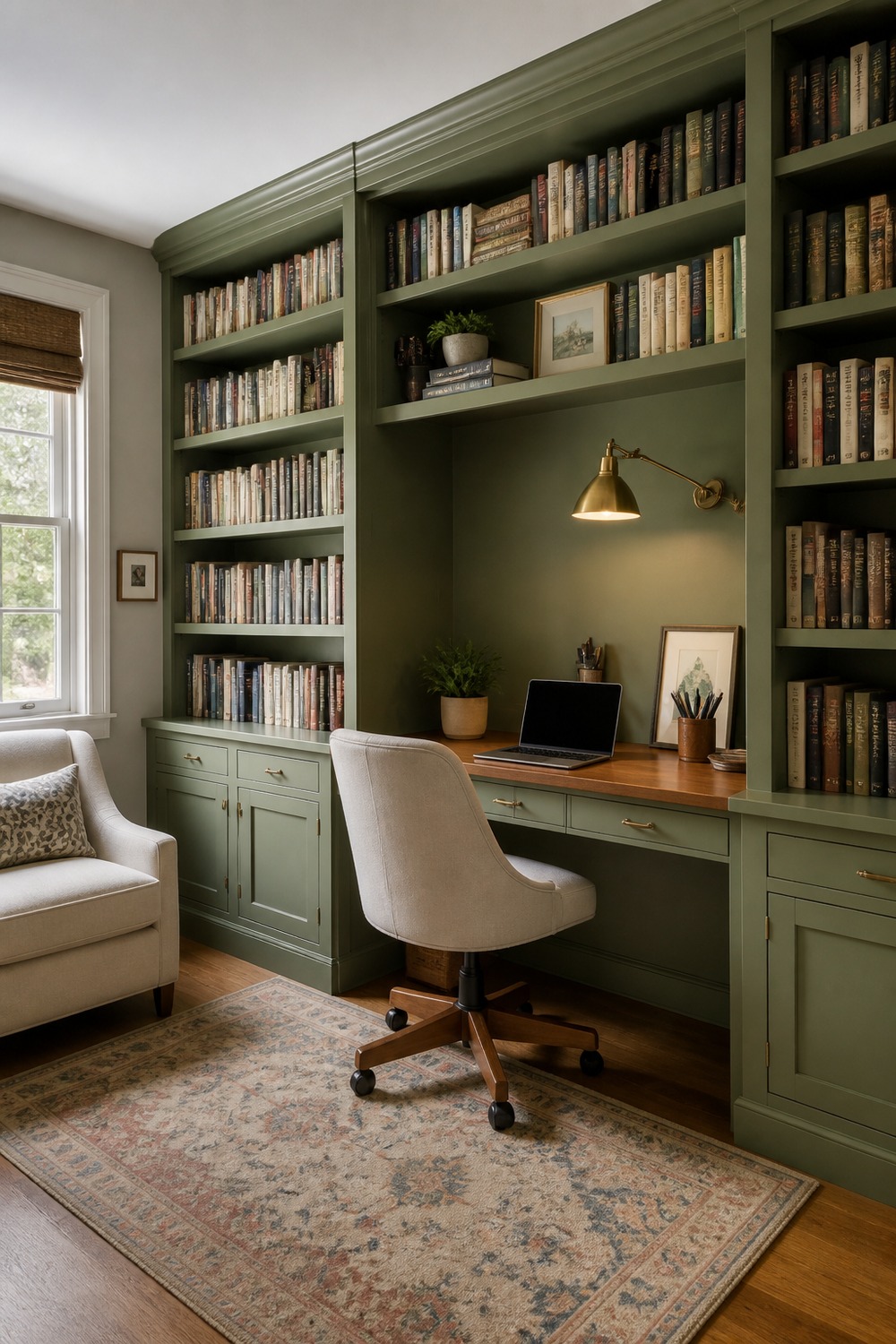
Sage built-ins soften a shelf-heavy room, especially with a small brass task light warming the desk niche. Closed cabinets below are useful for printer supplies and paperwork that would make open shelves look restless.
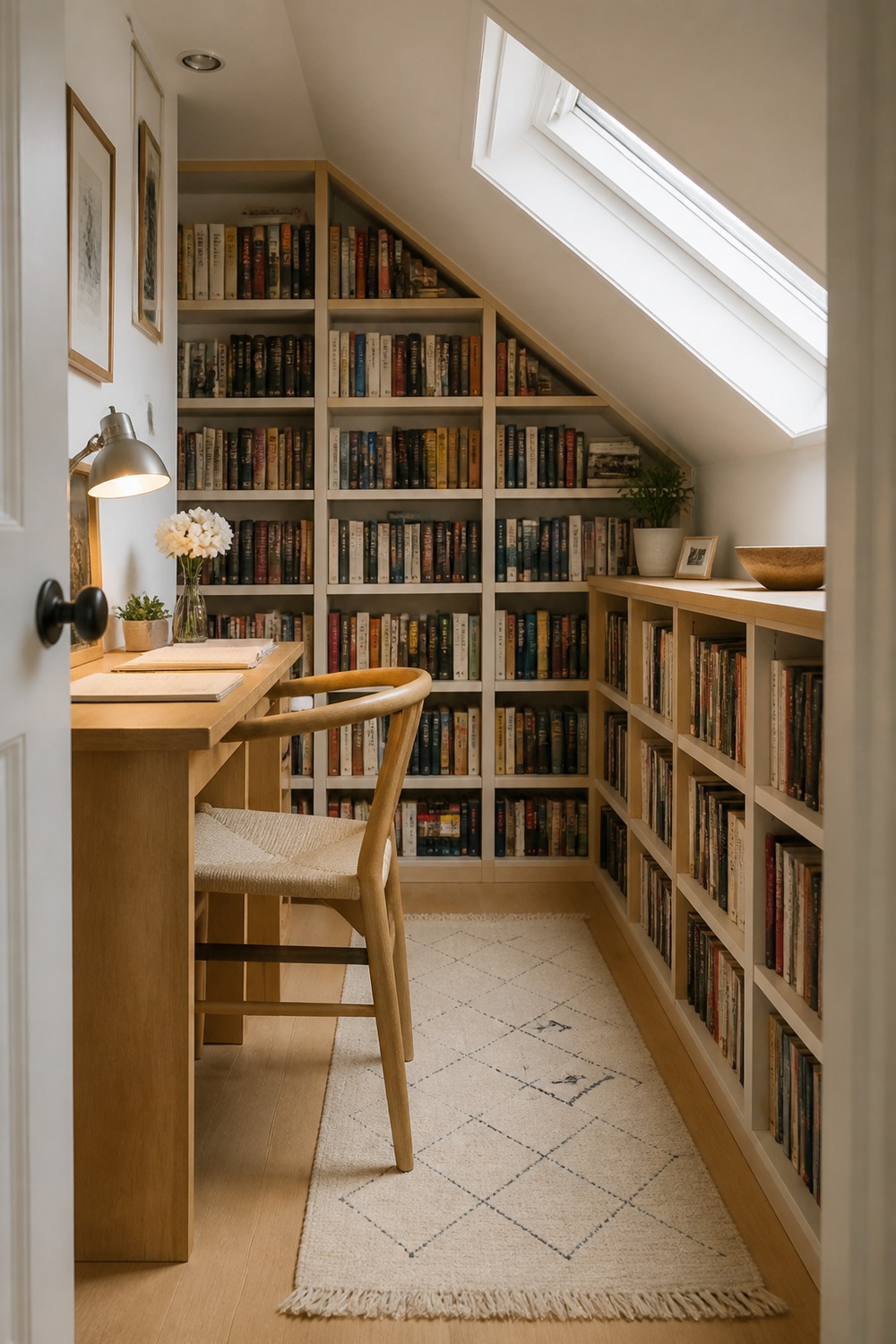
Low bookcases belong under attic eaves because they use the shallow edges while preserving realistic headroom near the chair. The skylight brightens the desk without demanding another piece of furniture.
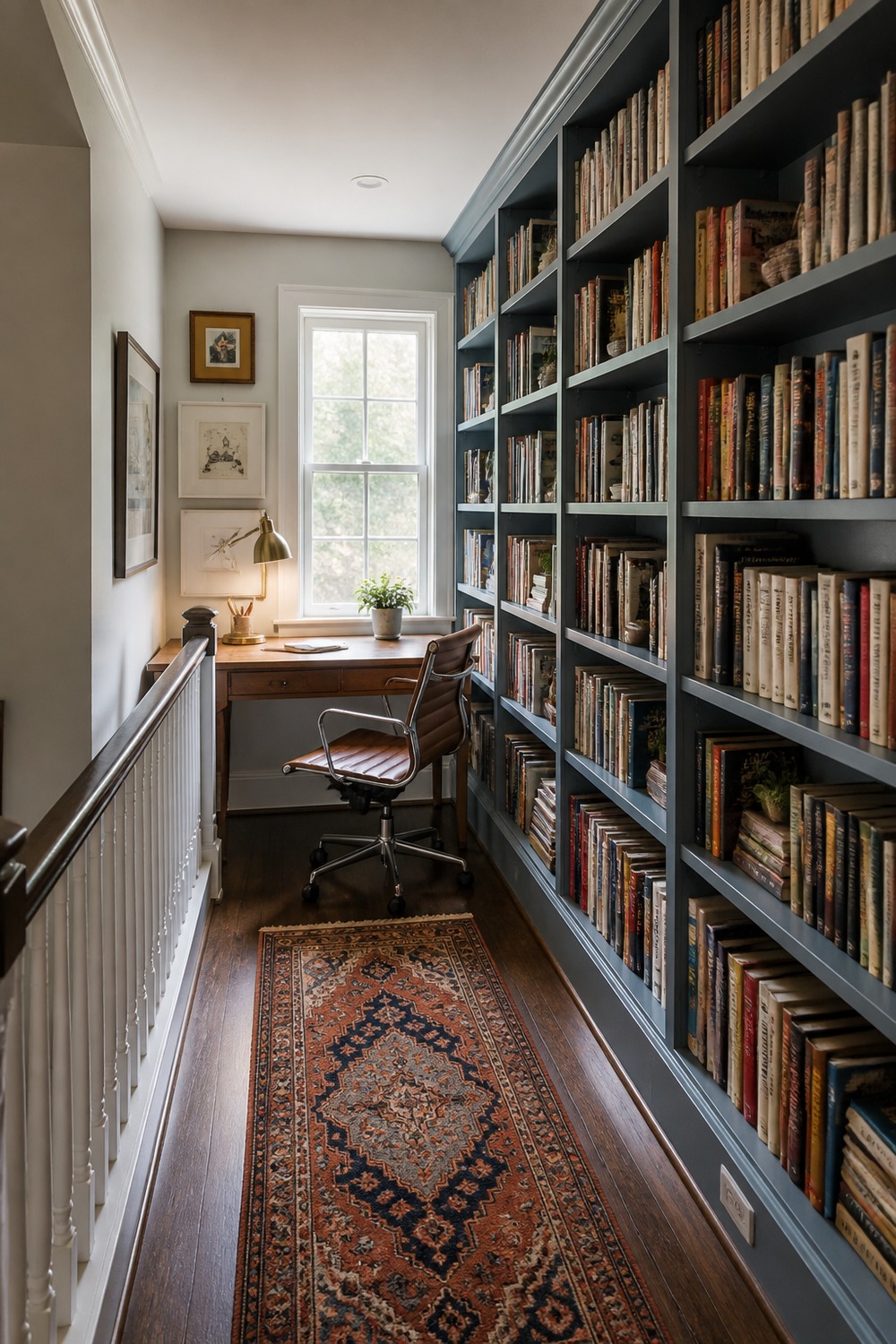
This landing works because the runner, railing, and clear path still read as circulation space. Shelves hug one wall, and the narrow desk at the end claims the dead zone without blocking the stairs.
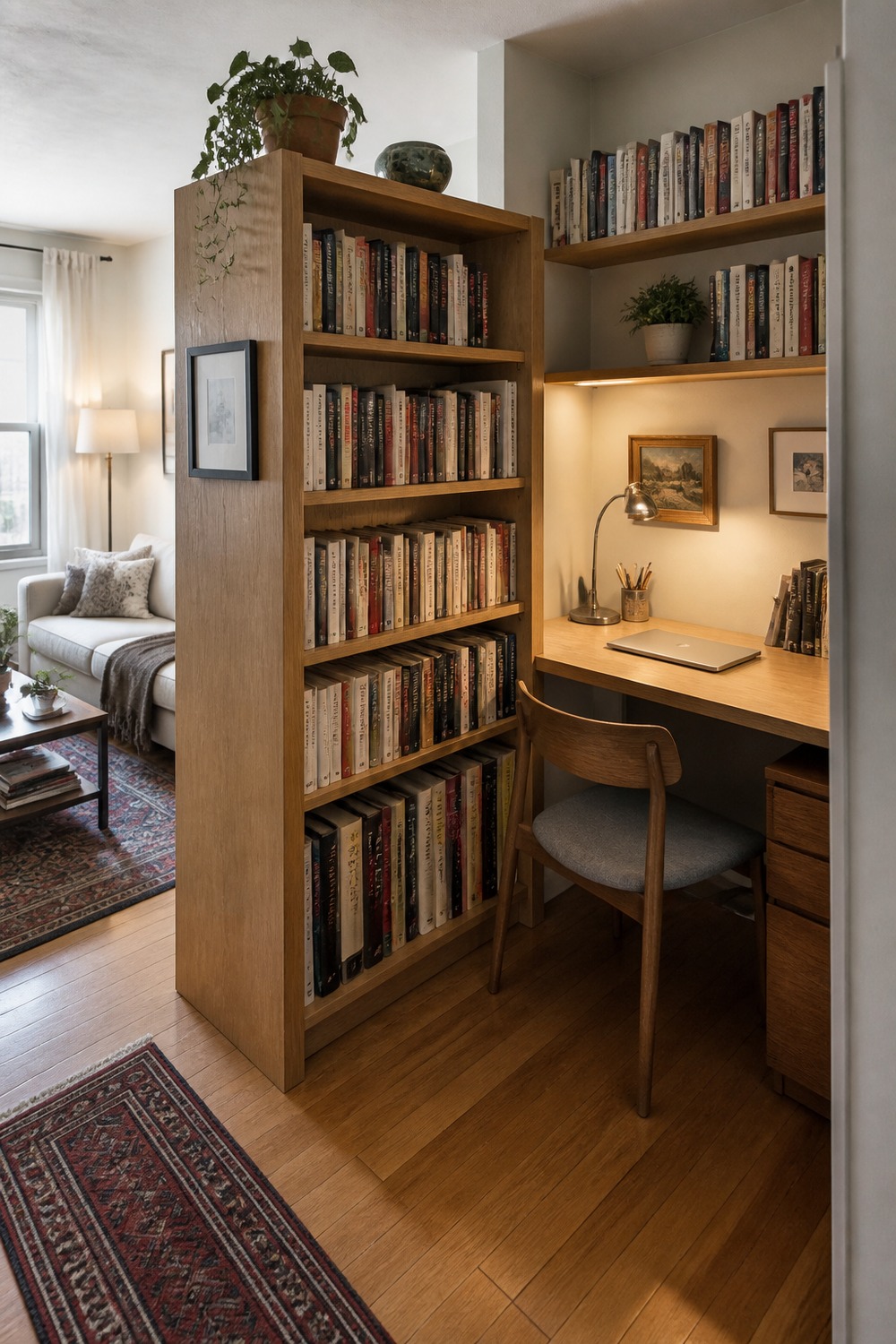
A double-sided bookcase creates an office boundary without building a solid wall. Books can face both rooms, while the compact oak desk stays tucked behind the divider and out of the main living area.
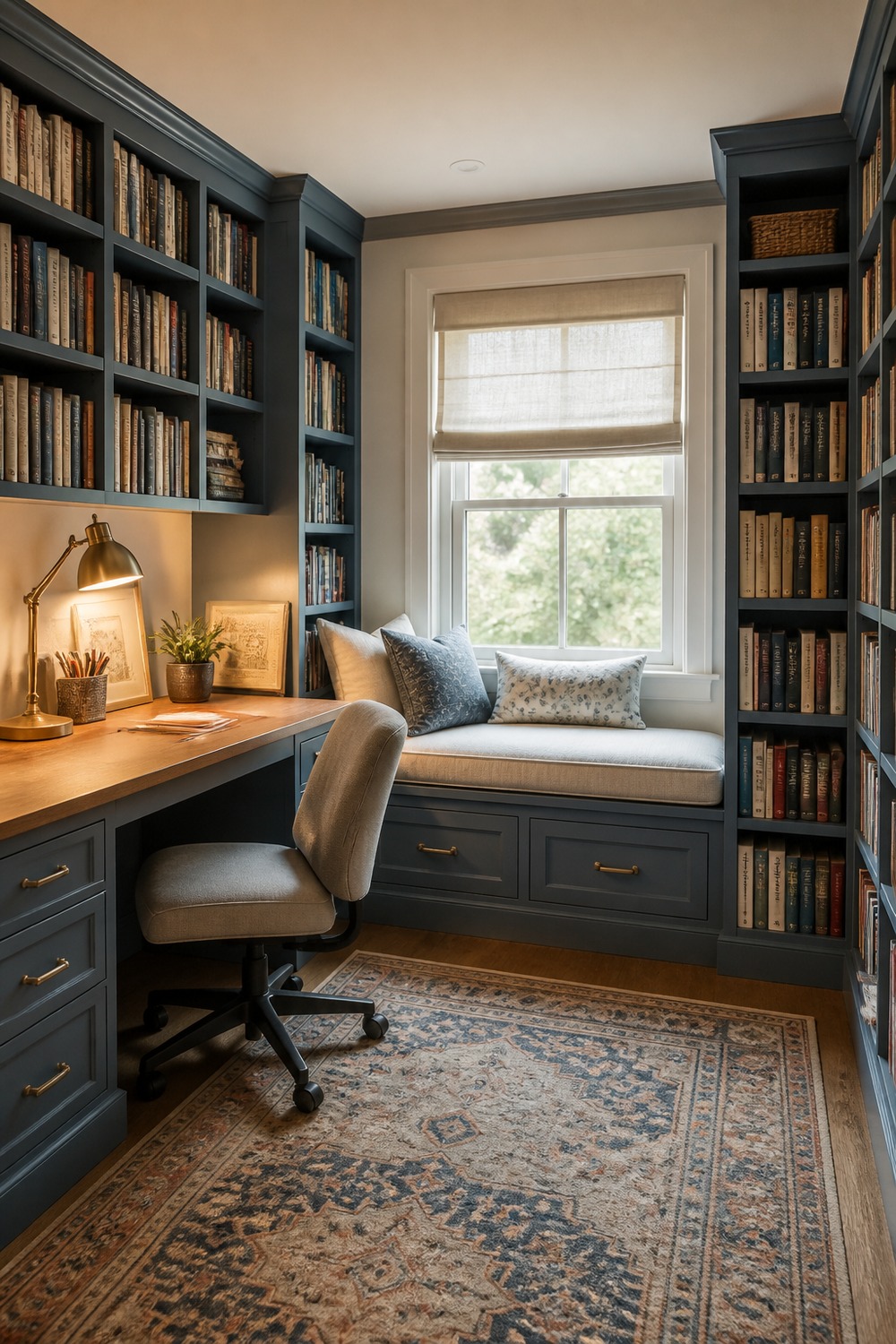
The window bench gives this tiny library a genuine second use beyond laptop work. Drawers under the cushion carry the bulky items, leaving the surrounding shelves free for books and a few objects.
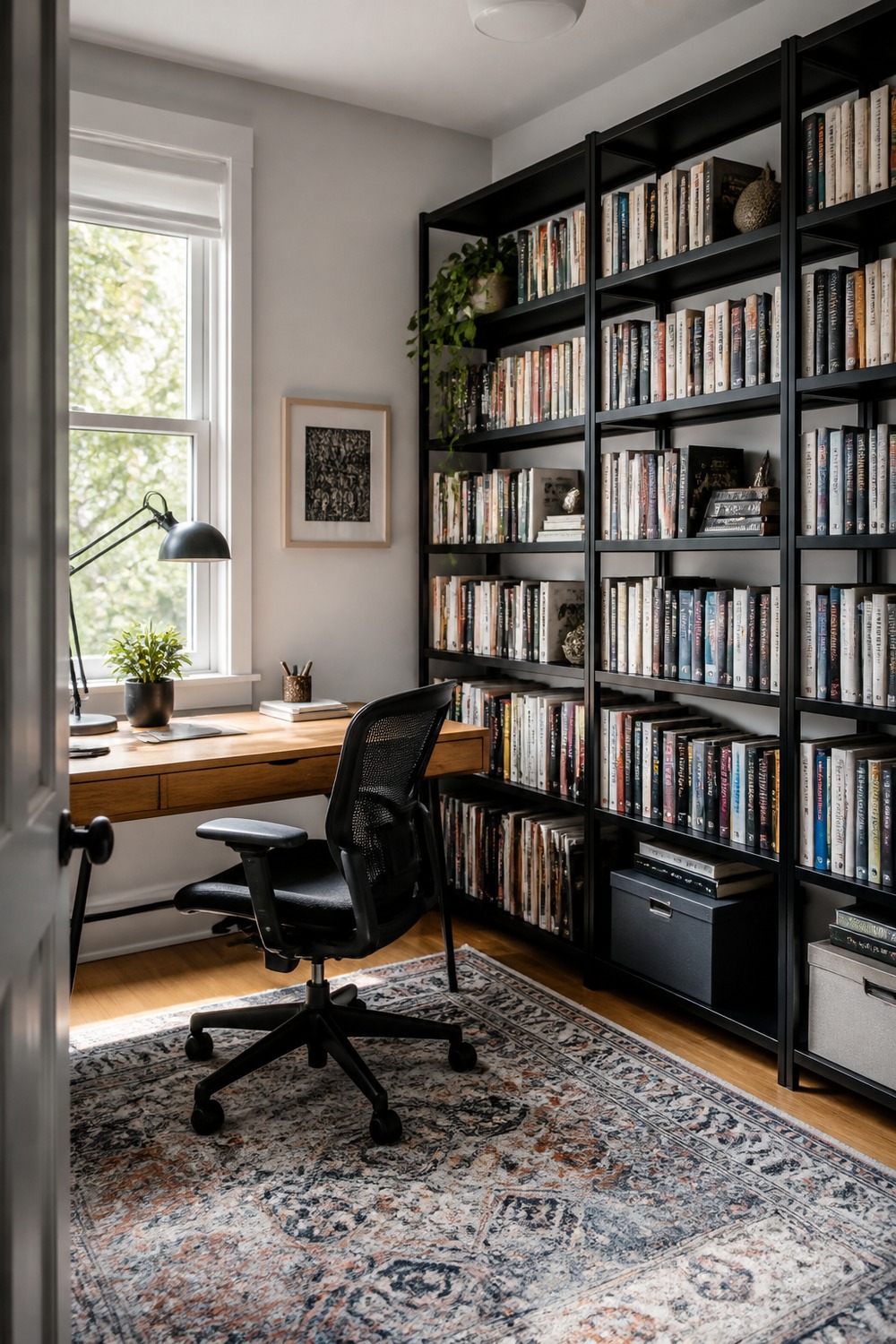
Airy black metal shelving adds height without the visual weight of dark built-ins. Warm oak at the desk and good window light keep the workspace from sliding into a cold industrial look.
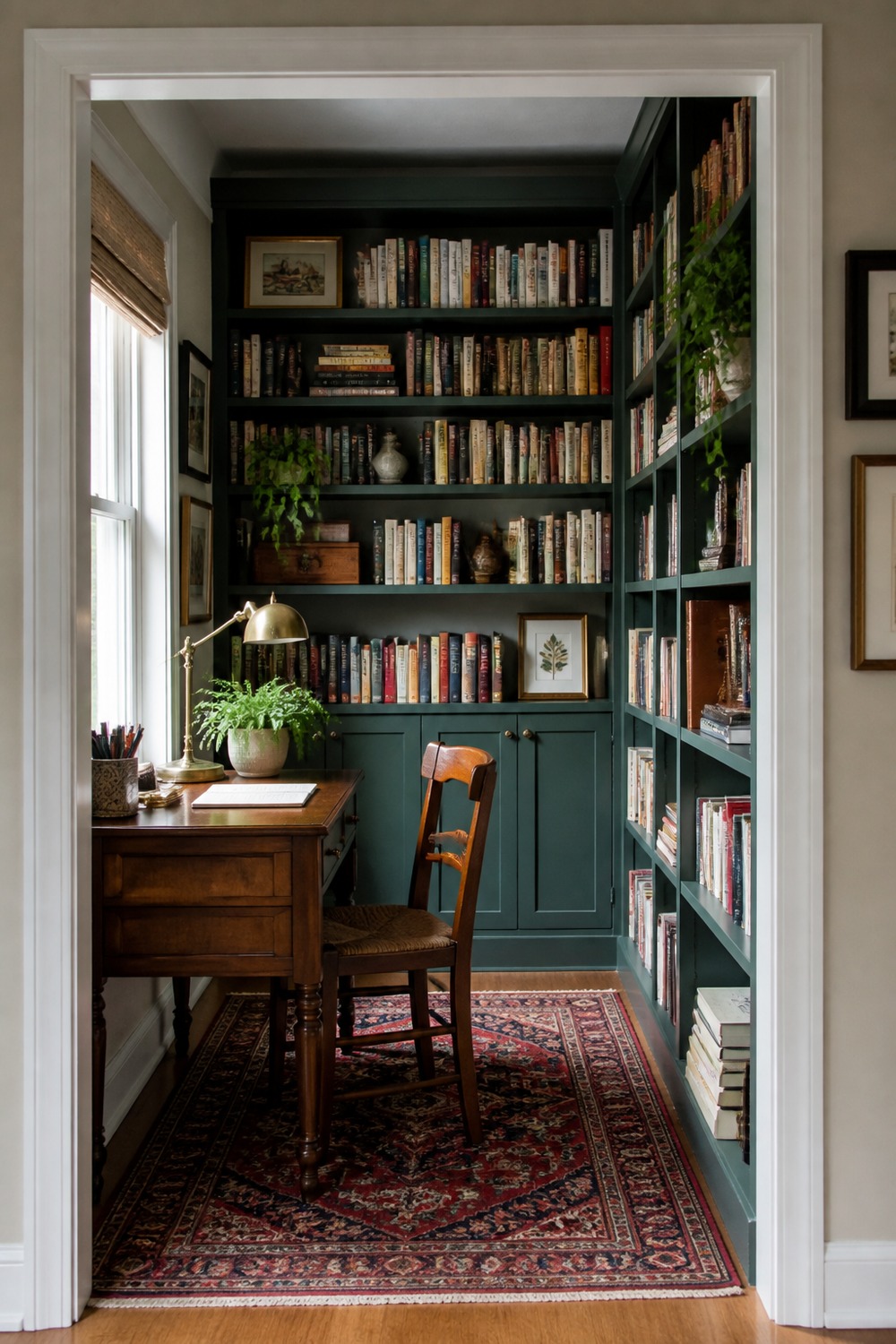
Painted bookcases and an antique writing desk make this alcove feel collected rather than newly installed. The patterned rug handles some wear, and the doorway view gives the small room a pleasing sense of separation.
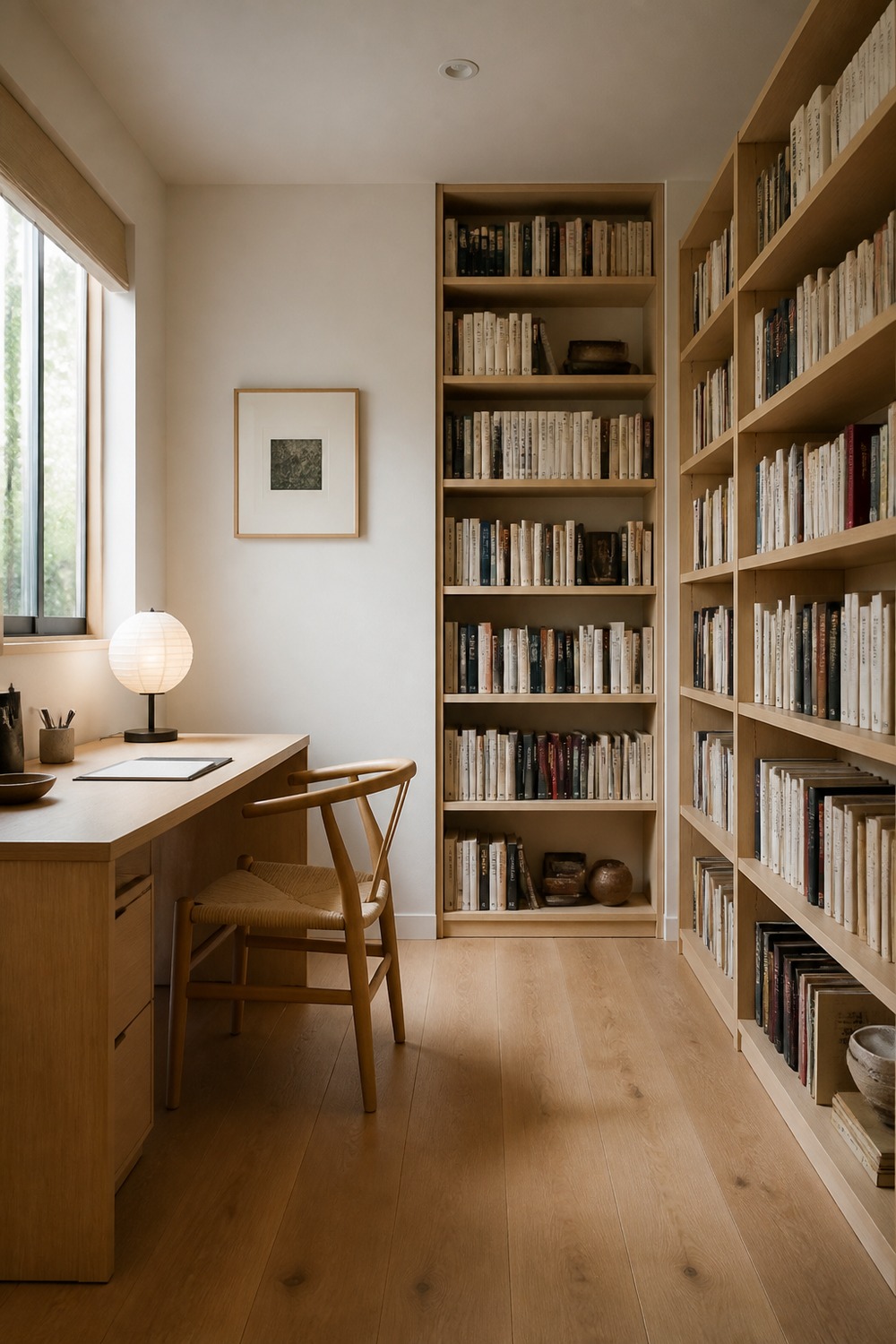
Pale oak shelves, a low desk, and a paper lamp create a calmer library than rows of heavy cabinetry would. The open floor area matters here; minimal styling still needs enough room to pull the chair back.
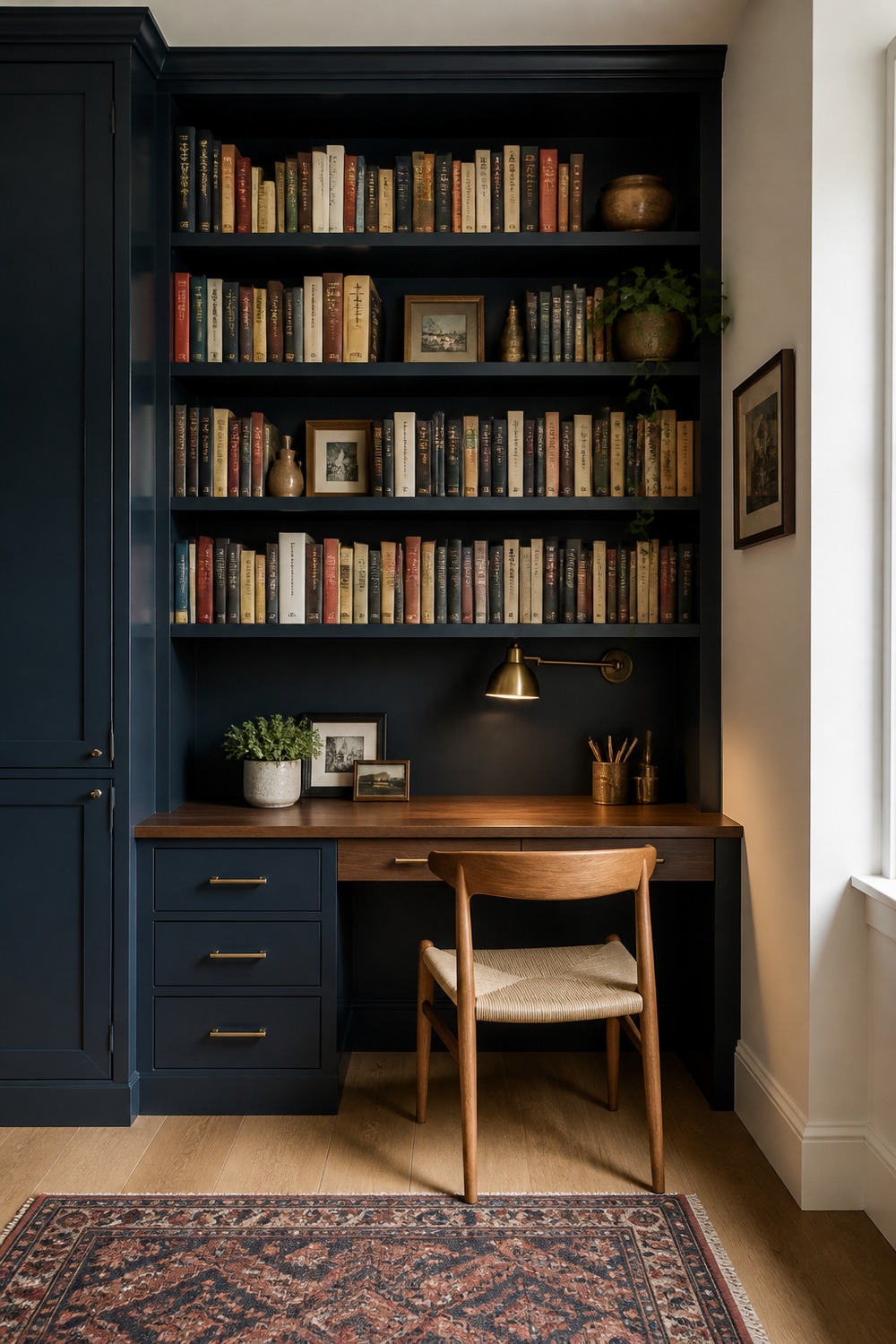
Navy shelving turns the whole work wall into one strong focal point. A brass sconce directs light onto the desk, while the warm wood chair keeps the darker paint from making the nook feel severe.
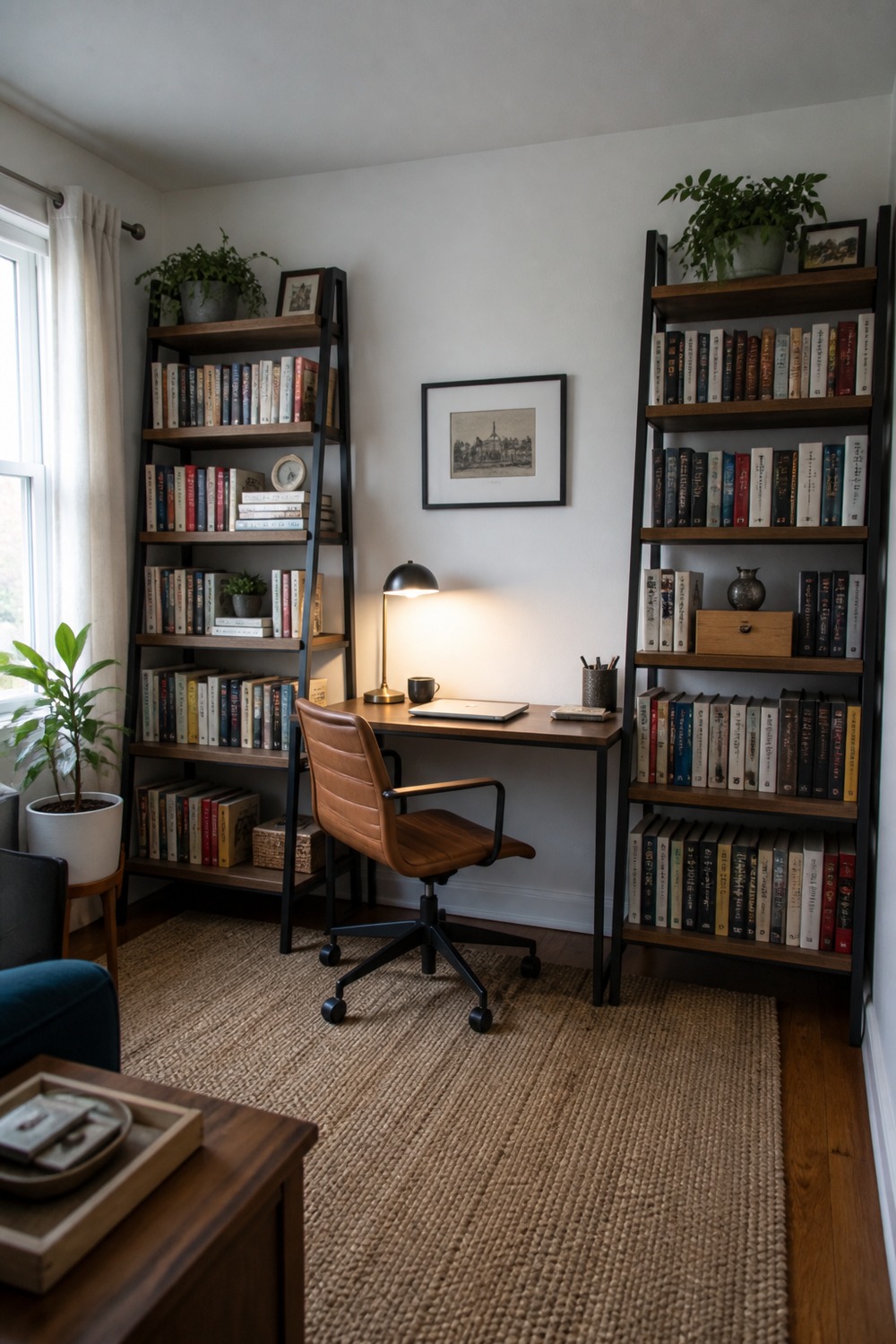
Freestanding ladder shelves are a sensible answer when built-ins are not possible. They frame the narrow desk, move with the renter, and still provide enough vertical book storage to make the library part believable.
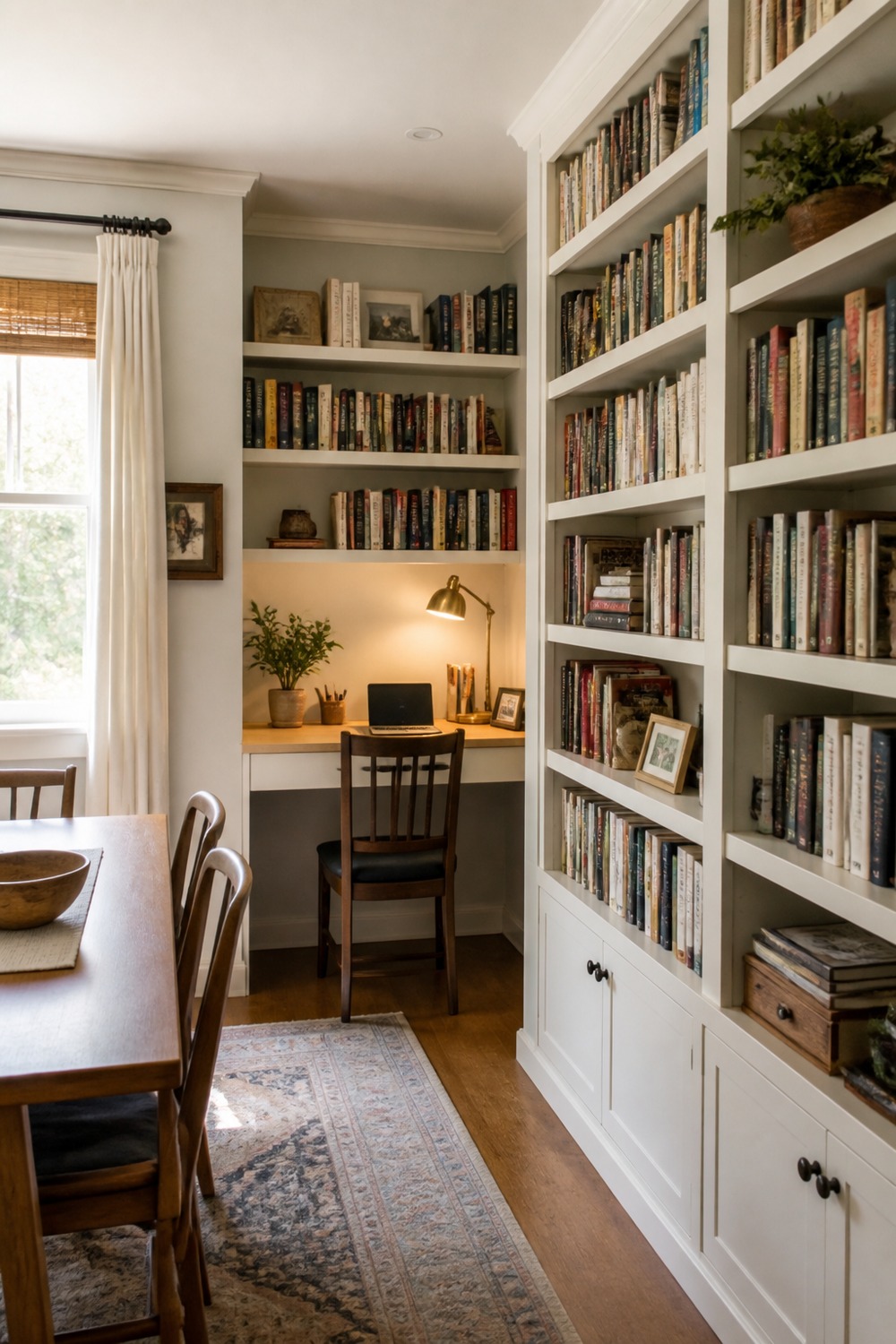
Using the edge of a dining room for work is easier when each zone remains visually clear. The desk sits beneath the book shelves, while the table stays available for meals instead of becoming a permanent paper pile.
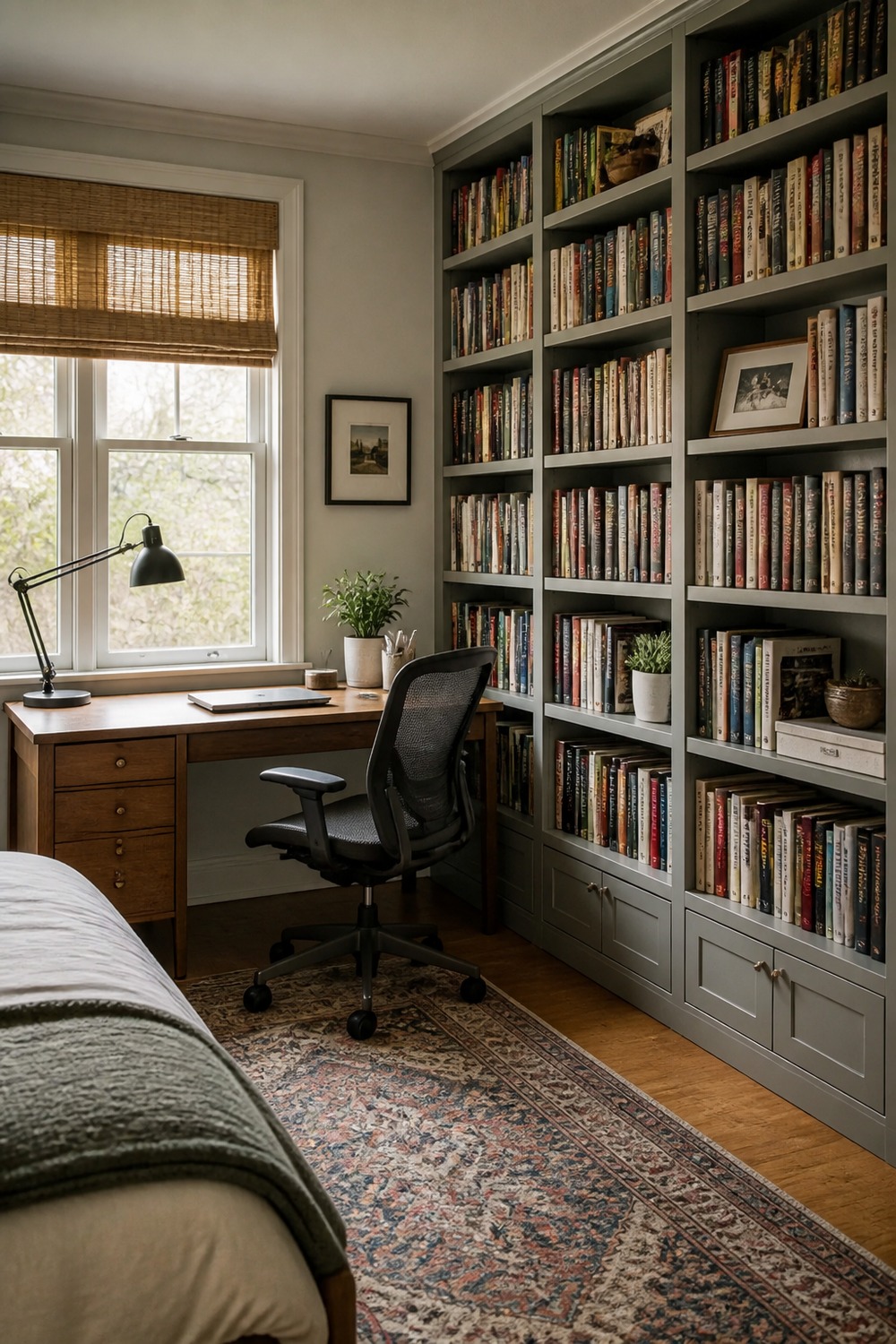
Only the edge of the bed is visible, which is exactly right for a bedroom office. A tall bookcase wall gives the corner purpose, and the practical lamp makes late work possible without lighting the entire room.
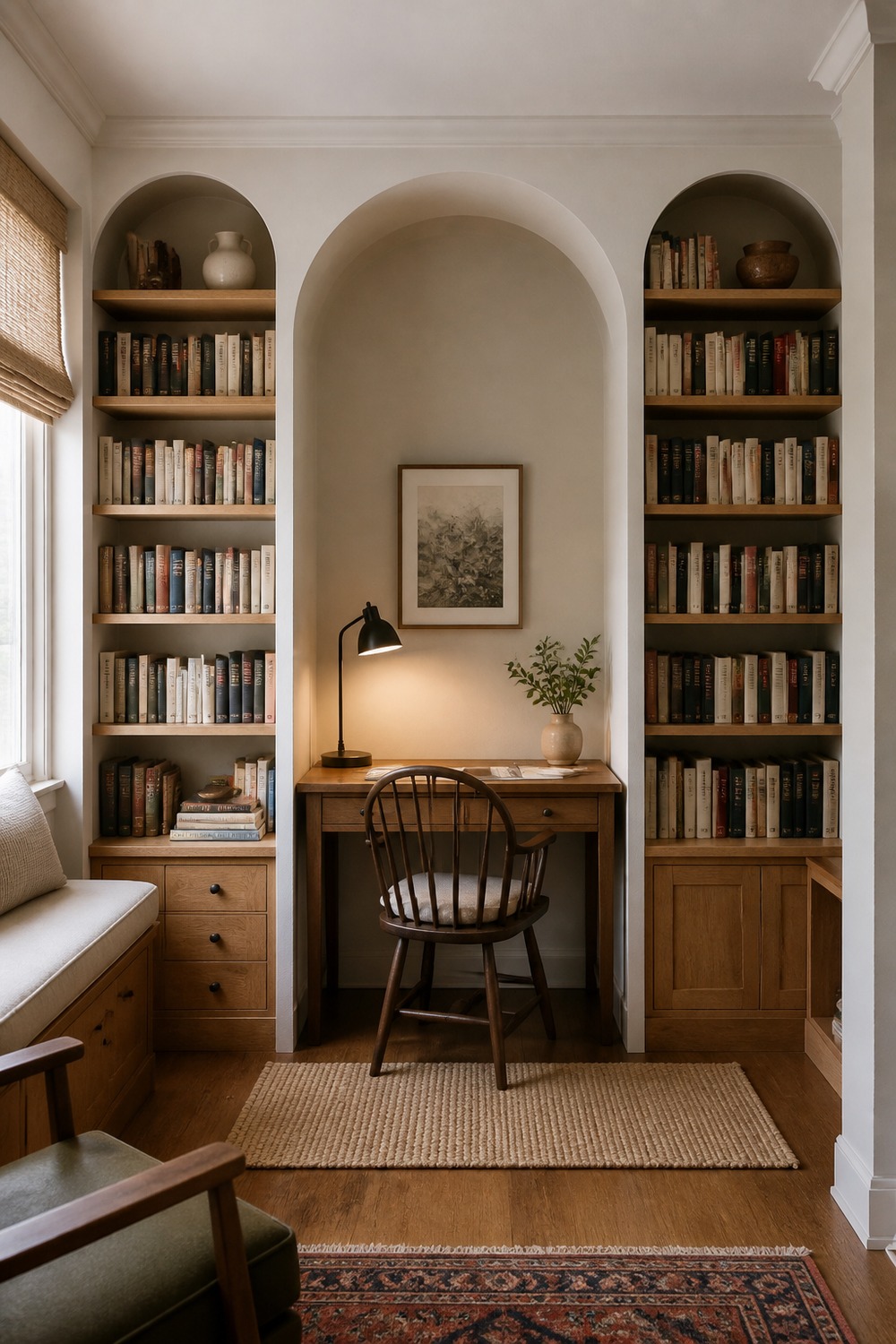
The shallow arches create architecture without stealing much floor space. Keeping the desk in the center and books on both sides gives the wall symmetry, while the cream plaster prevents it from feeling formal.
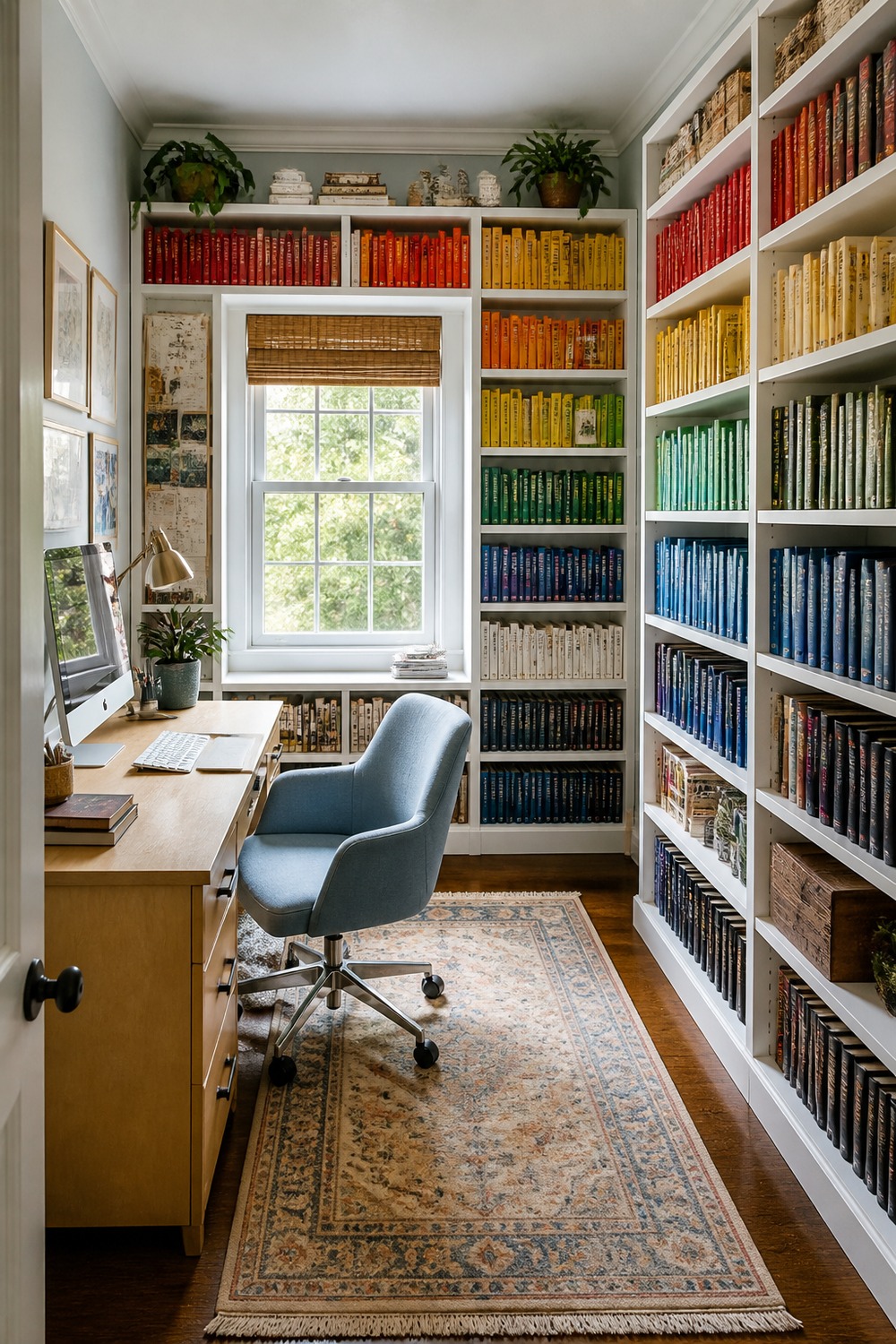
Color-grouped books bring energy to a white workspace, but the simple birch desk gives the eye somewhere to rest. A soft blue chair repeats the cooler shelf colors without making the room look overly coordinated.
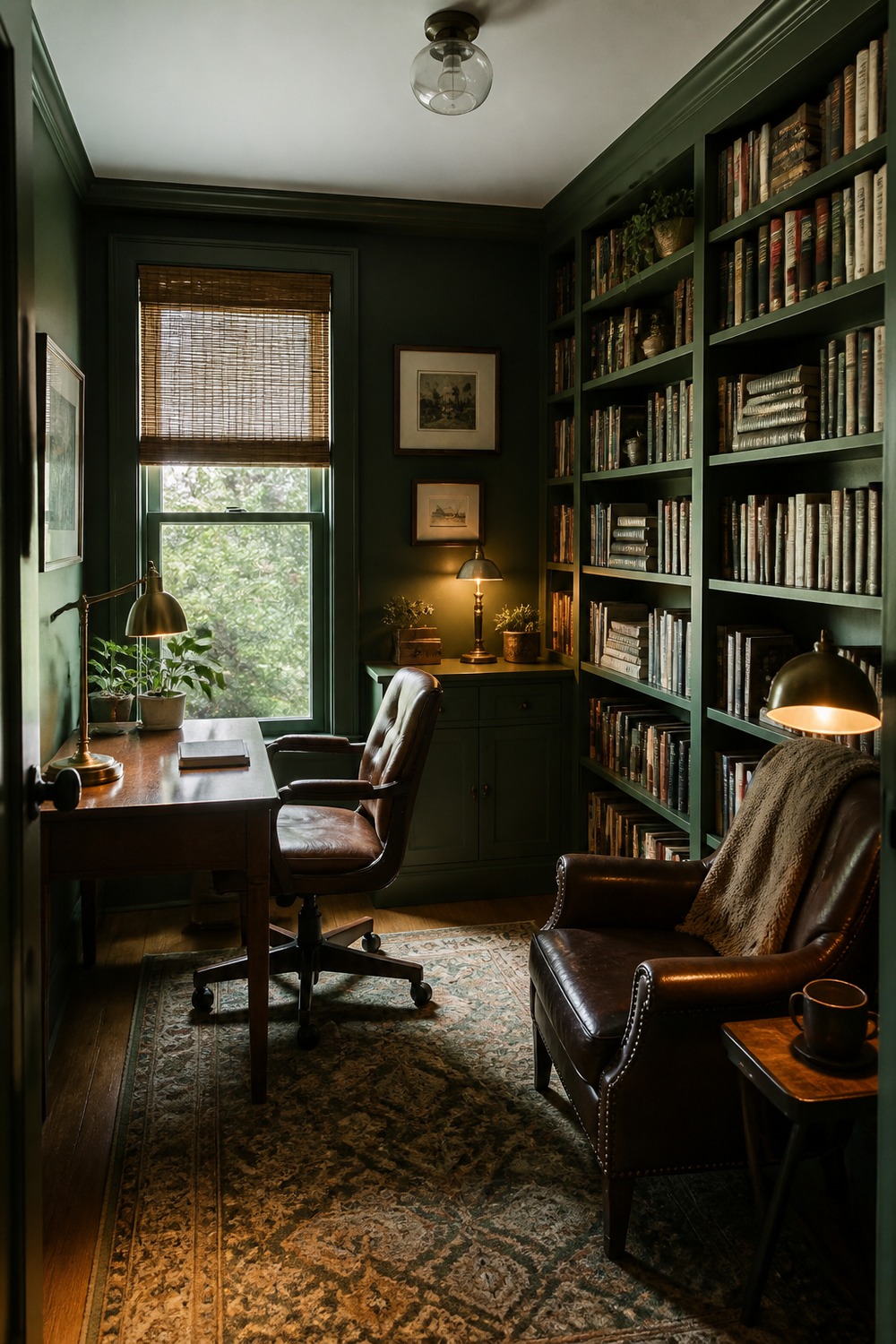
Olive walls and aged brass create a strong evening mood, but the compact desk remains plainly functional. The nearby reading chair earns its spot because it supports a different task rather than acting as filler.
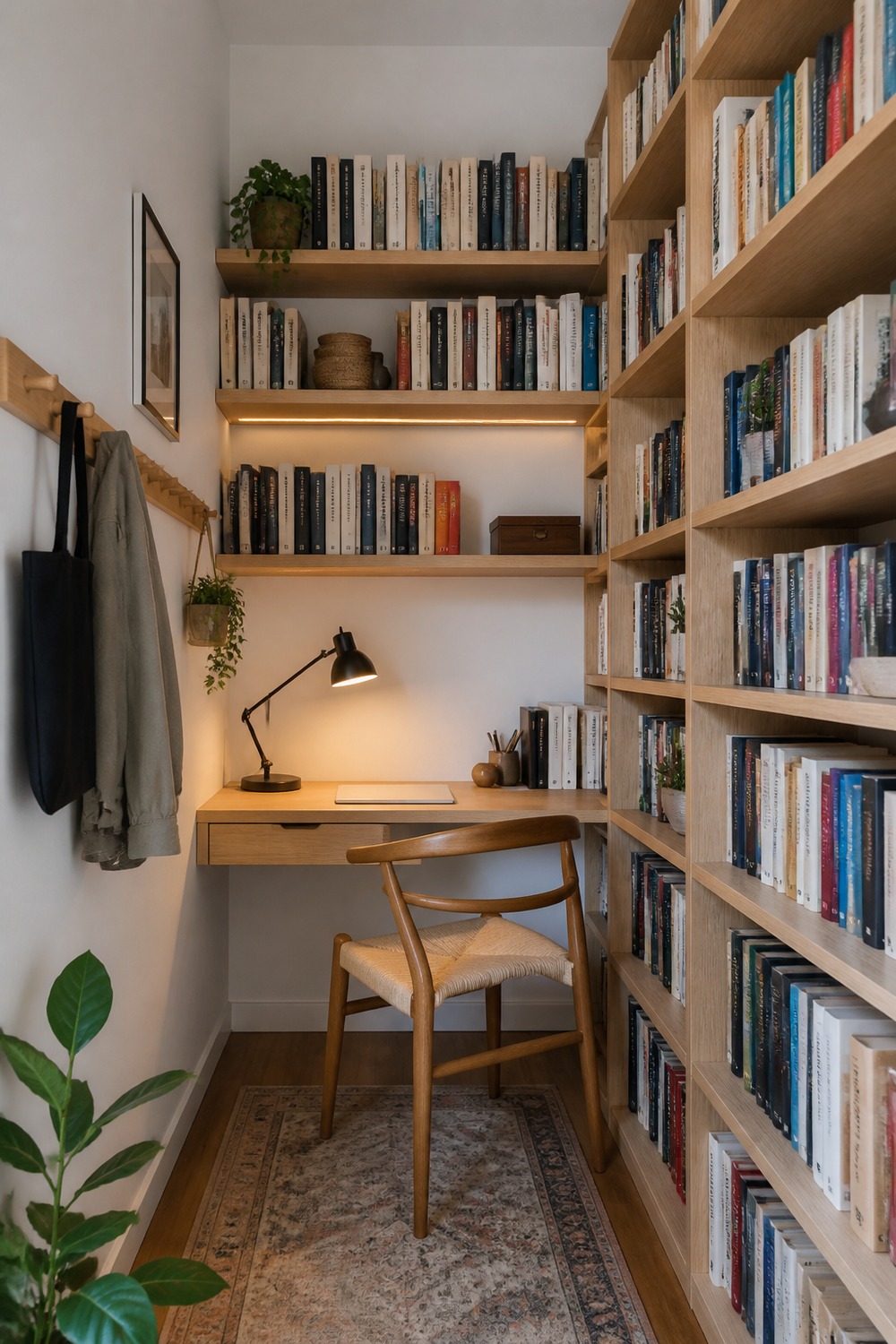
Deep ledges carry the books, while the peg rail catches headphones, cables, and small tools that never sit neatly on a shelf. That division keeps the tiny desktop open for a notebook and lamp.
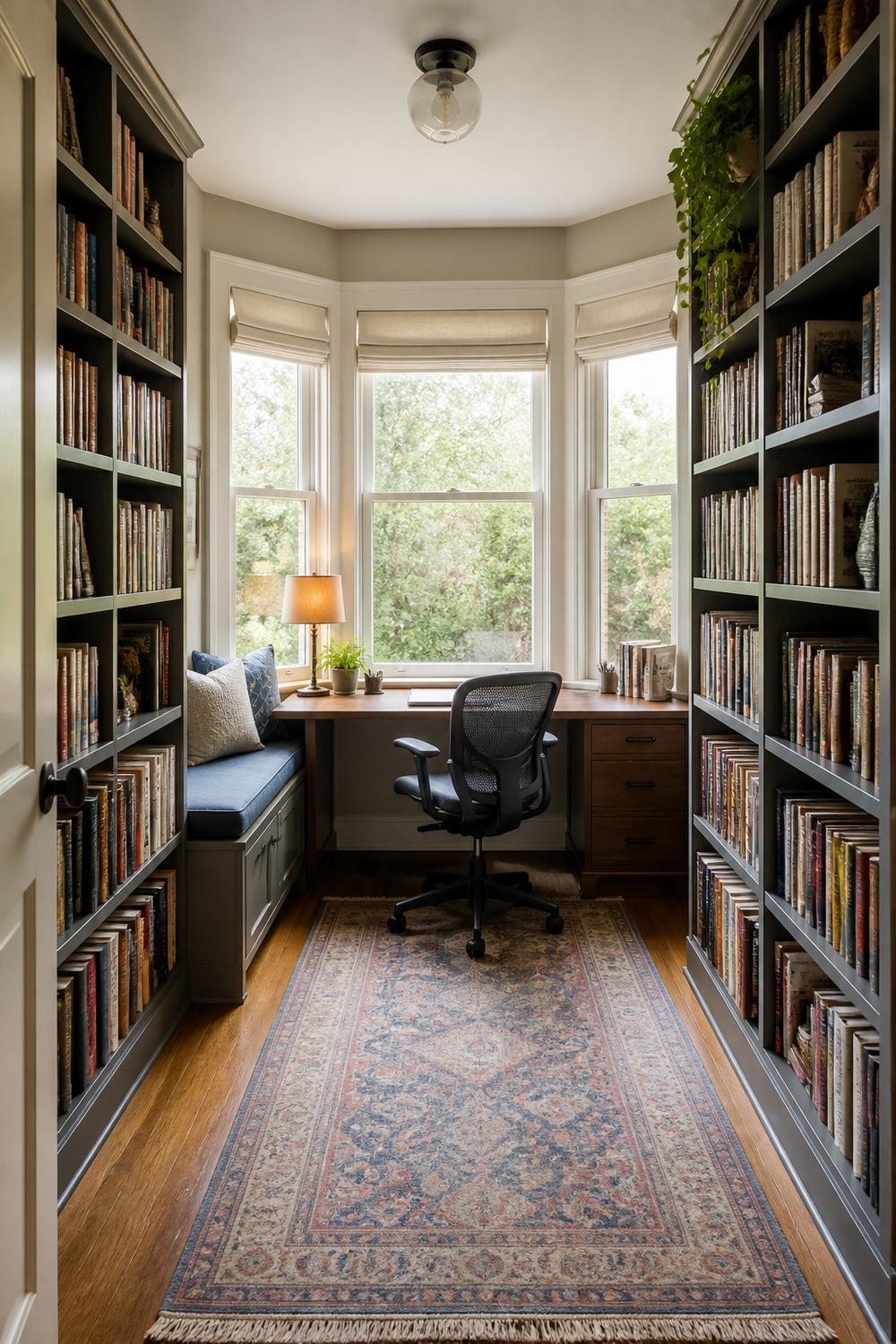
A bay window makes a natural destination for the desk because the side walls can carry the shelving. Daylight surrounds the chair, and the cushioned ledge offers a quick reading perch without adding another bulky seat.
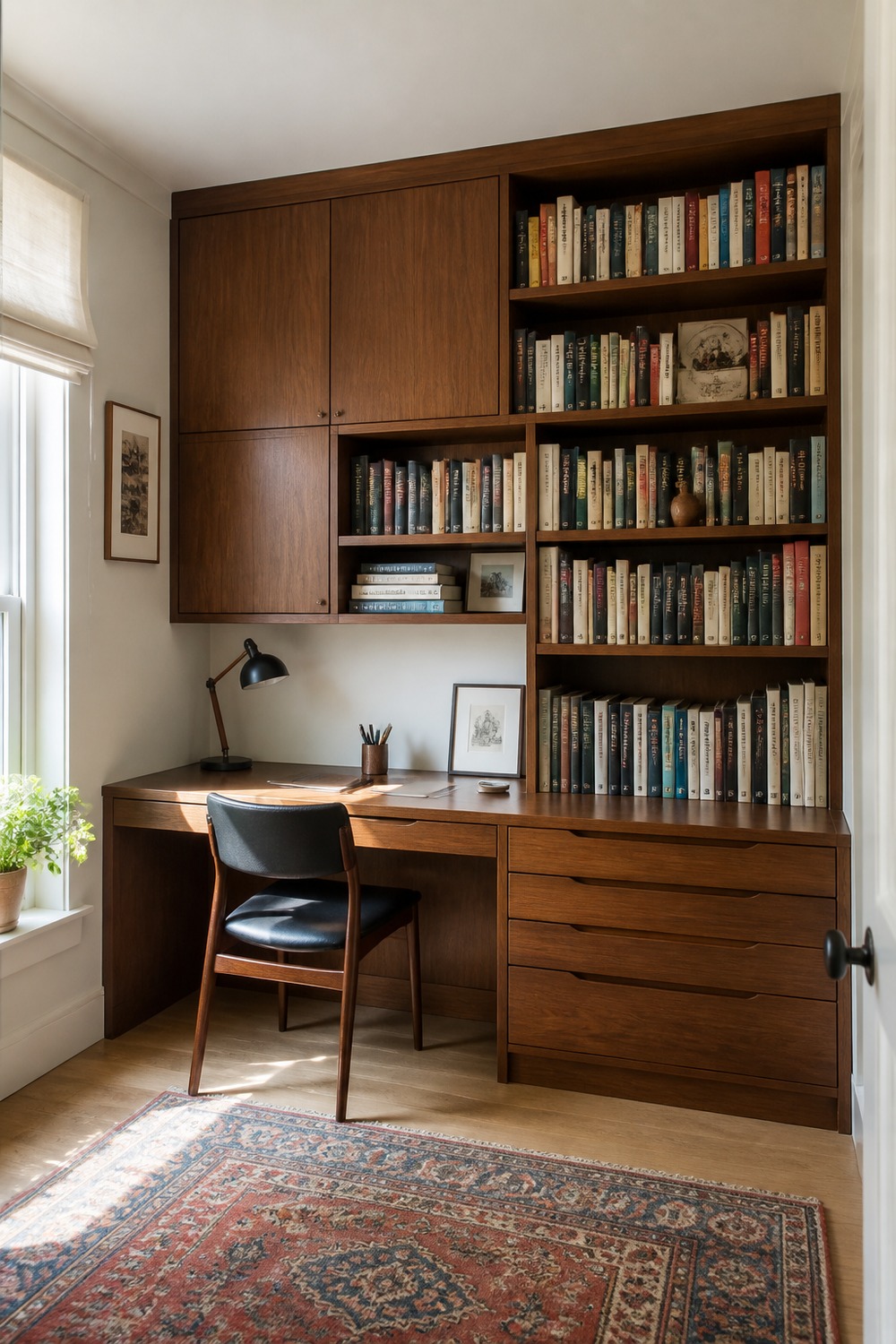
This walnut wall unit combines open bookshelves, drawers, and a writing surface in one compact piece. The mid-century proportions feel lighter than full-height built-ins, which suits a smaller room with limited wall area.
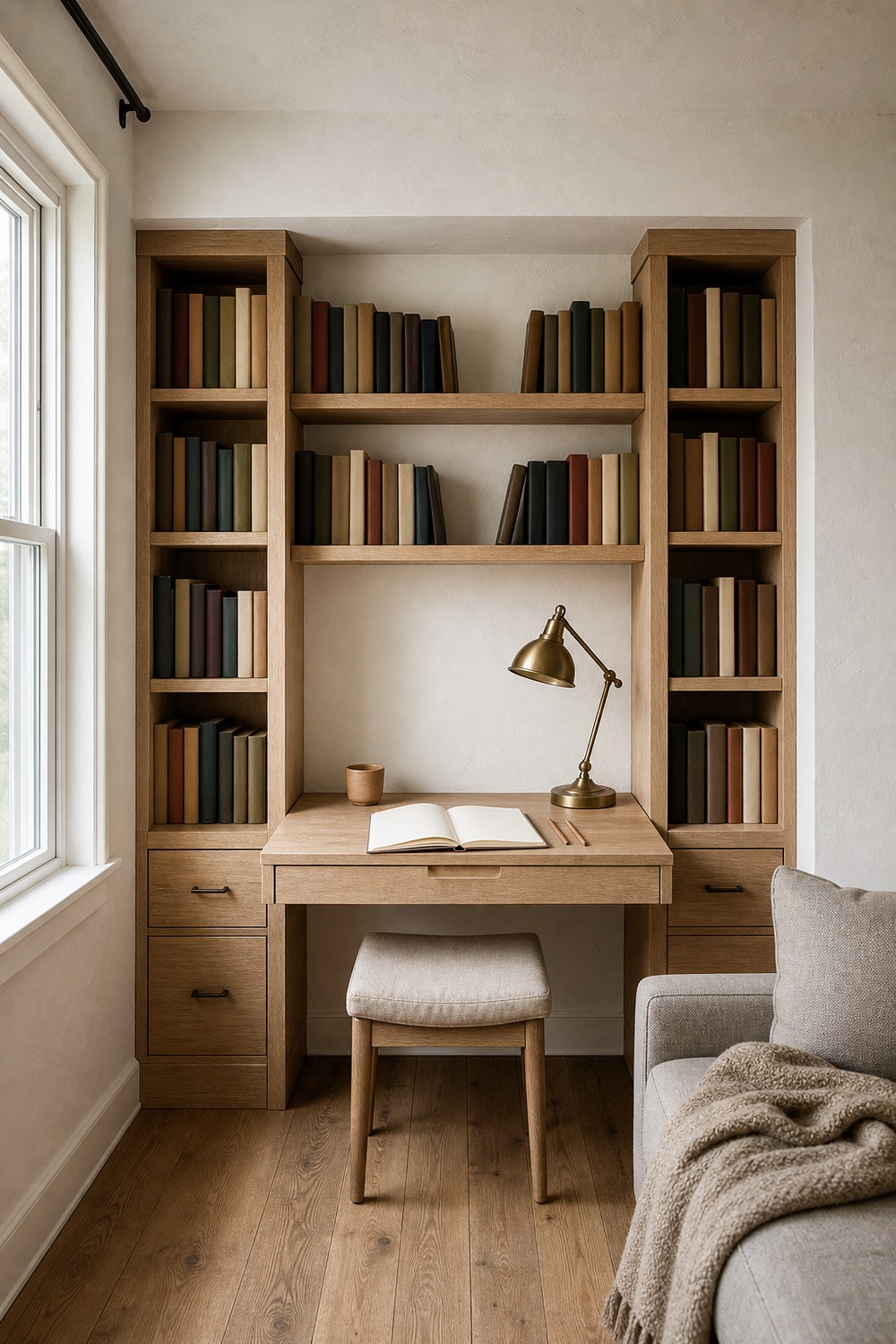
The fold-down oak desk turns a shallow living-room alcove into a work zone without creating another permanent furniture block. Low bookcases and closed drawers hold plenty, and the tucked stool preserves the walkway.
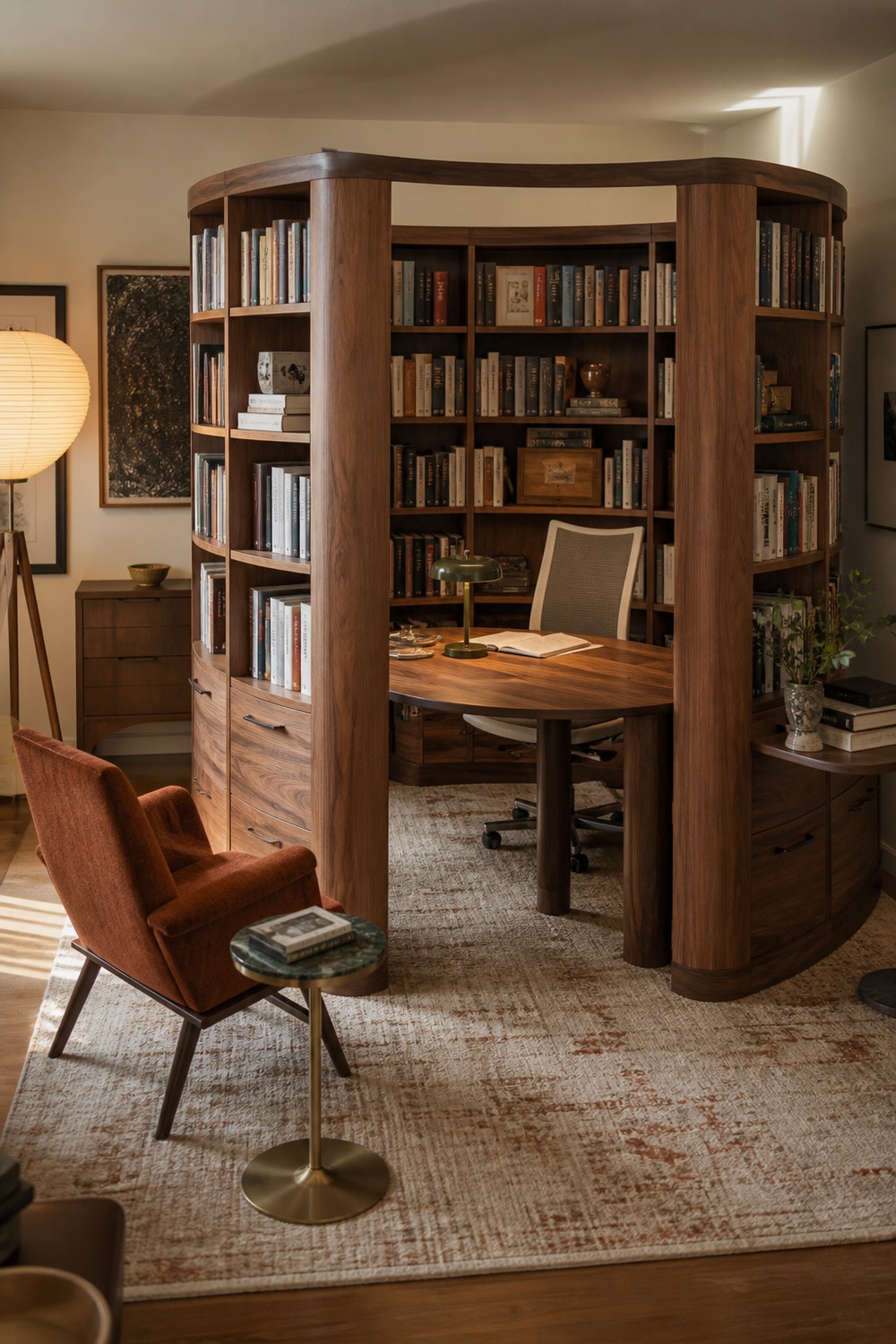
A curved double-sided bookcase makes the center of this square room useful instead of pushing every function to the perimeter. The round table supports writing or spreading out books, while the low reading chair keeps circulation open.
The nicest combinations do not need a grand study. A clear work surface, books within reach, and lighting that works for both a screen and a page are usually enough to make the room feel intentional.
Leave a comment