
A home office and craft room combo only works when the laptop is not constantly fighting scissors, paper, and half-finished projects for space. These rooms use separate surfaces, contained storage, and real task lighting so both sides stay useful on an ordinary messy Tuesday.
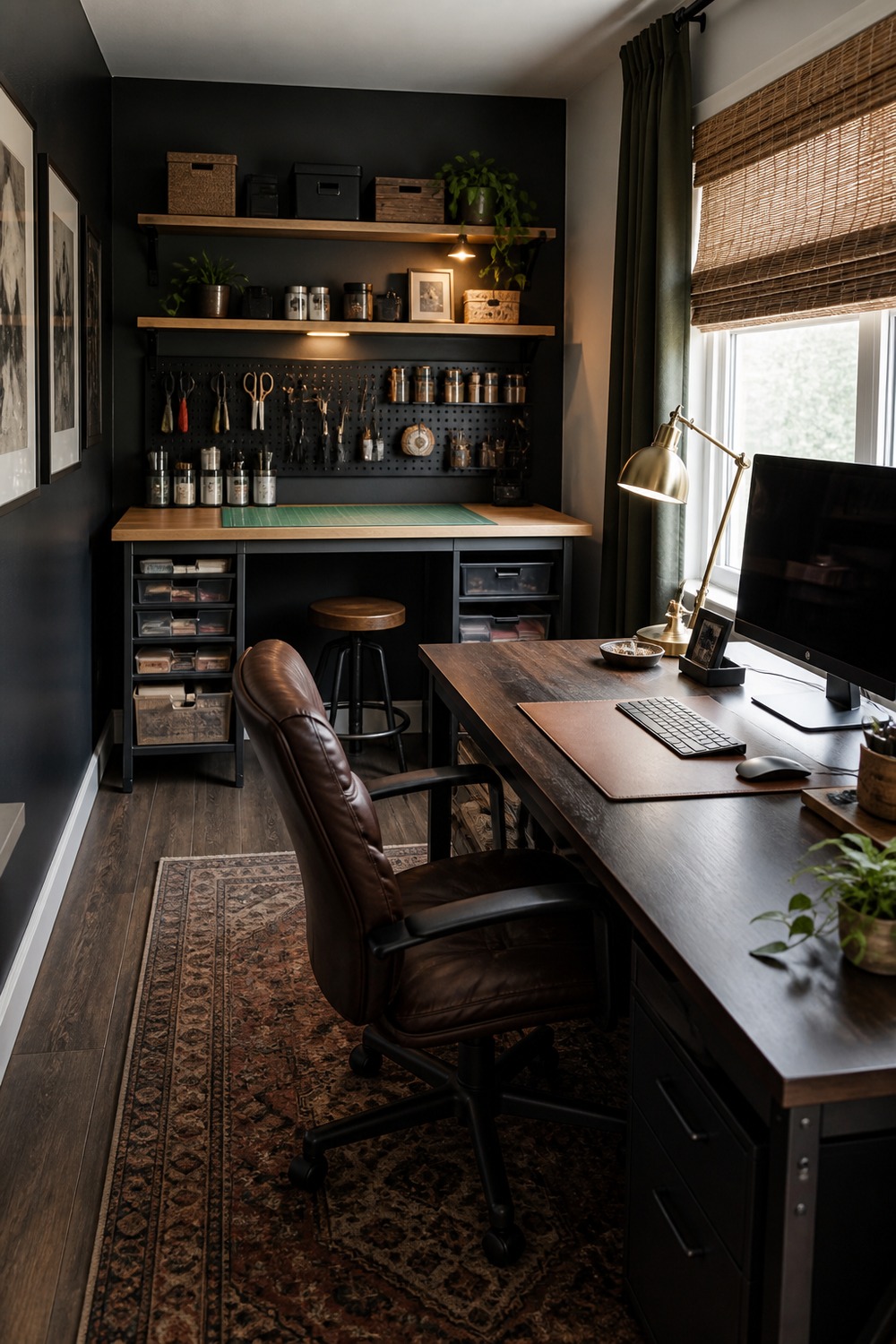
Putting the computer desk on one wall and the craft table behind it gives each job its own surface. The open floor space between them also leaves enough chair clearance for normal workdays.
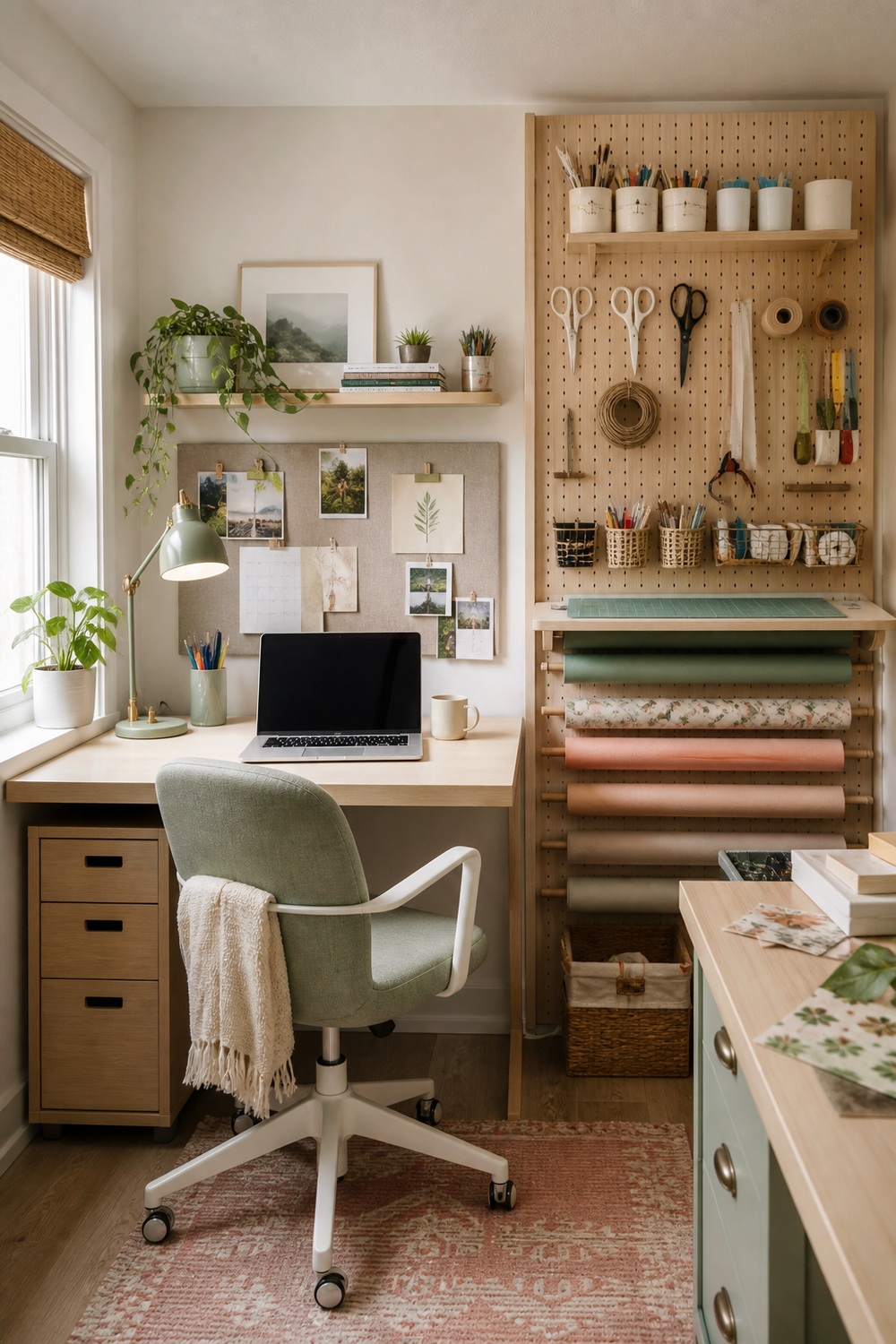
The pale pegboard keeps scissors, ribbon, and small tools visible while the laptop desk stays clear. That division makes the room feel creative without turning the computer area into supply storage.
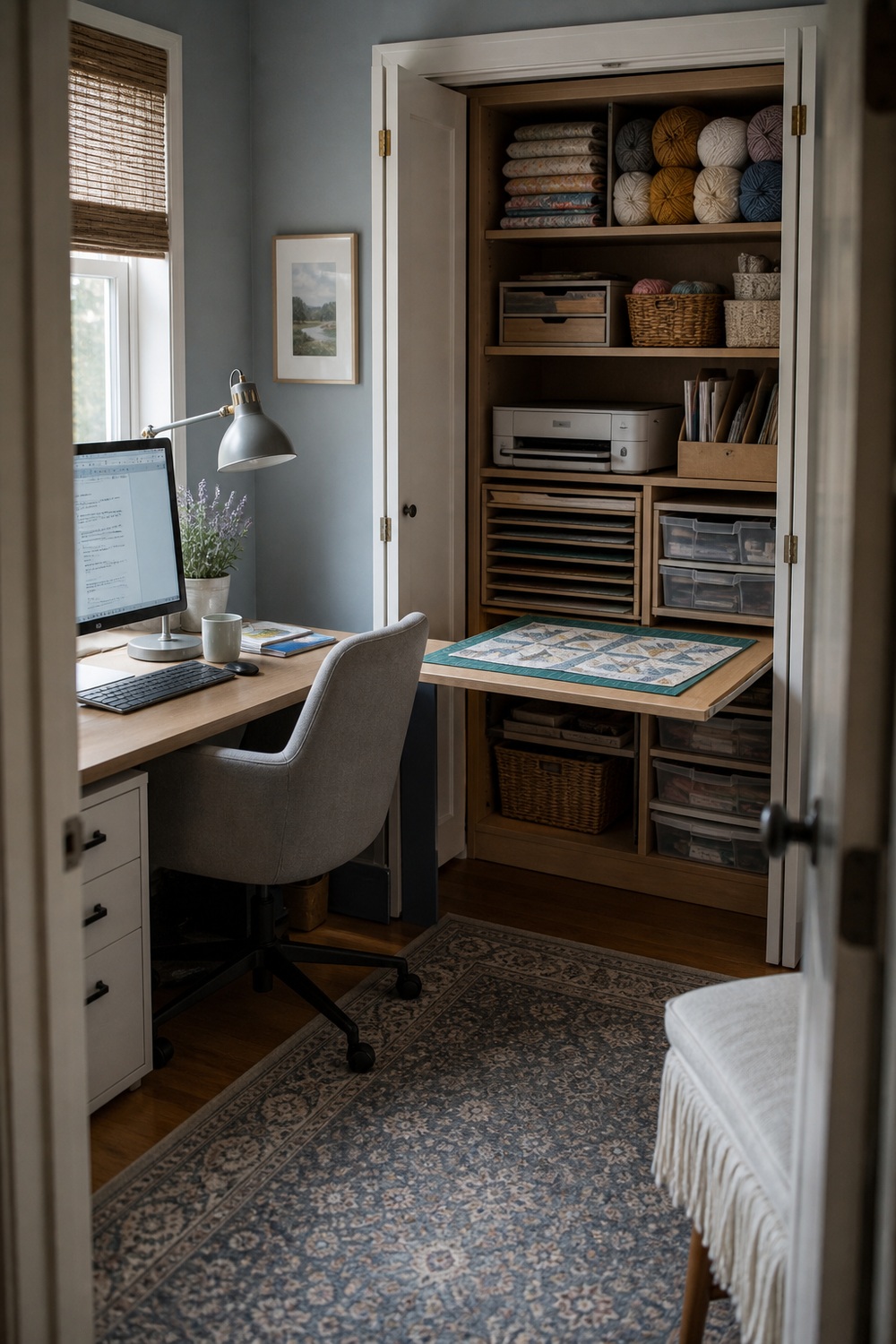
An open craft closet does the heavy storage work beside a proper monitor desk. Fabric, yarn, paper, and the printer stay in one vertical zone instead of creeping across the keyboard.
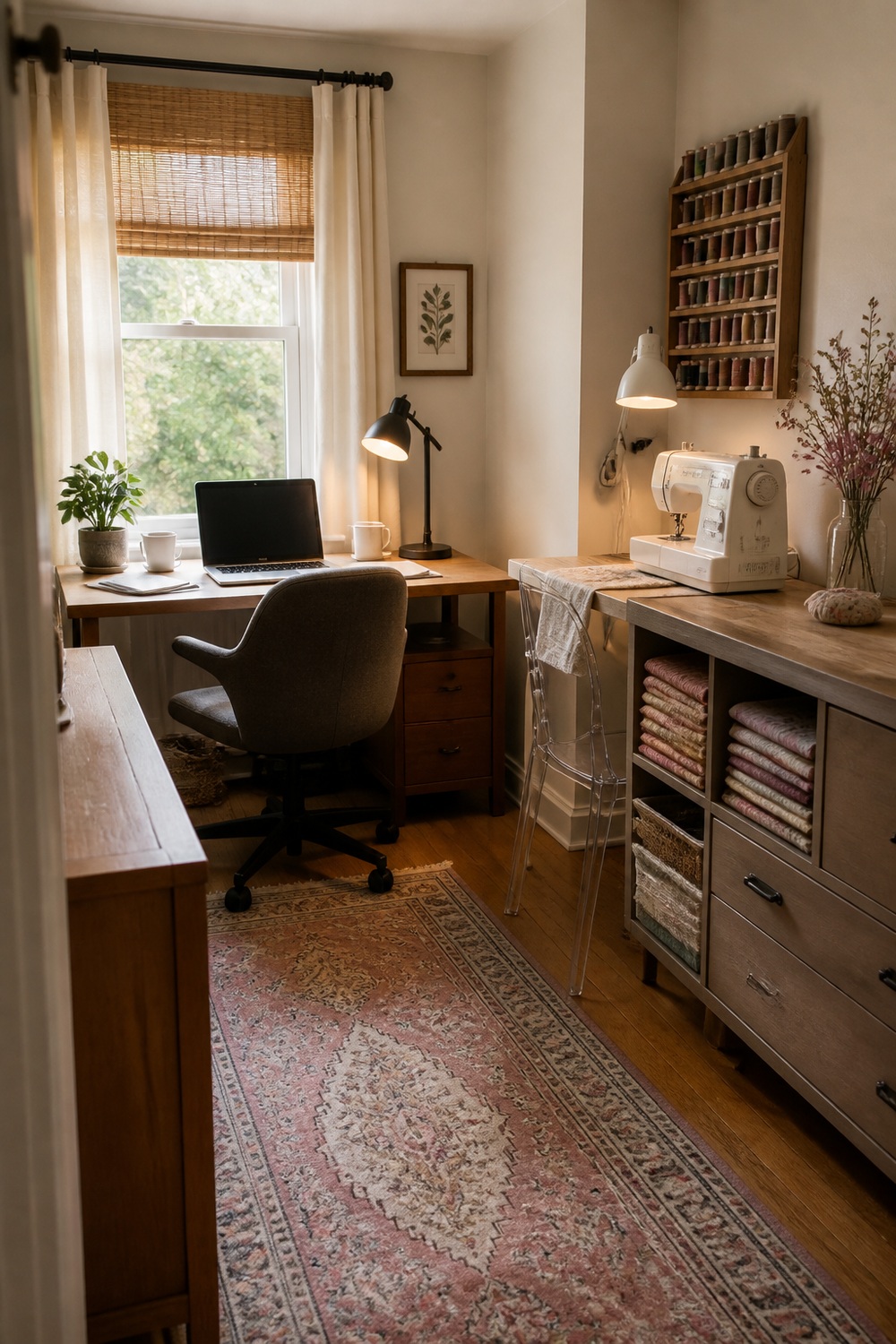
The window desk gets the best daylight, while the sewing station has its own machine, thread, and fabric cabinet. Sharing the task lamp keeps the footprint small without forcing both jobs onto one surface.
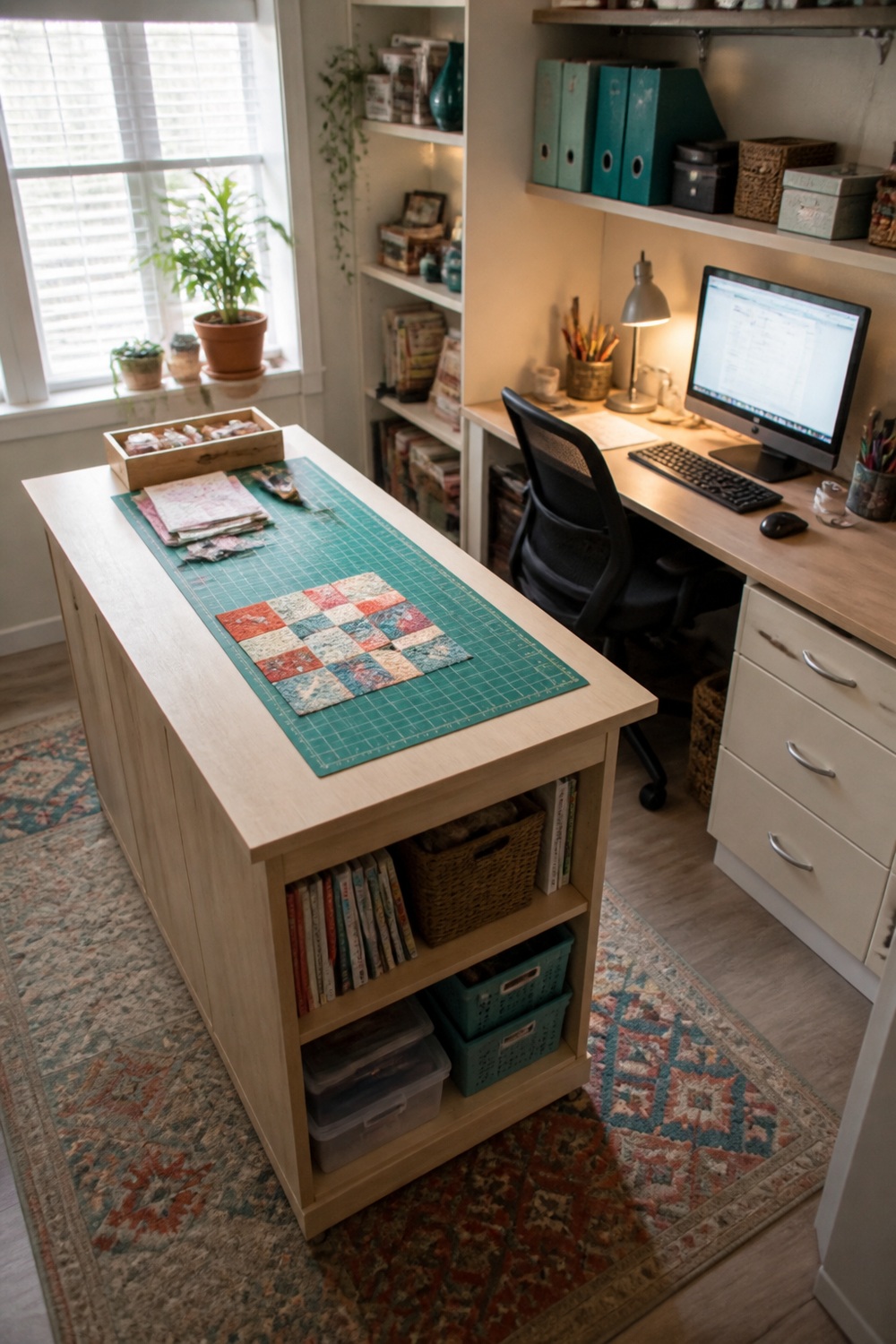
A narrow island gives cutting and assembly projects enough depth, and the monitor nook still reads as a real office. Drawers under the island keep the center useful rather than becoming a pile-up point.
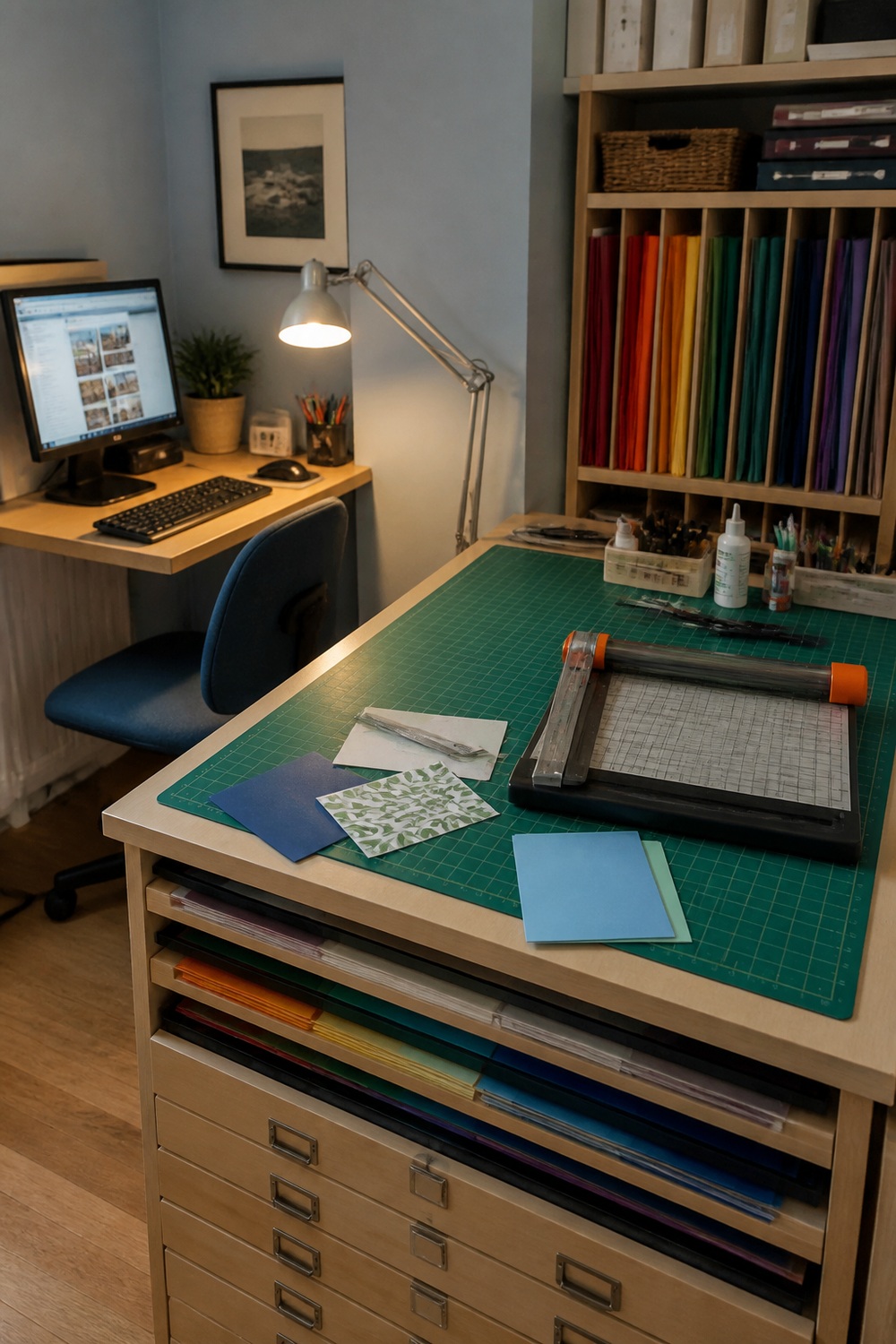
Vertical paper slots solve a very specific craft-room problem without stealing the computer half of the desk. File drawers below hide the messier supplies, leaving a genuinely usable keyboard and mouse zone.
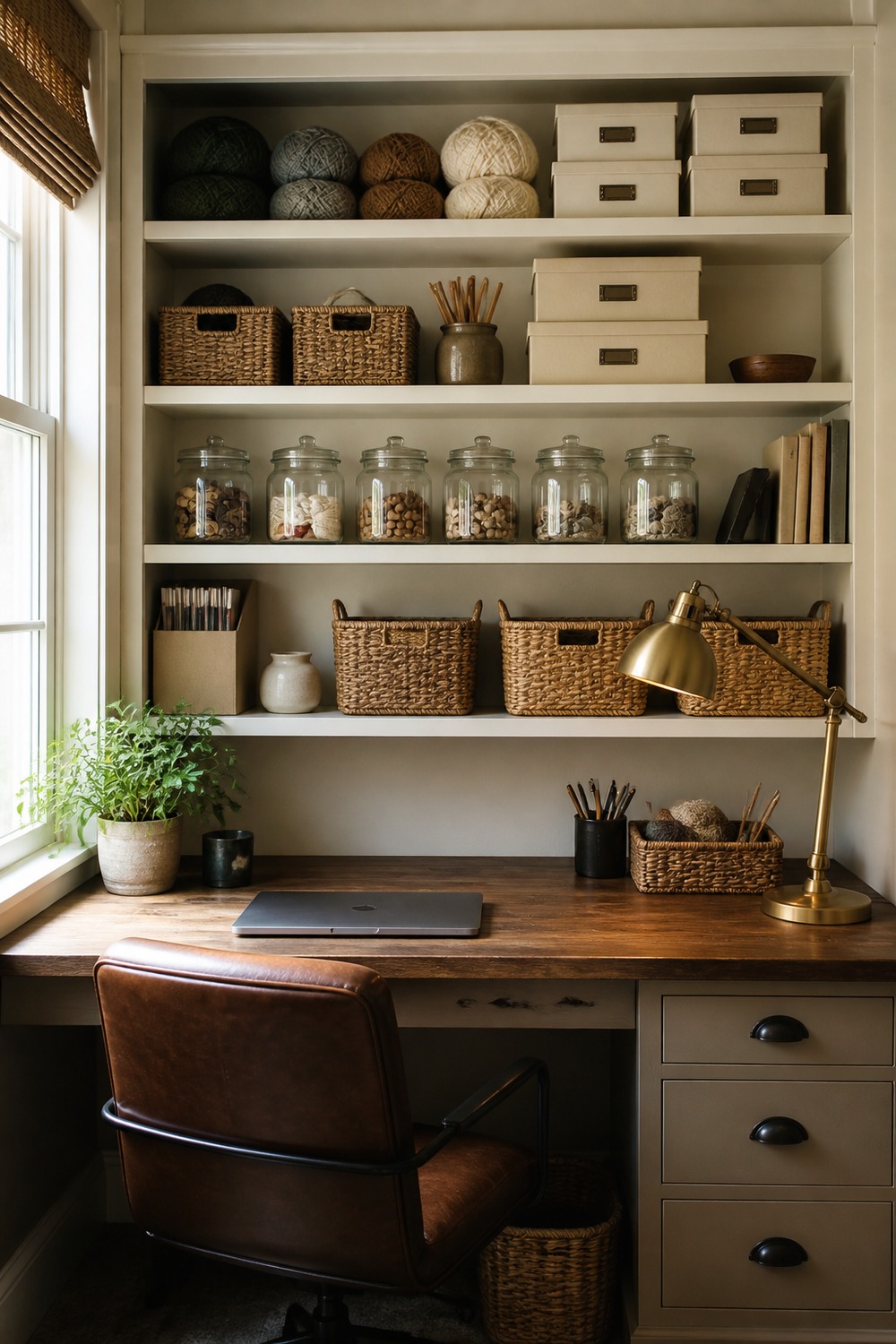
Cream shelves and woven baskets make the supply wall feel lighter than a run of heavy cabinets. Yarn and jars add texture above the desk, but the worktop is calm enough for a normal weekday.
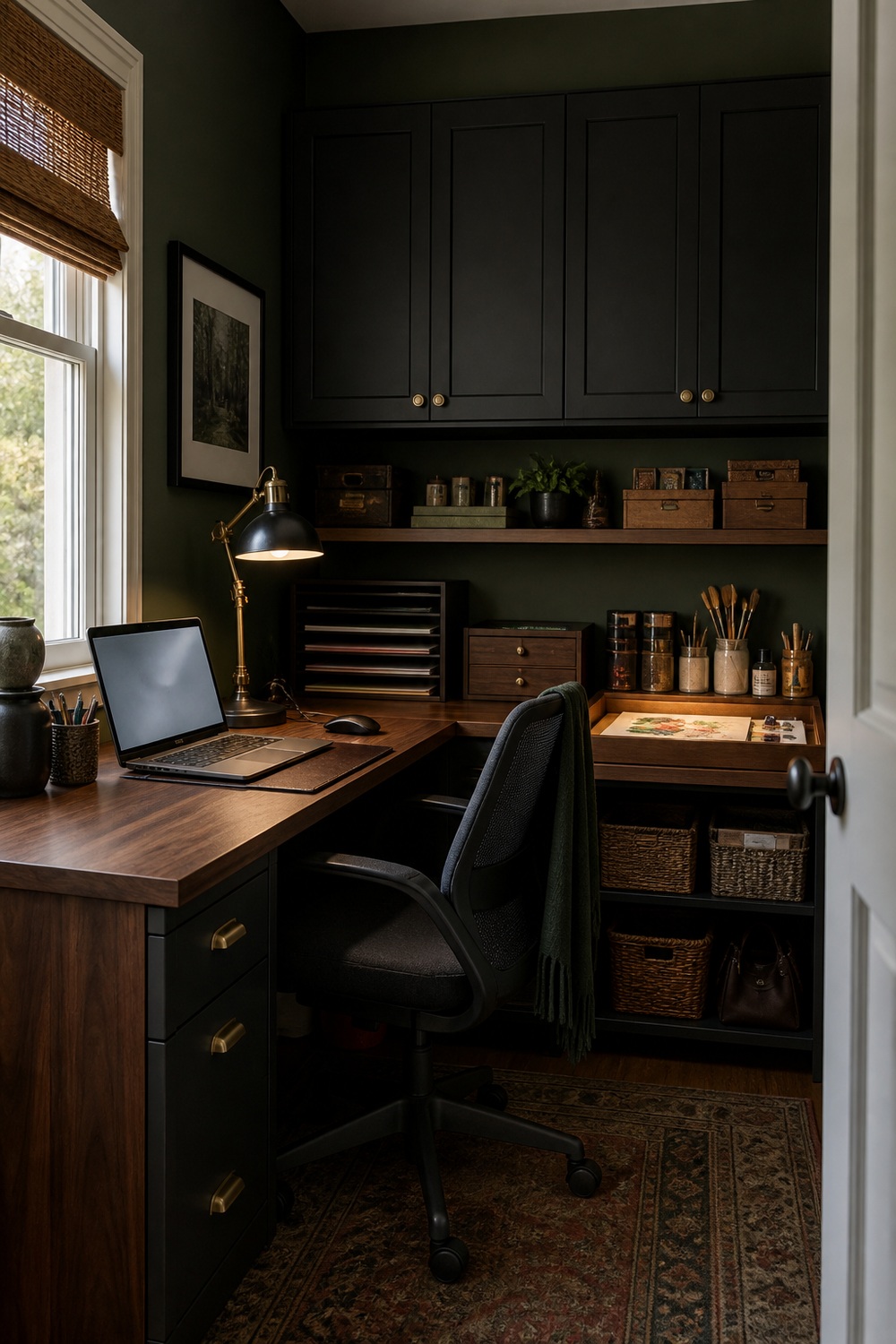
Charcoal cabinets make the craft storage recede when the drawers are shut. The illuminated project tray and brushes still give the corner a creative identity beside the laptop and mouse.
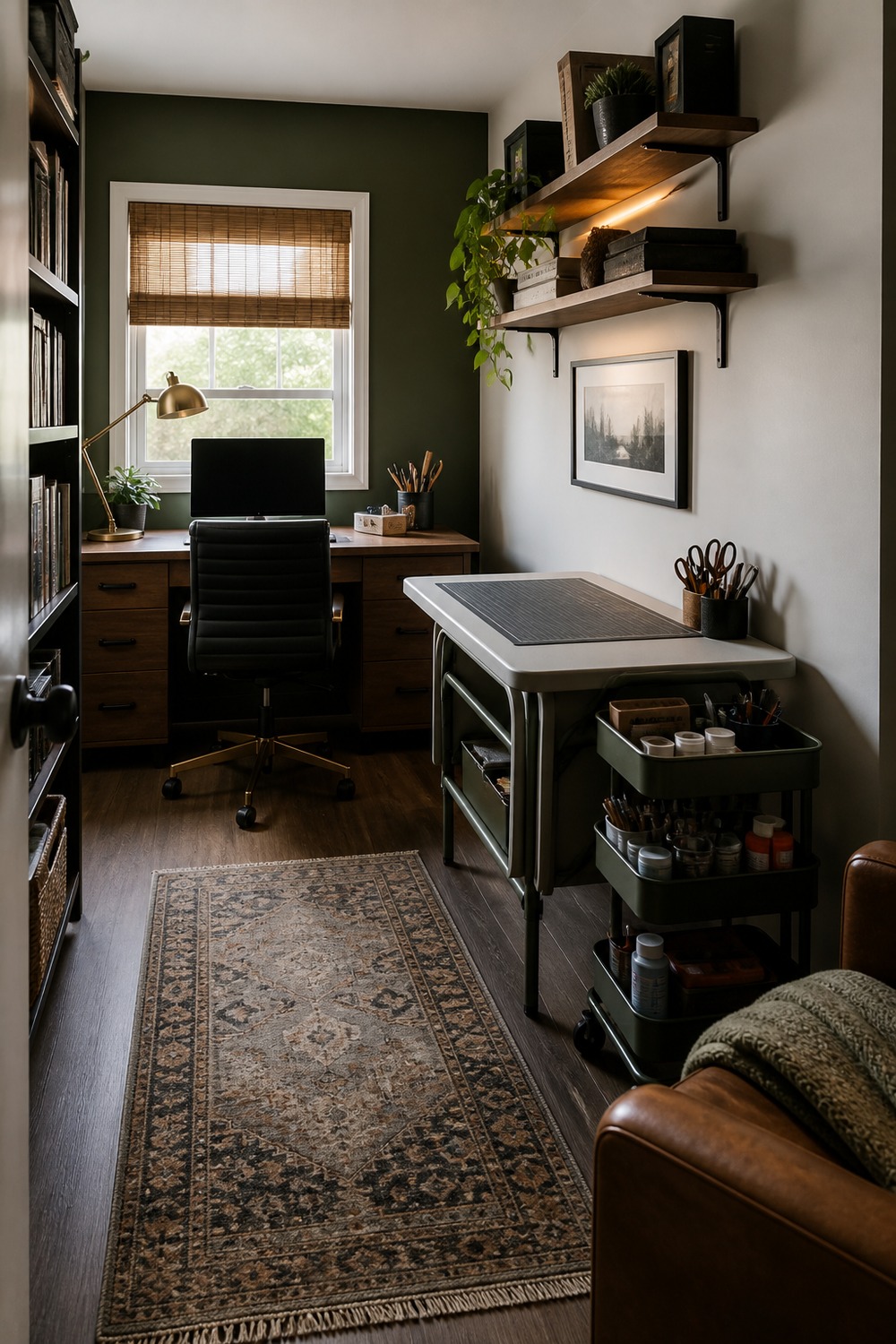
A rolling craft cart makes sense when the room cannot spare a permanent second table. It can move beside the active project, then tuck away so the office chair and walkway stay usable.
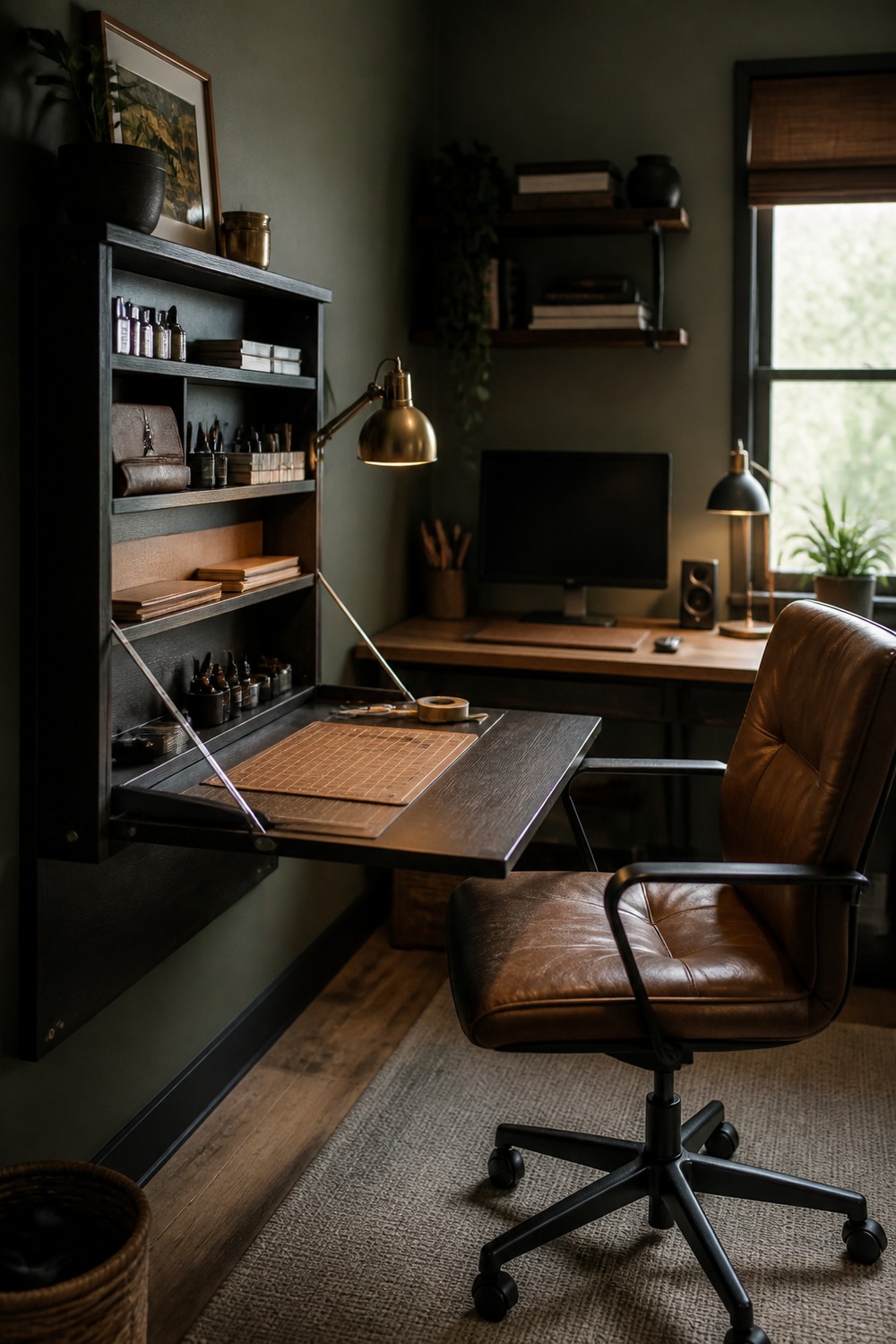
The fold-down surface opens for trimming and assembly, then closes when the computer desk needs breathing room. Shallow wall storage keeps the most-used tools close without adding another bulky cabinet.
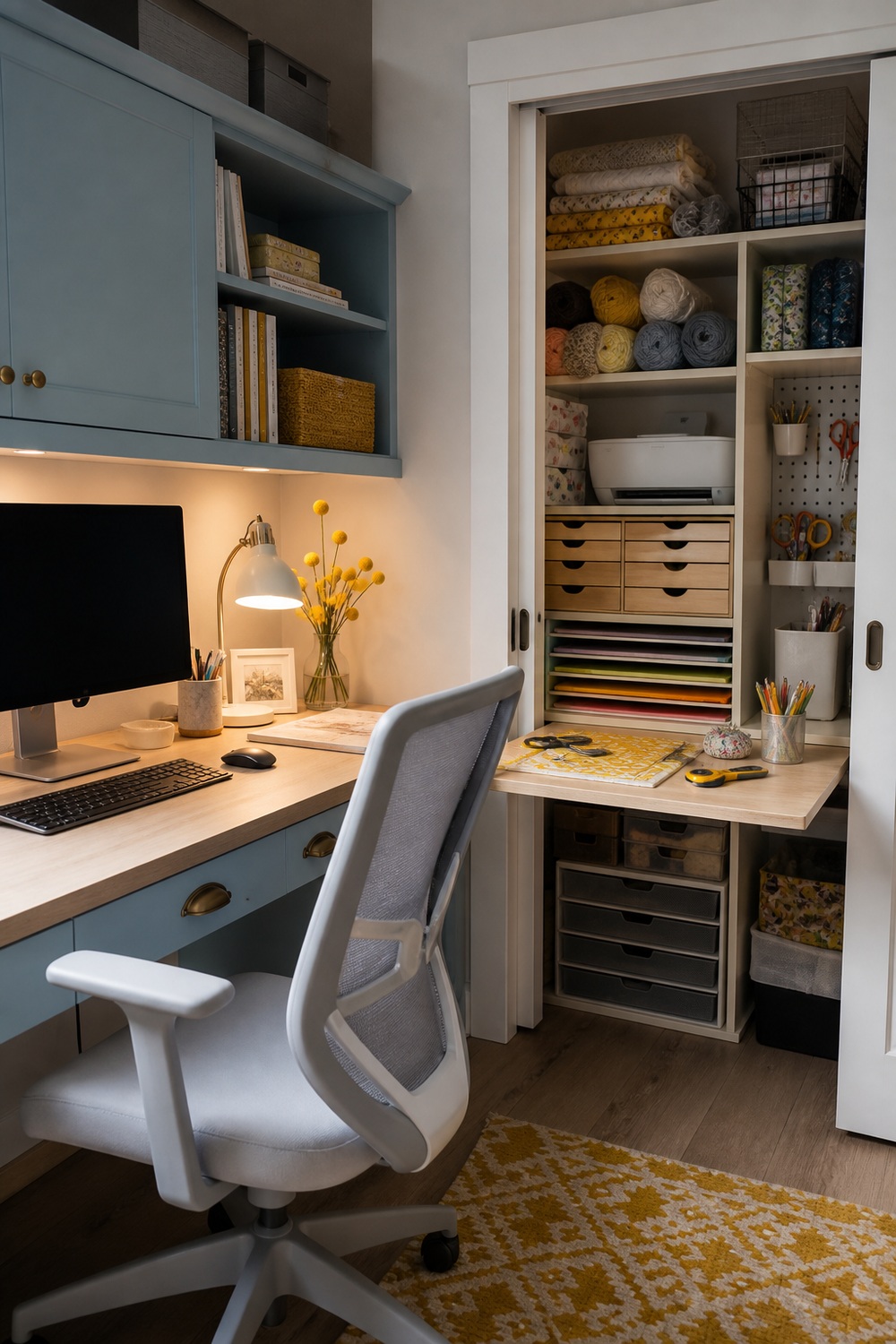
This closet system packs paper, fabric, yarn, a printer, and a supported cutting ledge opposite a monitor workstation. Closing the craft side later would make video-call cleanup much less dramatic.
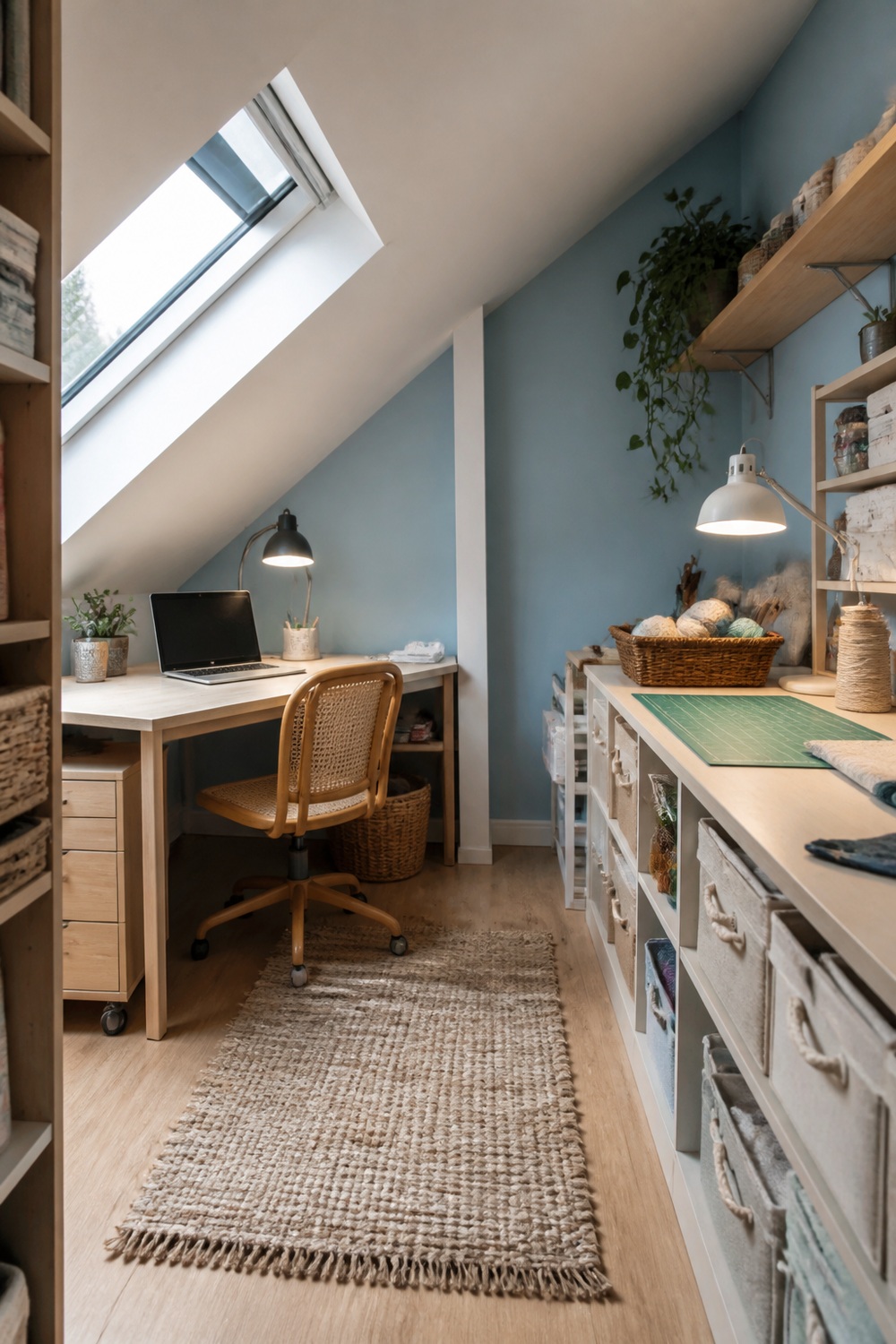
Low craft drawers fit neatly under the attic slope while the laptop desk claims the brighter skylight area. Both tasks get daylight, but neither surface has to carry every tool at once.
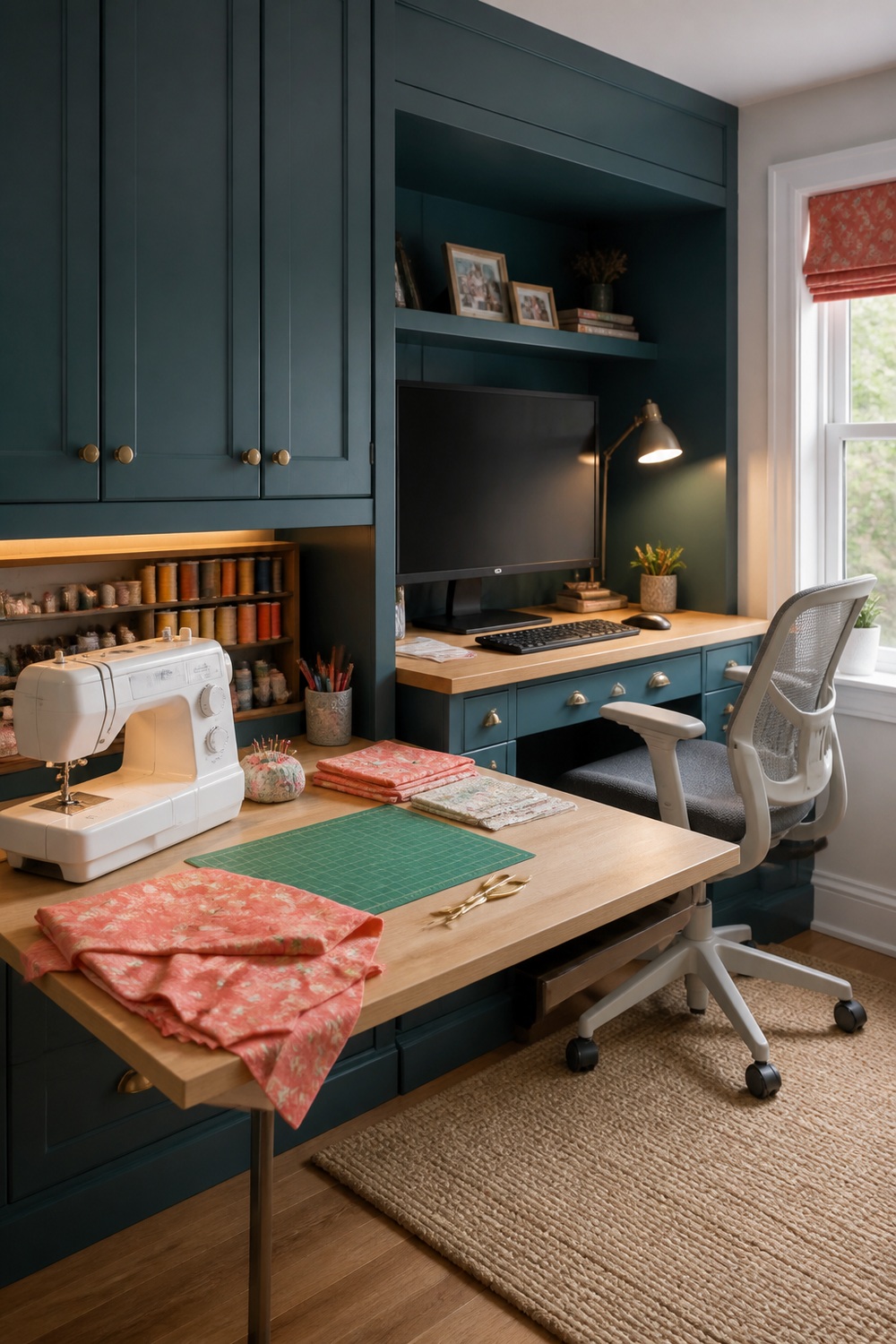
The built-in counter is split clearly: monitor and office chair on the left, paper drawers and making tools on the right. Under-shelf lighting keeps the long surface useful after the window light fades.
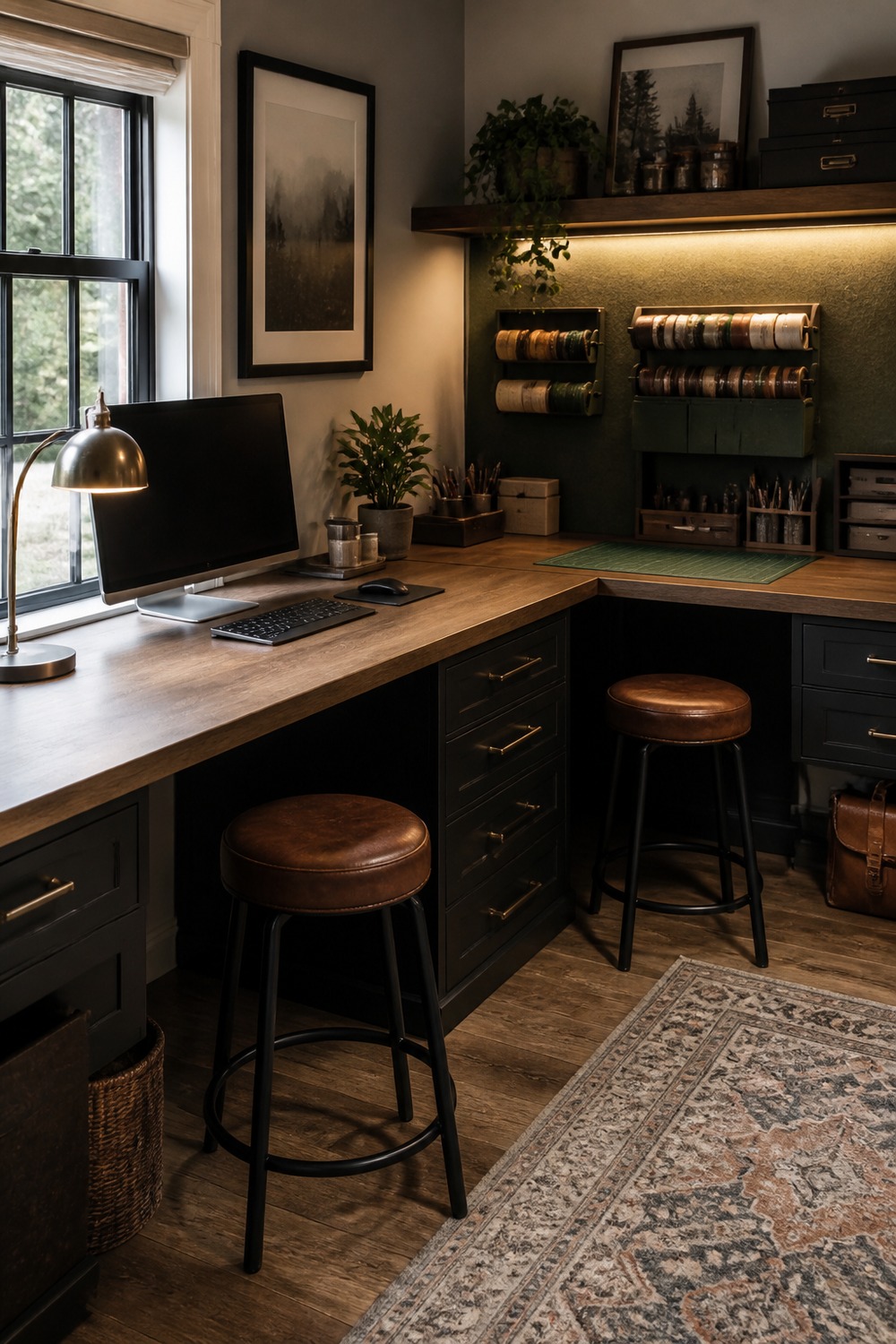
One long counter can handle different jobs when the zones are obvious. The computer stays at one end, supplies stay at the other, and the shared drawers stop the middle becoming a dumping spot.
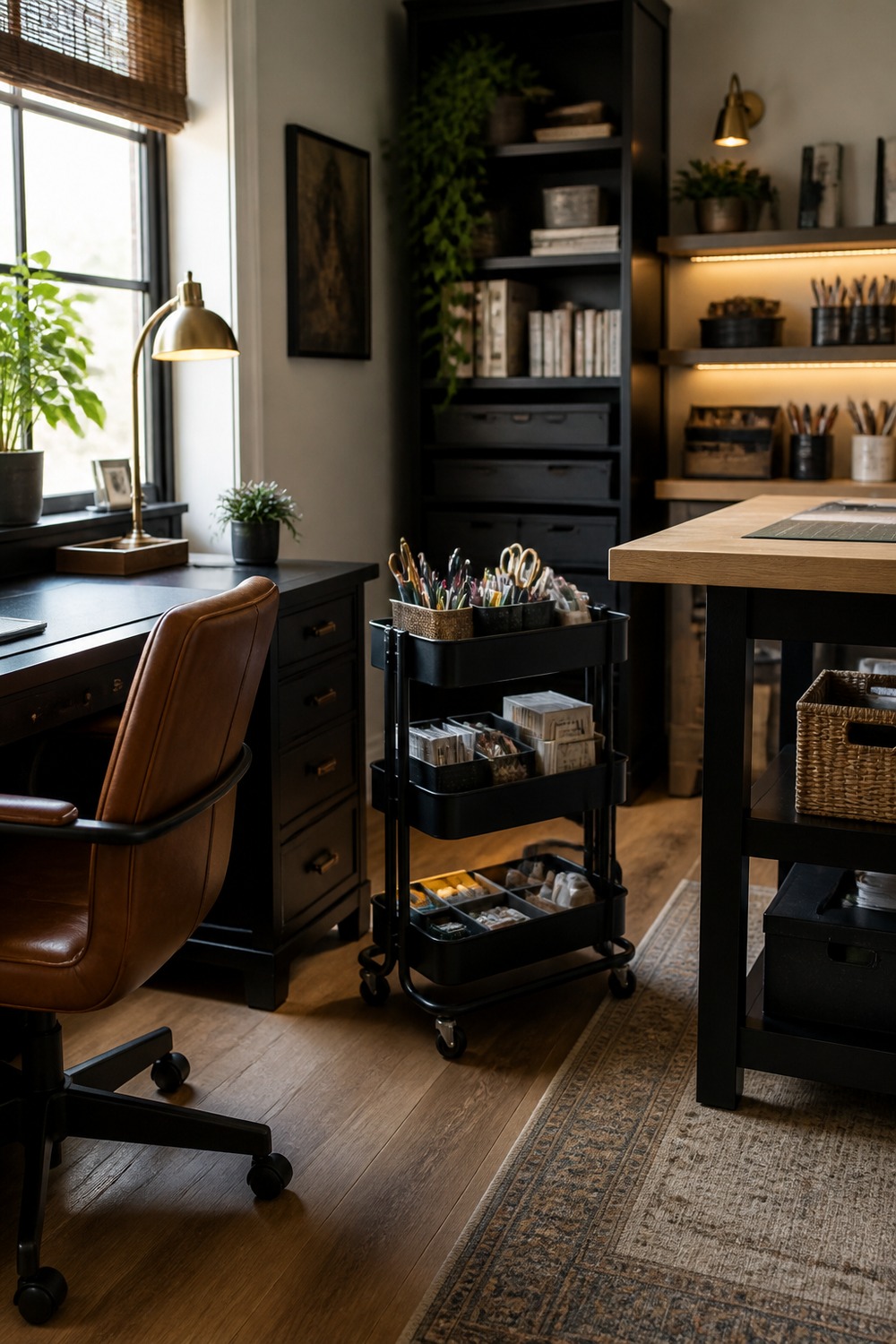
The rolling cart bridges the desk and craft table without locking the layout in place. Adhesives and current-project tools can move out of the way the second the room switches back to office mode.
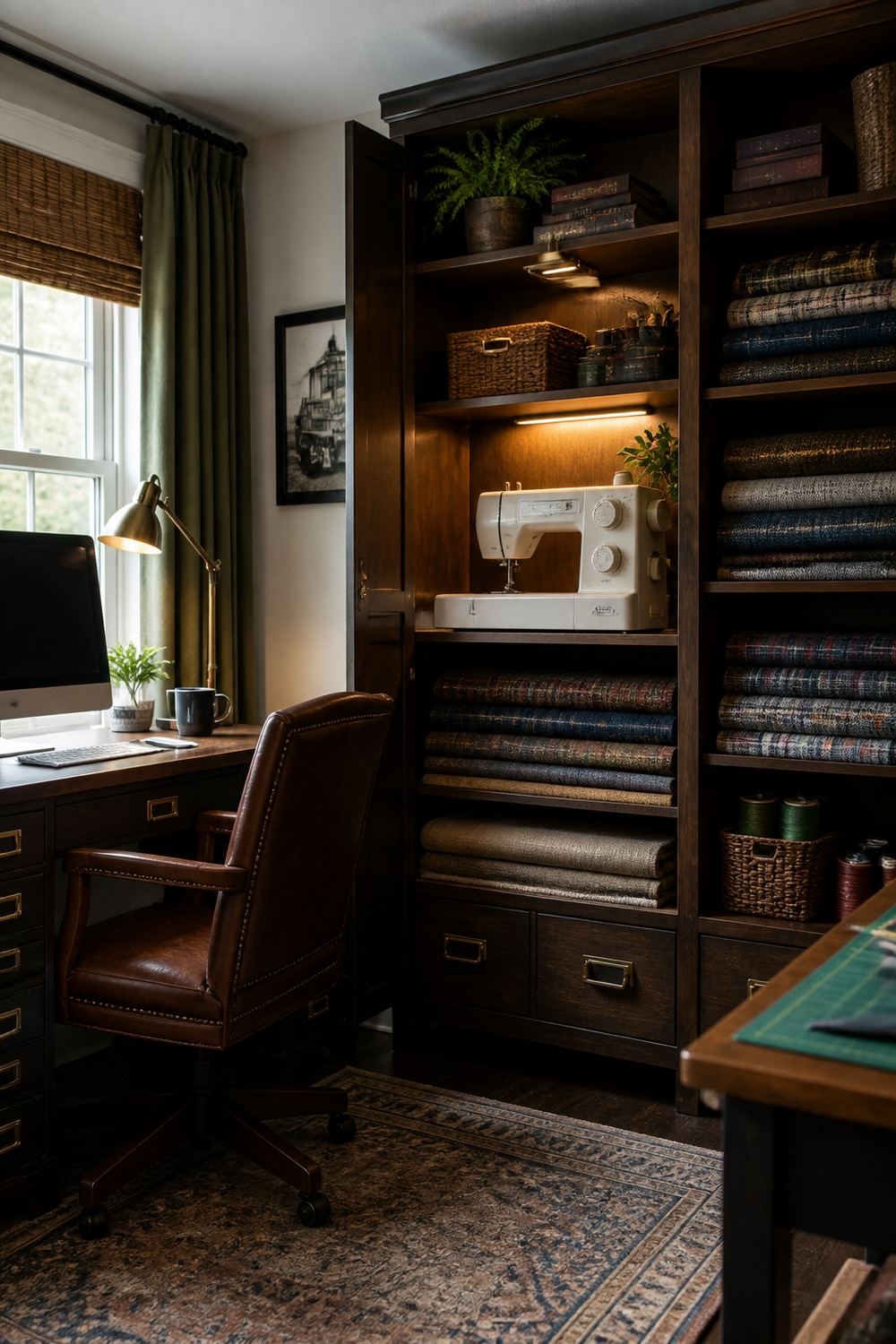
Folded textiles bring color to the cabinet while the sewing machine and computer each keep a defined spot. Separate task lights matter here because dark fabric and tiny stitches are miserable in a dim corner.
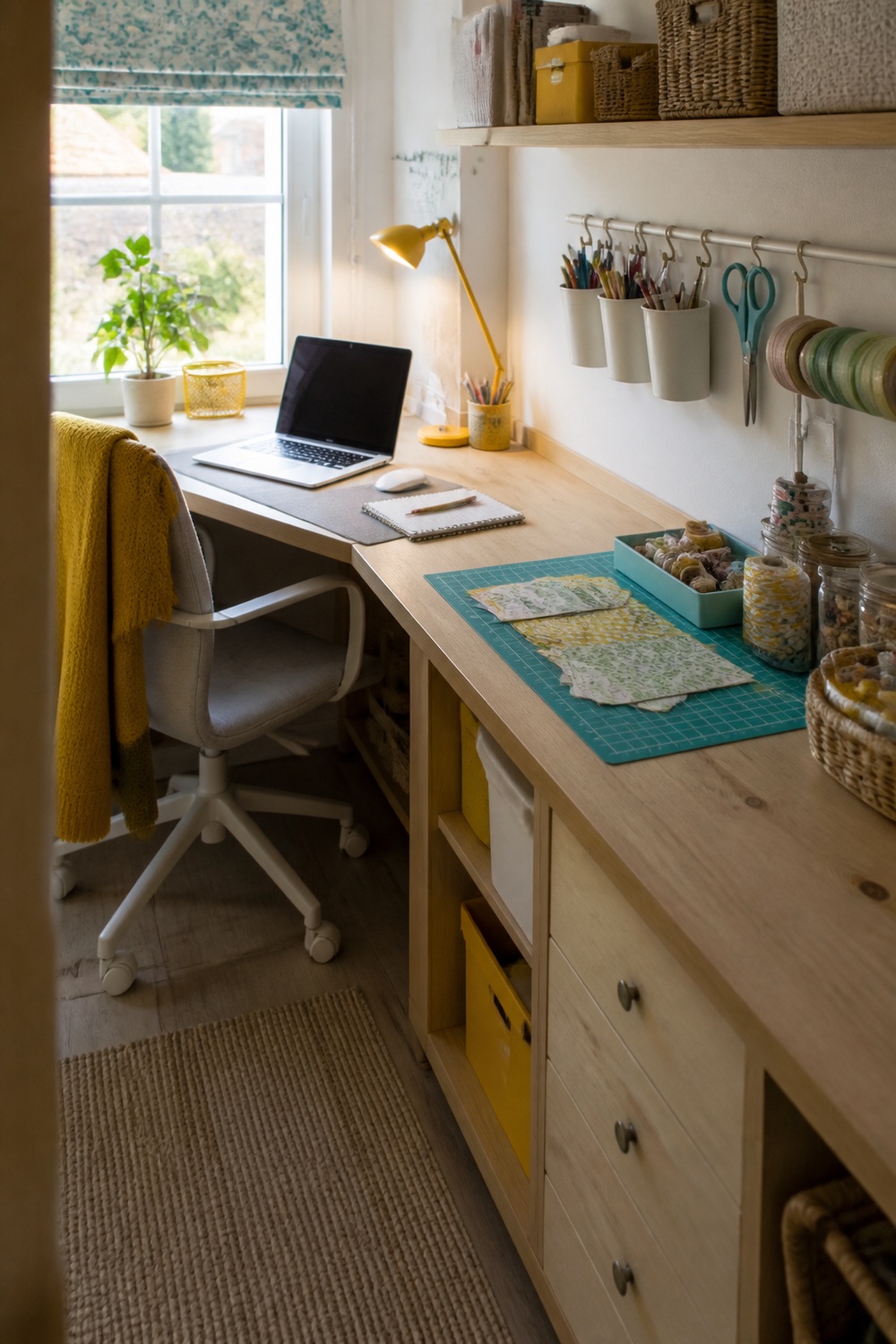
A wall rail handles the scissors, rolls, and small cups used constantly, while the laptop end remains uncluttered. The light furniture keeps a tiny rental-friendly setup from looking packed.
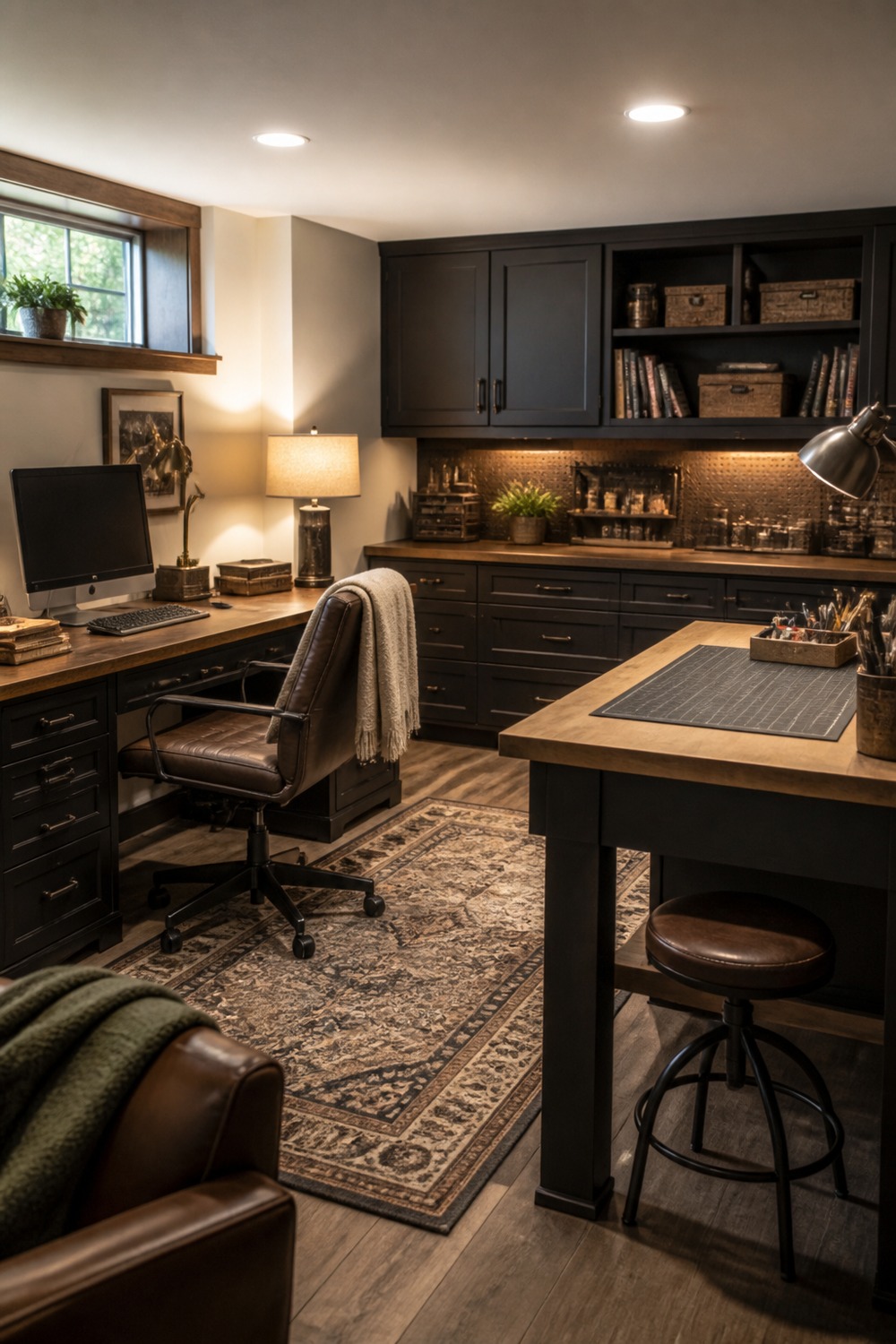
This basement zone feels finished because both work surfaces have proper lighting and storage. Durable flooring suits paper scraps and rolling chairs, while the warmer lamp keeps the office side from feeling cold.
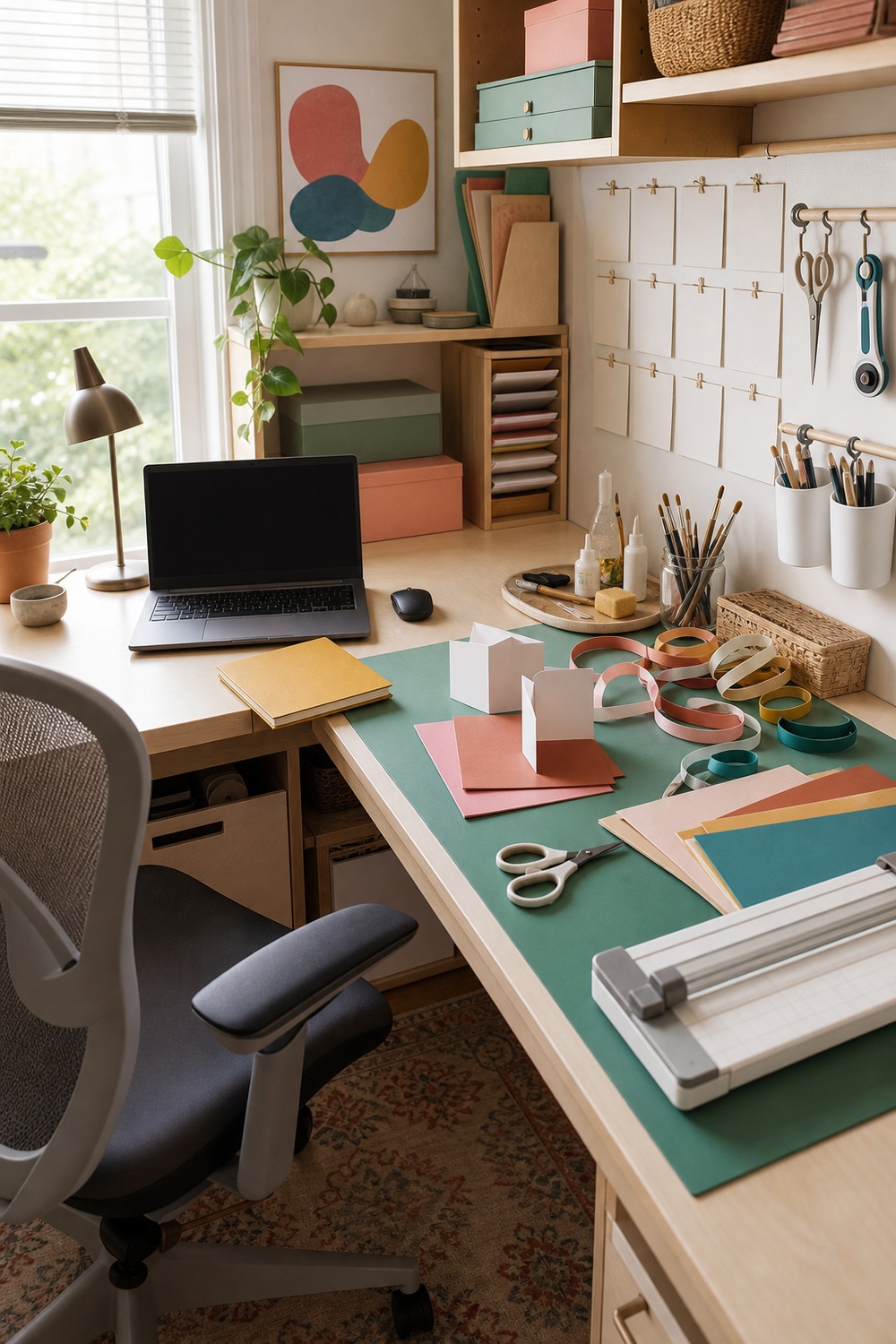
Paper slots, hanging tools, and a blank planning grid create a useful command wall without relying on labels. The laptop, chair, and clear desk area keep it grounded in everyday office work.
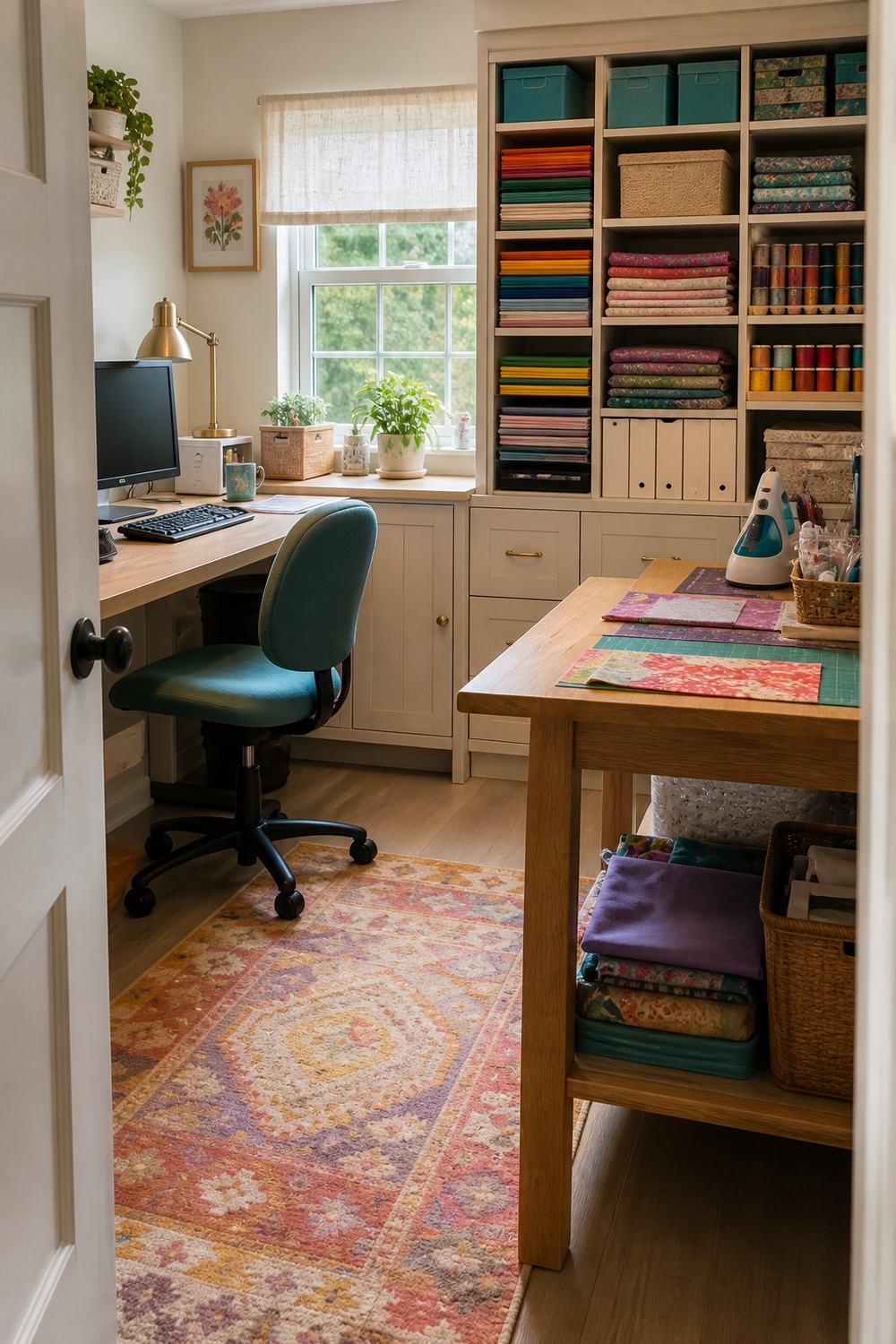
Teal, coral, mustard, and lavender supplies bring energy without swallowing the computer station. Neutral furniture and closed lower storage give the color somewhere to stop.
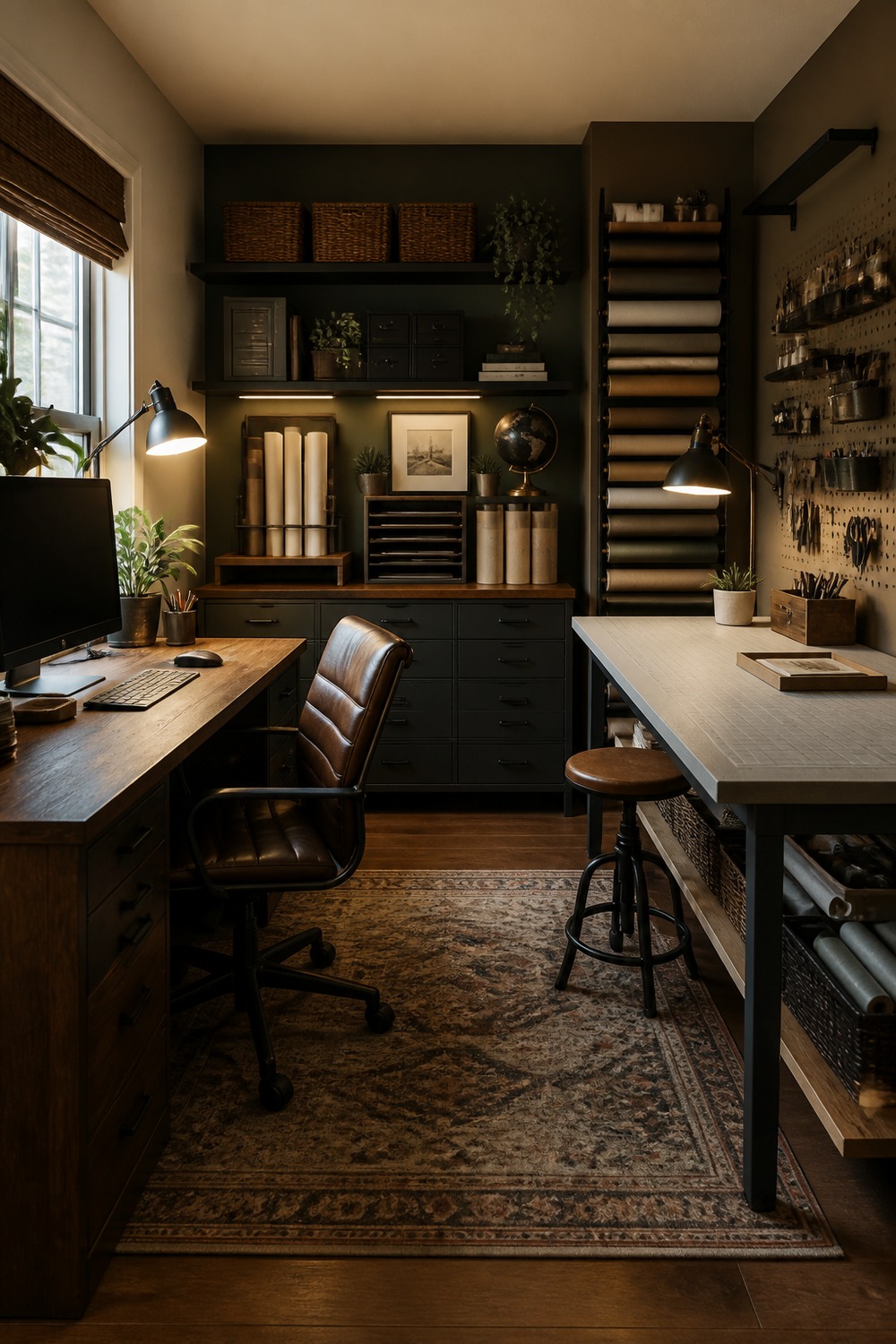
Two work surfaces make this layout flexible for shared projects beside regular office tasks. Deep drawers and wall shelves give loose paper, chargers, and supplies a place before the room gets crowded.
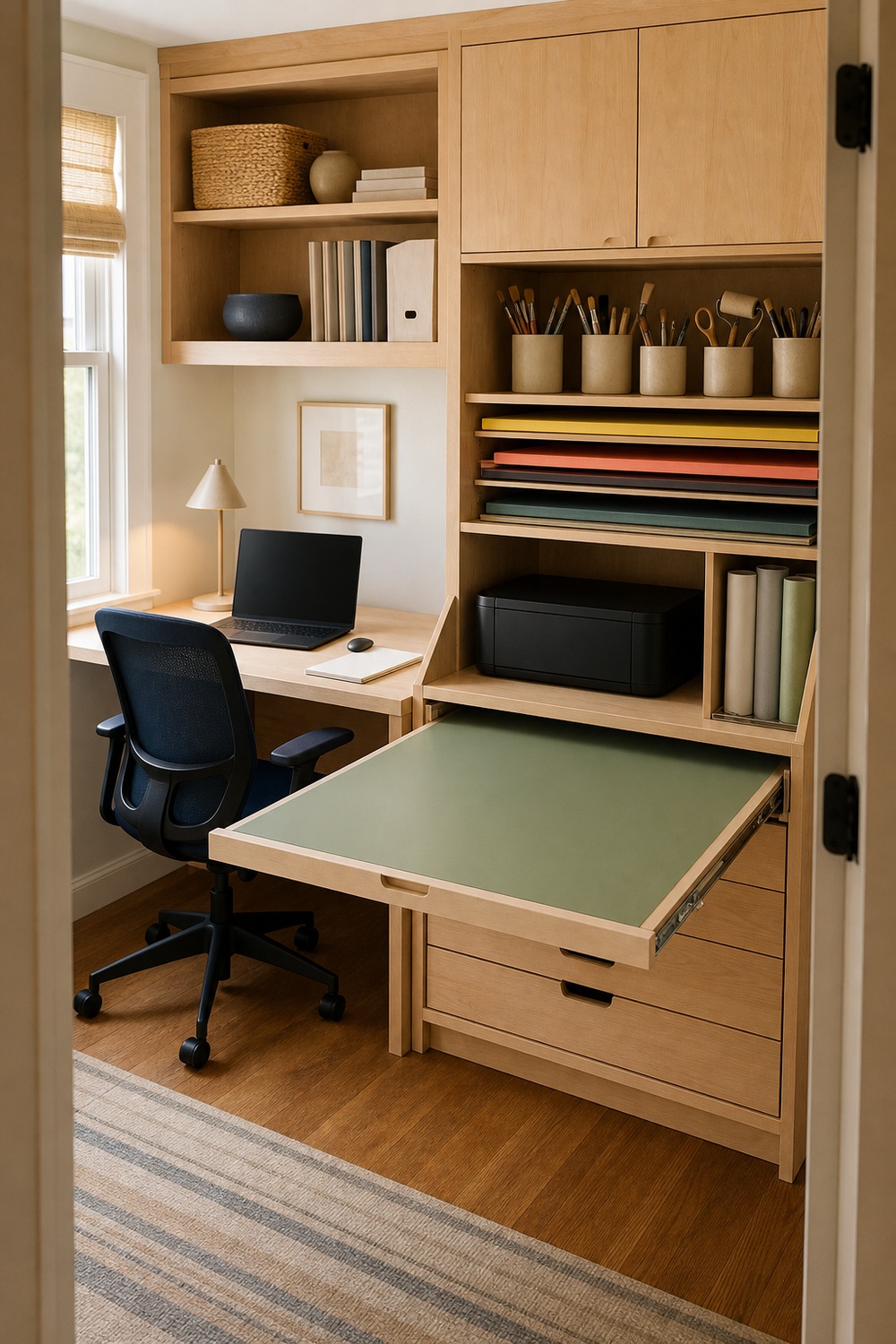
The pull-out work surface makes the craft cabinet functional rather than decorative. A blank printer, paper drawers, brushes, and rolls sit beside a compact laptop desk, so printing and trimming do not require a full reset.
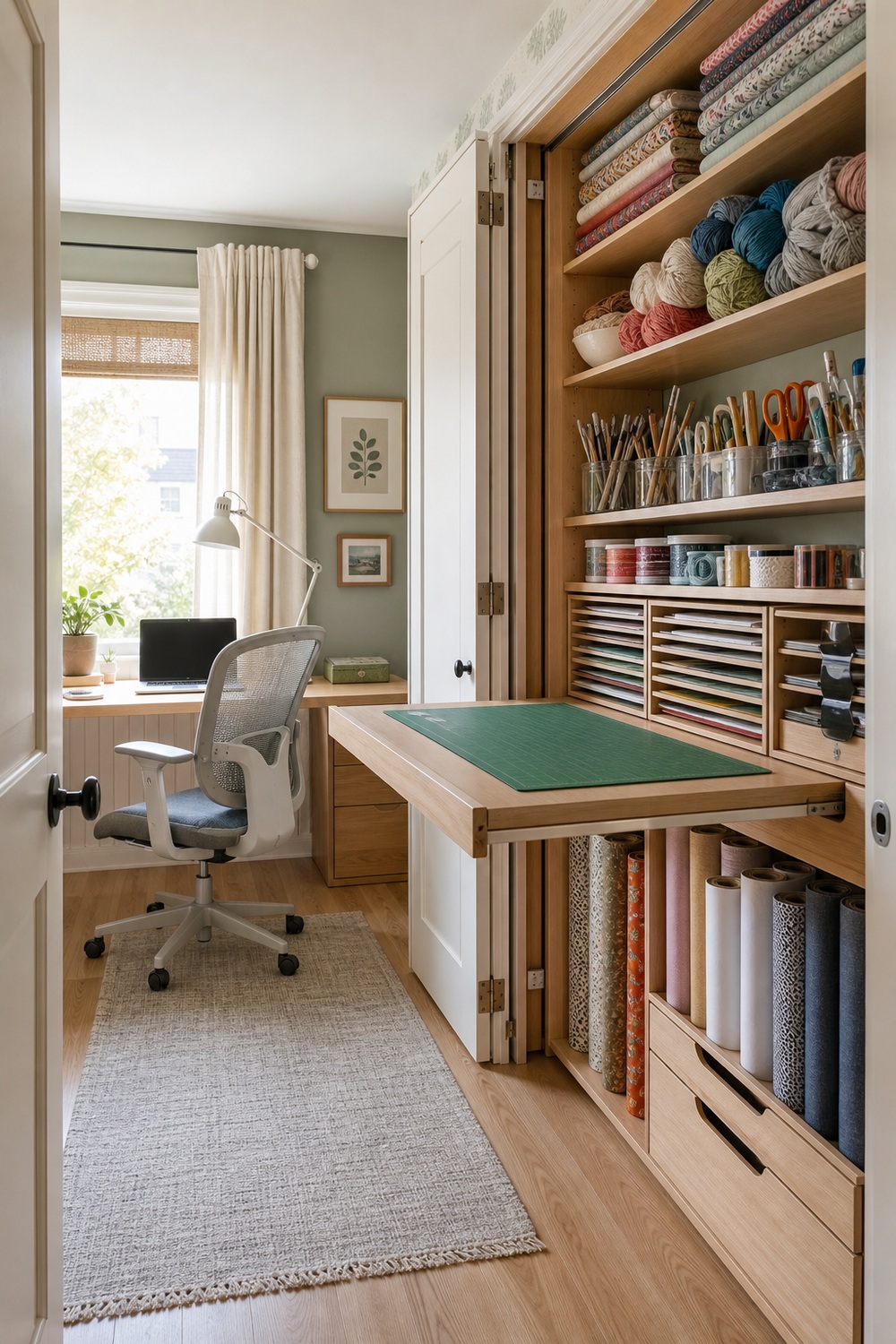
This bright version proves a combo room does not need dark built-ins to stay organized. The window desk handles laptop work while the open craft closet contains yarn, fabric, paper, tools, and a folding work ledge.
The strongest layouts do not hide that two different kinds of work happen here. They give each one a surface, enough light, and a realistic place for the clutter to go.
Leave a comment