
23 Repurposed Coffee Table Ideas That Make Old Pieces Useful Again
Repurposed coffee tables work best when the old piece still has some evidence of its first life. I want to see trunks, crates, carts, drawers, shutters, spools, and salvaged wood doing something useful in the middle of the room, not just a generic rustic table with a nicer name.
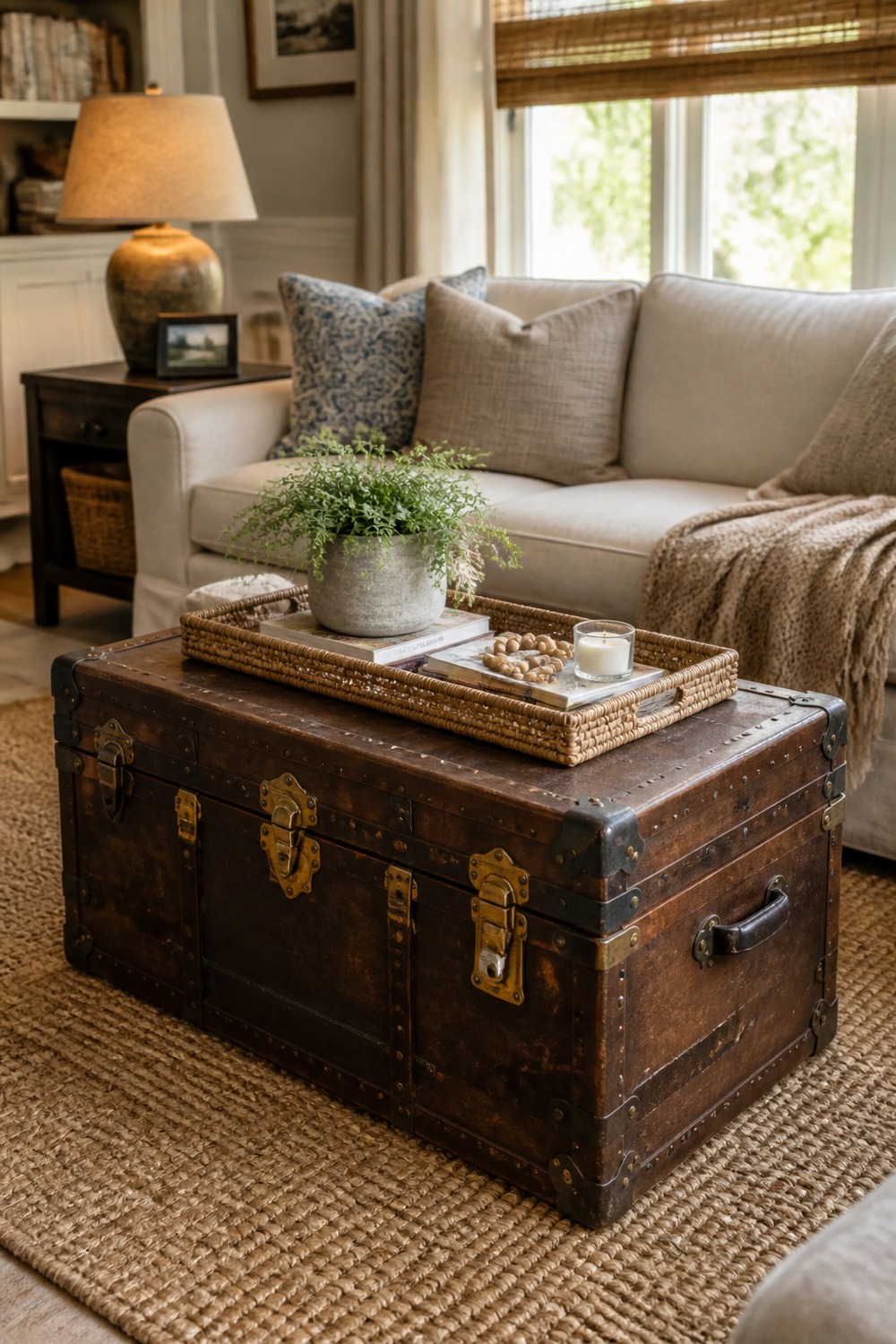
A vintage trunk makes the table feel collected before anything else is styled around it. The metal corners, worn finish, and storage-chest shape give the room a real rescued-piece moment, but the flat top still leaves room for a tray and the usual stack of remotes.
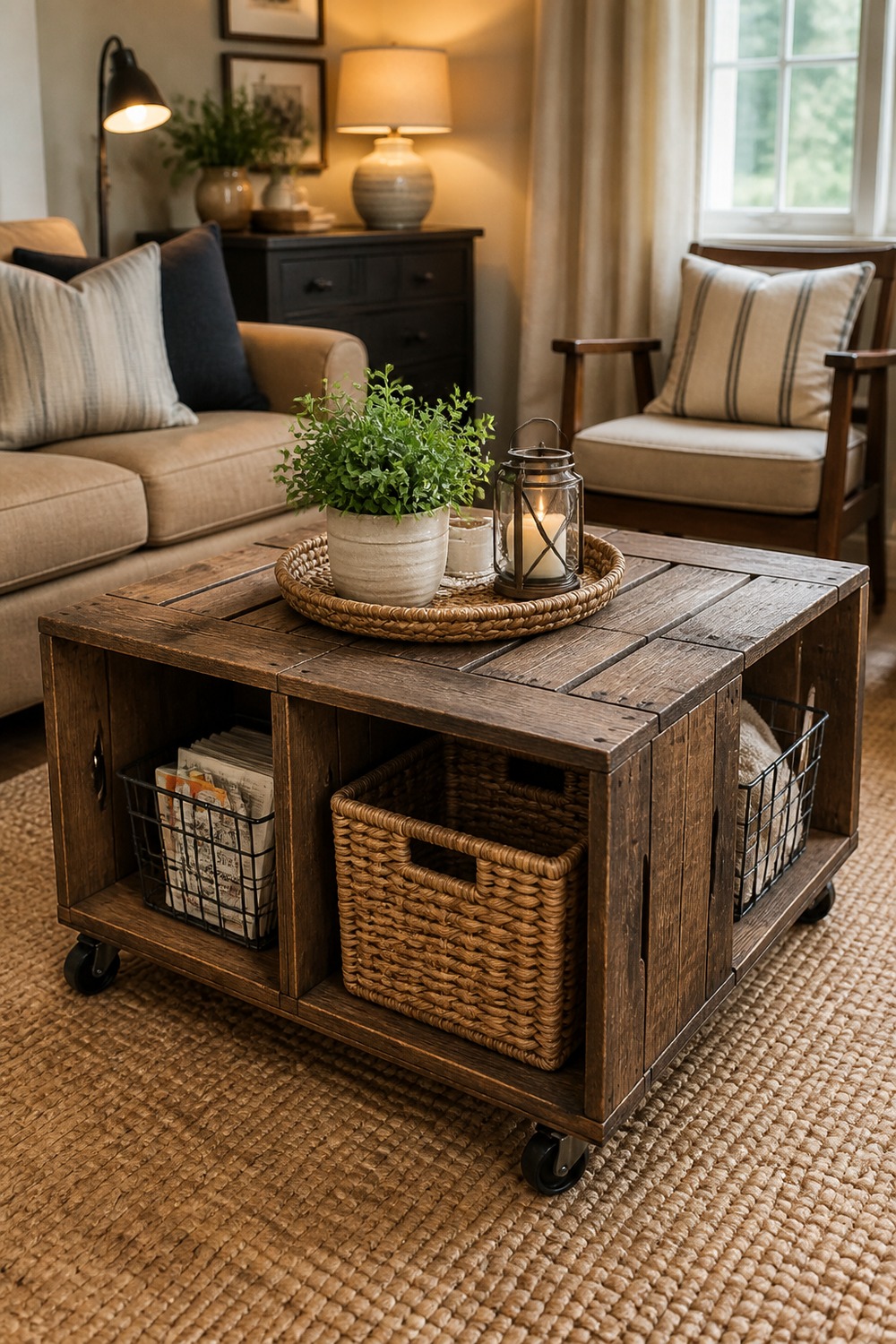
The crate build is the practical one I would notice first in a family room. Those open cubbies can hold baskets, books, or a blanket, and the caster base keeps the whole thing from feeling like four boxes were just dropped in the middle of the rug.
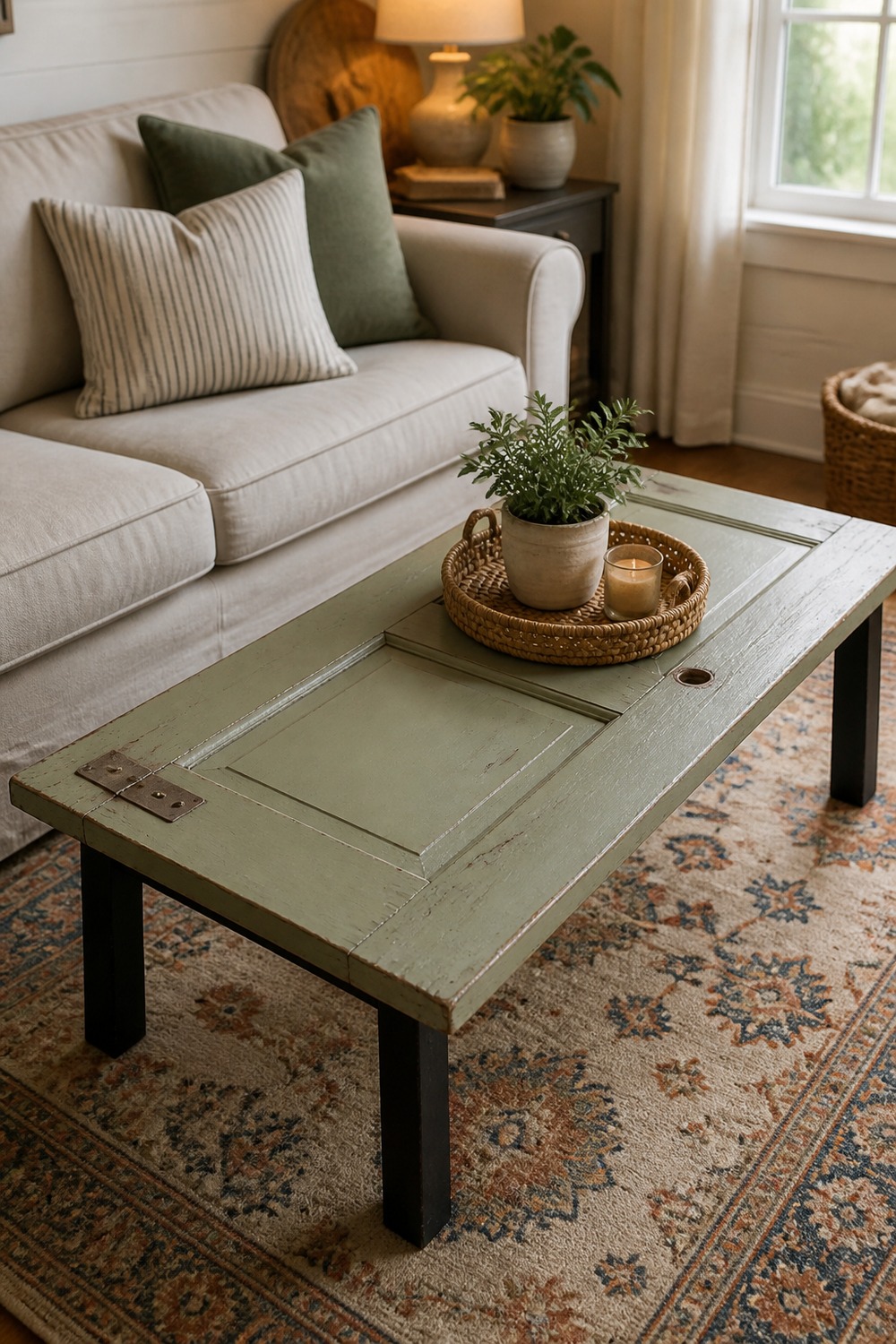
Using an old paneled door as a tabletop gives this one more character than a plain rectangle. The inset-panel look adds enough history, while the simple legs and calmer styling keep the idea from sliding into full DIY-project chaos.
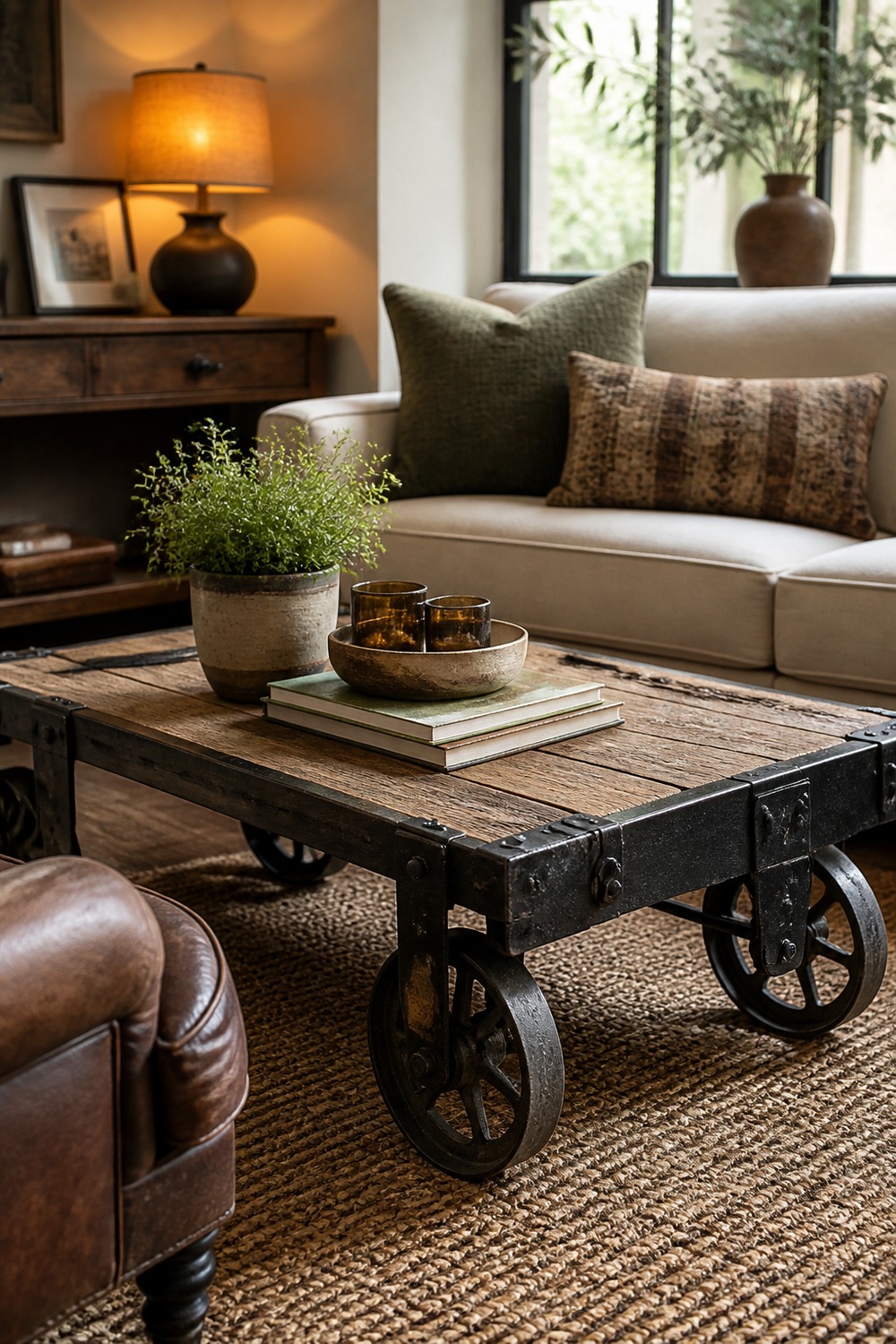
The industrial cart version has the strongest salvaged feel because the wheels do half the work visually. I like that it brings in warehouse texture without taking over the room, especially with softer seating and warm light around it.
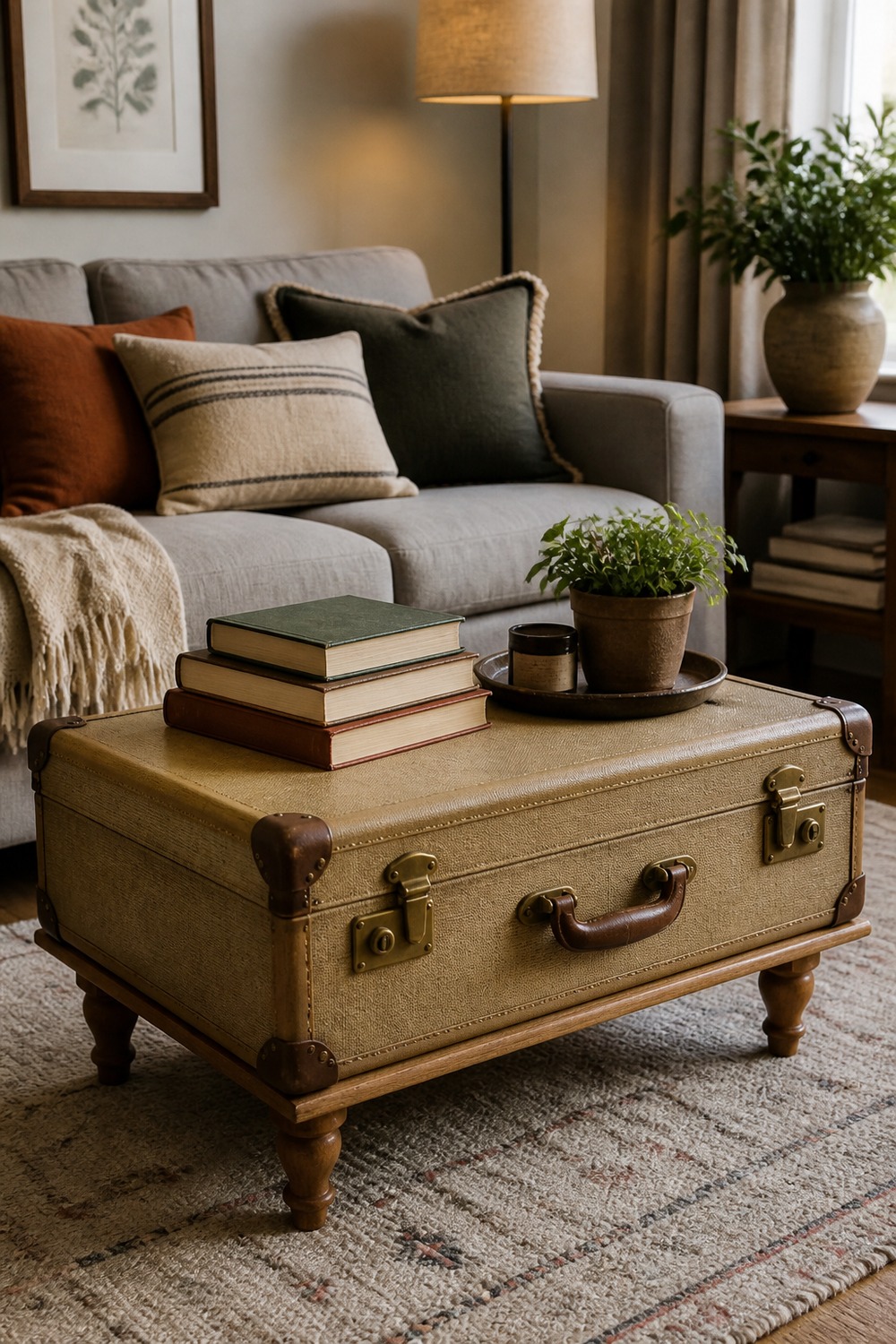
A suitcase table feels playful, but it still has to look sturdy enough to live with. This one works because the latches, hard shell, and raised legs make the old luggage shape obvious while keeping the tabletop usable.
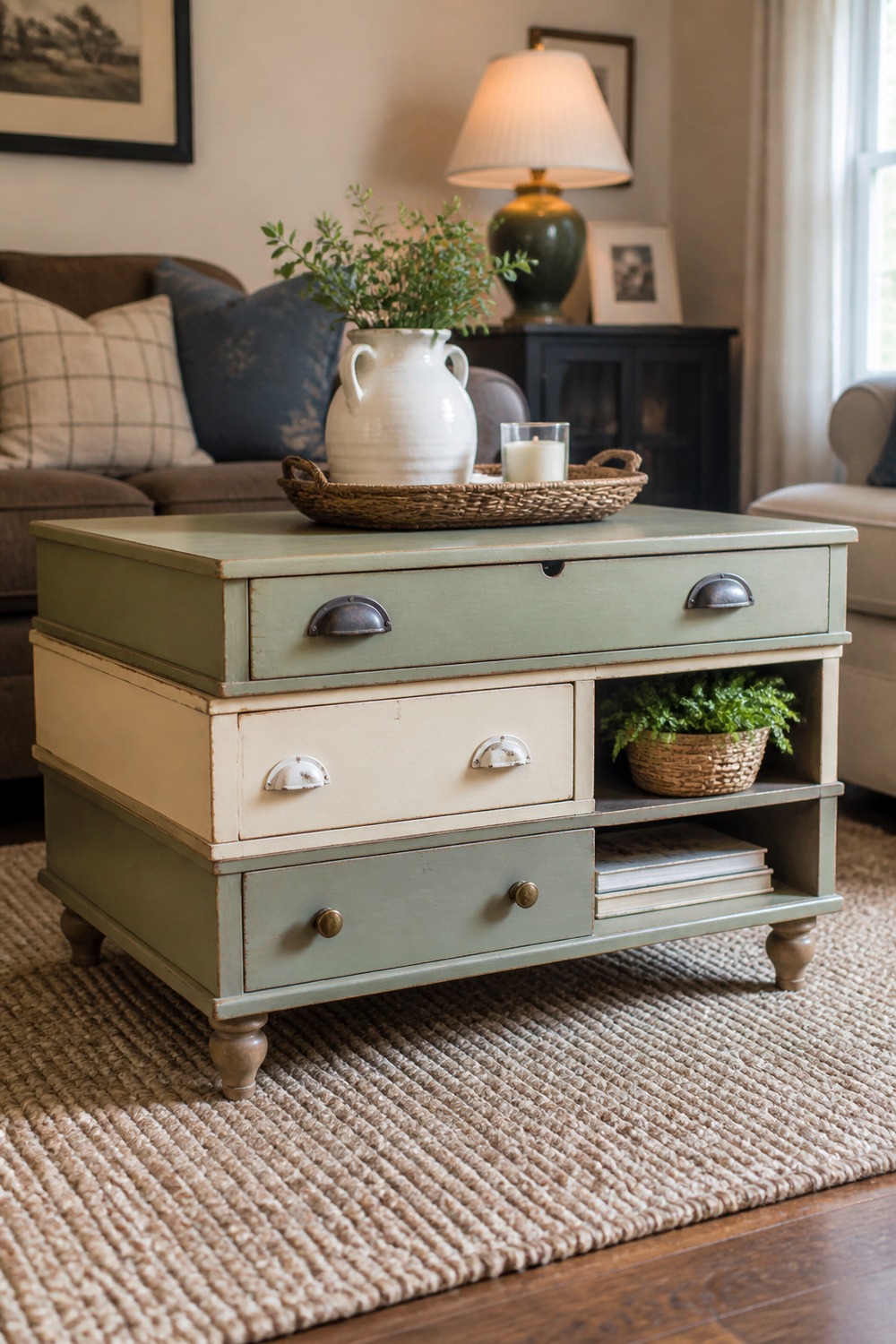
The stacked-drawer idea is nice when you want storage to feel decorative instead of hidden. Mismatched pulls and little cubby openings make it feel thrifted, and that makes the whole seating area less predictable.
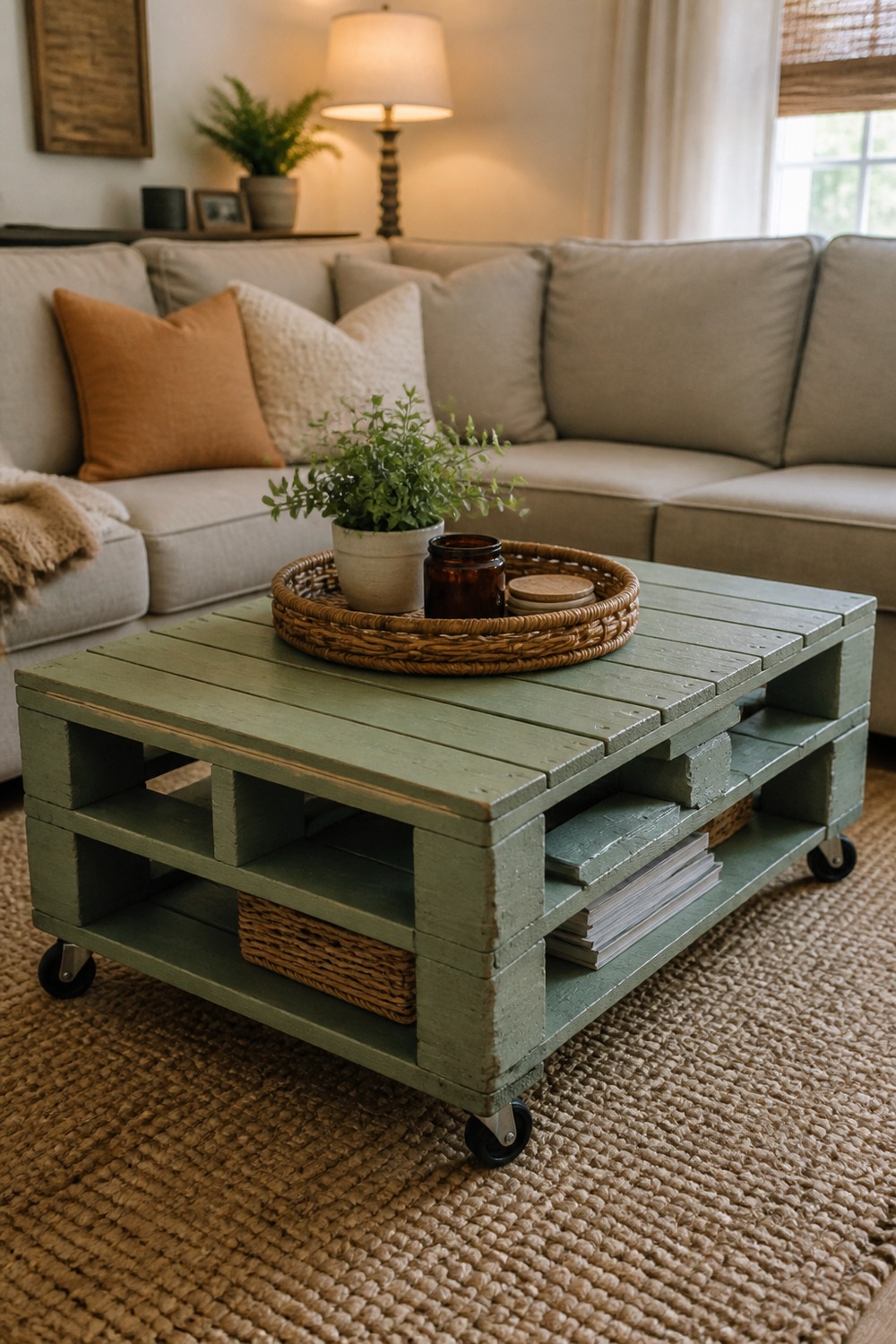
Pallet coffee tables can look rough fast, but this version feels cleaner because the boards are sanded and the shape is simple. The lower shelf and small wheels make it read as a finished living-room piece instead of leftover workshop lumber.
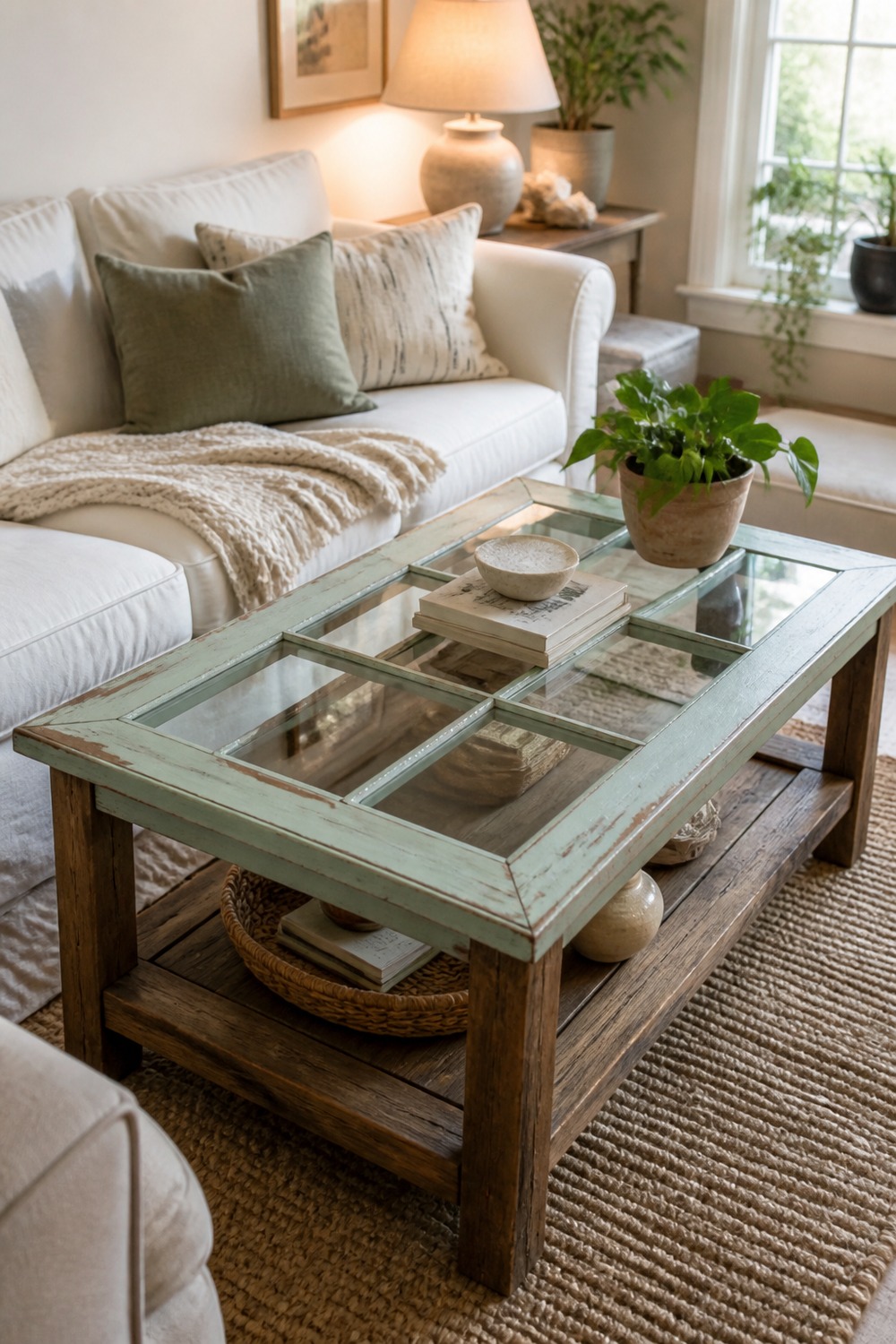
The window-frame top is a good repurposed detail because it is recognizable without needing a sign to explain it. Divided panes, glass, and a solid base give the table that salvaged look while still feeling light in front of the sofa.
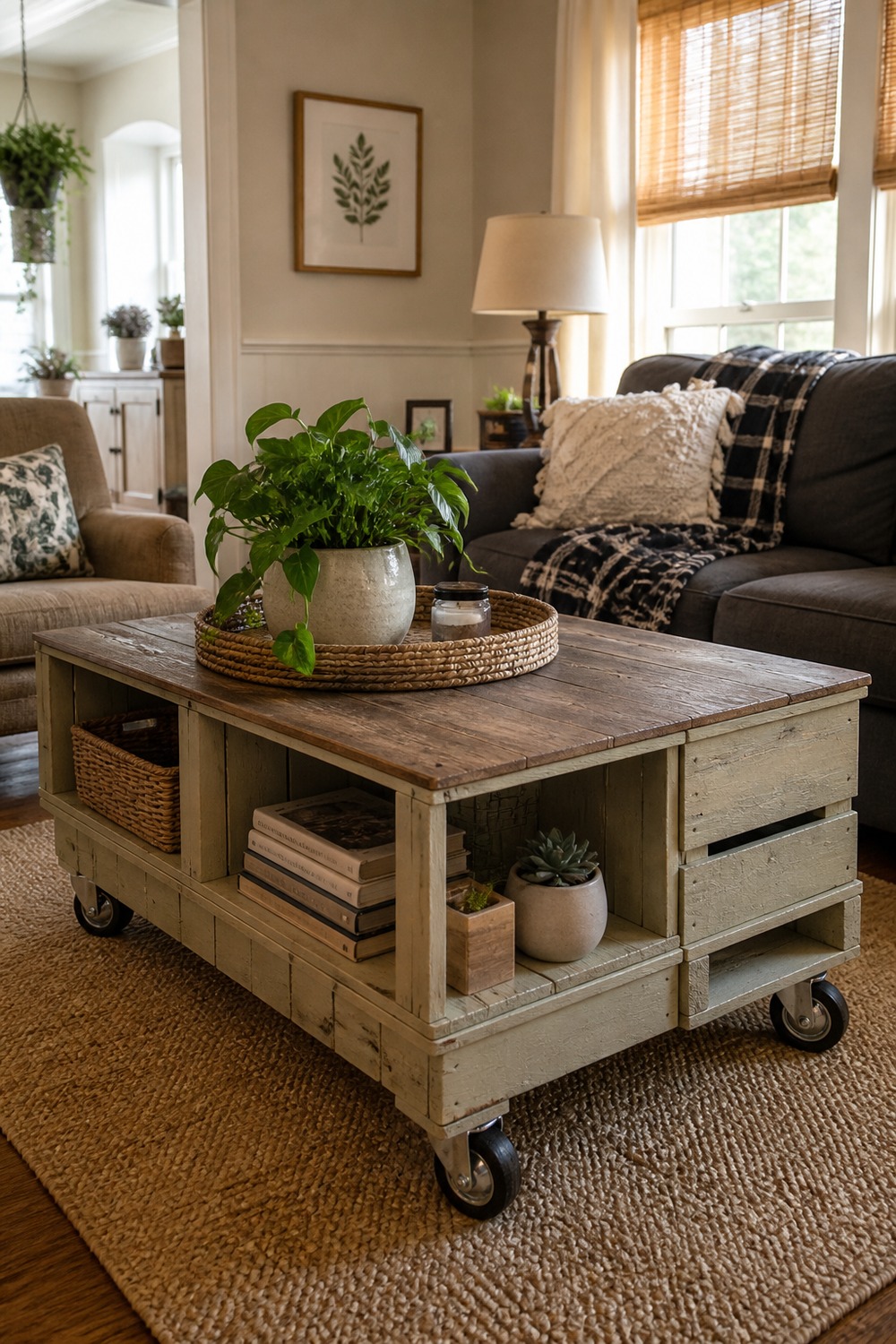
Wine and produce crates work well when the crate compartments stay visible. I like how this idea turns storage into the design detail, so the table can hold books and baskets while still showing off the old wood structure.
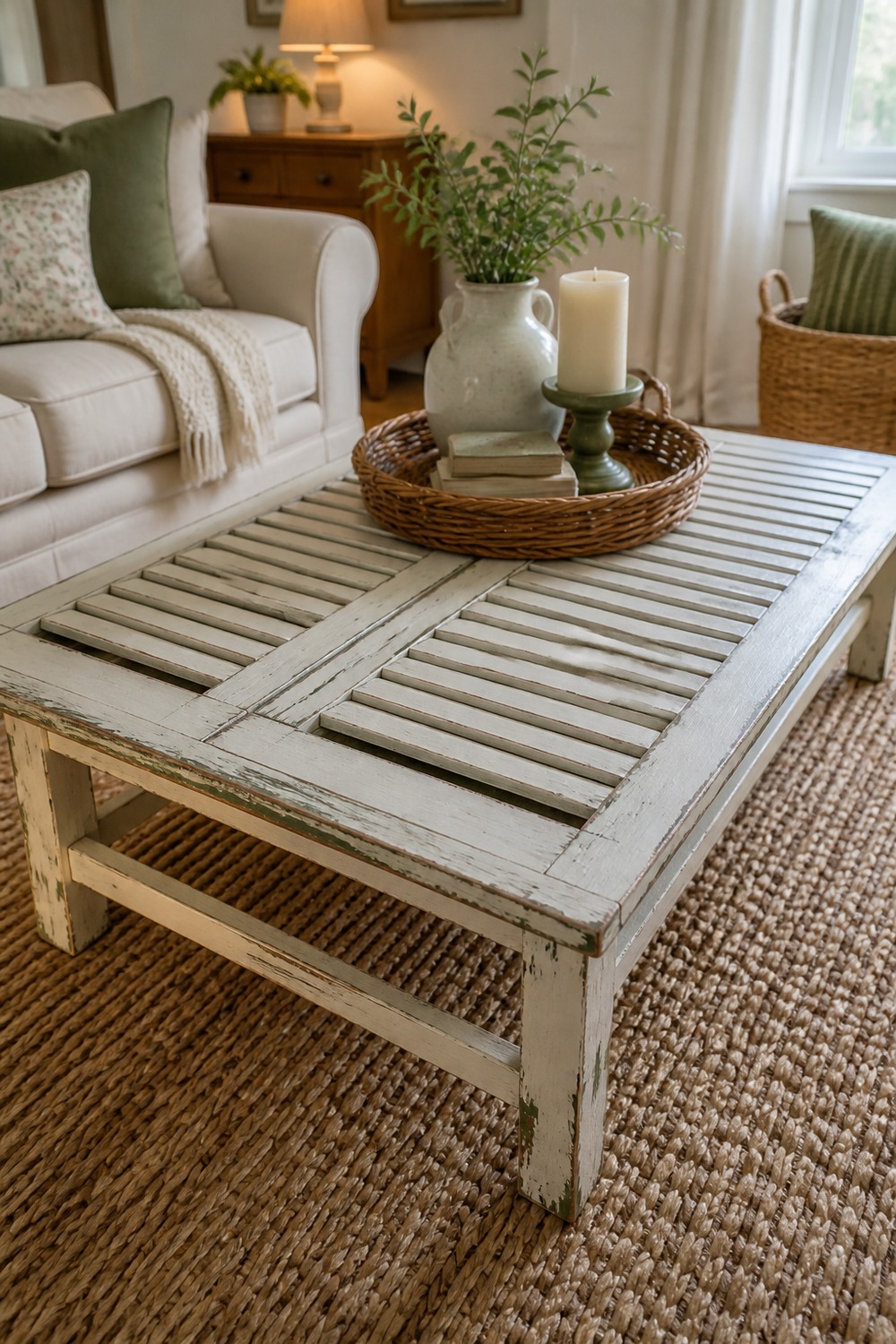
A shutter top brings in texture that a normal coffee table usually does not have. The slats, worn paint, and cottage-style base make the piece feel found and reworked instead of newly bought to match the room.
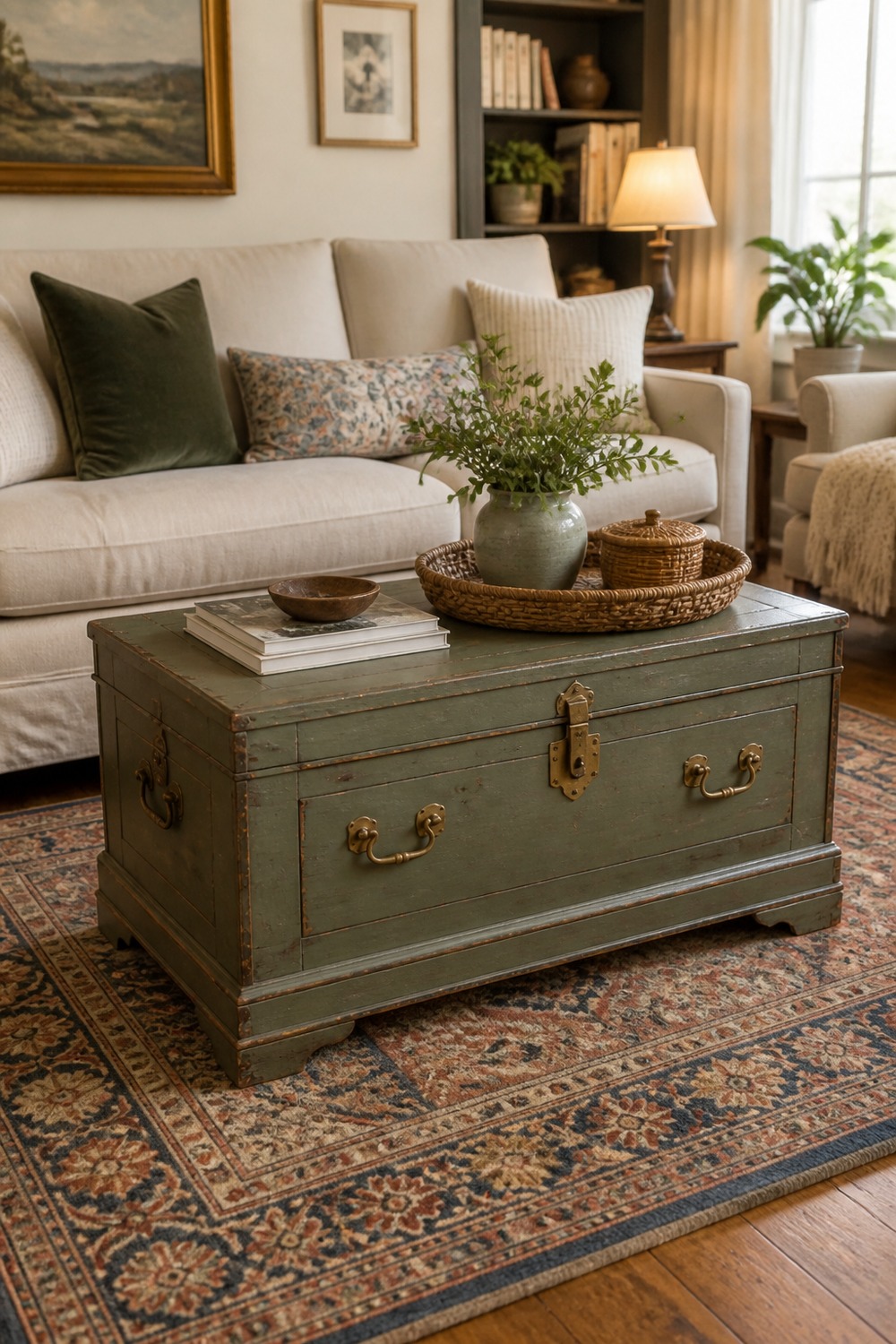
An antique chest is one of the easiest repurposed tables to understand at a glance. The hinged-lid shape, brass hardware, and aged finish make the table feel useful, and it adds hidden storage without needing another cabinet nearby.
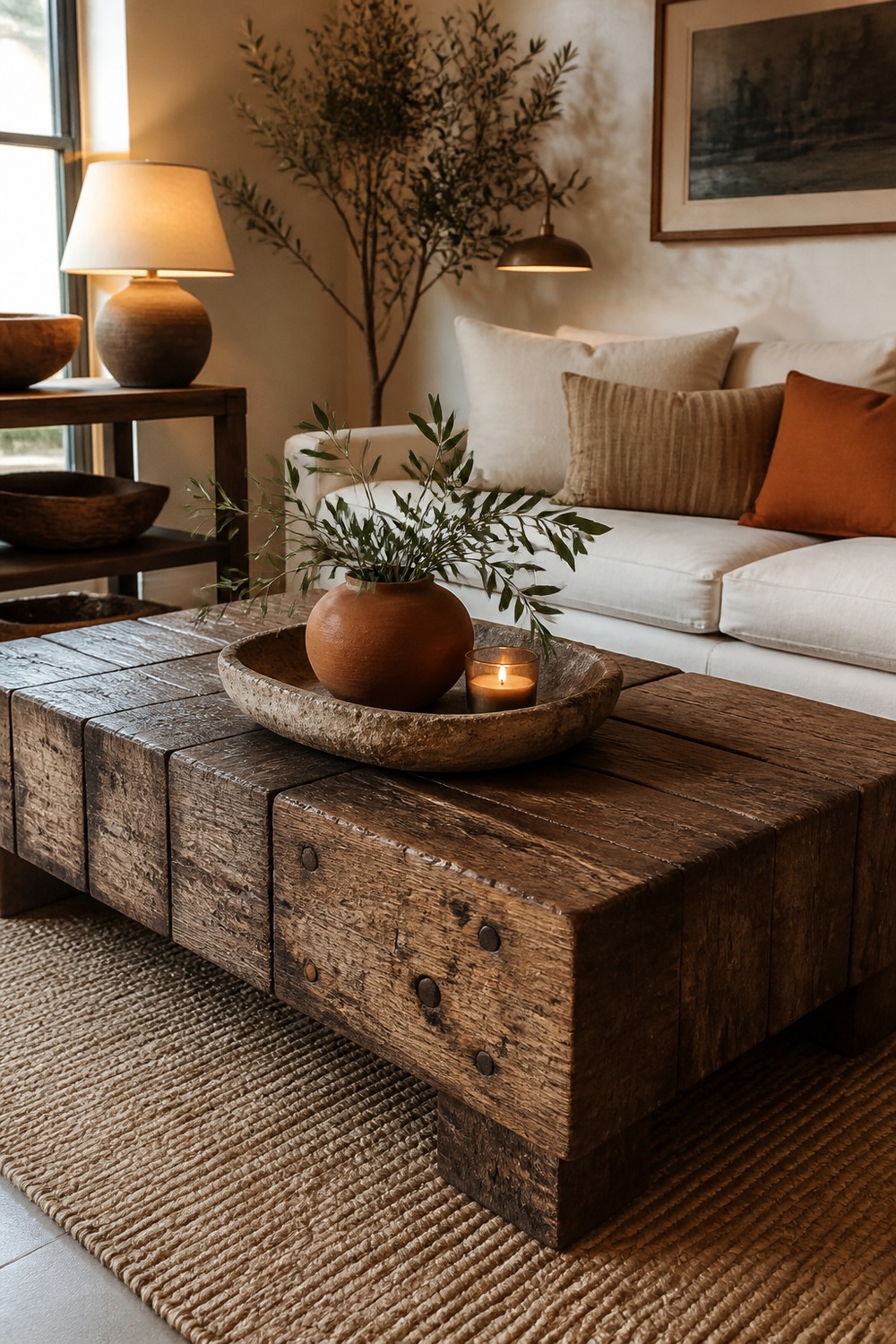
The reclaimed-beam idea is heavier and more grounded, which can be great in a room with soft sofas and woven texture. Old nail marks, chunky wood, and a matte finish make the table feel like it came from a previous life.
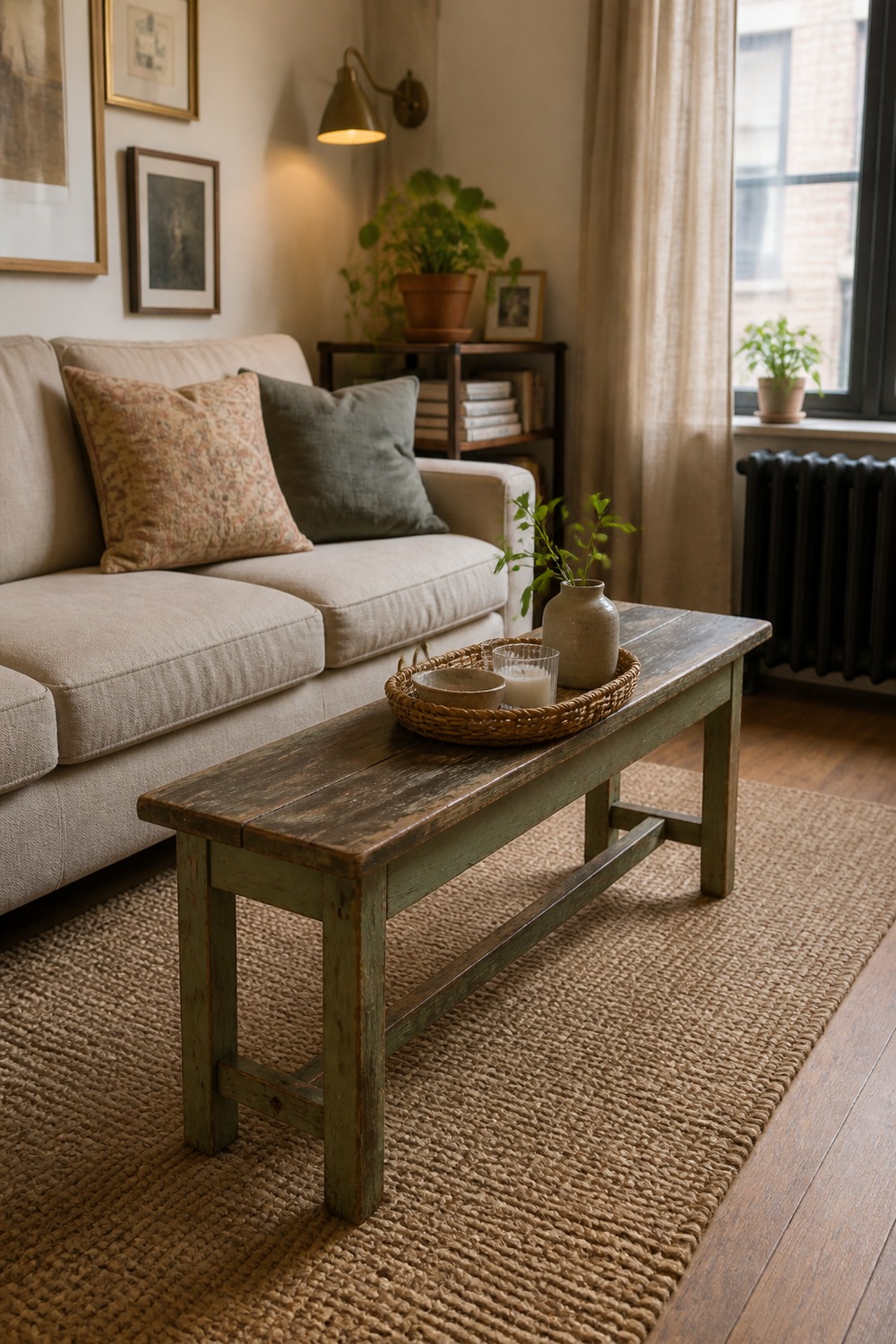
A narrow bench as a coffee table is simple, but that is what makes it believable. It keeps a low profile, leaves walking space around the sofa, and still has enough worn wood detail to feel repurposed rather than generic.
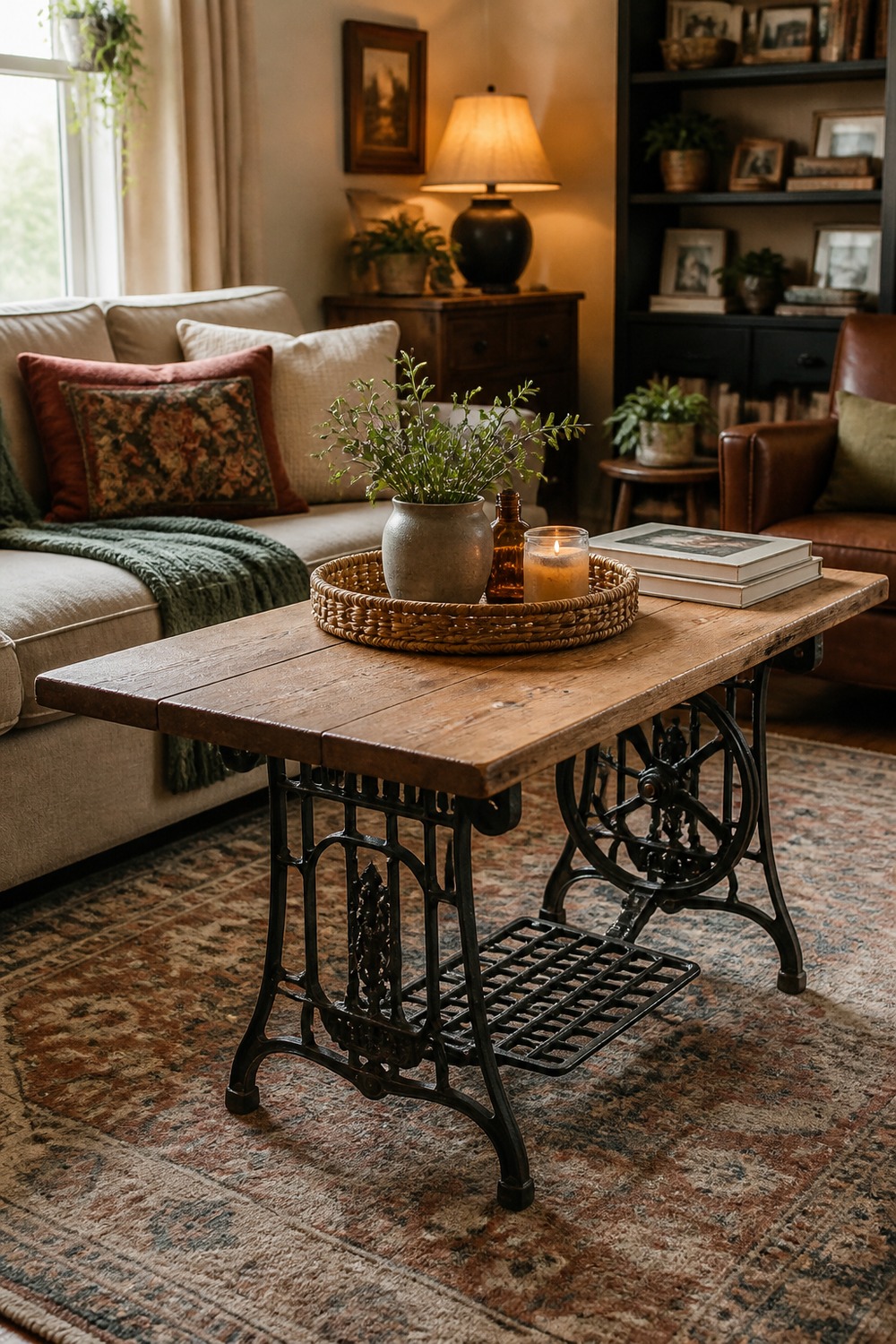
The sewing-machine base is the detail that makes this one special. Those iron legs instantly tell you the piece was rebuilt from something else, and the wood top keeps it practical enough for cups, books, and a small tray.
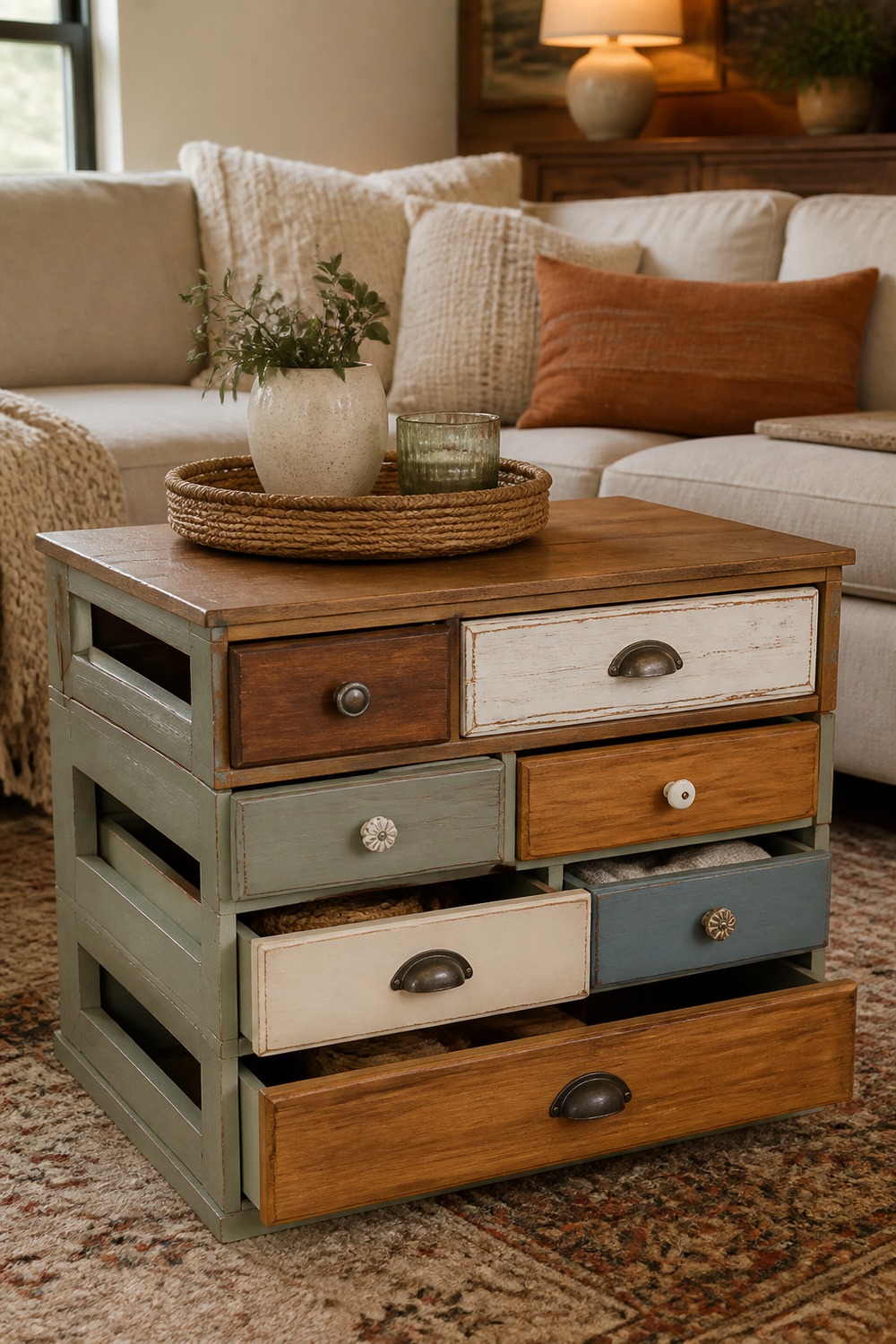
The drawer-stack table feels more handmade than polished, in a good way. Different drawer fronts and little handles give it a quirky storage feel, so the center of the room has personality instead of another smooth box table.
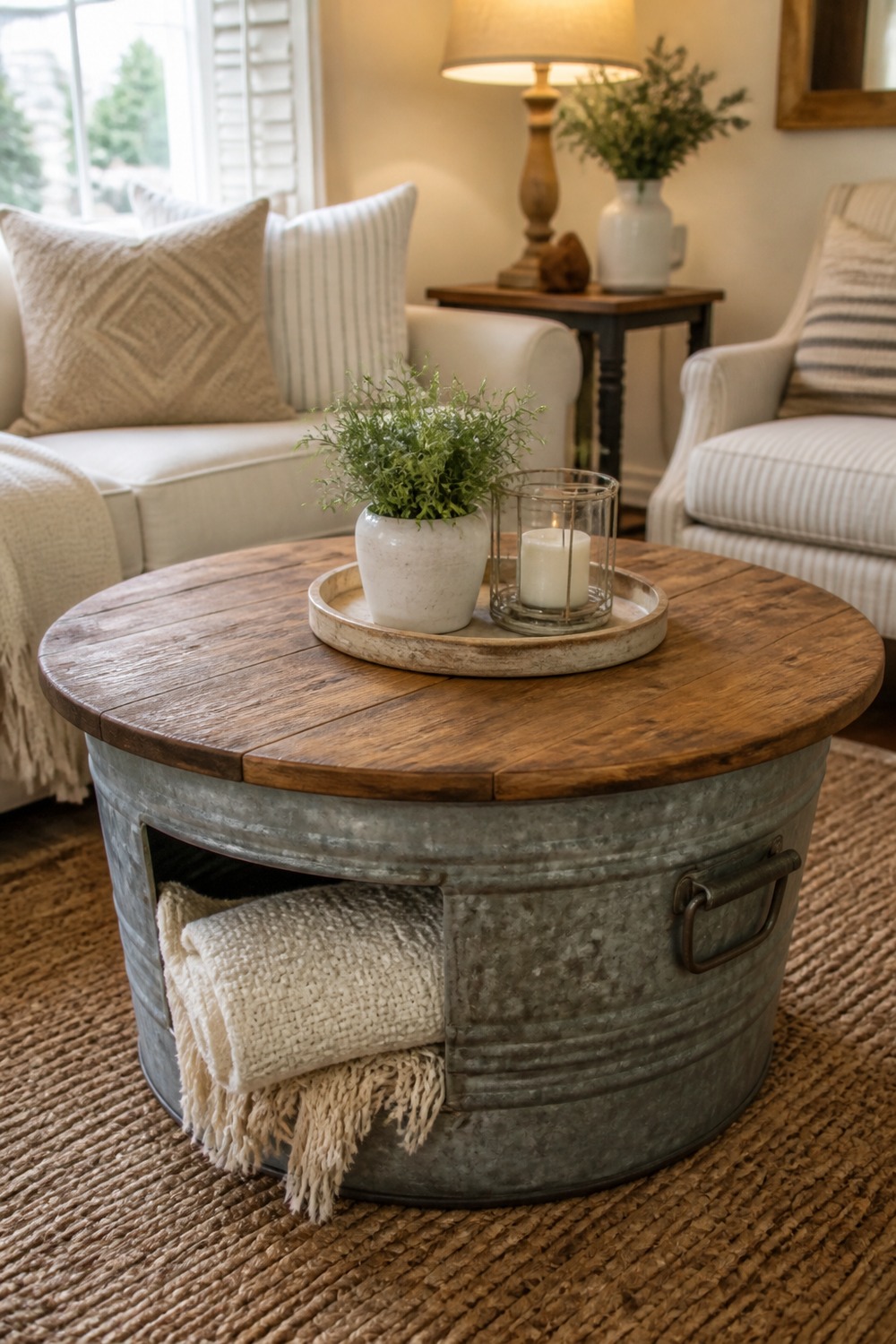
A galvanized washtub table gives the farmhouse look a clearer purpose. The round metal base is obviously reused, and the wood lid makes it functional while still leaving that blanket-storage feeling underneath.
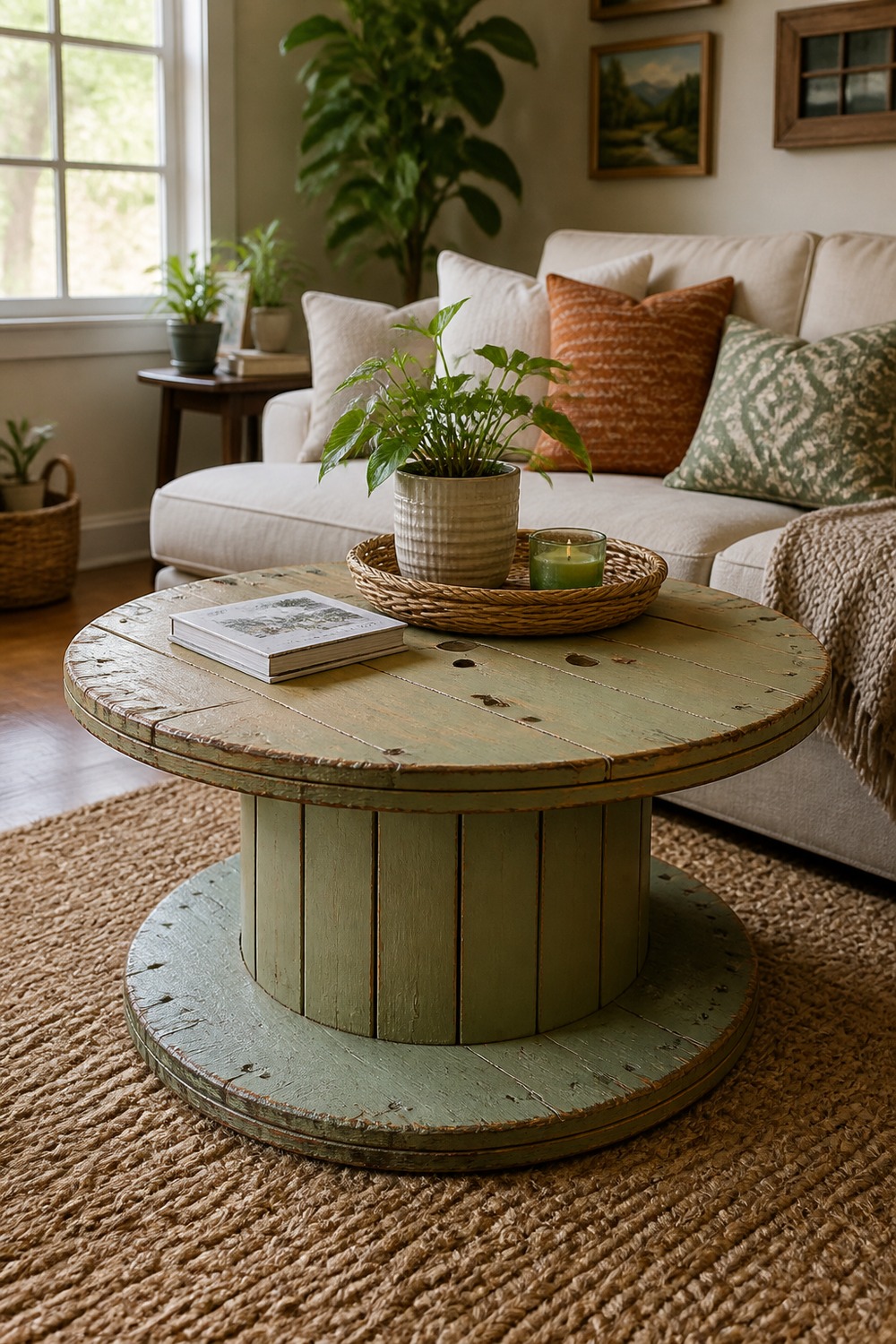
The cable-spool table is one of those ideas that only works when the circular shape stays obvious. Here, the round top and drum base make the reused object easy to read, especially with softer textiles balancing out the rough wood.
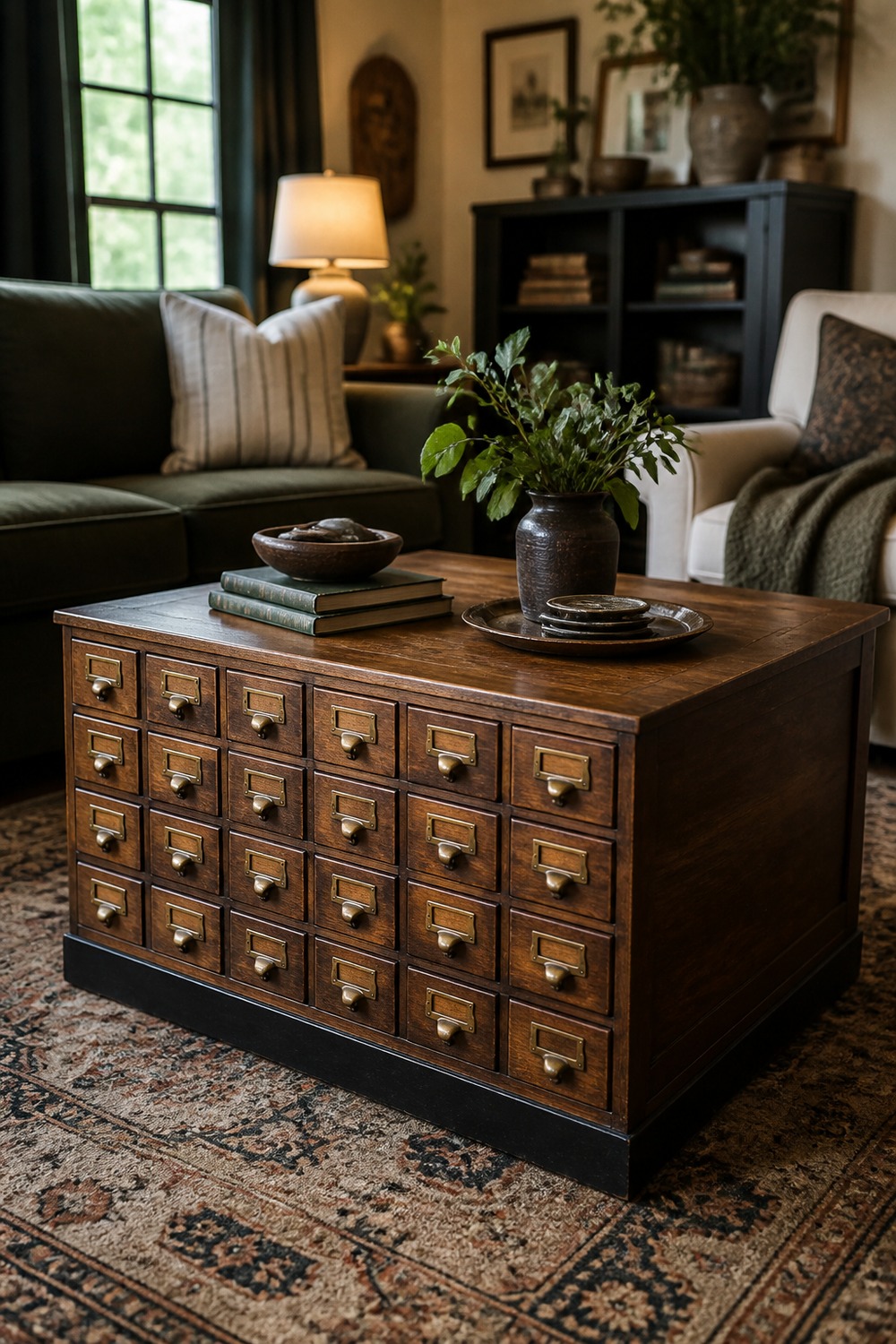
A card-catalog coffee table has so much built-in detail that it barely needs extra styling. The small drawers and brass pulls make the storage feel interesting, and the piece adds a collected-library mood without adding readable labels.
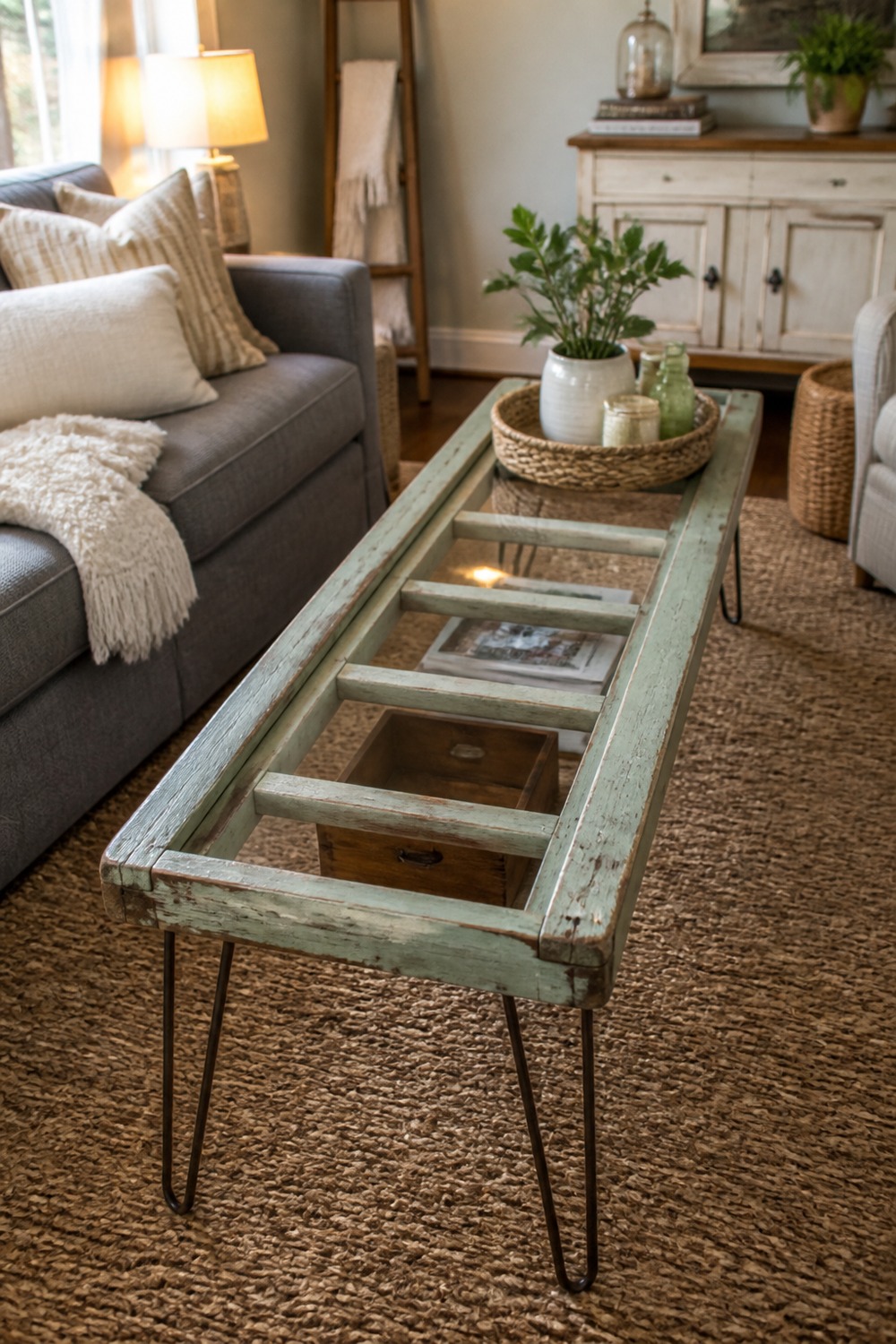
The ladder table is a more unexpected version because the rungs become part of the structure. A glass or plank top keeps it usable, while the side view still lets the old ladder shape show through.
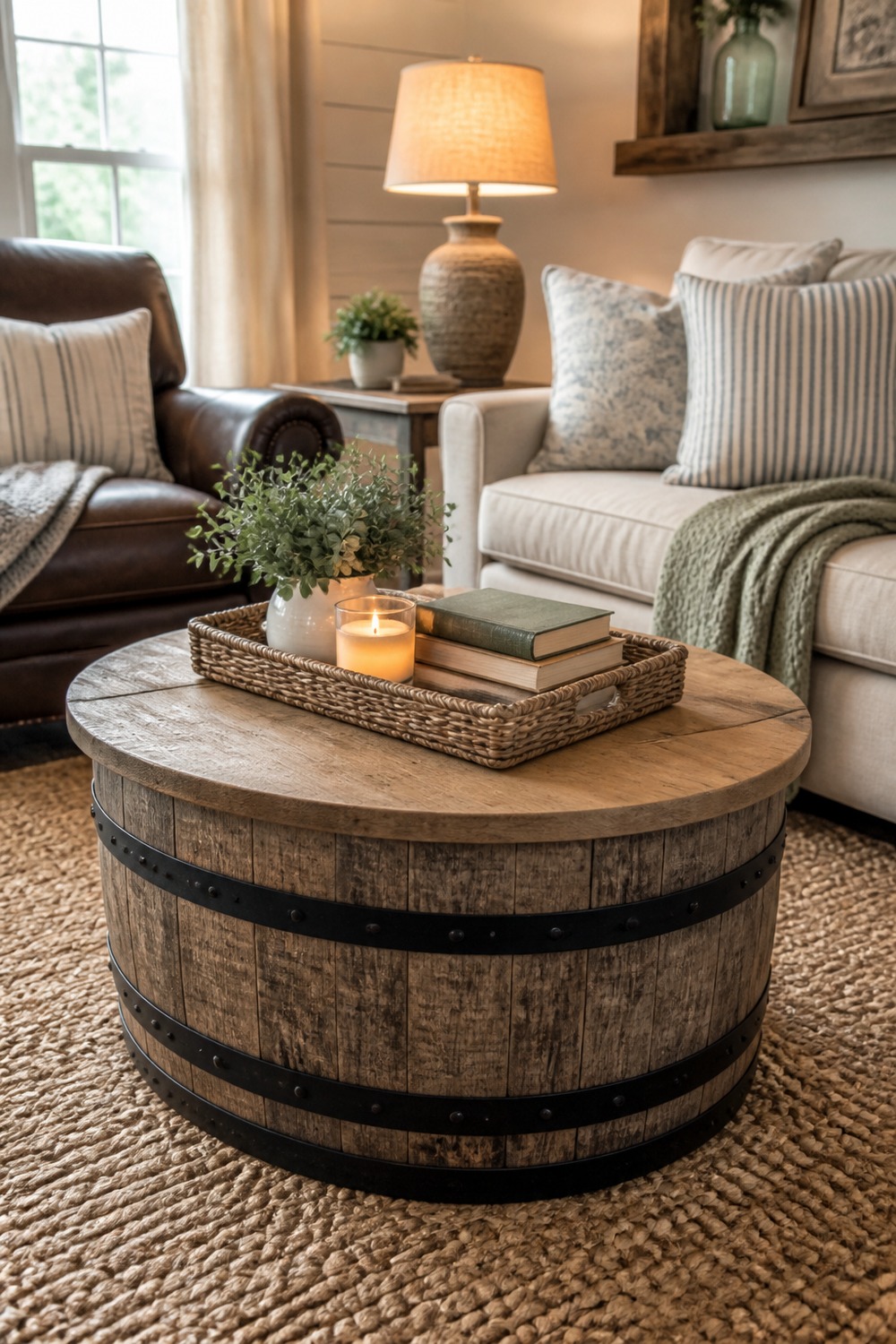
The barrel table brings in rustic texture without needing a huge footprint. The curved sides, dark metal banding, and flat wood top make the reused object clear while still working as a normal coffee table.
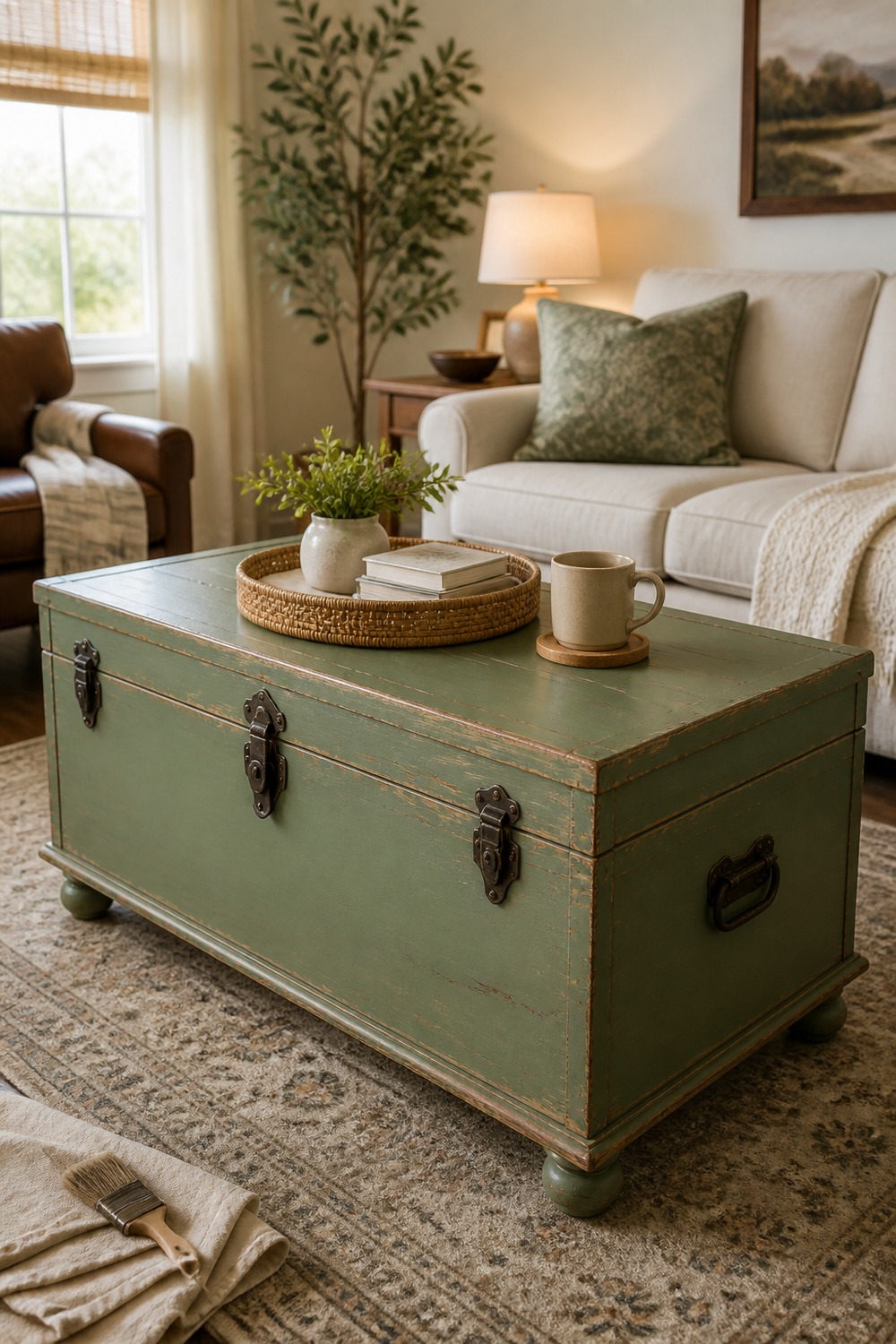
A painted curb-find table is all about making the old bones look intentional. Keeping the hardware and sanded edges helps it avoid looking too new, and the muted paint gives the room a softer secondhand feel.
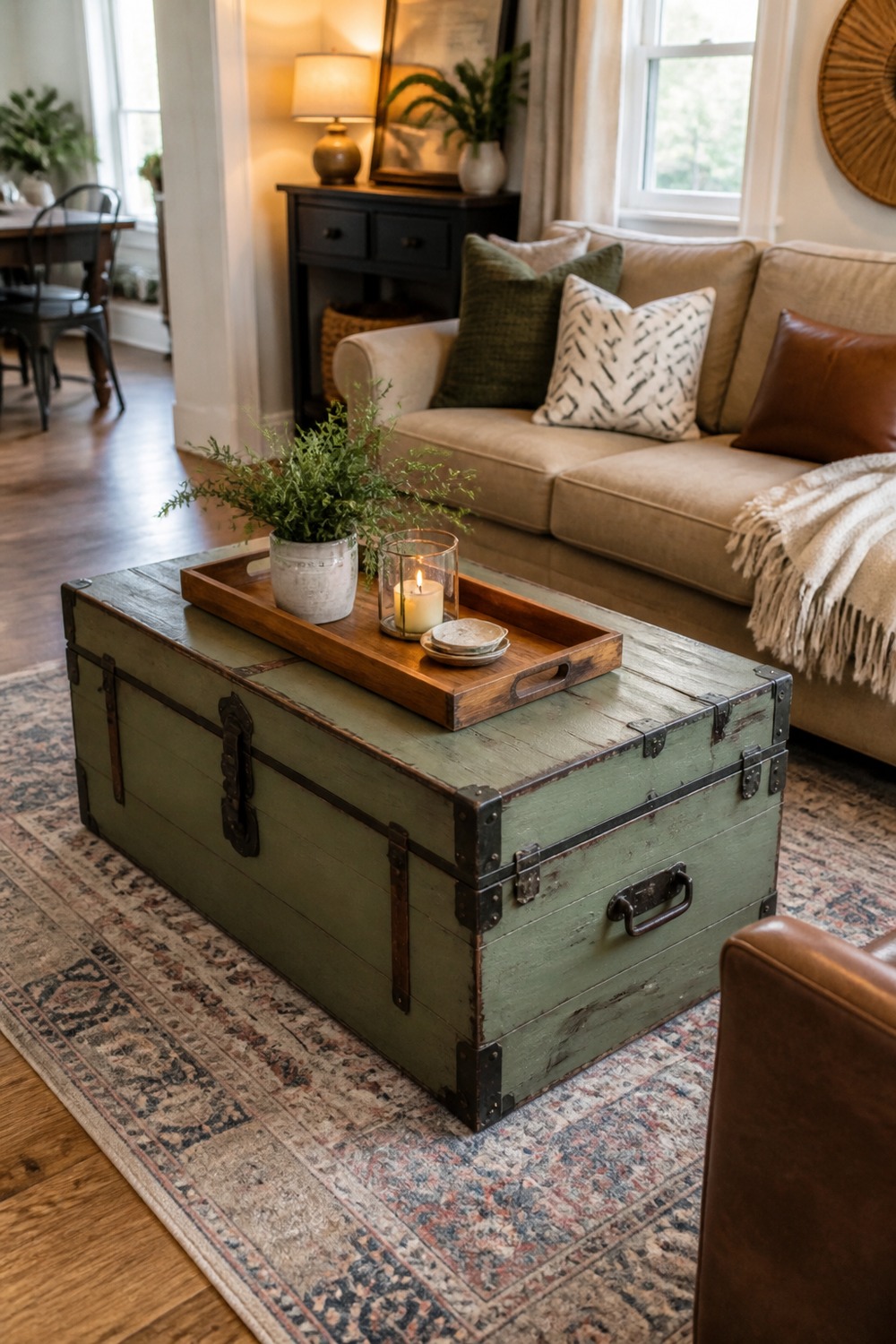
This full-room view shows why repurposed tables can be the thing that makes a seating area feel less showroom-perfect. The salvaged coffee table anchors the rug and sofa, but the tray space and storage still make it useful day to day.
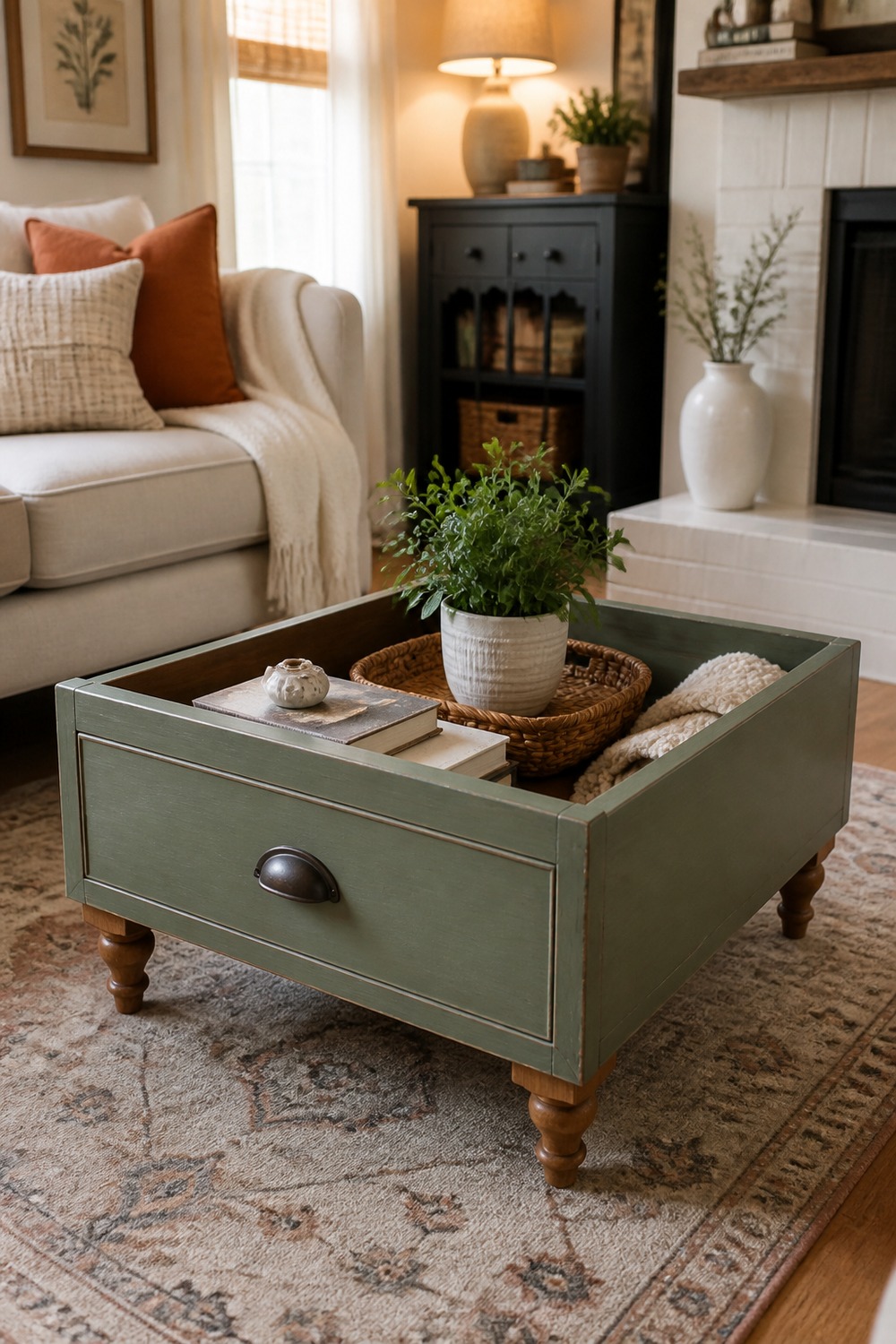
The single-drawer table is small, but the idea is clear. A drawer box, short legs, and visible pull hardware make it feel like a clever salvage project, especially for a compact room that still needs a table with personality.
A repurposed coffee table does not have to look perfect to make the room feel finished. The best ones keep enough old hardware, wood grain, storage, or salvaged shape to feel personal while still giving the living room a surface people can actually use.
Leave a comment