
Marble coffee tables lose me when the stone looks like a thin beige slab sitting in the middle of a safe room. I want the marble to actually do something: bold veining, heavier shapes, sculptural bases, black or green stone, waterfall edges, and living rooms that make the table feel like the main design choice instead of an afterthought.
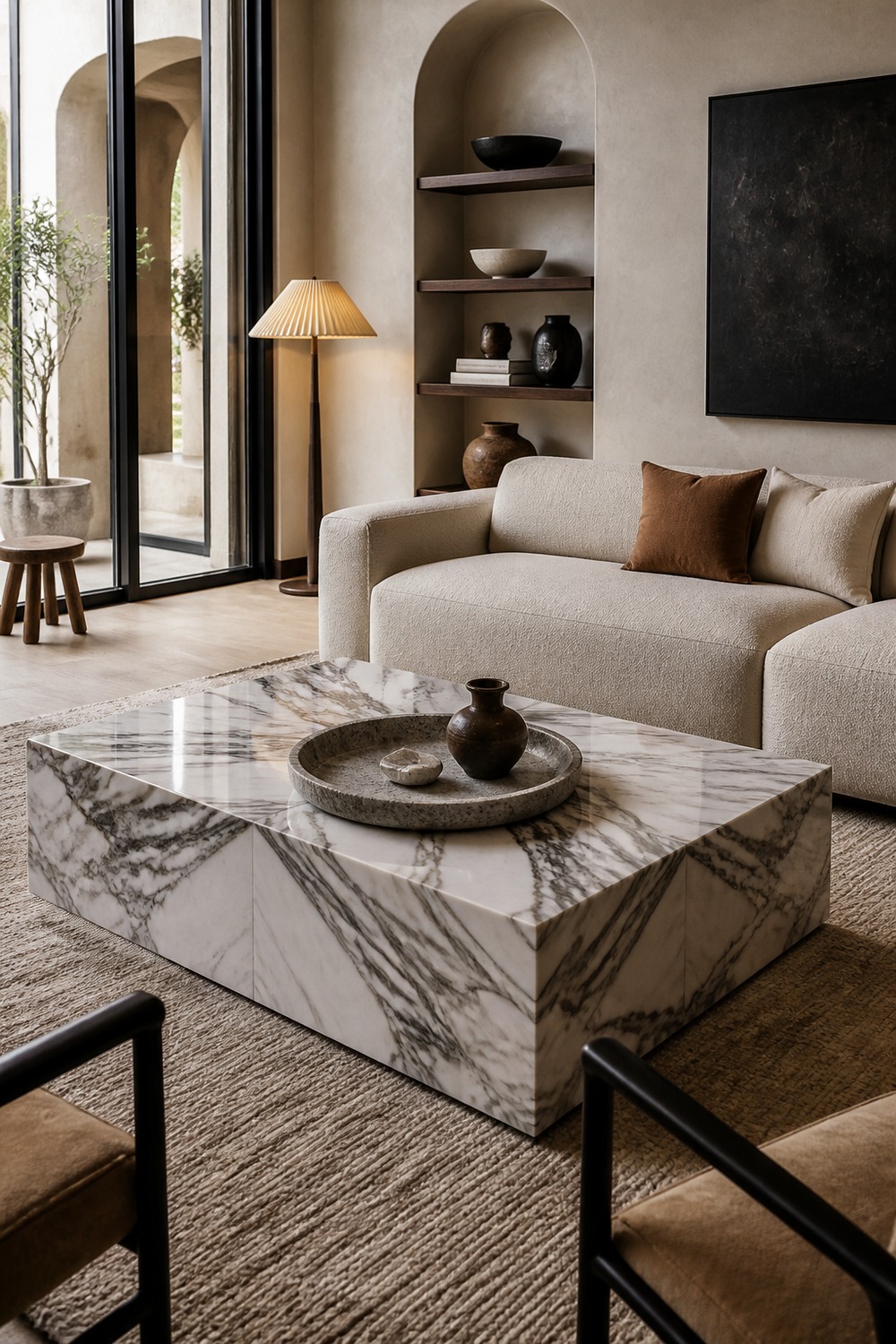
This is the kind of marble coffee table that immediately makes the seating area feel designed, not just filled in. The bookmatched slab has enough veining to act almost like artwork, and the low block shape keeps the room grounded beside the soft cream sofa and black chair legs.
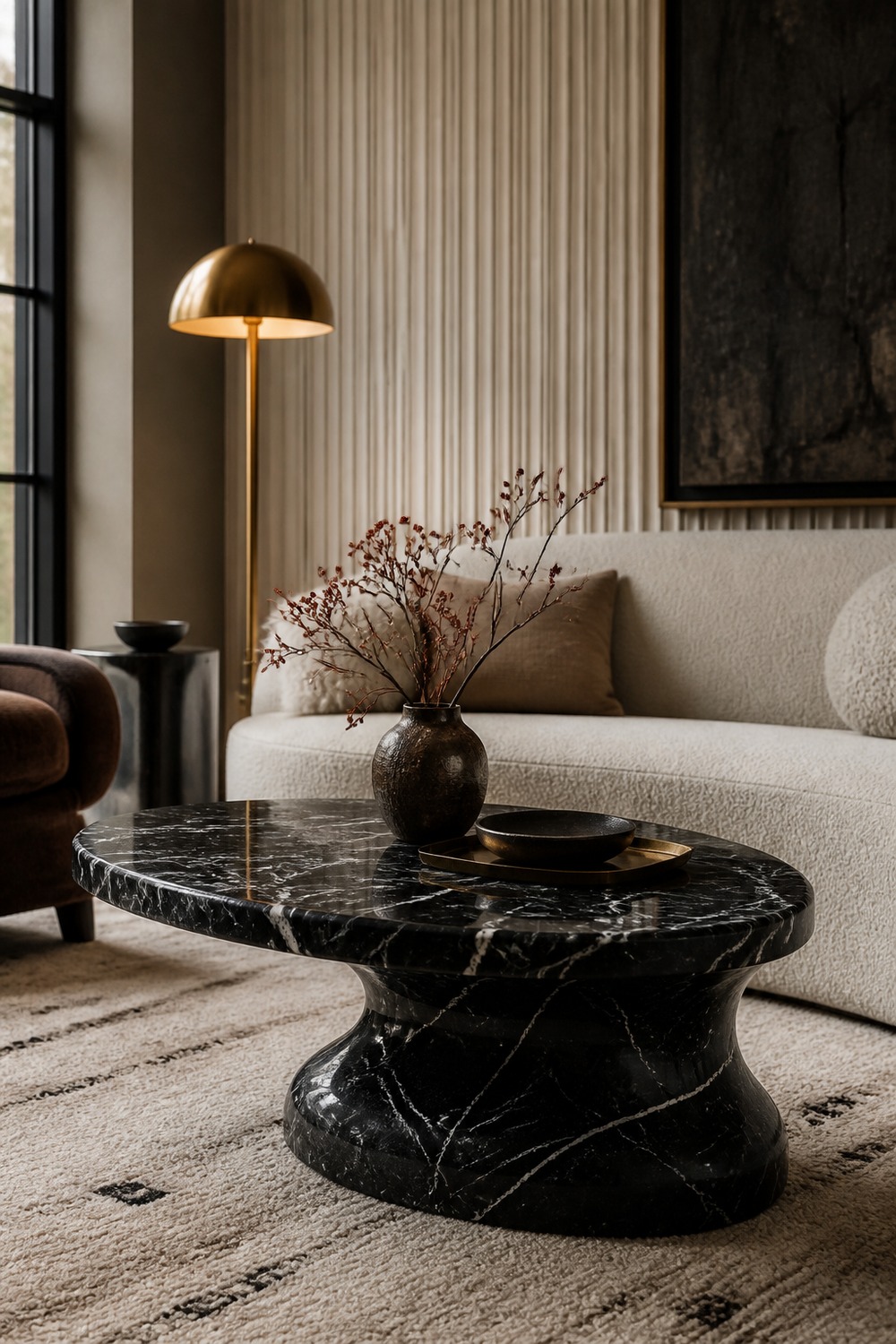
The black Nero marble is doing all the heavy lifting here in the best way. I like the rounded pedestal base because it makes the table feel sculptural from the sofa, while the white veining keeps it from disappearing into the darker wall and rug tones.
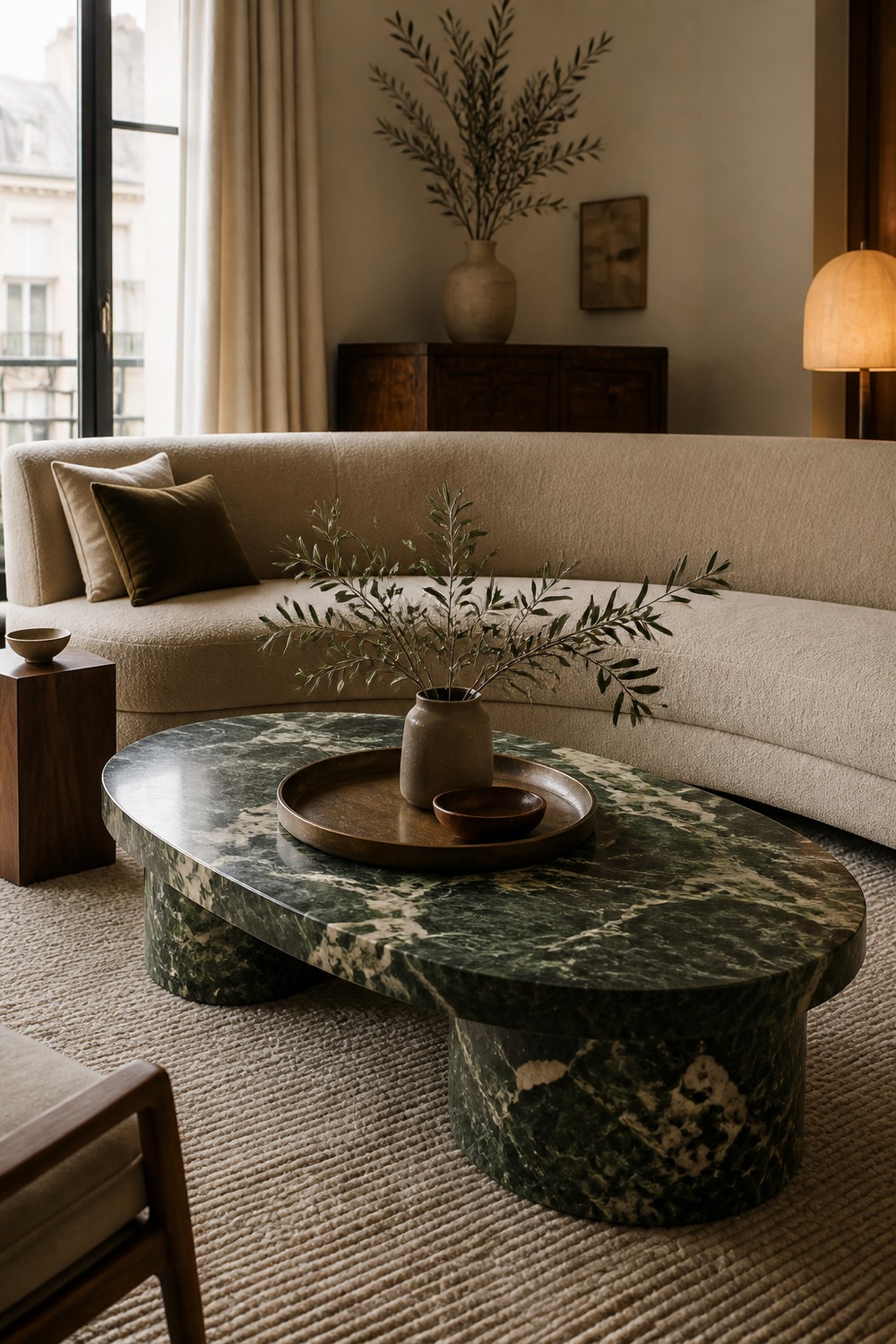
Green marble can look too flashy if the rest of the room competes with it, but this setup keeps the balance right. The oval shape softens the seating area, and the tan sofa and walnut accents make the stone feel collected instead of random.
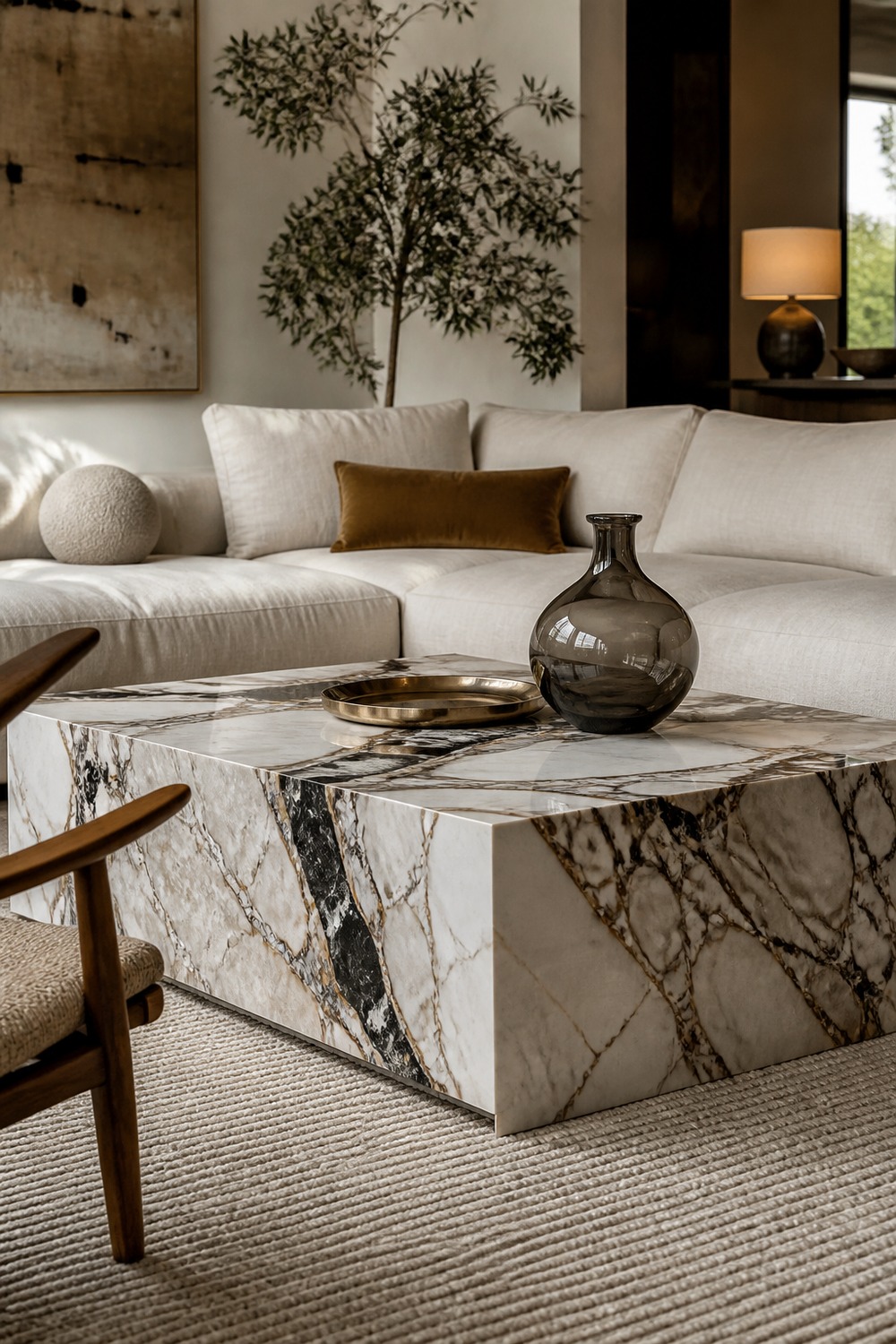
A waterfall edge is such a strong choice because you see the marble running down the sides instead of only across the top. This one feels clean and modern, but the linen seating, smoky vase, and rug texture stop it from feeling cold.
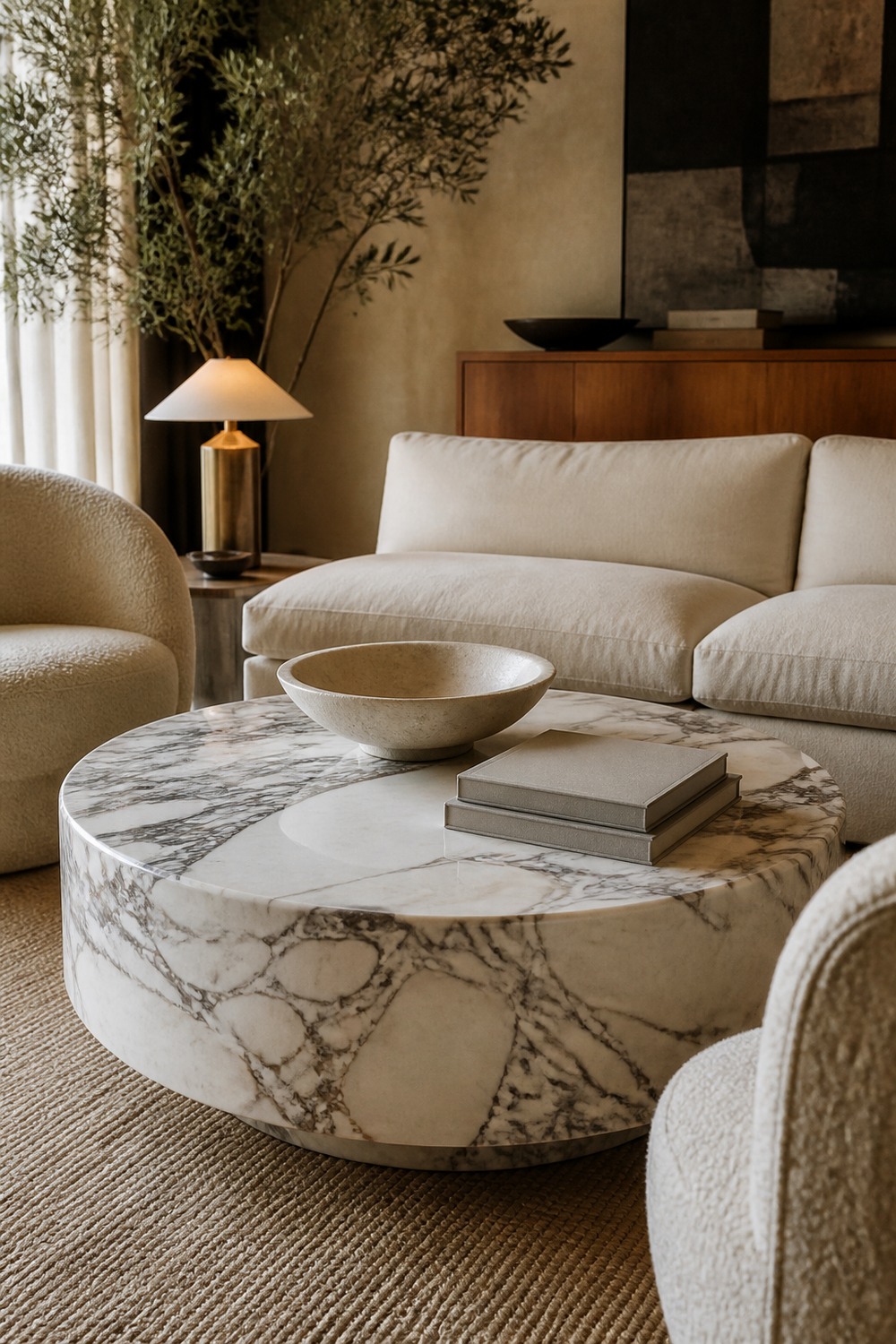
The drum shape makes this marble table feel heavier and more intentional than a thin tabletop on little legs. It would be especially good in a room with curved chairs or a sectional because the round form gives everyone an easy place to reach without sharp corners crowding the rug.
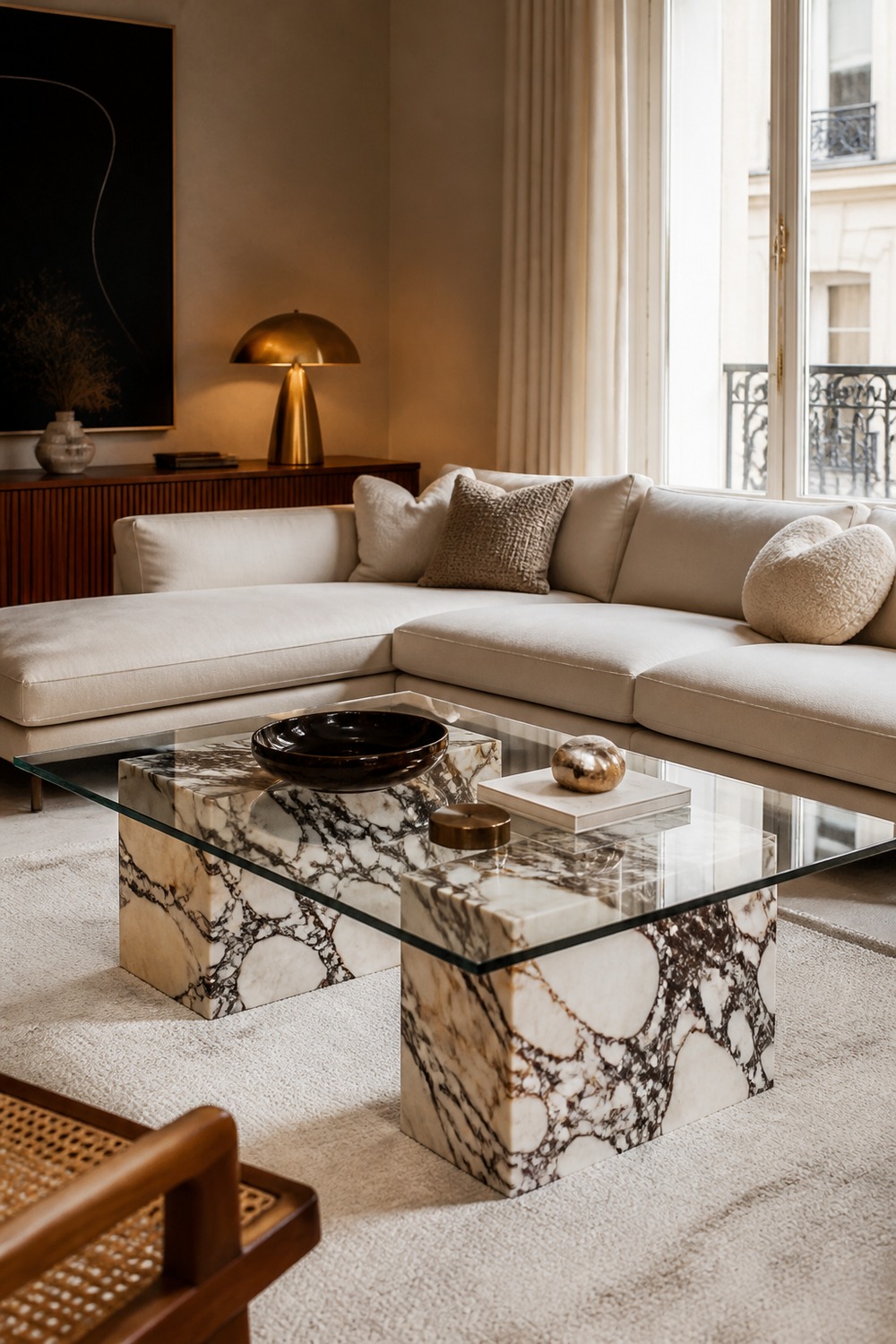
This glass-and-marble version feels lighter, but it still has real presence because of the stone plinth bases. I like how the clear top lets the room breathe while the marble blocks underneath add that gallery-style weight.
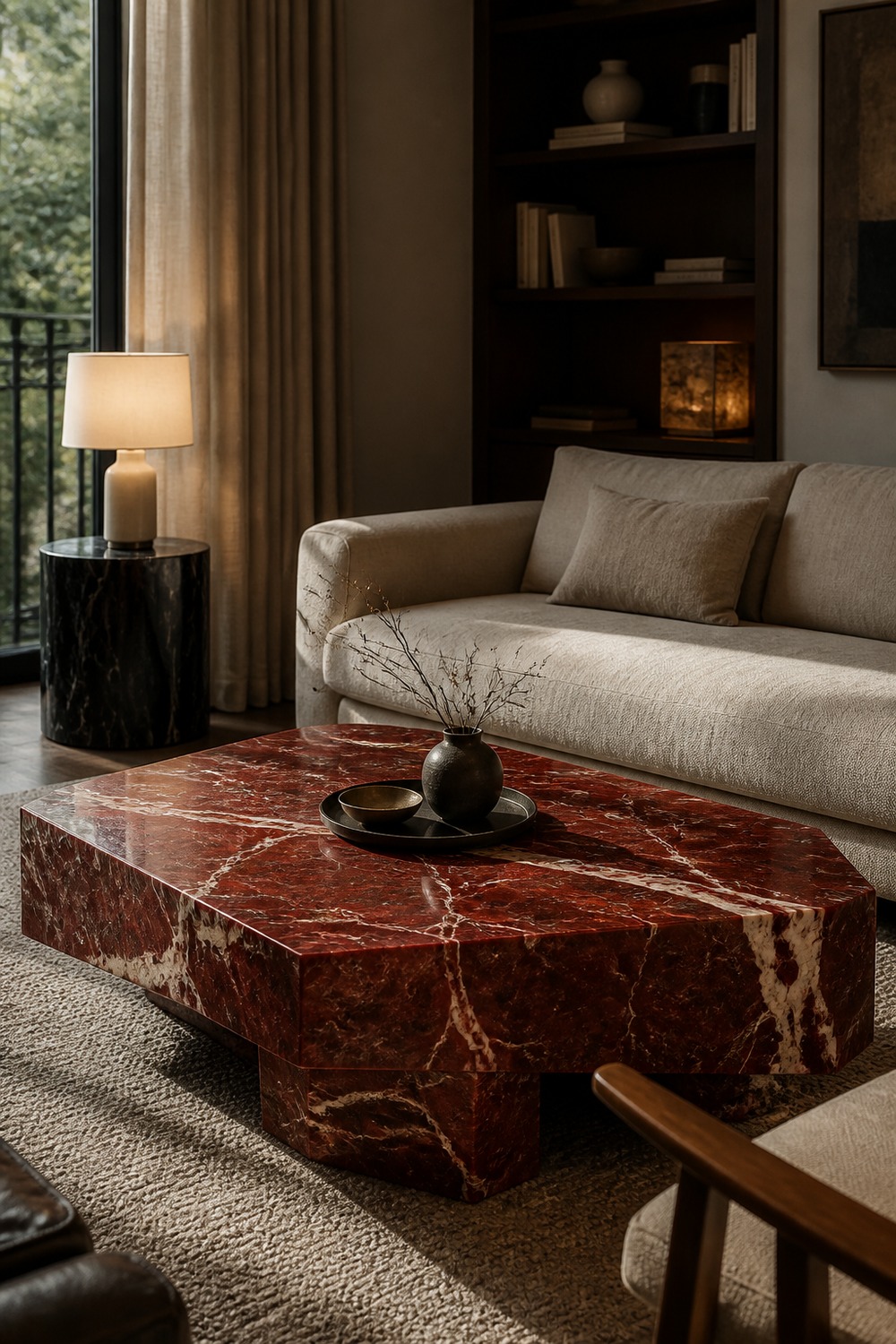
The red Rosso marble is bold enough that the room does not need much else to feel special. Keeping the sofa simple and the shelves darker lets the coffee table become the color moment without turning the whole living room into a loud theme.
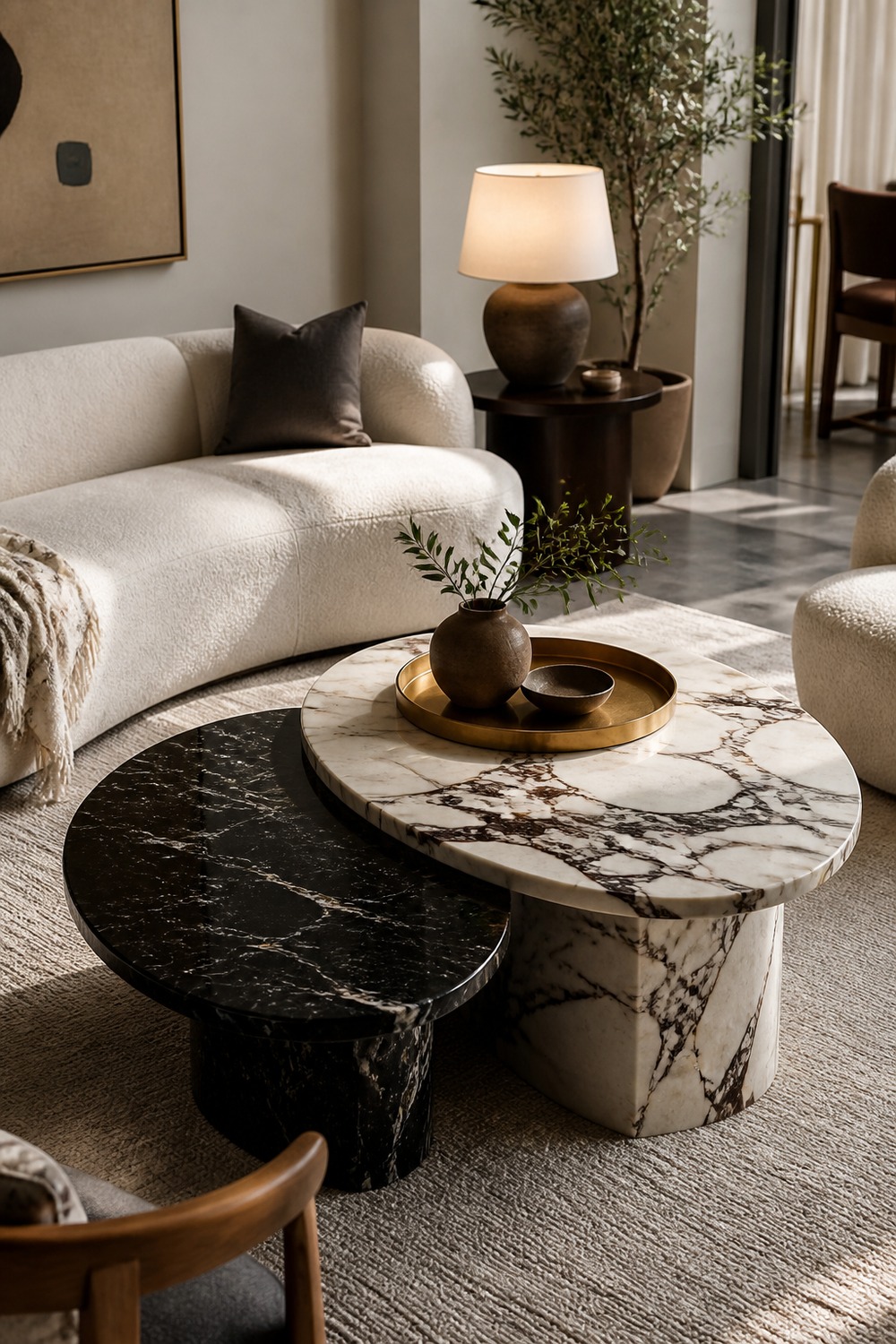
Nesting marble tables are useful when the room needs flexibility instead of one giant slab. The mix of white and black stone gives the seating area more movement, and the smaller table can slide out for drinks, books, or an extra tray when people are over.
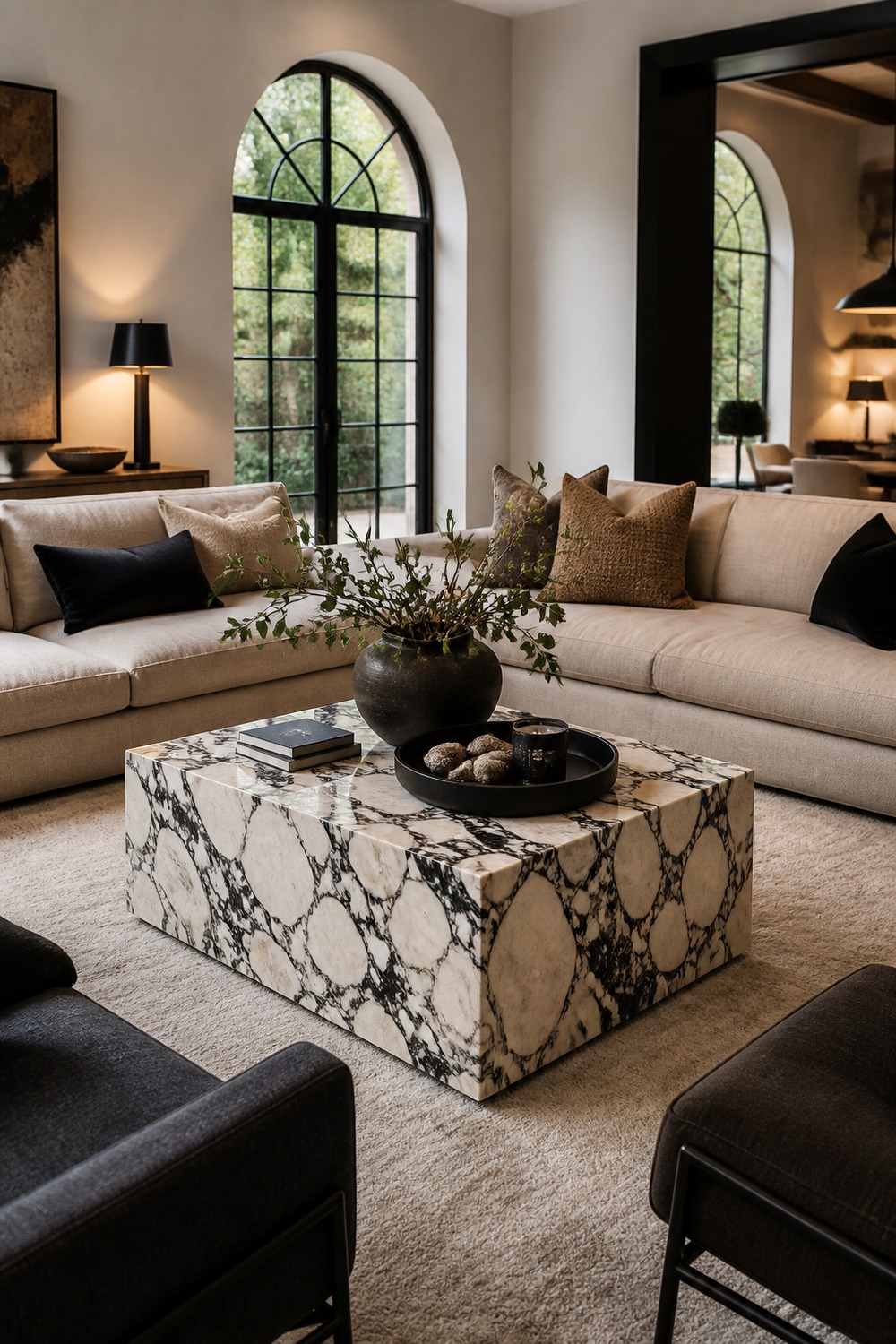
This square block table has that heavy, architectural look I always notice in expensive living rooms. The oversized rug and sectional give it enough breathing room, so the marble feels substantial rather than awkwardly oversized.
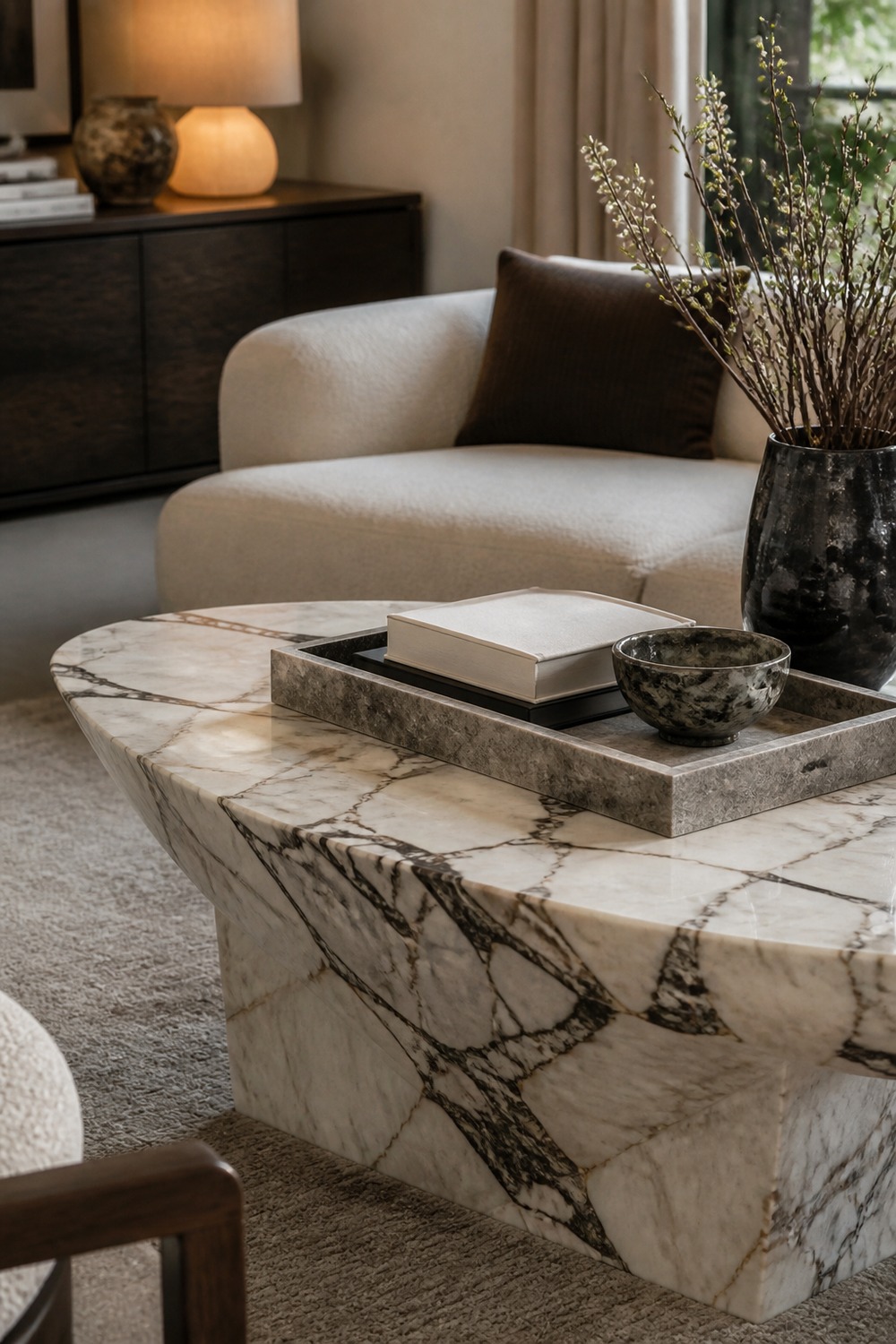
The close-up styling is simple, but it shows why a marble coffee table can carry a room even without a complicated base. A stone tray, blank books, and a ceramic bowl keep the surface useful while letting the veining stay visible.
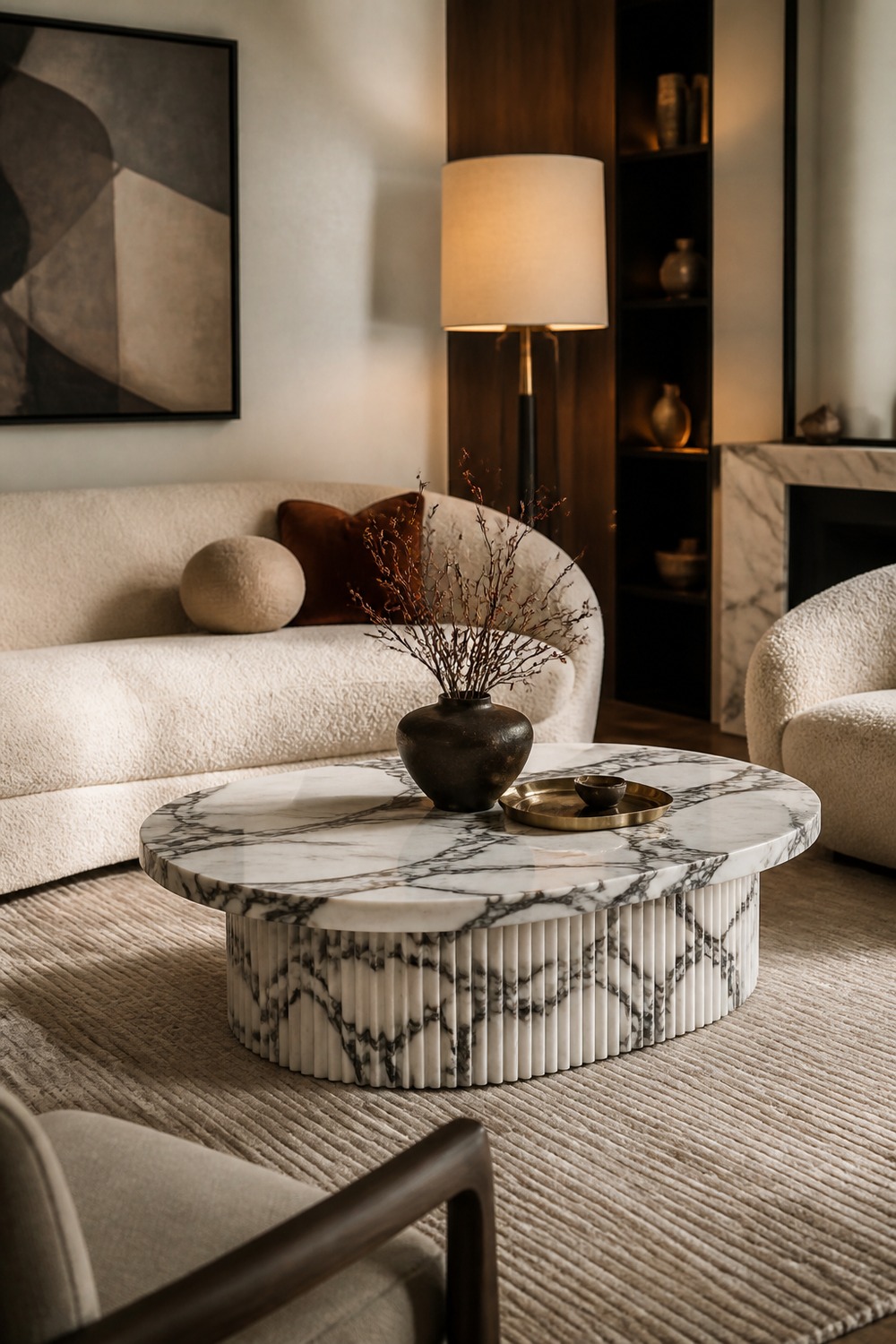
The fluted base is the detail that makes this table feel different from the usual marble slab. It adds shadow and texture under the top, which is helpful in a neutral room where the furniture can otherwise start looking too flat.
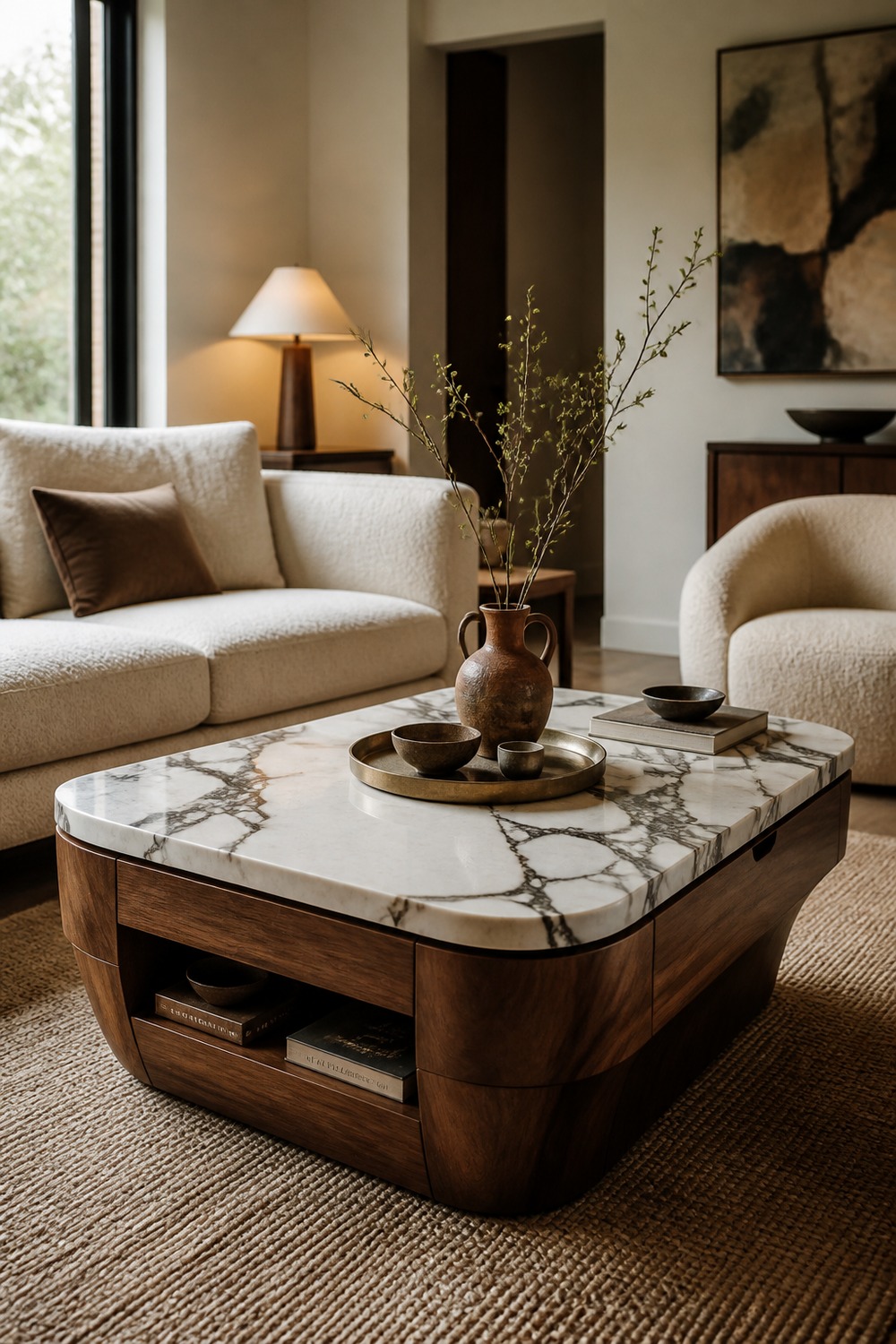
Mixing walnut with marble is a smart move when an all-stone table would feel too formal. The wood warms up the white marble insert, and it makes the piece feel easier to live with beside a cream sofa and woven rug.
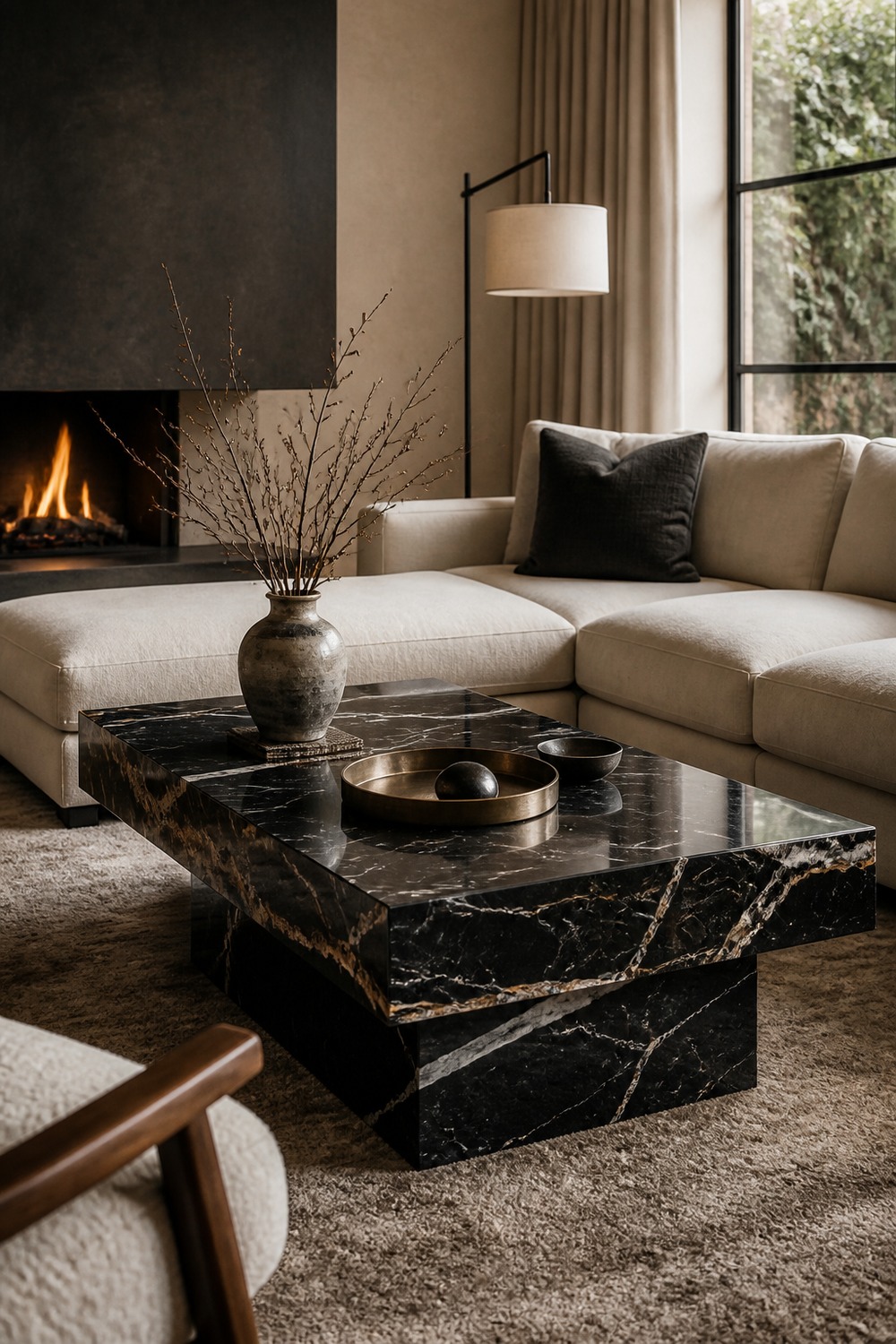
Black marble against a cream sofa is such an easy contrast, but it still looks sharp here because the table has strong veining. The darker pillow and simple styling help the coffee table feel connected to the room instead of dropped in as a separate statement piece.
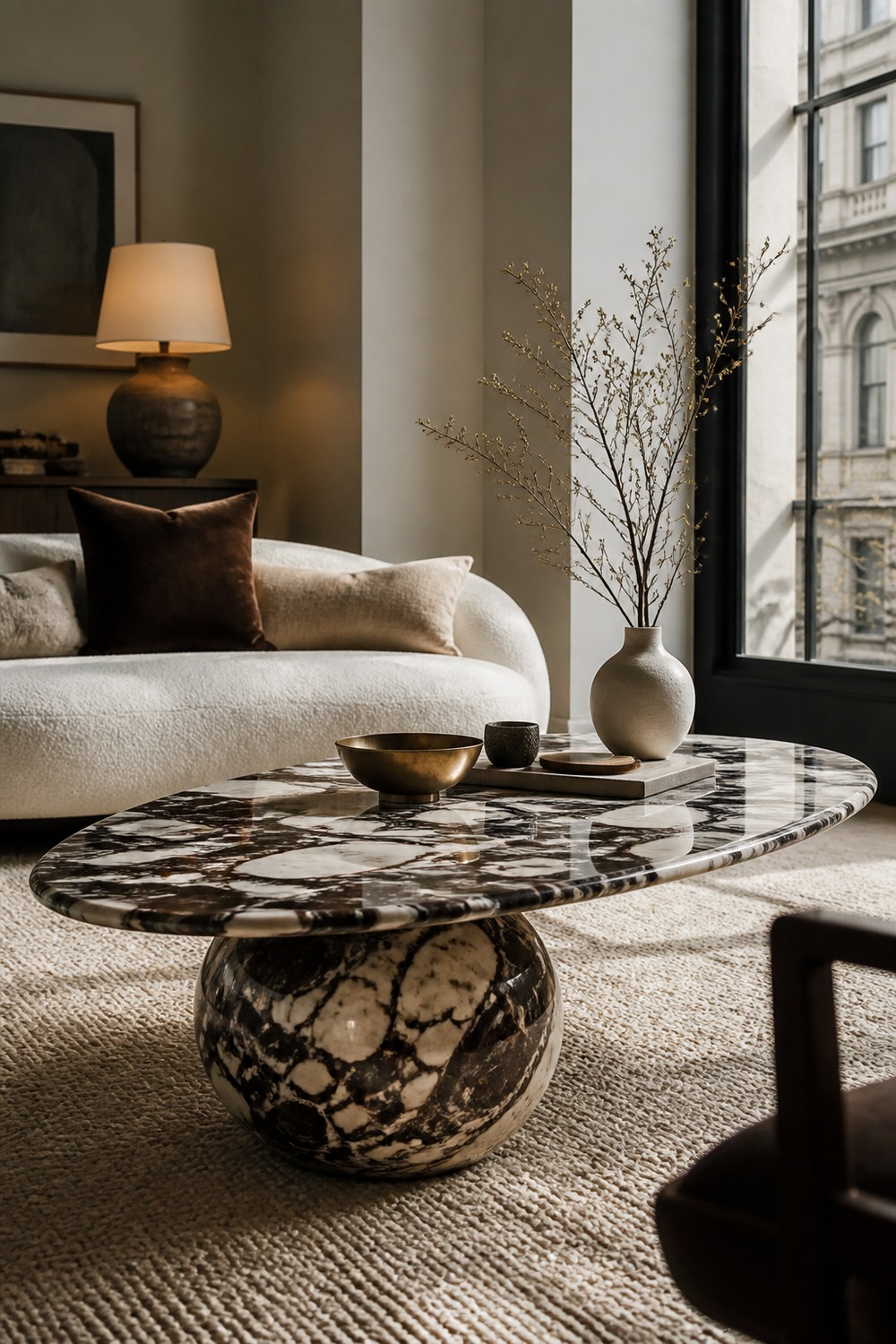
The sphere base gives this marble table a more playful sculptural shape without losing the grown-up living-room feel. I like that the oval top still leaves space around the seating, while the rounded base makes the whole piece feel custom.
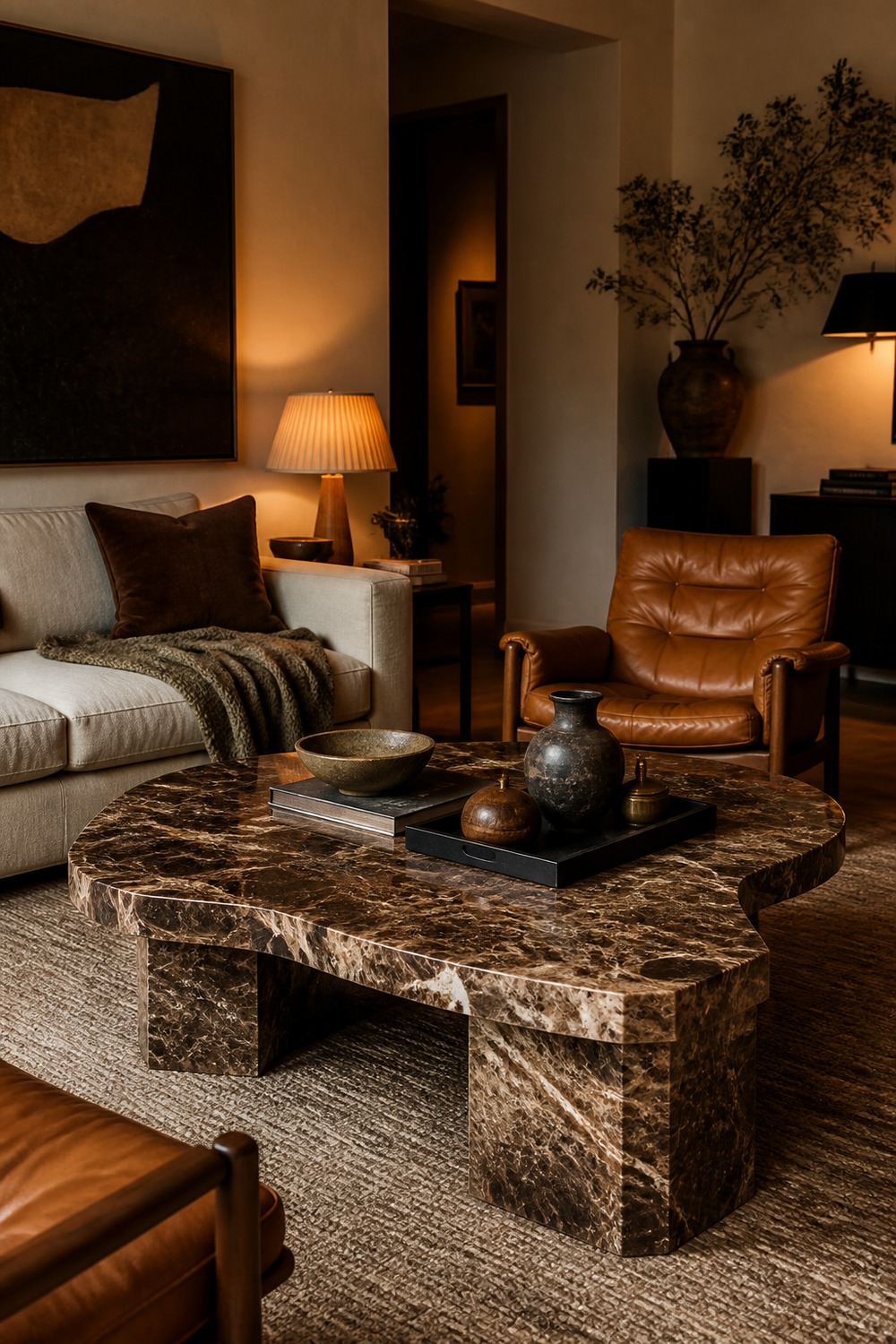
Brown Emperador marble is a nice change from the usual white-and-gray table. The warmer stone works well with leather, linen, and beige upholstery, so the table feels rich without making the room look too glossy.
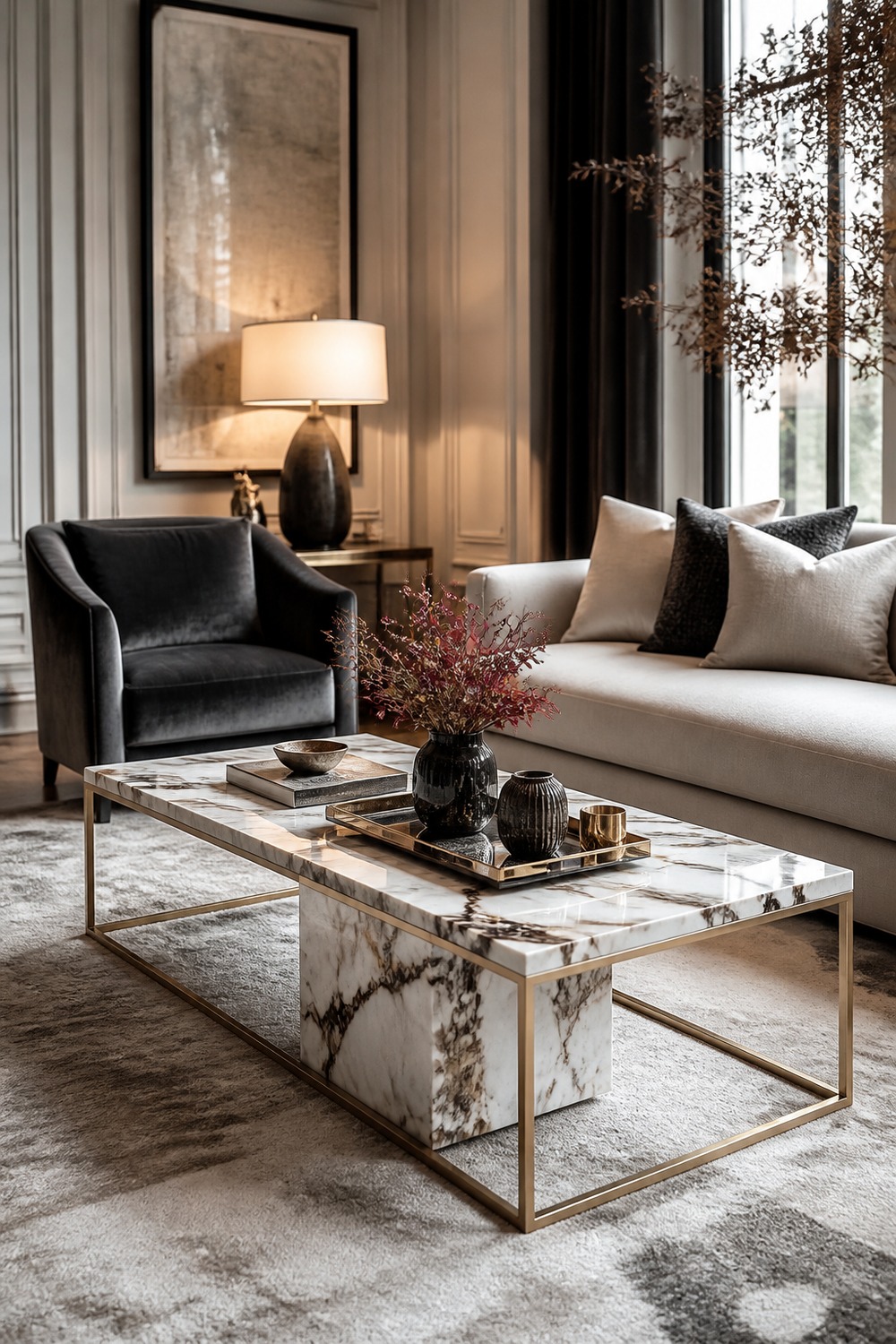
This thinner slab is more understated, but the brass frame gives it a polished edge. It would work well in a smaller living room where you still want real marble texture without bringing in a huge block table that eats up the floor space.
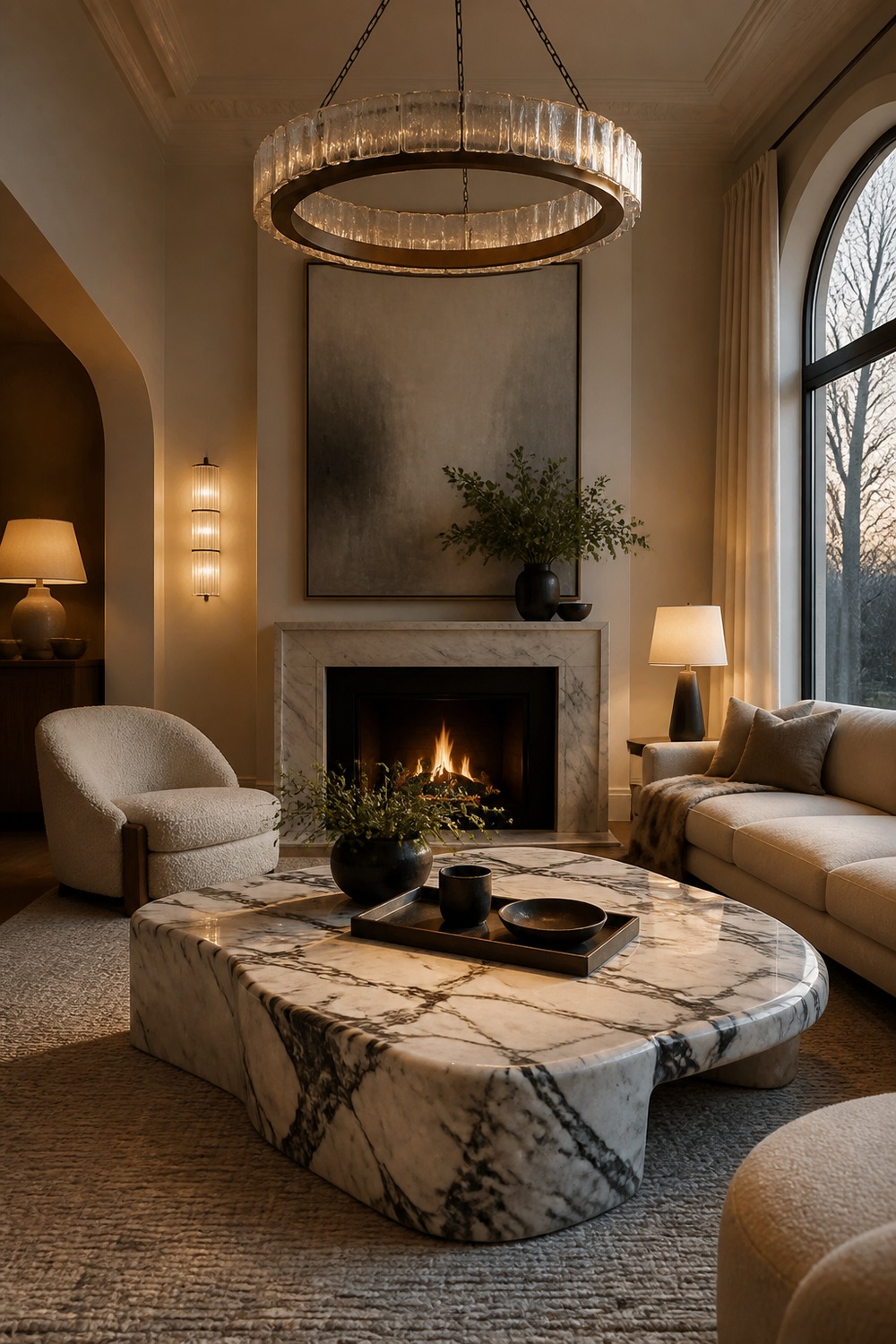
The chandelier makes the marble feel more dramatic because the light catches the veining from above. I like this for a taller room or formal sitting area where the coffee table needs to hold its own against bigger chairs and higher ceilings.
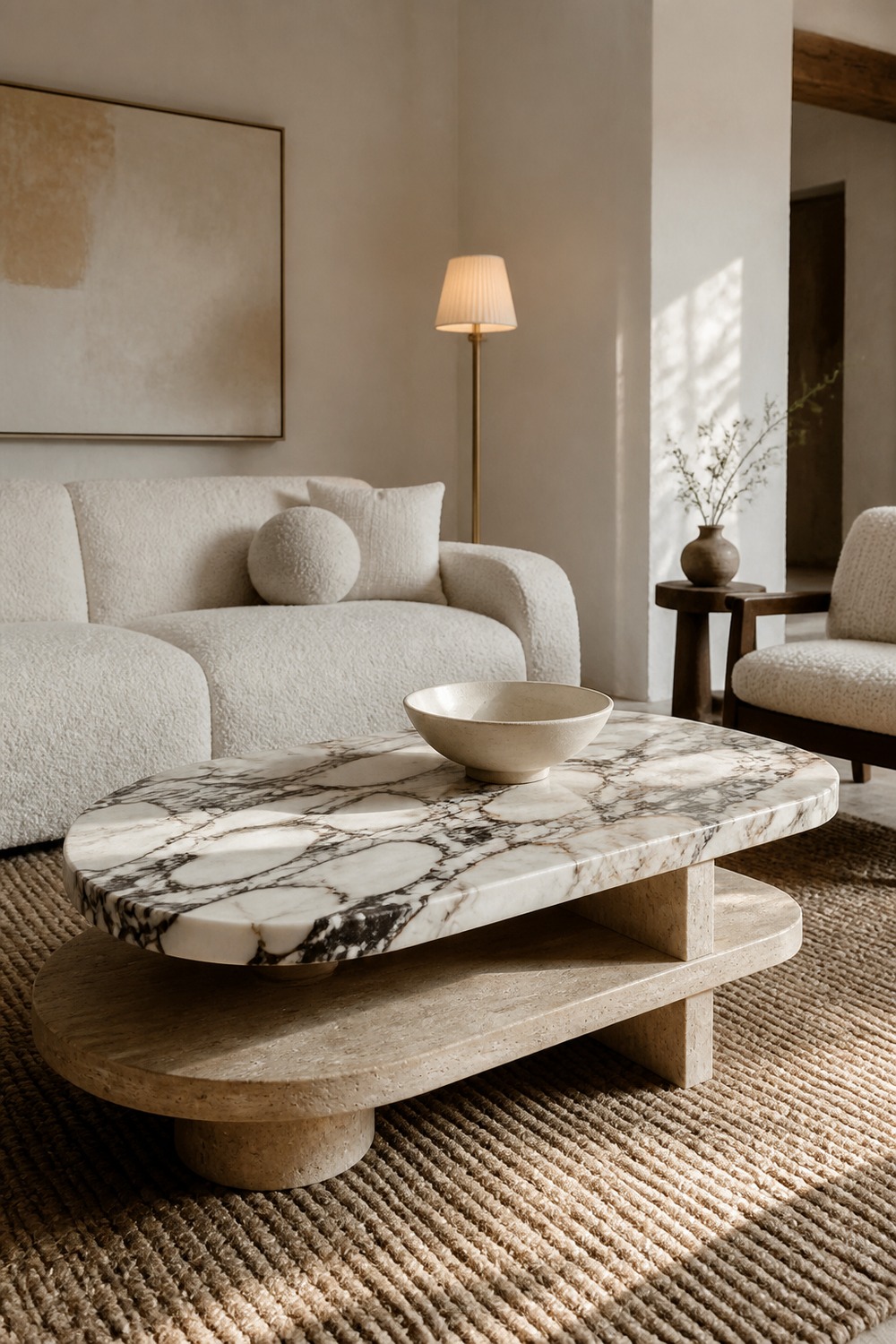
This one is quieter, but the layered stone look still gives the room texture. The marble and travertine tones keep everything soft and tonal, which is useful if you want a statement table without going into black, green, or red marble.
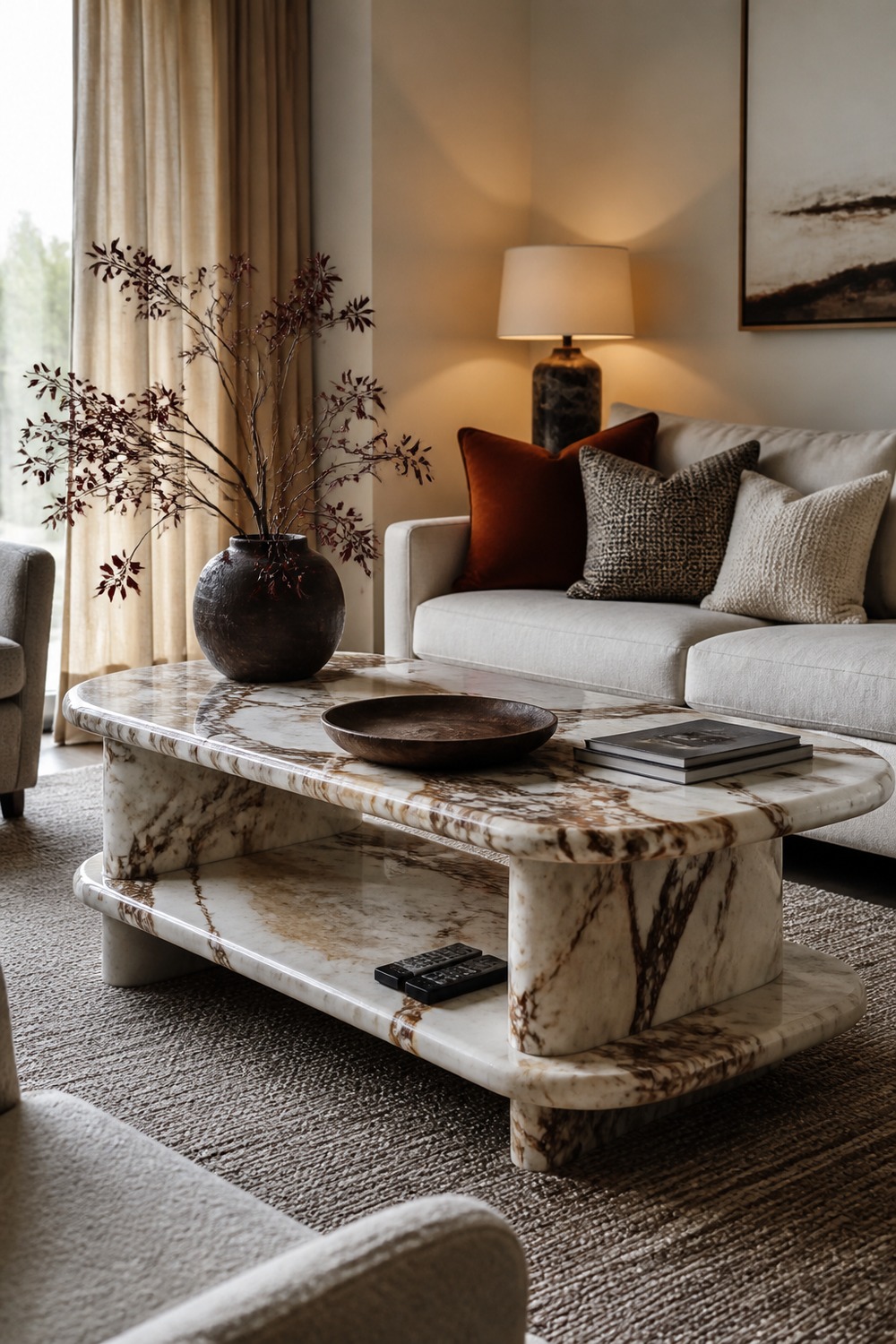
A lower shelf makes the marble table feel more practical right away. Remotes, books, or a tray can sit underneath instead of cluttering the main surface, and the two-tier stone shape still looks intentional from across the sofa.
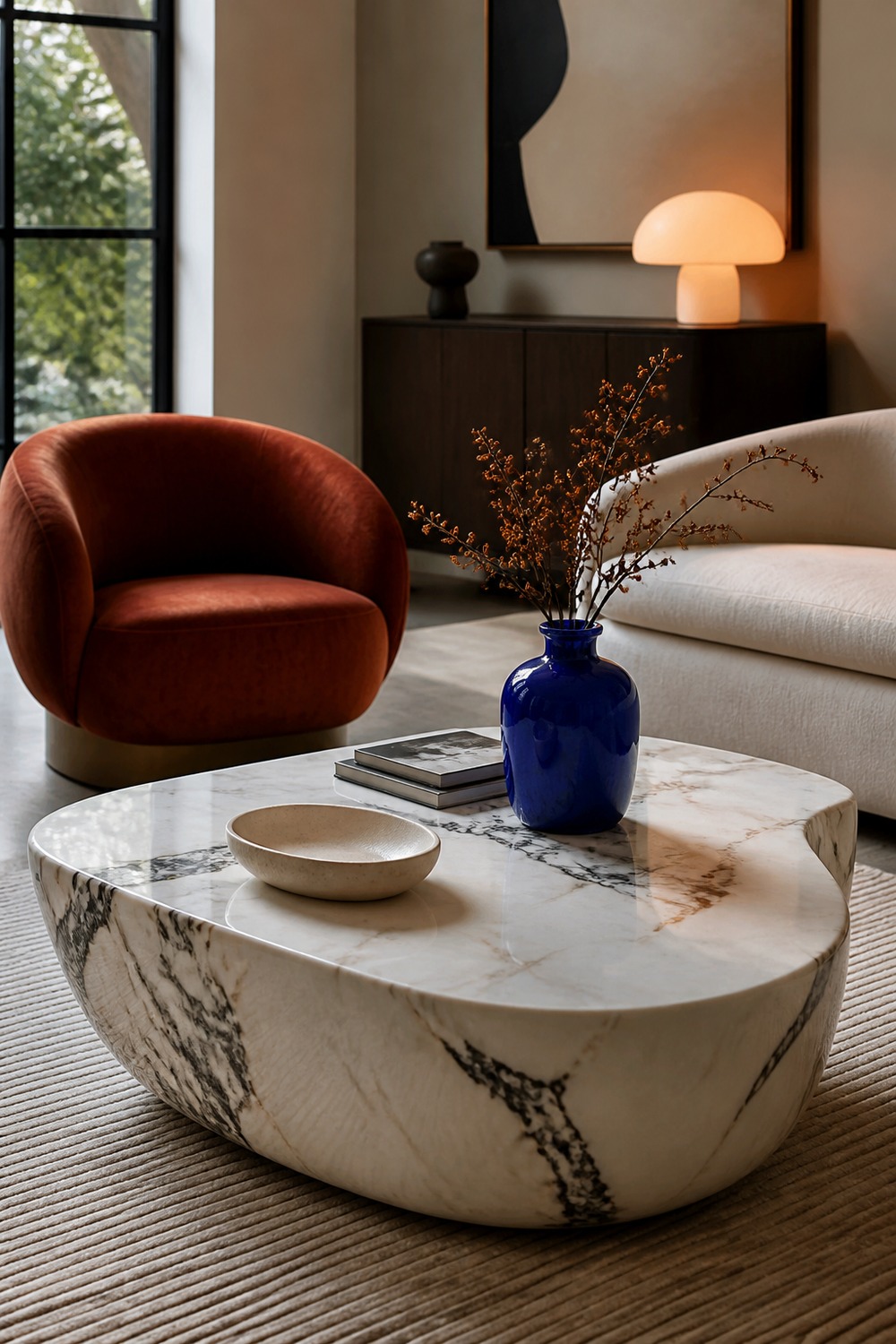
I like that this room lets the marble table sit with stronger color instead of surrounding it with only beige. The rust chair and cobalt vase bring energy, but the white marble surface still gives the seating area a clean center point.
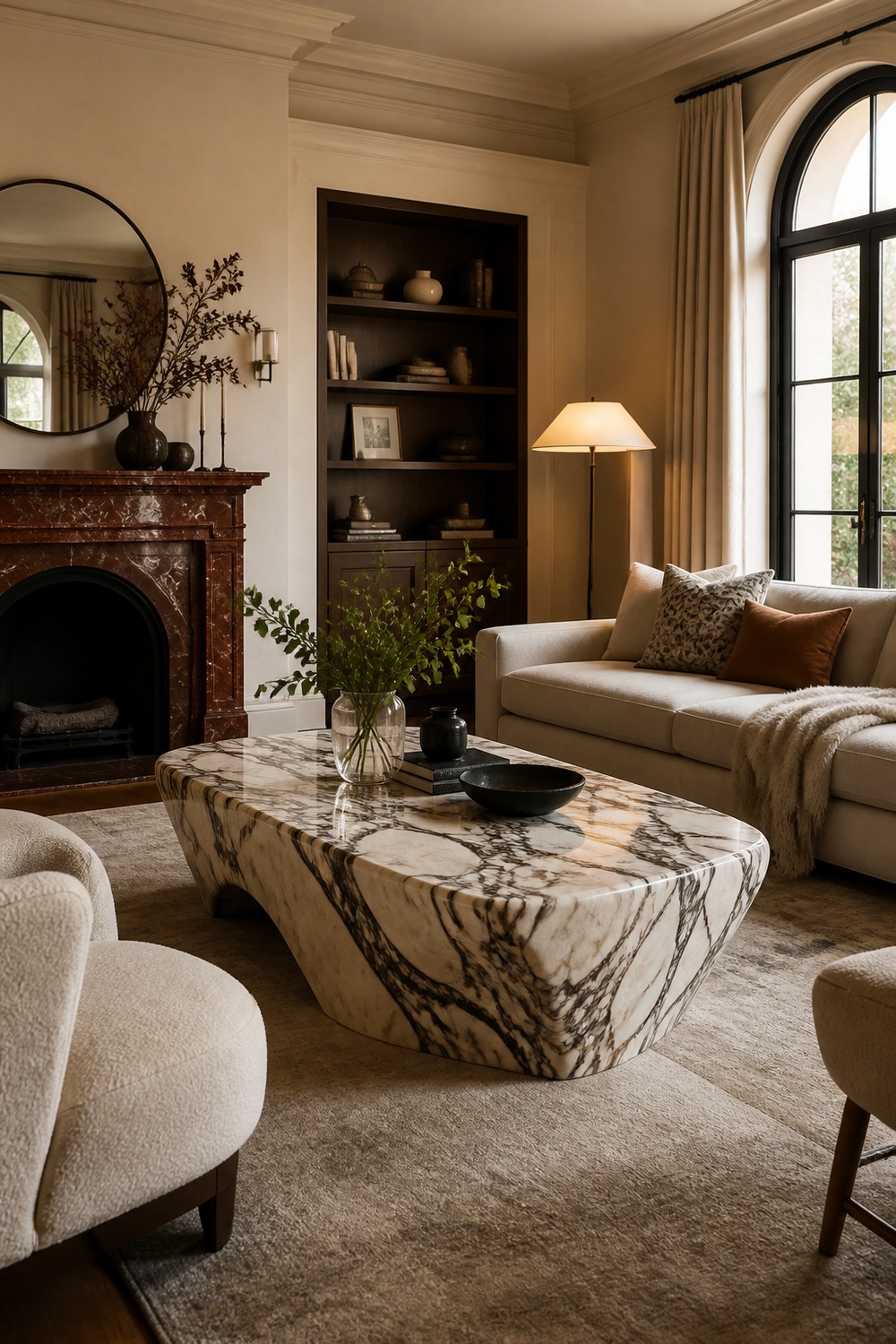
This final room works because the coffee table is clearly the hero from the first glance. The bold marble top, layered seating, and open walkway make it feel like a finished design choice, not just a pretty table squeezed into the middle of the room.
A marble coffee table does not have to mean one pale slab in a plain room. The shape, veining, base, color, and styling all matter, and the strongest versions make the seating area feel designed before anything else gets added.
Leave a comment