
A basement gym can go wrong fast when it turns into one bench, one treadmill, and a pile of gear shoved against the wall. The better versions have the workout setup, but they also think about lighting, storage, seating, flooring, and what happens when someone is not actively lifting.
That is what I like about these man cave gym basement ideas. They still leave room for the practical stuff — rubber mats, dumbbells, mirrors, cardio equipment, racks, towels, and recovery gear — but they also bring in lounge chairs, darker materials, bar corners, game areas, and warmer lighting so the basement does not feel like a cold utility room.
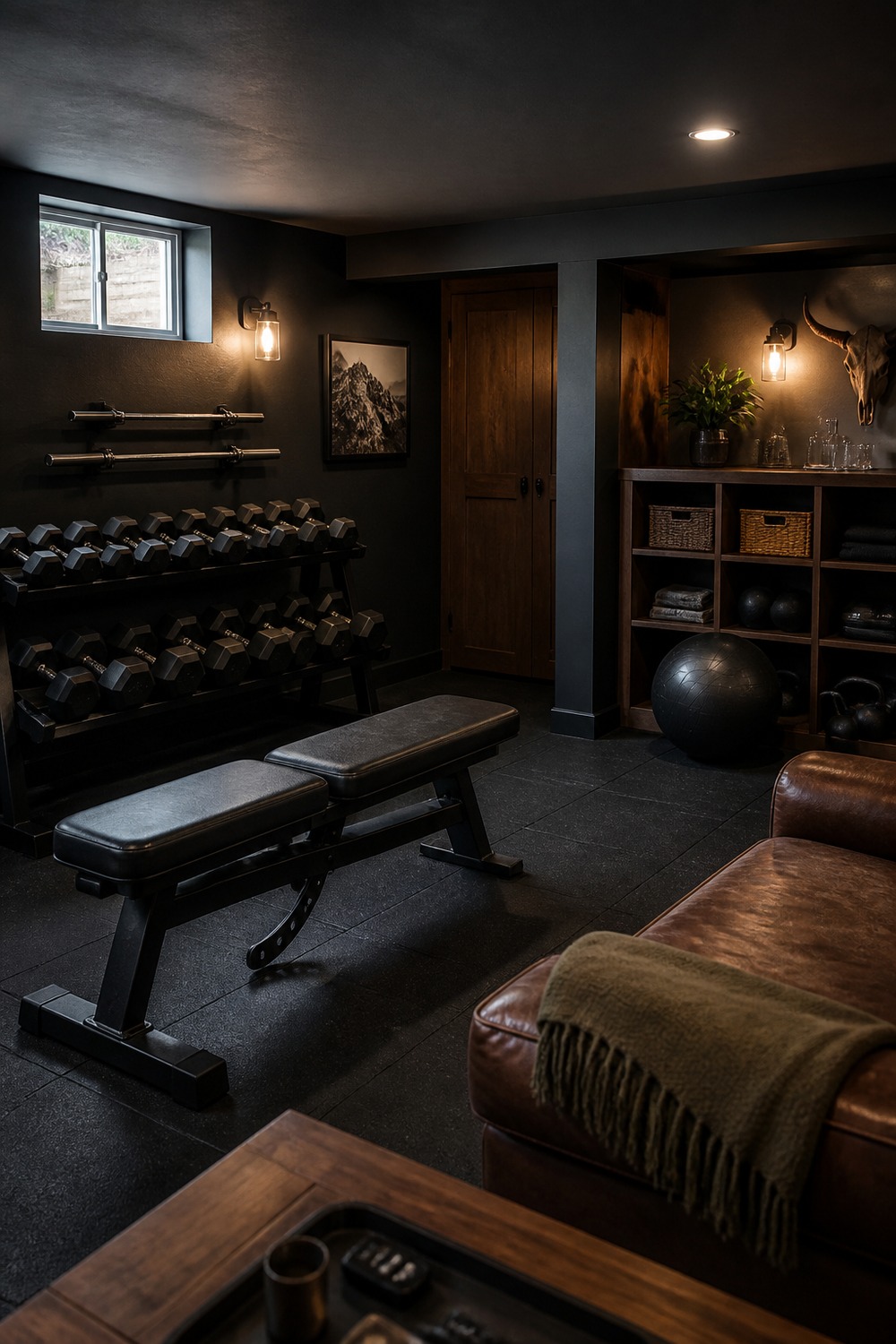
The dark weight-room look works here because it feels deliberate instead of gloomy. I like the way the dumbbell rack, bench, black wall color, and soft sconces pull everything into one sharp setup instead of leaving the equipment scattered around like storage.
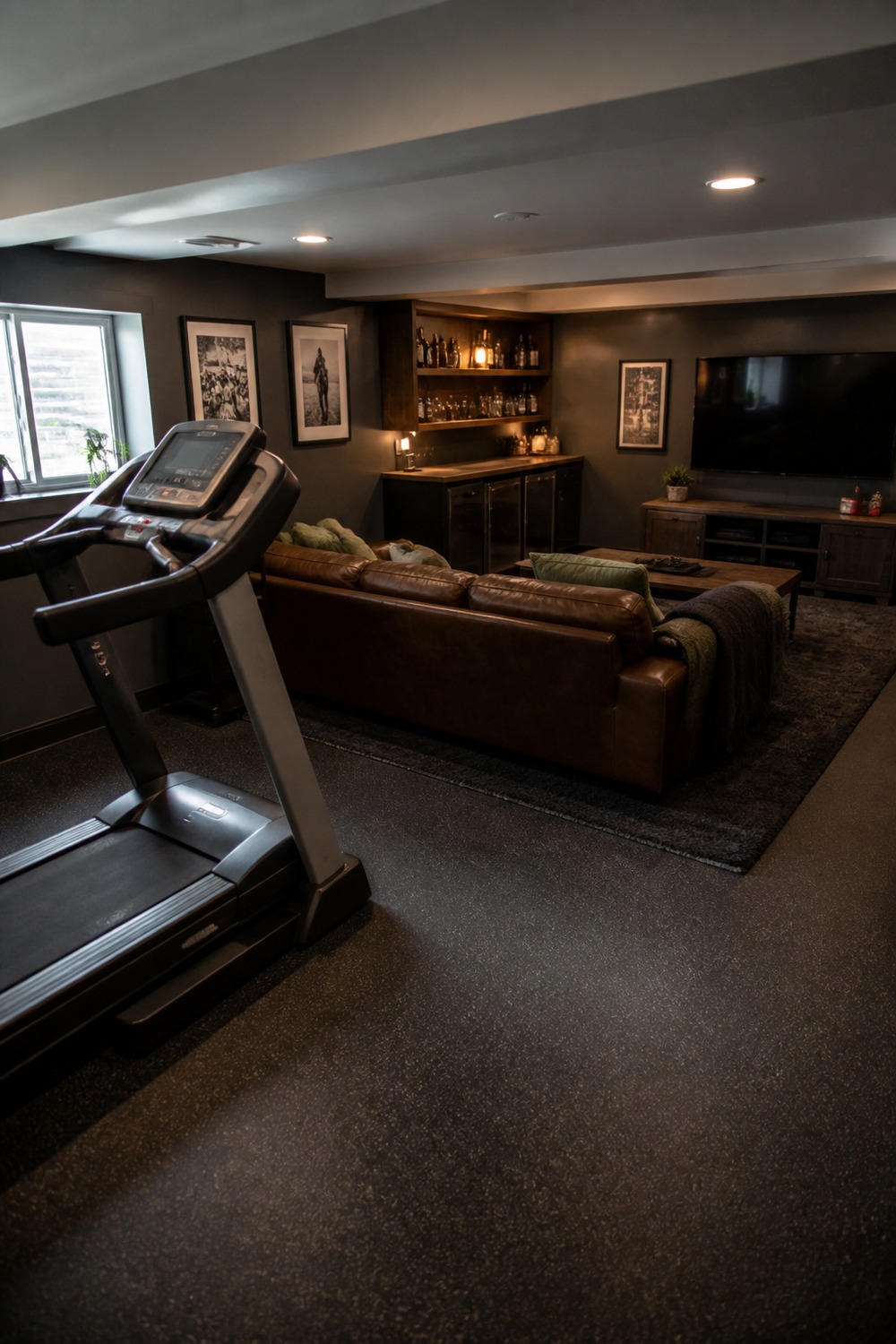
Treadmills are hard to make attractive, but this layout gives one a proper lane without making the room feel like a cardio closet. The sofa, rug, TV wall, and clean walkway make the basement feel usable on days when nobody wants to run.
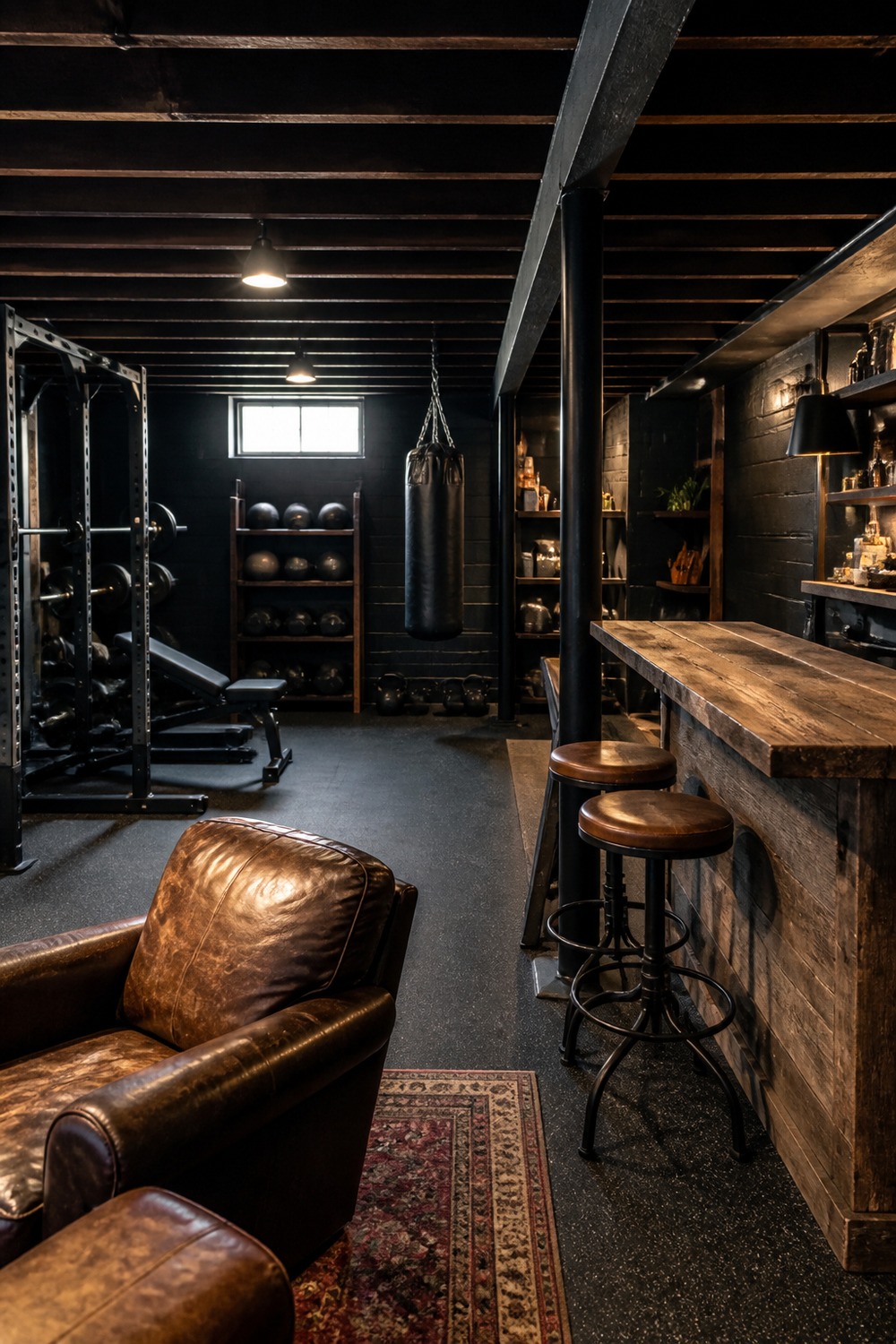
This has that tougher garage-gym mood, but the basement still looks finished. The heavy bag shape, black shelving, reclaimed wood texture, and leather seating keep it rugged without letting the space turn into a messy equipment dump.
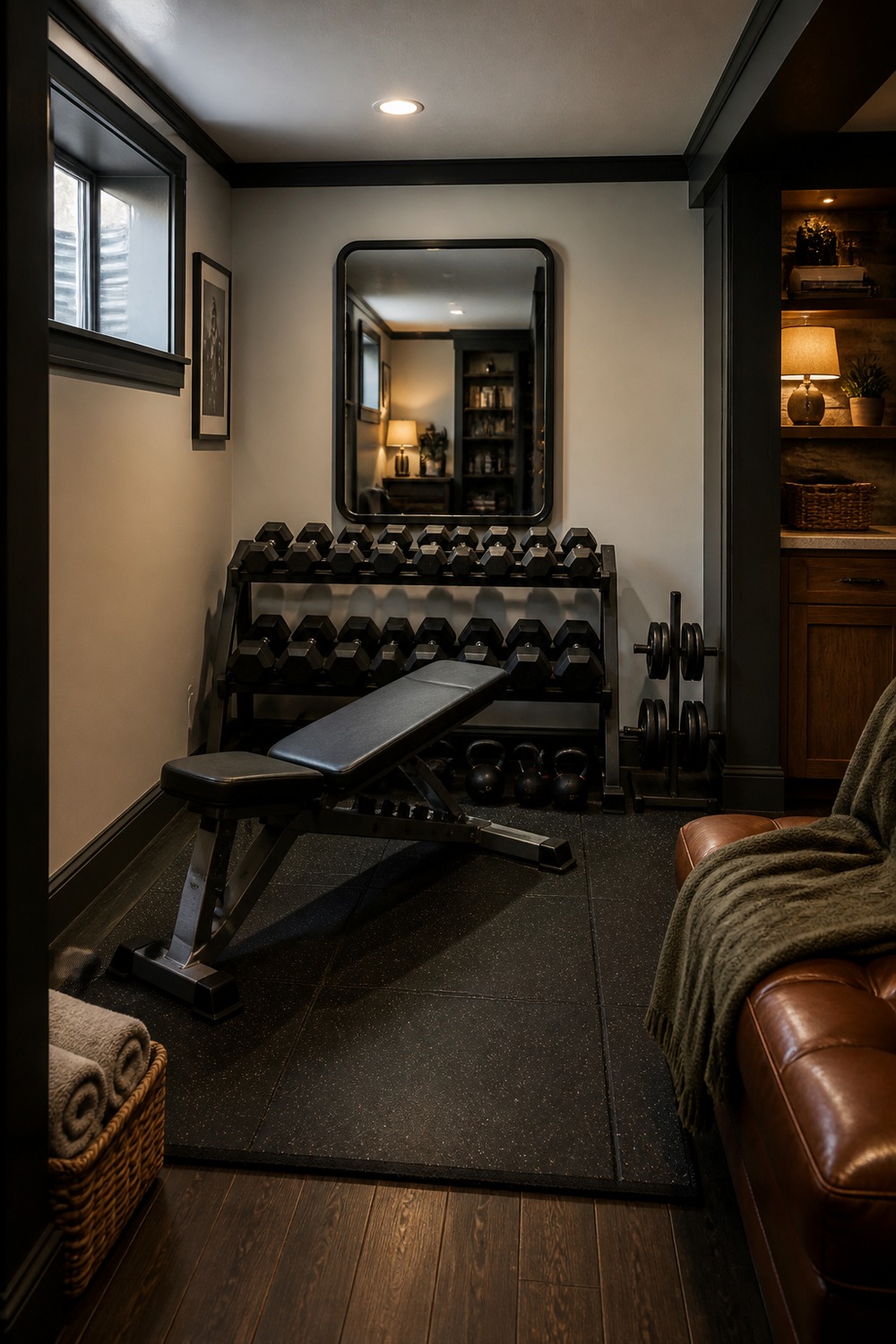
A small corner like this is probably more realistic for a lot of basements. A bench, mirror, weights, lamp, and tight flooring zone are enough to create a useful workout spot without pretending the room has commercial-gym square footage.
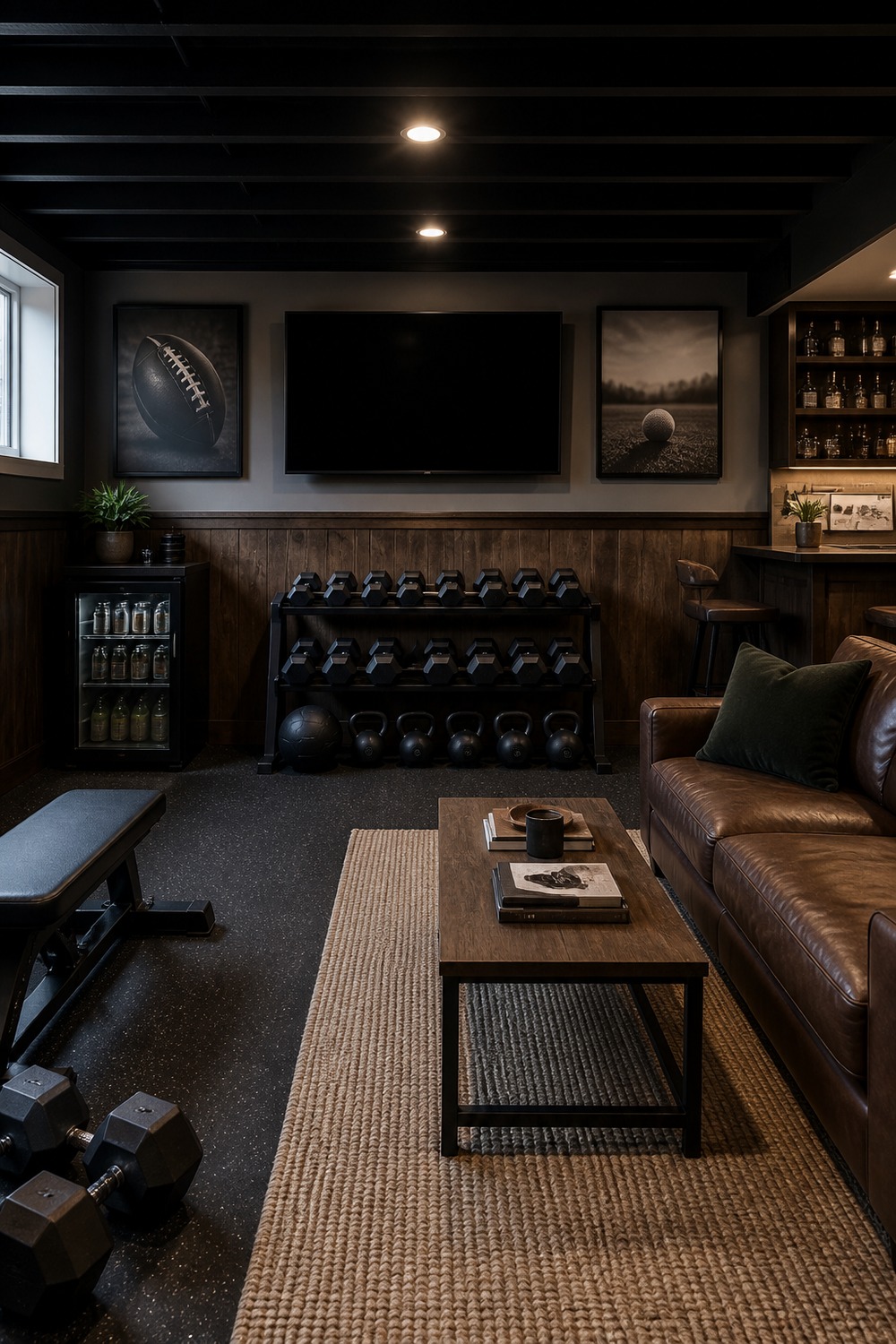
The sports-room feeling is there, but it is not screaming with logos or giant signs. The mini fridge, blank framed art, weight setup, and darker lounge wall give it personality while still keeping the basement clean enough to live with.
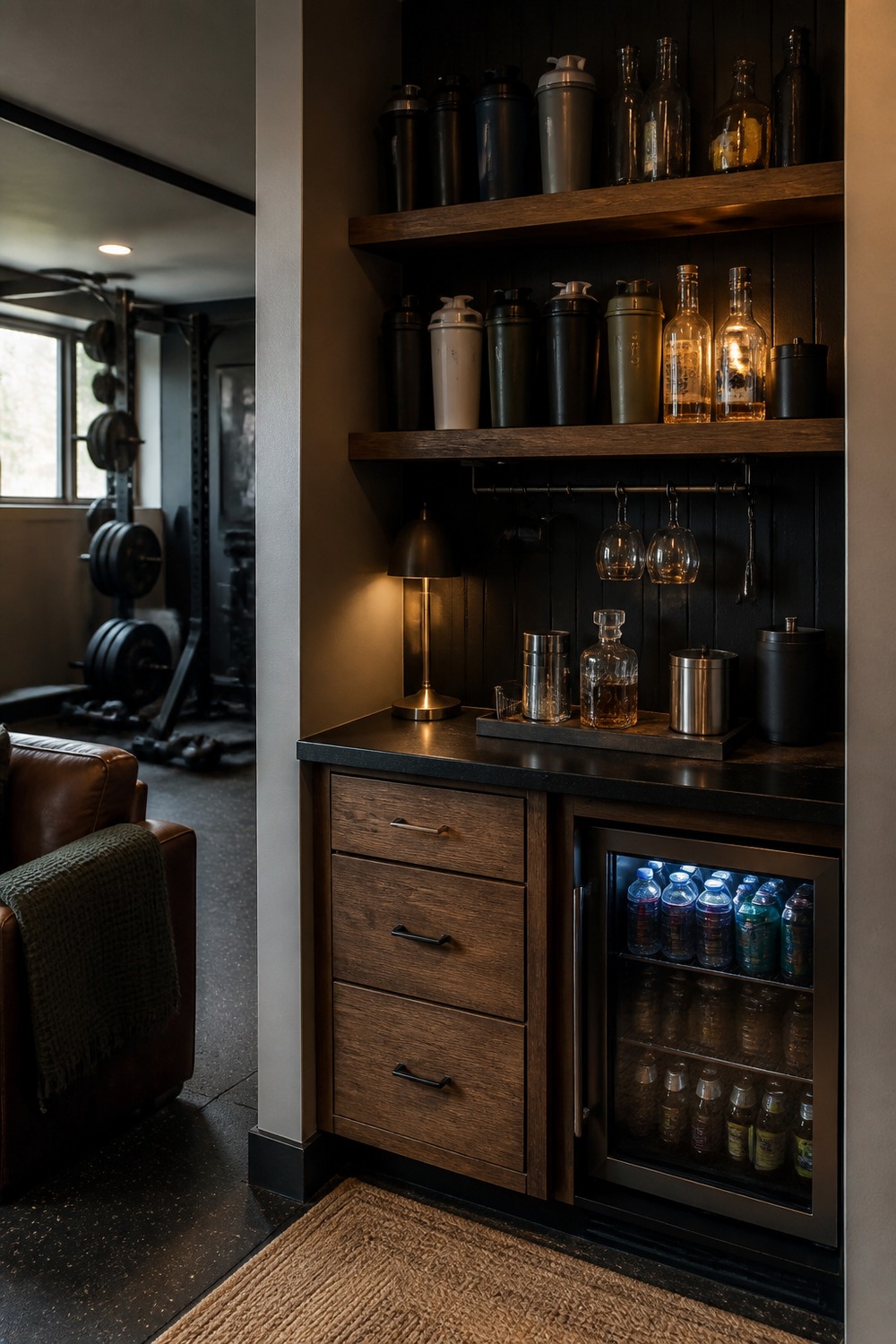
The beverage station makes the room feel more social without taking over the gym side. Shaker cups, shelves, a dark counter, and a small fridge give everything a place, which matters because loose bottles and towels can make a basement gym look chaotic fast.
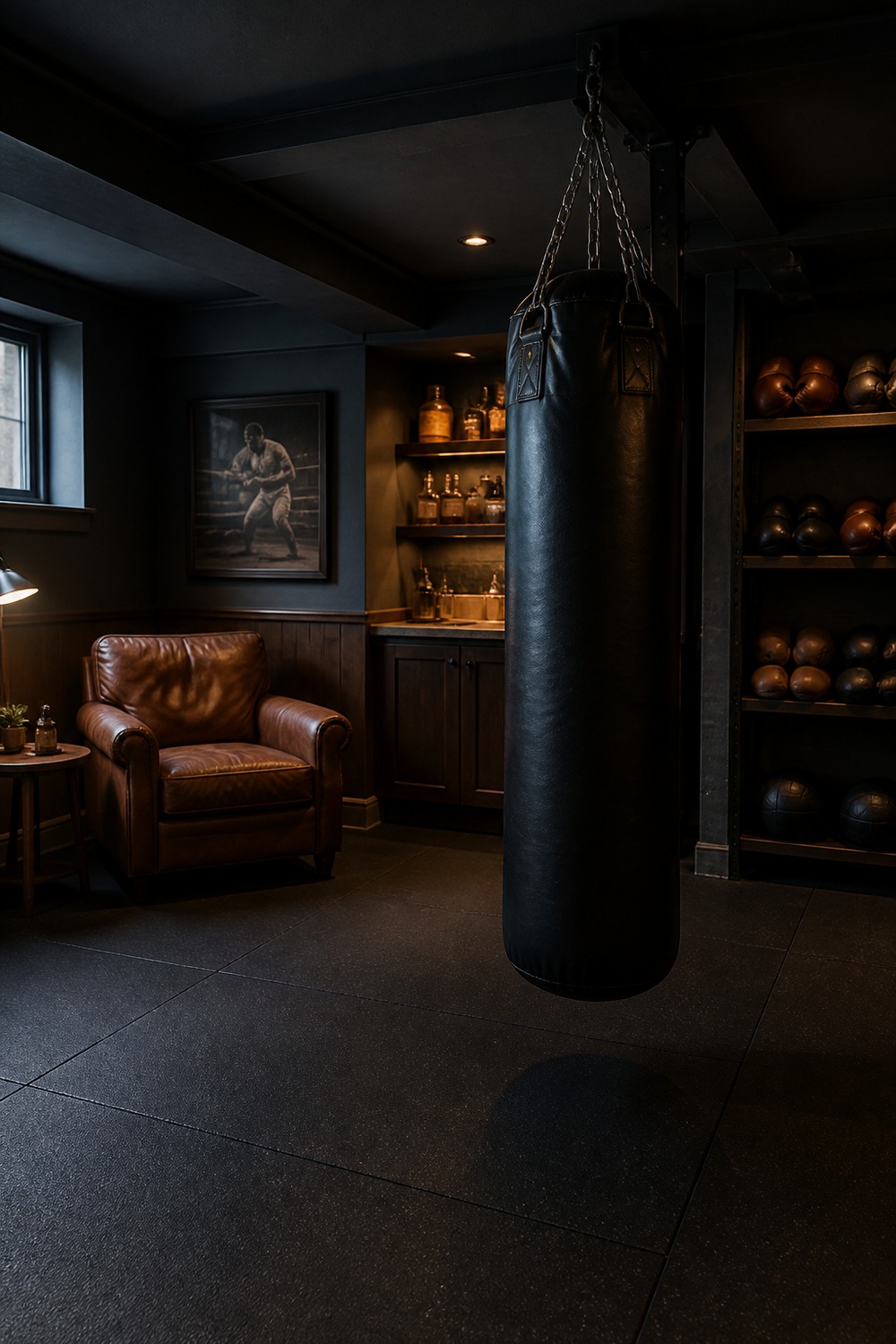
A boxing corner can easily look like a prop setup, but this one stays pretty controlled. The plain glove shelf, heavy bag, black rubber floor, leather chair, and matte wall keep the mood strong without making the room feel like a themed bar.
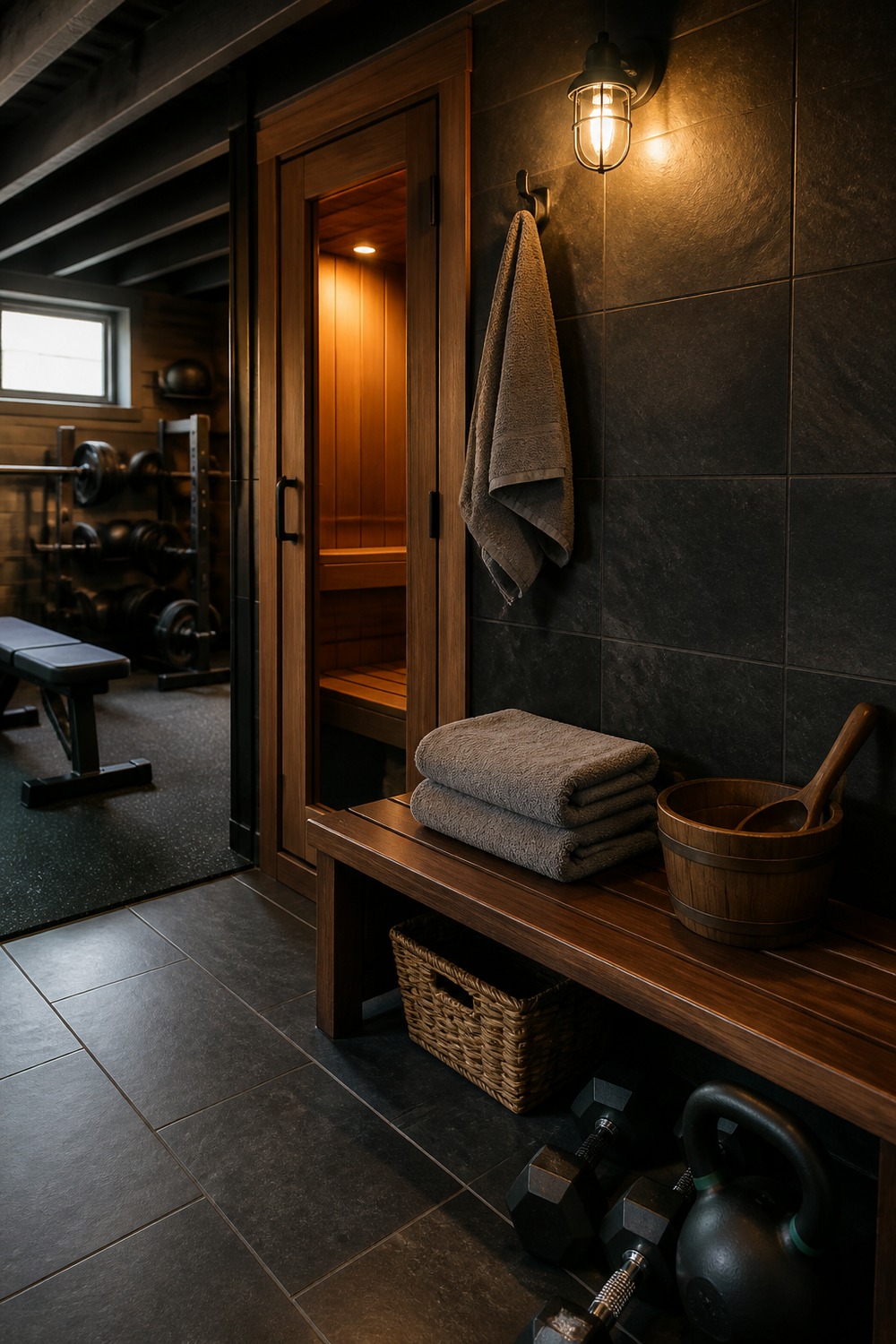
The recovery corner is a smart contrast to all the heavier equipment. Wood slats, folded towels, darker tile, and amber lighting make it feel like a small reset area where stretching or cooling down would actually make sense.
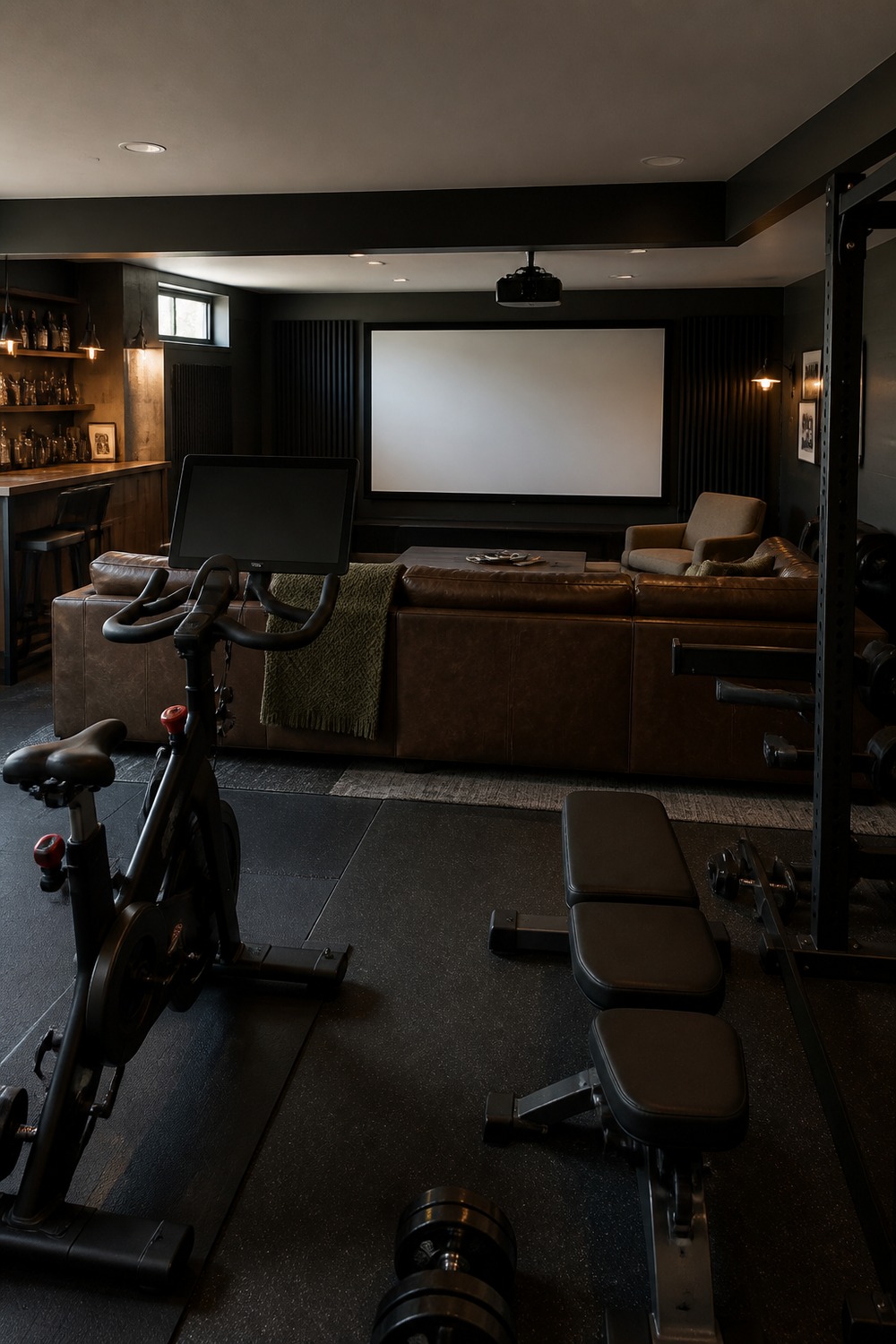
This is the kind of basement I would expect to get used more often because it is not only a gym. The exercise bike and workout mat have their place, but the projector wall, sofa, acoustic panels, and low ceiling make movie nights feel just as natural.
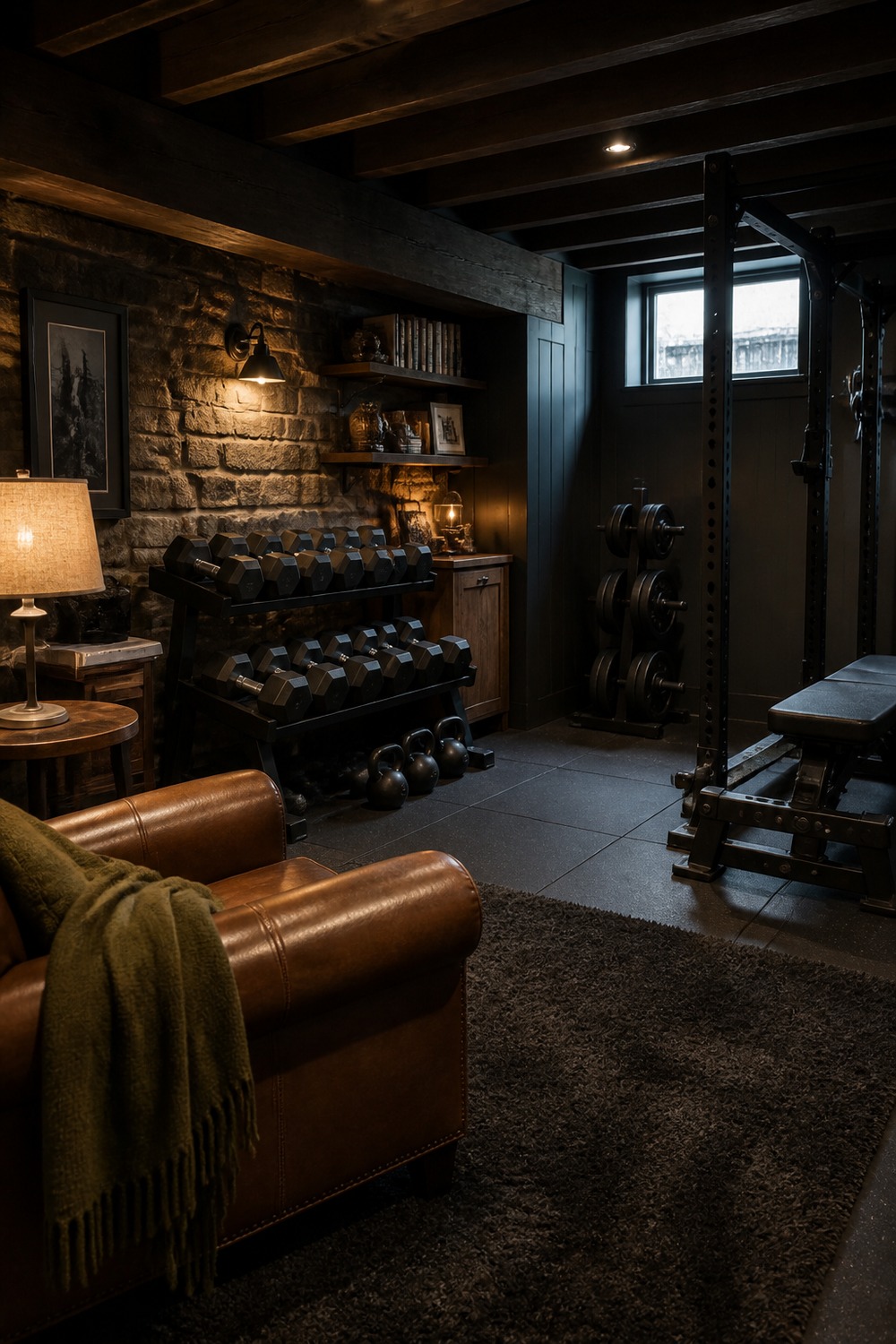
The rustic wall texture warms up the gym equipment in a way plain drywall usually does not. Brick or stone tones, a dumbbell rack, worn leather seating, and darker flooring make the room masculine without sliding into cold showroom territory.
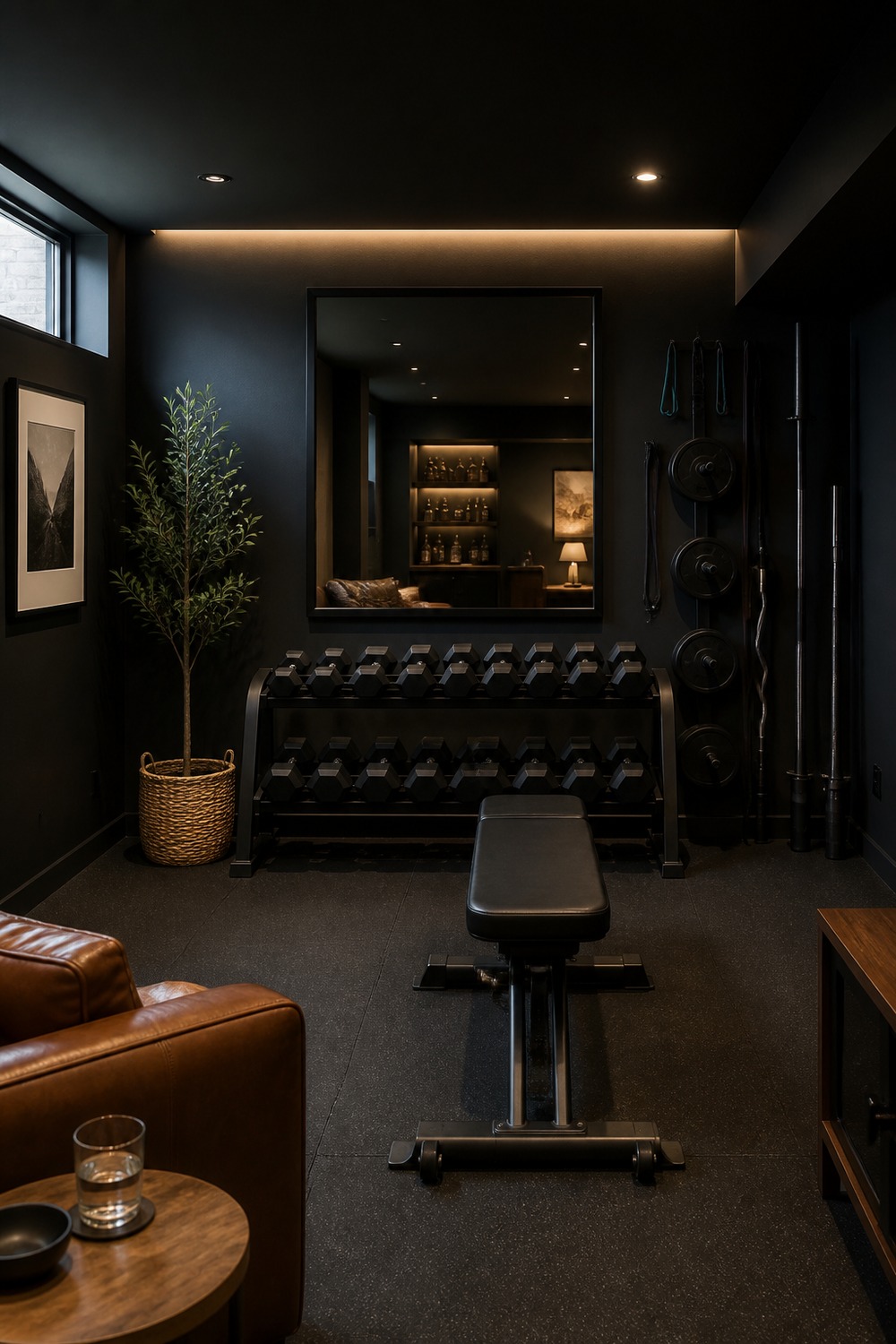
This minimal black setup is clean, but it still has enough function to avoid looking empty. The mirror, bench, dumbbells, and hidden light strip do the main work, and the open floor space makes the room feel easier to move through.
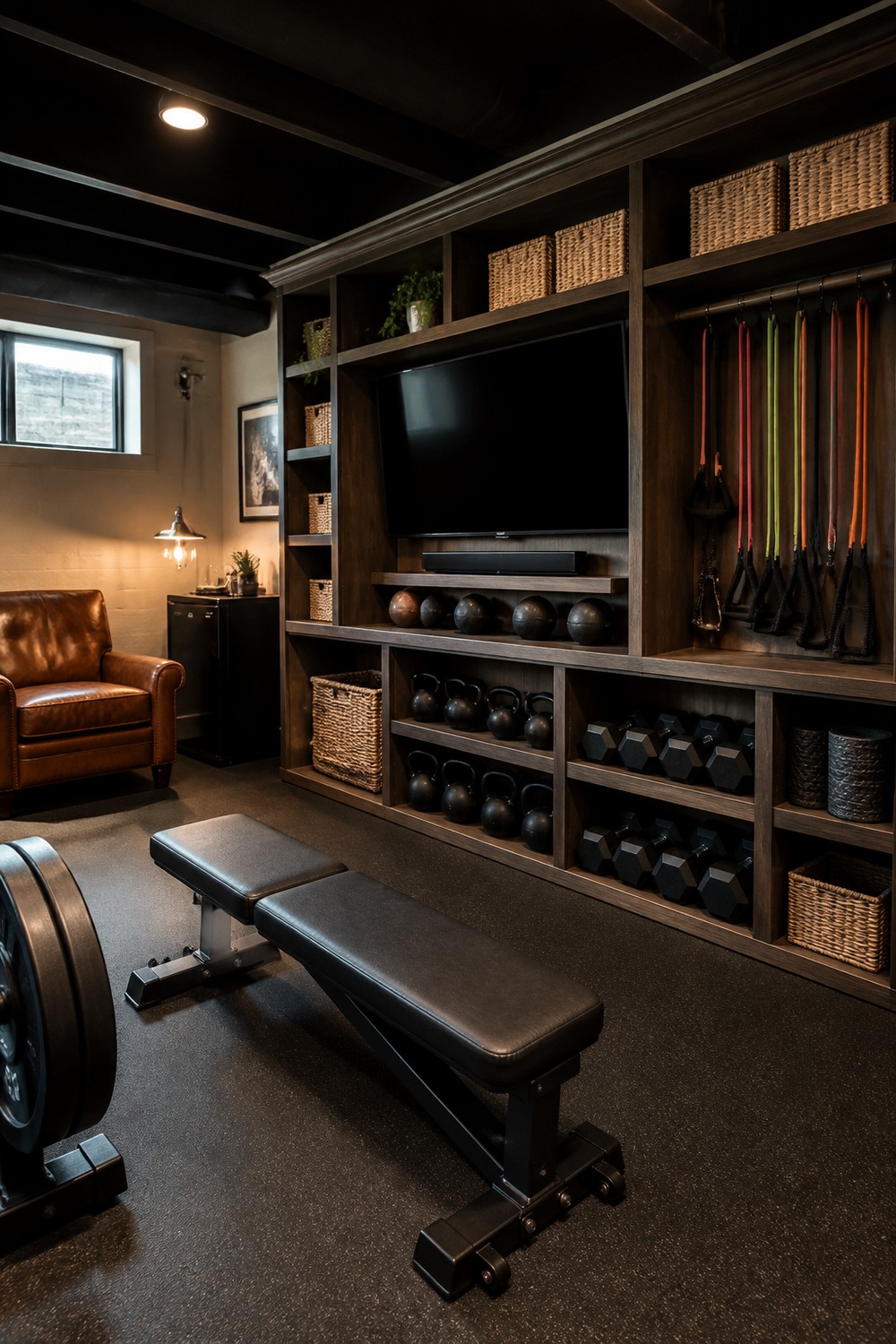
The storage wall is doing more than decoration here. Bands, towels, baskets, smaller gear, and cords need somewhere to go, and one organized wall keeps the workout area from slowly turning into a pile of loose accessories.
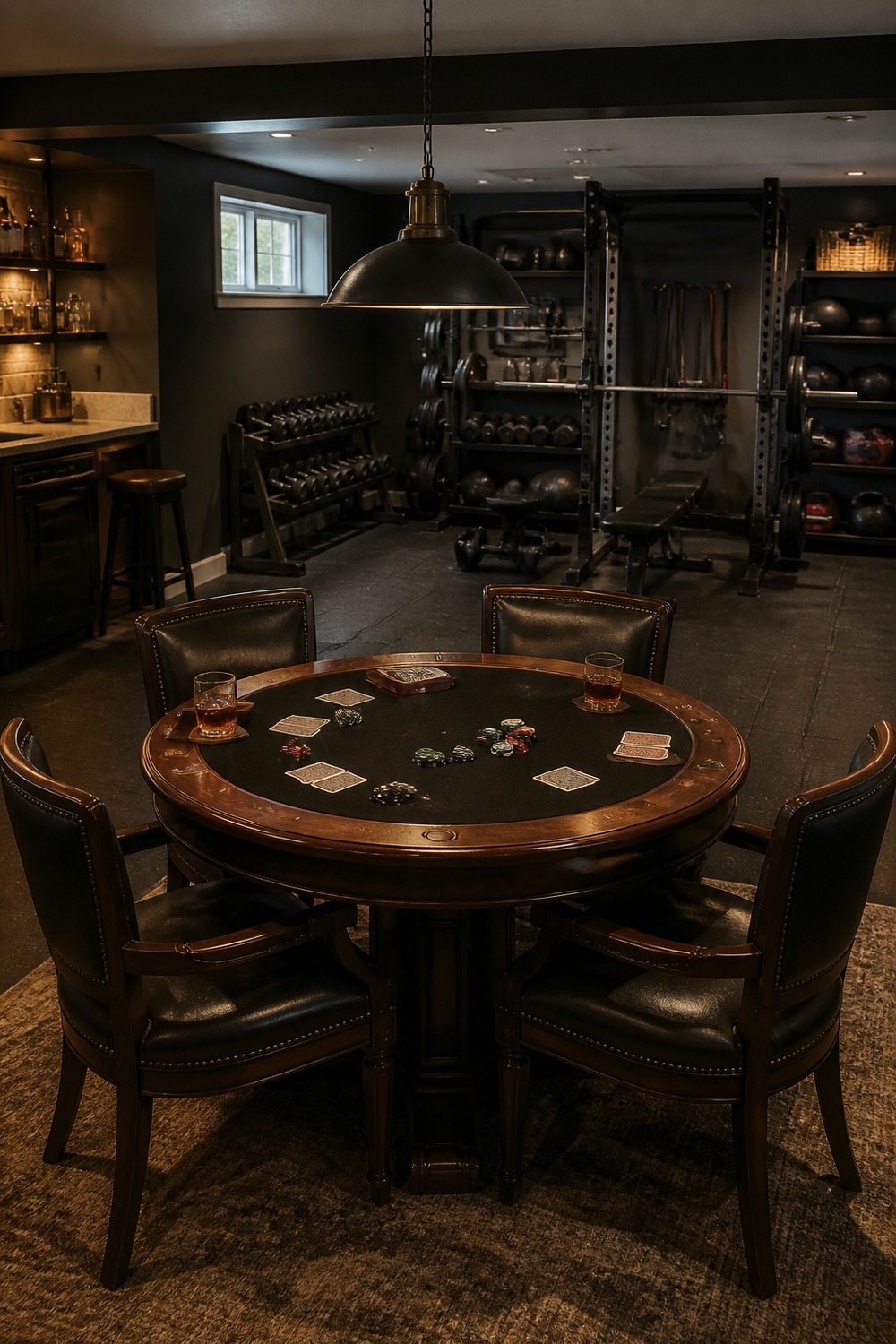
The card-table zone gives this basement a classic man cave angle without fighting the gym area. A pendant over the table, darker finishes, and equipment along the back wall make the two uses feel connected instead of randomly squeezed together.
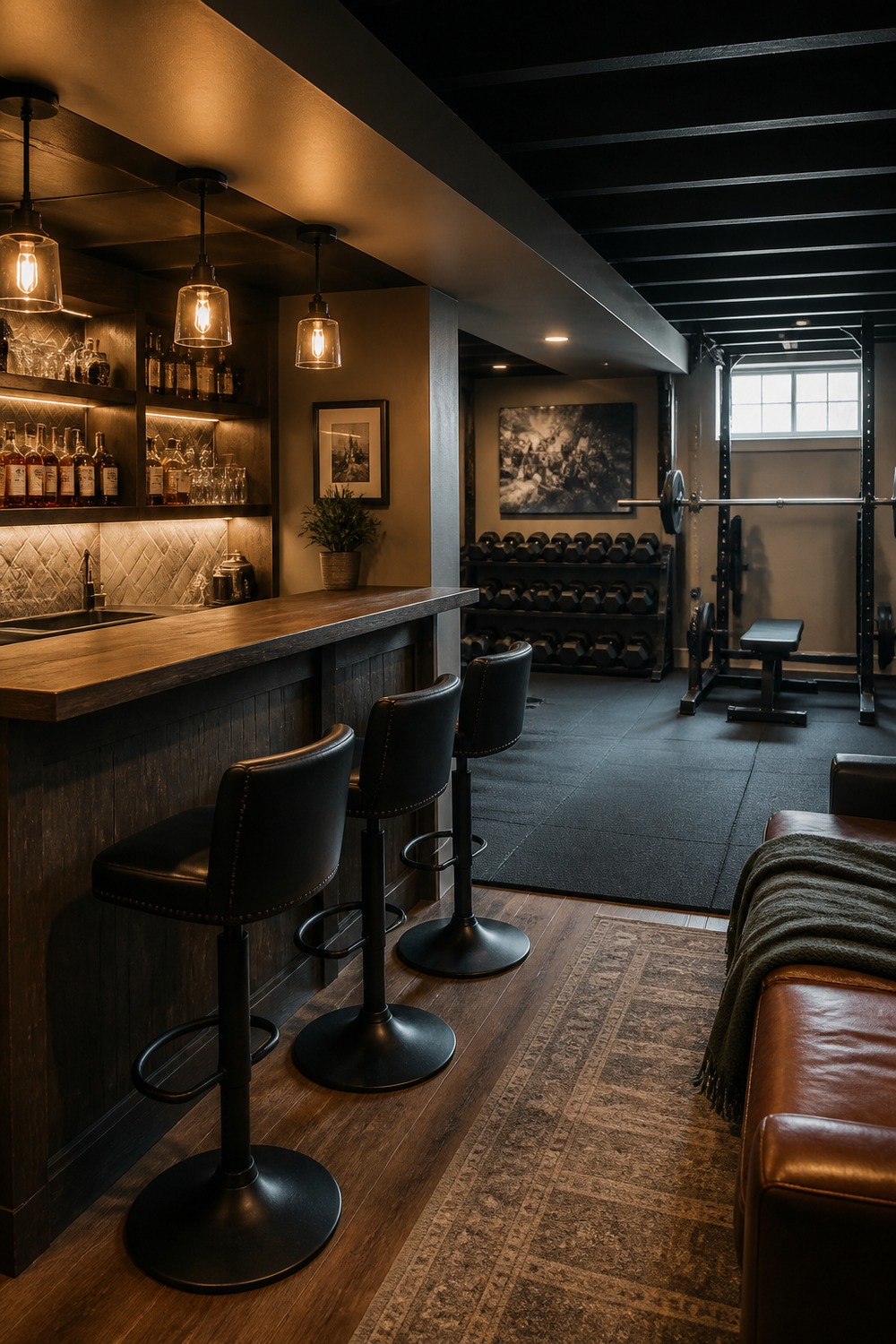
A bar beside workout equipment sounds odd until the floor plan creates clear zones like this. The stools, pendant lights, counter edge, rubber mat area, and weight rack all have their own space, so the room reads as planned rather than confused.
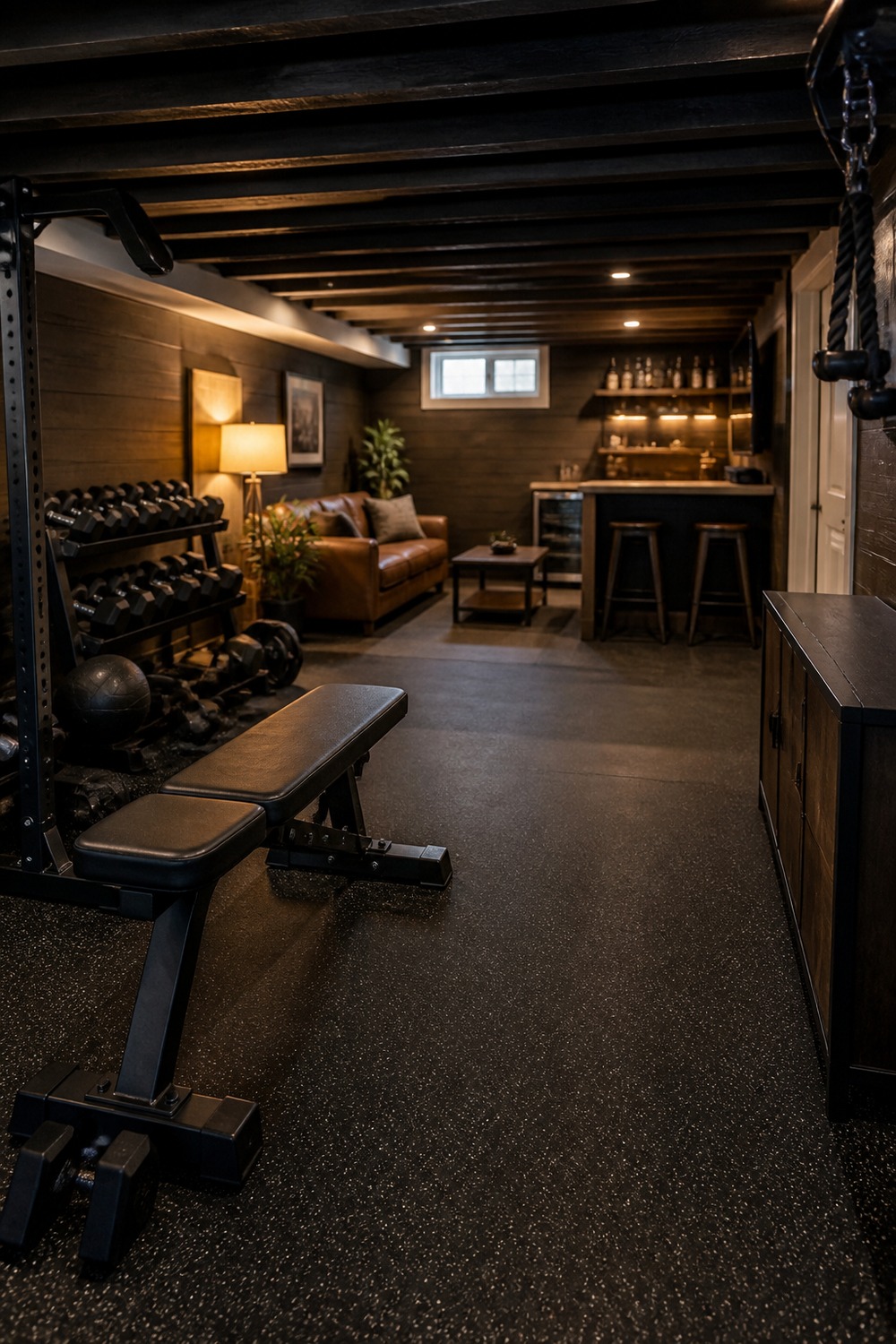
The low ceiling makes this one feel honest in a good way. A lot of basements have awkward height, so the bench, dumbbells, exposed beams, warm lamp, and compact layout show how to work with the room instead of pretending it is bigger.
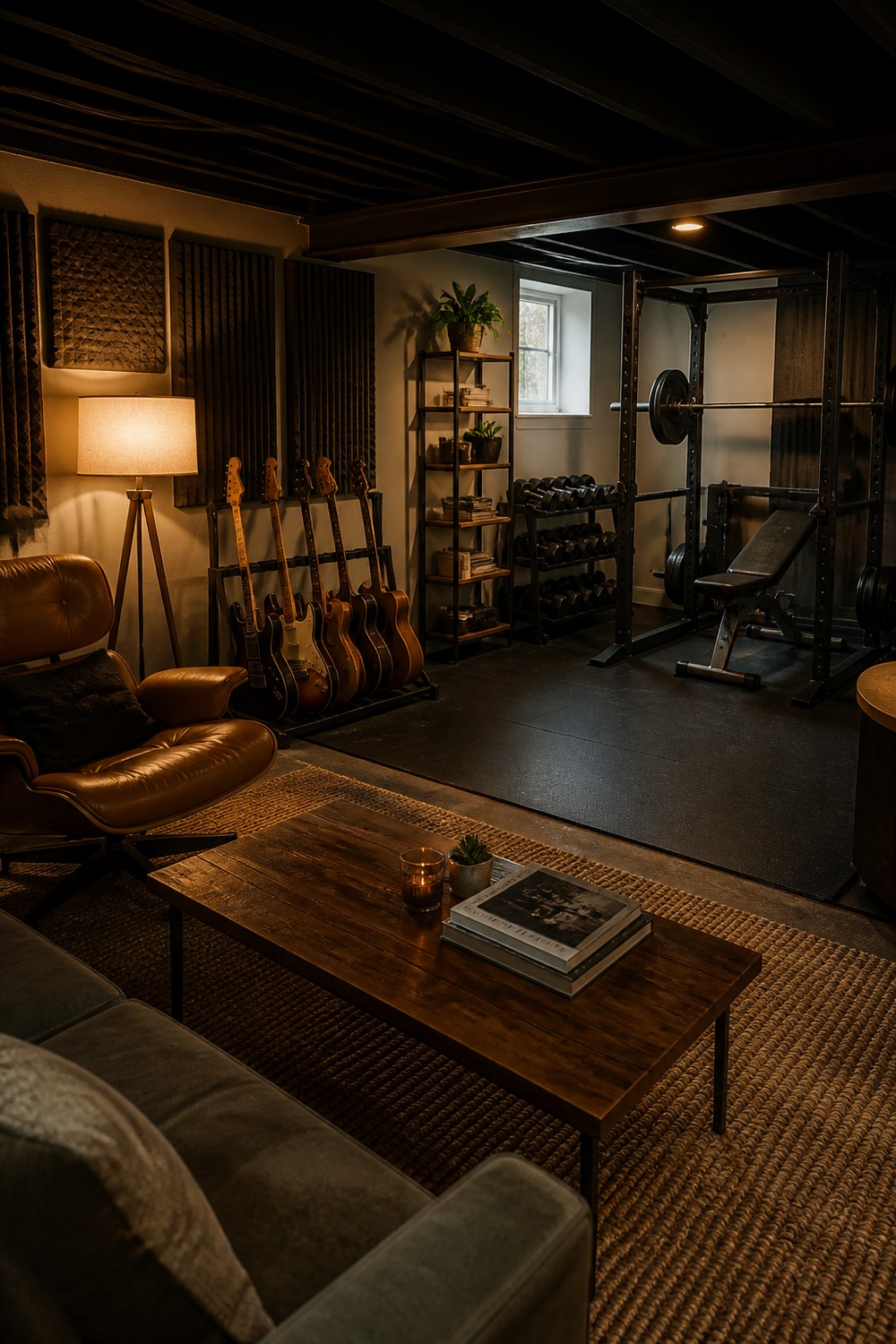
The music corner adds character without cluttering the gym side. Guitar stands, acoustic panels, weights, and a floor lamp make the basement feel like it belongs to an actual person, which is better than a room that looks scrubbed of every hobby.
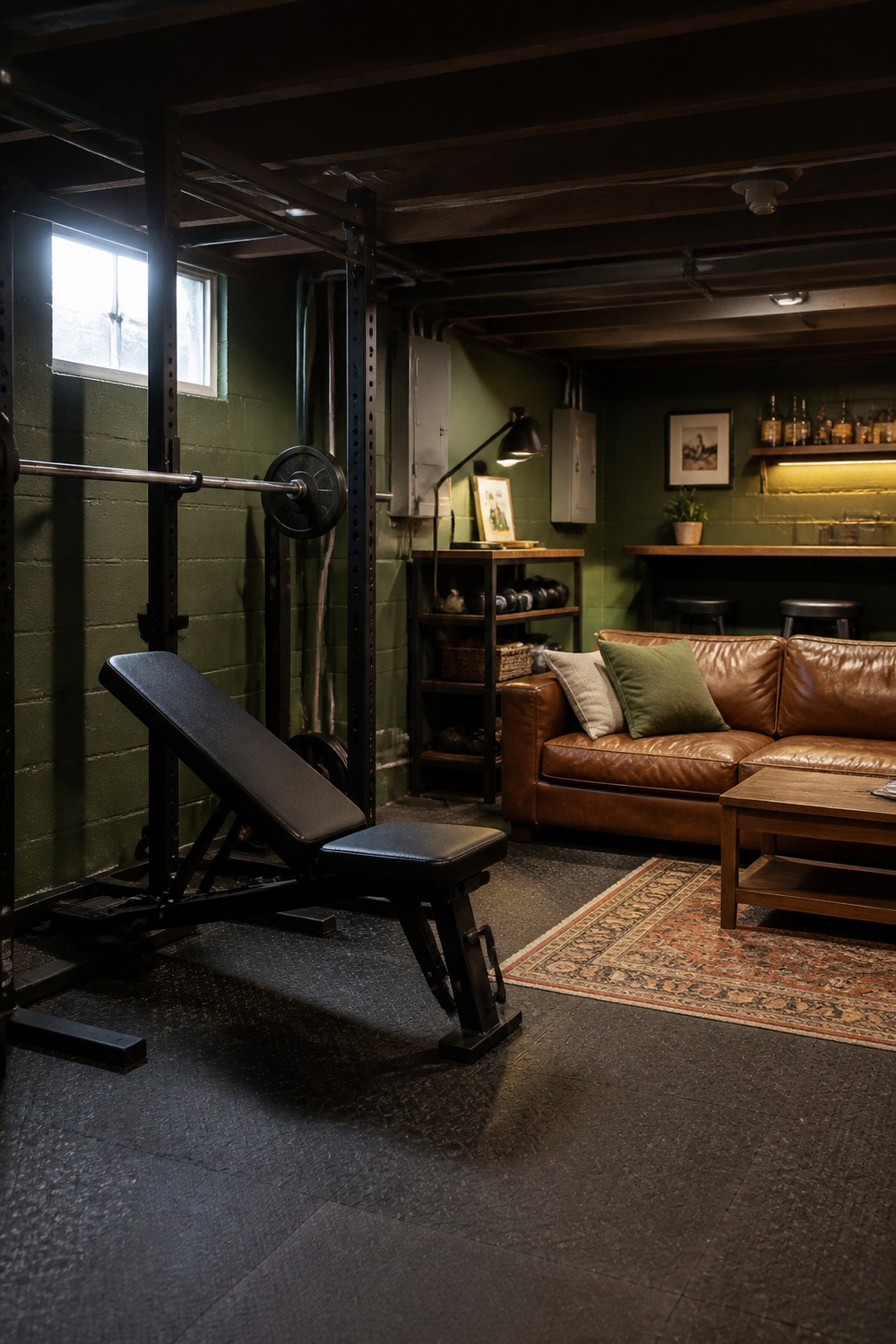
This budget-friendly version might be the most useful for a real basement. A simple bench, painted wall, secondhand-looking sofa, rug, and basic warm lighting can still look pulled together when the layout has breathing room.
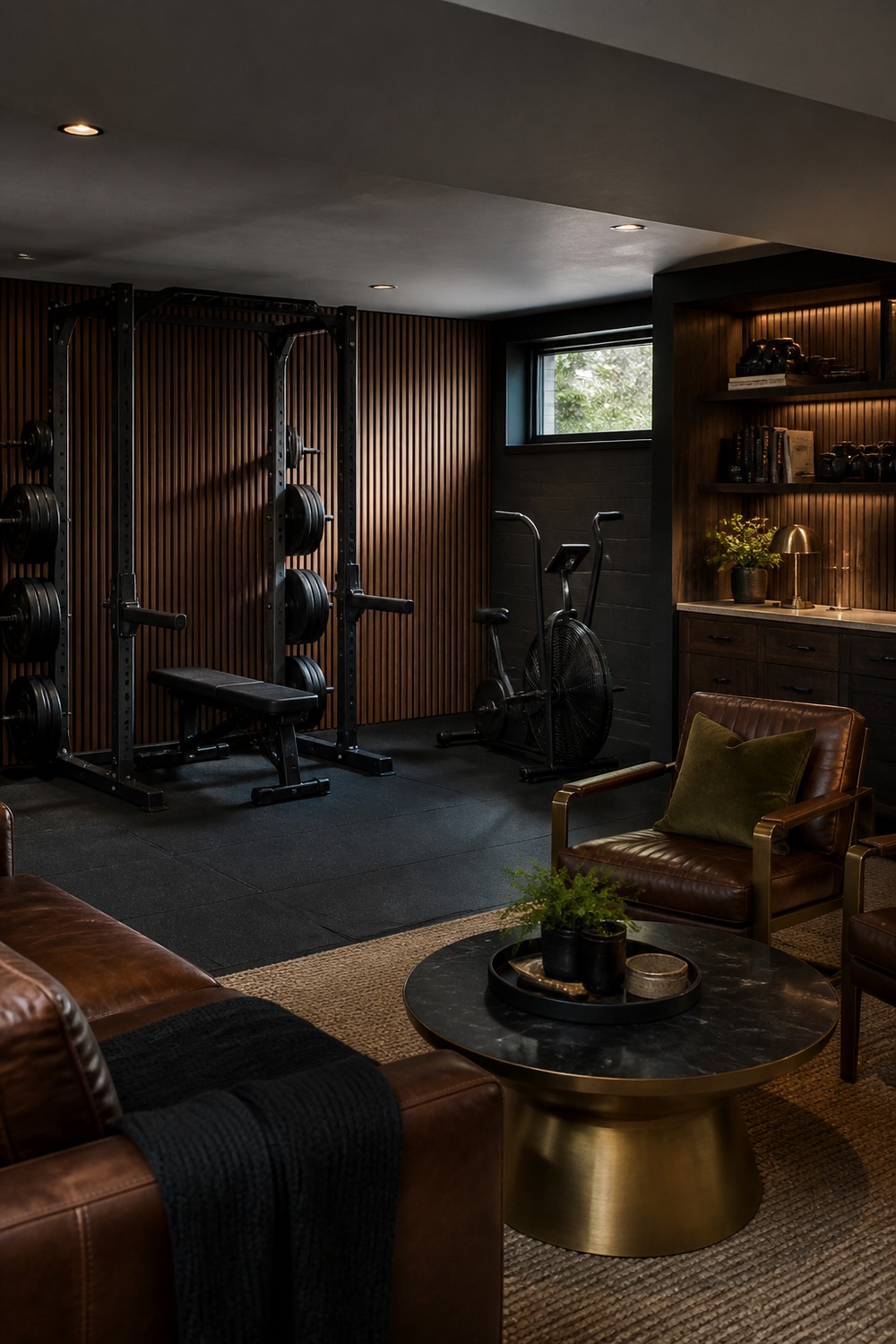
The polished dark gym looks expensive, but it does not lose the workout purpose. Wood slats, brass details, leather seating, and a cardio machine create a smoother finish while the equipment placement still feels clear and usable.
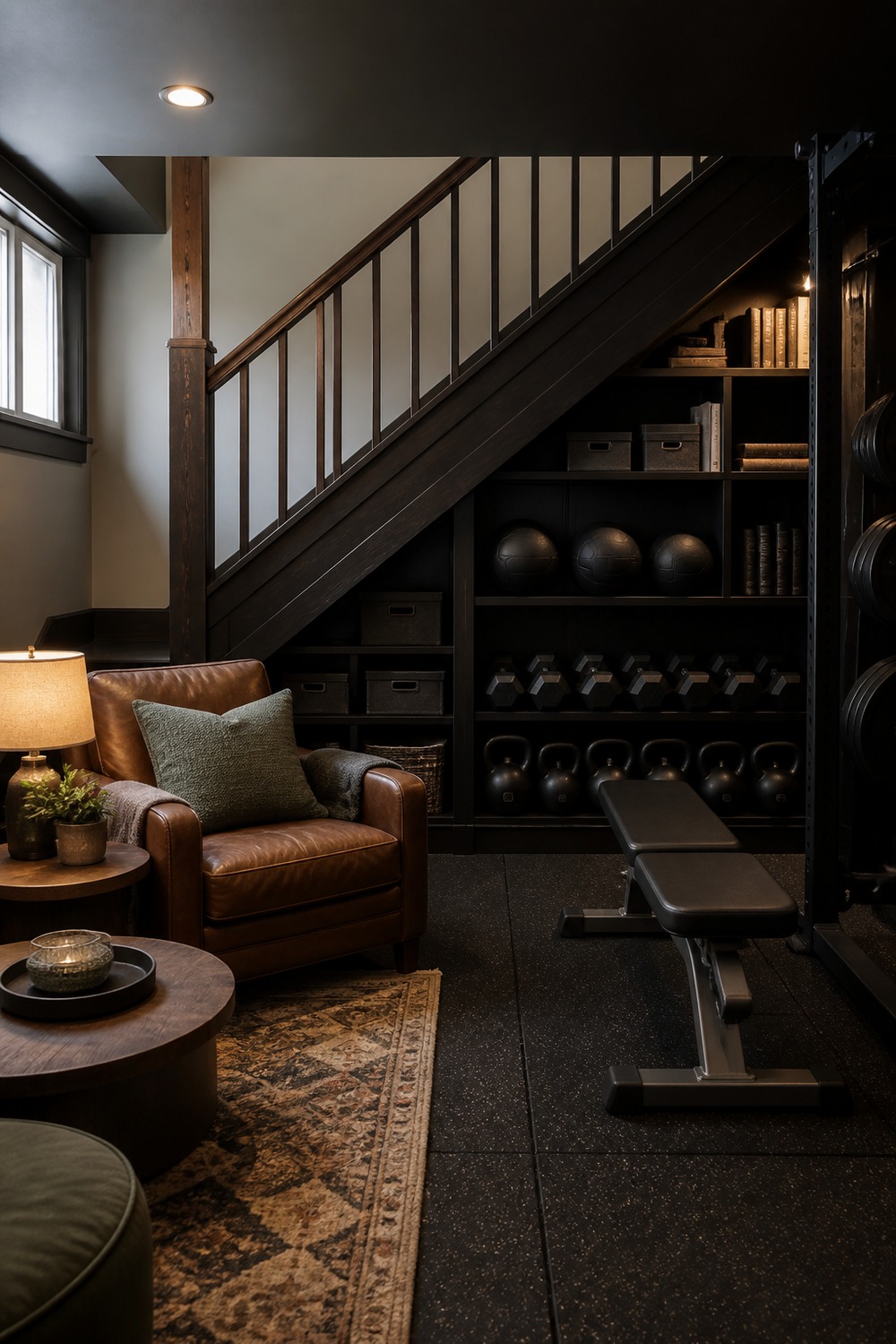
Under-stair areas are strange little spaces, and this makes one feel useful instead of forgotten. The shelves, bench, weights, and tucked seating use the odd angle well, especially for small gear that would otherwise float around the basement.
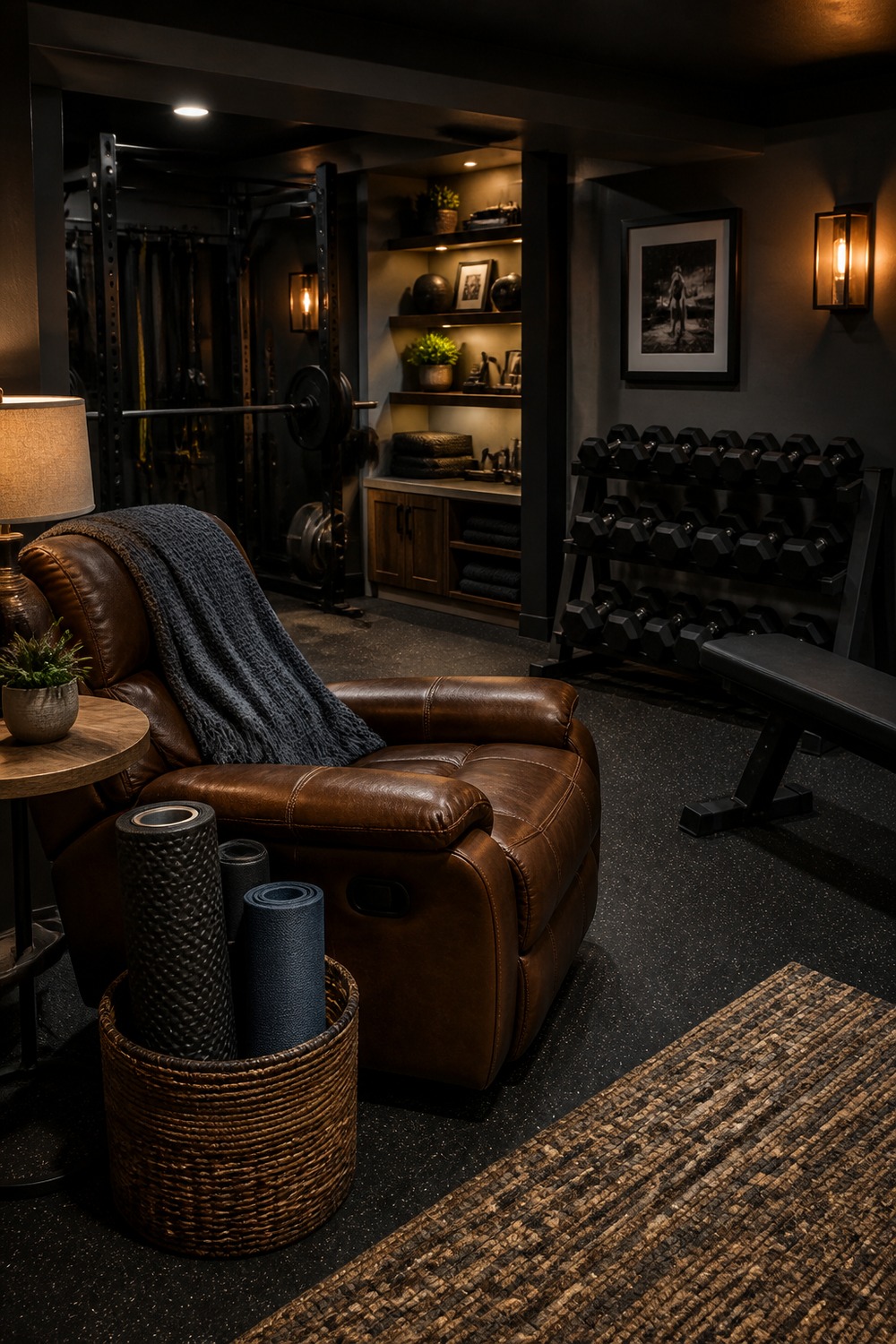
The recovery lounge is the kind of detail that makes a gym feel less punishing. A recliner, foam roller basket, dumbbell rack, and wall sconces create a proper place to cool down instead of dropping gear wherever there is floor space.
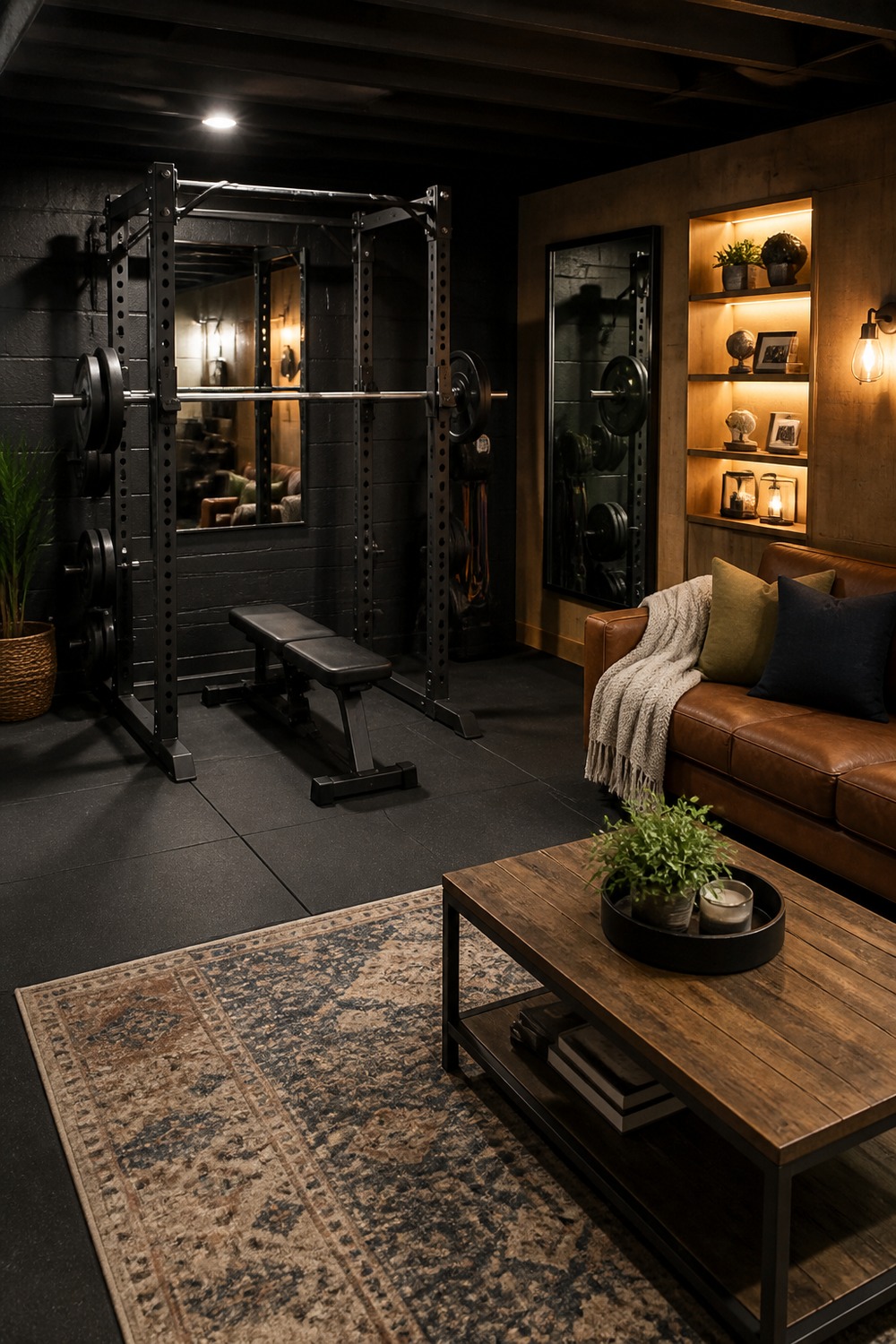
A squat rack can dominate a basement, but the seating and shelf lighting soften it here. Organized plates, a clean mirror, and a sofa nearby make the lifting zone feel strong without turning the whole room into one metal cage.
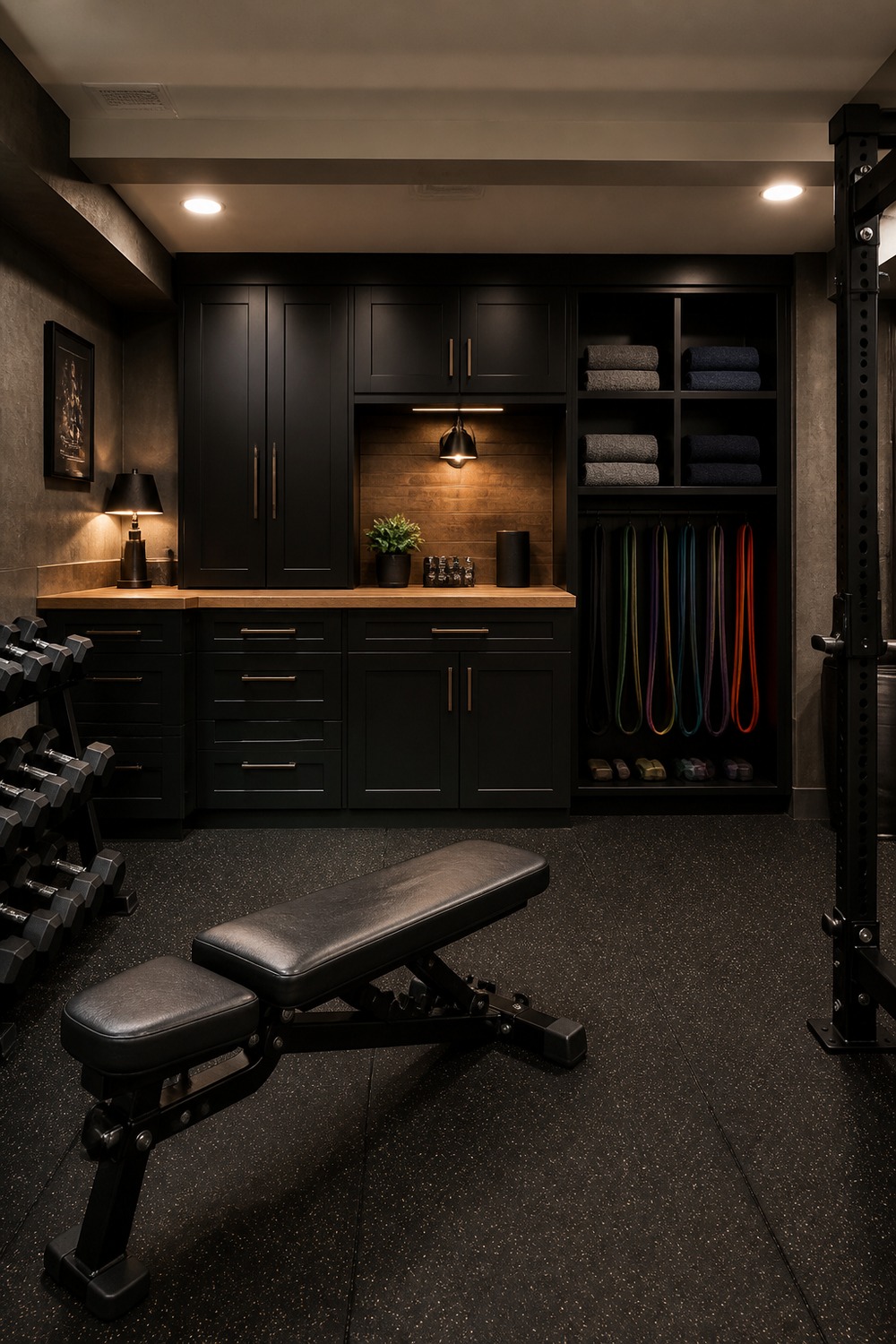
Closed cabinets are doing a lot of quiet work in this space. Towels, bands, mats, and smaller accessories can disappear behind doors, which keeps the dark gym-cave mood from being ruined by everyday clutter.
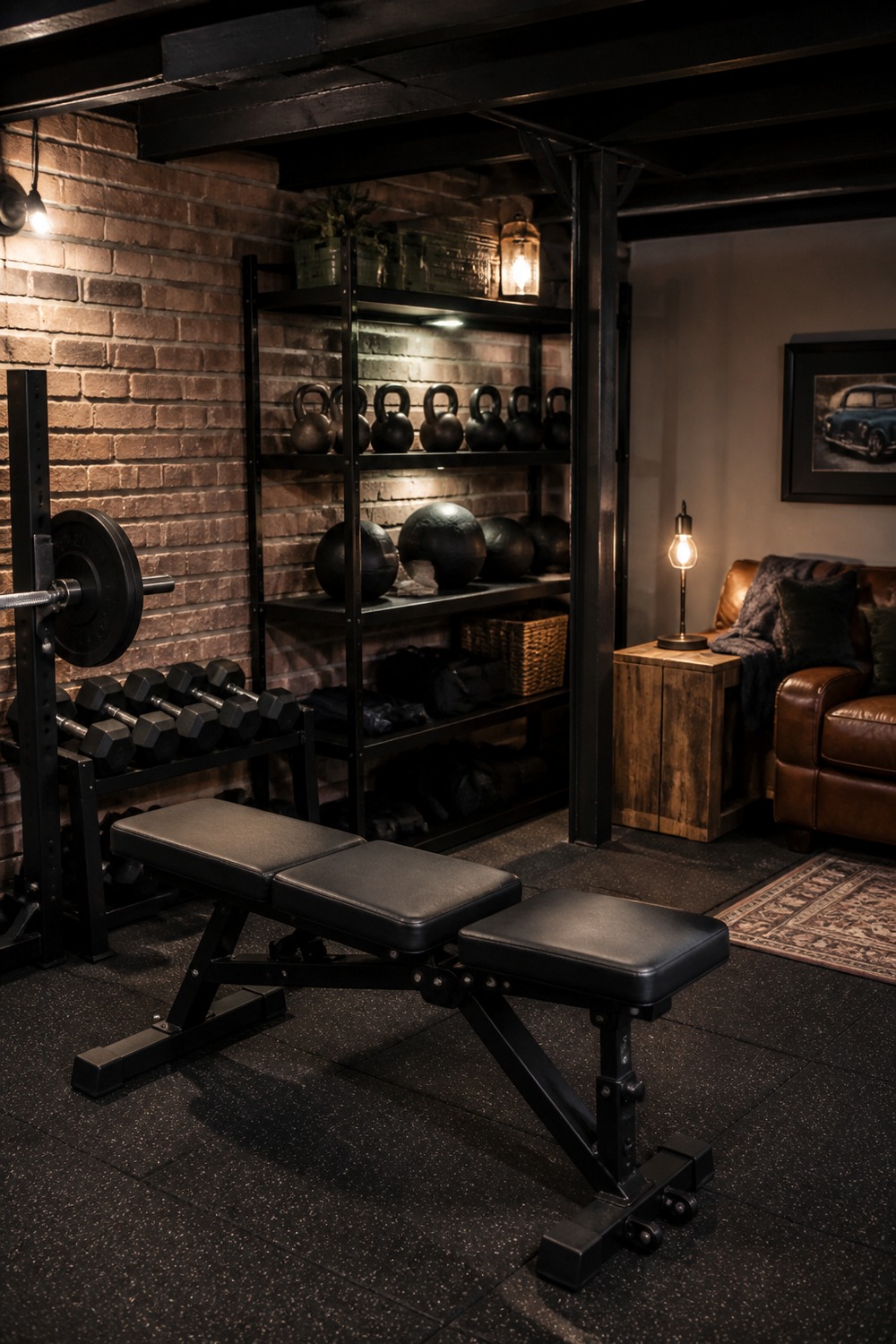
The industrial corner has plenty of texture without becoming messy. Brick-look walls, black metal shelving, kettlebells, a bench, and amber light give the room grit, while the side-angle layout keeps the gear from looking flat against one wall.
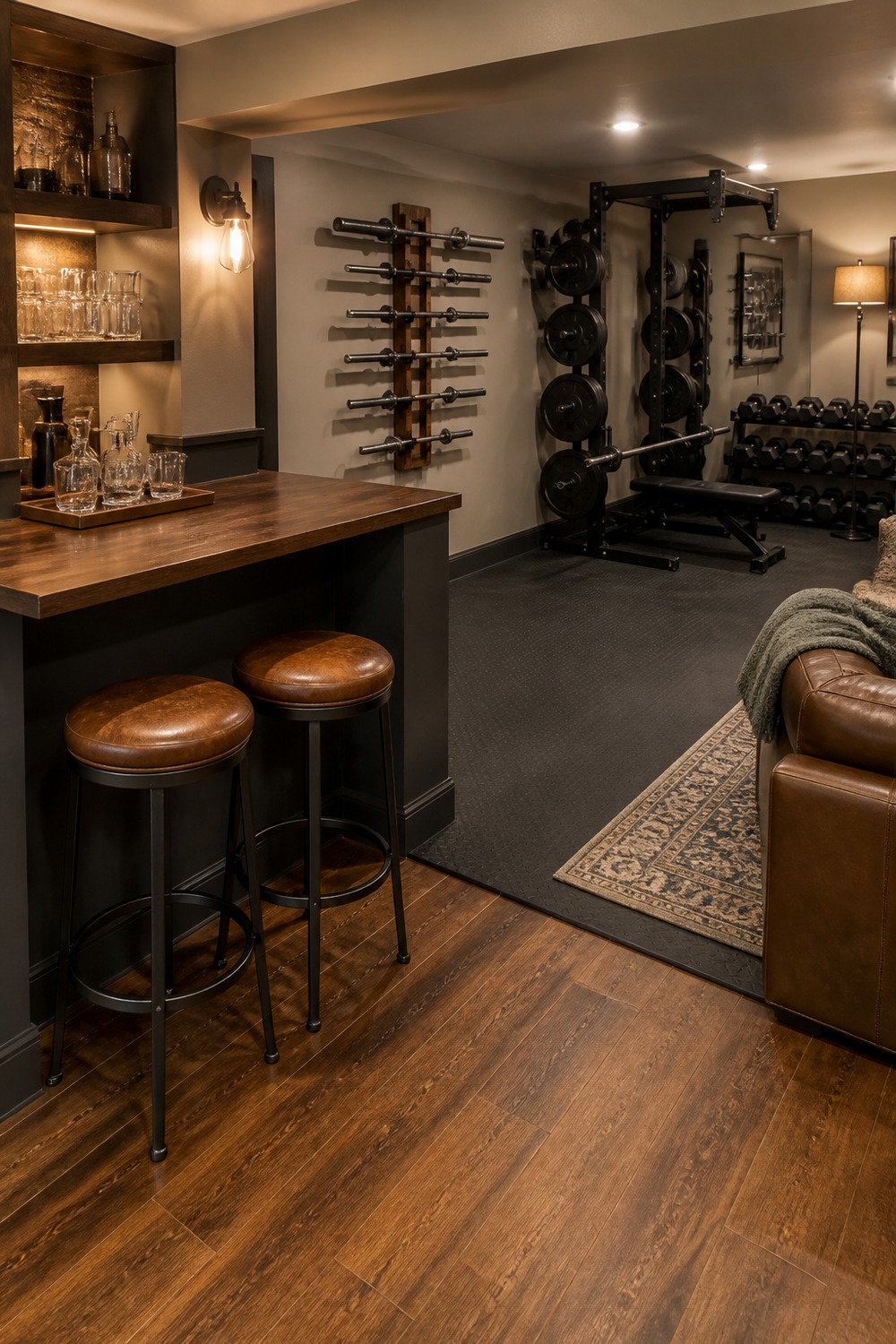
This barbell and mini-bar mix is very basement-specific, which is why I like it. The counter, stools, unlabeled glassware, floor transition, and visible weights make the room feel half training zone and half weekend hangout.
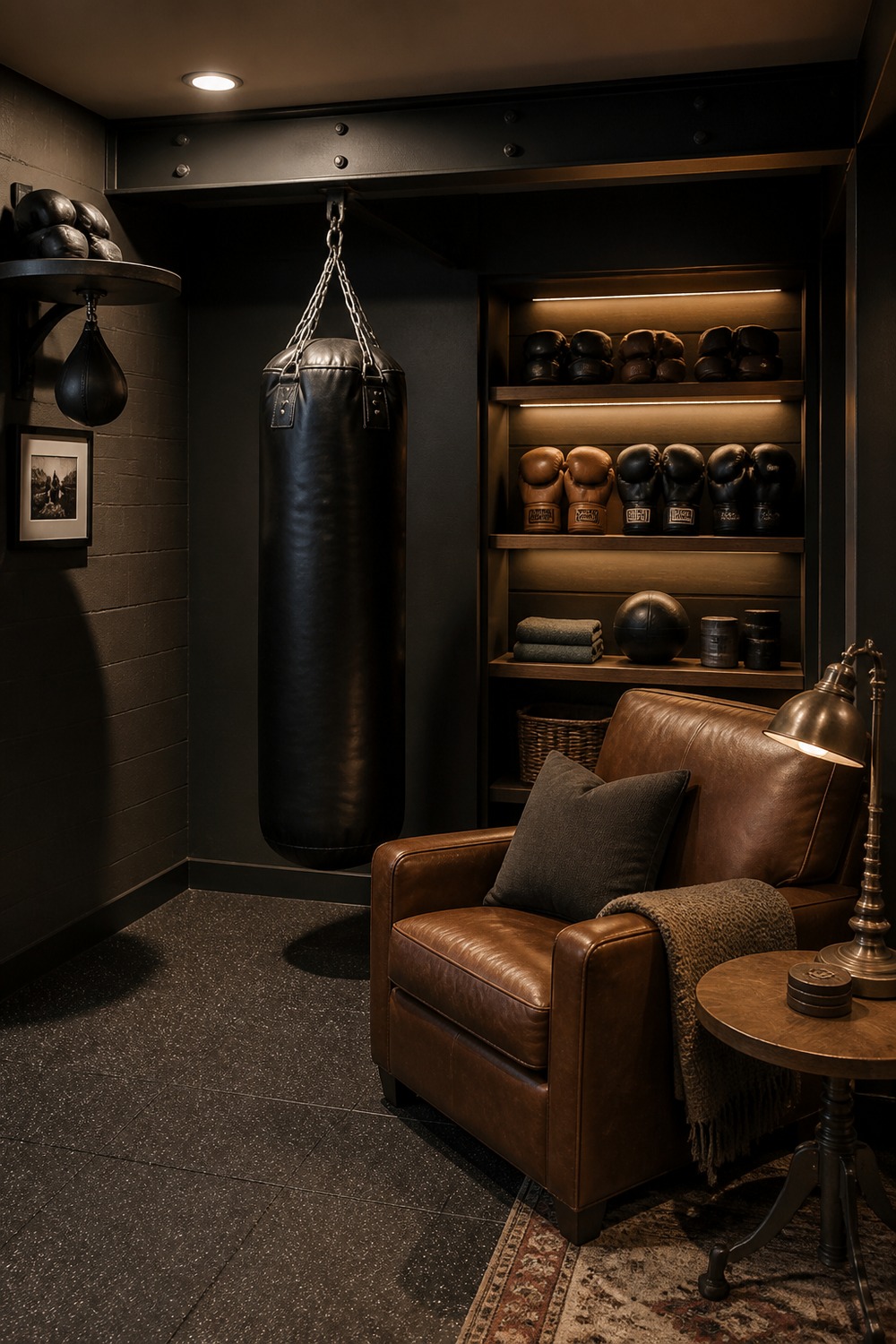
The compact boxing lounge proves a small footprint can still have mood. The heavy bag, glove shelf, leather chair, matte wall, and little side table keep the setup focused, and there is not so much equipment that the corner feels jammed.
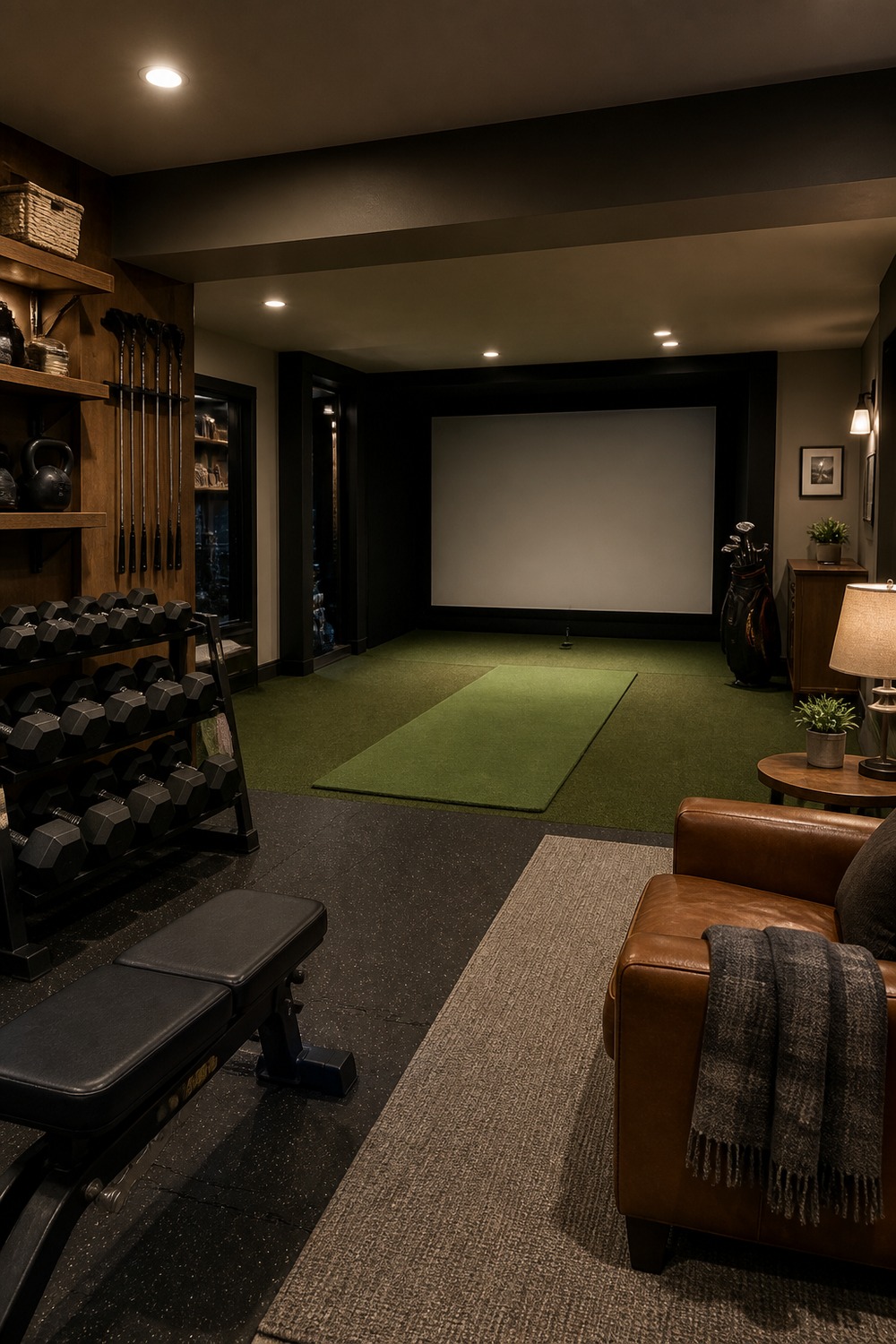
The golf simulator wall gives this basement more of a weekend-room personality. A blank screen, putting mat texture, dumbbell rack, and lounge chair keep the idea clear without leaning on fake logos or distracting wall text.
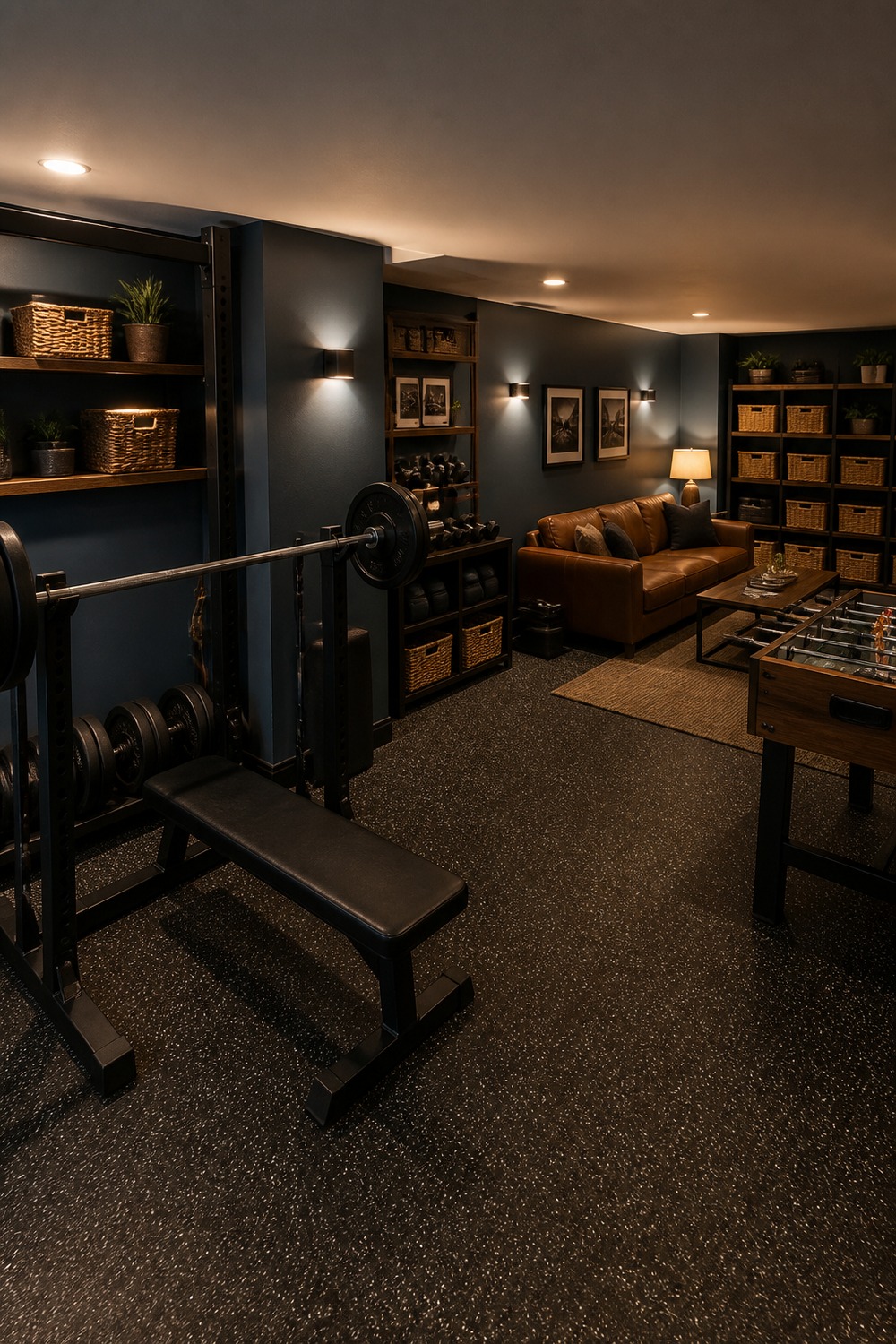
This family-style basement gym feels especially believable because it is not too precious. The bench press, game table, baskets, sofa, and blue-gray walls make room for workouts, storage, and normal basement life all at once.
A man cave gym basement works best when it is not only about packing in equipment. Good lighting, smart storage, a comfortable seat, and a few hangout details can make the whole room feel like somewhere people actually want to spend time.

My name is Vance, and I am the owner of To Ergonomics. Our mission is to improve your workflow by helping you create a supportive and welcoming environment. We hope that you’ll find what you’re looking for while you’re here.
Leave a comment