
A gaming room can get cheesy fast when every wall is glowing neon, every shelf is packed, and none of the boring stuff has a place to go. I like the man cave version that feels more like a late-night hideout: a real sofa you can sink into, low glare around the TV, controllers and headsets within reach, and darker finishes that still leave the room feeling intentional.
The strongest man cave gaming room ideas balance the fun parts with the practical parts. Cord clutter, snack storage, extra seating, console shelves, display pieces, and screen lighting all matter once people actually use the room. Some of these lean basement lounge, some feel more garage or desk-corner based, and a few go moodier, but they all make the room feel immersive without turning it into a theme bar.
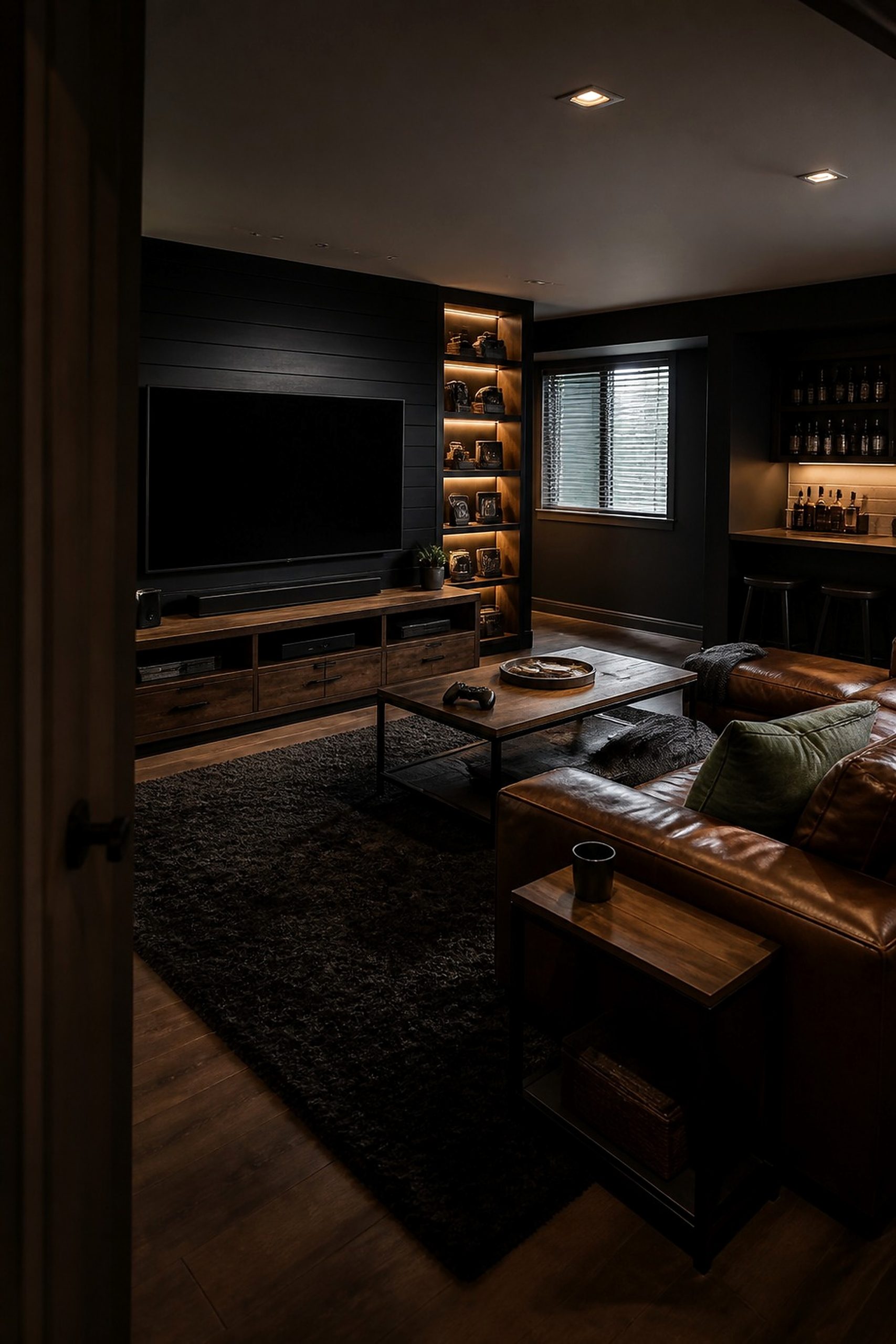
The dark console lounge works because the TV wall feels dramatic without swallowing the whole room. Low lighting, deep seating, and closed storage make it easy to keep controllers, remotes, and extra cables nearby without having them scattered across the floor.
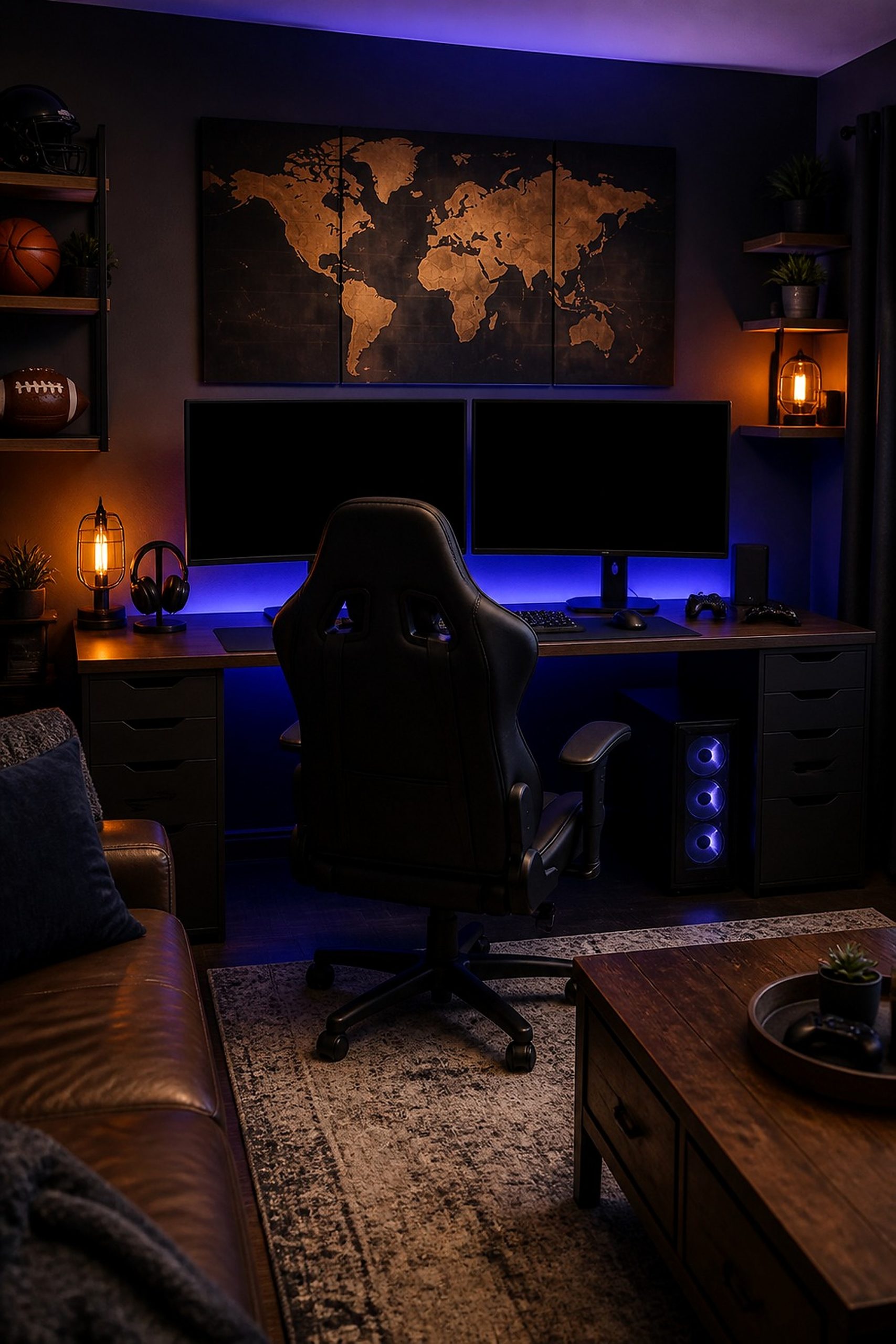
A dual-monitor setup can look messy fast, but this one feels controlled because the desk zone has a clear center. The darker wall, task lighting, and tucked-away gear make it feel like a serious gaming corner instead of just a work desk with screens added.
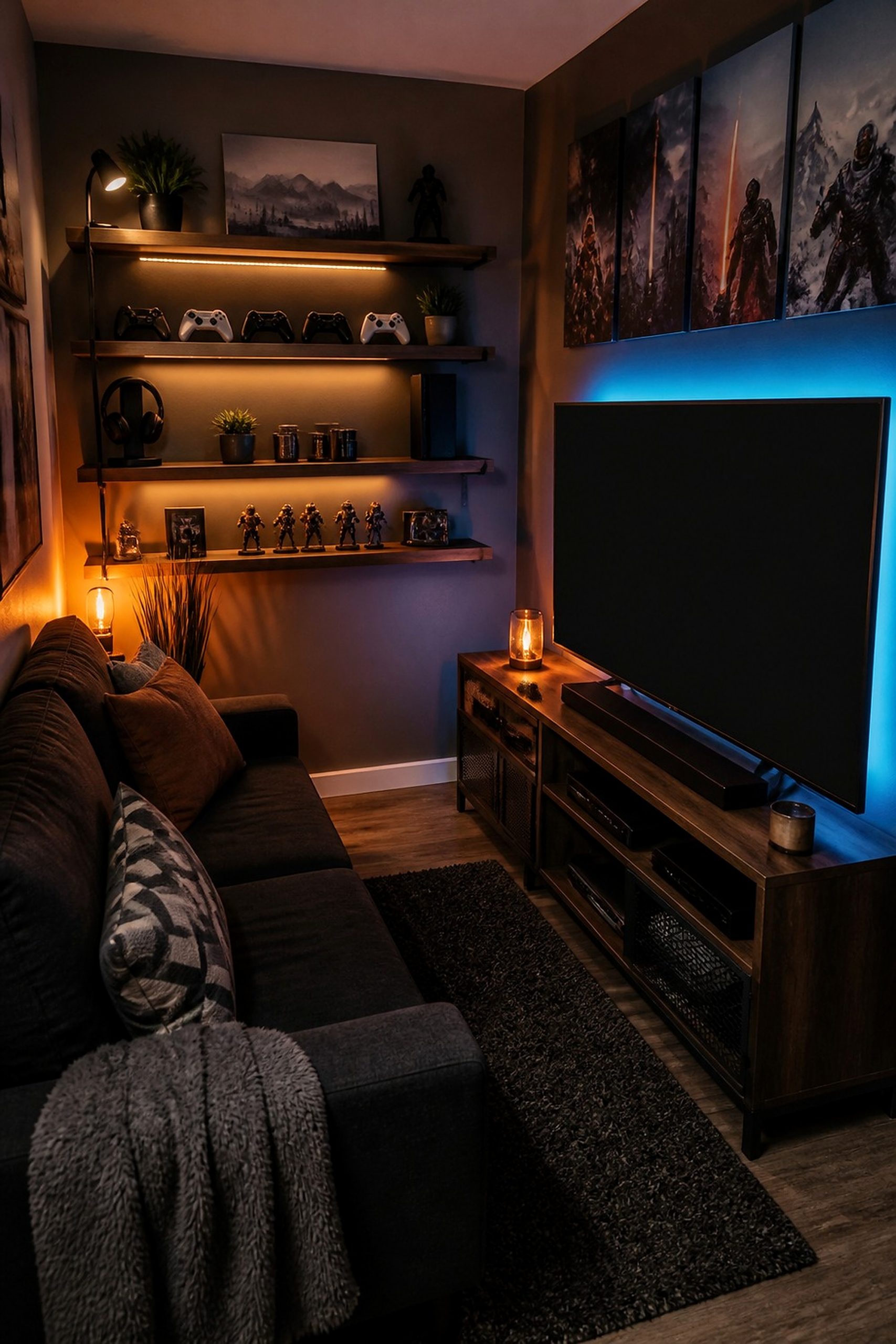
This small corner is the kind of setup that makes sense when there is not a full basement to work with. I like the tighter footprint, the vertical storage, and the way the chair still has breathing room instead of being crammed against every wall.
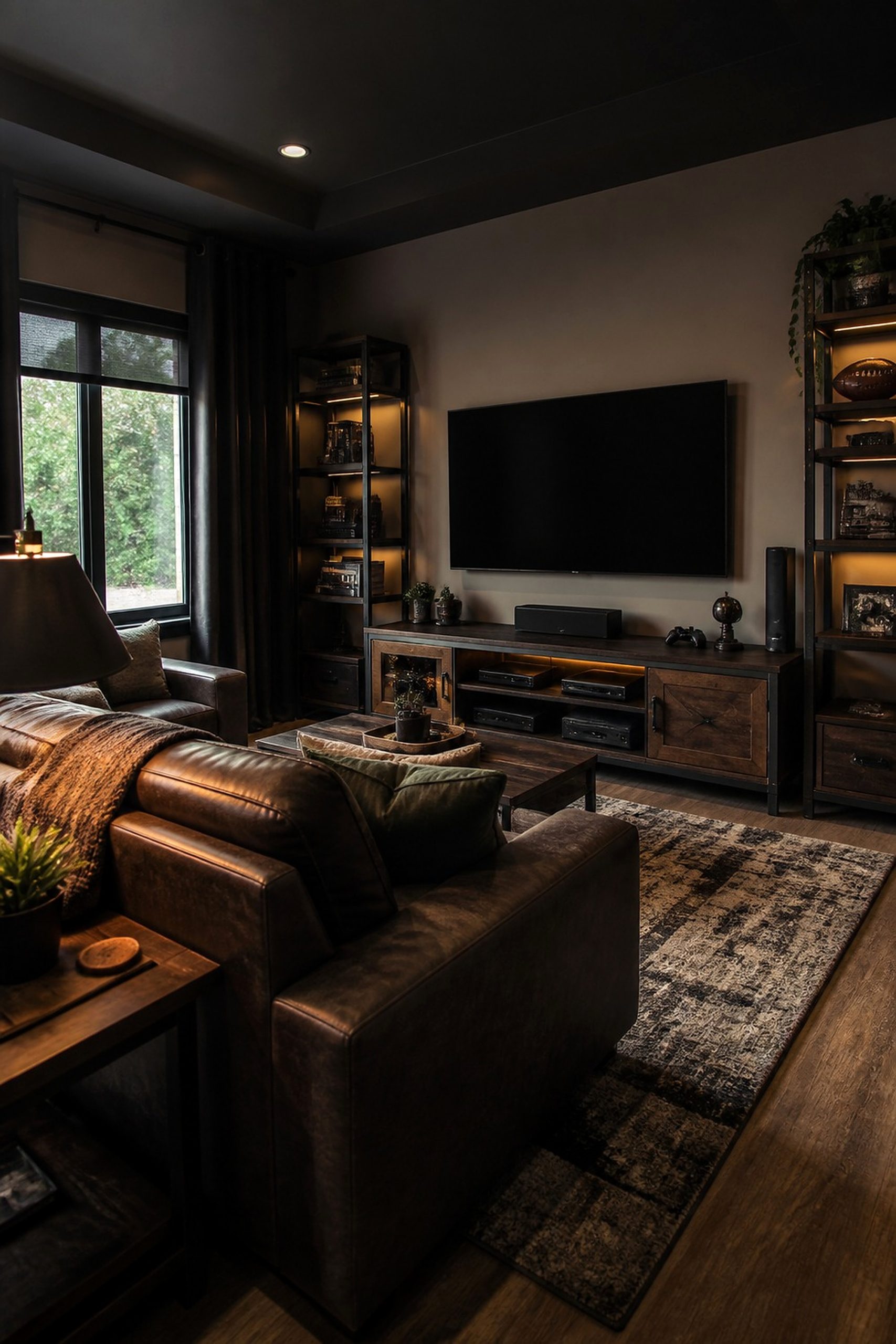
The sofa-and-TV layout feels more like a proper hangout than a single-player station. A low media console, soft rug, and side surfaces give people somewhere to set drinks or controllers, which is exactly the detail that makes a gaming room easier to live with.
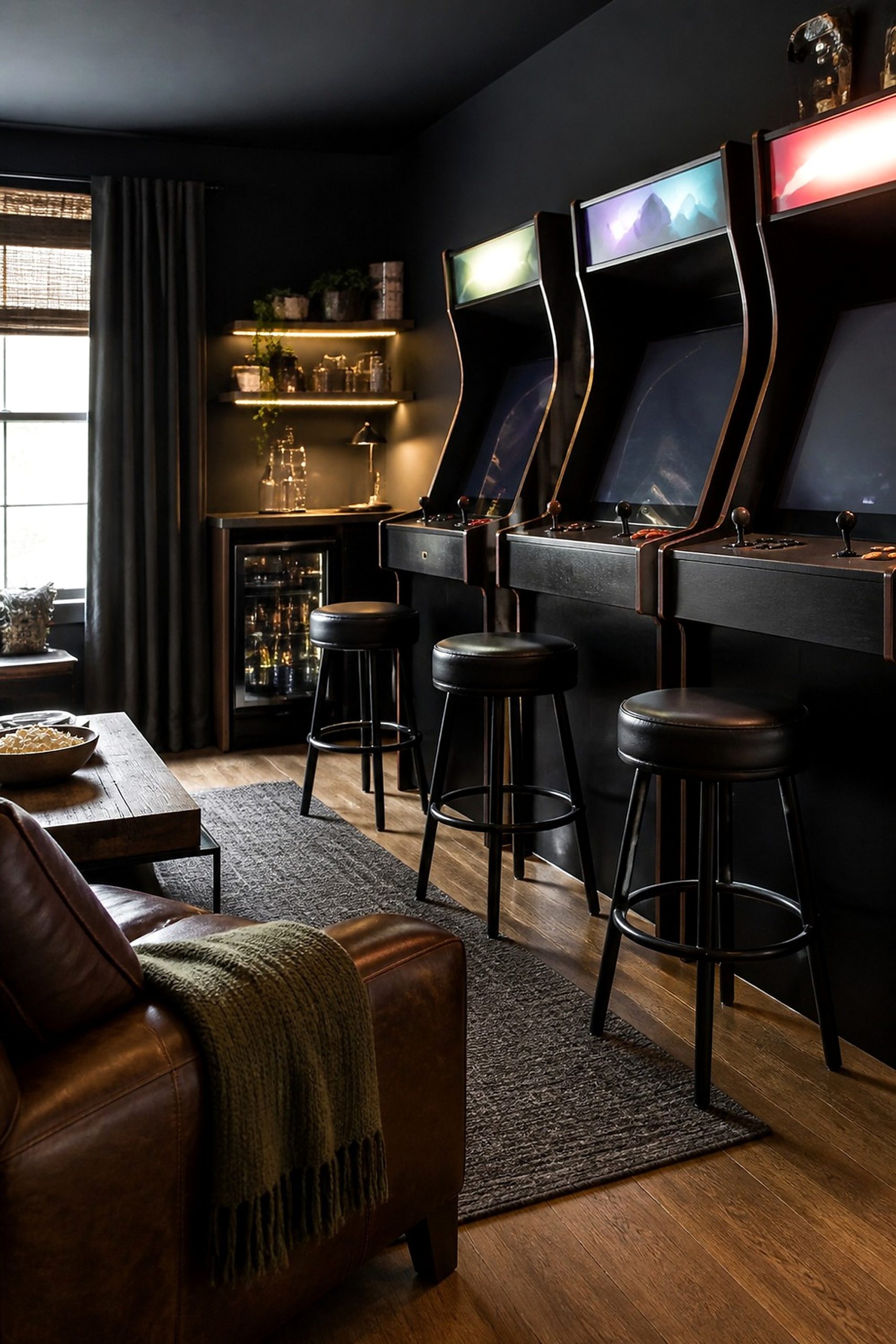
Retro arcade style can go too loud, but this version keeps the nostalgia in the colors and shapes instead of relying on fake signs or clutter. The result feels playful while still leaving enough open space to move around the machines and seating.
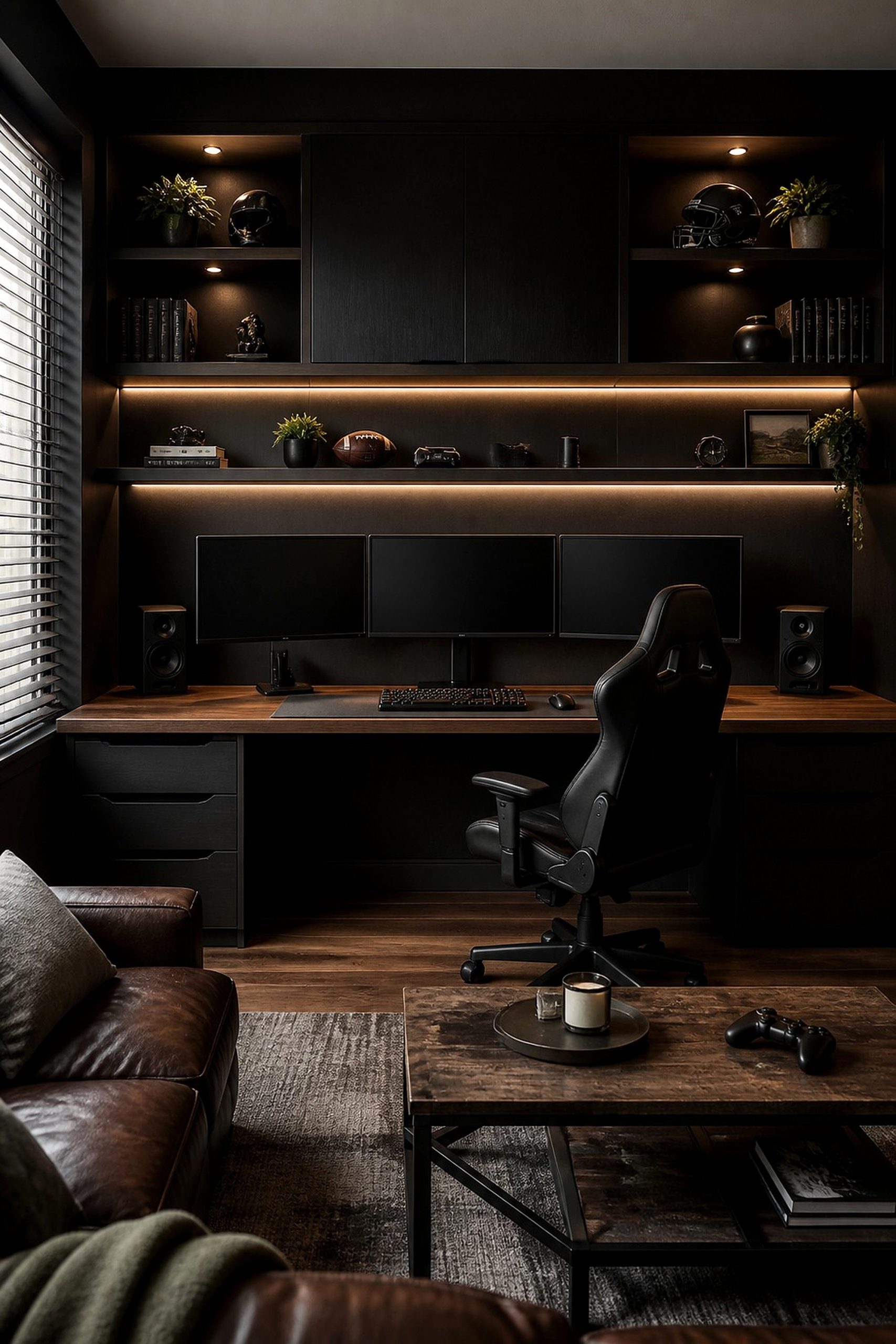
The black setup feels sharp because the lighting does not fight with the screens. Matte finishes, clean shelving, and a focused desk surface help the room look intentional, especially if the rest of the house has a more polished style.
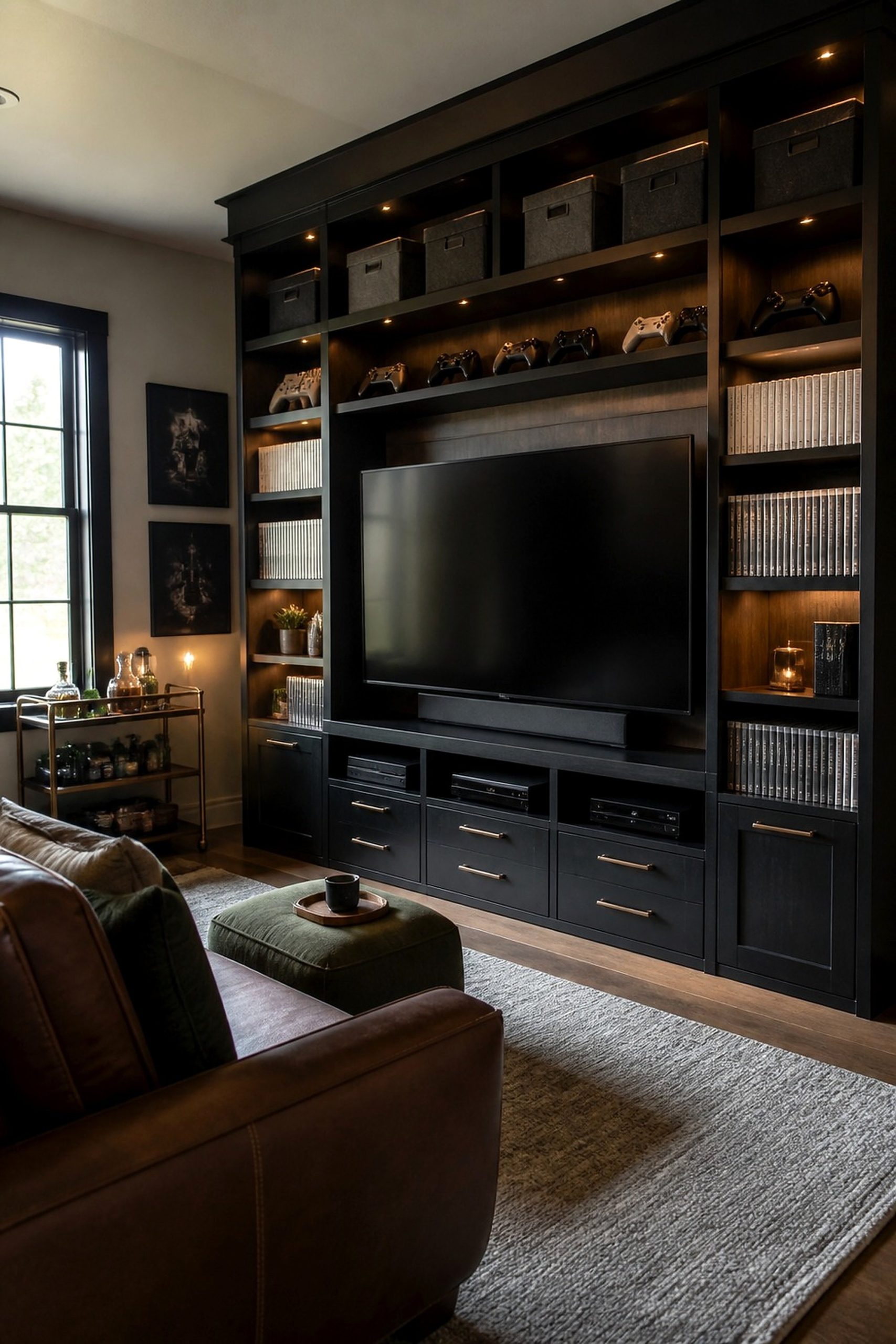
A storage wall is one of those unglamorous choices that makes a gaming room feel better every day. Consoles, boxed games, headphones, chargers, and random accessories all need a home, and this kind of built-in wall keeps the room from feeling like a pile of gear.
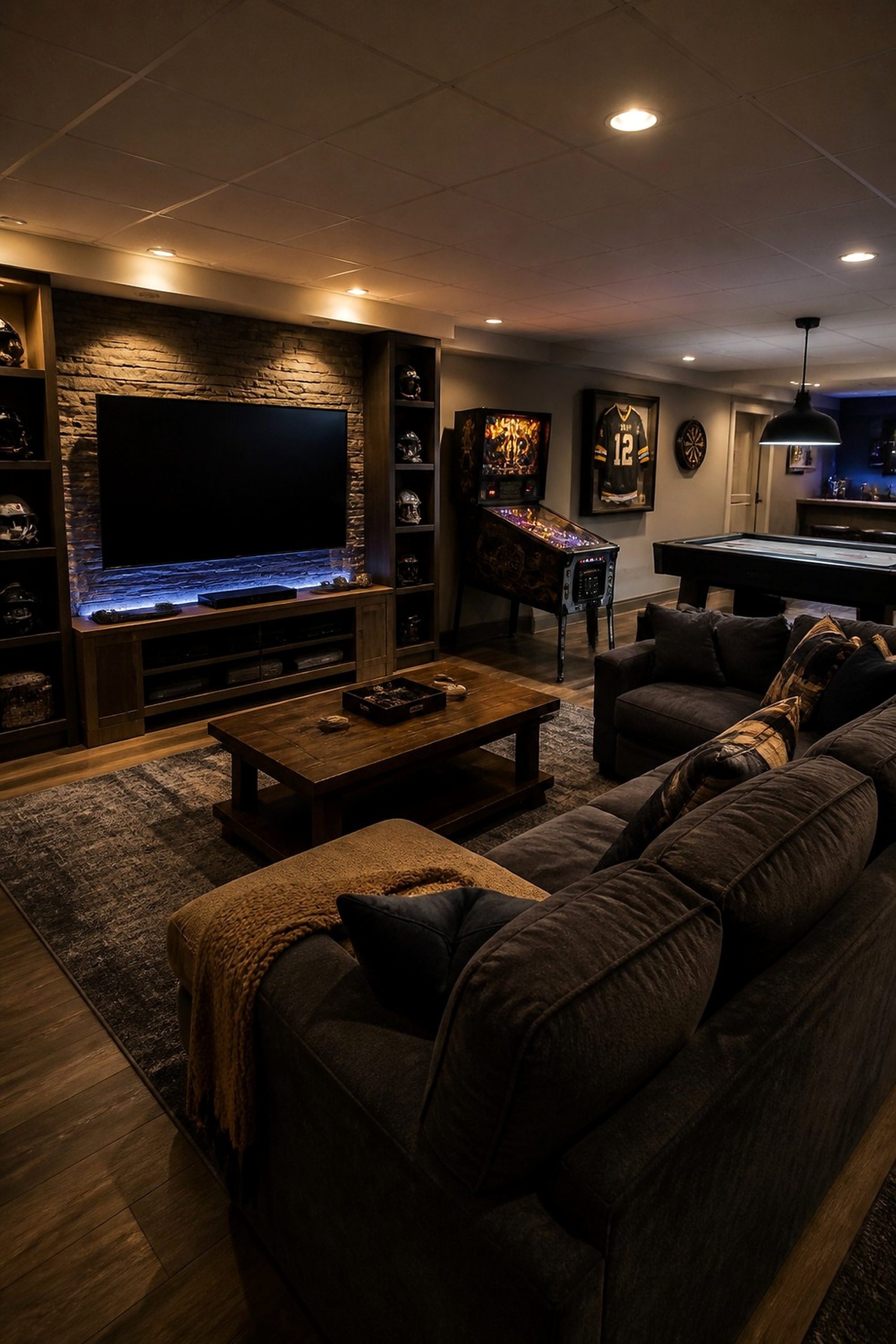
Basements can feel flat and cold, so the darker lounge setup needs texture. The rug, soft seating, wood tones, and layered lamps make the space feel more finished, while the screen wall still keeps the whole room centered around gaming.
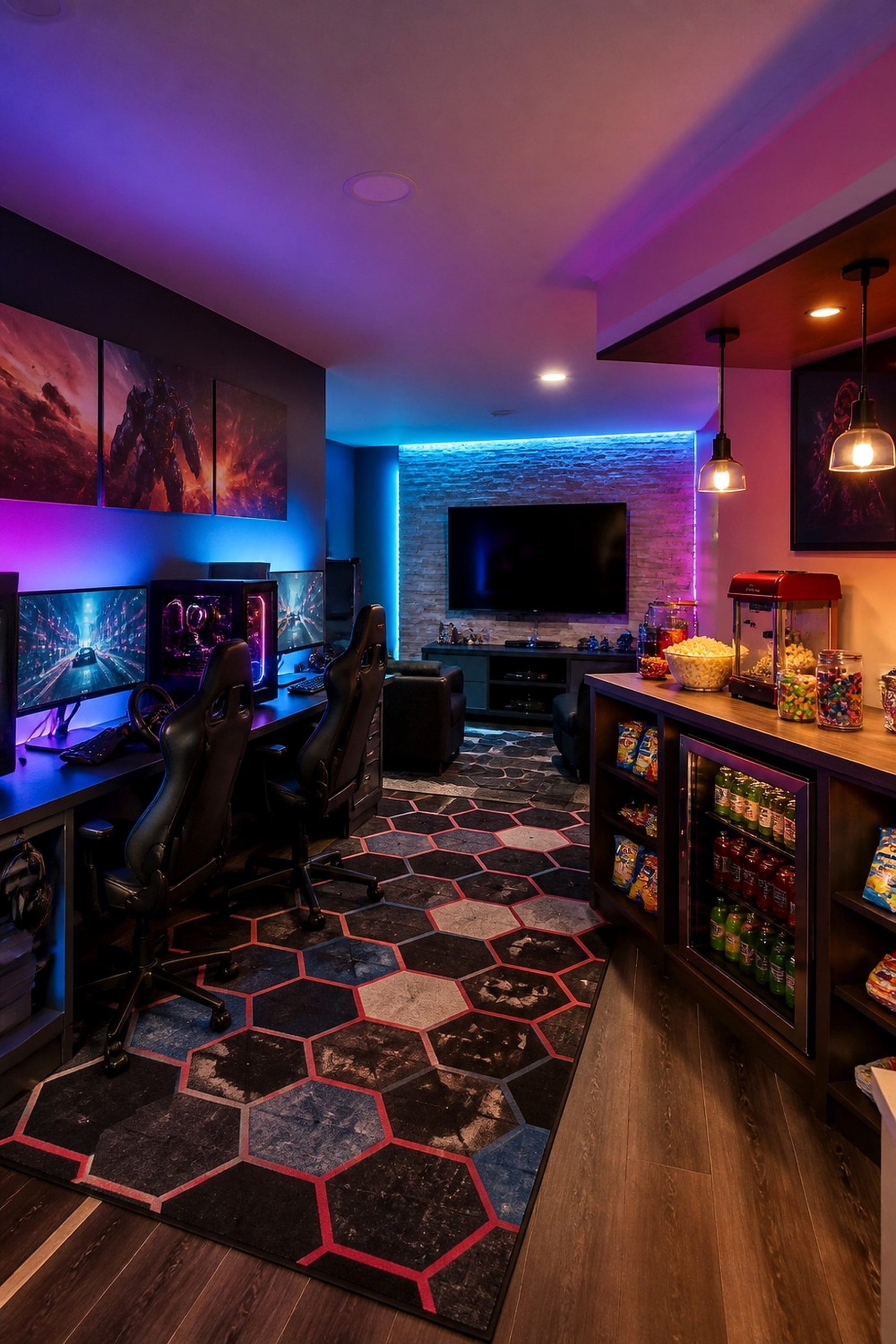
The snack station is a small detail, but it changes how the room functions. Having a mini fridge, counter space, and a few shelves nearby keeps the game area from turning into a trail of cans, bags, and plates by the end of the night.
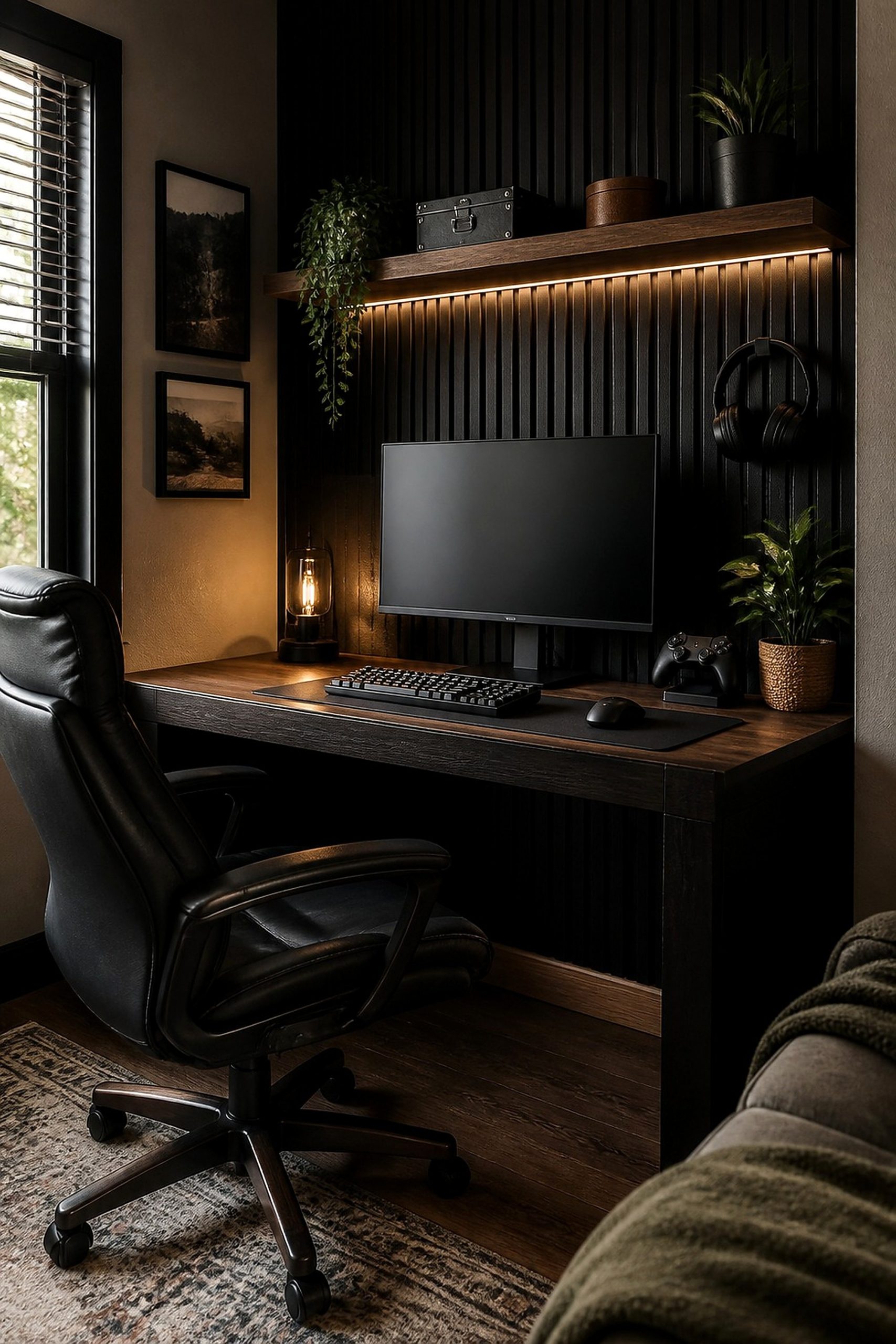
This minimal desk nook is a good reminder that not every man cave gaming room has to be packed with gear. A cleaner desk, one strong chair, and controlled lighting can feel more expensive than a crowded setup with too many accessories fighting for attention.
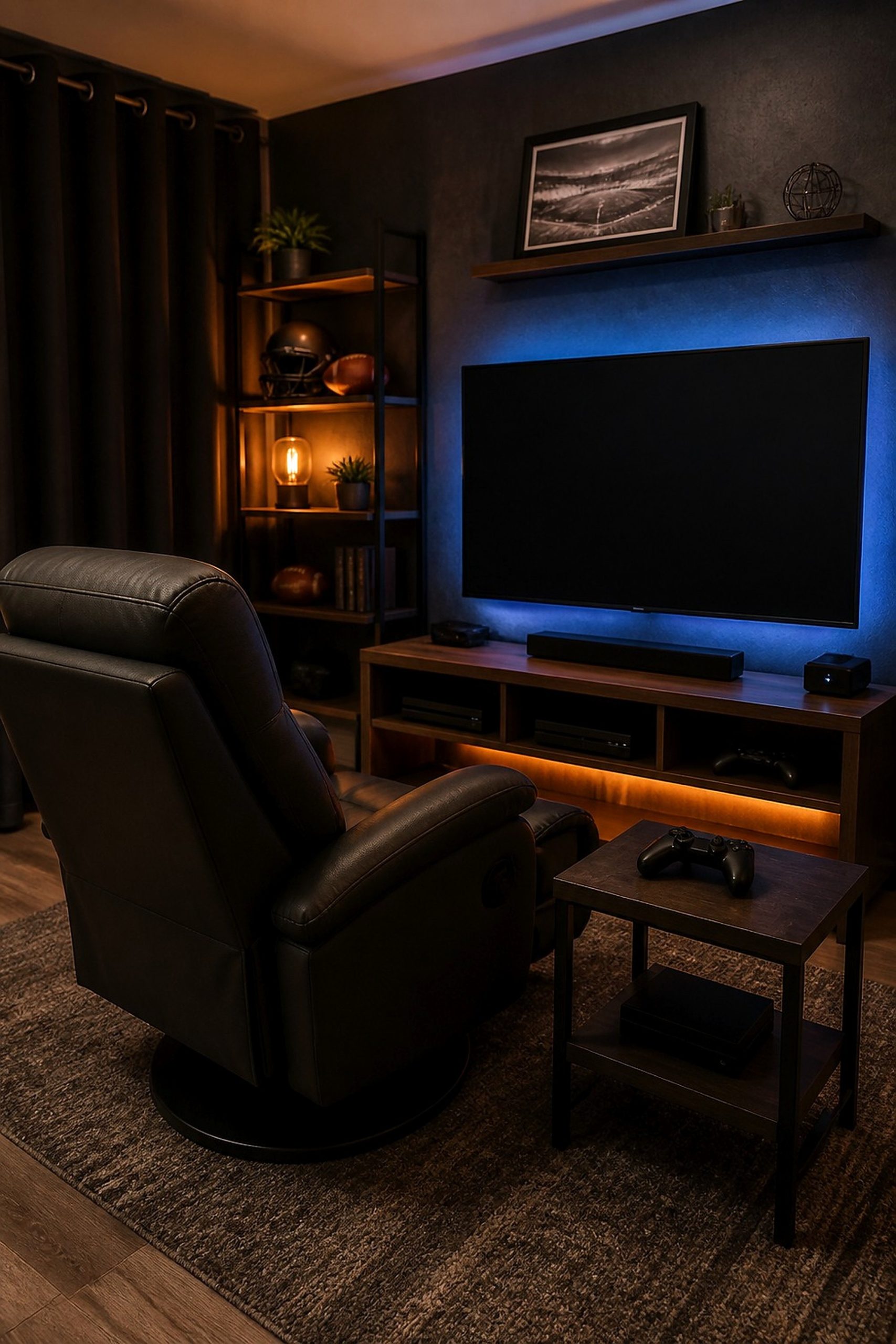
The gaming chair corner feels more relaxed because it is not floating in an empty room. A side table, lamp glow, wall texture, and nearby storage make the chair feel anchored, almost like a reading nook that happens to be built around a screen.
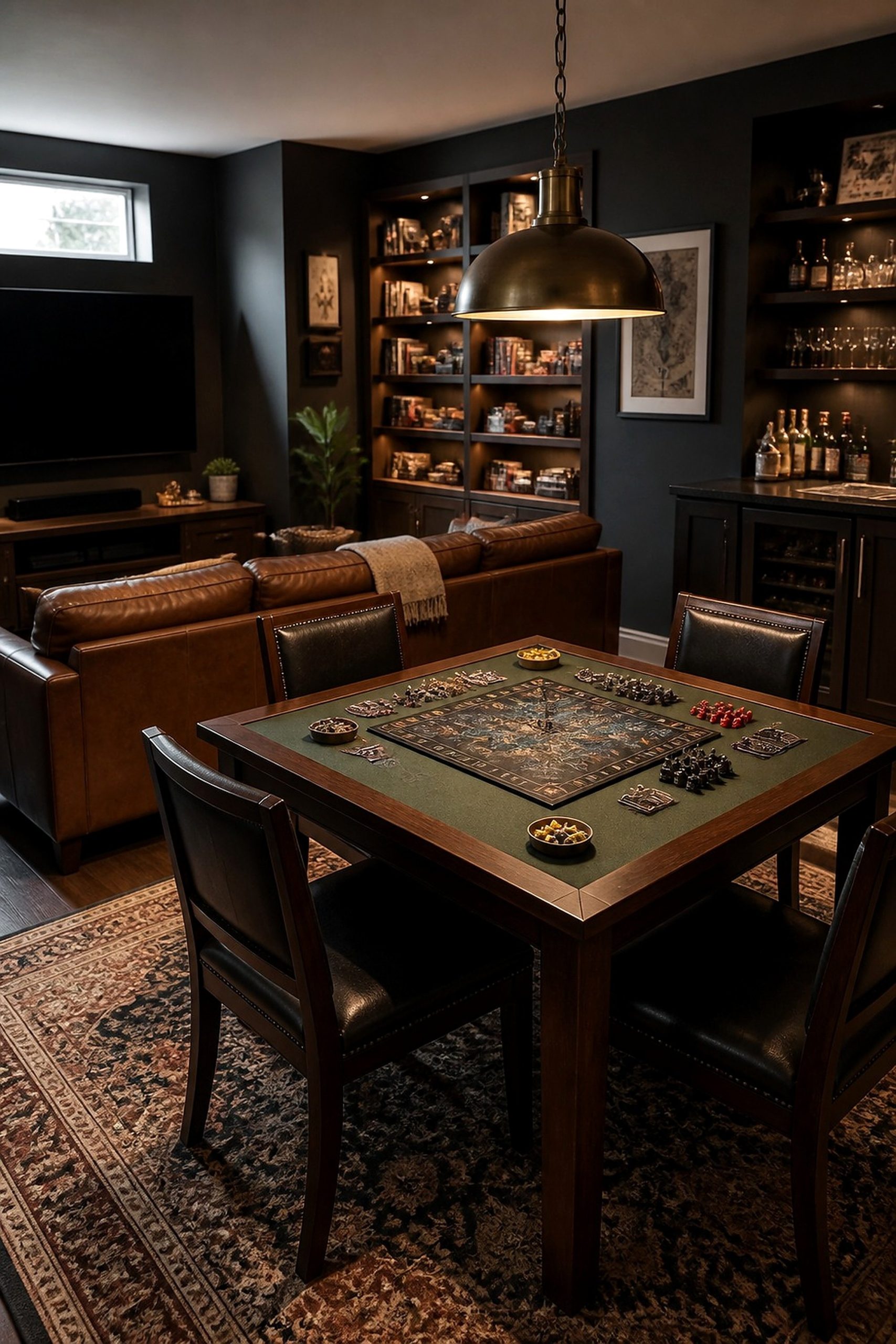
Adding a board-game table gives the room another reason to exist when the screens are off. I like the mix of seating, tabletop space, and storage because it turns the man cave into a flexible hangout instead of a room that only works one way.
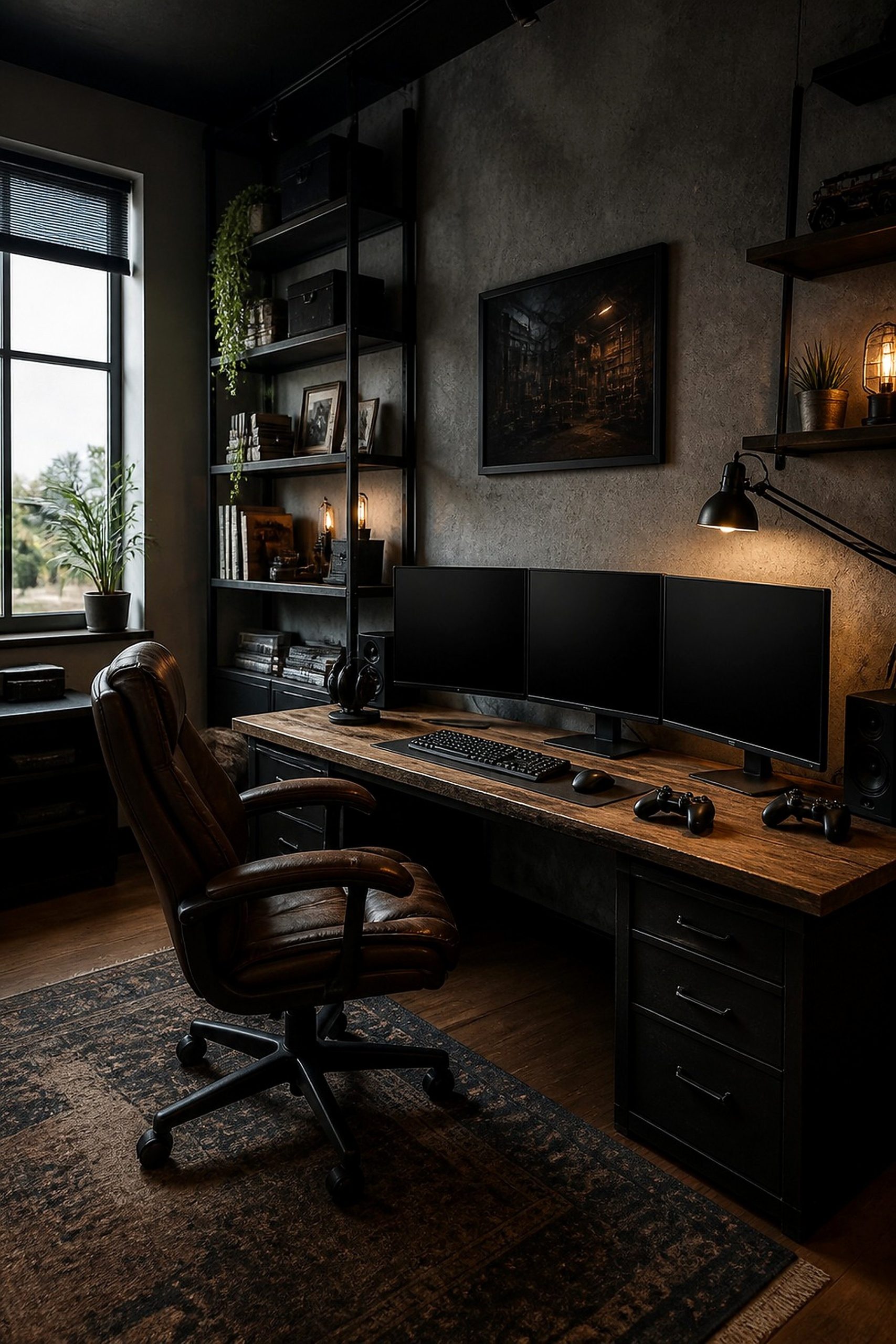
The industrial look fits a gaming room when it stays warm enough. Metal shelving, darker walls, leather or wood accents, and exposed-style lighting give it edge, but the seating and rug keep it from feeling like a cold workshop.
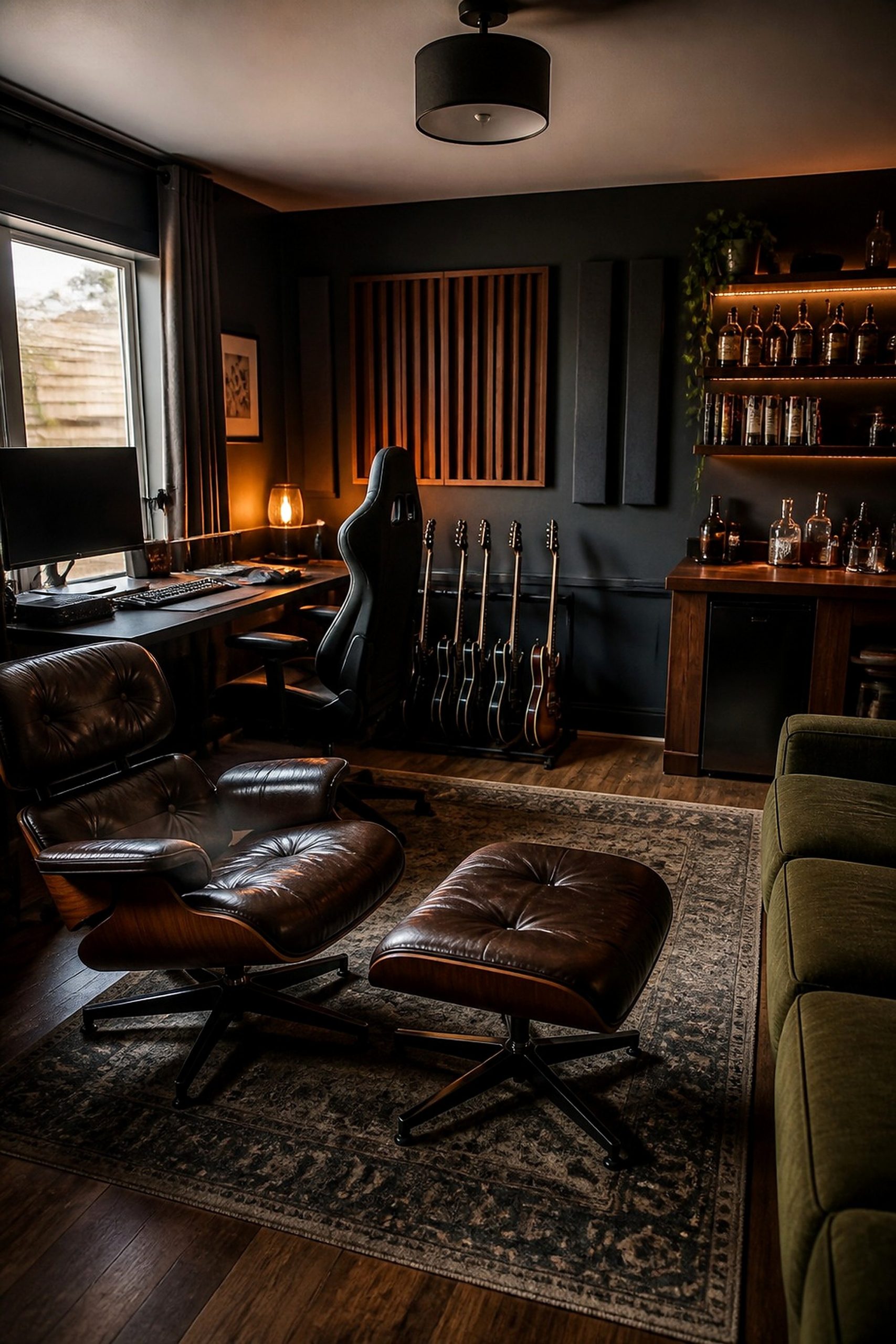
A music-and-gaming hybrid makes sense for a man cave because both hobbies need storage and low lighting. The trick is giving instruments, speakers, controllers, and screens their own zones so the room feels collected rather than tangled.
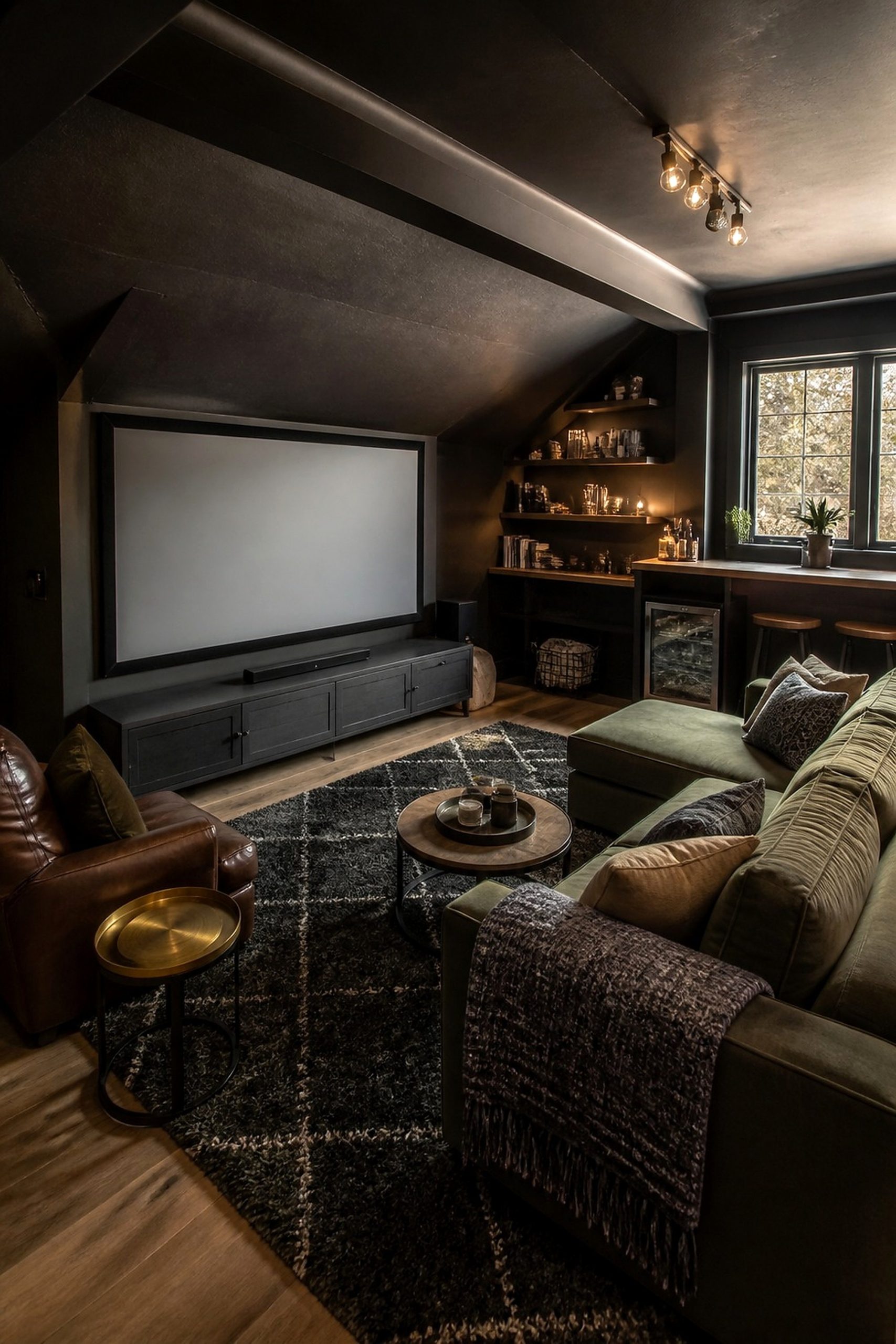
The attic setup has a built-in hideaway feeling, which works nicely for gaming. Sloped ceilings can be awkward, but using the lower walls for storage and keeping the main seating centered makes the room feel deliberate instead of leftover.
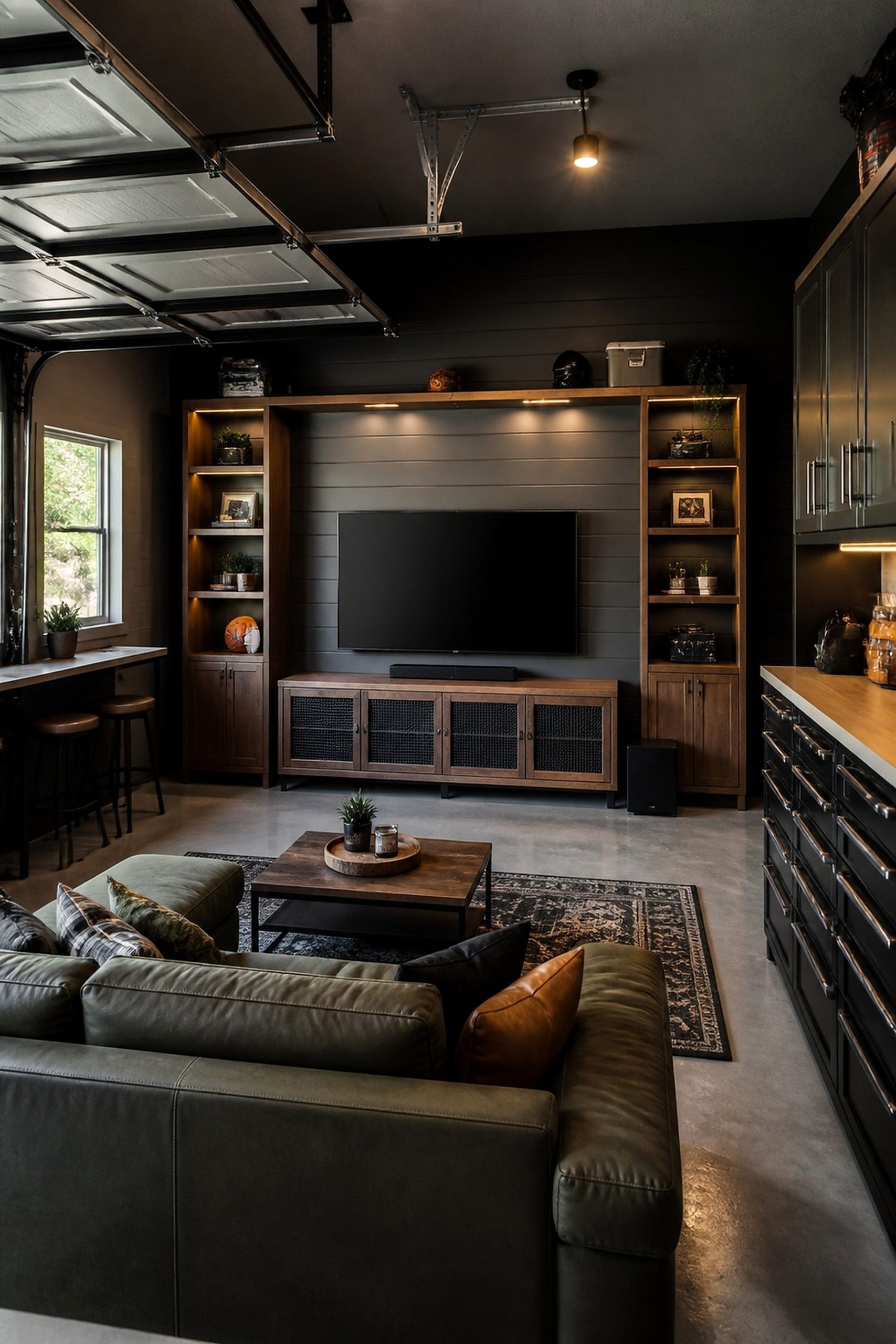
A garage gaming room needs enough comfort to stop it from feeling temporary. Floor covering, wall storage, real seating, and warm lighting help soften the harder garage surfaces while still keeping that rugged man cave mood.
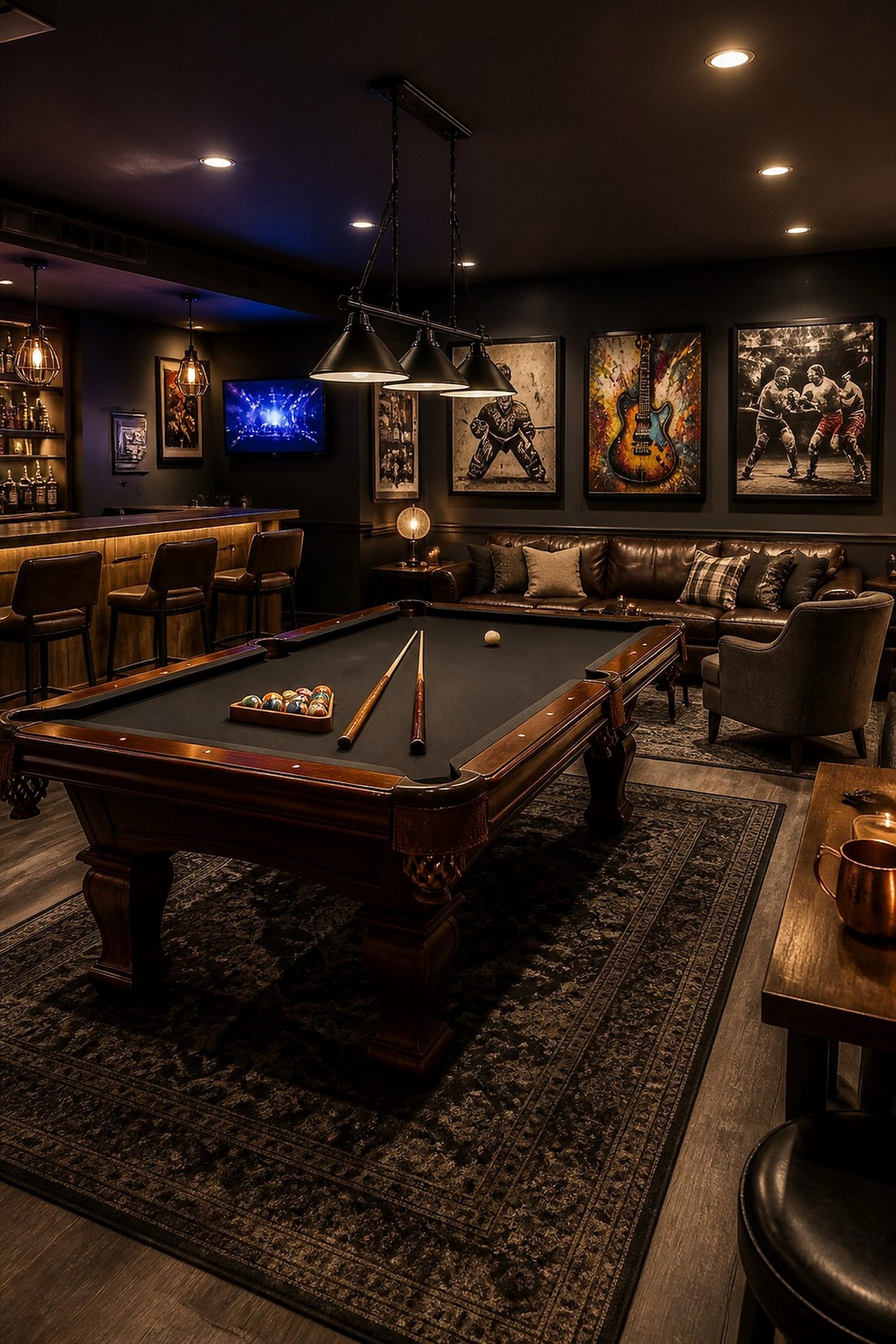
The theater-style room is all about comfort and sightlines. Deep seating, a darker screen wall, and a more polished lighting plan make it feel elevated, but the setup still needs side tables and storage so it does not become just a pretty viewing room.
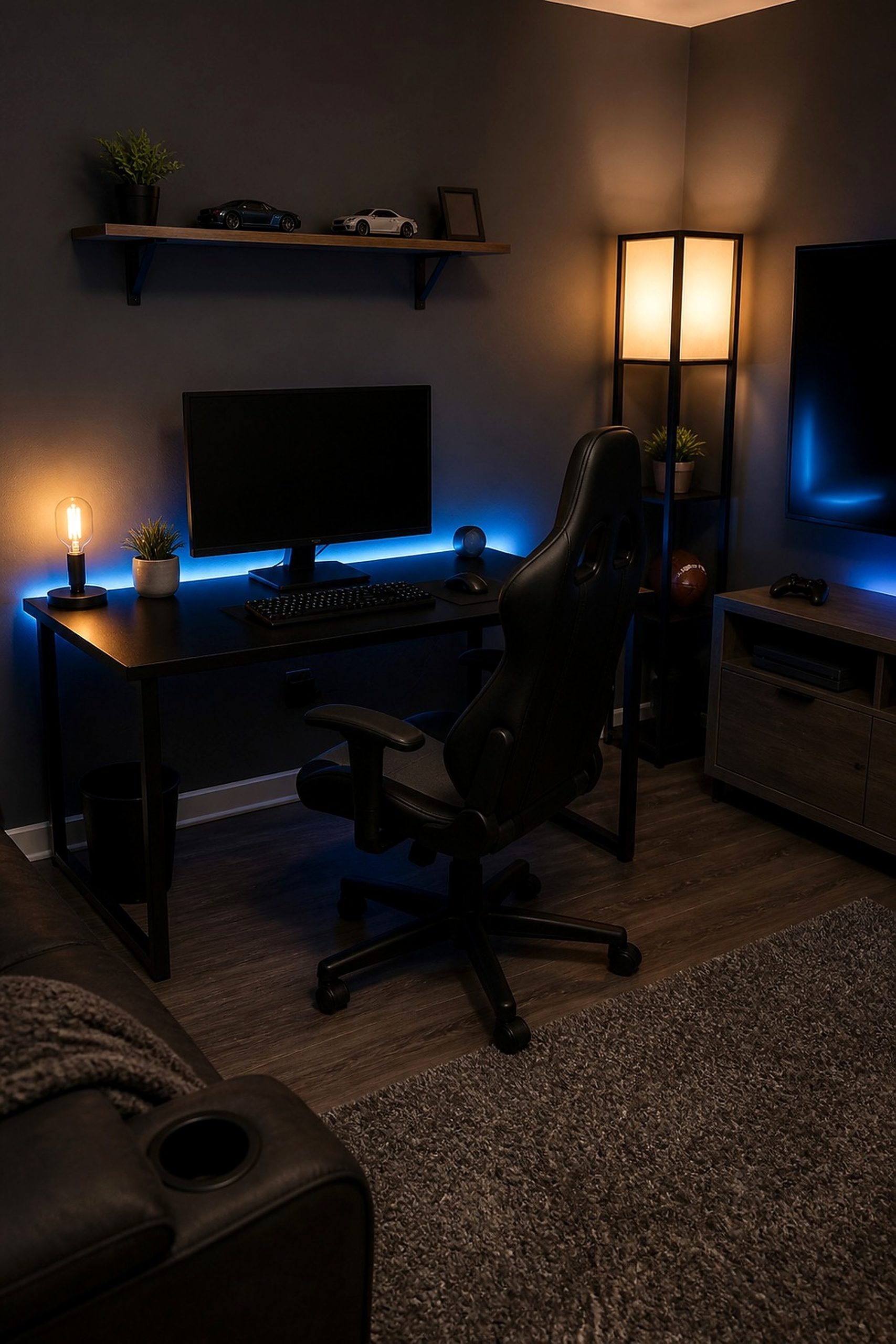
This budget-friendly setup works because it puts the money where people notice it most: lighting, seating, and a clean wall around the screen. Simple shelves and darker accents can do a lot without needing expensive built-ins everywhere.
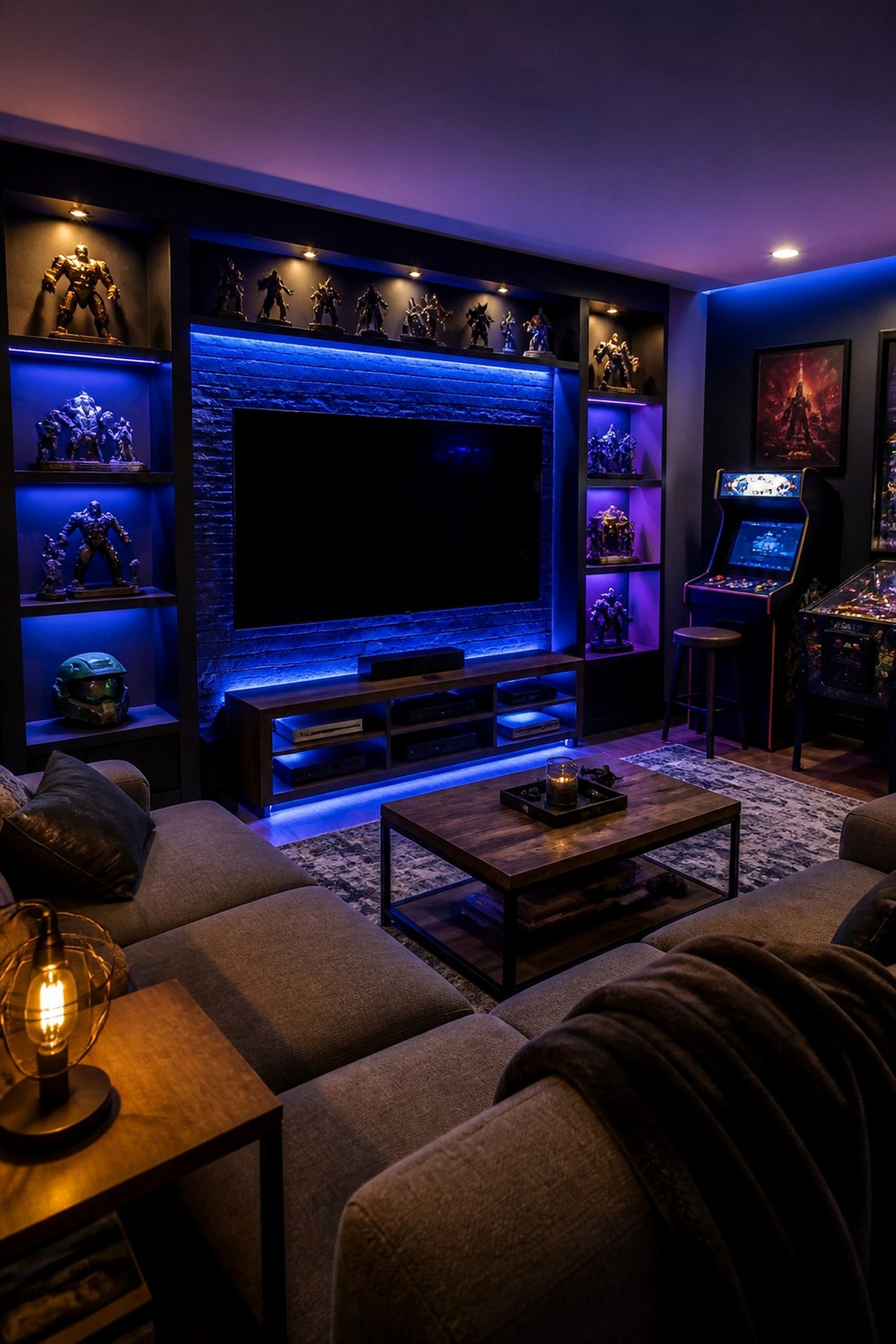
Display shelves are great when they are edited instead of stuffed. Leaving a little space around collectibles, controllers, and decor makes the wall feel styled, and it keeps the room from looking like every item was shoved out just because it exists.
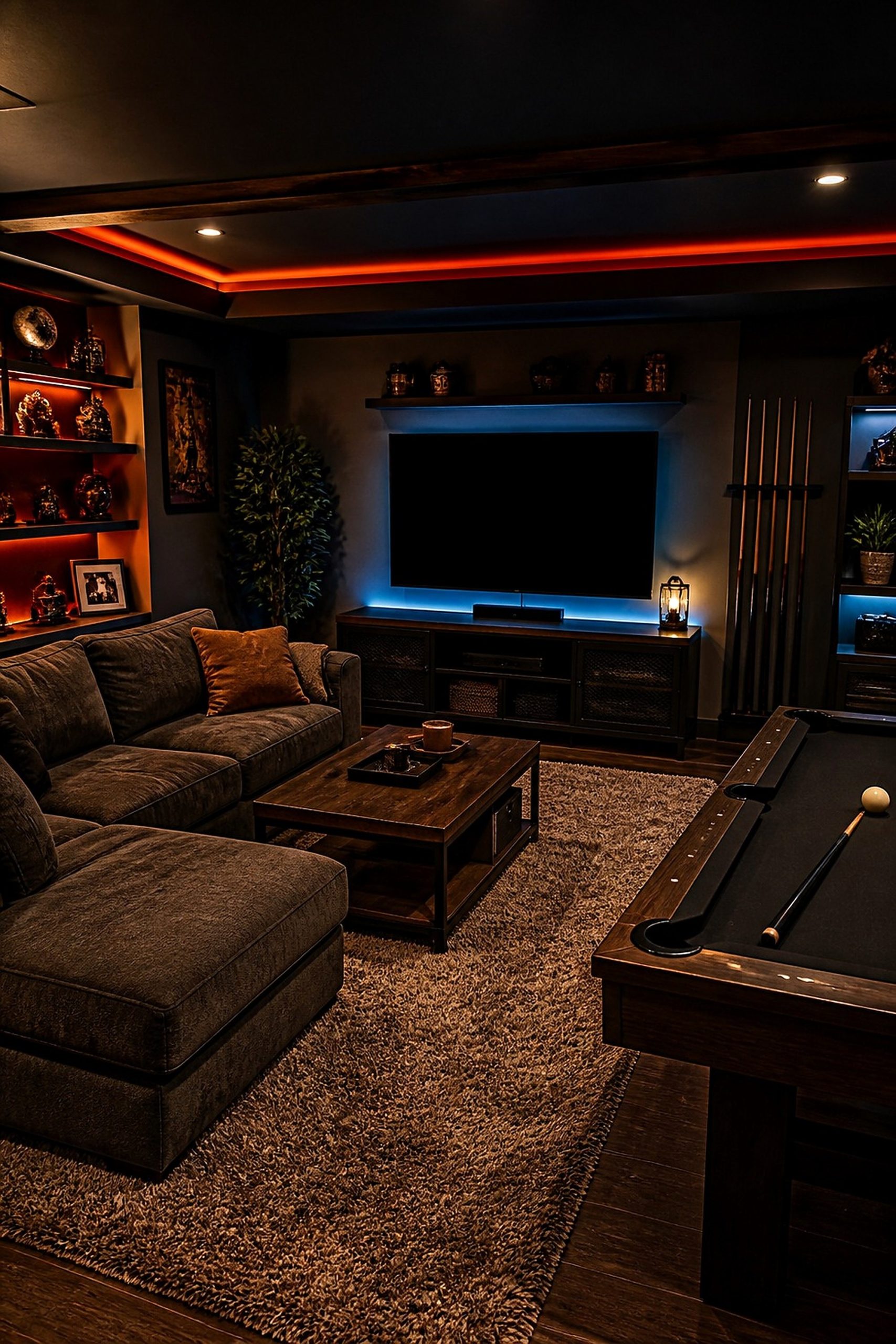
The rug does a lot of work in this lounge. It defines the gaming zone, softens the darker furniture, and makes the seating feel connected, which is especially helpful in a basement or bonus room that otherwise feels like one big open box.
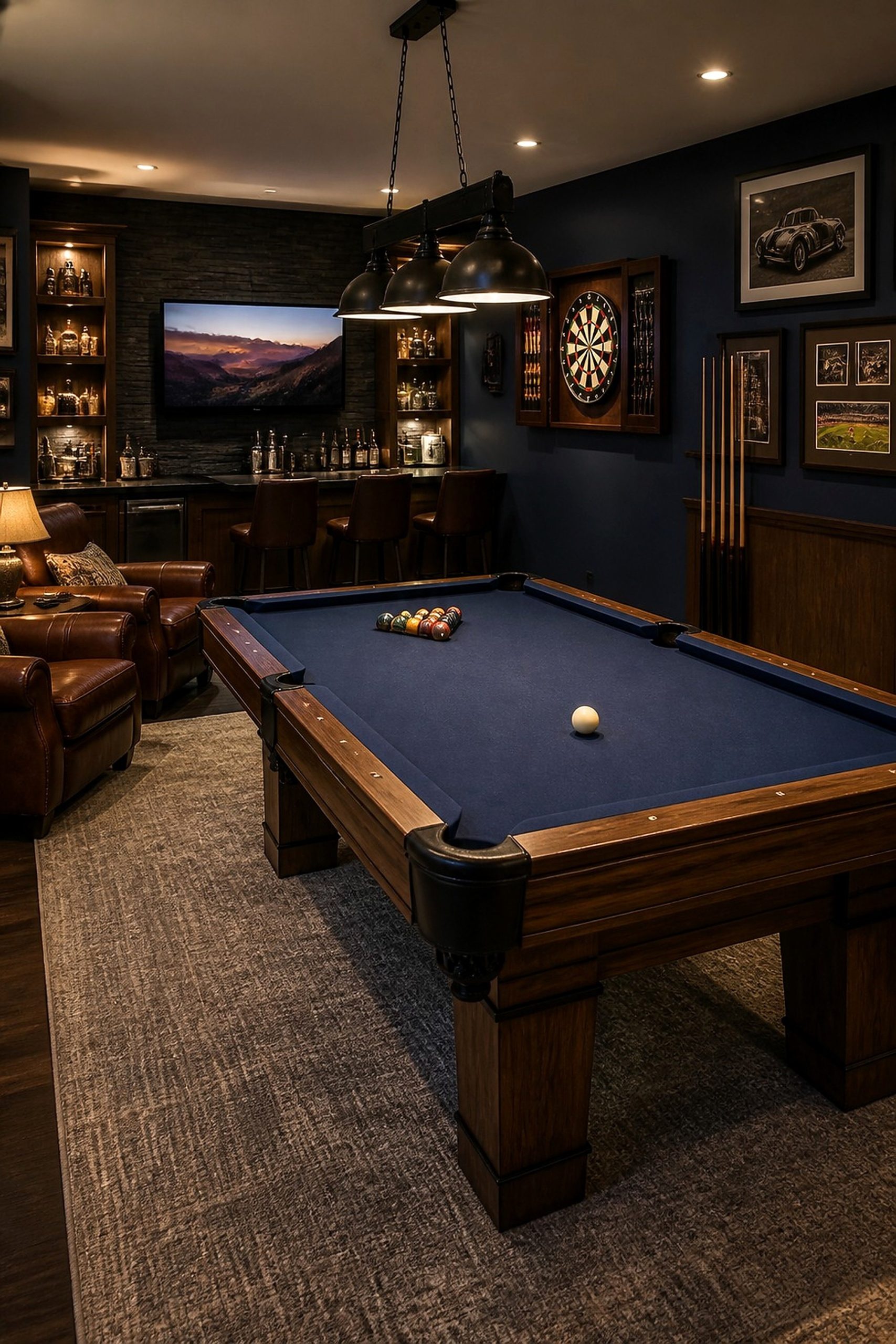
Navy and walnut give this room a more grown-up direction without making it boring. The wood warms up the dark walls, the seating still looks comfortable, and the whole space feels like it could handle a long night without turning harsh or messy.
Leave a comment