
A loft office is great until the desk blocks the railing, the roofline steals the headroom, or every sound carries into the room below. These setups work with mezzanines, skylights, eaves, beams, and open landings while still leaving a proper chair path, useful storage, and enough task light for a real workday.
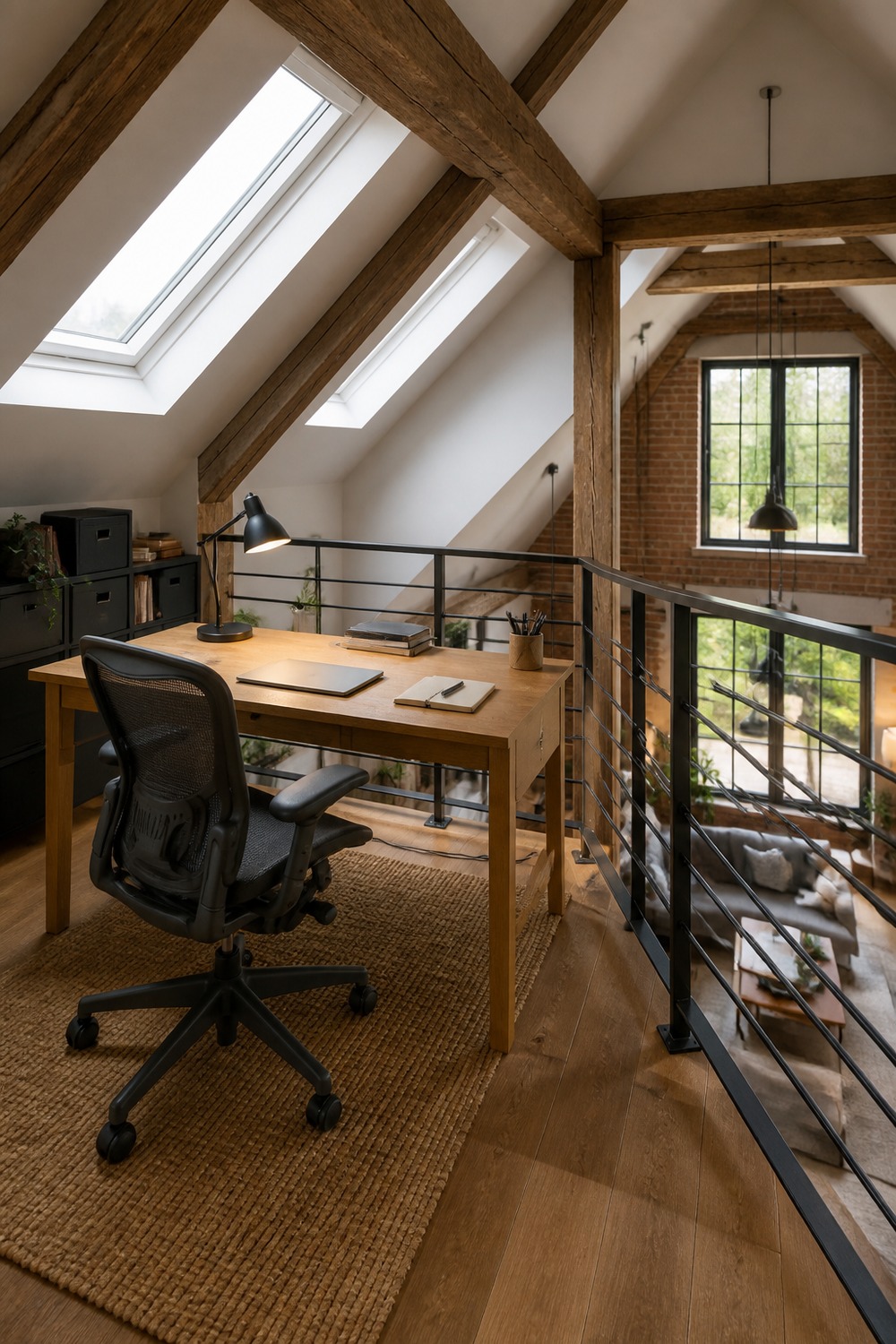
The safe metal railing keeps the mezzanine open, while the low cabinet avoids blocking the room below. Oak gives the desk enough weight without crowding the gallery walkway.
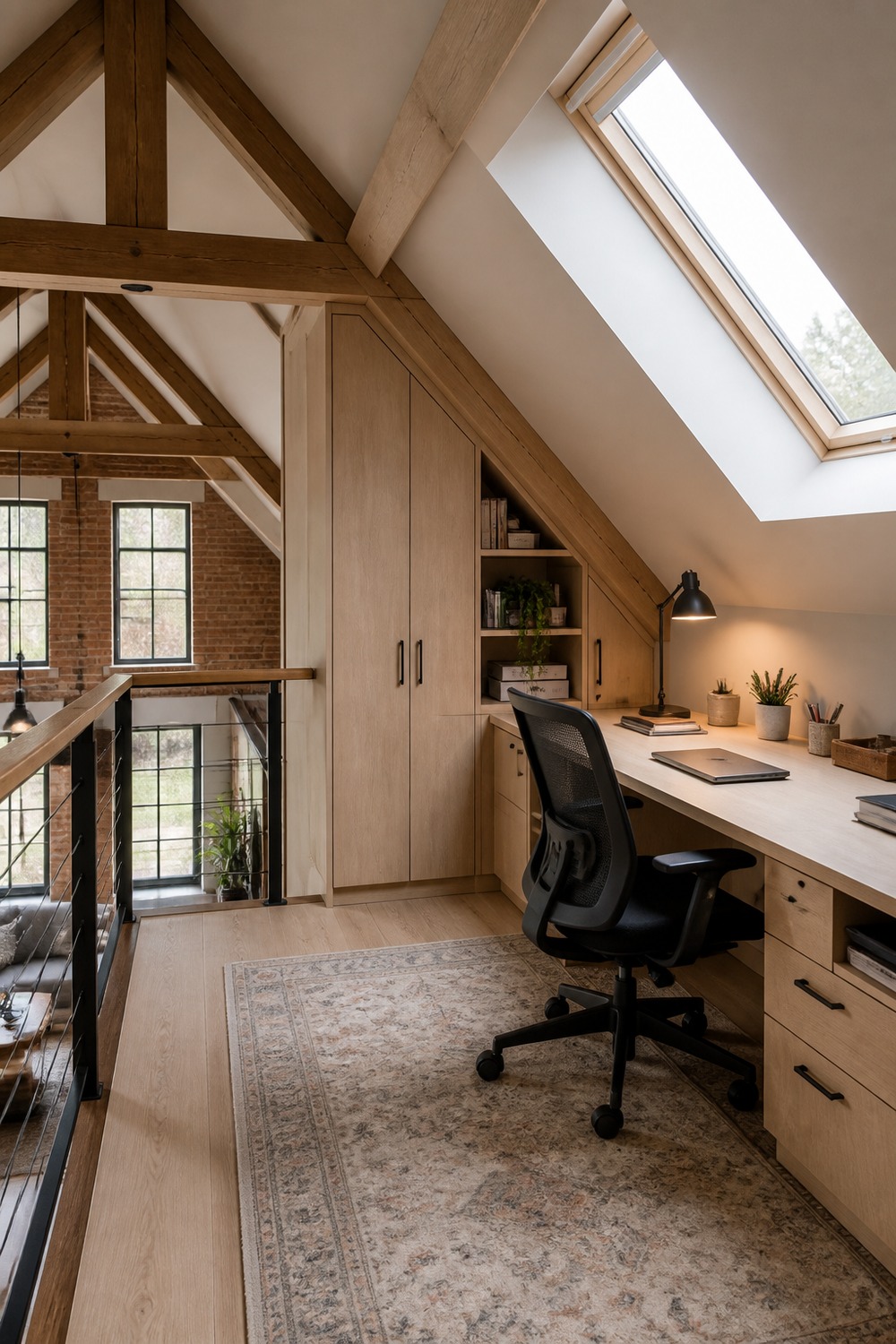
Eave-height drawers reclaim the shallow roof edge. The skylight reaches the desk, but full headroom stays exactly where the chair needs it.
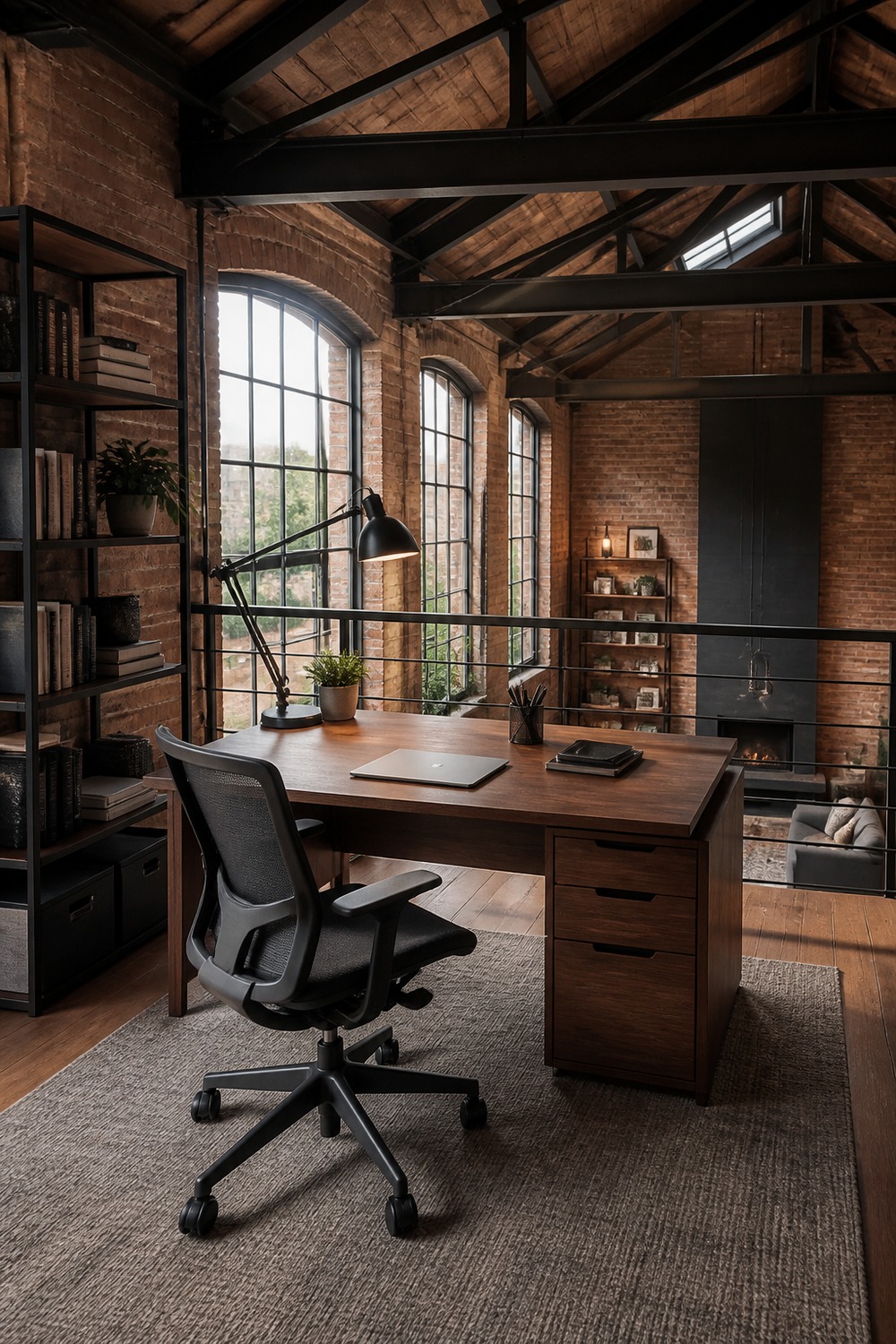
Brick and factory windows make the loft identity obvious. Walnut, steel, and a wool rug soften the hard shell without making it feel commercial.
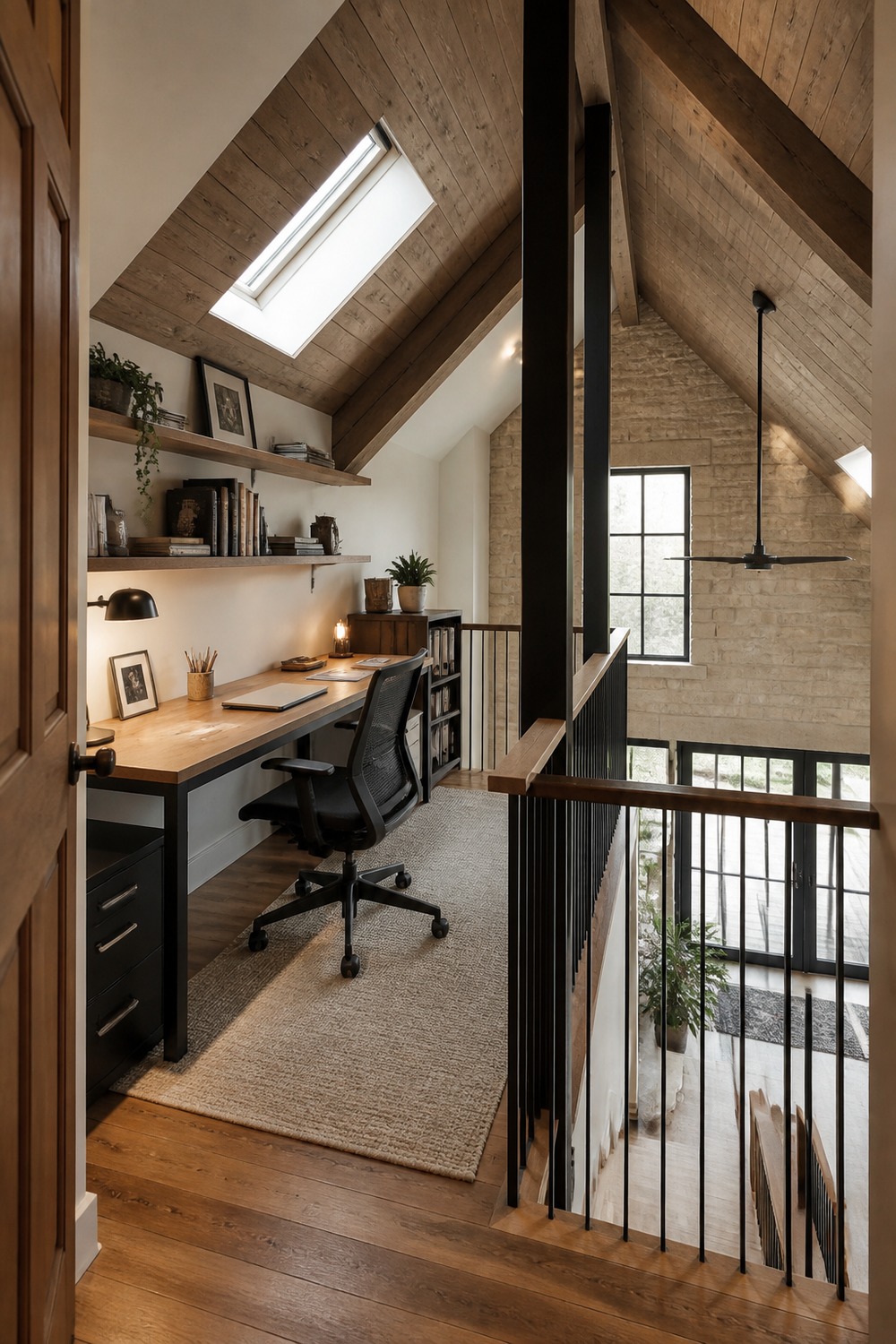
This slim landing desk stays clear of the stairs. Wall storage handles paper and chargers without turning the open balustrade into another clutter shelf.
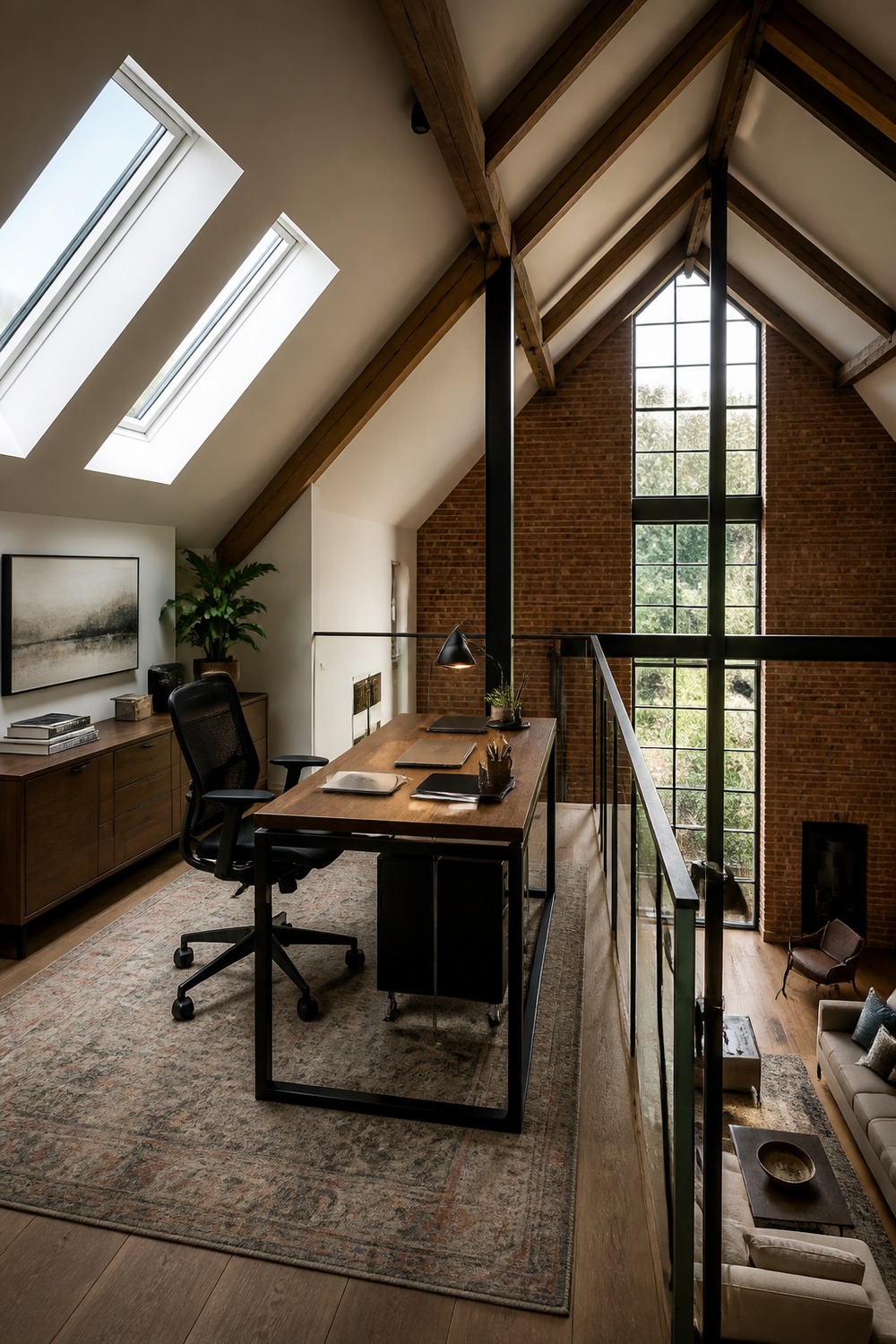
A glass guardrail preserves the double-height view. Keeping the credenza below railing height lets the architecture stay visible from the lower room.
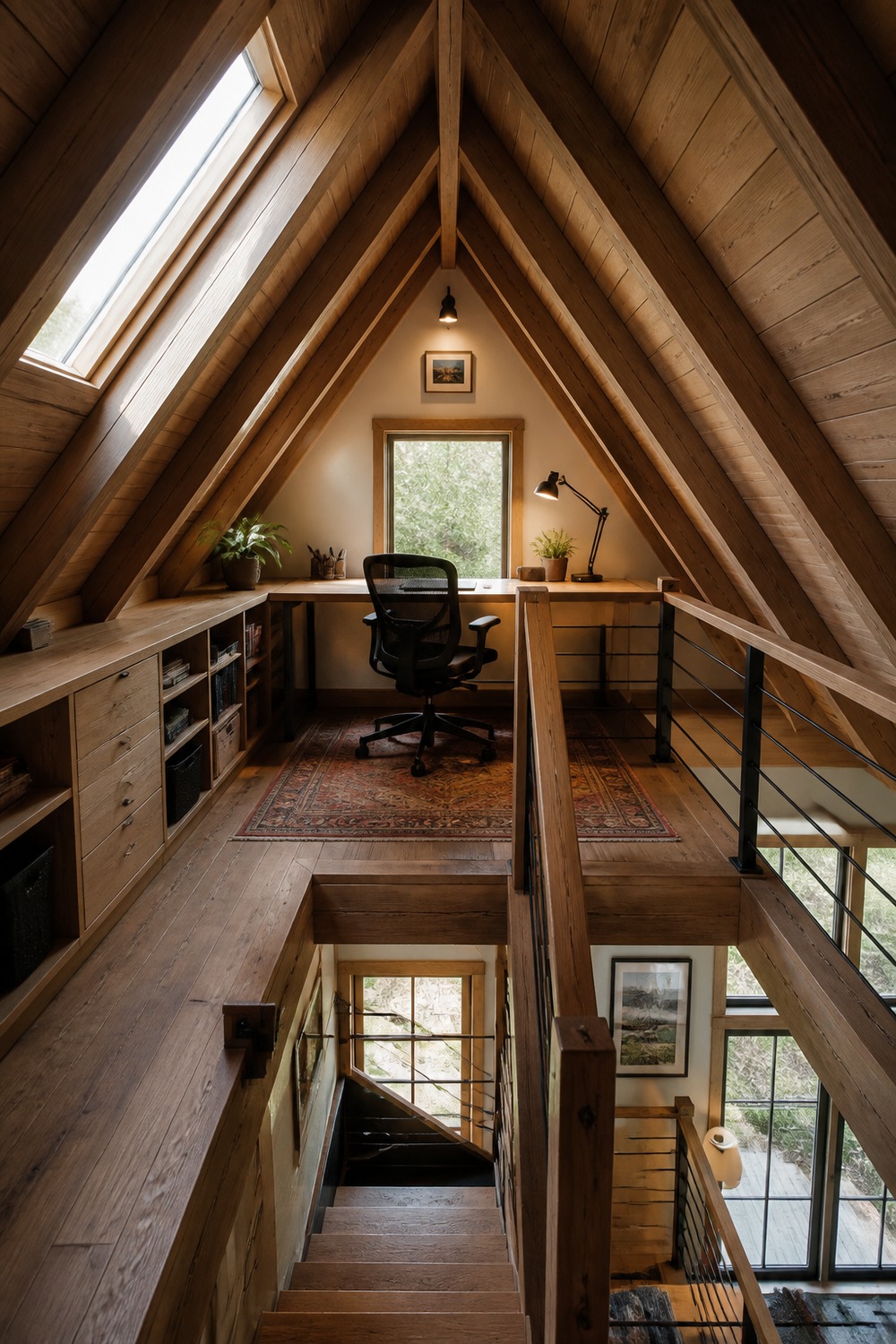
The A-frame ridge gives the desk the best headroom. Low cabinets use the roof edges where a standard bookcase could never fit.
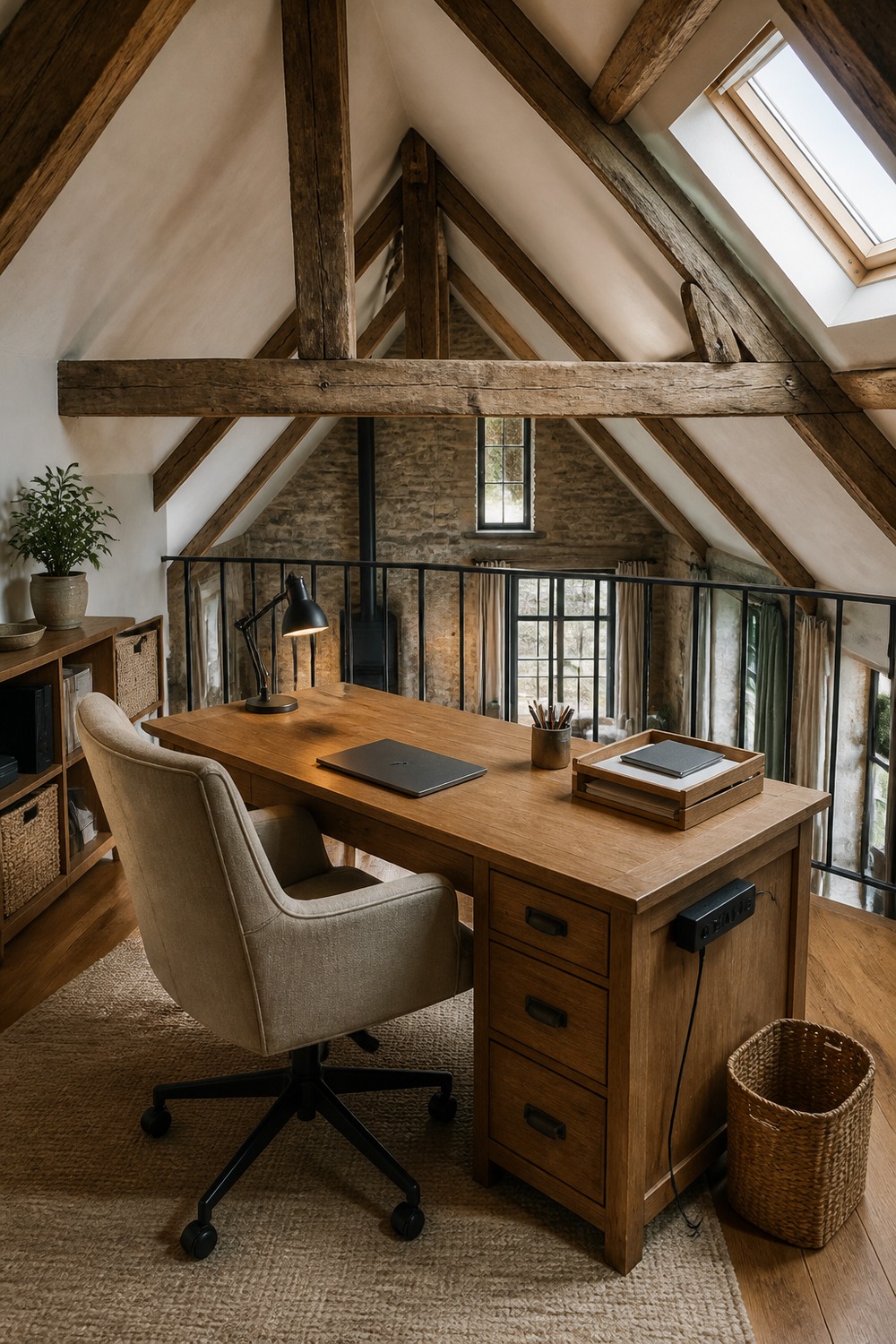
Old beams already provide plenty of character, so the simple oak desk is a smart counterweight. A focused lamp makes the converted roof space usable after dark.
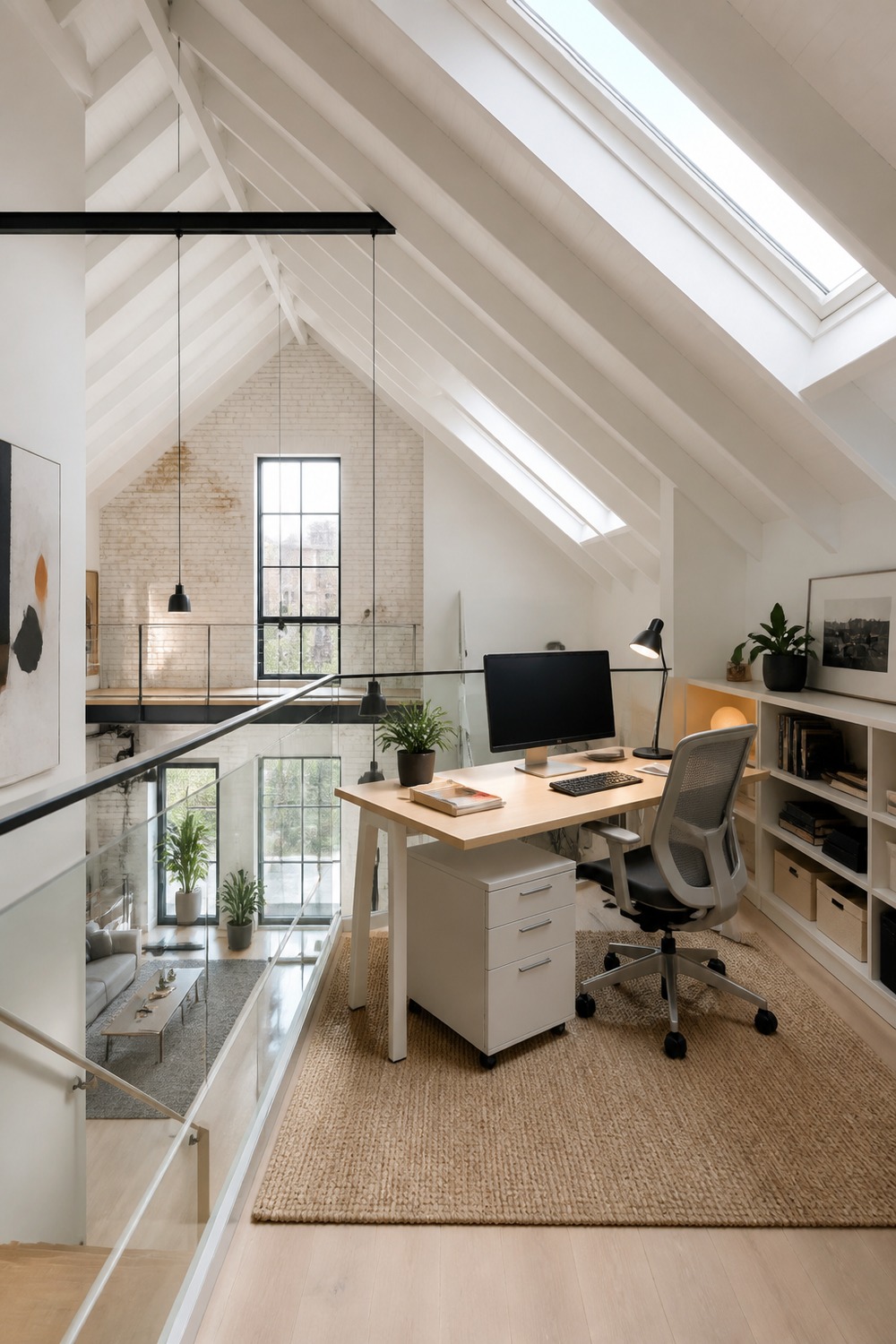
White walls bounce daylight across this upper gallery. The clear railing and restrained storage keep the small mezzanine airy without sacrificing a real workstation.
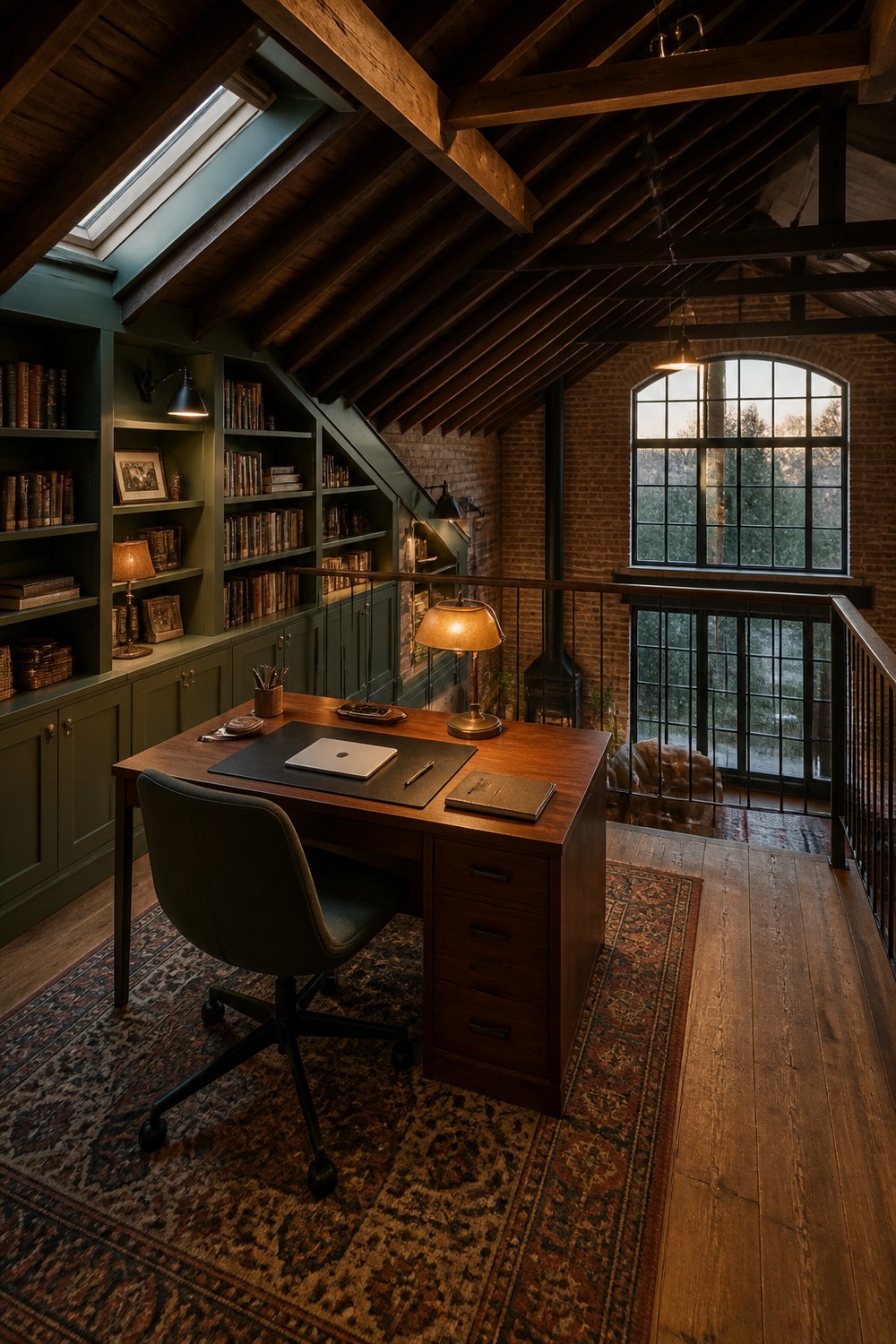
Deep olive shelves make the low eaves useful and soften some visual noise. Amber lamps warm the walnut desk once the skylight goes dark.
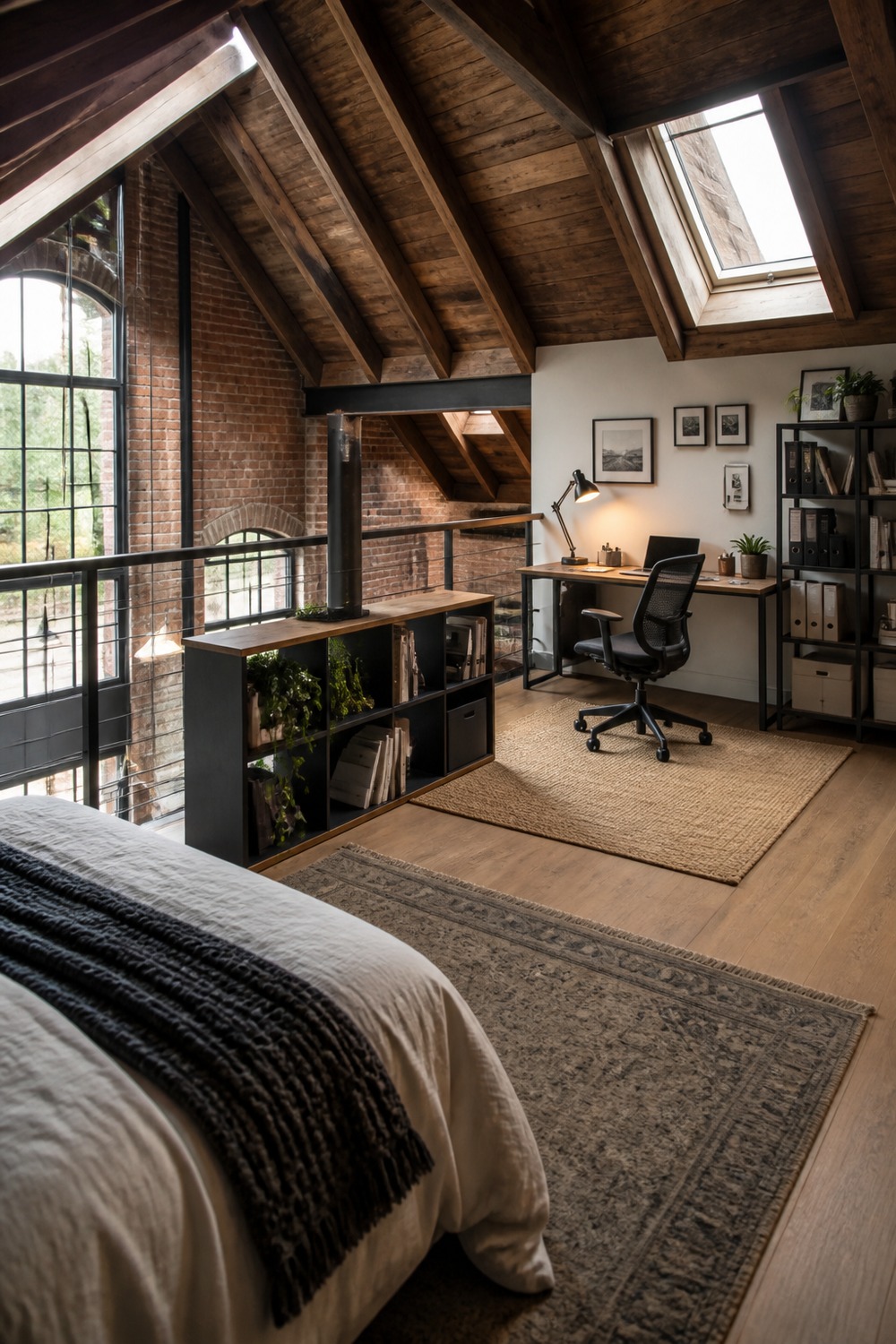
A separate rug gives the office an edge without walling it off from the loft bedroom. The low divider hides desk clutter but preserves the open volume.
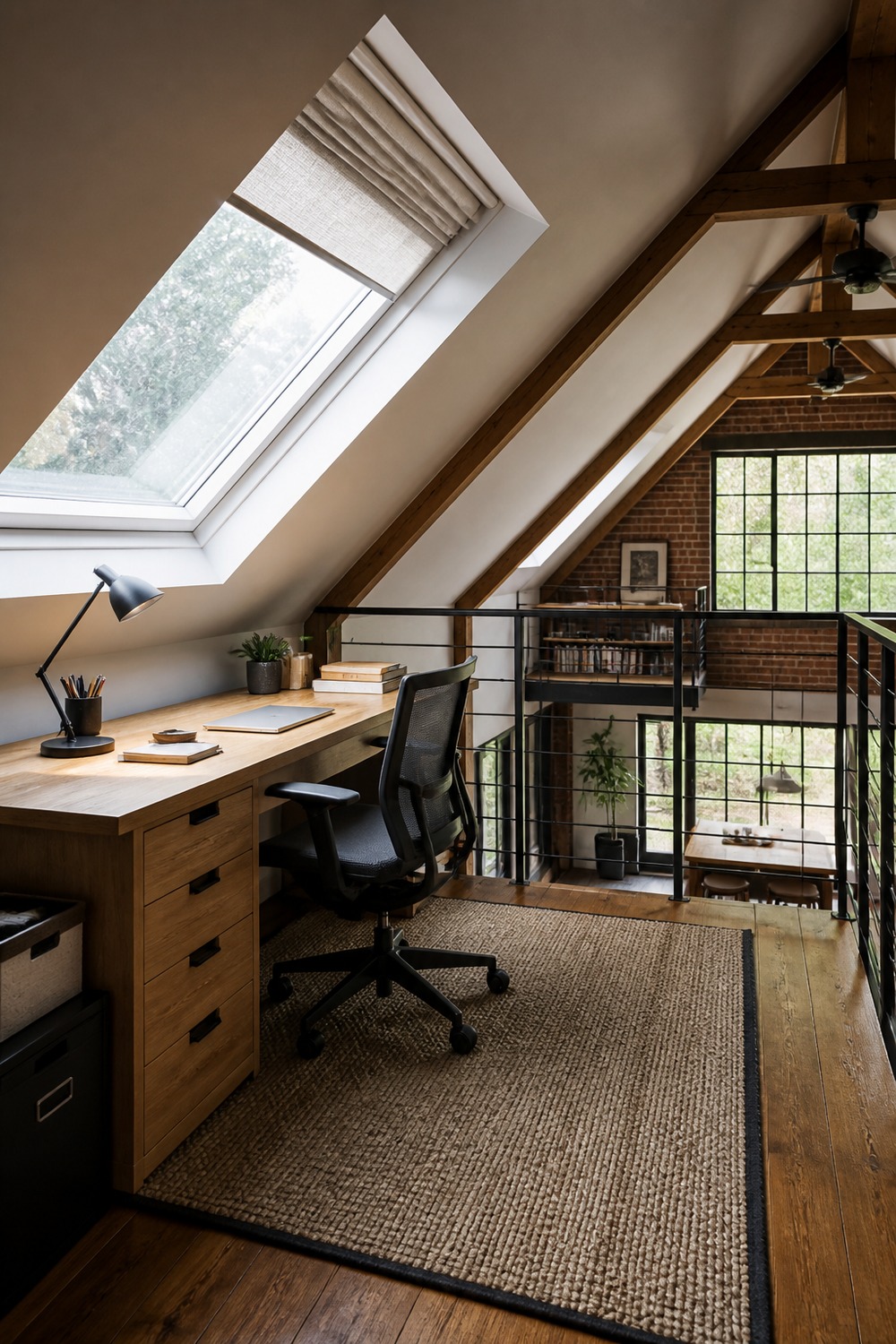
A desk under a skylight needs glare control, not just a pretty view. The linen shade and careful screen angle make this writing spot convincing for an ordinary afternoon.
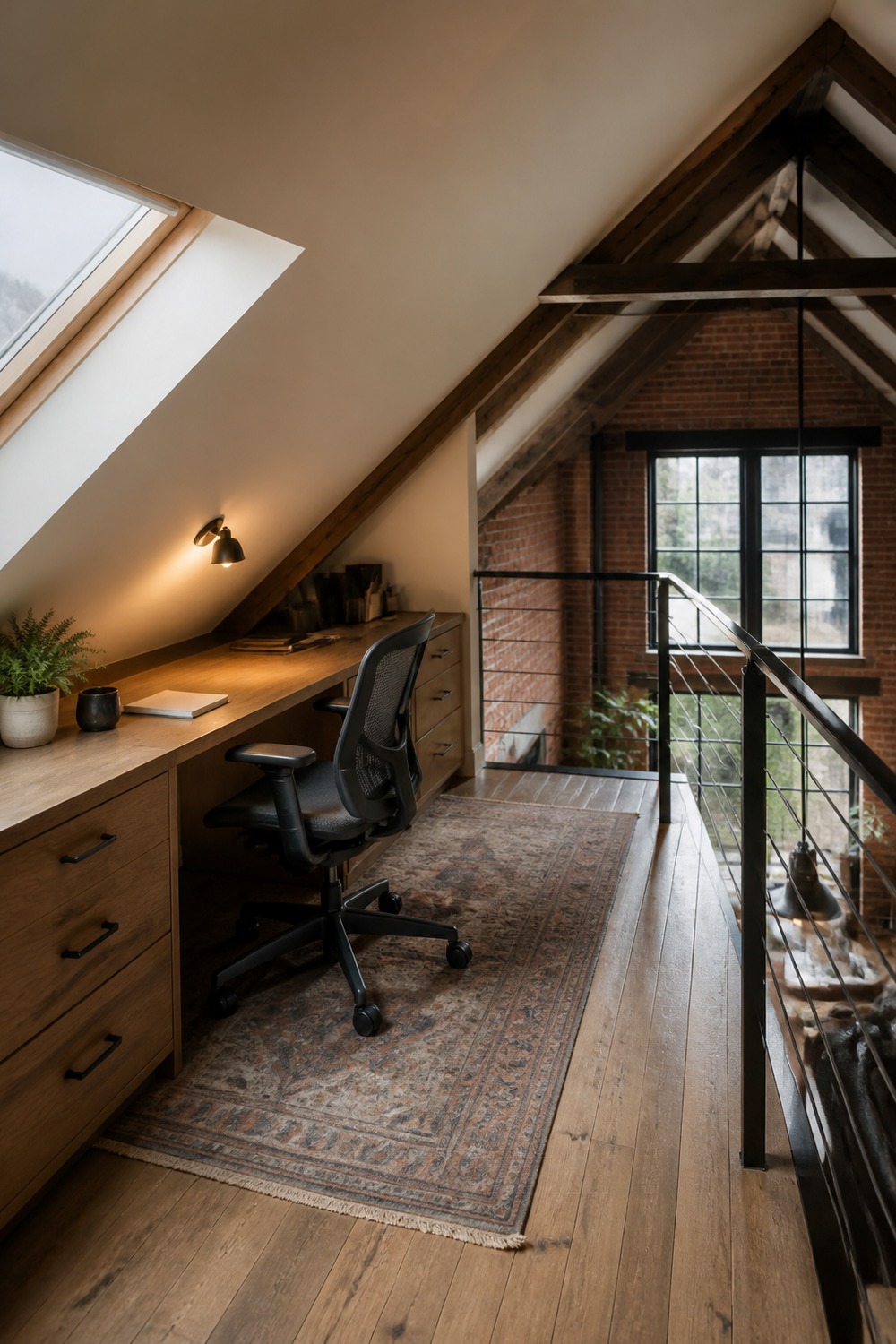
Fitting drawers into the eaves turns a shallow edge into practical storage. The chair remains under the rising ceiling where movement feels comfortable.
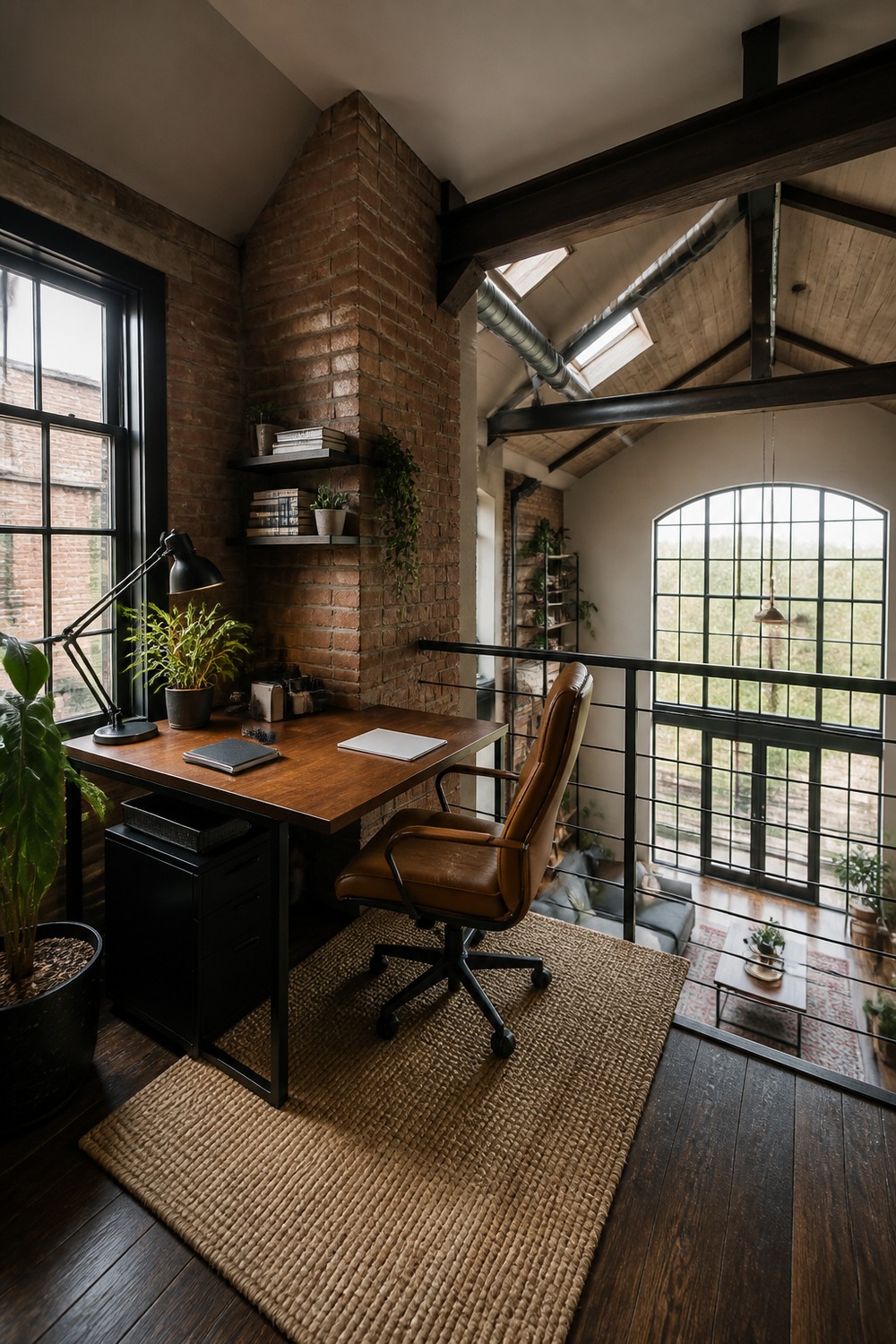
The brick pier and tall steel window carry this urban corner. Warm wood and a woven rug keep the black metal and masonry from feeling cold.
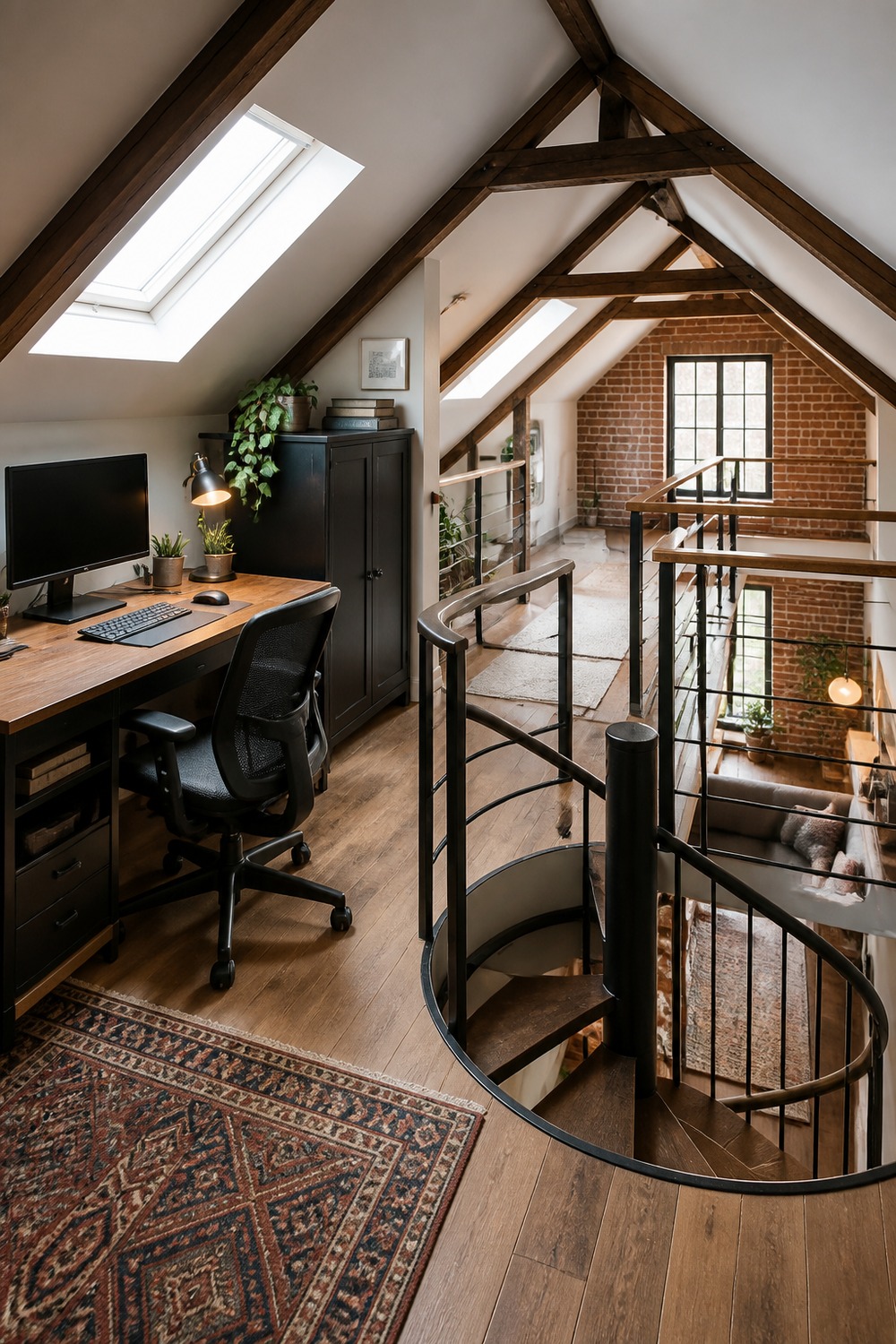
The spiral stair opening remains safely guarded, and the desk sits beyond the main landing path. That circulation matters more than squeezing in another cabinet.
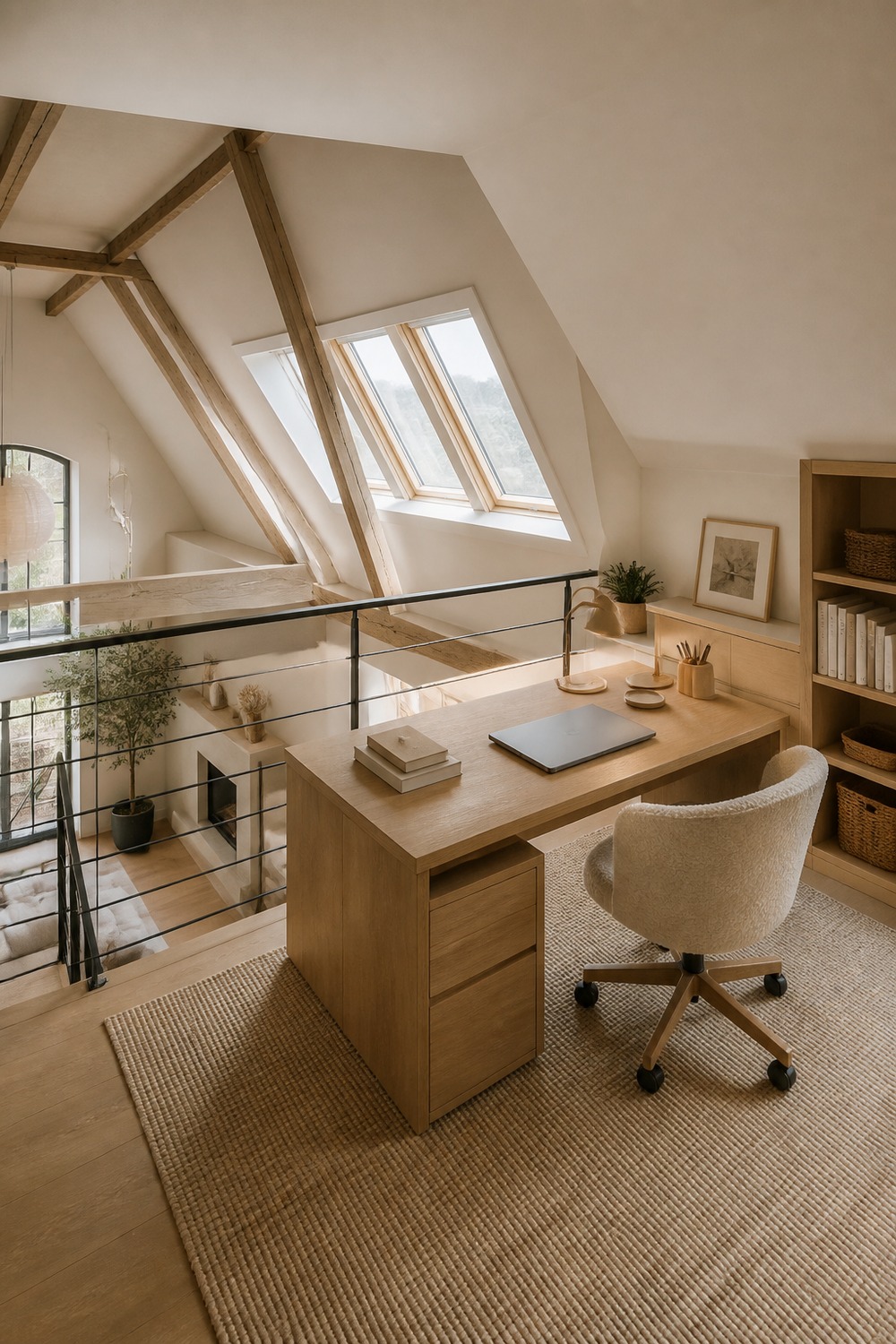
Cream, pale oak, and a textured rug soften this open studio without hiding its roofline. The desk feels distinct but still connected to the living area.
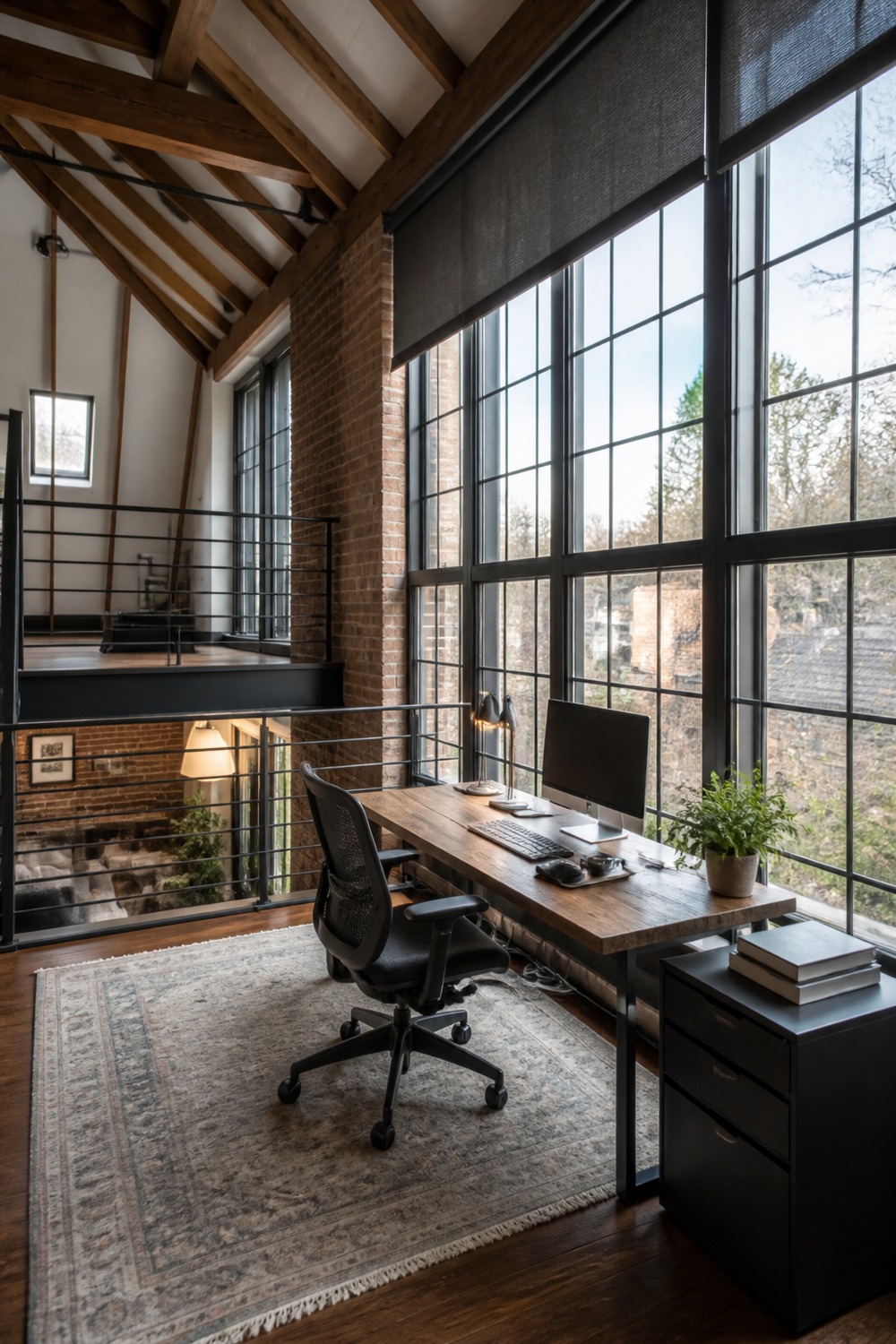
Facing the desk toward tall windows gives it daylight and an unmistakable loft backdrop. A solar shade controls glare without covering the window proportions.
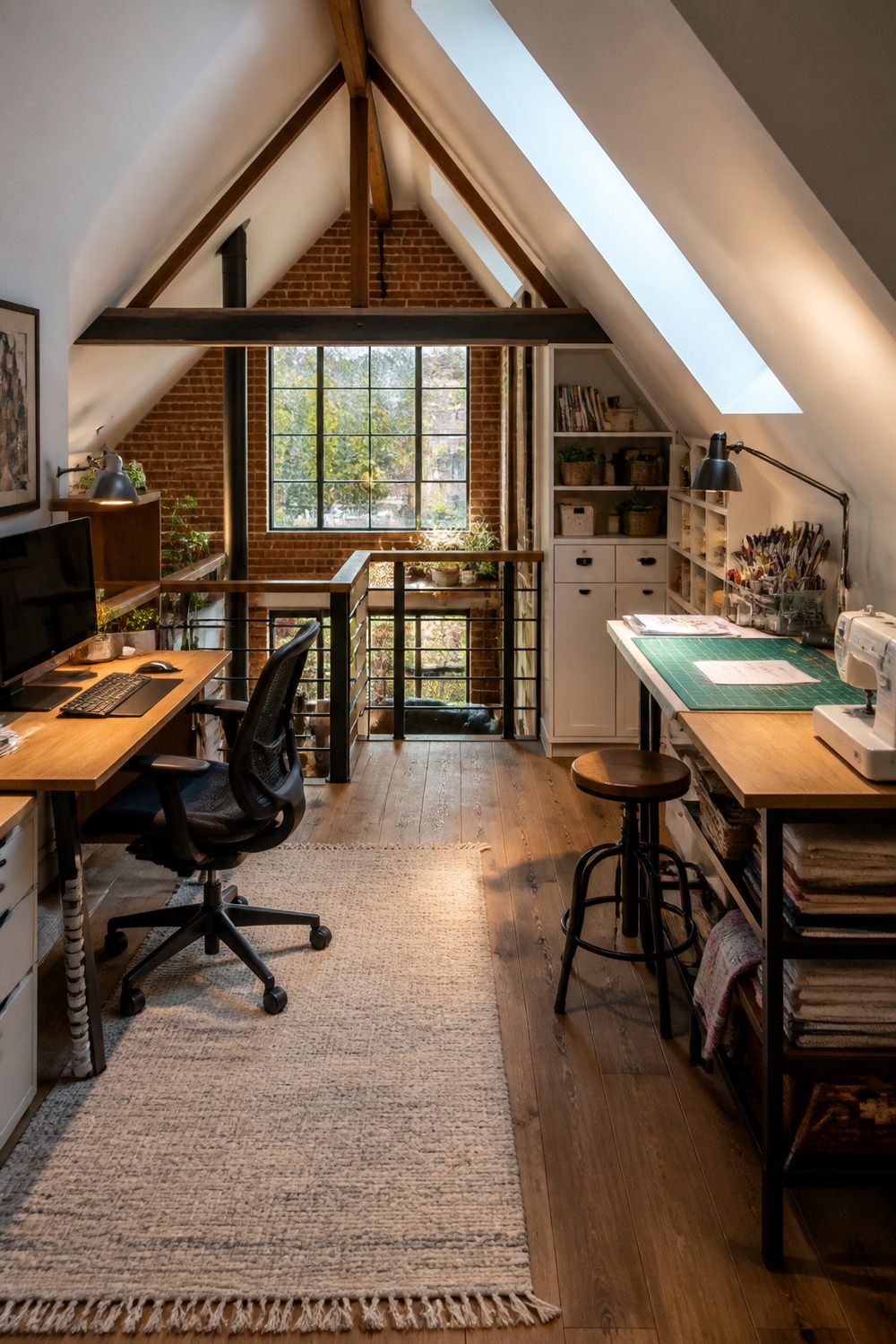
Computer work and craft projects get separate surfaces here. Fitted eave storage and a clear aisle stop the two-zone room from becoming overflow storage.
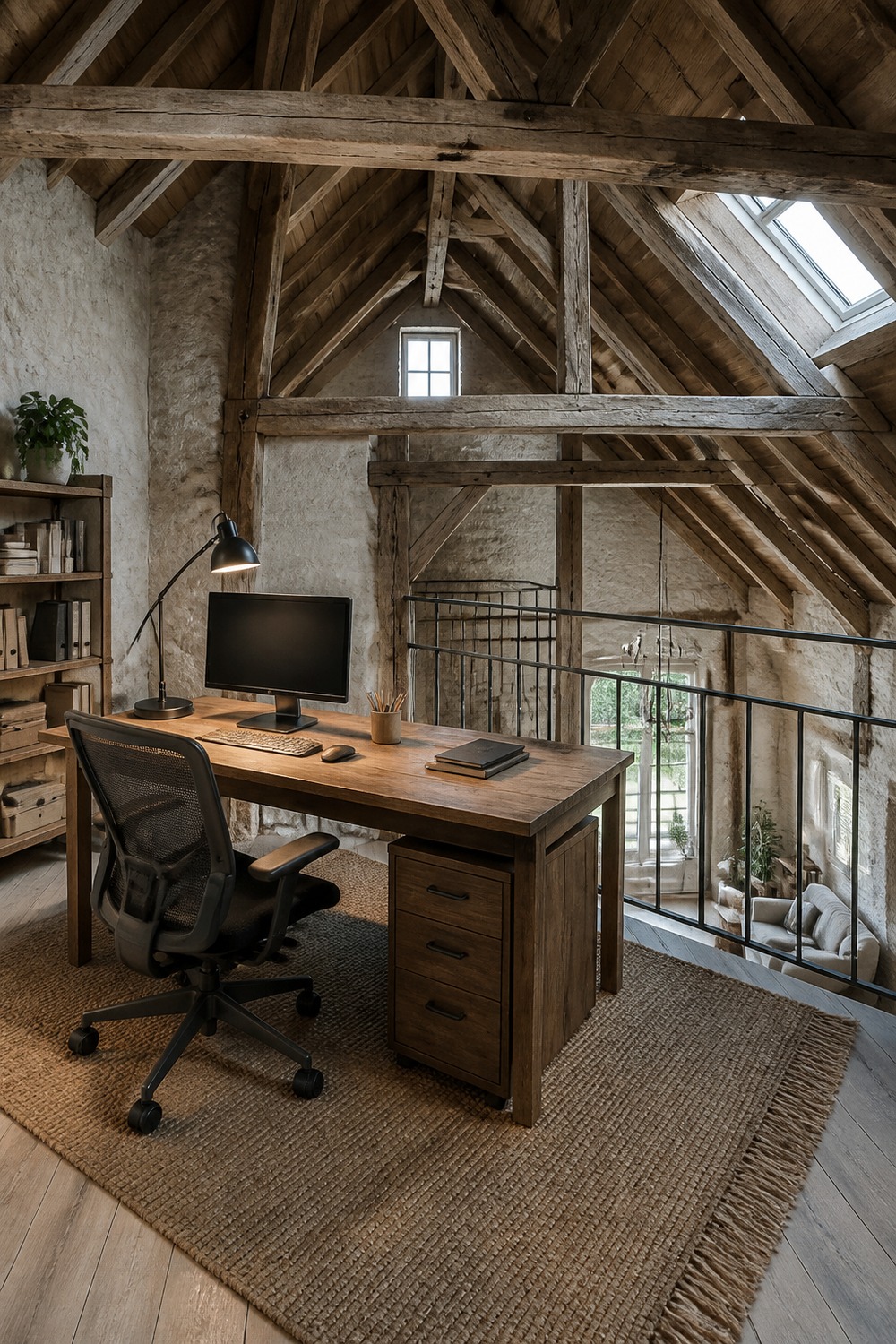
Rough barn beams stay visible, while a modern task chair handles the actual workday. Limewashed walls lift the darker timber without sanding away its age.
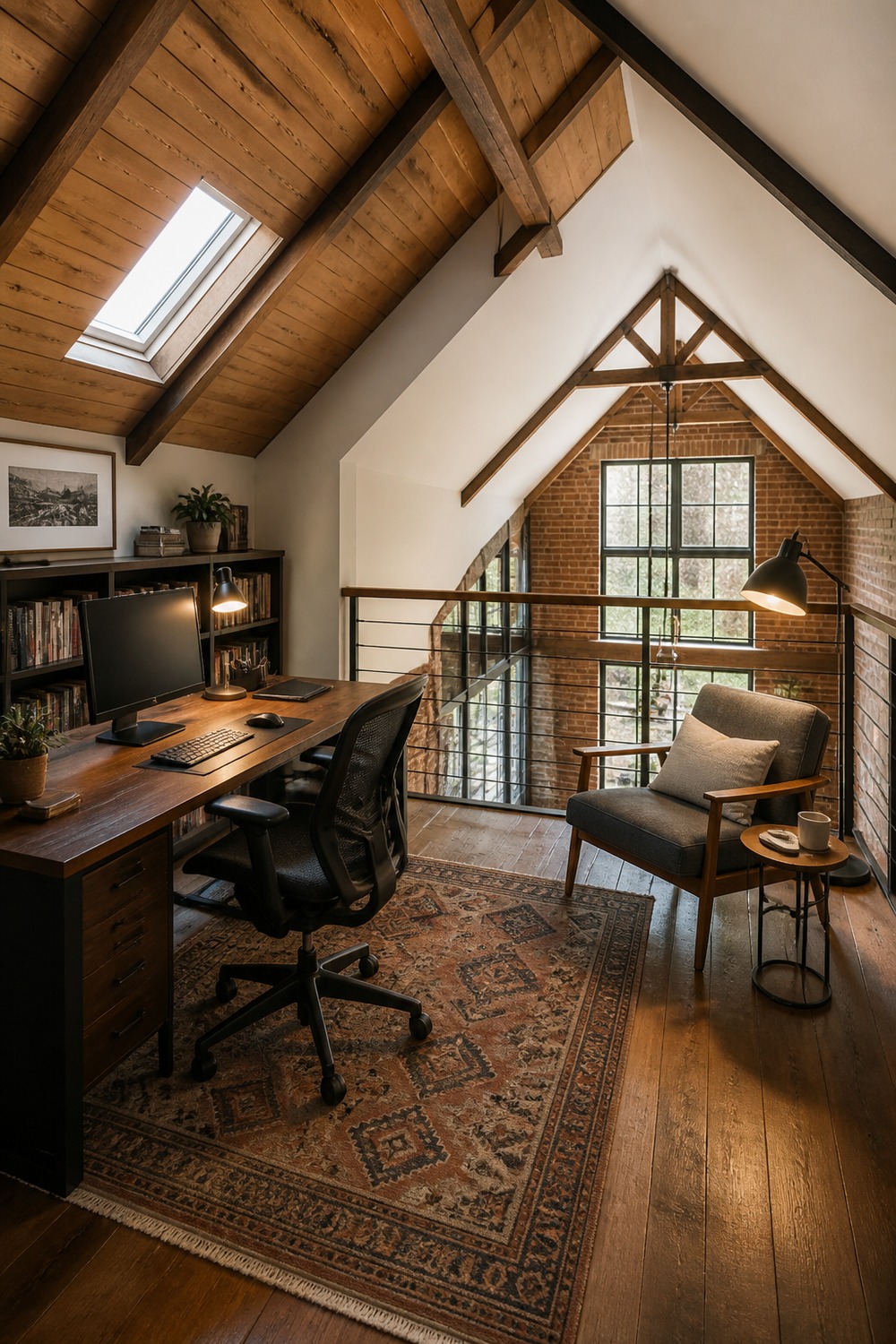
The reading chair creates a place to step away from the screen. Its own floor lamp and low bookcase keep that corner useful without blocking the railing view.
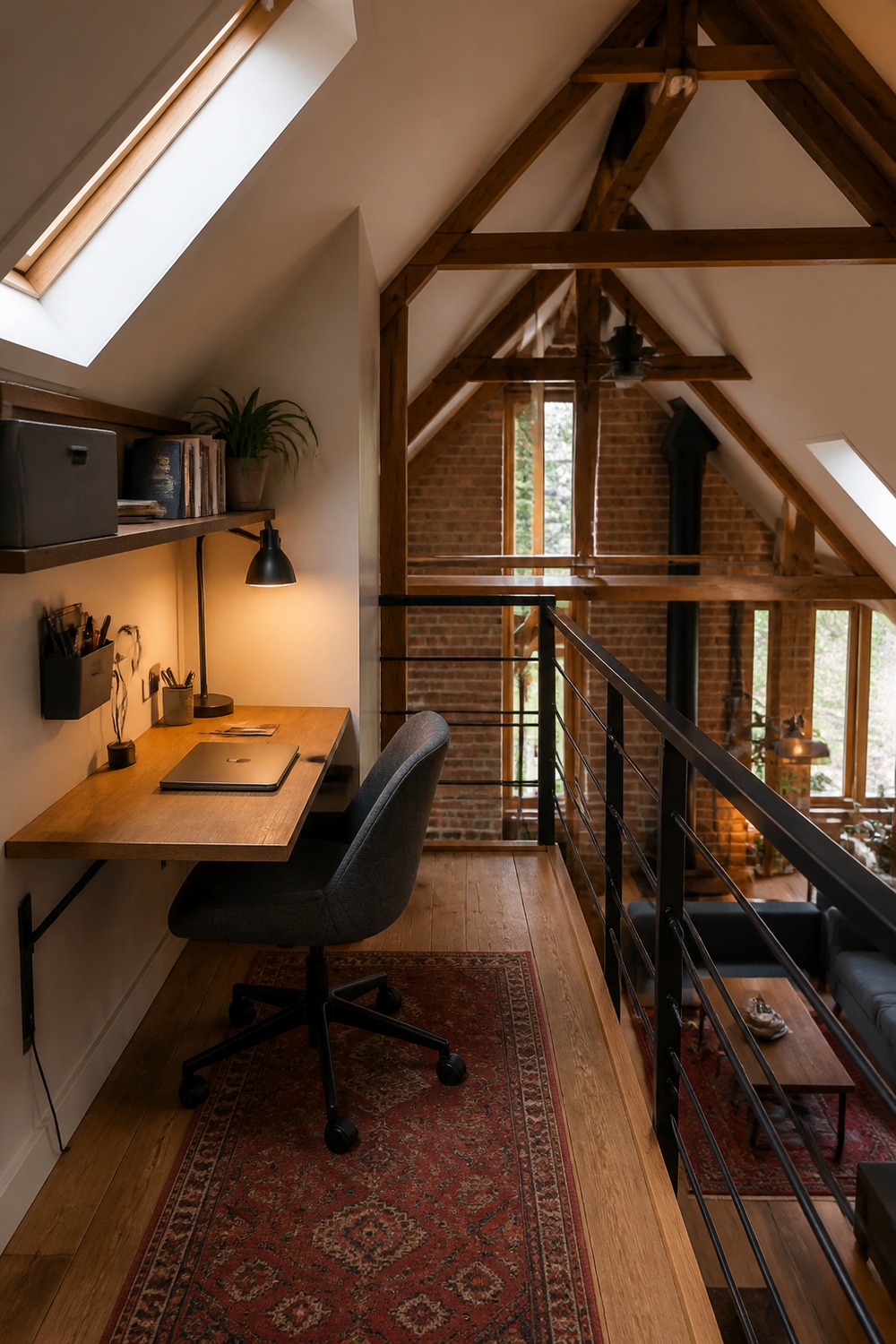
A wall-mounted desk is the right scale for this tiny platform. The chair tucks in, the shelf catches small supplies, and the guardrail remains the firm boundary.
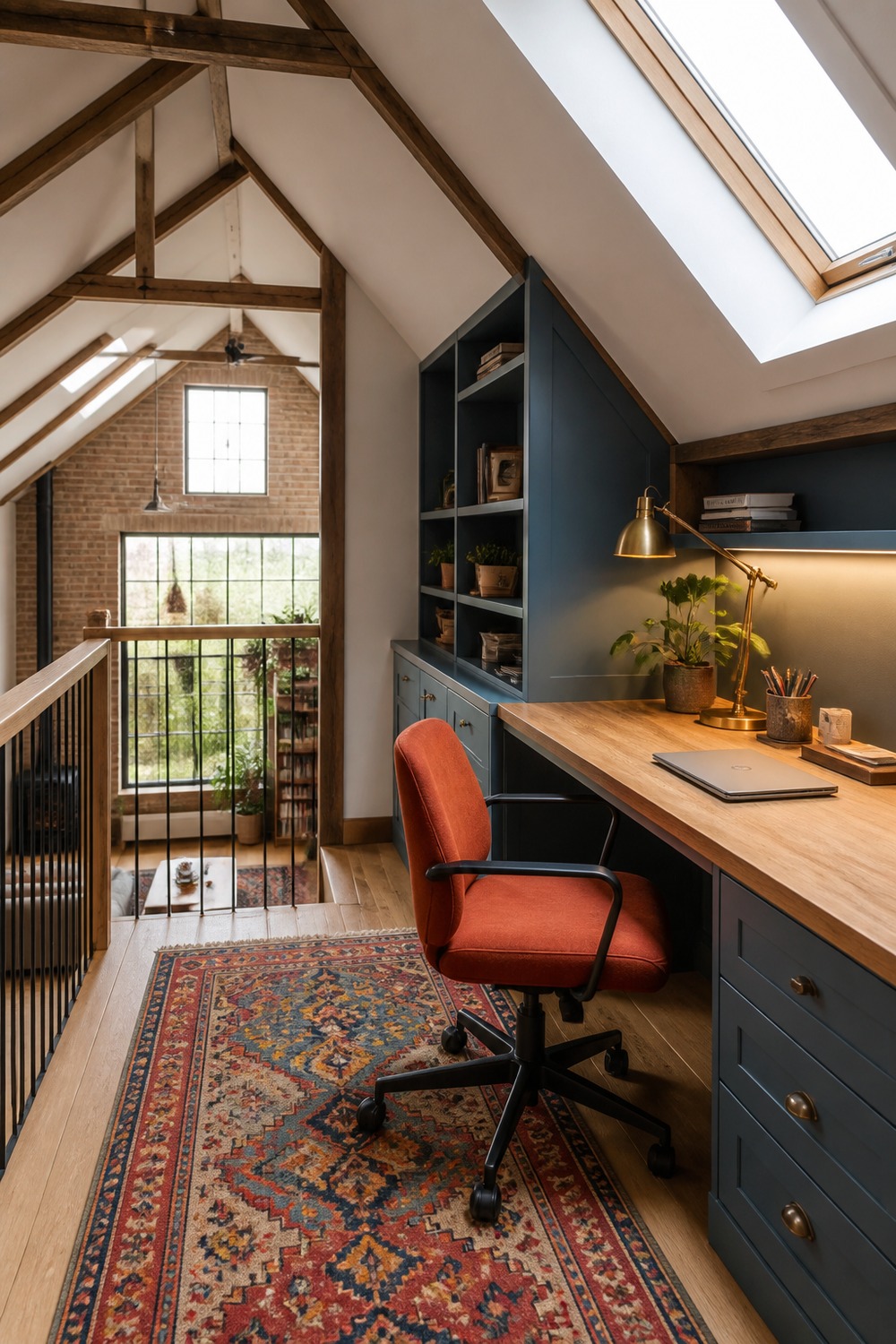
Muted blue cabinetry makes the sloped wall feel planned. Terracotta upholstery and a patterned rug mark the chair zone without piling decor onto the desktop.
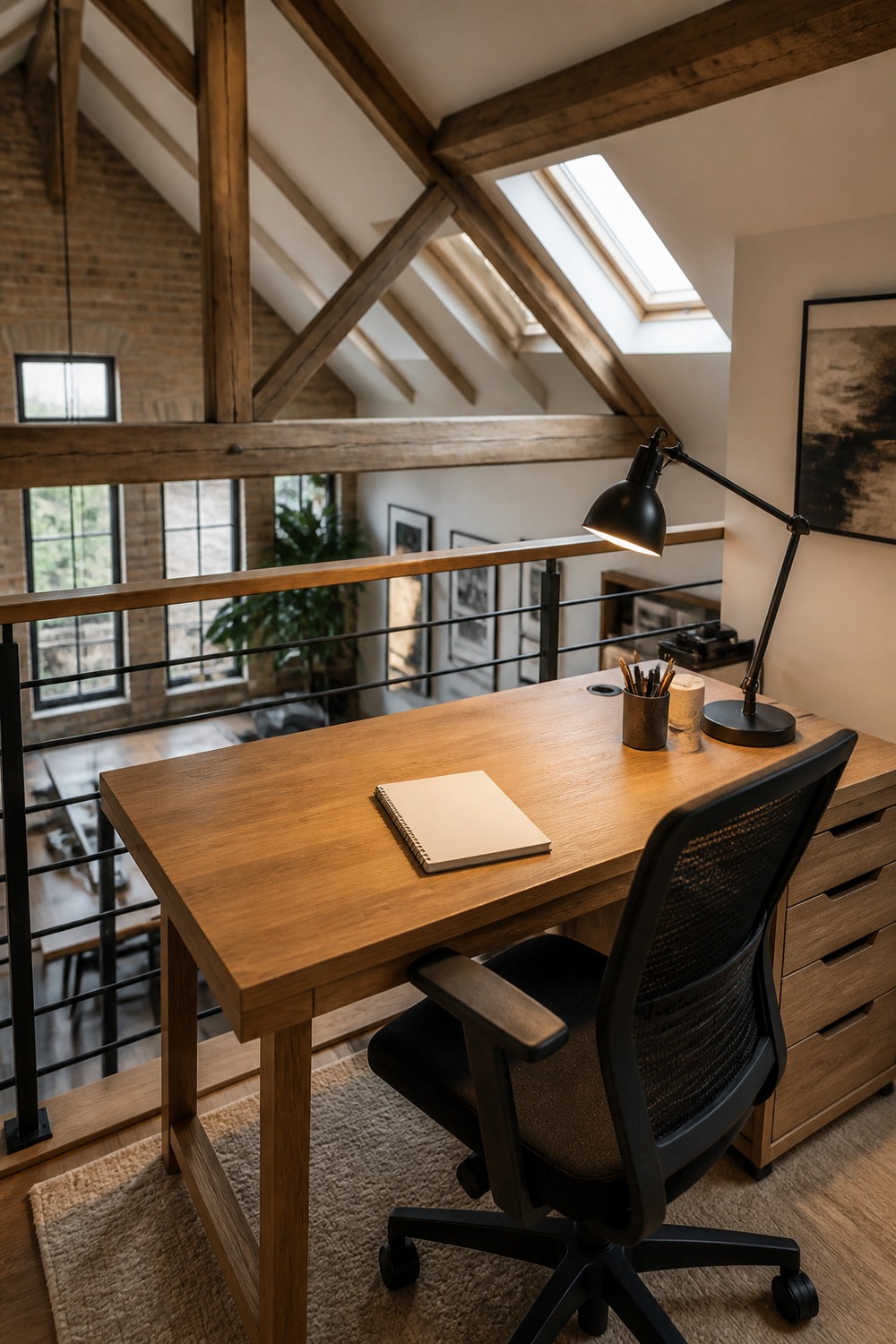
This closer view shows why tactile materials matter in a hard loft shell. Oak grain, paper, lamp light, and beam texture make the desk feel less echoey and sterile.
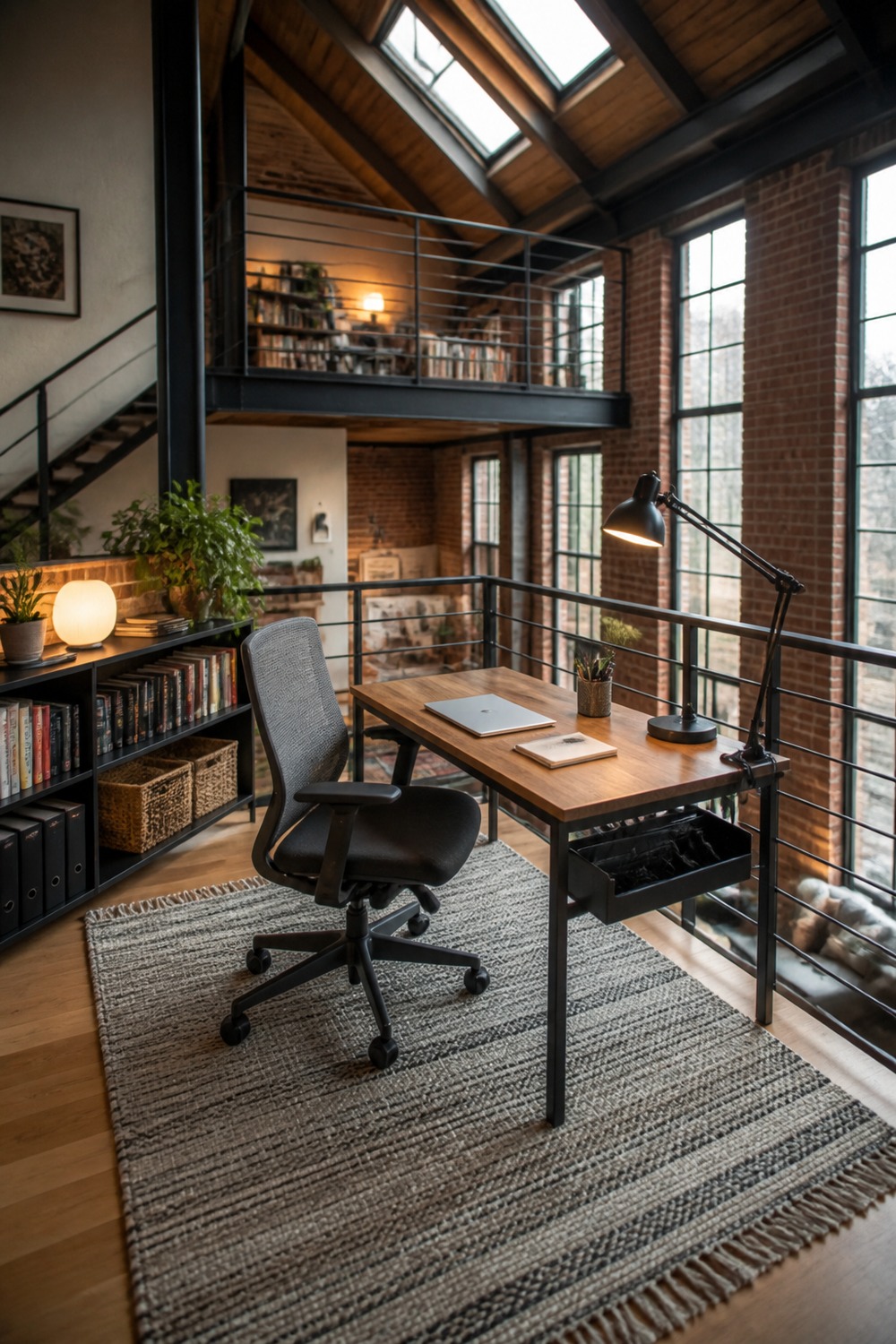
Every major piece can move with a renter: desk, low cases, clamp lamp, rug, and cord box. Nothing depends on permanent built-ins to stay organized.
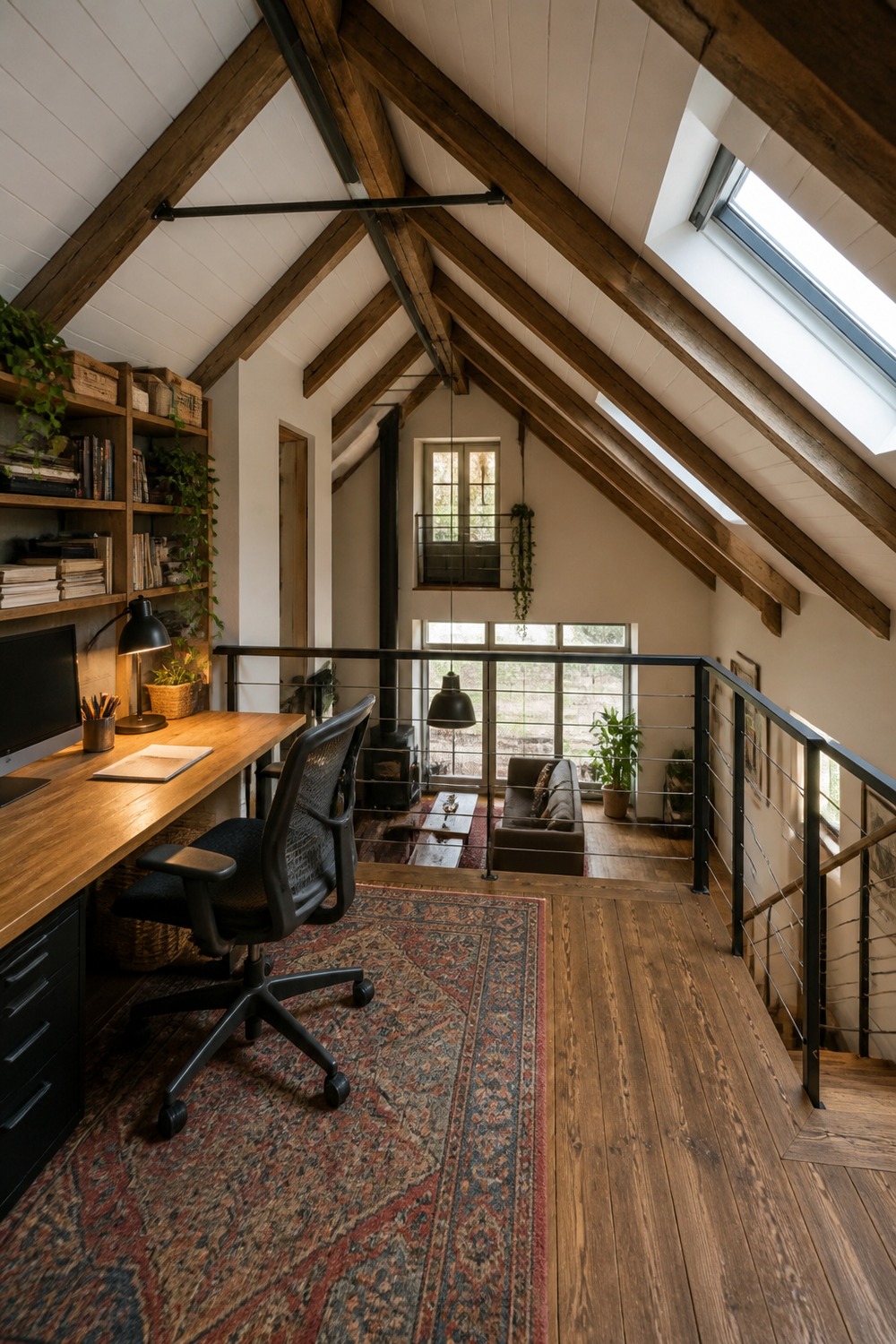
The full reveal proves this is a loft office, not a generic desk room. Storage follows the roofline, task light reaches the surface, and the route beside the railing stays clear.
The strongest loft offices respect the architecture instead of fighting it. Once the safe edge, headroom, chair path, glare control, storage, and sound-softening pieces are handled, the beams, eaves, windows, and open views can do the rest of the design work.
Leave a comment