
An earthy home office should feel grounded, not dim or overloaded with beige. Warm wood, olive and clay tones, woven texture, and a properly placed lamp can soften the room while the desk still has enough clear space for an ordinary workday.
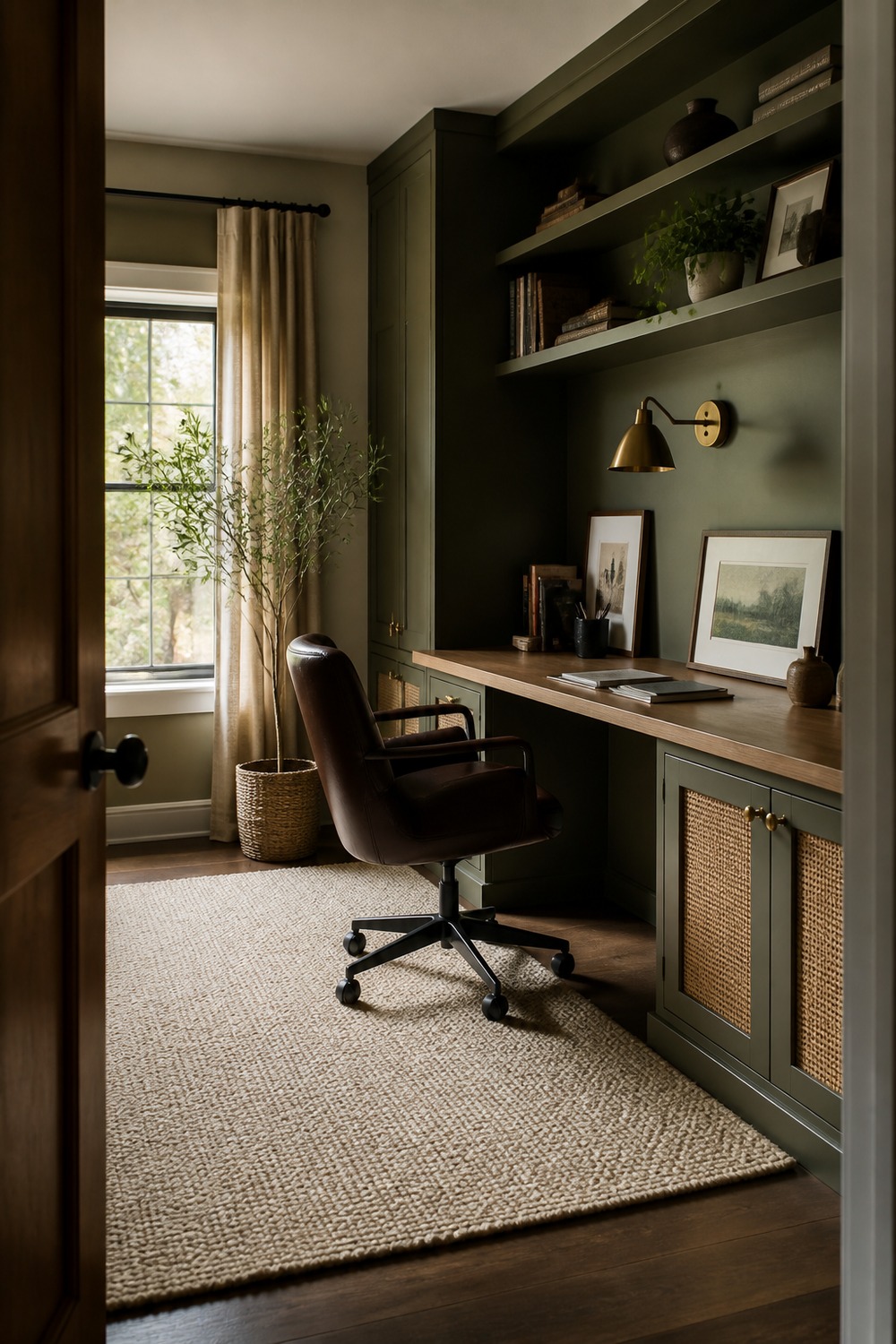
Deep olive built-ins make the desk wall feel architectural instead of temporary. Cane-front cabinets hide chargers and loose supplies, while the oak worktop and cream rug keep the darker paint from swallowing the window light.
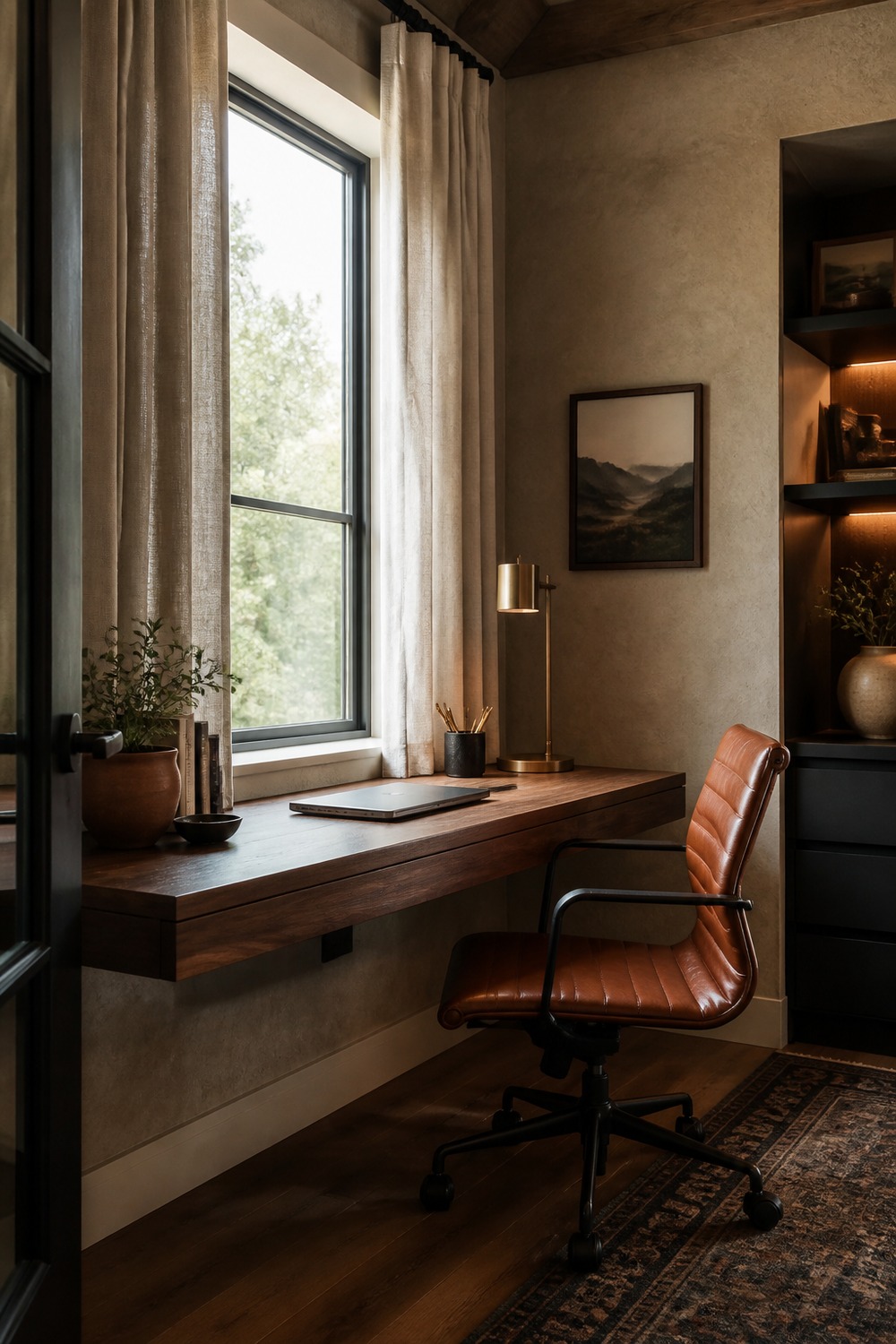
Putting a slim walnut desk beneath the window gives this narrow setup a real reason to be there. Linen curtains soften the clay-colored wall, and the open floor beneath the desk leaves room to shift the chair without bumping a drawer unit.
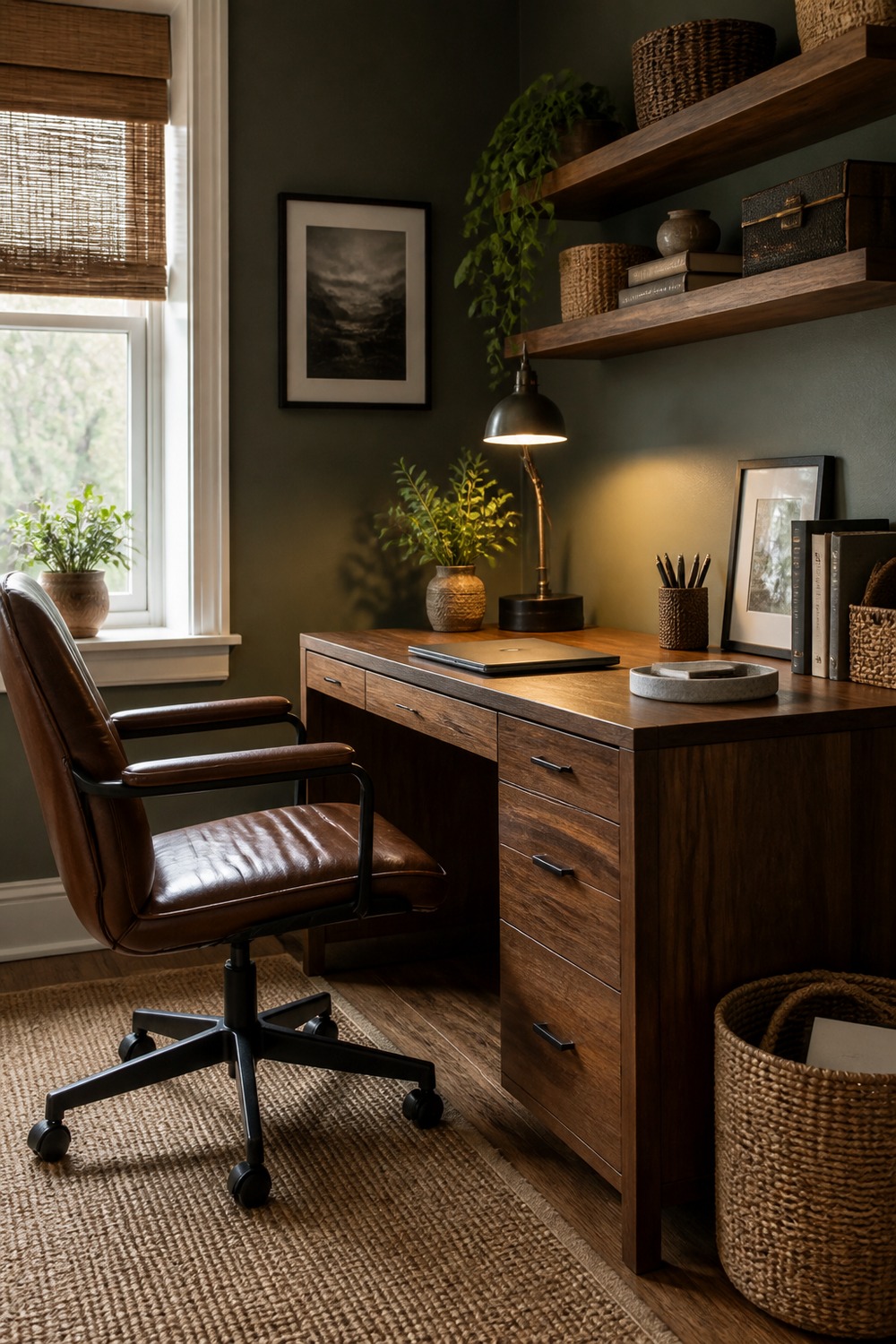
The jute rug does more than add texture here; it quietly marks the work zone in an otherwise open corner. Walnut drawers hold the daily clutter, and the warm task lamp keeps the desk usable after the window light fades.
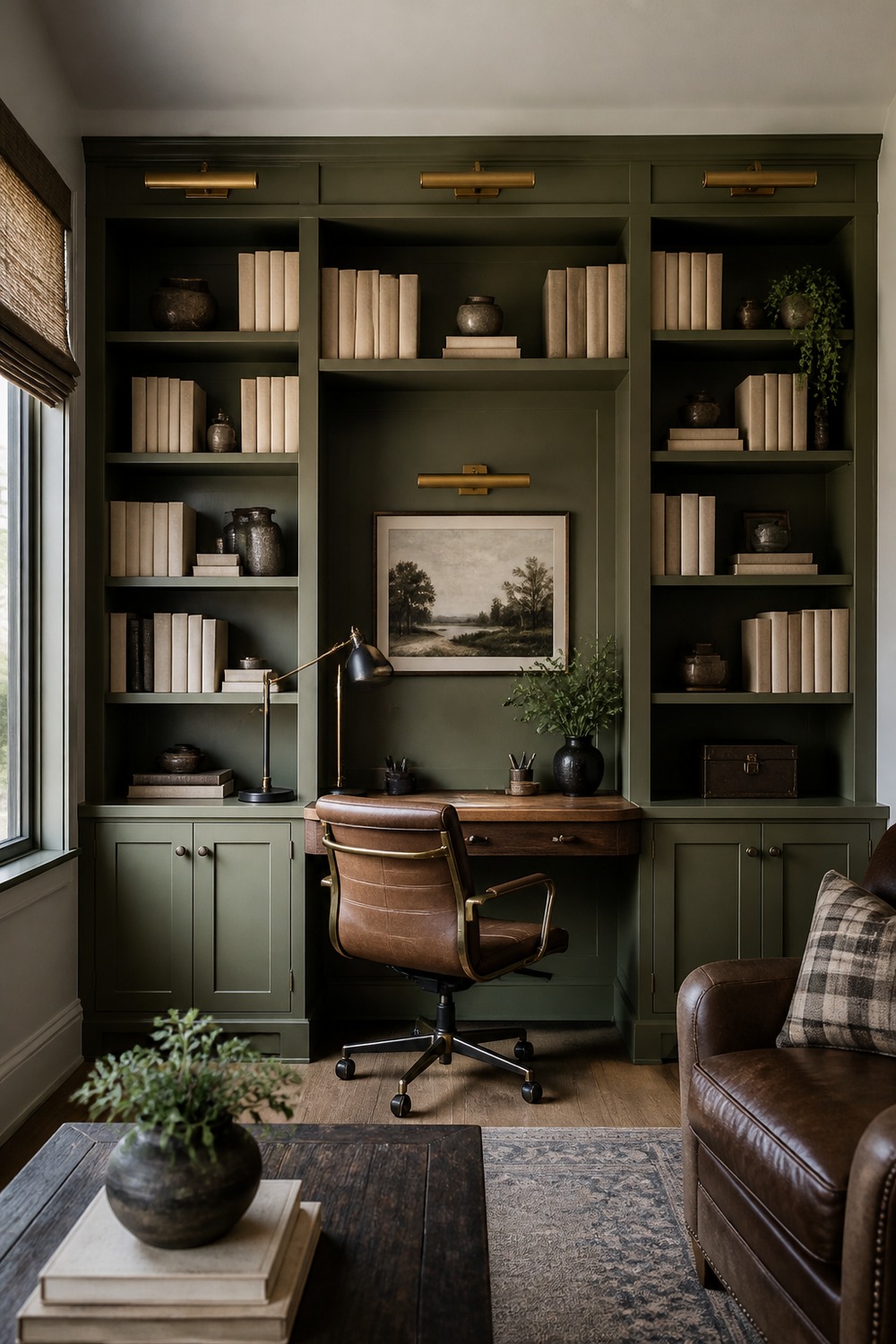
Sage bookcases turn a compact desk niche into useful wall storage without making it feel corporate. Closed cupboards take the messy items, while the open shelves leave just enough room for books, pottery, and a little greenery.
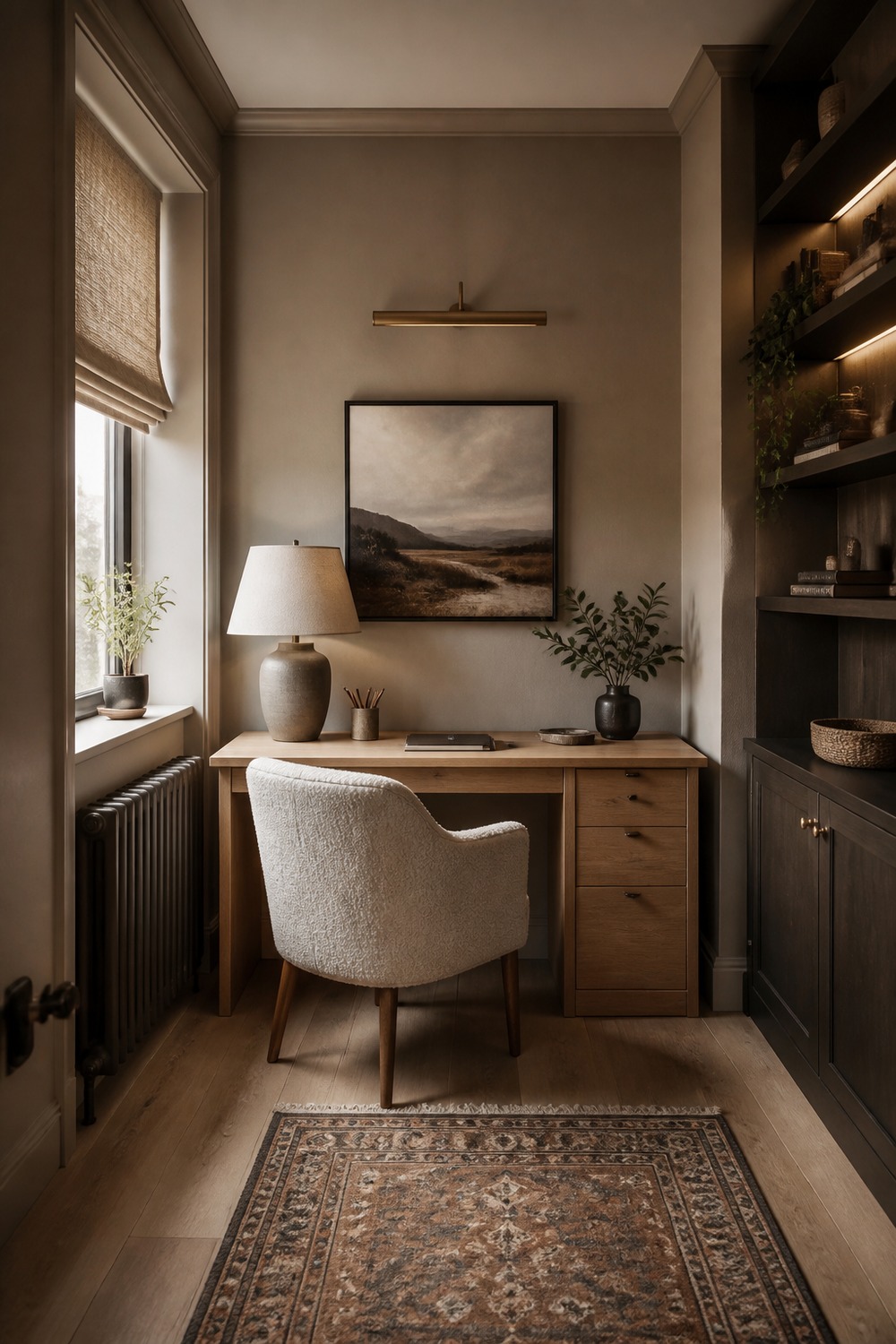
Mushroom-taupe walls are softer than gray but still calm enough for a writing nook. The pale oak desk and rounded boucle chair lighten the tight alcove, and the Roman shade controls glare without crowding the window.
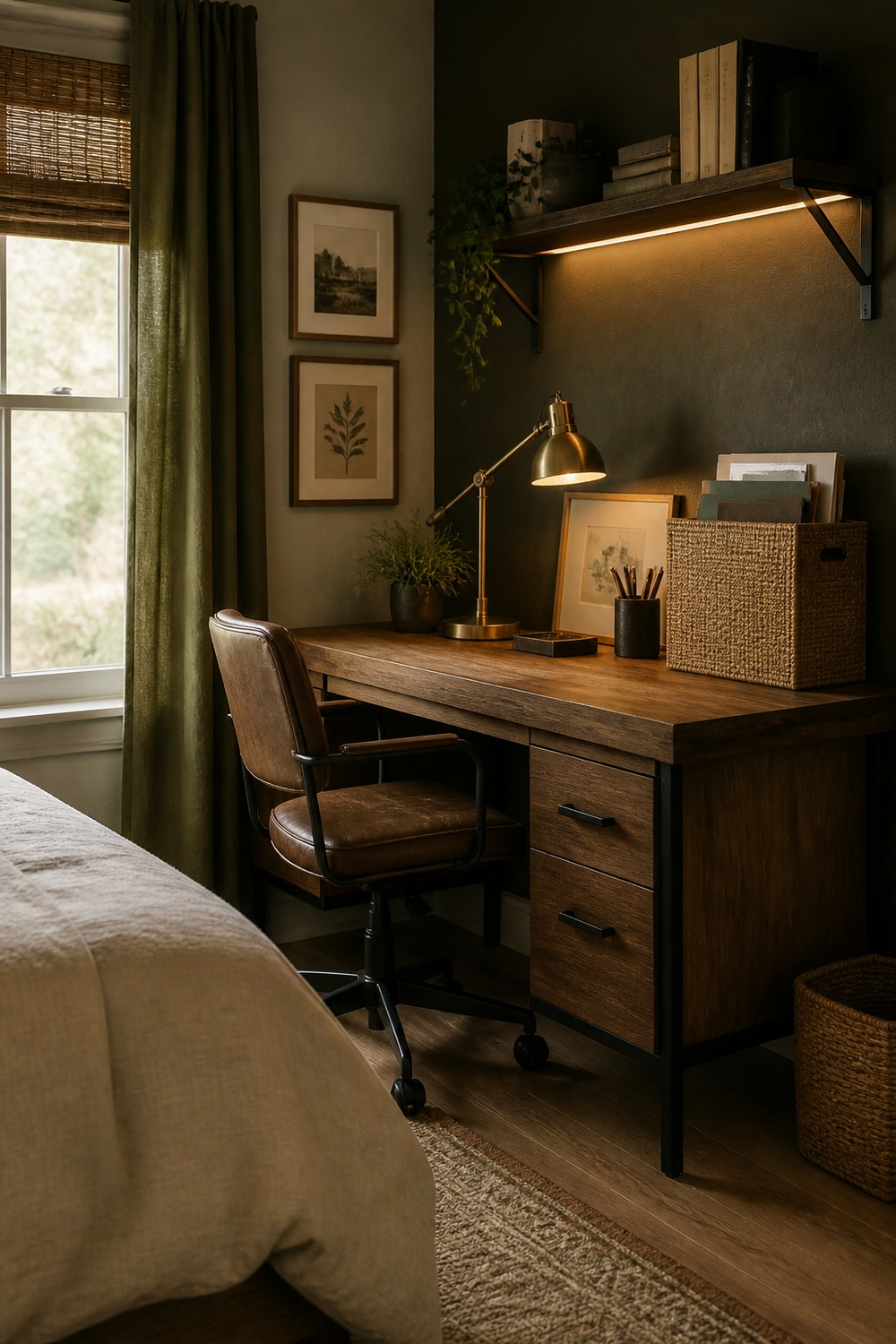
This bedroom corner stays visually quiet because the desk repeats the warm wood already in the room. An olive curtain and woven file box bring in earthy color and storage, but neither competes with the bed or narrows the walkway.
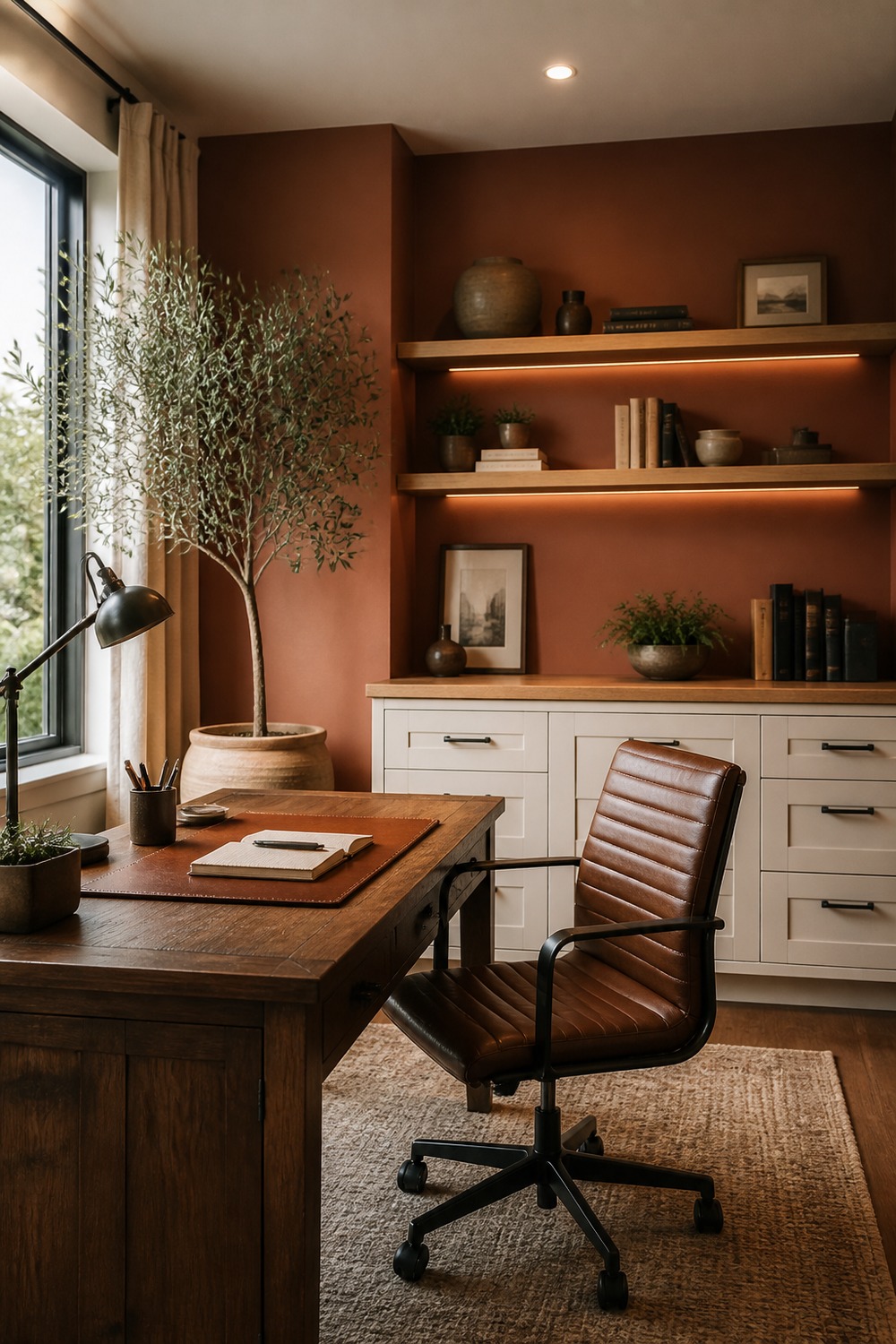
Terracotta gives this office energy without relying on bright accent decor everywhere. Cream drawers balance the heavier wall color, and the long oak shelves keep reference books within reach while preserving a generous work surface.
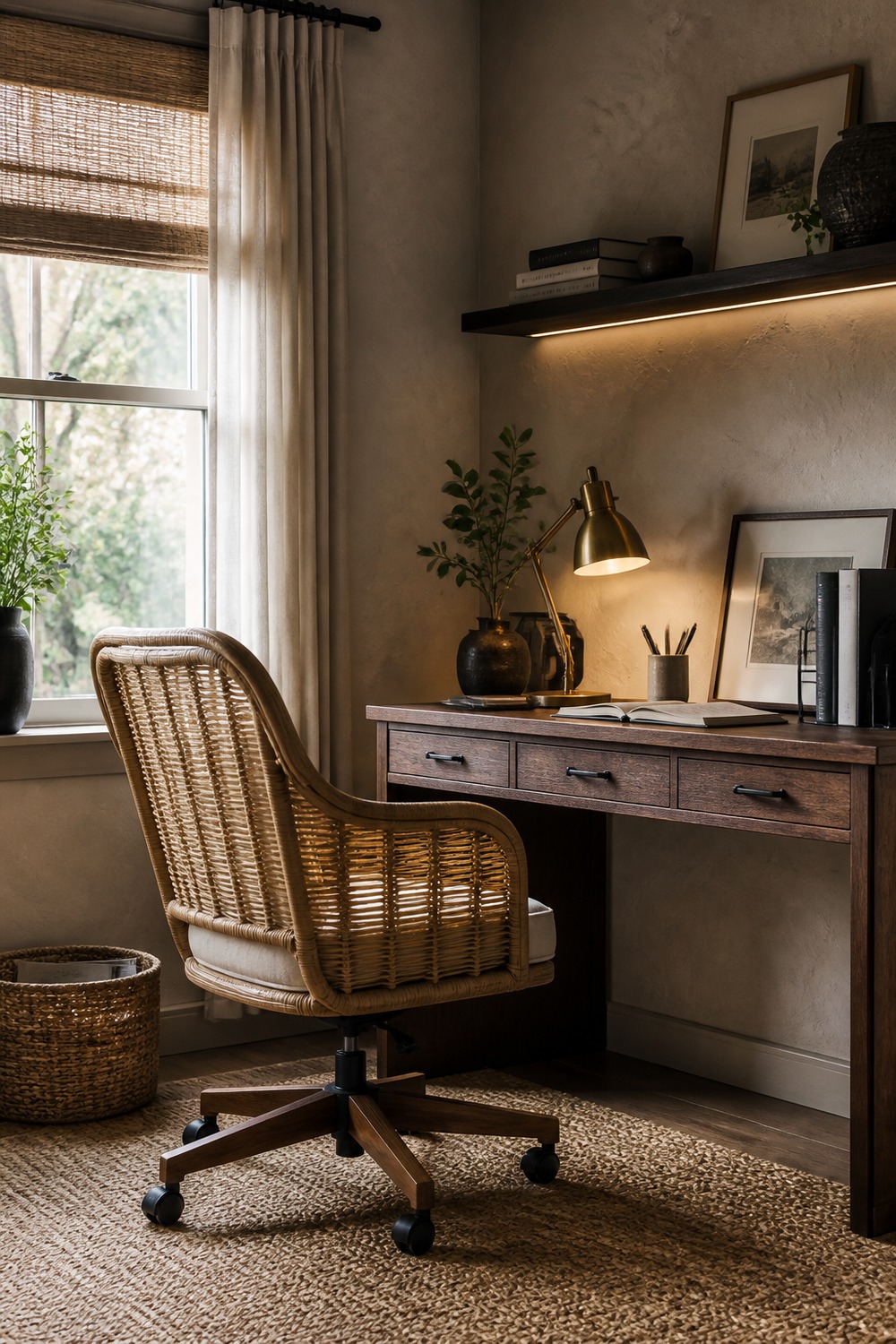
The rattan chair is the detail that keeps this setup from reading like a basic desk against a wall. Its woven frame echoes the basket and jute rug, while the cushioned seat makes the natural-material look practical for longer sessions.
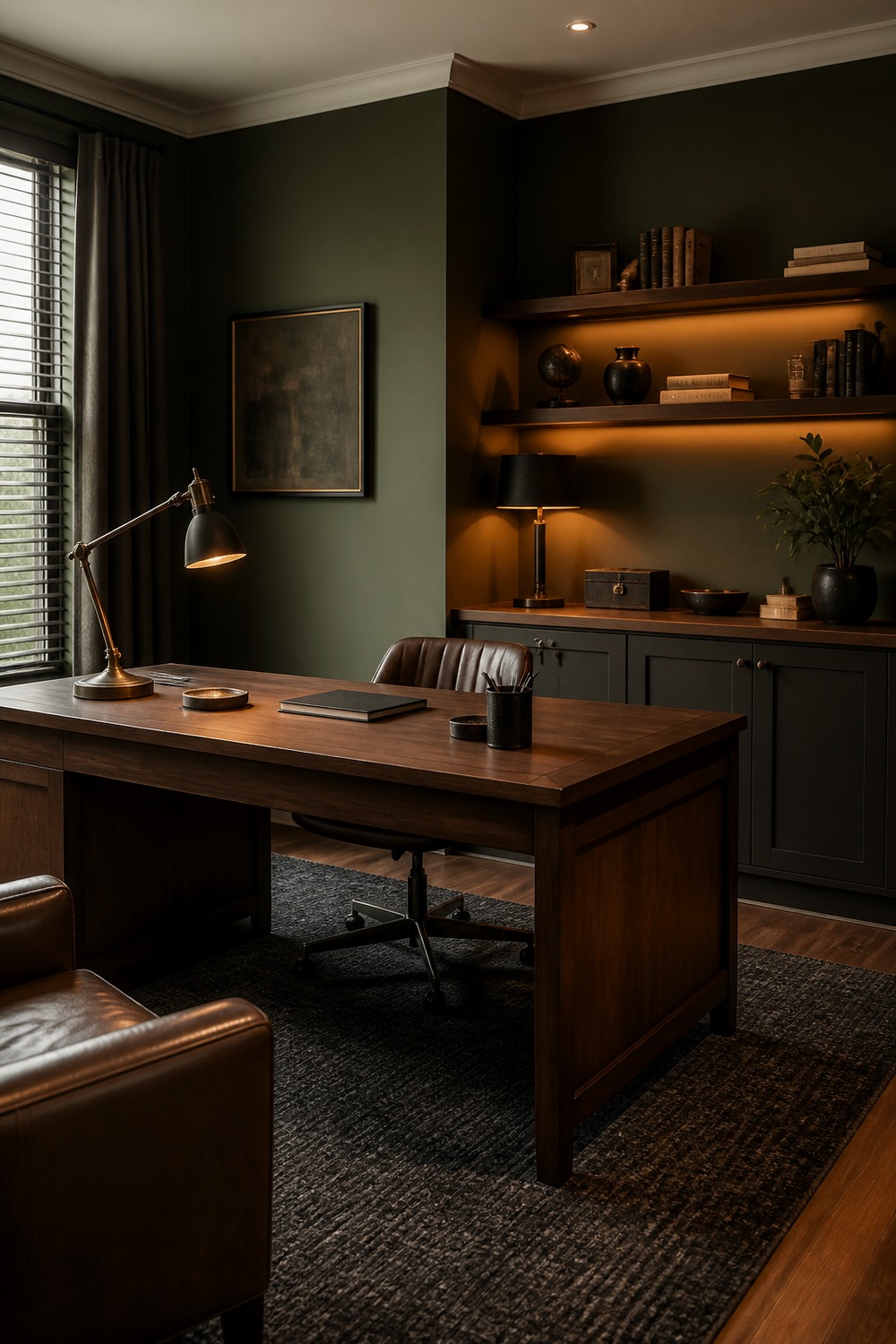
Dark olive can work in a small office when the lighting is this deliberate. Amber pools from the desk lamp warm the walnut surfaces, and the closed cabinet keeps pale paper, cables, and equipment from breaking the moody palette.
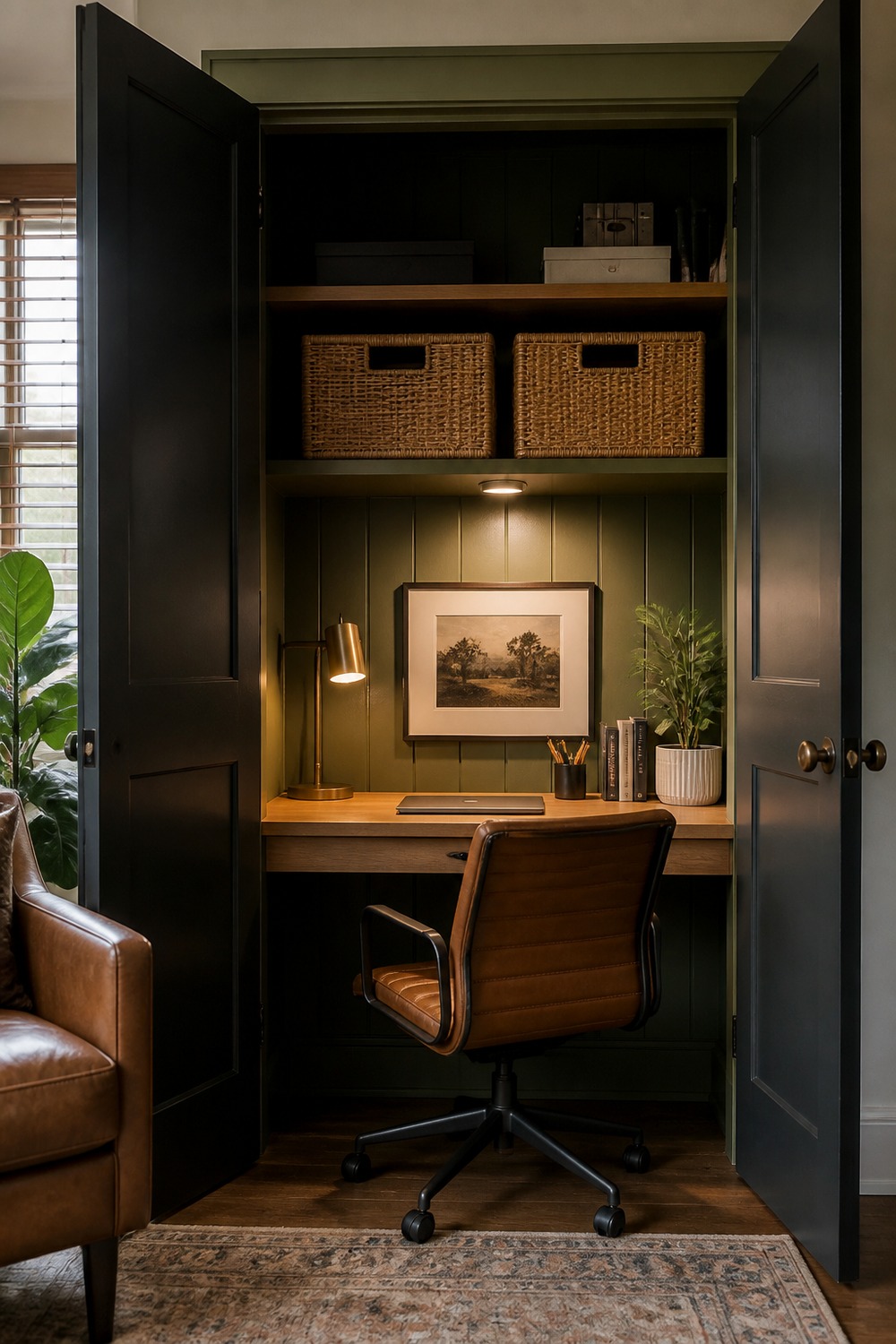
A former closet becomes much more convincing with one continuous oak desktop and a rich olive interior. Baskets use the upper shelf for loose supplies, the puck light brightens the work surface, and the chair can disappear when the day is over.
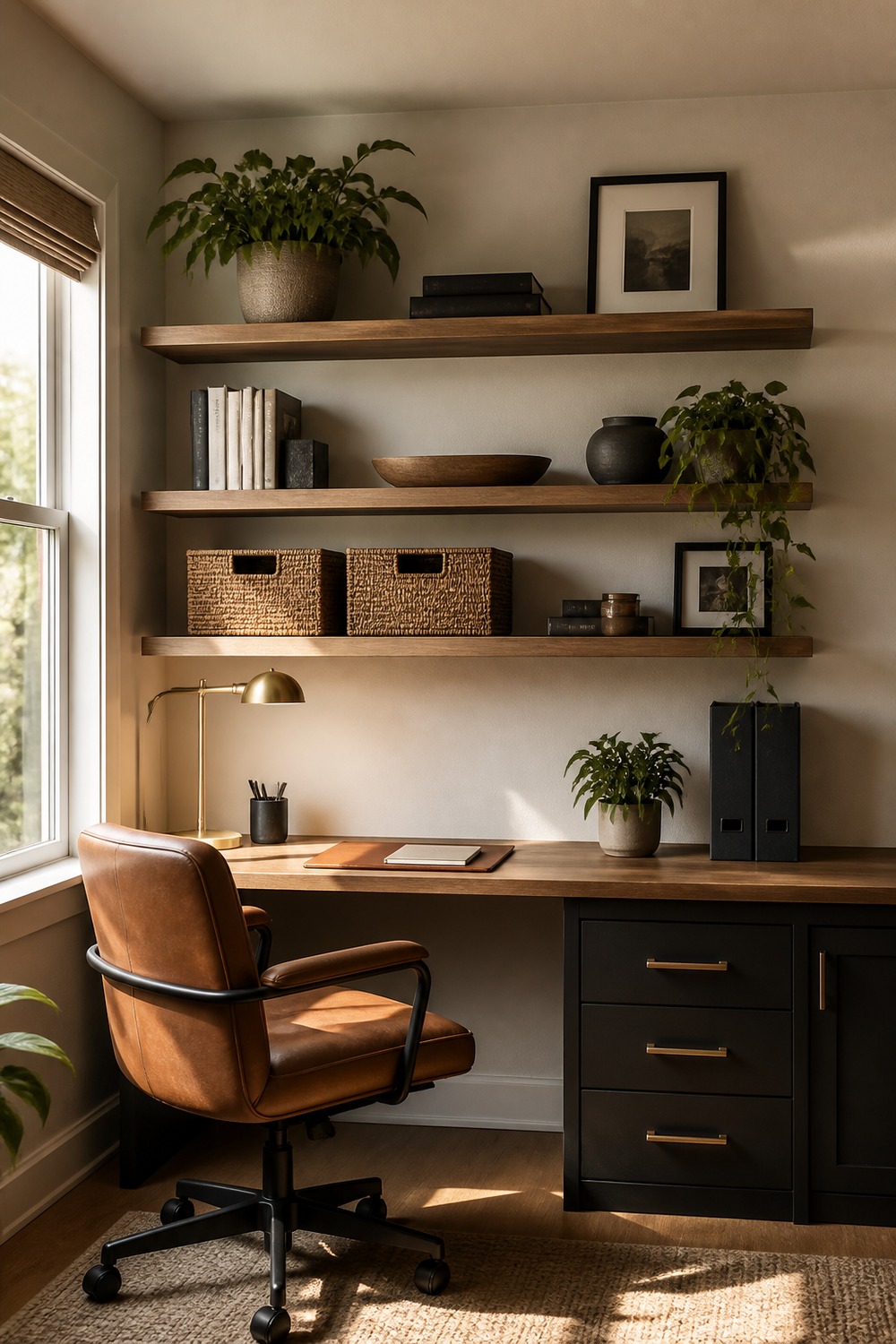
Bright daylight and cream walls let the earthy pieces carry the room without making it feel heavy. Floating oak shelves add storage above the monitor line, while woven bins keep small accessories from turning into visual noise.
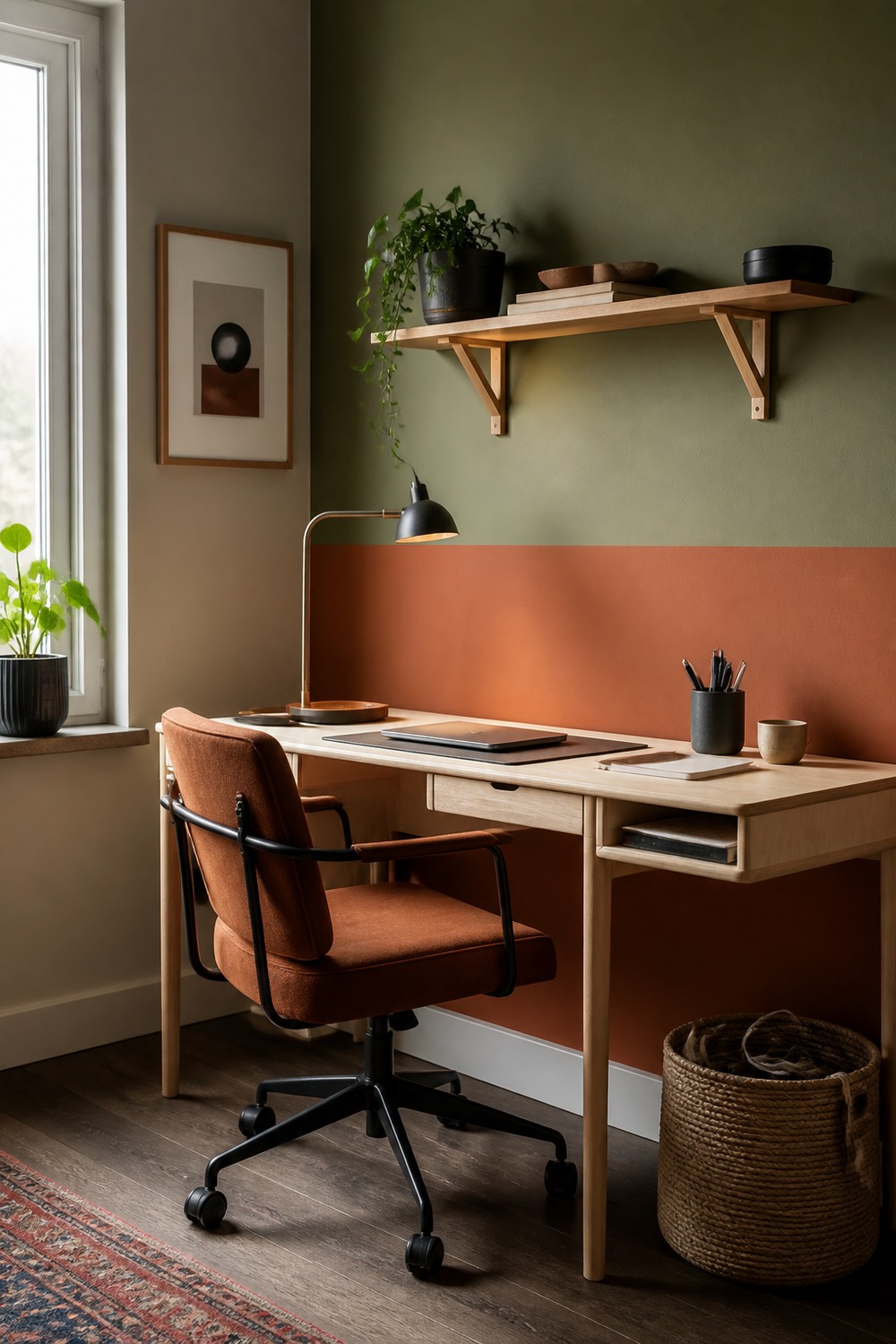
The sage-and-clay color block gives a plain wall depth without needing framed art or signage. A slim birch desk and rust-colored chair continue the palette, and the cord basket handles the practical detail that usually ruins a clean setup.
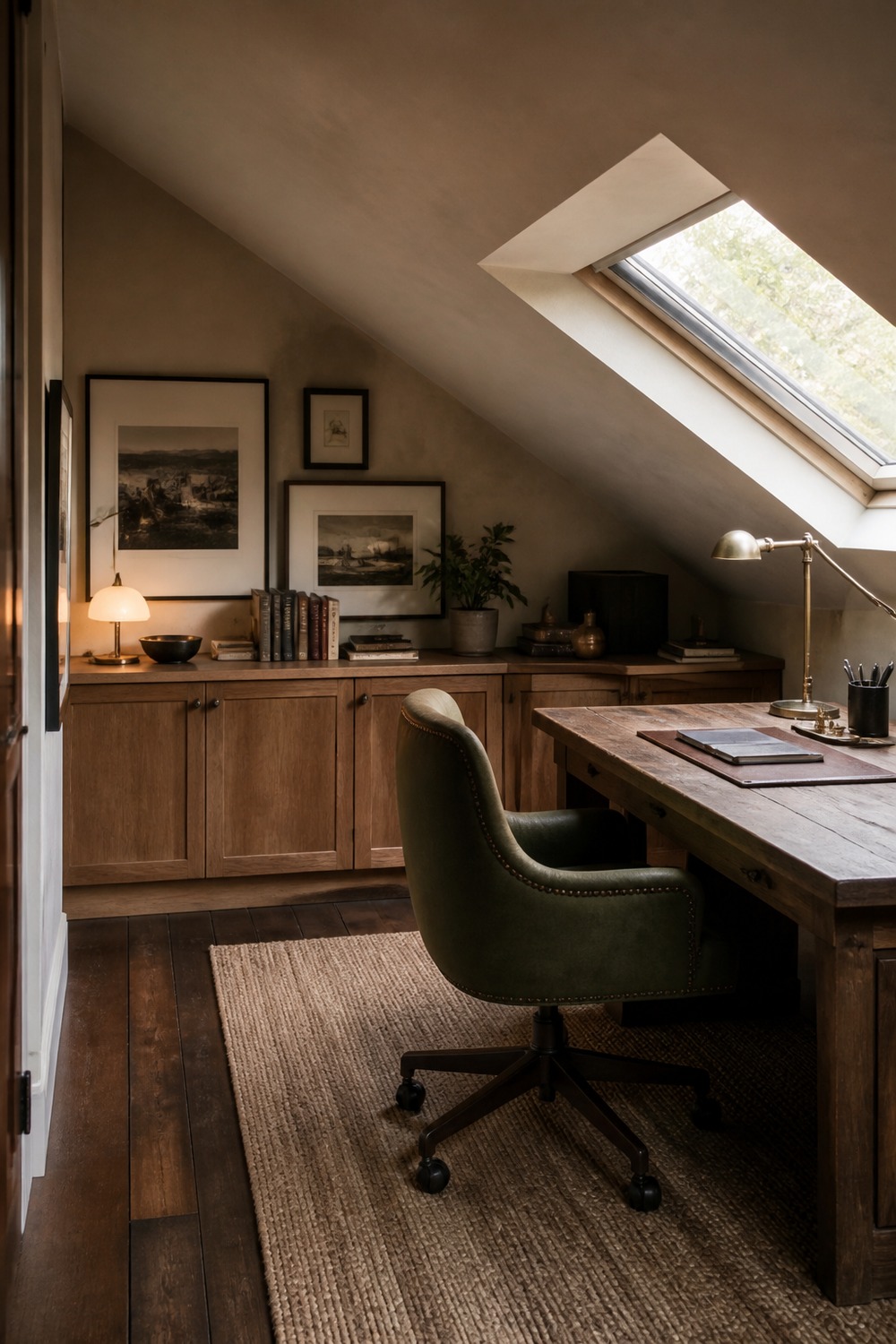
Low cabinets make smart use of this attic eave where full-height storage would never fit. The skylight washes the beige plaster with daylight, and the olive chair gives the quiet palette one strong focal point.
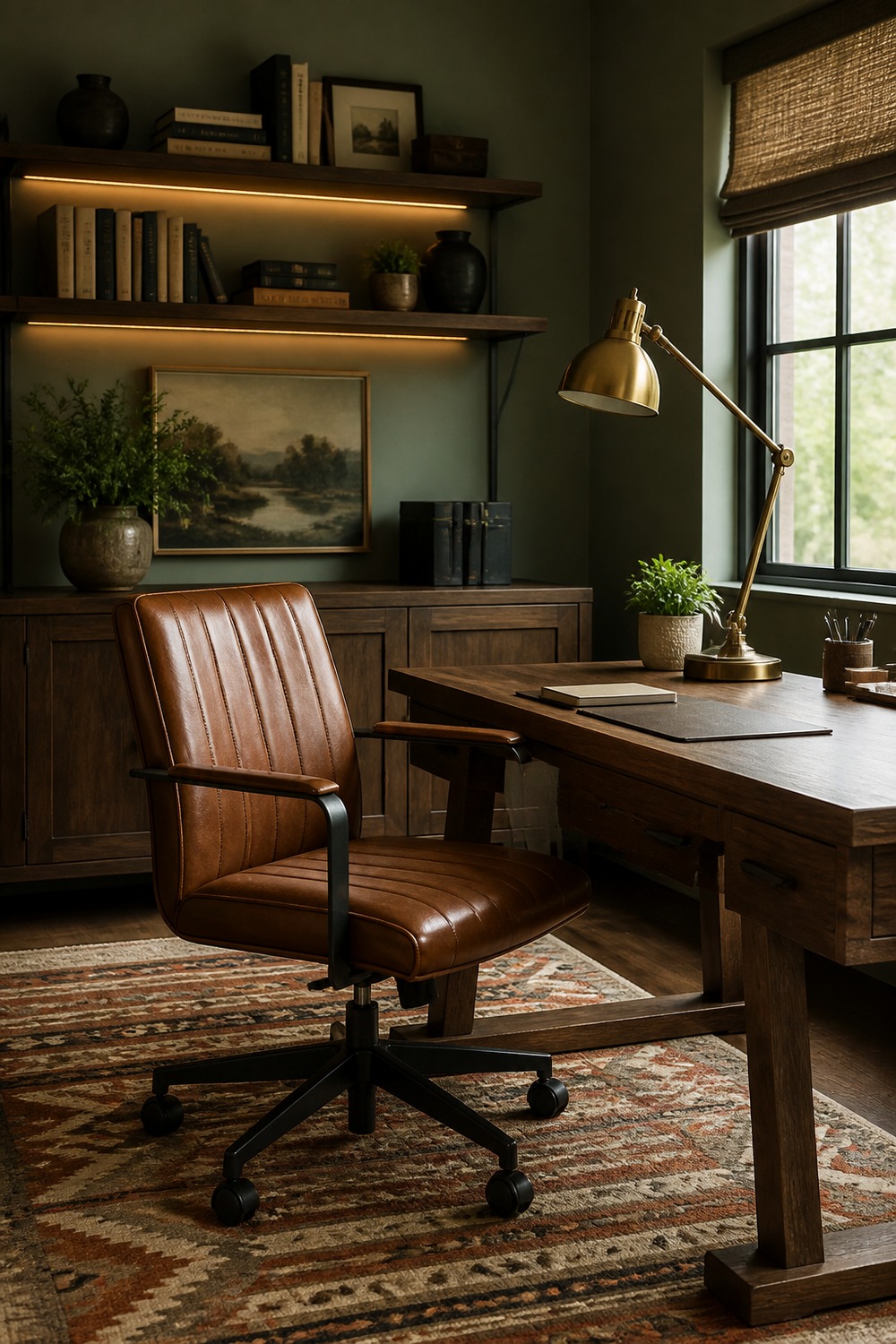
Cognac leather brings enough patina to make this office feel collected rather than newly staged. Against walnut, olive-gray paint, and aged brass, the chair looks substantial while the open floor around it still allows an easy turn and pullback.
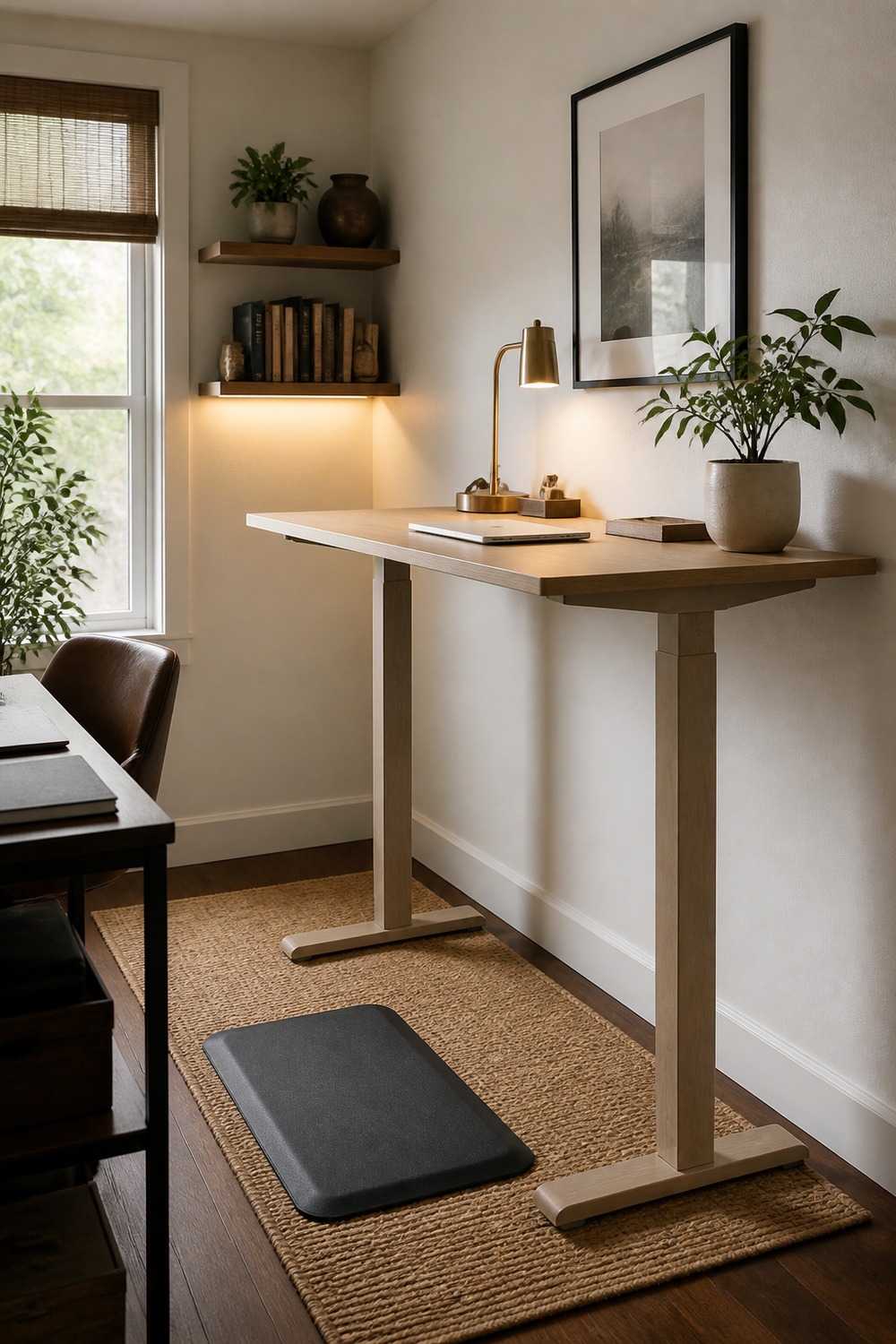
A pale oak standing desk feels much less technical beside warm white walls and a woven runner. The anti-fatigue mat has a clear landing spot, the cords stay tucked away, and the side profile shows that the setup can change height without blocking the room.
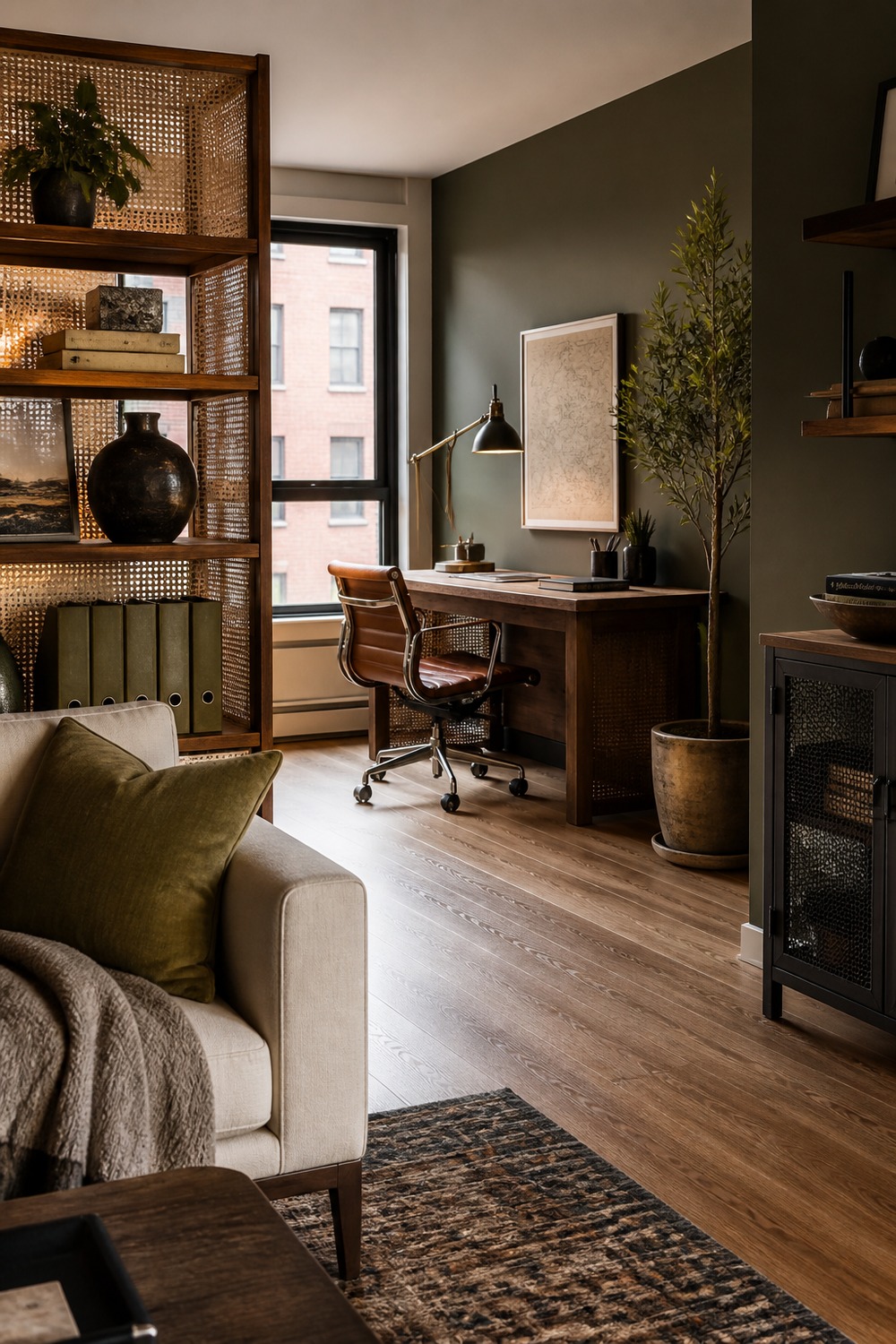
This desk fits along the living-room edge because the open divider creates separation without closing off the apartment. Olive files blend into the wood and woven storage, and the clear path beside the sofa keeps the office from taking over the shared space.
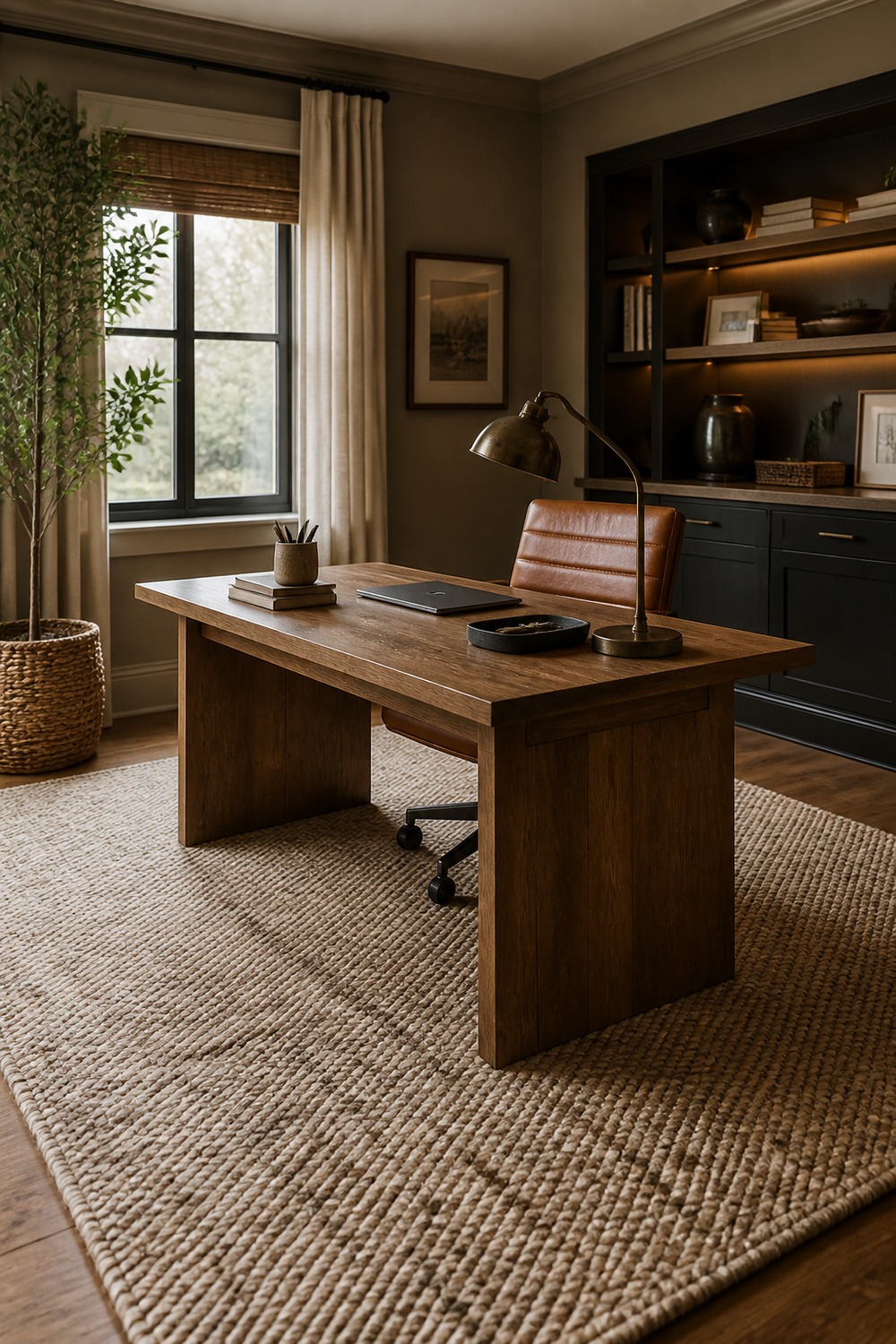
A large wool rug anchors the desk and chair before any decorative object is added. Its soft texture warms the taupe walls, while the tan chair and plant basket keep the palette varied instead of turning into one flat shade of brown.
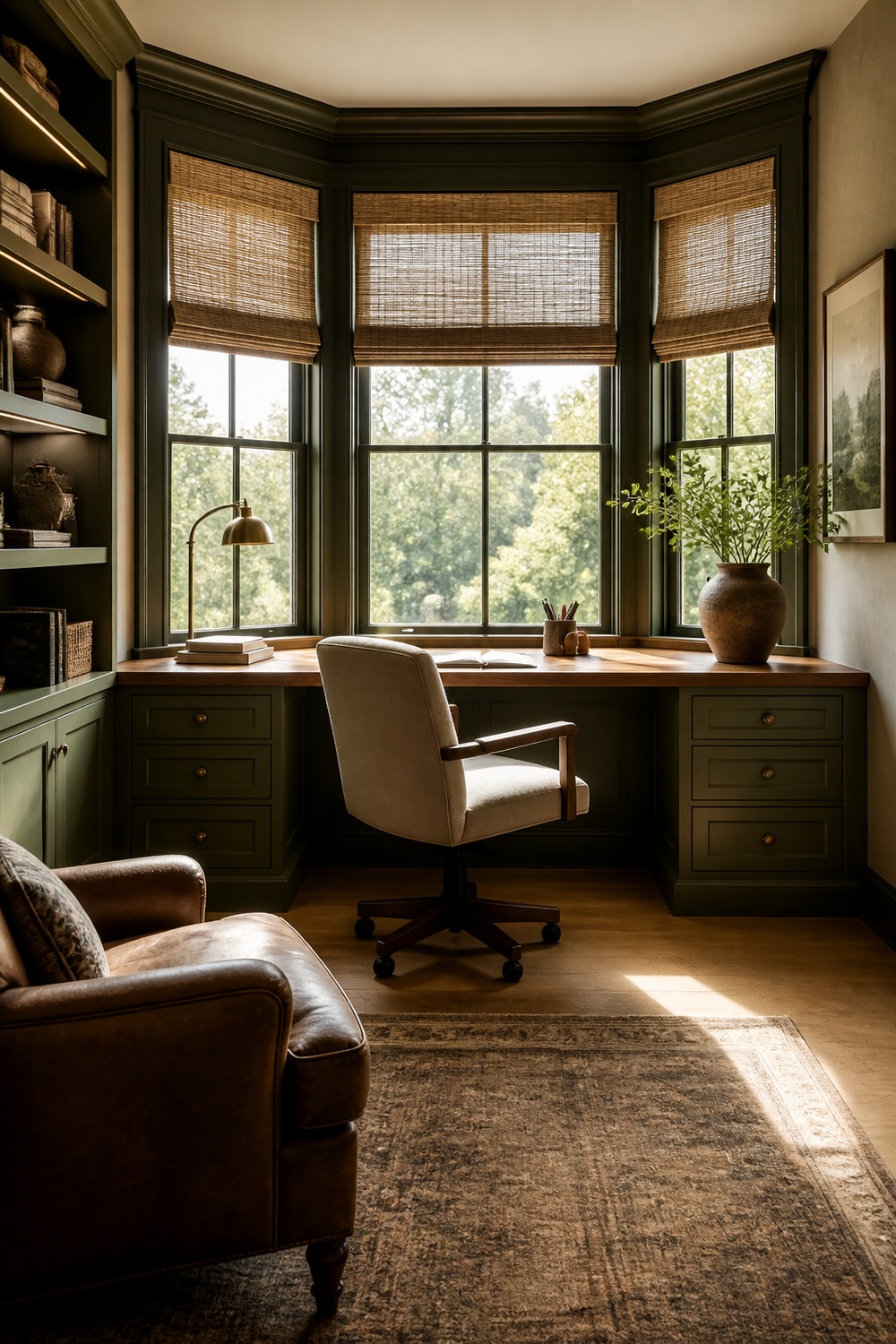
The bay window is doing the hard work in this office, giving the desktop natural light from several directions. Woven shades tame glare, sage drawers hold paperwork, and the curved nook makes the work area feel separate without another wall.
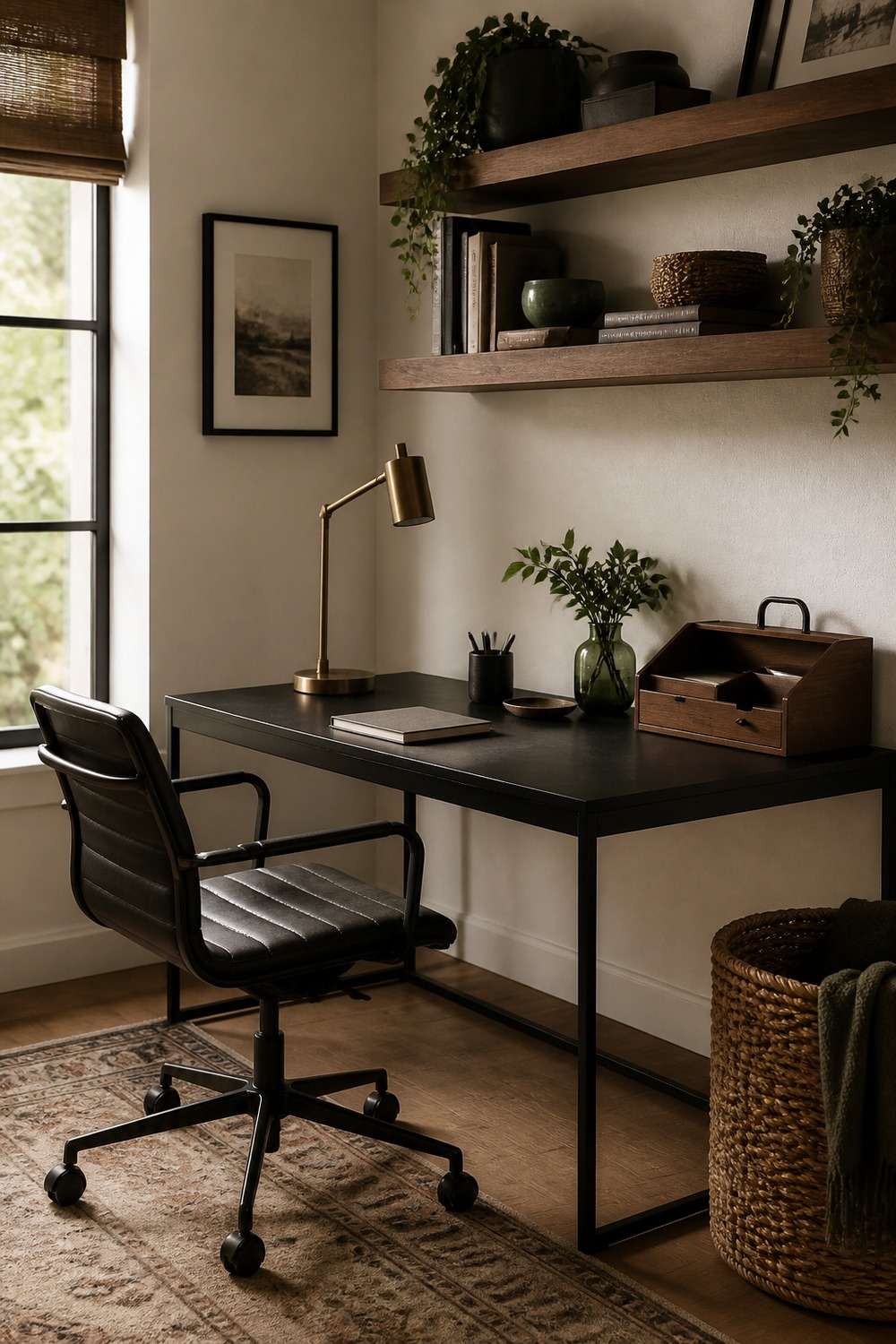
Matte black sharpens this earthy palette without making it cold. Walnut shelves and olive accessories pull the desk back toward the natural side, while the light wall preserves contrast around the monitor and task area.
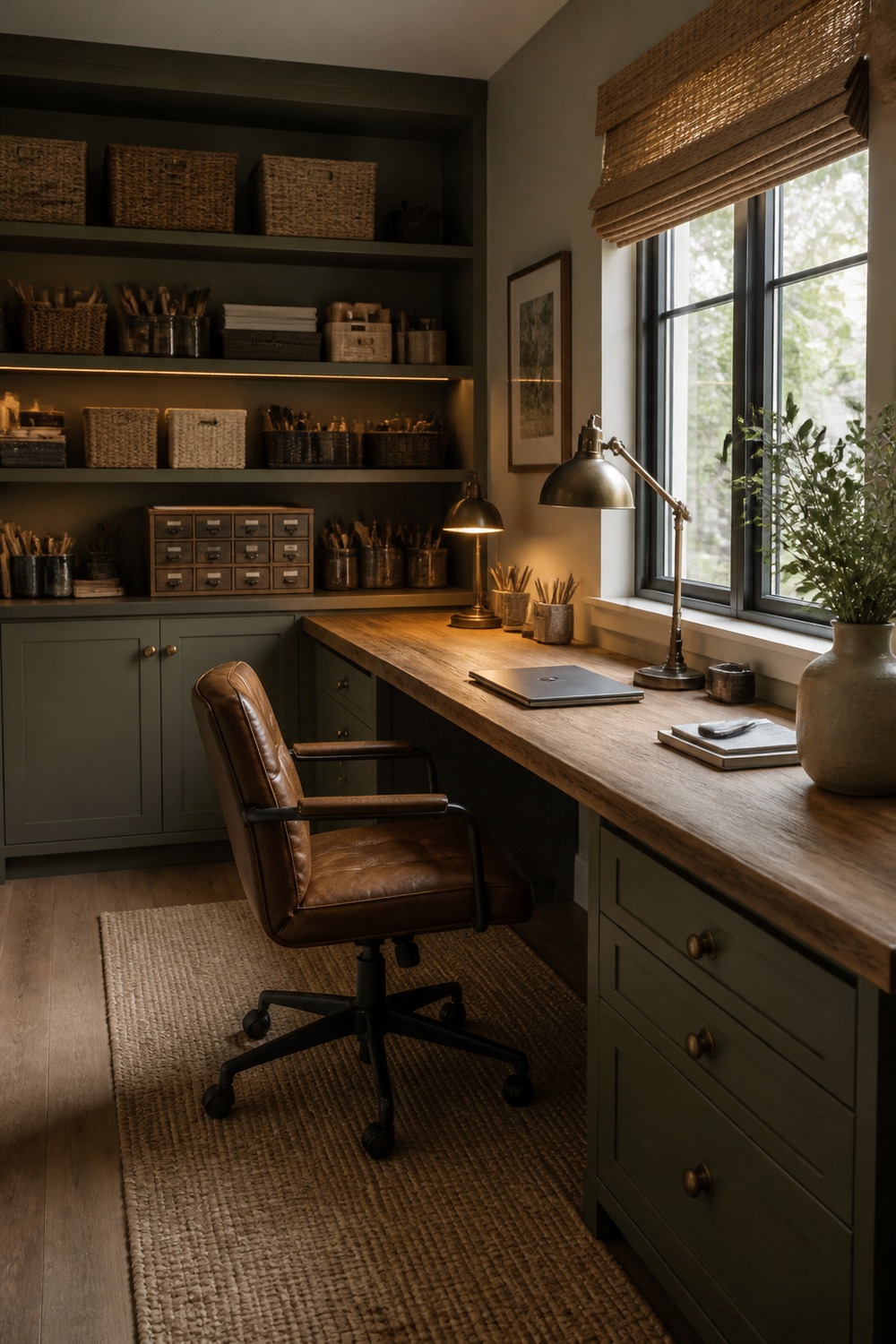
A long oak counter gives this craft-and-work room space to spread out, but the surface is not asked to store everything. Sage cabinets and woven baskets take bulkier supplies, and separate task lights create useful pools of light along the full run.
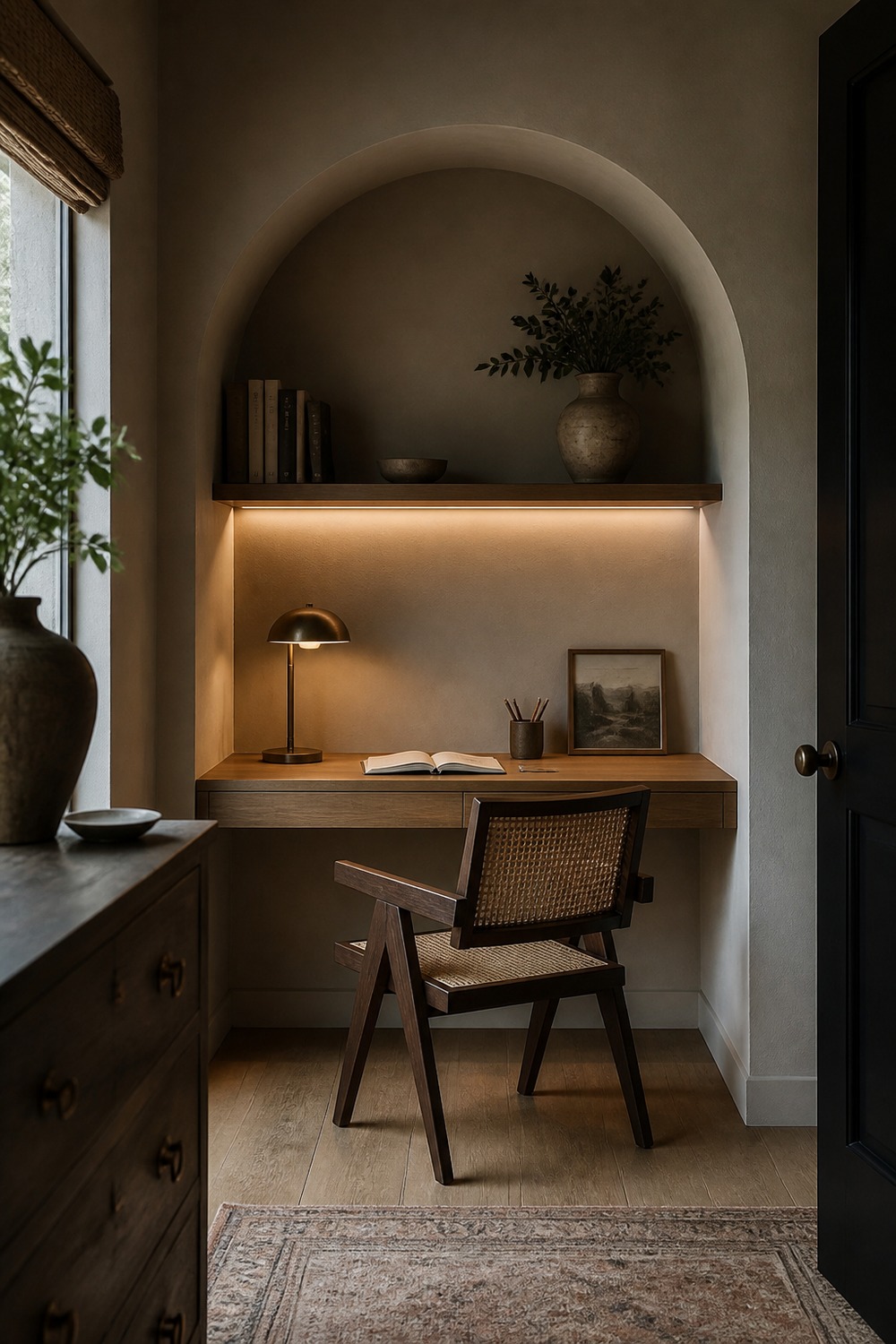
The arched alcove gives a very small office a finished outline before furniture enters the picture. A floating oak desk keeps the floor open, the cane chair adds texture, and the shelf light makes the nook usable without a bulky table lamp.
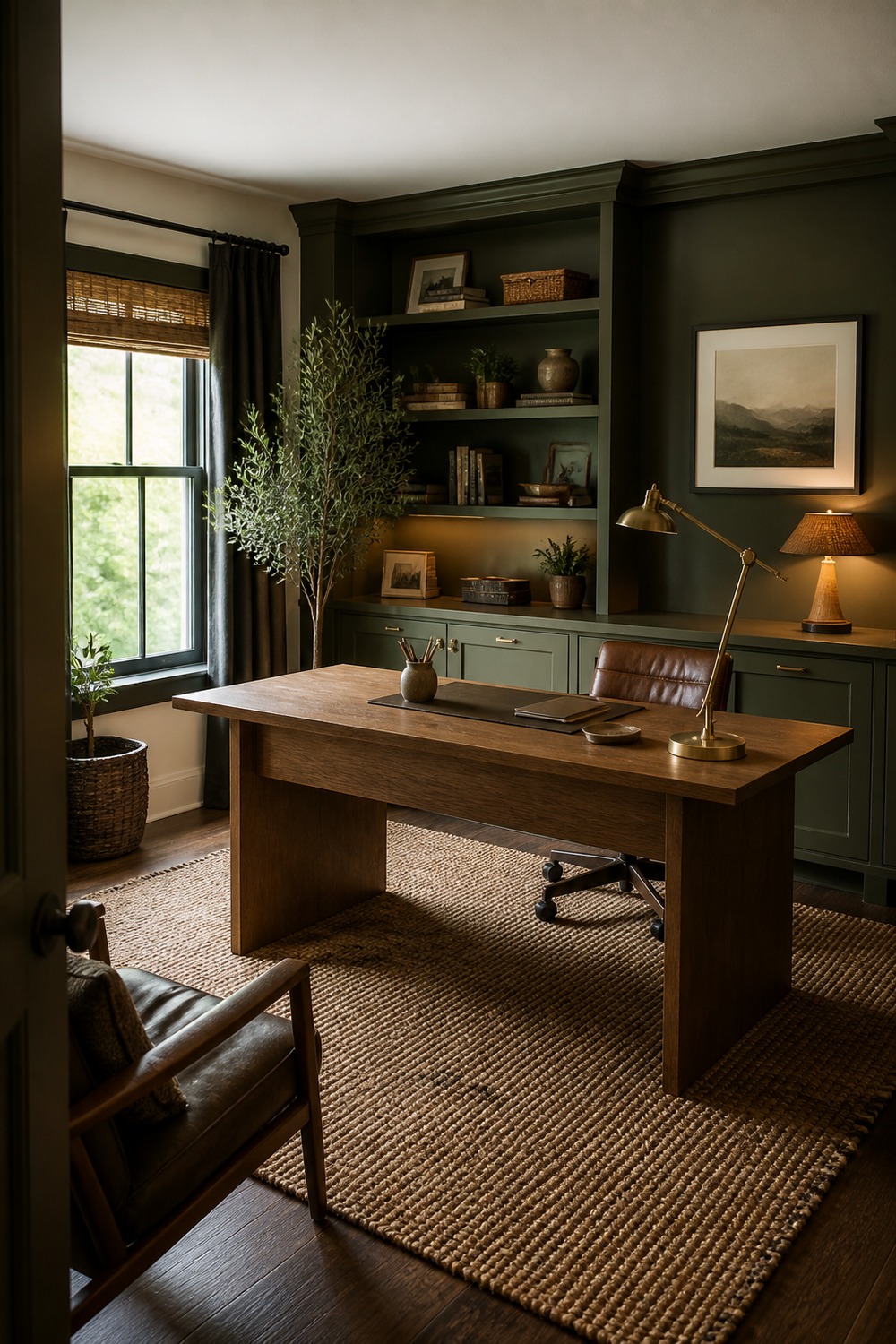
This full-room view shows why restraint matters with an earthy palette. Olive storage, an oak desk, a woven rug, and one warm lamp repeat naturally across the room, yet the chair clearance and uncluttered desktop still make it function as an office.
Earthy rooms look best when the texture has a job: a basket hides cables, a rug defines the chair zone, a shade controls glare. Start with the piece that solves the most annoying part of the workspace, then let the color and materials grow around it.
Leave a comment