
A desk in the middle of the room should feel deliberate, not stranded. The best layouts leave a real chair path, send storage to the perimeter, and use the rug and lighting to make the work zone feel anchored.
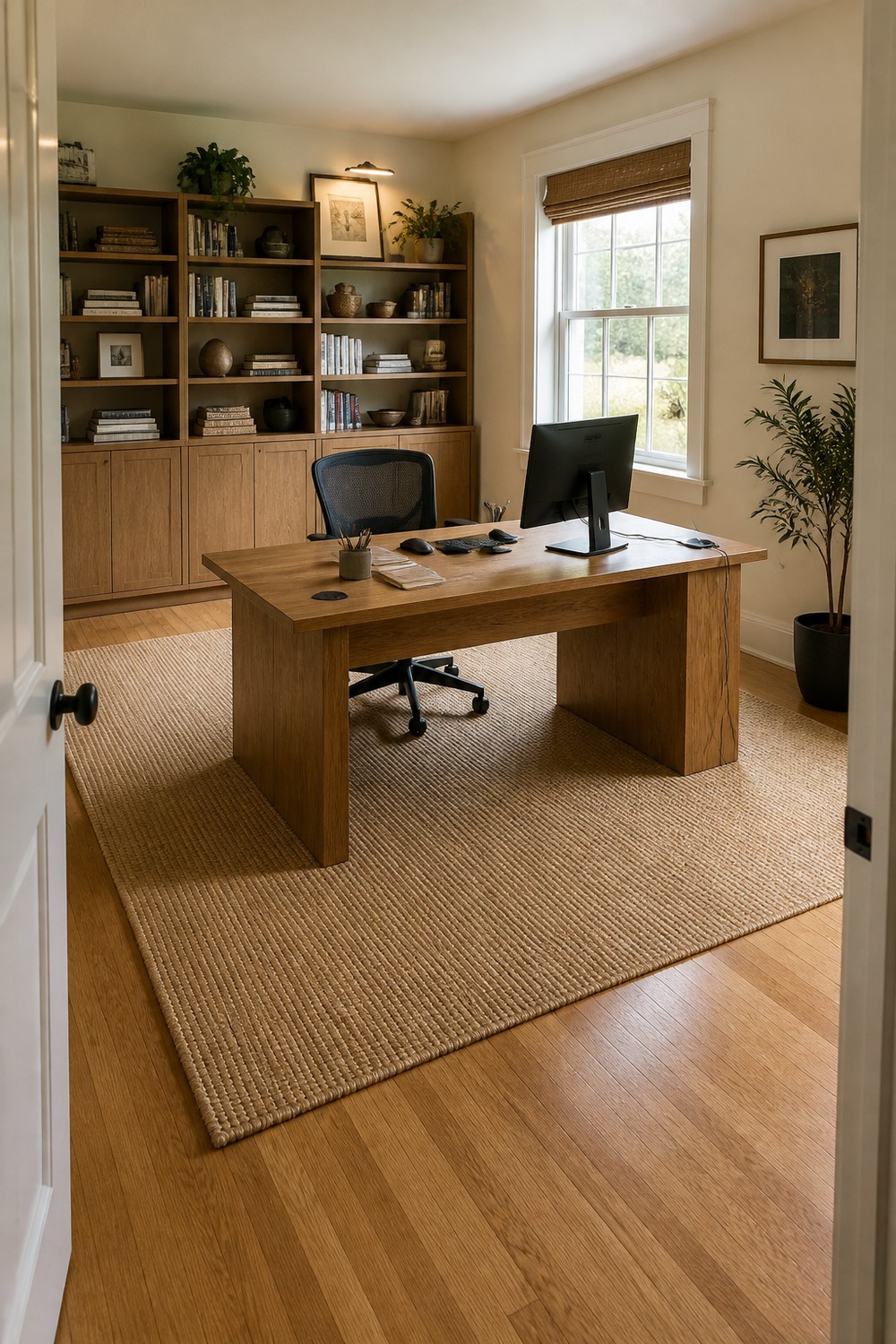
A chunky oak desk can carry the middle of a room when the rest of the walls stay useful. Here, the bookcases hold the visual weight behind it, while the rug leaves a clear boundary for the chair and the walking path.
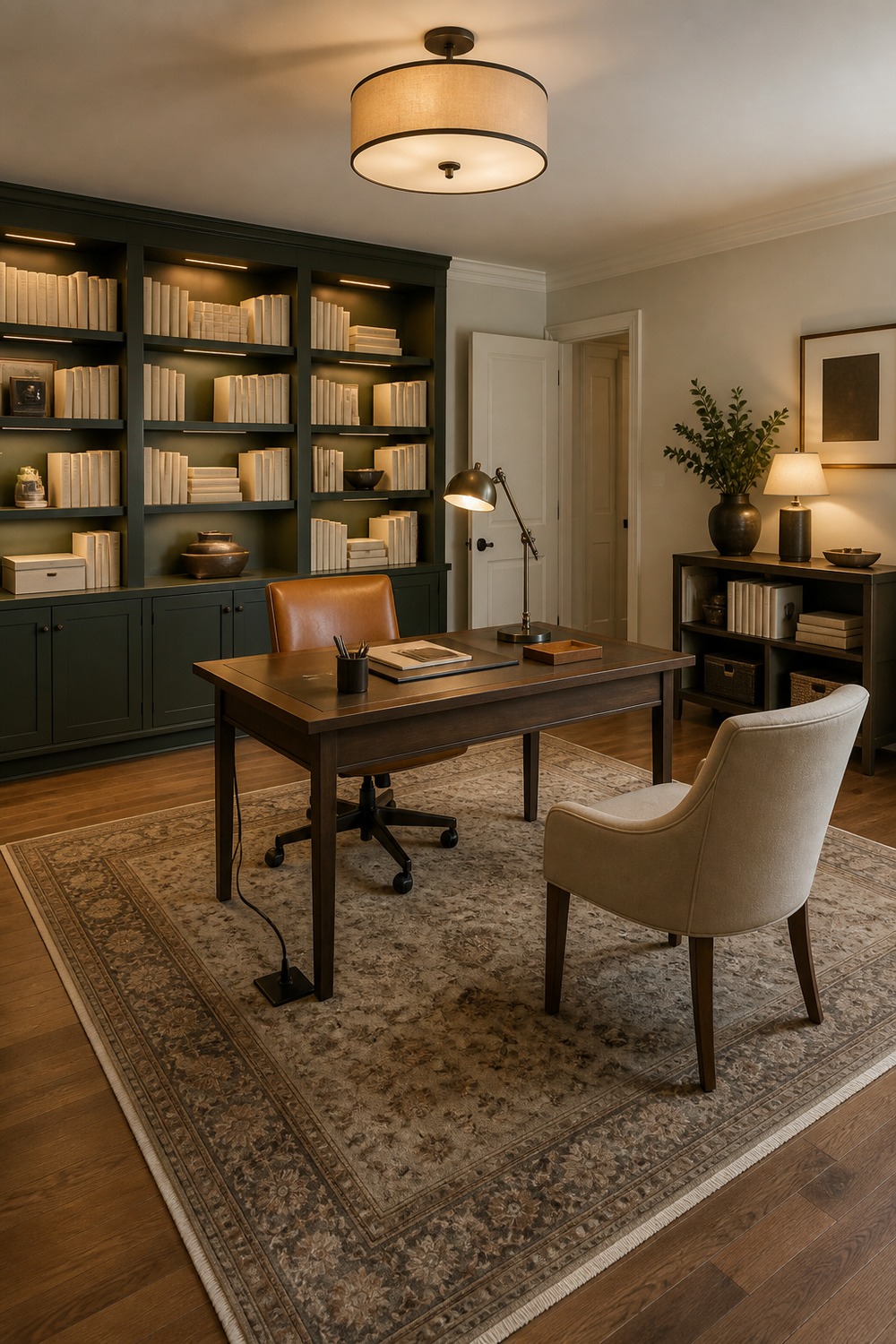
This library setup makes the desk feel more like a proper worktable than furniture pushed wherever it fits. The chair across from it is handy for paperwork or a quick conversation, and the shelf lighting keeps the deep bookcase wall from going flat.
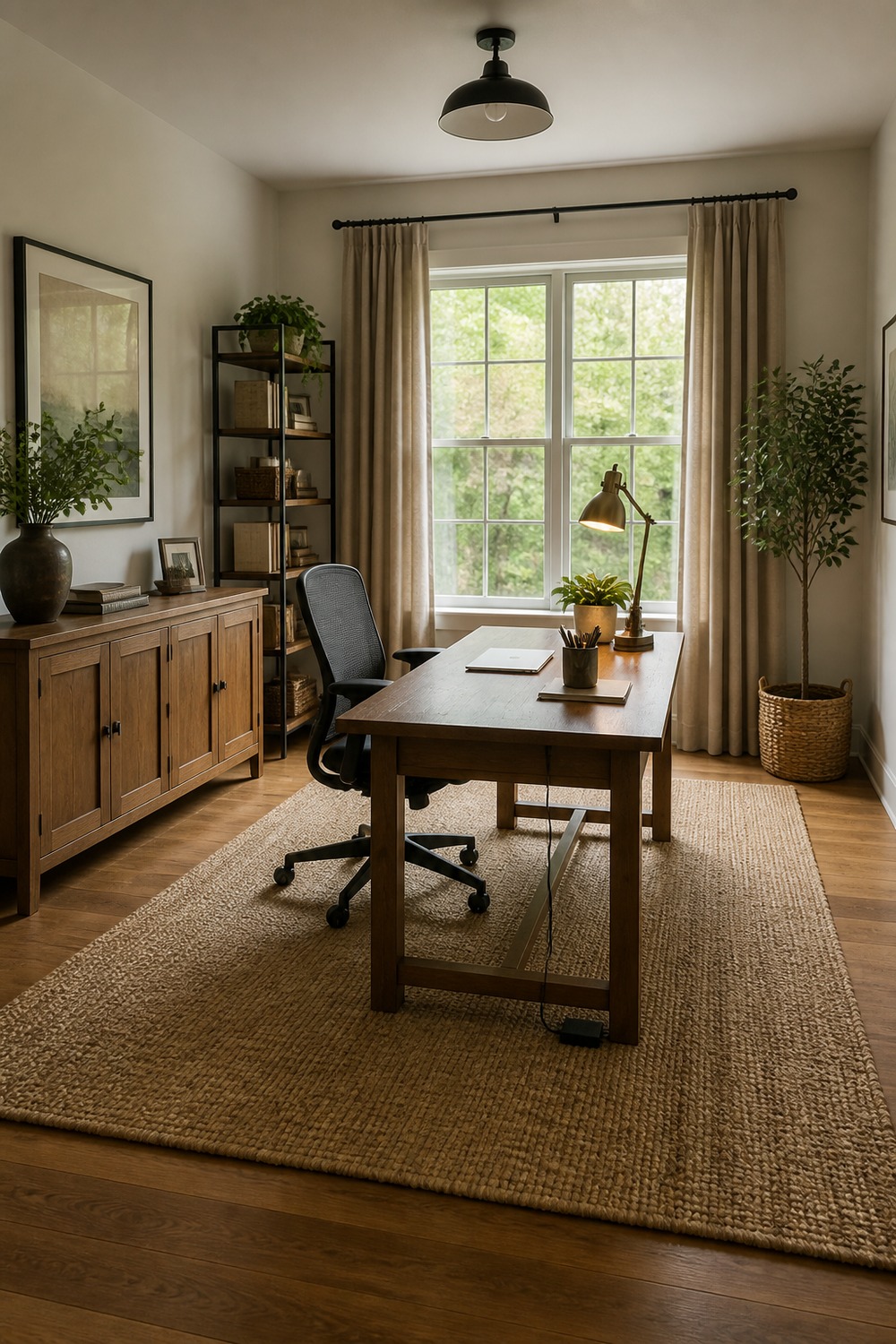
Facing the window is the best part of this arrangement. The desk gets daylight without blocking the glass, and the sideboard takes care of files and equipment that would otherwise crowd the work surface.
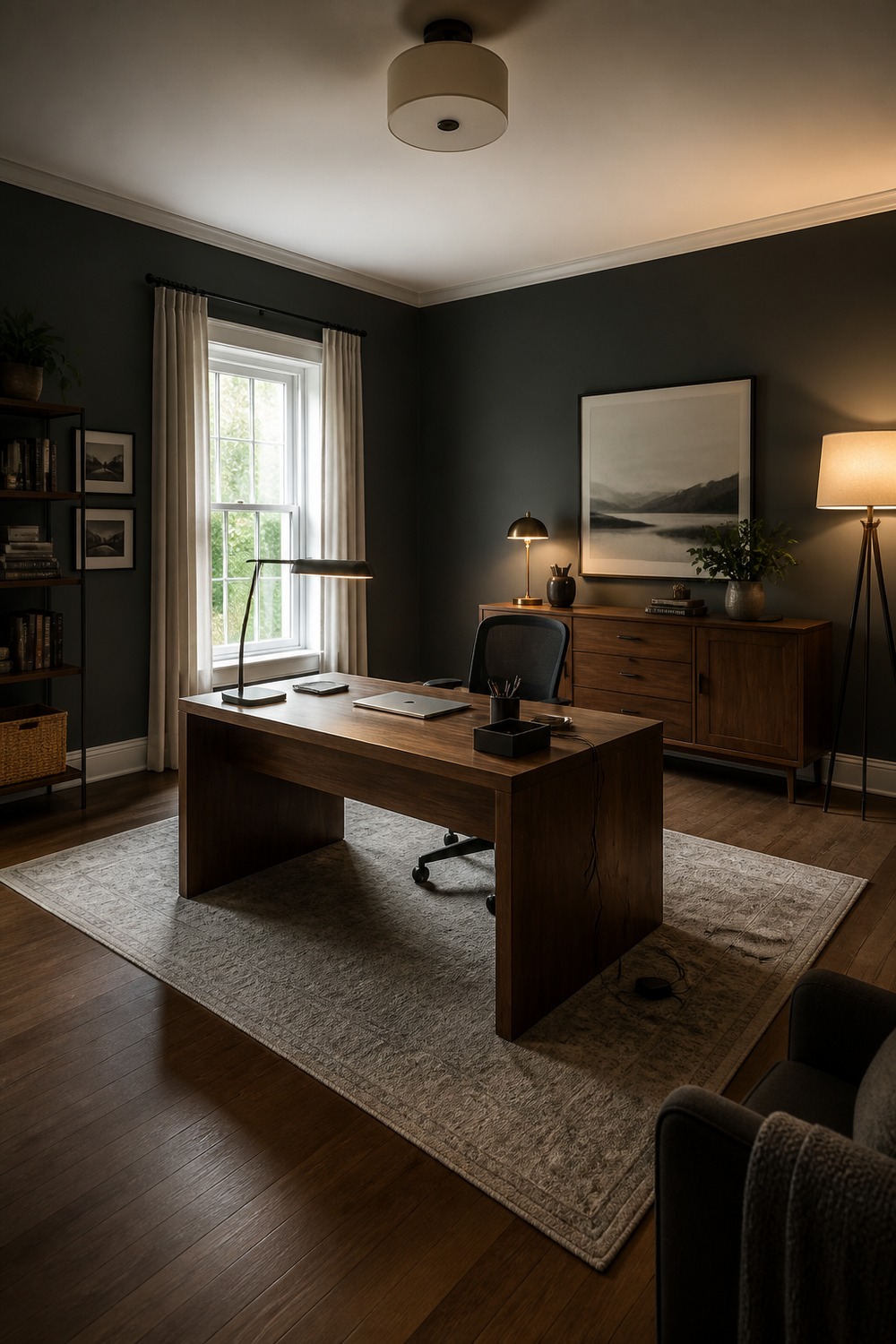
The dark walls could have made this office feel heavy, but the pale rug opens up the center. Walnut, leather, and the low lamp glow give the desk presence without turning the room into a stiff executive suite.
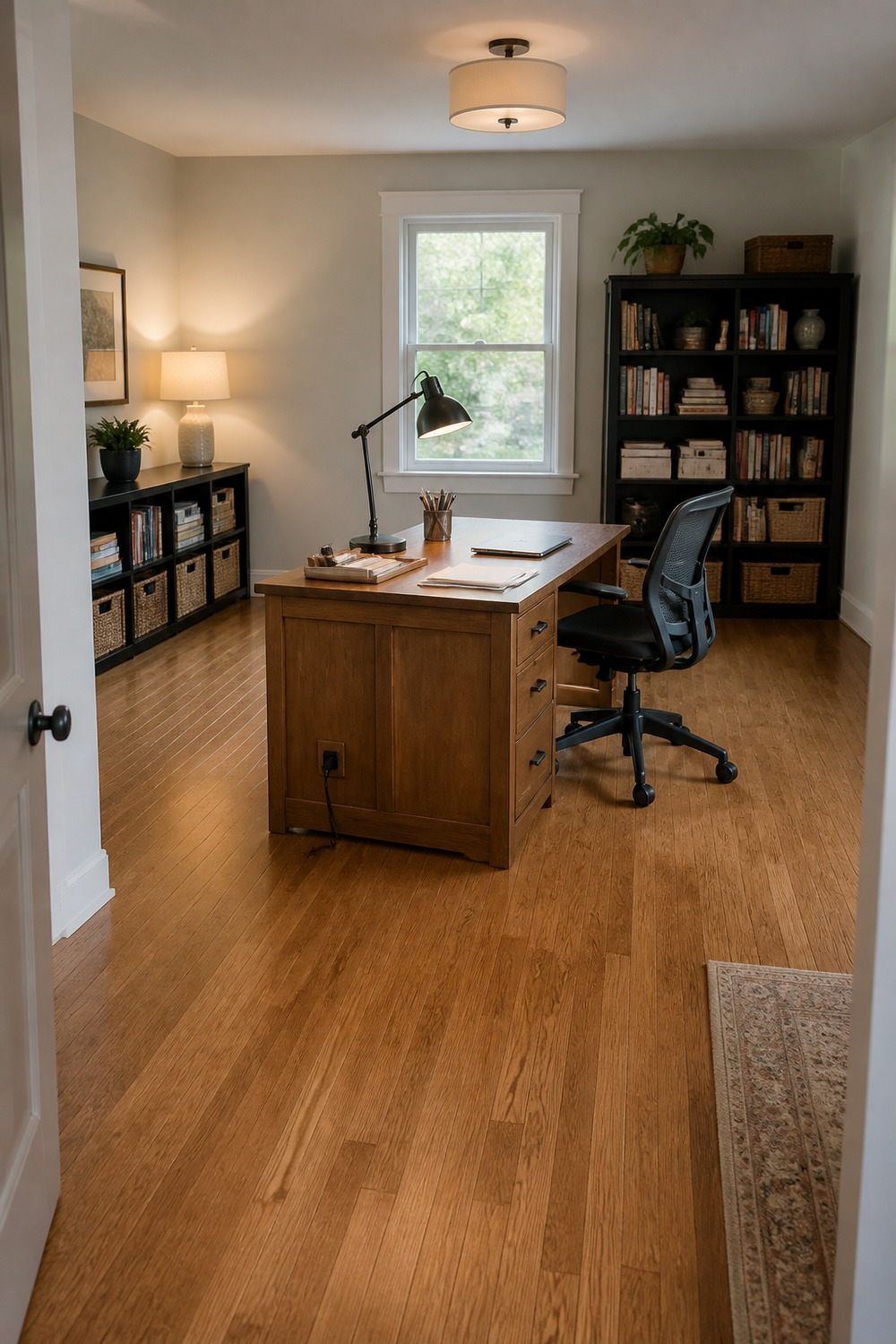
In a small room, an island-style desk needs honest clearance more than extra decoration. The compact drawers keep supplies close, and the open strip of floor around the chair makes the setup look intentional from the doorway.
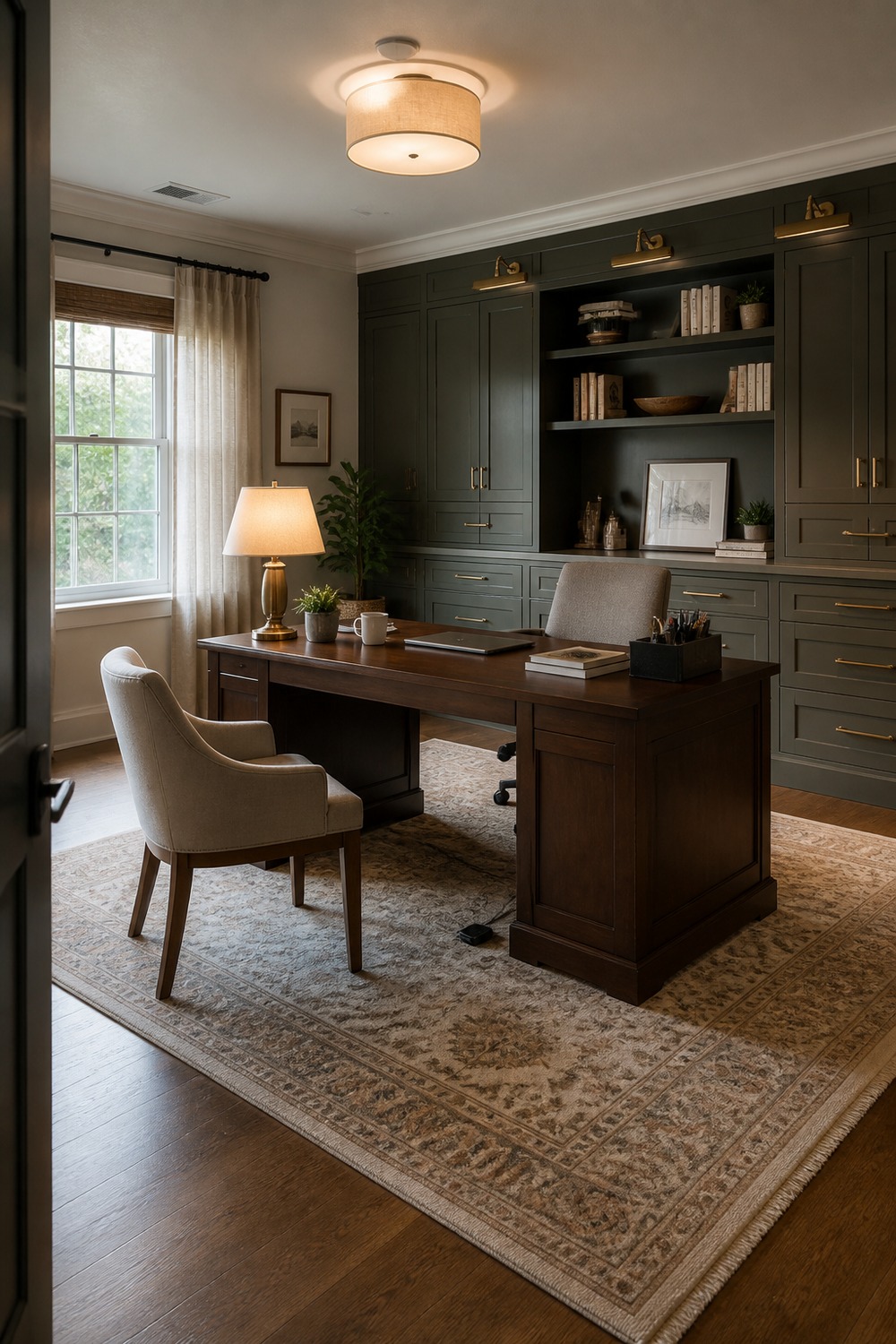
A writing desk that works from both sides is useful when the office occasionally handles a guest, homework, or spread-out projects. Closed cabinets on the back wall hide the mess, so the center surface can stay fairly calm.
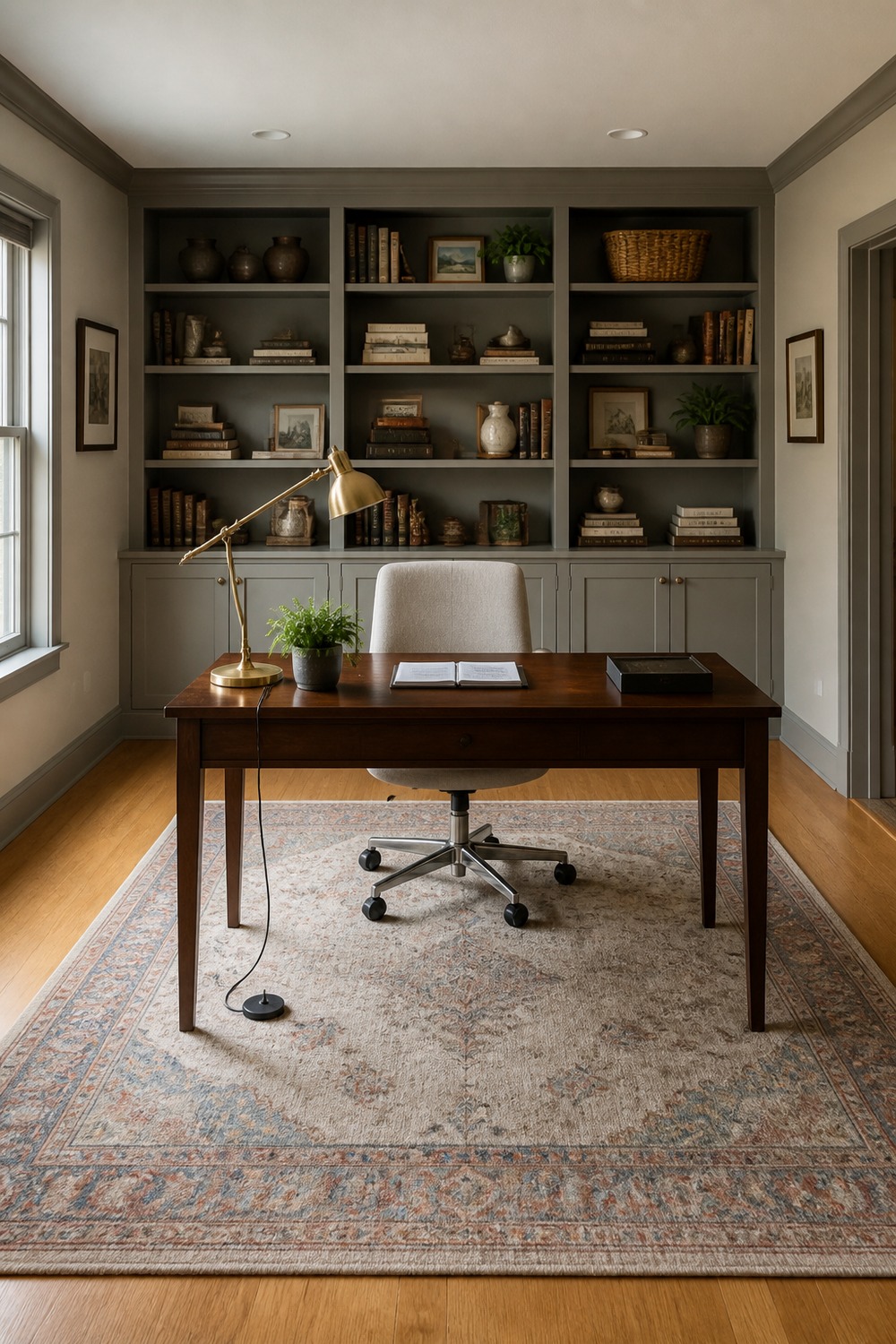
Built-ins are doing the background work here, which lets the freestanding desk become the focal point. I especially like the brass task lamp against the darker shelves; it draws the eye without adding another bulky piece.
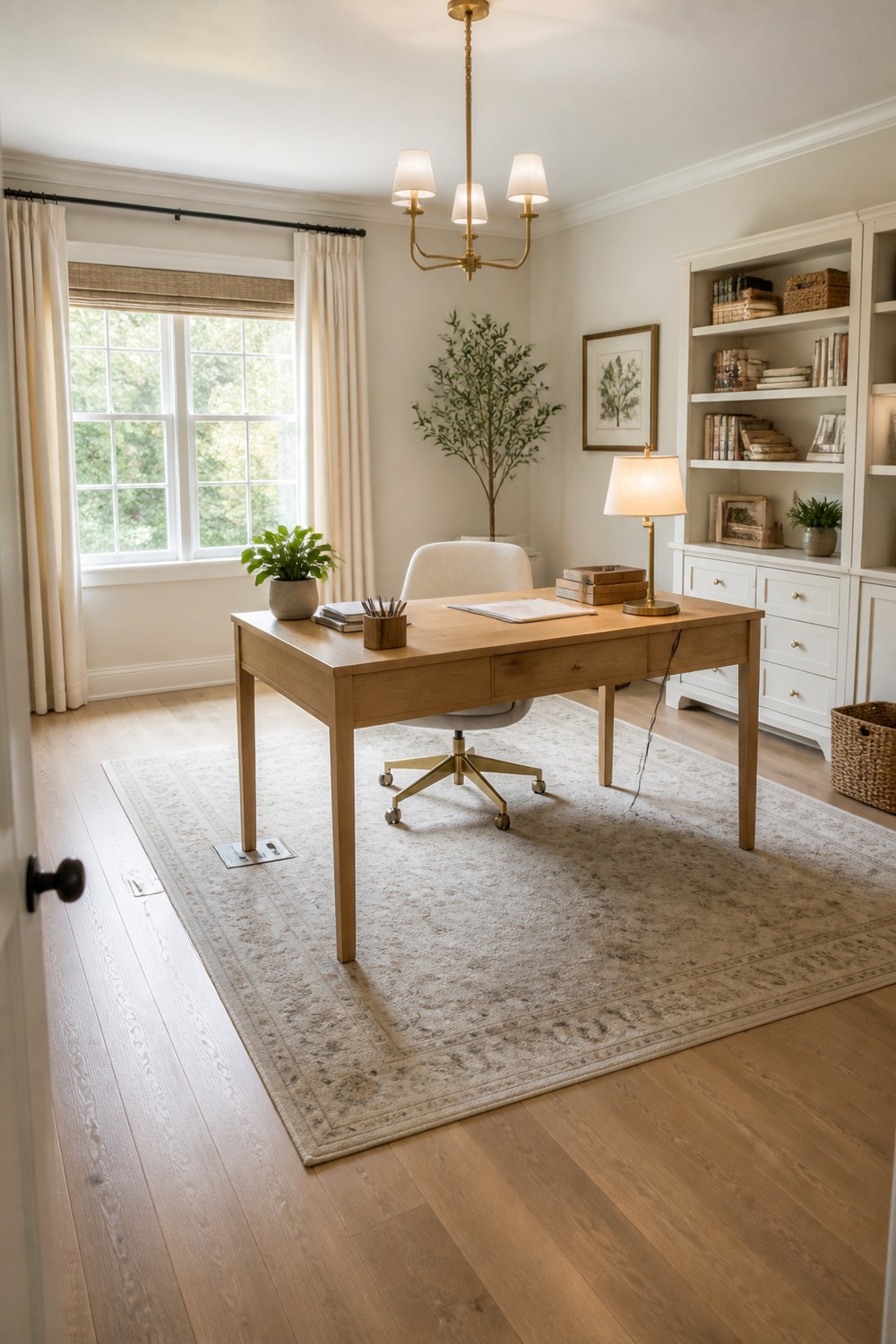
The light wood and pale upholstery soften what could have been a very boxy arrangement. Because the desk legs are slim and the rug is quiet, the middle of the room still feels airy instead of packed.
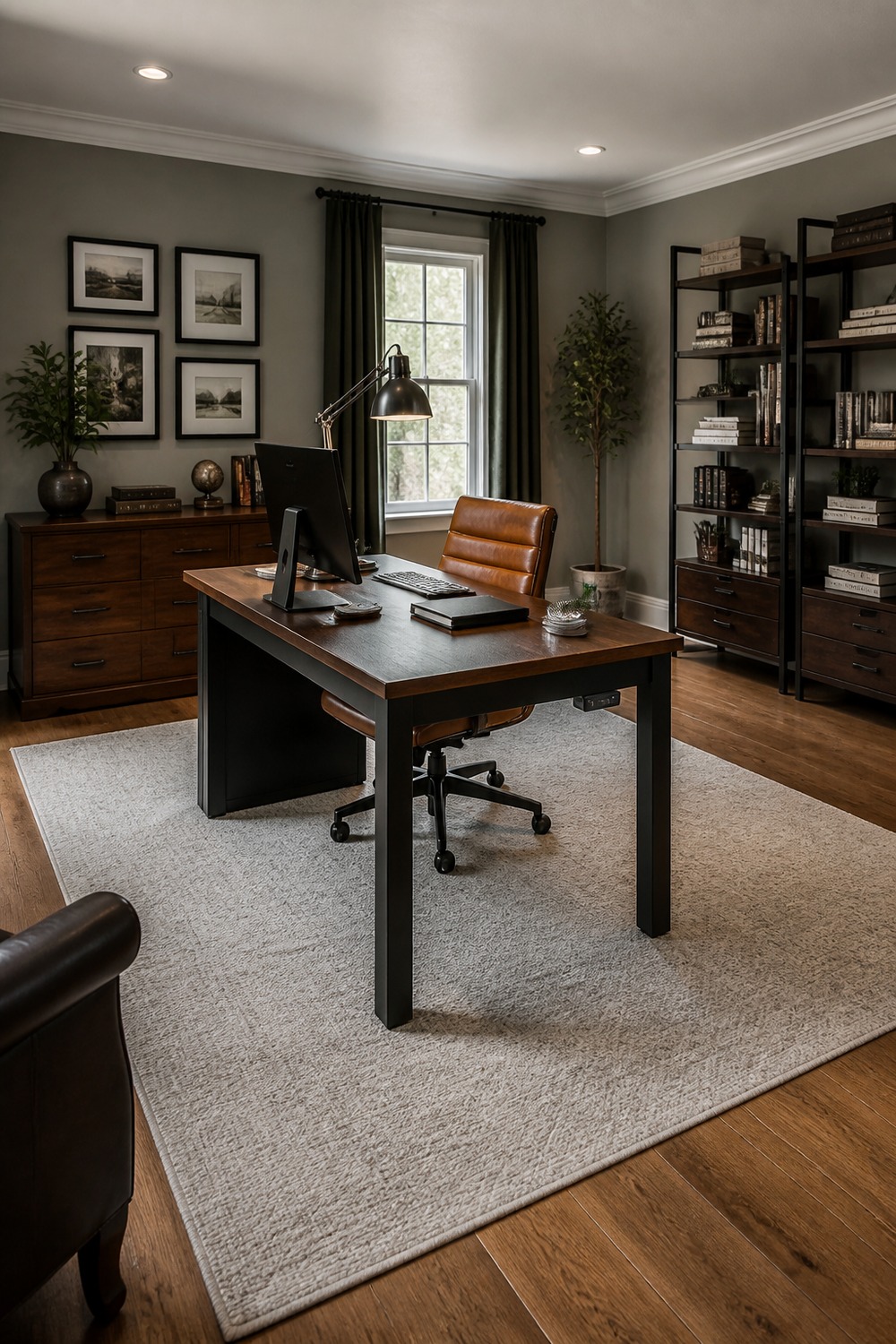
Black framing, walnut, and leather give this one a sharper edge. The credenza keeps file storage out of the traffic path, and the open floor beside the desk prevents the darker palette from feeling cramped.
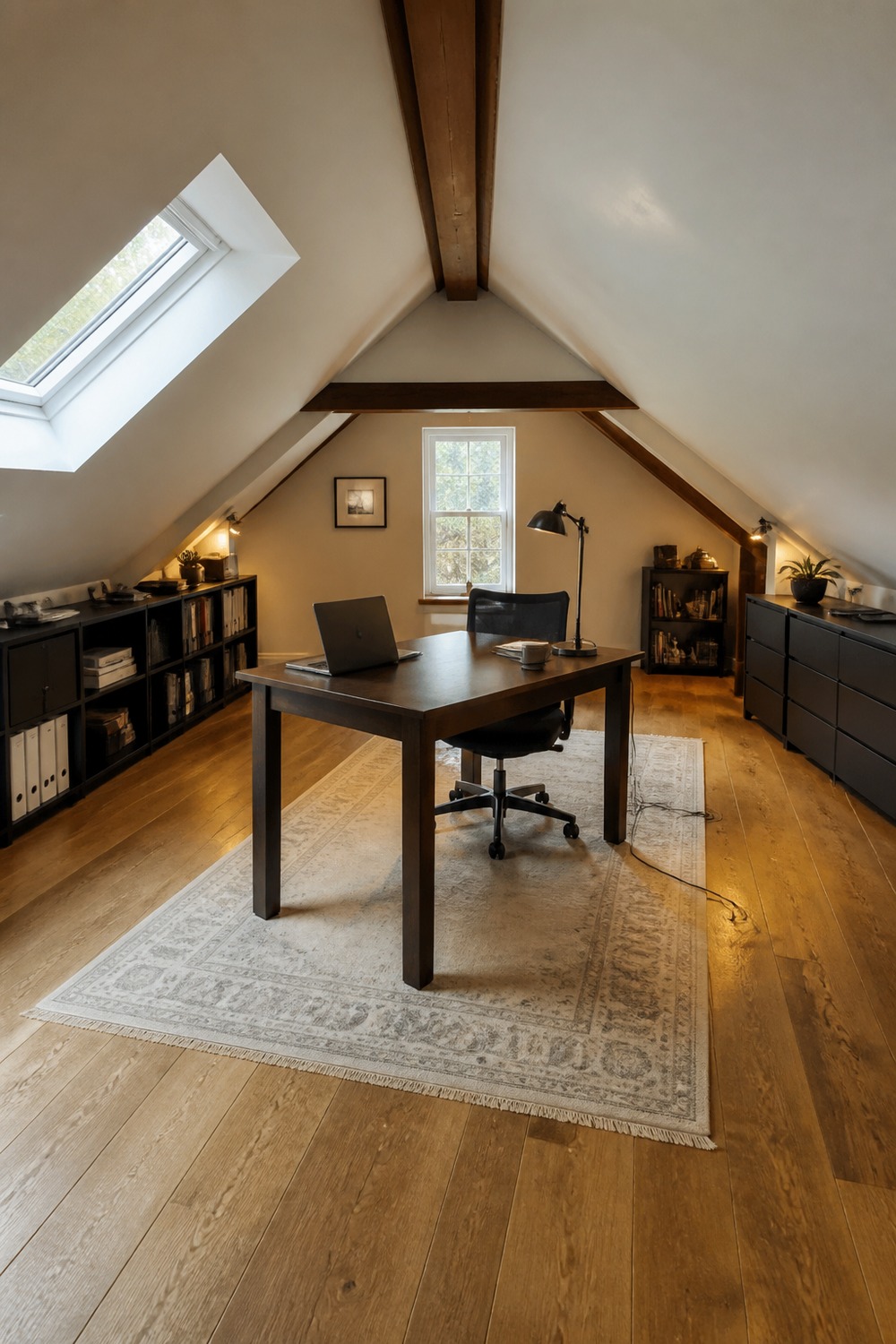
An attic office is awkward until the low walls are treated as storage instead of wasted space. Centering the desk under the ridge gives the chair the best headroom and keeps the skylight useful throughout the day.
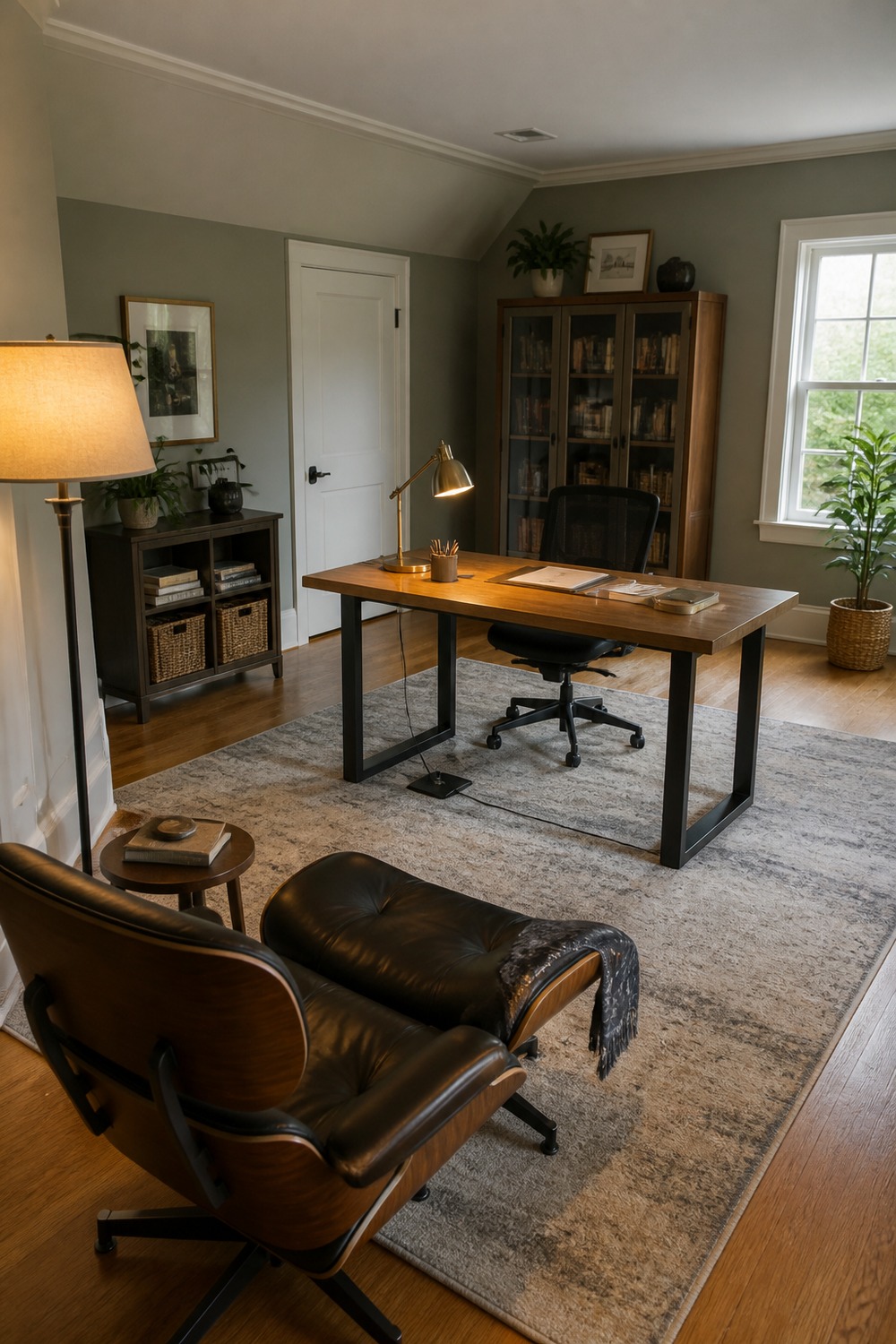
The lounge chair creates a separate reading spot without stealing the desk zone. A rug change and a floor lamp are enough to show where each activity belongs, which is a smart move in a room doing two jobs.
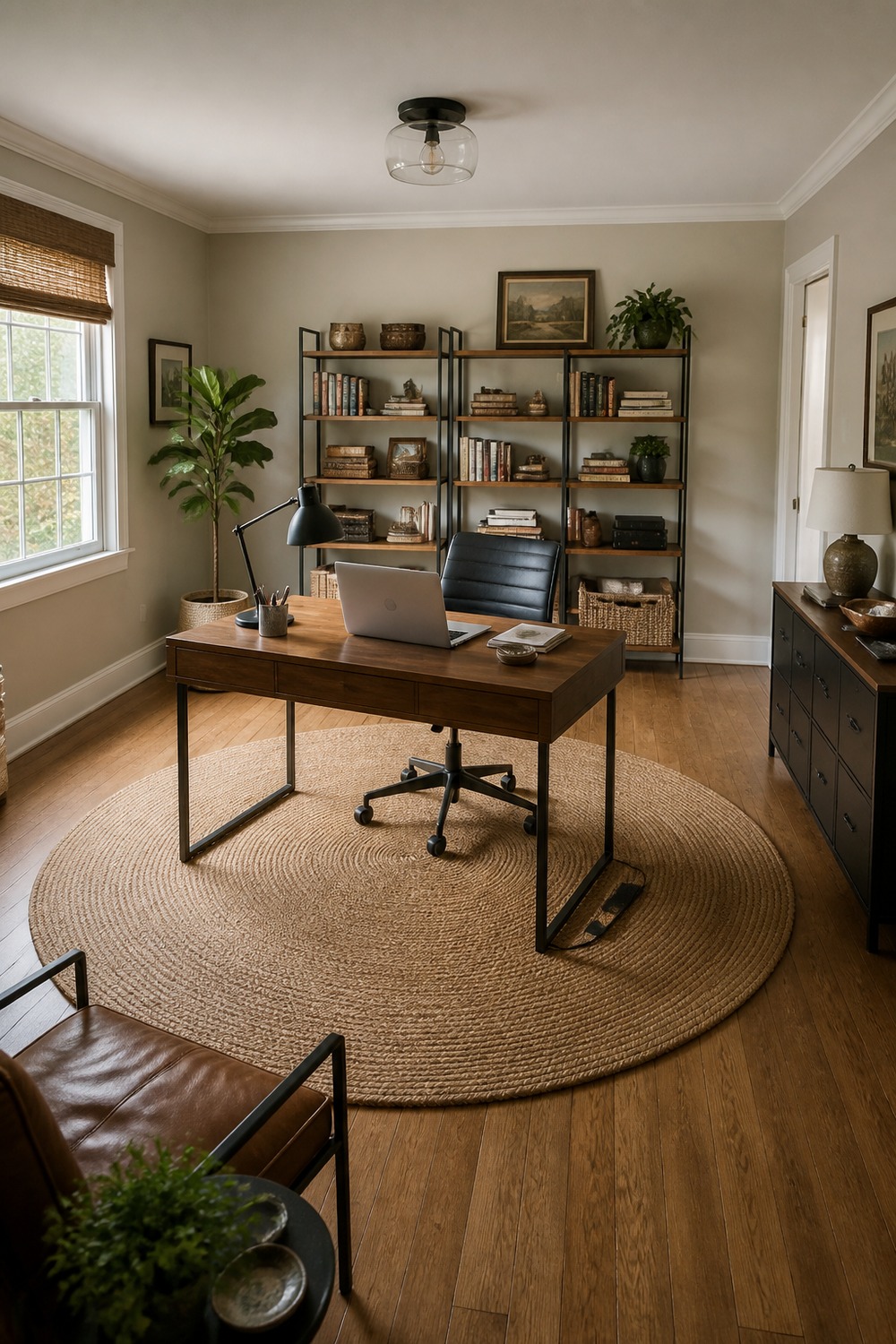
That round rug breaks up all the rectangular lines from the desk and shelves. It also marks a clear circulation loop, so the furniture in the middle reads as a choice rather than an obstacle.
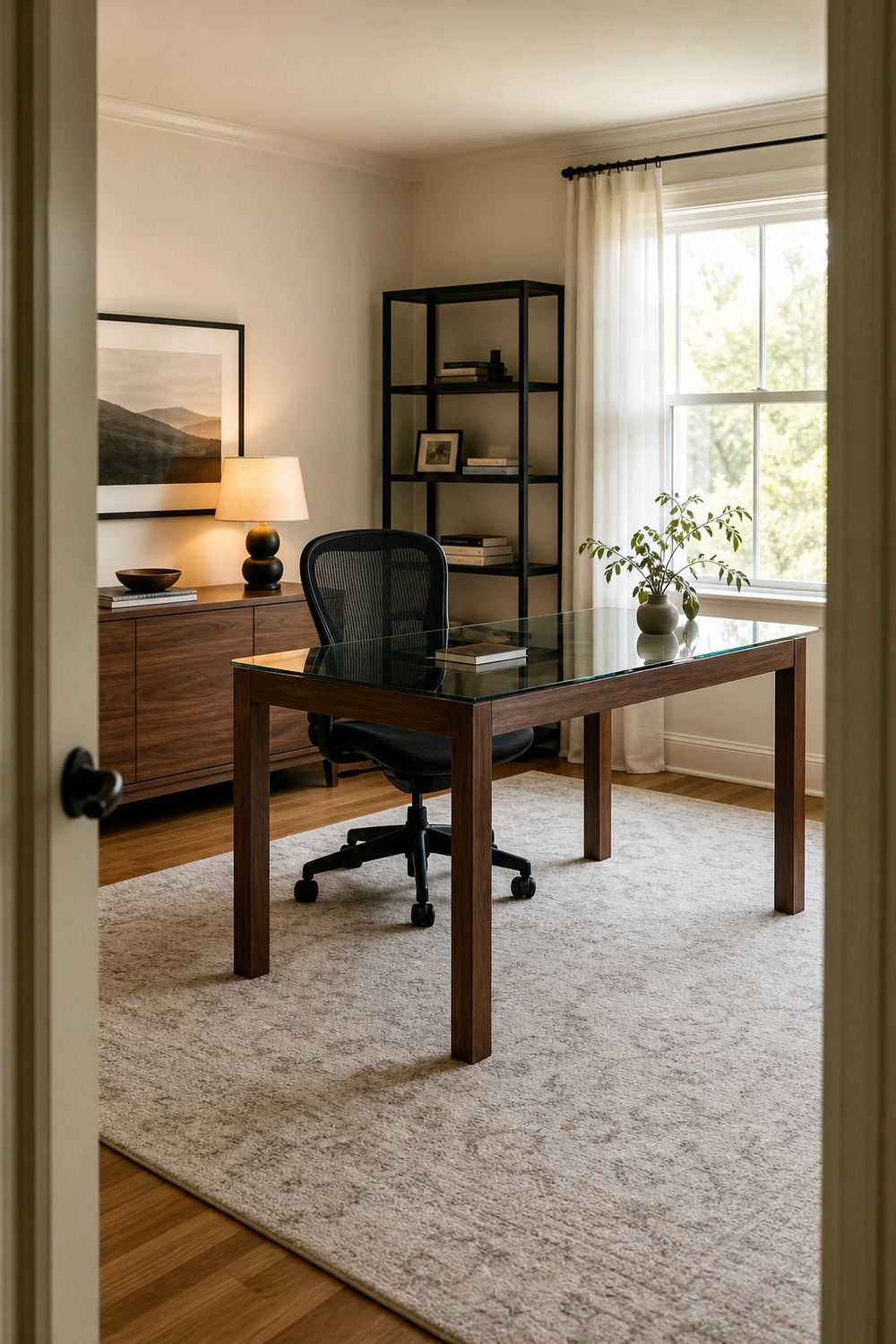
Glass keeps the desk visually light even though it occupies the center of the office. A low sideboard against the wall handles storage, and the curtains soften the hard edges without covering the walking space.
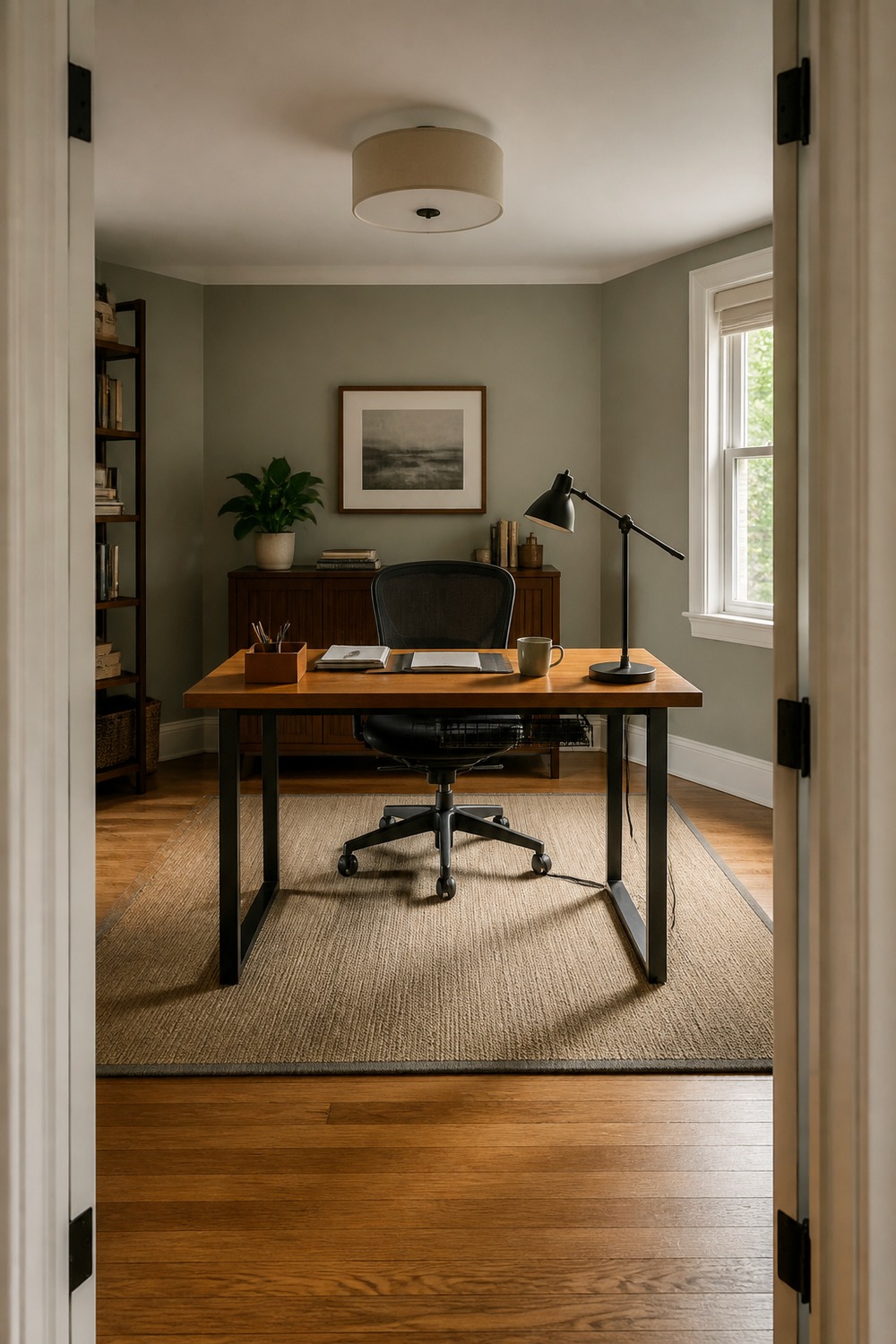
This is a useful reminder that a square spare room does not need every piece lined around the perimeter. The narrow cabinet leaves one wall quiet, while the center desk gives the chair room to pull back naturally.
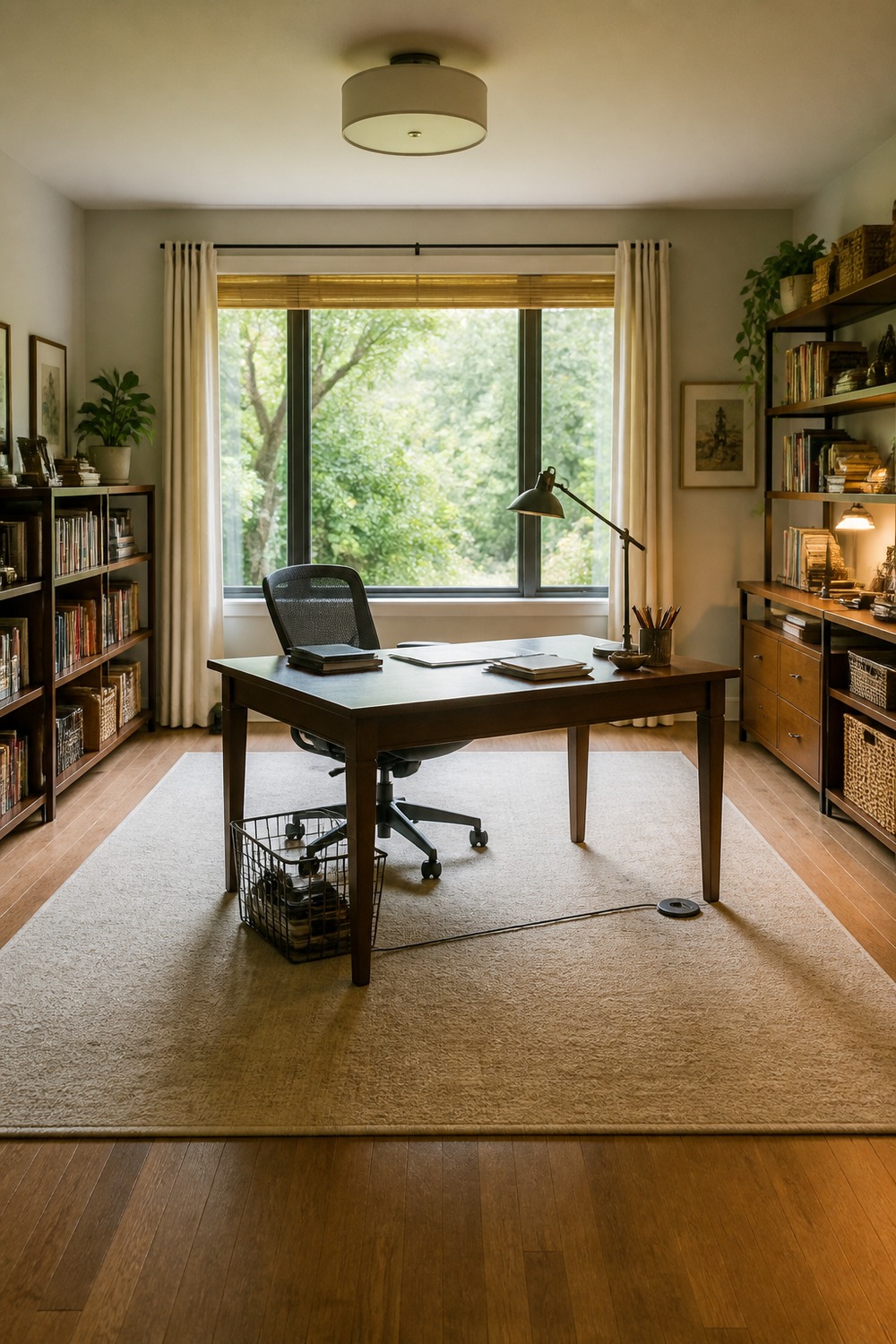
Placing the desk toward a picture window makes the view part of the workday, but glare still needs a plan. Soft curtains, side shelving, and a pale rug keep the window wall bright without making the desk feel exposed.
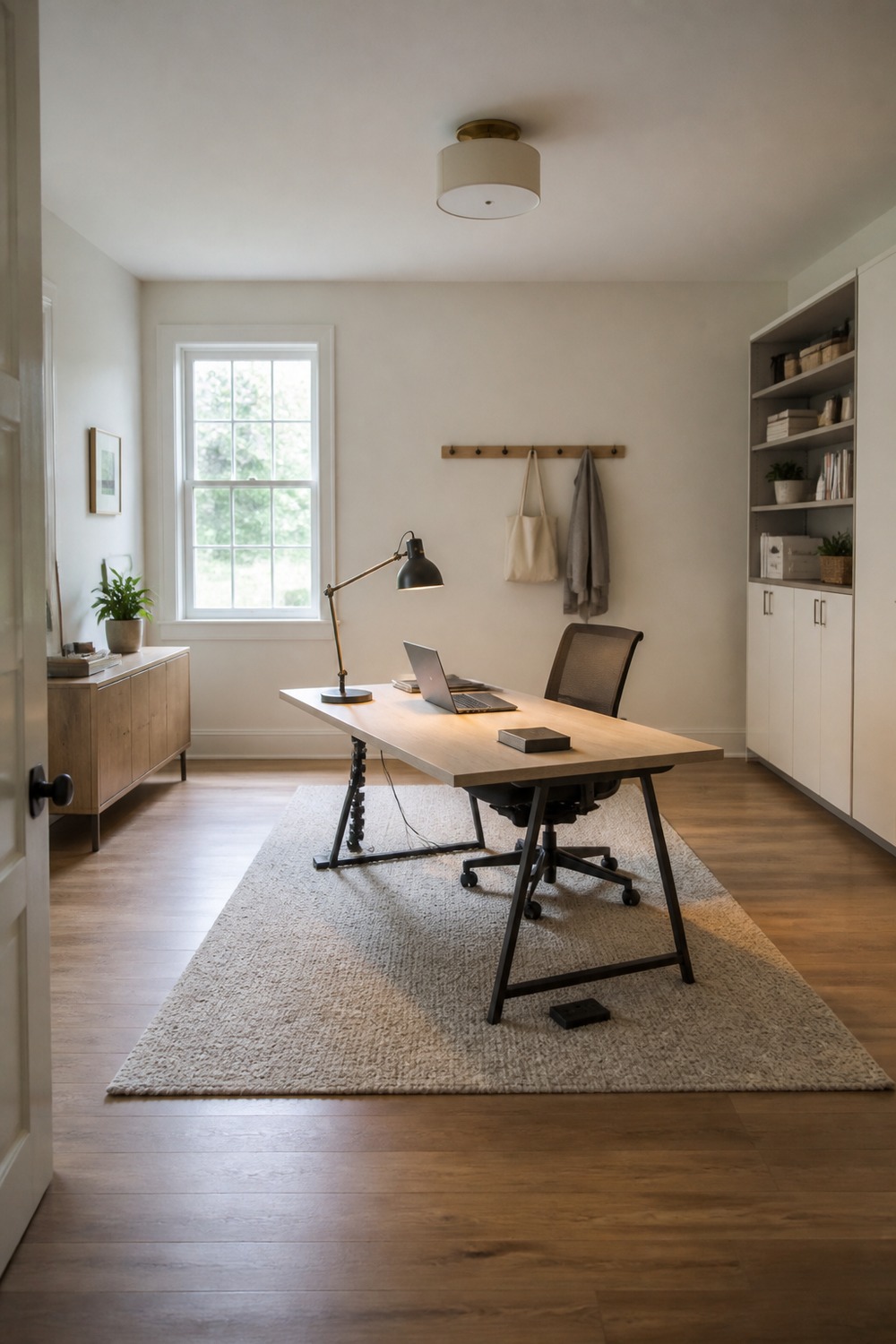
The slim desk almost disappears against the cream room, which is exactly why the placement works. A hook rail and closed storage take small items off the surface, leaving enough visual breathing room around the chair.
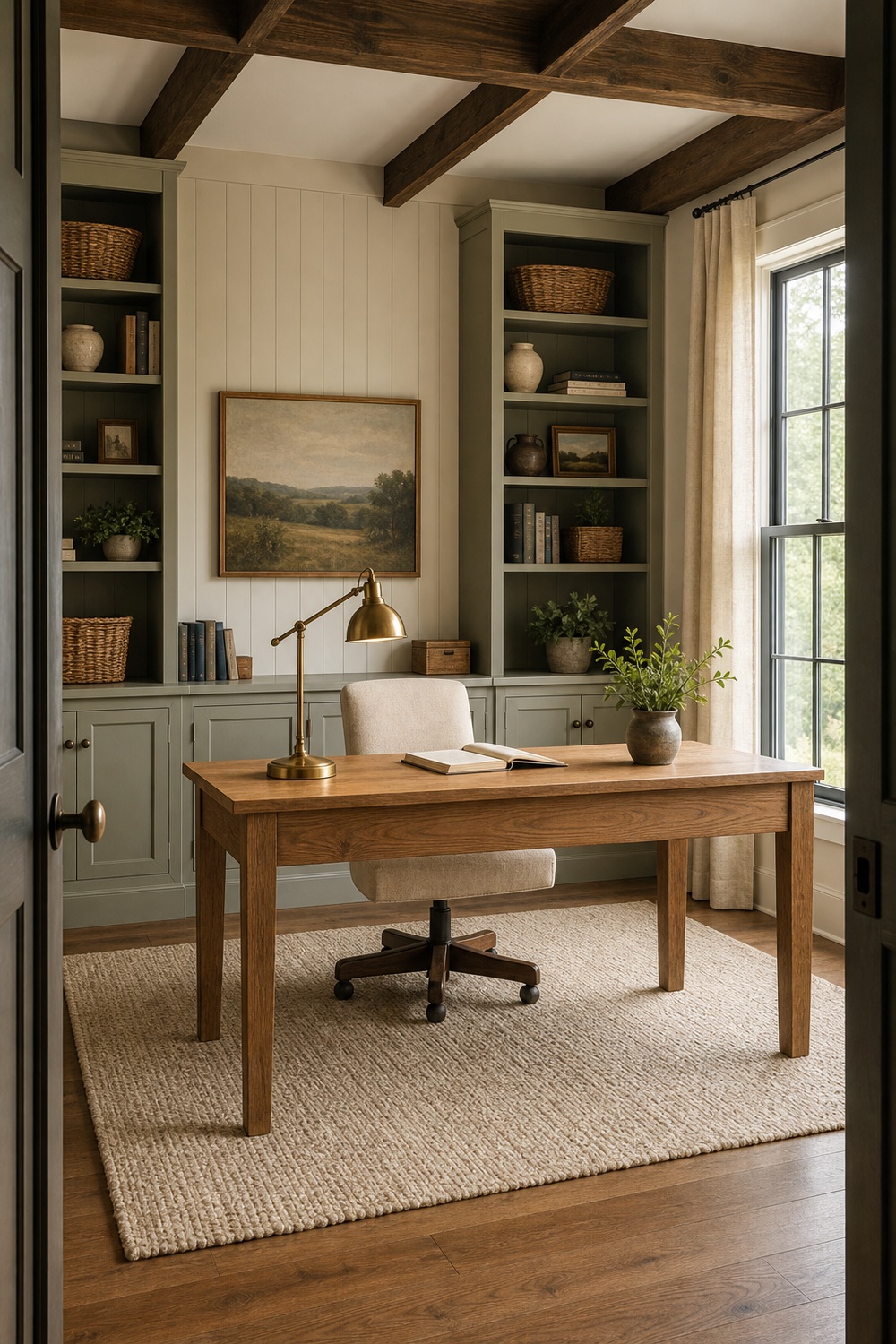
Farmhouse style looks better here without a pile of decorative signs. The woven rug, solid wood desk, linen curtains, and built-in cabinet bring texture while still leaving the room easy to move through.
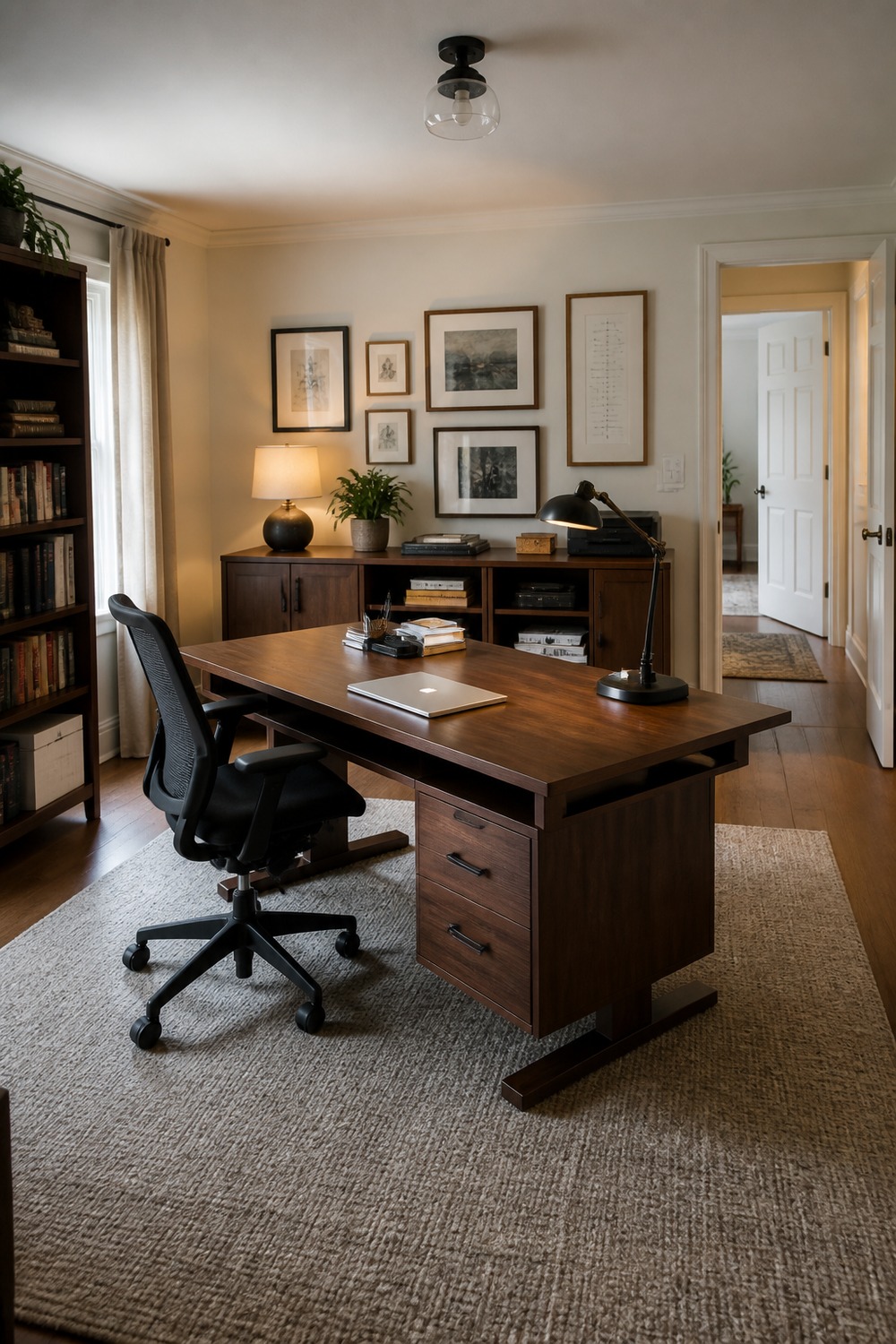
A low console is a practical partner for a desk in the middle because it handles the printer, files, and lamp away from the main surface. The open route to the door is what keeps the arrangement comfortable.
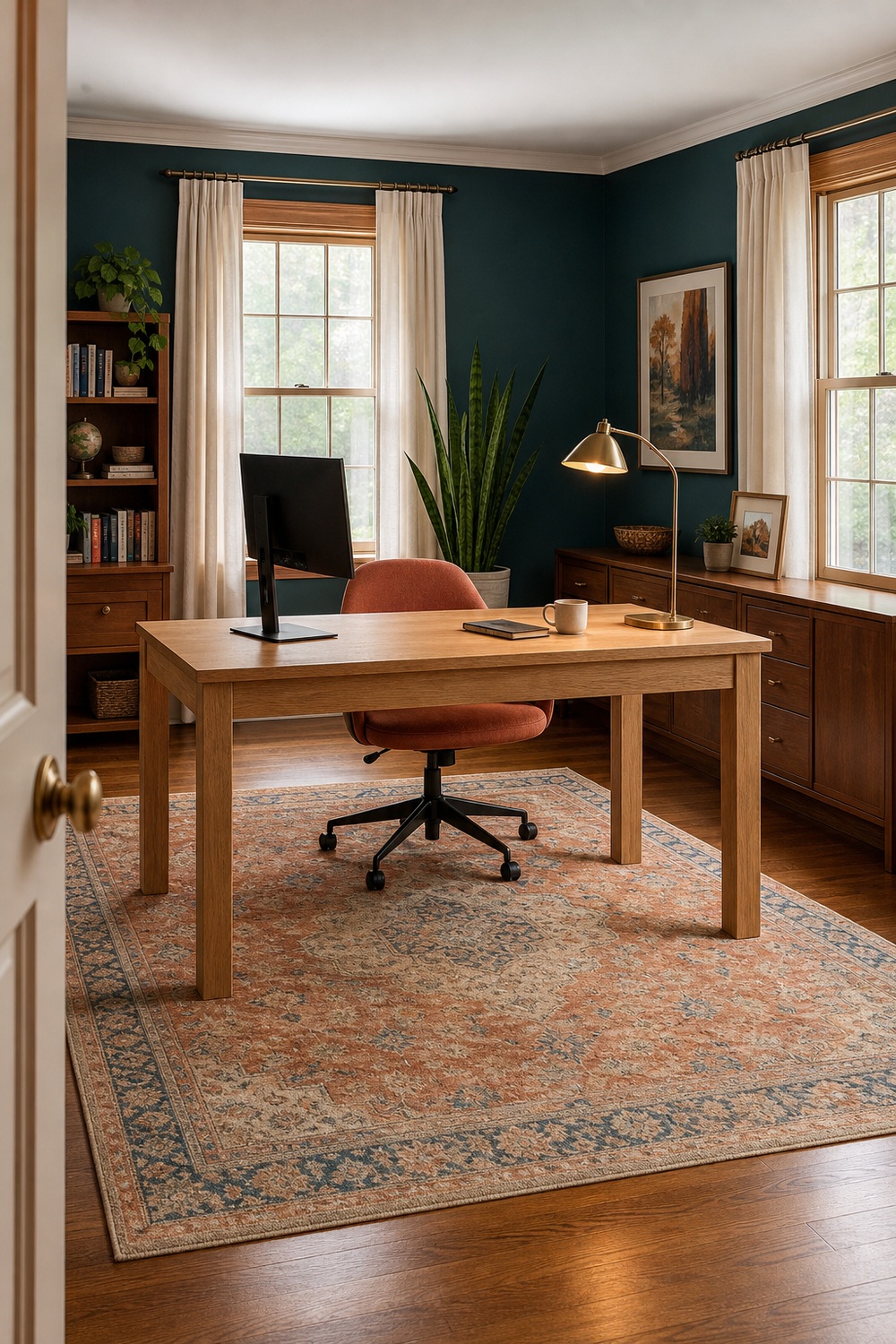
The blue-green walls and terracotta chair add color in larger, cleaner blocks. Natural wood sits nicely between them, and the patterned rug ties the center desk to the room without making everything match.
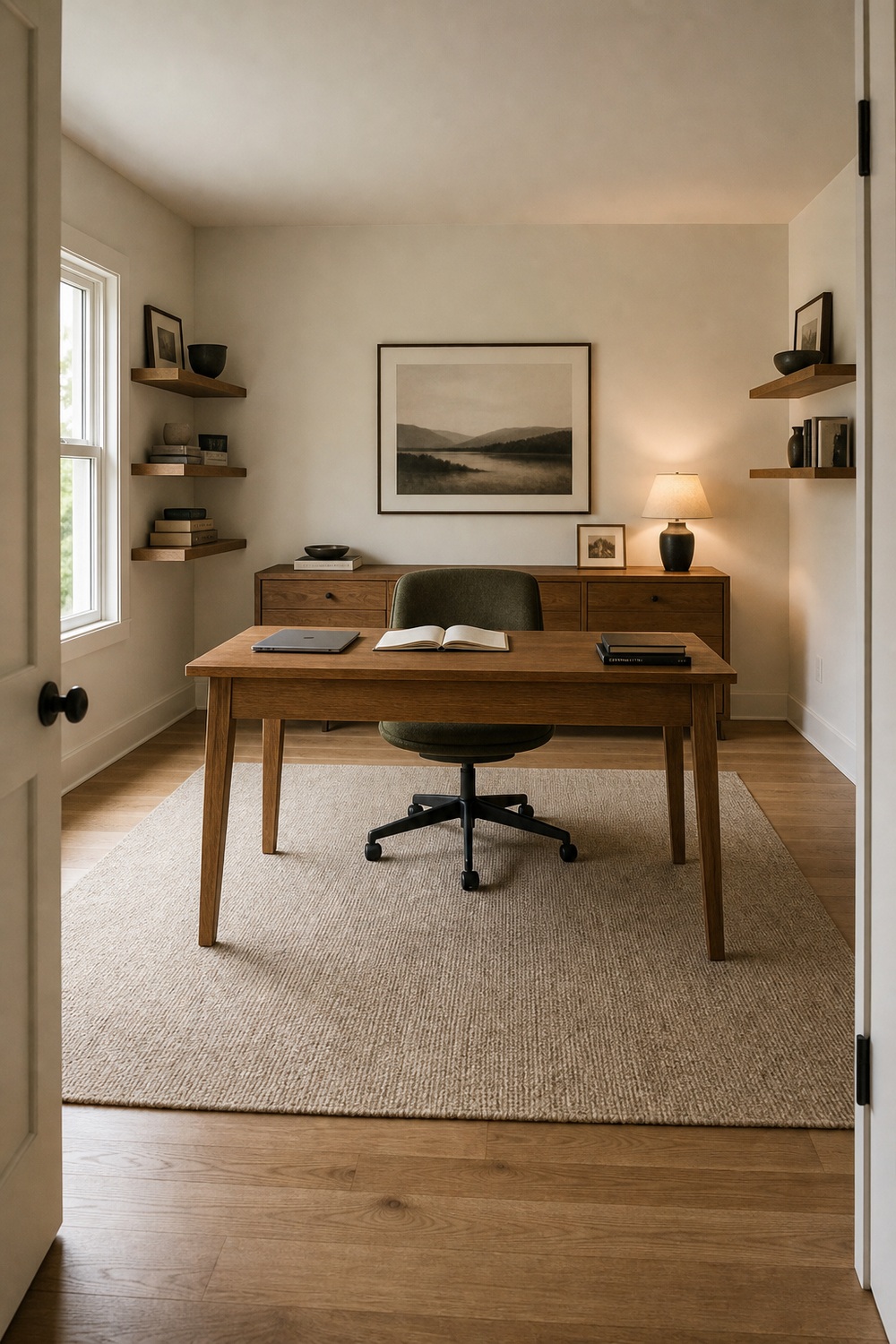
This full-room angle makes the center placement easy to judge. Clear floor remains visible along both sides of the oak desk, while the low credenza keeps storage at the perimeter and out of the main route.
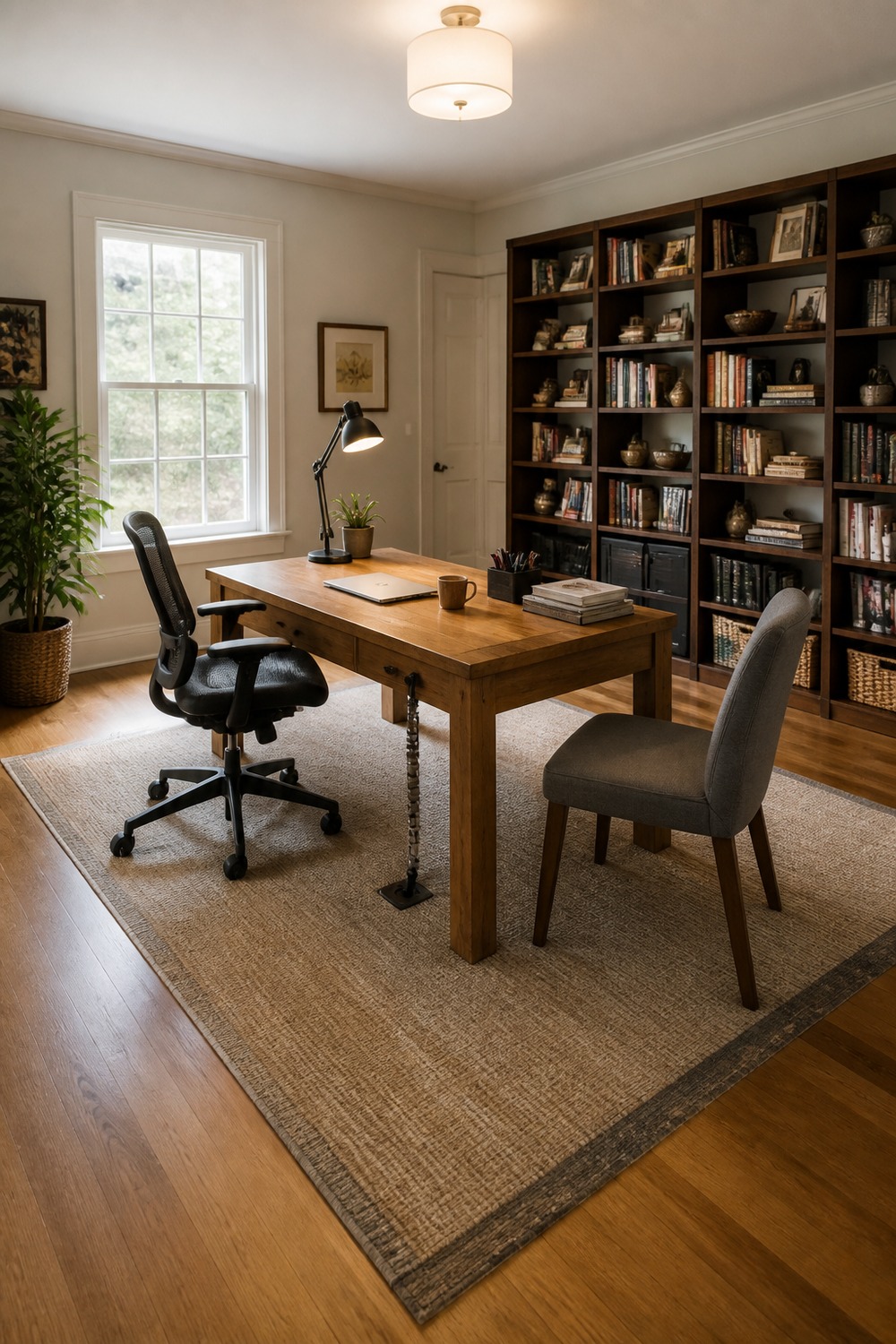
Two different chairs make the purpose of each side obvious. The task chair handles daily work, the guest chair gives someone a place to sit, and the bookcase wall keeps the background organized.
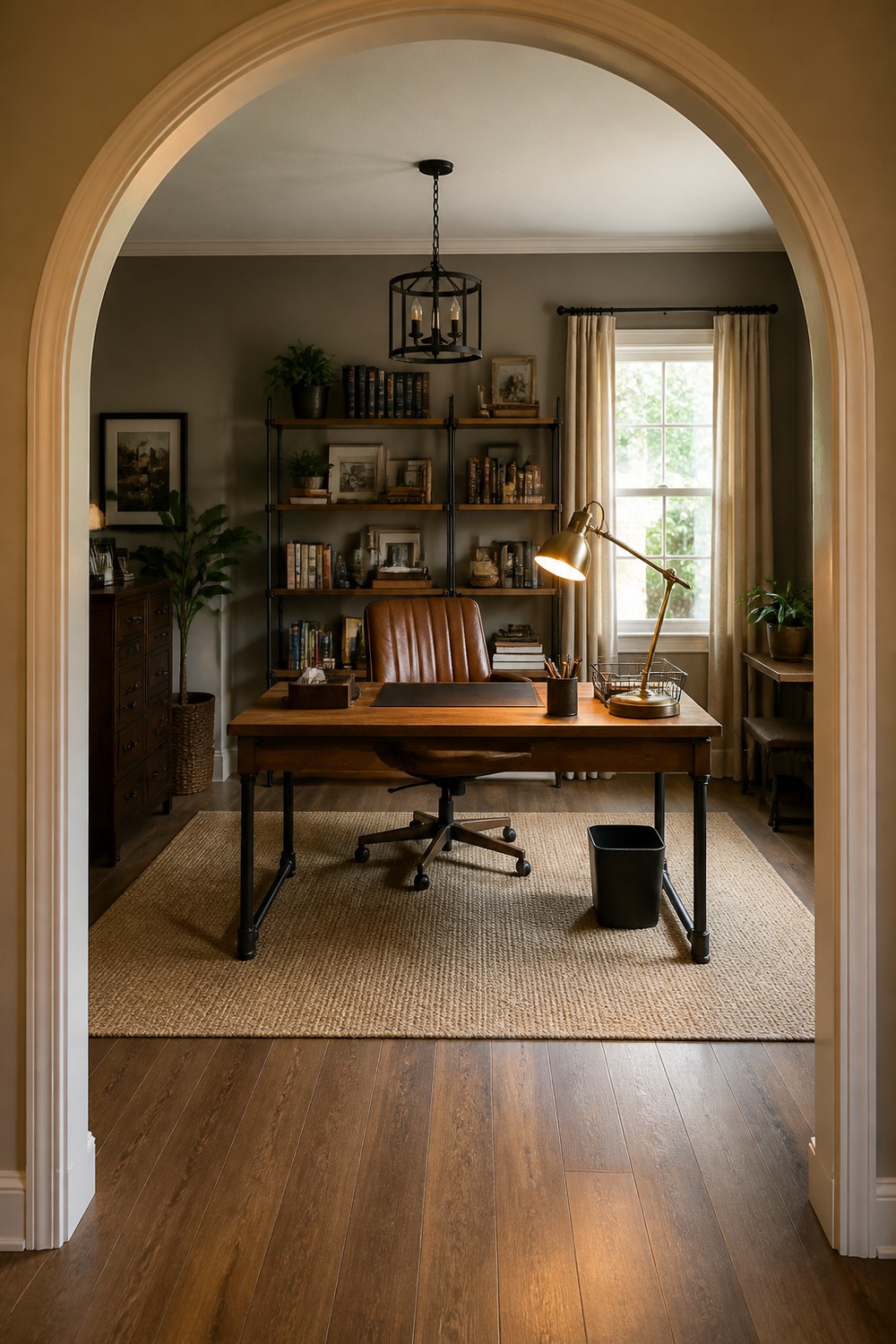
The doorway gives this office a natural frame before the desk comes into focus. That long view makes the centered placement feel intentional, while shelves and a warm lamp give the far wall enough depth to hold the composition.
A center desk changes the whole room, so the clearance around it matters as much as the desk itself. Once storage, cords, light, and the chair path have somewhere sensible to go, the layout stops feeling risky and starts feeling calm.
Leave a comment