
A shared office should not look like two gray desks were pushed together after an argument. This redo goes brighter and a lot more playful, with color-blocked alcoves, curved desks, checkerboard rugs, sunny cabinets, and layouts that still give both people a real chair path, light, and storage.
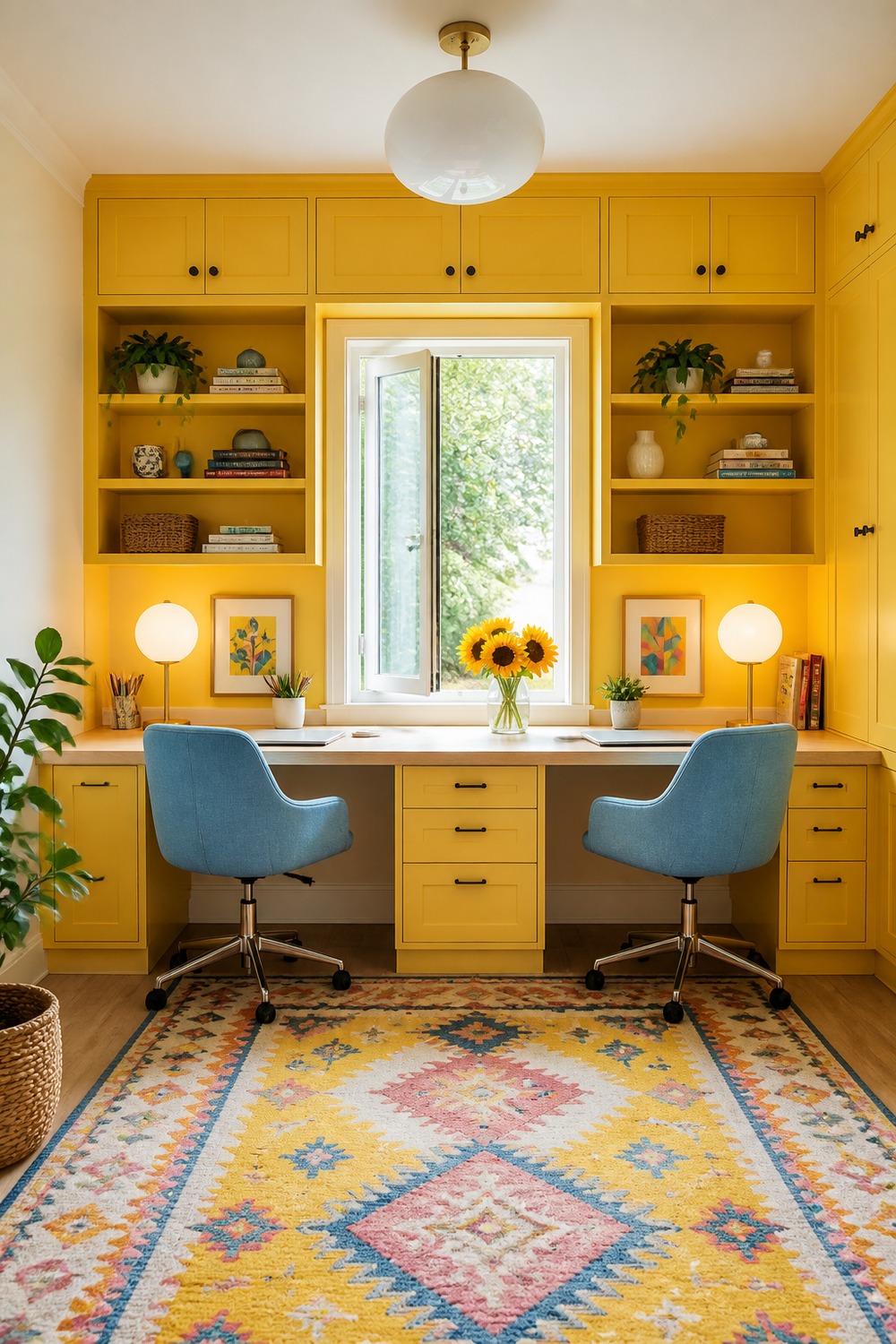
Sunflower cabinetry changes the whole mood before either laptop is opened. The long oak top still gives each person a proper drawer stack and lamp, while the blue chairs keep the yellow from taking over the room.
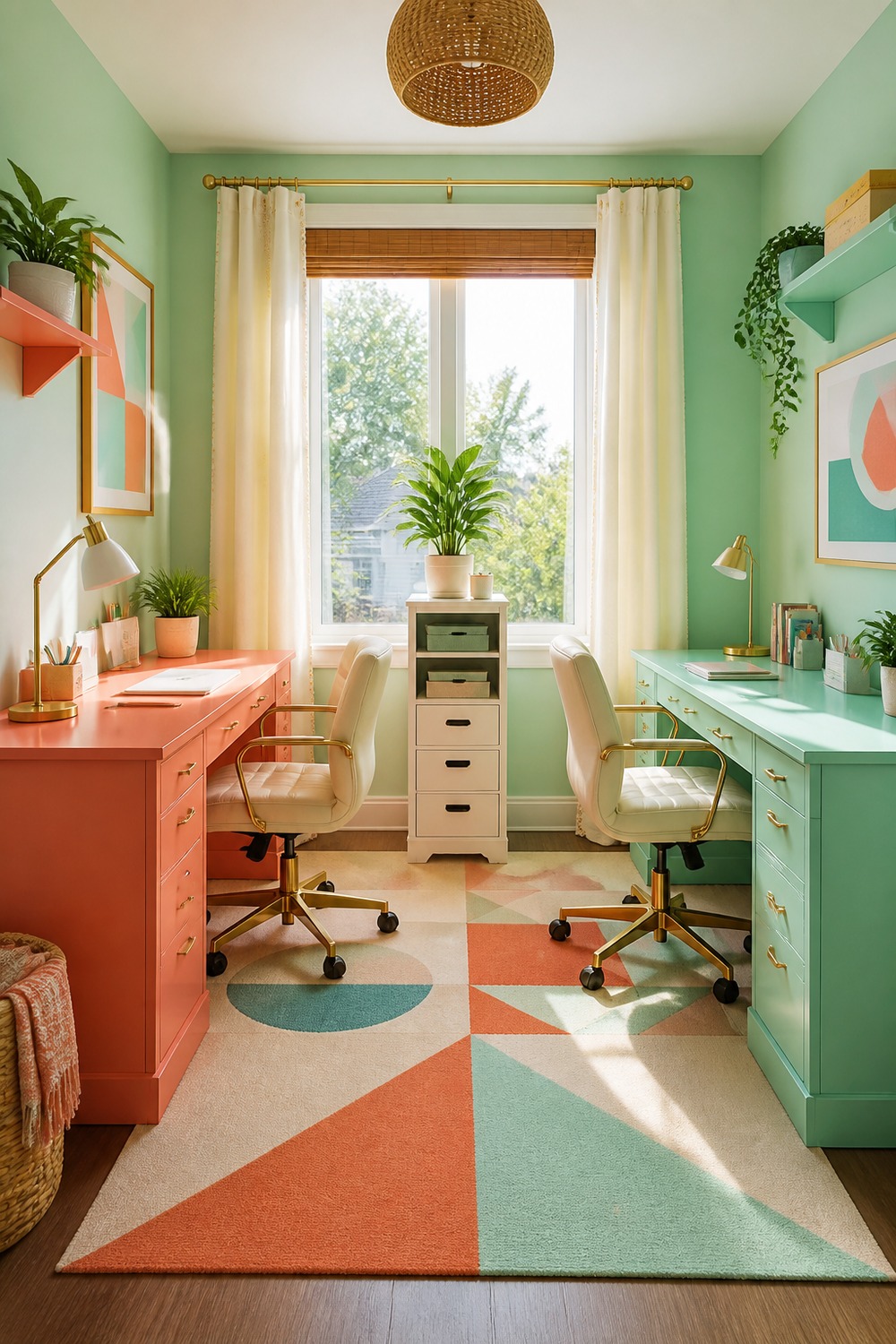
Facing desks can feel confrontational, but the coral-and-mint split makes each side read like its own little zone. A narrow storage tower handles the shared supplies without becoming a wall between the two chairs.
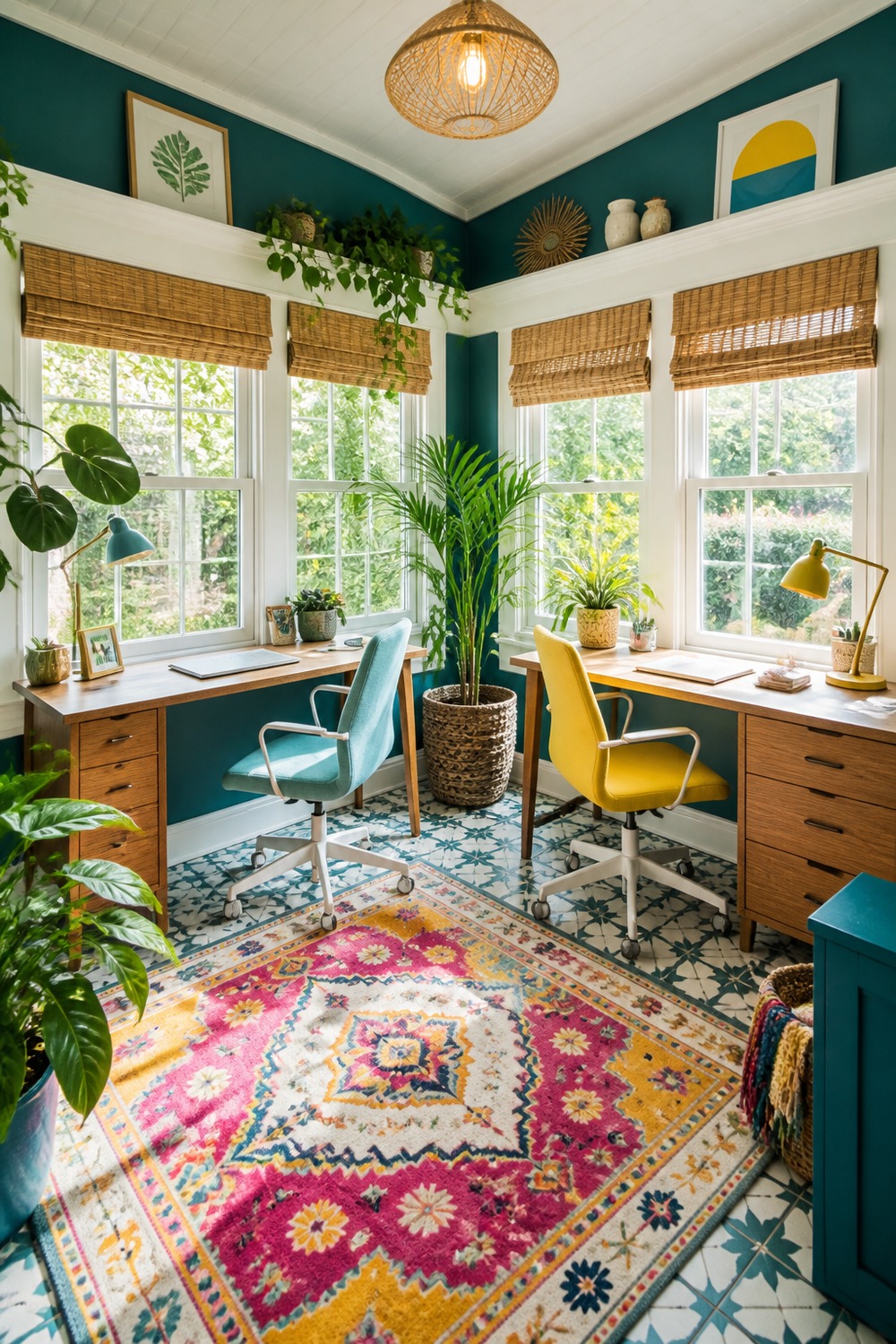
A sunroom is almost unfairly good for a shared office because both desks get real daylight. The desks stay on separate window walls, so video calls and chair movement do not compete in the middle of the room.
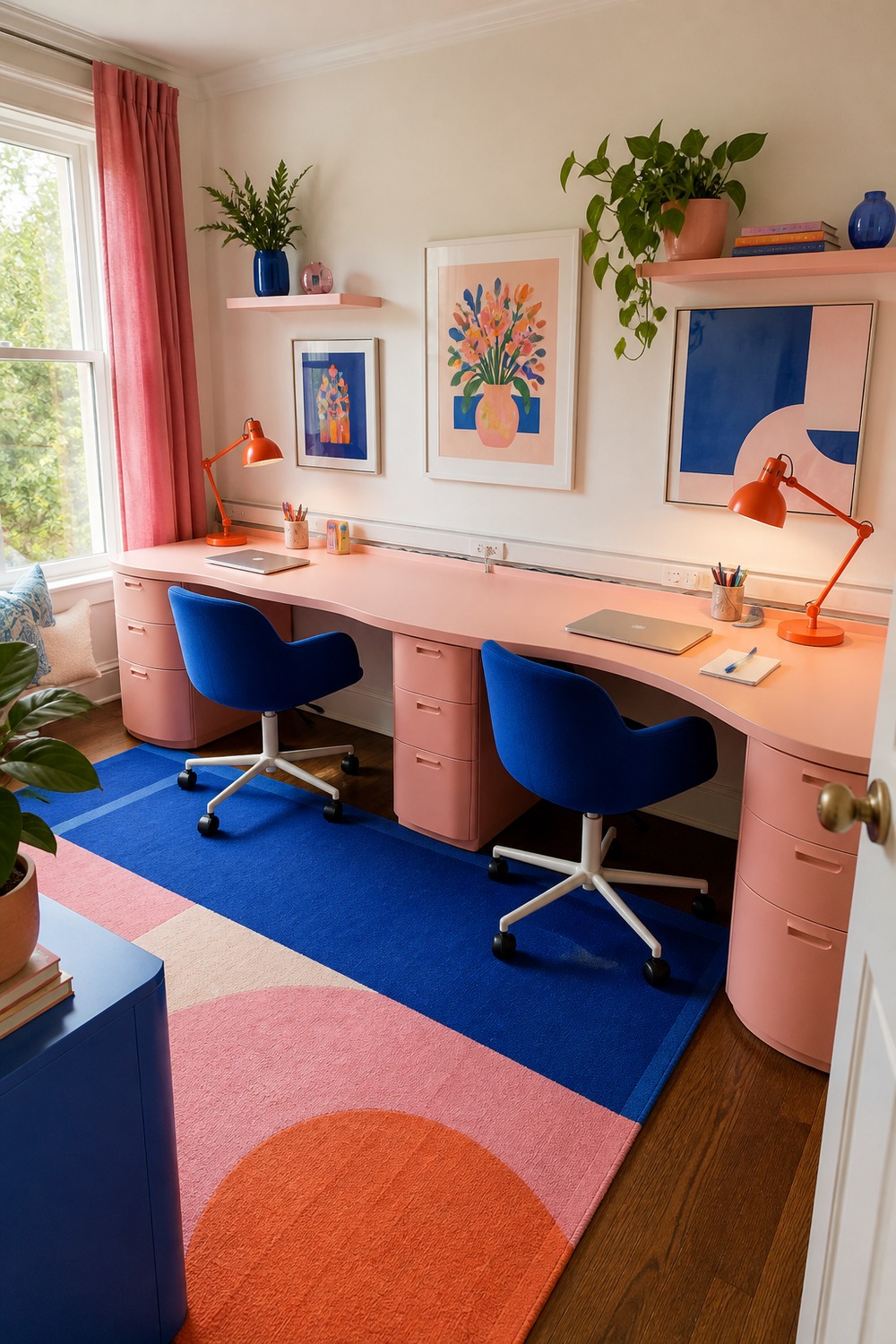
That curved pink desktop is the fun part, but the two recessed seating bays are what make it usable. Cobalt chairs and orange lamps give each side a strong identity, and the cable channel keeps the shape from becoming a cord trap.
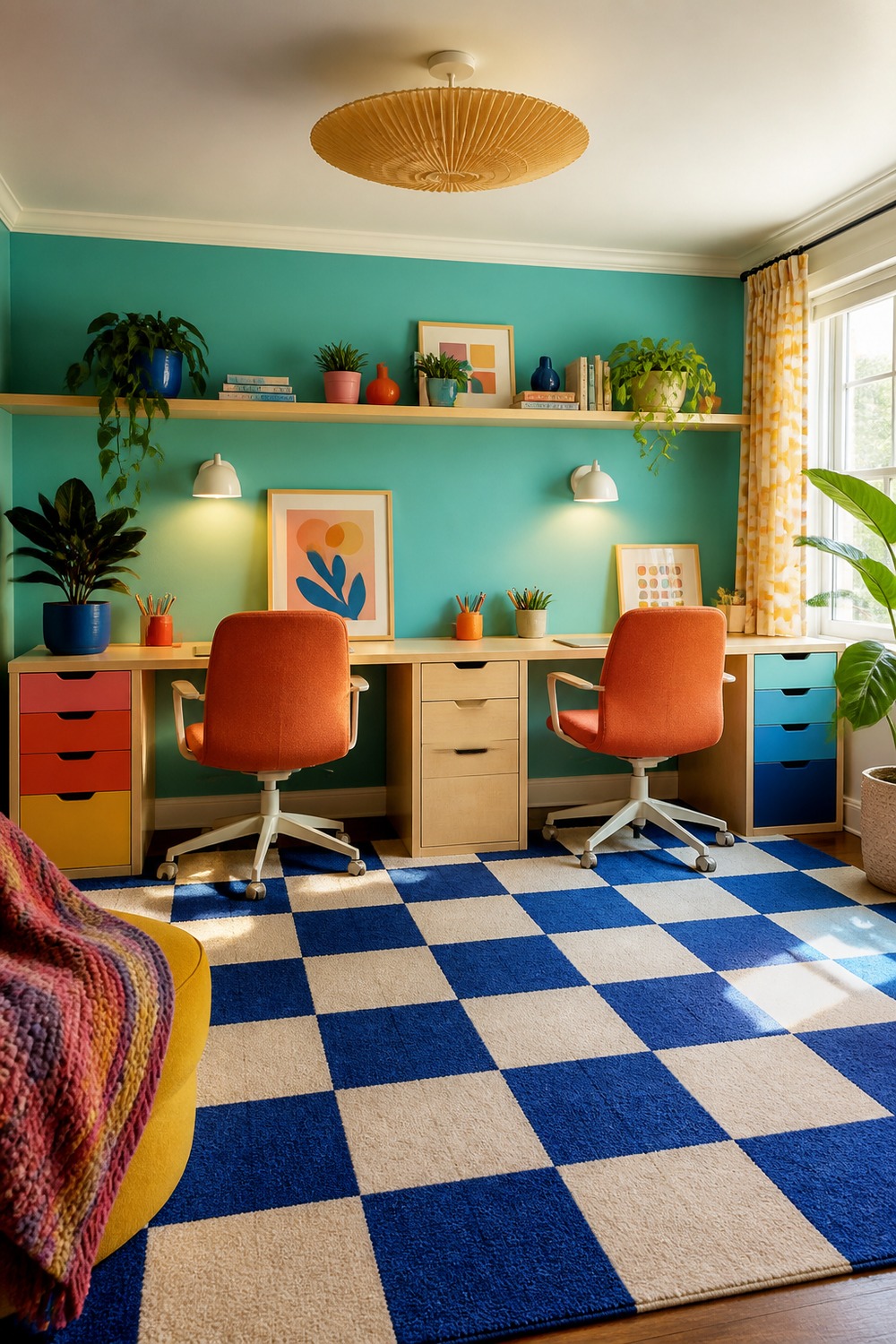
The giant checkerboard rug gives this room energy without stealing an inch of desktop. Turquoise behind the pale wood feels crisp, while terracotta chairs warm up two otherwise simple workstations.
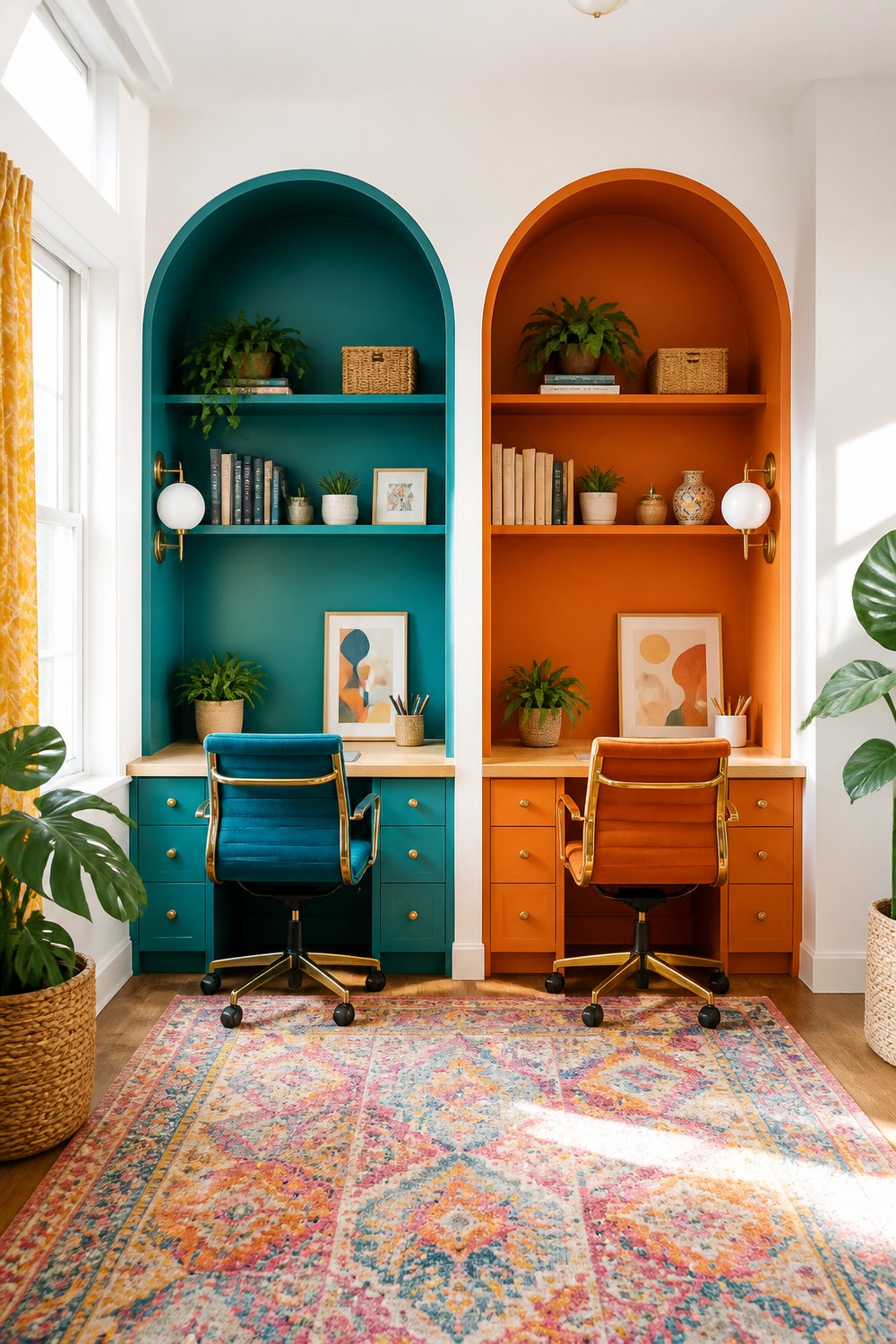
Two colored arches solve the usual problem of one person slowly taking over the shared wall. Each niche has its own drawers, light, and work surface, so the symmetry feels useful rather than merely decorative.
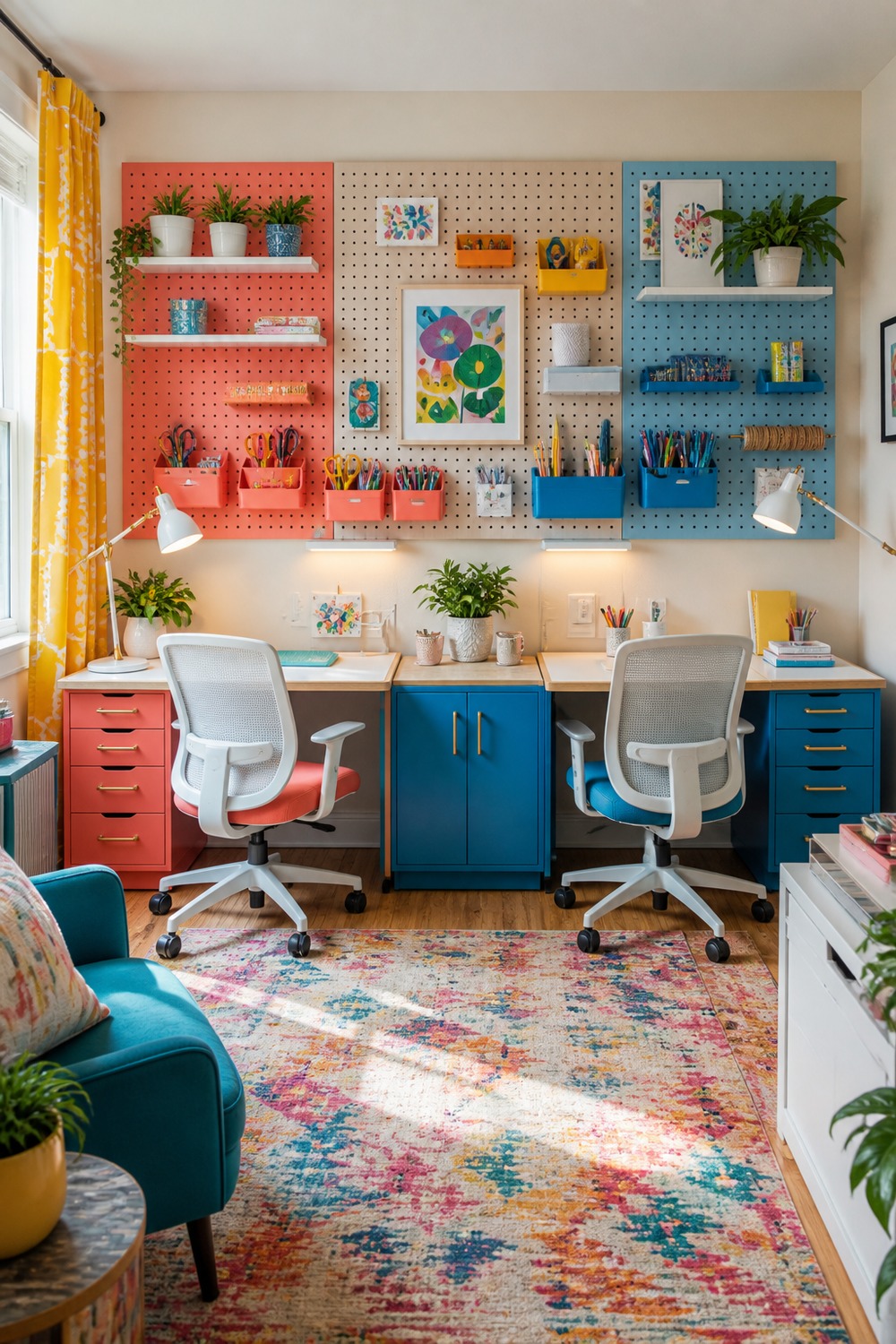
A big pegboard can hold creative tools and office supplies without piling them between two keyboards. Coral and blue organizers make the wall lively, while closed cabinets below catch the less photogenic paperwork.
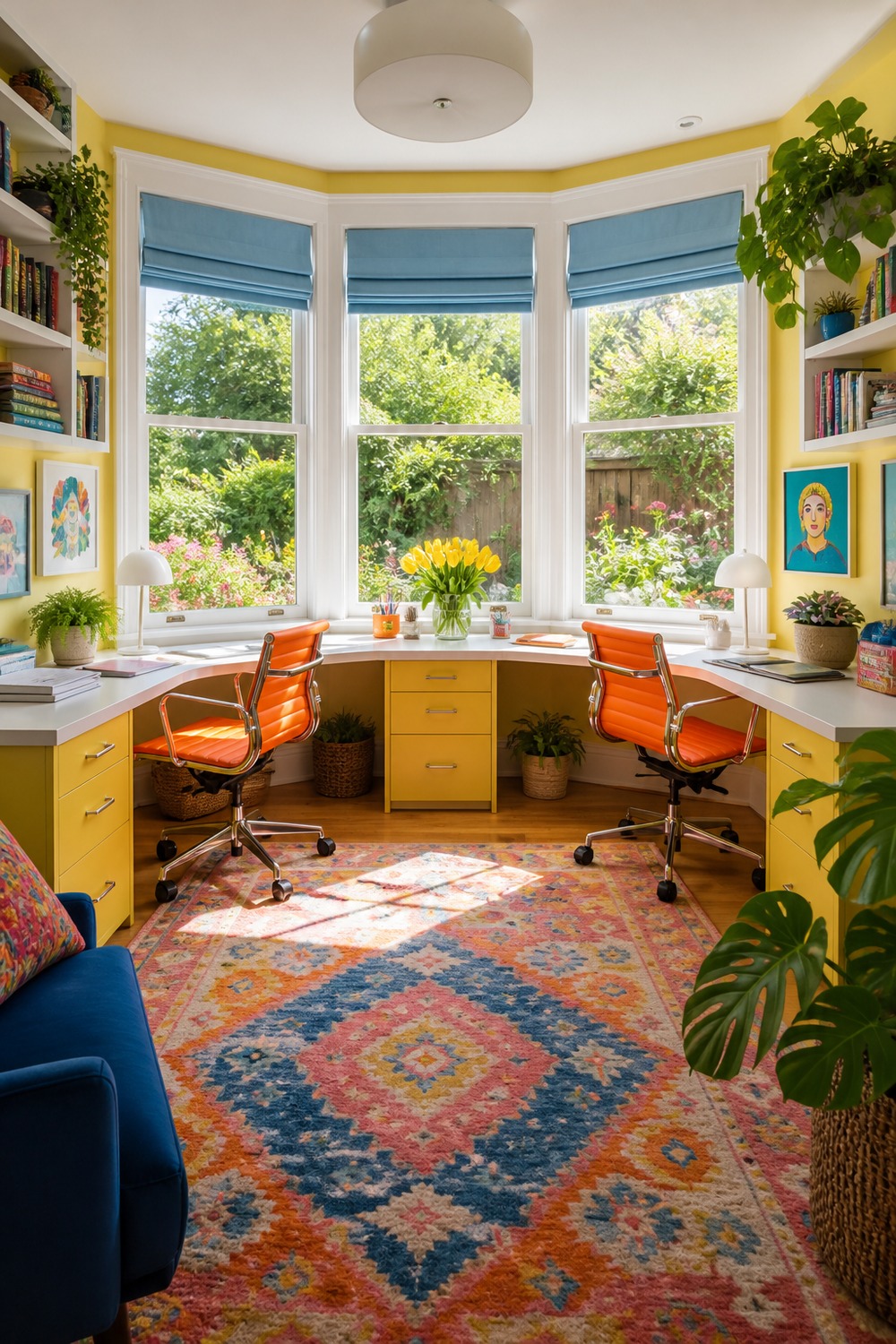
Wrapping the desk around a bay window gives both seats a good view and plenty of light. Lemon drawers and tangerine chairs feel playful, but the deep worktop and clear chair path keep it ready for long workdays.
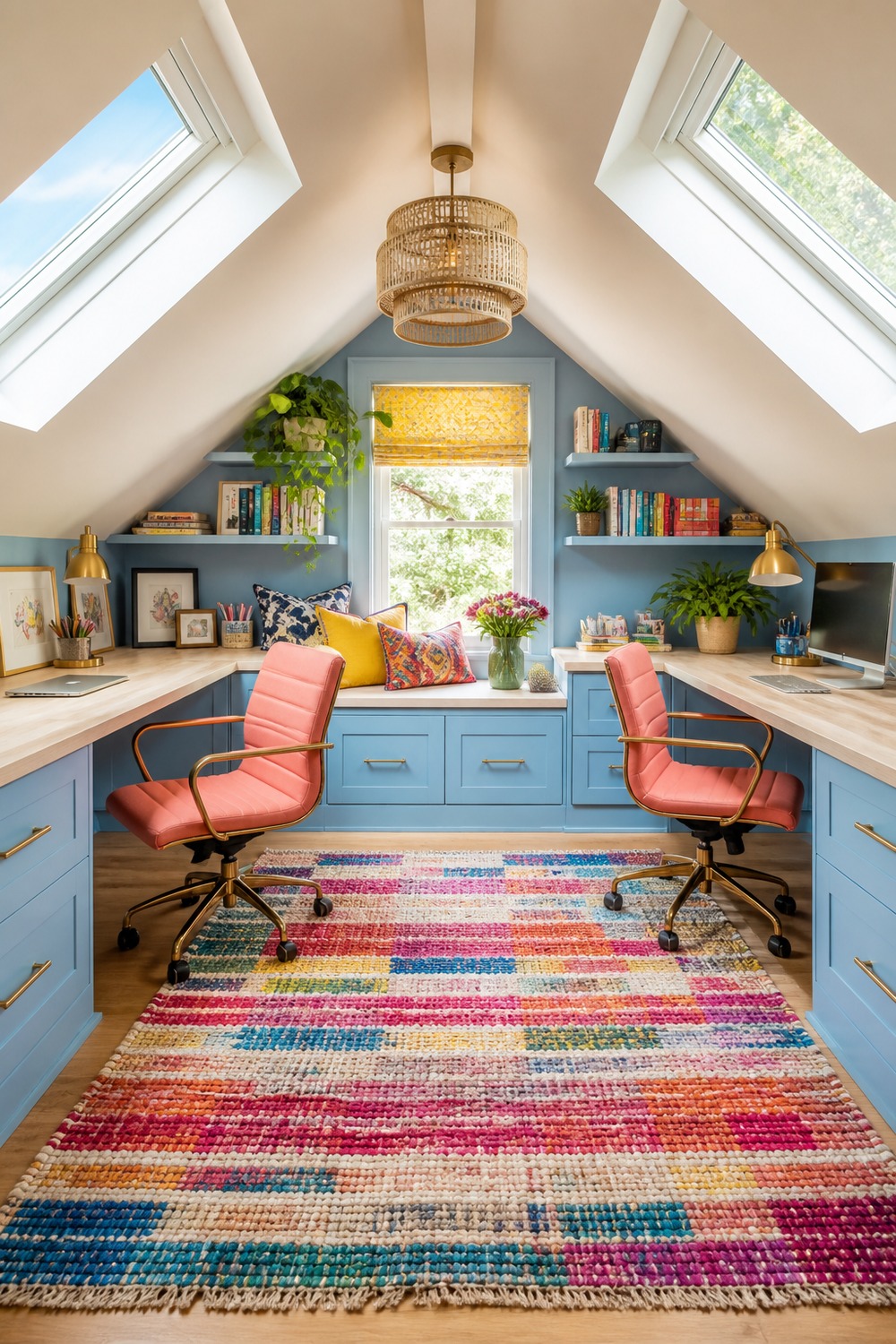
Powder-blue cabinets make the low attic edges feel intentional instead of awkward. Separate skylights brighten both desks, and the coral chairs give the room a sharp little color hit beneath all that pale wood.
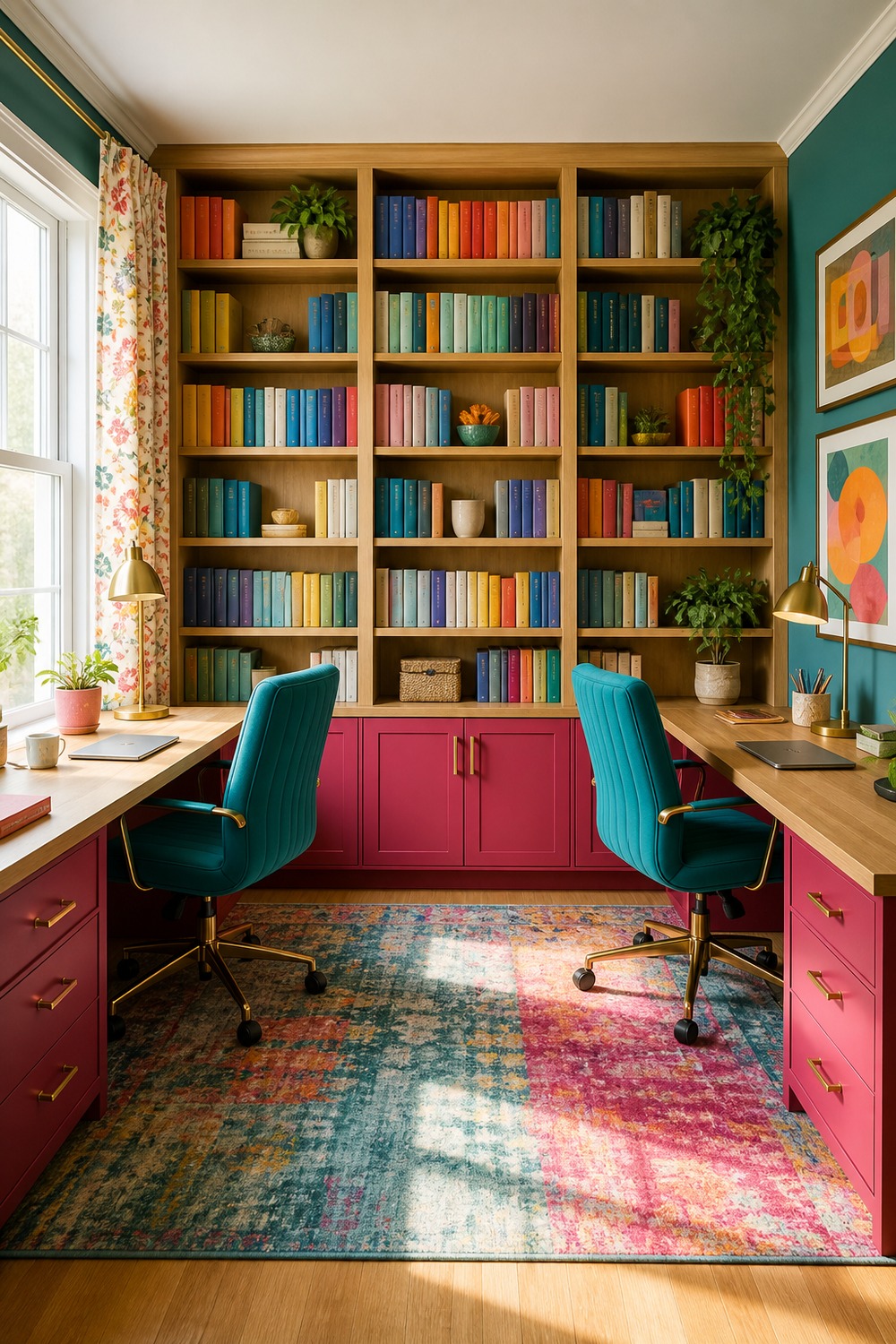
This library wall has enough color to feel collected without relying on readable book jackets. The central shelves divide the workstations visually, while raspberry cabinets hide files and leave both desktops open.
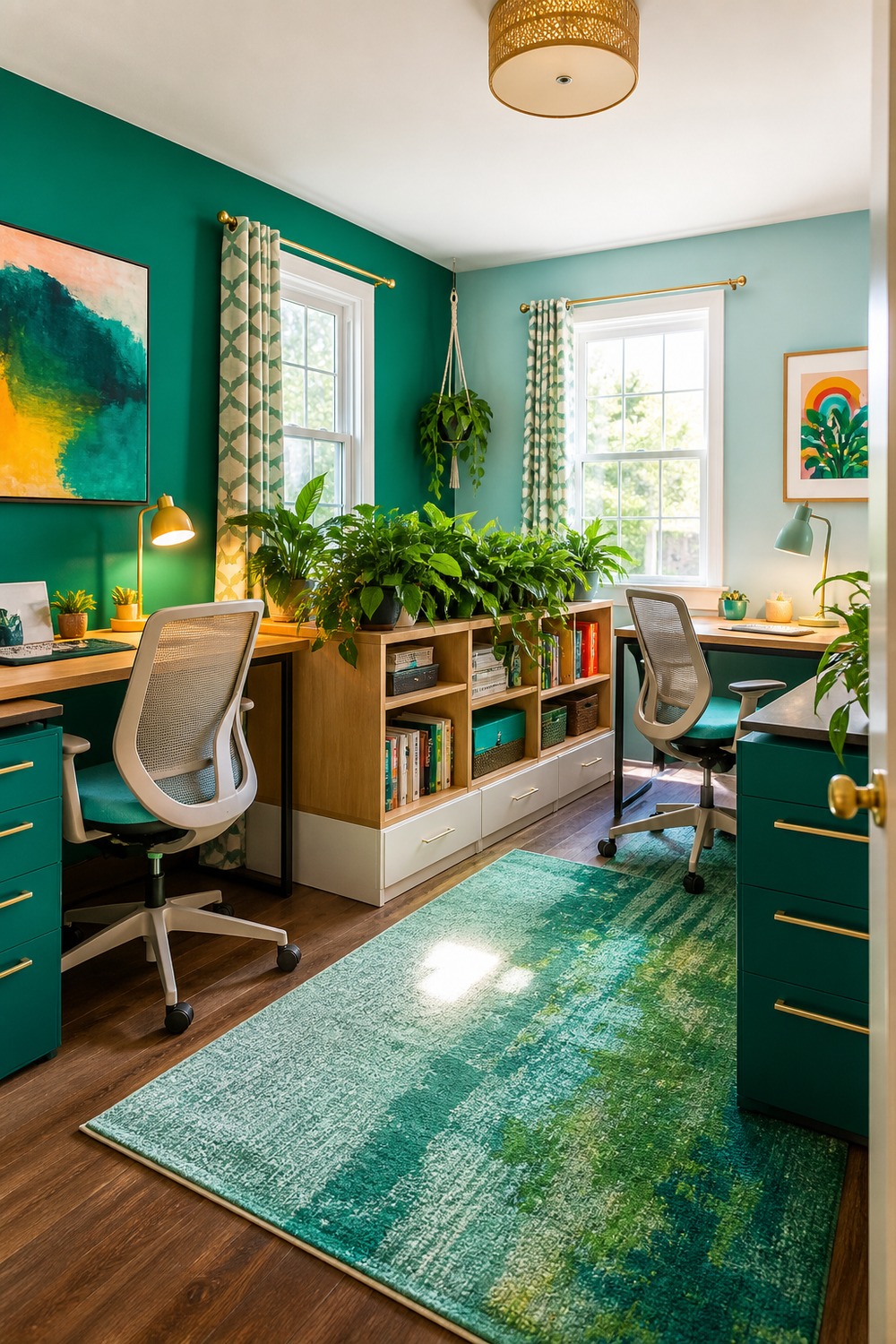
The plant shelf is a softer divider than a tall bookcase and still gives each person a little visual privacy. Because it stays low, daylight crosses the room and the aisle between the desks remains easy to use.
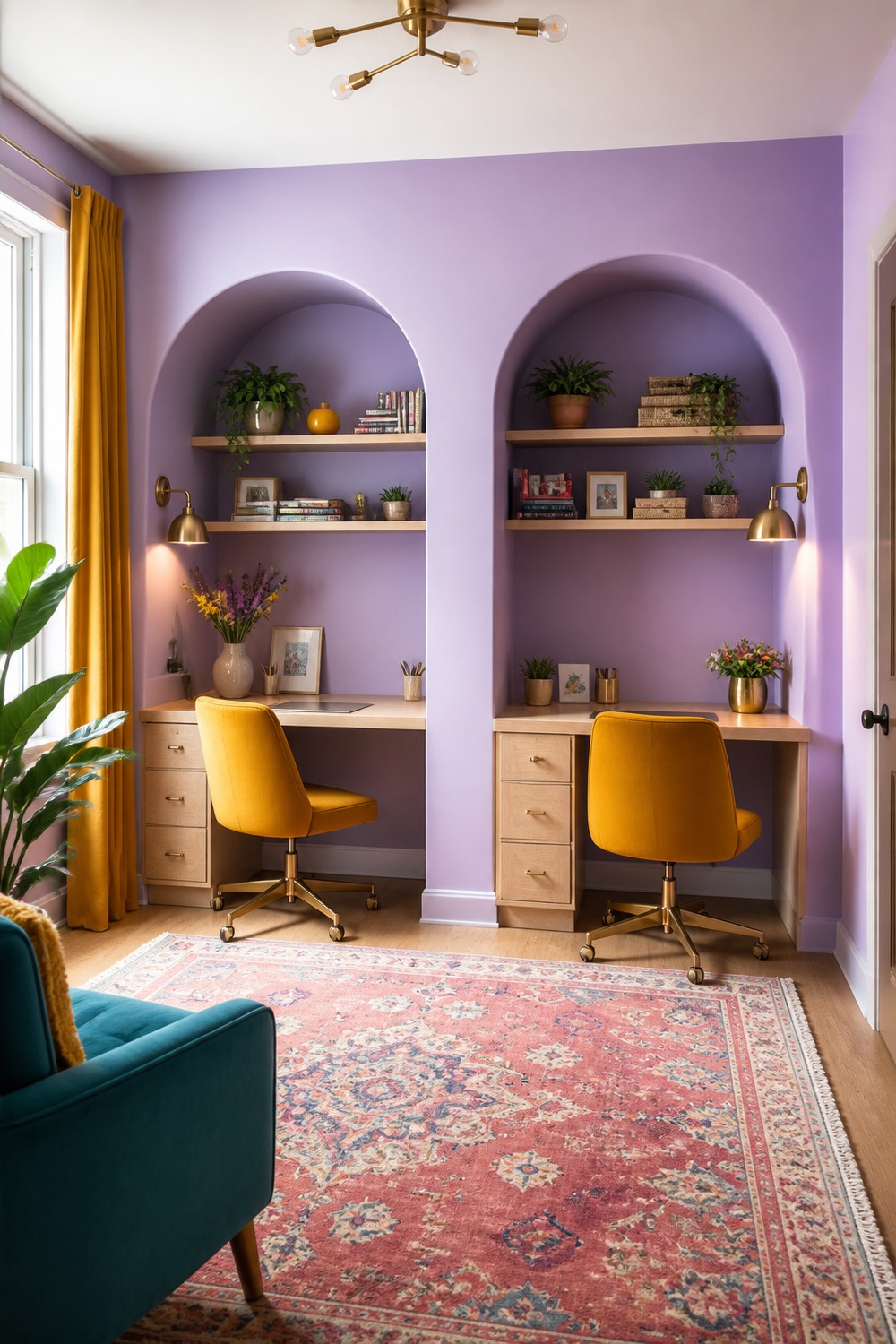
Lavender walls and mustard chairs are such a good odd couple here. The twin arches make the separate desk zones obvious, and the oak surfaces stop the palette from drifting into a candy-colored set.
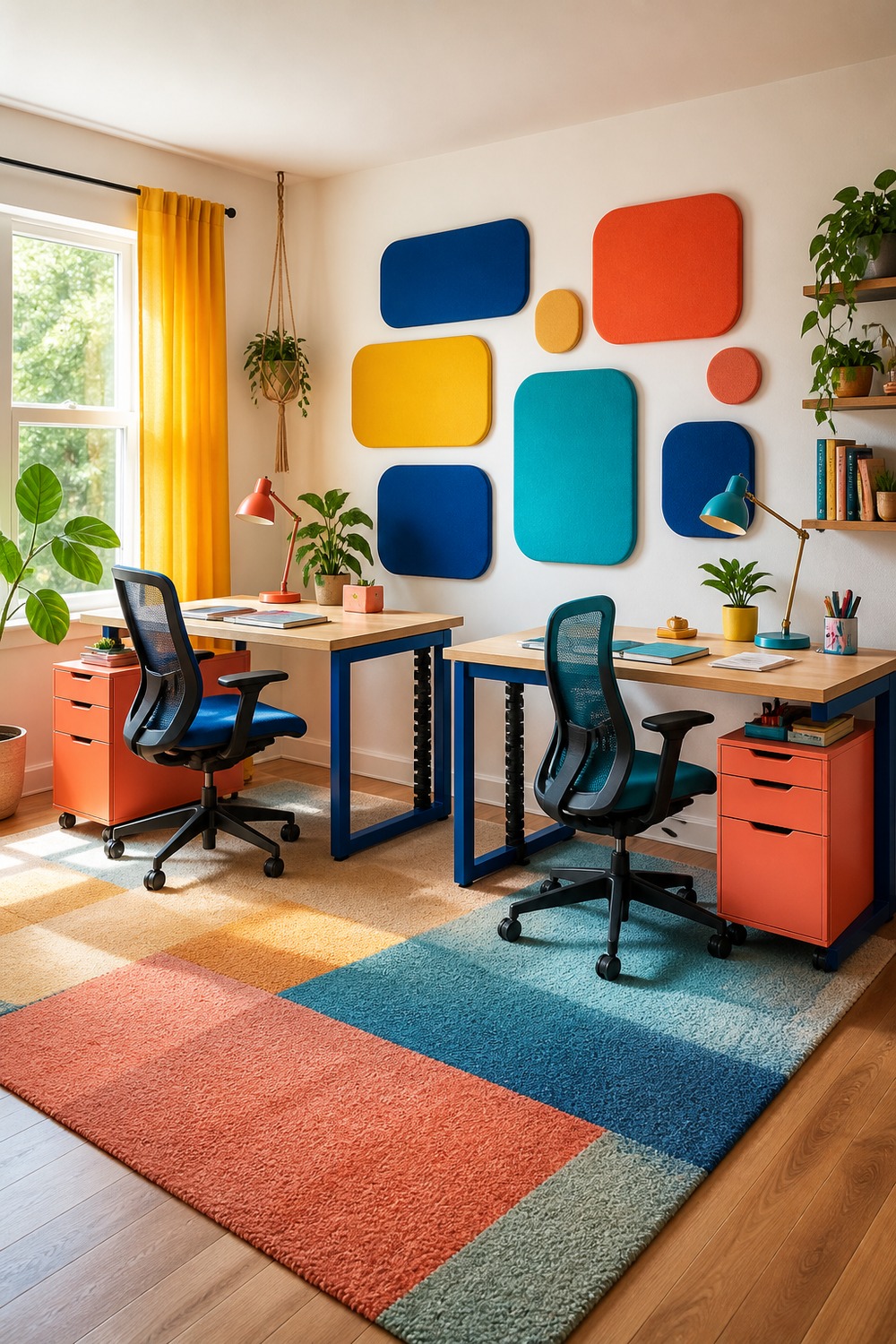
Rolling desks are useful when both people do not need the same setup every day. Cobalt legs and coral carts turn that flexibility into part of the design, while the open floor leaves room to rearrange without wrestling heavy cabinets.
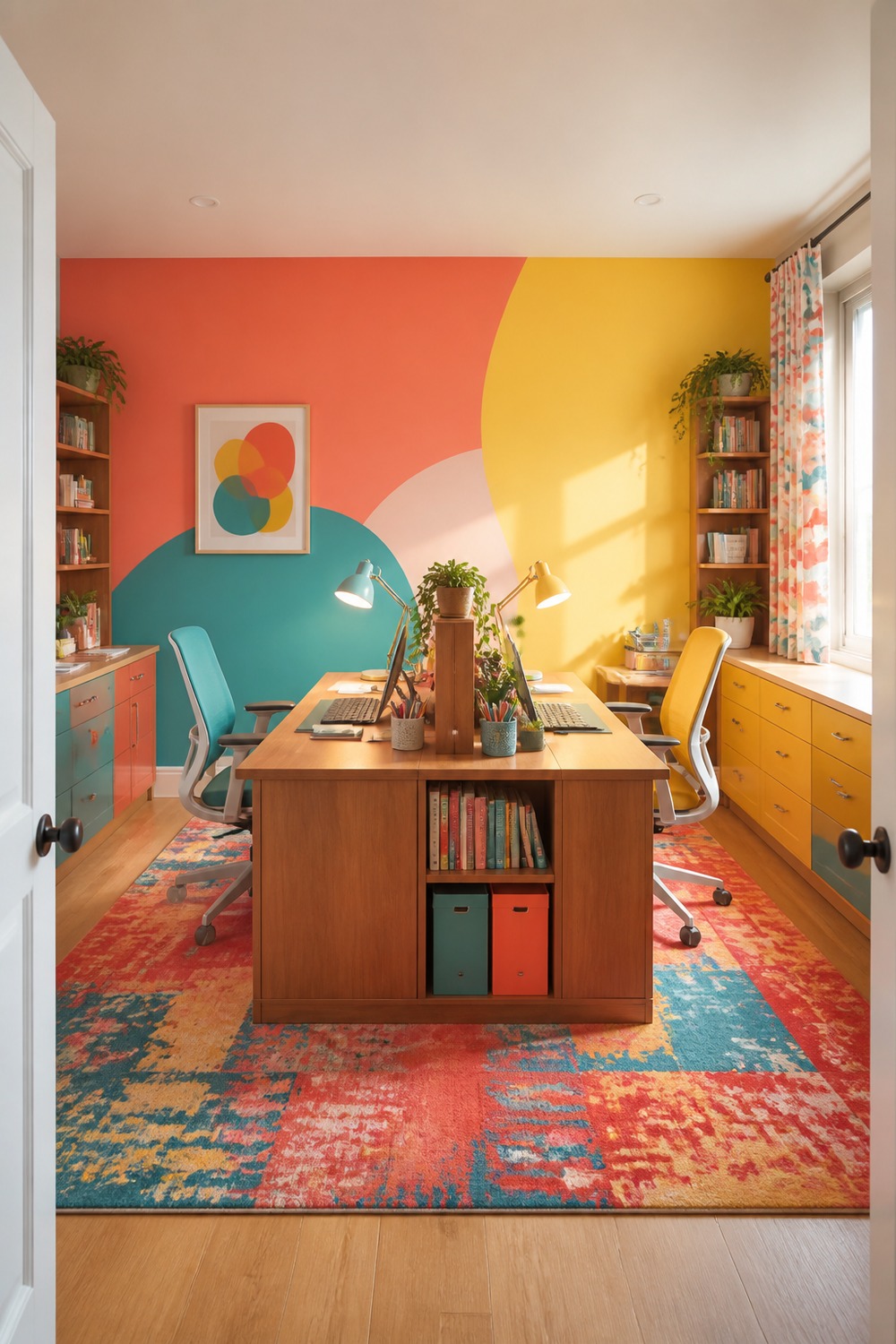
Large painted blocks are a much bolder backdrop than another timid accent wall. The back-to-back desks float on the rug with enough space for both chairs, and perimeter storage keeps the center from becoming messy.
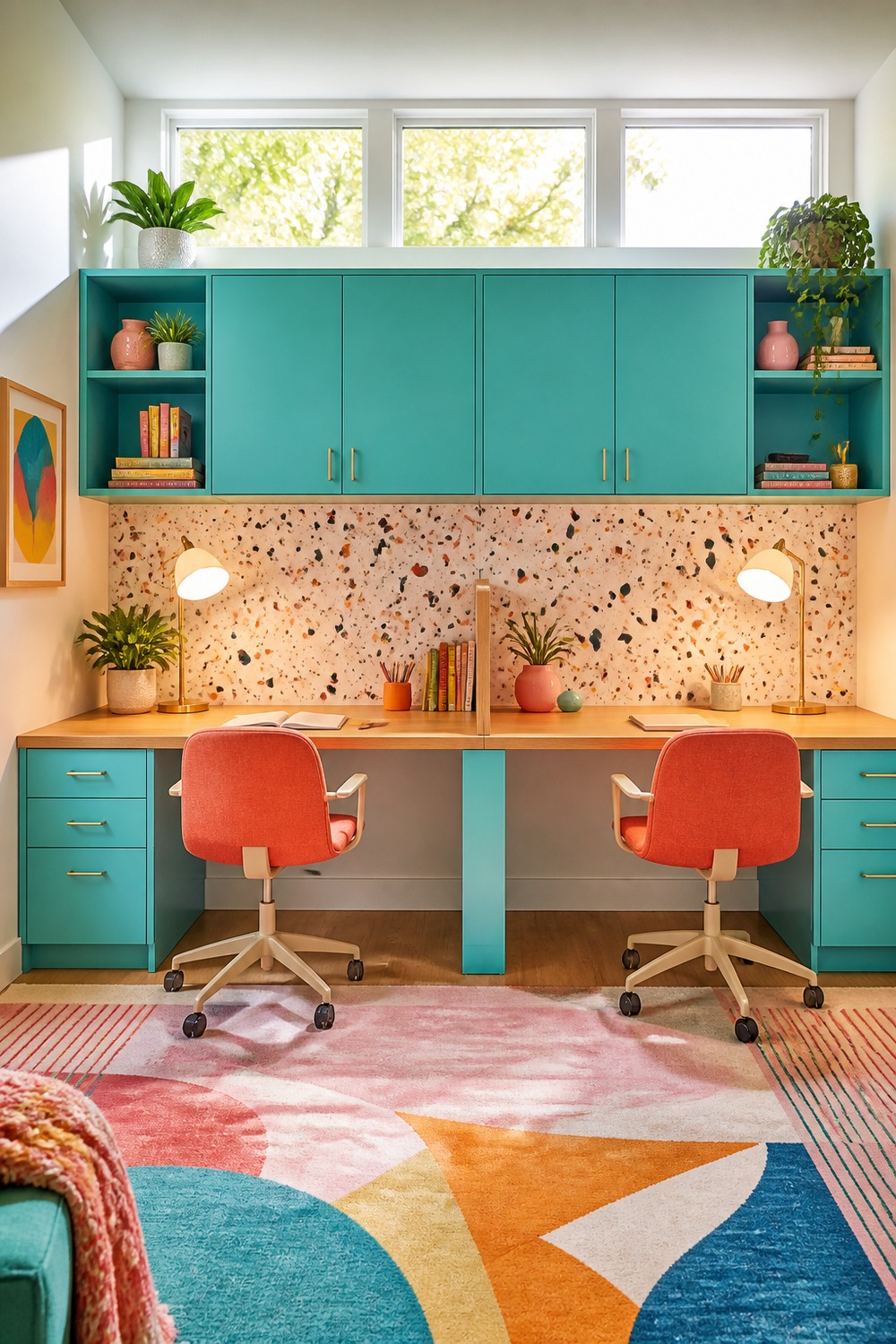
Terrazzo adds dozens of tiny color notes without requiring clutter on the worktop. Turquoise cabinets frame the shared desk, while the peach chairs and clerestory light keep the long wall bright from end to end.
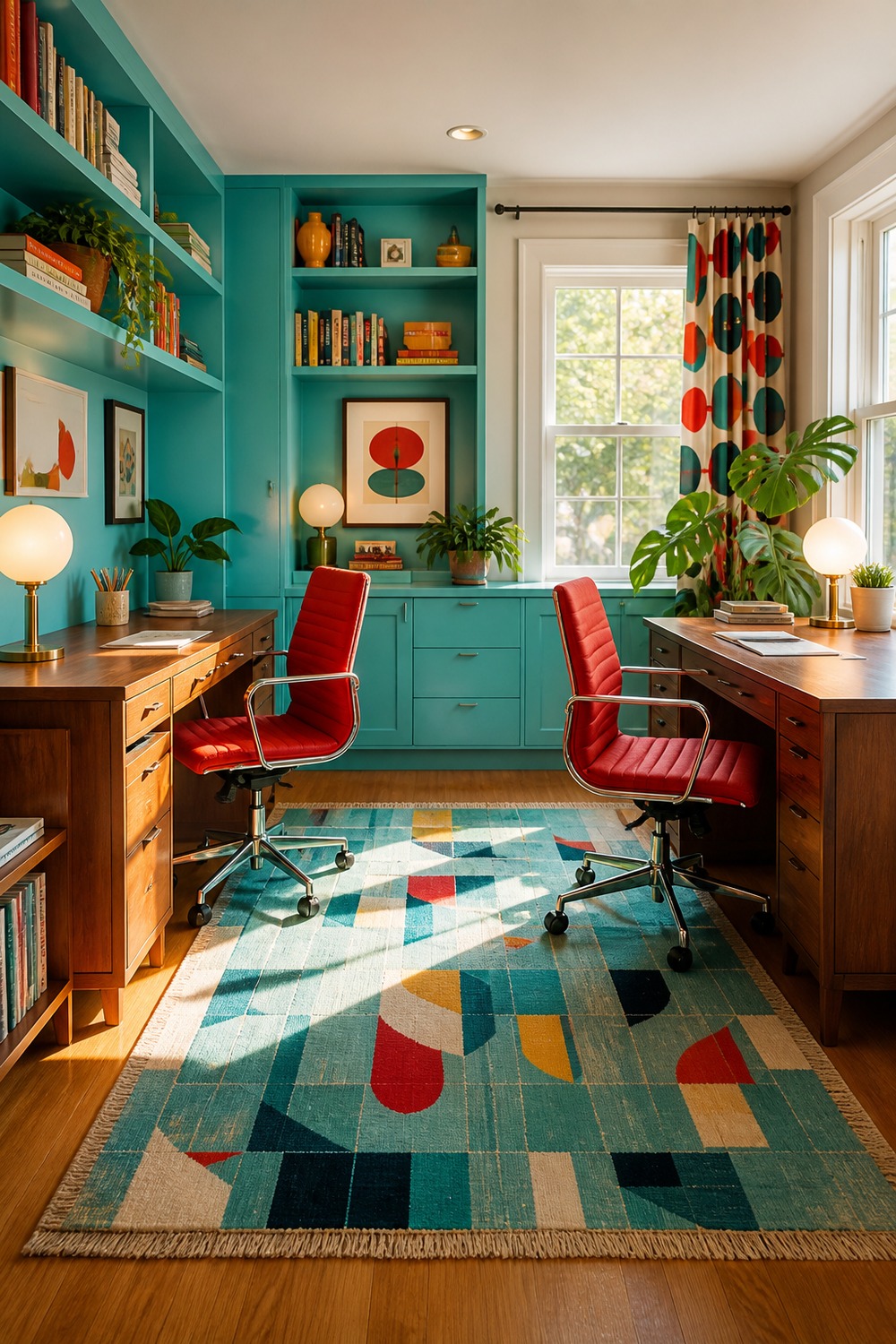
The turquoise built-ins and cherry-red chairs give this study a real retro spark. Walnut desks and simple globe lamps make the colors feel grown-up, and the circulation stays clear instead of turning into a vintage furniture maze.
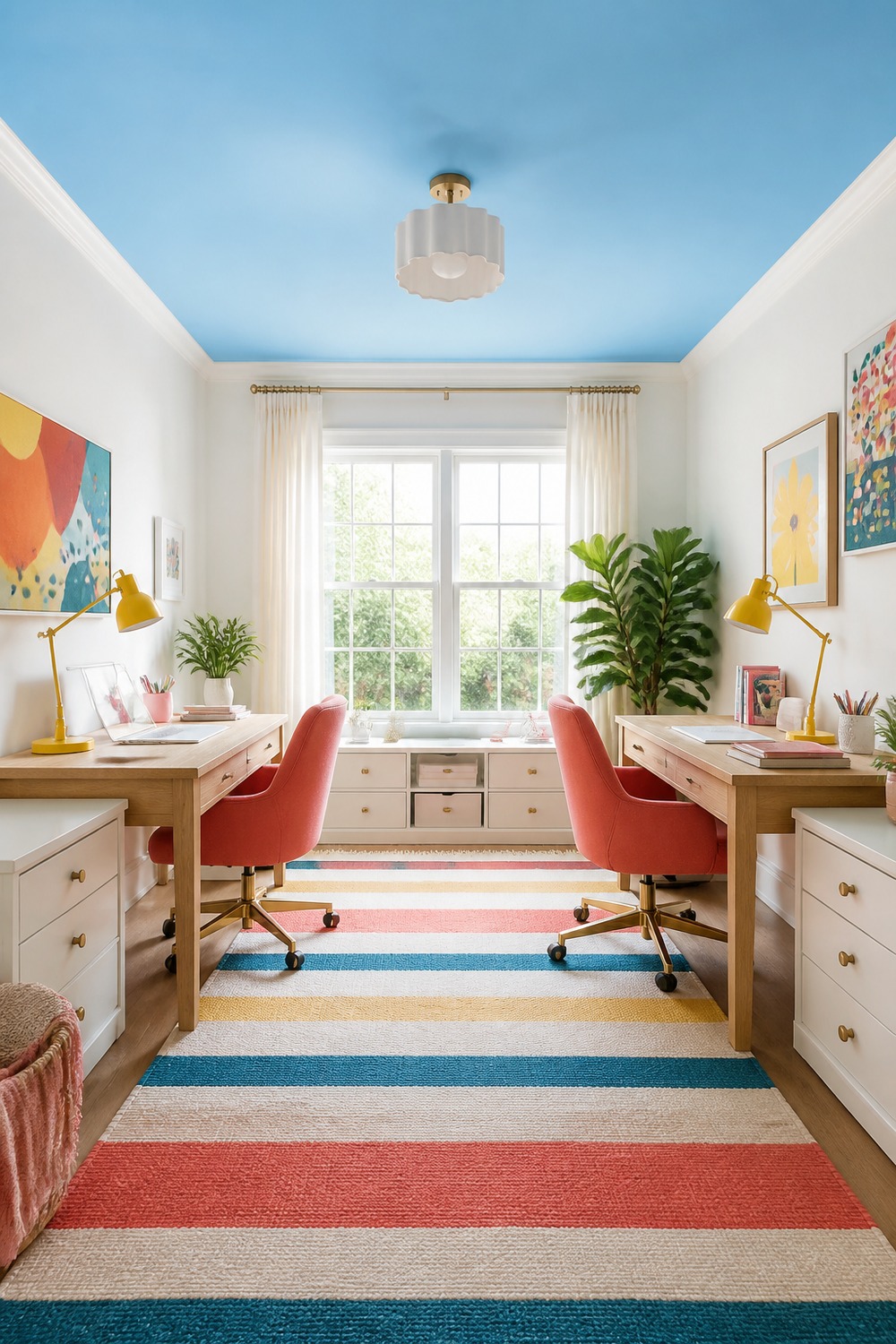
Painting the ceiling sky blue lifts a plain white office in a way that does not crowd the desks. Coral chairs, yellow lamps, and the striped rug repeat the cheerful color lower down while each workstation stays simple.
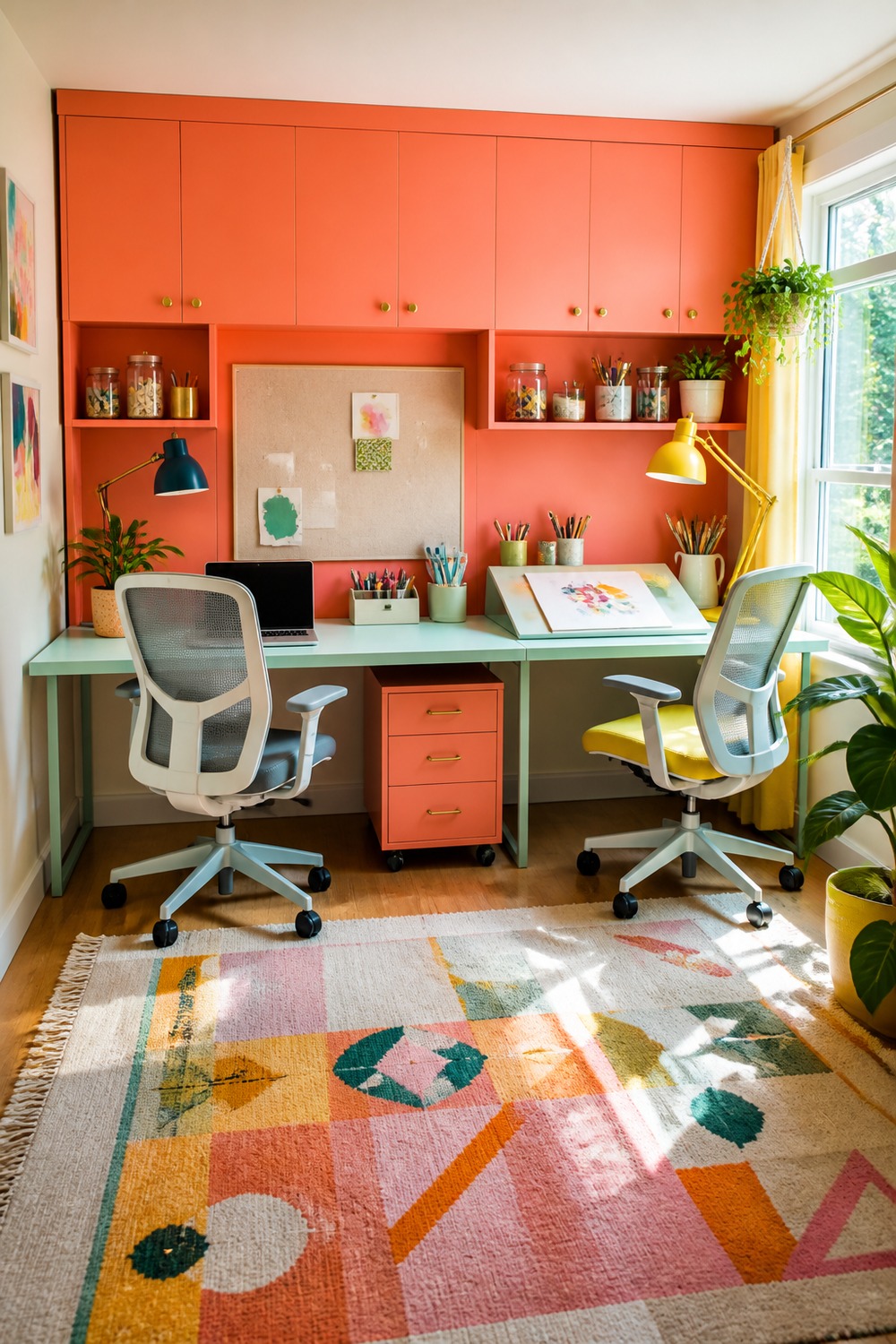
Different work does not need identical furniture. One side has a clean digital setup, the other has room to draw and spread out, and the coral cabinet wall gives both people shared storage without forcing the surfaces to match.
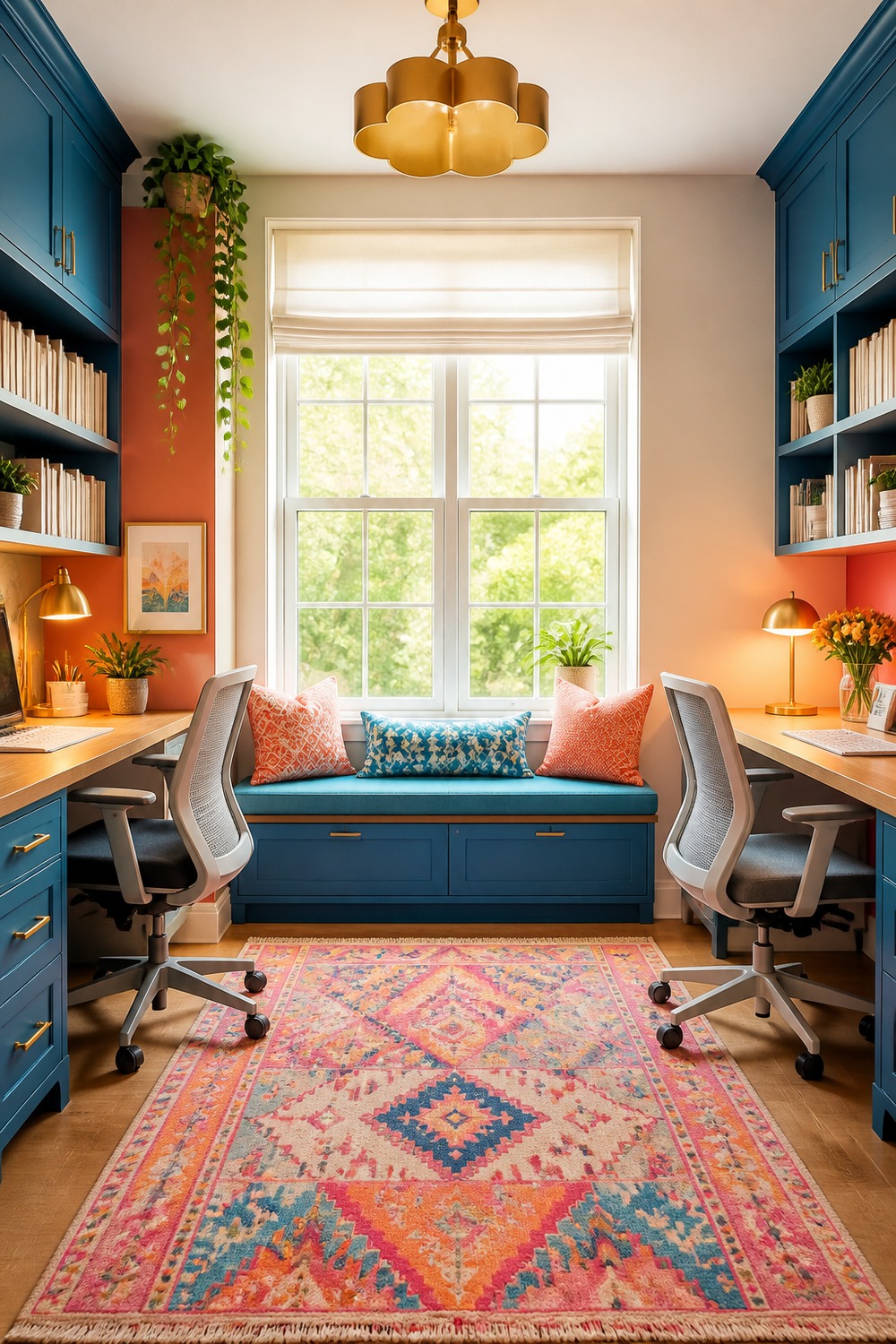
The window bench gives both people somewhere to step away from the desk without adding a bulky lounge chair. Blue and coral cushions pull the two stations together, and the center path stays open to the window.
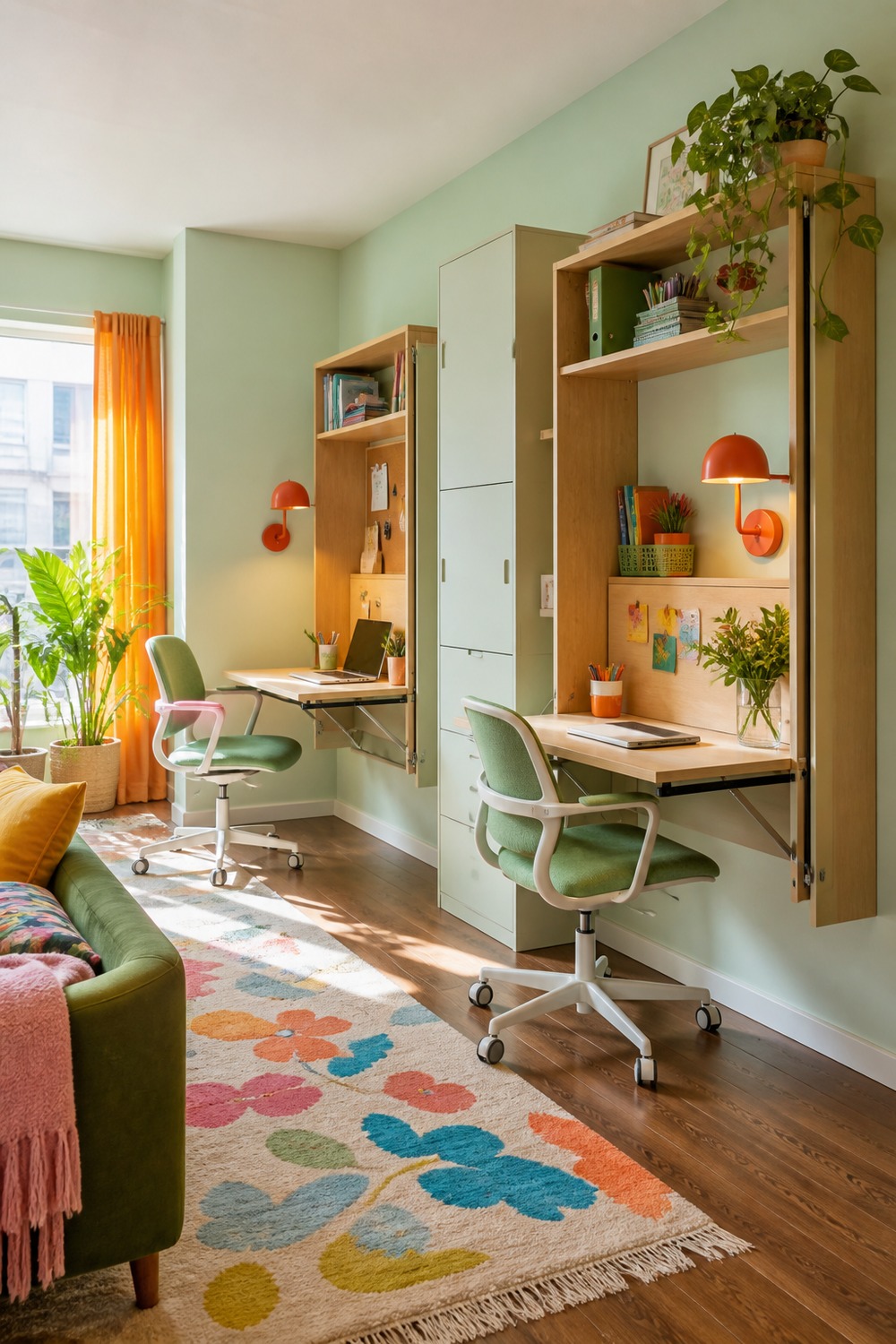
Fold-down desks can make a shared apartment office disappear after work. The mint wall and orange sconces make the setup cheerful when it is open, while slim cabinets keep chargers and notebooks from migrating onto the sofa.
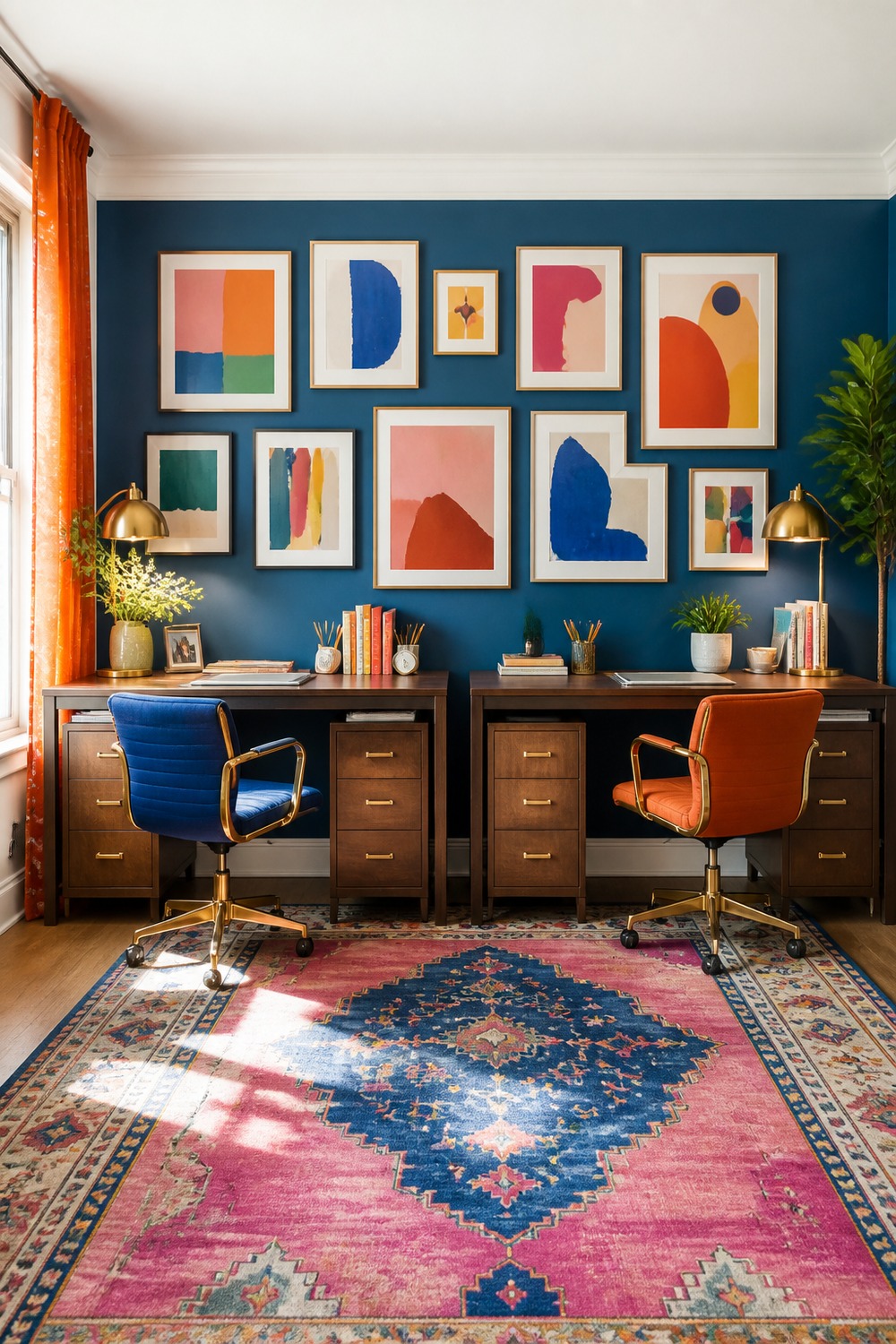
A gallery wall brings in color at eye level, but blank abstract pieces avoid the visual noise of quotes and labels. The walnut desks anchor the collection, and separate drawer pedestals keep the shared surface from becoming one long junk shelf.
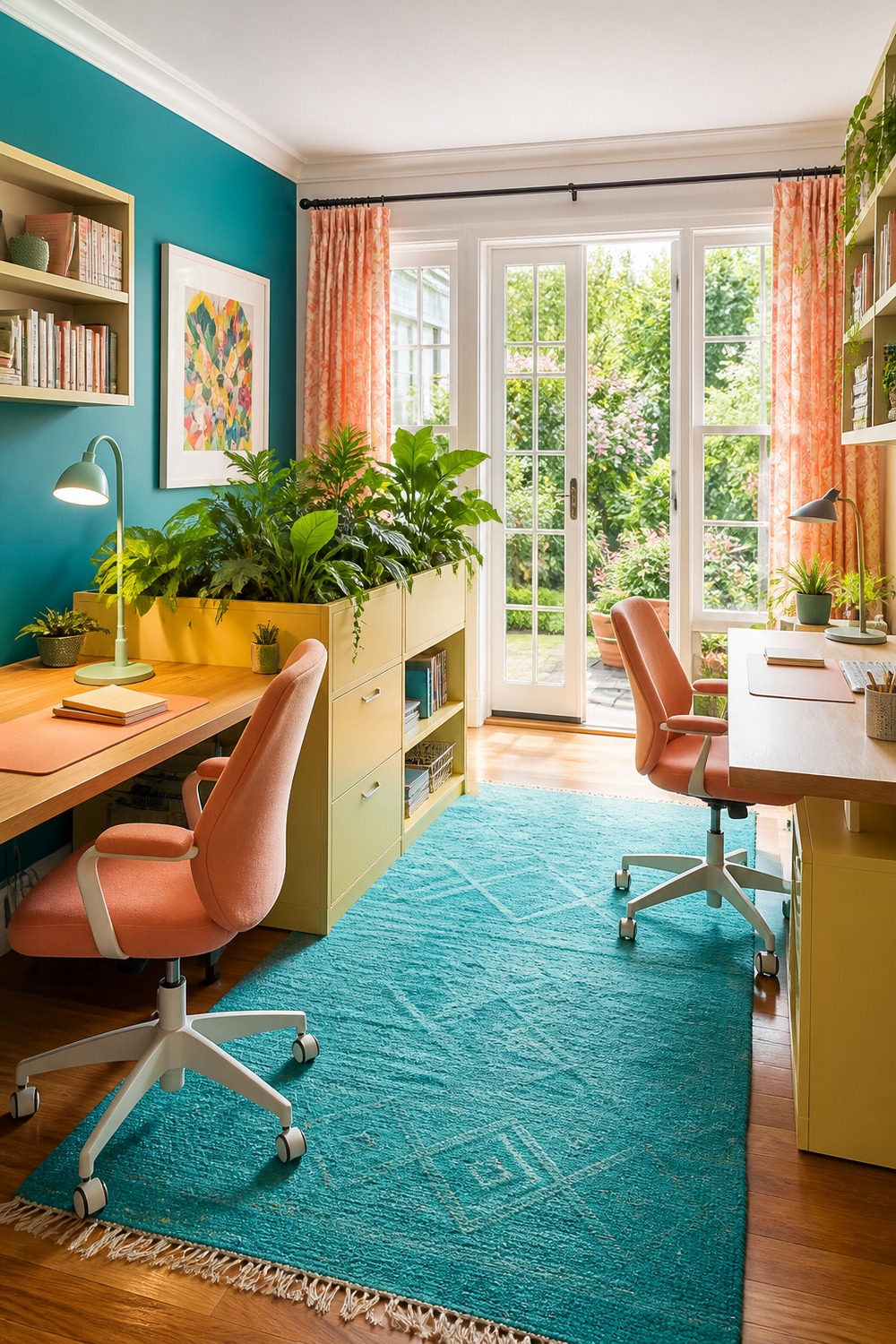
Angling both desks toward the garden gives the room a calmer focal point than a bank of screens. The low plant screen adds privacy between chairs, and the peach, turquoise, and pale-yellow palette borrows its brightness from outside.
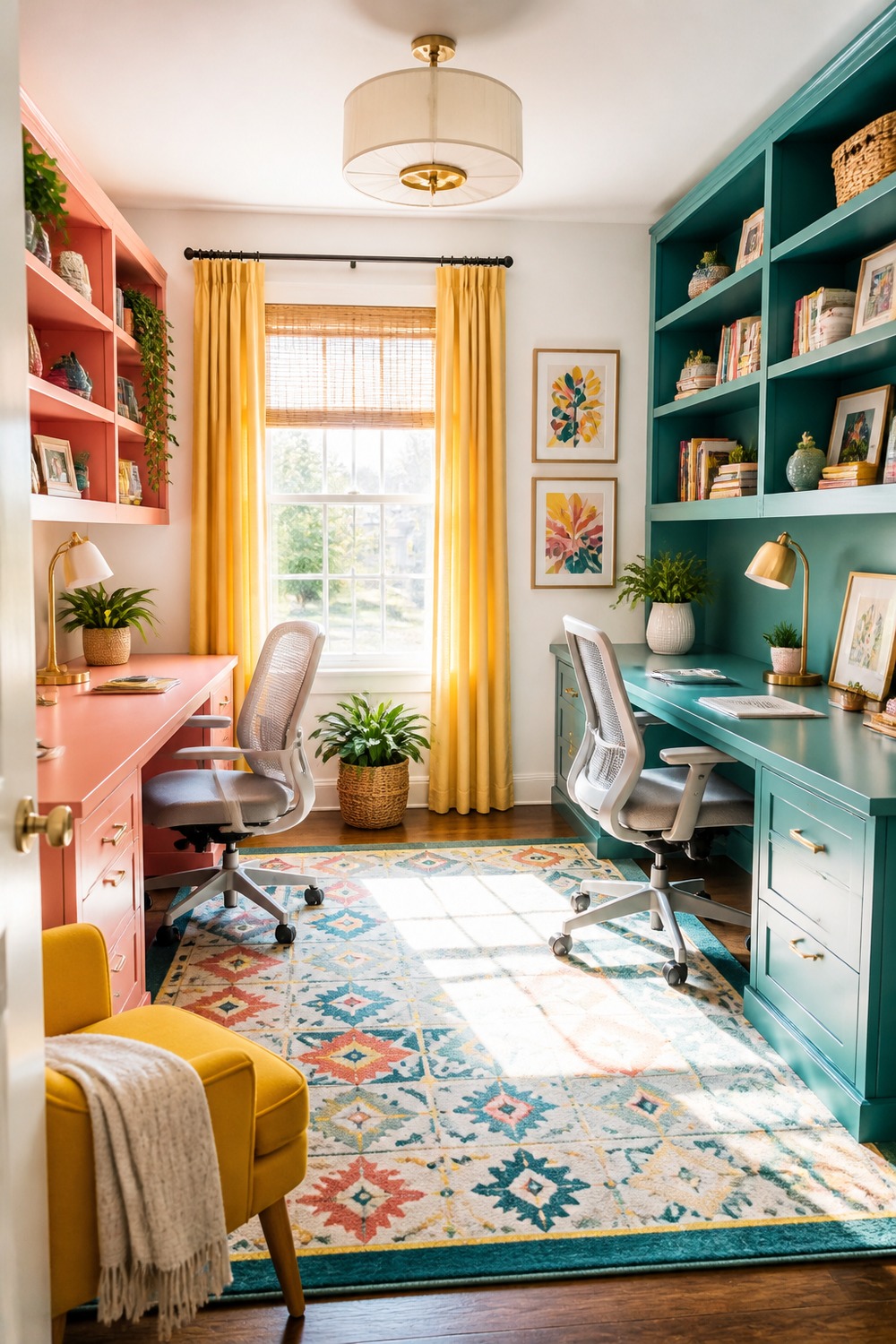
This final room proves a couple’s office can be coordinated without becoming matchy. Coral and teal built-ins mark two generous work zones, butter-yellow details keep it lively, and the patterned rug ties everything together without blocking the chairs.
The fun rooms still solve the boring shared-office problems first: two honest work surfaces, separate storage, controlled cords, and enough space to move. Once those pieces are handled, color can be brave without making the room harder to use.
Leave a comment