
Small-space office corners get annoying fast when the desk is too deep, the chair blocks the walkway, or the cords have nowhere to go. These ideas make the corner do actual work with shallow desks, wall shelves, lamp placement, closed storage, and enough breathing room to sit down without bumping into everything.
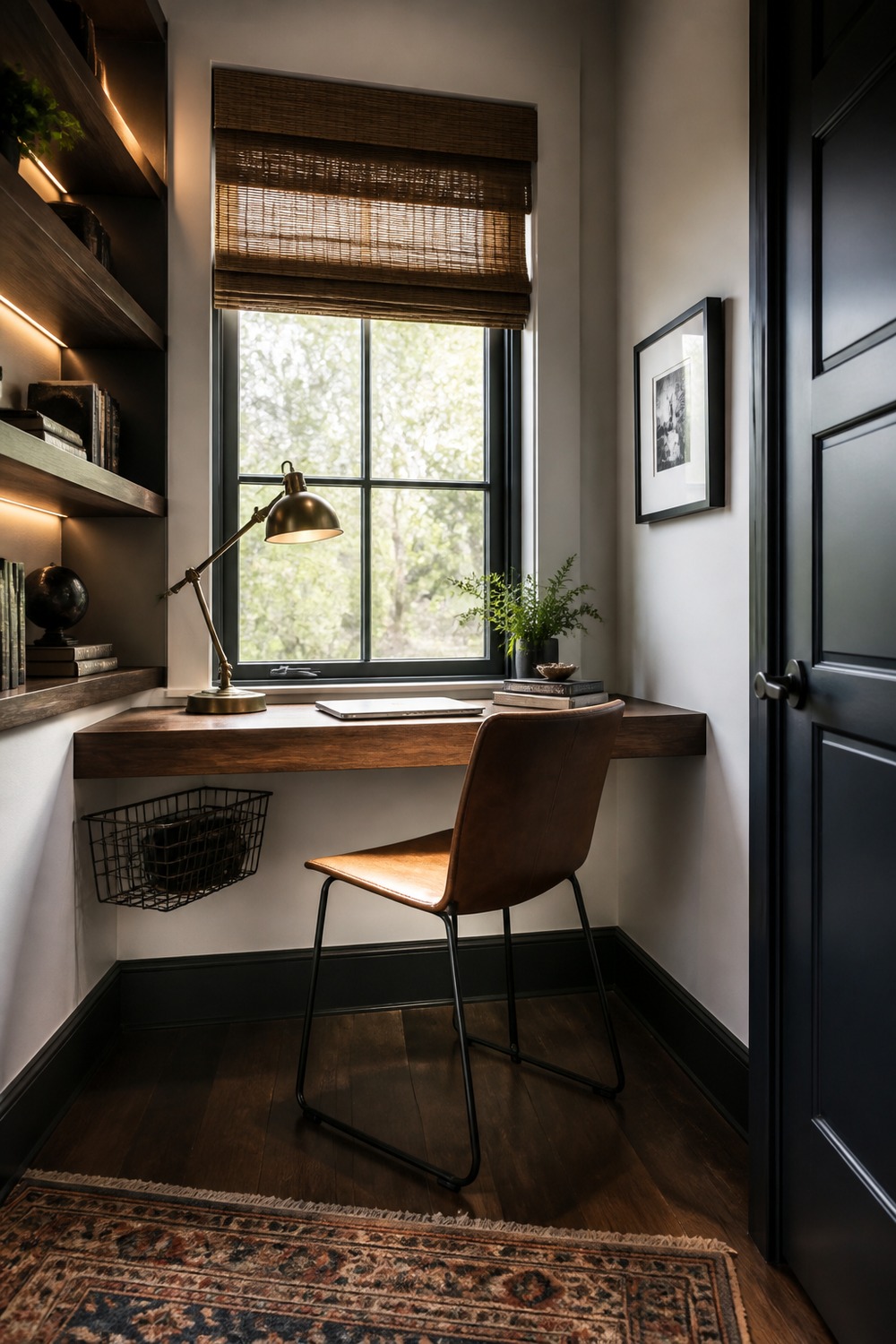
A floating desk under the window keeps the floor open and puts daylight exactly where it is useful. The slim chair and cable basket make this feel like a real workstation, not a shelf pretending to be one.
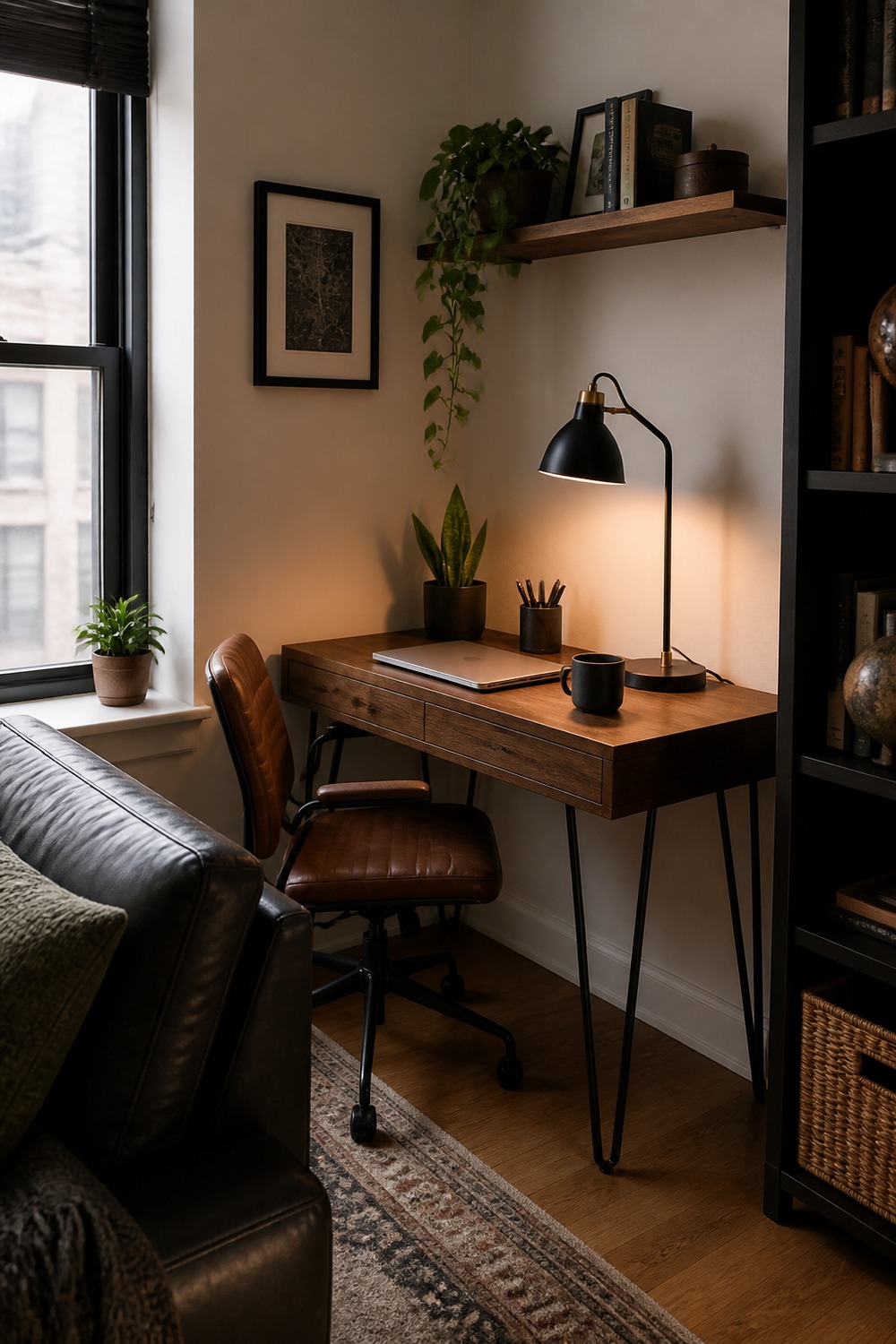
This narrow oak desk fits beside the sofa without stealing the living room’s main walkway. One wall shelf handles notebooks and a lamp, while the plant softens the line between work and the rest of the room.
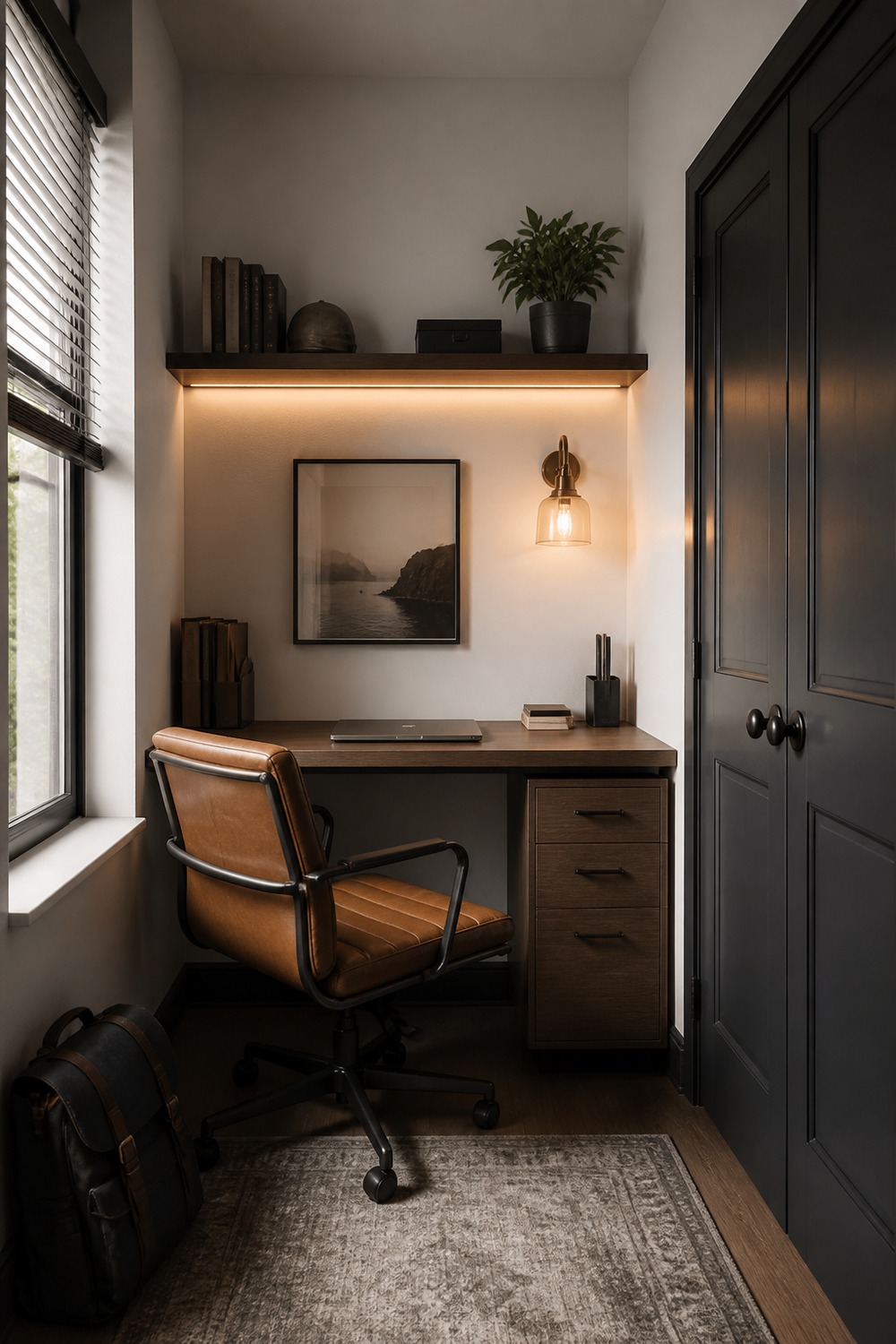
The closet doors set a hard limit on depth, and that is what makes this shallow desk such a smart choice. A closed drawer unit hides paper and chargers without getting in the way when the closet needs to open.
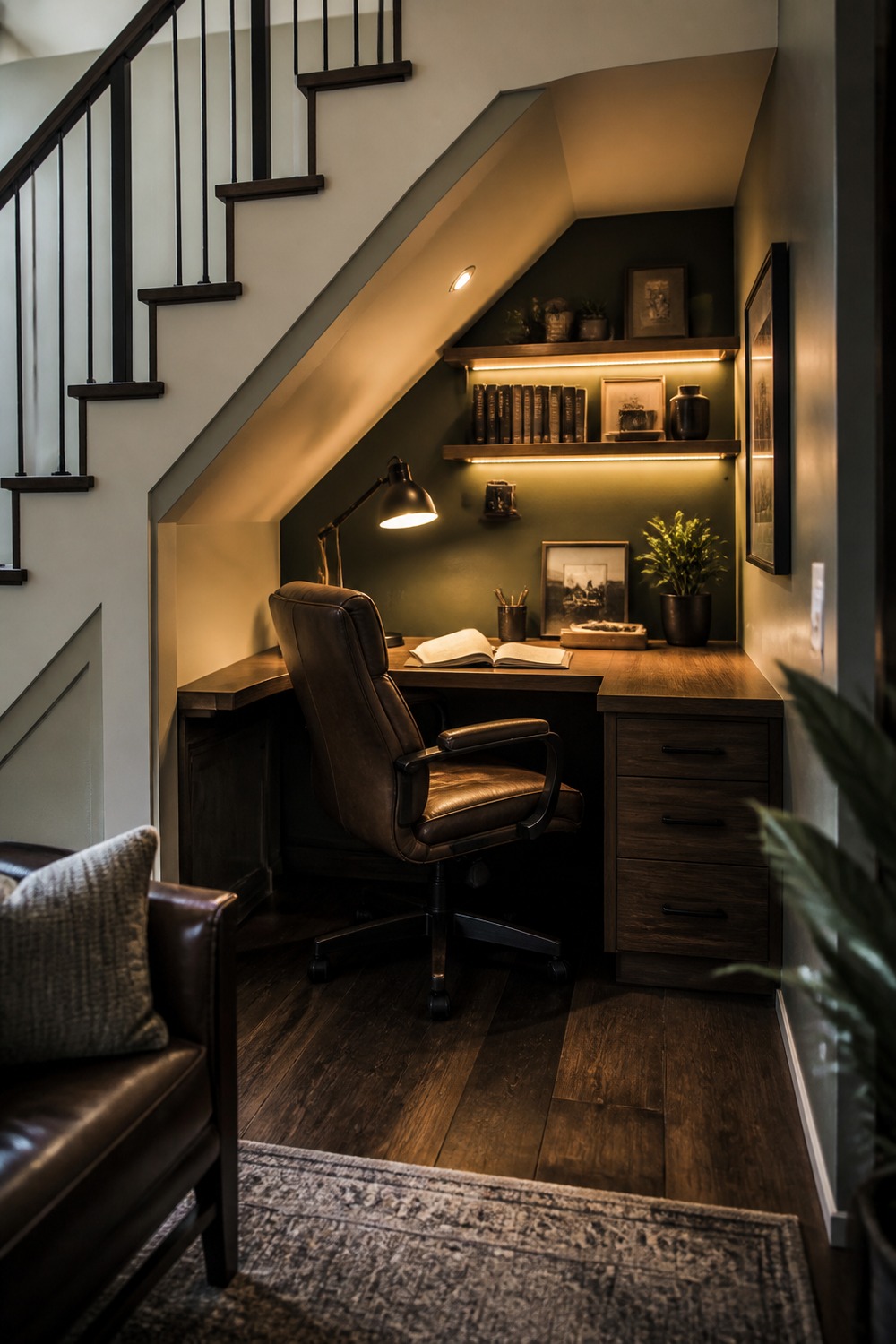
Using the space beneath the stairs turns an awkward slope into fitted storage and a proper work surface. The drawers sit where the ceiling is lowest, leaving comfortable headroom around the chair.
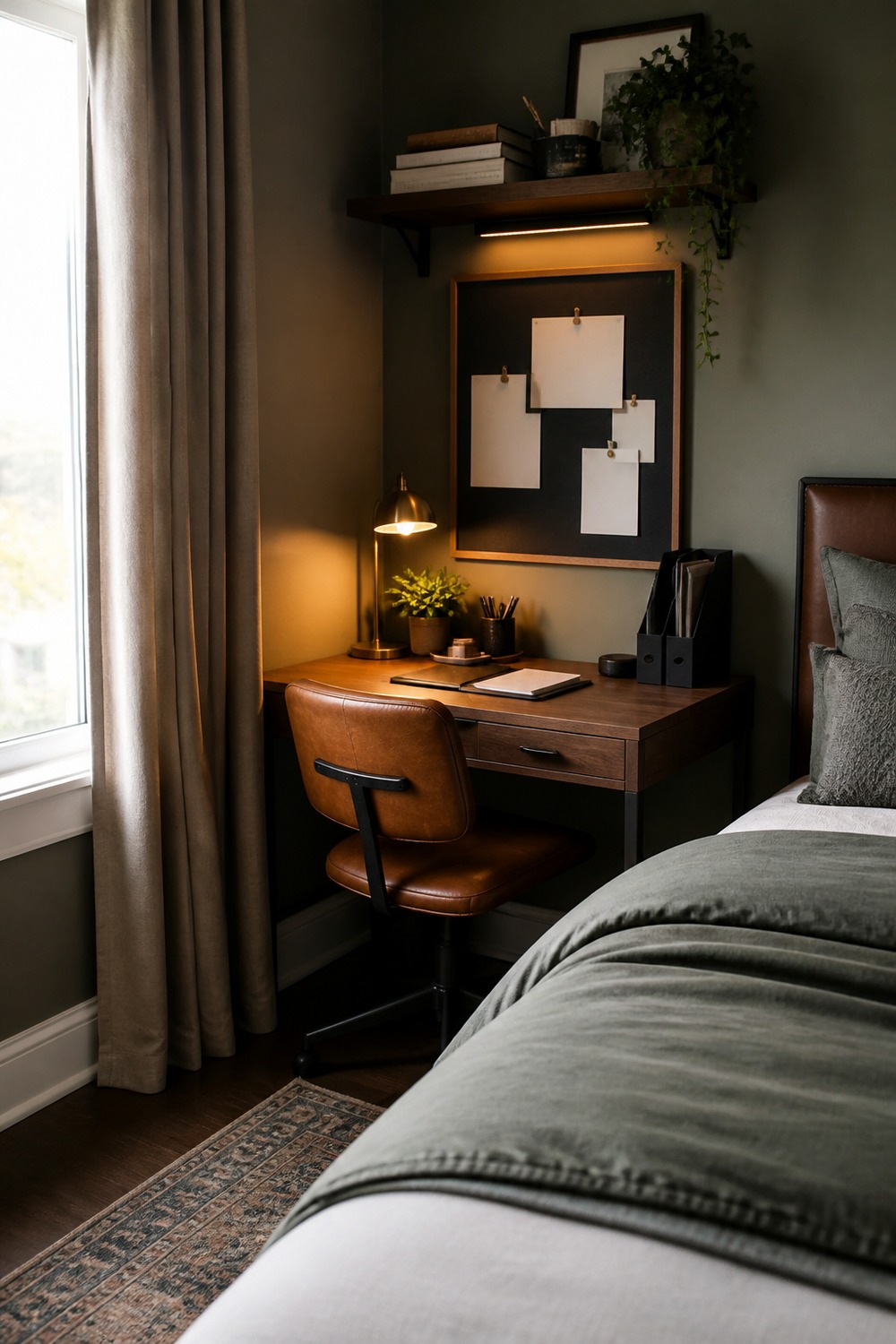
A bedroom desk has to stay visually quiet, especially this close to the bed. The slim surface, tucked chair, and soft curtains give the corner a job without making the room feel like an office after hours.
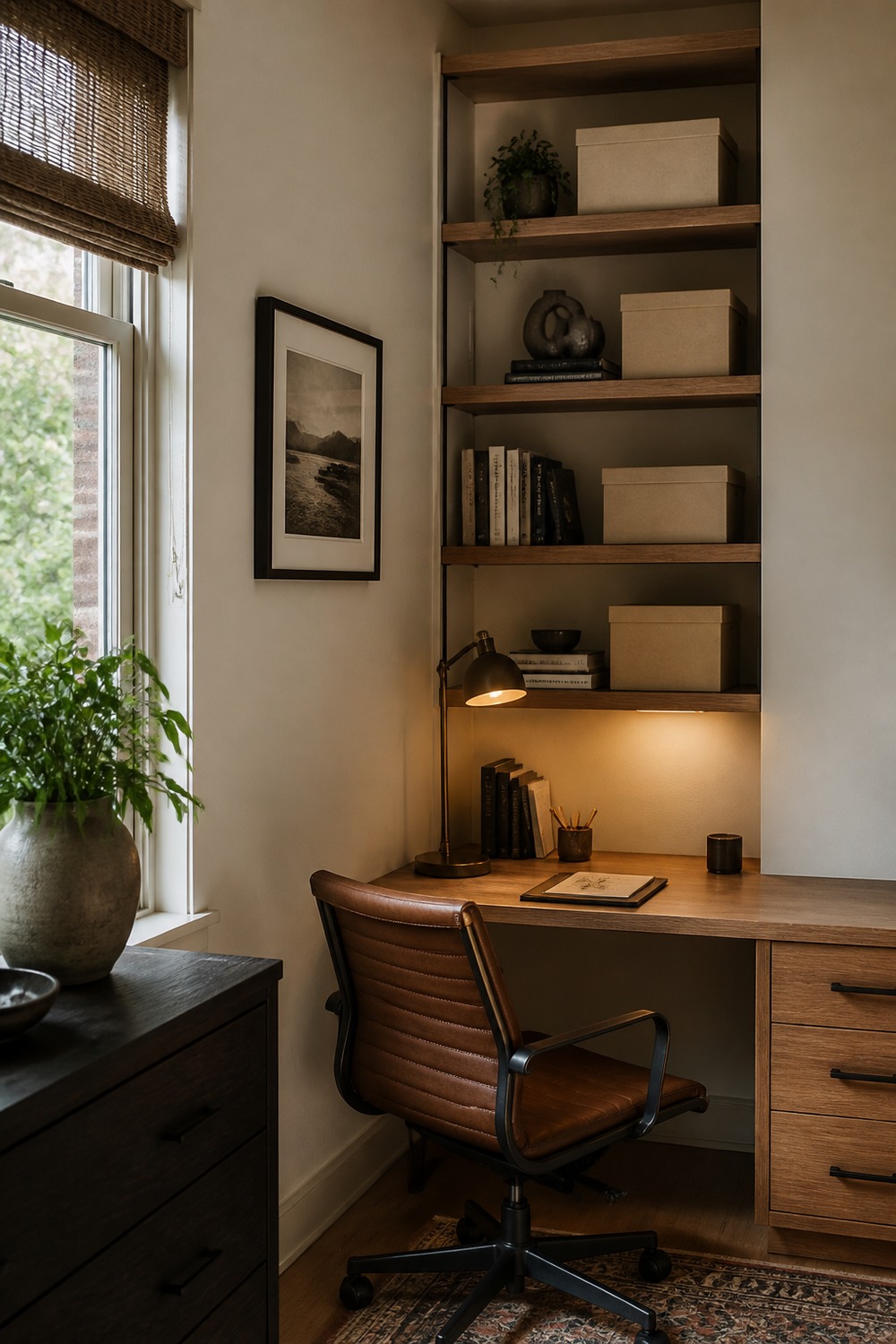
Tall shelving does the heavy lifting in this tight corner. Boxes keep smaller supplies out of sight, and the desk stays clear enough for a laptop, lamp, and notebook instead of becoming another storage ledge.
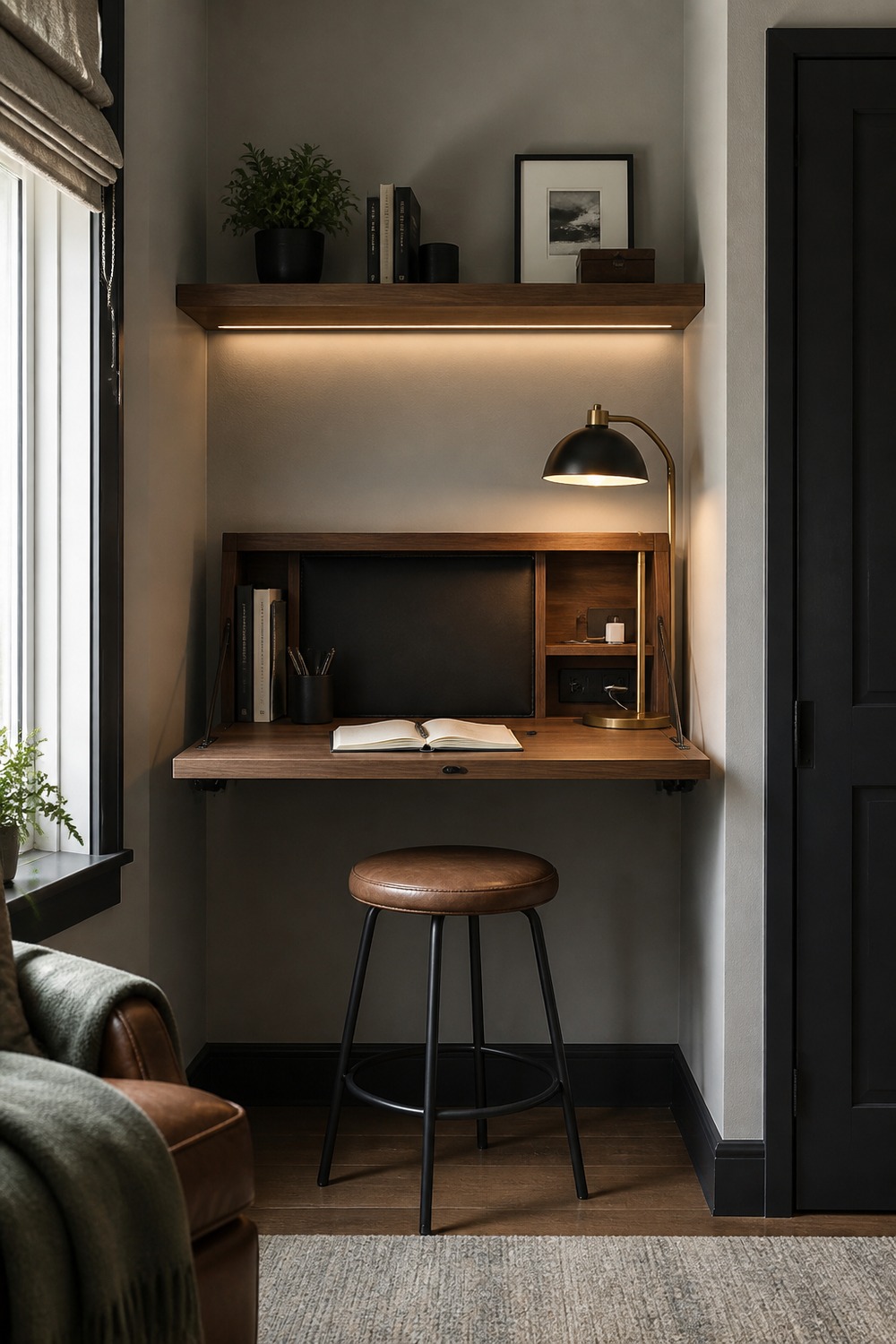
This compact wall desk is useful because the stool disappears underneath when the workday is over. The shallow cabinet and upper shelf keep the setup contained, which matters in a room where every bit of floor shows.
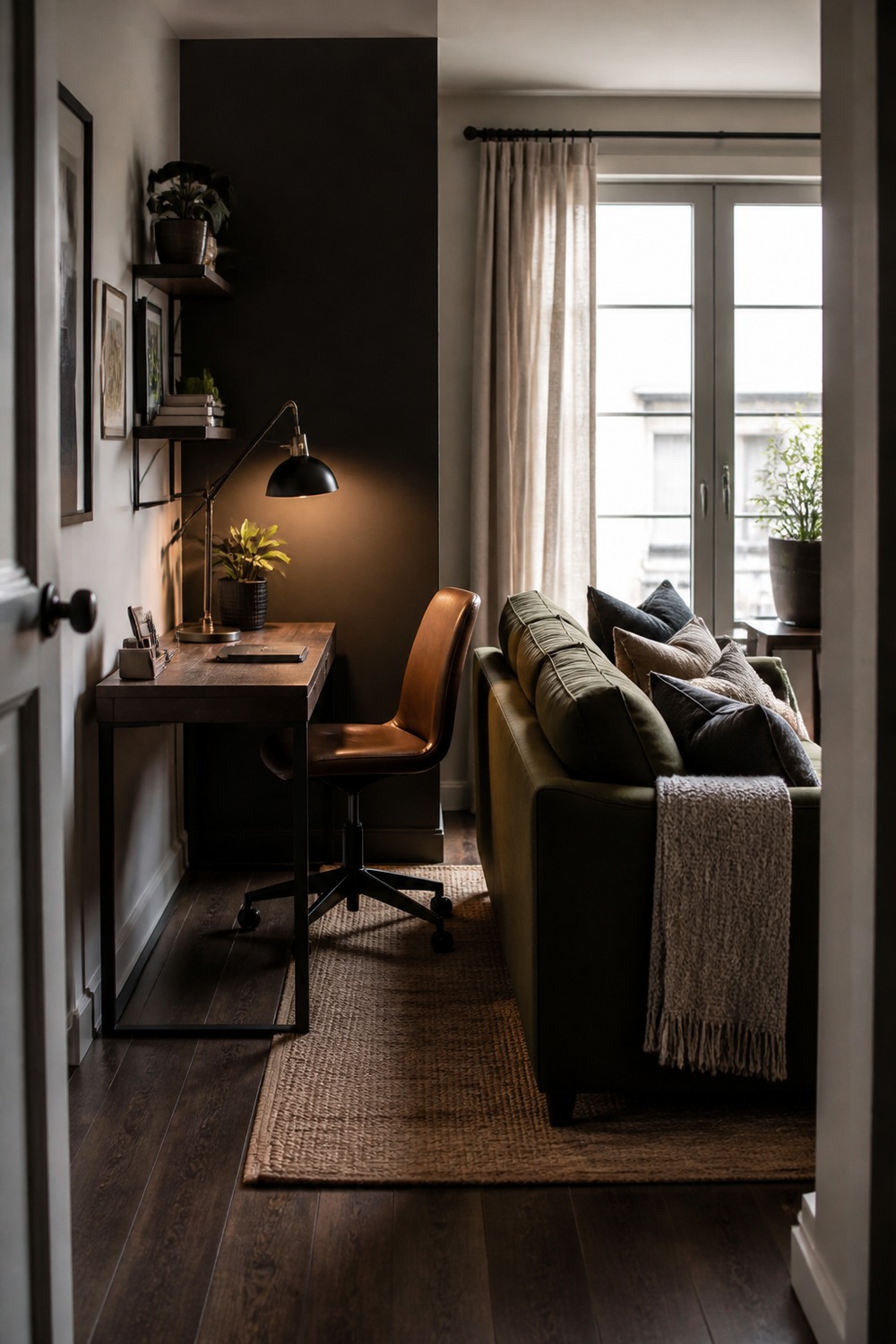
Placing the desk behind the sofa creates a work zone without adding another bulky piece along the main walls. The rug still defines the living area, and the narrow desktop leaves a believable path around both pieces.
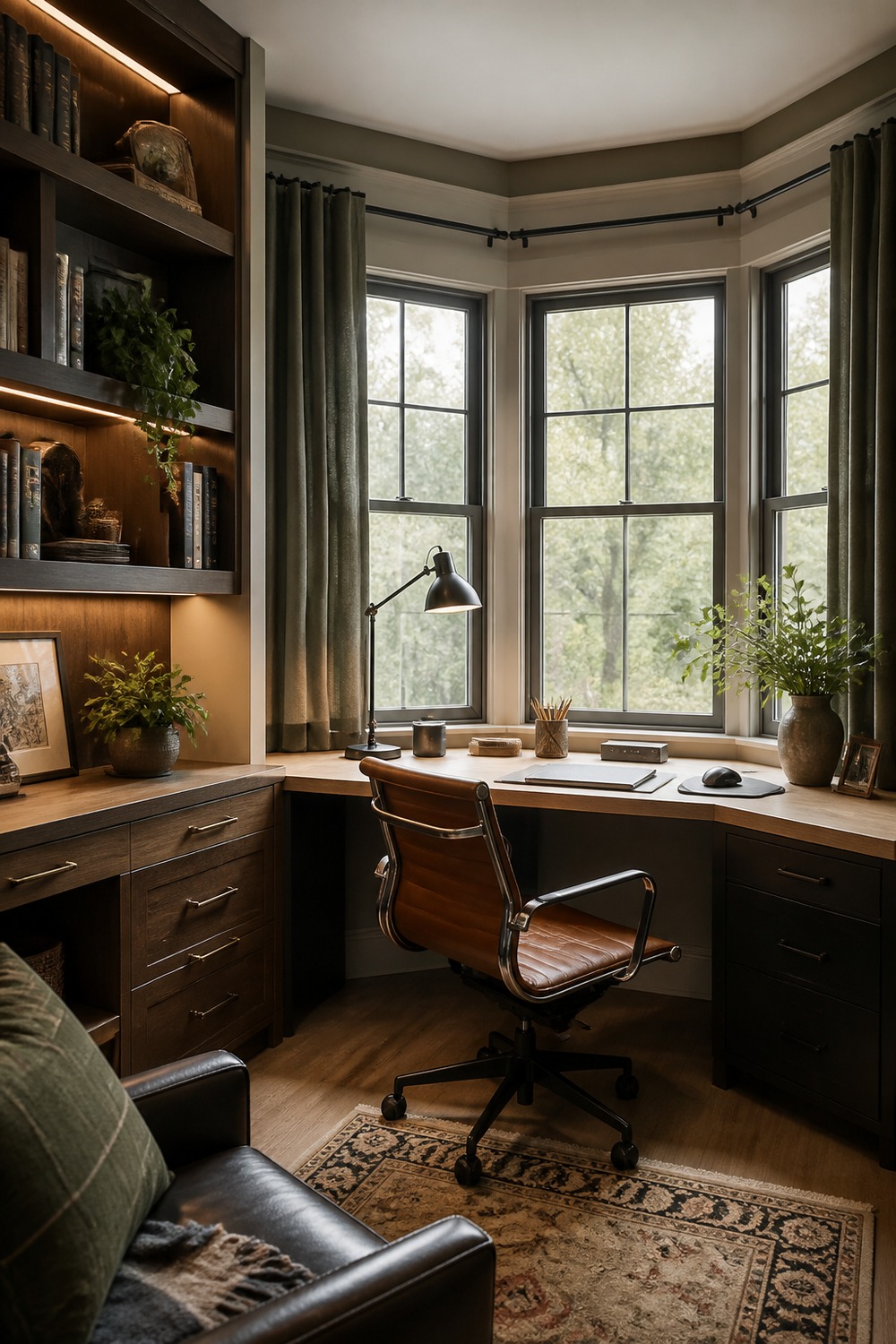
The bay window gives this desk natural side light and enough width for drawers without pushing into the room. Fitting the surface to the recess makes the whole corner feel architectural rather than improvised.
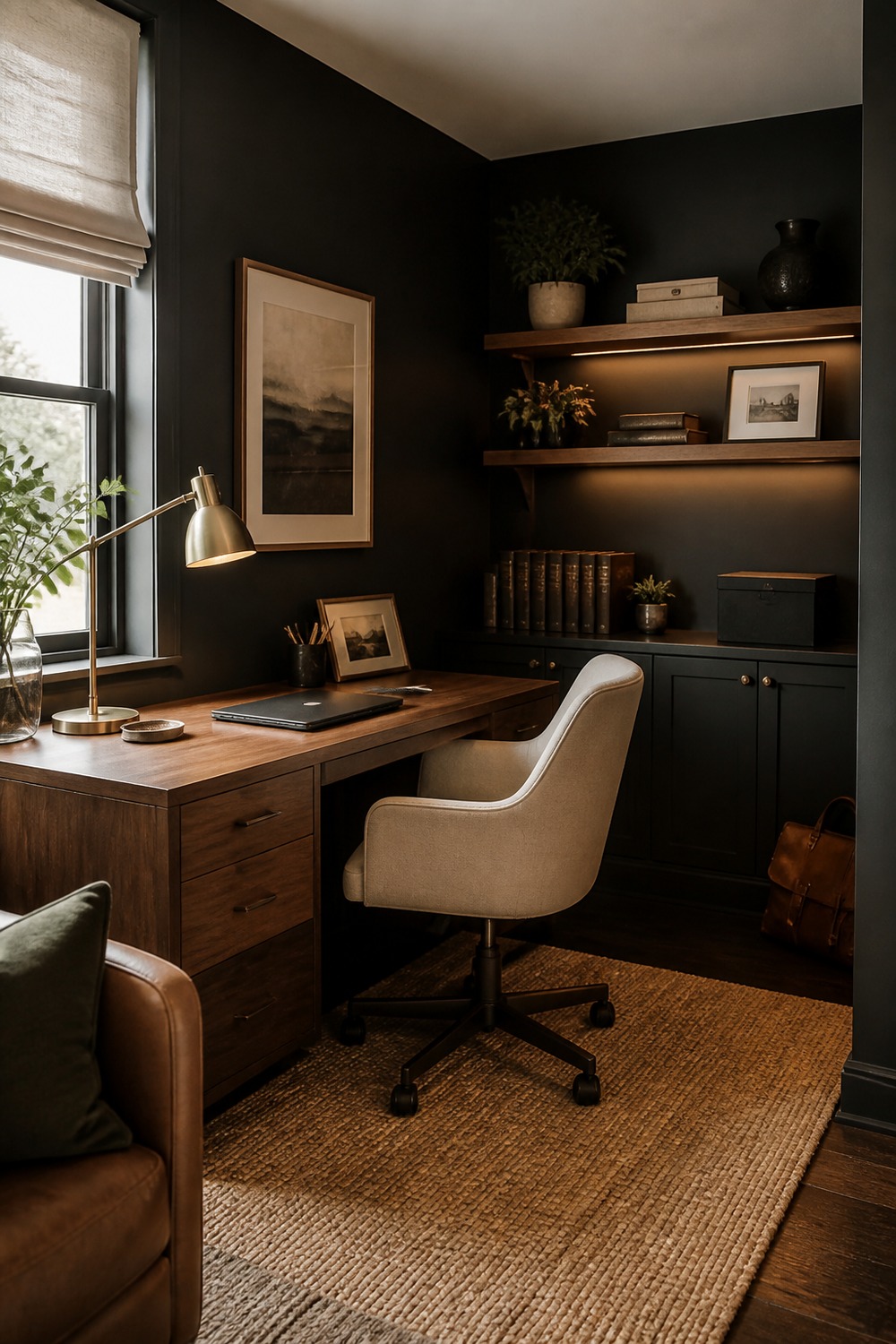
Charcoal walls and walnut can feel heavy in a tiny office, but the cream chair and brass lamp break up the darker surfaces. Closed storage underneath keeps the moody look from turning into visible clutter.
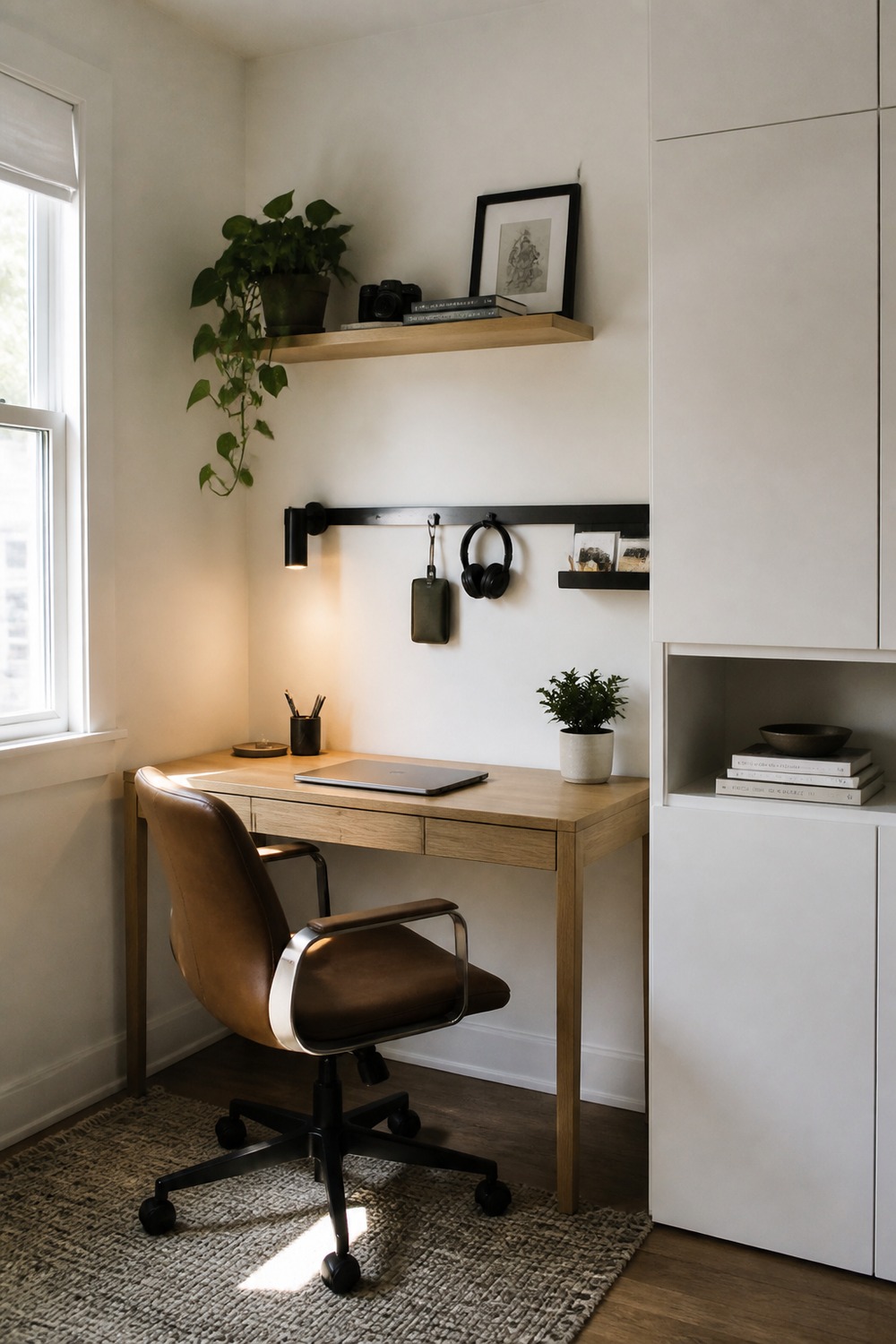
Pale oak and white cabinetry make this small workstation feel lighter than its footprint. The vertical rail keeps a few useful items within reach while leaving the desktop mostly open.
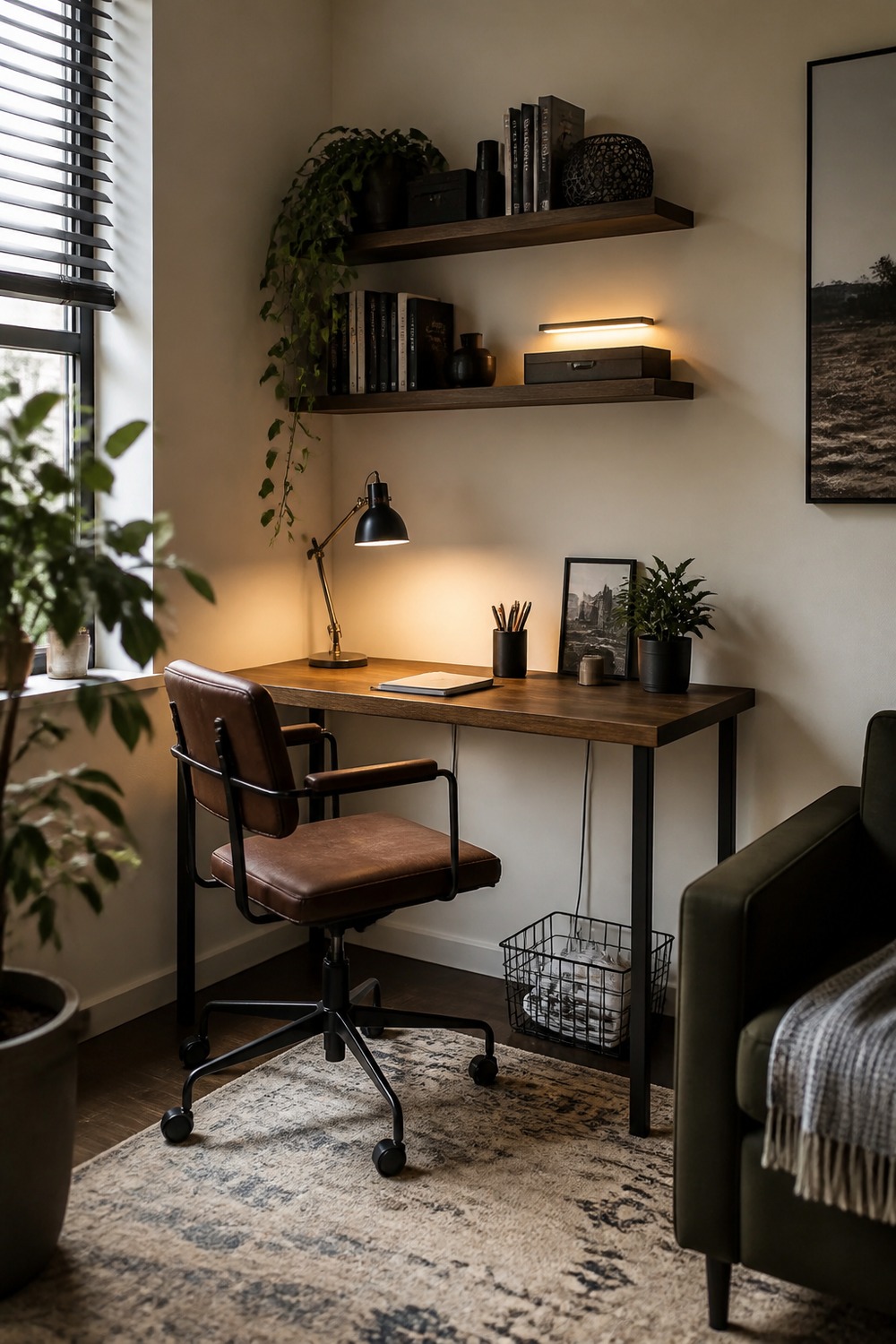
Nothing here depends on oversized furniture. A freestanding desk, compact chair, cord basket, and light wall shelves create a setup that can move with a renter instead of becoming permanent construction.
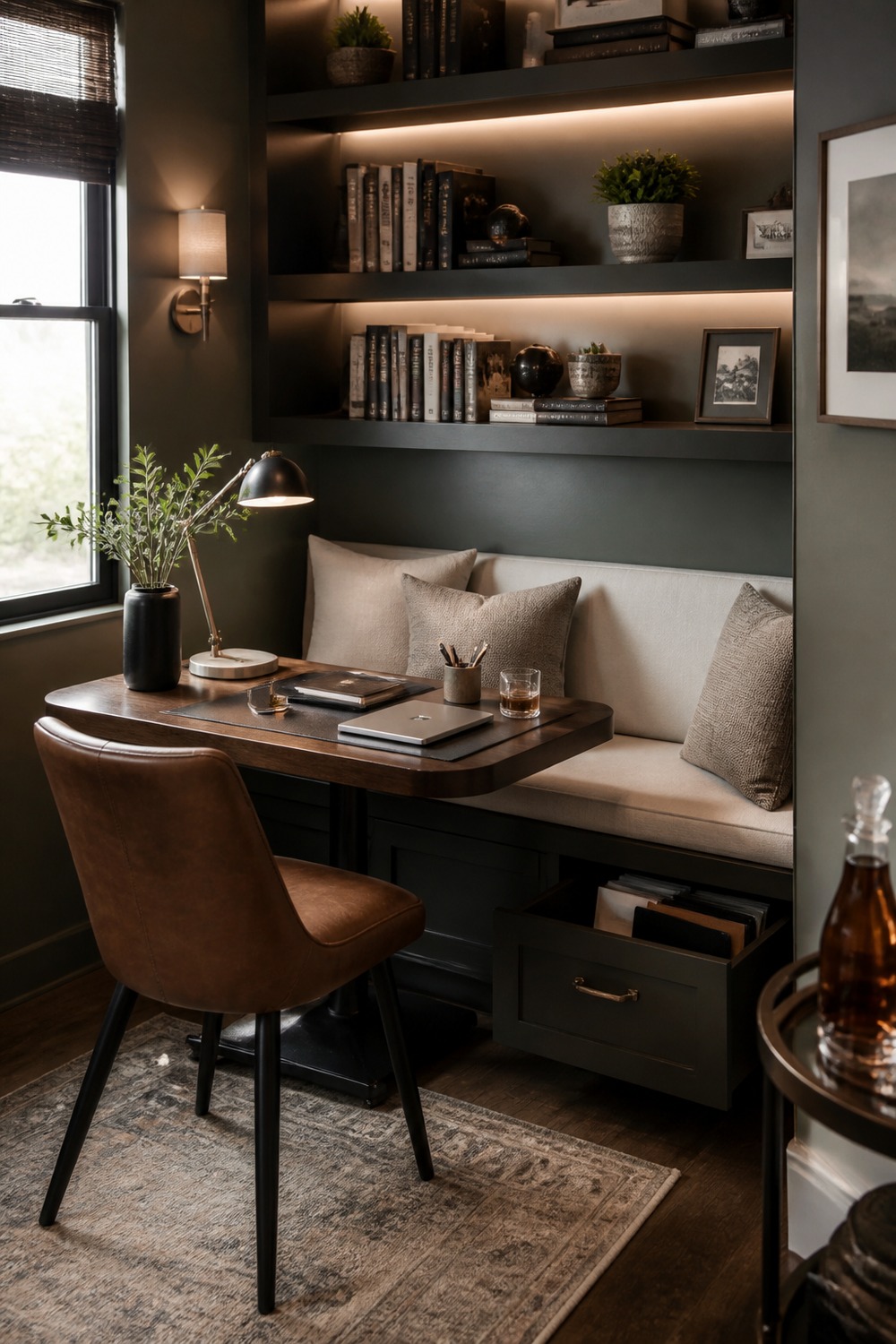
This dining corner can handle a laptop between meals because the table already has good light and bench seating nearby. A hidden file box keeps work papers from lingering when the space switches back to dinner.
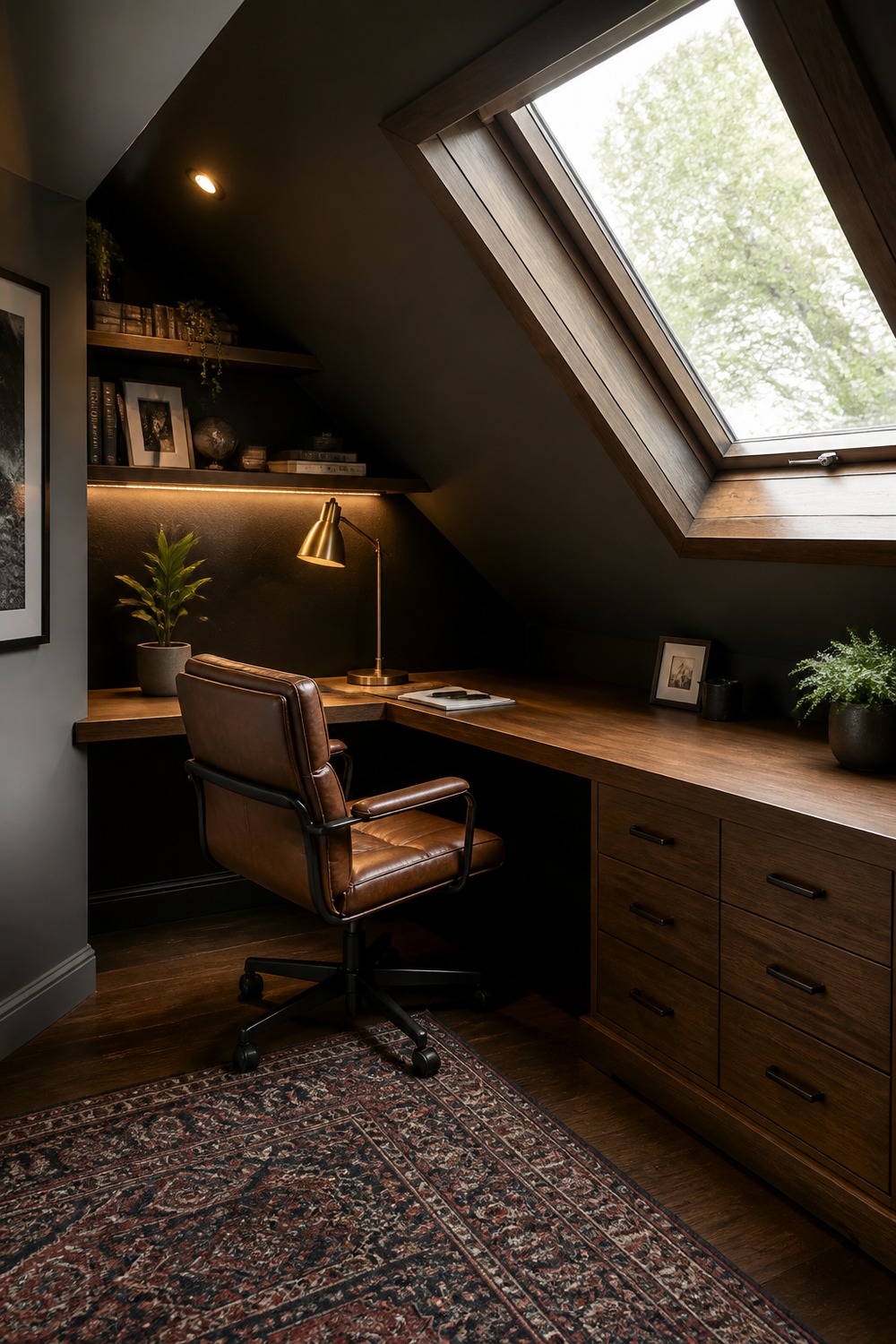
An attic eave is awkward for tall furniture but ideal for a long, low desk. The skylight brightens the work surface, and fitted drawers use the shallow edges where a chair would never fit anyway.
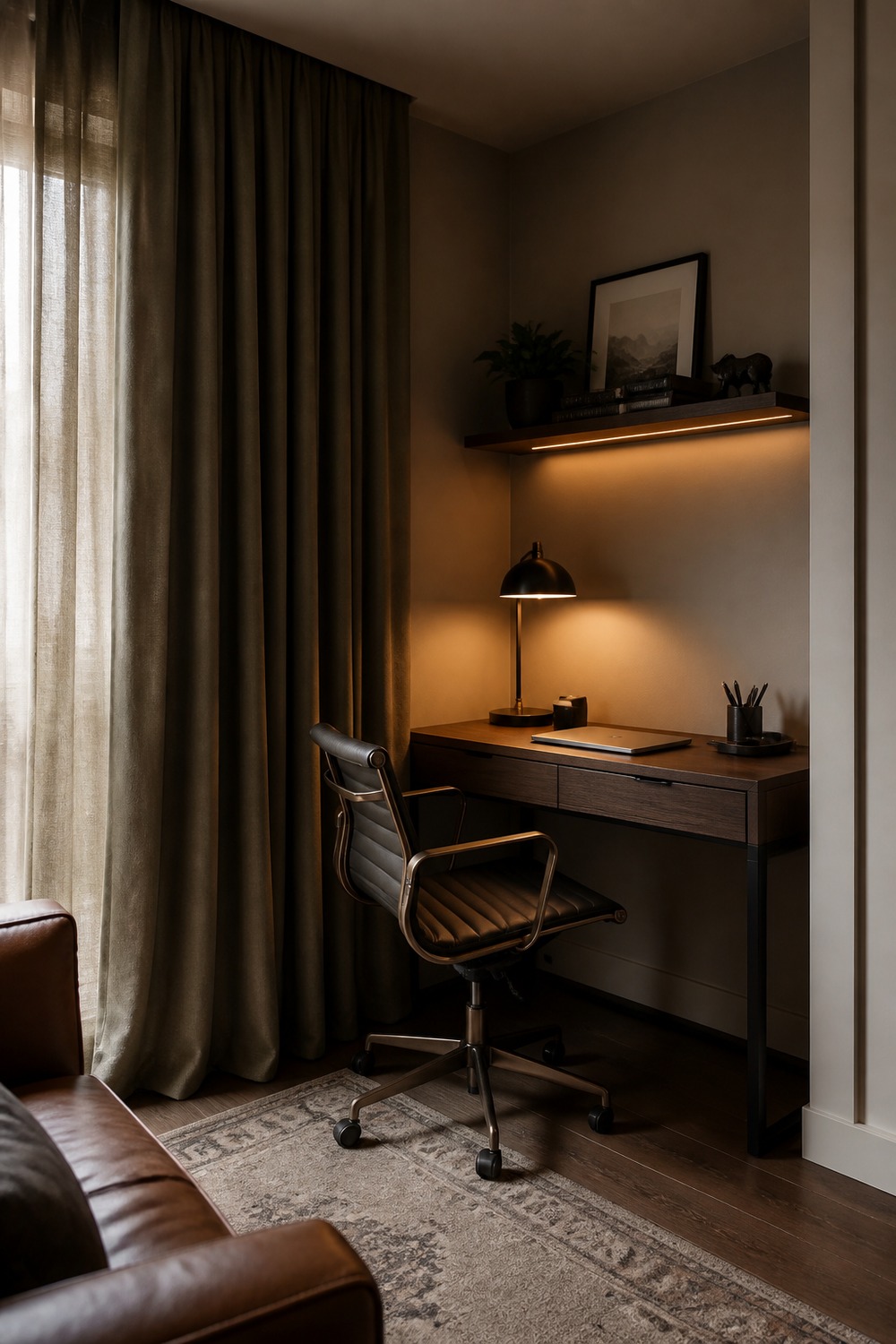
Floor-length curtains soften a desk that might otherwise look stranded in the corner. The wall shelf and slim surface stay compact, while the open chair path keeps the room easy to use.
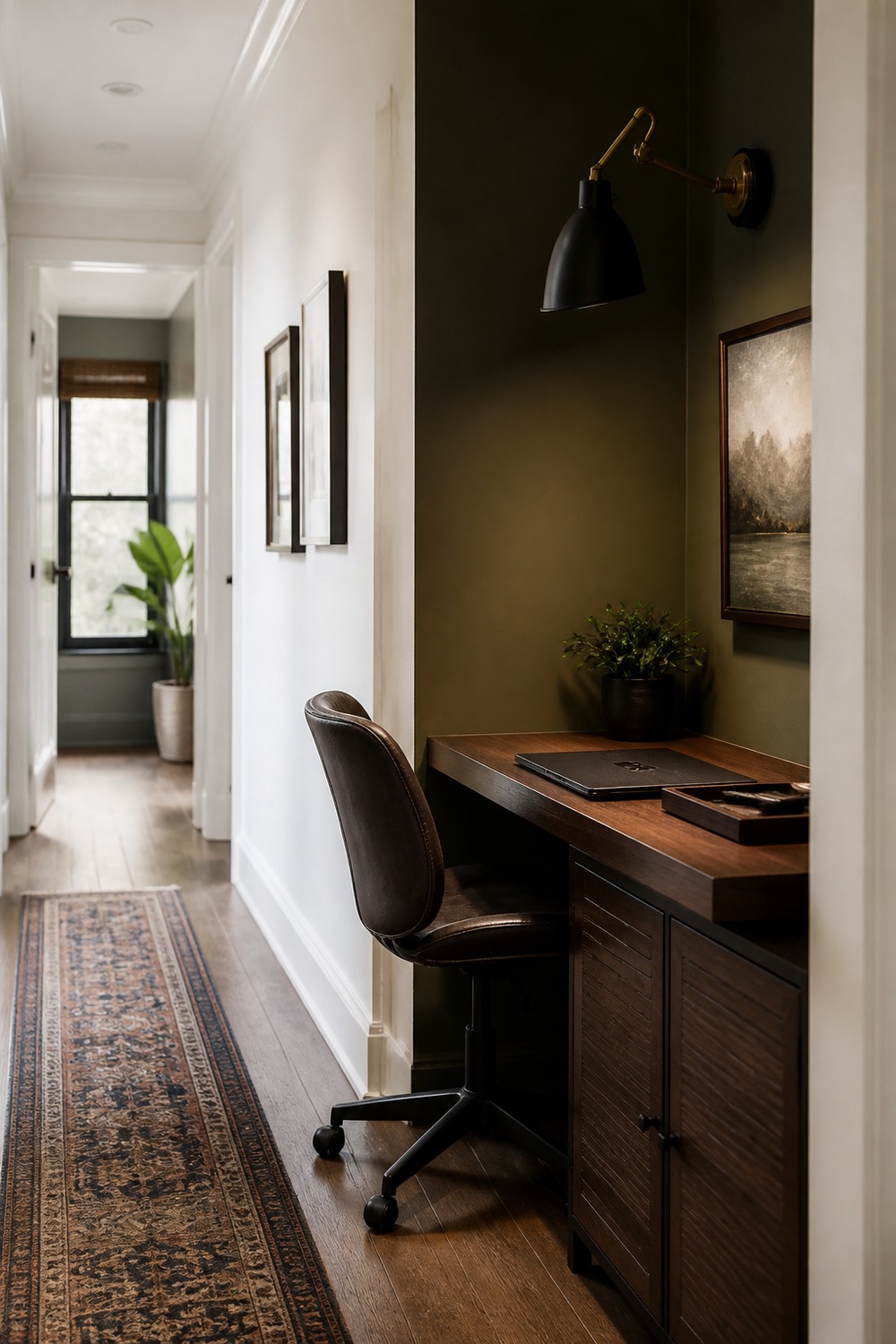
A hallway office only works when the desktop is genuinely shallow. This one pairs a wall light with closed base storage, so the passage stays clear and loose supplies do not spill into the walkway.
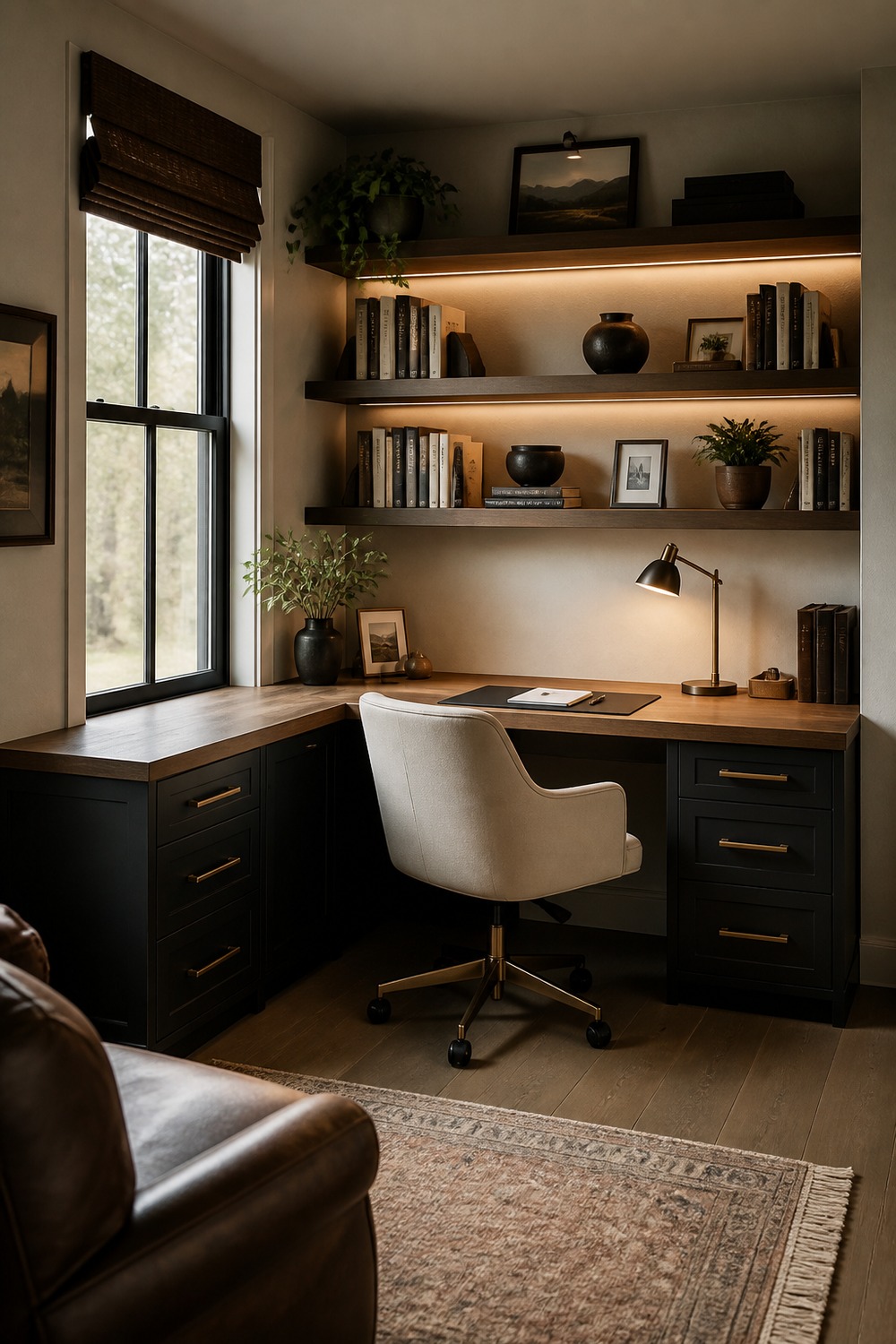
The warm oak counter connects two low cabinets and gives this built-in corner a generous work surface. Upper shelves take advantage of the wall, while the cream chair keeps the cabinetry from feeling too heavy.
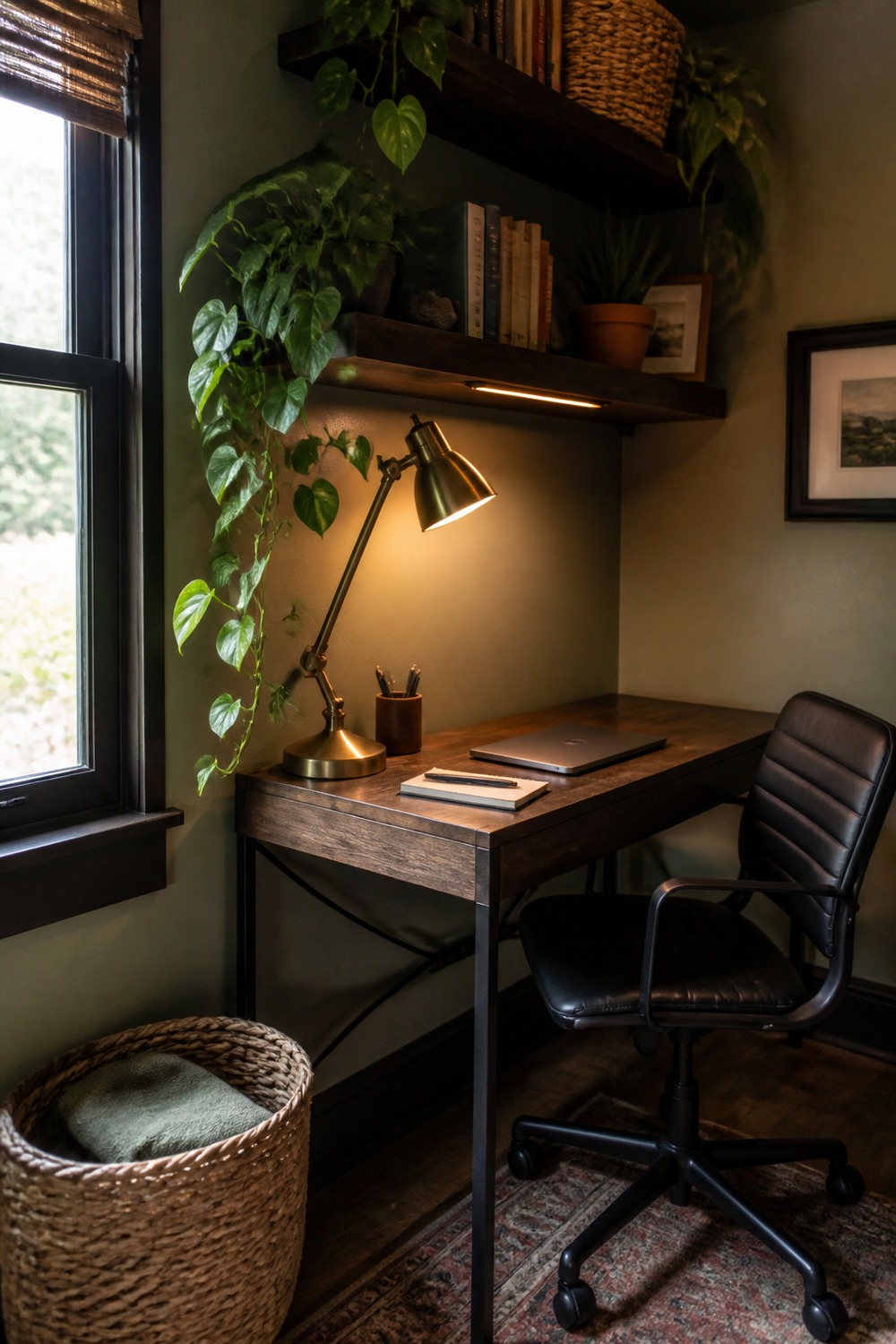
The trailing greenery pulls attention upward and makes this narrow desk corner feel less rigid. Baskets deal with loose supplies, and the brass lamp brings focused light without taking much surface space.
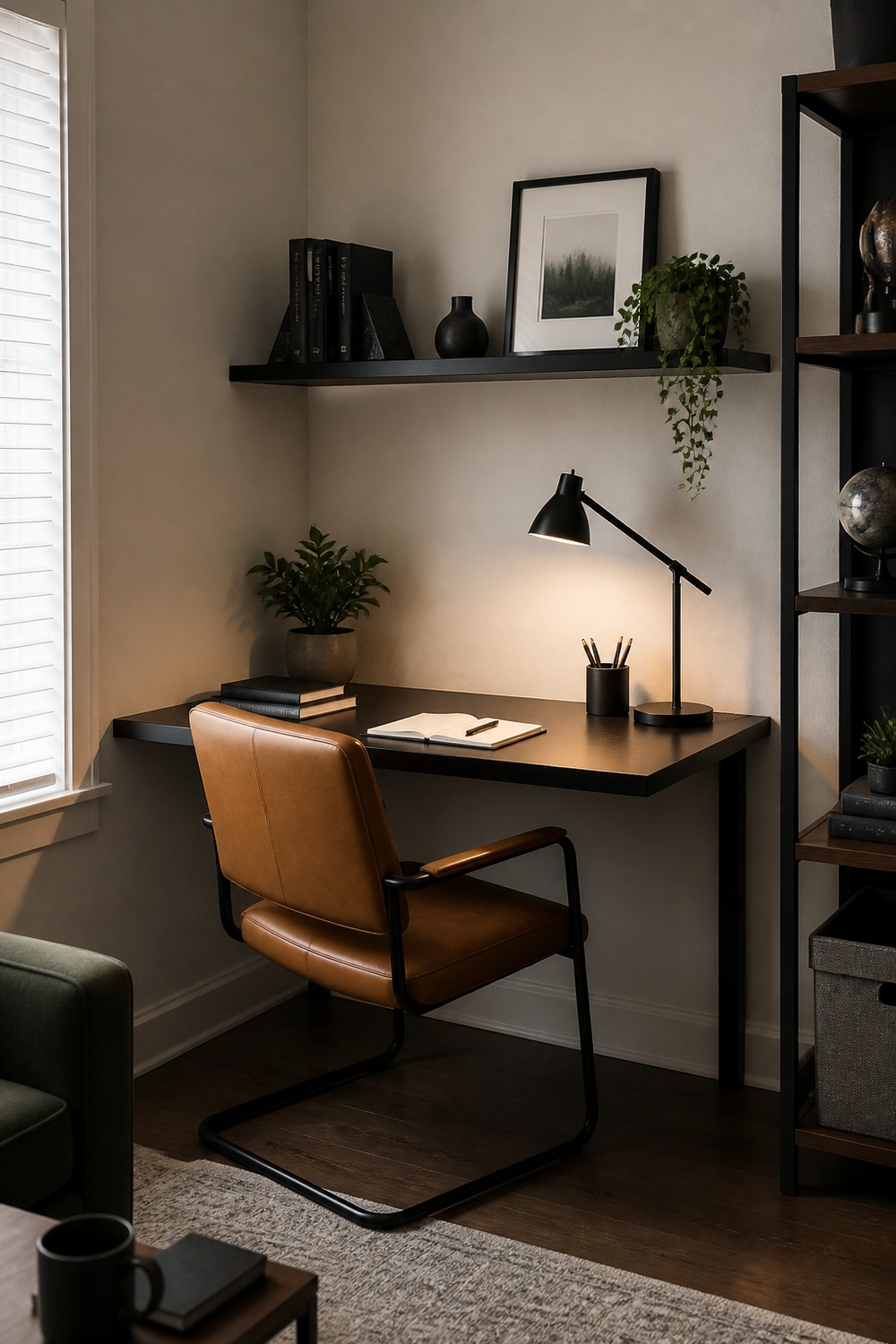
A slim black desk gives this corner definition without adding visual bulk. The tan chair warms up the contrast, and one restrained shelf is enough for essentials without turning the wall into a display grid.
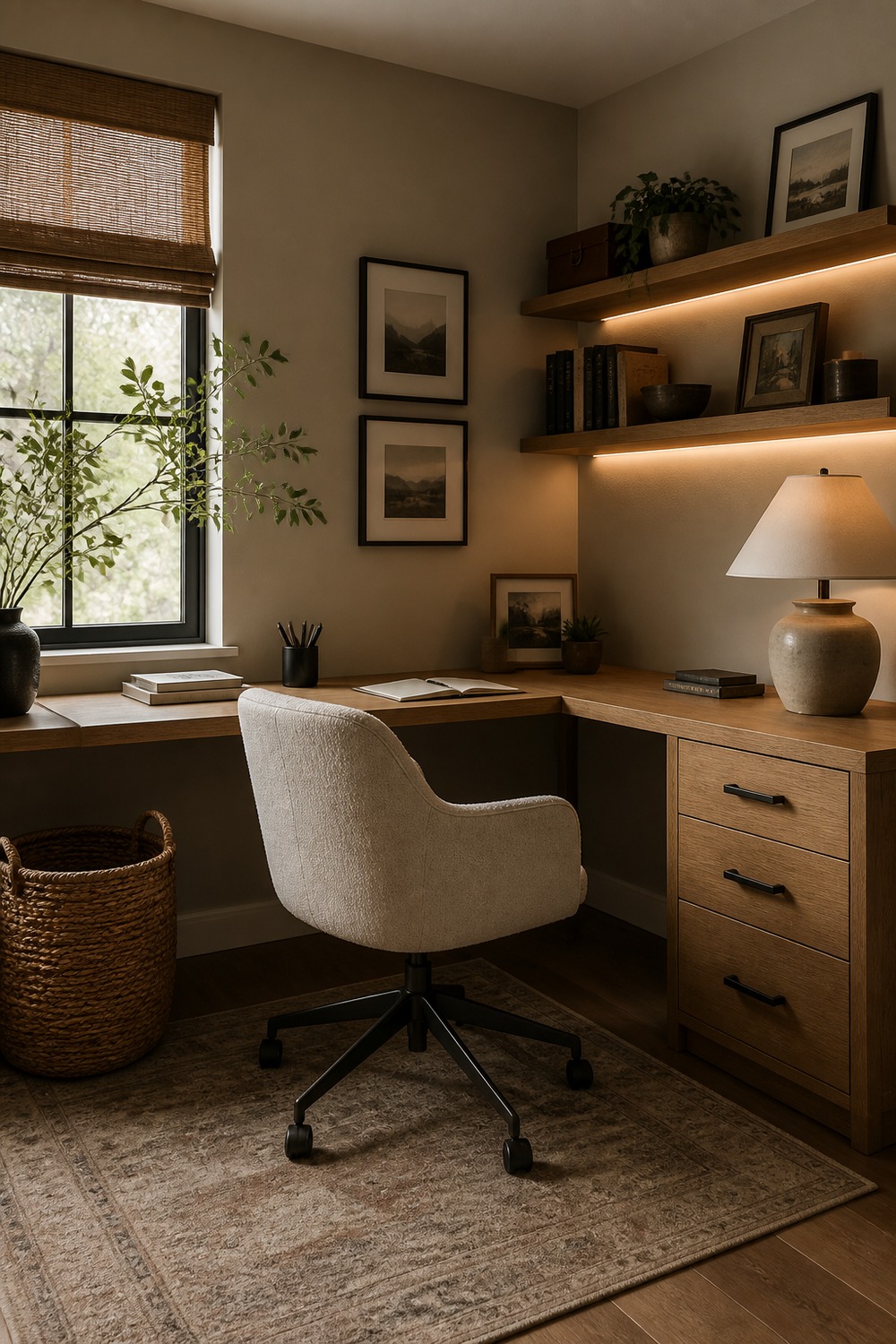
Soft beige walls, an oak desk, and a boucle chair make this work zone blend into the room instead of announcing itself. The woven basket is close enough for papers or cables but easy to move when the chair needs space.
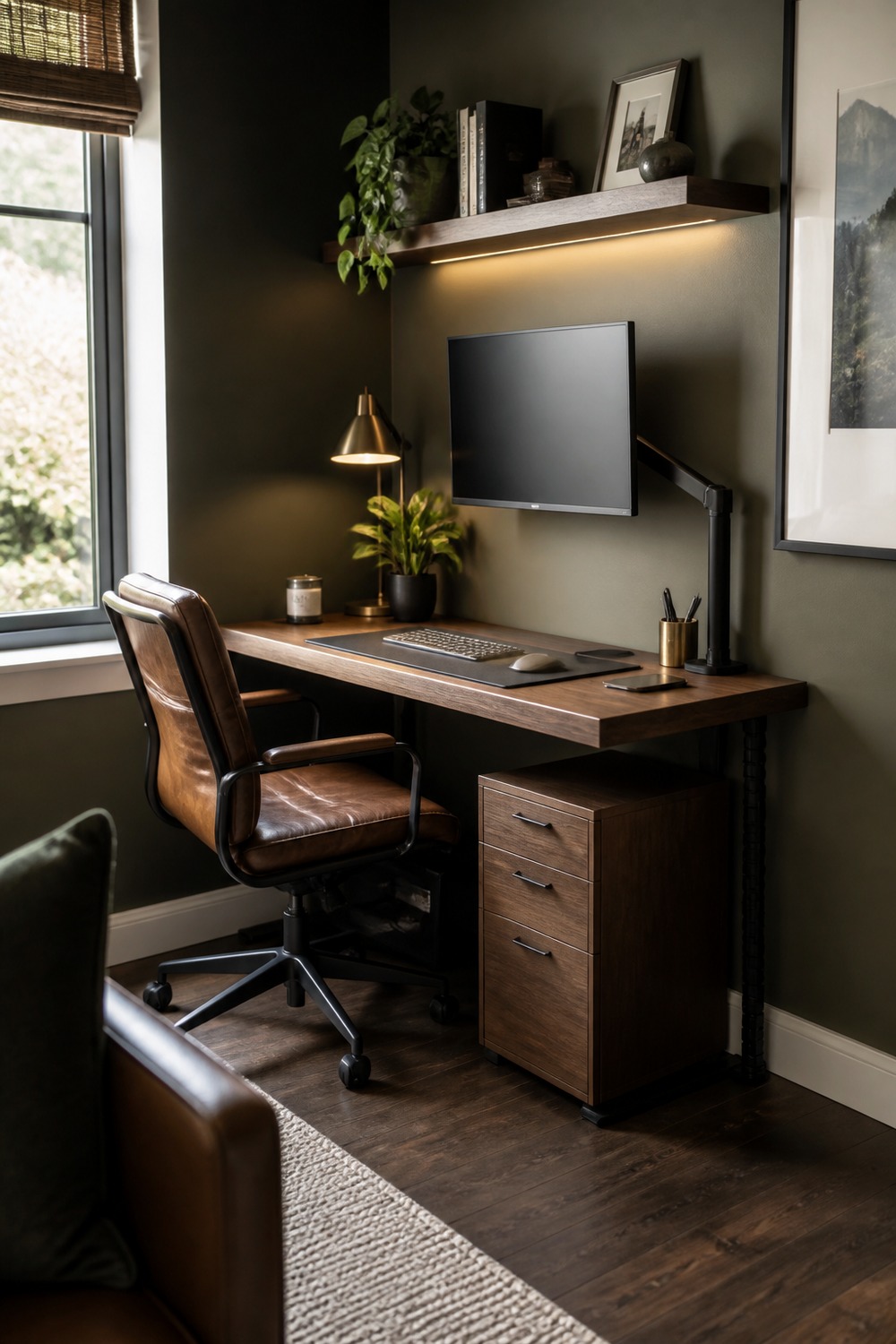
Mounting the monitor on an arm frees the shallow desktop for a keyboard and notebook. A drawer pedestal keeps everyday gear close, while the shelf stays high enough that the screen does not feel boxed in.
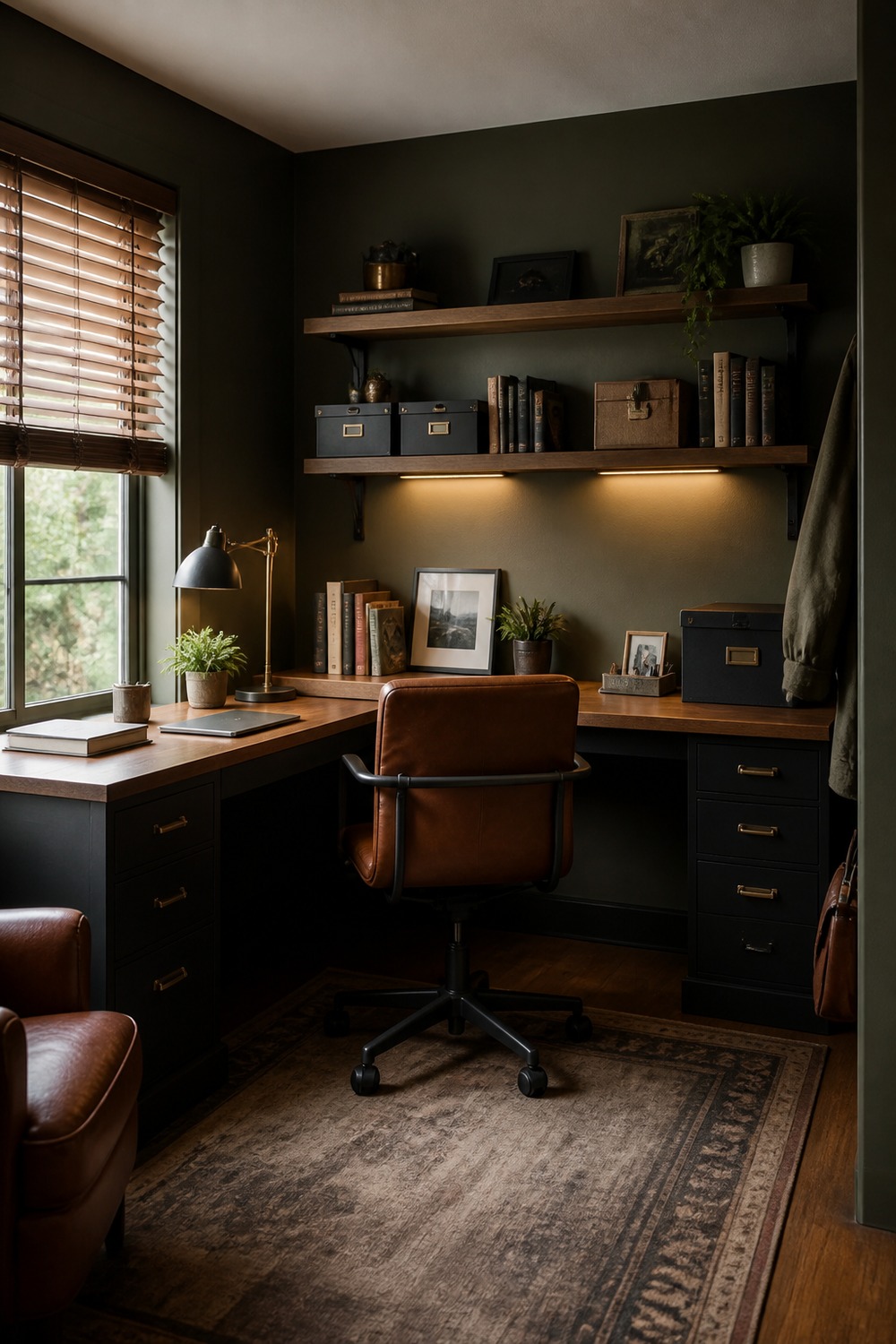
The final setup feels complete because storage, light, and chair clearance were planned together. Nothing projects far into the room, yet the corner still has enough surface and closed storage for a normal workday.
The best corner offices usually come down to scale: a desk that fits the wall, light where the corner gets dark, storage close enough to use, and enough room for the chair to move. When those pieces line up, even a leftover corner can feel like a real workspace.
Leave a comment