
A corner desk only earns the floor space when both sides actually help. These setups make the turn useful—with room for a chair, a real work surface, and storage that does not crowd the inside corner.
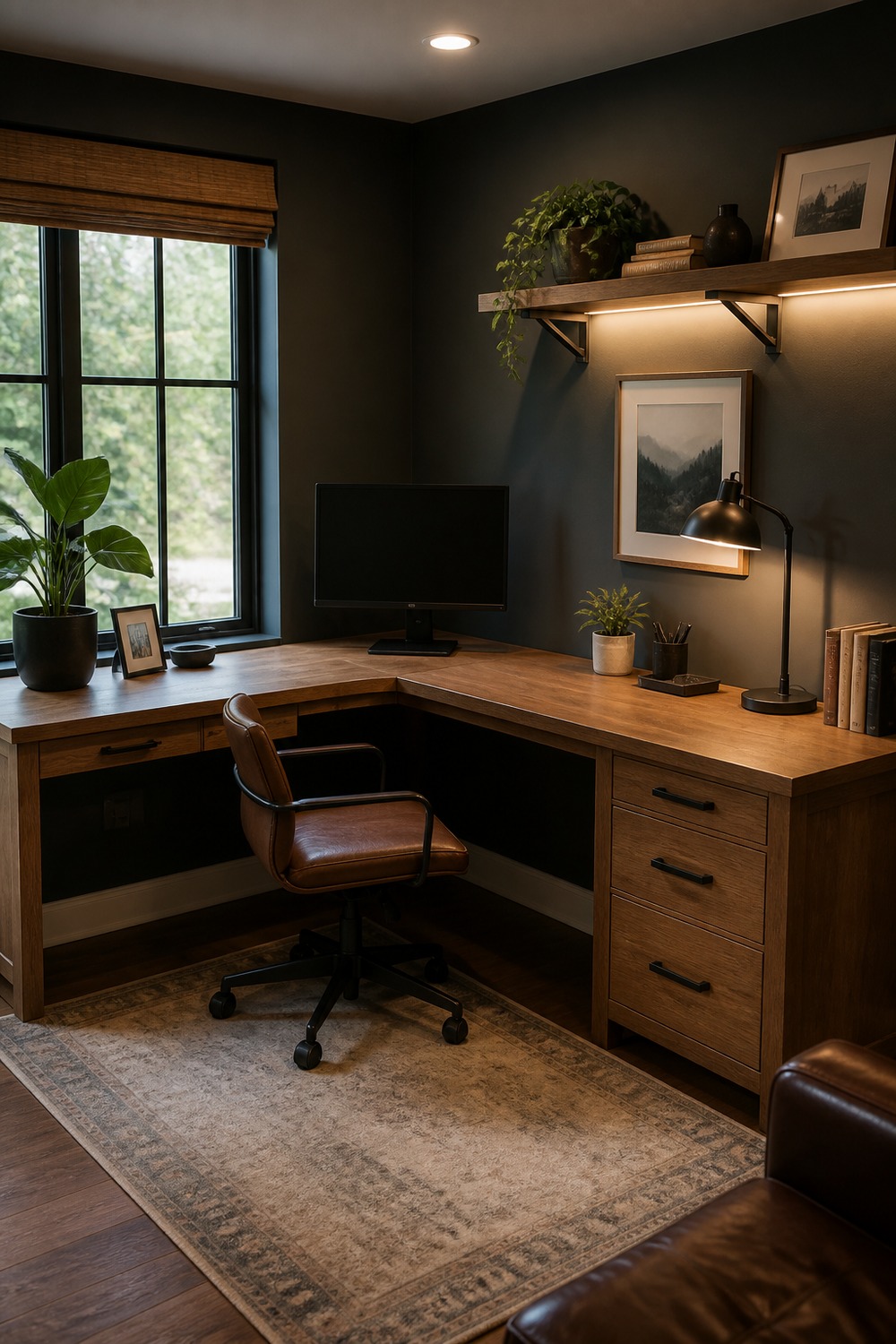
The oak top makes the L easy to read because it stays continuous across both walls. Drawers anchor the short return, while the open knee area keeps the chair from getting boxed in.
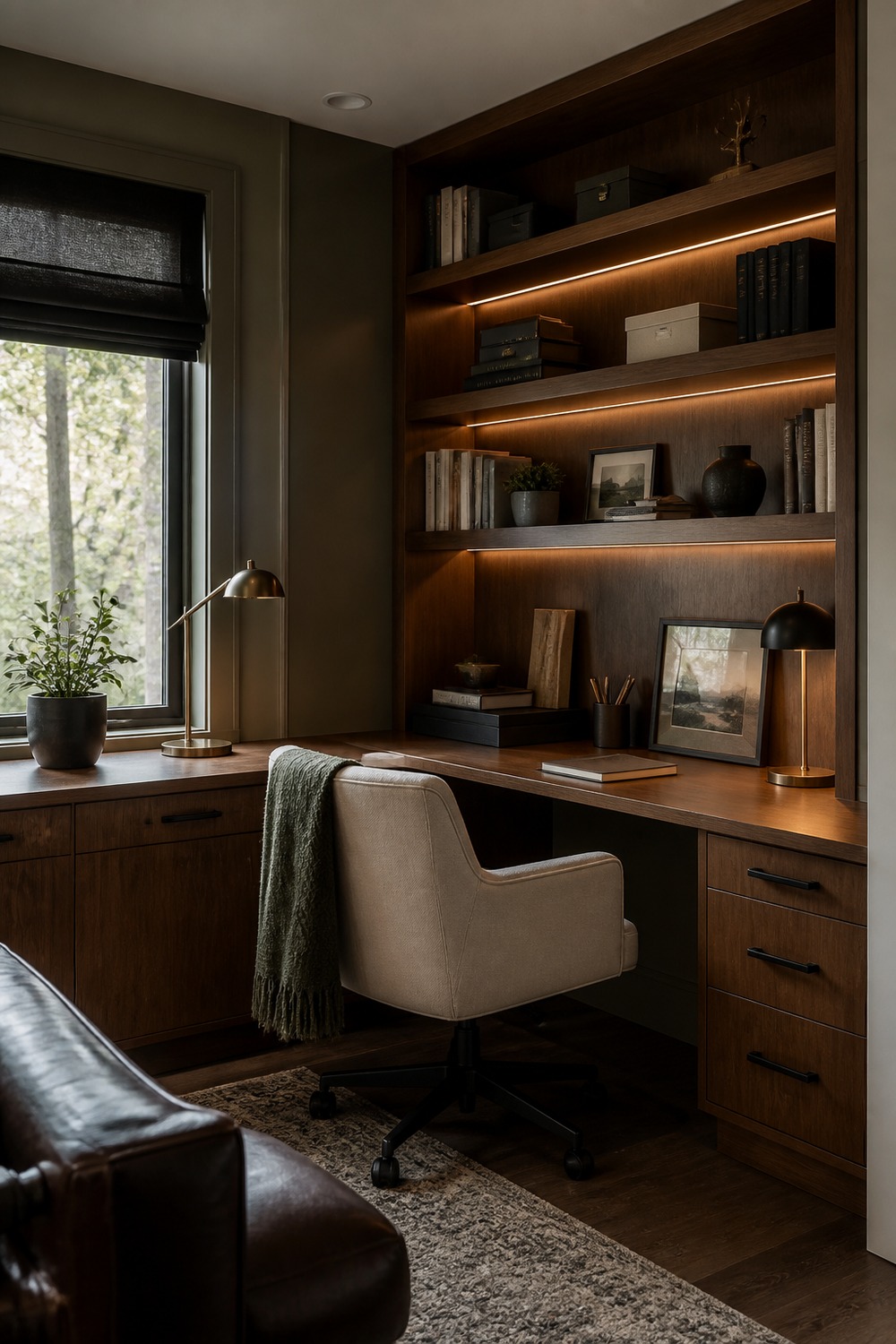
Built-in shelves turn this from a desk placed in a corner into a complete work zone. I would keep the everyday files on the lower shelves and leave the upper ones for the few objects that make video-call backgrounds look less bare.
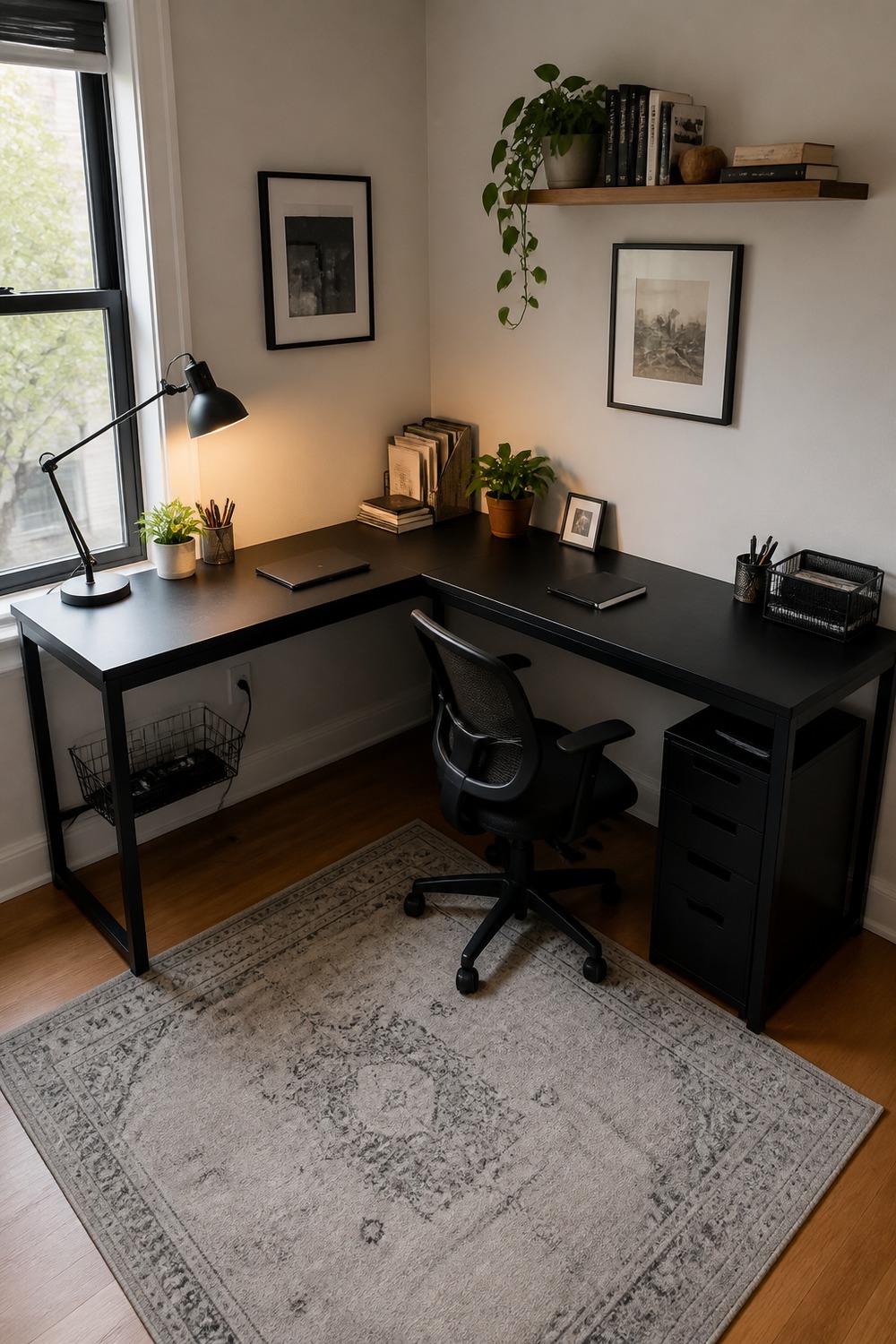
A black frame gives the compact desk a crisp outline against the lighter walls. The return is deep enough for a lamp and notebook, so the main run can stay clear for a laptop or monitor.
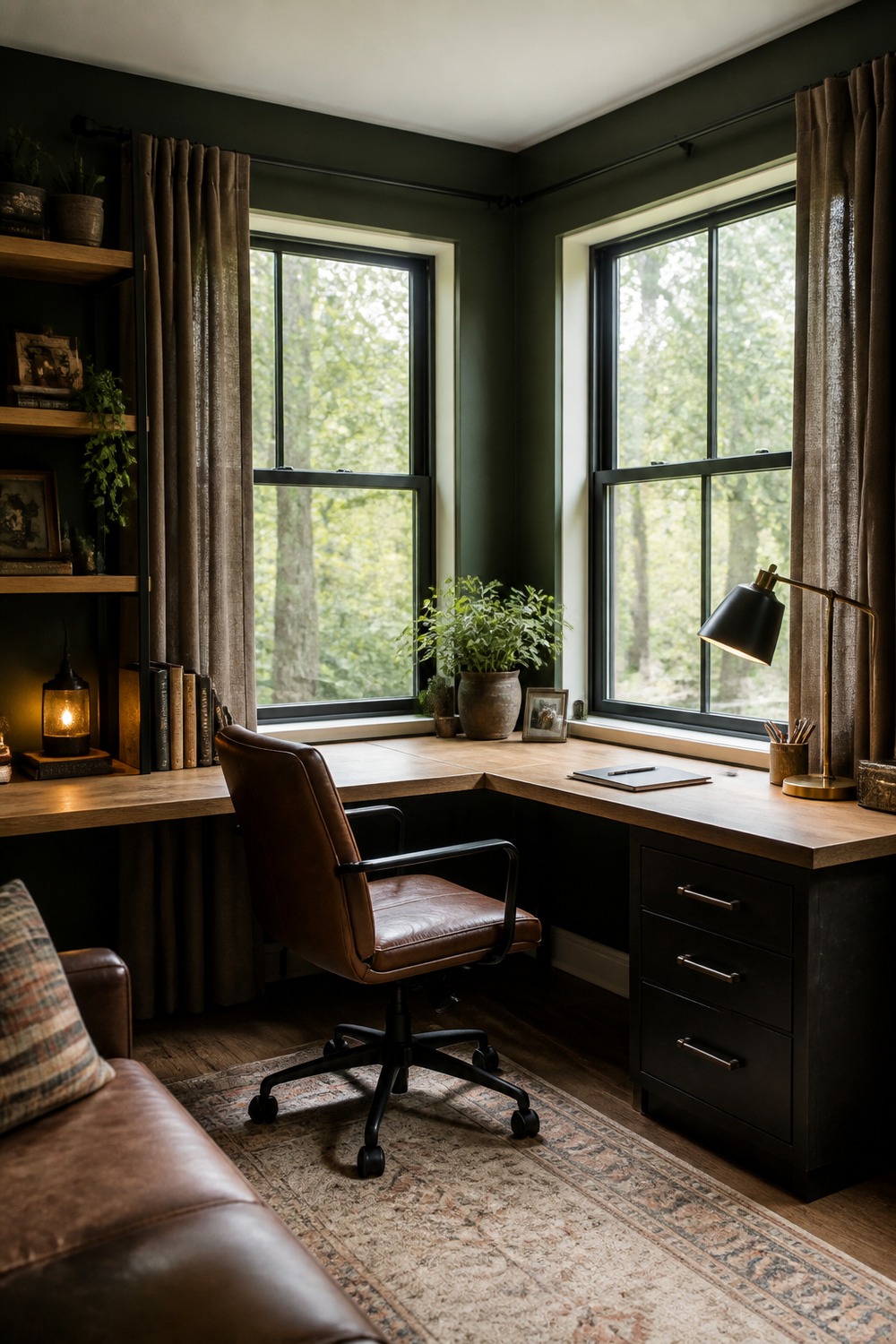
Two windows could have made this corner awkward, but the low desktop slips underneath without blocking the light. That wraparound view also makes a long workday feel a little less closed in.
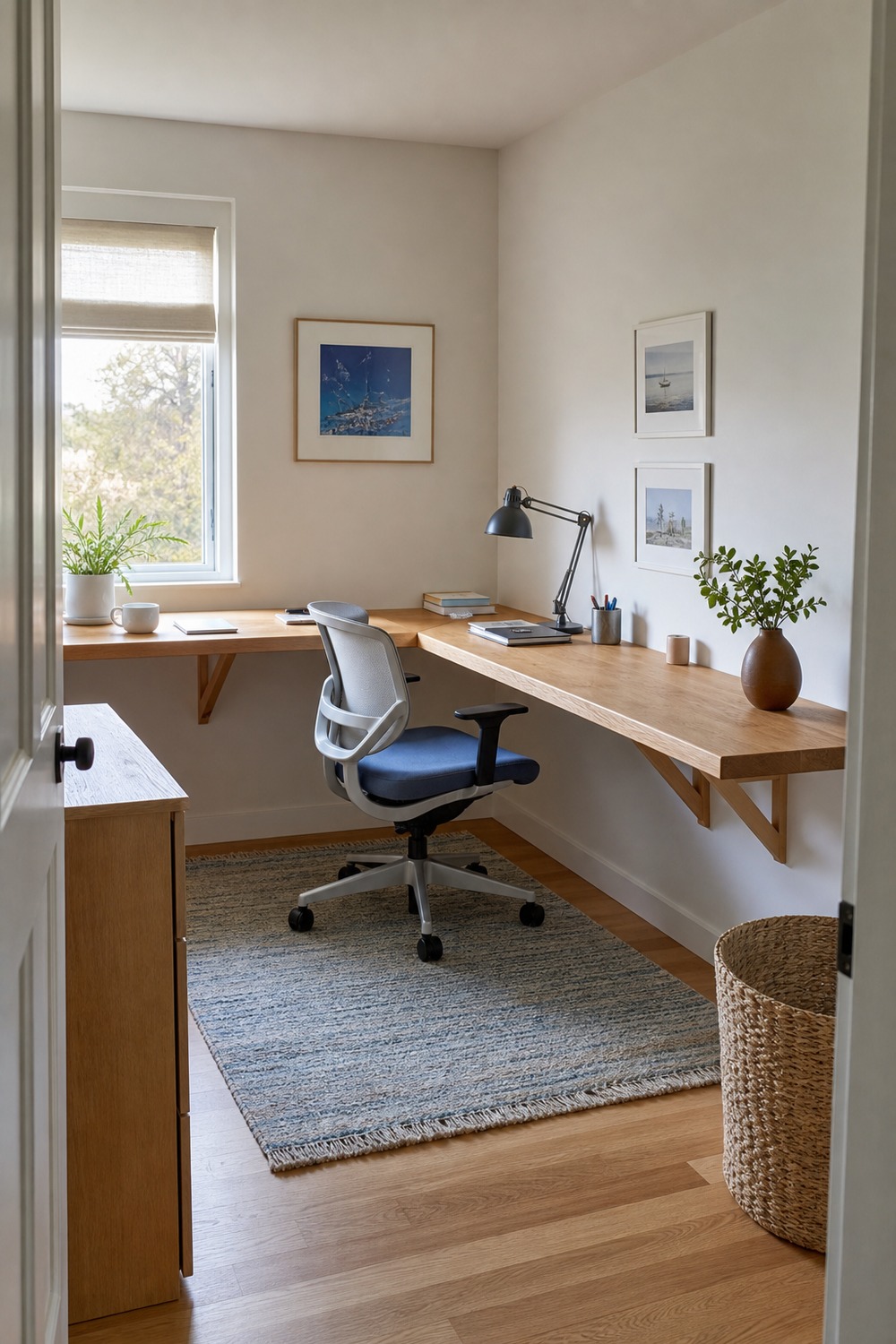
The floating top leaves the floor visually open and makes the room seem wider. A shallow shelf above handles small supplies without adding bulky pedestals under either arm.
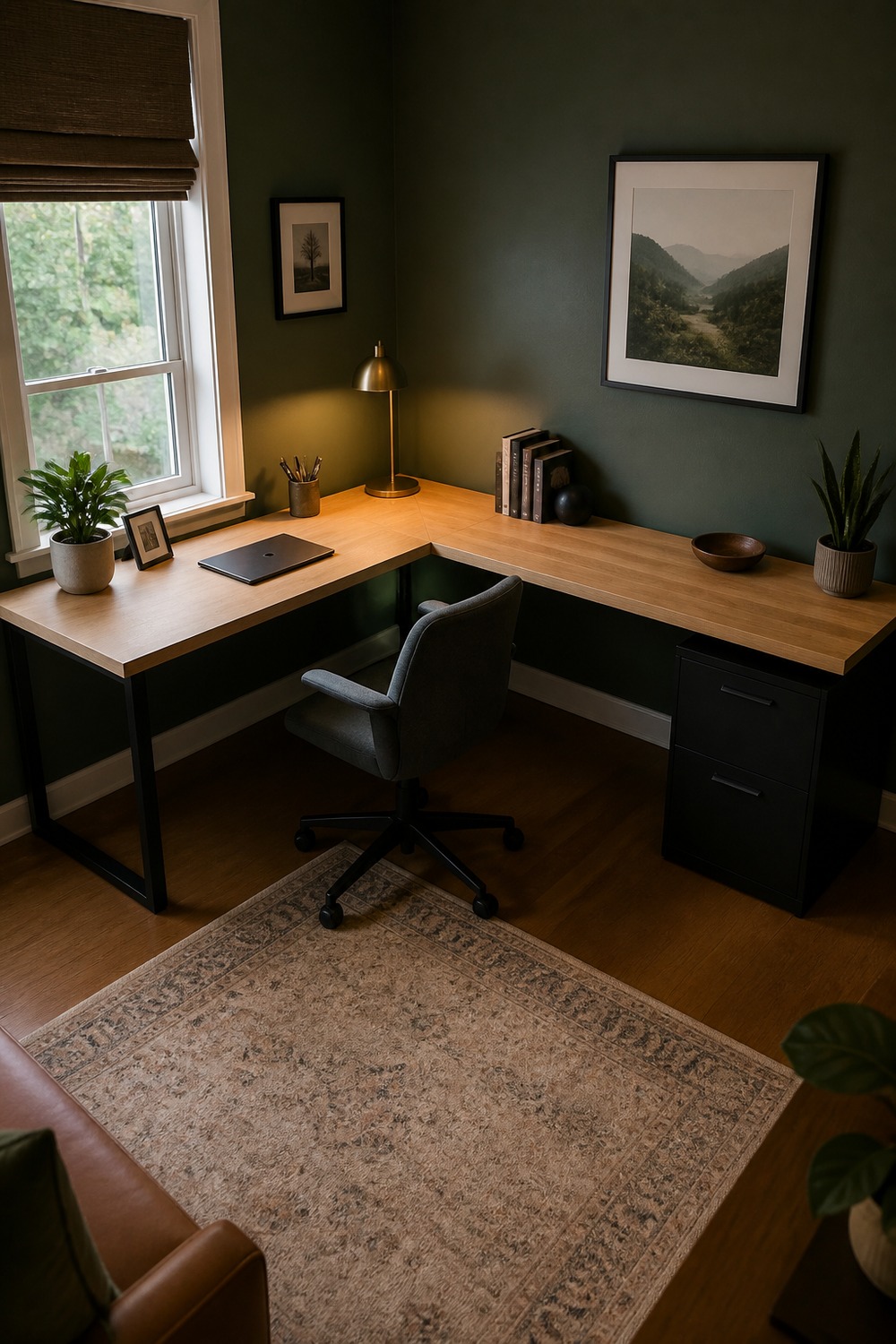
Here, the file pedestal does two jobs: it supports the return and puts paperwork within reach. The warm task lamp lands right at the turn, which is usually the darkest and most neglected part of an L desk.
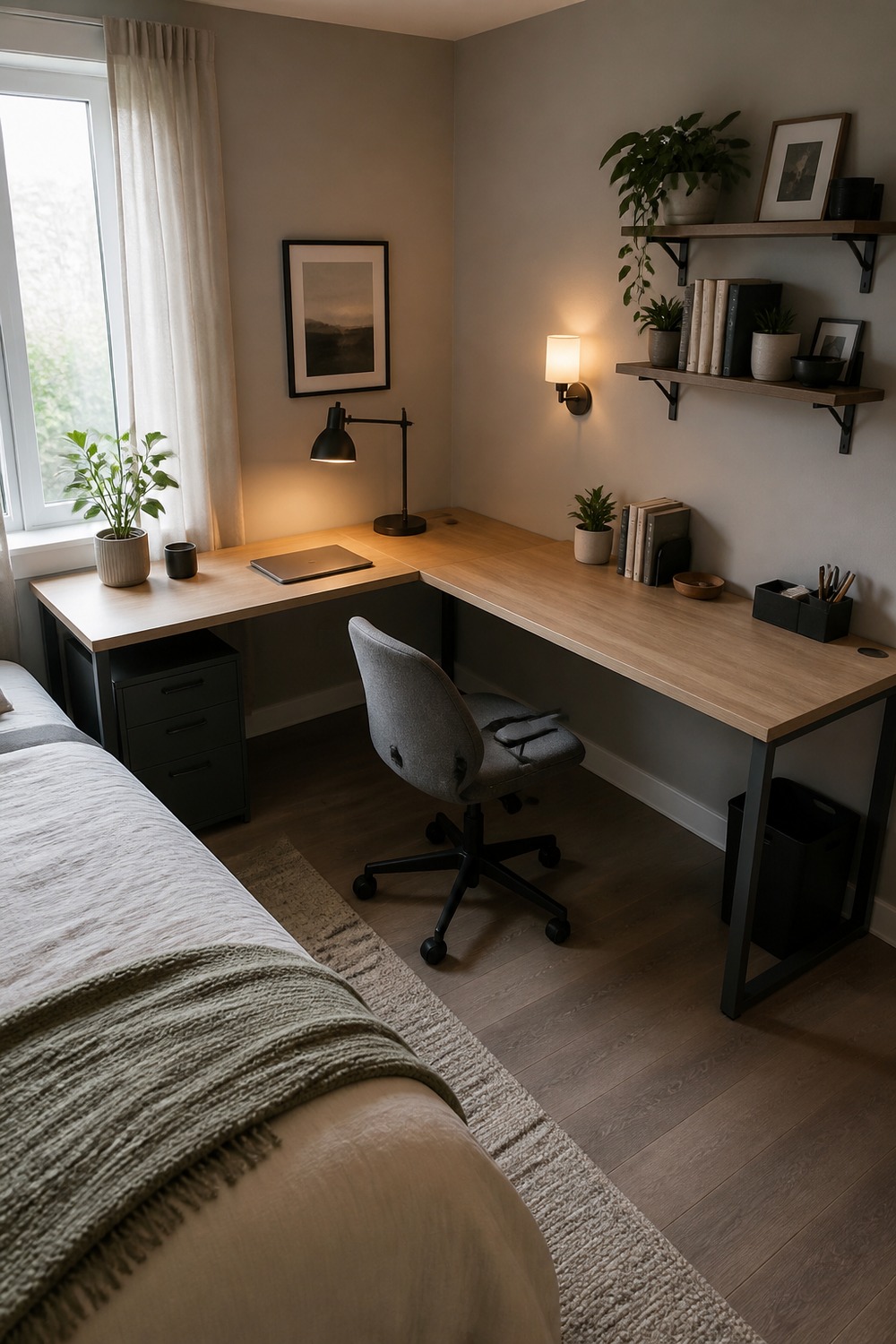
A bedroom office feels calmer when the workspace has a definite boundary. Keeping the desk tight to two walls leaves a cleaner path around the bed and stops office furniture from drifting into the sleeping zone.
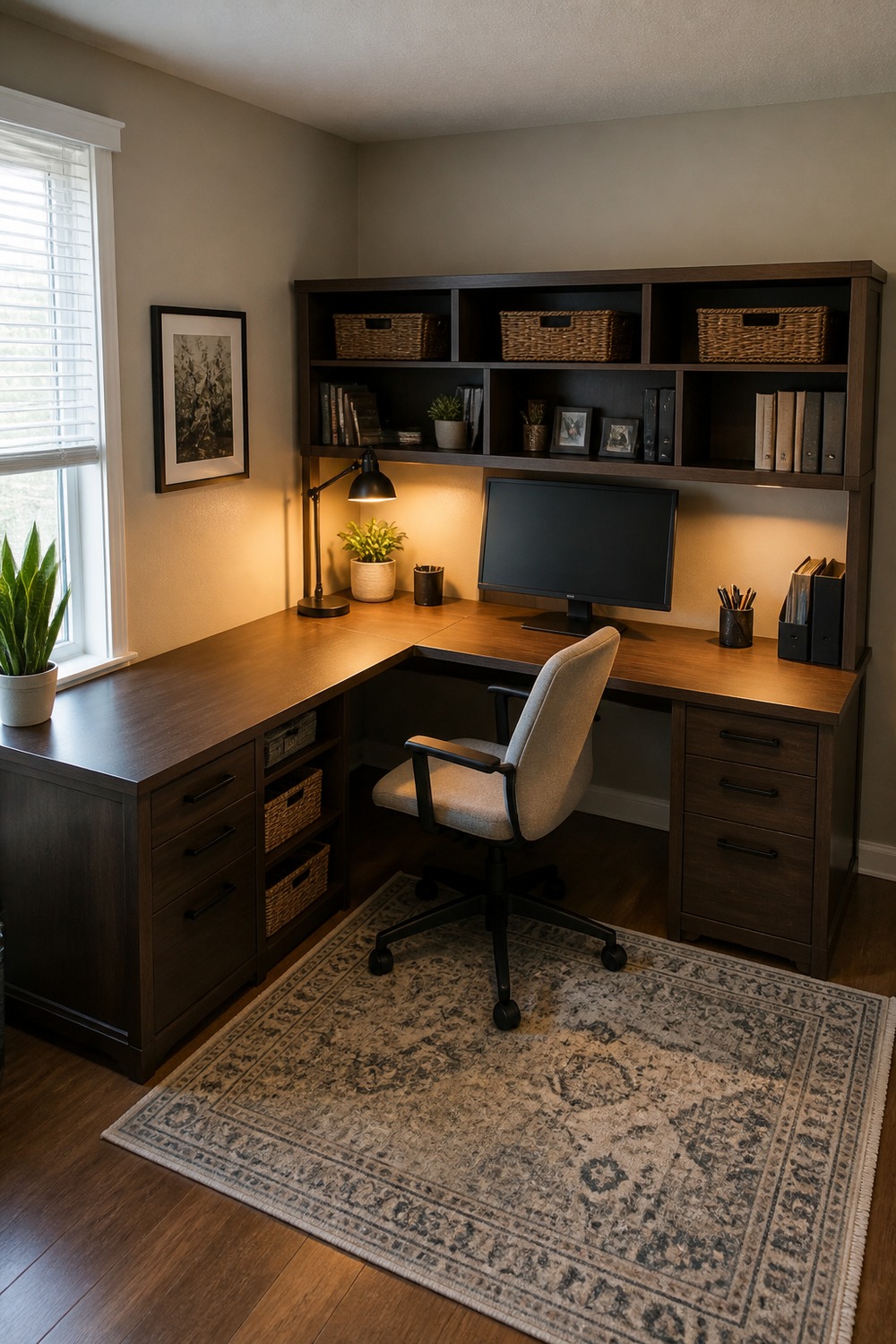
This hutch uses the wall above the return instead of making the desktop do all the storage work. Baskets hide the loose chargers and stationery, while the open center keeps the work area from feeling top-heavy.
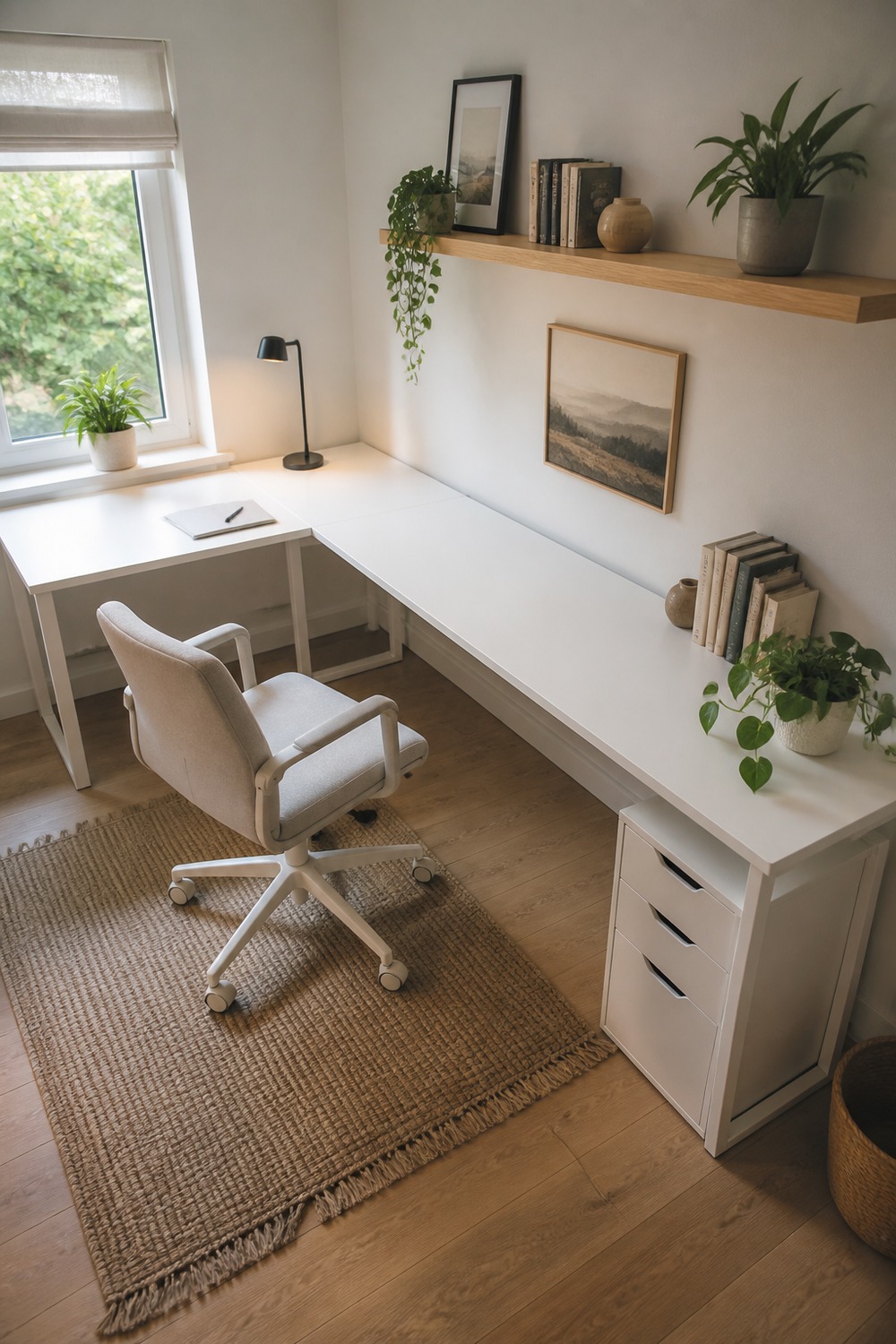
White makes the long surface feel lighter, especially in a tight room. The pale oak shelf adds just enough contrast to separate the work zone from the wall without turning it into a busy feature.
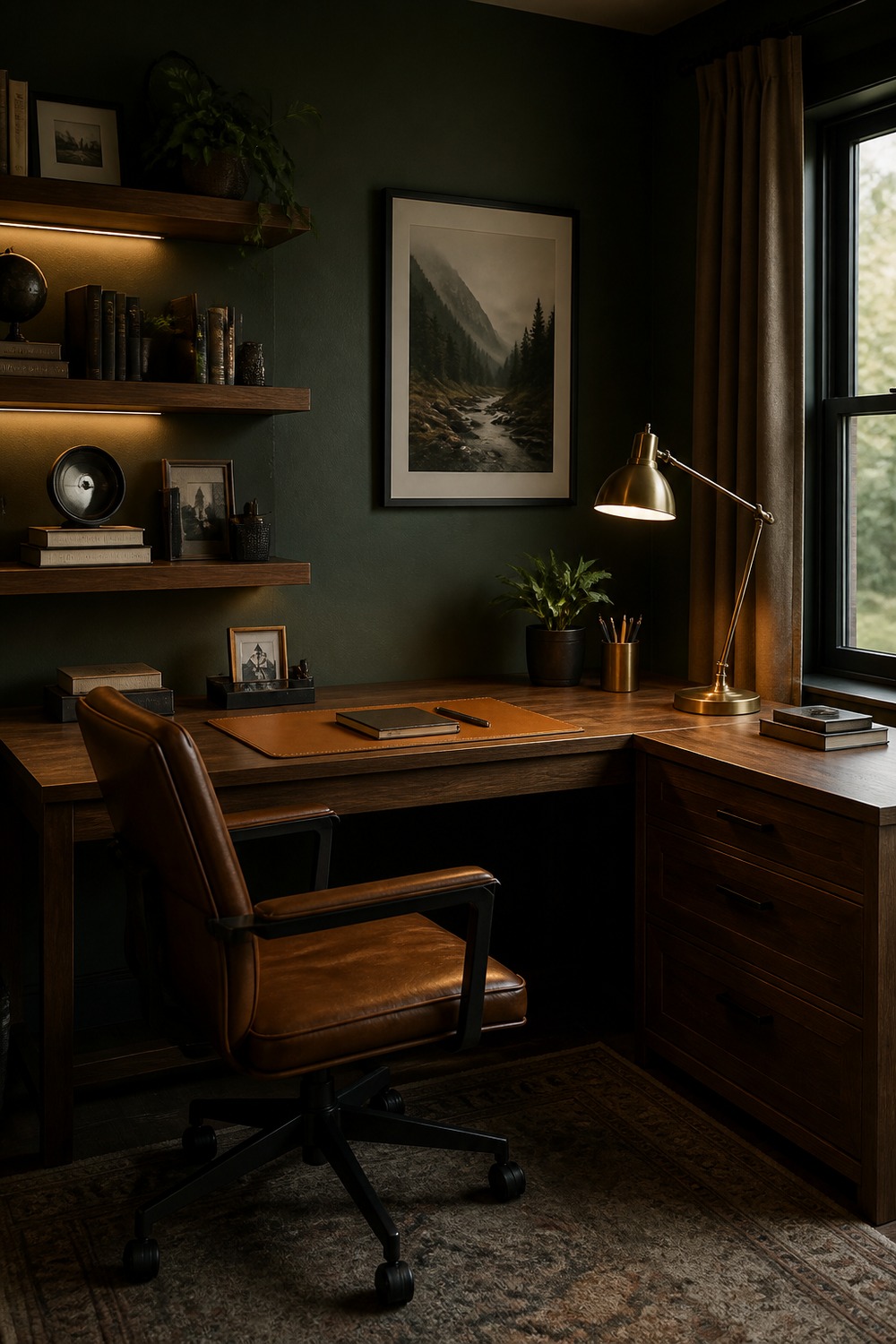
Walnut against deep green gives this setup a moodier, more settled look. Brass lighting warms the inside corner, and the darker finish is forgiving when cables or notebooks are not perfectly arranged.
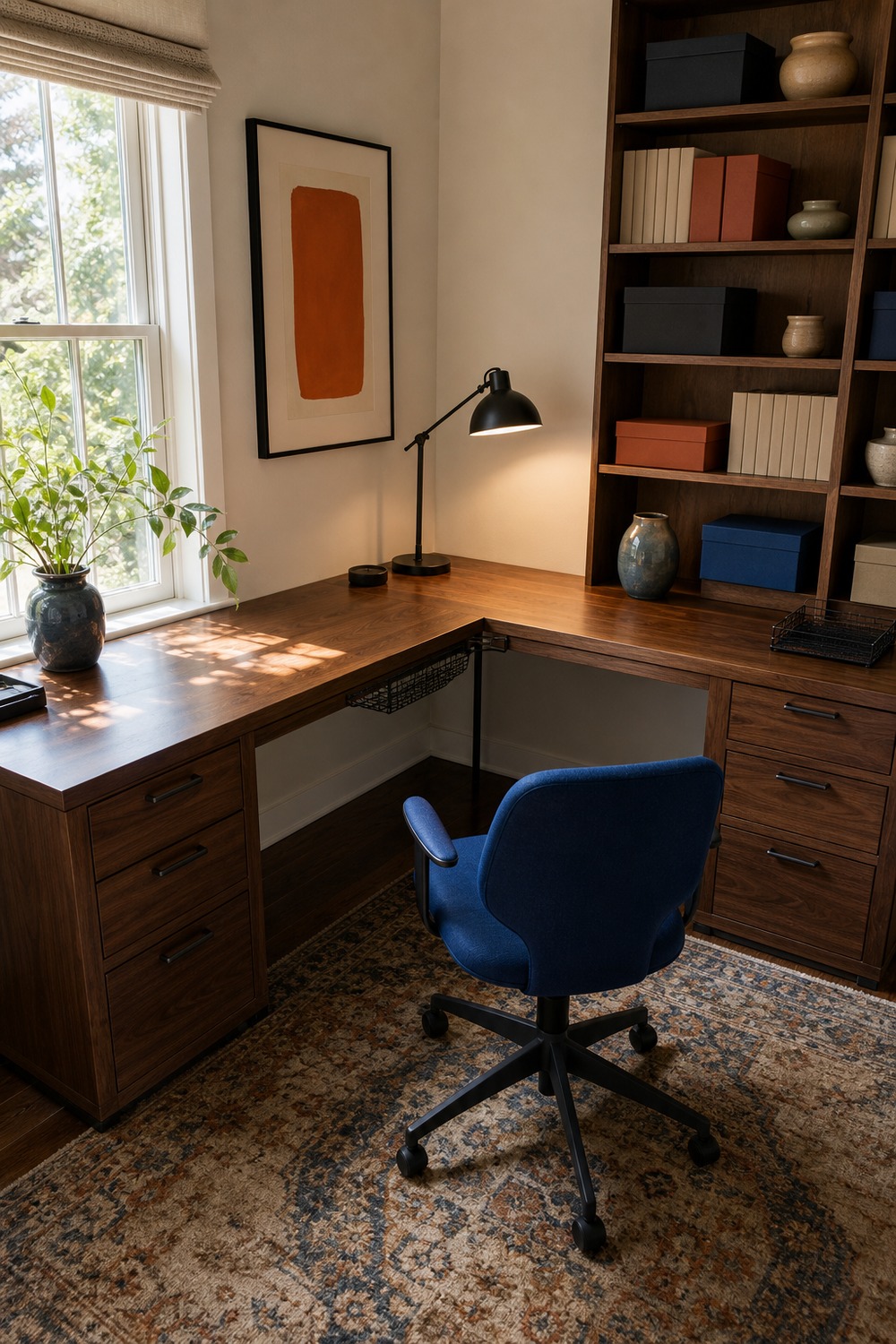
The bookcase sits close enough to reach without narrowing the chair opening. I like that the short desk arm stays useful for reference books, leaving the longer run available for focused work.
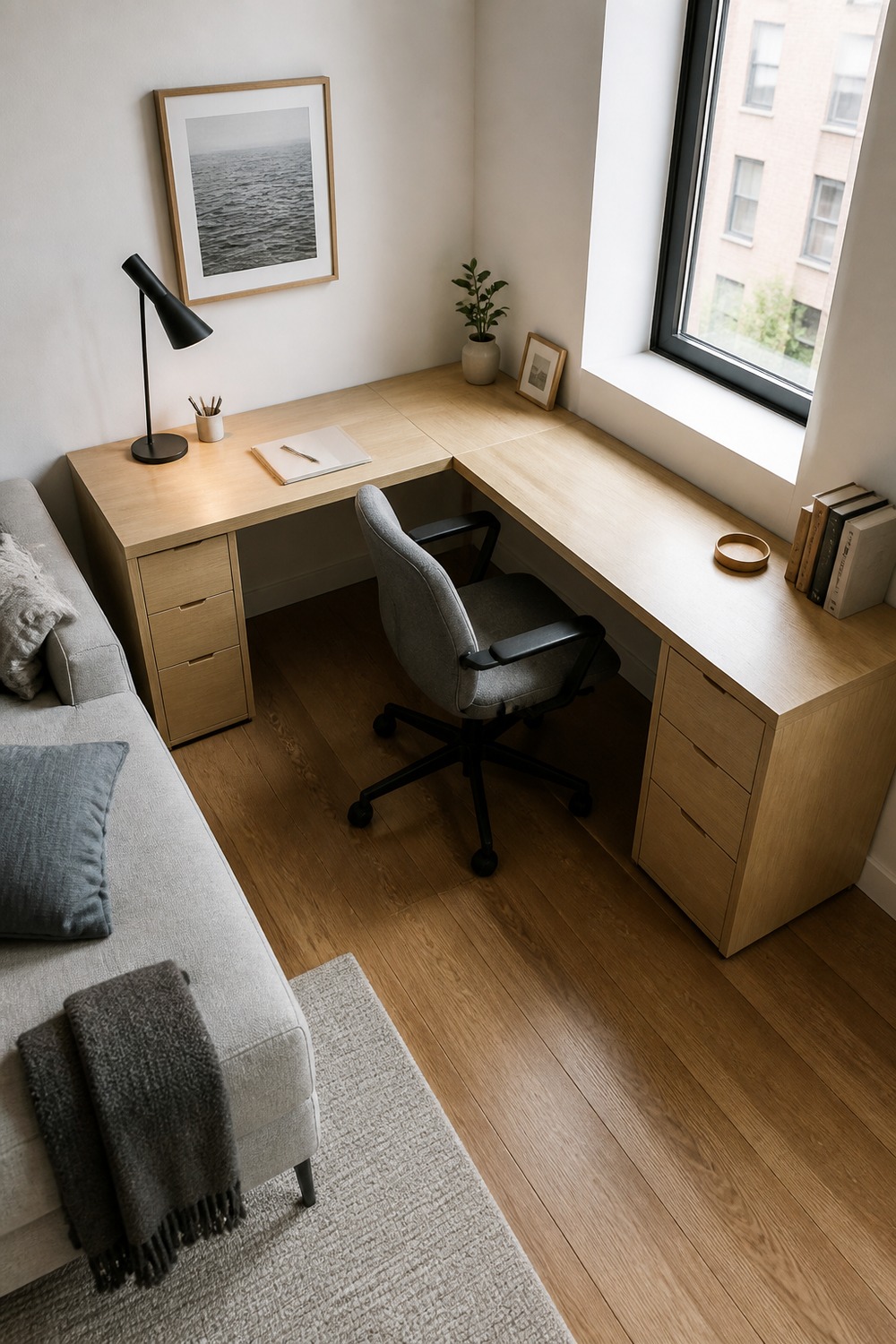
Even a small apartment can handle an L desk when the return is scaled properly. This one claims the wall corner but still leaves breathing room beside the sofa, which matters more than squeezing in one extra cabinet.
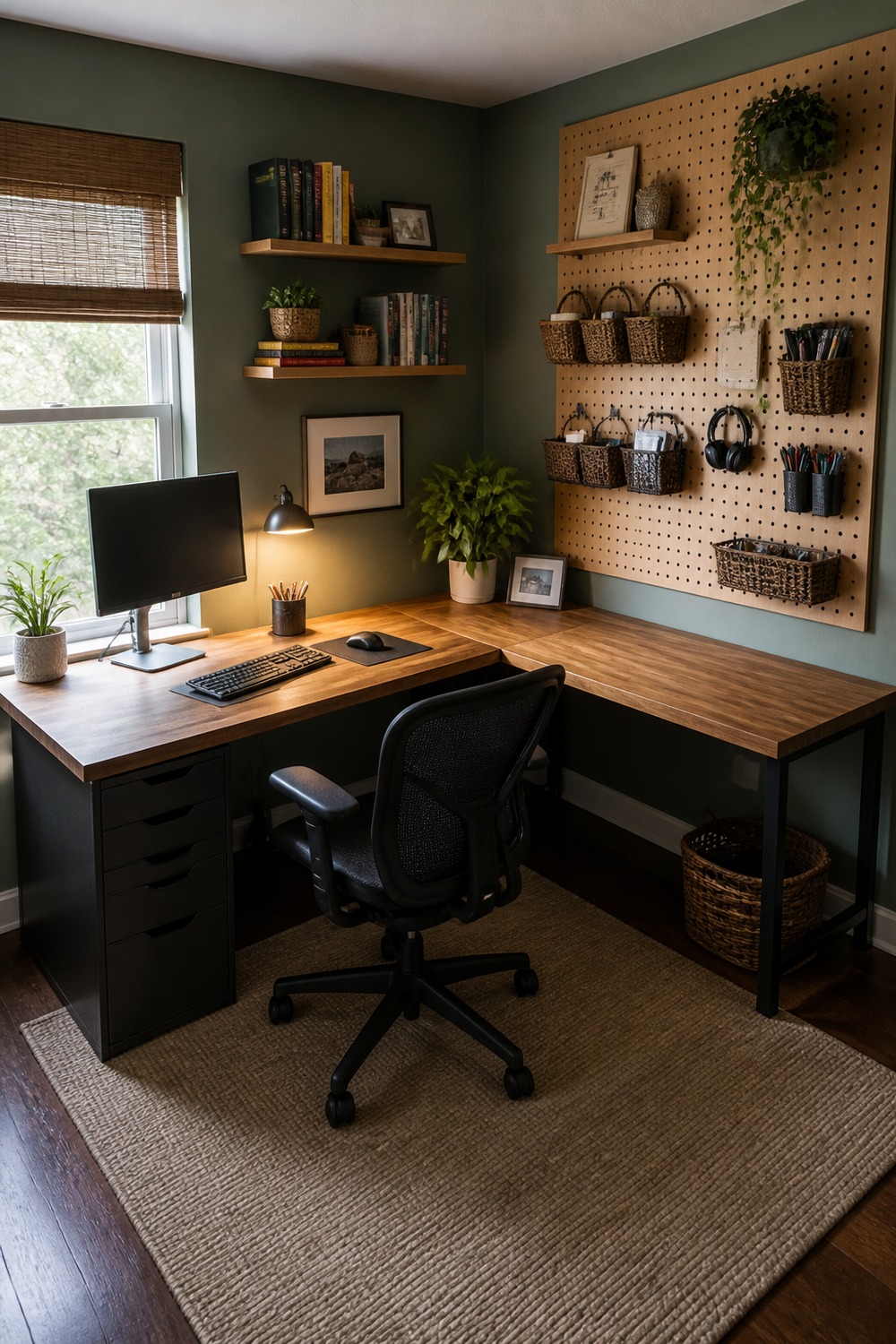
A pegboard makes the short side work harder without covering it in drawer units. Headphones, scissors, and charging cords can move onto the wall, while the lamp stays low enough to avoid glare.
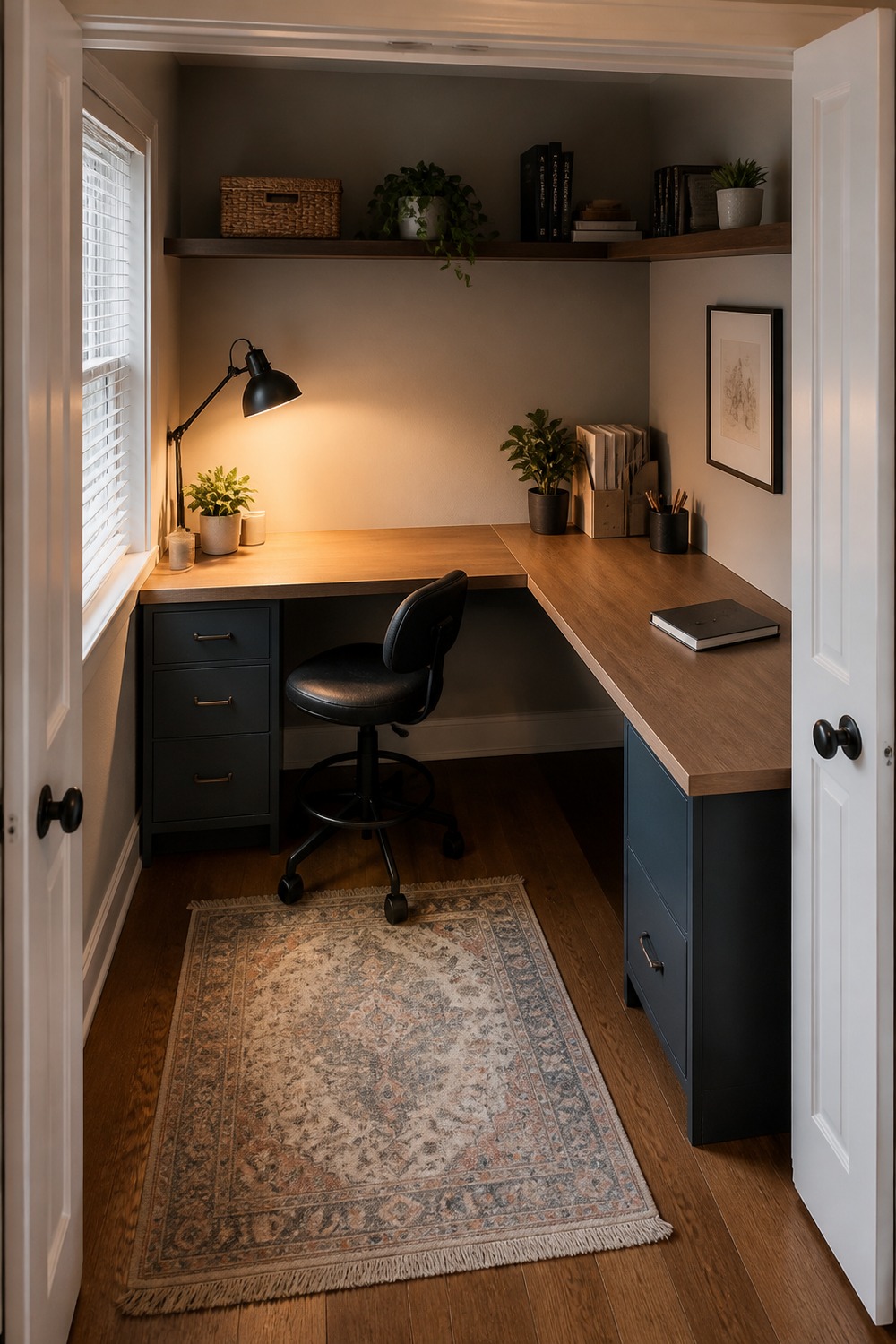
The closet frame gives this office a natural edge, almost like a room inside the room. Wrapping the desktop around the nook creates more usable surface than a single shelf would, and the doors can hide the setup after work.
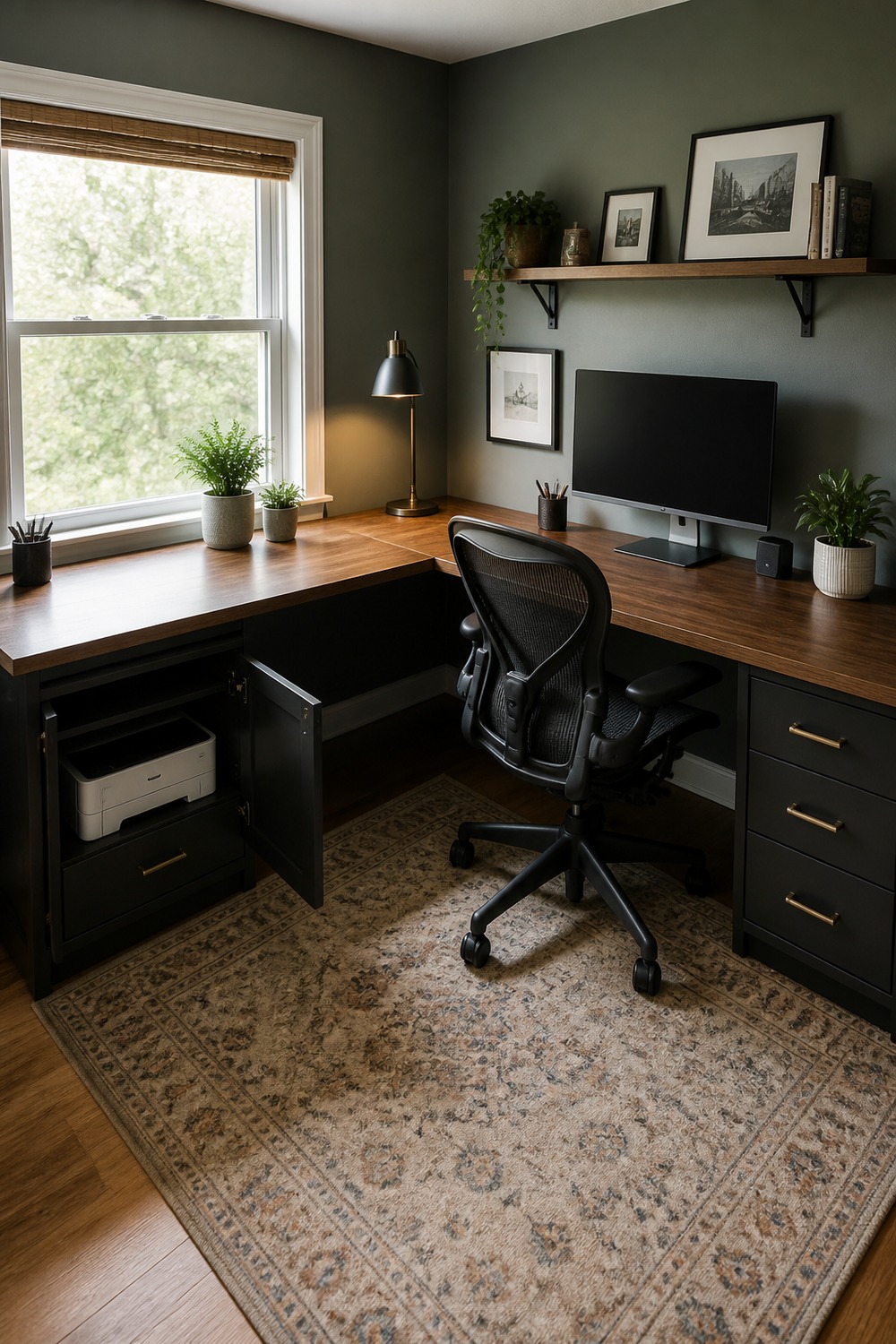
Printers are rarely pretty, so the lower cabinet is the smartest detail here. It keeps the machine close to the return without sacrificing the clear desktop area needed for papers and projects.
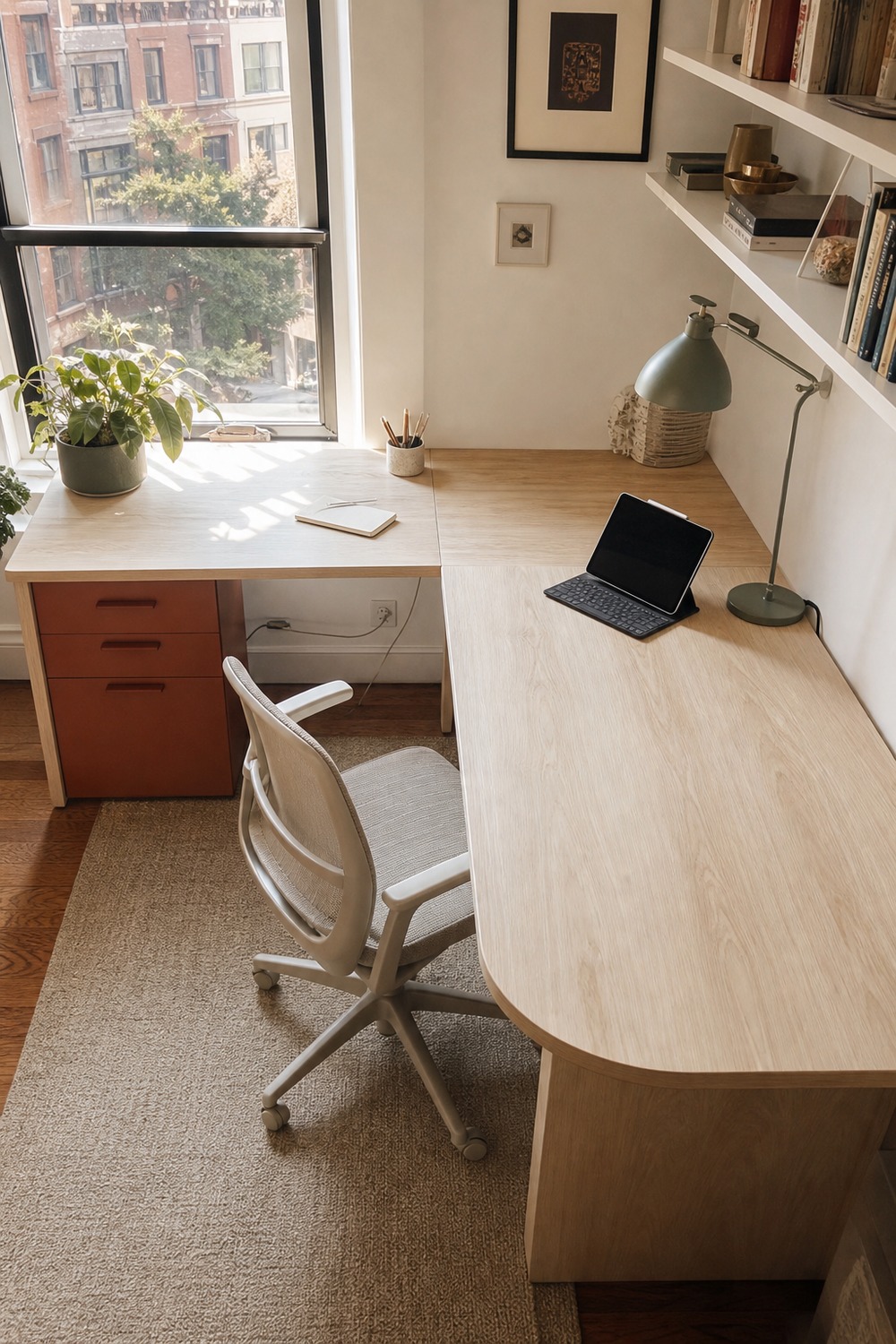
A softened front edge makes the turn feel less bulky and gives the chair an easier path. This shape is especially helpful where the desk sits near a doorway or another piece of furniture.
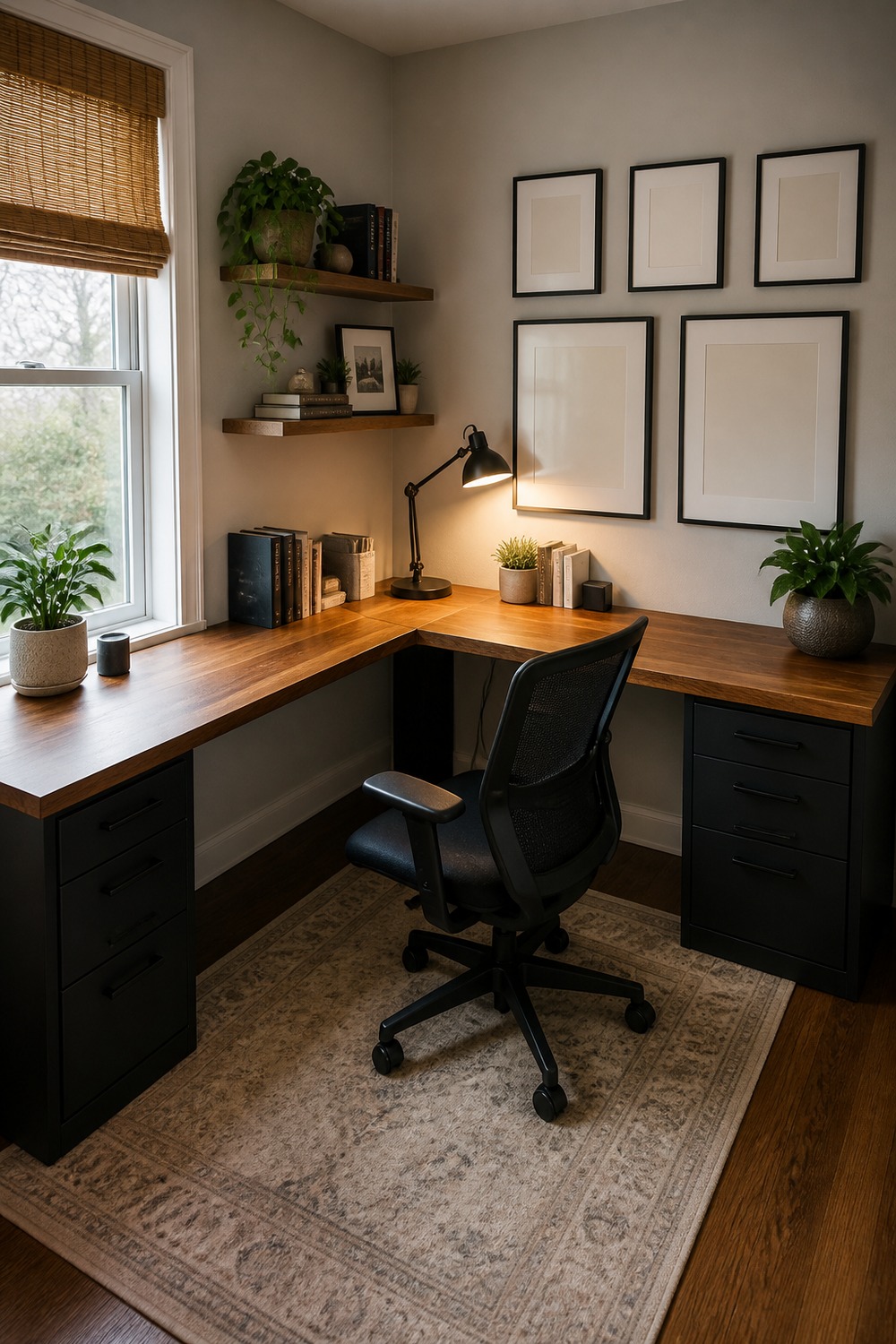
The gallery wall adds personality without stealing any work surface. Slim drawers handle the practical clutter below, so the art can stay simple and the corner still feels like an office rather than a display shelf.
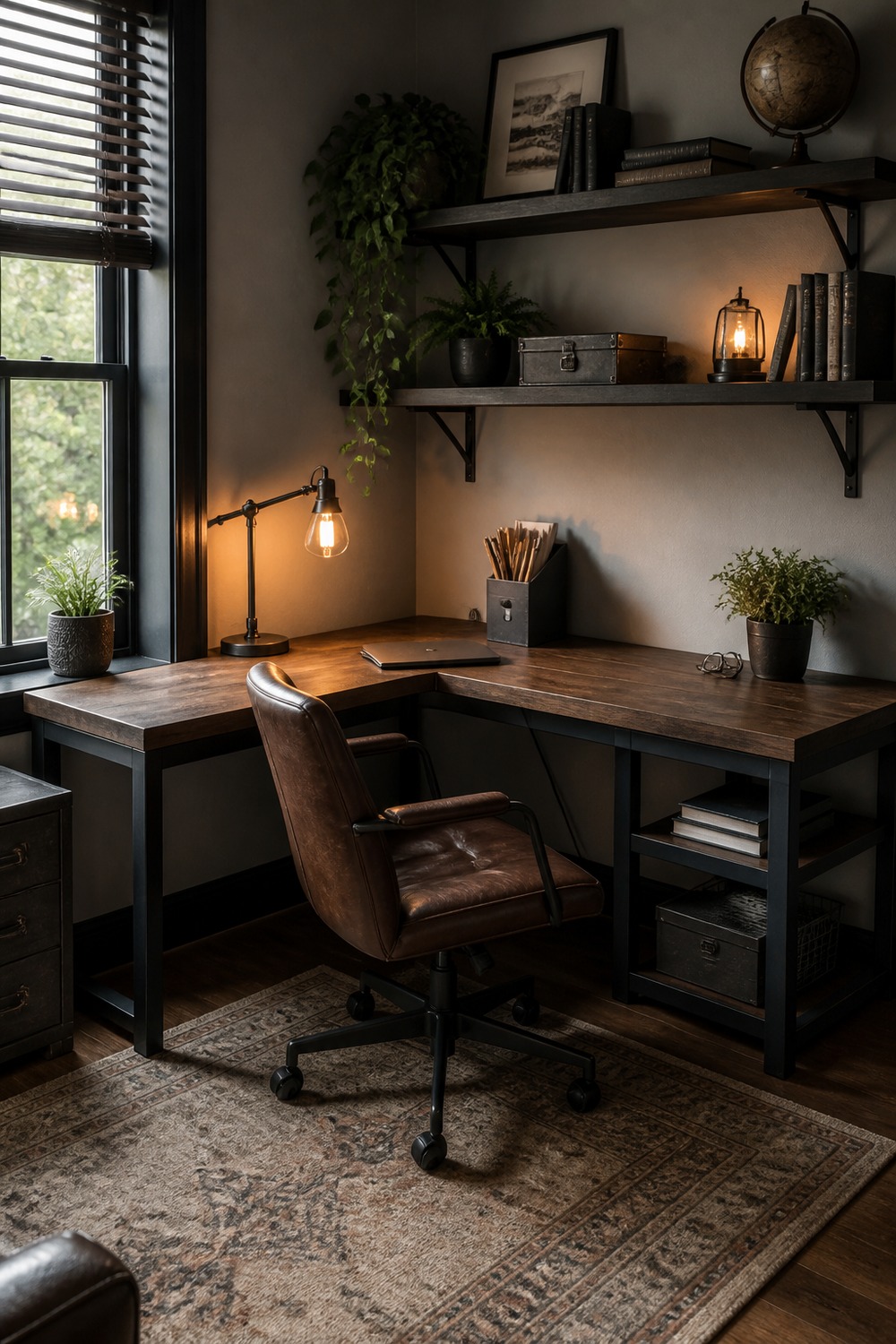
Blackened steel legs give the long wood top enough visual weight for an industrial room. Open supports also make it easier to route cables around the bend instead of trapping them behind solid cabinetry.
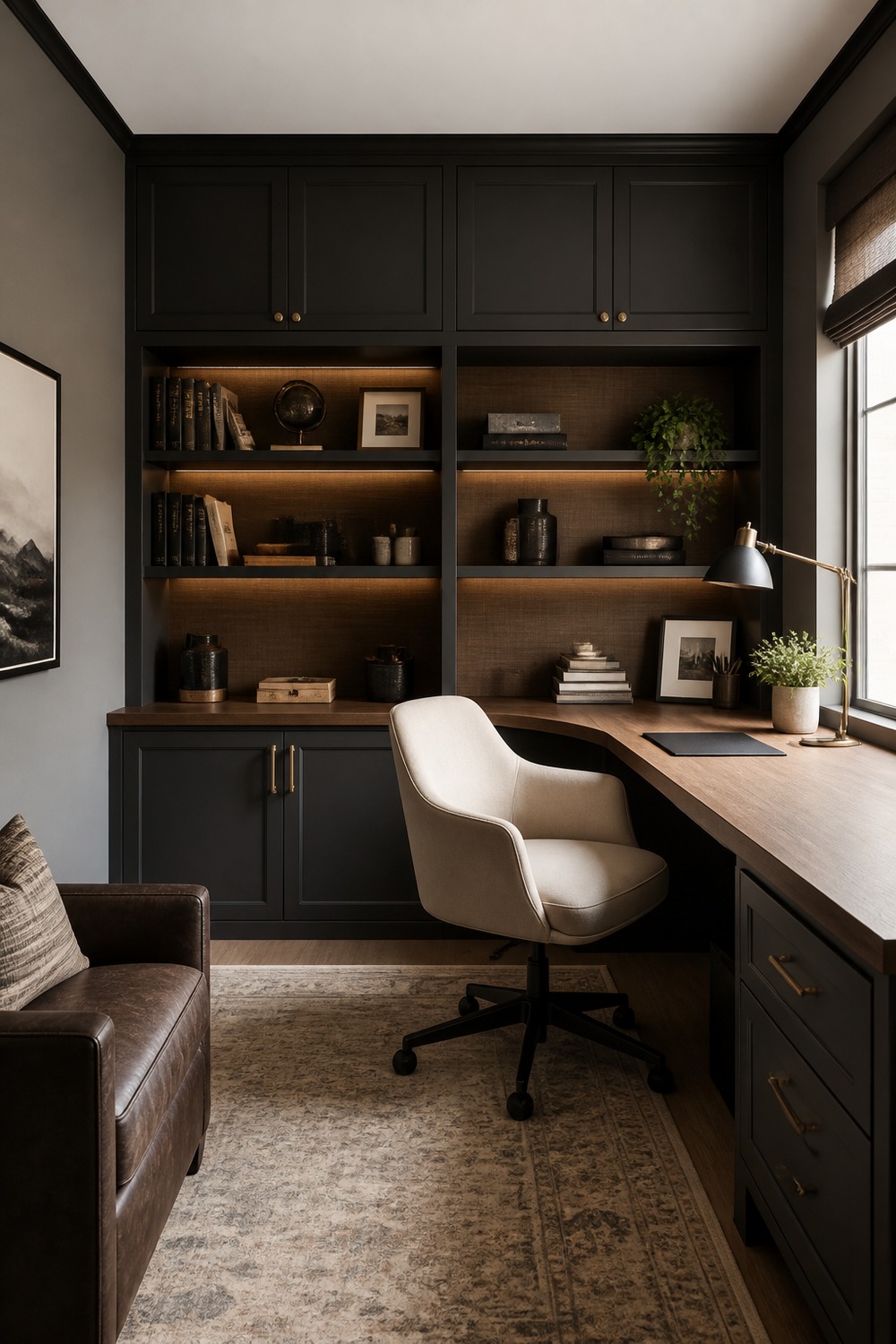
Closed cabinets take care of the things that make a home office look noisy—paper boxes, spare tech, and supplies. The oak worktop keeps the storage wall from feeling too severe and clearly connects both desk runs.
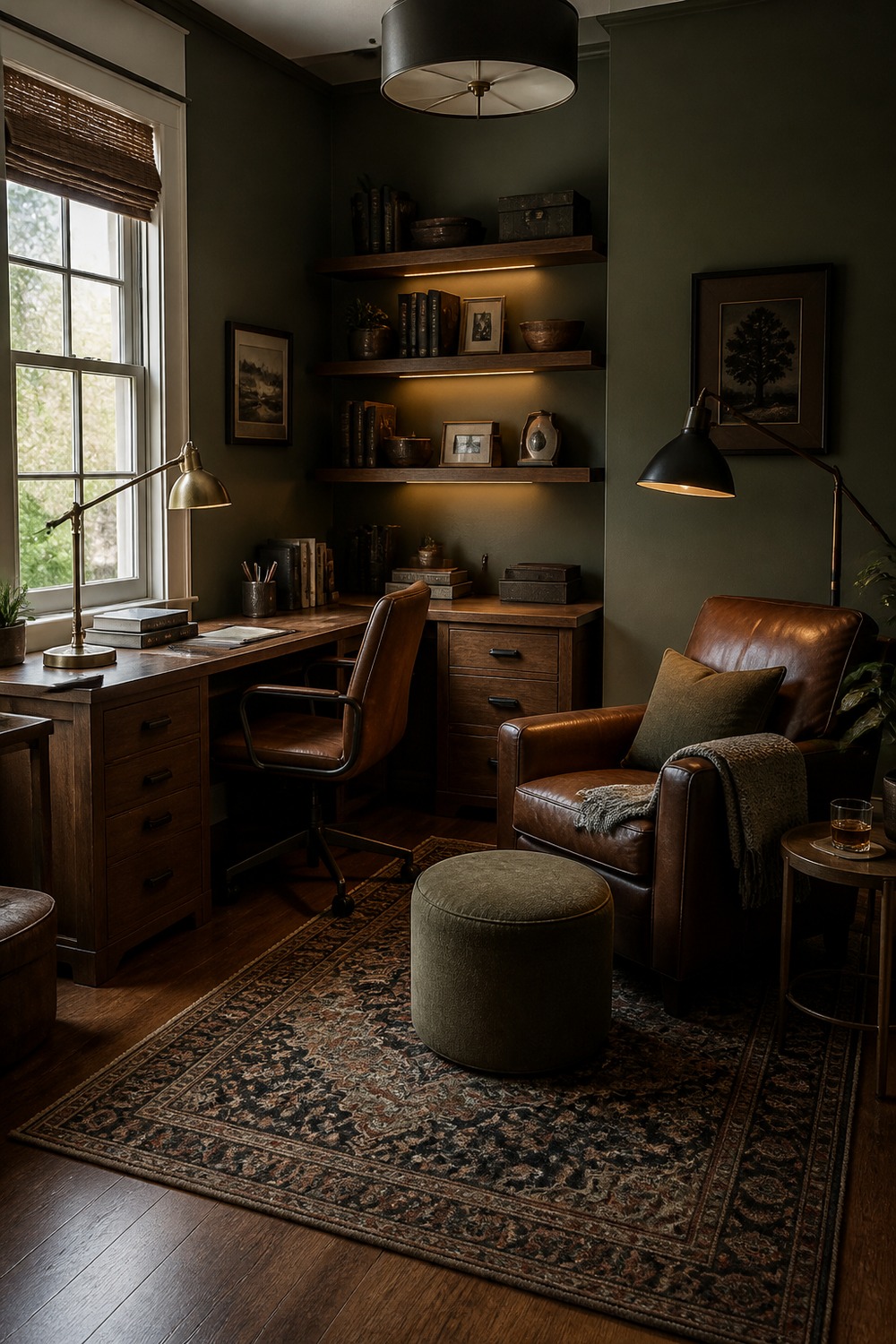
A reading chair works here because it sits beyond the desk’s turning radius. The rug quietly joins the two functions, while the floor lamp gives the softer side of the room its own light source.
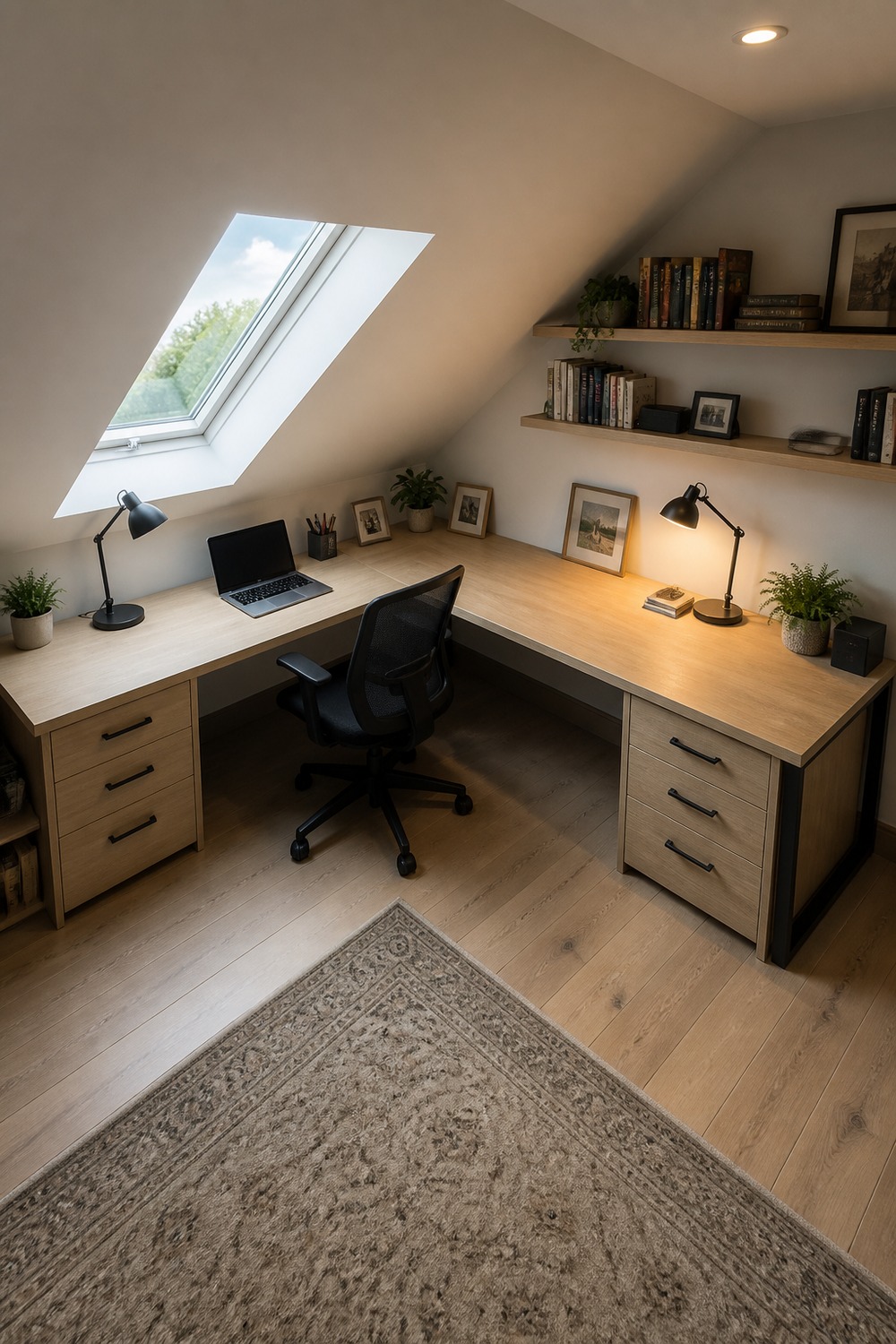
Sloped ceilings limit tall storage, but they are surprisingly good for a low wraparound desk. Drawers fit beneath the eaves, and the skylight puts daylight directly over the work surface without using precious wall height.
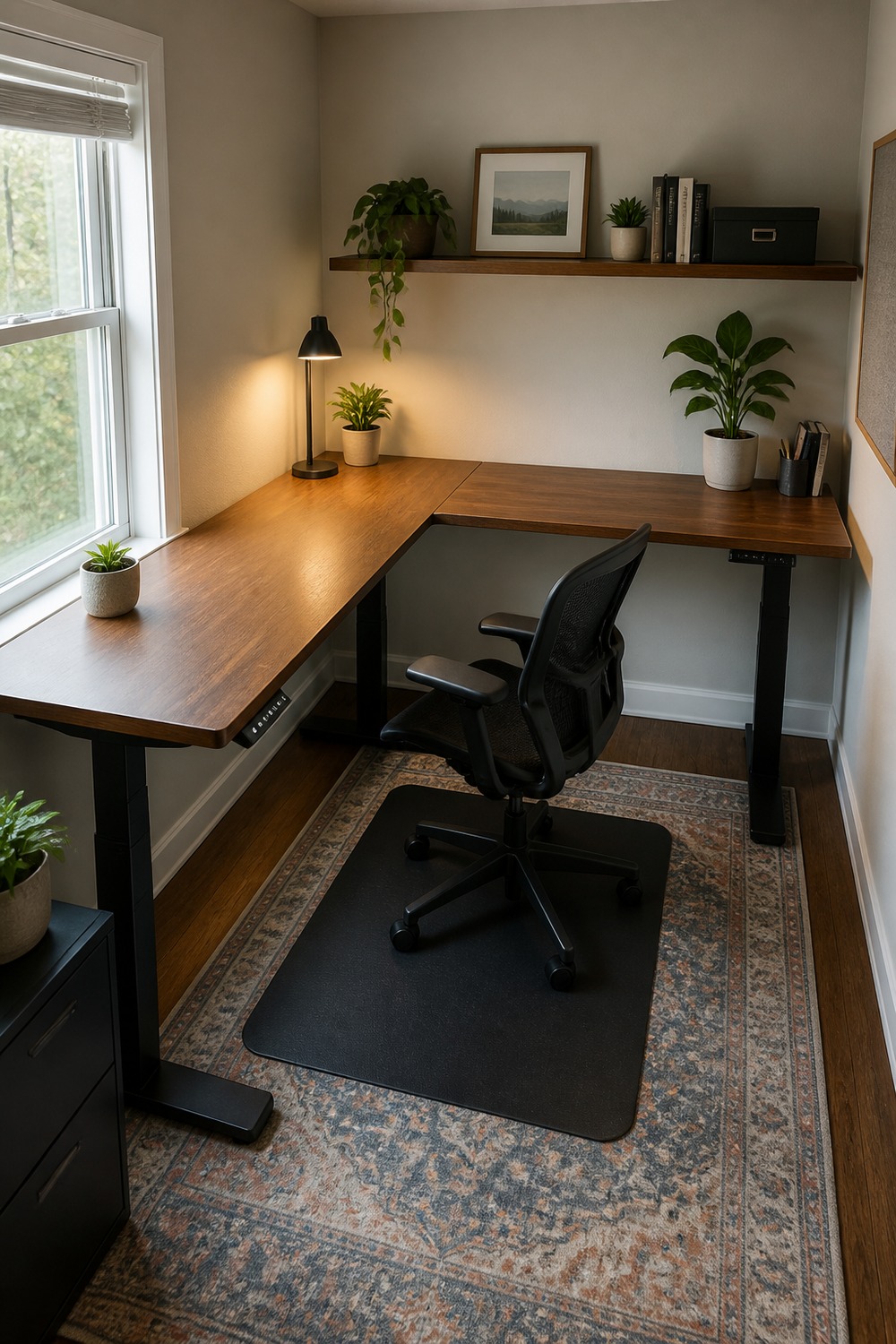
A standing L desk needs more than adjustable legs; both arms have to remain stable through the turn. The mat marks the standing zone, and the open underside leaves space to change position without catching the chair.
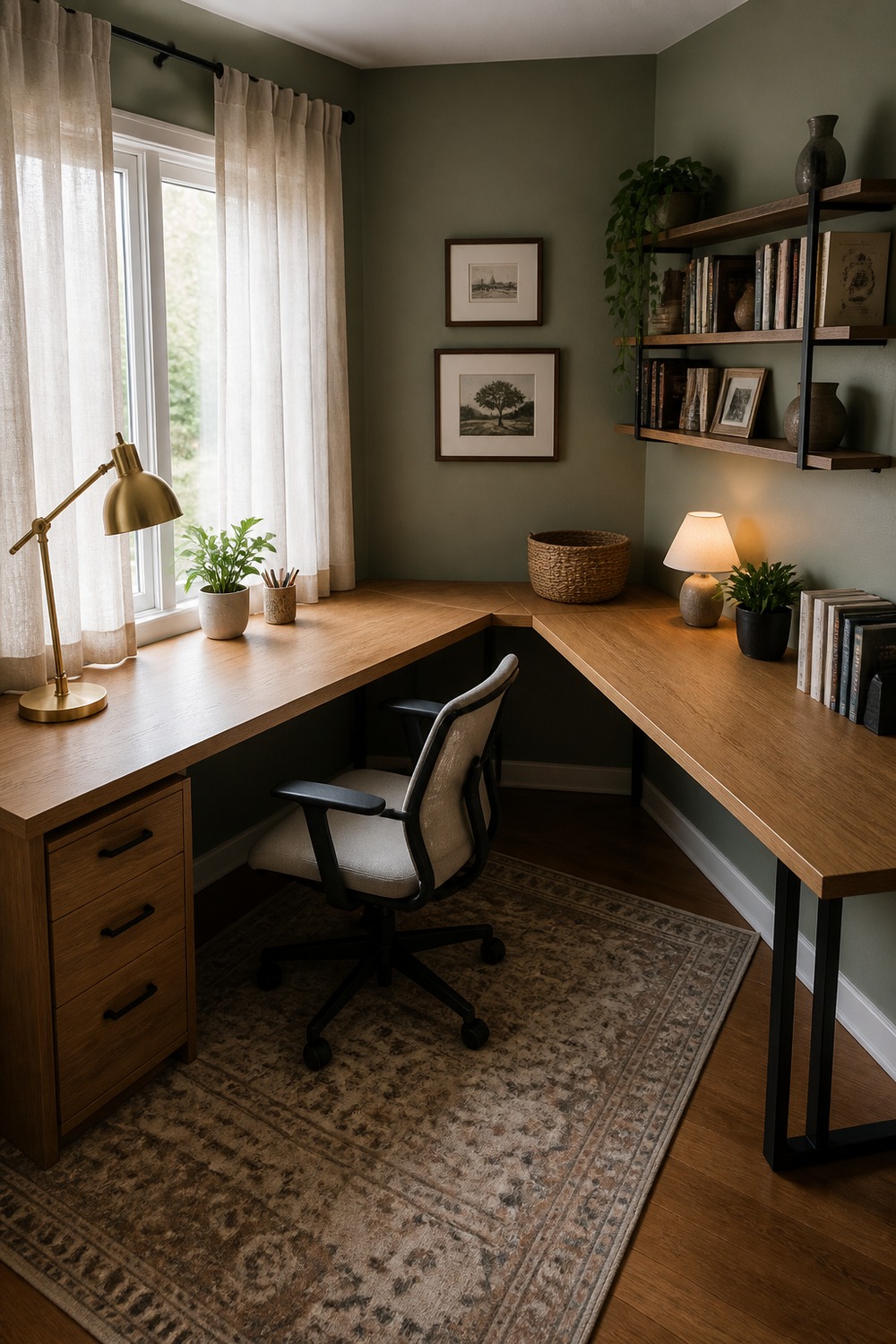
Curtains soften all the hard desk edges and help this workspace blend into a multipurpose room. The brass lamp and woven basket add texture, but neither interrupts the clean sweep of the oak top.
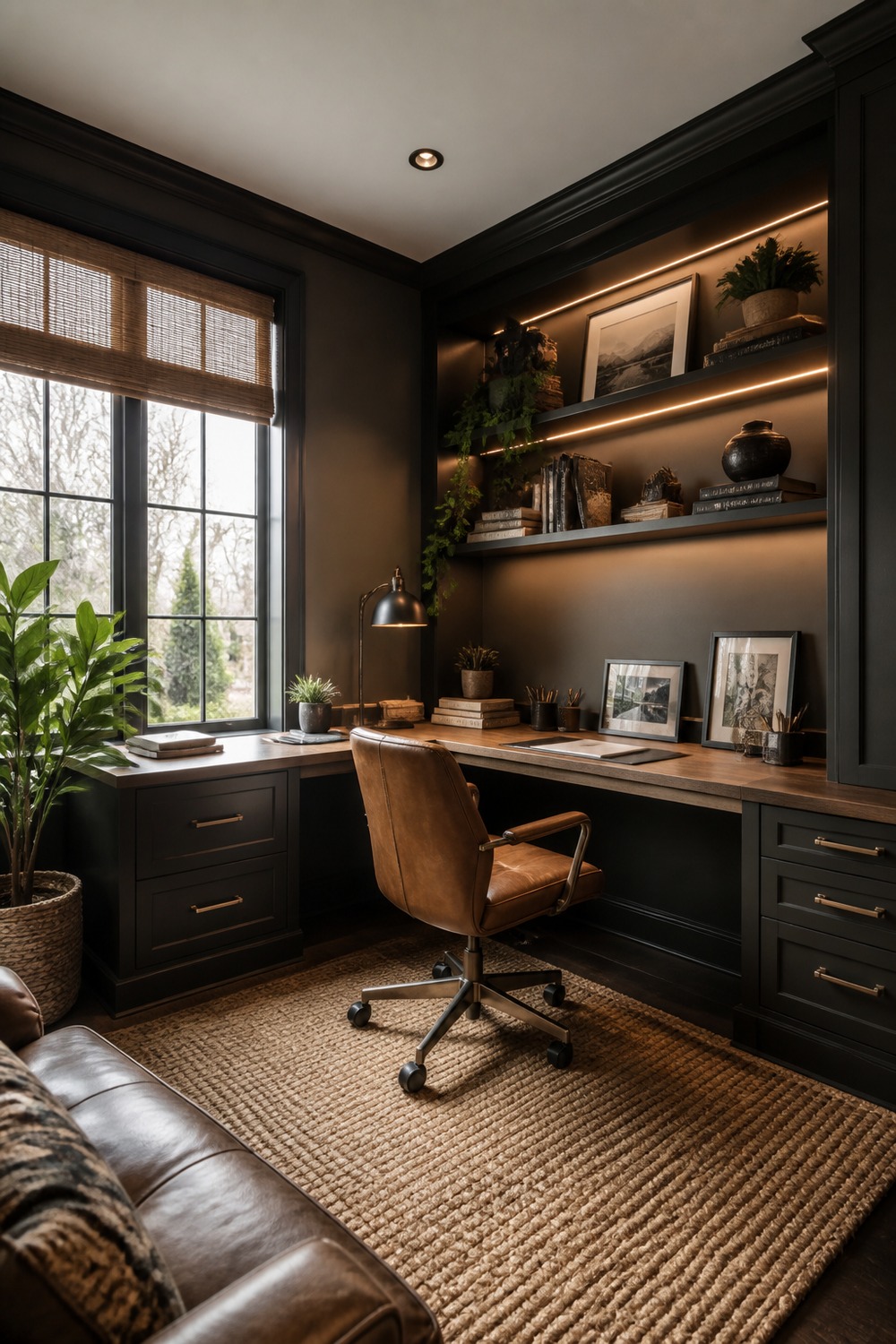
This final setup feels finished because the storage, light, chair, and desktop all line up with the room. Nothing blocks the inside corner, and there is still enough empty surface to sit down and actually get something done.
The best corner desks make the return useful rather than decorative. Get the chair clearance, light, and storage right first, and the styling becomes the easy part.
Leave a comment