
A home office does not need five competing accent colors to feel considered. These rooms use paint, cabinetry, wood tones, rugs, and task lighting to build a clear palette while keeping the desk comfortable enough for an actual workday.
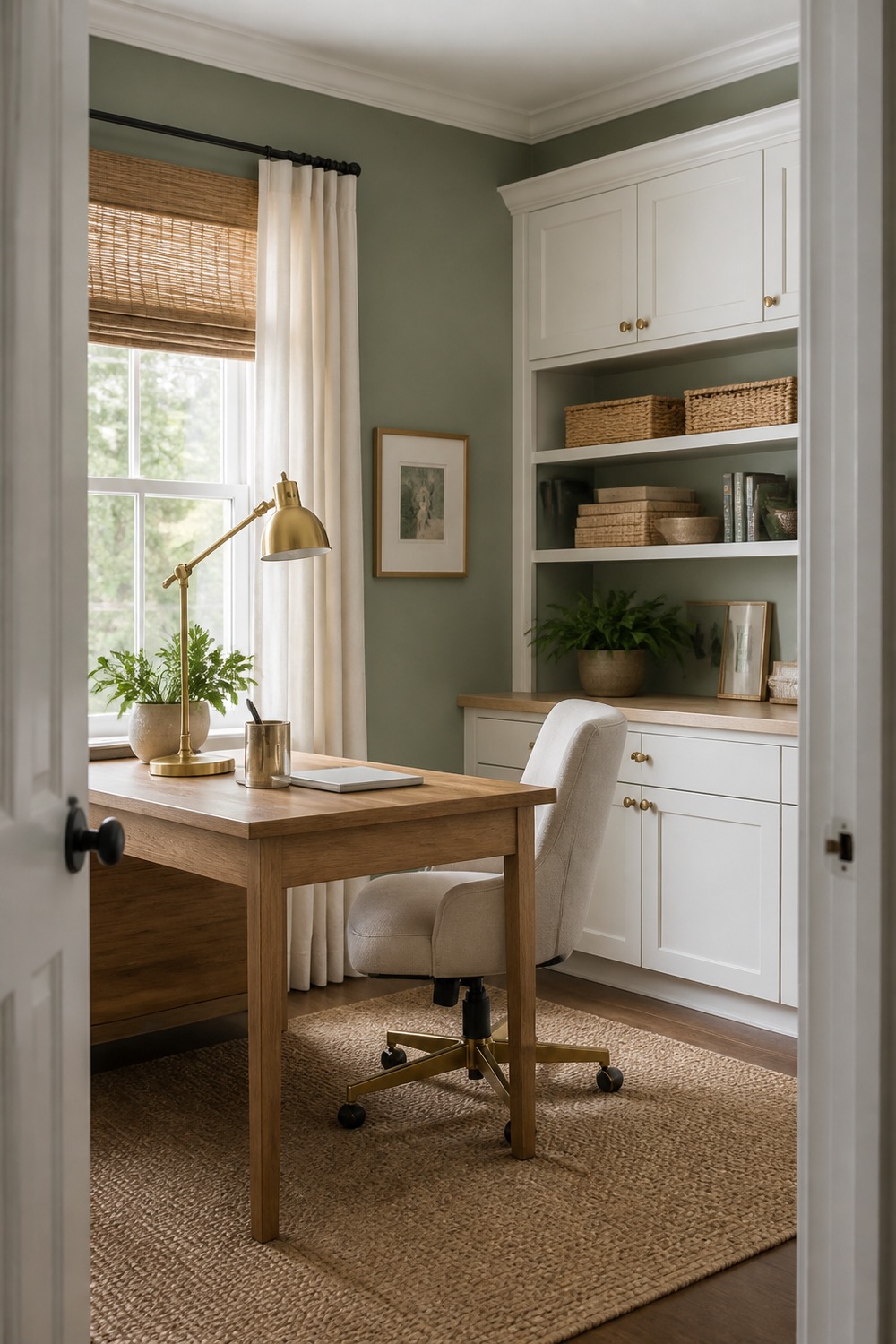
Sage walls give the white built-ins room to breathe, while the oak desk keeps the palette from feeling chilly. The brass lamp and woven storage add just enough warmth without stealing space from the work surface.
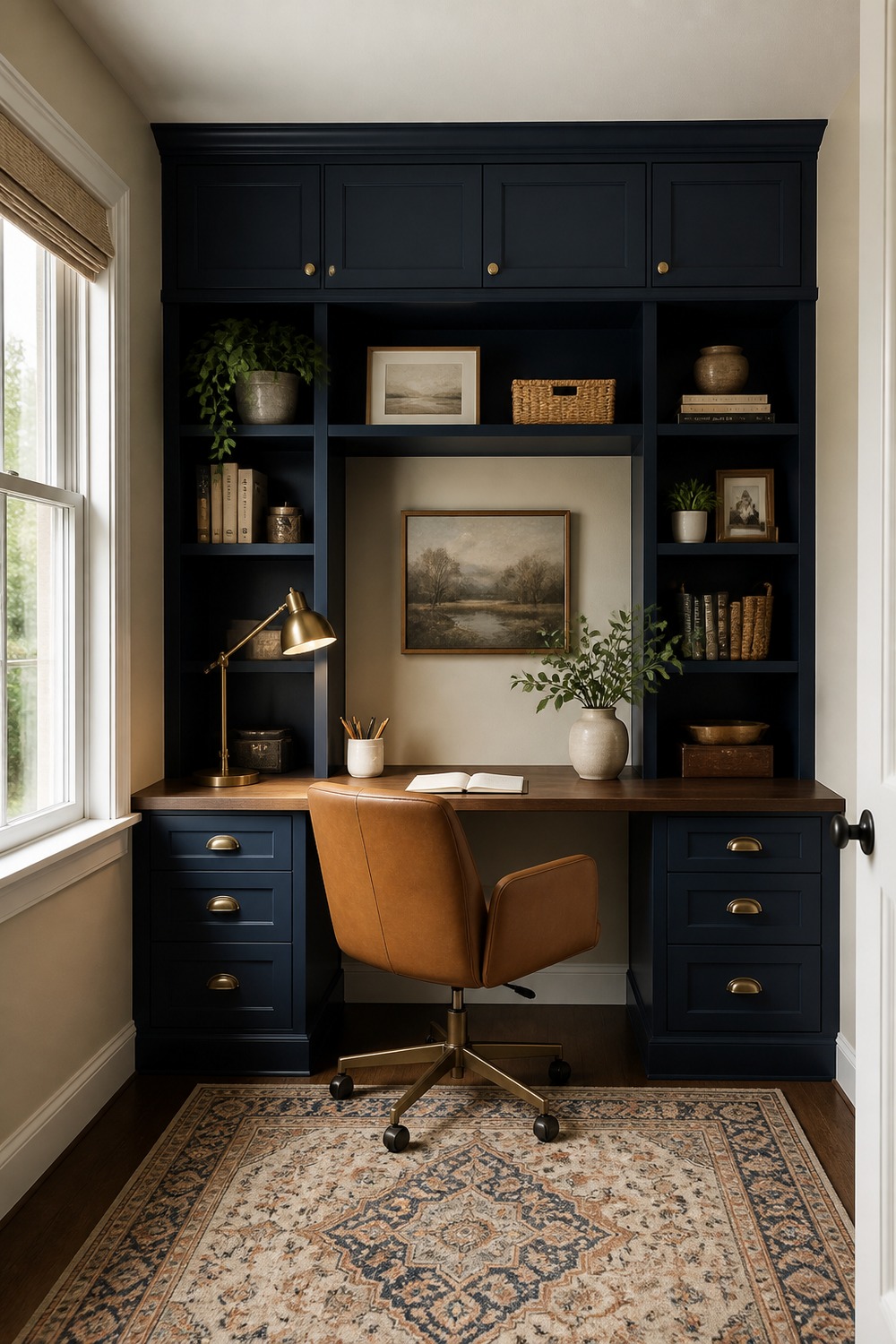
Navy cabinetry makes this office feel substantial, but the cream walls and tan leather chair stop the room from becoming too dark. I especially like how the patterned rug carries the contrast down to the floor.
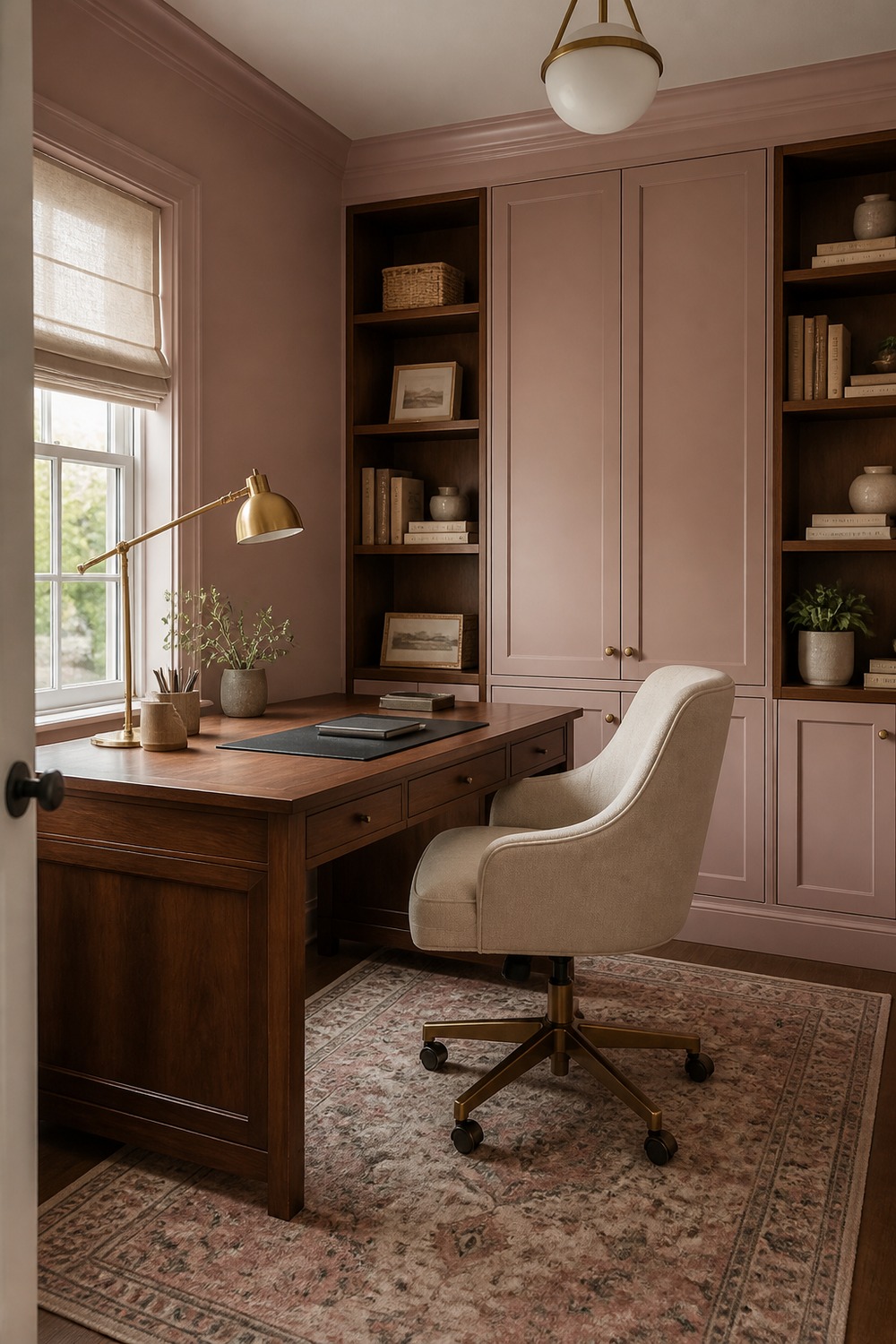
Blush can look sugary in a workspace, yet the walnut desk changes the mood completely. Its deeper grain grounds the soft walls, and the cream chair keeps the corner light near the window.
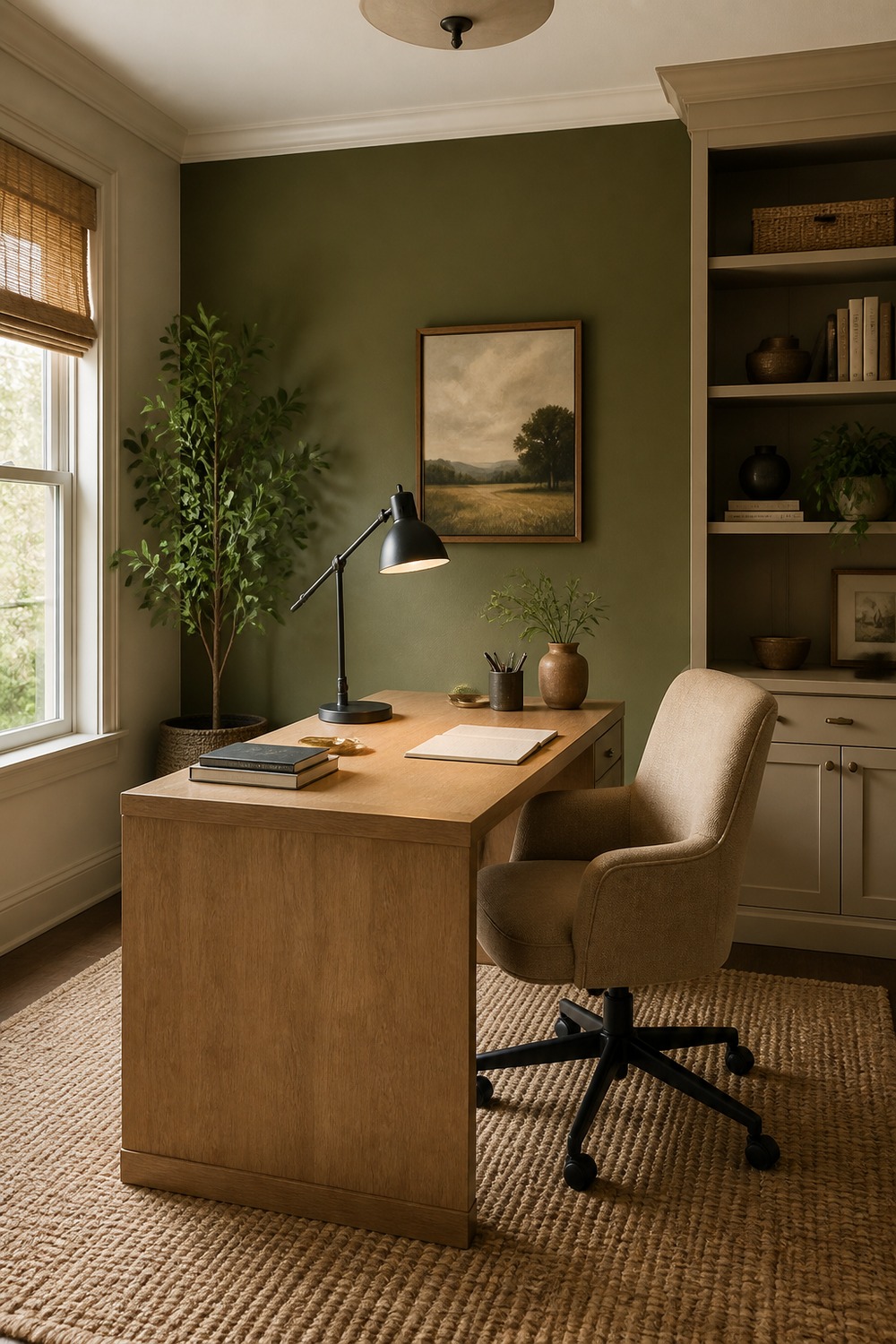
The olive wall is doing the heavy lifting here, with tan upholstery and natural oak softening its moodier side. A black task lamp adds a crisp line that helps the earthy colors look deliberate rather than muddy.
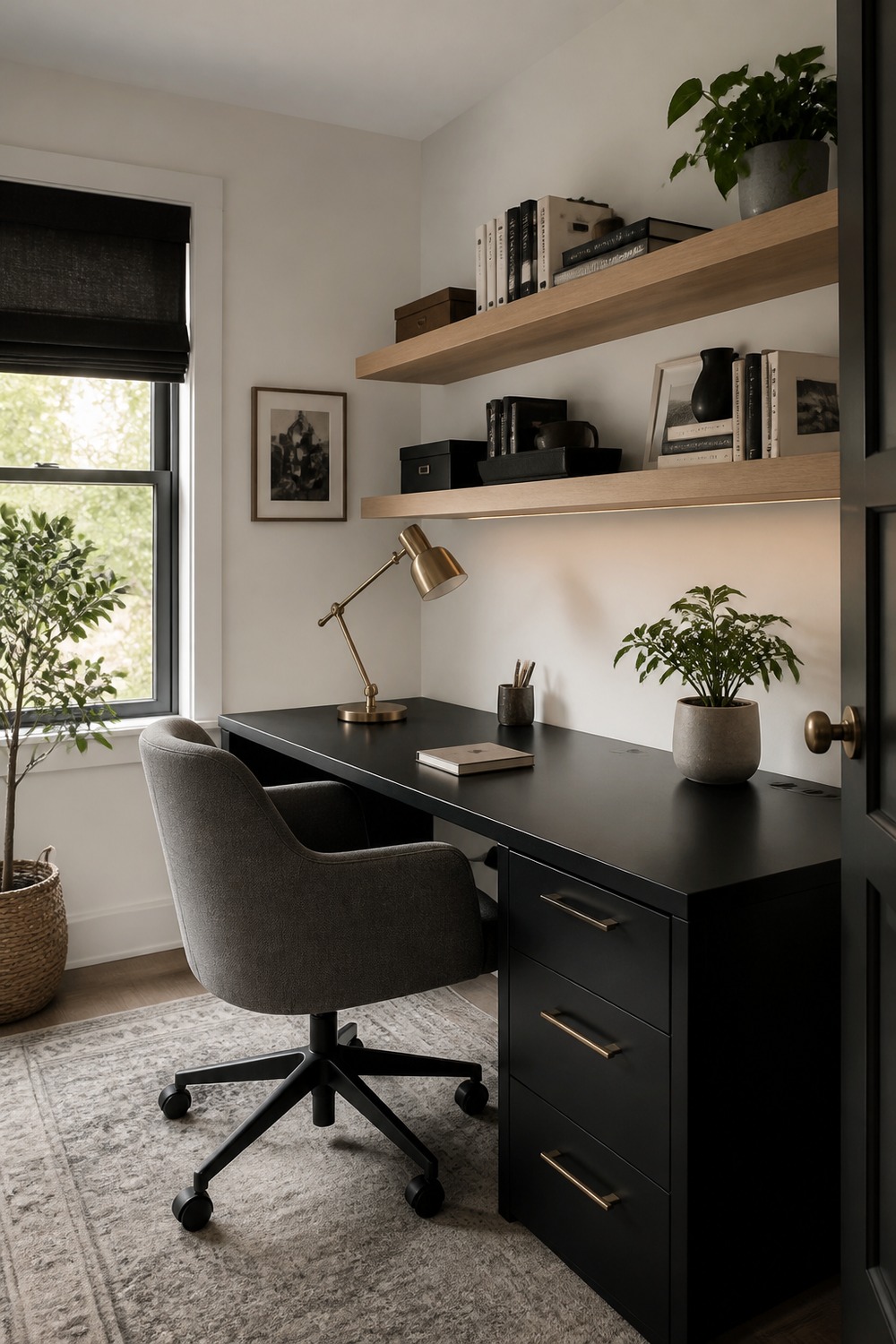
Black, white, and oak is a useful answer when a desk area needs contrast without more color. The floating shelves warm up the white wall, and the dark desk gives cords and equipment a less noticeable backdrop.
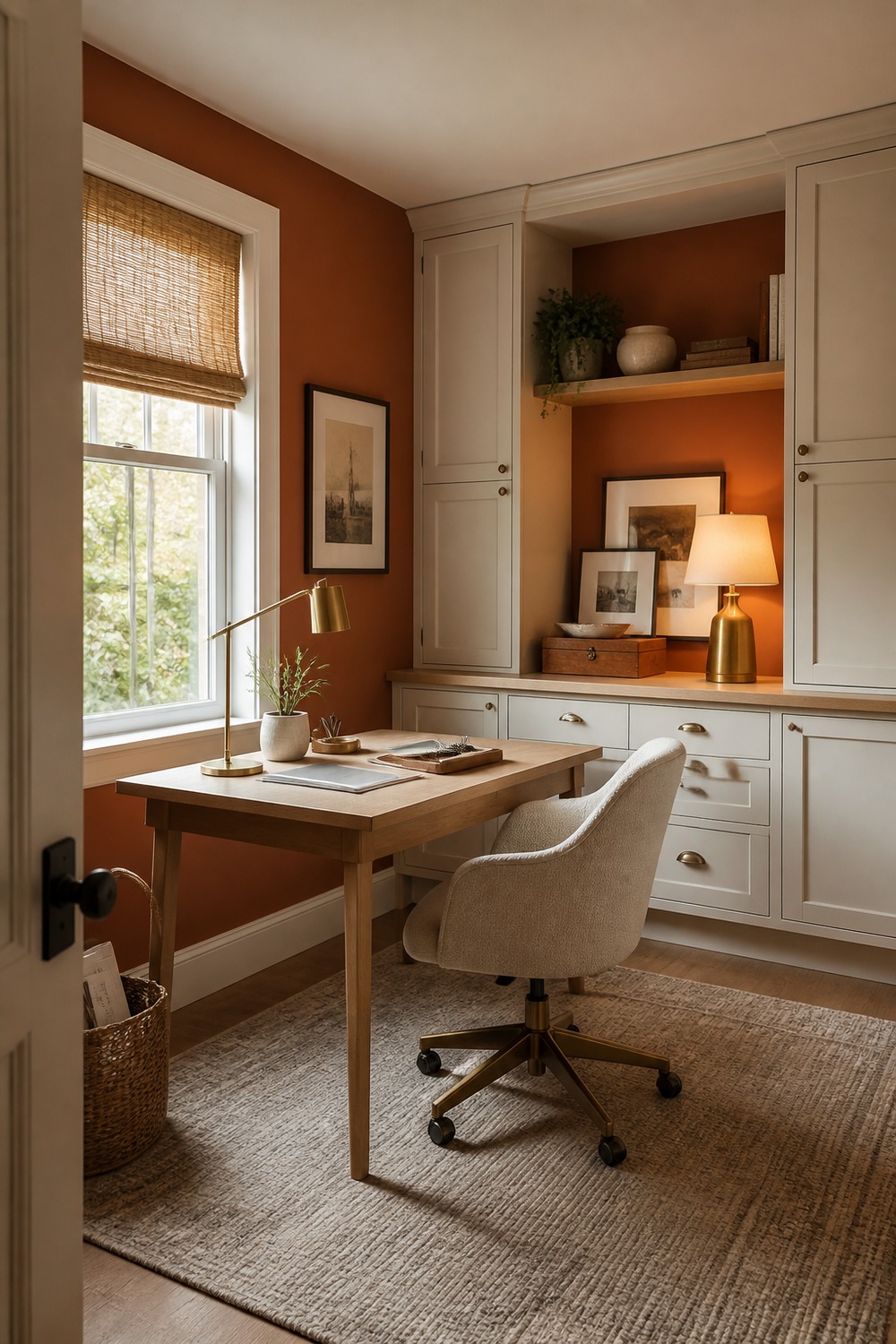
Terracotta wraps this room in warmth, while cream cabinetry prevents the color from closing in around the desk. The pale wood top and woven shade repeat that sun-baked tone in a quieter way.
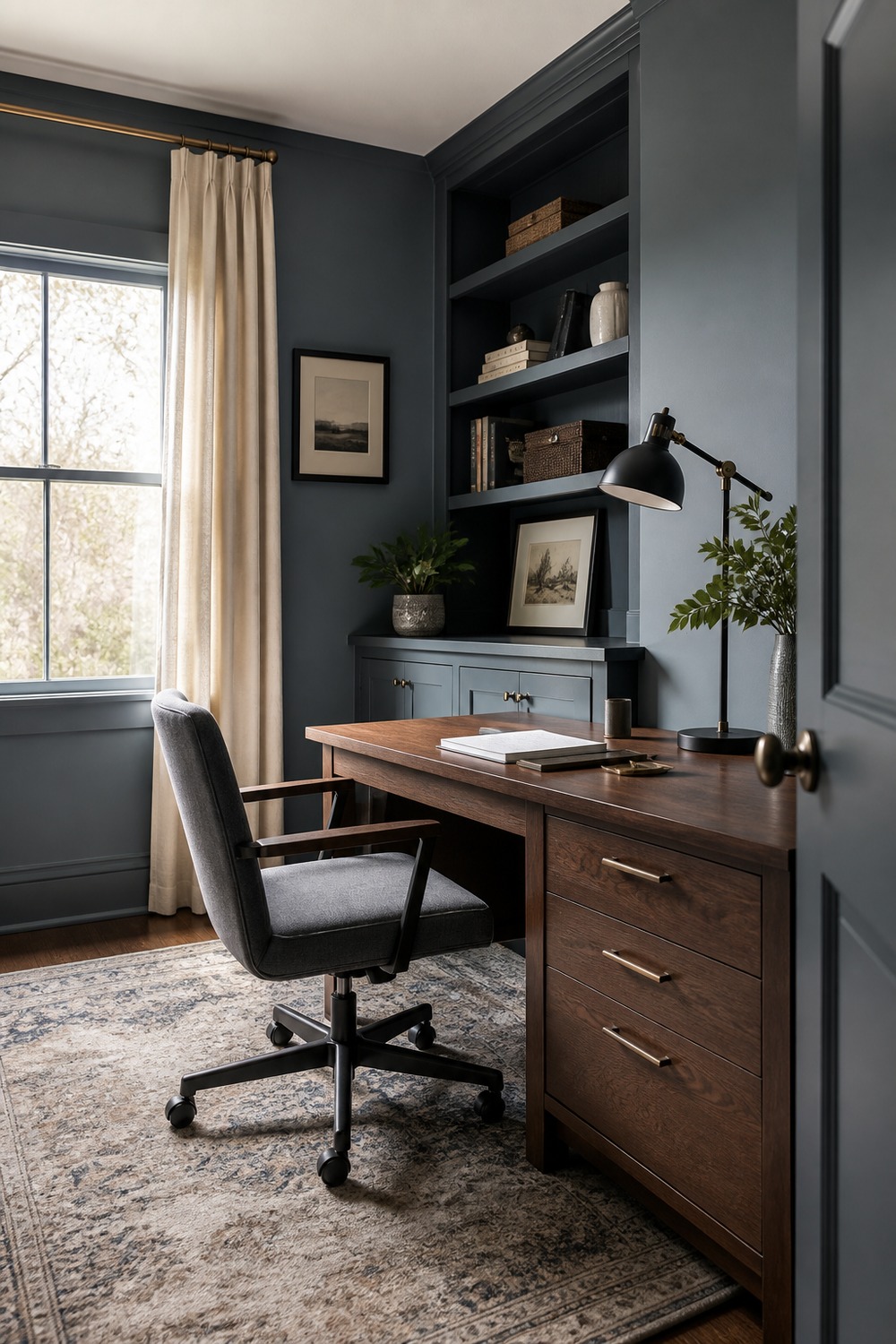
Blue-gray walls make the walnut desktop look richer without the sharp contrast of bright white paint. Cream curtains and practical drawers lighten the setup, so the deeper palette still works during daytime hours.
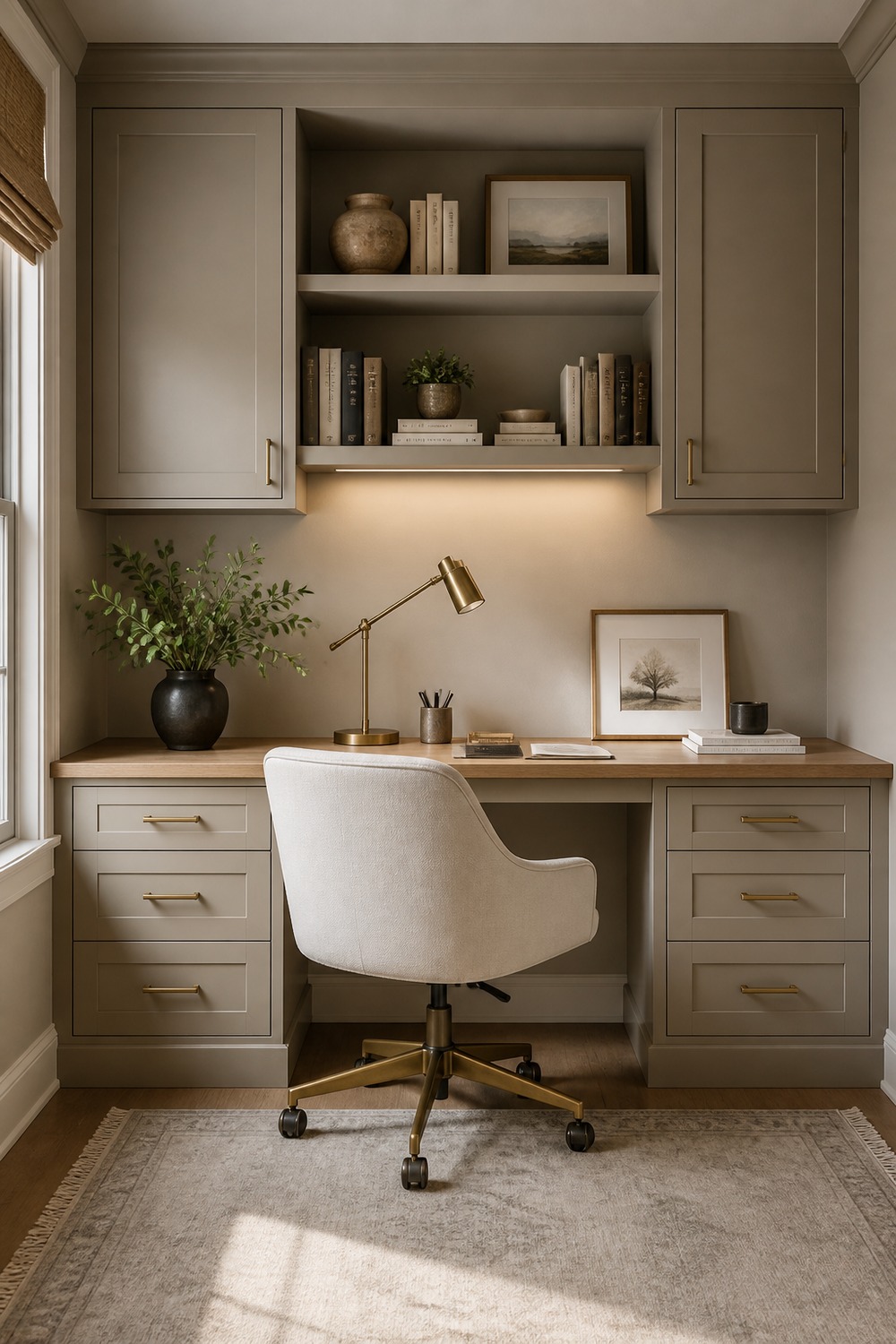
Greige can fall flat on its own, but the brass pulls and lamp give these built-ins a clear focal point. The oak writing surface adds texture where hands and office supplies actually touch the room.
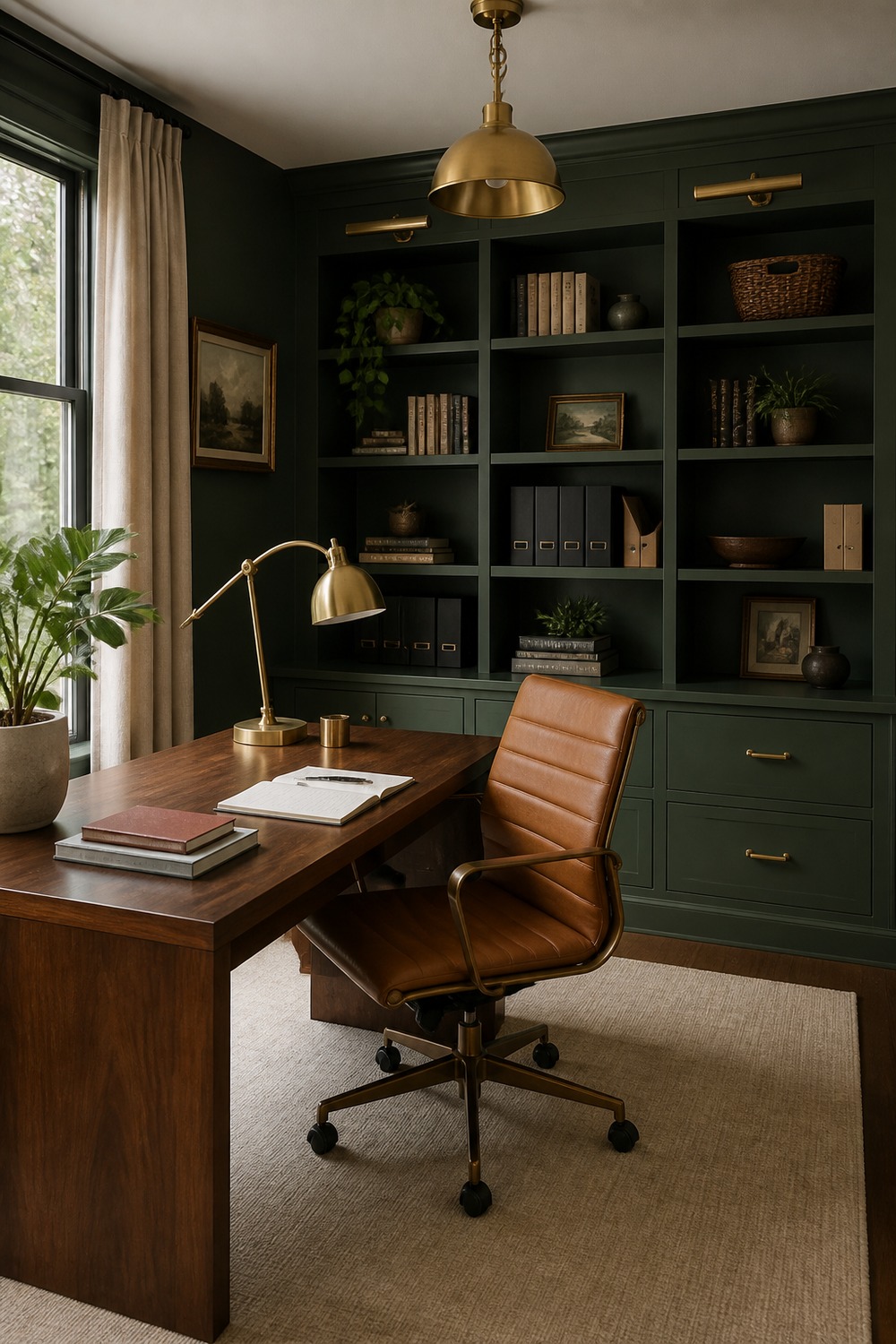
Forest green shelving and cognac leather are a naturally good pair because both feel deep and warm. The cream rug creates a visual break beneath the desk and keeps this study from reading like one dark block.
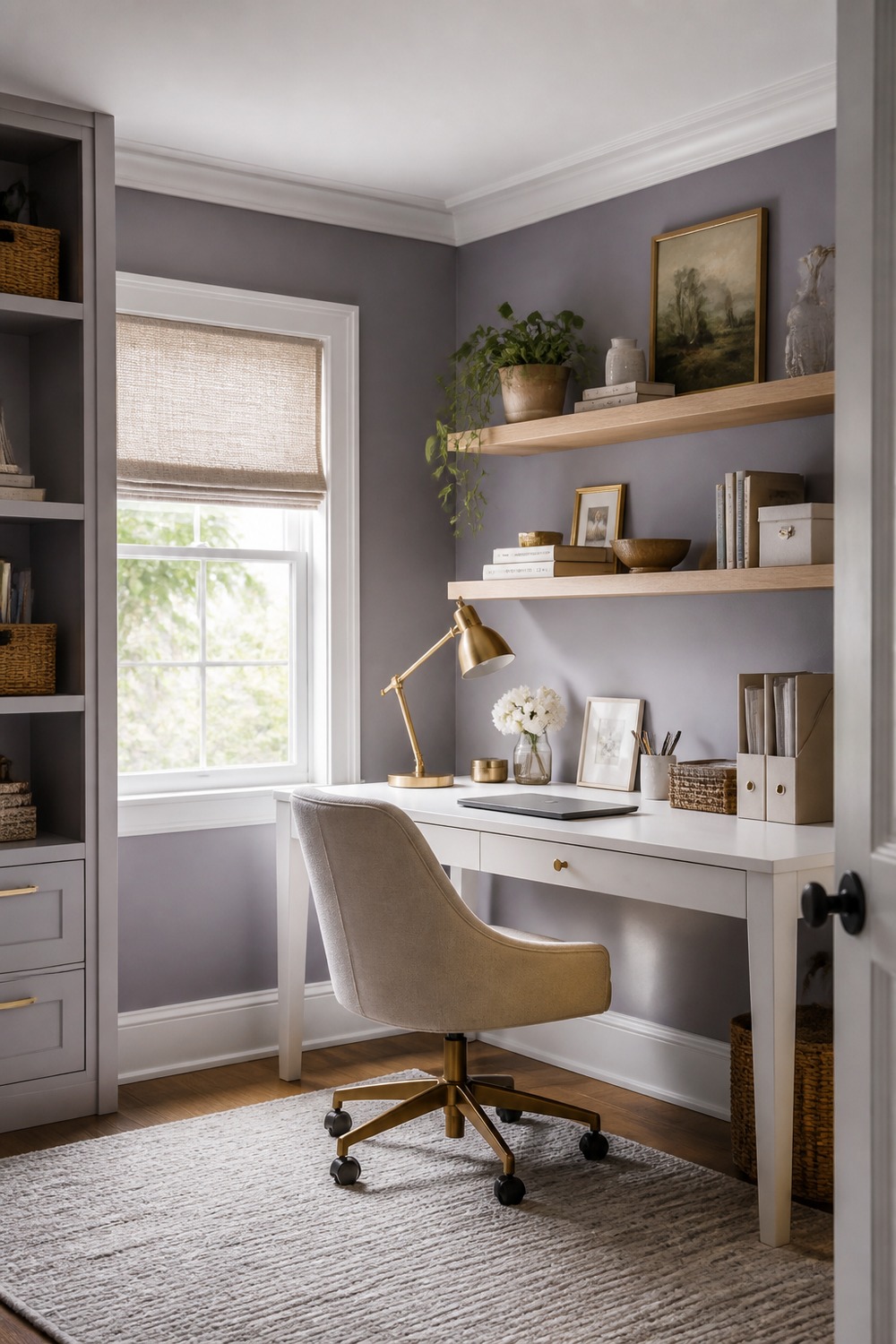
Lavender-gray is subtle enough to behave like a neutral, especially beside a white desk and pale oak shelf. Daylight brings out the purple cast gently instead of making the room feel overly pastel.
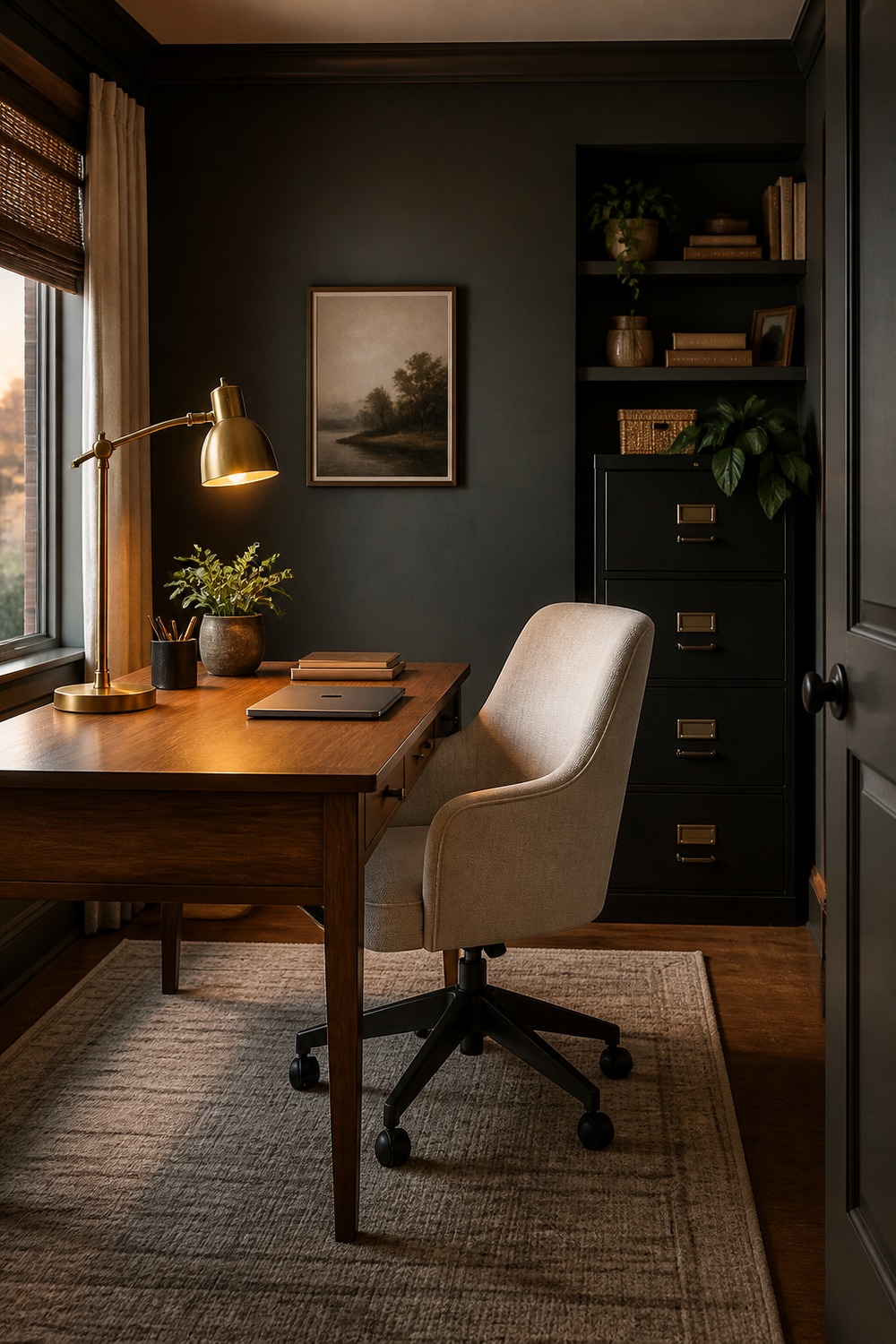
Charcoal walls hide visual noise beautifully, but the warm wood desk is what keeps this office inviting. Amber light across the desktop also gives the darker cabinetry some depth after the sun goes down.
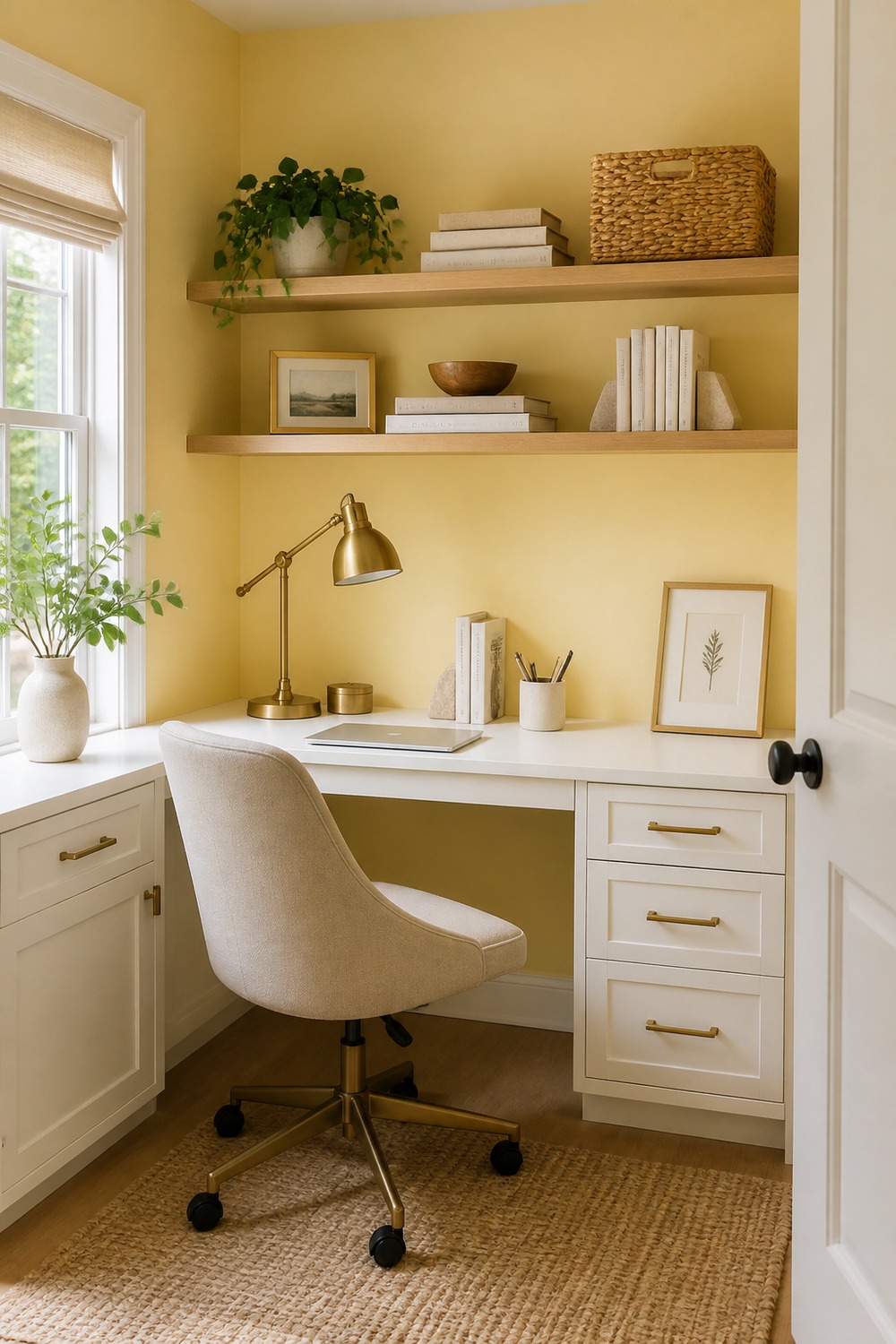
Butter yellow makes this built-in desk feel cheerful even on a gray morning. White cabinetry controls the brightness, while oak shelves and a woven basket keep the palette closer to natural materials than nursery colors.
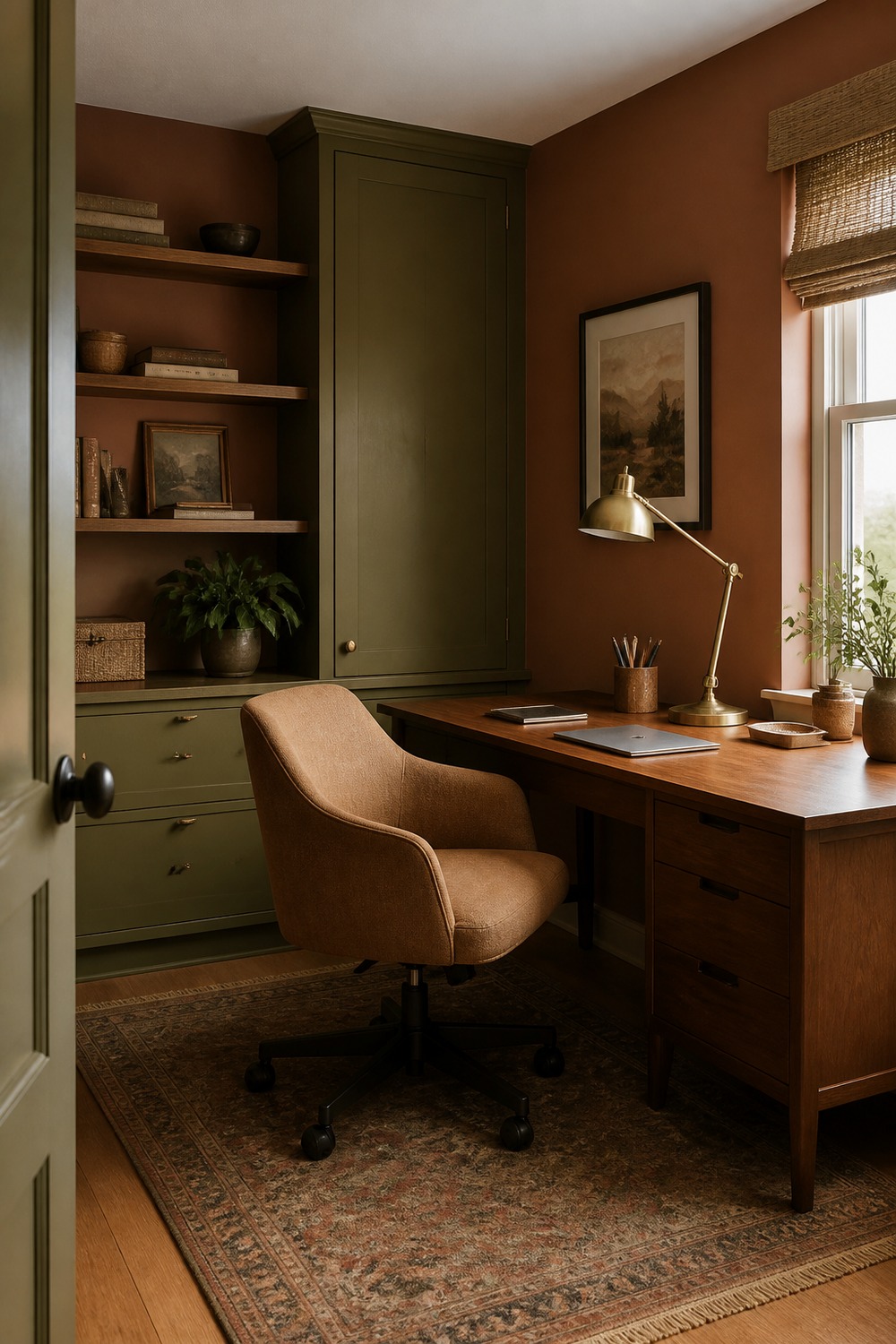
Clay and olive create a muted earthy combination that feels more layered than a single green office. The tan chair bridges the two colors, and the brass task light adds a small polished detail above the desk.
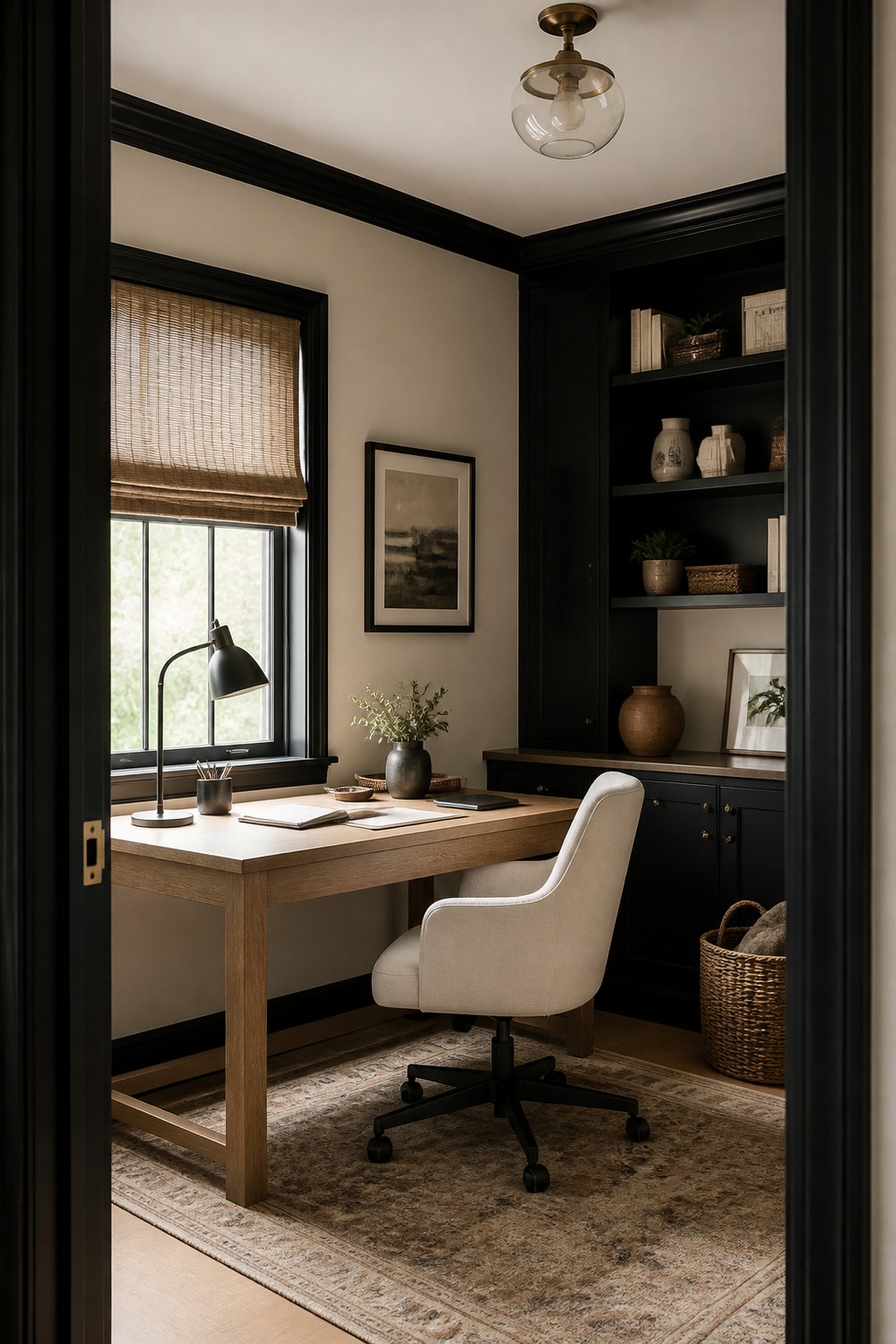
Cream walls leave this compact office open and bright, while black trim gives the window and storage a proper outline. The oak desk keeps the contrast from becoming stark or overly formal.
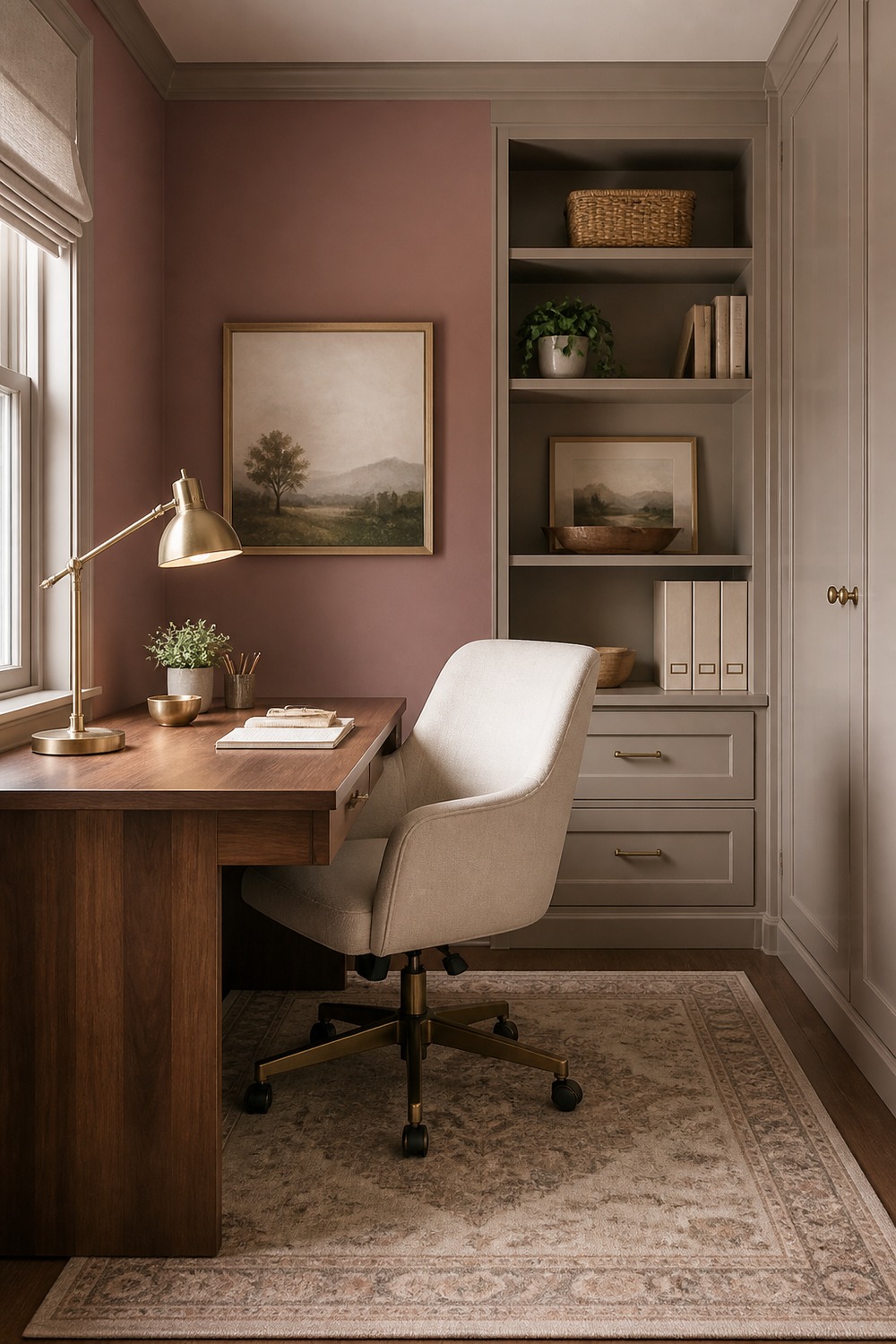
Dusty rose works well here because taupe cabinetry takes away its sweetness. A walnut work surface and warm lamp glow add depth, making the palette feel calm enough for long stretches at the desk.
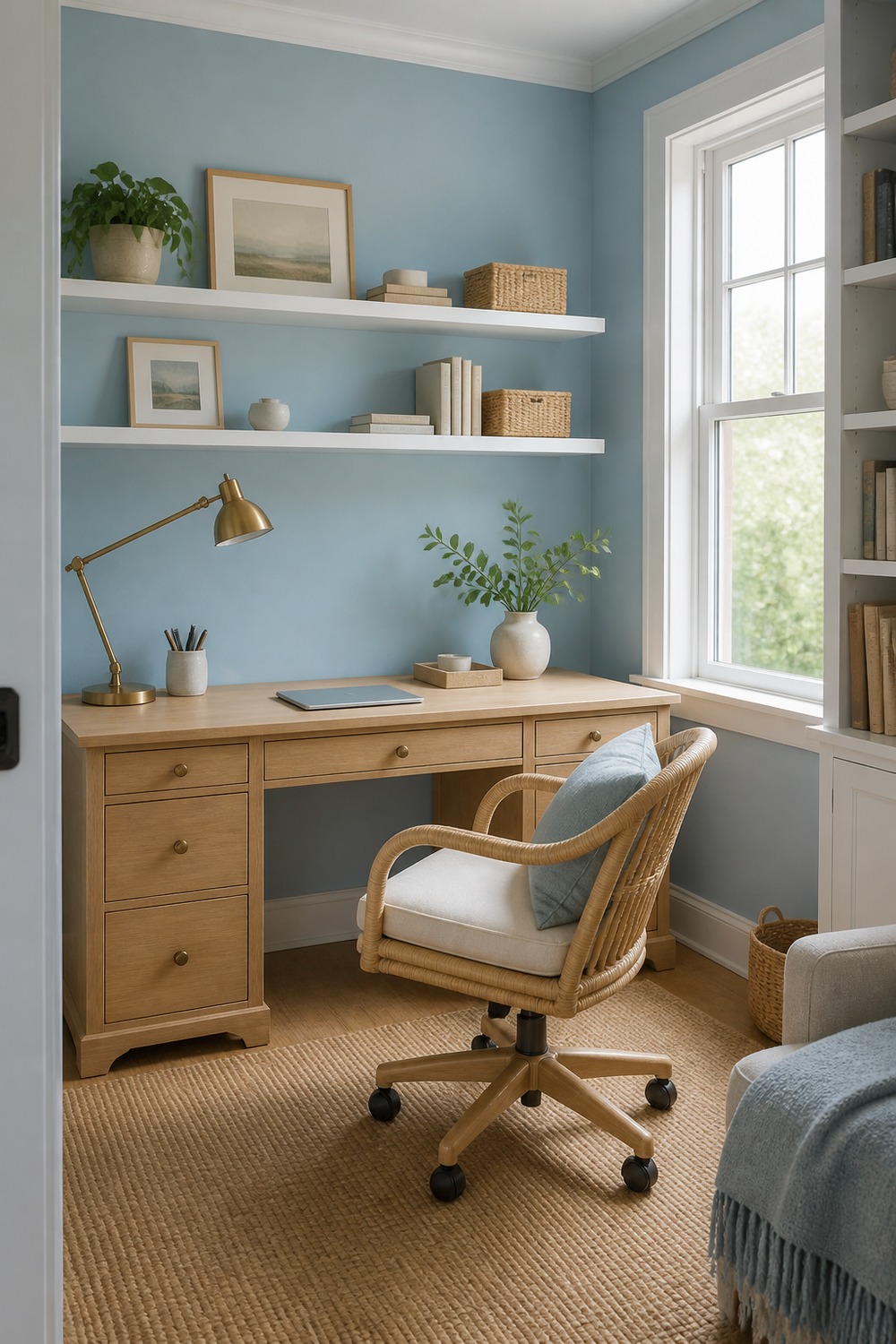
Sky blue walls make the room feel airy, but the natural wood desk prevents it from looking cold. The rattan-backed chair and open shelves also bring in texture without cluttering the narrow floor area.
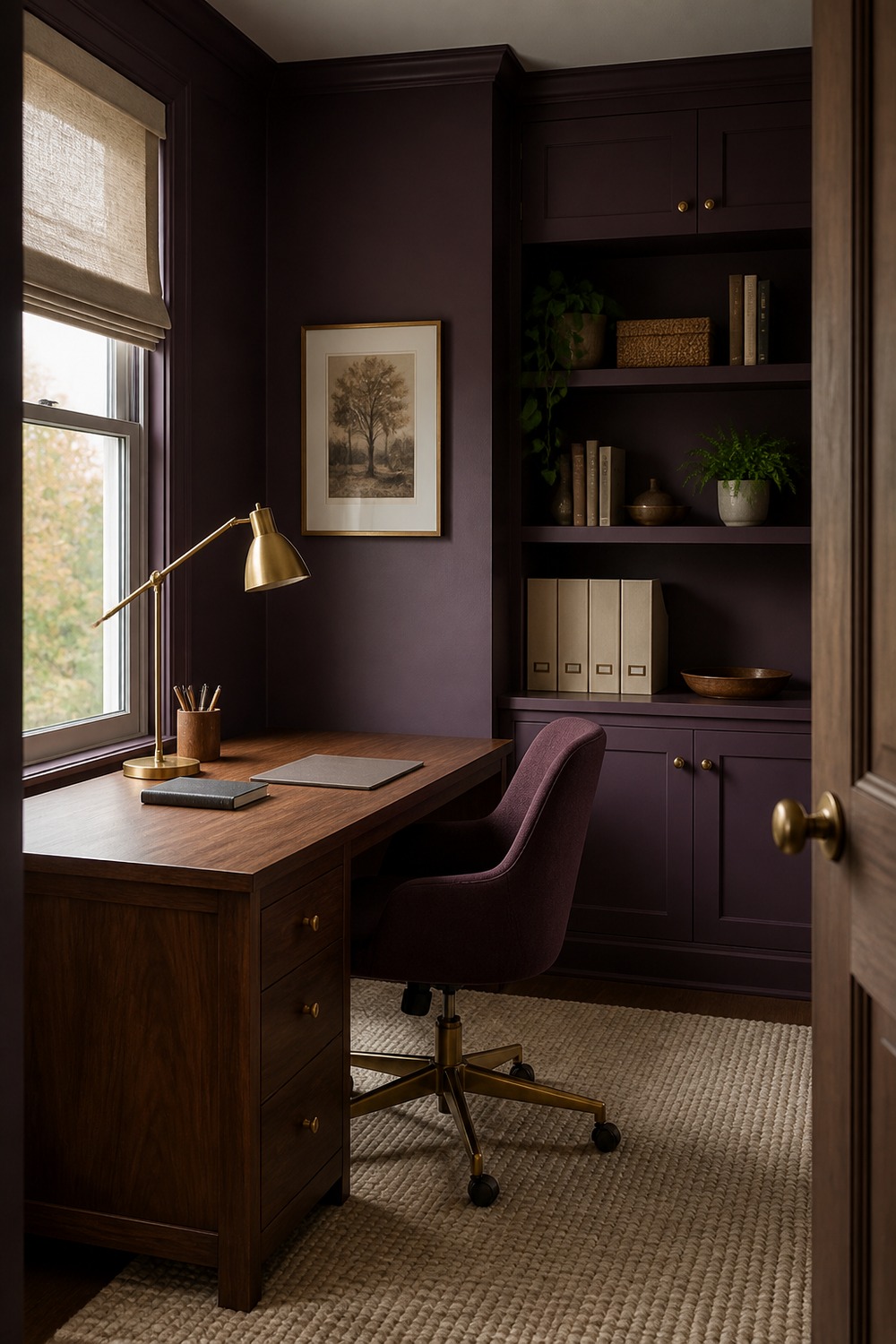
Plum is a bold wall color, so the restrained brass lamp and walnut desk are smart supporting choices. The closed drawers matter too—they keep everyday supplies from competing with such a saturated backdrop.
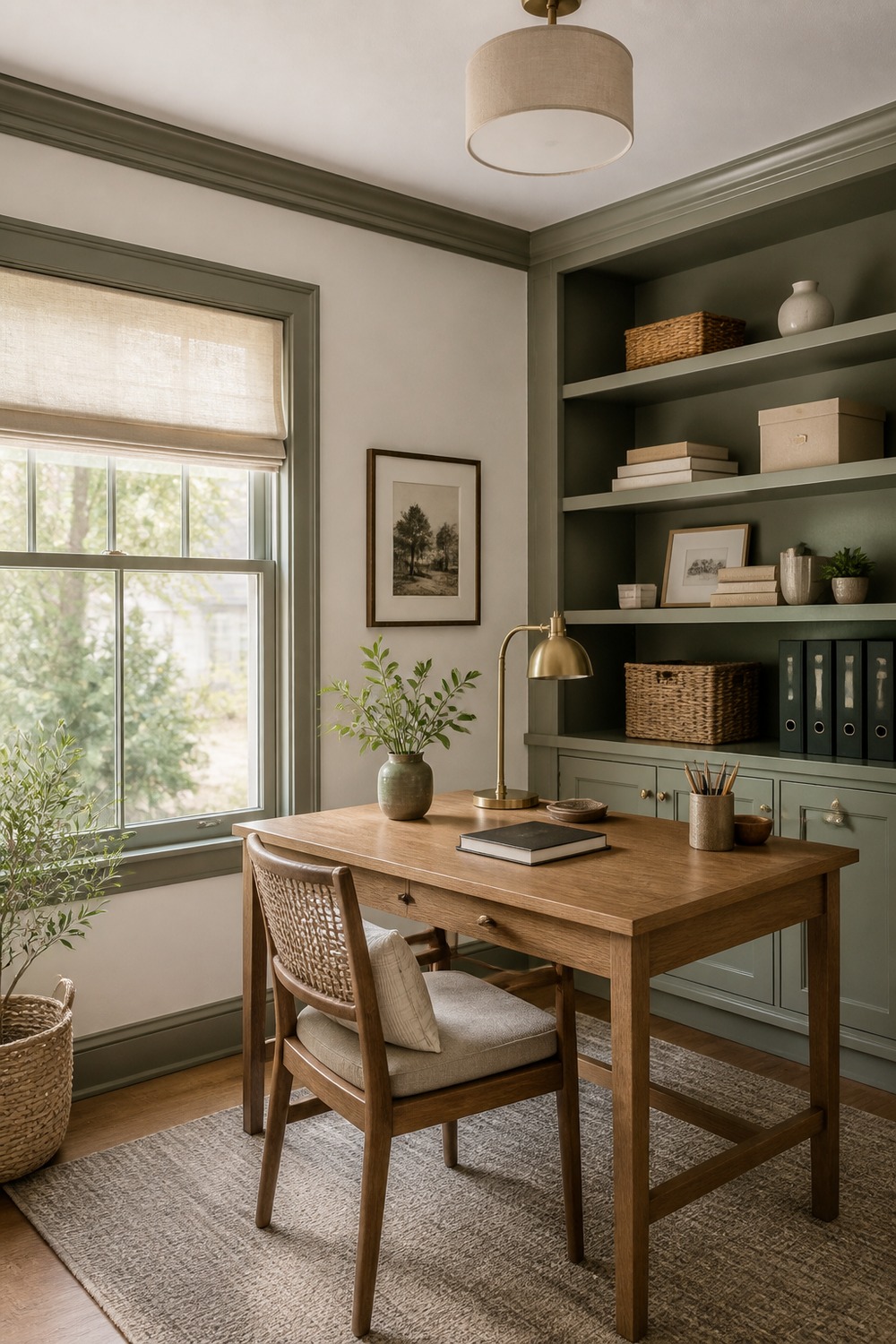
Instead of painting every wall green, this room uses sage on the trim and cabinetry against warm white. That framing trick gives the desk zone definition while preserving plenty of reflected daylight.
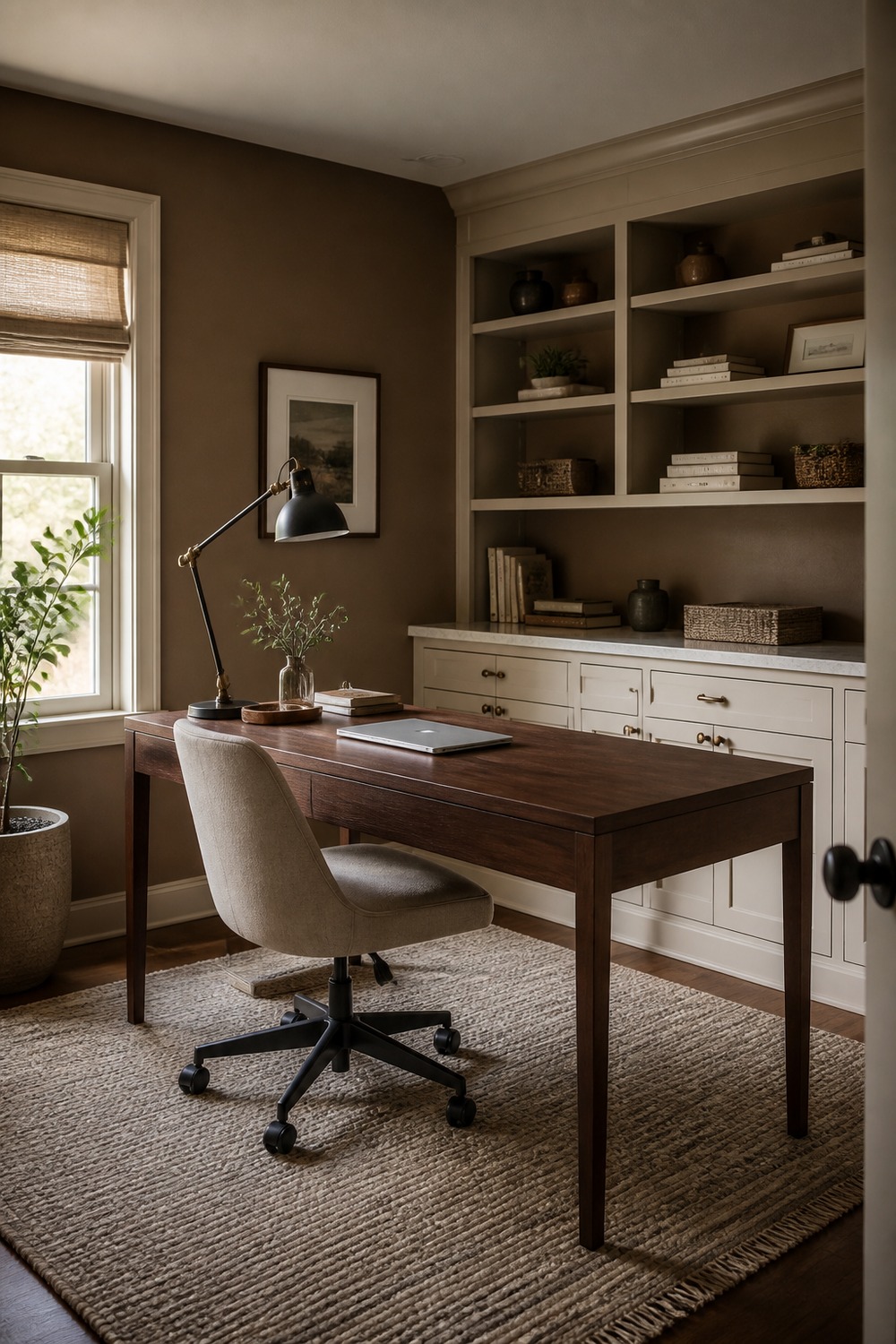
Brown walls can feel heavy, but beige built-ins and upholstery pull this office back toward a softer neutral range. The darker walnut desk anchors the center, and the textured rug keeps the room from looking flat.
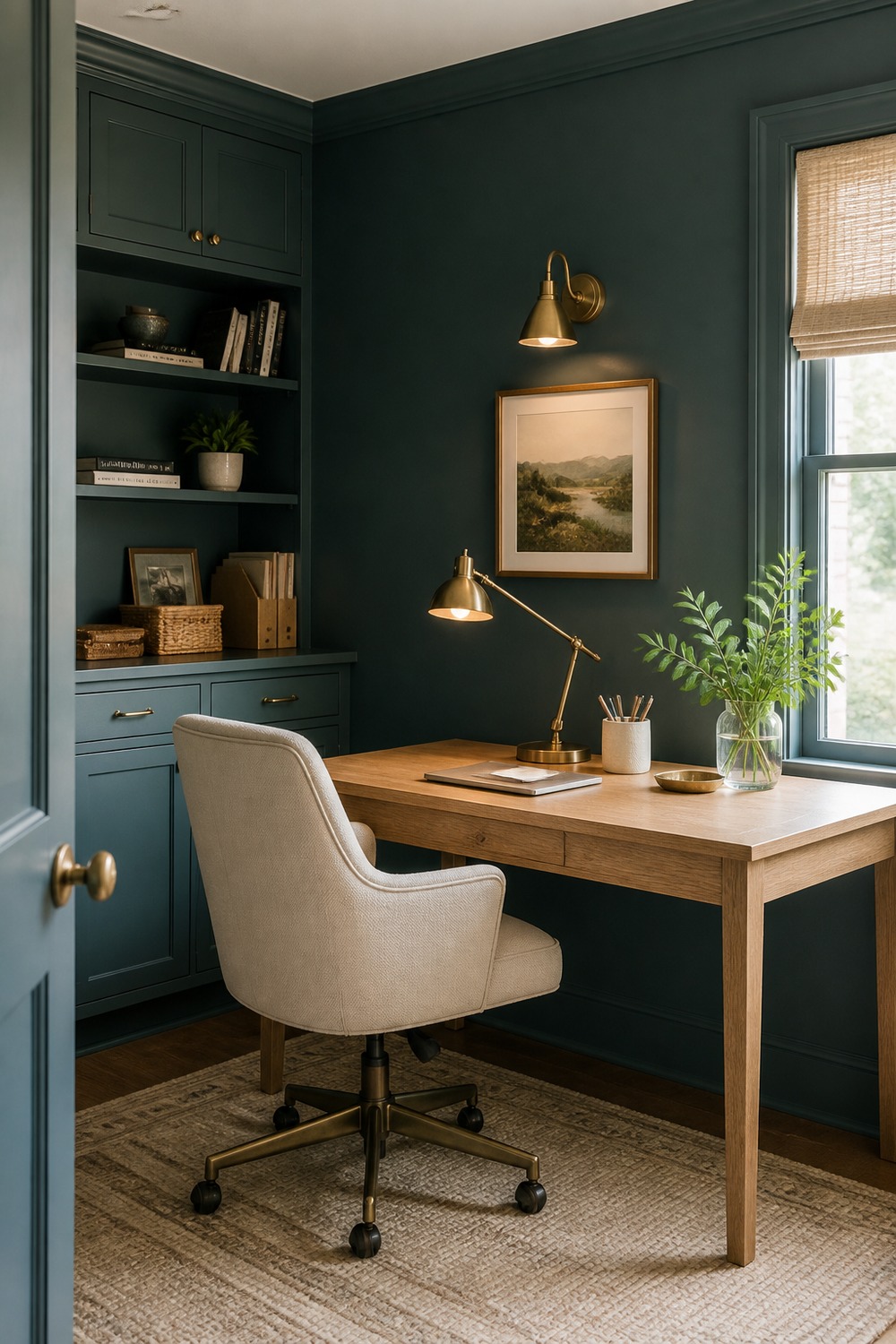
Muted teal gives the cabinetry personality without turning the room into a bright color statement. Oak, cream upholstery, and a brass sconce warm the blue-green paint and make the desk feel easy to use every day.
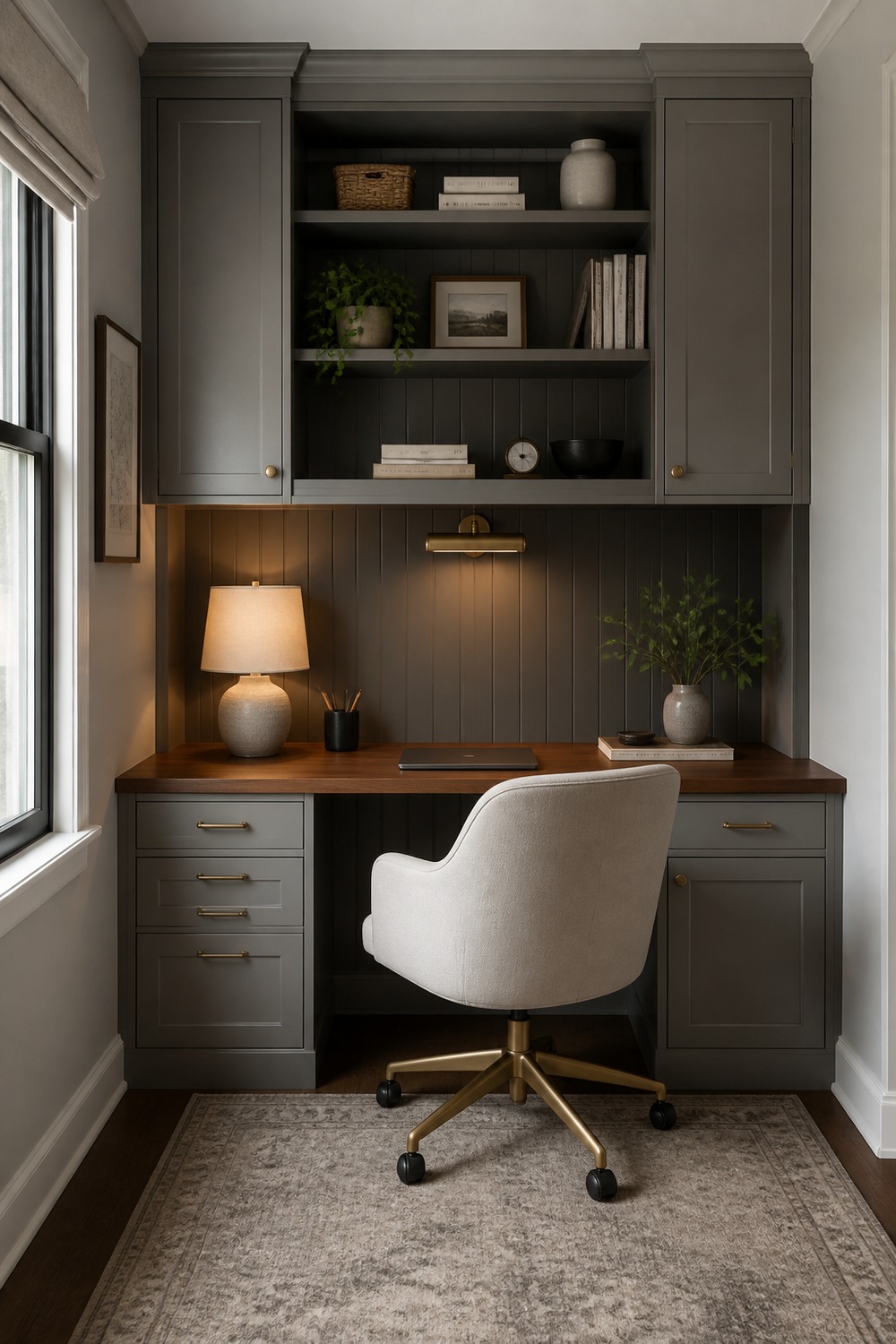
A monochrome gray office needs texture more than extra color. Here, the walnut desktop, soft rug, and warm lamp break up the cabinetry so the scheme feels layered rather than corporate.
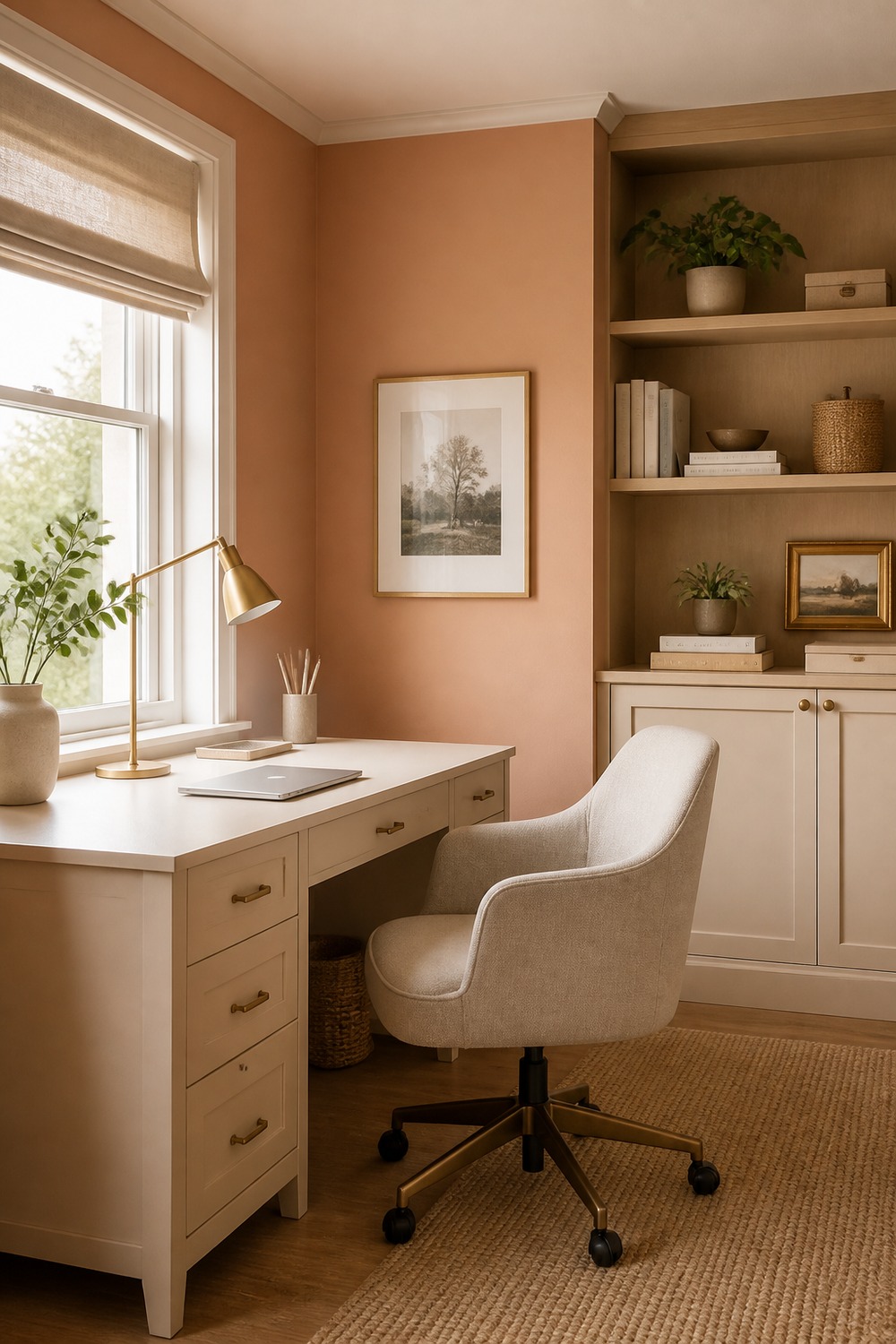
Peach walls are balanced by cream storage and a pale desk, which keeps this small room from glowing too orange. The linen chair and natural wood shelf add quiet texture around the work area.
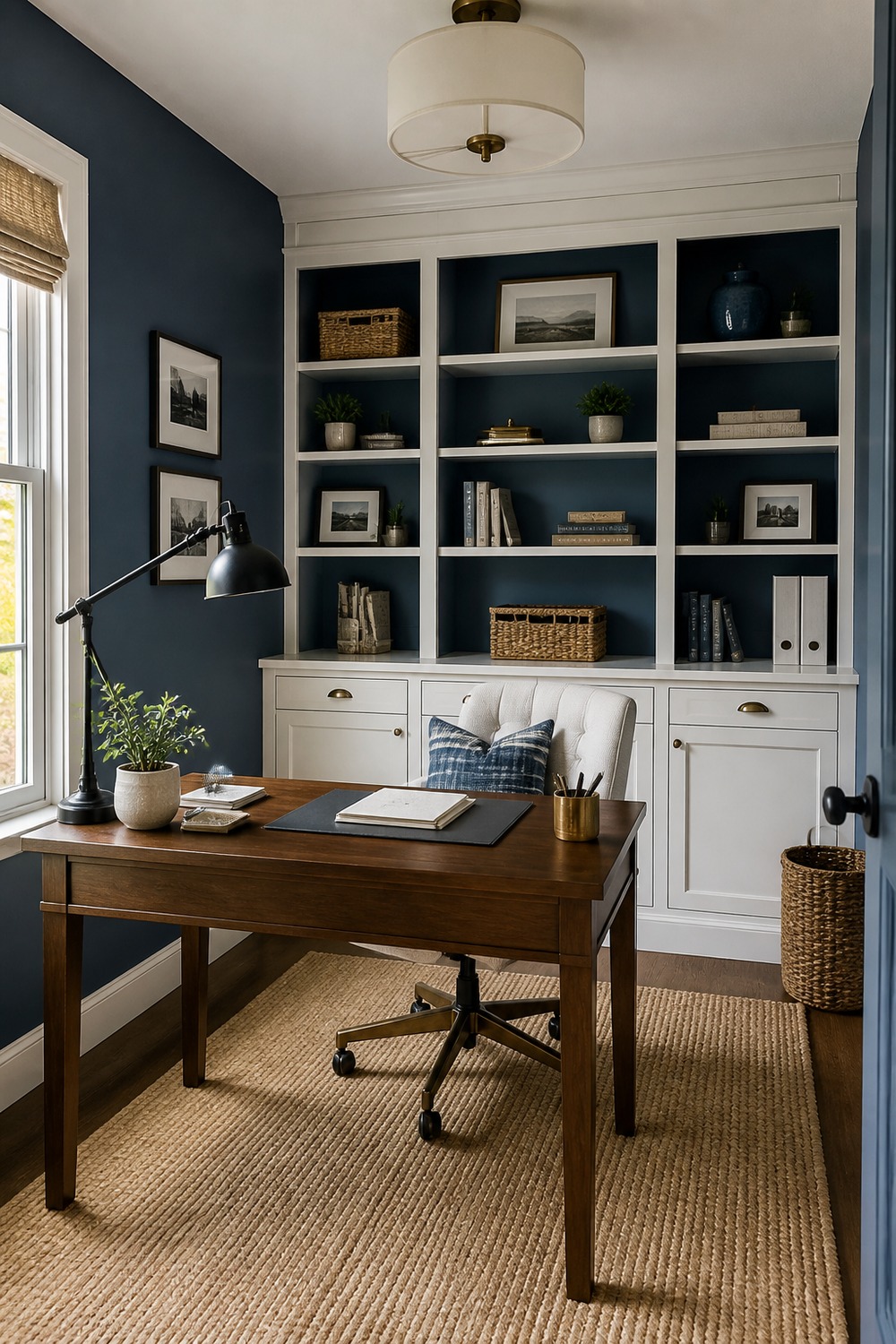
Classic blue built-ins, white cabinetry, and a wood desk give this room a familiar palette with strong contrast. The tan rug softens the floor and makes the dark task light feel connected to the rest of the office.
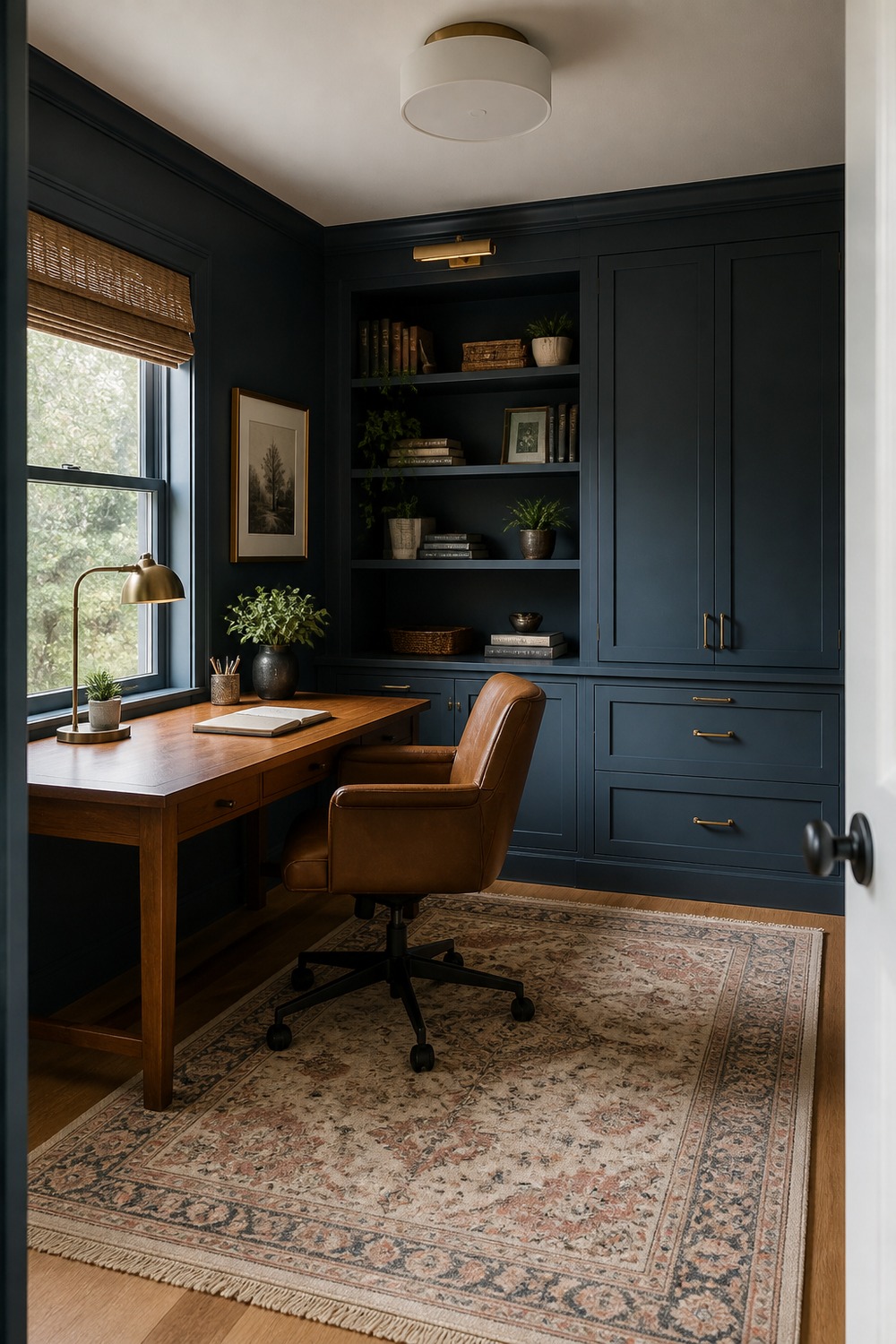
Deep navy cabinetry gives the final room a clear envelope, while the warm wood desk and cognac chair keep it from feeling formal. Cream accents and the patterned rug pull light back into the lower half of the space.
The best palette is the one that still looks good beside a monitor, a stack of papers, and whatever lands on the desk by Friday. Choosing one wall color, one wood tone, and a quieter supporting neutral is usually enough to make the whole office feel connected.
Leave a comment