
A masculine office does not need to be a black box with a leather chair dropped in the middle. The better palettes use contrast where it helps—around the desk, storage, and lighting—then leave enough wood, cream, or daylight to make the room comfortable for an ordinary workday.
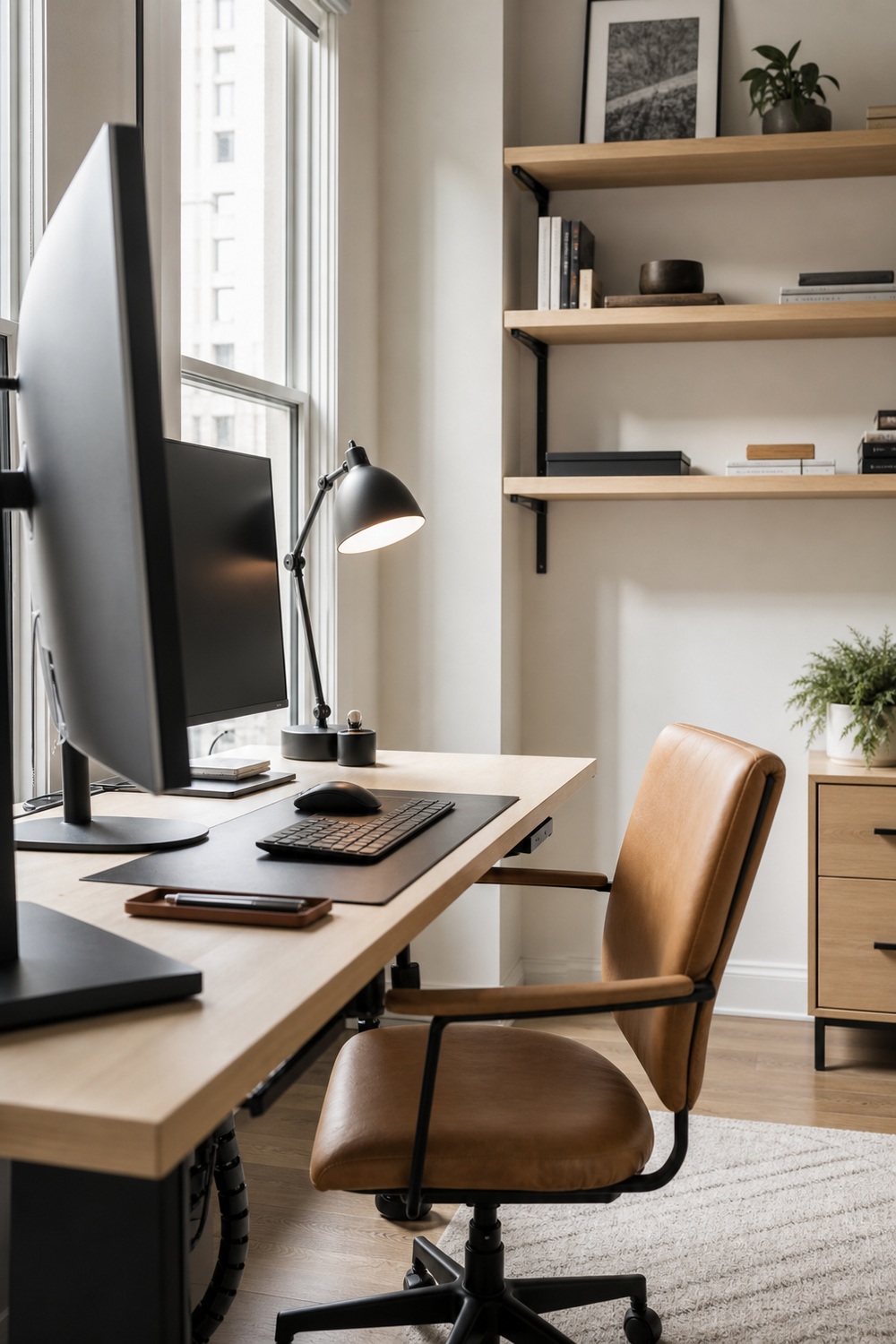
Warm white and pale oak make a convincing masculine office when the shapes stay clean. The camel chair adds one richer color, and the dual-monitor desk includes the cable control and shallow storage a real technology setup needs.
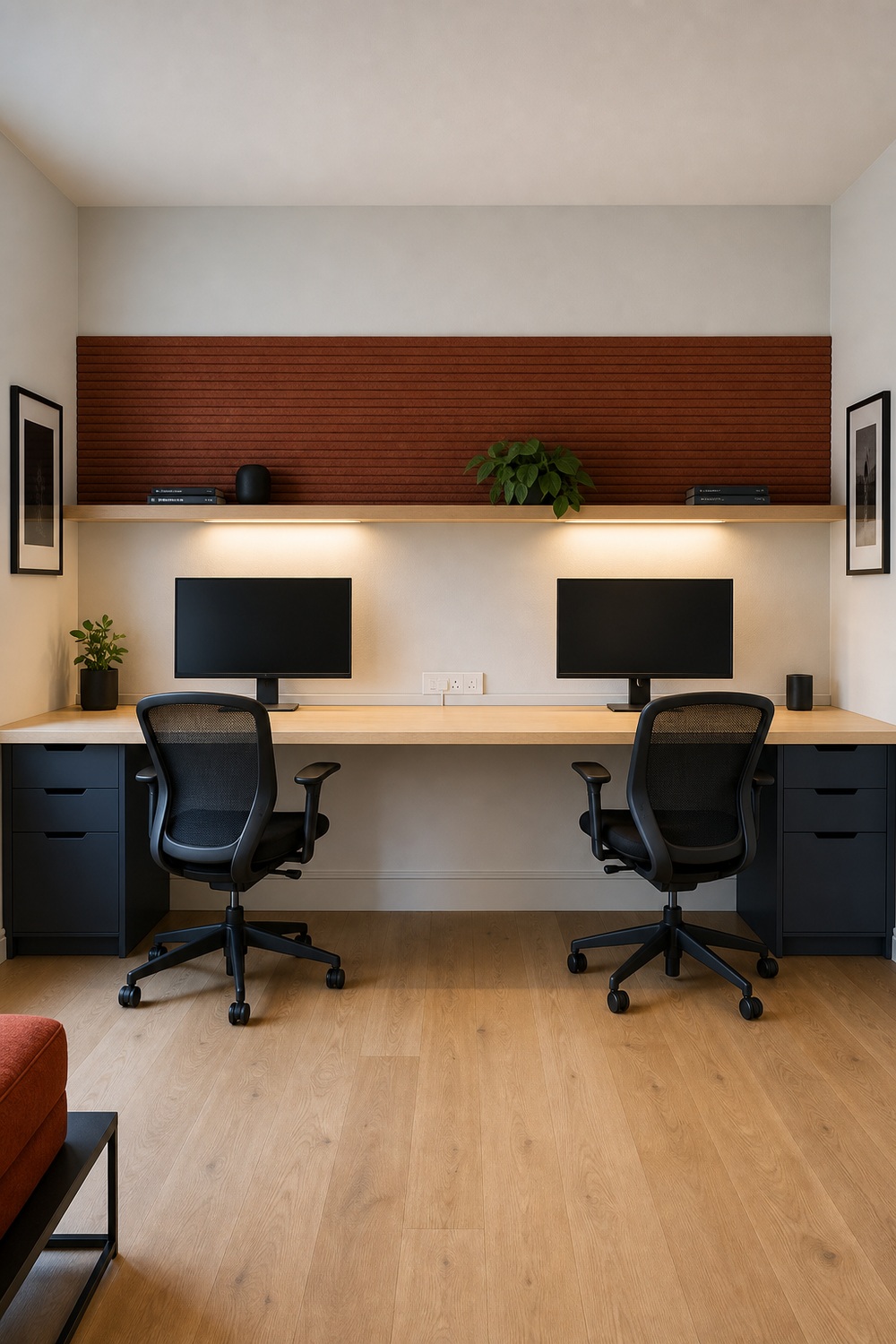
A long birch worktop makes this shared office feel unified without forcing both people into identical storage habits. Slate-blue drawers give the lower wall some weight, while separate task lights, chairs, and cable routes keep the two stations useful rather than merely symmetrical.
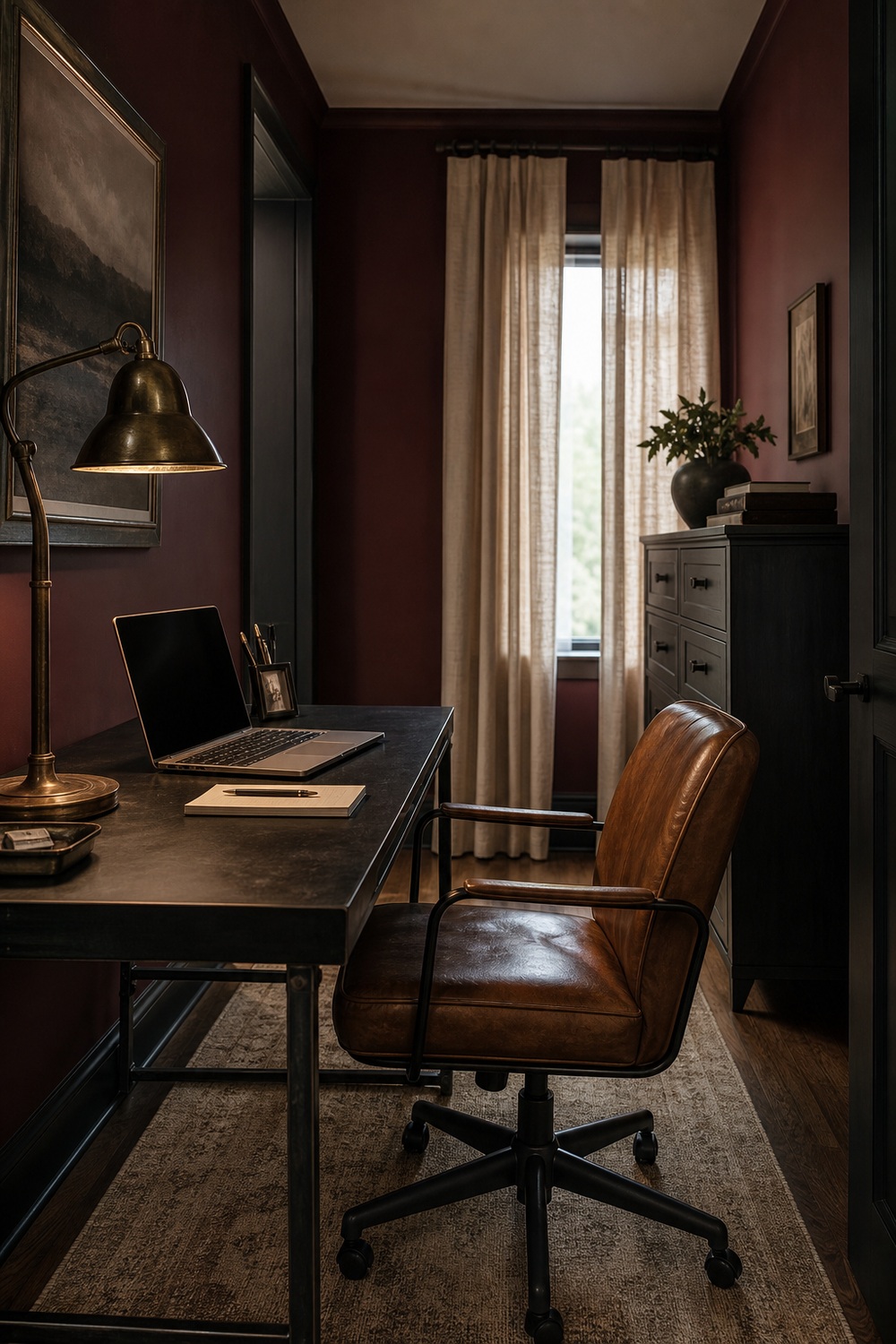
Burgundy is a bolder choice, but the charcoal cabinet and tobacco leather chair keep it grounded. The narrow metal desk preserves the walkway, and a cream curtain reflects enough window light to make the deep wall color usable in a compact apartment office.
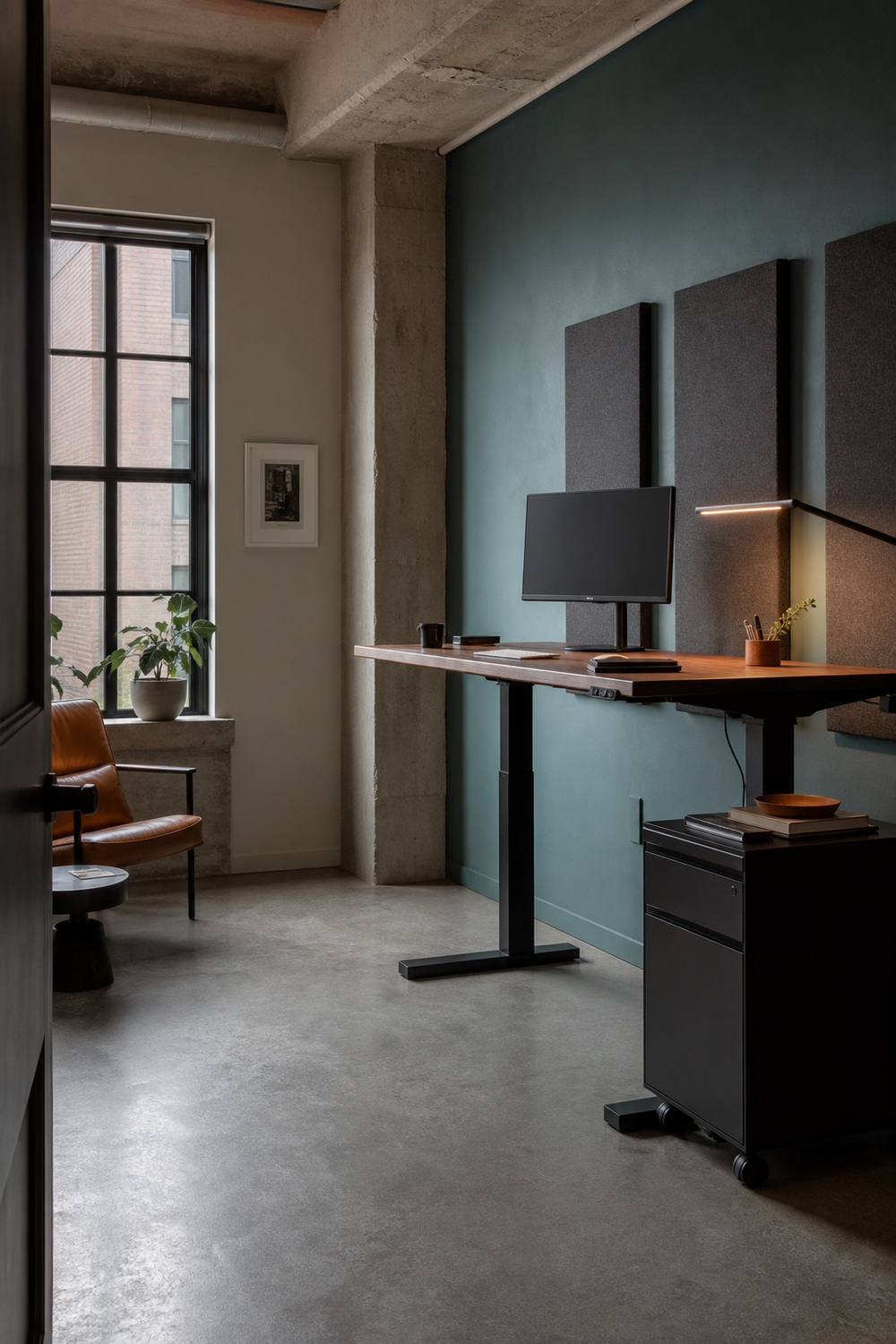
Muted teal gives this standing-desk office color without the usual traditional-study look. Concrete gray, walnut, and black make the palette feel contemporary, and the acoustic panels solve an actual sound problem instead of acting like random wall decor.
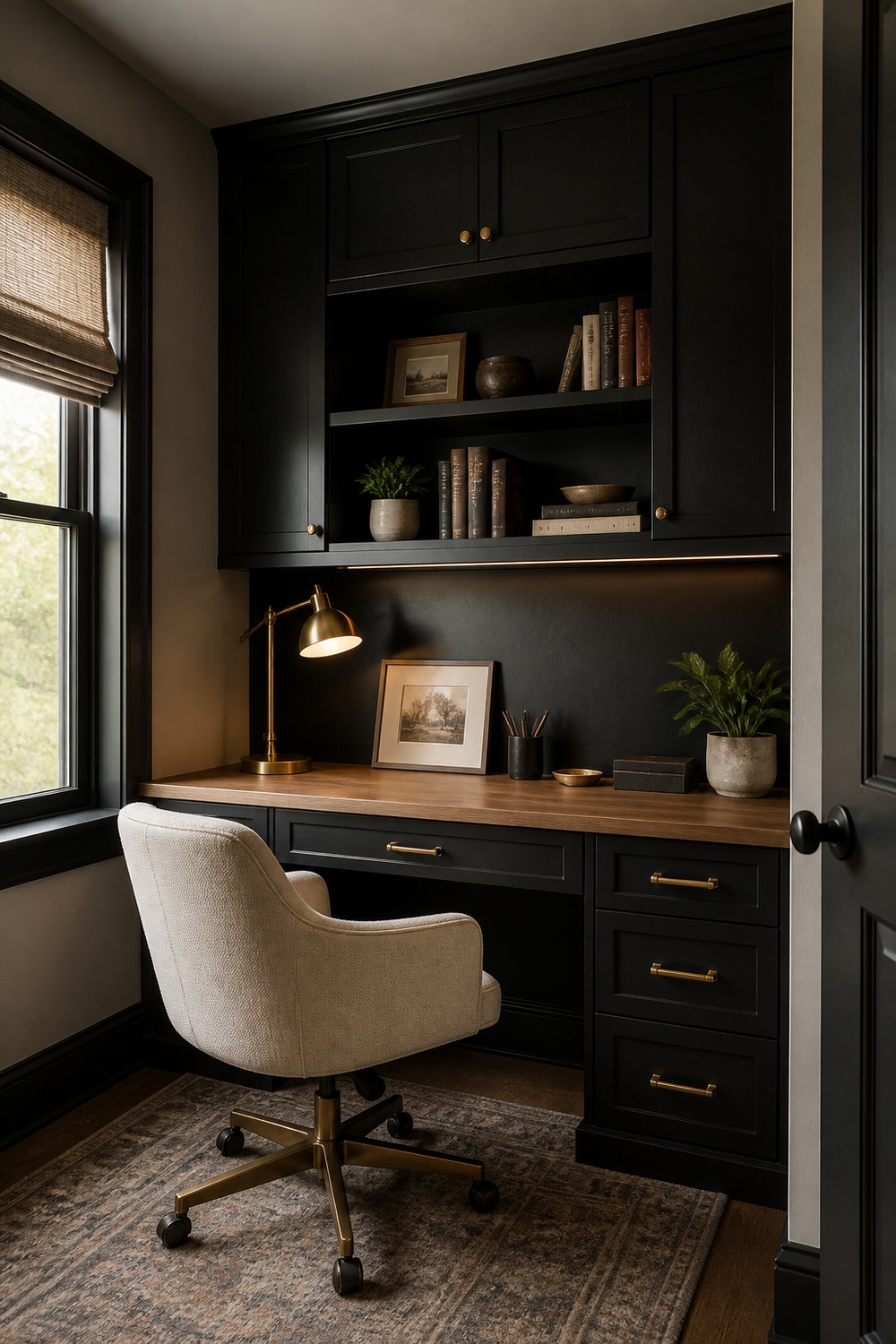
Black built-ins can look severe, but the oak worktop and brass hardware break up the cabinetry at the exact places the eye lands. I also like that the cream chair lightens the desk zone while useful drawers handle the office clutter below.
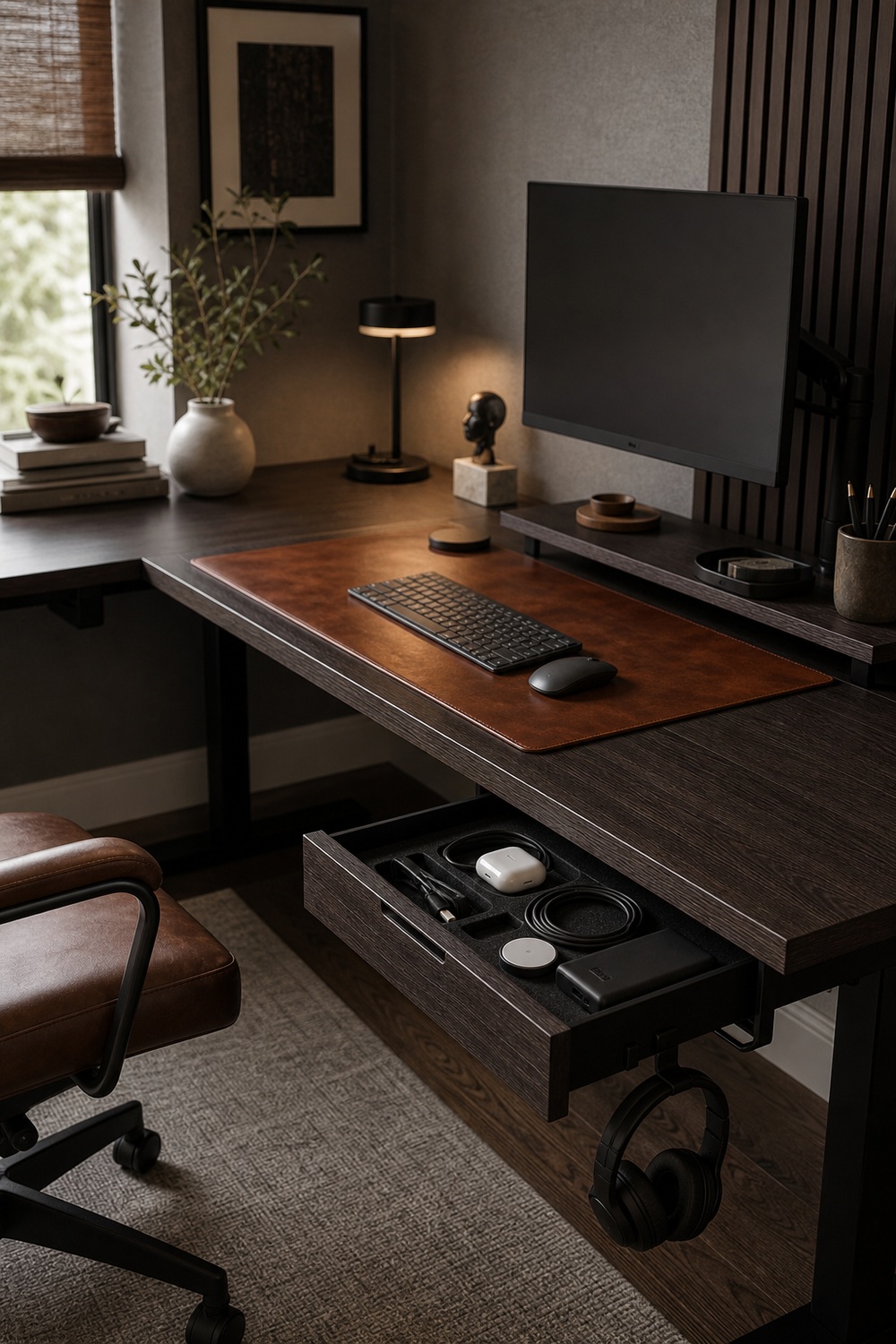
This close view shows why mushroom gray and smoked oak work so well around technology. The saddle-brown desk mat warms the black hardware, and the open charging drawer keeps cables and small devices organized instead of letting them spread across the work surface.
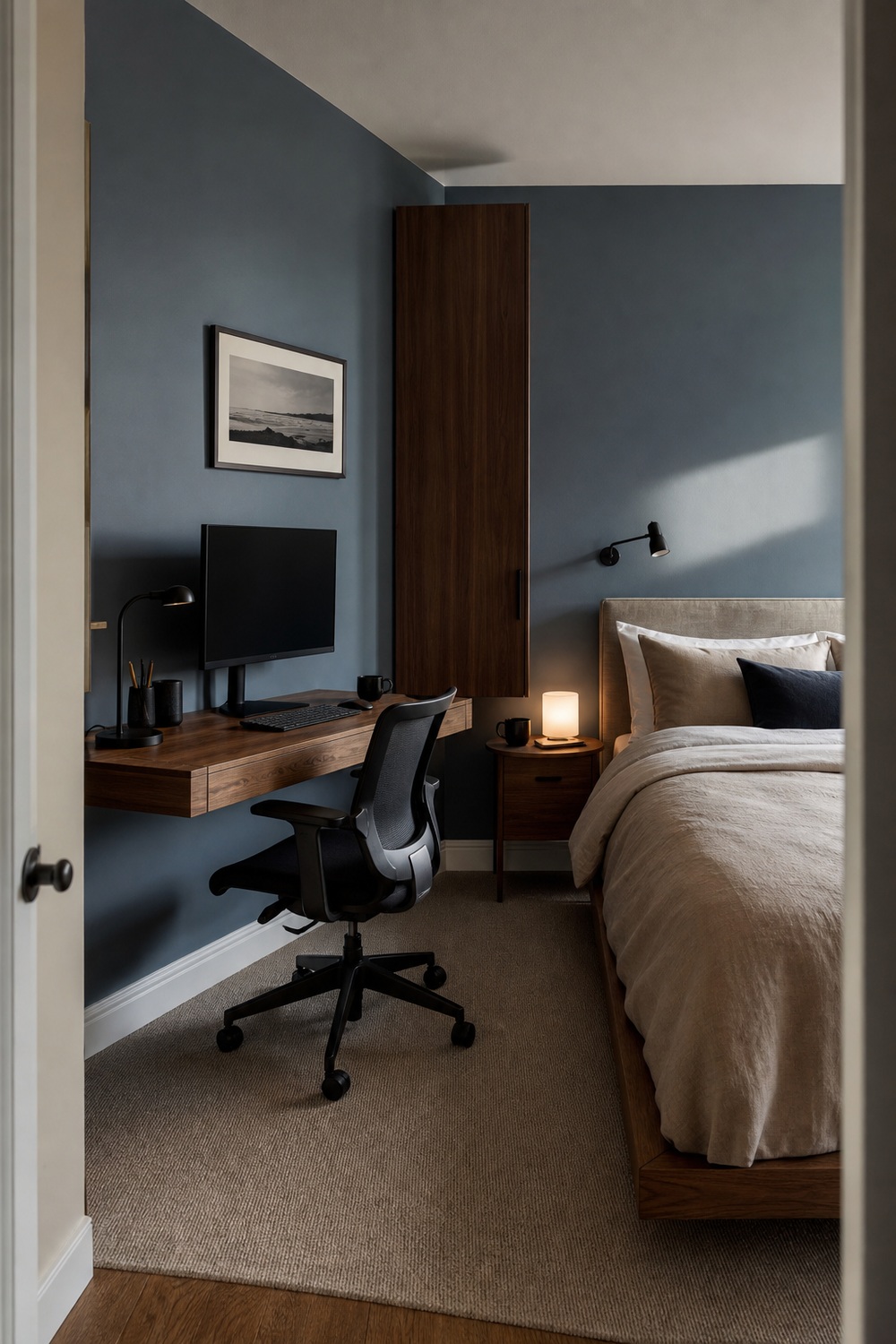
Denim blue connects the compact desk to the bedroom without making the work zone look like leftover furniture. A floating walnut surface preserves floor space beside the bed, and sand linen plus warm white trim keep the darker chair and monitor from dominating the room.
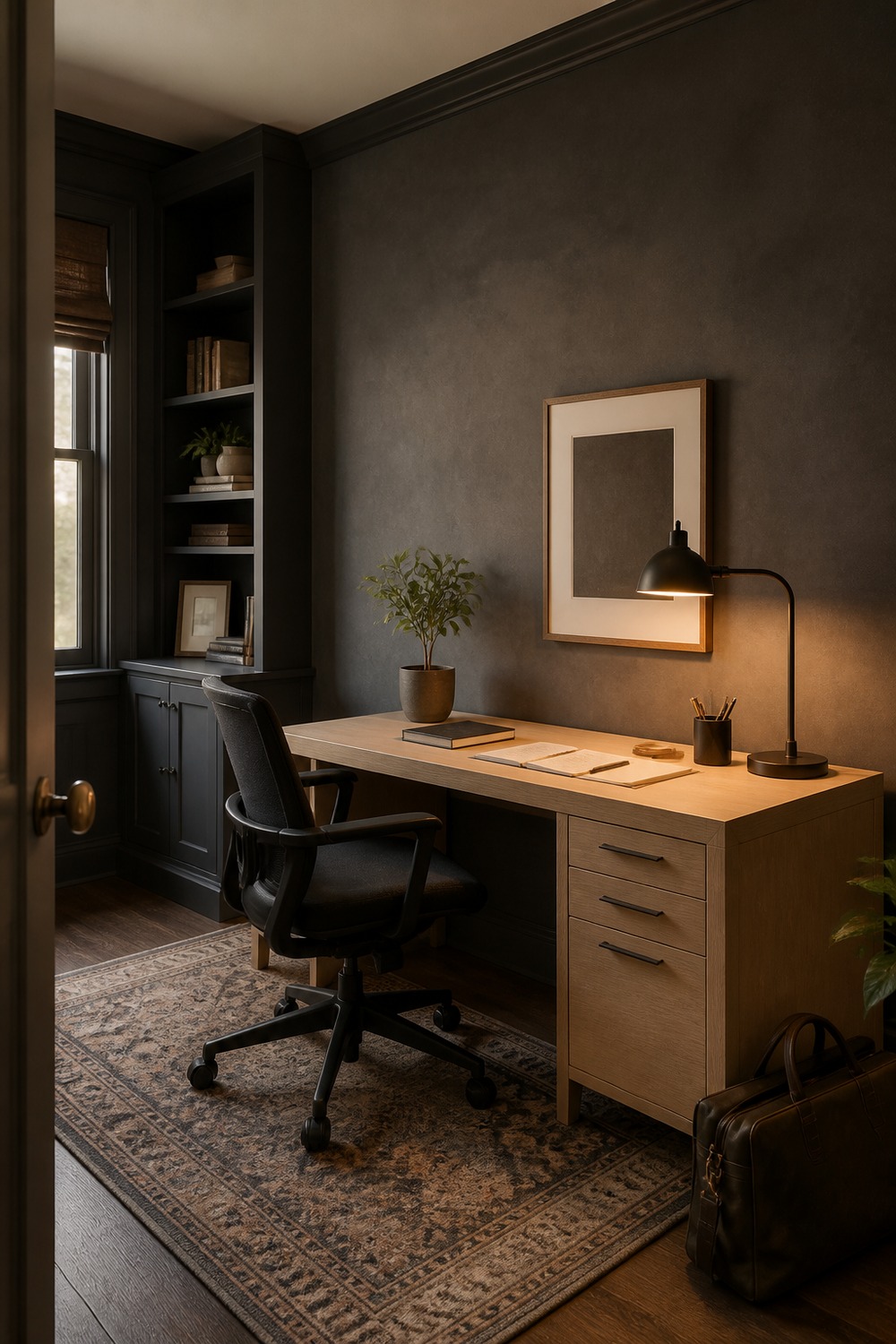
Charcoal limewash adds movement that a flat gray wall would not have. The pale oak desk makes the work surface easier to read, and the floor lamp throws a warm pool of light across the texture without filling the room with decorative objects.
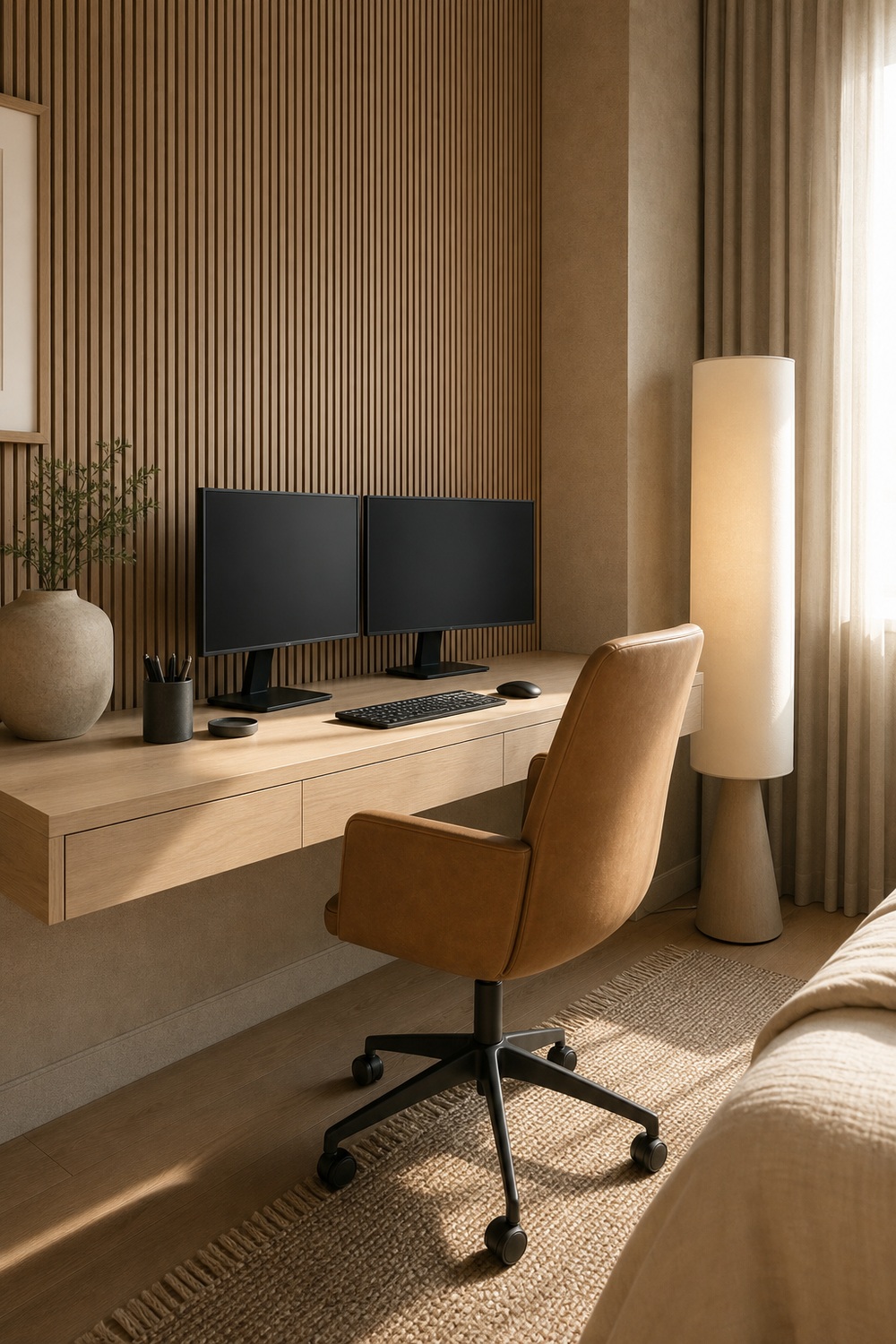
Sandstone acoustic panels turn this desk wall into something softer than standard gray paint. The floating pale-wood surface leaves the floor open, and the dual blank monitors, concealed drawers, and camel chair make the light palette feel properly work-ready.
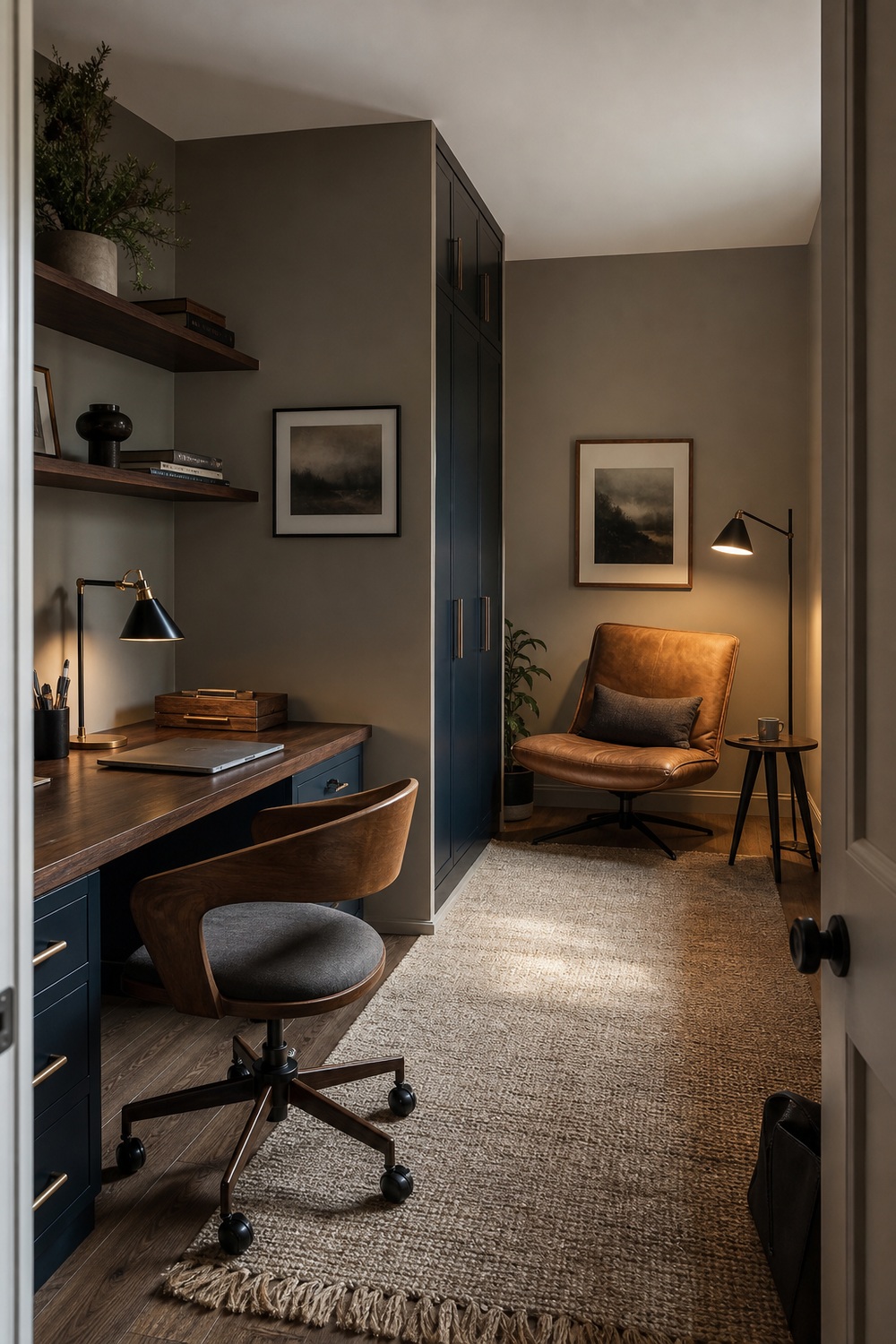
Putty walls leave room for the petrol-blue storage to carry the stronger color in this split-use office. The walnut desk stays compact along one wall, while the camel reading chair and floor lamp create a second zone without blocking the walkway.
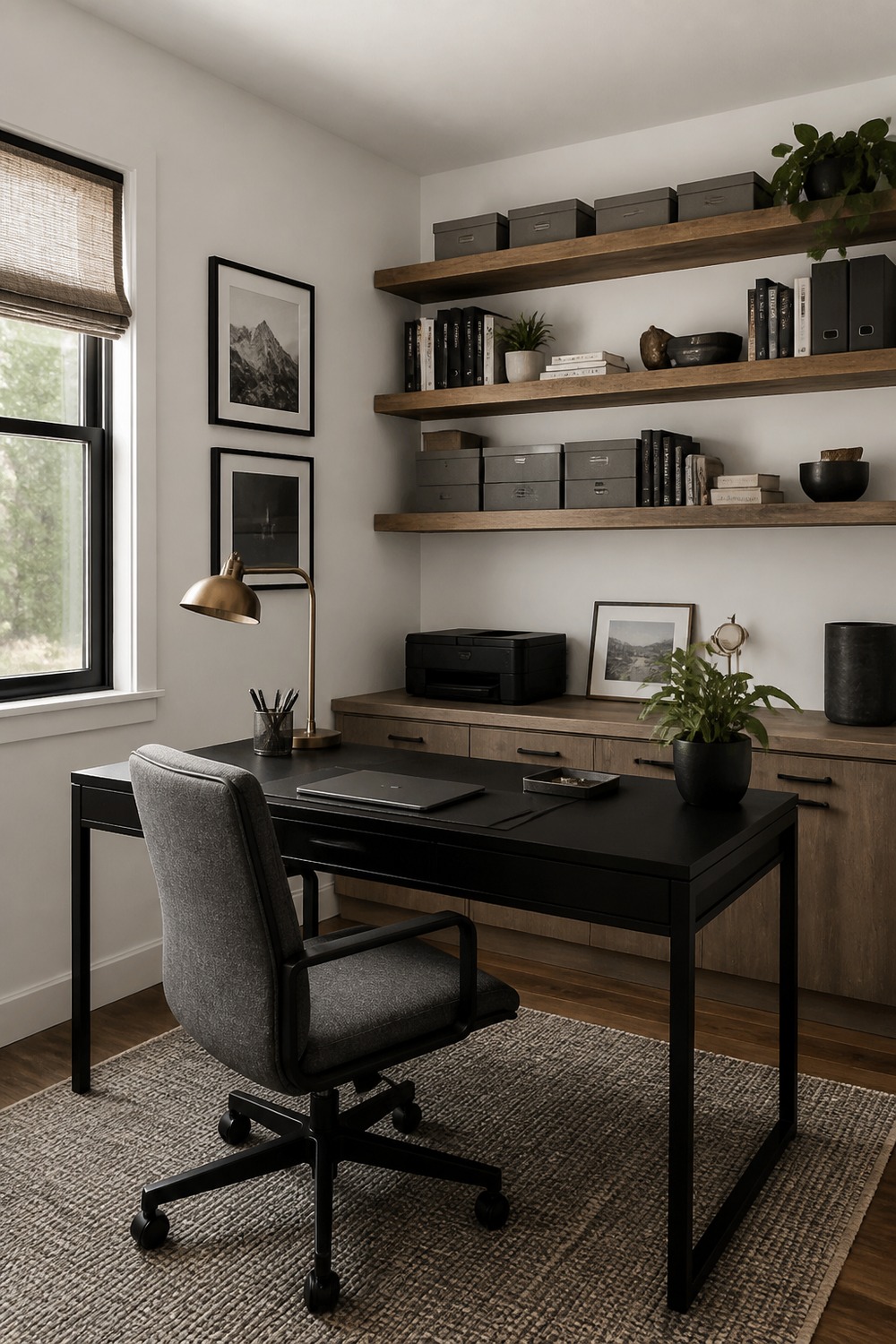
Black, white, and natural wood is simple, but the proportions matter. Slim wood shelving supplies warmth above the desk, gray file boxes absorb visual clutter, and the matte-black frame gives the workstation definition without darkening the whole wall.
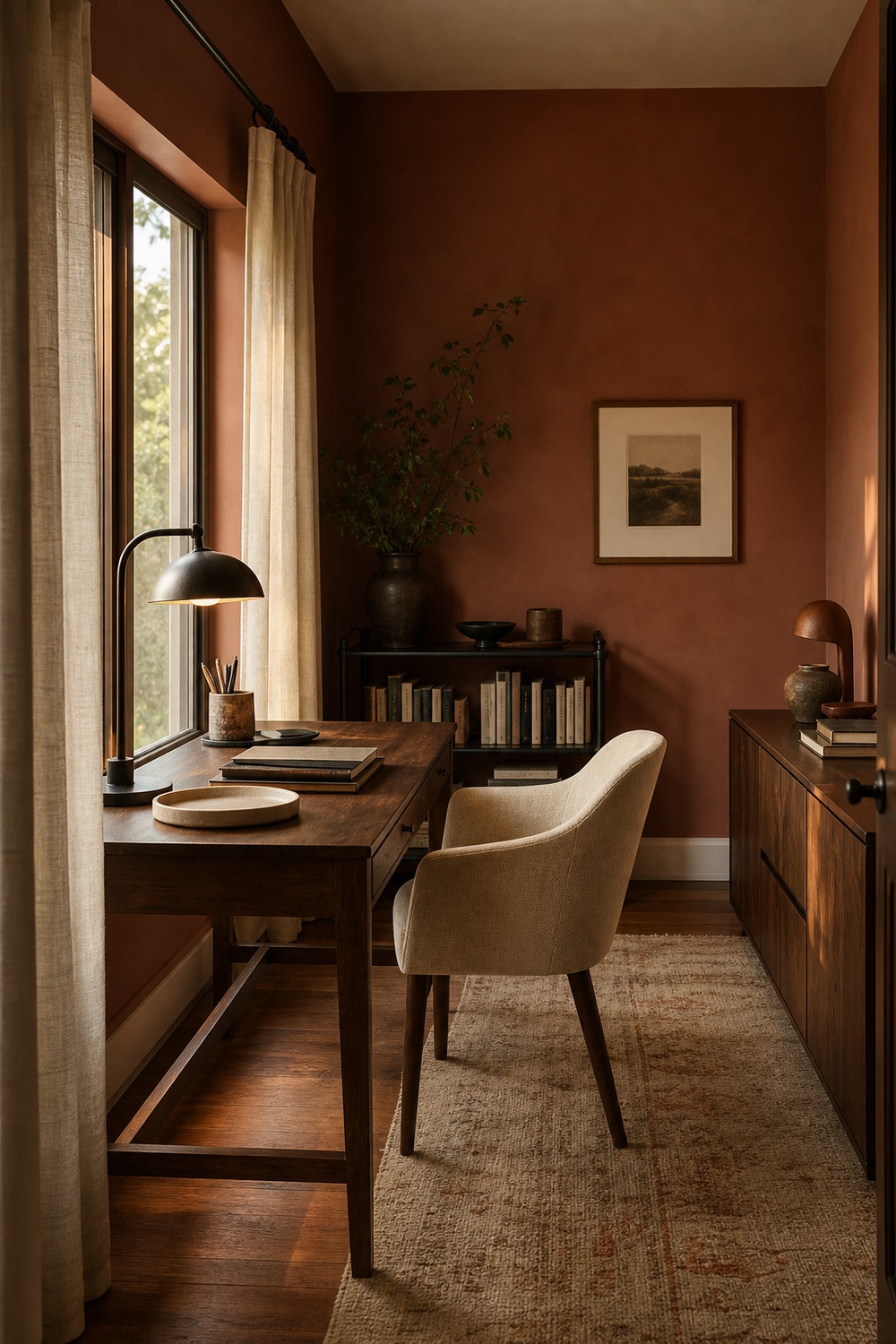
Clay paint brings a warmer personality than another navy or charcoal office. The walnut desk looks richer against it, cream curtains soften the afternoon light, and the little black book trolley keeps reference material close without requiring a wall of built-ins.
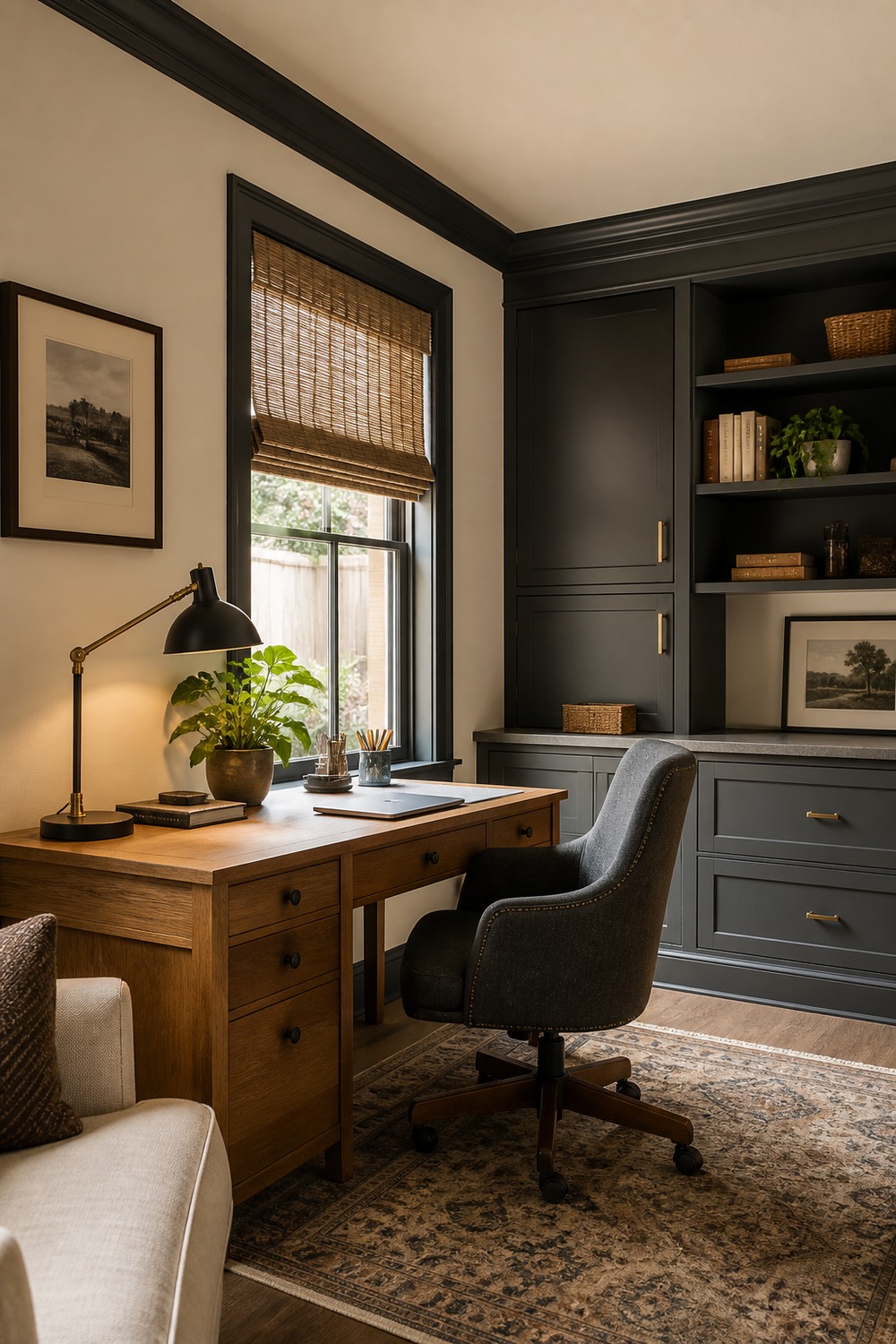
Cream walls with charcoal trim give this office contrast around the architecture instead of over every surface. The oak writing desk stays visually light, and the woven shade plus practical drawers make the room feel residential rather than corporate.
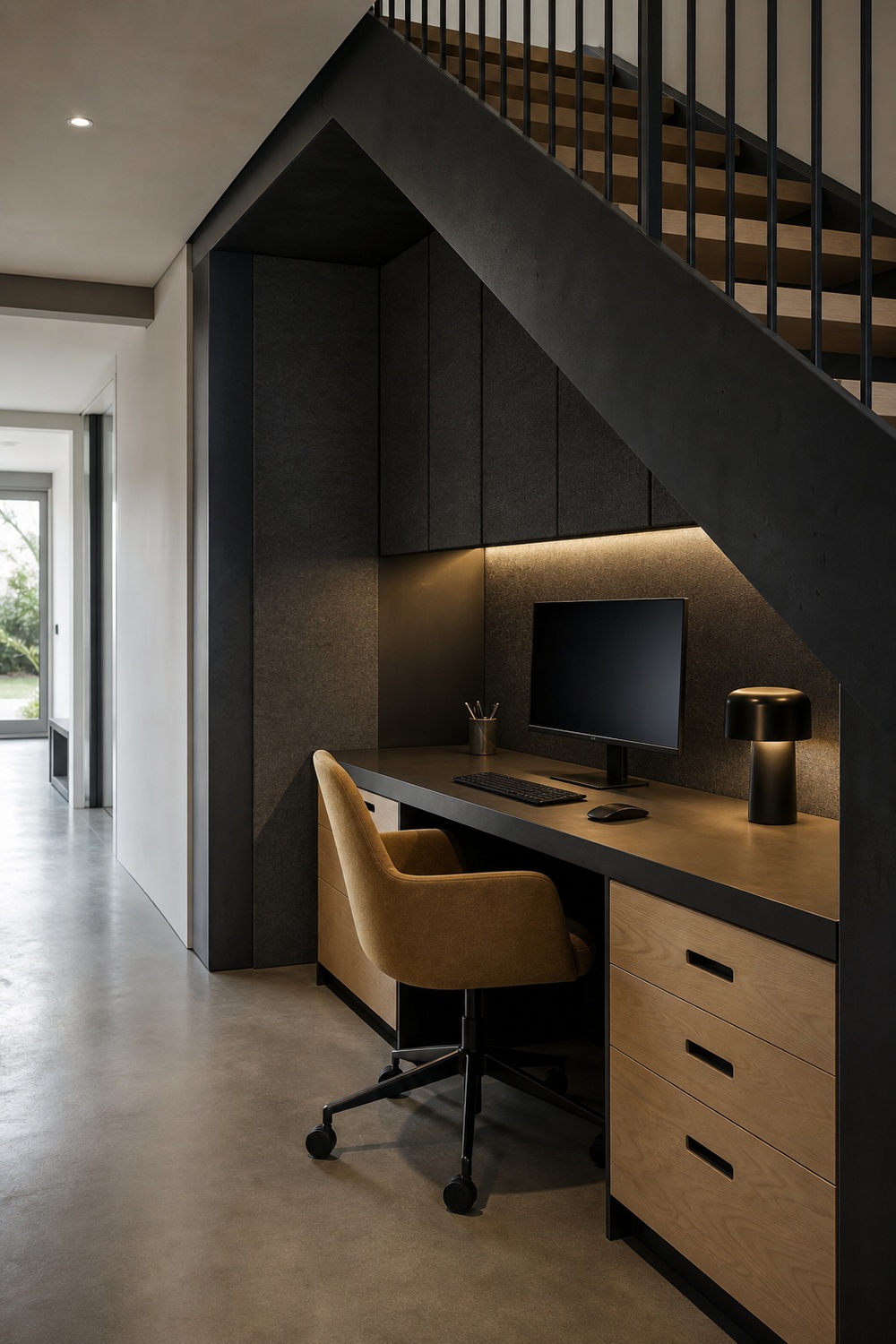
Charcoal felt and blackened steel make the under-stair geometry look intentional, but the birch drawers stop the nook from disappearing into one dark shape. The ochre chair adds a controlled hit of color, and the fitted desk leaves the hallway passage clear.
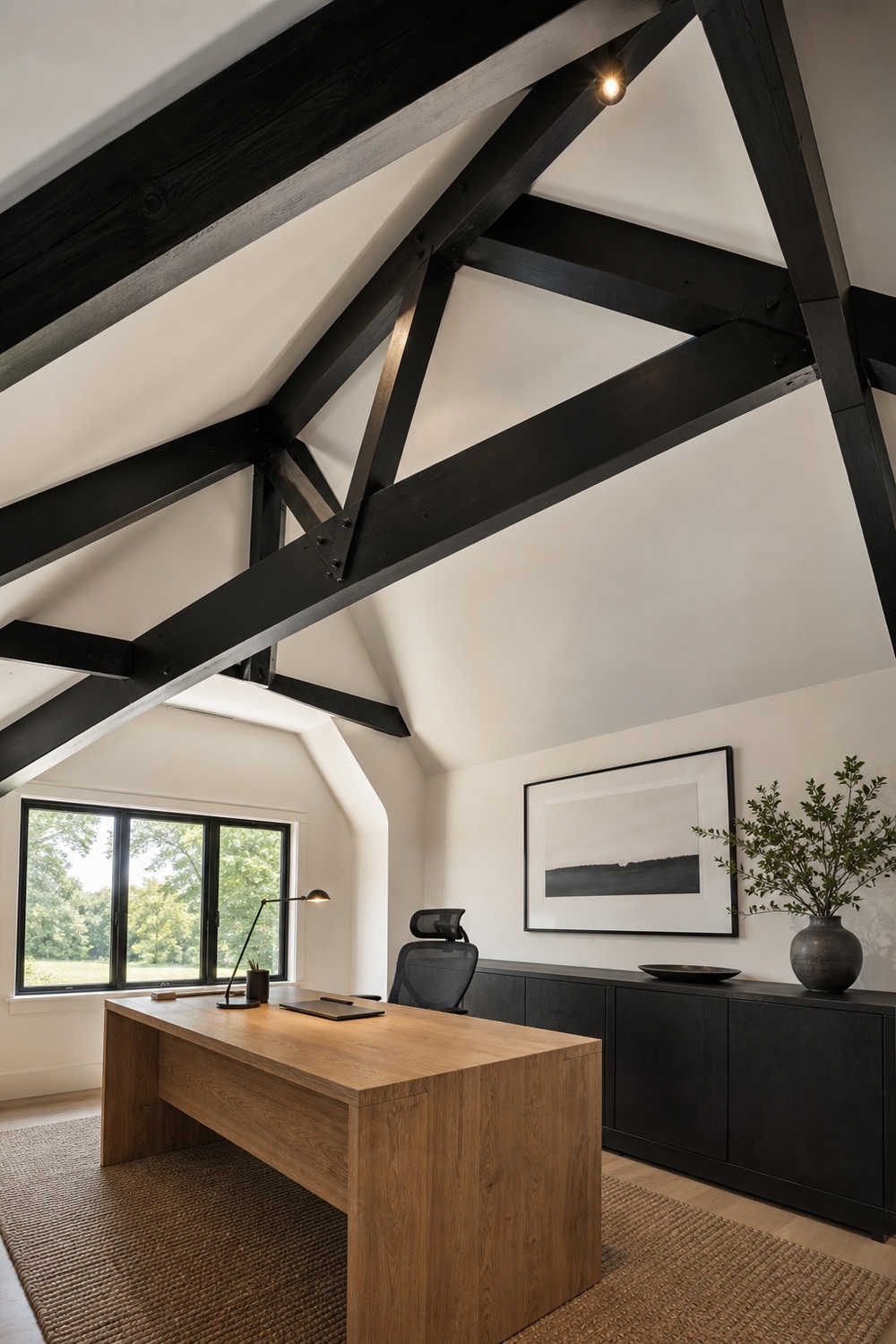
The black ceiling beams give this mostly white office its graphic edge without stealing daylight from the walls. Oak and tan warm the lower half, while the charcoal credenza handles closed storage and keeps the architecture from competing with a cluttered desk.
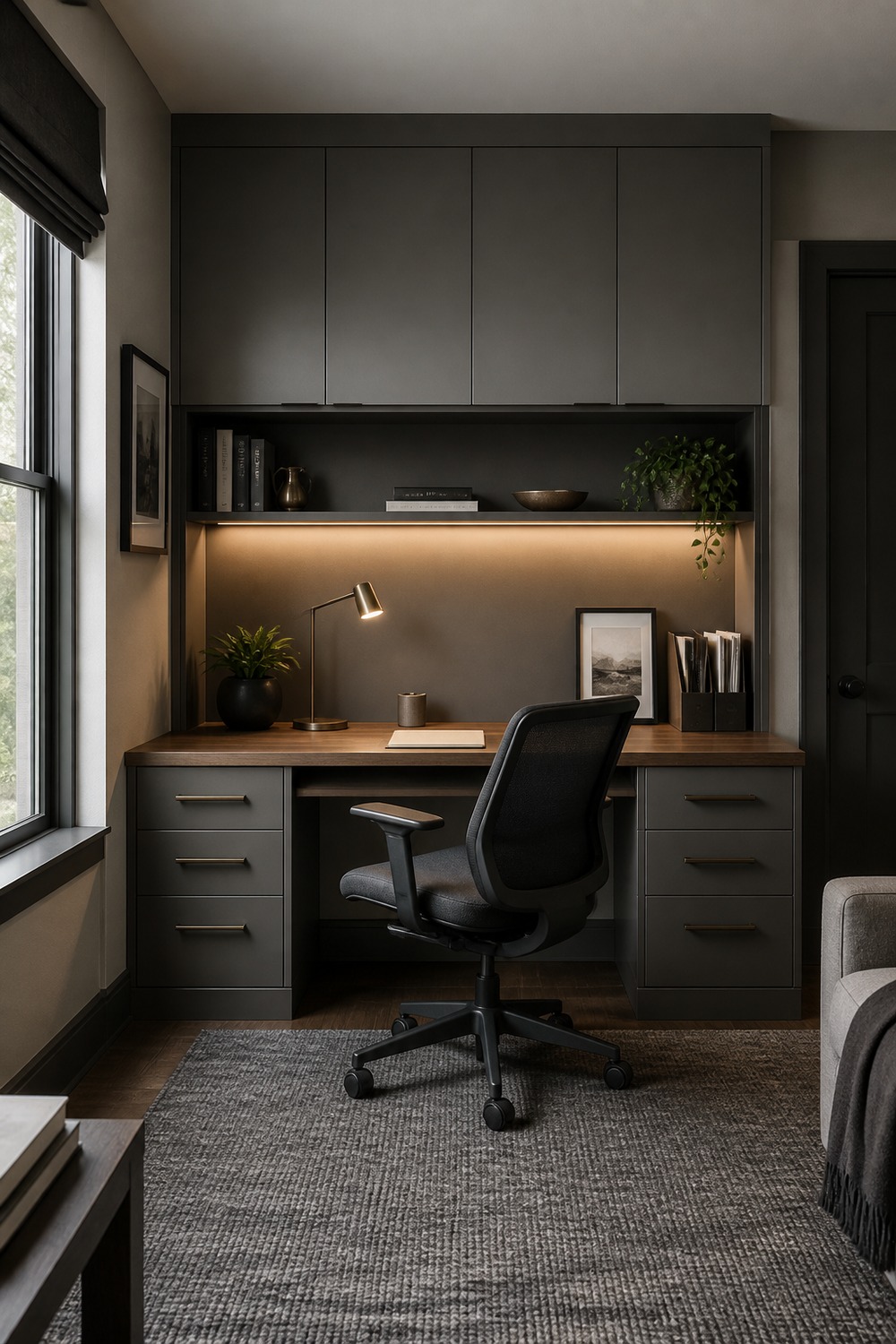
A tonal gray office needs a material break, and the walnut desktop does exactly that. Matching cabinet fronts hide paperwork, the black chair adds a crisp outline, and the restrained palette makes a compact built-in look calmer rather than smaller.
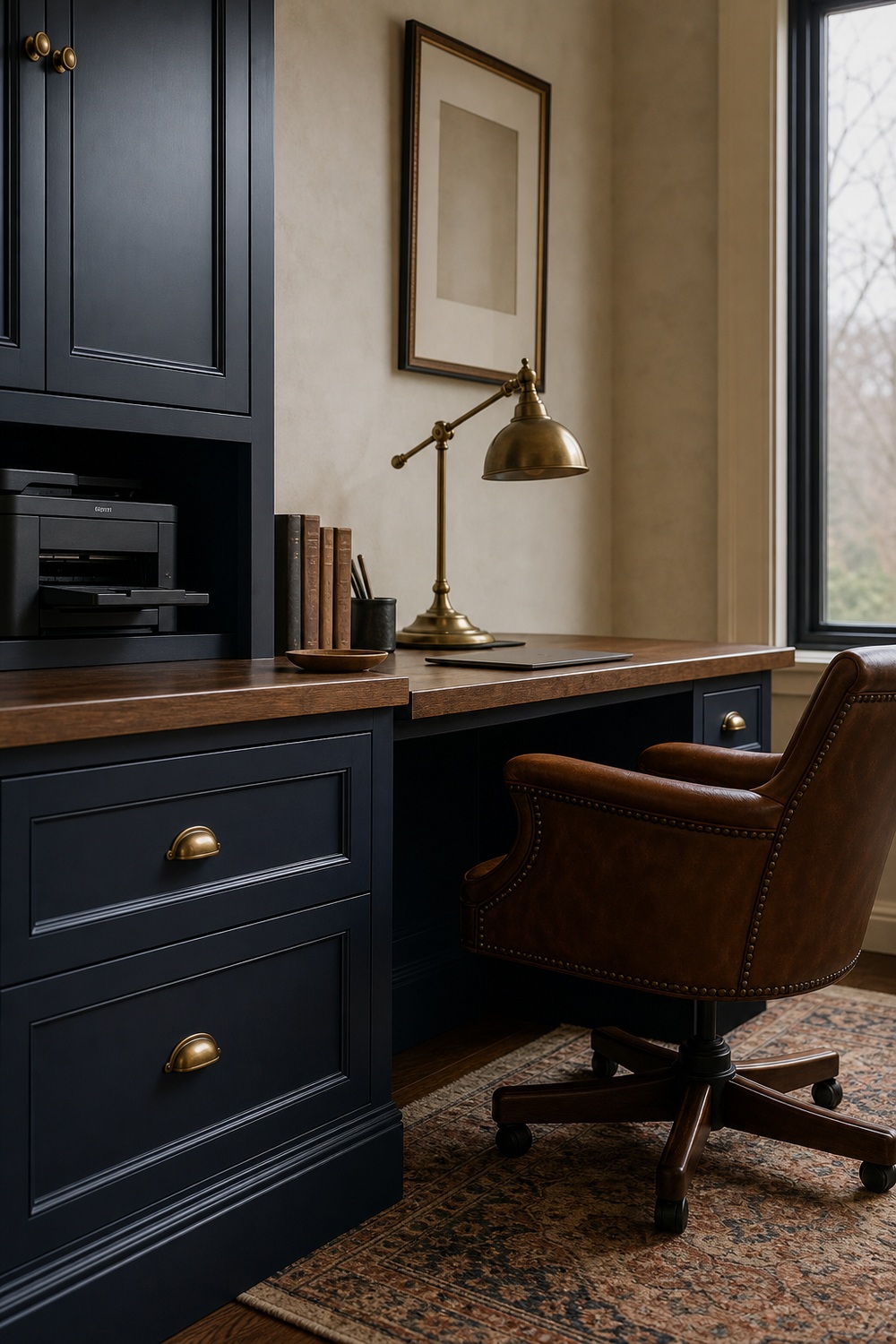
Cream and navy read classic without becoming formal when the view stays close to the working details. A walnut top, aged-brass lamp, and cognac chair soften the cabinetry, while the drawers give the printer and everyday supplies a proper home.
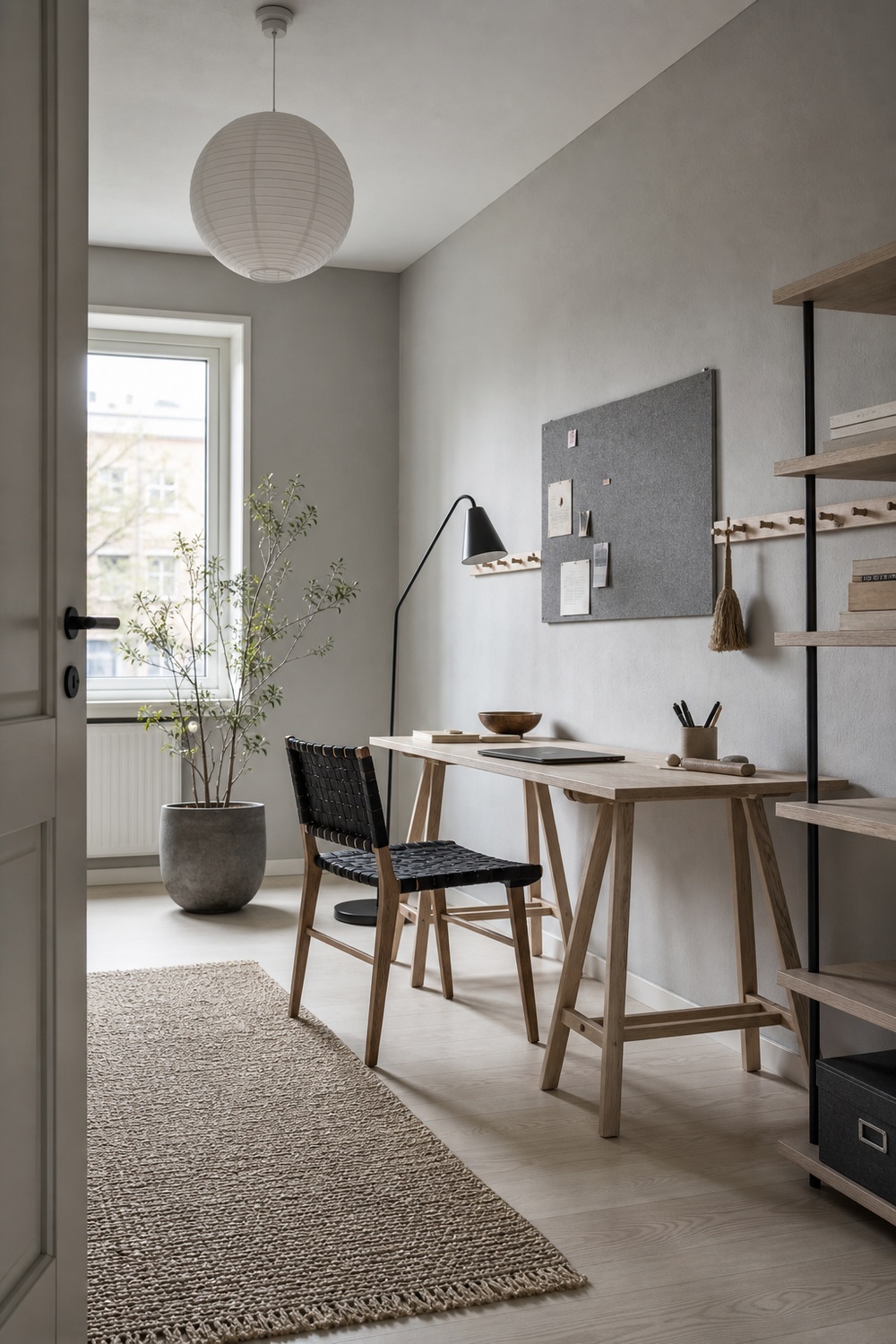
Stone gray and ash wood offer a lighter masculine palette than the dark studies elsewhere in the set. The trestle desk leaves breathing room underneath, the felt board handles loose notes without readable wall art, and the woven black chair adds contrast without bulk.
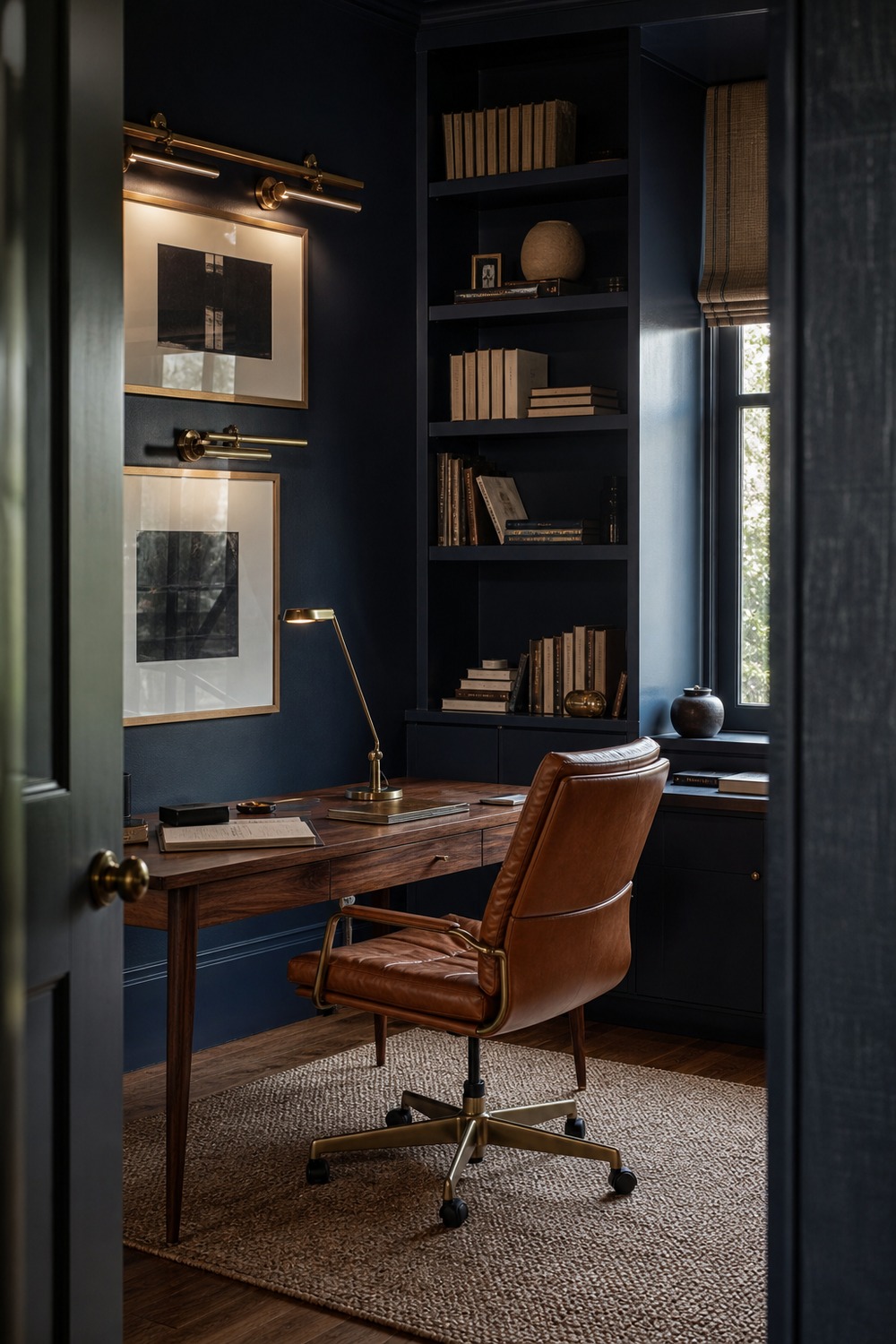
The lacquered blue gives this room real depth, while the narrow walnut desk keeps it from feeling like a heavy old library. Cognac leather and the small brass lights add warmth exactly where the darker walls need it.
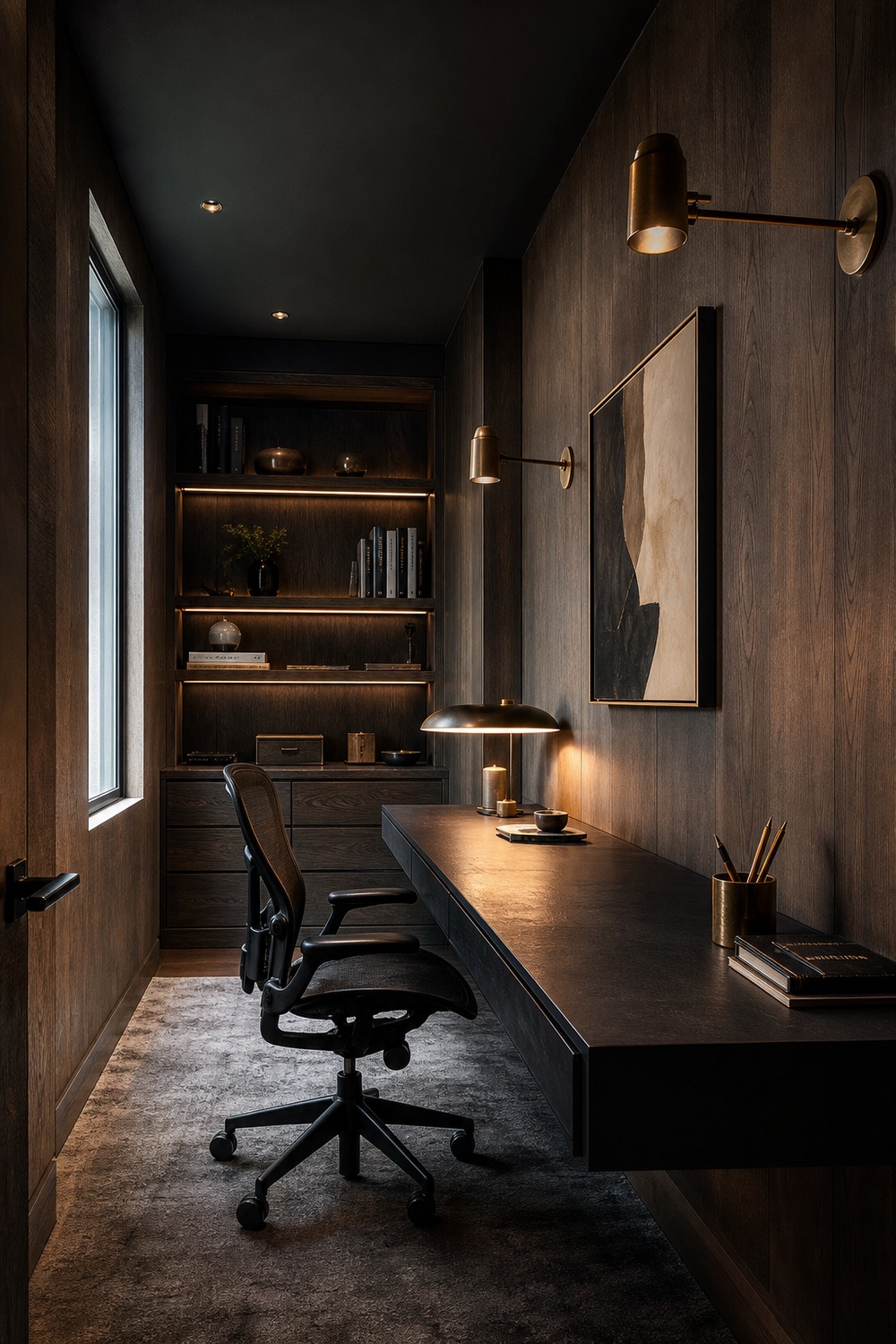
Smoked oak paneling makes a strong backdrop without relying on plain black paint. The floating desk and bronze light keep the floor visually open, which is especially useful in a converted spare room.
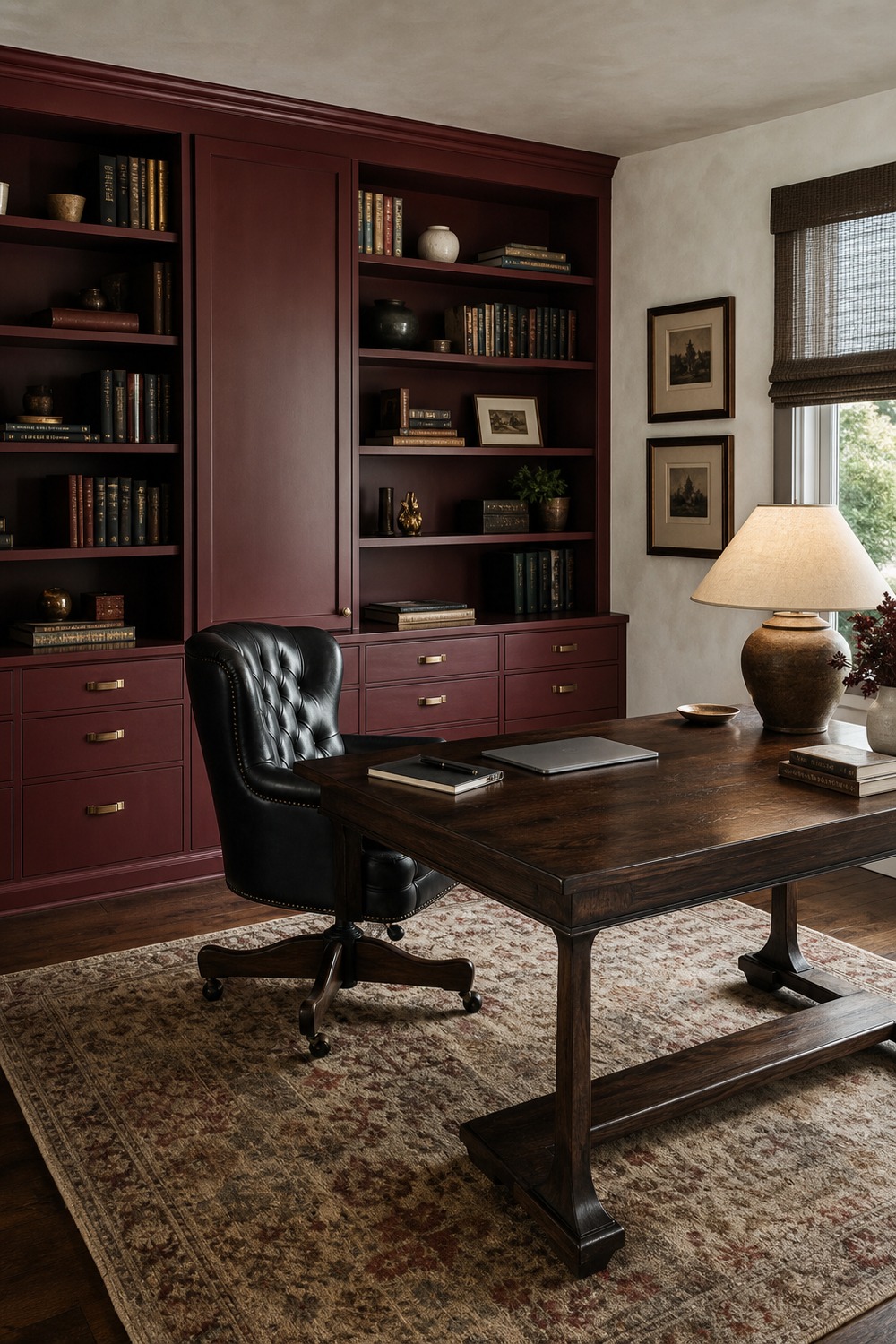
Oxblood is a bold move, but limiting it to the storage wall makes the color feel tailored instead of dramatic. Cream plaster catches the daylight, and the walnut desk bridges the light and dark sides of the room.
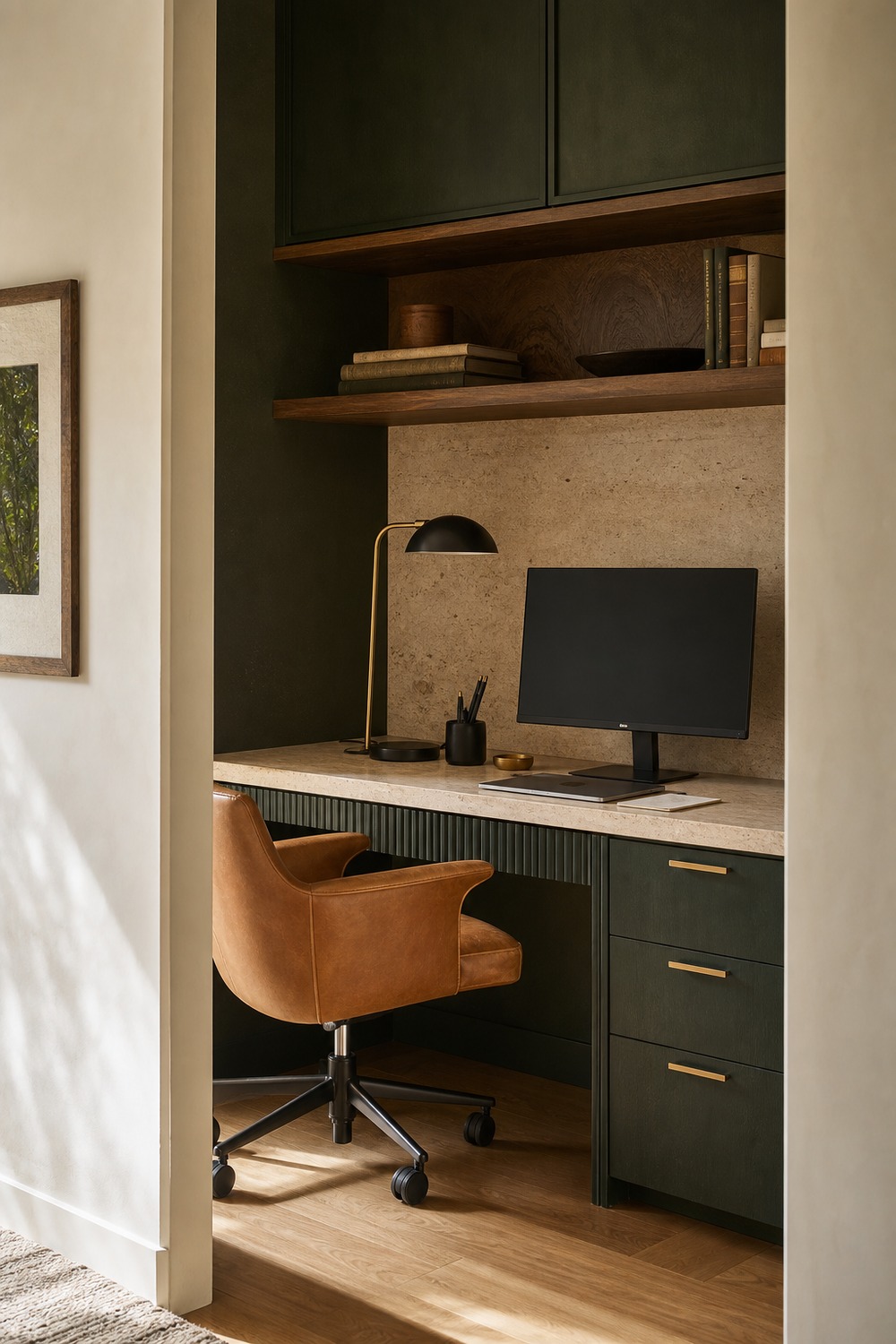
The pale stone desktop is an unexpected partner for the fluted green cabinets. It brightens the alcove, handles a tighter work zone nicely, and lets the camel chair read as a soft accent rather than another dark block.
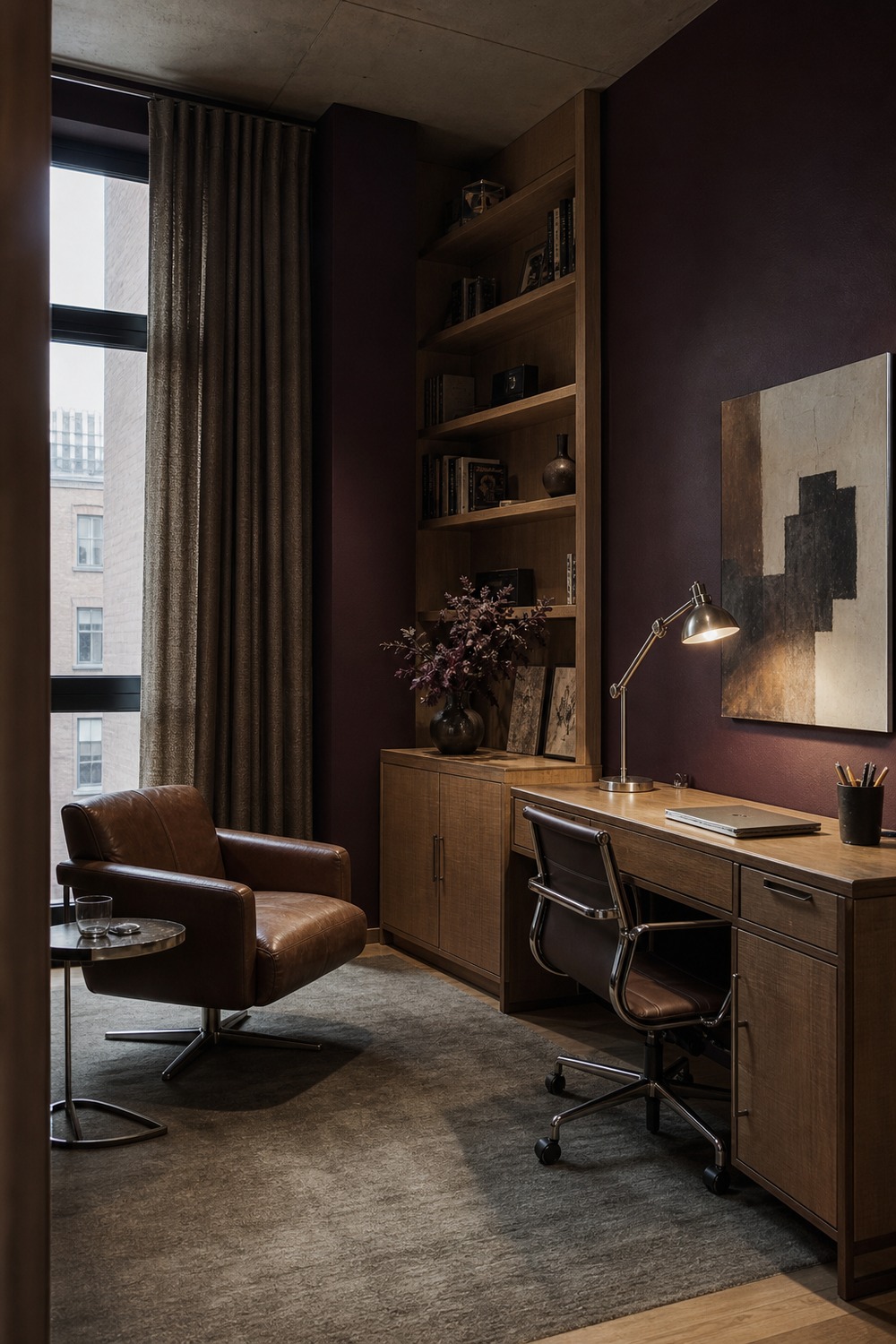
Deep aubergine has the mood of navy but feels much less predictable. Natural oak prevents the corner from going too dark, and the tobacco reading chair creates a second useful zone without turning the office into a lounge.
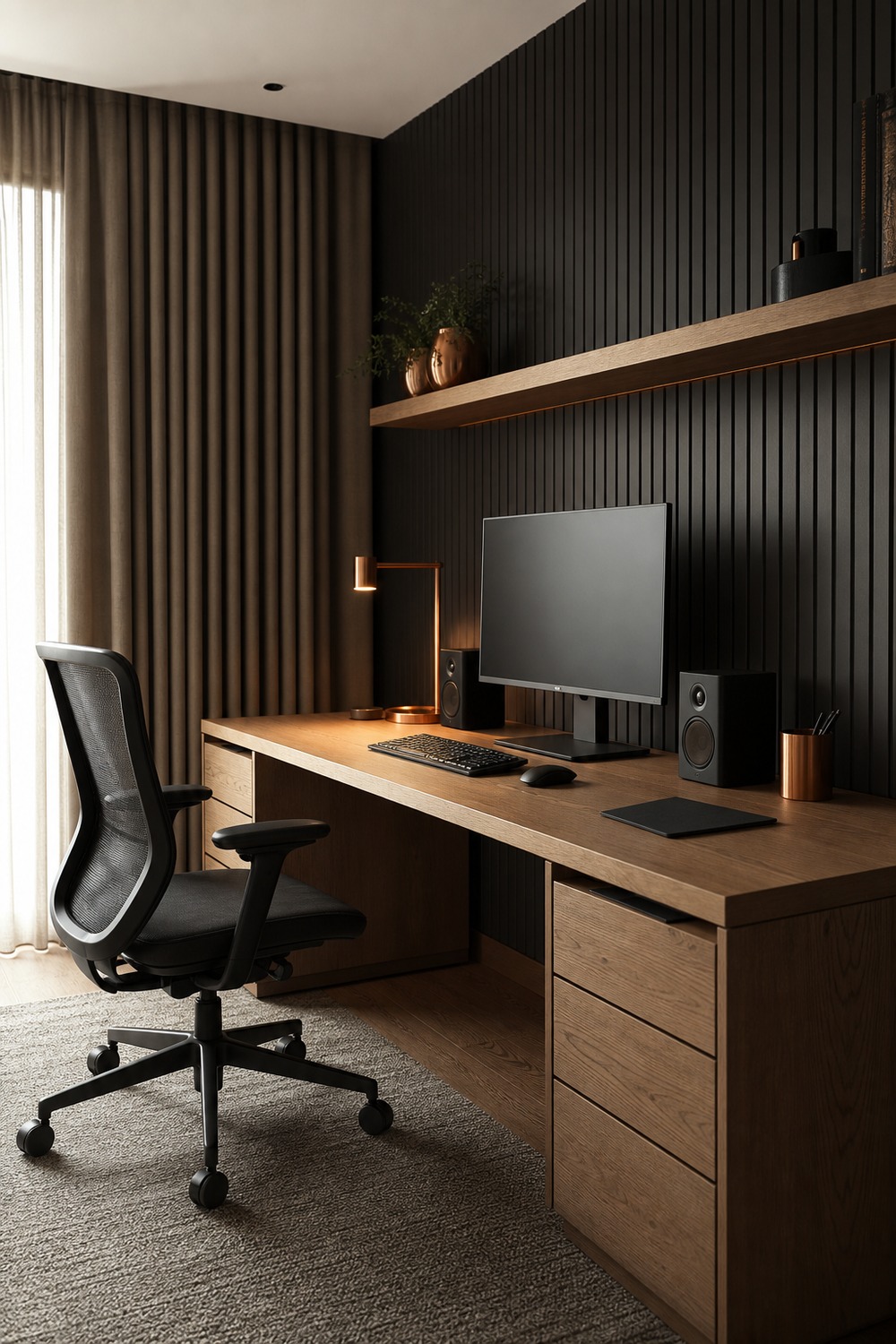
Here the charcoal wall works because the desk wood is genuinely warm. Taupe acoustic curtains soften both sound and contrast, while a few copper details catch the task lighting without adding shiny clutter.
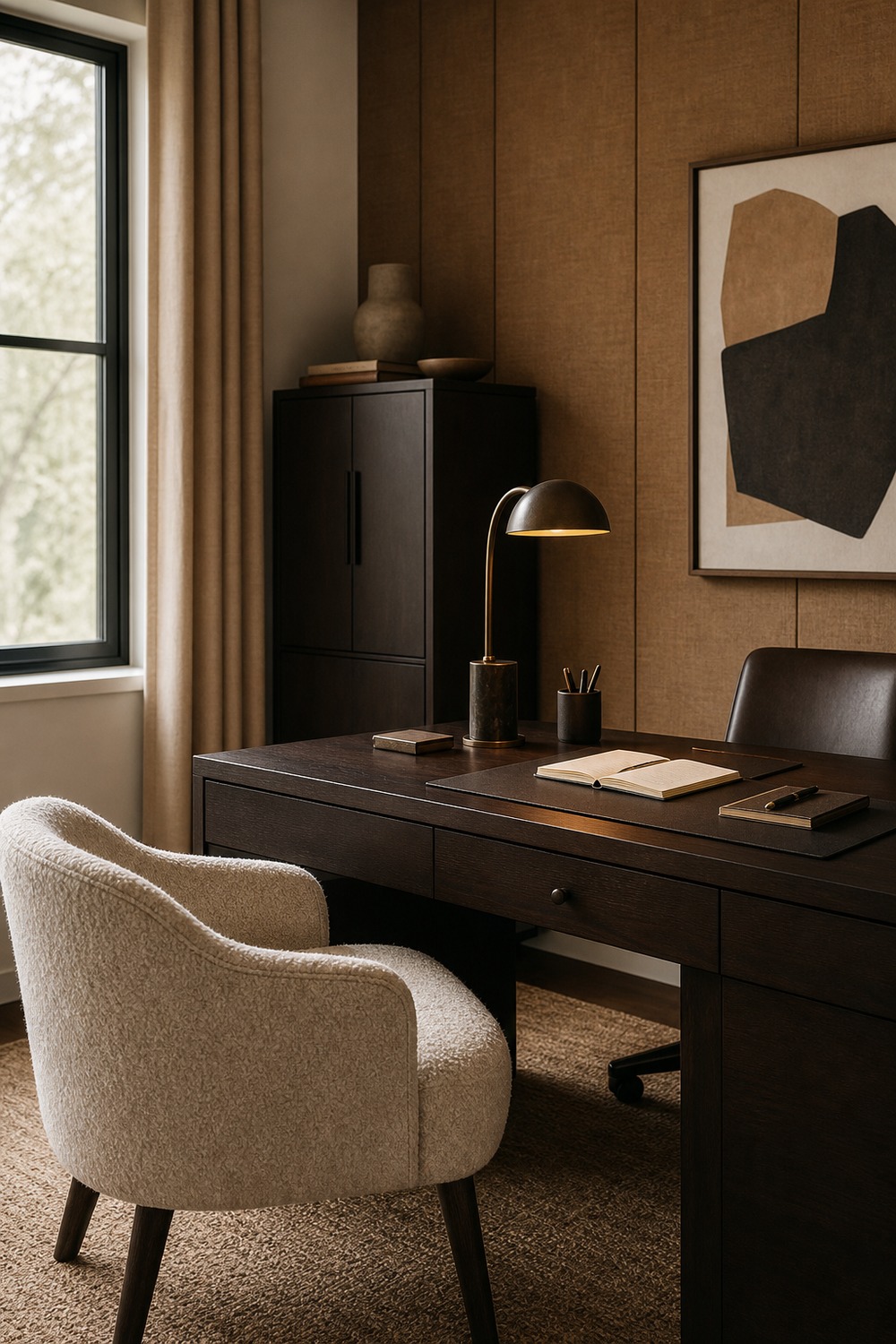
The wool wall panel is doing more than adding color; it brings texture to the camera-facing side of the desk and can help with echo. Espresso wood gives the pale room a firm outline, and the boucle guest chair keeps the palette relaxed.
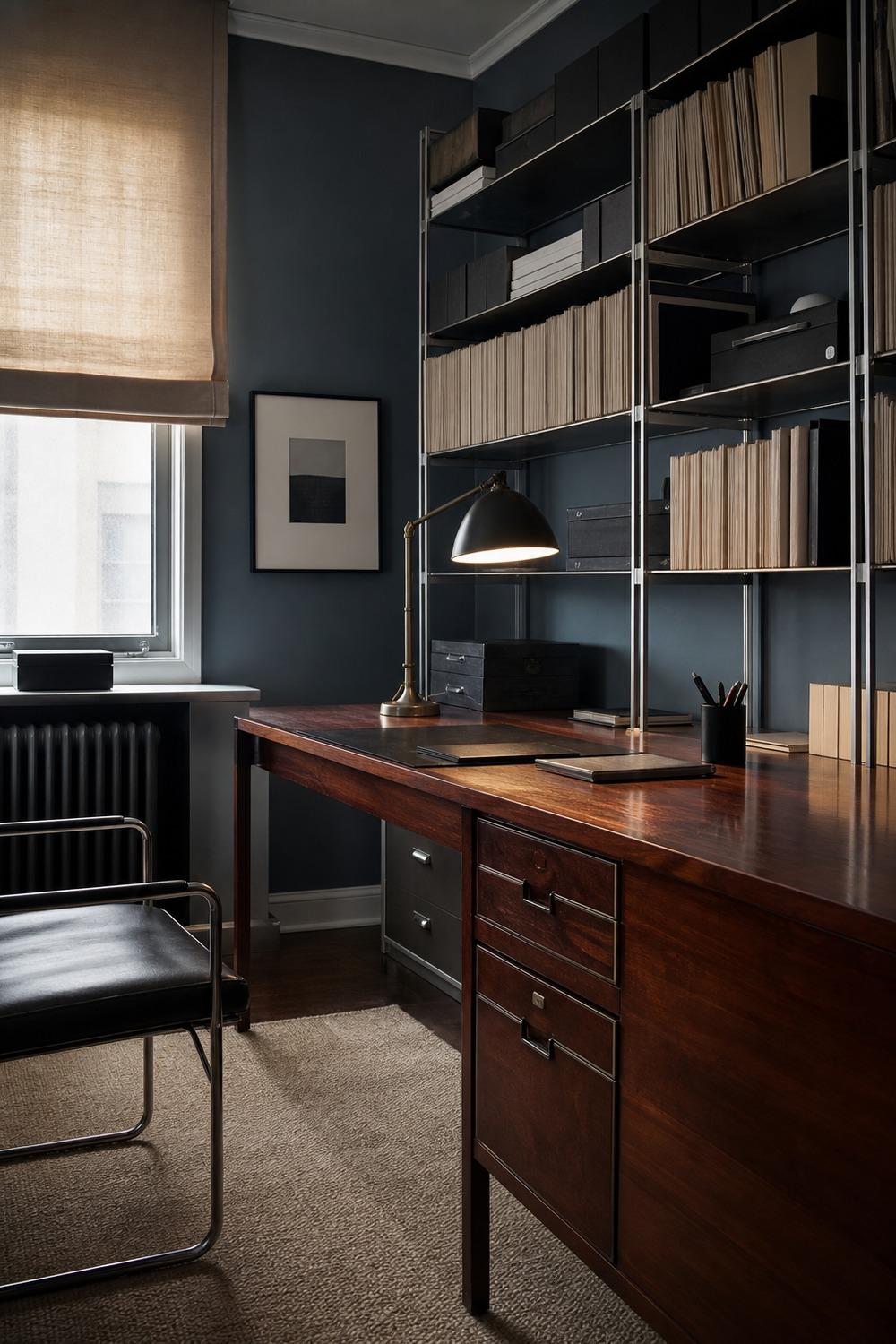
Dark cherry wood can look formal, but the slate-blue wall and slim steel shelves push it in a cleaner direction. The combination feels creative and collected, with drawers handling the mess that open shelving would expose.
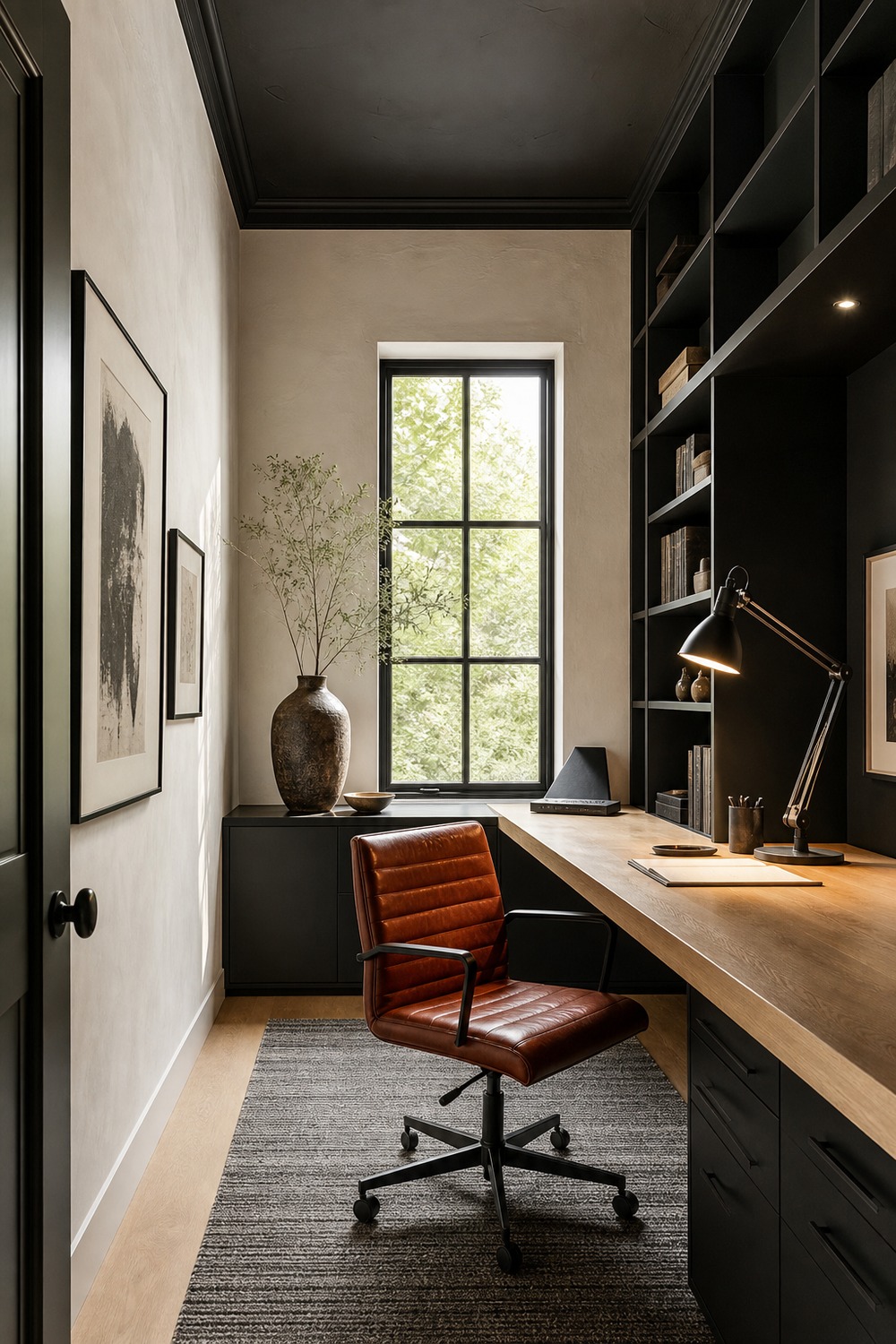
Painting only the ceiling black gives this narrow office a graphic edge while the ivory walls keep daylight moving. Pale oak breaks up the contrast, and full-height storage uses the vertical space without crowding the desk.
Leave a comment