
A cozy home office does not need to be beige from floor to ceiling. The best color schemes balance a restful wall color with enough wood, contrast, and warm light to keep the desk from feeling flat or sleepy.
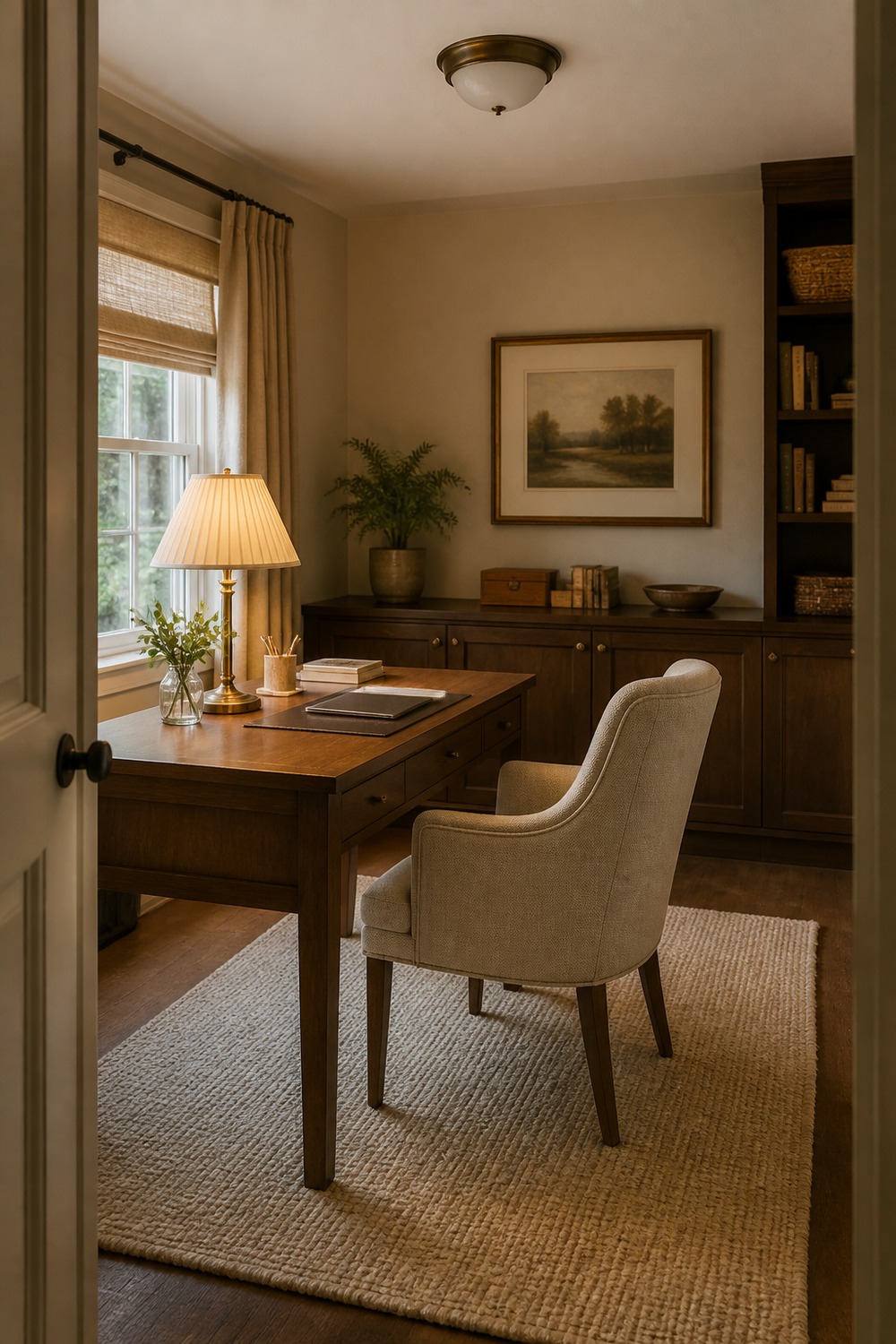
Cream walls let the walnut desk and cabinet fronts do the warming here. The linen chair, wool rug, and shaded lamp soften the harder work surfaces, while closed storage keeps the quiet palette from being interrupted by paper clutter.
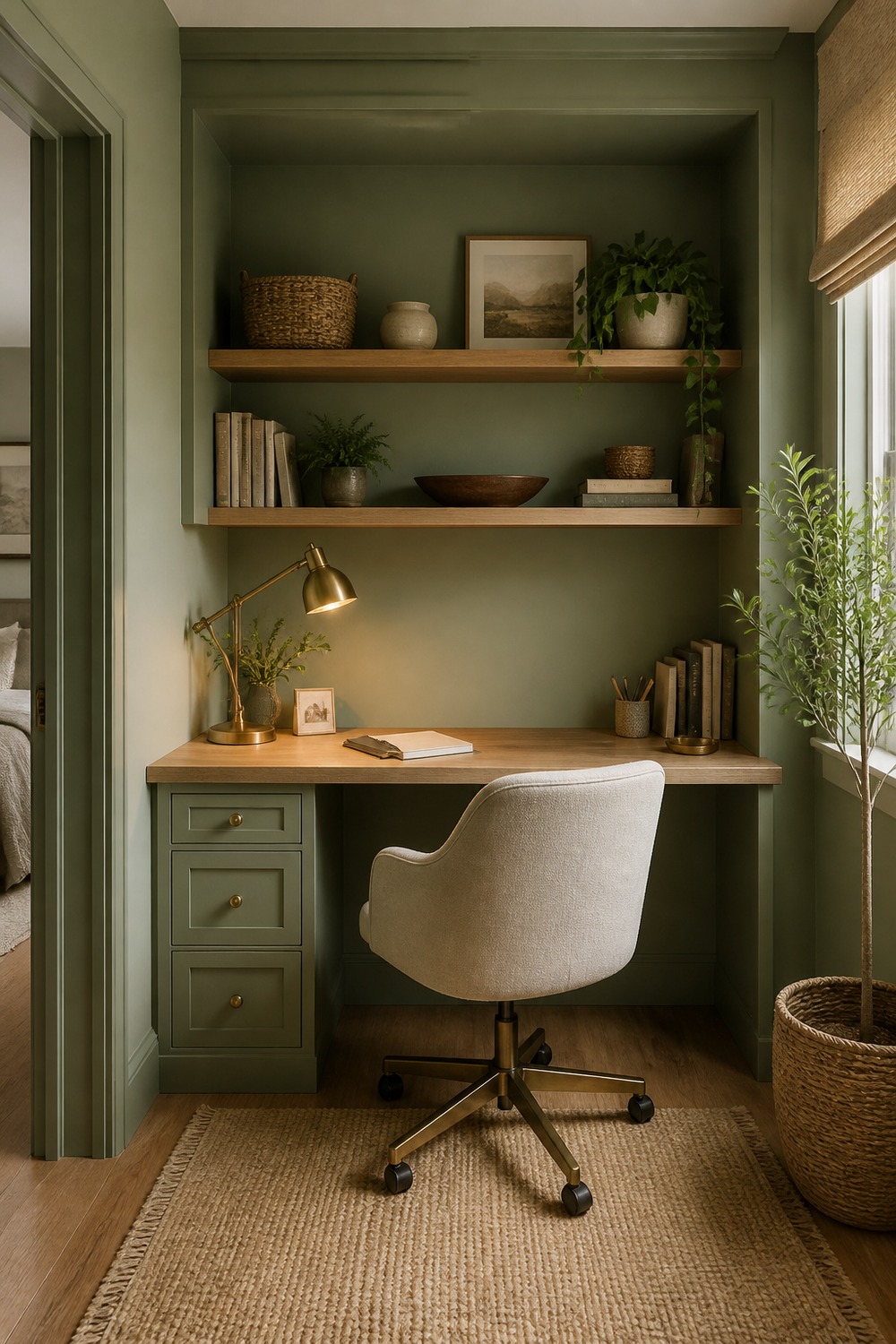
Sage green is especially good in a small nook because it adds color without closing in the alcove. Oak shelves lift the darker paint, and the woven basket gives chargers and loose supplies somewhere to disappear at the end of the day.
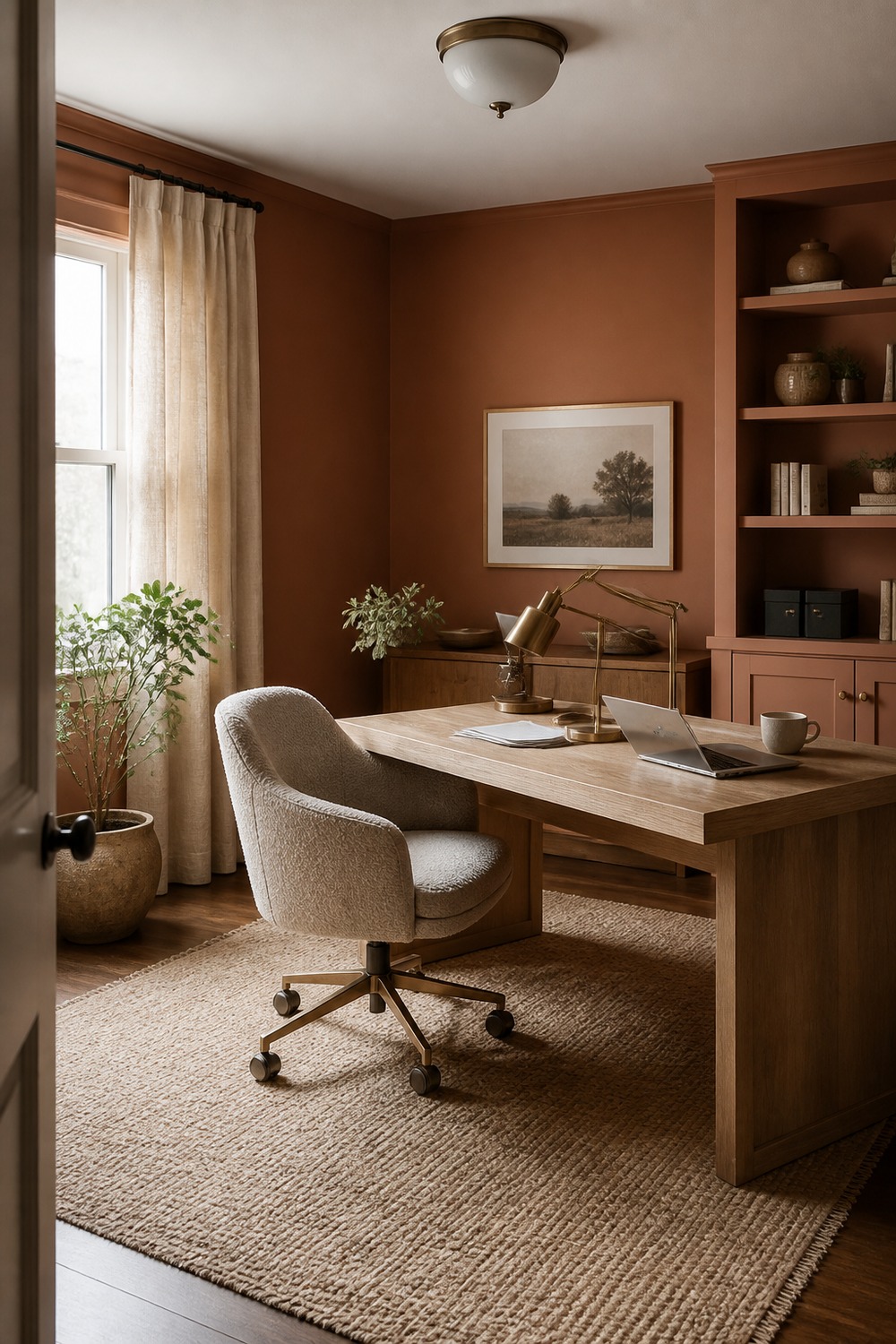
Terracotta could easily overwhelm a compact office, but the beige curtains and pale rug calm it down. I like the natural wood desk against this shade; it keeps the room earthy instead of making the wall color feel loud.
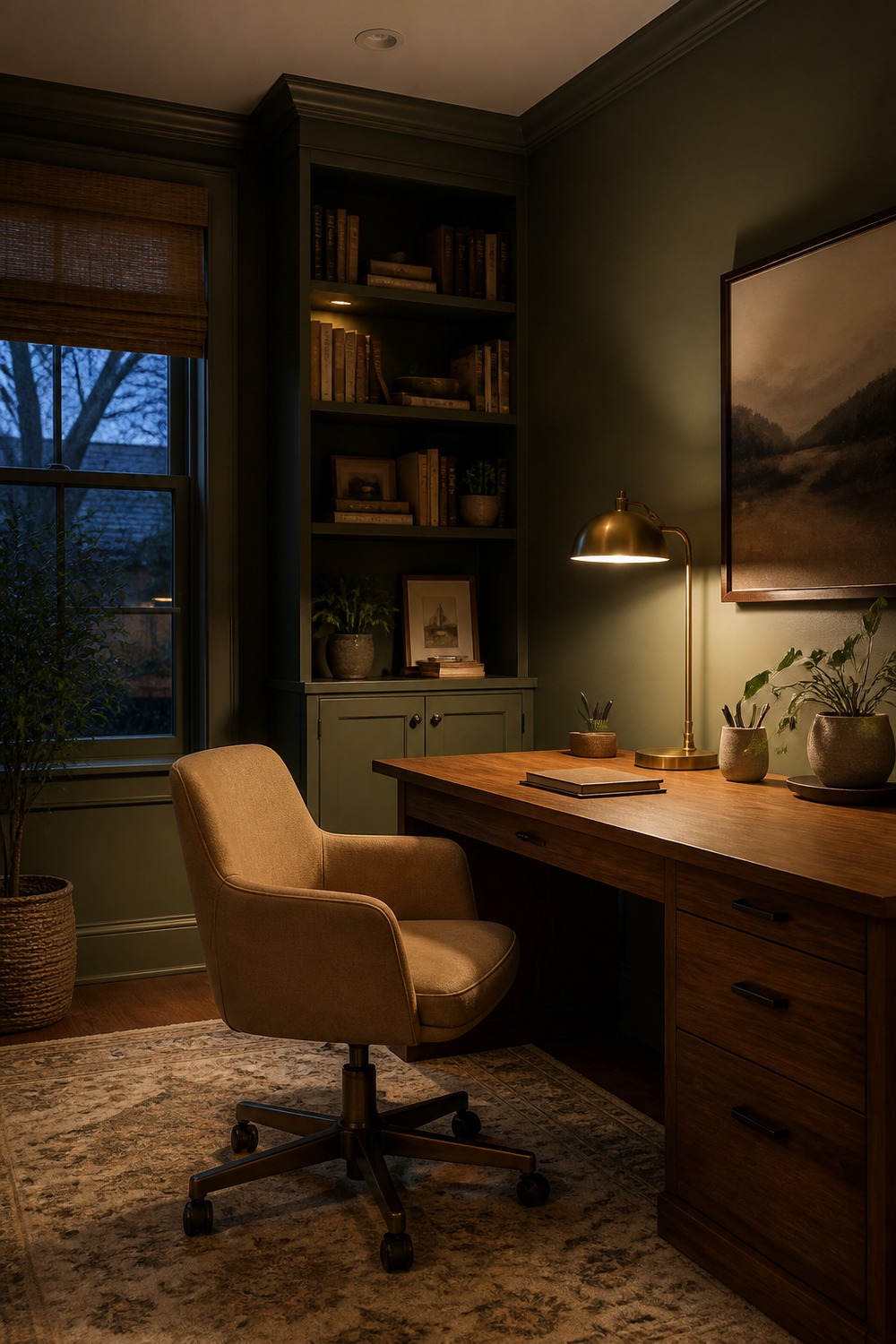
Olive walls get much moodier after sunset, so the amber task lamp matters as much as the paint. Walnut shelving and the tan chair hold onto enough warmth that the corner feels focused, not cave-like.
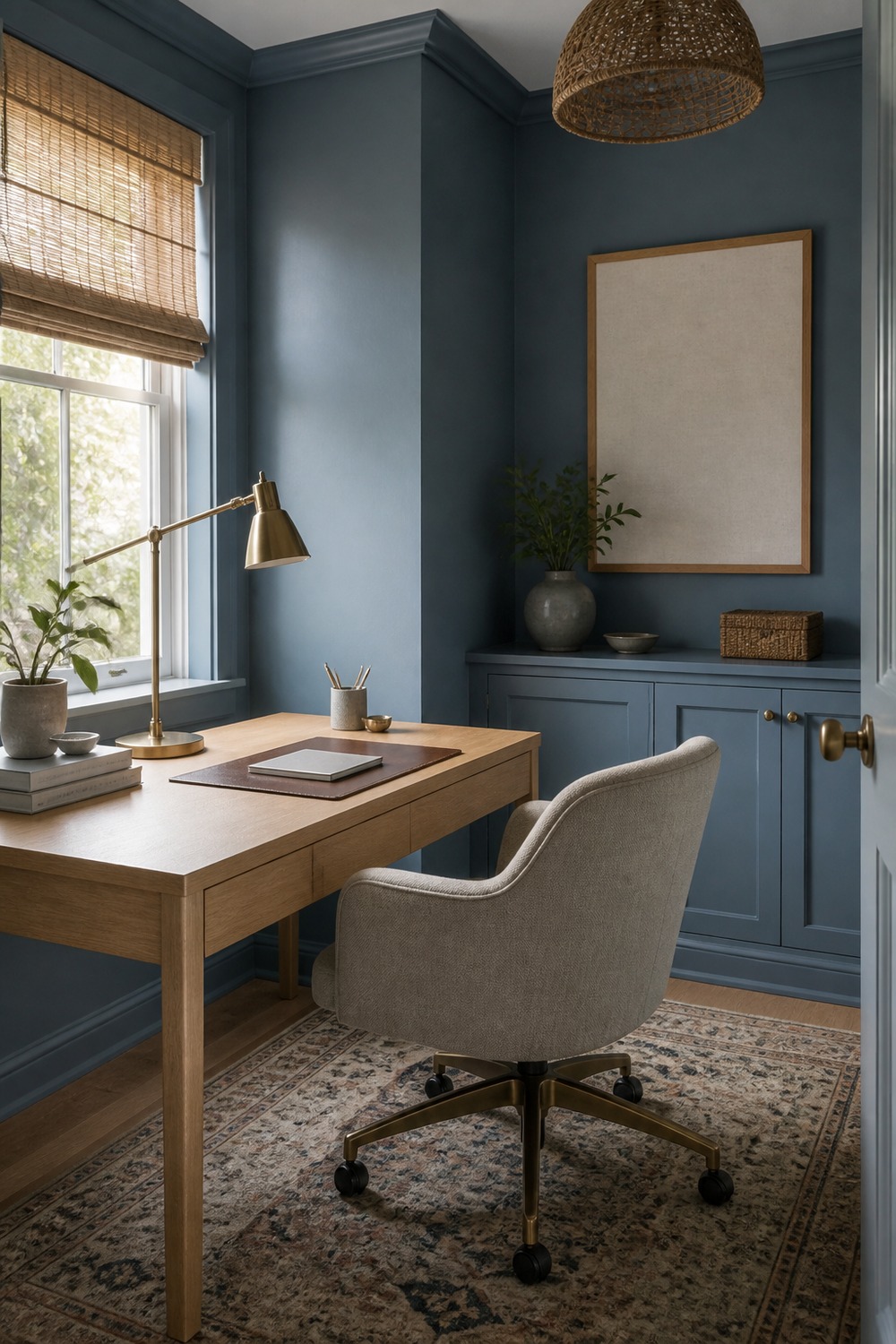
Dusty blue gives this work corner a cooler base, while the pale oak desktop stops it from becoming chilly. A woven shade filters the window glare, and the small cabinet handles the practical things that would otherwise crowd the desk.
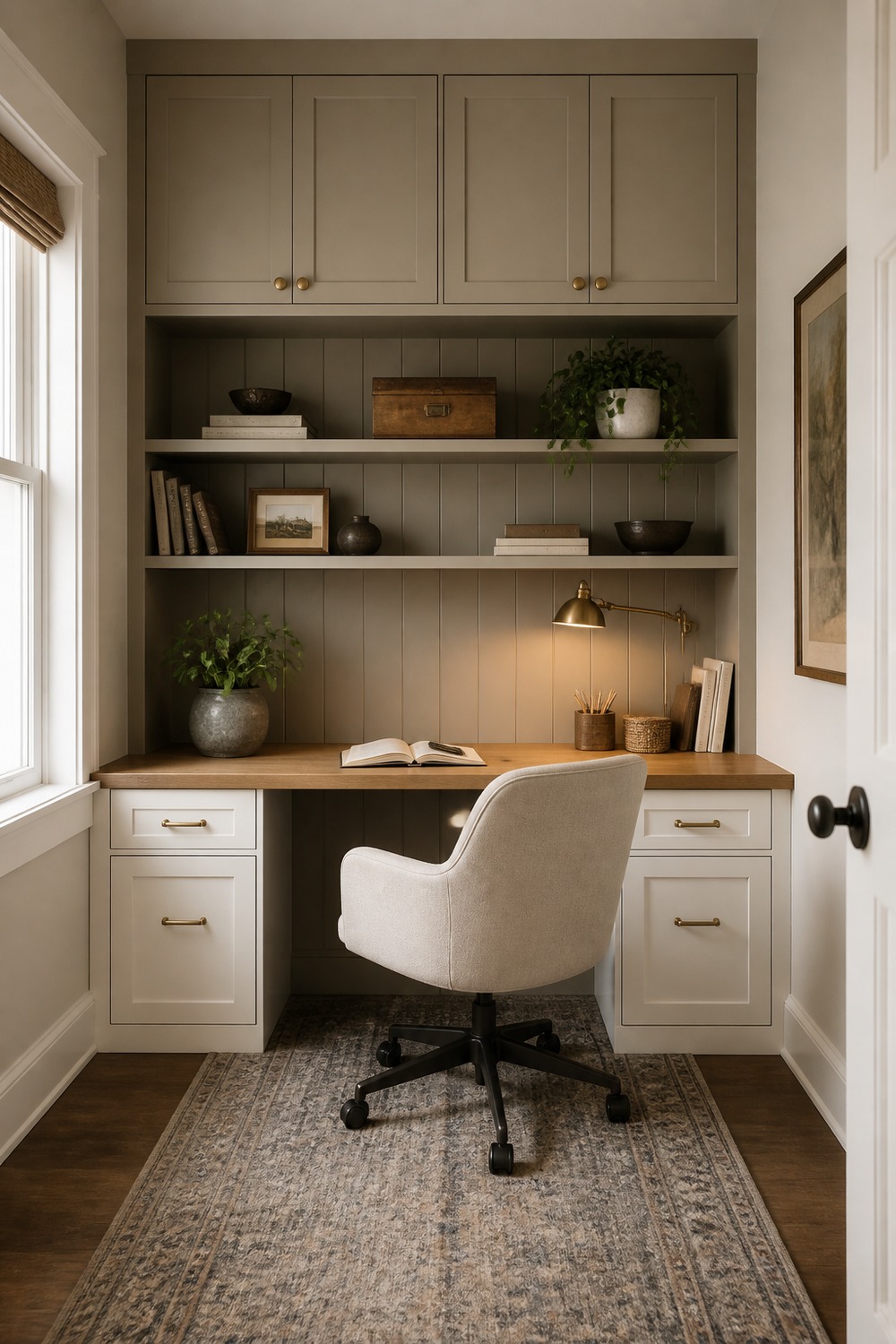
Greige works best when there is visible texture, and this built-in has plenty of it. The oak counter, brass light, and patterned runner break up the cabinetry, while the drawers create a clean background for video calls.
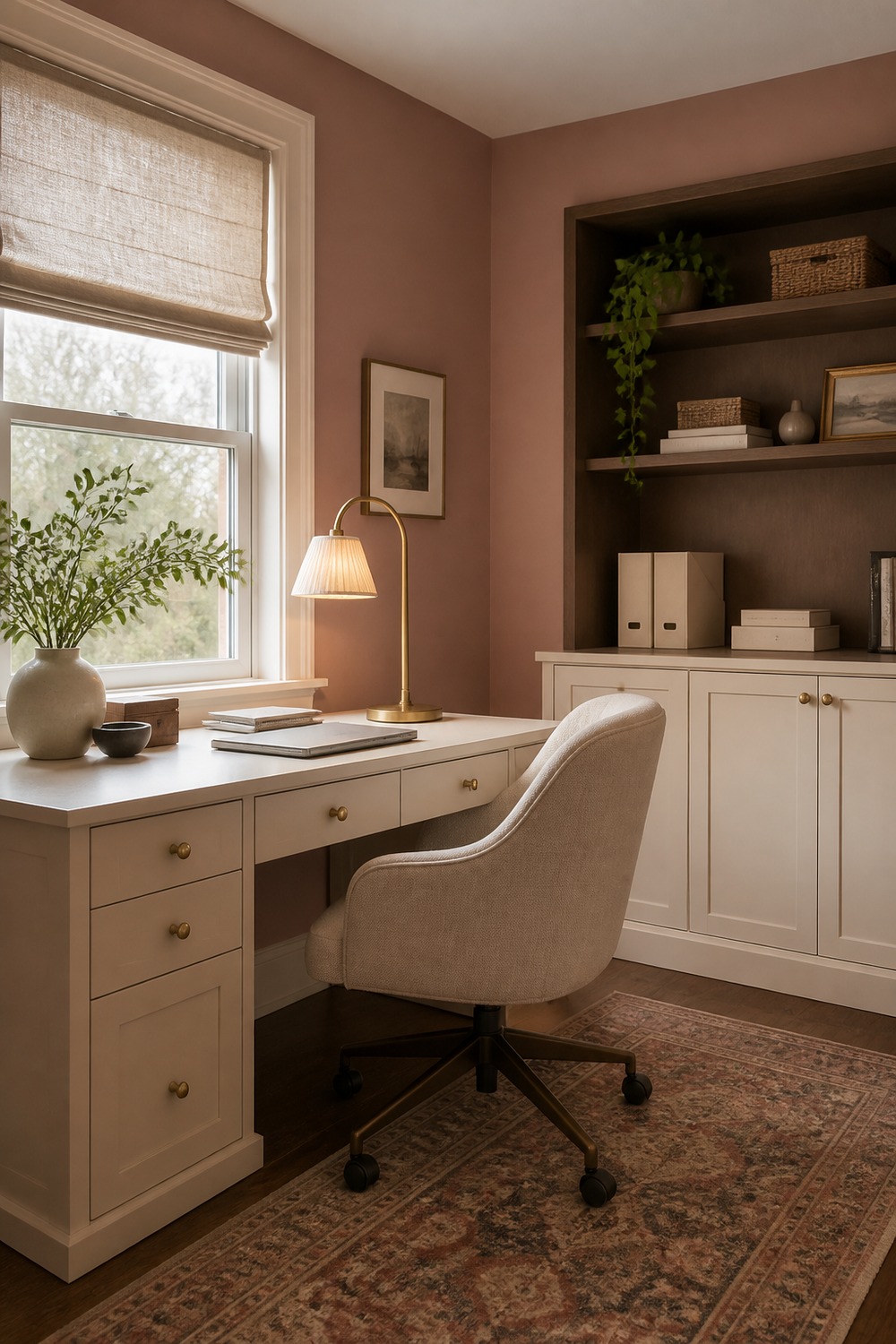
Muted clay pink feels much more usable than a sugary blush. Cream cabinetry and a walnut shelf give it structure, and the linen shade keeps the daylight soft enough for a screen-facing desk.
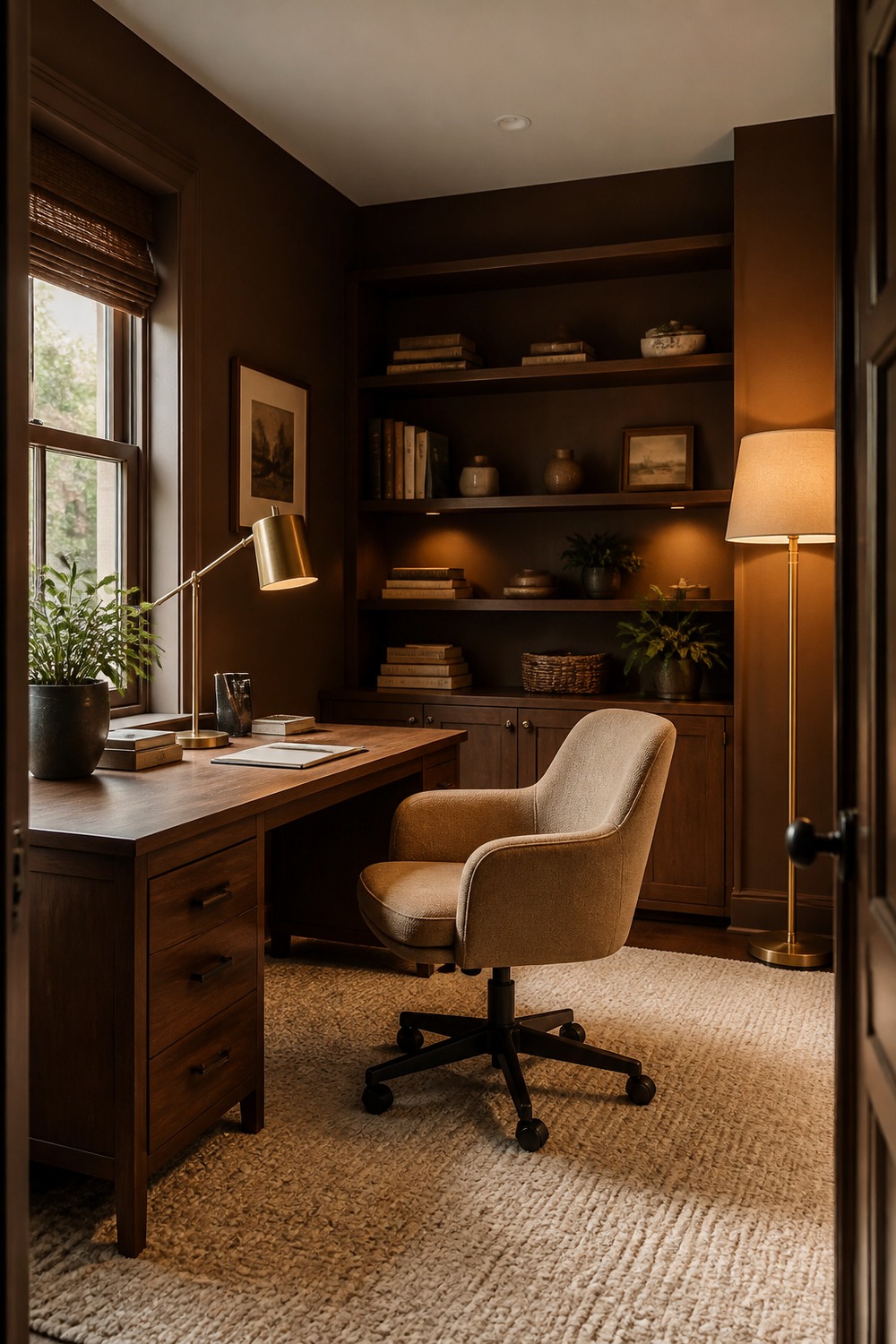
The cocoa walls make this study feel wrapped up and quiet. A cream rug and upholstered chair prevent the dark wood from stacking too heavily, while the floor lamp brightens the reading side of the room separately from the desk.
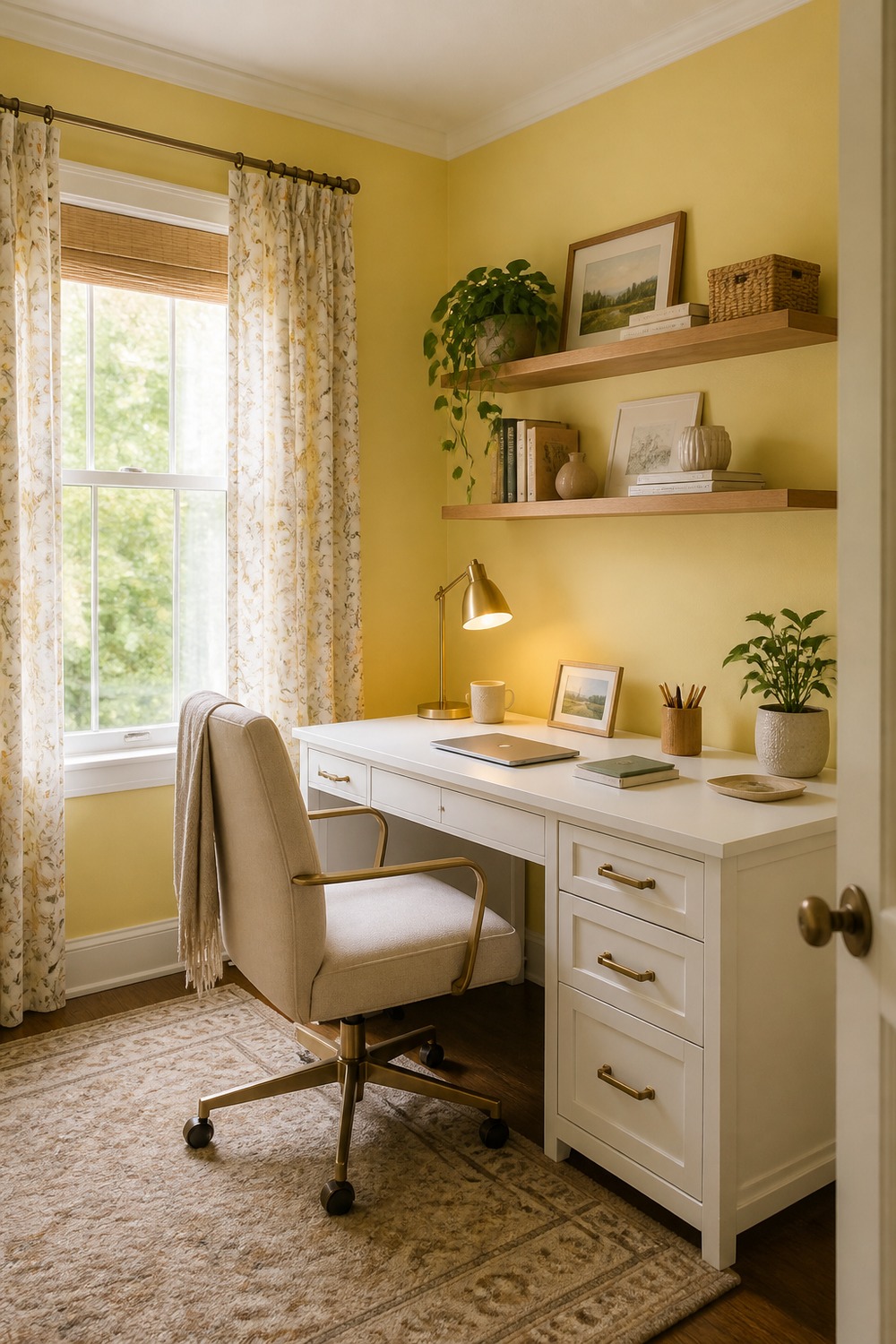
Butter yellow is cheerful without needing lots of extra decor. White drawers keep the desk visually light, and the floral curtains bring in a few softer colors so the wall does not read as one big block of yellow.
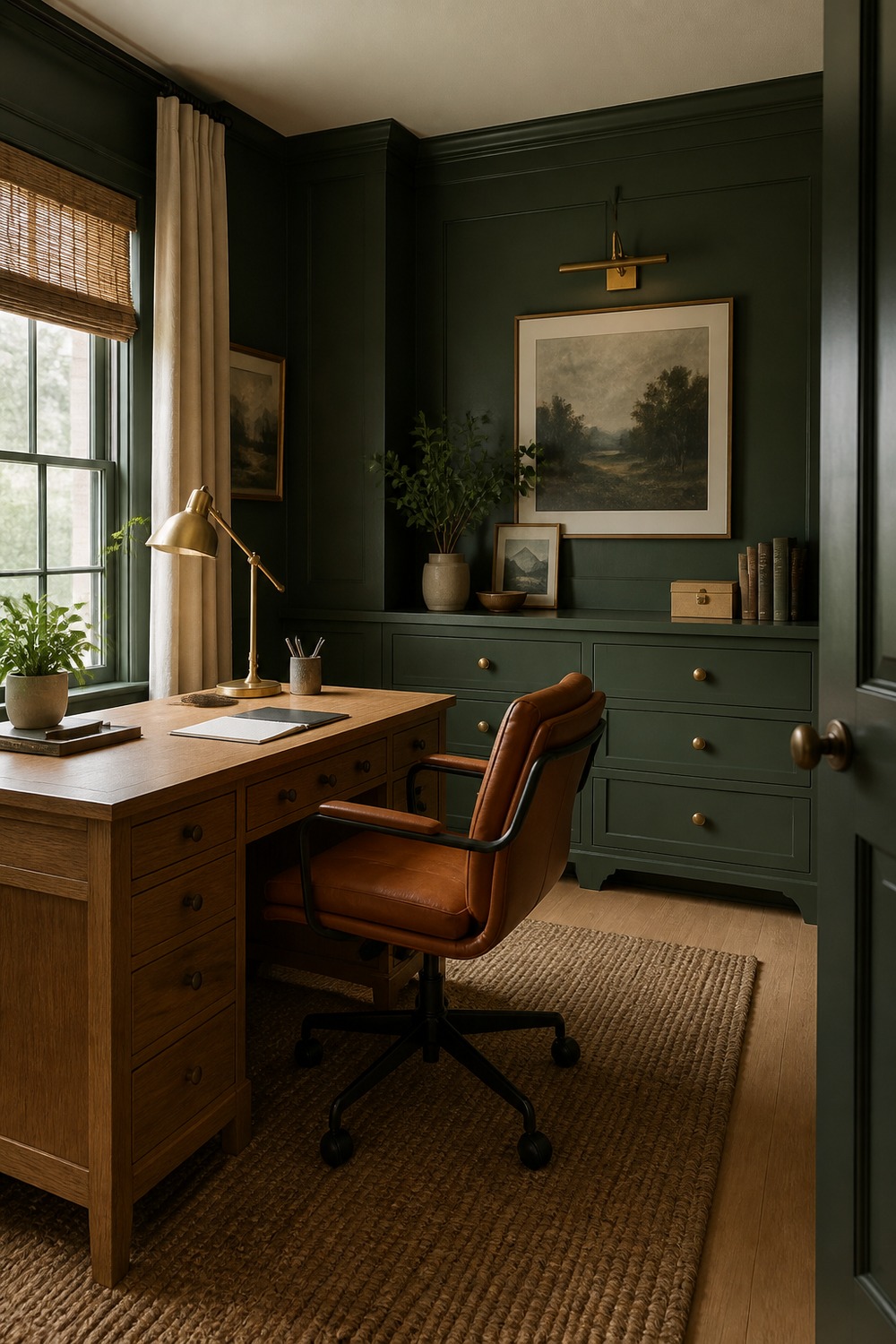
Forest green paneling gives the desk wall real depth, especially beside cognac leather and oak. Brass lighting catches the darker surfaces, and the closed lower drawers make this rich palette practical for everyday files and tech.
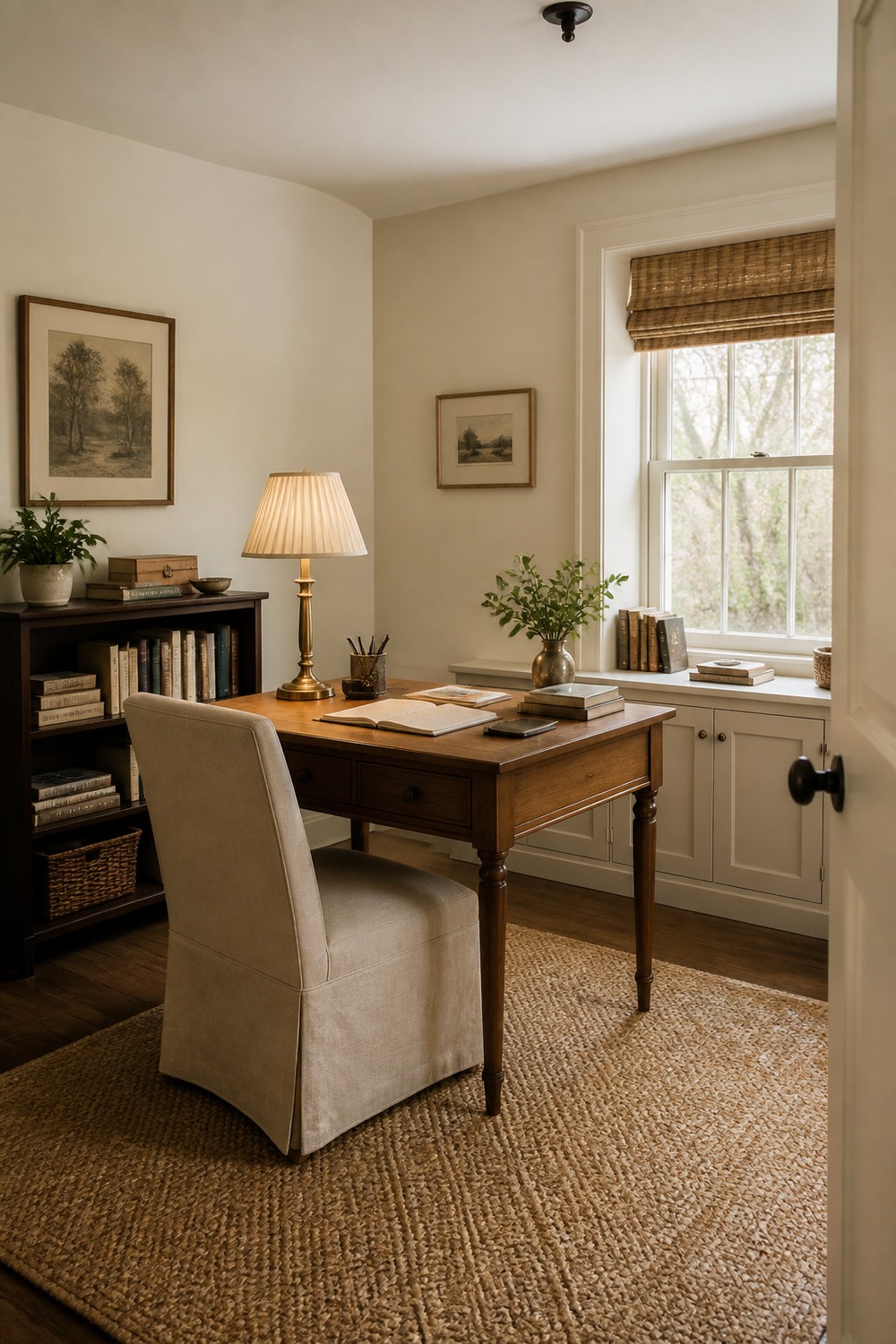
Warm white is doing more than looking neutral here. It reflects the window light around the cottage-style room, then the vintage wood desk, pleated shade, and natural-fiber rug add enough age and texture to keep it from feeling blank.
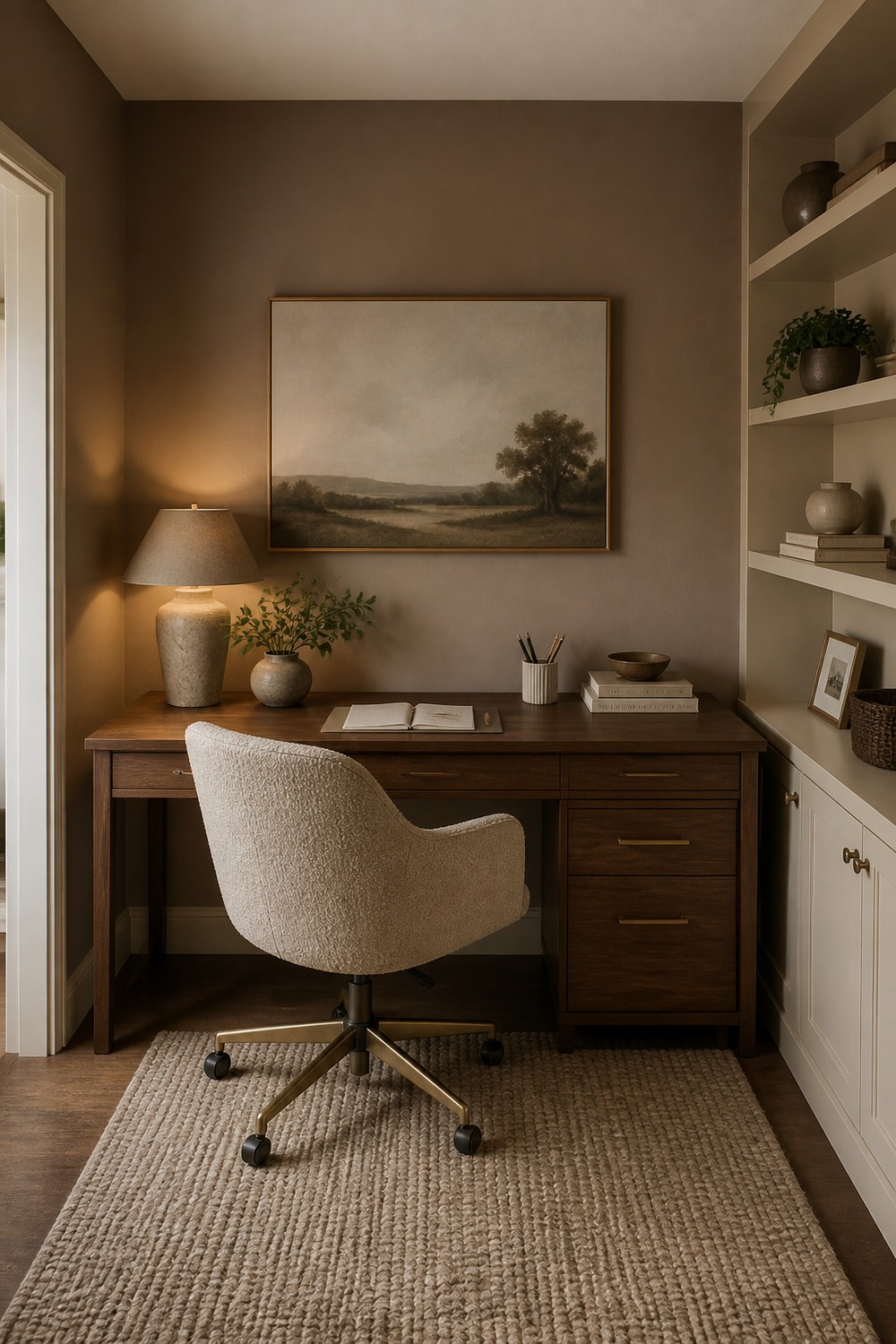
Mushroom taupe sits comfortably between gray and brown, which makes it easy to pair with walnut. The cream chair and shelves lighten the center of the room, while hidden file storage preserves that calm tonal effect.
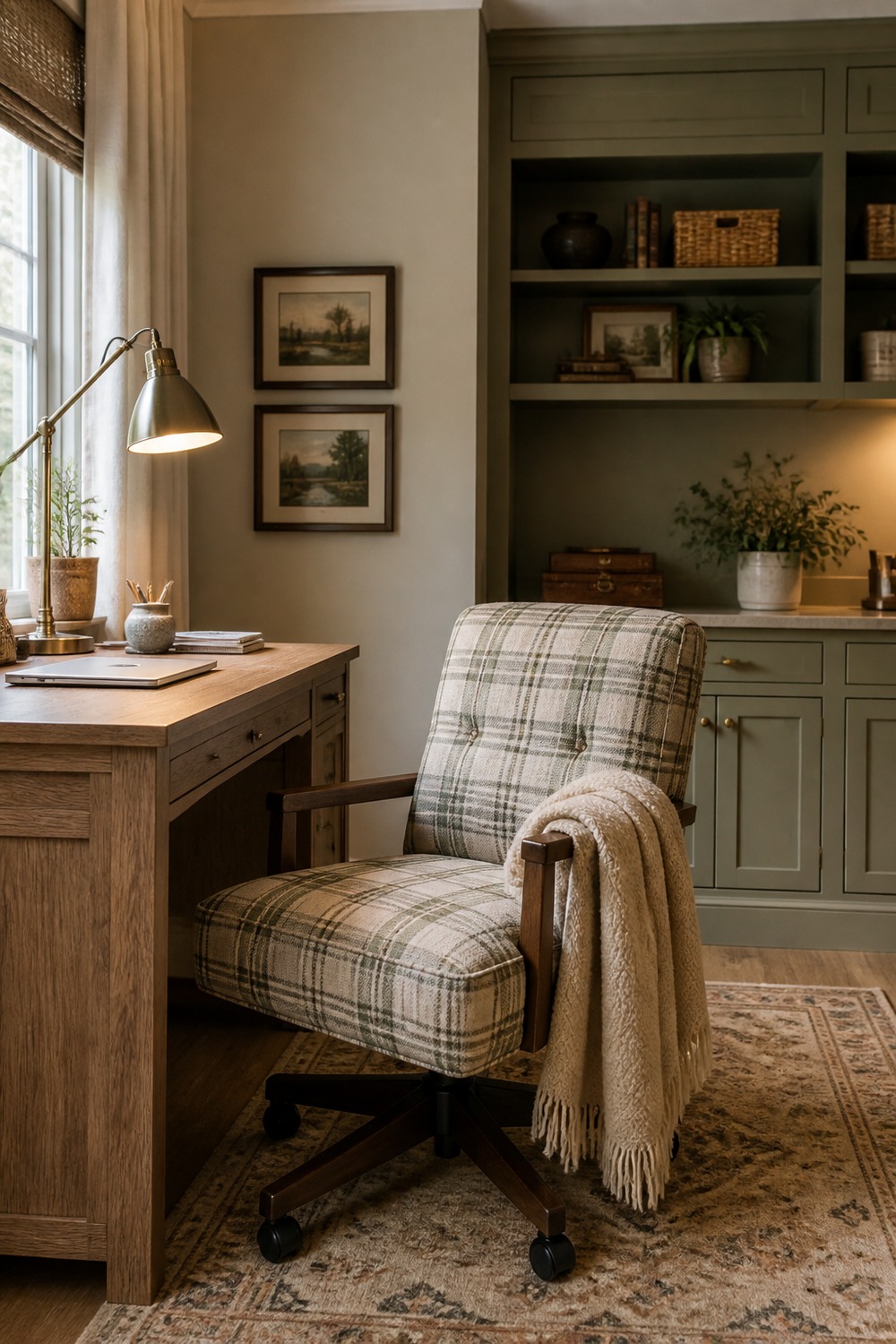
The plaid chair is the personality piece, so the surrounding sage cabinetry stays deliberately quiet. A wool throw and warm lamp make the seat useful for reading, but the desk still has a clear work zone beside it.
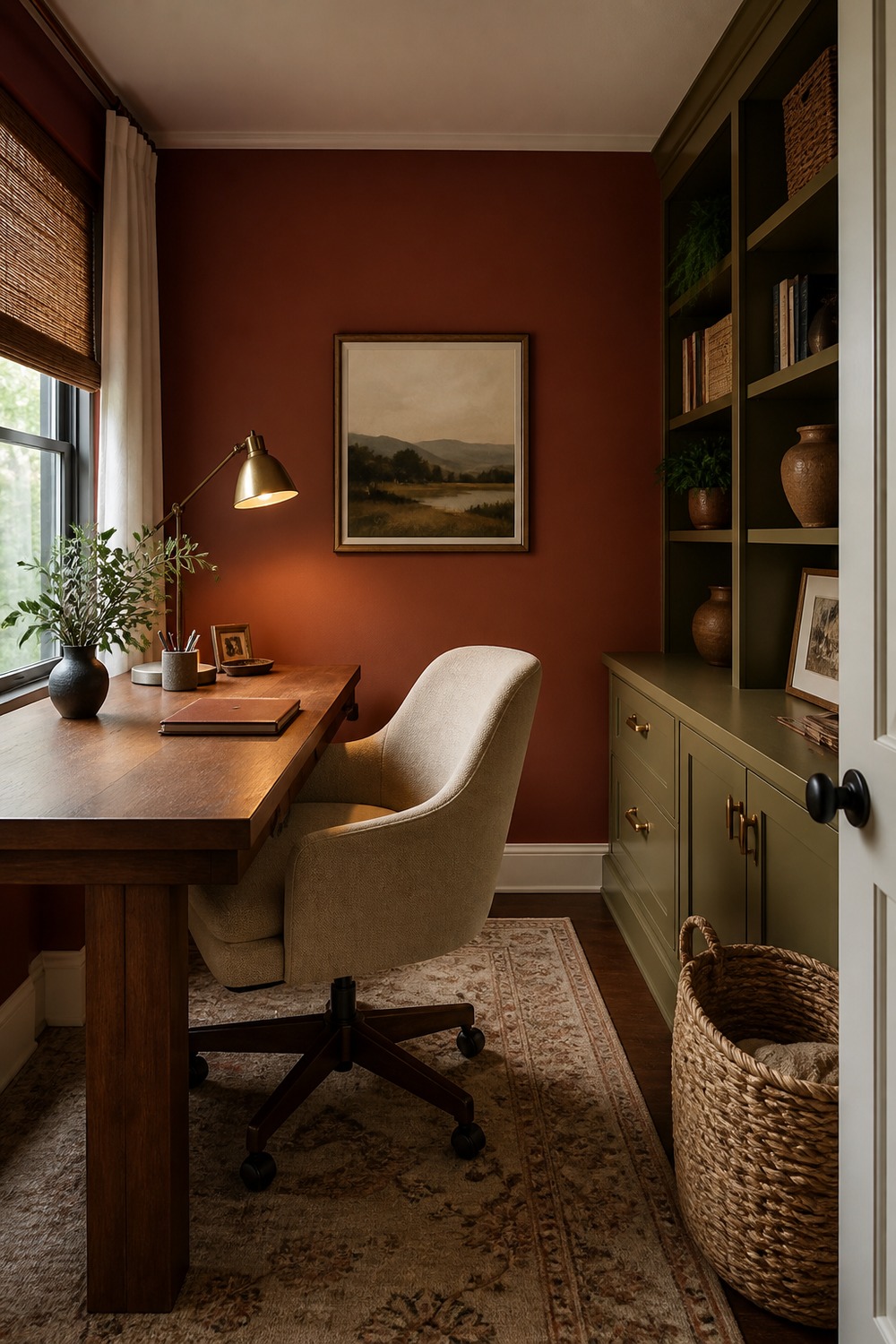
Rust and olive are both strong colors, yet they feel surprisingly balanced with a plain wood desk between them. Beige upholstery gives the eye a resting spot, and the woven basket repeats the natural tones without adding another busy pattern.
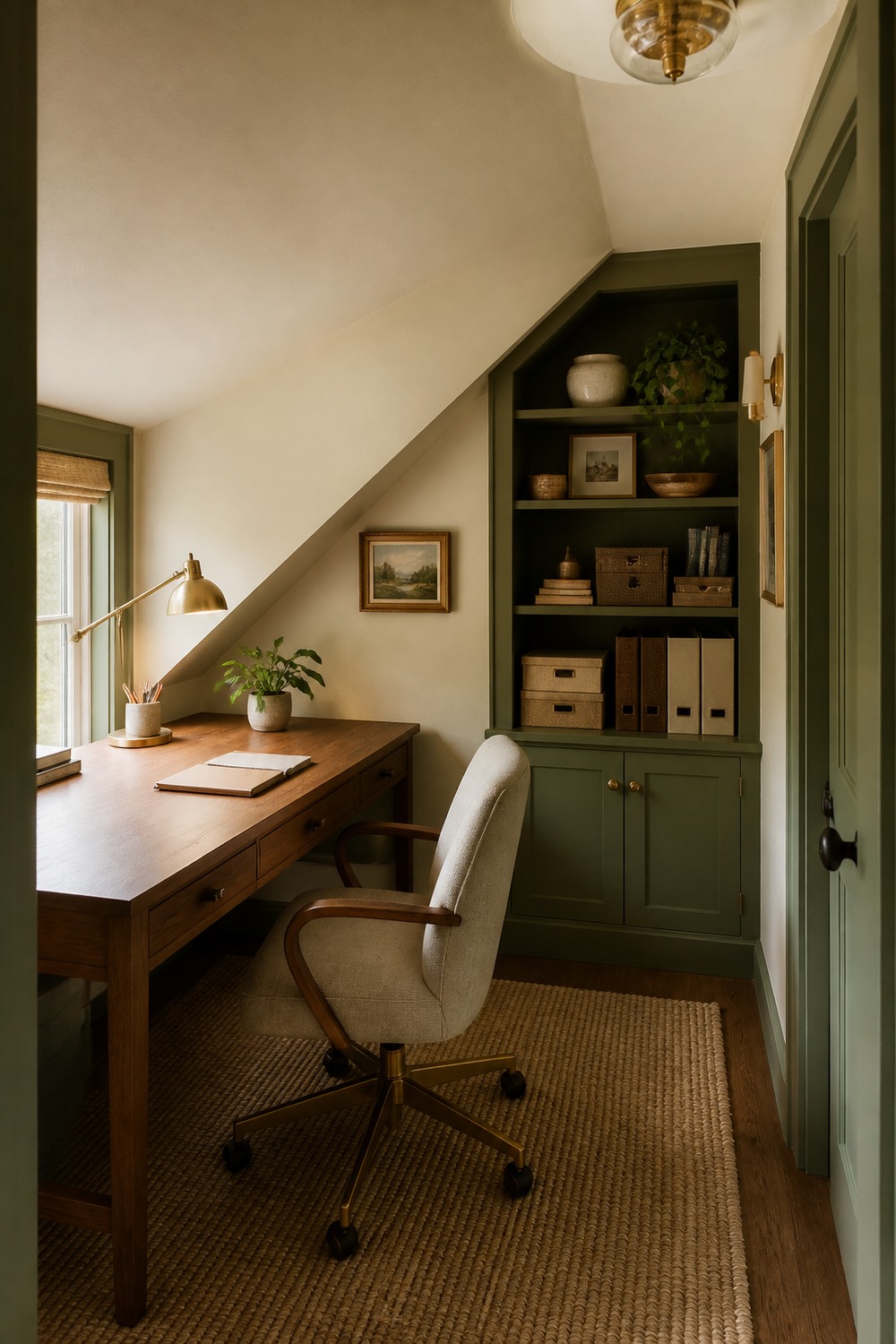
An attic office already has unusual angles, so the cream ceiling is a smart way to keep the slope from pressing down. Sage trim outlines the storage, while the compact wood desk leaves a sensible path through the narrow nook.
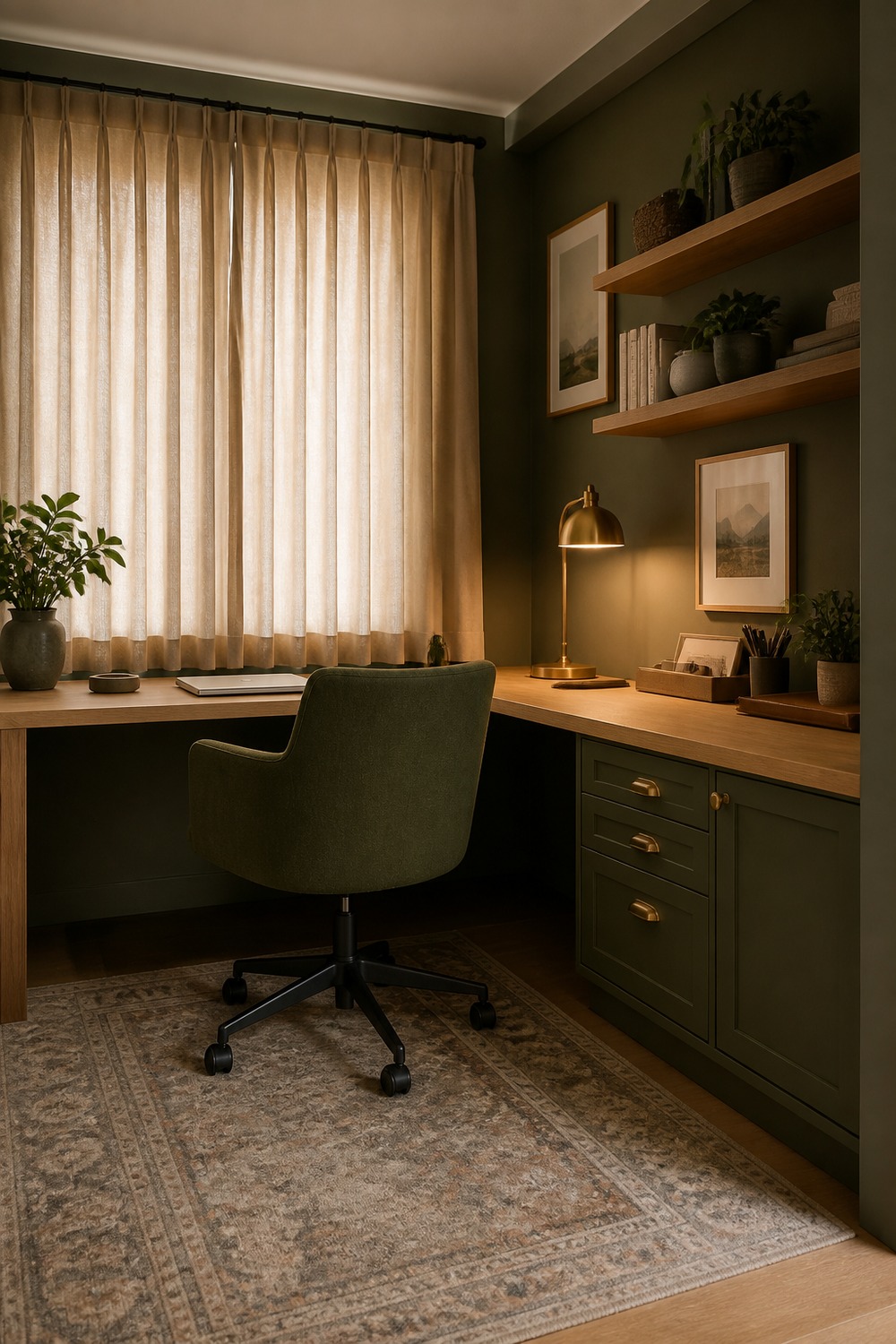
Full beige curtains turn this corner into a softer backdrop and also help control glare. The olive drawers and chair add definition below the oak worktop, and the wraparound surface leaves room for a lamp without squeezing the computer setup.
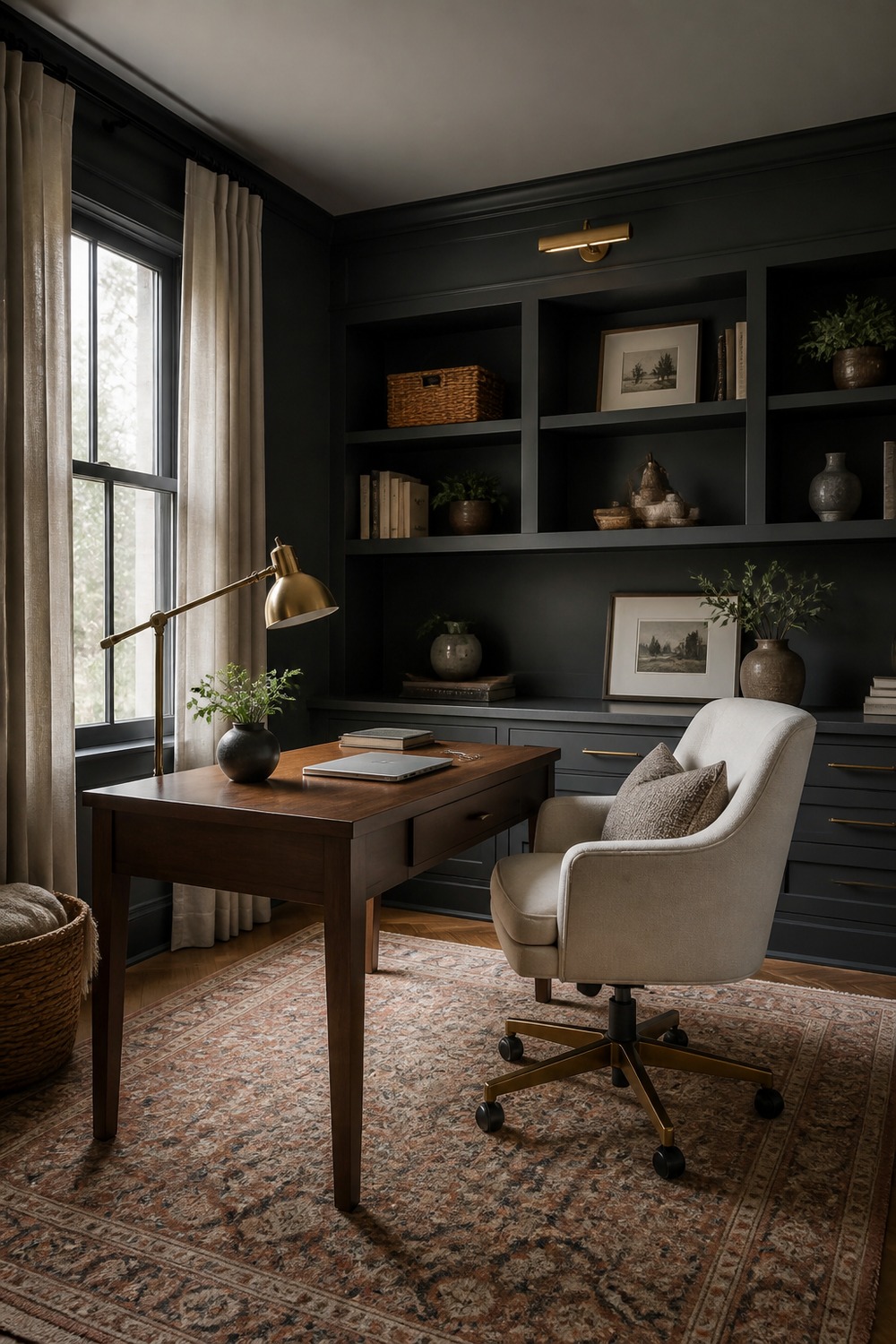
Charcoal can feel severe until warm wood and cream fabric are brought into the picture. The brass lamp creates a useful pool of light over the desk, while the pale rug keeps the darkest color from carrying all the way to the floor.
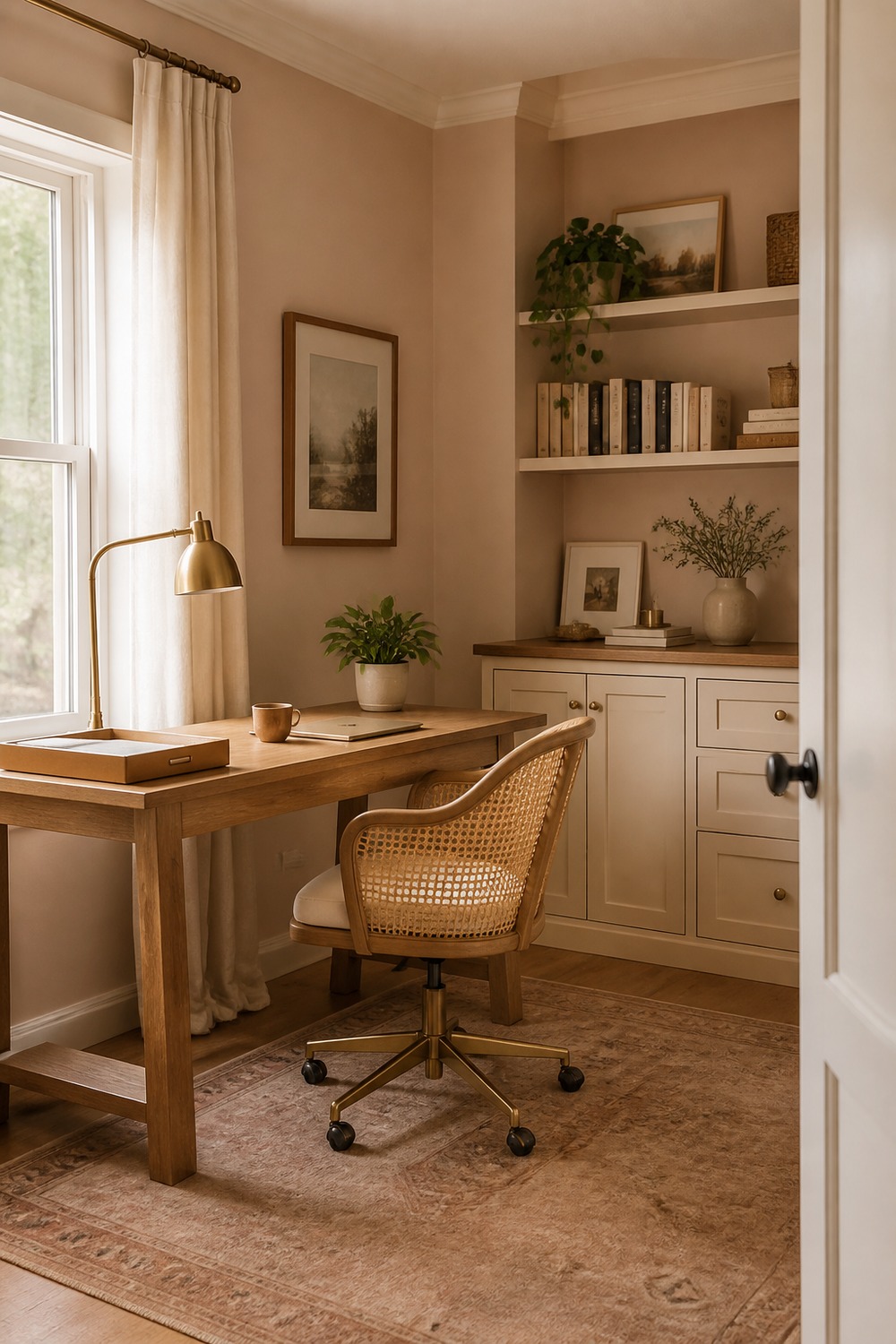
Blush beige is subtle enough for long workdays, but the cane chair and natural desk stop it from looking generic. A small plant near the window adds one cool note and gives the softer wall color a little contrast.
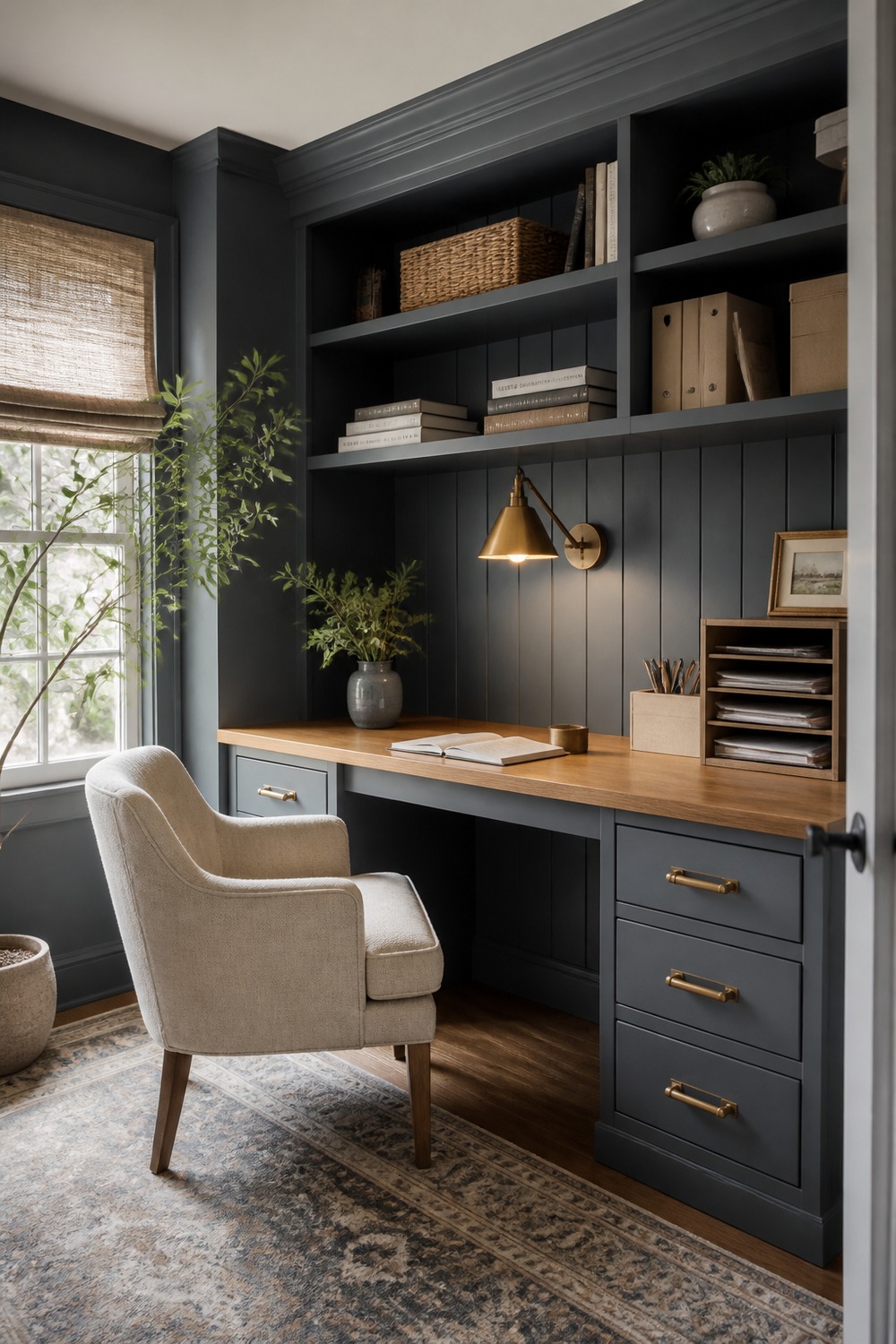
Blue-gray built-ins make the storage wall feel finished without demanding attention. The oak counter warms the cool cabinetry, and a brass sconce frees up valuable desktop space while putting light exactly where it is needed.
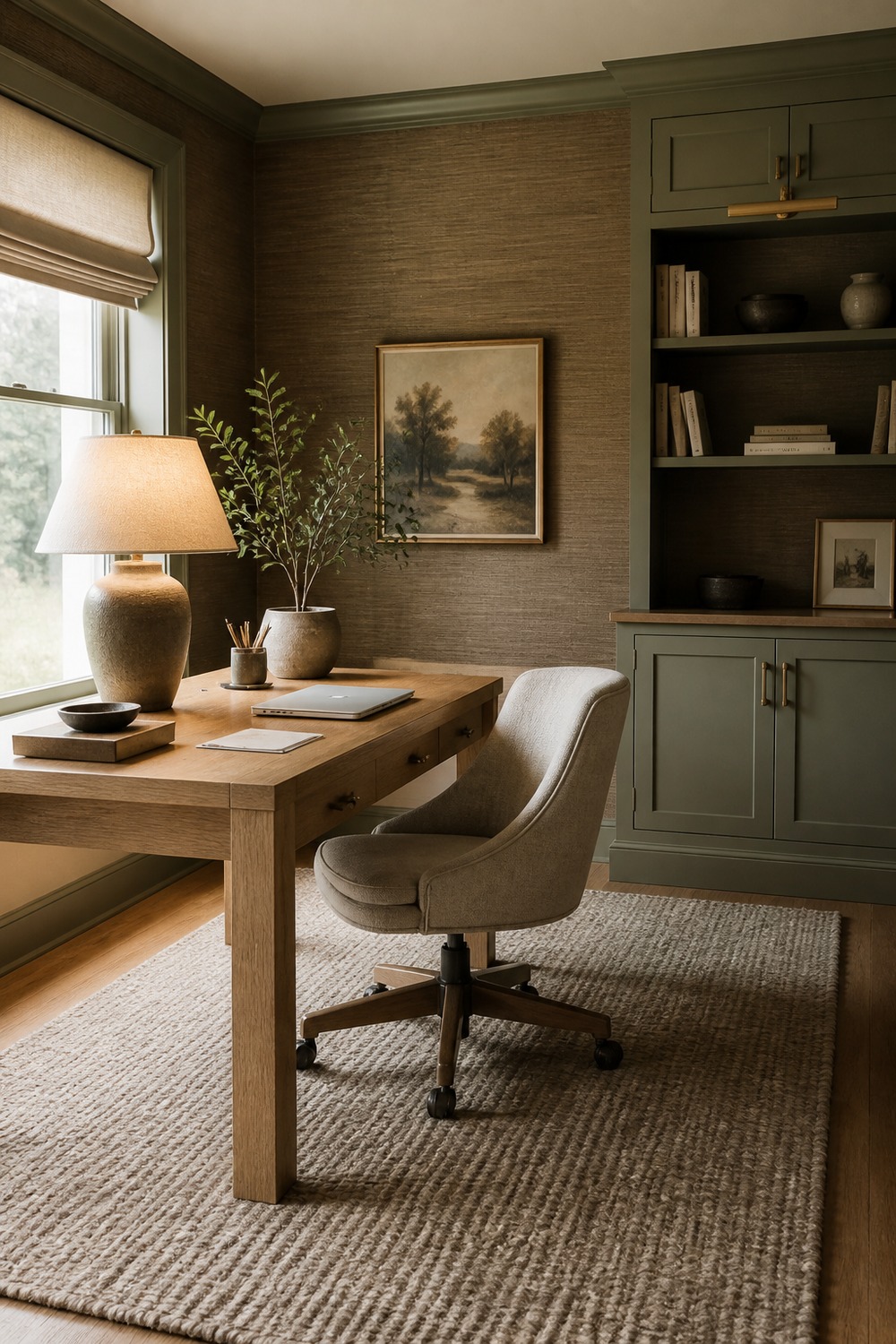
This layered neutral room avoids the usual all-beige problem by mixing taupe walls, olive cabinetry, dark wood, and a patterned rug. The L-shaped surface also gives paperwork and a laptop separate zones instead of piling everything in one place.
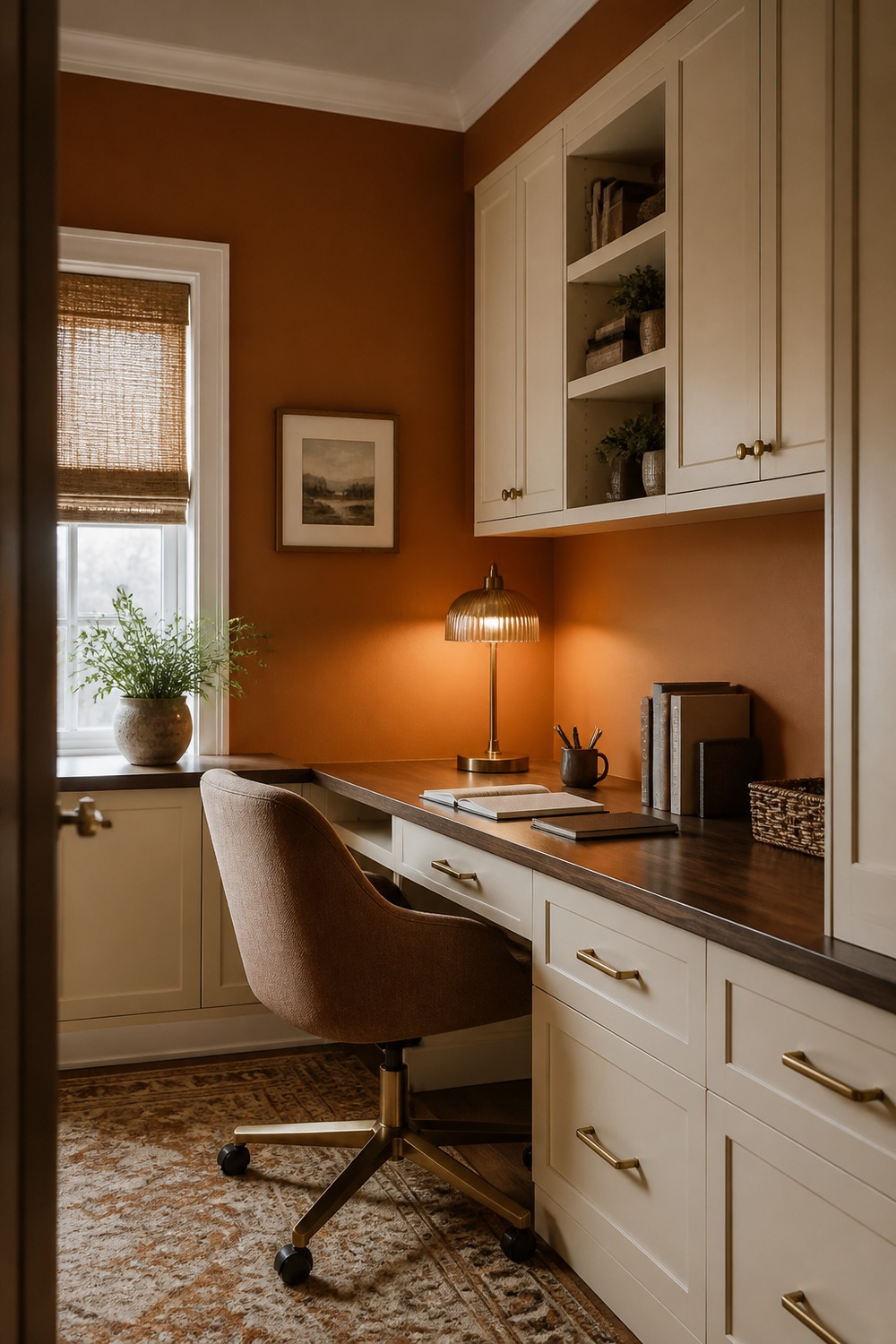
Cinnamon paint brings a lot of warmth, so the cream cabinets are a useful visual break. The walnut desktop ties the two colors together, and the amber lamp makes the arrangement feel especially good during early mornings or late work sessions.
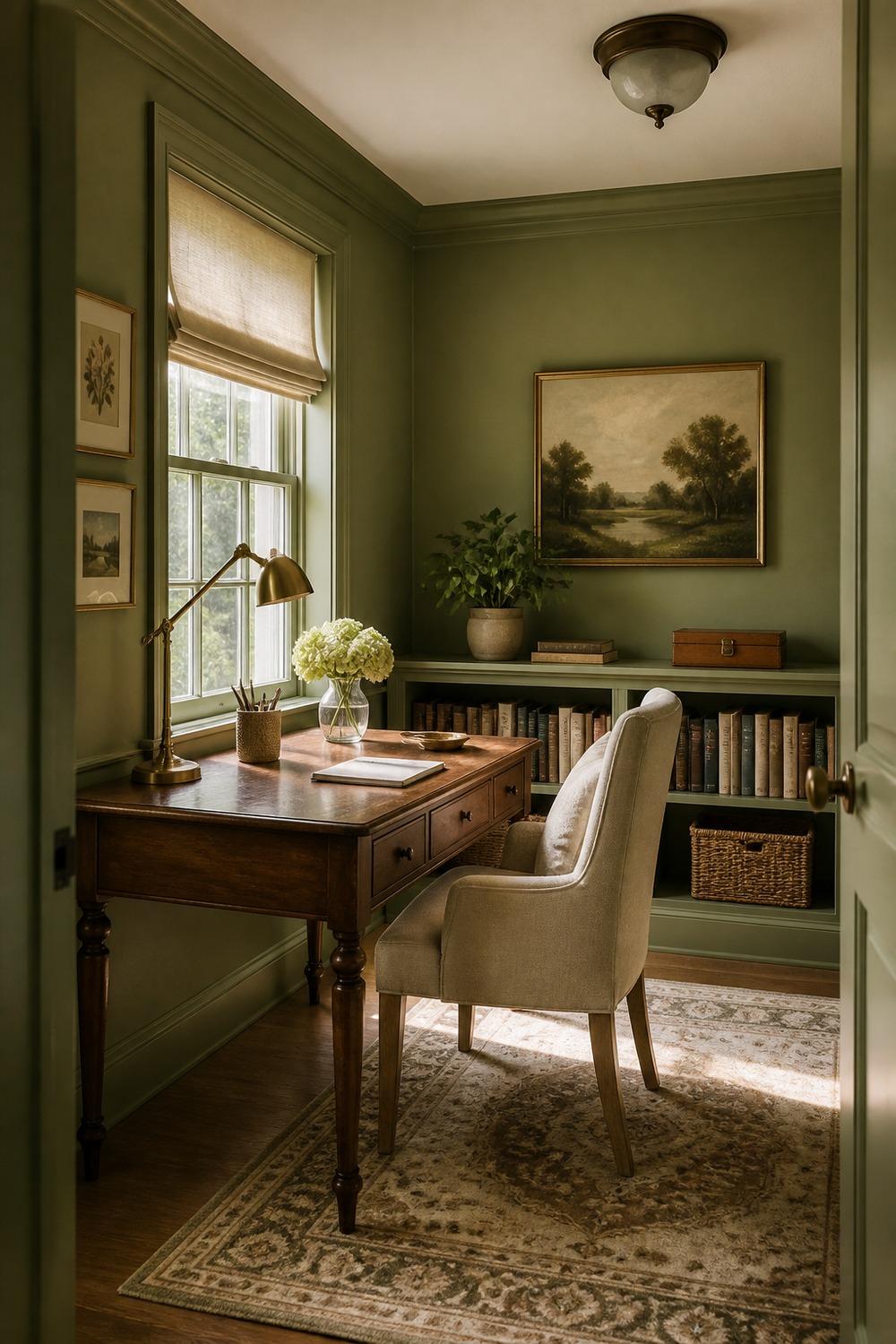
Soft green walls suit a traditional writing desk because they let the wood grain stay visible. The low bookcase keeps reference books close without towering over the seat, and the window light makes the whole palette feel fresh rather than formal.
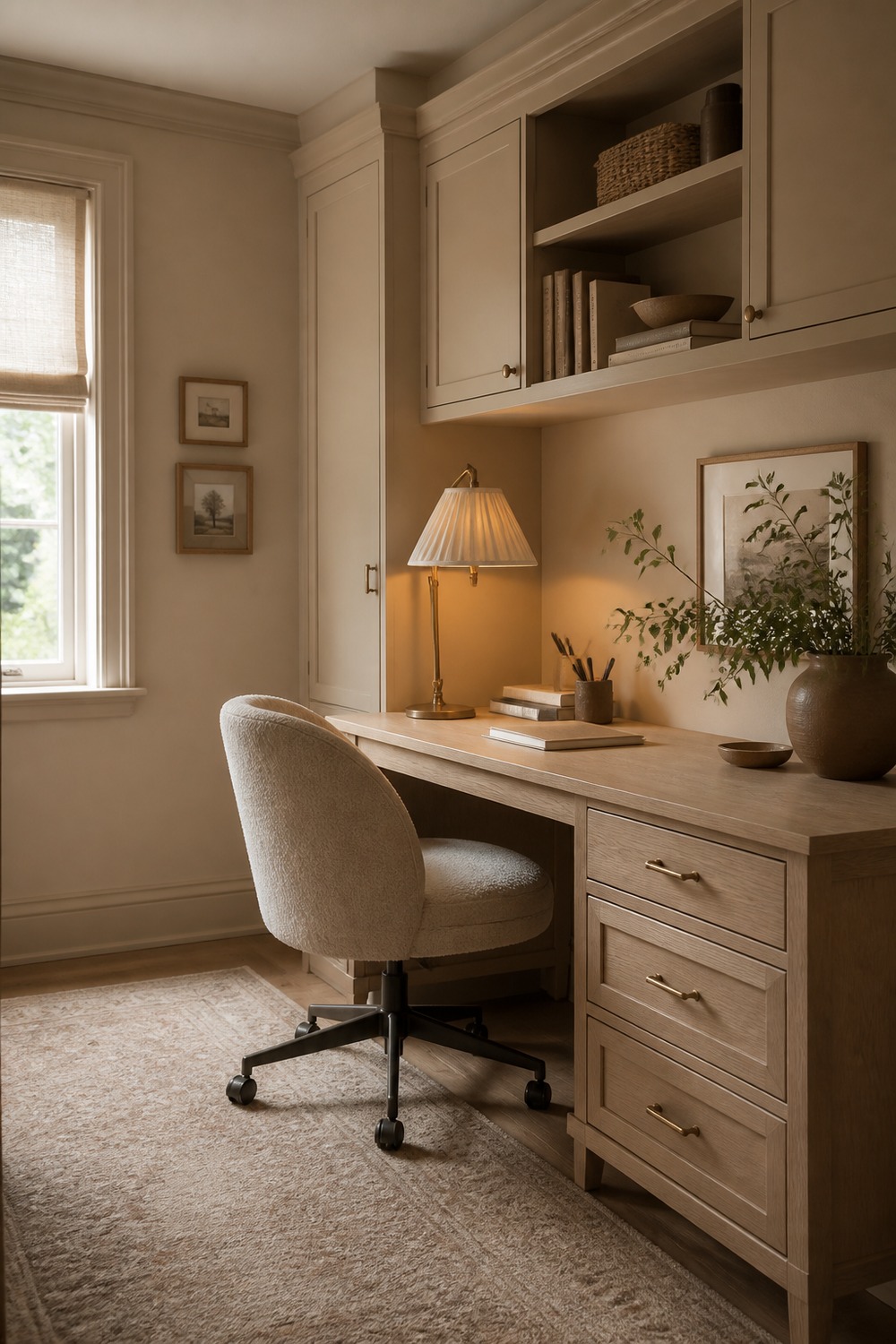
A monochrome beige office needs shadows and texture to avoid looking washed out. Built-in drawers, pale oak, boucle upholstery, books, and branching greenery create those small shifts while keeping the room visually quiet.
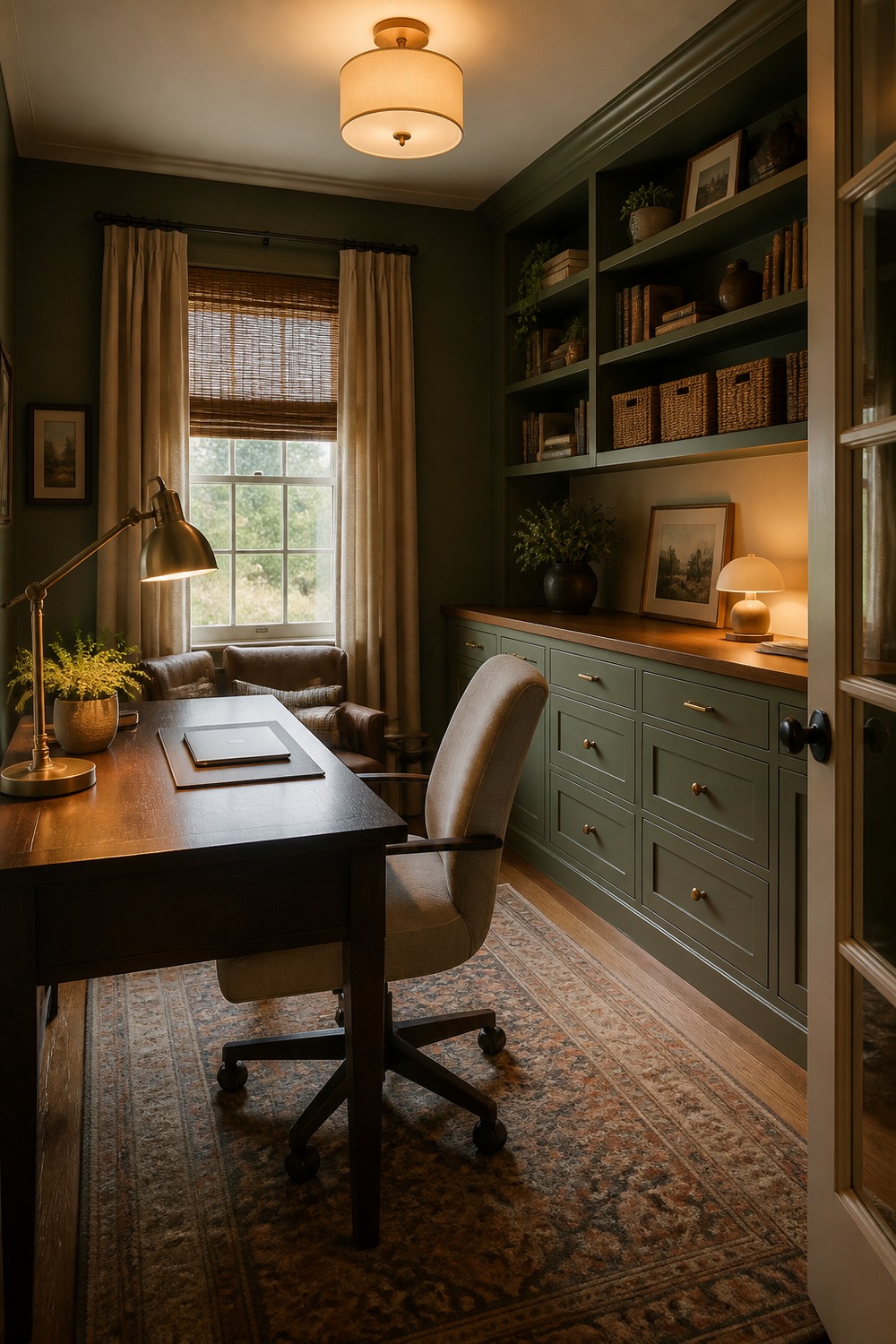
The final room brings several cozy color lessons together: deep green storage, a dark wood desk, warm lamps, cream curtains, and a patterned rug. Each material has its own tone, but the repeated browns and soft whites make the office read as one settled space.
Leave a comment