
The wall behind a desk does a lot of work once the camera turns on. A thoughtful backdrop can hide visual clutter, improve the room’s proportions, and give shelves, lighting, or storage a proper place without making the office feel staged.
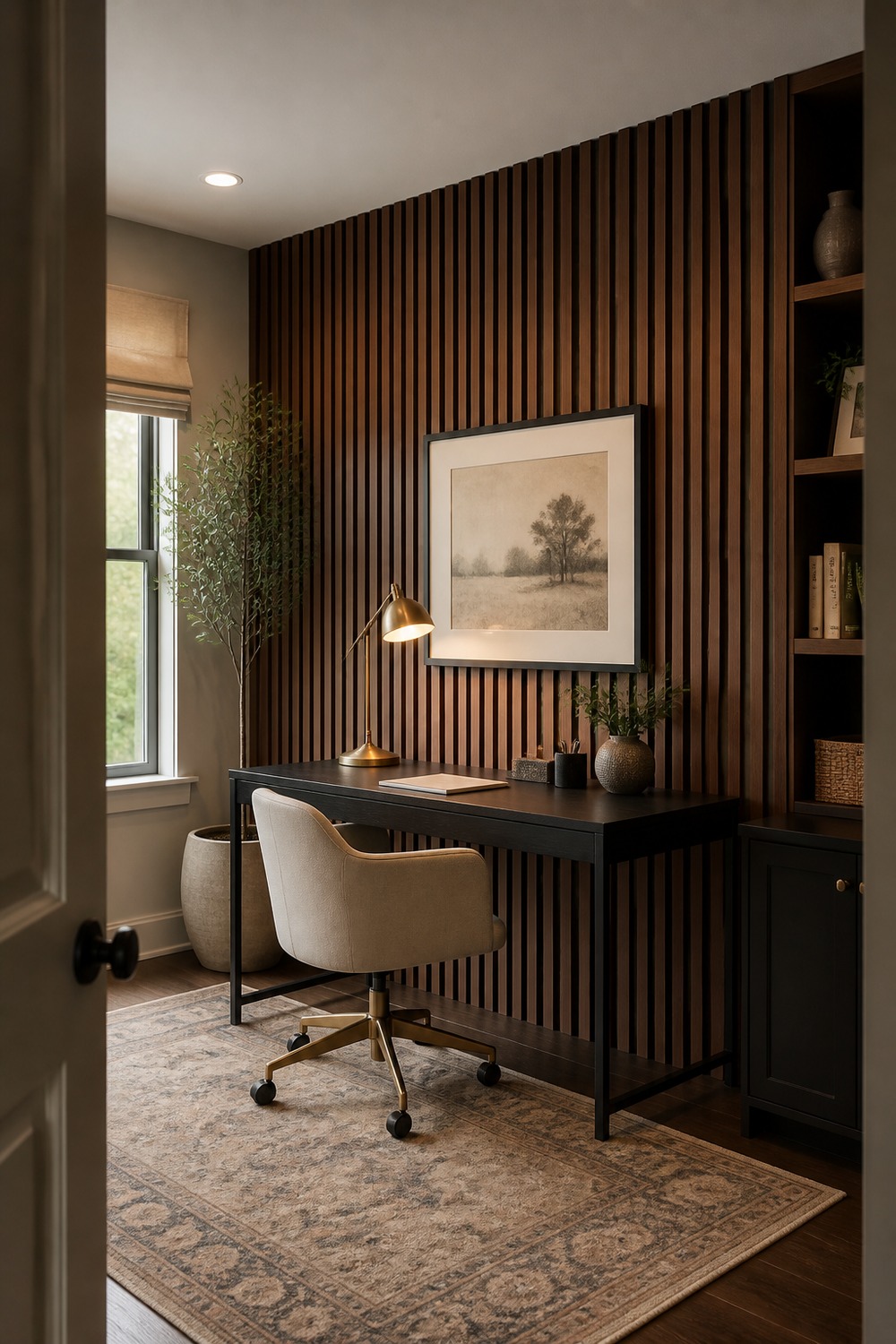
Walnut slats bring warmth and a little acoustic softness to this compact setup. The black desk stays visually light against the wall, while the brass task lamp gives the corner a warmer evening glow.
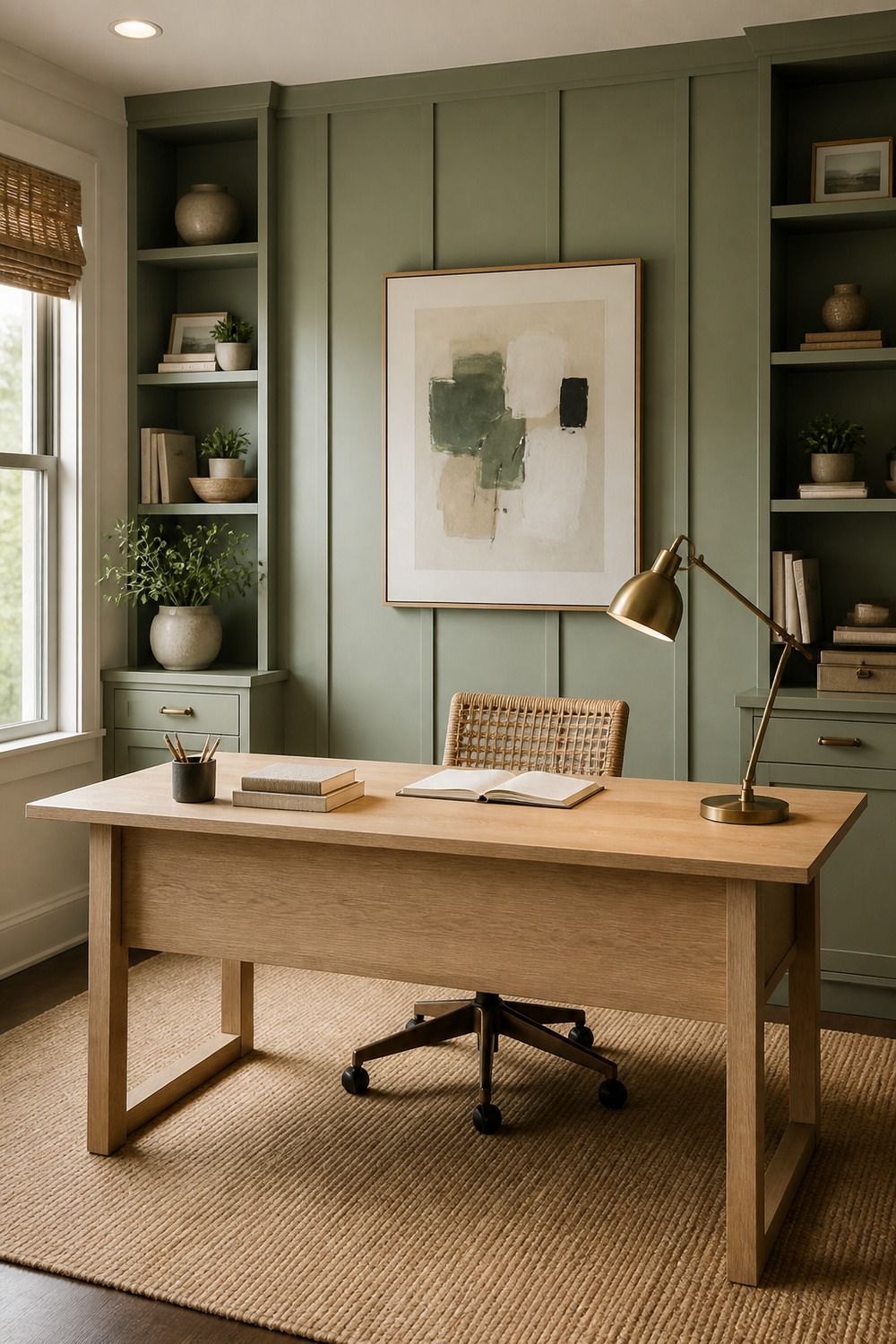
Sage board-and-batten adds texture without making the backdrop too busy. Pale oak, woven upholstery, and one quiet abstract piece keep the desk area relaxed enough for long workdays.
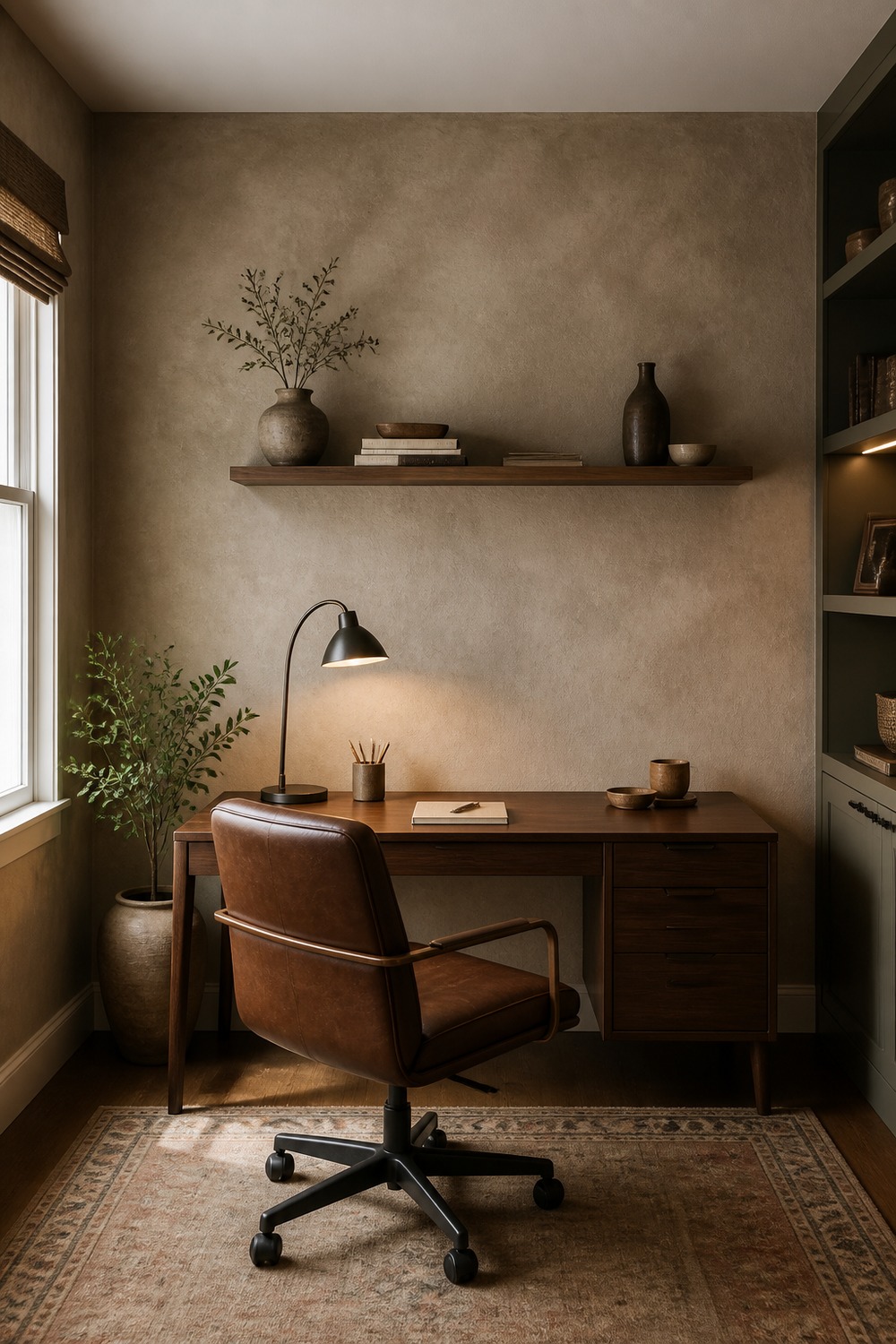
Limewash is especially good when a flat painted wall feels a little lifeless. Here, the mottled taupe finish catches daylight beautifully, and the single walnut shelf holds just enough pottery to create depth.
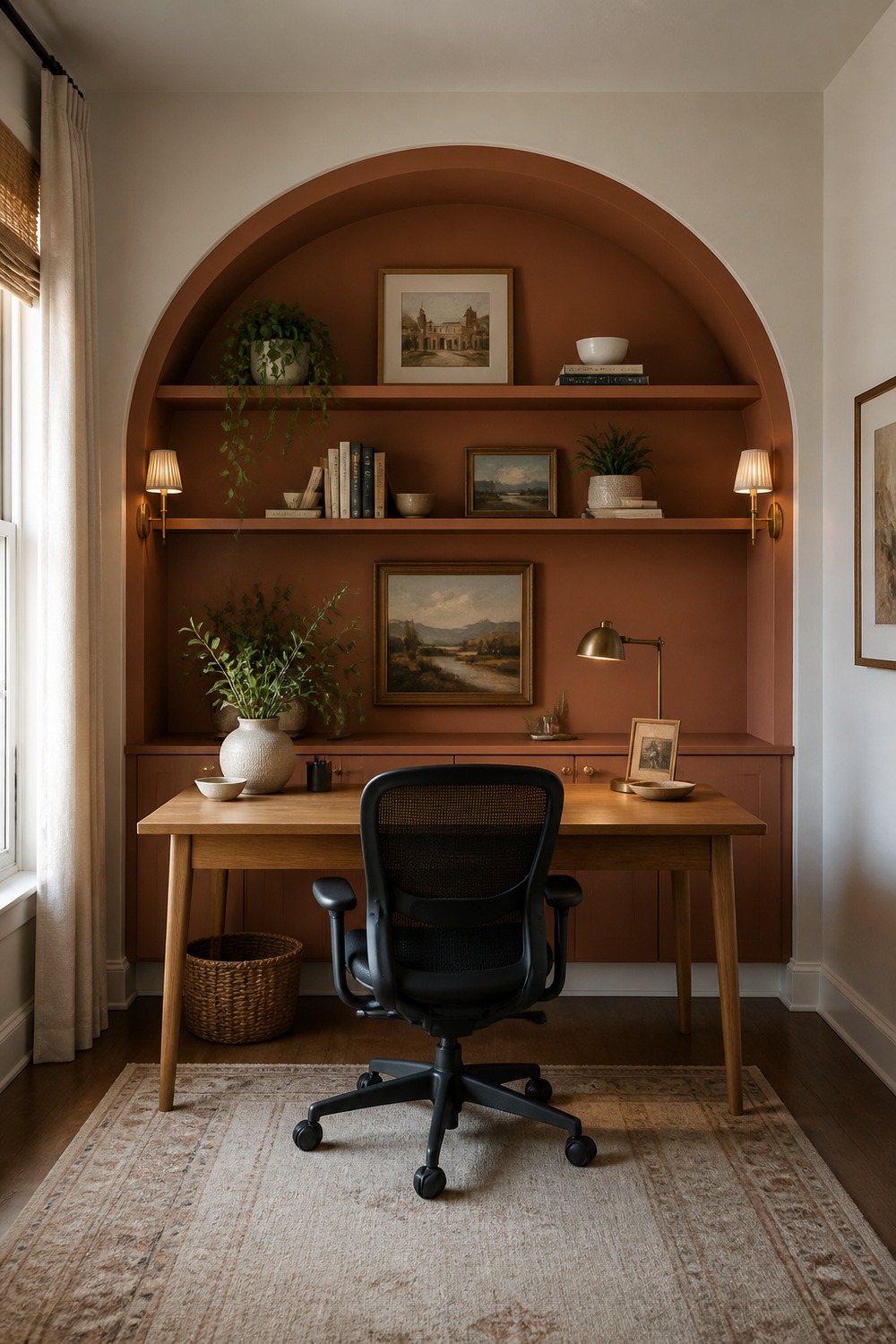
The terracotta arch neatly defines the workstation without adding furniture or taking up floor space. Two small sconces also solve the awkward dark-wall problem while leaving the desk surface open.
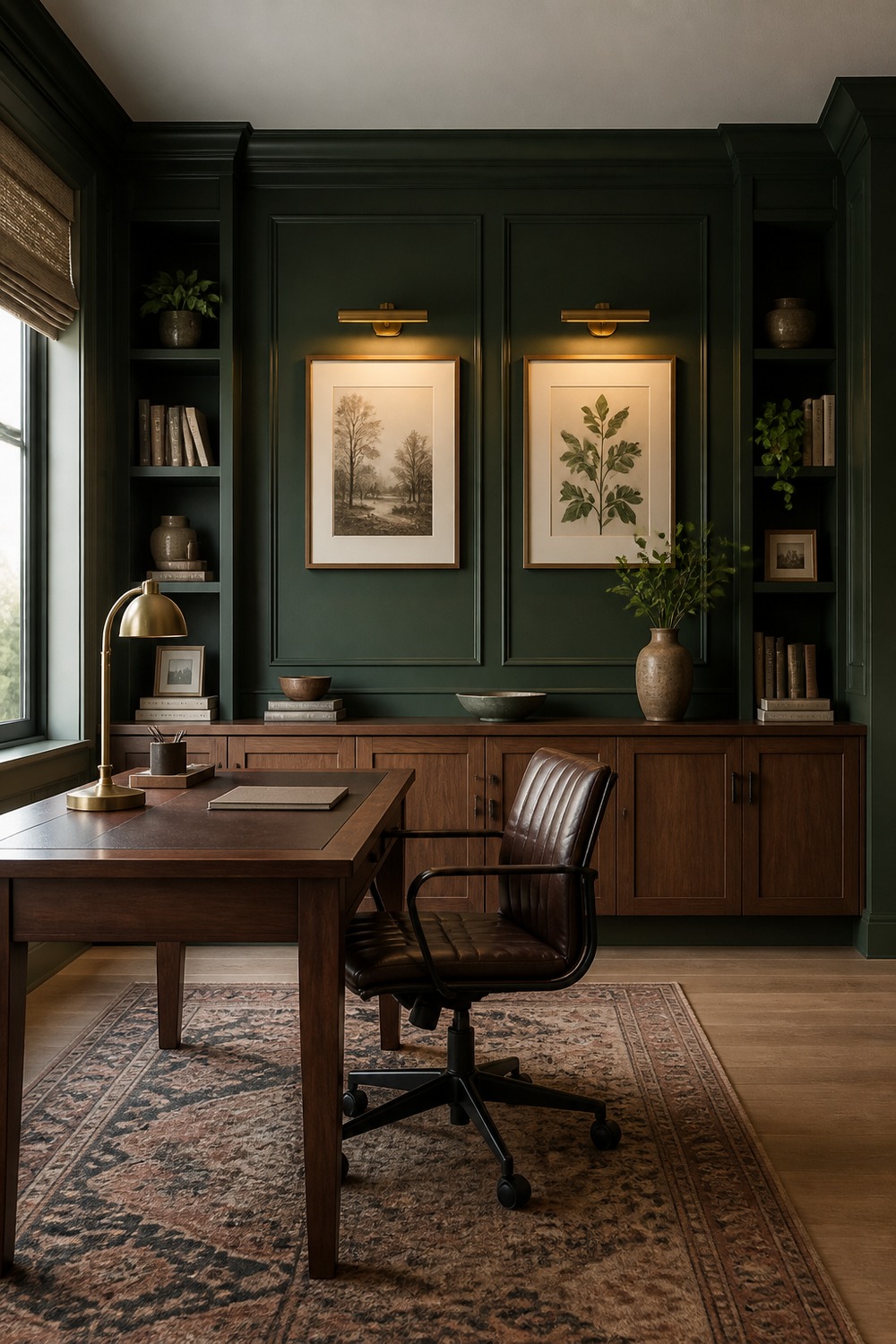
Deep green paneling gives this office a strong camera backdrop, but the walnut credenza keeps it from feeling severe. Closed storage handles files and equipment, while the picture lights draw attention upward.
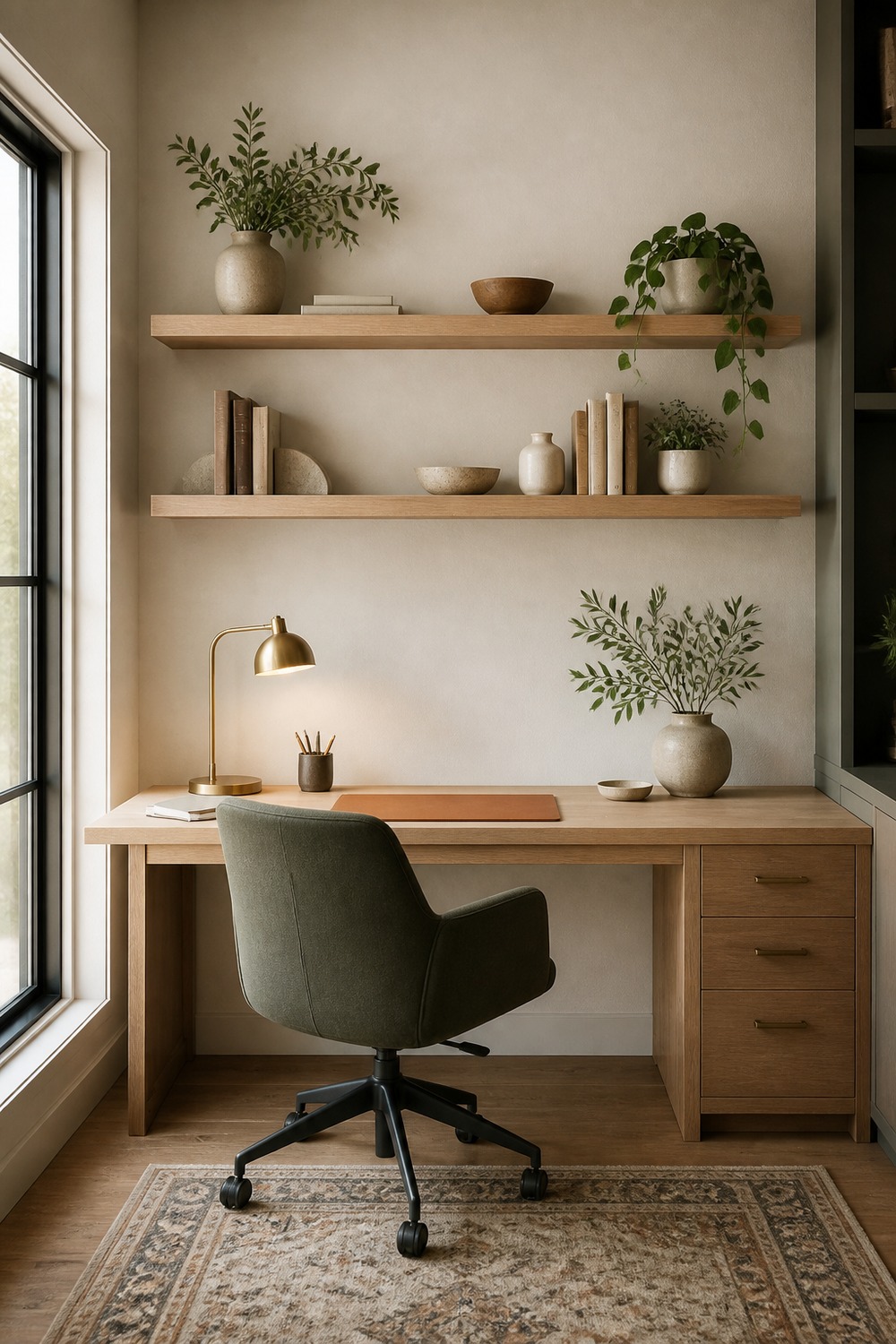
Two pale oak shelves are enough to make this cream wall feel intentional. Ceramics and greenery soften the straight lines, and the sparse arrangement leaves breathing room around the desk.
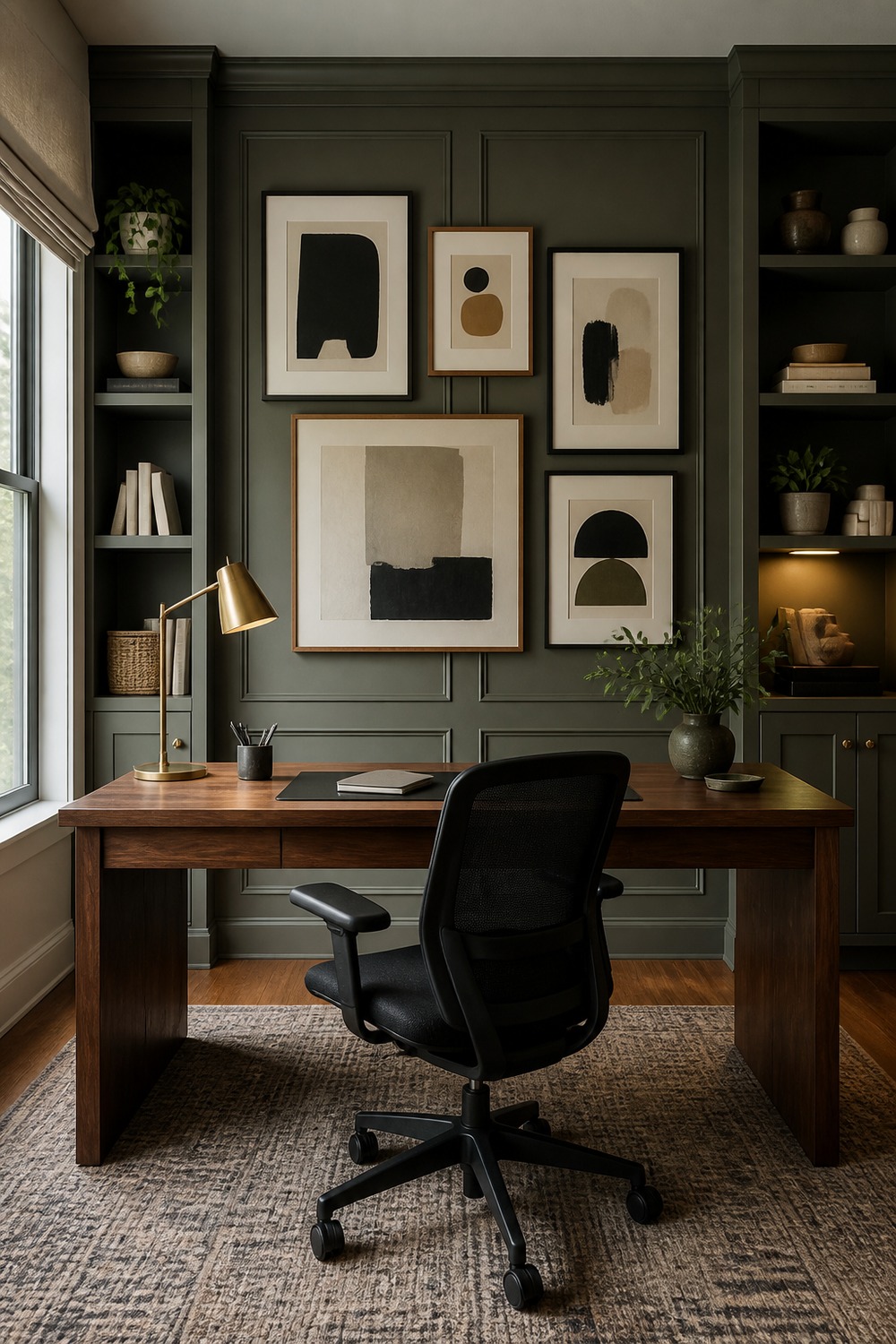
A gallery wall works best here because the art stays quiet and the frames share a restrained palette. The black chair and walnut desk ground the composition so the background does not compete with whoever is on screen.
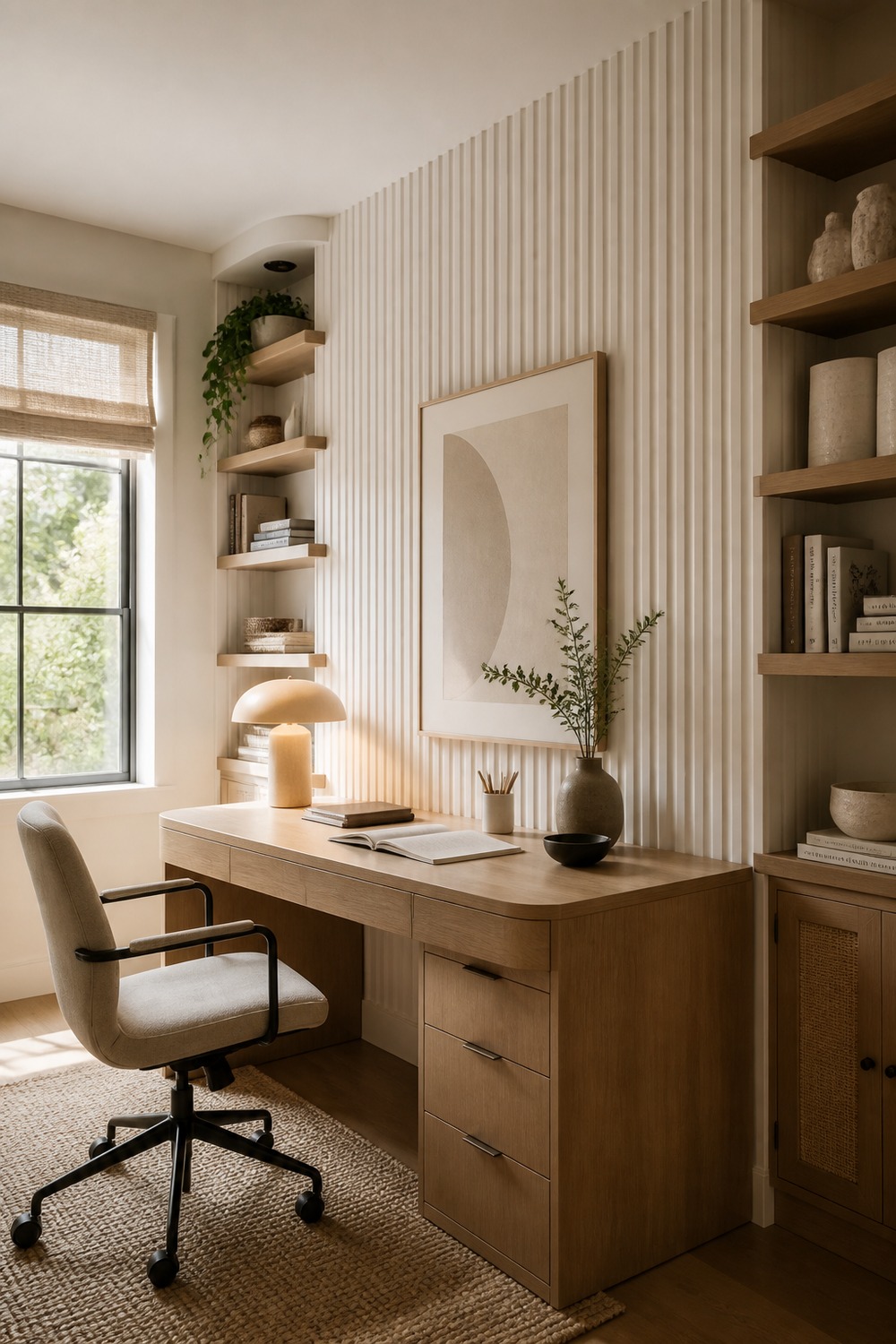
Fluted plaster creates shadow and movement even when the palette is almost entirely white. A sculptural lamp and pale wood desk add shape at eye level without covering the feature wall.
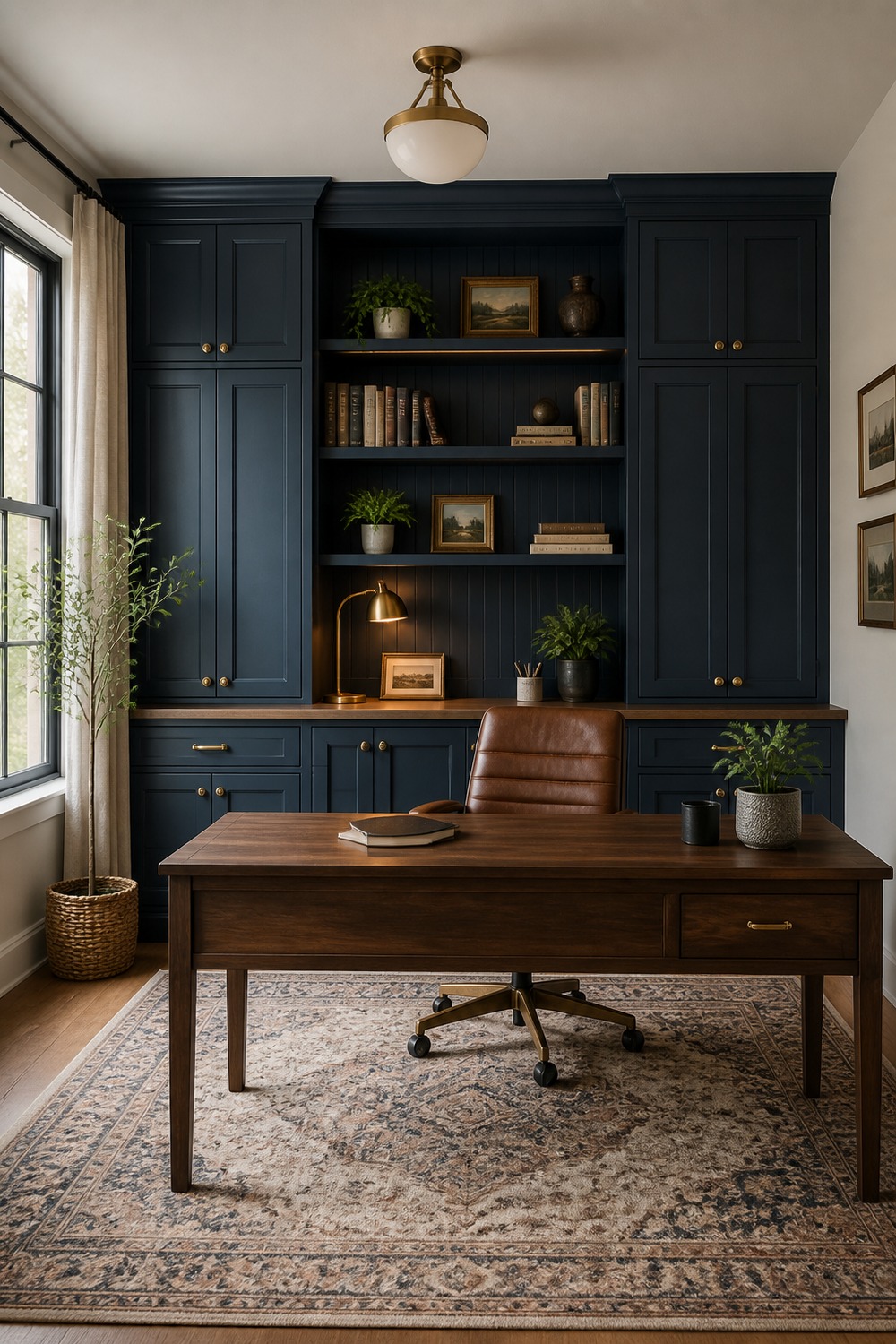
Navy built-ins make a convincing office backdrop while giving paperwork somewhere to disappear. The open center shelves break up the cabinetry, and the walnut desktop keeps the dark color from swallowing the room.
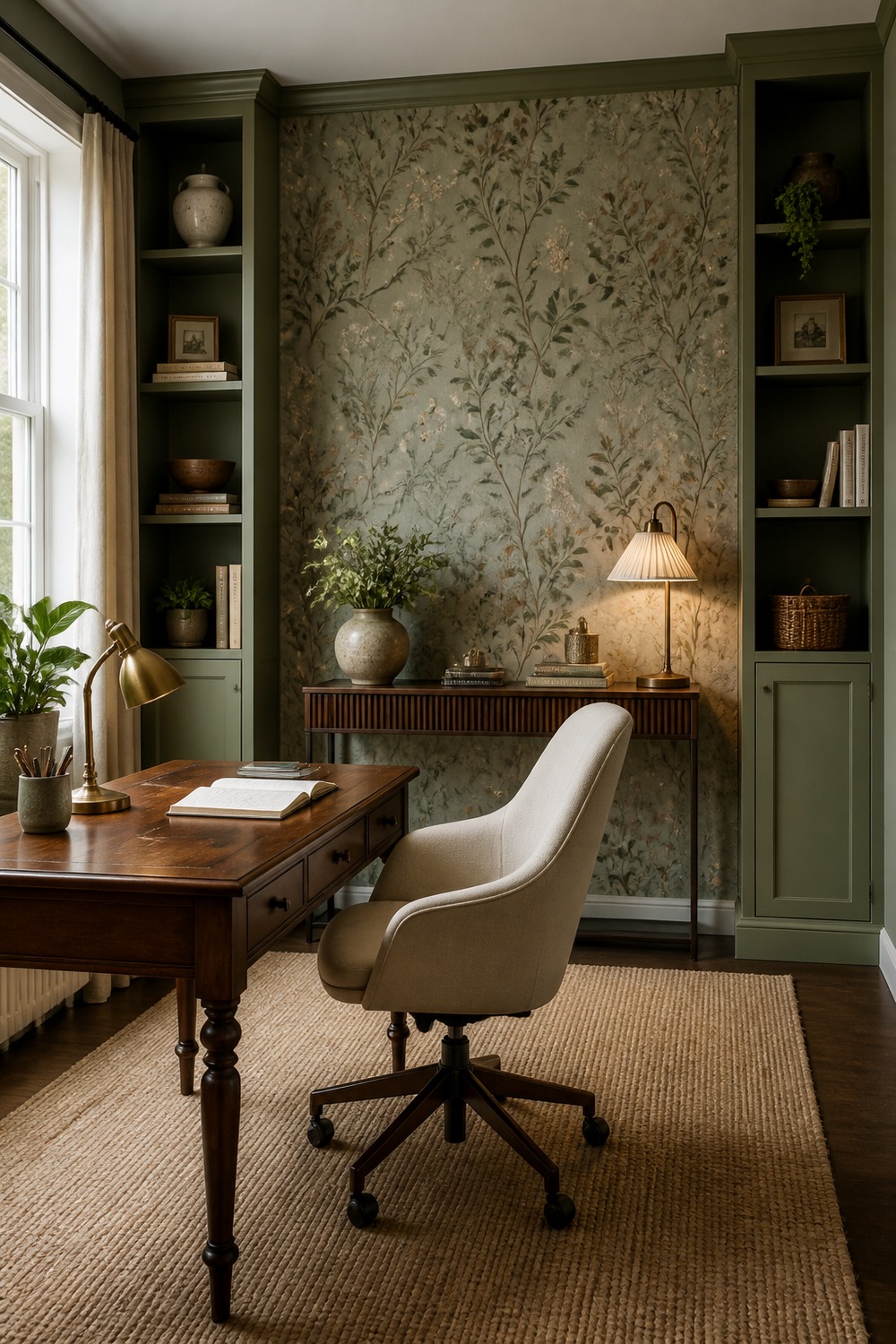
Botanical wallpaper brings pattern into the office without relying on framed signs or crowded shelves. The narrow console and vintage wood desk leave enough of the print visible for it to remain the main feature.
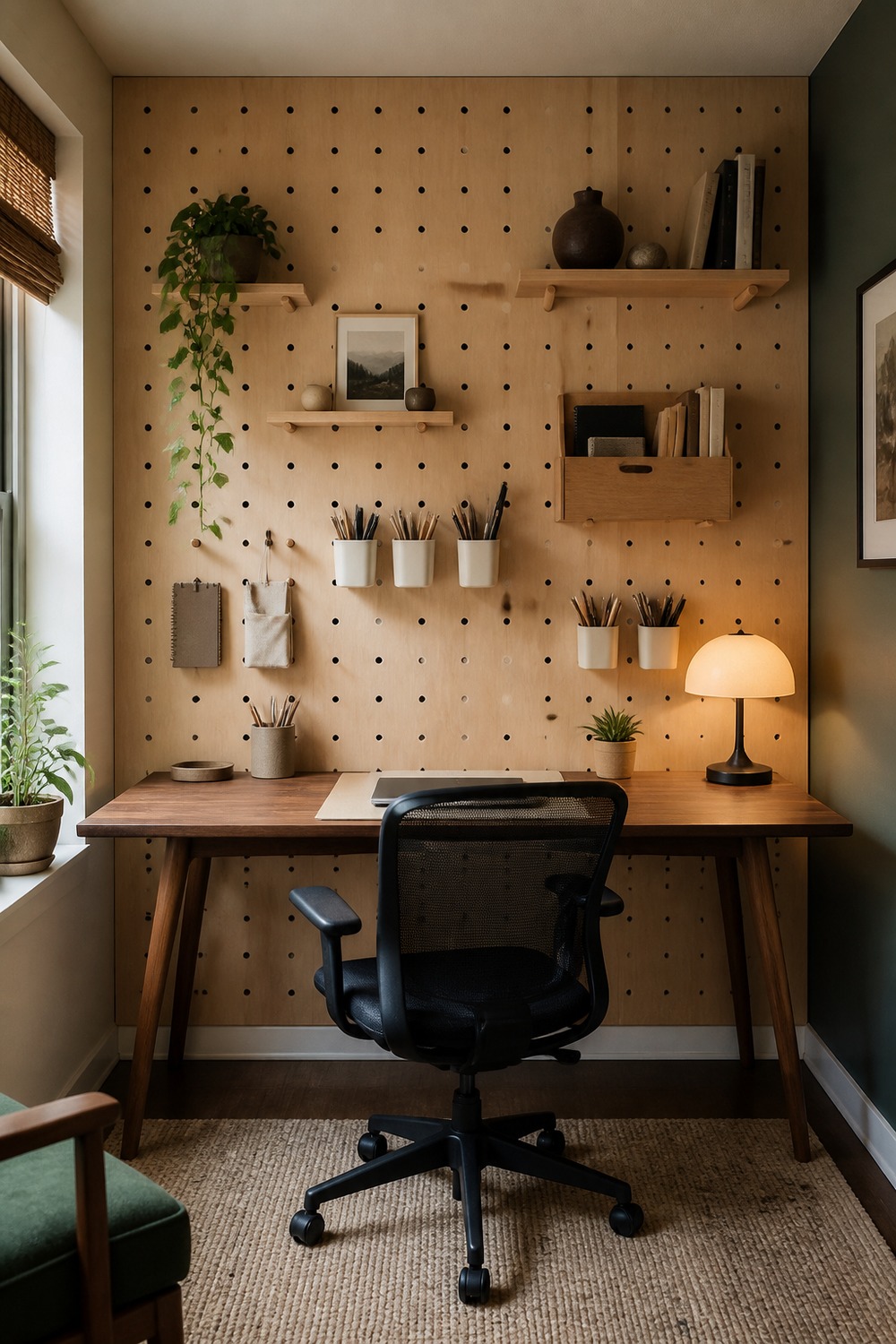
This pale wood pegboard earns its space by holding containers, small tools, and a few plants above the desk. Moving storage onto the wall frees the work surface while still giving the background personality.
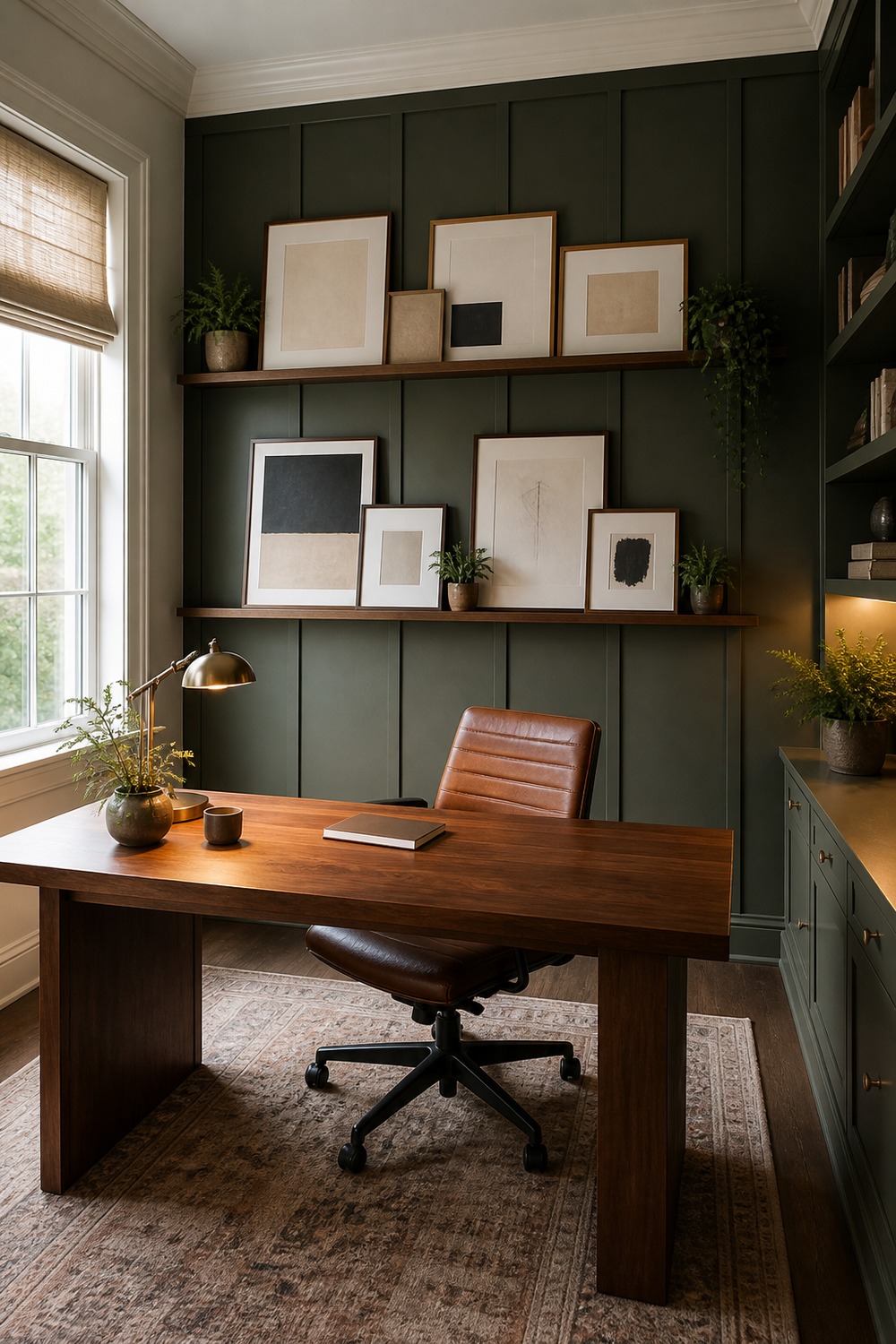
Long picture ledges let the art overlap naturally, so the wall can change without collecting new nail holes. The layered frames feel casual, and the small plants stop the dark green paneling from looking too formal.
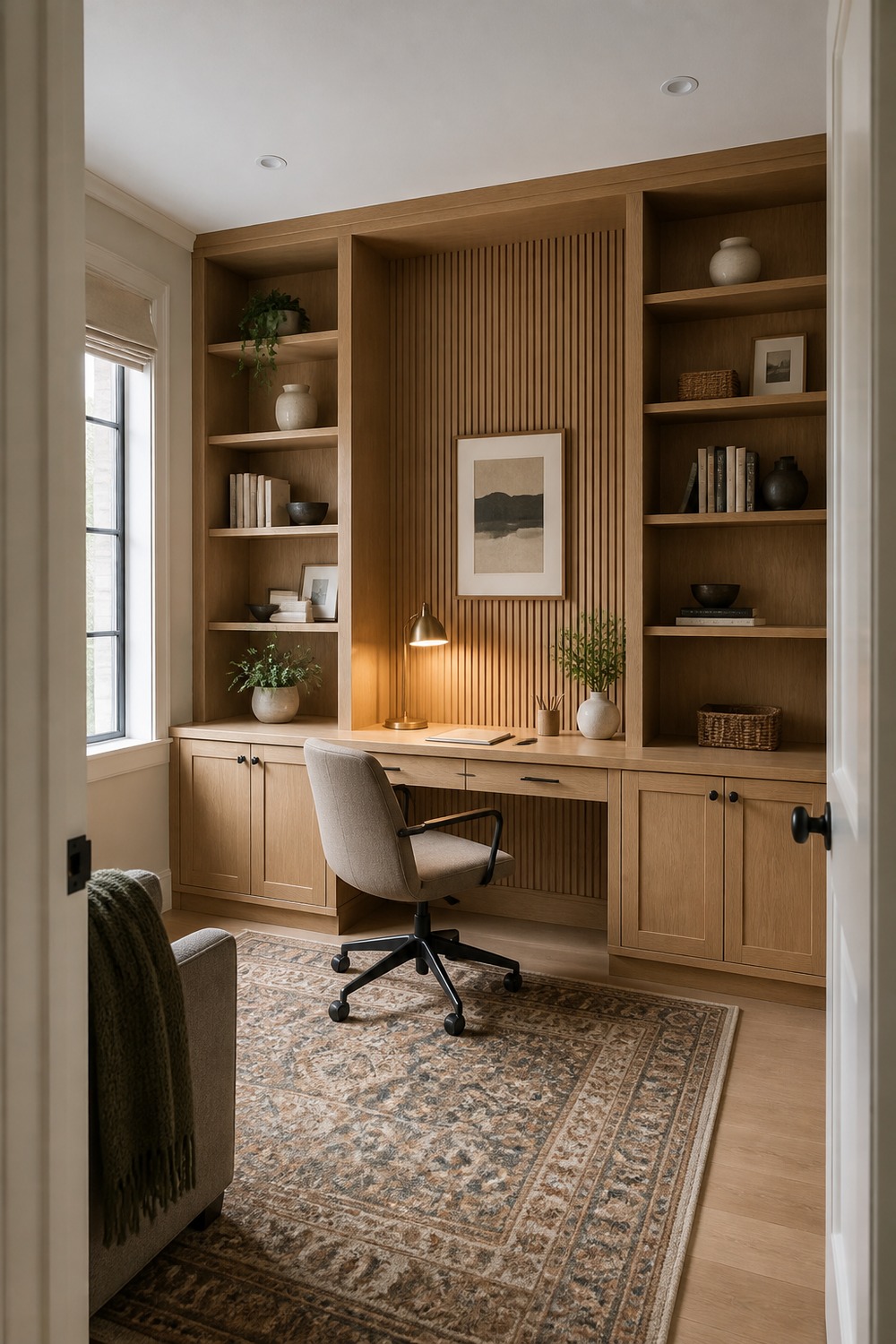
White oak cabinets wrap storage and display into one clean wall. The integrated desk niche keeps cables and work gear contained, which makes the room easier to reset before a call.
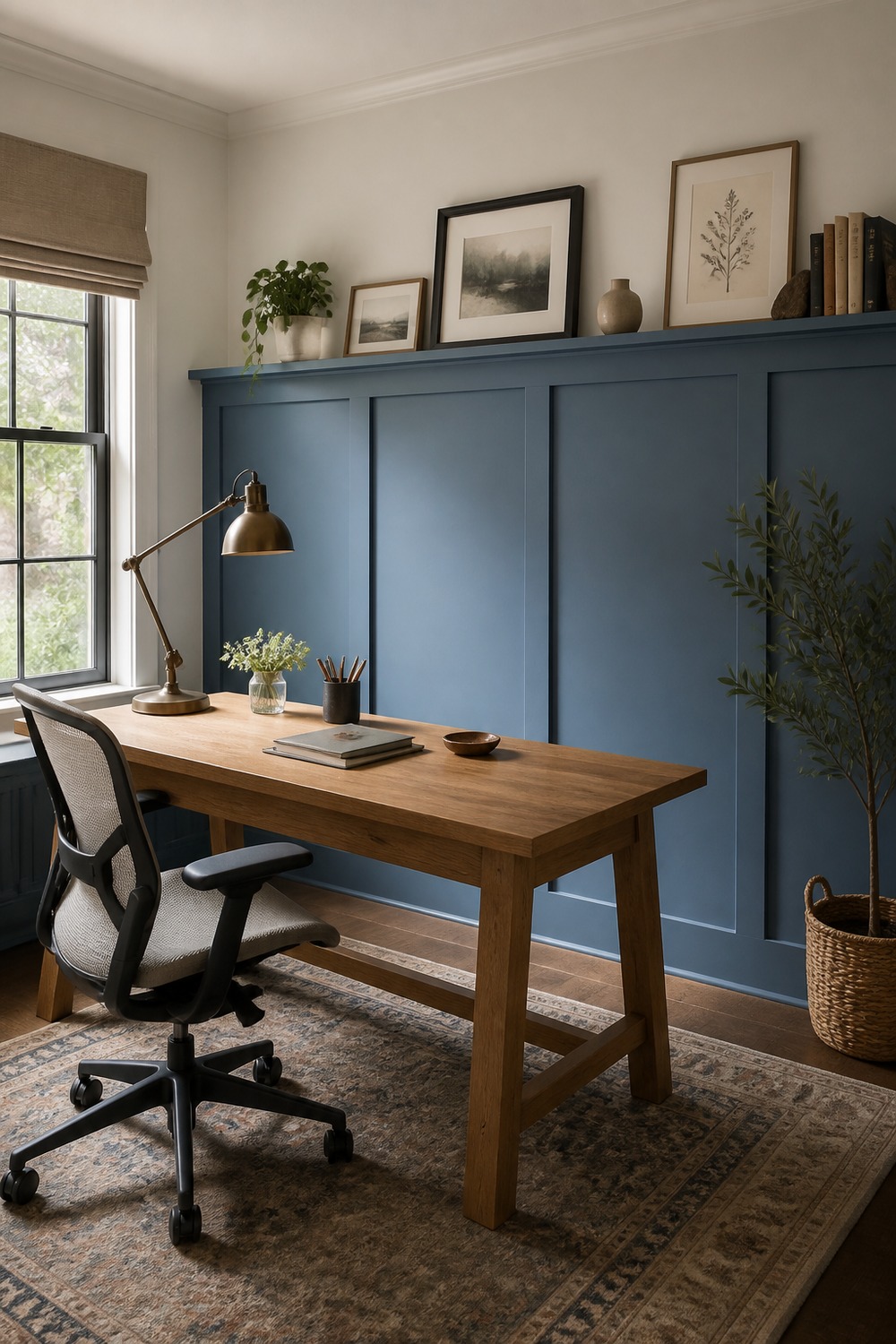
Dusty blue on the lower wall gives the office a clear horizon line and makes the oak desk stand out. The warm white above keeps the room bright, while the slim ledge adds a practical spot for rotating art.
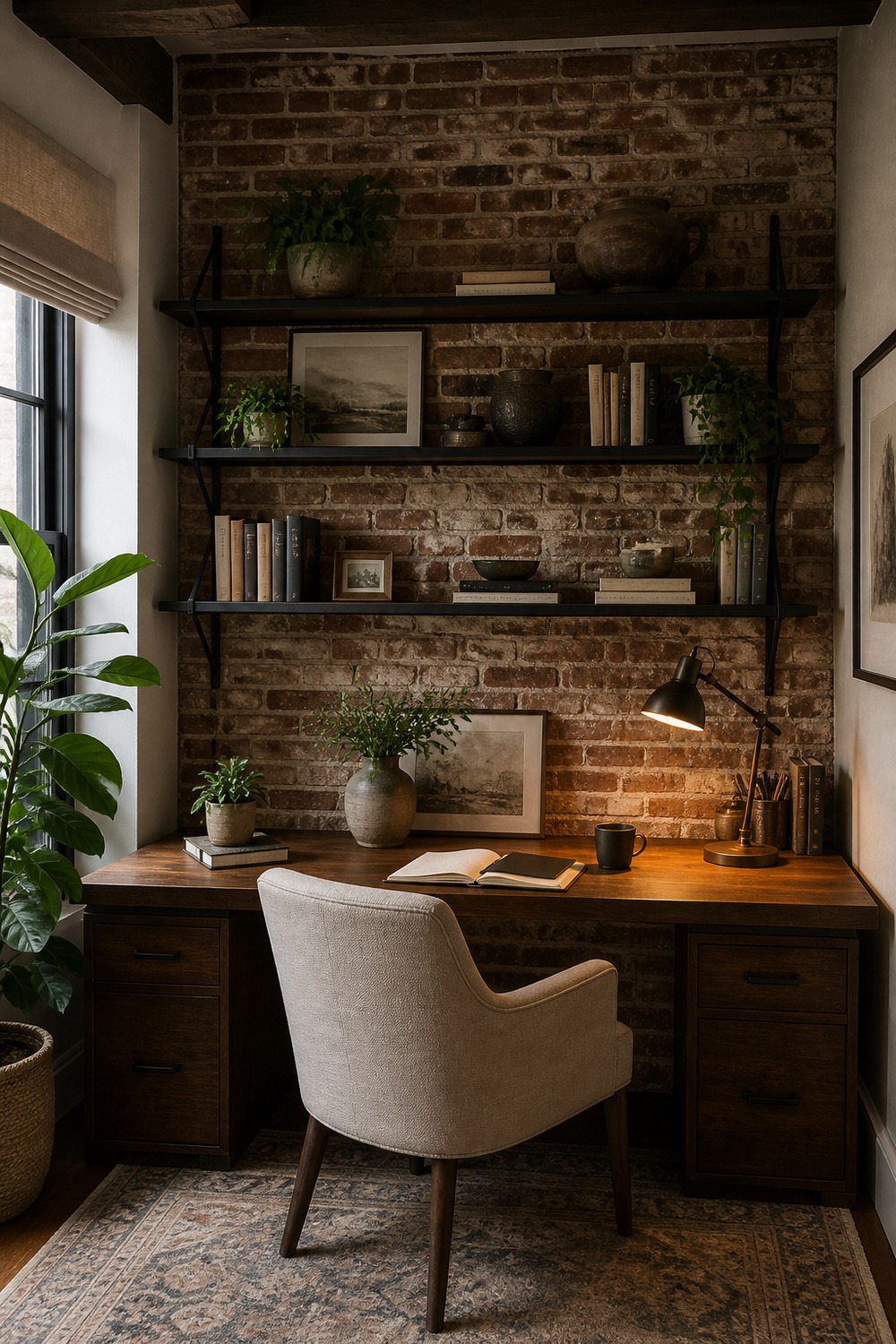
Aged brick already has plenty of texture, so the black shelves stay simple and useful. Warm wood and linen soften the industrial edge, creating a background that feels collected rather than themed.
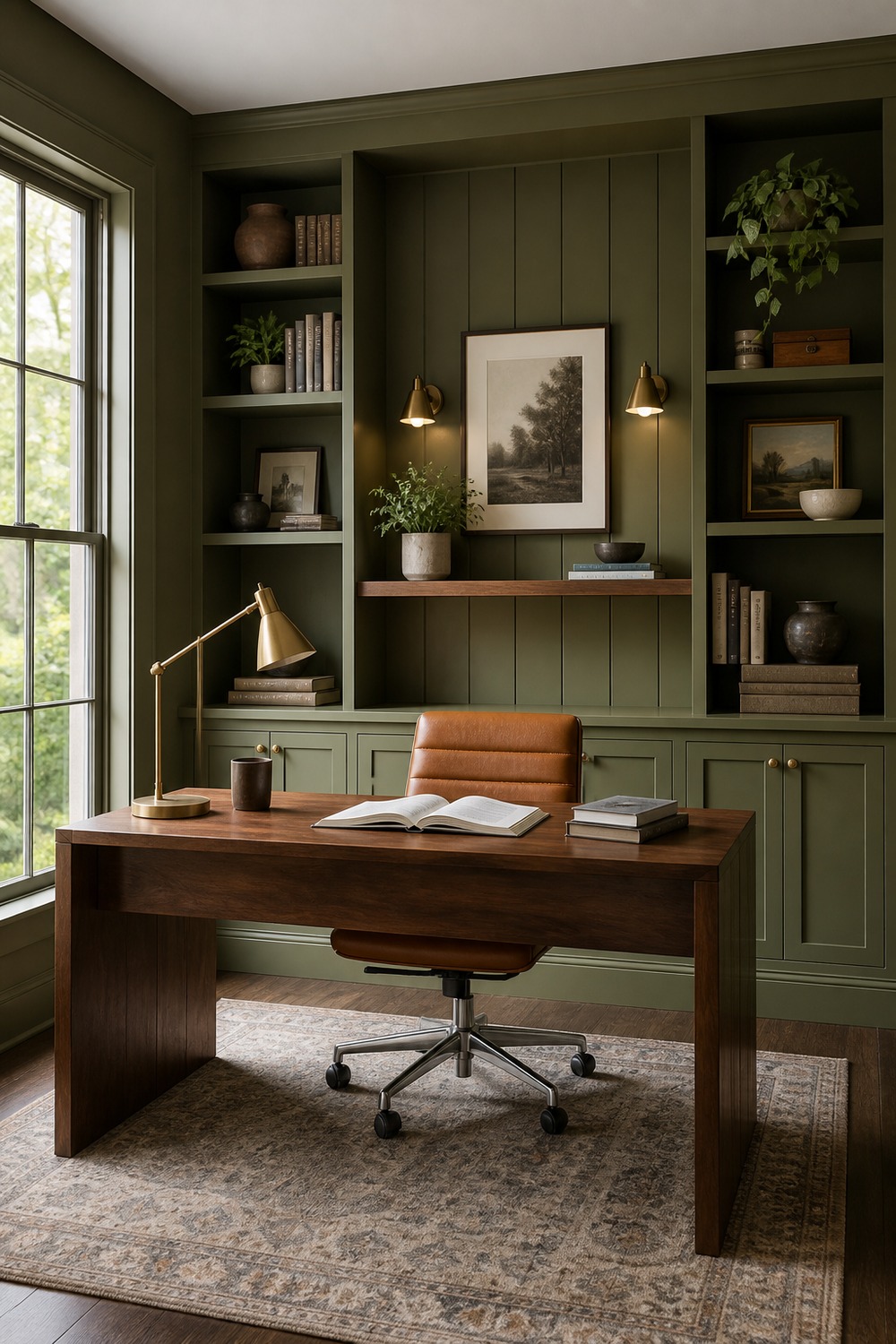
Placing olive green beside the tall window lets daylight bring out the color instead of flattening it. A floating shelf gives the backdrop one clean horizontal line, and the walnut desk adds contrast below.
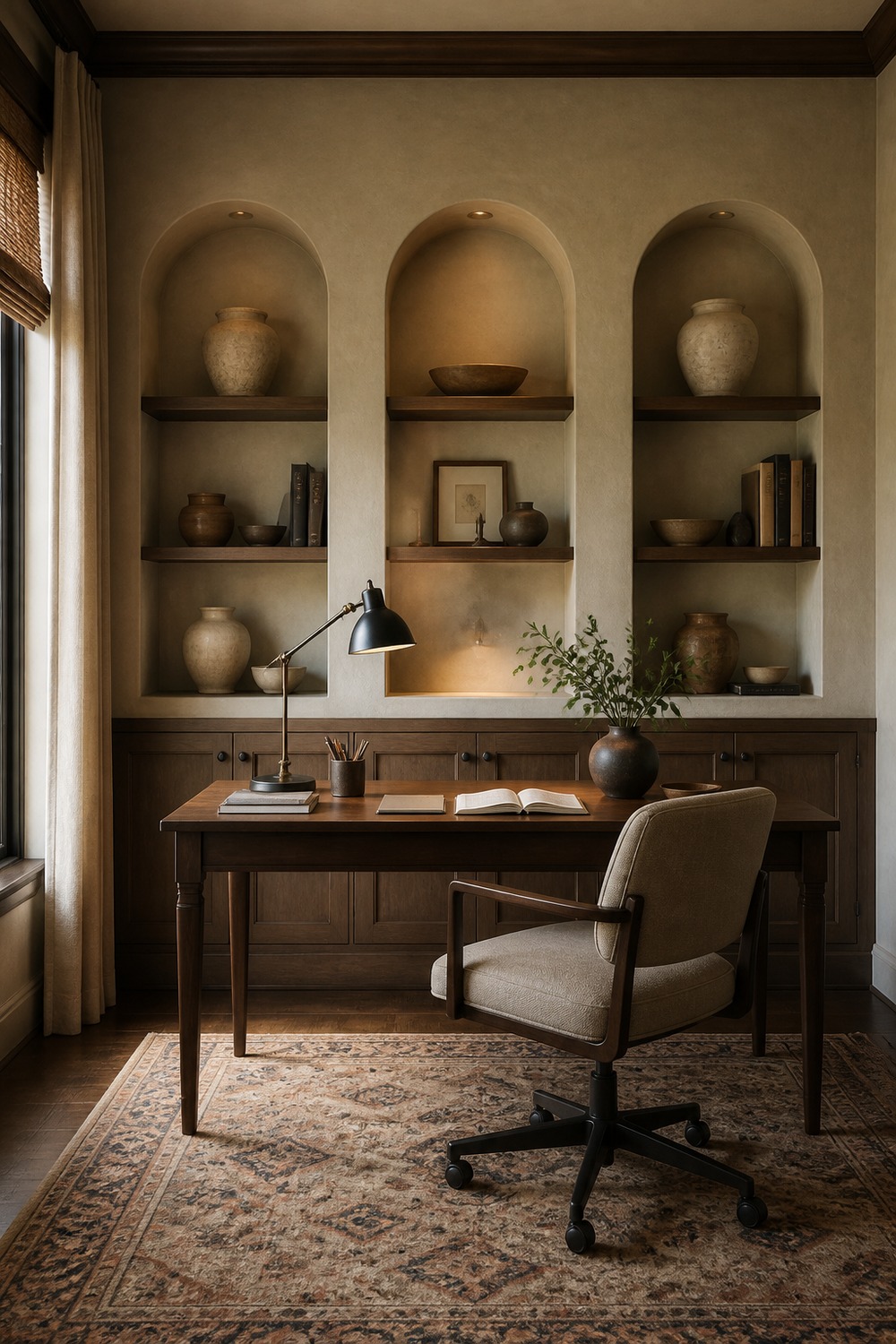
Three shallow arches turn an otherwise plain wall into an architectural feature. Because the ceramics are kept restrained, the niches add depth without becoming a row of distracting display cubbies.
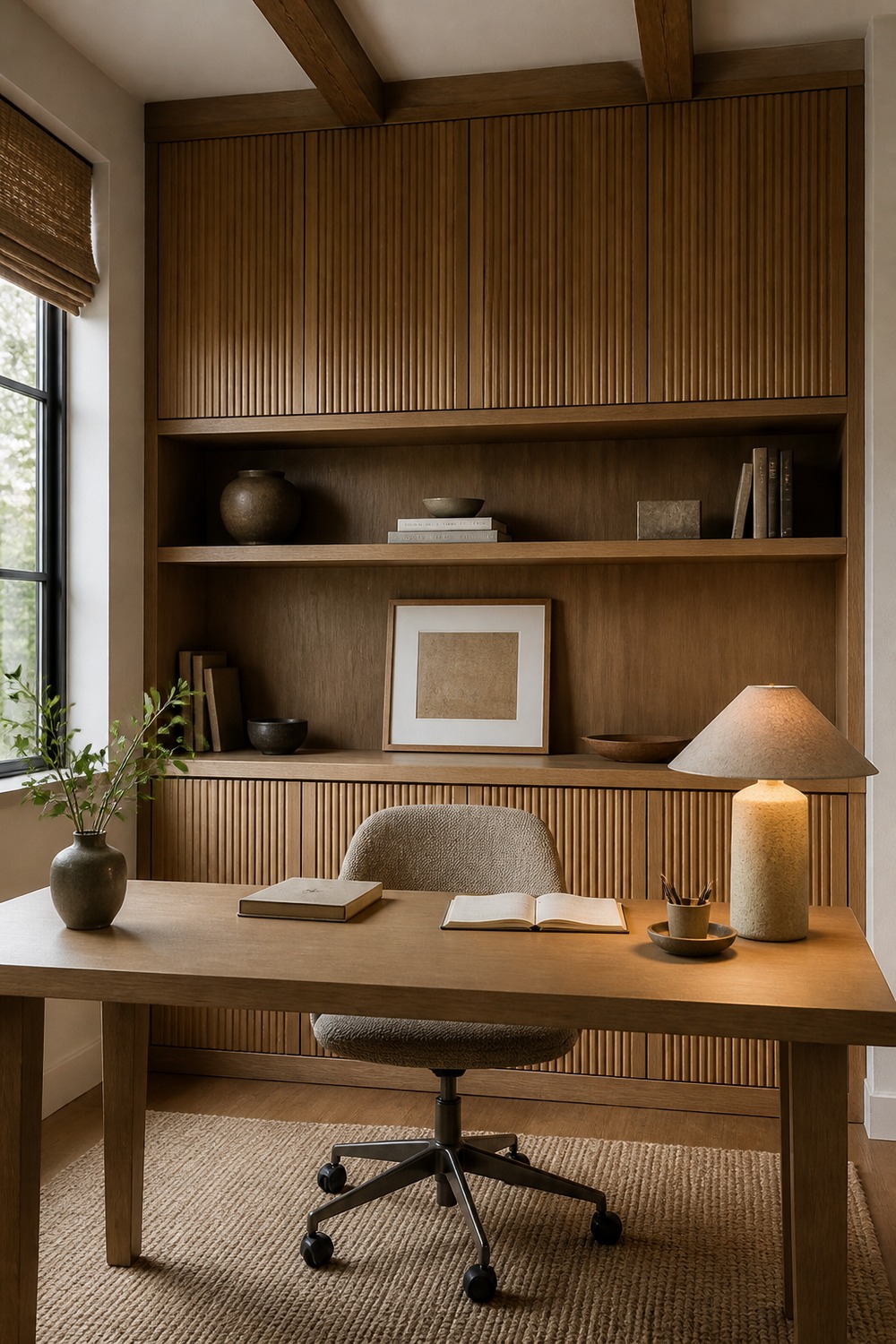
Reeded oak cabinet fronts hide supplies while giving the wall a tactile finish. The open central shelf prevents the cabinetry from feeling heavy, and the stone lamp adds a softer material beside the wood.
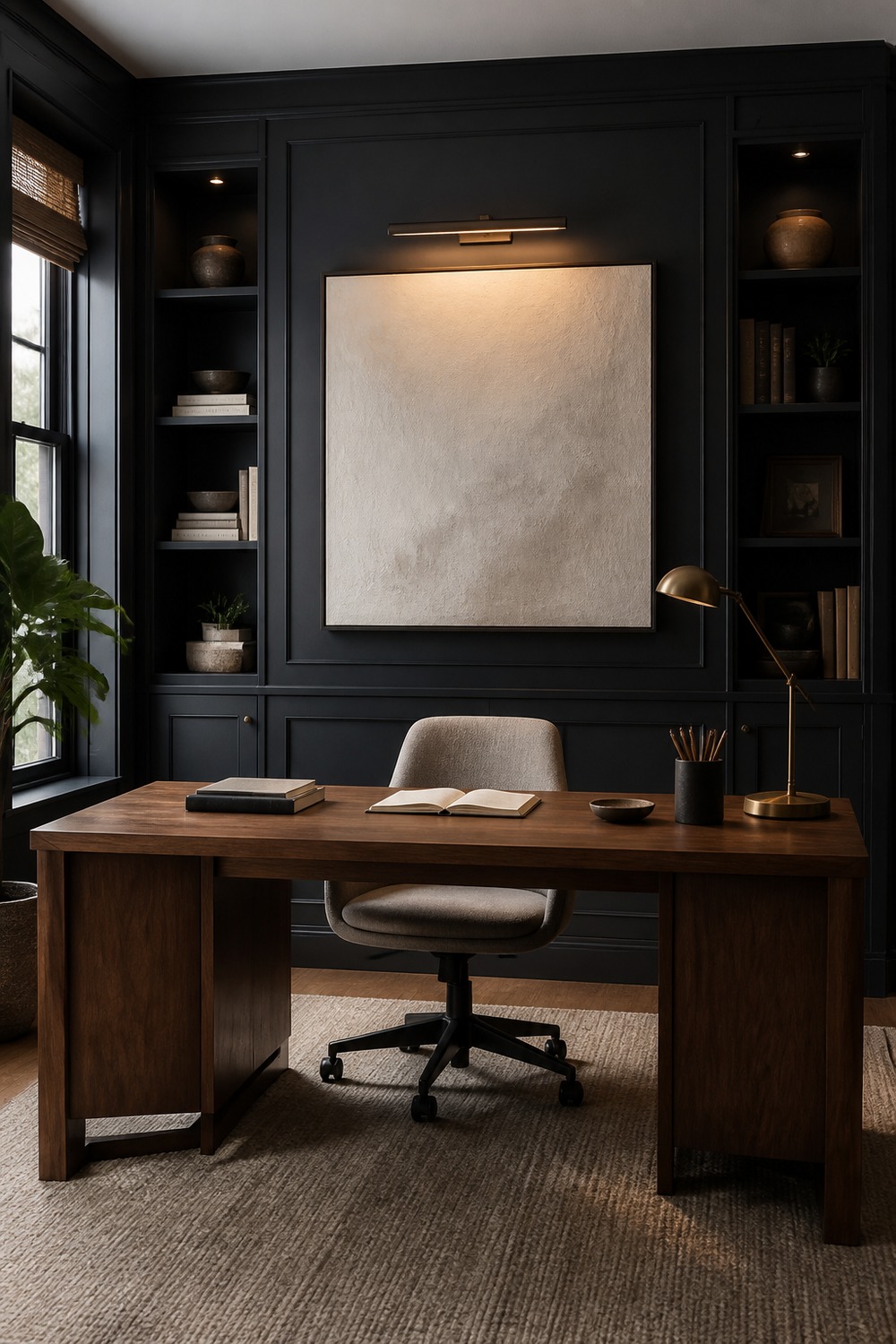
Charcoal paint creates a calm frame for one oversized canvas instead of a busy collection of art. The slim picture light supplies a focused glow that makes the background feel finished after daylight fades.
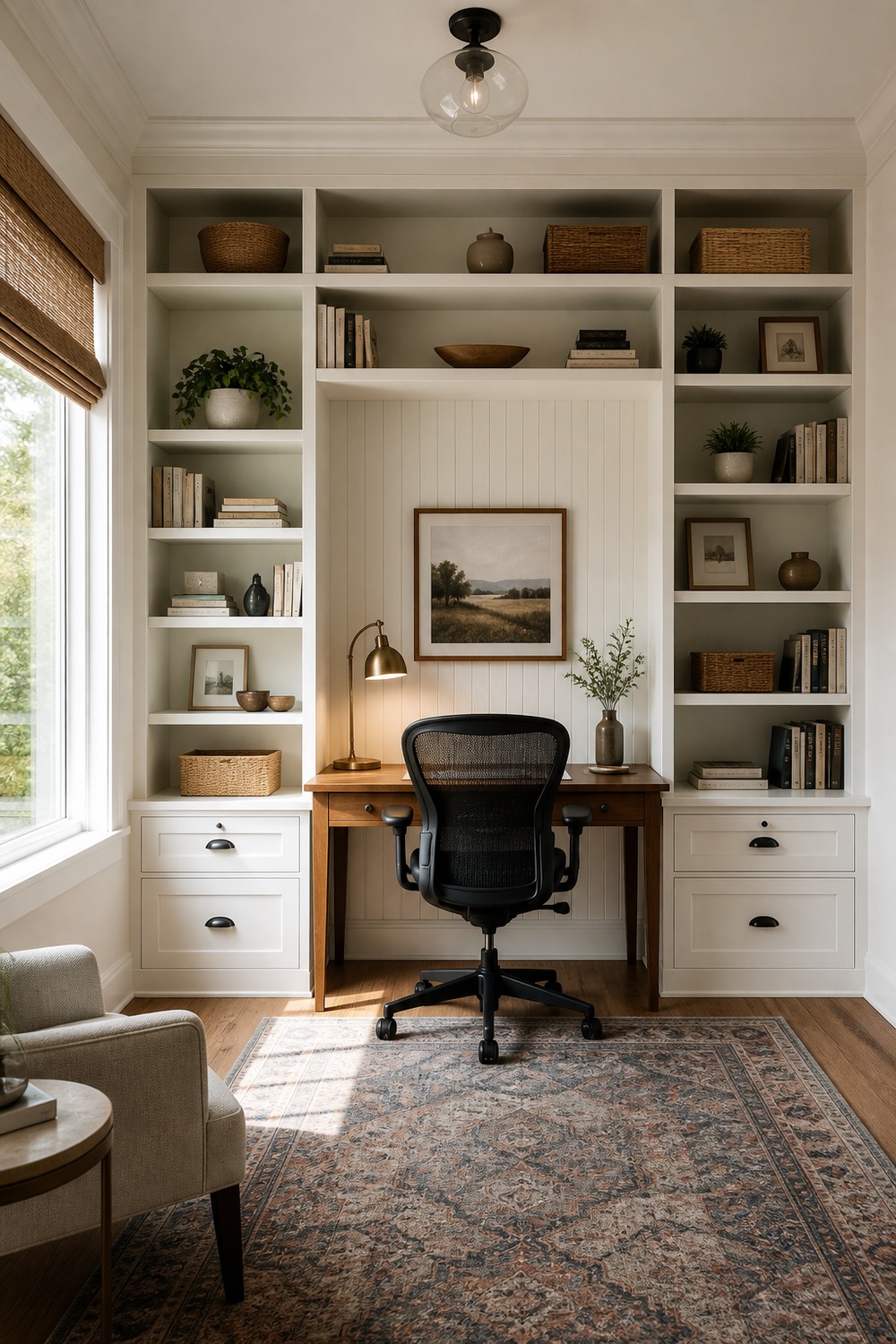
Ceiling-height white shelves use the full wall but still feel airy because the books and baskets are spaced out. The compact desk leaves a comfortable walkway, and closed containers keep small supplies out of view.
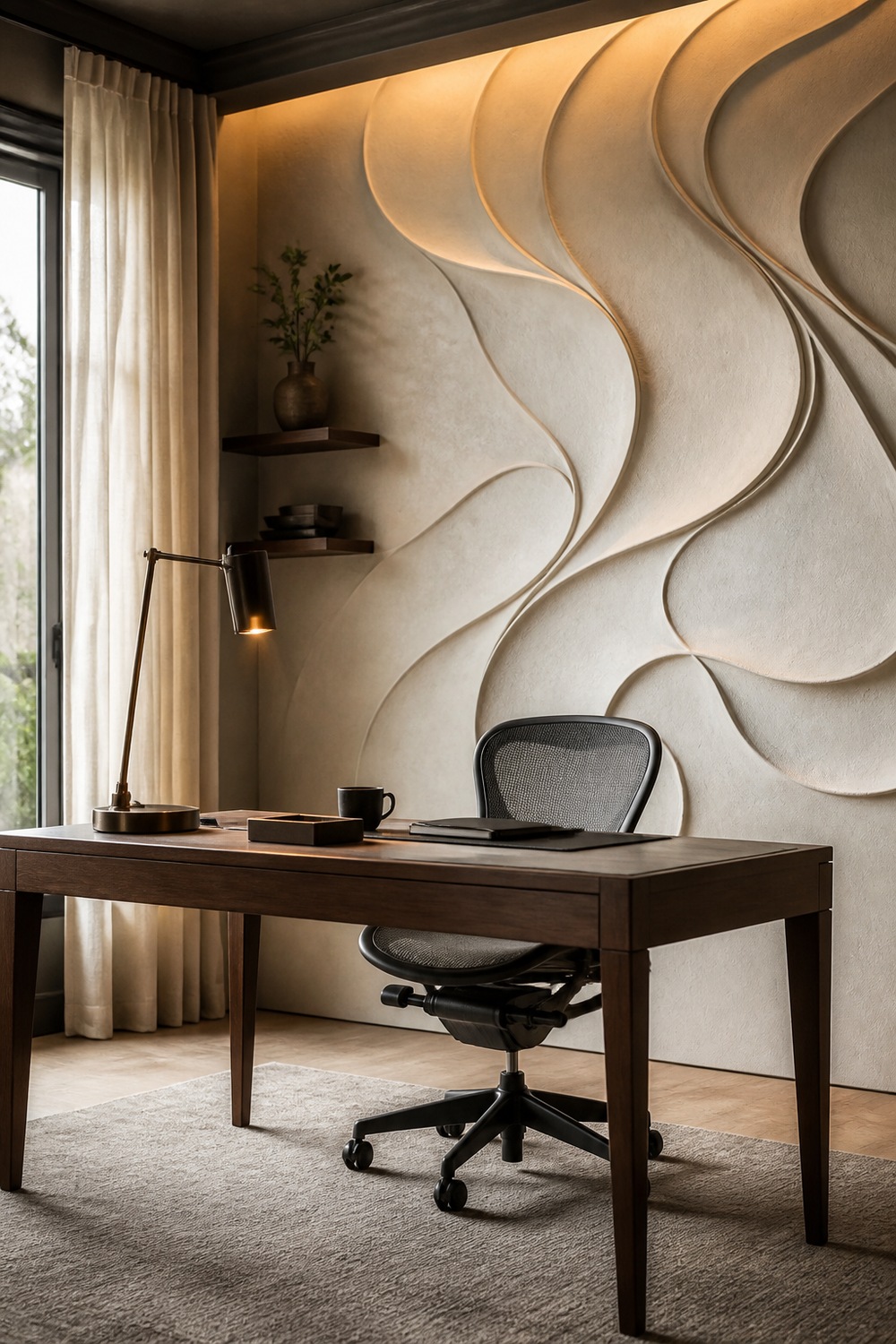
The flowing plaster relief gives this wall the presence of sculpture without asking the desk to compete with it. Concealed grazing light catches every curve after sunset, while walnut and bronze keep the pale surface from feeling cold.
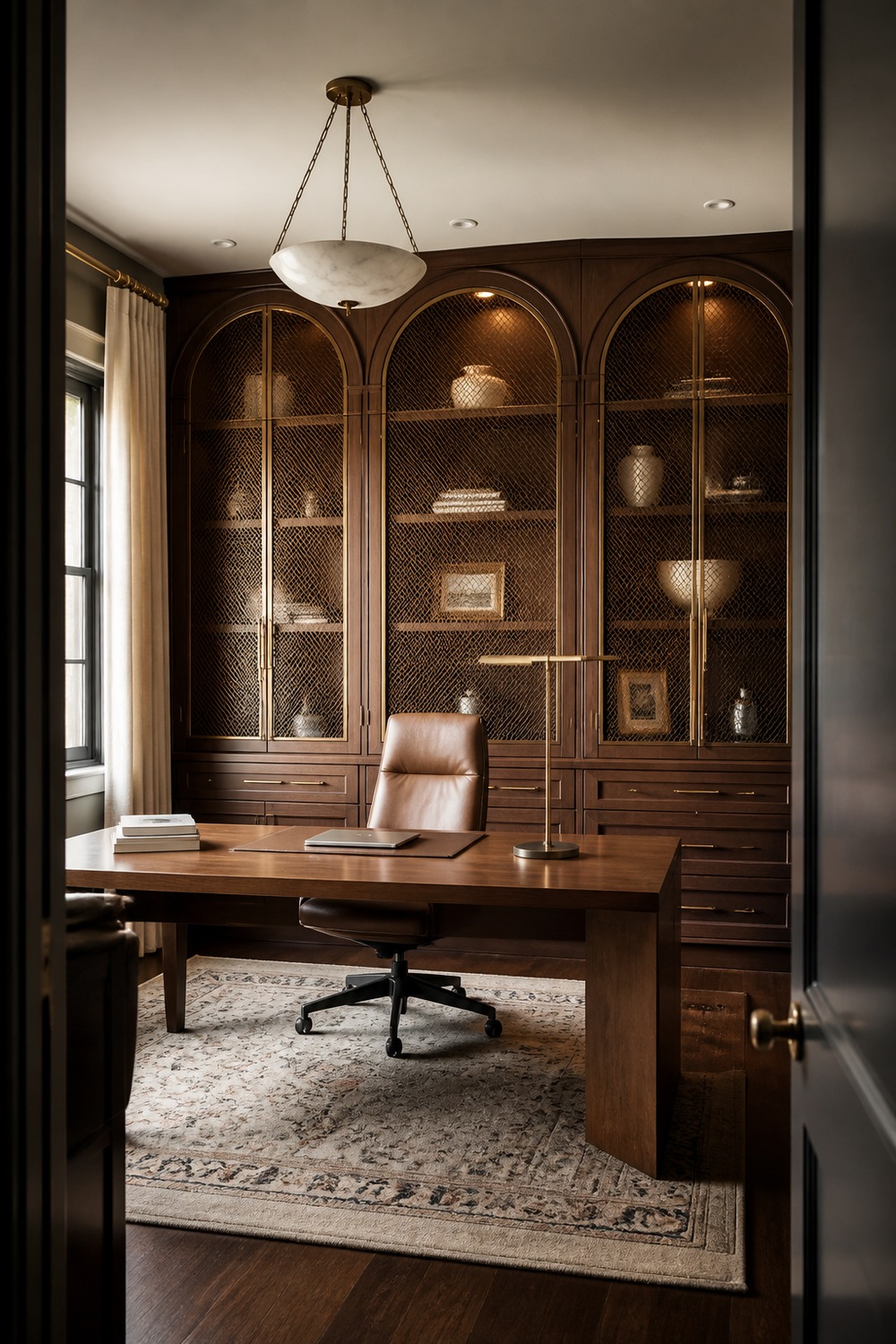
Arched library niches make the backdrop feel architectural before a single accessory is added. Fine brass mesh softens the cabinet doors, and the closed lower storage keeps paperwork out of camera view.
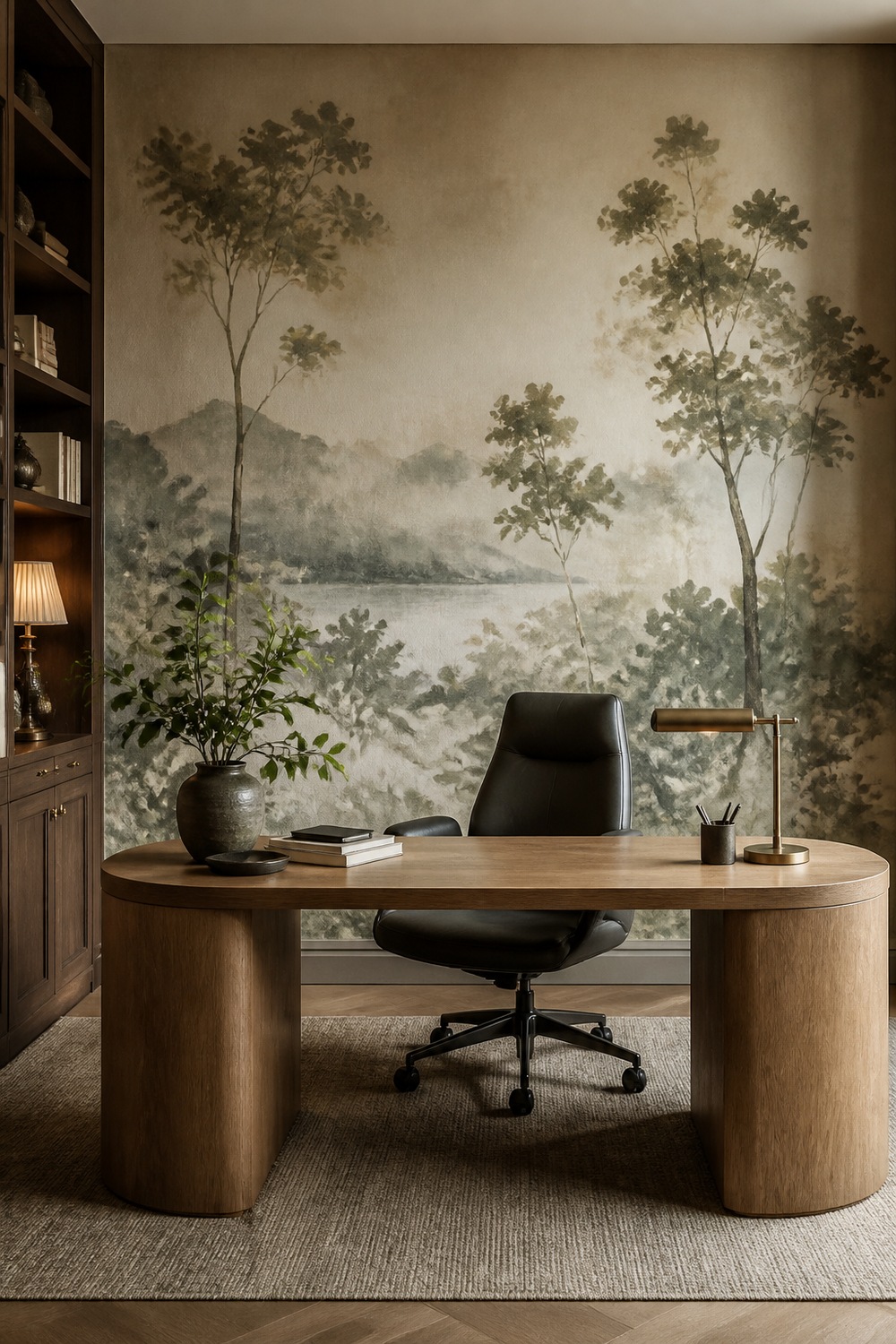
A hand-painted silk mural is a much quieter alternative to a crowded gallery wall. The misty landscape brings movement behind the curved desk, but its muted sage and parchment tones still leave the work zone calm.
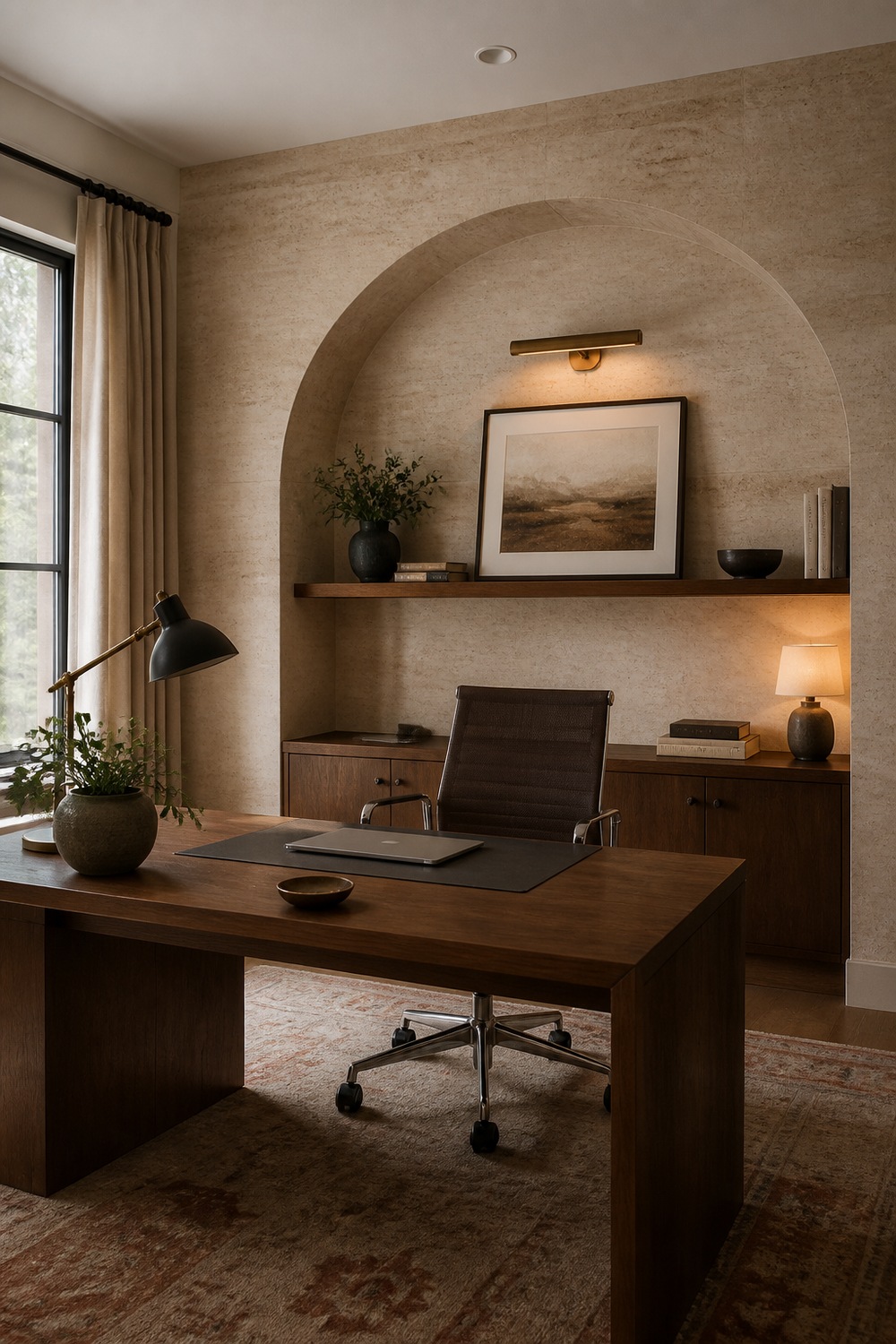
Honed travertine turns this shallow arch into a strong focal point through texture rather than color. The bronze picture light and floating walnut ledge add just enough contrast to stop the stone from looking flat.
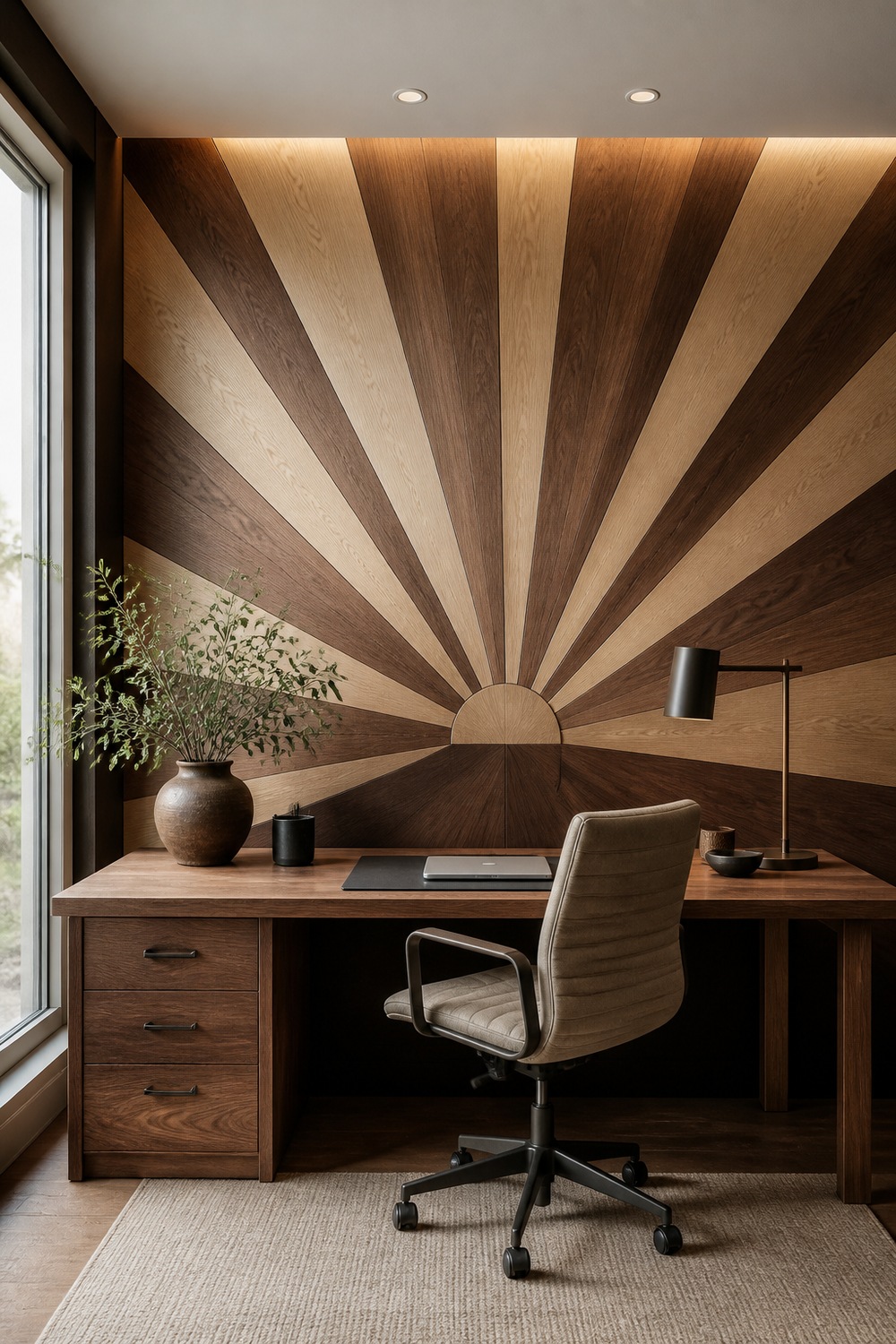
The oversized marquetry sunburst feels bold, but the natural walnut and pale oak keep it elegant rather than flashy. Because the pattern radiates from behind the desk, the whole workstation reads as one deliberate composition.
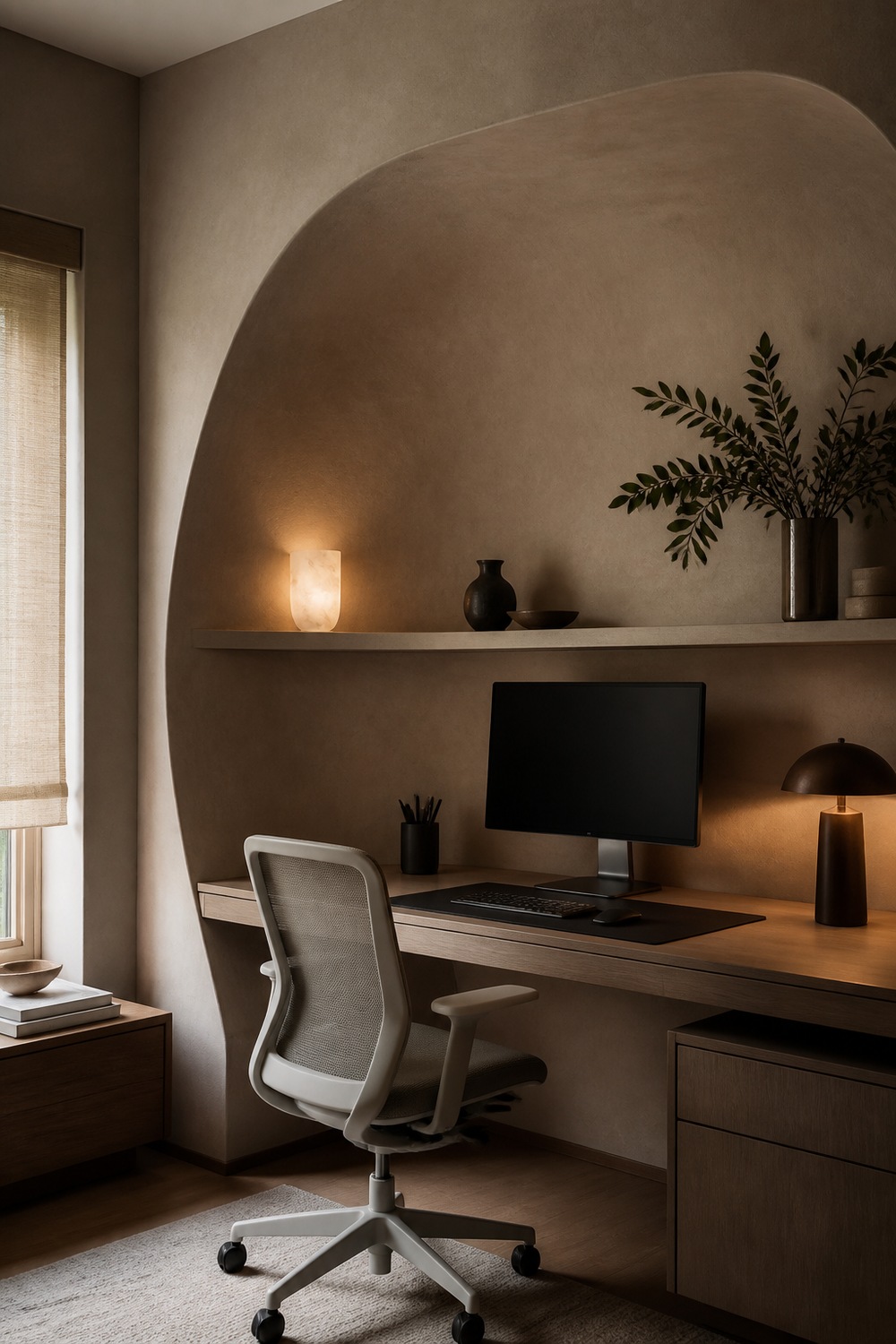
This curved limewash alcove wraps the desk in a softer boundary than standard square cabinetry. A floating ledge handles a few useful objects, and the tiny alabaster sconce makes the nook feel finished without stealing elbow room.
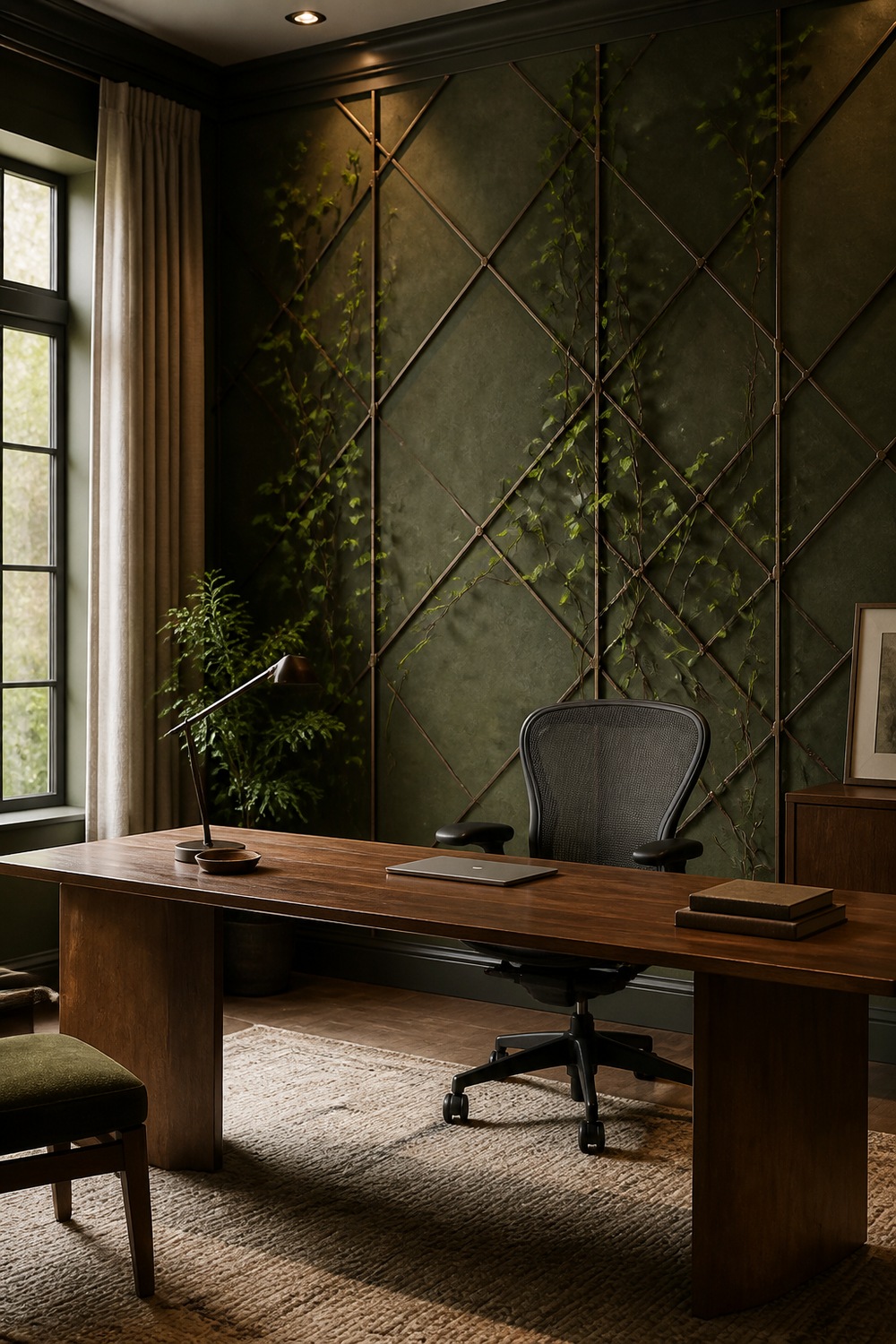
Aged bronze lattice over olive limewash gives climbing greenery a clean structure instead of letting it look messy. The concealed light catches the leaves and metalwork, creating a moody background that still feels residential.
The best backdrop is not necessarily the busiest one. A single material, useful shelf, or well-placed light can give the office enough structure while keeping the work area calm and easy to maintain.
Leave a comment