
A nursery-office combo only works when the crib is not treated like decor beside a laptop. I want real chair clearance, controlled cords, closed storage, and enough open floor to handle a sleepy 2 a.m. routine without moving office gear first.
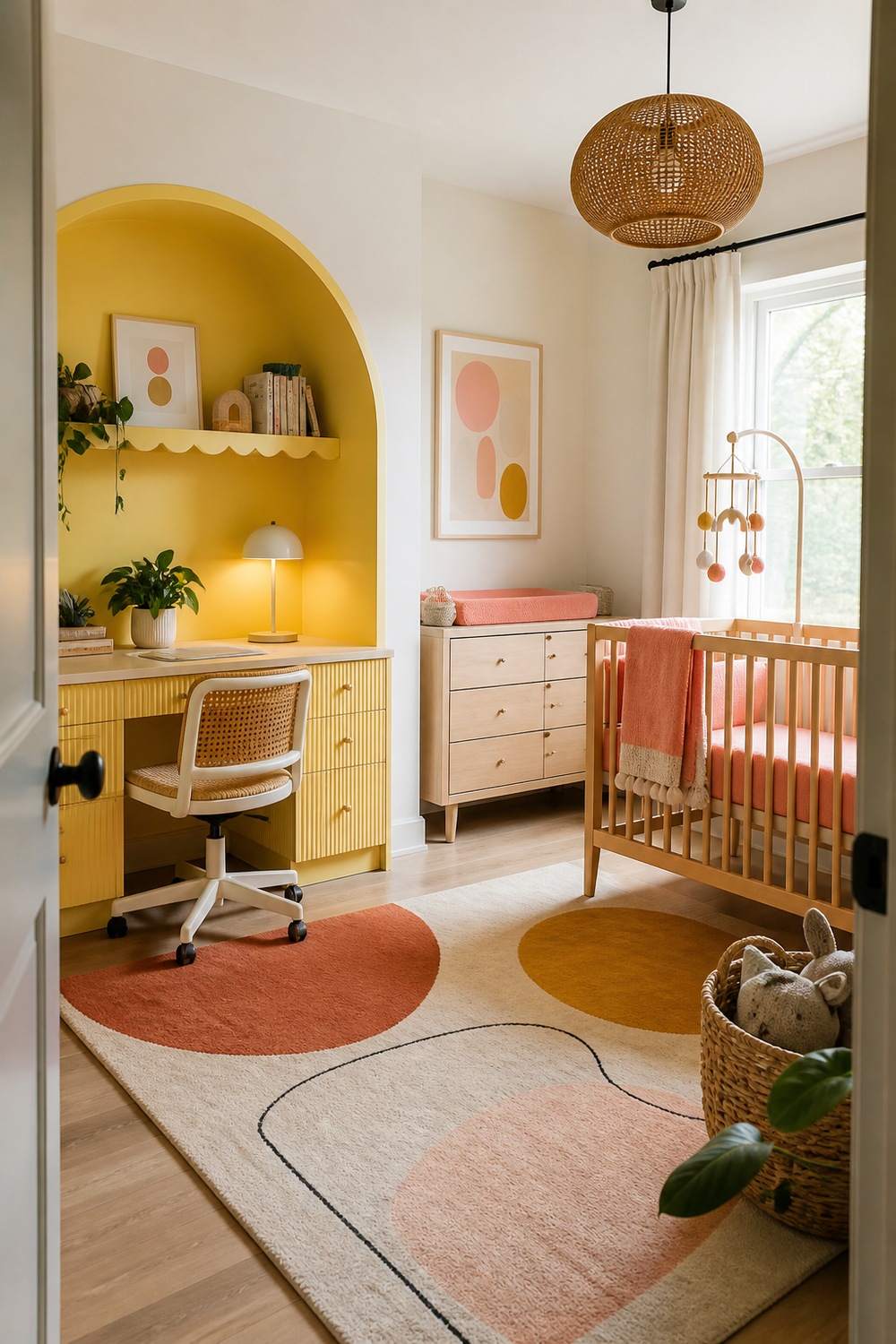
That butter-yellow arch makes the desk feel like its own cheerful little room, while the coral textile pulls the nursery into the same palette. Fluted drawers hide work clutter, and the pale crib keeps all that color from feeling heavy.
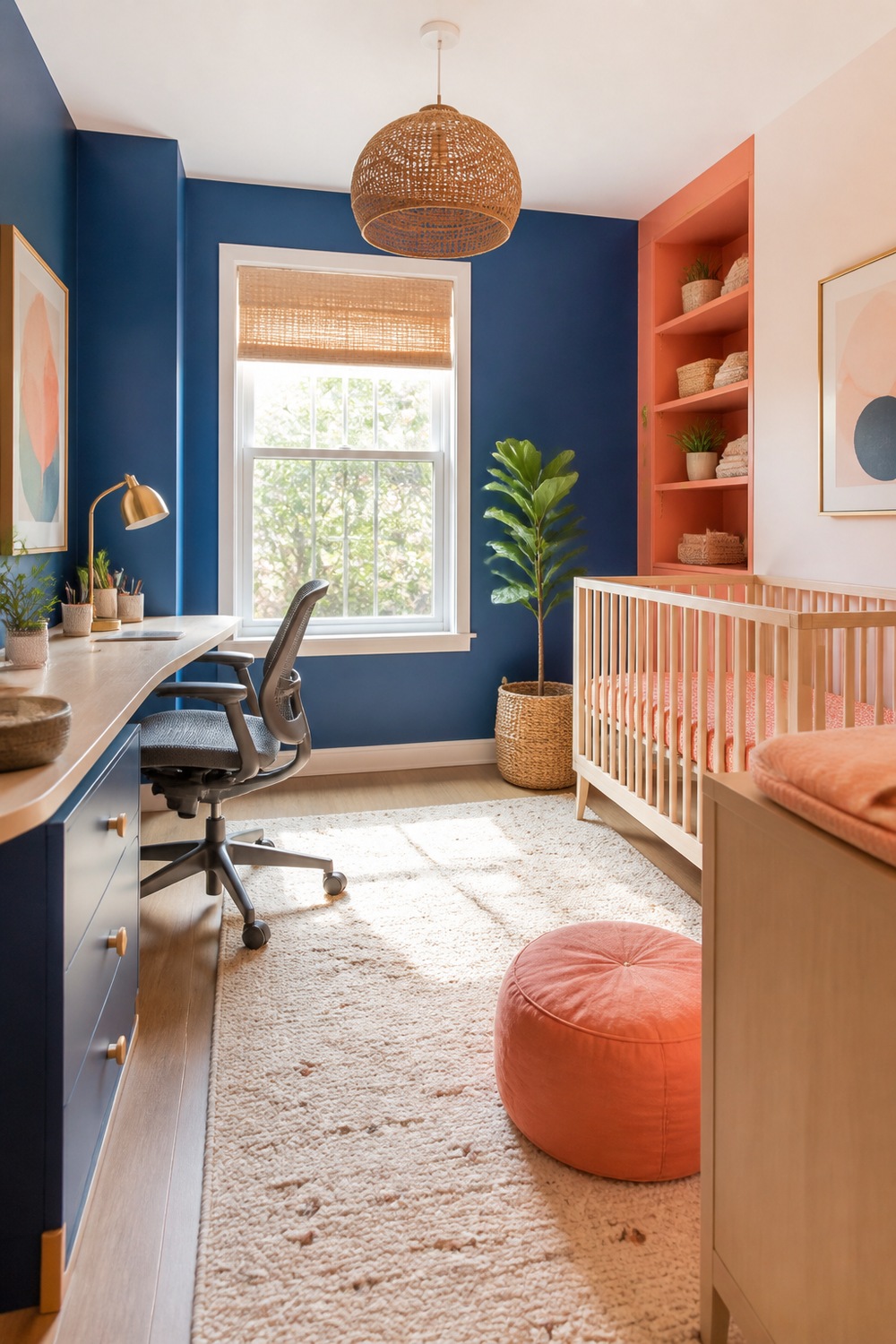
Cobalt and coral are bold, but the white ceiling and open center stop this room from closing in. The blue desk wall feels focused and adult, while the lighter crib side still has enough softness for naps and nighttime routines.
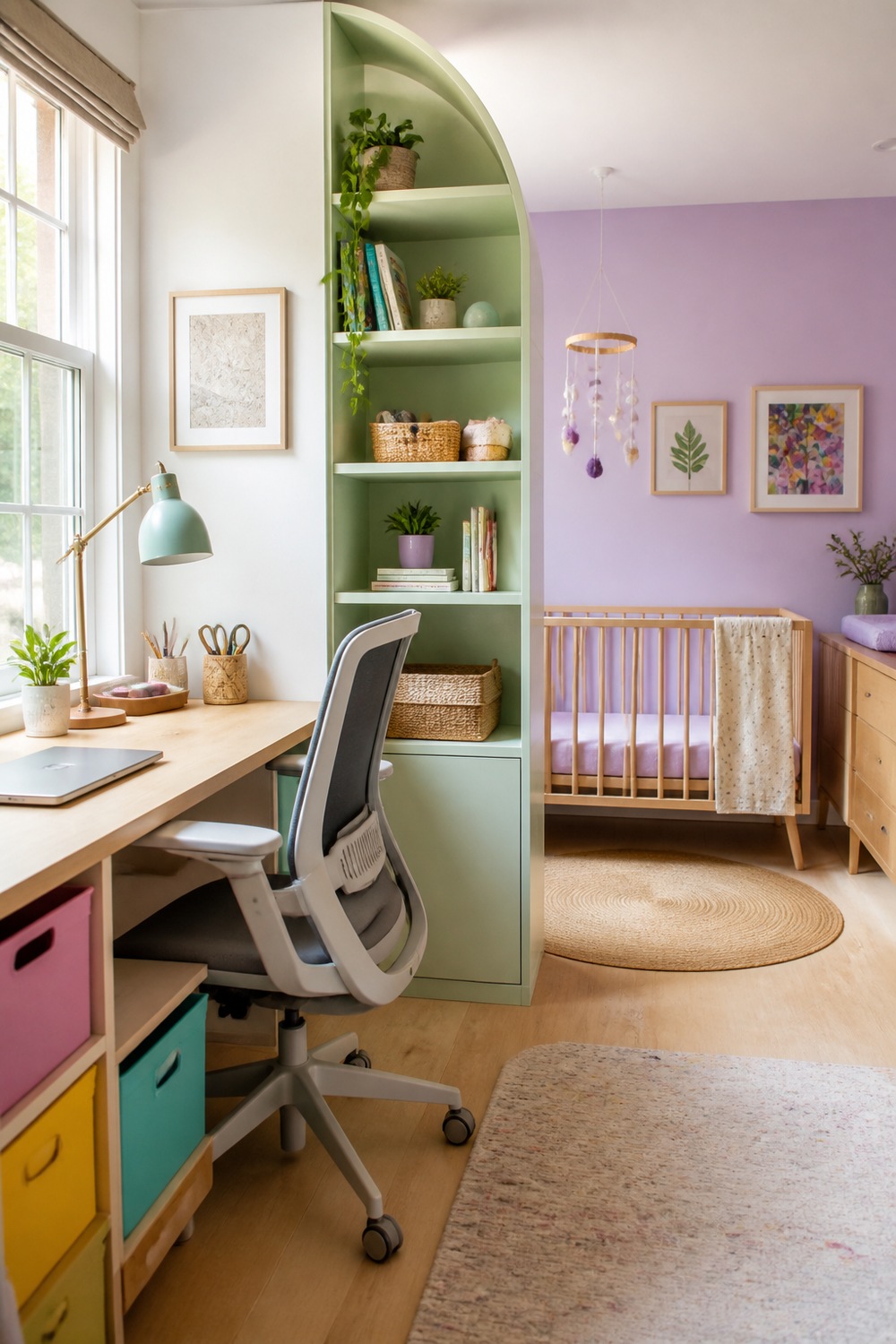
The curved mint shelf is doing more than looking pretty—it gives the desk a boundary without cutting off daylight or the view toward the crib. Lilac accents add color in a gentler way, and low bins keep both paper and baby supplies easy to sort.
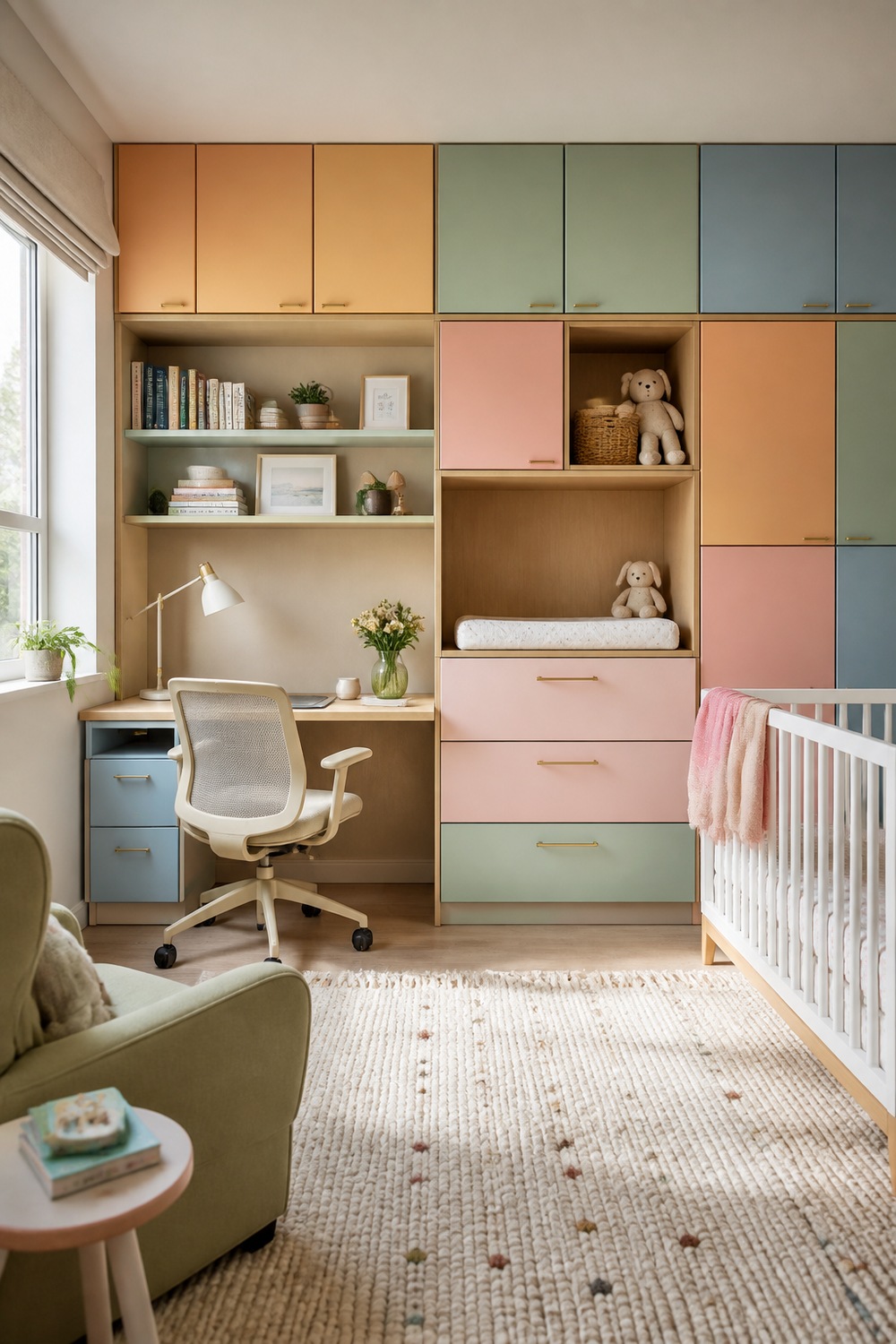
Pastel cabinet fronts turn the built-in into the main design moment, but the closed doors are what make it useful. Apricot, mint, pink, and blue feel playful around the crib while the long desktop still reads as a proper place to work.
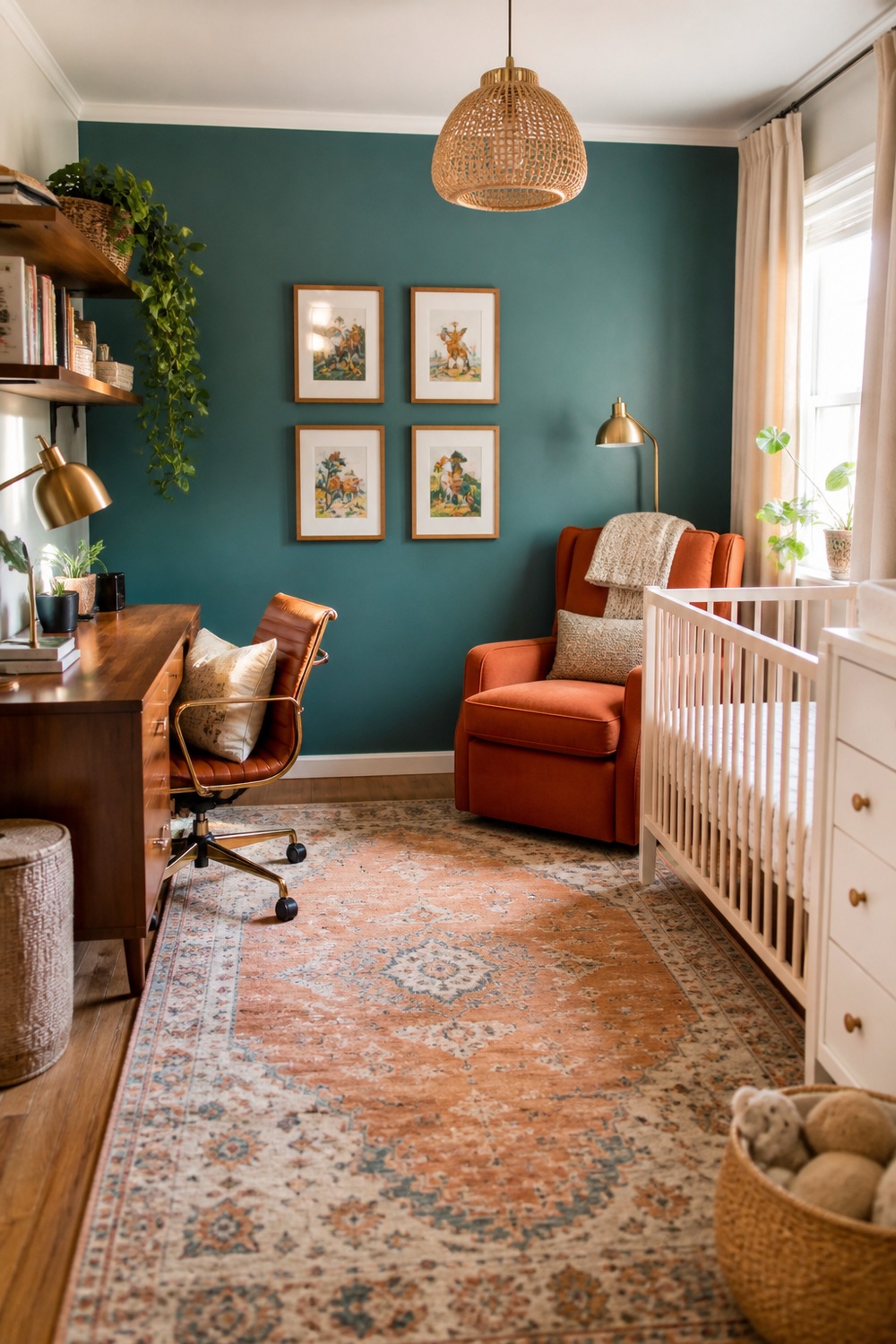
Teal behind the desk gives video-call depth, and the terracotta rug makes the glider corner feel warmer after dark. The walnut surface can handle daily work without looking flimsy, while the brass lamp keeps light aimed away from the crib.
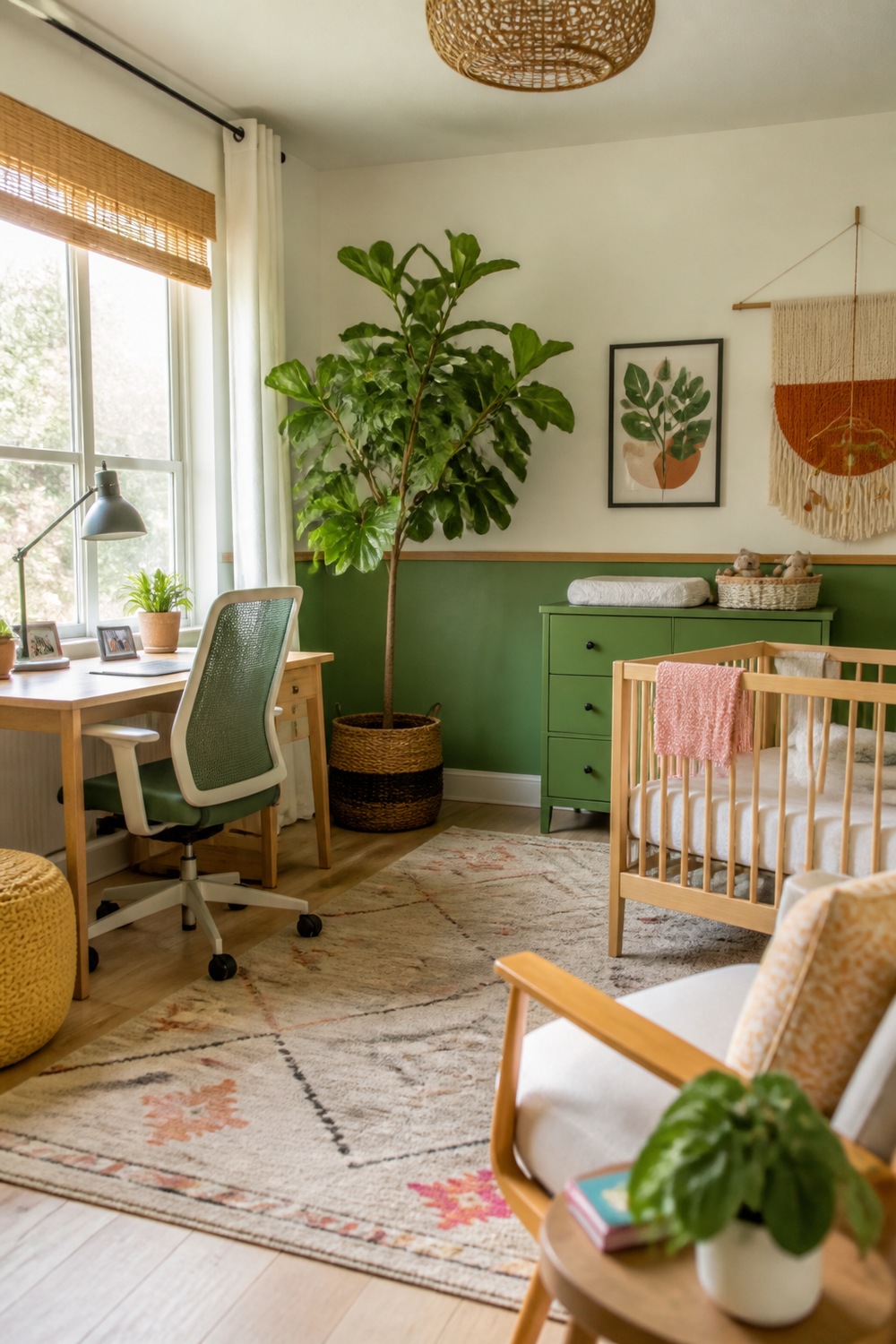
Fresh green cabinetry and one real tree make this room feel awake before anything else is added. The plant stays safely out of the crib zone, and the window-side desk gets daylight without taking the best stretch of open floor.
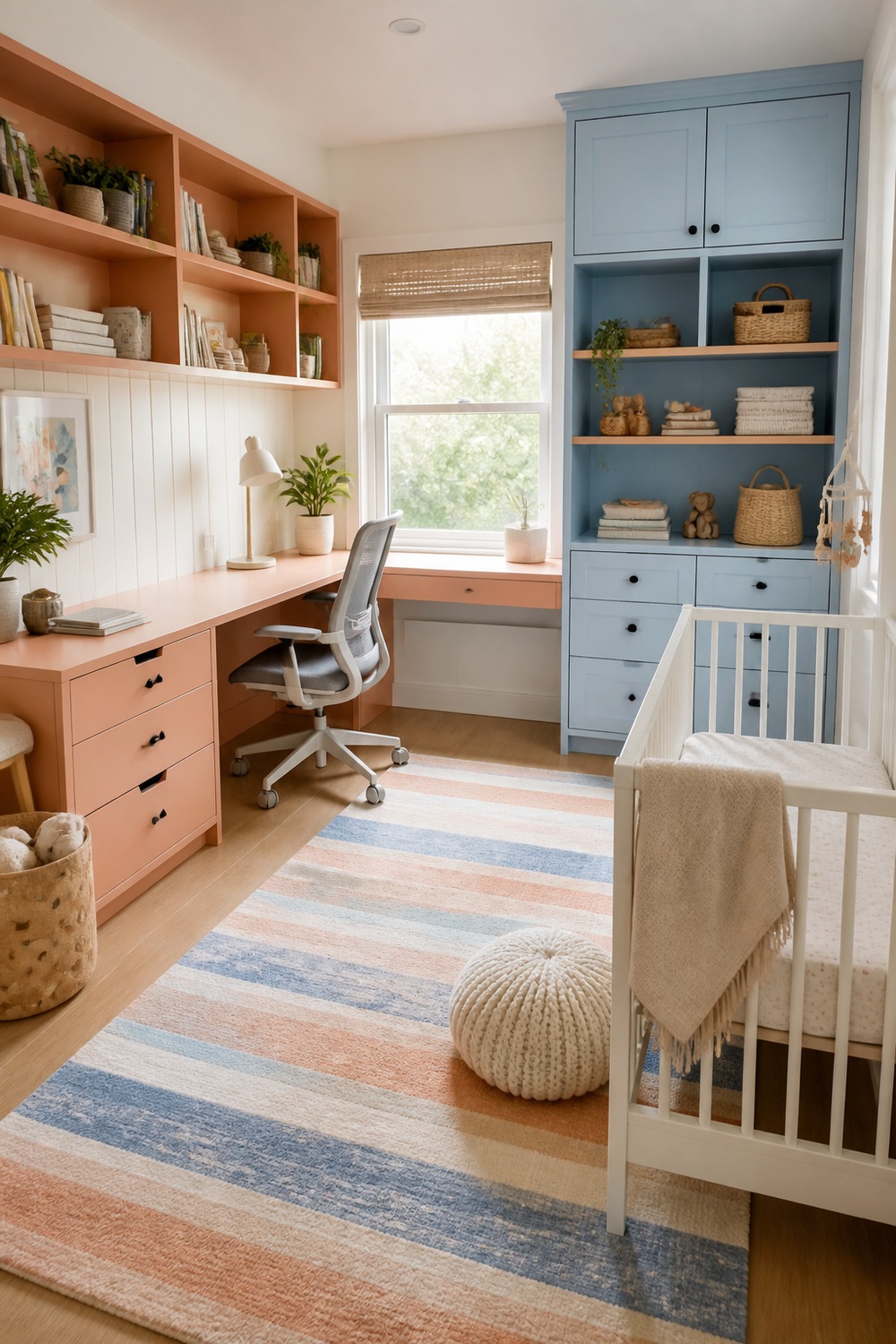
A peach corner desk uses two short walls that might otherwise go to waste. The sky-blue cabinet gives nursery storage a clear home, and the striped rug connects the colors without blurring the chair path or crib access.
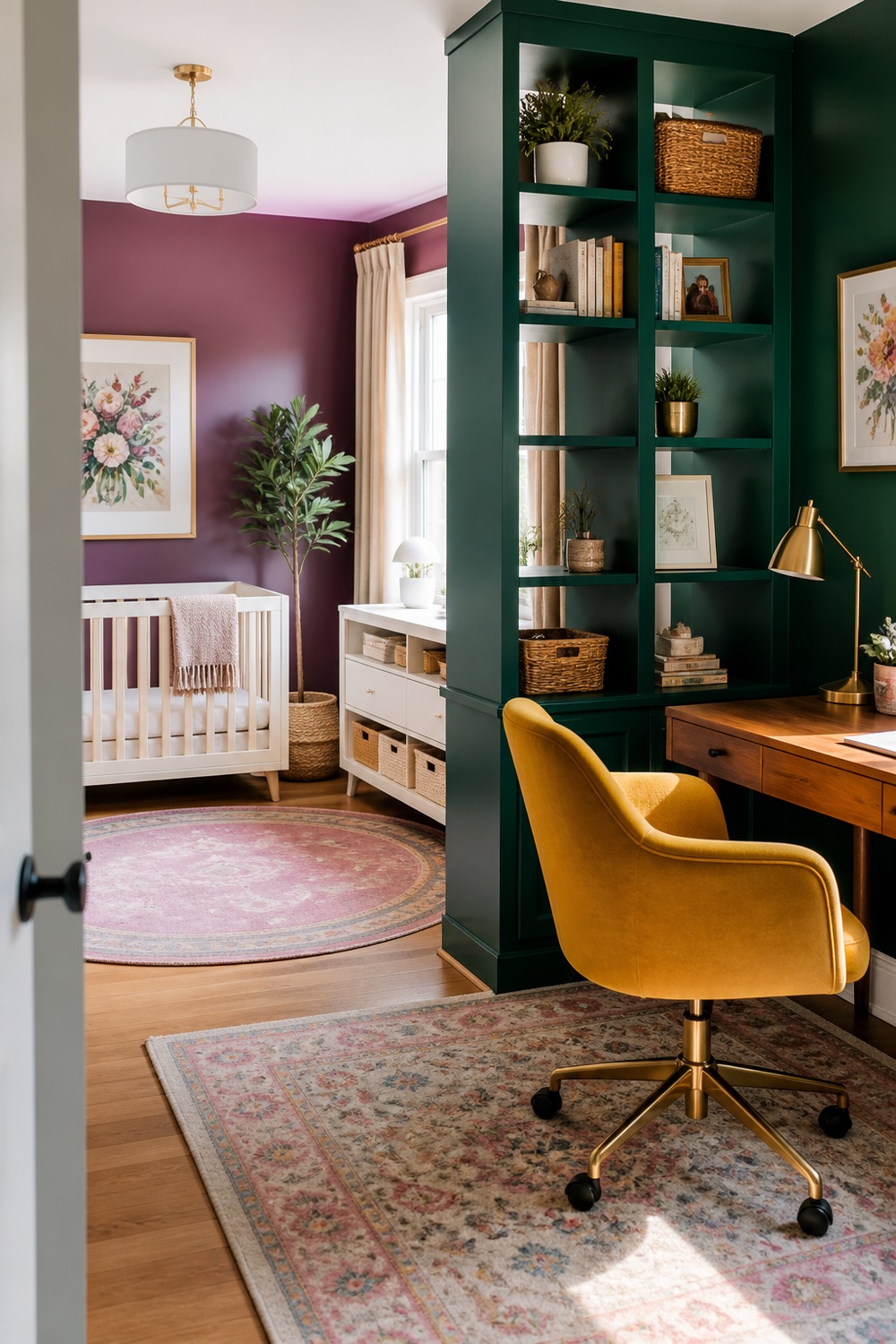
Emerald, plum, and mustard could easily become too much, but the pale crib and natural light calm everything down. I especially like the open bookcase here because it creates depth while baskets keep the lower shelves useful rather than fussy.
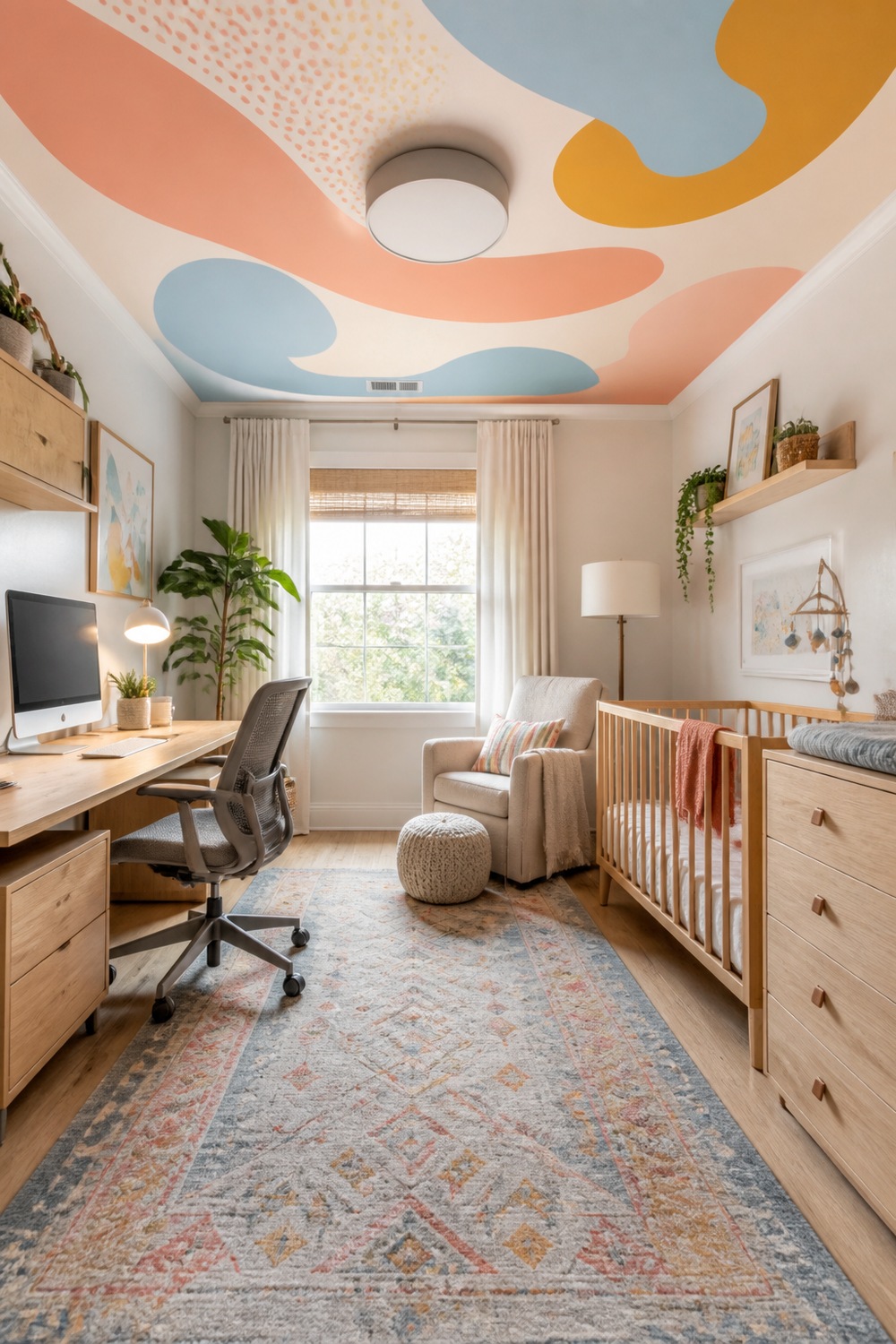
The ceiling mural is a clever place to be more adventurous because it leaves the working walls clear for a desk, dresser, and storage. Coral, blue, and ochre show up overhead, so the furniture can stay simple and the floor plan remains easy to read.
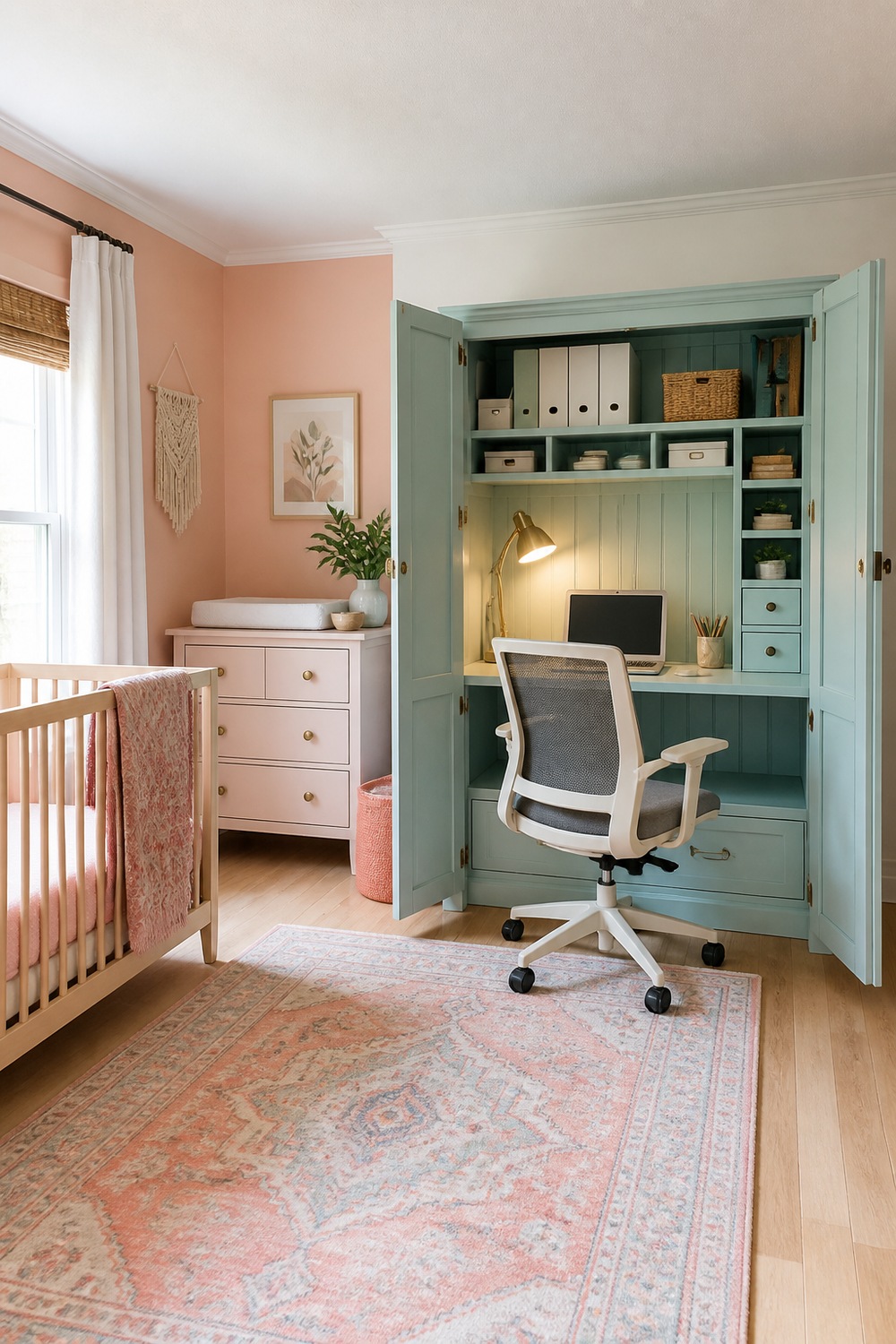
Closing the aqua armoire instantly quiets the office side of this room. When it is open, there is enough depth for a laptop, files, and focused task light; beside it, blush and coral make the nursery feel related without matching every surface.
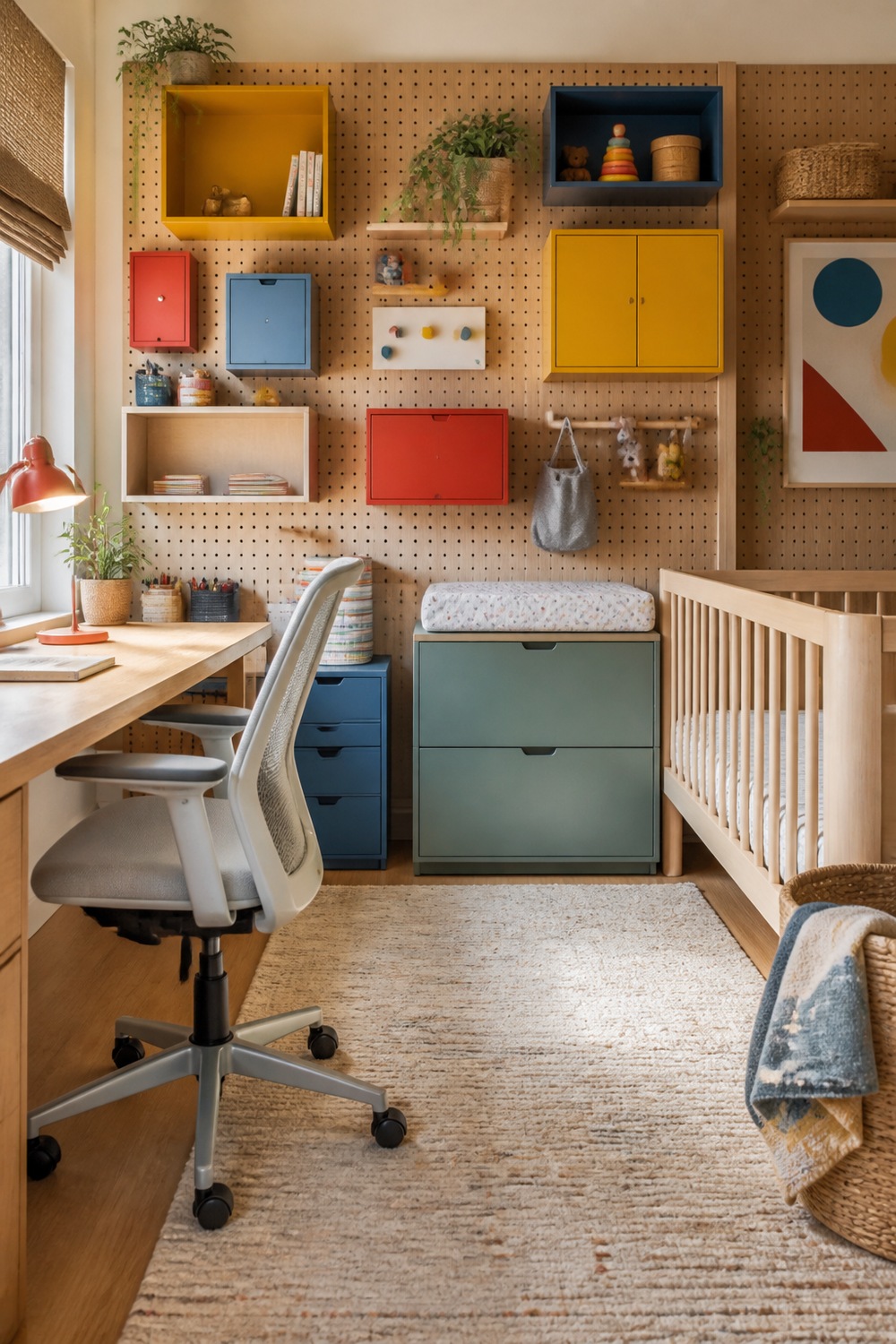
This modular wall gives color a practical job. Muted red, blue, and yellow boxes separate small office tools from nursery supplies, while the blank pegboard keeps everyday items off the desktop and safely away from the crib.
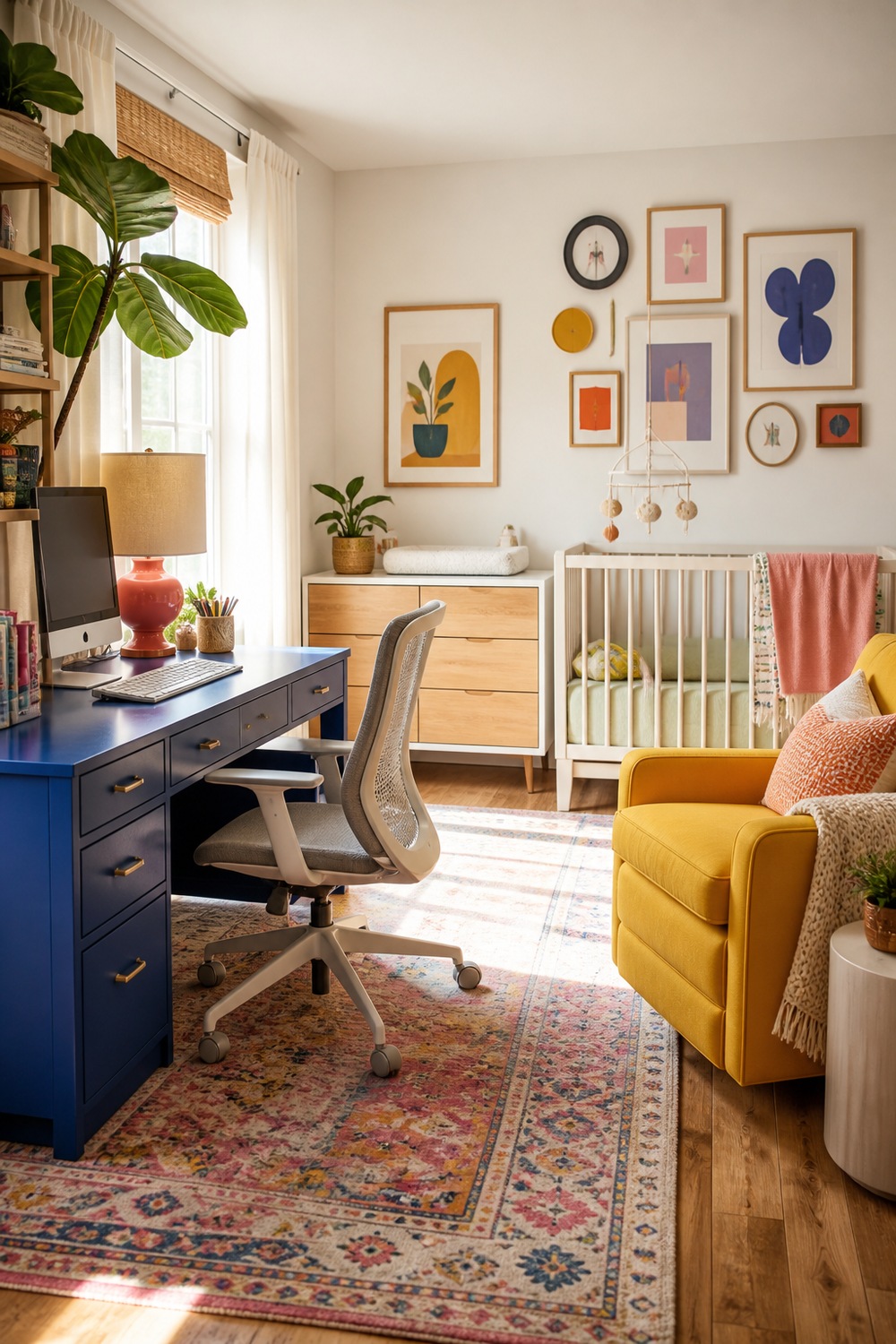
This is the bolder version of a shared room, with cobalt, coral, mustard, and pattern all showing up at once. The reason it still works is the circulation: the desk, glider, crib, and storage each have a clear footprint instead of competing in one crowded corner.
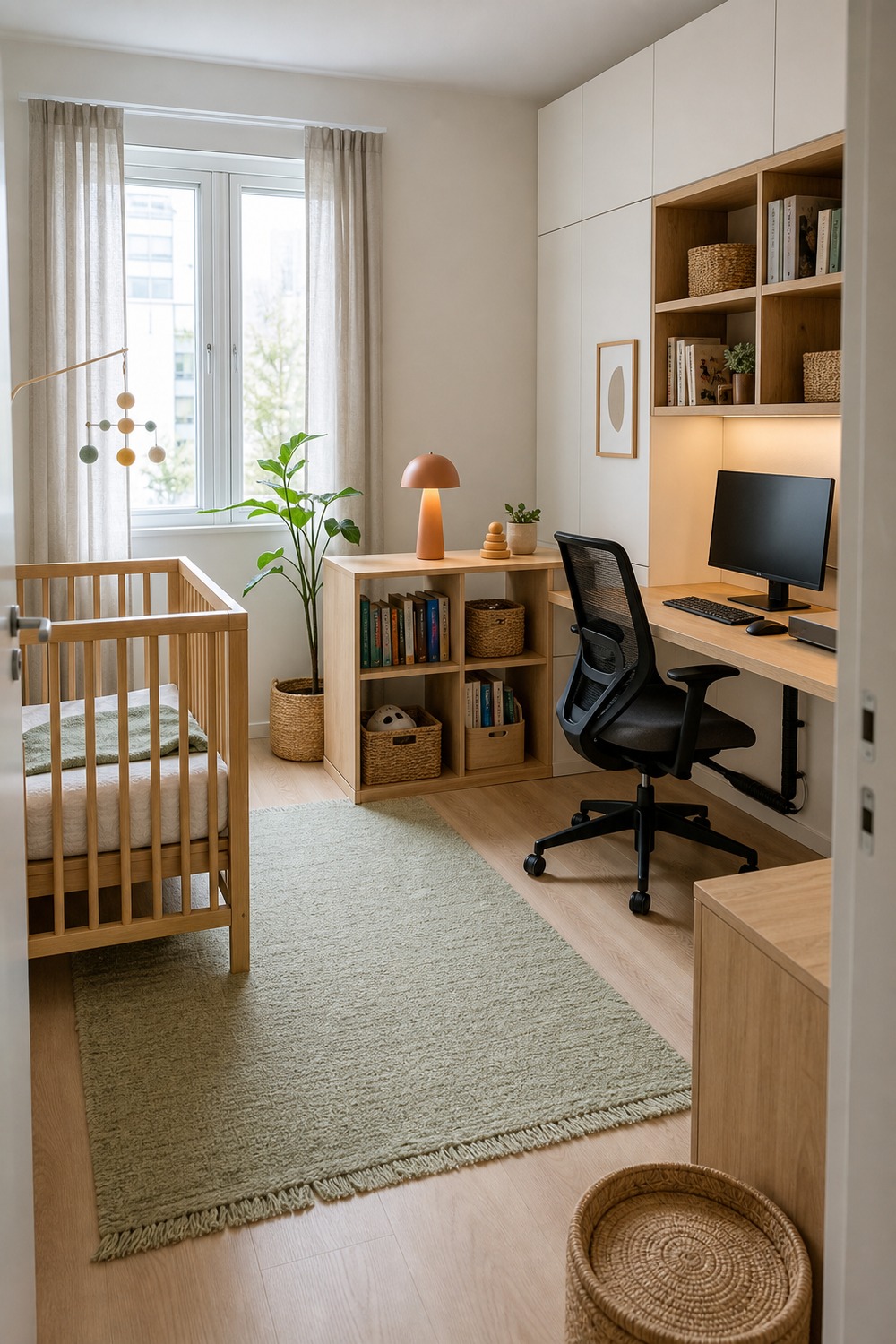
This brighter setup breaks up the room with a low storage divider instead of a full wall. It keeps daylight moving through the space and gives the workstation a real edge, while the pale wood and sage accents feel light enough for a small nursery.
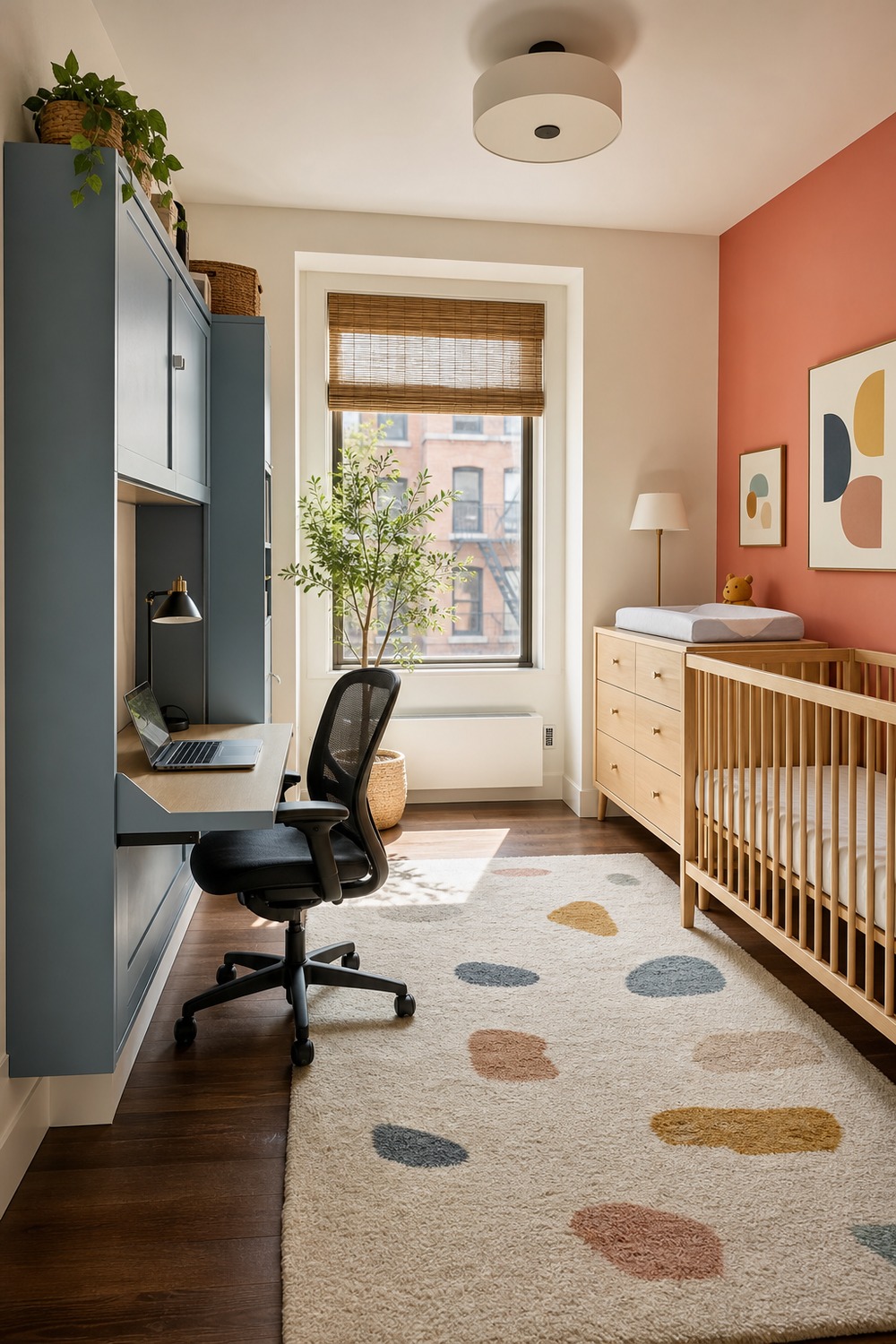
A fold-down desk is genuinely useful when the nursery needs more open floor later in the day. The muted coral and blue add personality, but the closed storage and proper task chair keep the work corner from feeling temporary.
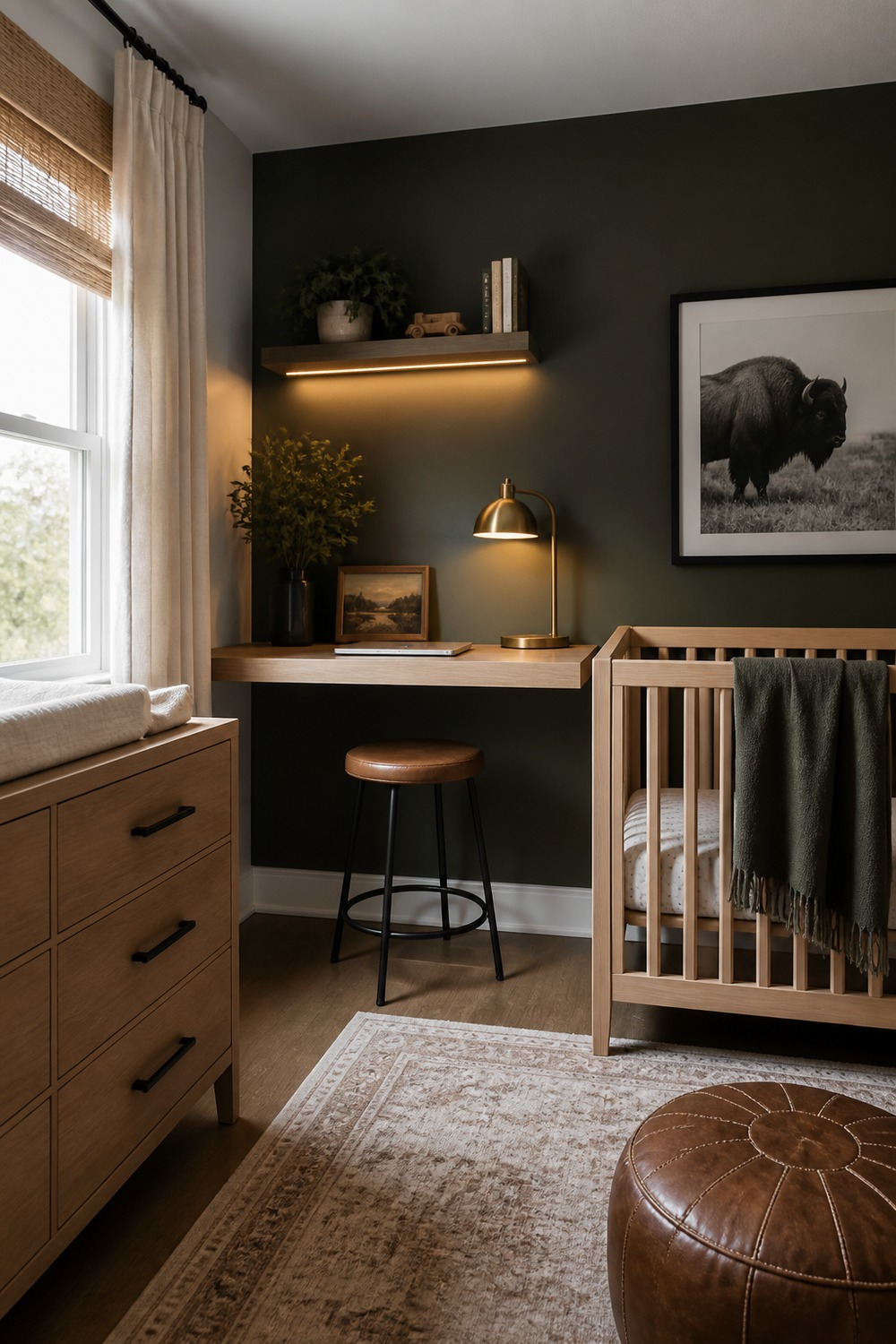
The floating desk leaves the floor visually open and gives a stool or compact chair somewhere to disappear. I like this most for occasional laptop work, especially when the wall storage is kept shallow and cords stay routed away from the crib.
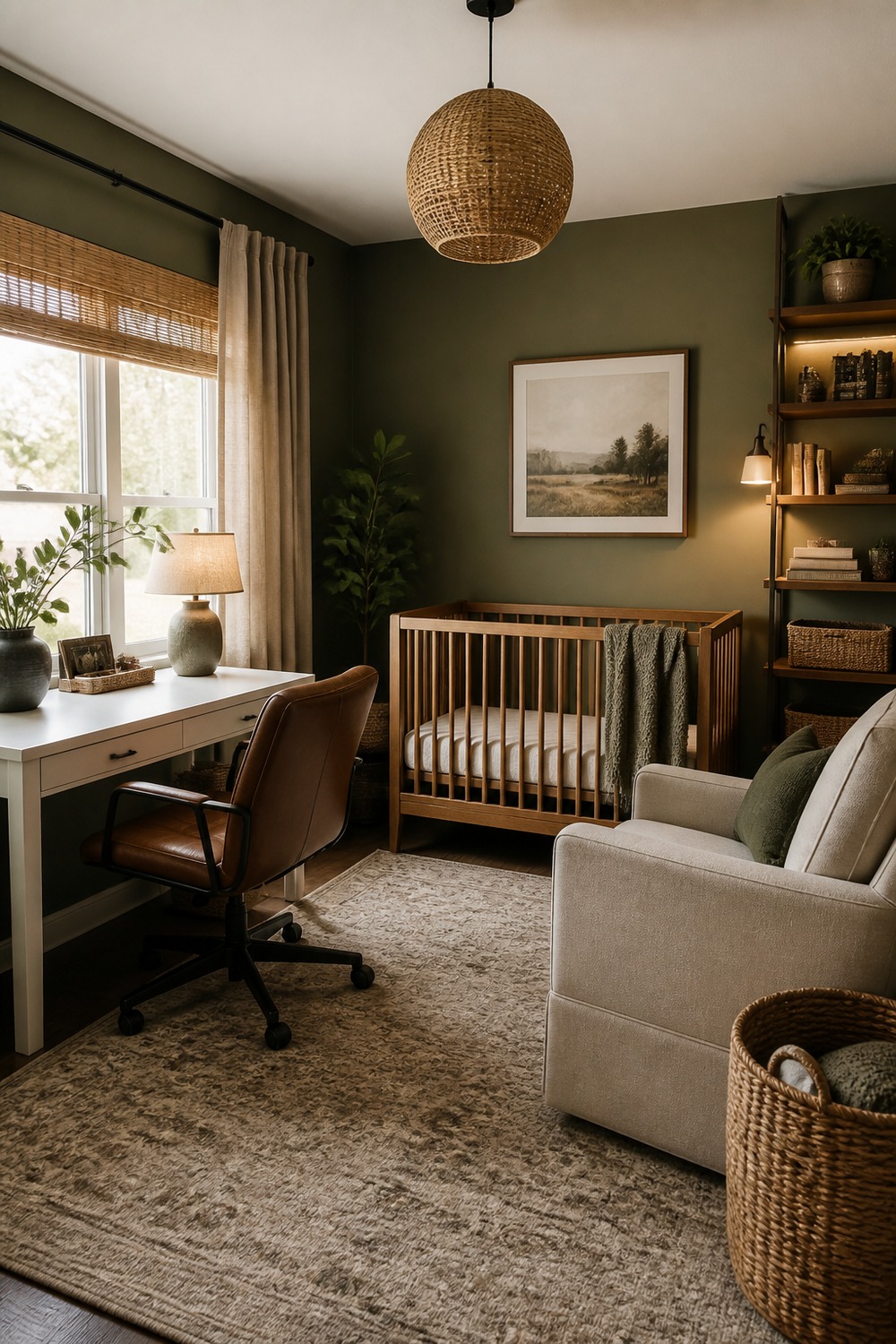
Sage green works nicely across both halves of the room because it is calm without becoming babyish. White office furniture keeps the workstation crisp, while natural wood and woven baskets make the nursery side feel softer.
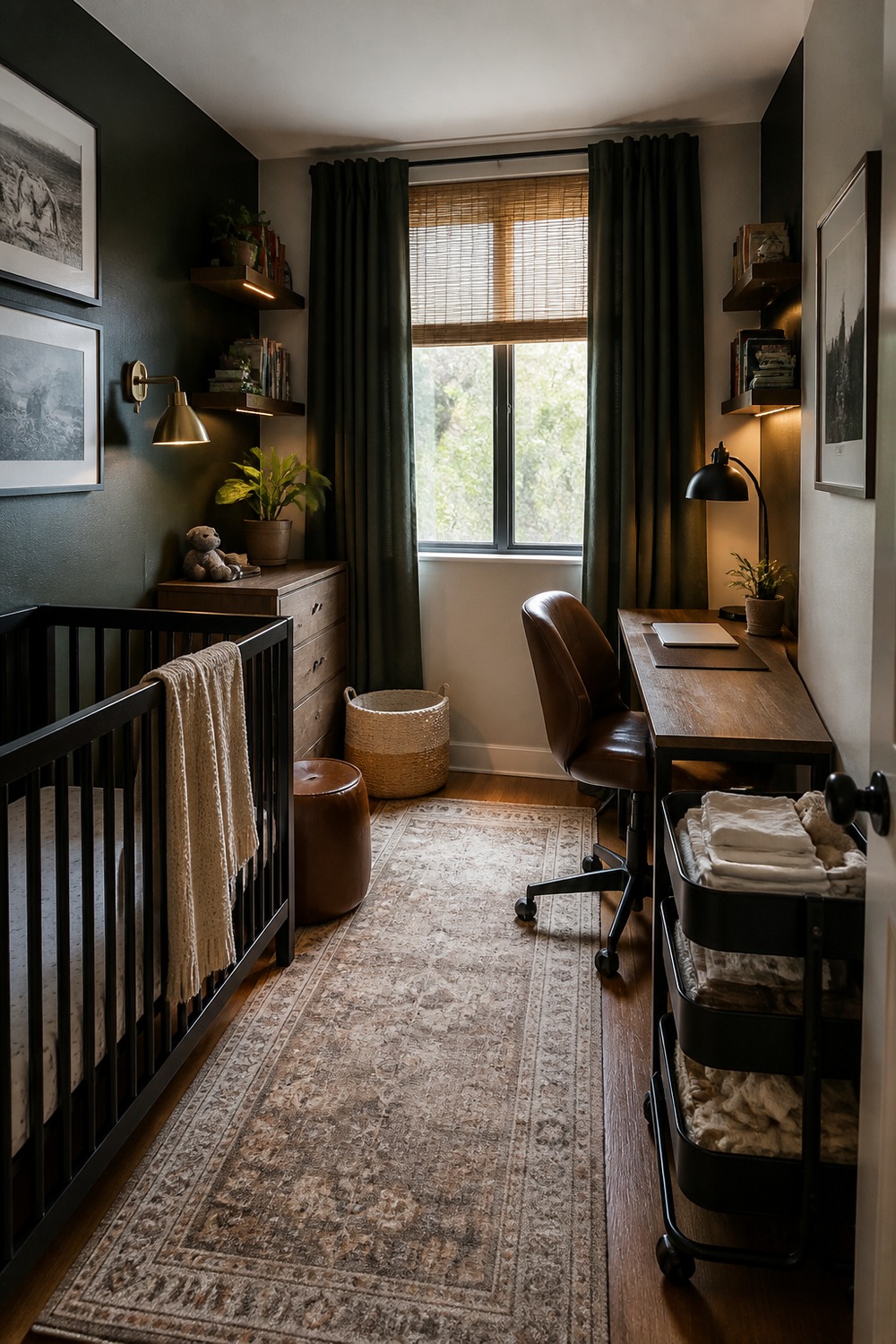
This narrow-room arrangement uses opposite walls instead of squeezing every piece into one corner. A slim desk and vertical storage protect the walkway, which matters more here than adding another decorative cabinet.
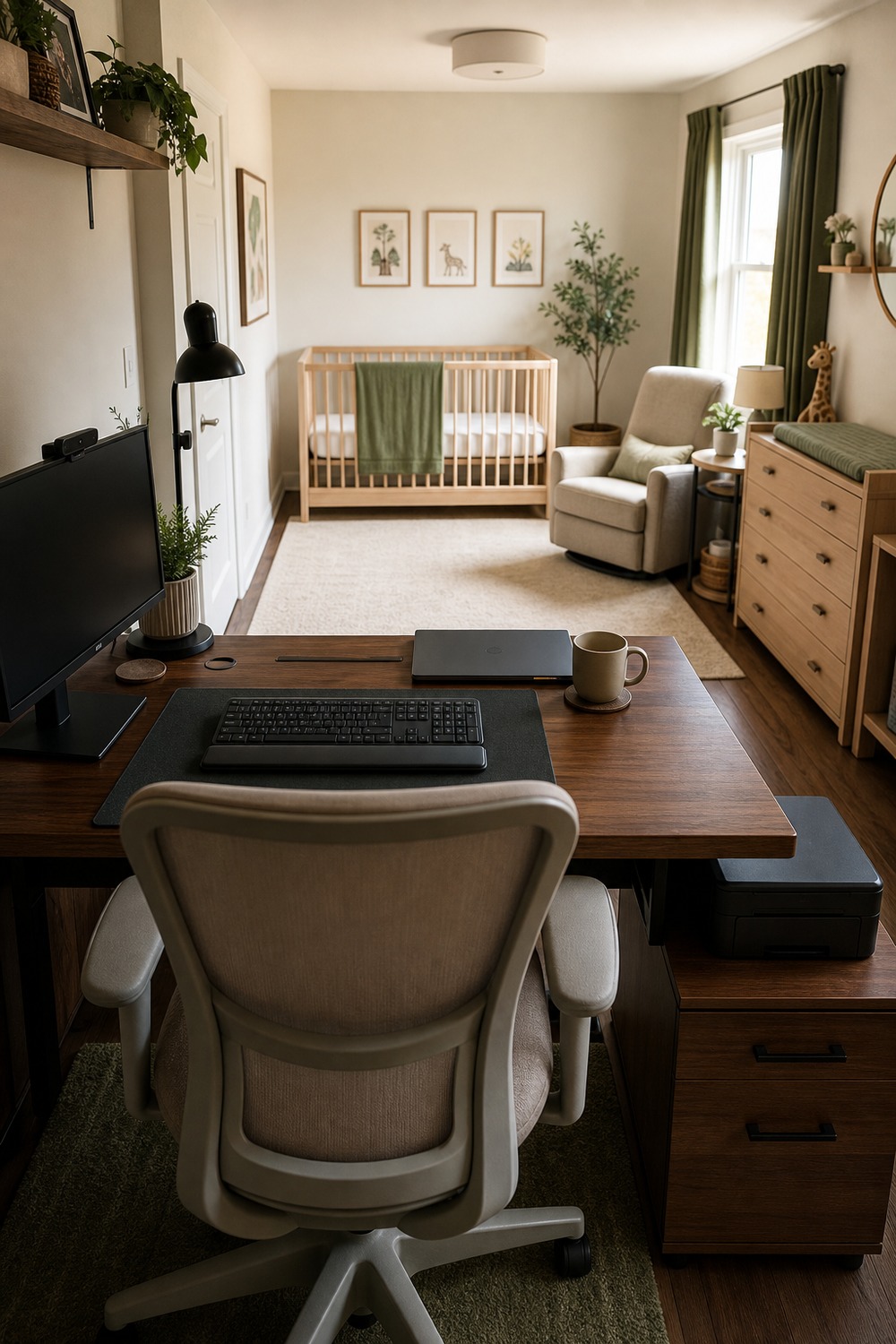
The over-chair viewpoint makes the relationship between work and nursery space easy to understand. A monitor, keyboard, file storage, and concealed printer form a complete workstation, while the open floor beyond keeps the crib and nursing chair from feeling crowded.
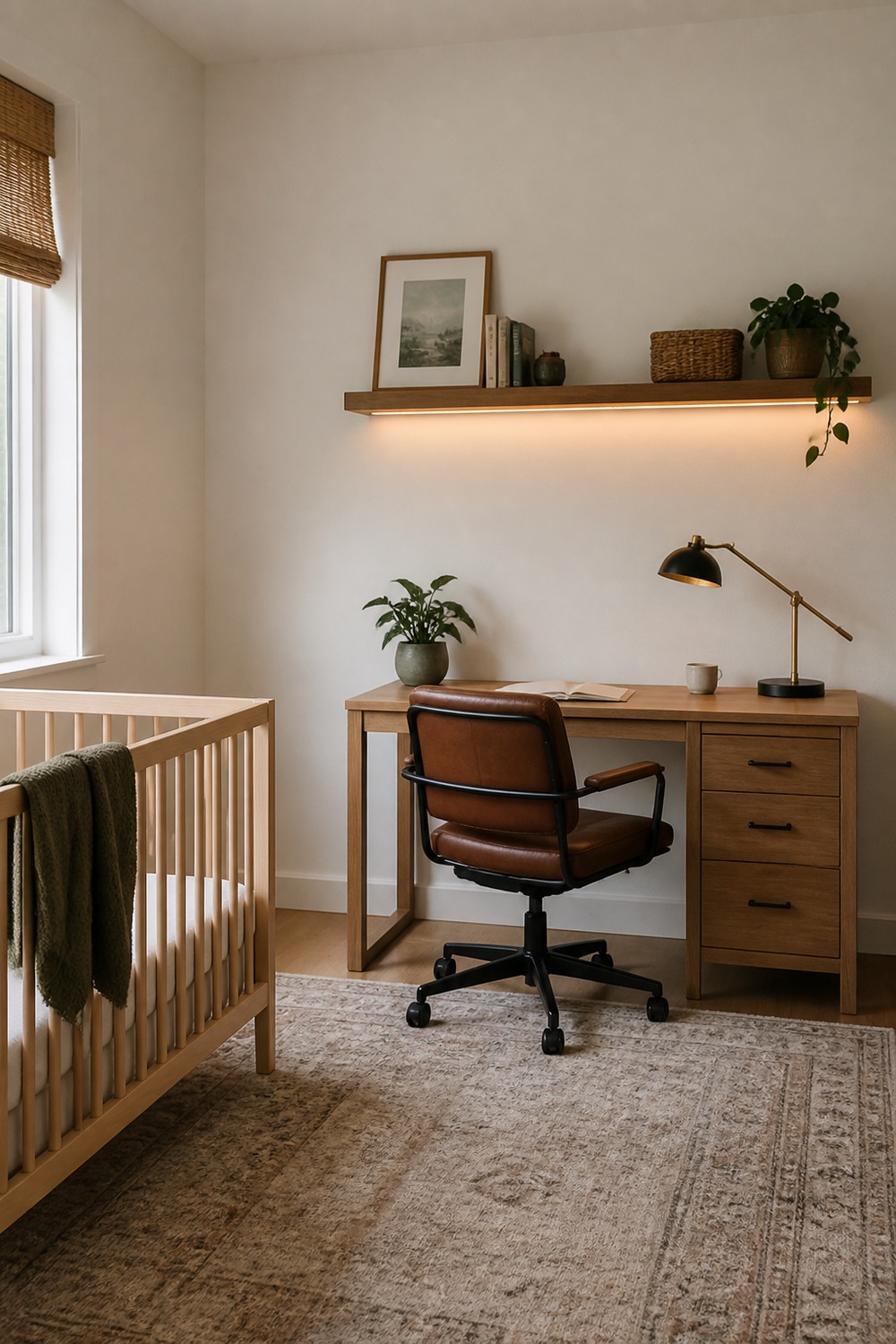
White walls and pale oak are doing useful work in this compact room: they keep the desk, crib, and storage from feeling visually heavy. One shelf and a few closed drawers are enough when the goal is a calm background for both calls and naps.
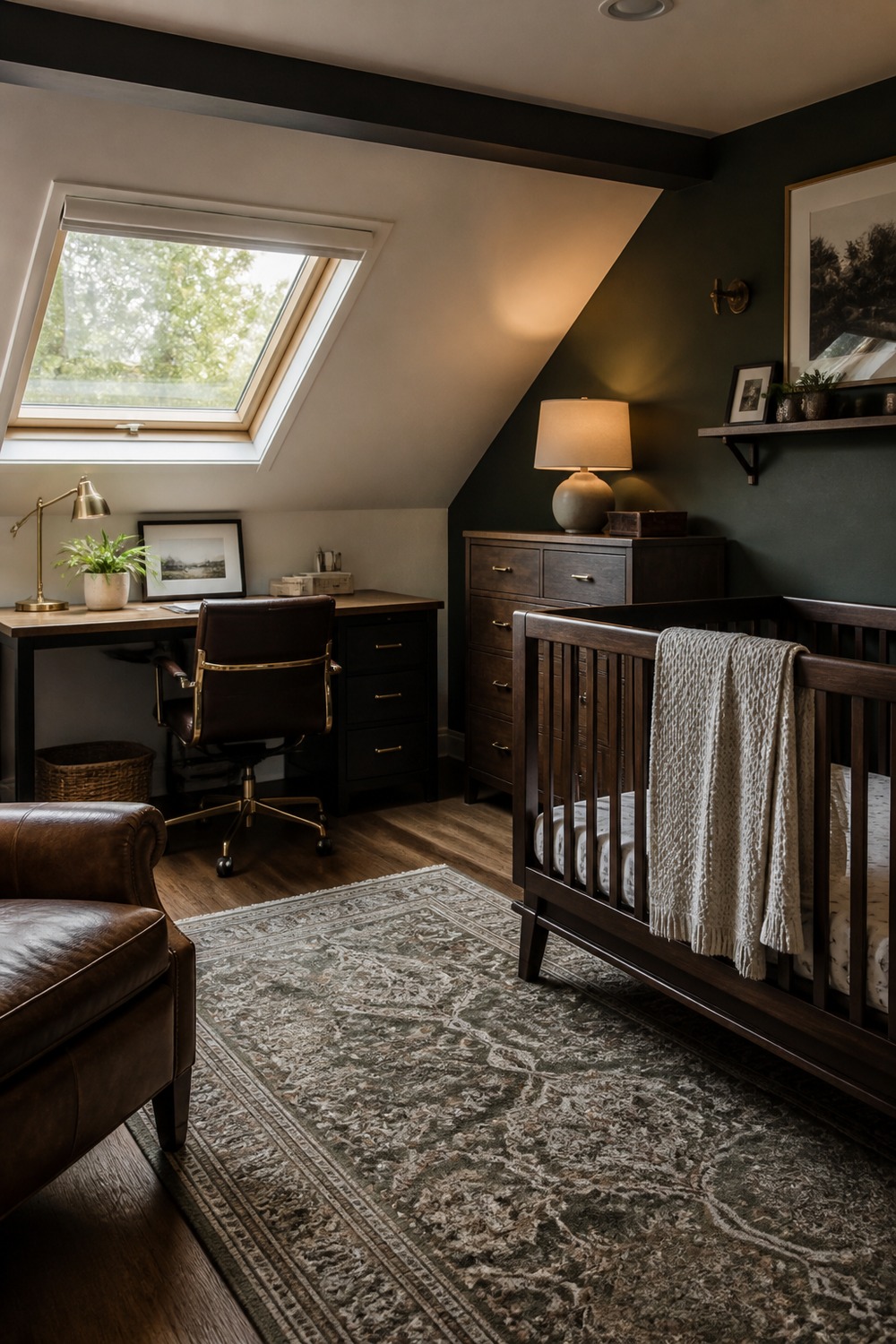
A sloped ceiling can be awkward, but the desk fits naturally beneath the skylight where standing height matters less. The crib stays in the taller portion of the room, and the daylight gives the office a pleasant place to work without extra floor lamps.
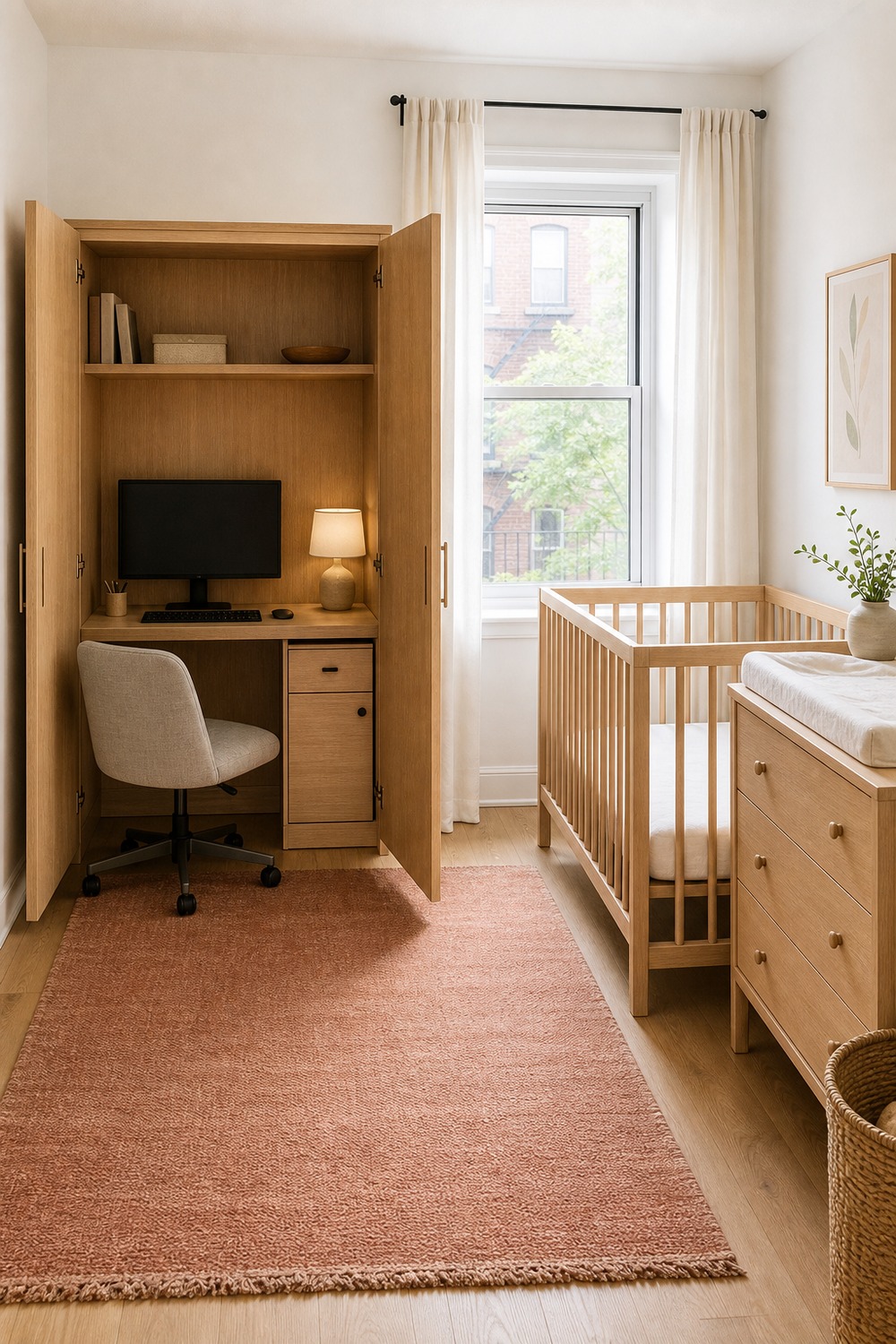
An office armoire is one of the cleanest ways to make this combination disappear after work. The doors hold a monitor, keyboard, and files in one compact unit, leaving the nursery side visually quieter when the workstation is closed.
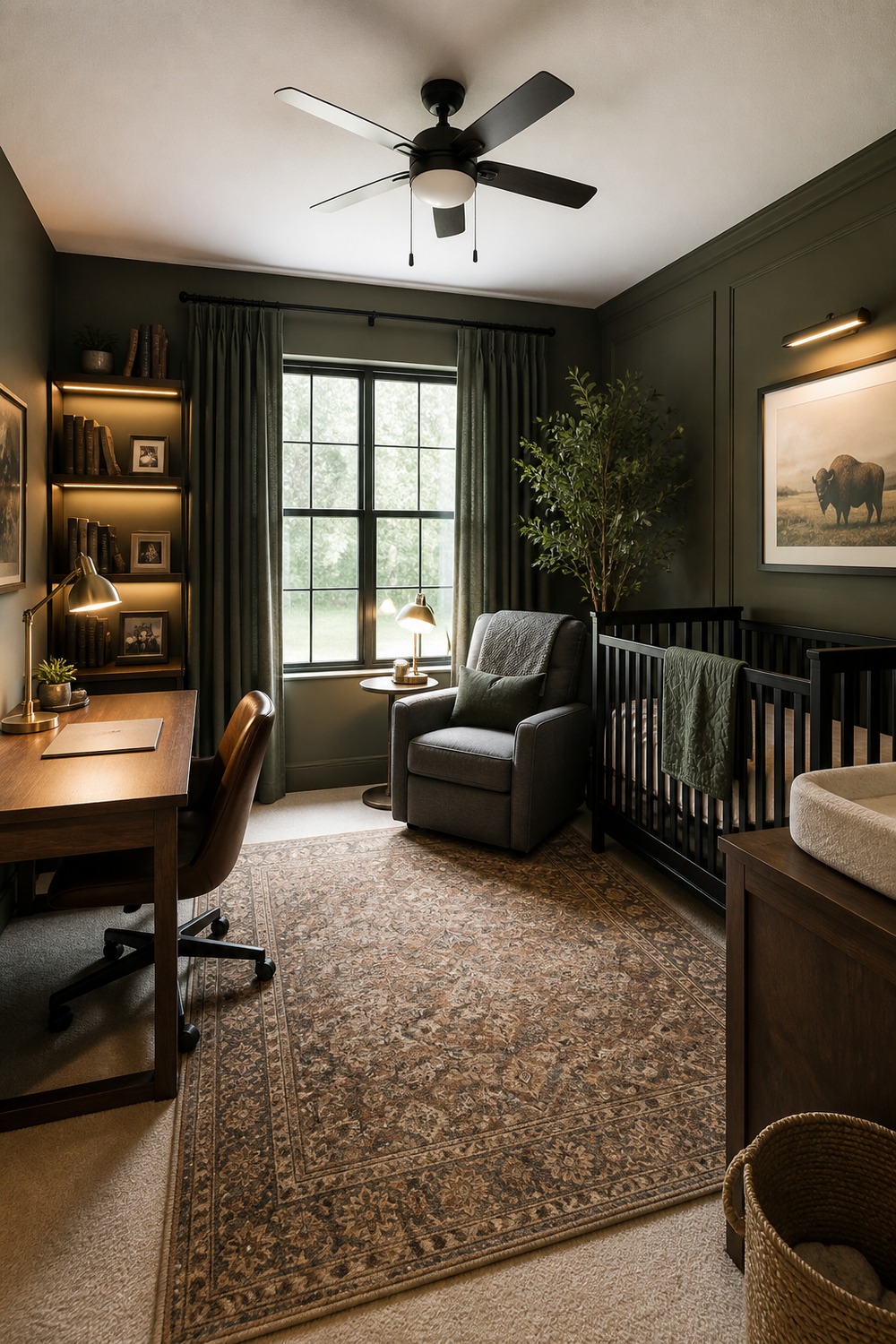
This full-room view is a good reminder that circulation matters as much as furniture size. The desk, glider, crib, and storage all have their own place, with enough open floor that no one piece blocks another.
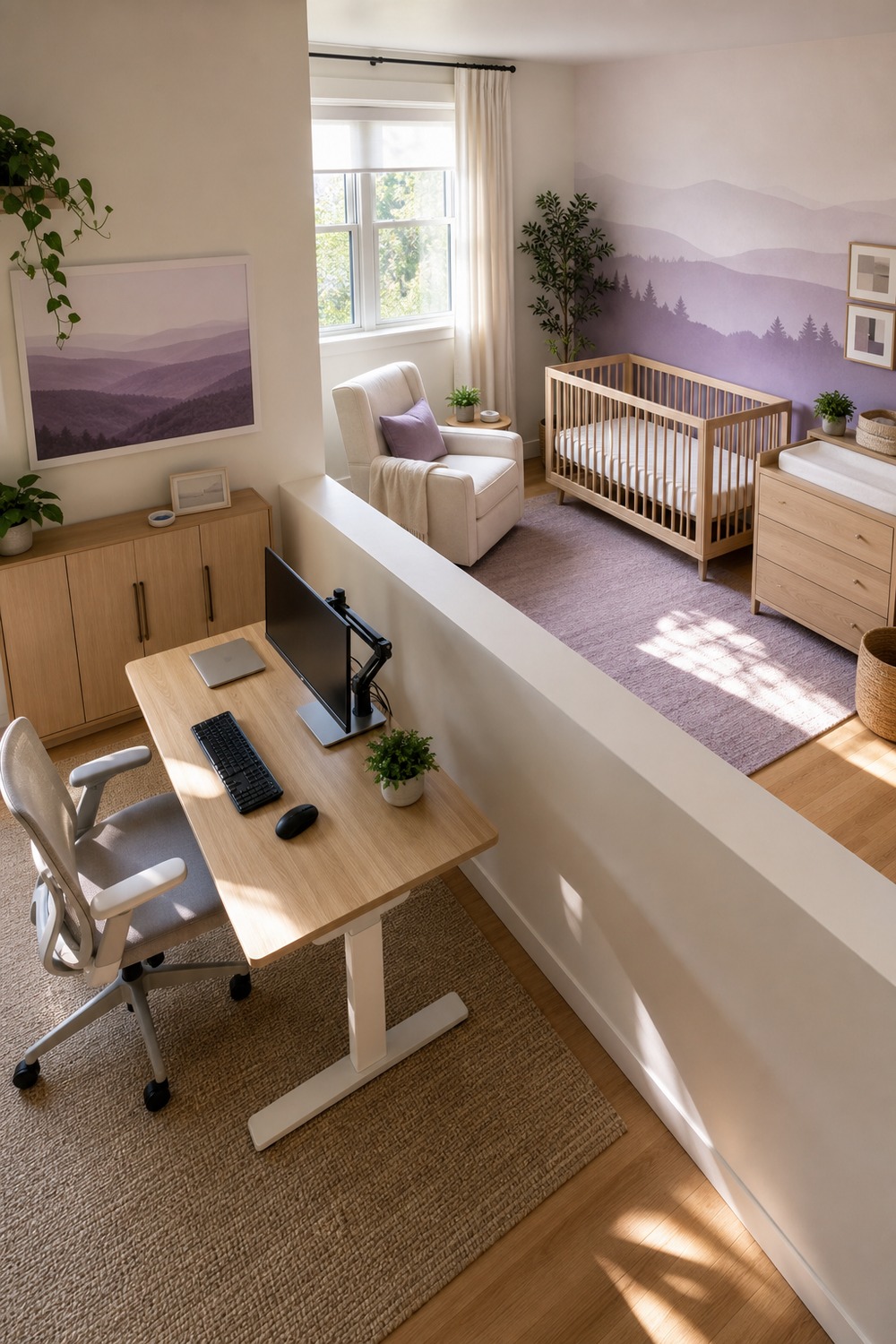
The half-wall gives both zones privacy without sacrificing light or sightlines. On the office side, a sit-stand desk and ergonomic chair feel substantial; beyond it, the crib, dresser, and nursing chair still read as a complete nursery rather than a backdrop.
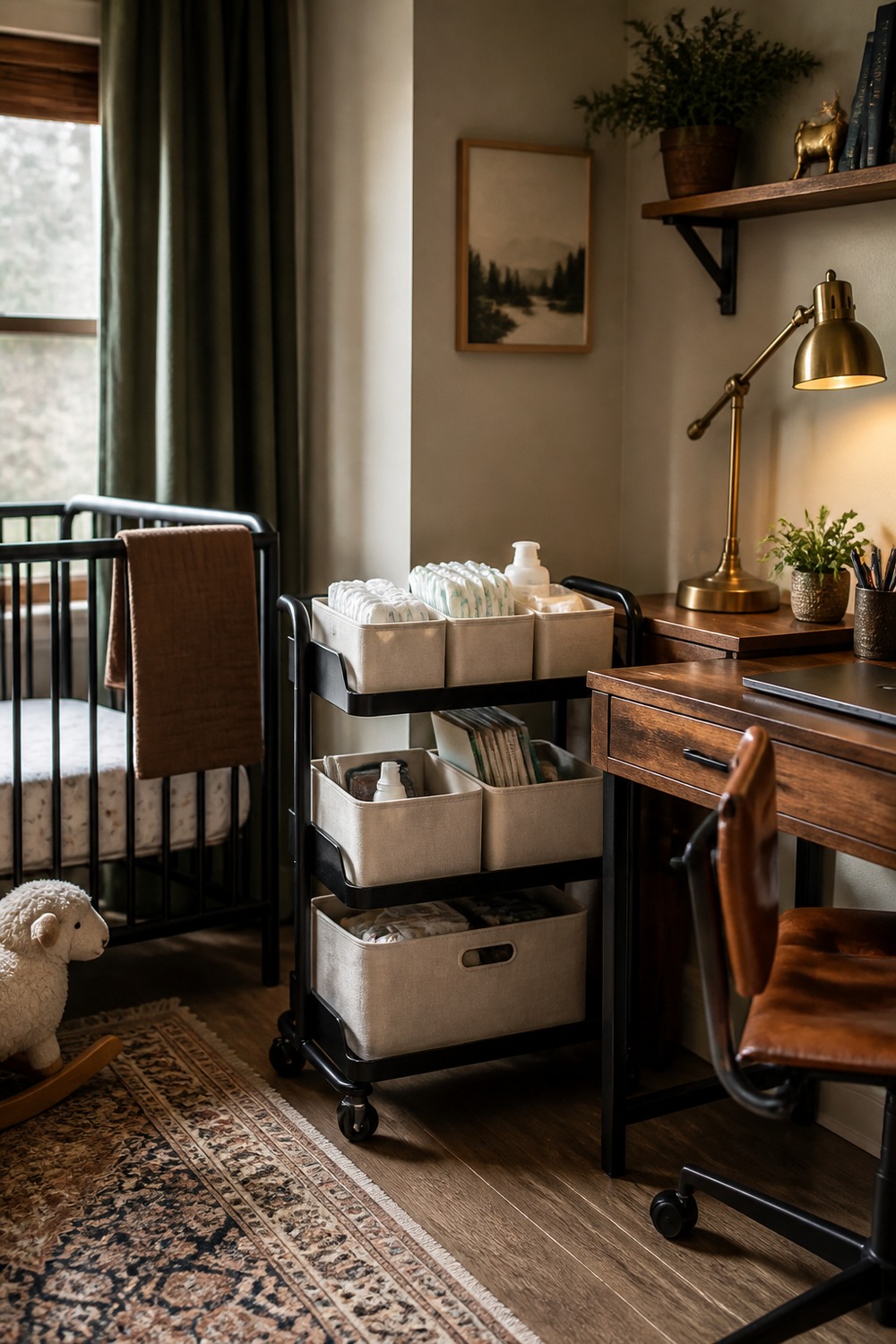
A rolling cart is useful when its contents are sorted by job instead of mixed together. Baby supplies can stay on one level and work items on another, then the whole cart can move out of the chair path when the desk is in use.
Leave a comment