
A desk beside a blank television does not automatically make a good office-and-game-room combo. The strongest rooms give work a real surface and give play an unmistakable setup—pool, foosball, cards, consoles, or arcade games—without making either side difficult to use.
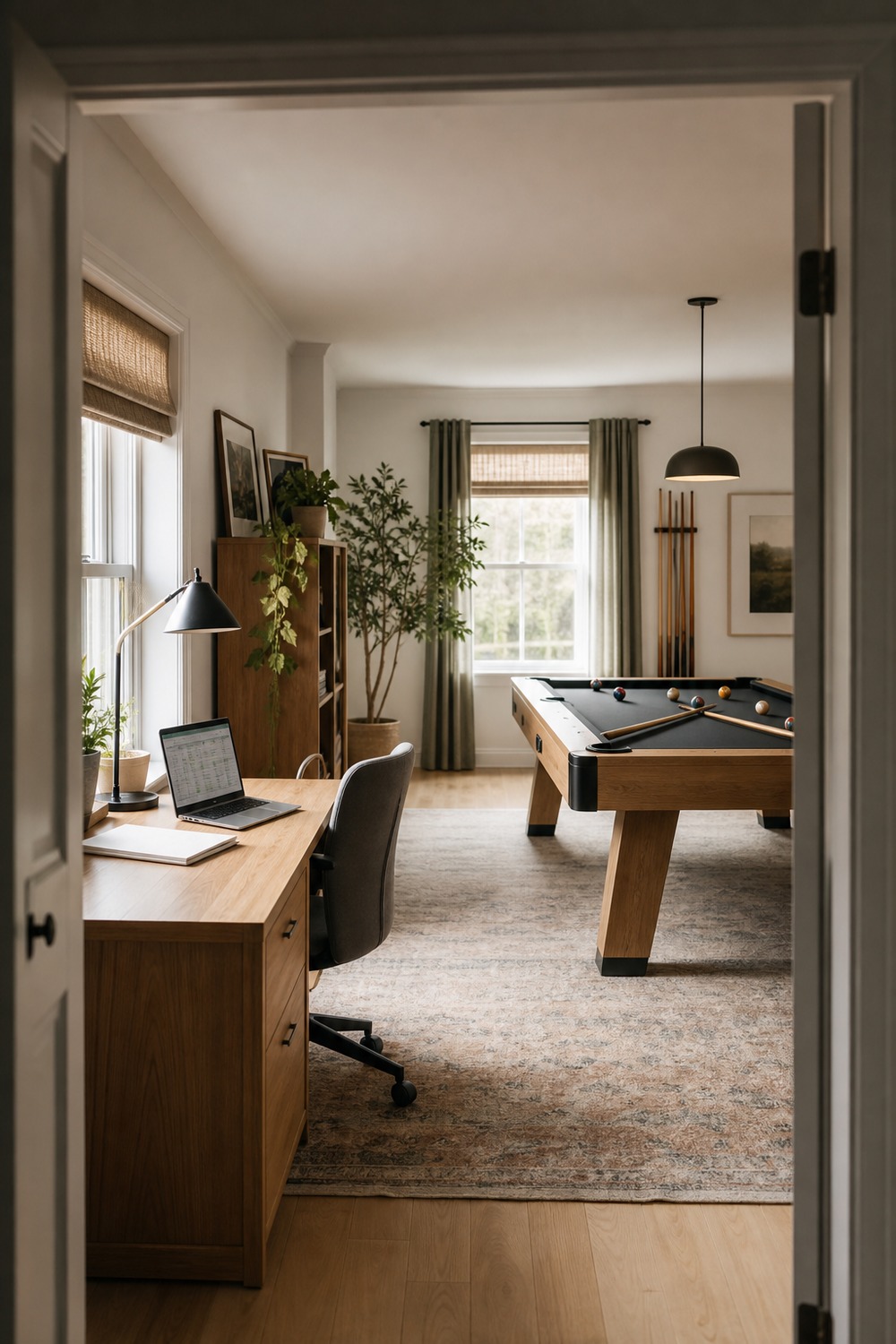
The pool table makes the play side obvious, but the oak desk still has enough surface for a normal workday. Pale wood and sage accents keep this version brighter than the usual dark gaming den.
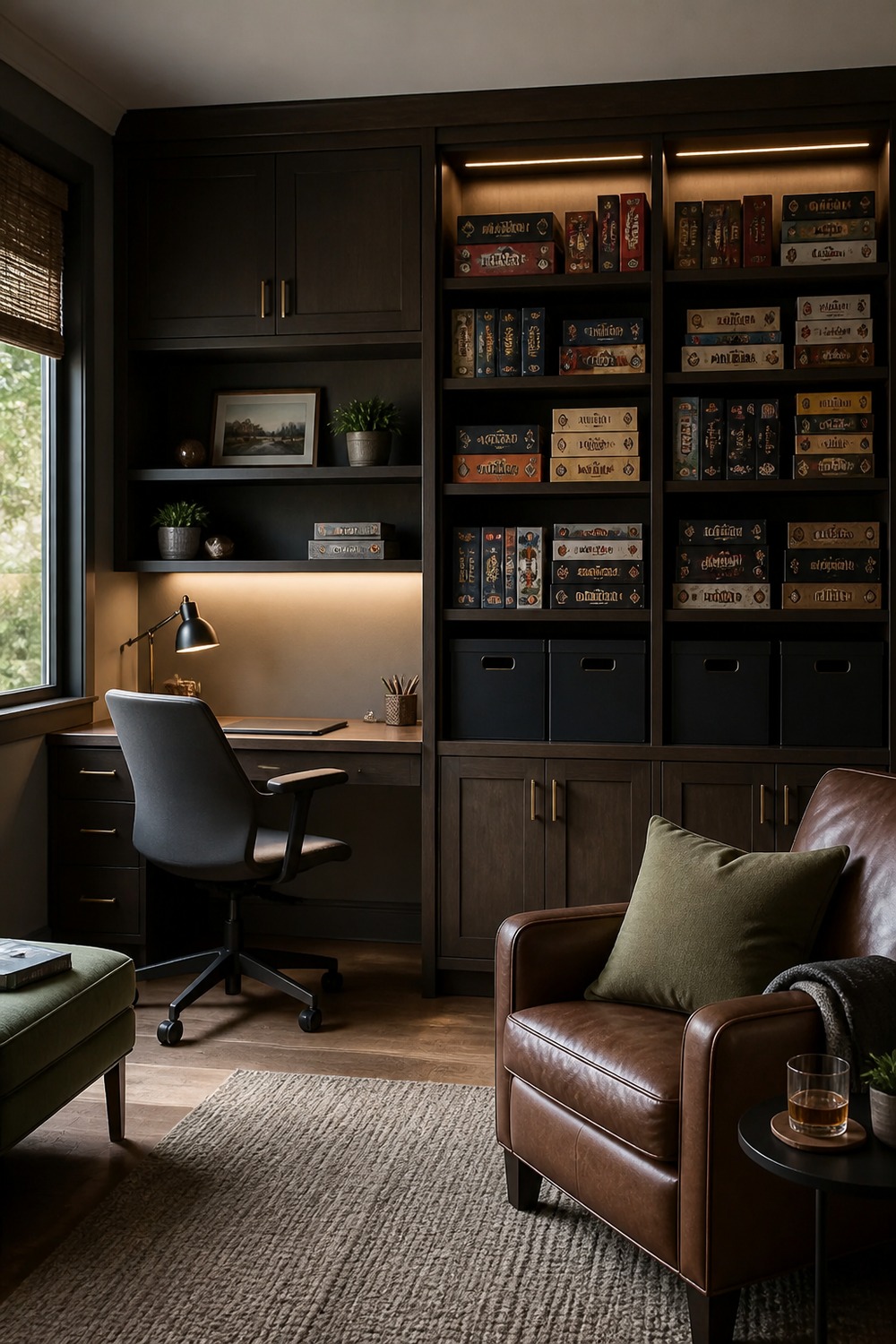
Board-game storage sits right beside the built-in desk, so boxes do not migrate across the keyboard. Closed lower cabinets handle the less attractive office supplies and spare controllers.
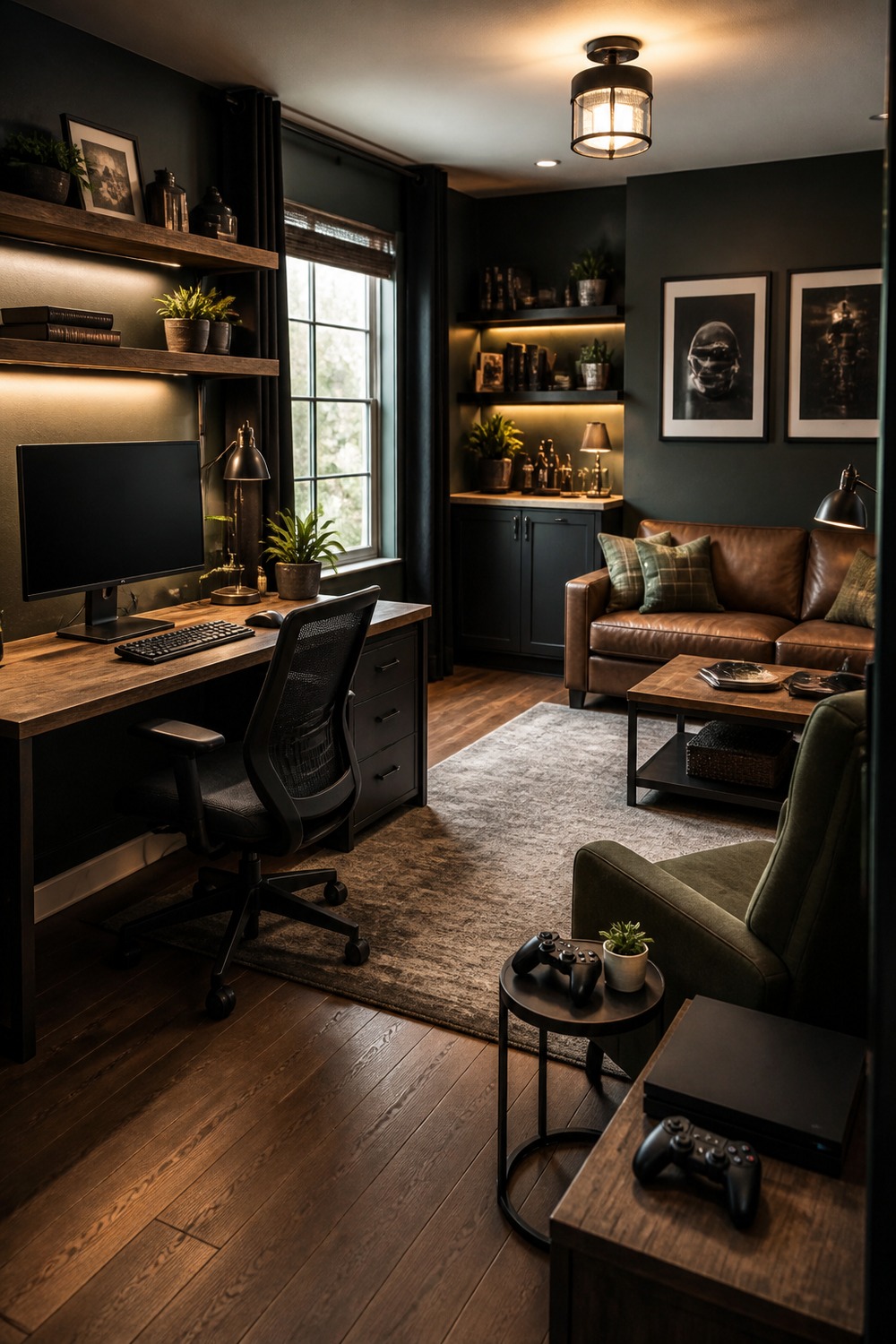
A lounge zone can share a room with a workstation when the rug and furniture angles create a real boundary. The monitor stays at the desk, while softer seating gives game nights somewhere comfortable to land.
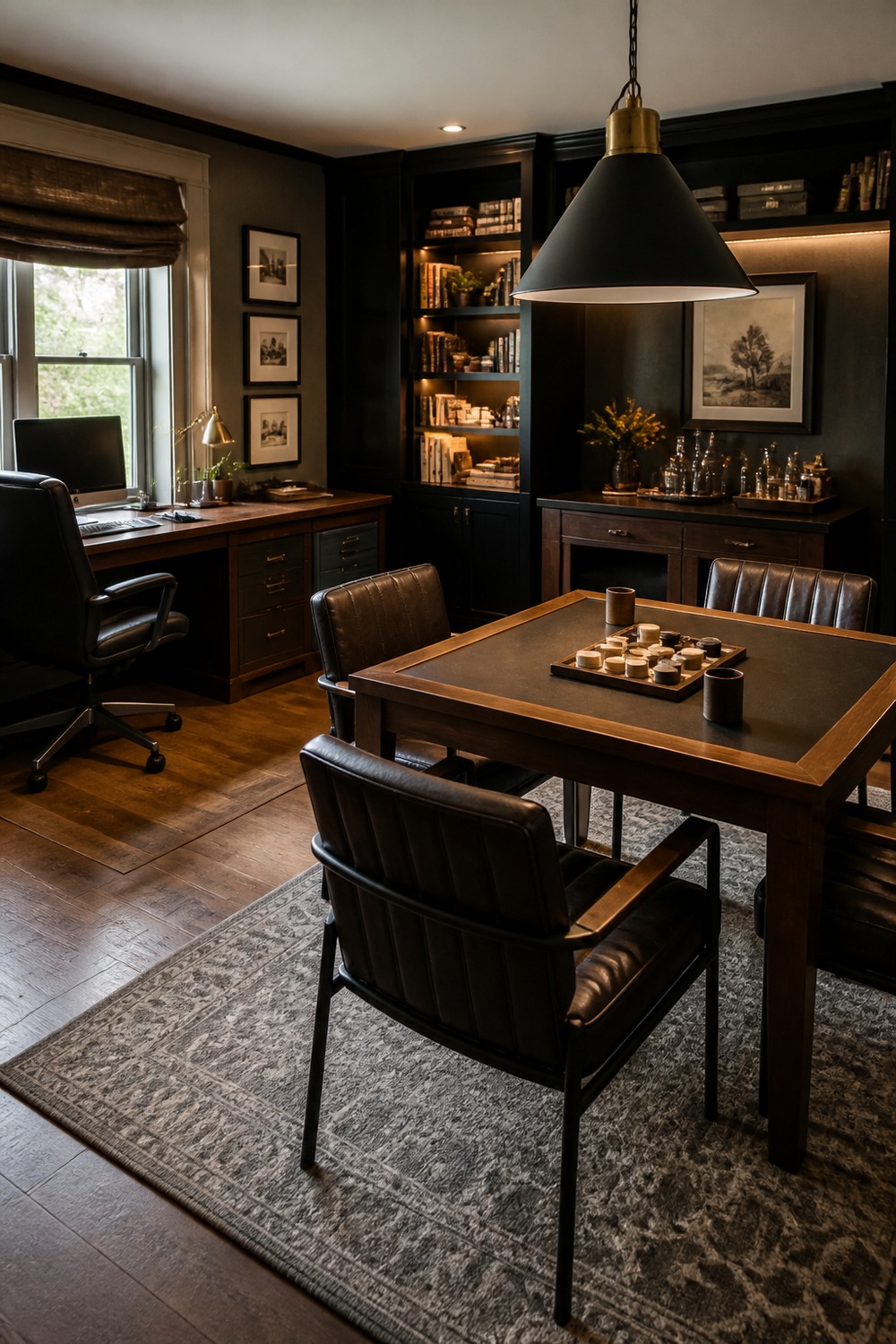
Putting the game table opposite the desk makes the room easy to read from the doorway. I especially like the pendant over the table because it gives play its own light without glaring on the work screen.
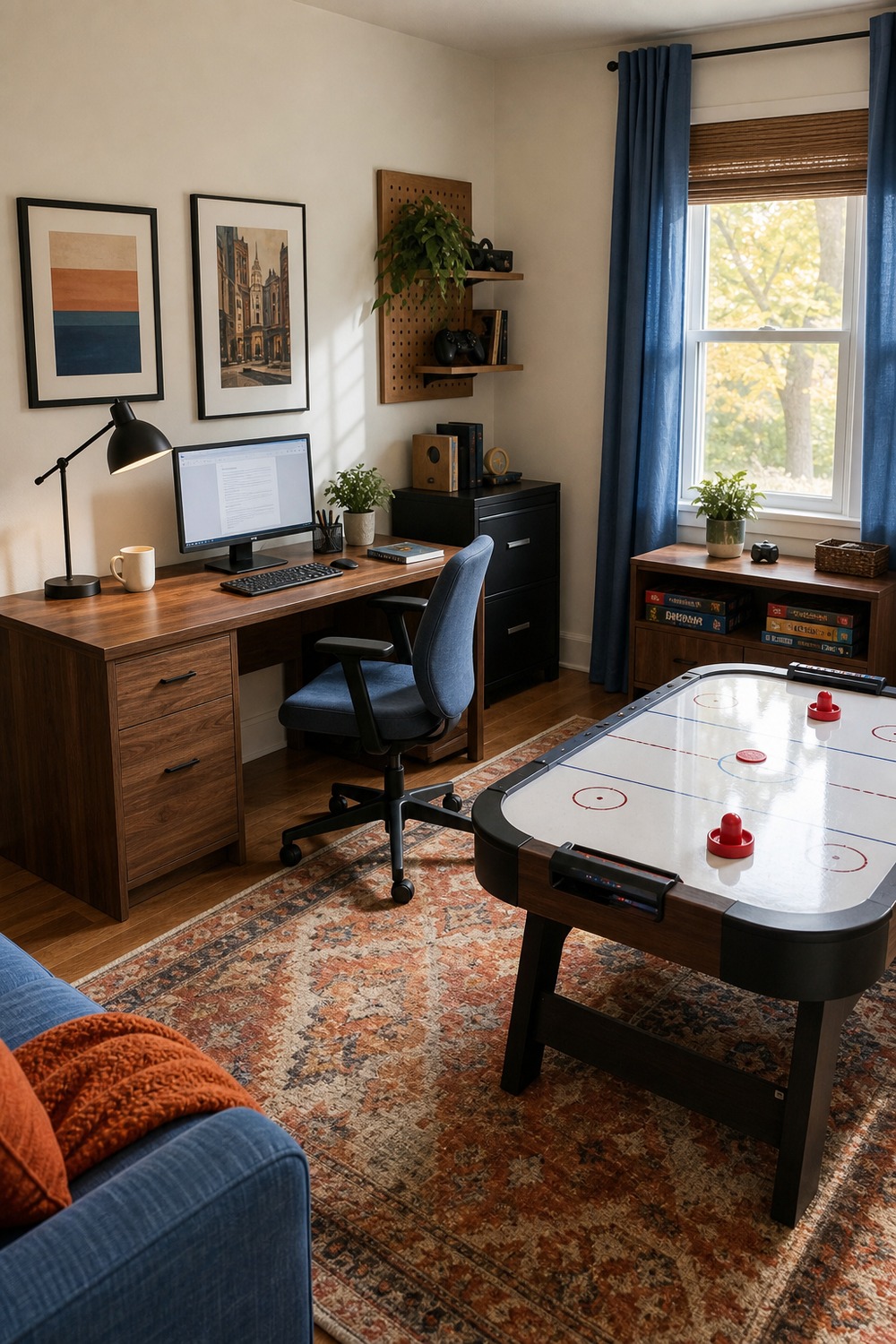
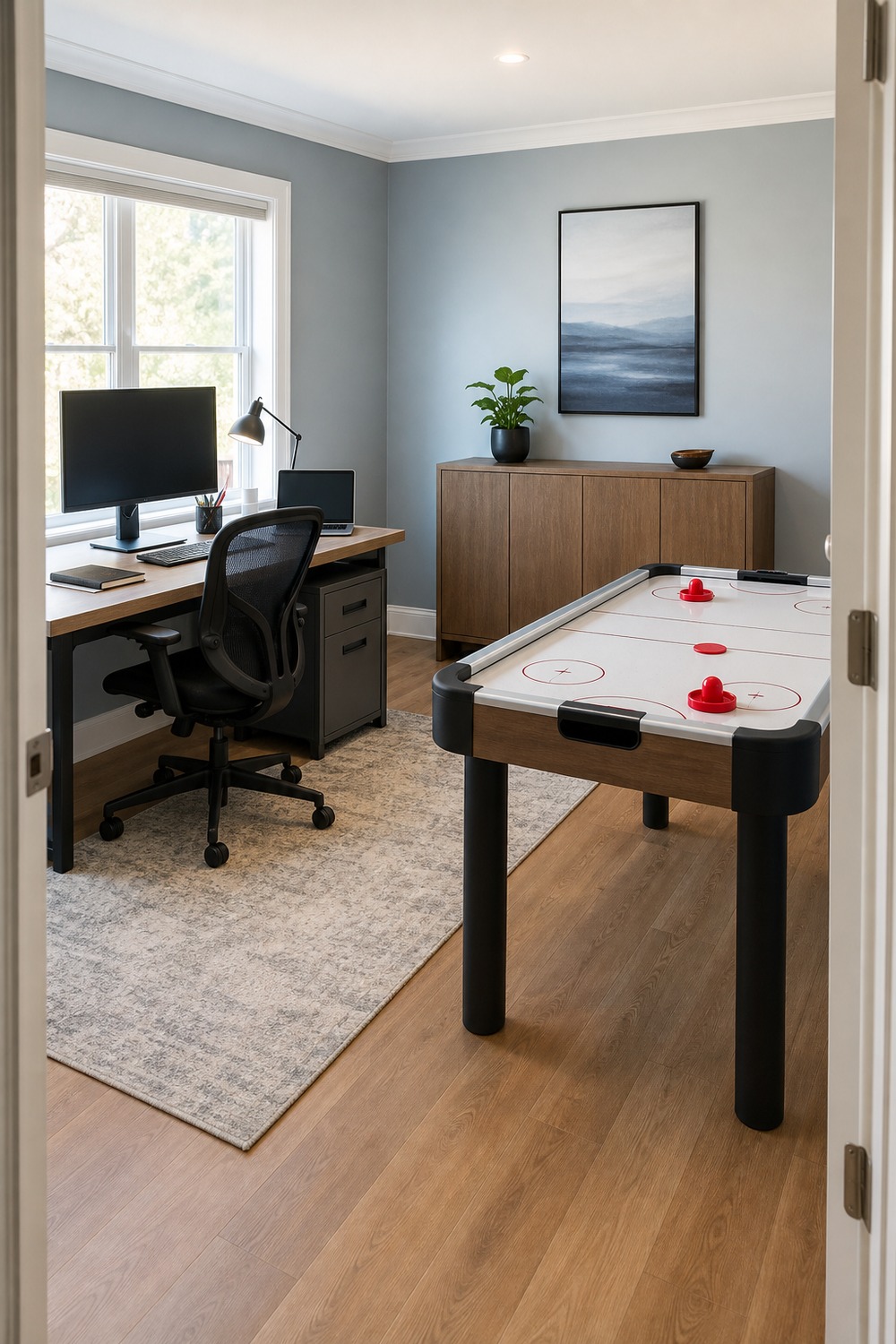
Air hockey adds color and movement without turning the entire room into an arcade. The walnut desk, cobalt accents, and clear path around both pieces make this feel energetic but still usable.
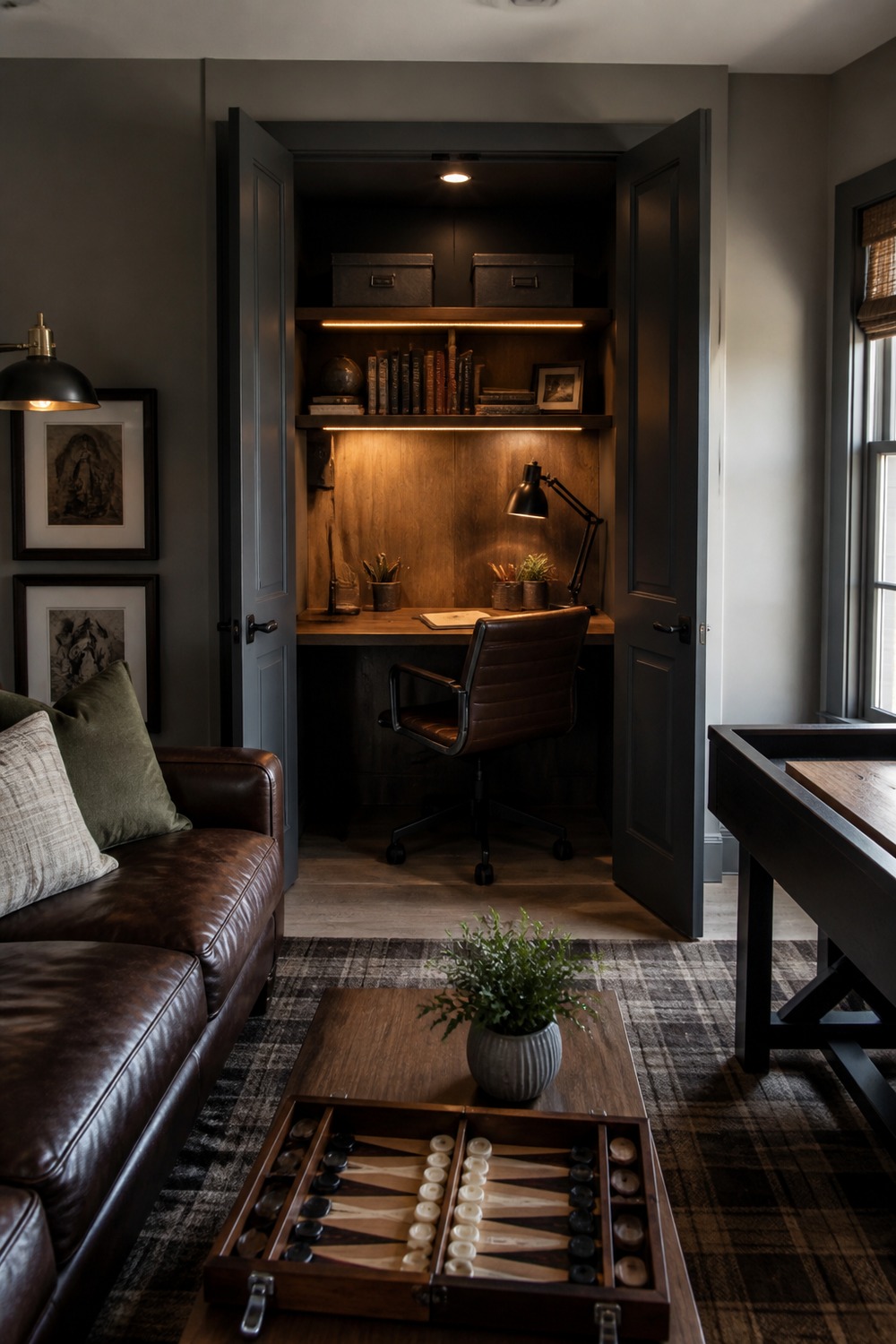
A closet desk is smart when the game area needs most of the open floor. The work chair tucks away neatly, and the tabletop setup can stay out without blocking files or charging cables.
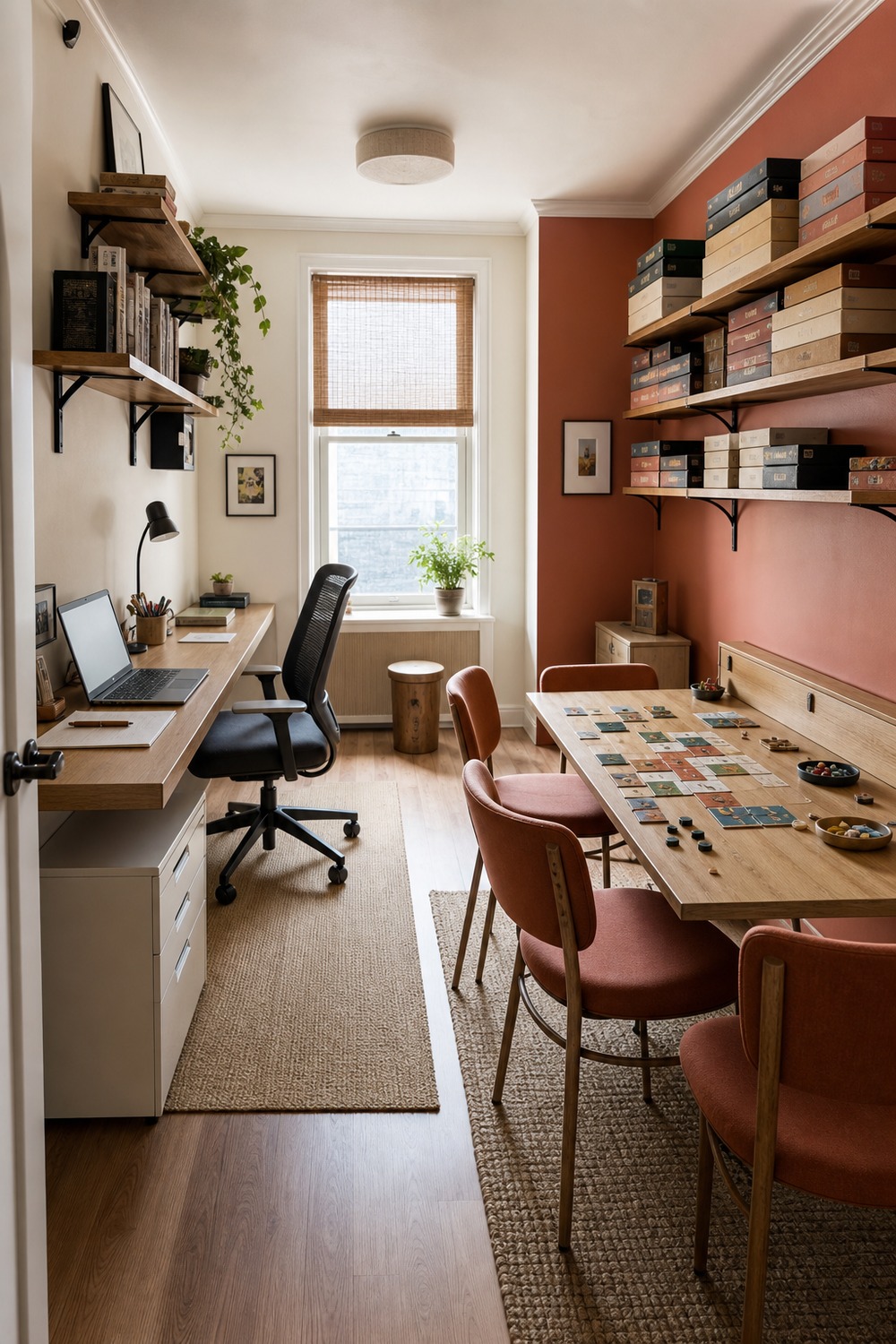
This apartment version proves a dedicated game room does not need a huge footprint. The fold-down table earns its space at night, while the slim desk and drawers keep daytime work contained.
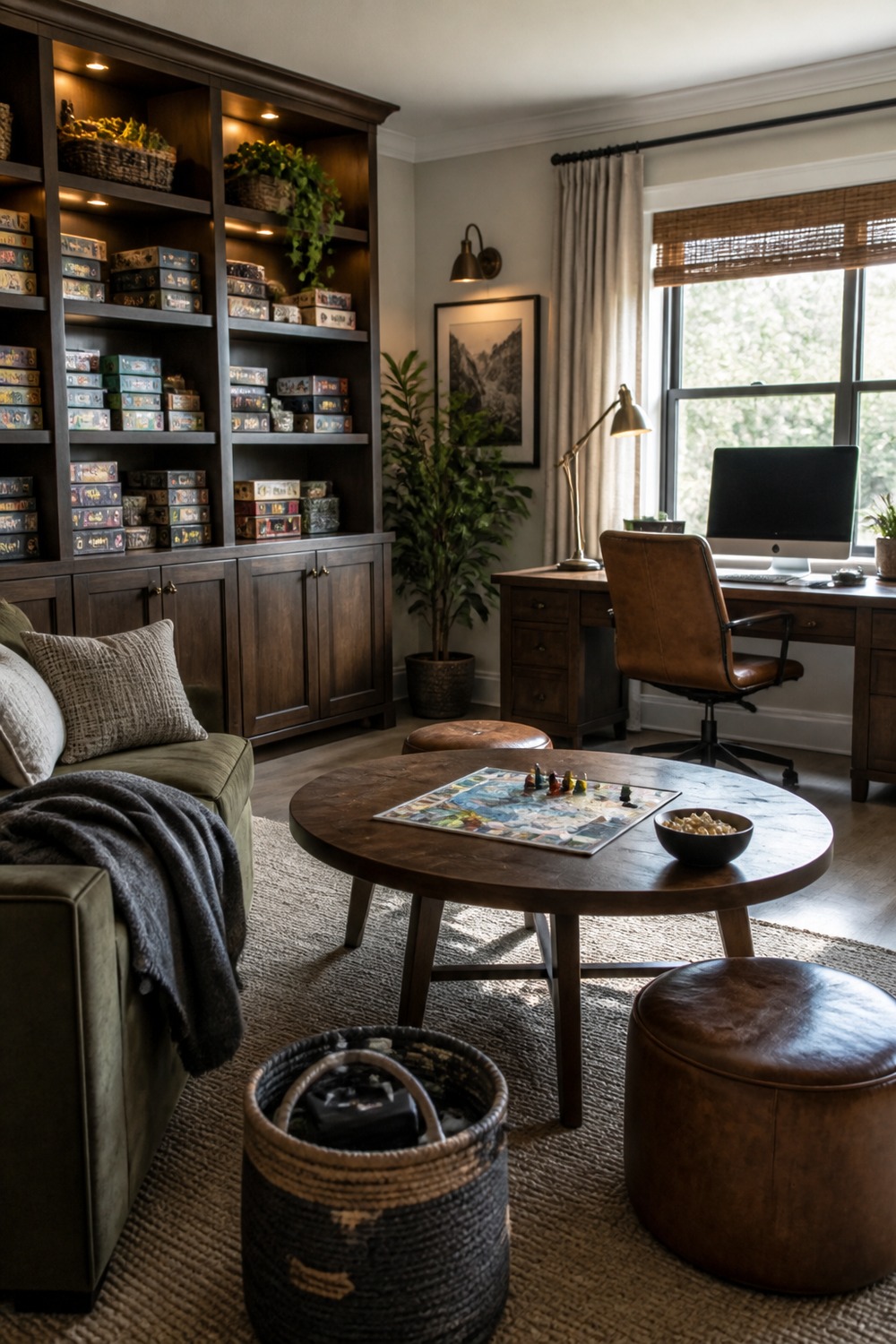
Daylight and lighter upholstery make this family setup feel less like a basement den. Game boxes have a proper cabinet, and the desk remains close enough to supervise homework without taking over the lounge.
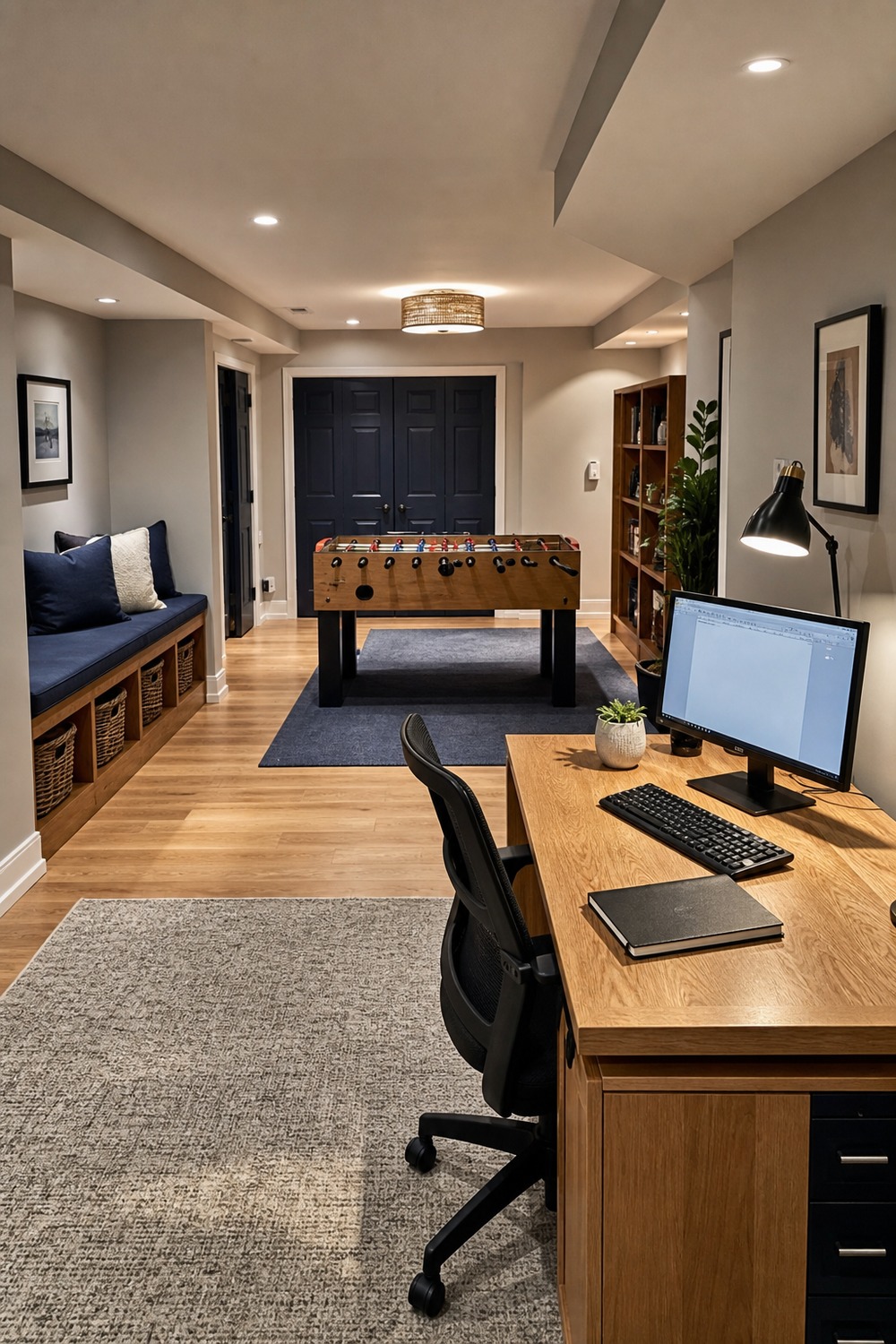
The foosball table is fully visible instead of being hinted at behind a sofa. A compact workstation along the other wall preserves the center walkway and keeps rolling-chair space away from the game rods.
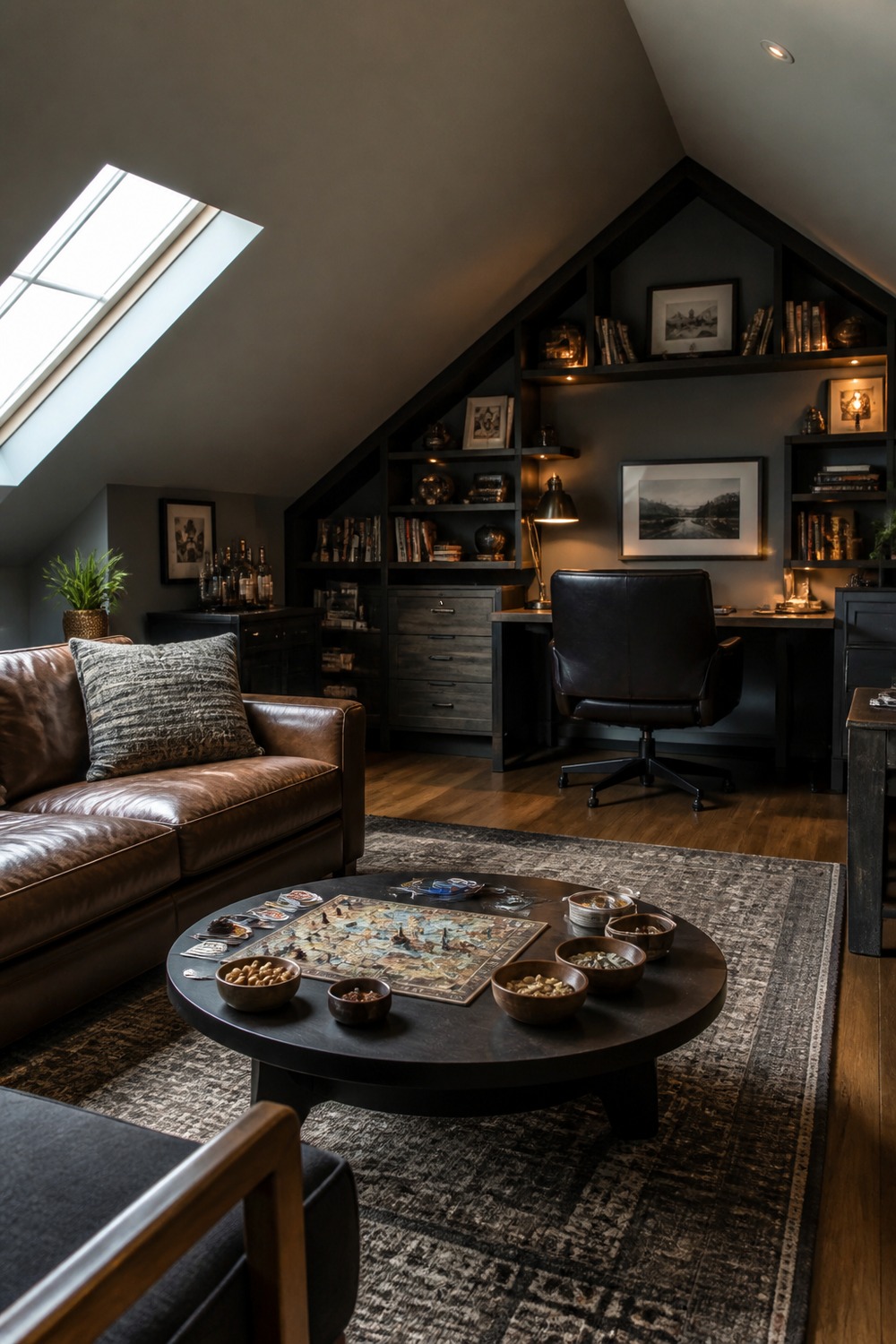
Sloped attic ceilings work surprisingly well for low game furniture. The desk uses the taller wall, while the board-game table and loveseat sit comfortably beneath the roofline.
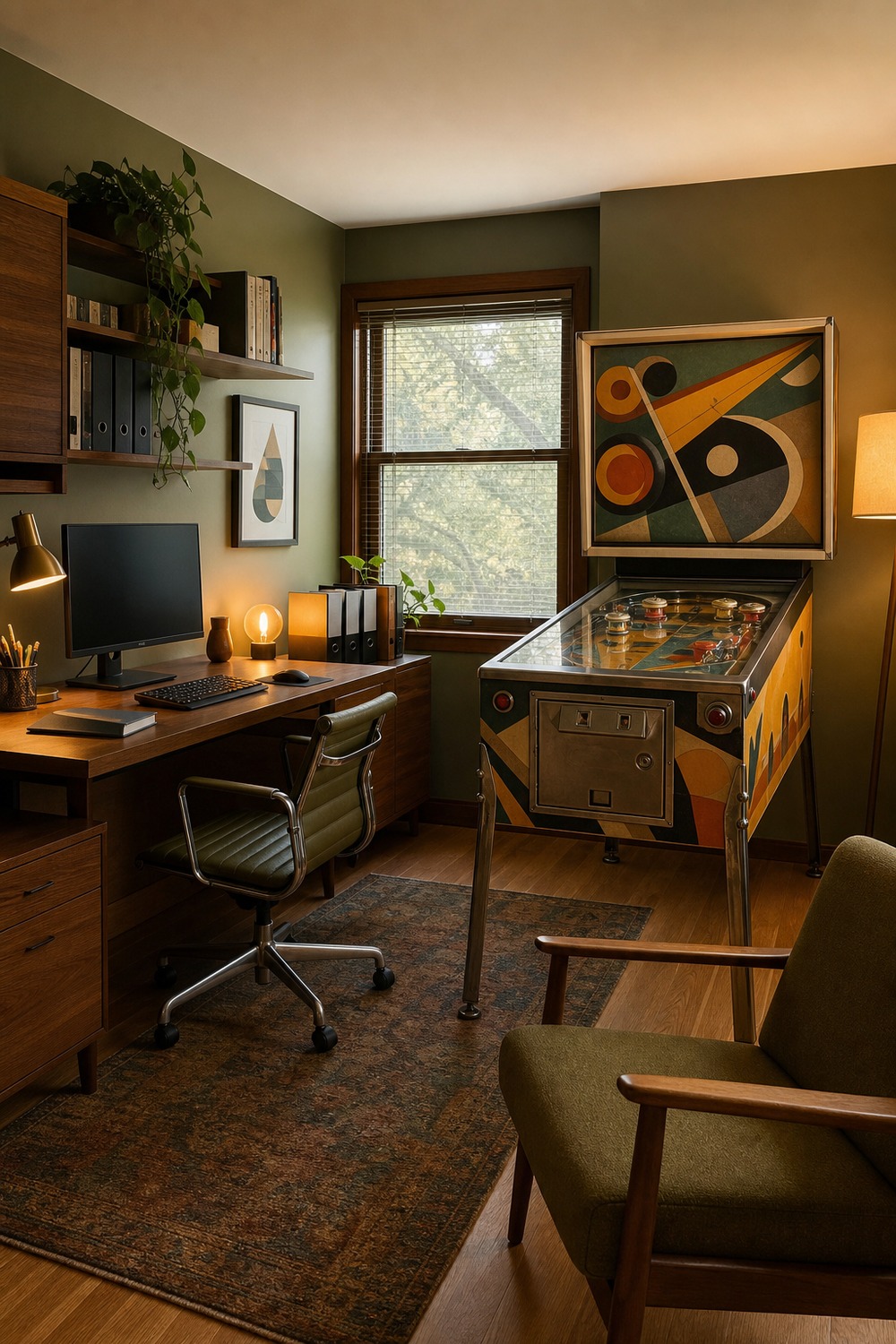
A pinball machine gives this mid-century office a real point of personality. Walnut furniture and olive accents tie the two zones together, but the work surface still looks calm enough for calls and paperwork.
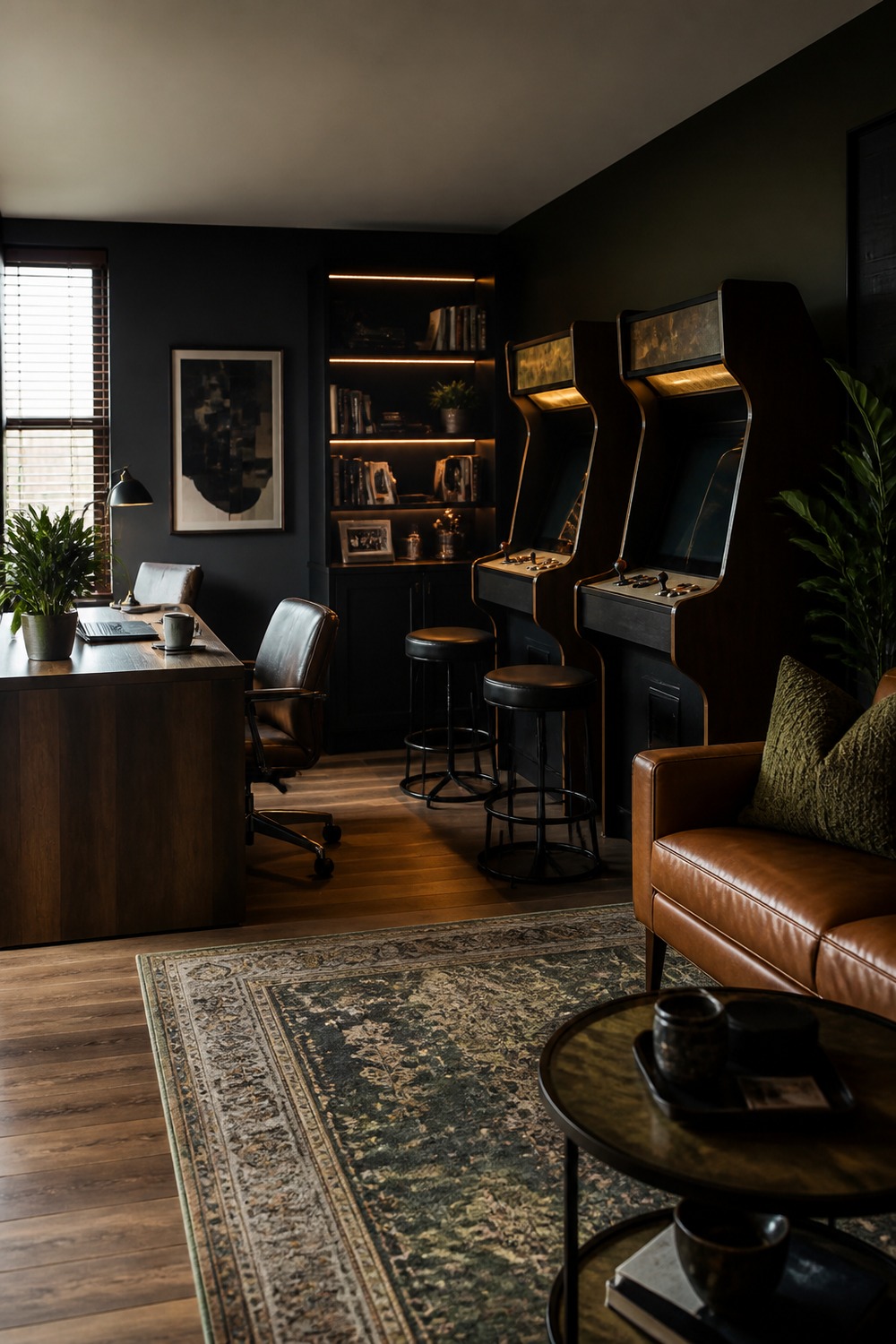
The arcade cabinets are the fun part, yet the adjacent desk does not feel like an afterthought. Dark shelving hides cords and gear, and the side-angle view leaves both activities easy to understand.
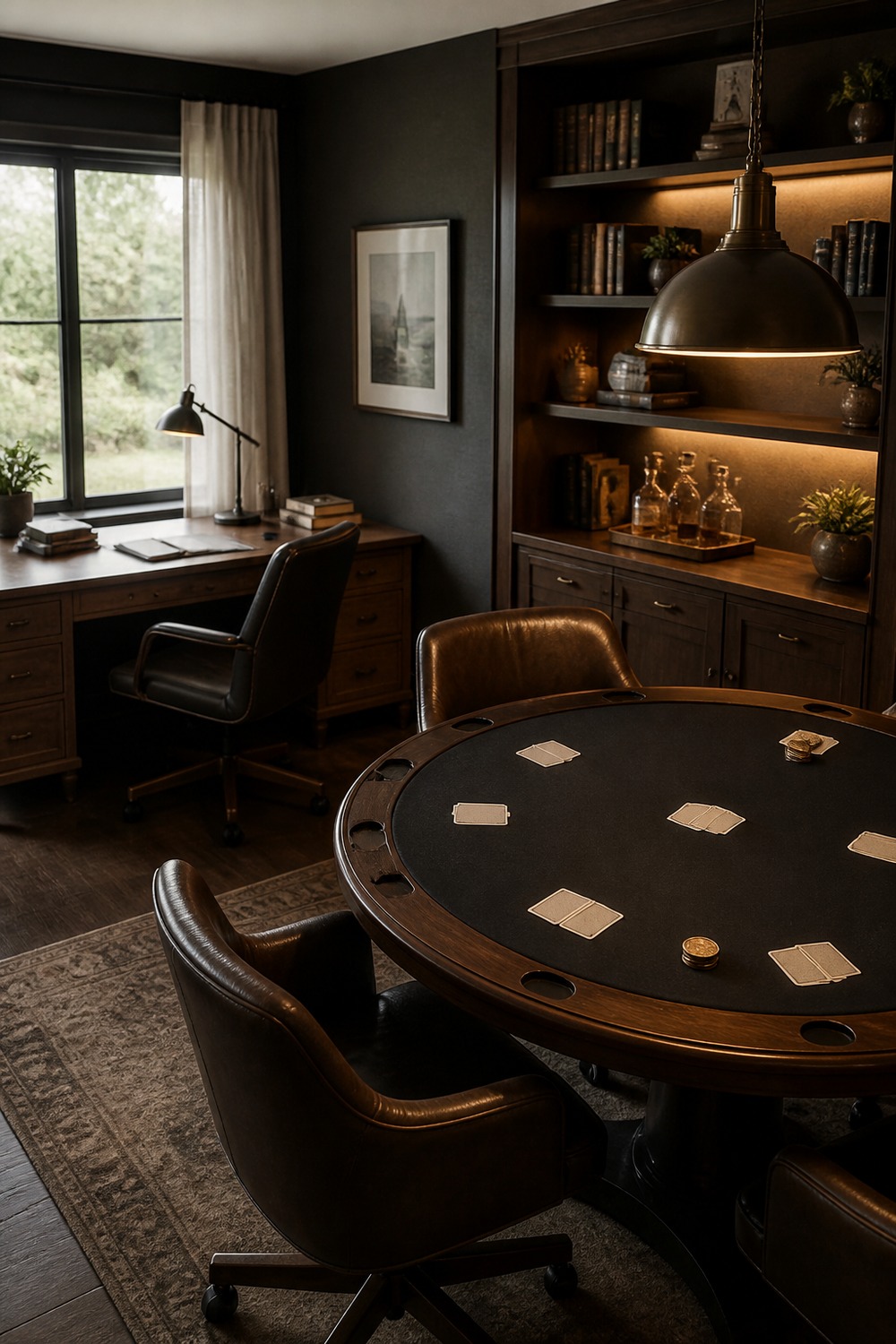
A small card table can make an office useful after hours without requiring a full room makeover. The round shape improves circulation, and the pendant puts focused light exactly where the game pieces need it.
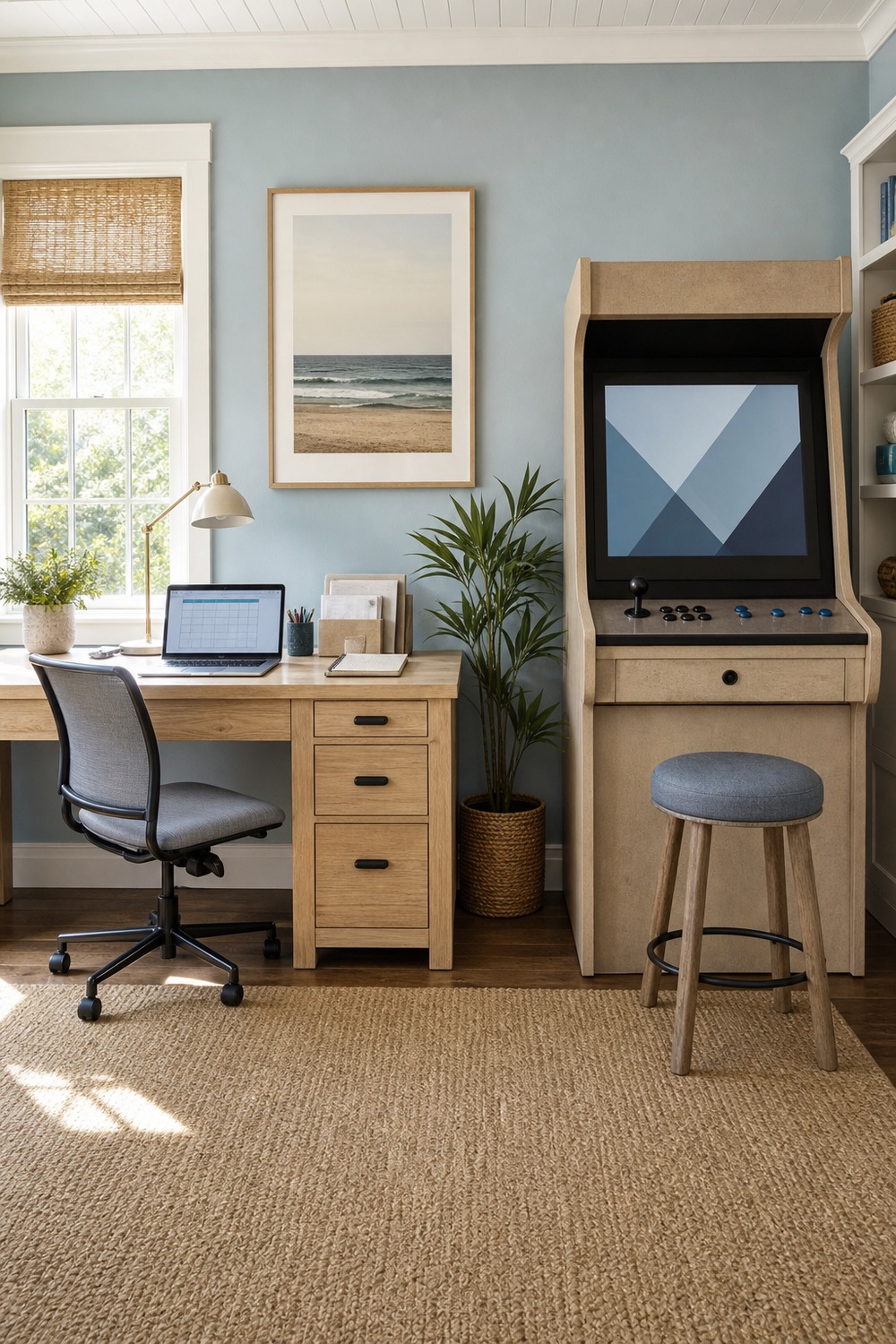
The pale coastal palette keeps the arcade cabinet from feeling visually heavy. Beside it, the white-oak desk has files, task light, and chair clearance that make the office half genuinely functional.
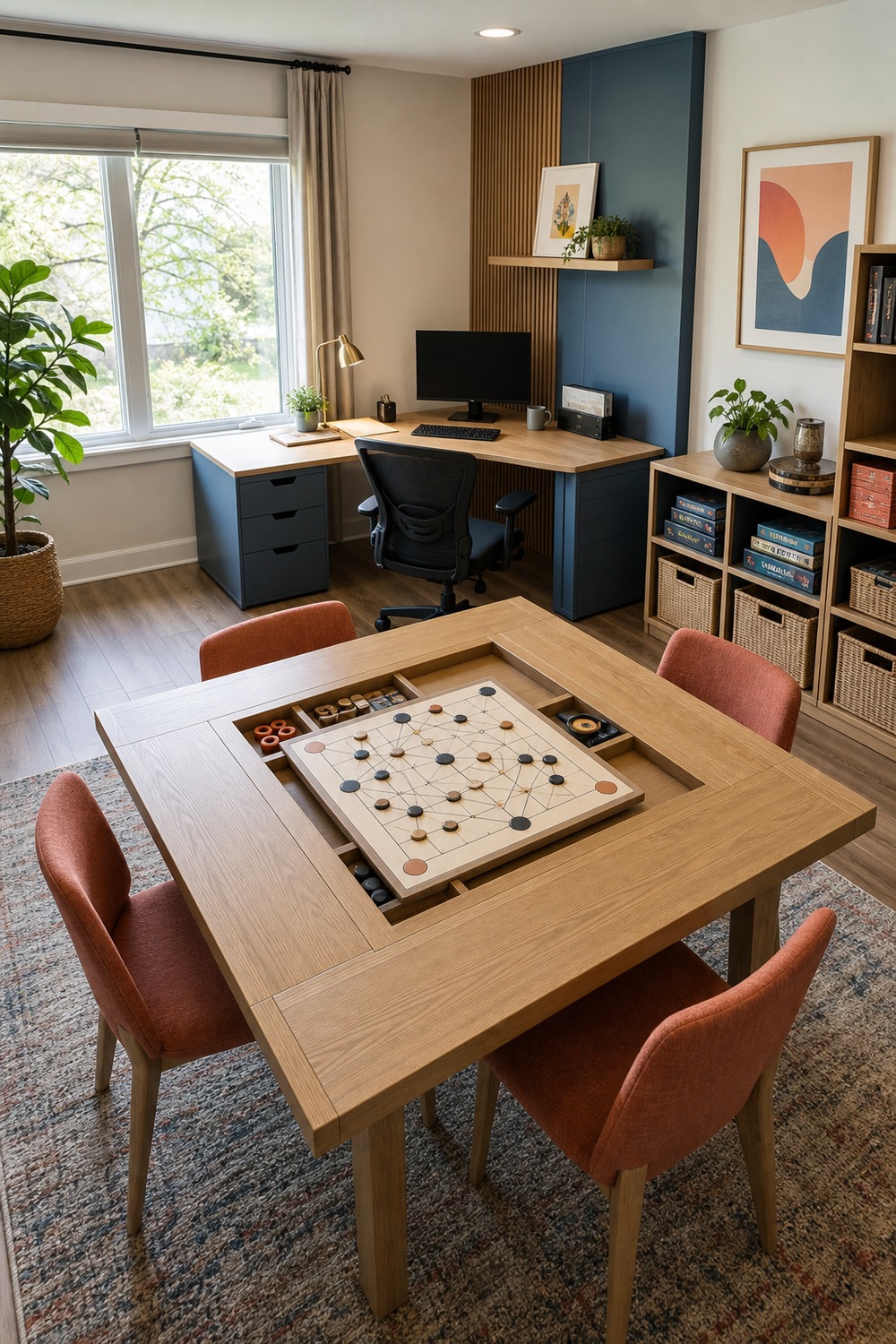
This family game table can handle puzzles, cards, or an ordinary meal, which is why the shared room feels believable. The office sits behind it with its own drawers and lamp instead of borrowing the table for paperwork.
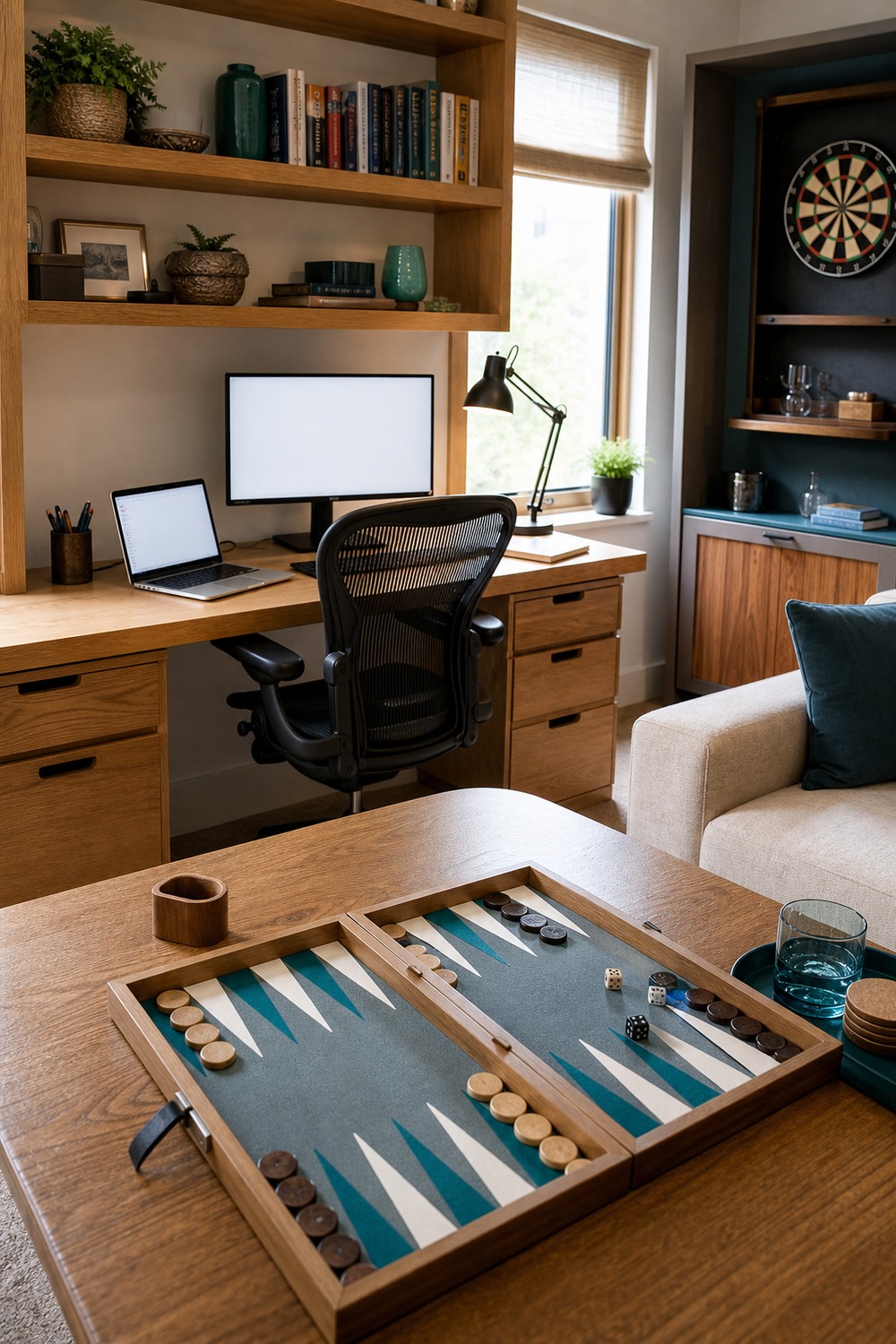
A backgammon table in the foreground gives the room a clear play cue at a glance. Behind it, the monitor, laptop, notebook, and file drawers show that the desk is meant for more than gaming.
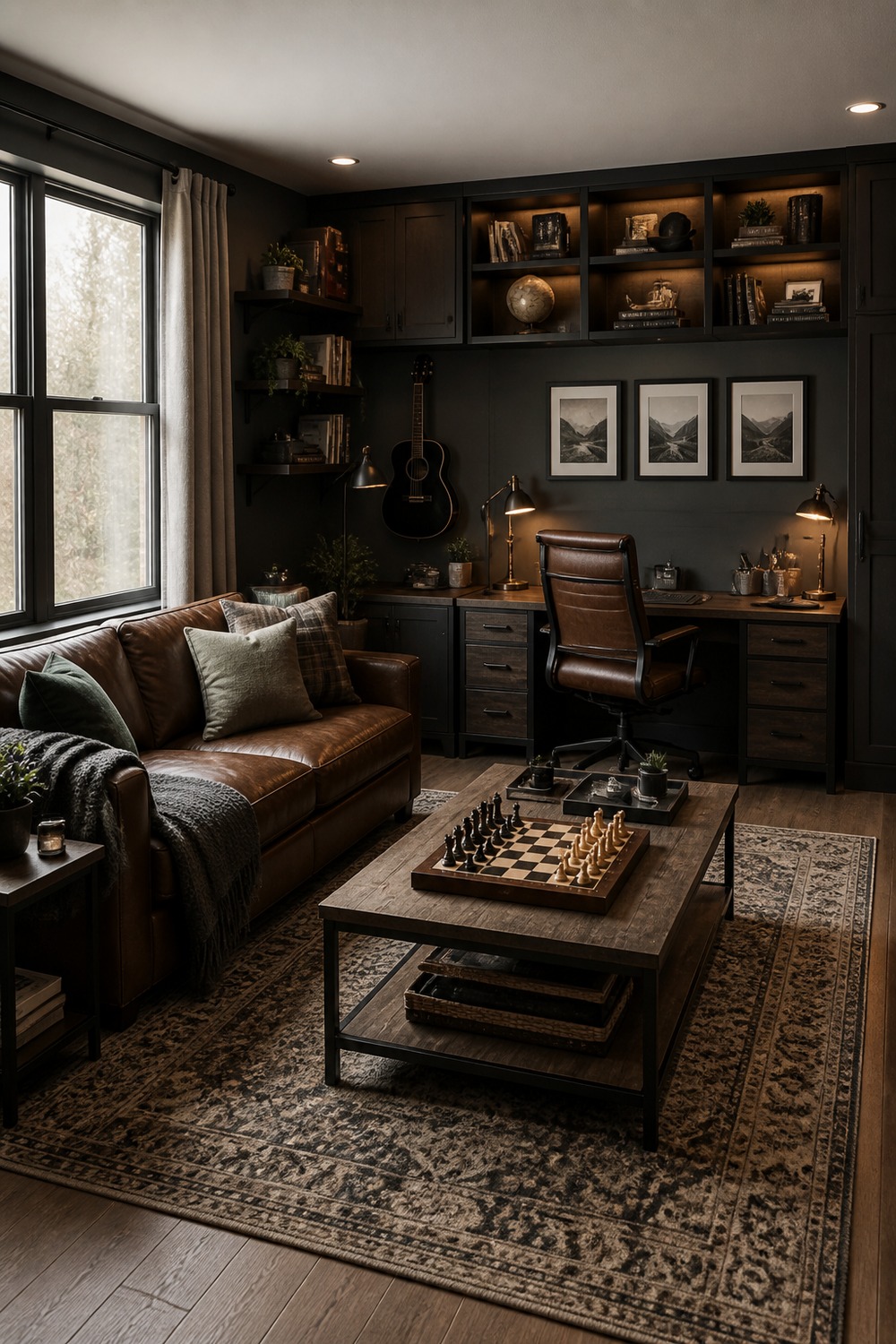
The chessboard turns the coffee table into something useful rather than decorative. It also gives the sofa zone a purpose, while the desk and shelves stay organized along the back wall.
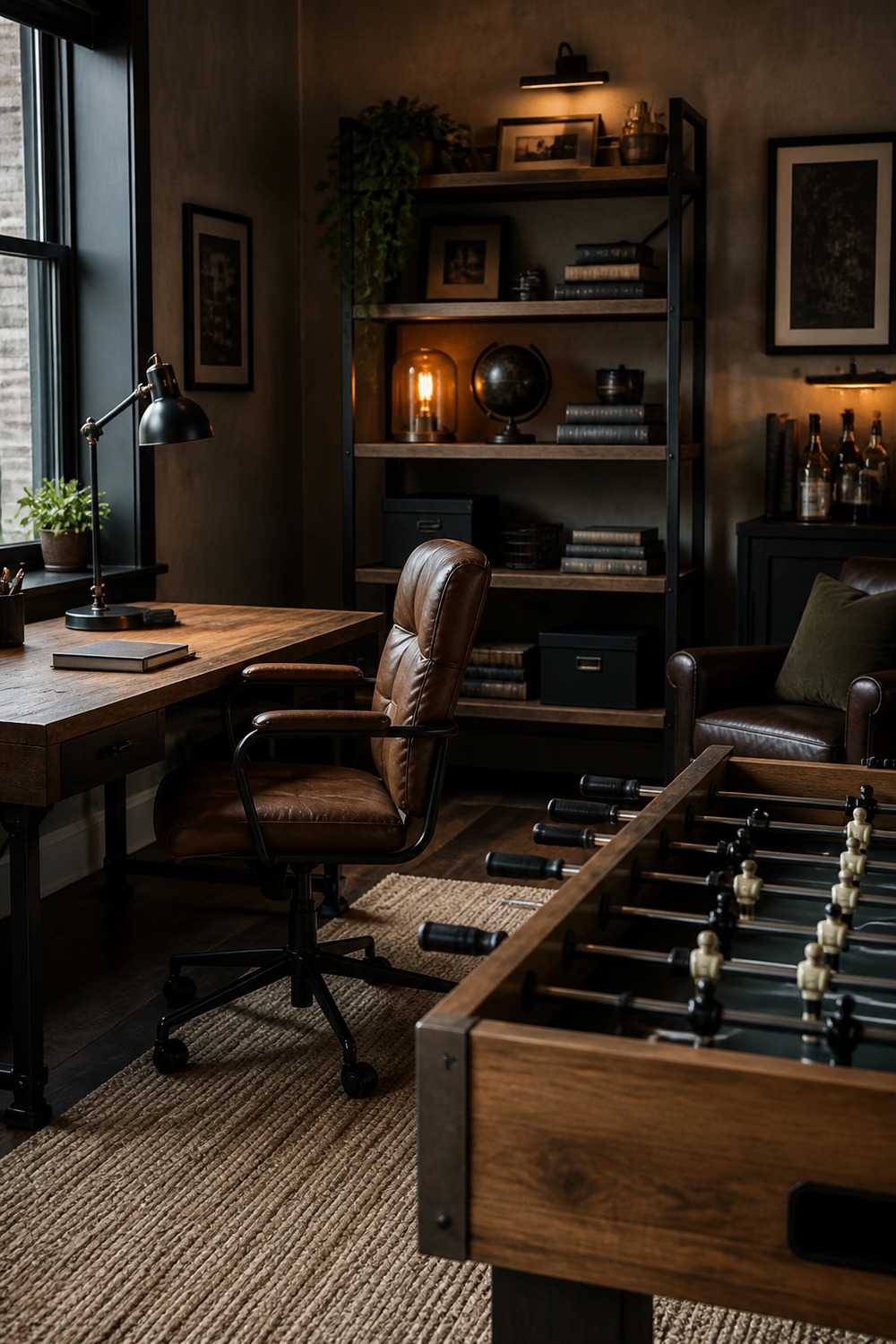
Foosball works well in an industrial room because the black metal and reclaimed wood already suit the equipment. The desk stays close to the wall, leaving enough space to stand and move the rods comfortably.
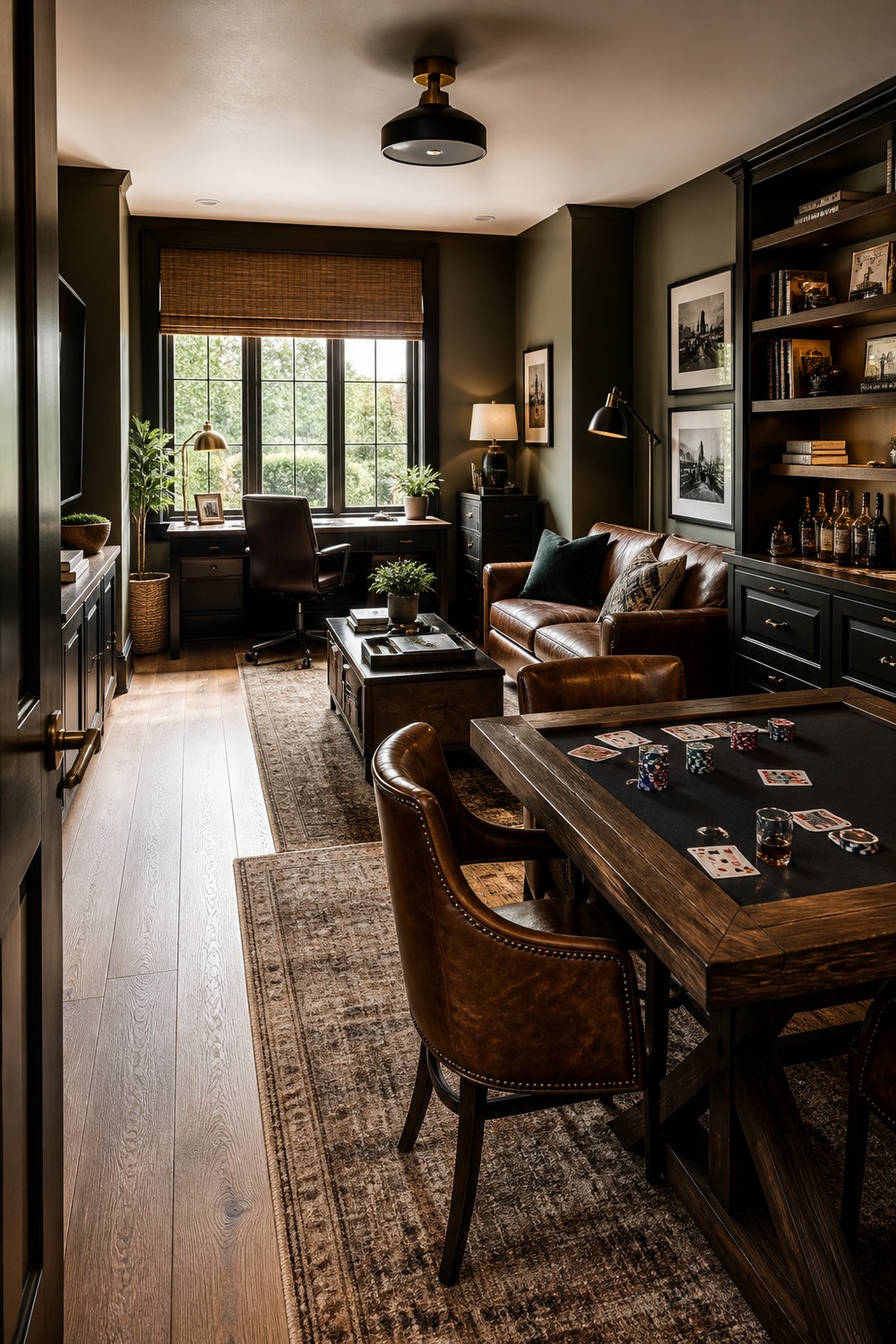
This full-room view is helpful because it shows the actual route between the workstation and card table. Nothing has to be folded away before work starts or friends sit down to play.
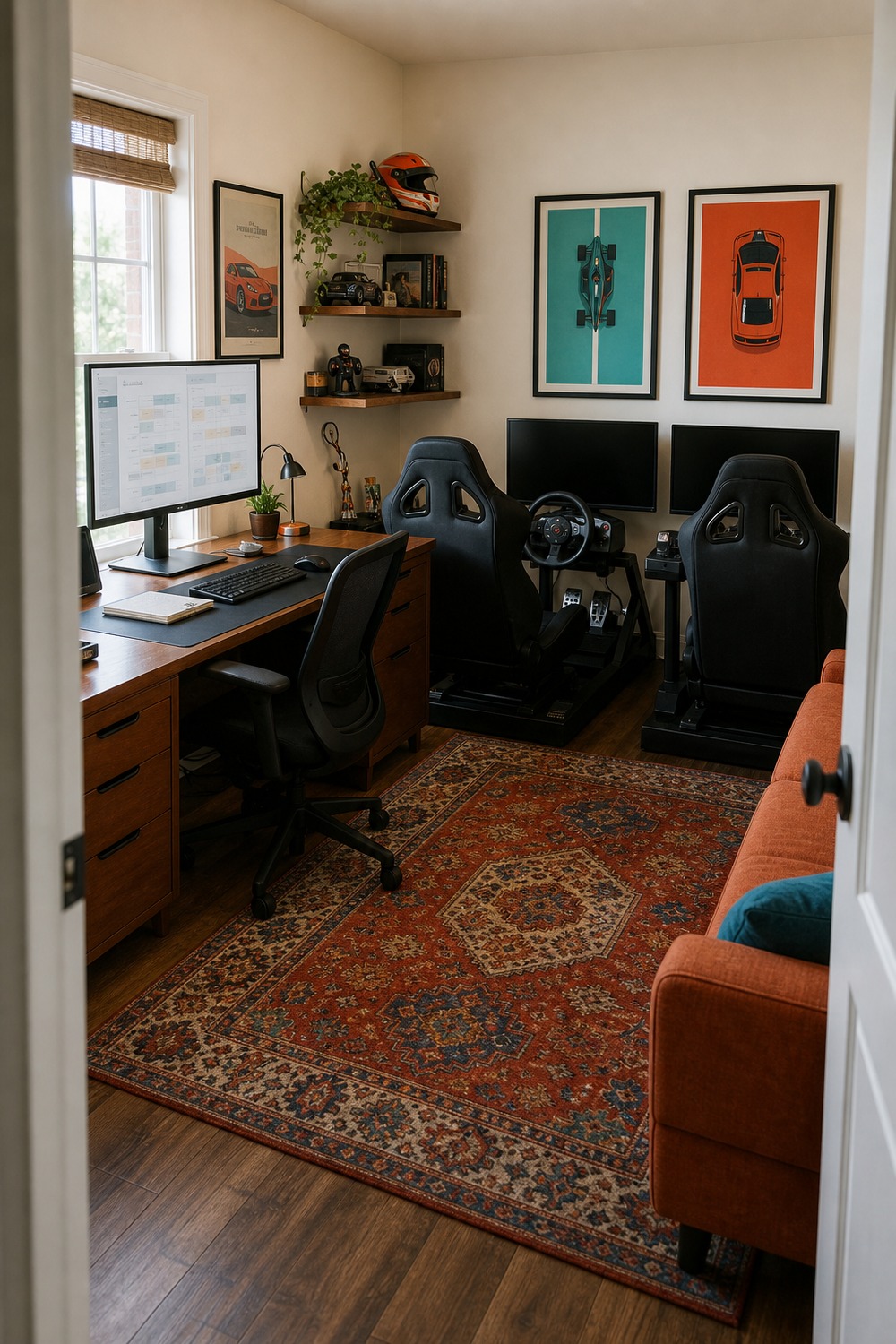
A racing simulator deserves more room than a loose steering wheel clamped to the work desk. Here the cockpit gets its own footprint, while the nearby computer station keeps a separate keyboard, notebook, and task chair.
The window desk takes advantage of daylight, and the bench below handles game storage without adding another tall cabinet. A visible tabletop game makes the play side clear while the room stays soft and residential.
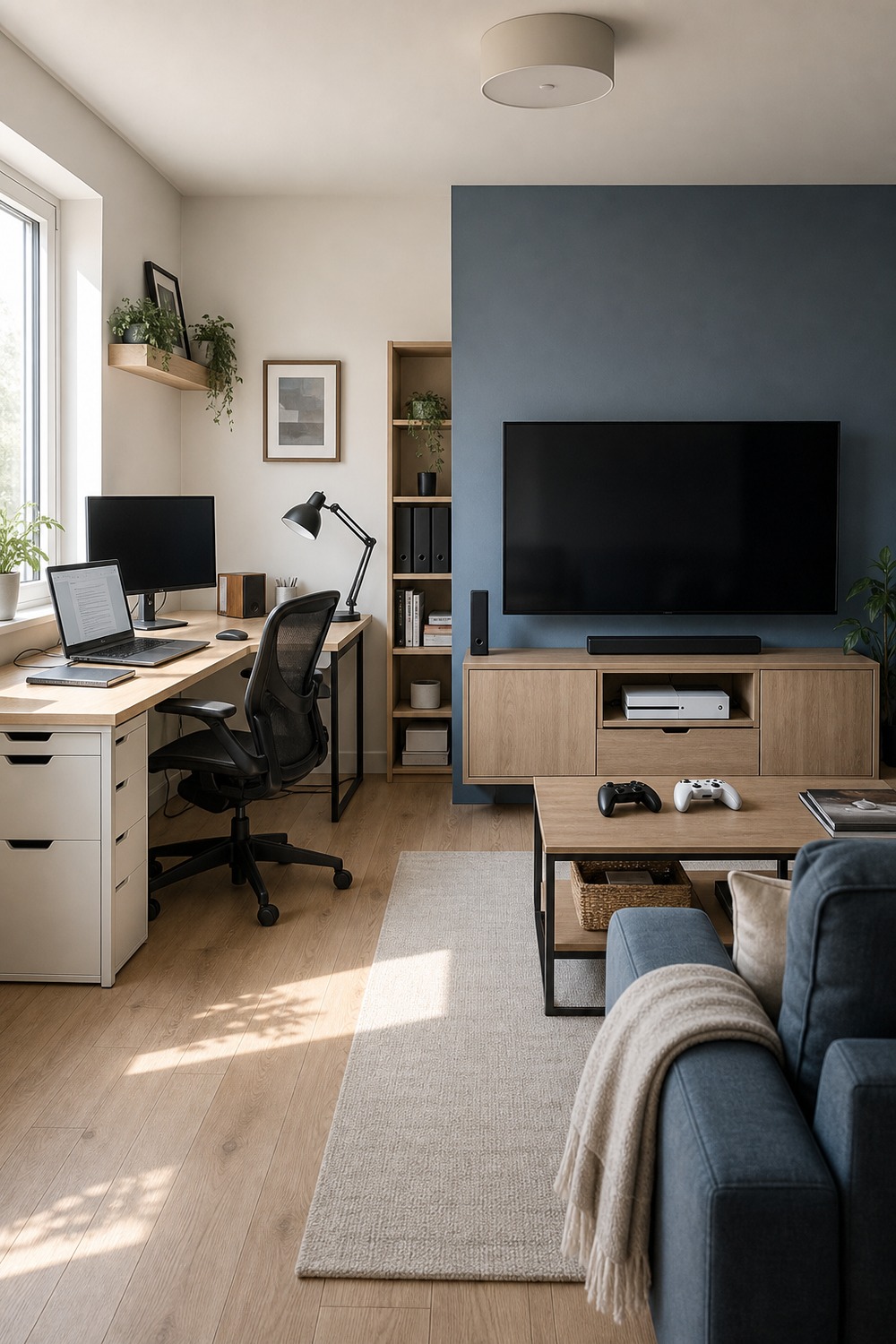
Closed console drawers are doing the practical work here. They keep controllers and cables near the television, while the separate desk avoids becoming the charging station for every device in the room.
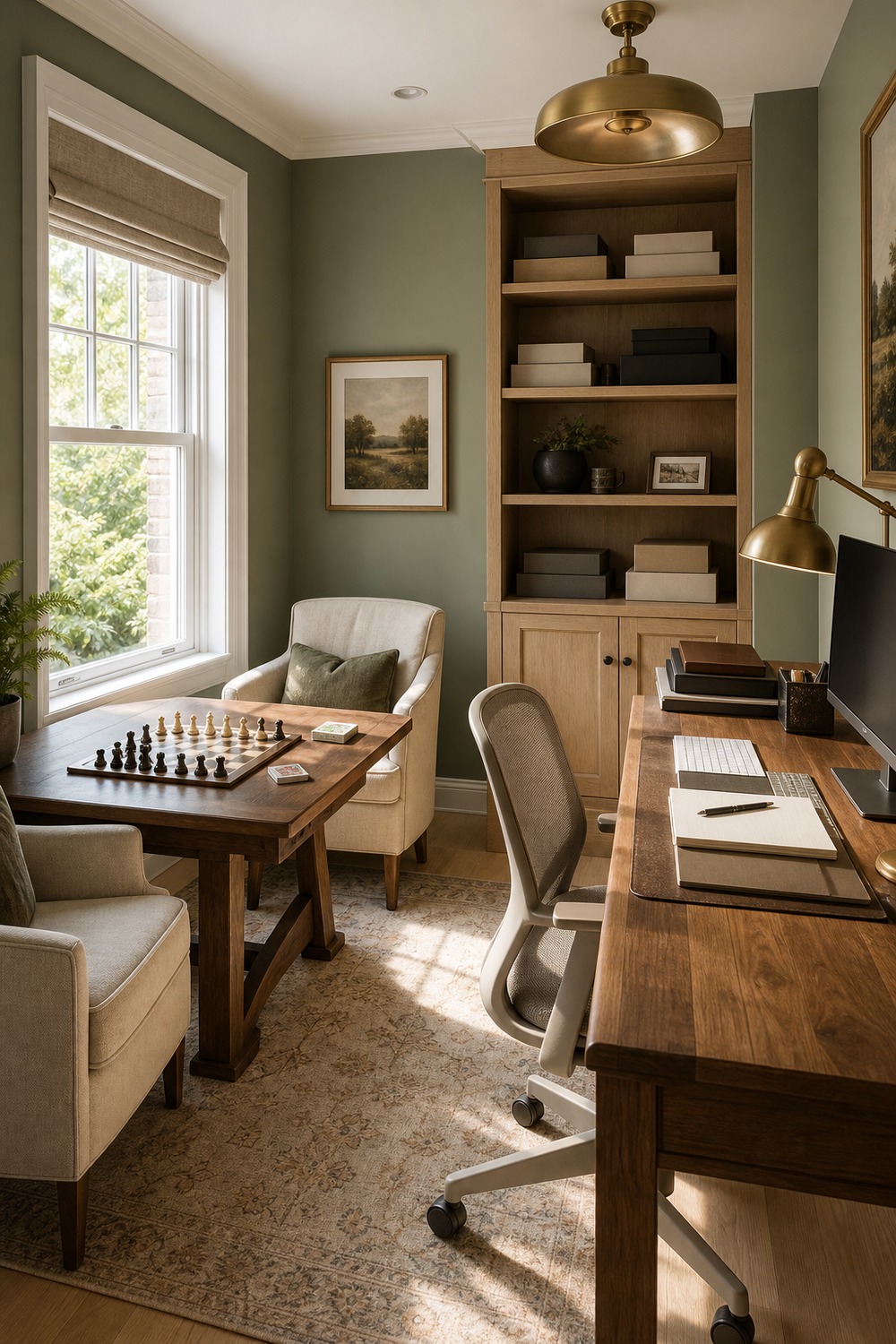
Soft sage walls and light oak make this chess-and-office corner feel relaxed rather than clubby. Two lounge chairs fit around the game table, and the work desk still has its own lamp, files, and monitor.
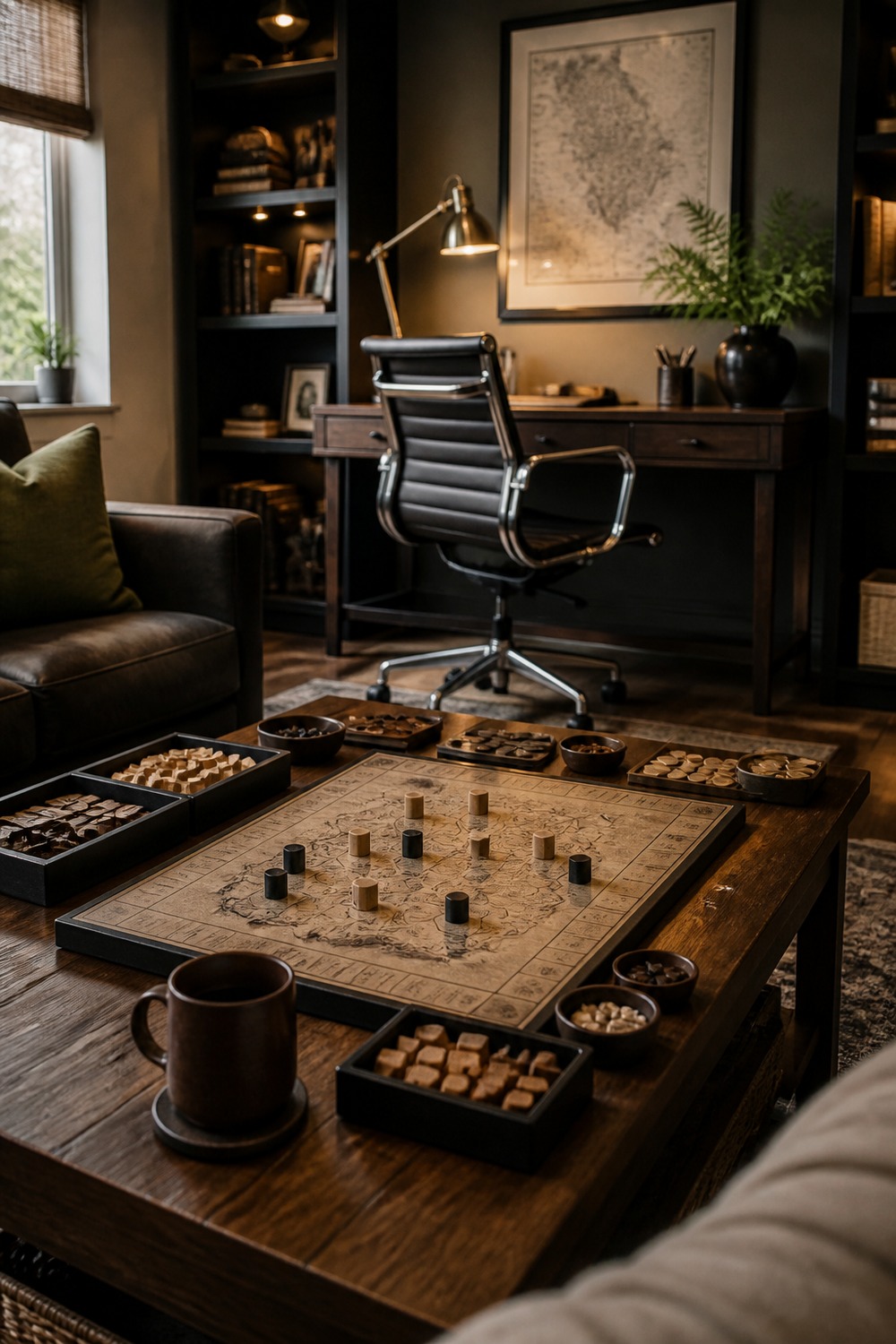
The low camera angle gives the game table real presence without hiding the workstation behind it. It is a good layout for people who want game night ready to go but still need a focused desk every morning.
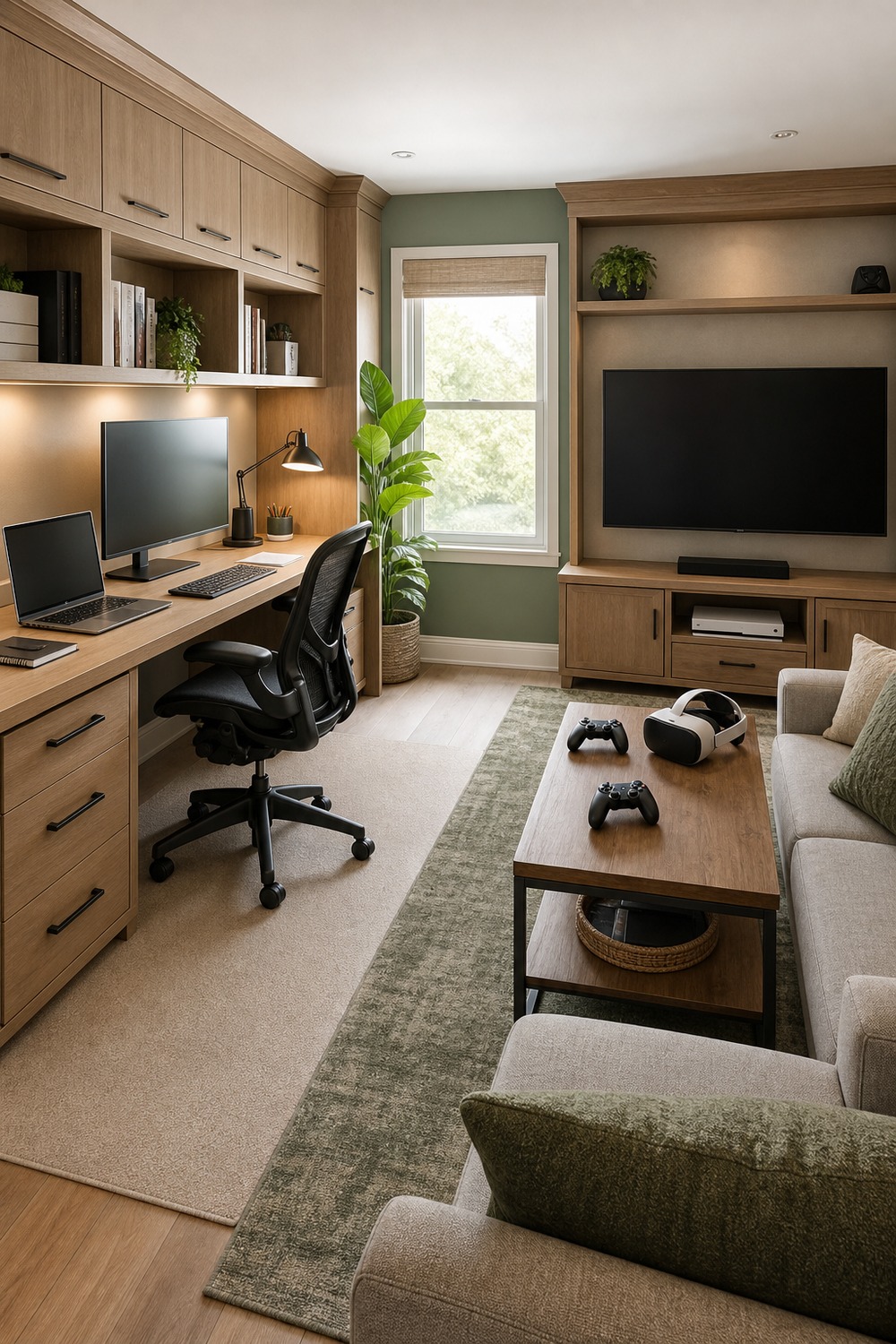
This modular wall uses one side for files and laptop work, then gives the console setup its own television, controller storage, and lounge seat. The compact arrangement is especially useful where a separate game room is not realistic.
The best shared rooms make switching modes easy. Good lighting, closed storage, and enough clearance around the desk and game equipment matter more than cramming in one more decorative feature.
Leave a comment