
A green coffee table can go wrong when it feels like a random accent piece dropped in the middle of the room. The better versions use shape, storage, stone, paint, wood, and soft living-room textures so the color feels intentional instead of loud.
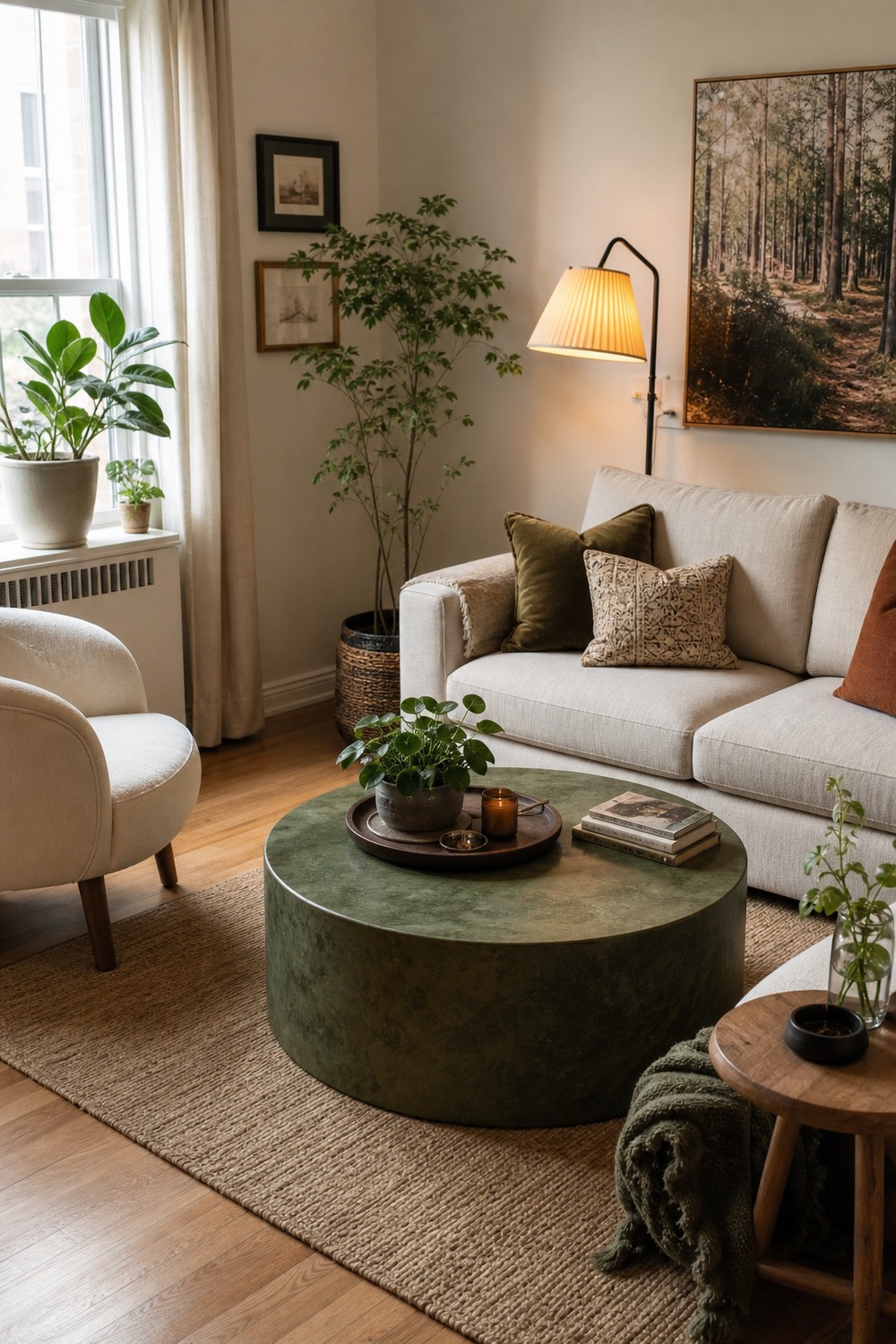
The round green table is the thing that makes this seating area feel intentional. I like the way the curved shape softens all the straight sofa lines, and the open space around it means the room still has room for feet, coffee mugs, and a tray that can actually move.
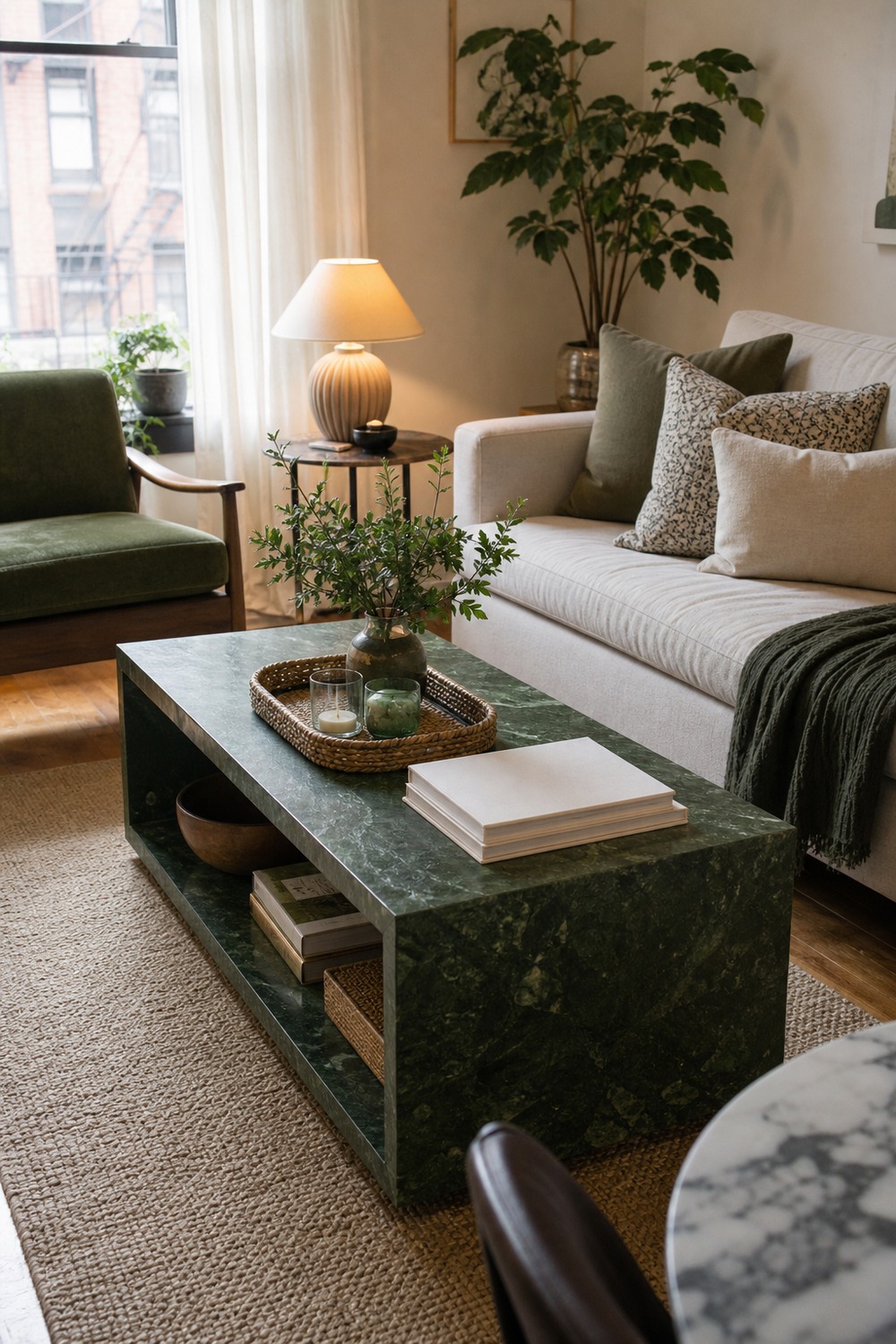
A rectangular coffee table feels especially useful when it brings storage with it. The green finish gives the room color, but the lower shelf is the quiet hero here because books, remotes, and baskets have somewhere to land without taking over the tabletop.
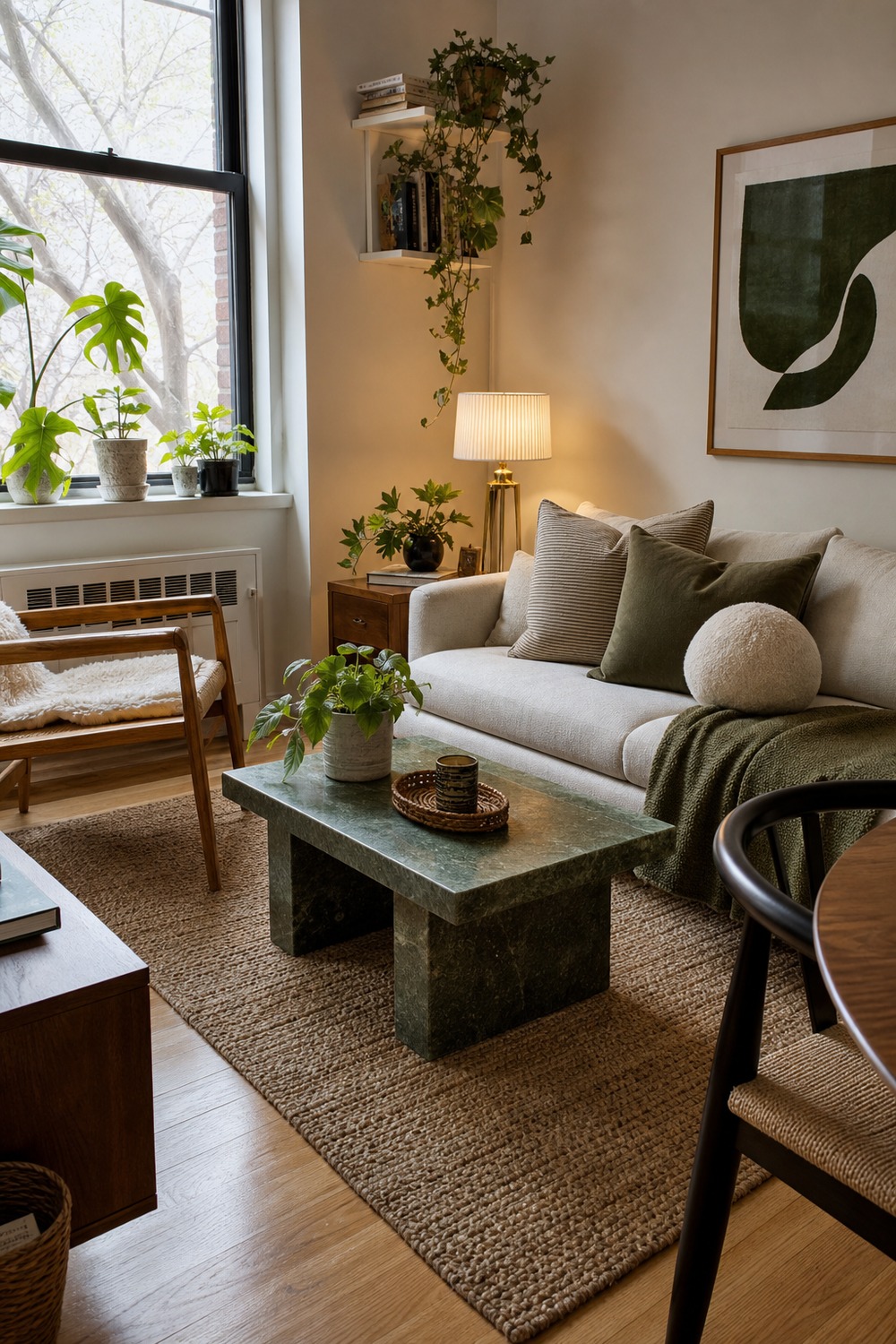
This is the kind of green coffee table I would want in a smaller apartment because it gives the room a focal point without eating the whole walkway. The slim styling, soft rug, and light upholstery keep the color from feeling too heavy.
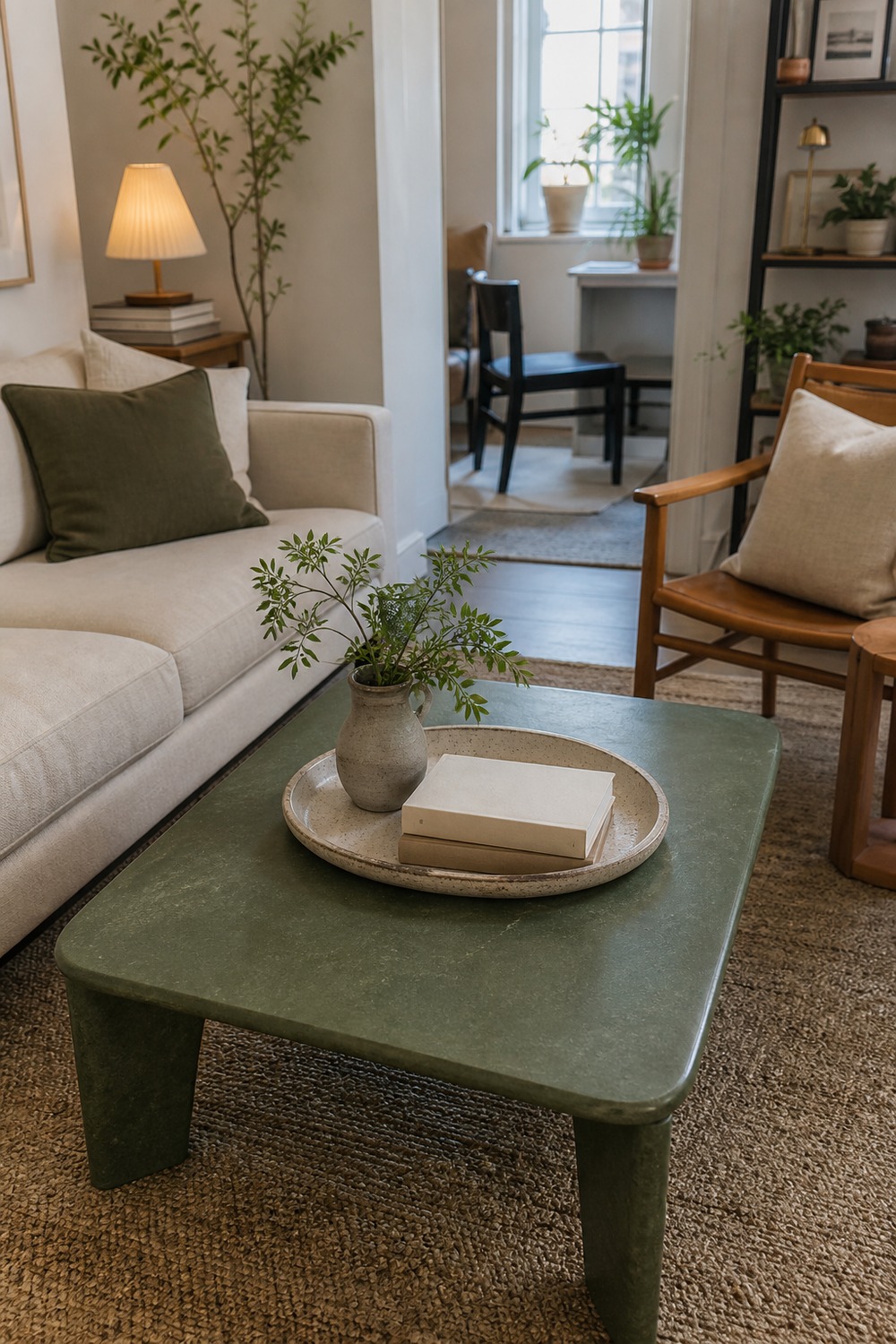
The tray styling makes this one feel easy to live with. A green table can already be a statement, so keeping the top to a few books, a vase, and one contained tray makes the whole setup look pulled together instead of crowded.
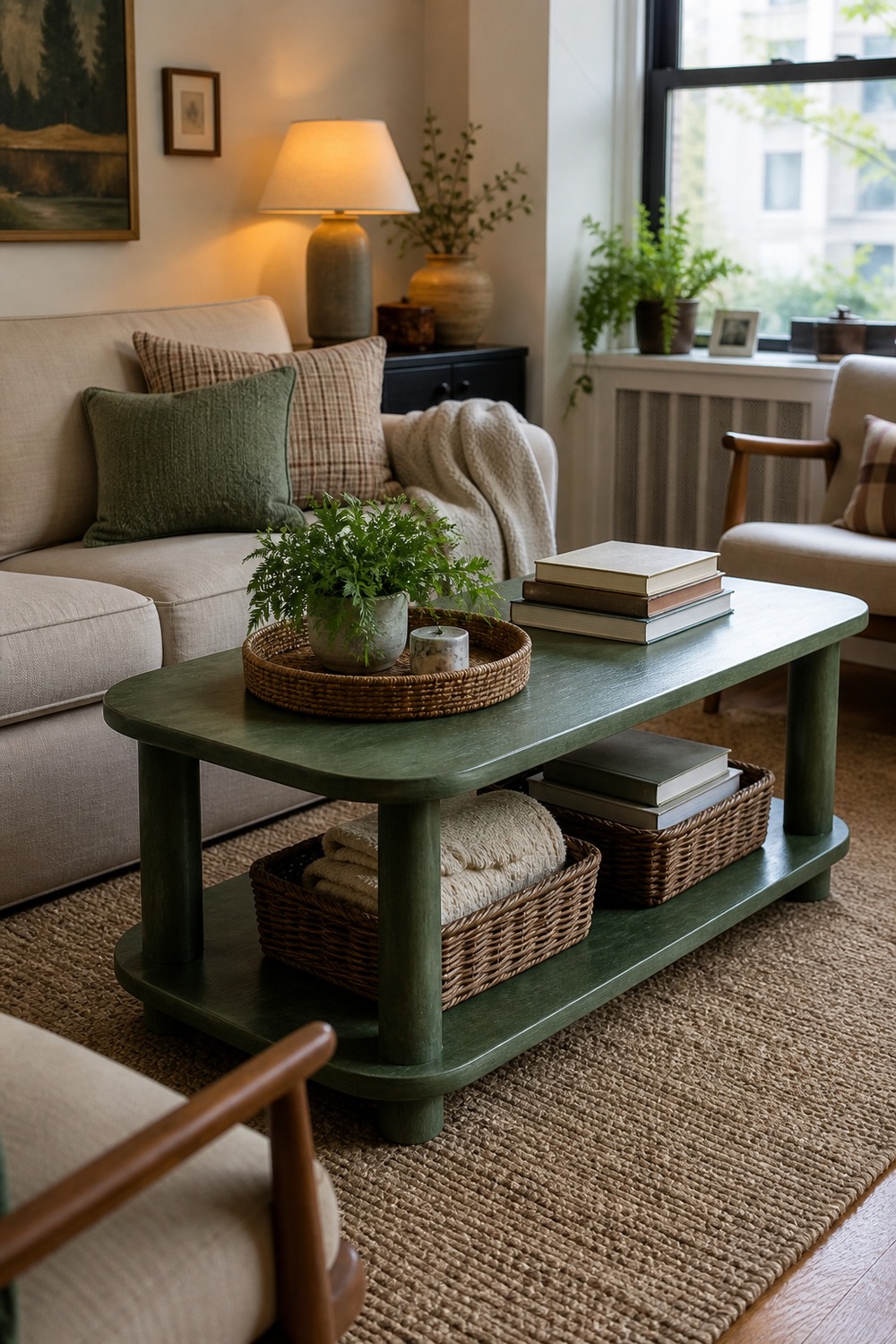
The two-tier shape is practical in a way that still looks pretty. I like that the lower shelf handles the everyday clutter, while the top can stay cleaner with just a bowl, a small plant, or whatever you actually use in the room.
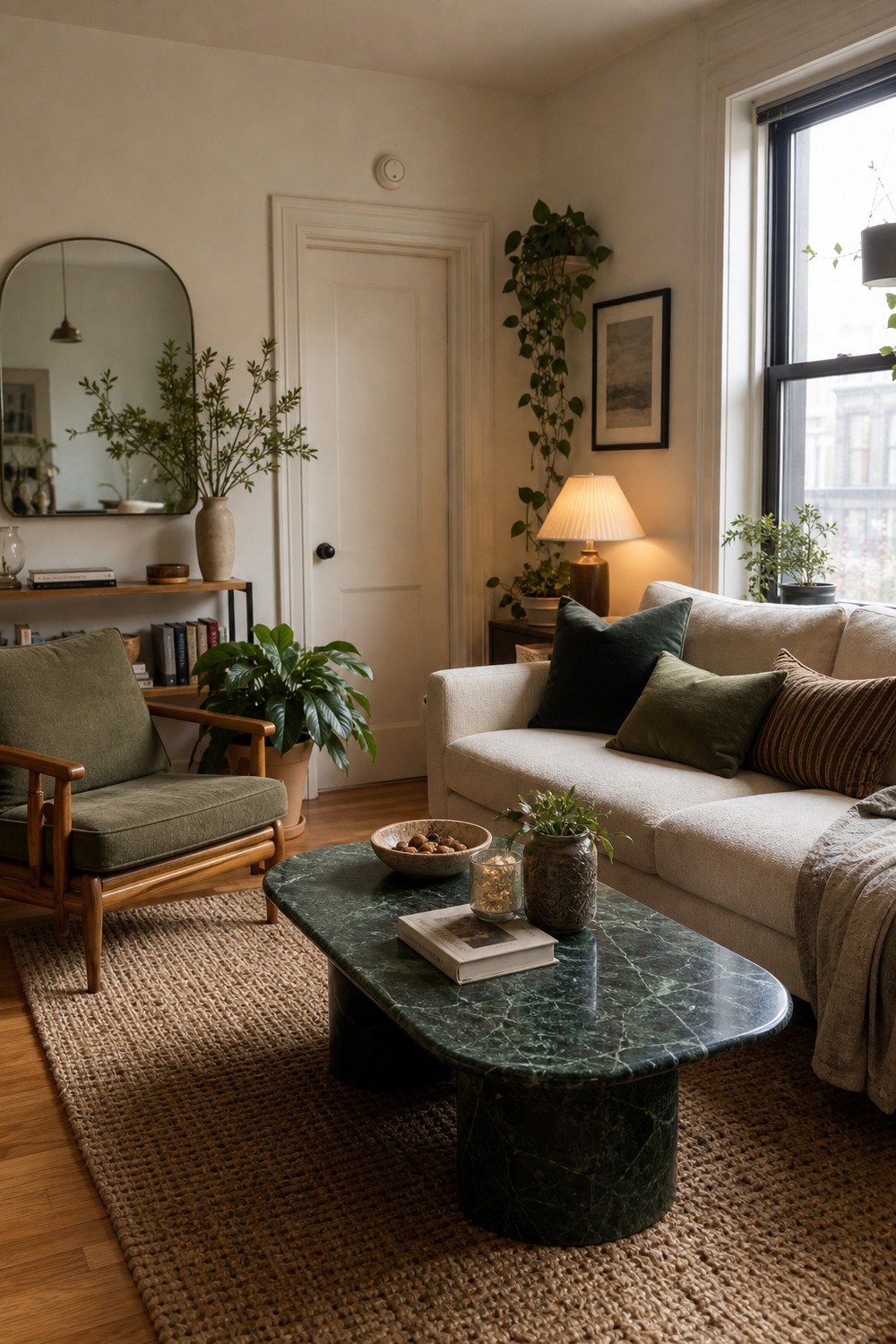
This green table works because it is paired with a sofa that feels soft and relaxed. The contrast between the sturdy table and the cozy cushions keeps the room from looking too delicate, which is nice for a living room that gets used every day.
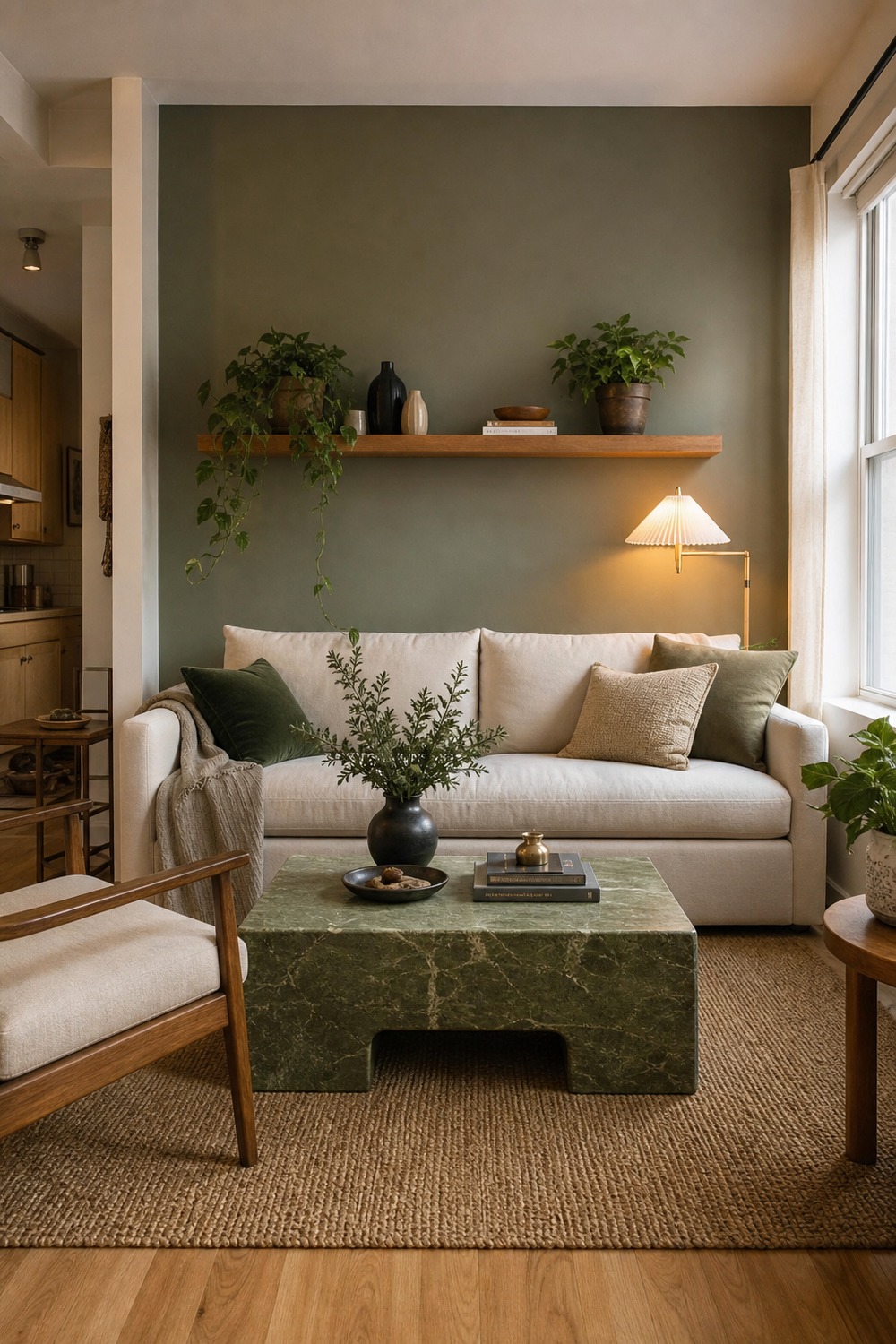
The focal wall makes the coffee table feel like part of a whole room plan, not a random colorful piece. I like how the green repeats just enough through the wall, plants, and tabletop so the center of the room feels connected.
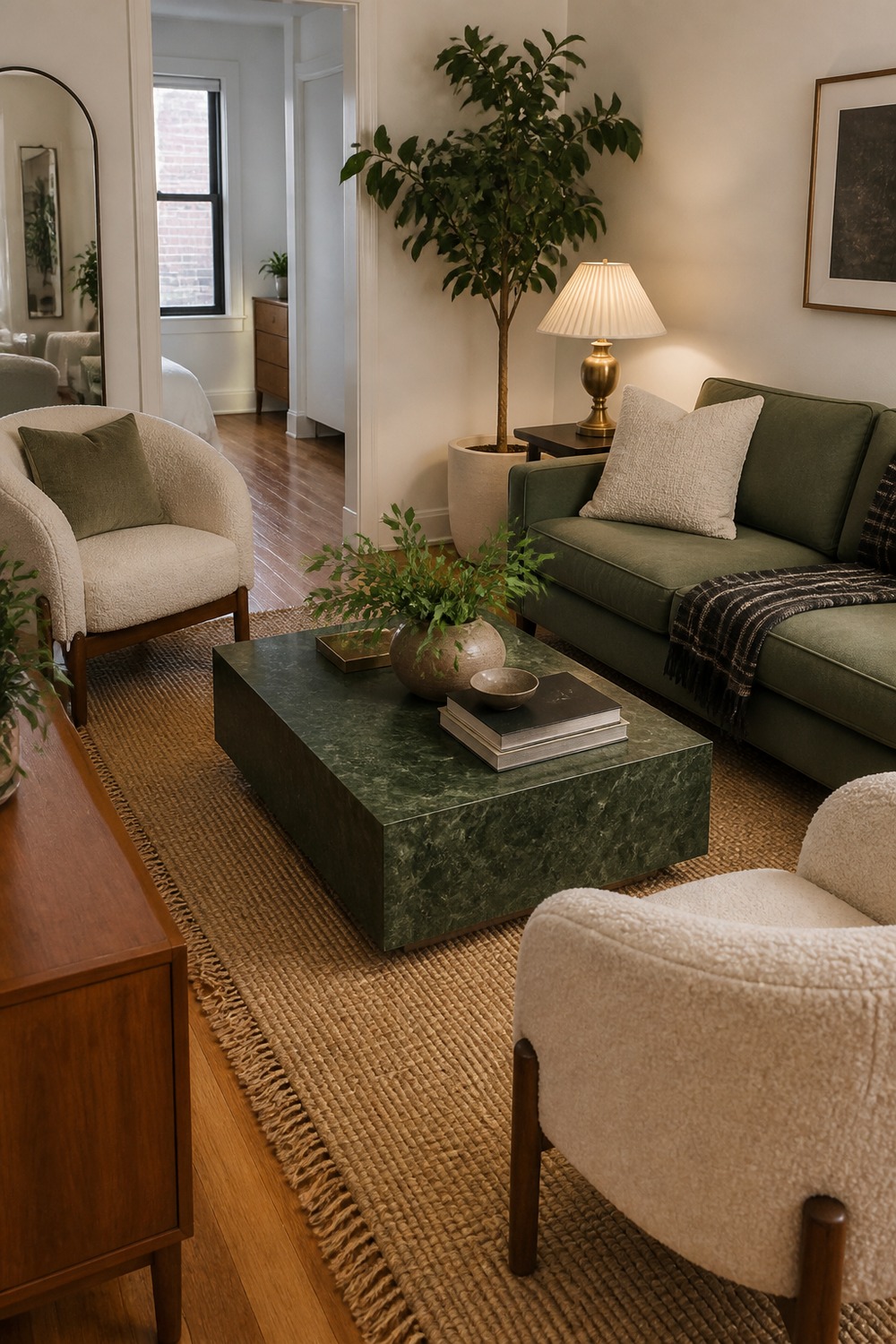
This setup is good for a conversation area because the table sits between the sofa and chairs like a shared landing spot. The green surface gives the layout some weight, while the chairs keep the room from feeling like everything points at one wall.
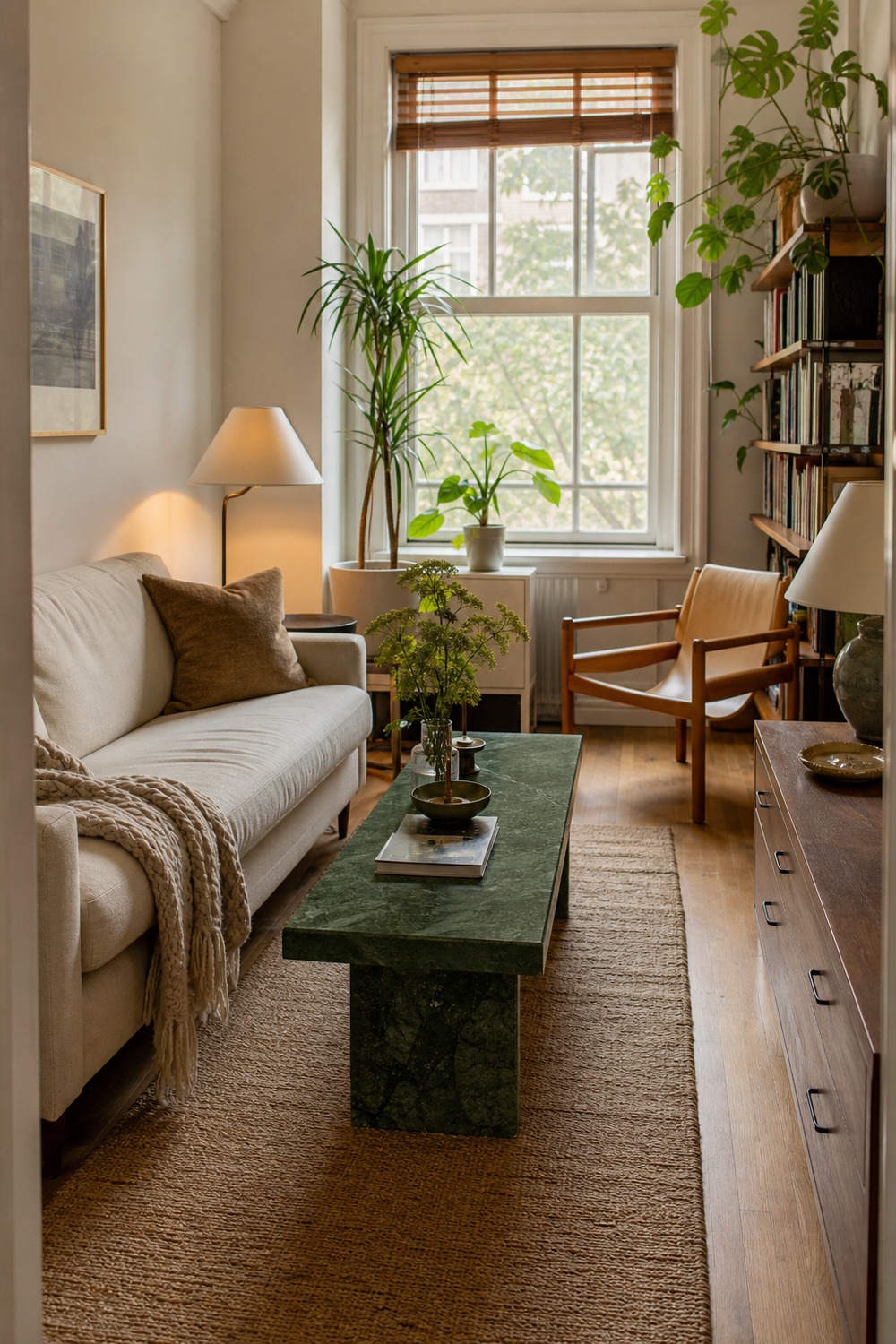
A narrow living room needs a coffee table that understands traffic flow. This one keeps the green color front and center, but the slimmer proportions leave enough breathing room around the sofa so the space does not feel pinched.
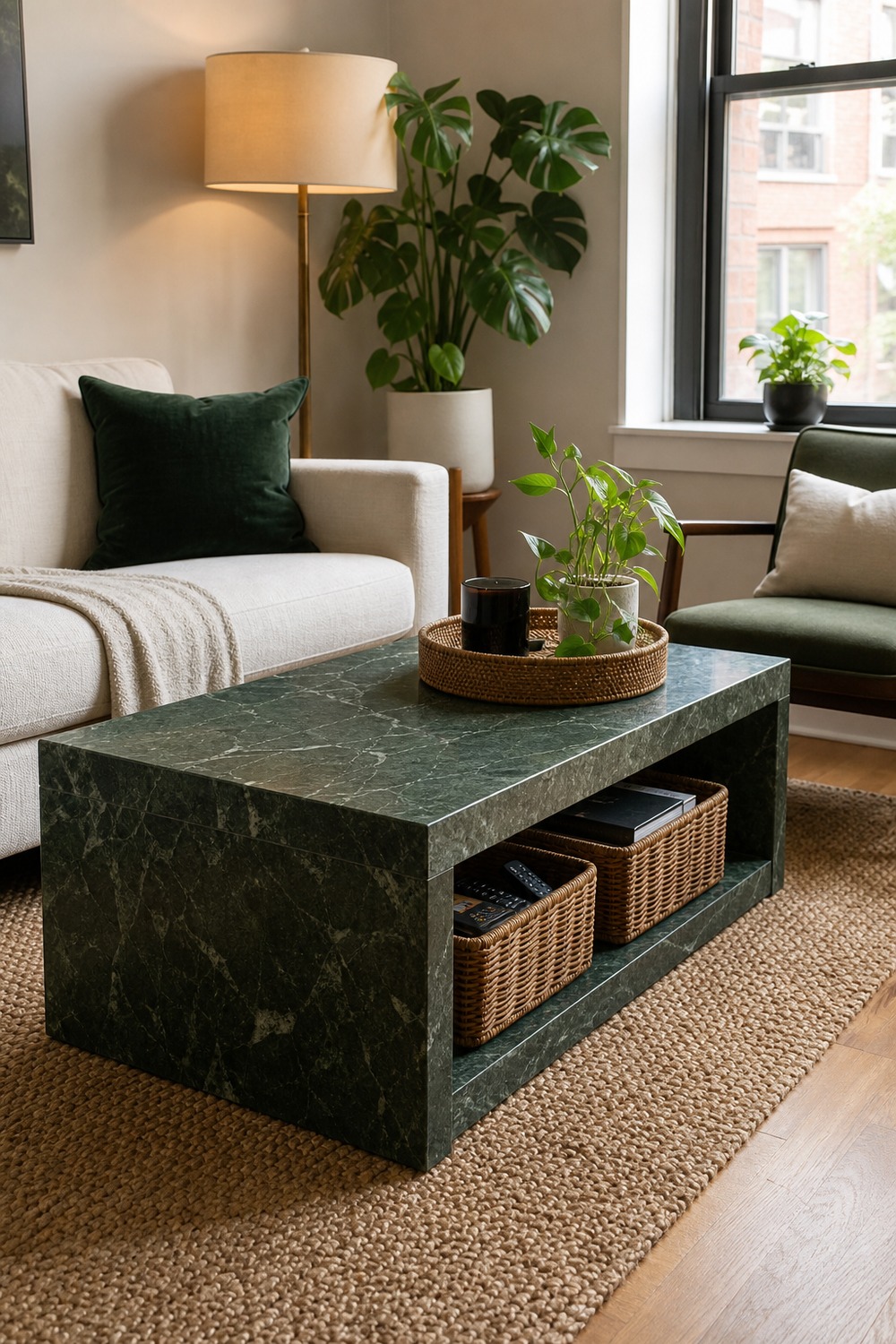
The shelf-and-basket detail is what makes this feel realistic to me. A green coffee table can be decorative, but hidden or semi-hidden storage is what keeps the room from turning into a pile of remotes, magazines, chargers, and blankets.
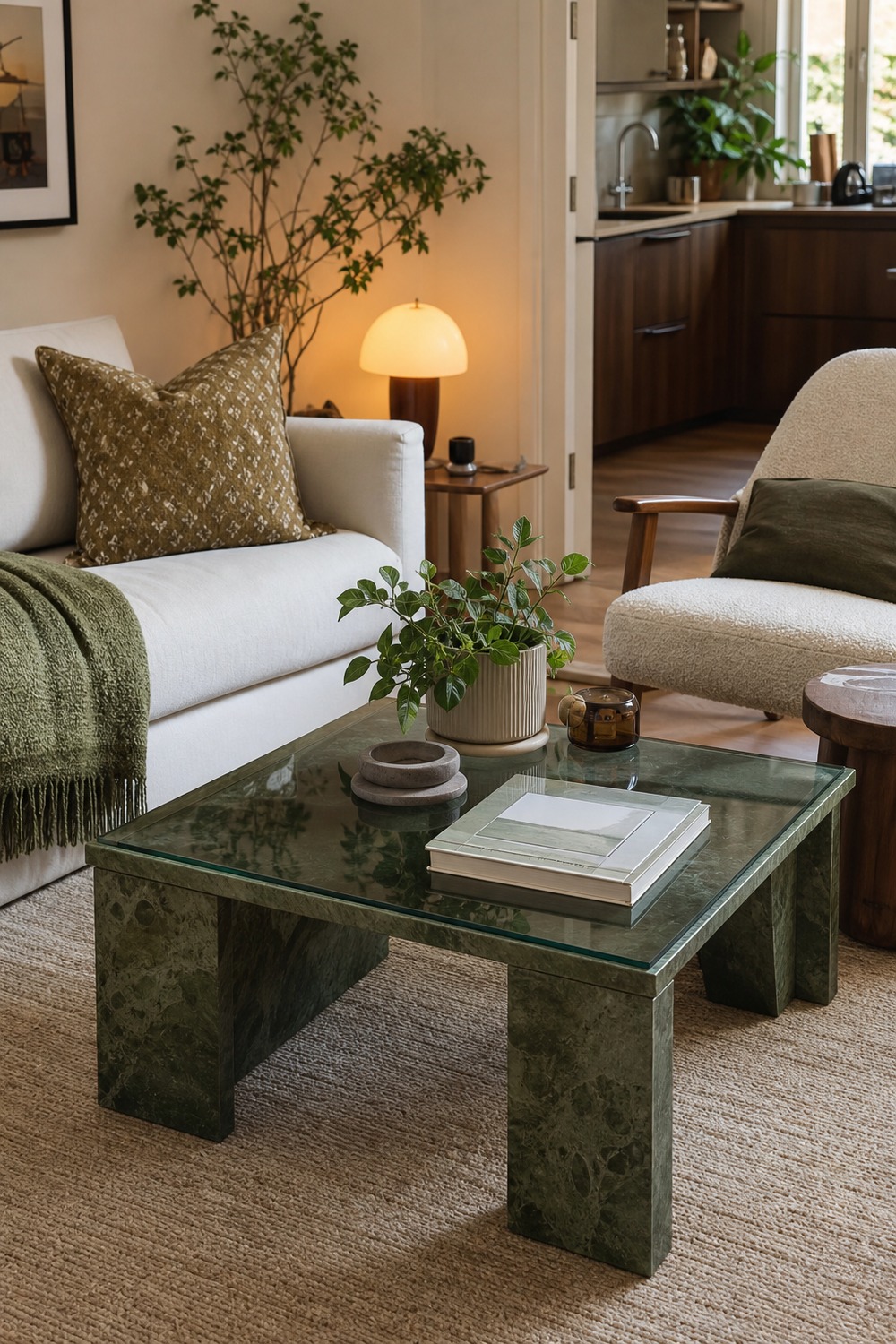
The glass and metal details make the green feel a little sharper and more modern. I like this direction when the room already has a lot of soft fabric, because the reflective edges stop the coffee table from disappearing into the beige seating.
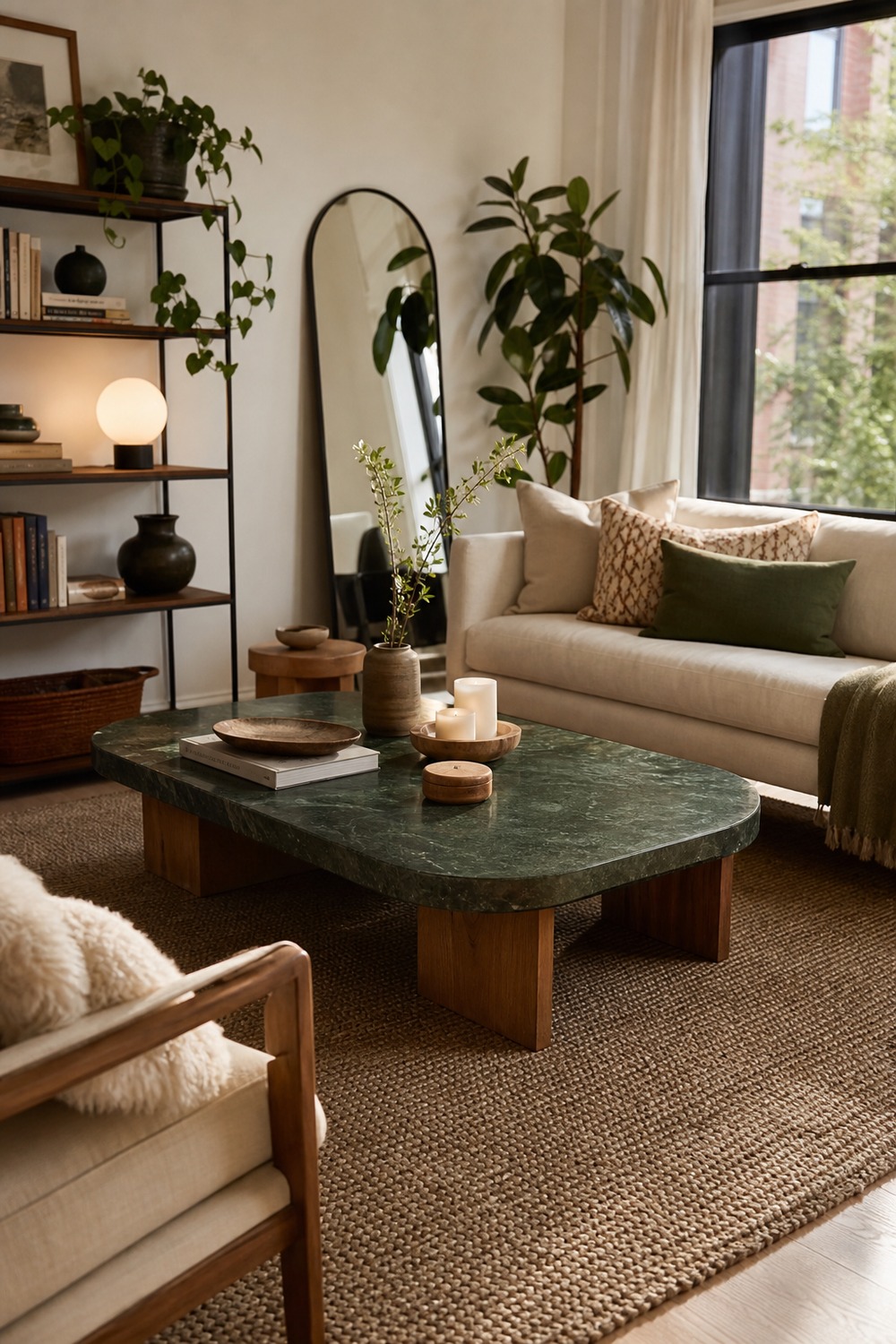
Green and warm wood are such a good mix when you do not want the table to feel cold. The wood tones make the green look more natural, and the simple styling keeps the living room from drifting into a heavy showroom look.
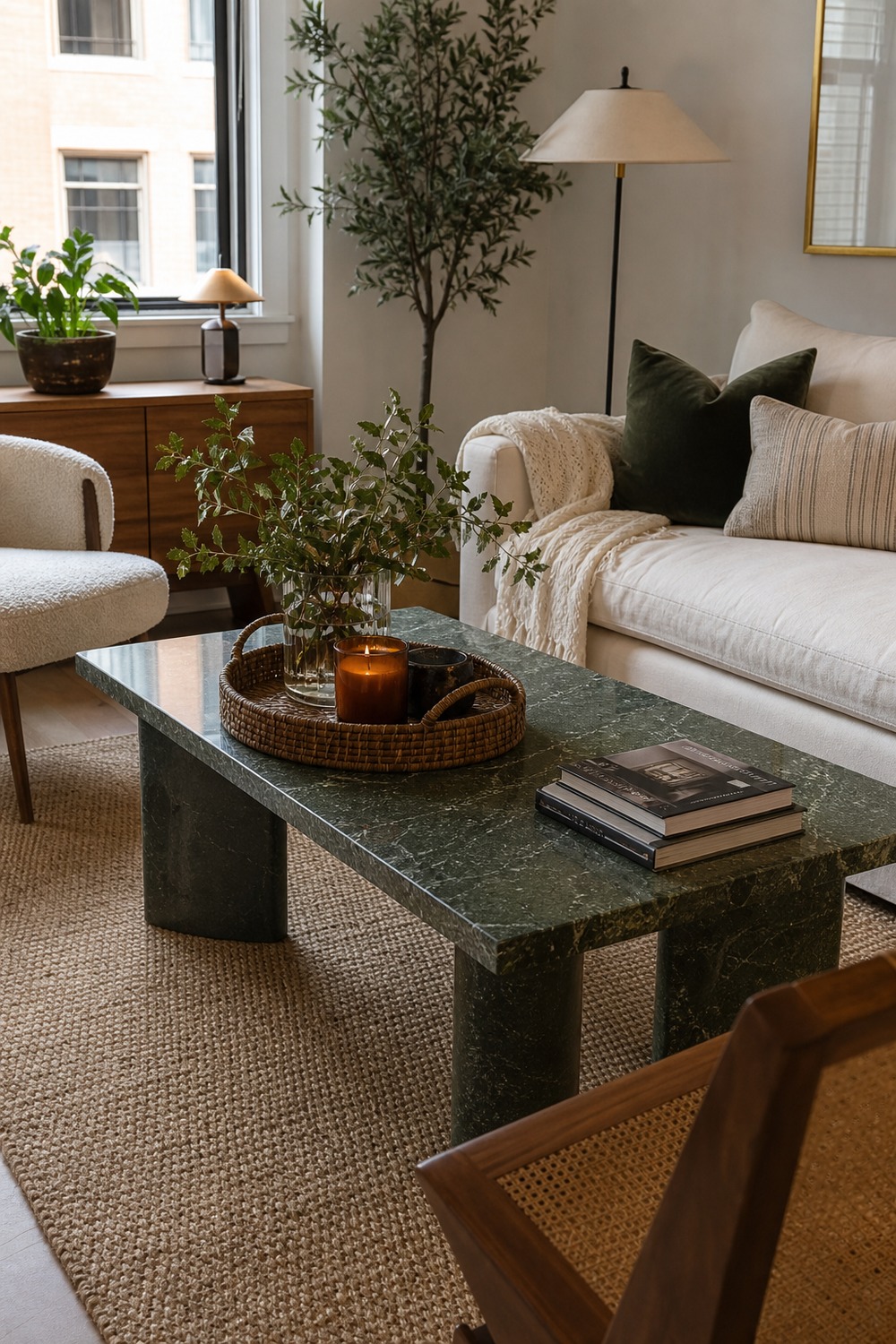
A green stone top feels more grown-up than a painted accent piece, especially with a simple tray and soft seating around it. The veining gives the room pattern without needing a busy rug or a lot of extra decor on the table.
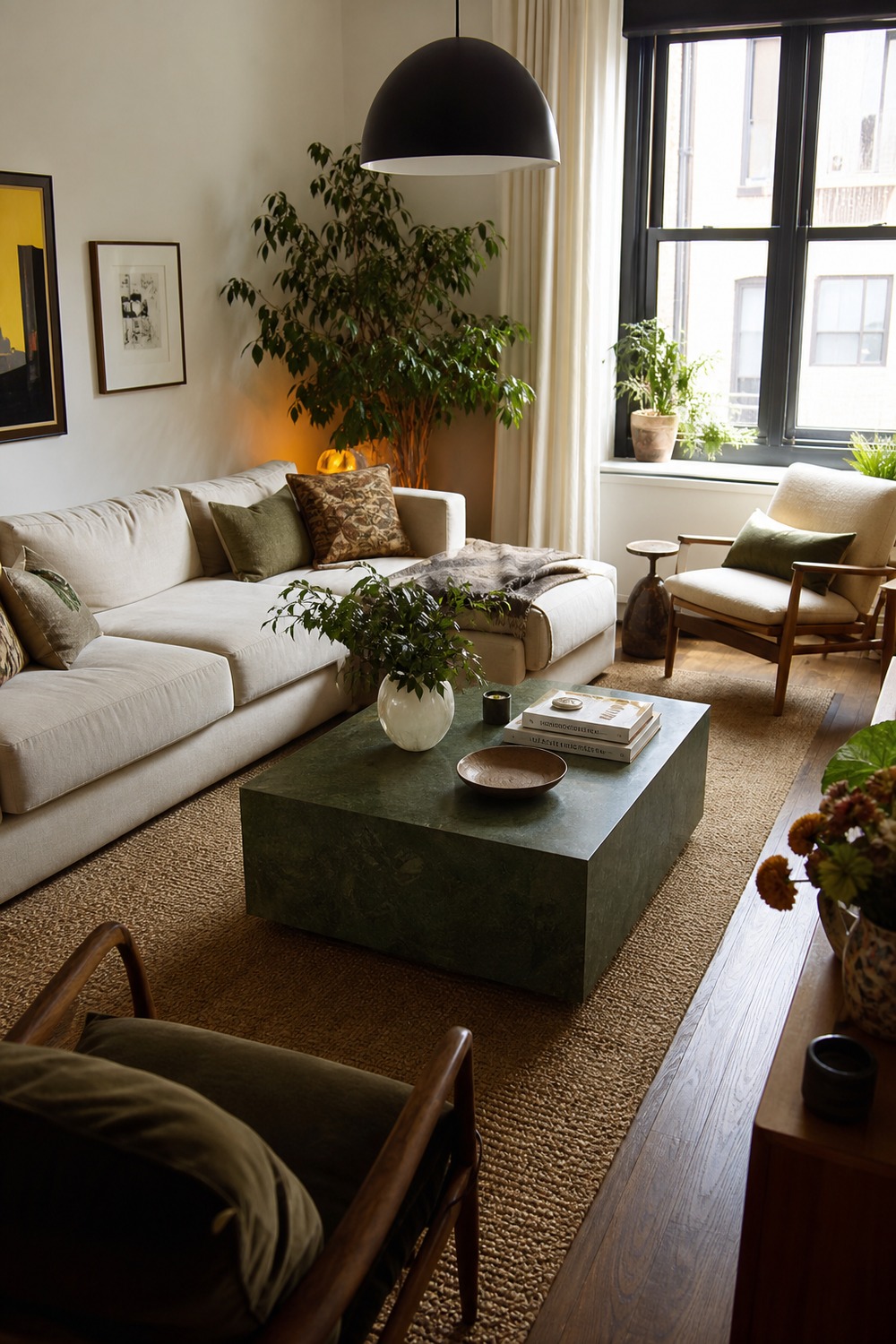
The square shape makes sense in a room where the seating wraps around the table. It gives everyone an easy reach point, and the green block in the middle keeps the sectional layout from feeling too neutral or unfinished.
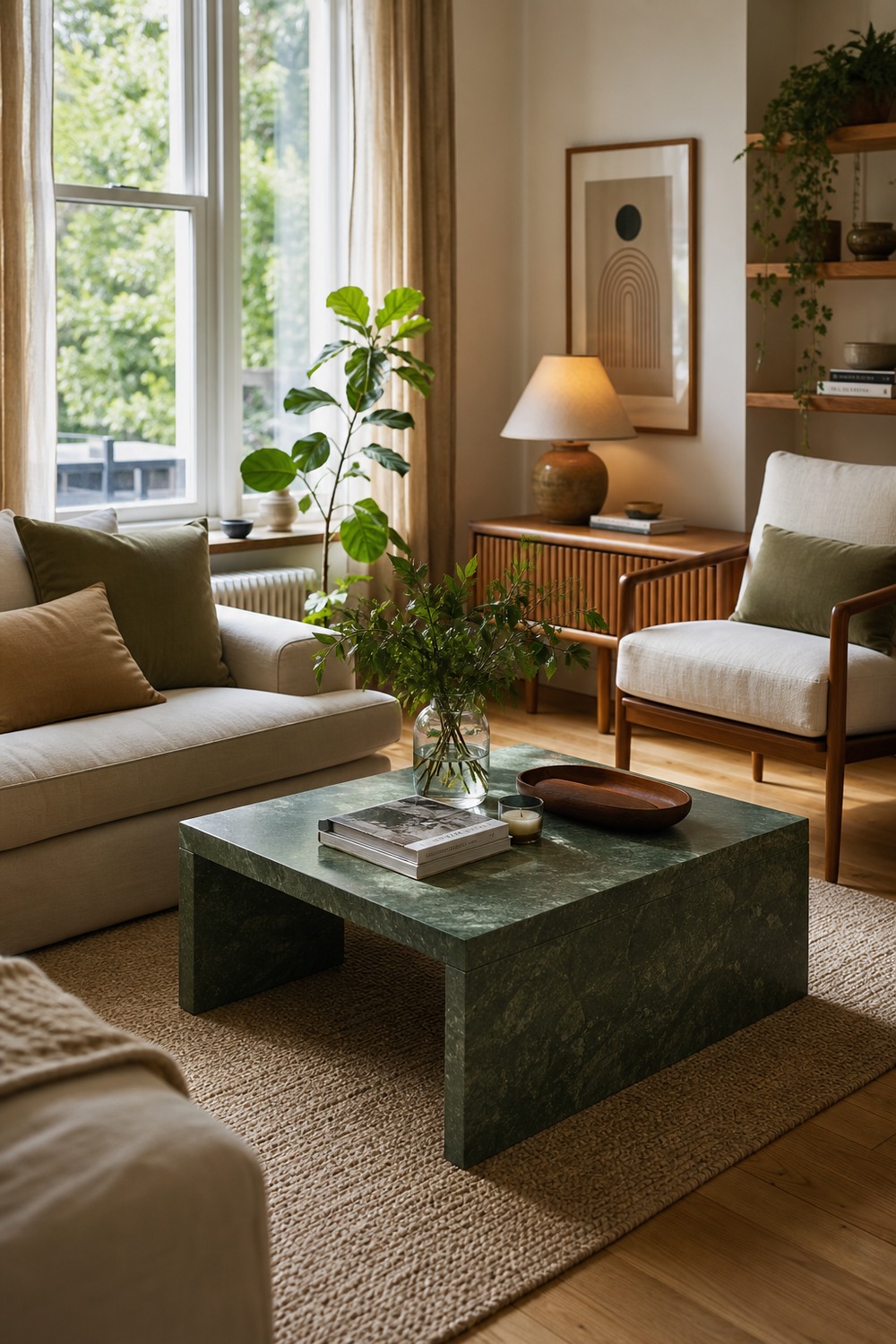
Window light makes the green finish feel fresher here. I like that the table is not overdecorated, because the daylight, curtains, and plants already bring enough movement to the room without adding a lot of extra tabletop clutter.
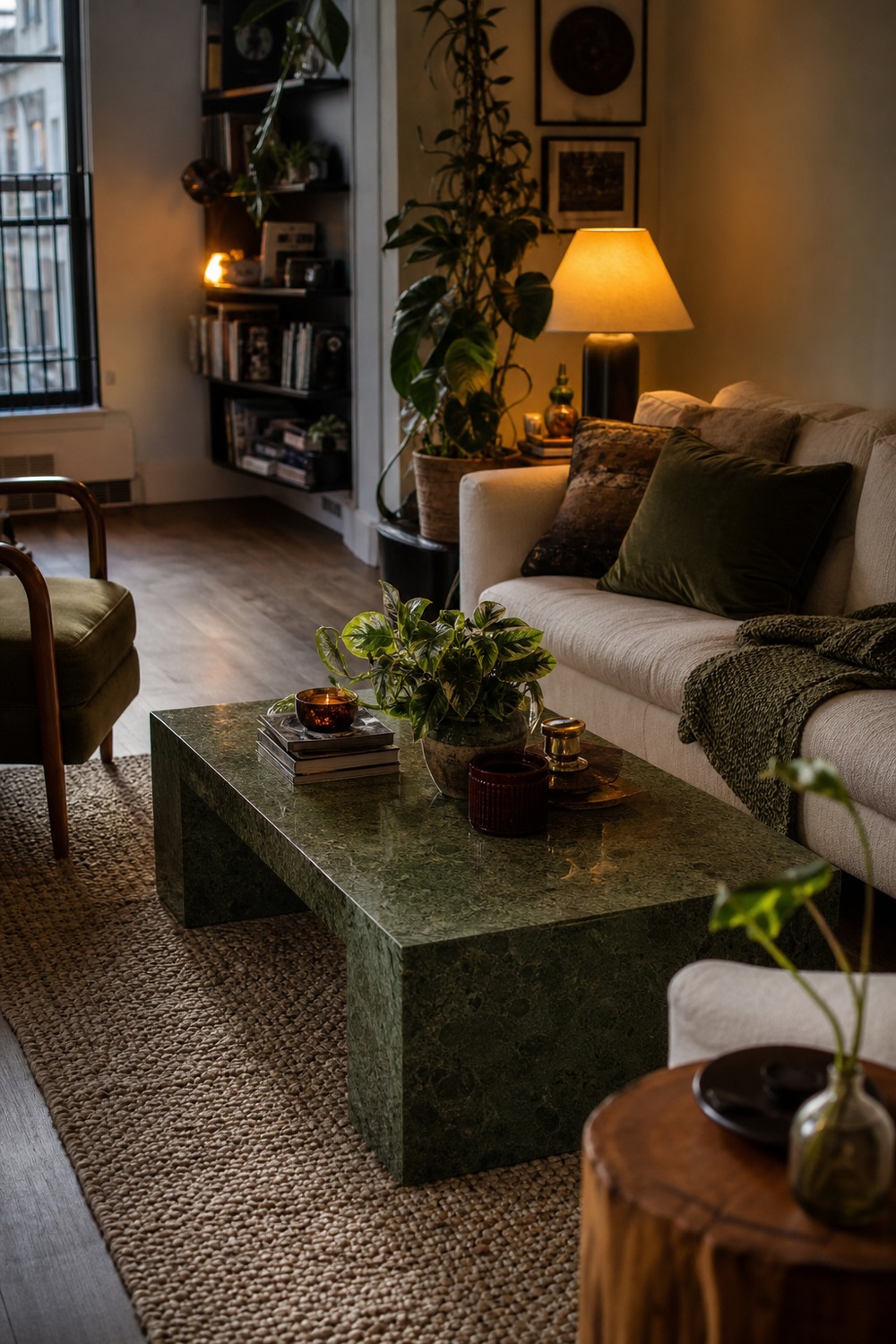
This darker setup shows why green works so well at night. Under warmer lamp light, the table feels deep and cozy instead of loud, and the smaller decor pieces leave enough space for snacks, drinks, or a laptop when the room is actually being used.
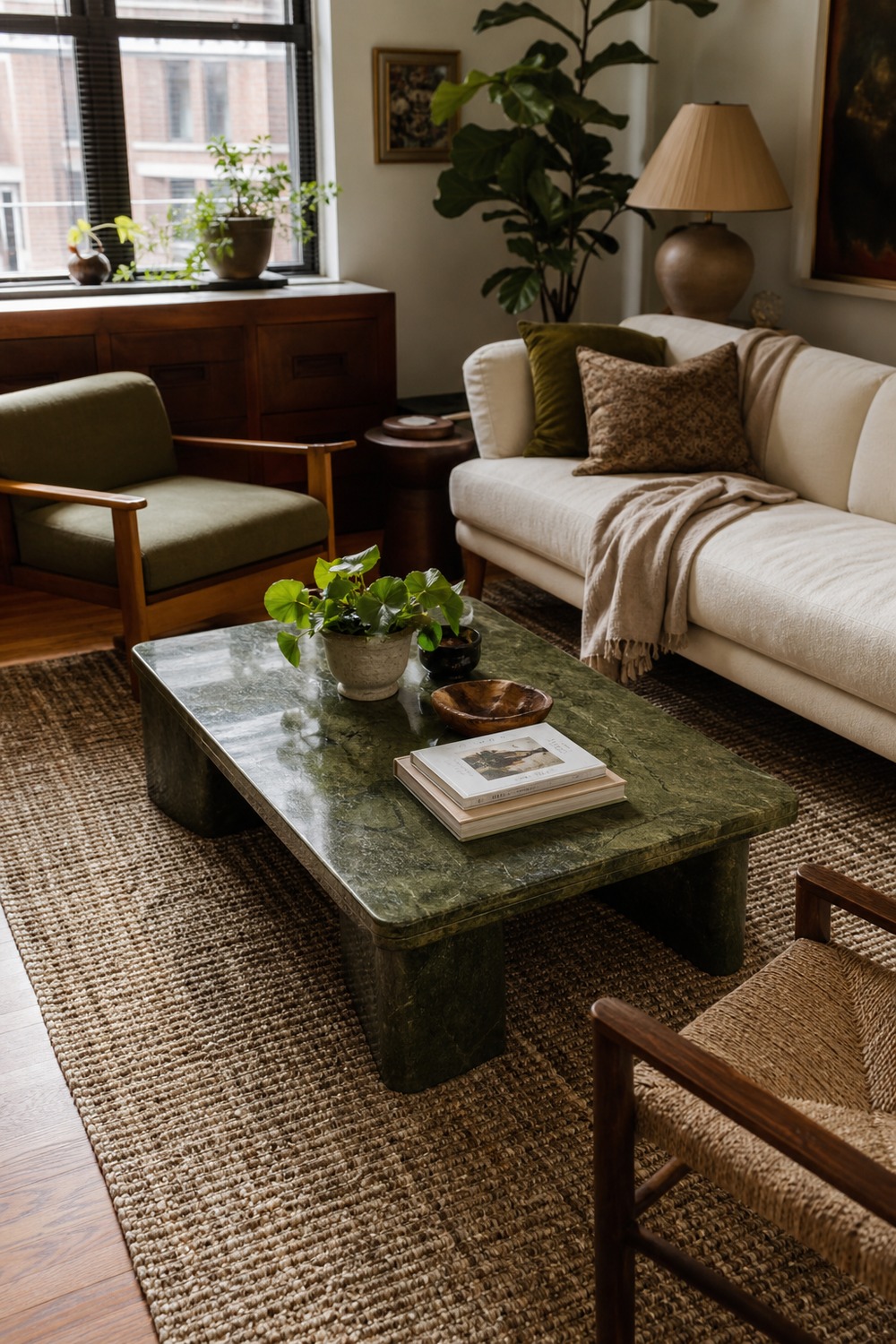
The textured rug helps the green table feel grounded. Without that woven base, the table could look like it is floating in the middle of the room, but the rug fibers and sofa legs make the whole seating area feel more finished.
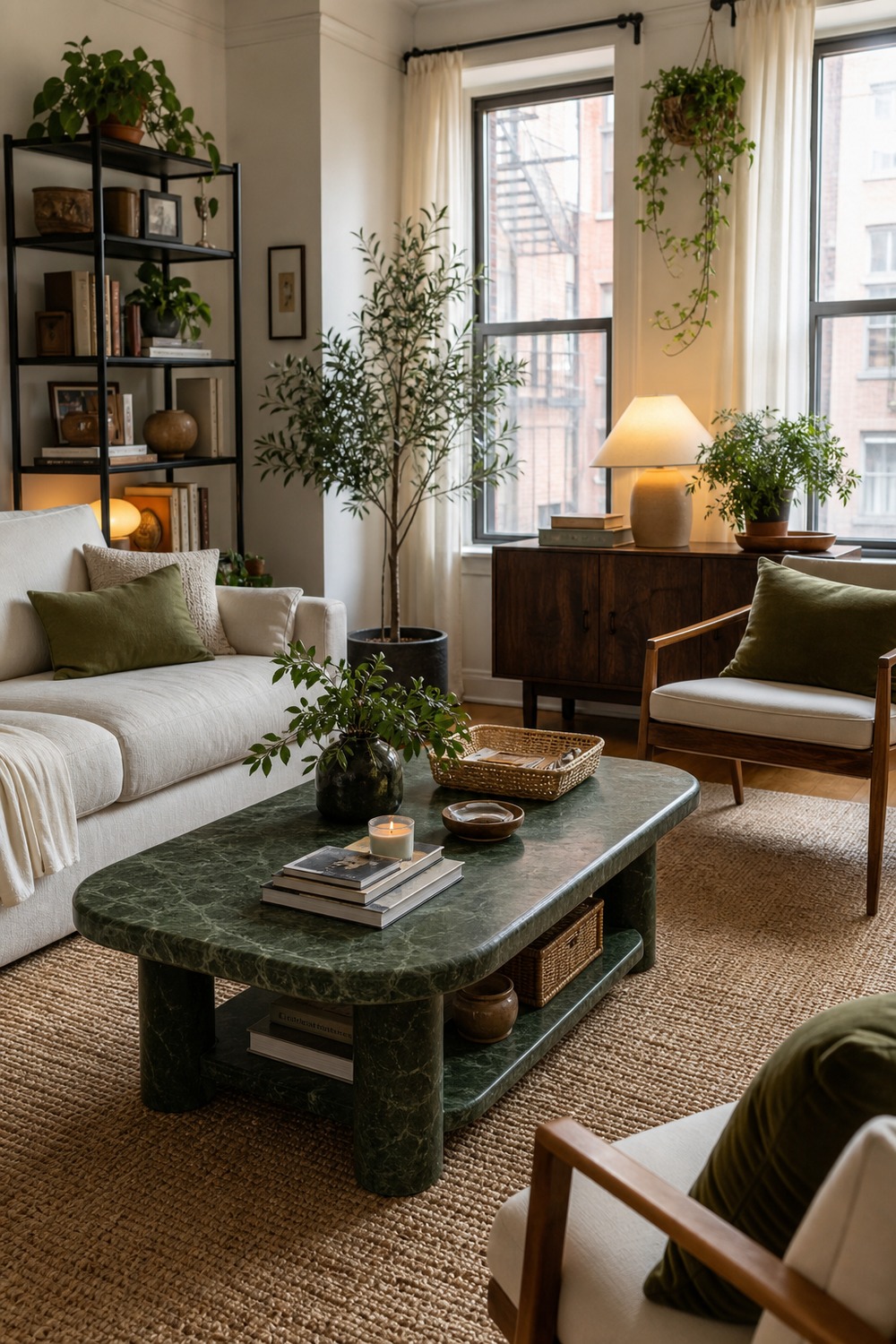
This one feels more family-friendly because the styling is sturdy and not too precious. A green table still gives the room personality, but the storage, softer edges, and open top make it feel like something that could handle a normal evening.
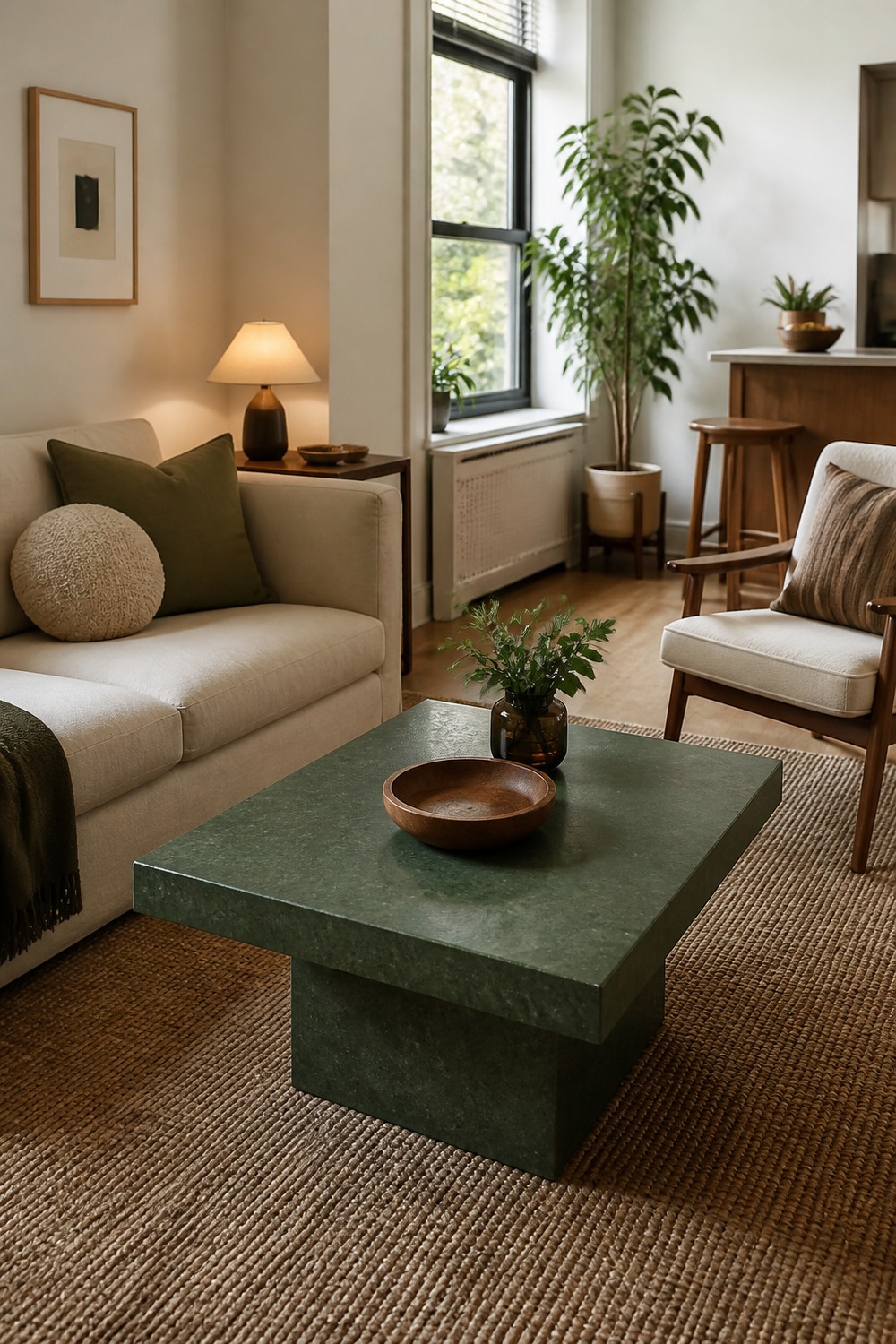
The minimal version is nice because the color does most of the work. One bowl, one plant, or one stack of books is enough when the coffee table itself already has that strong green presence.
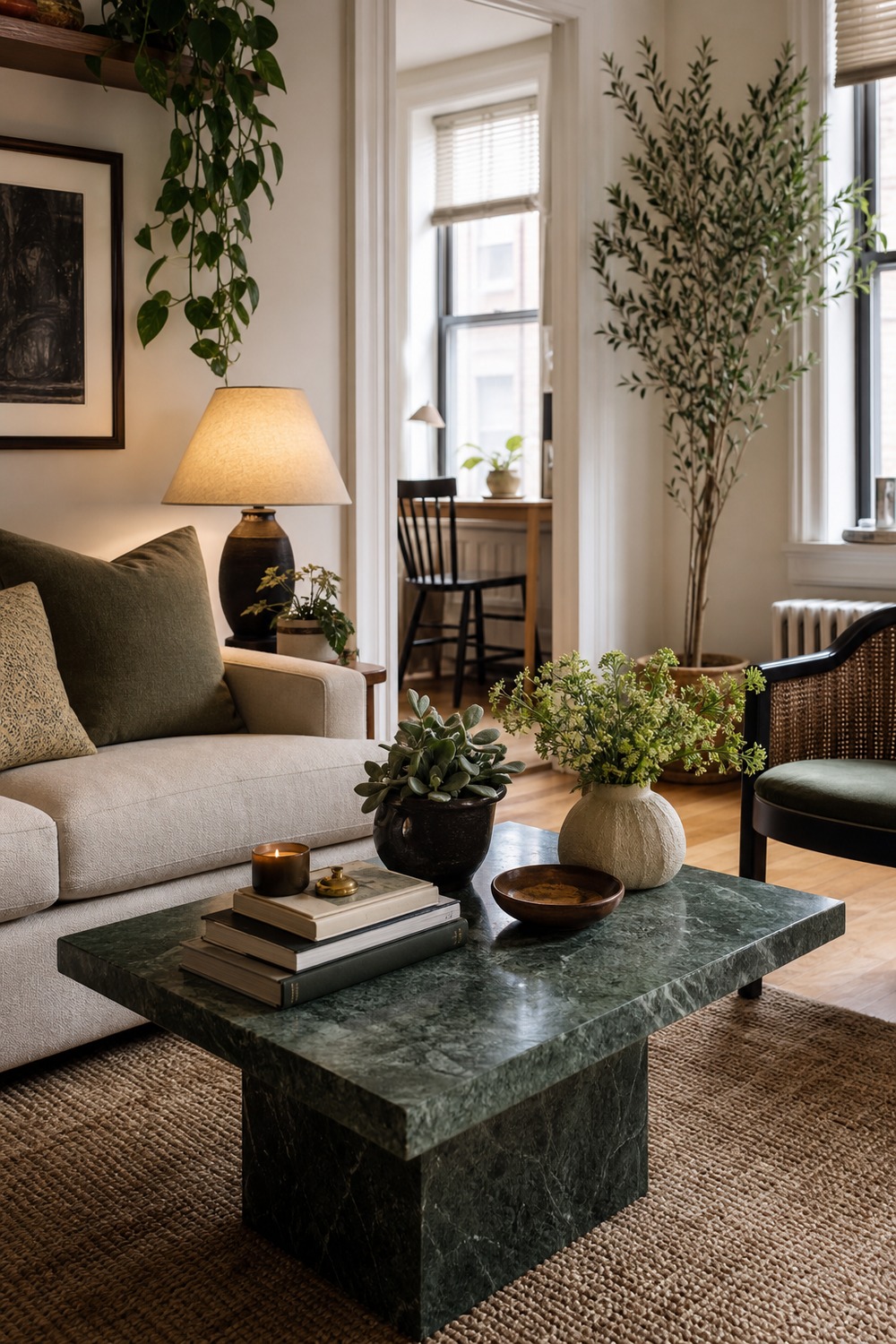
This collected vignette has a little more personality without looking messy. The mix of books, ceramics, and greenery makes the tabletop feel lived-in, but everything still has enough spacing to look deliberate.
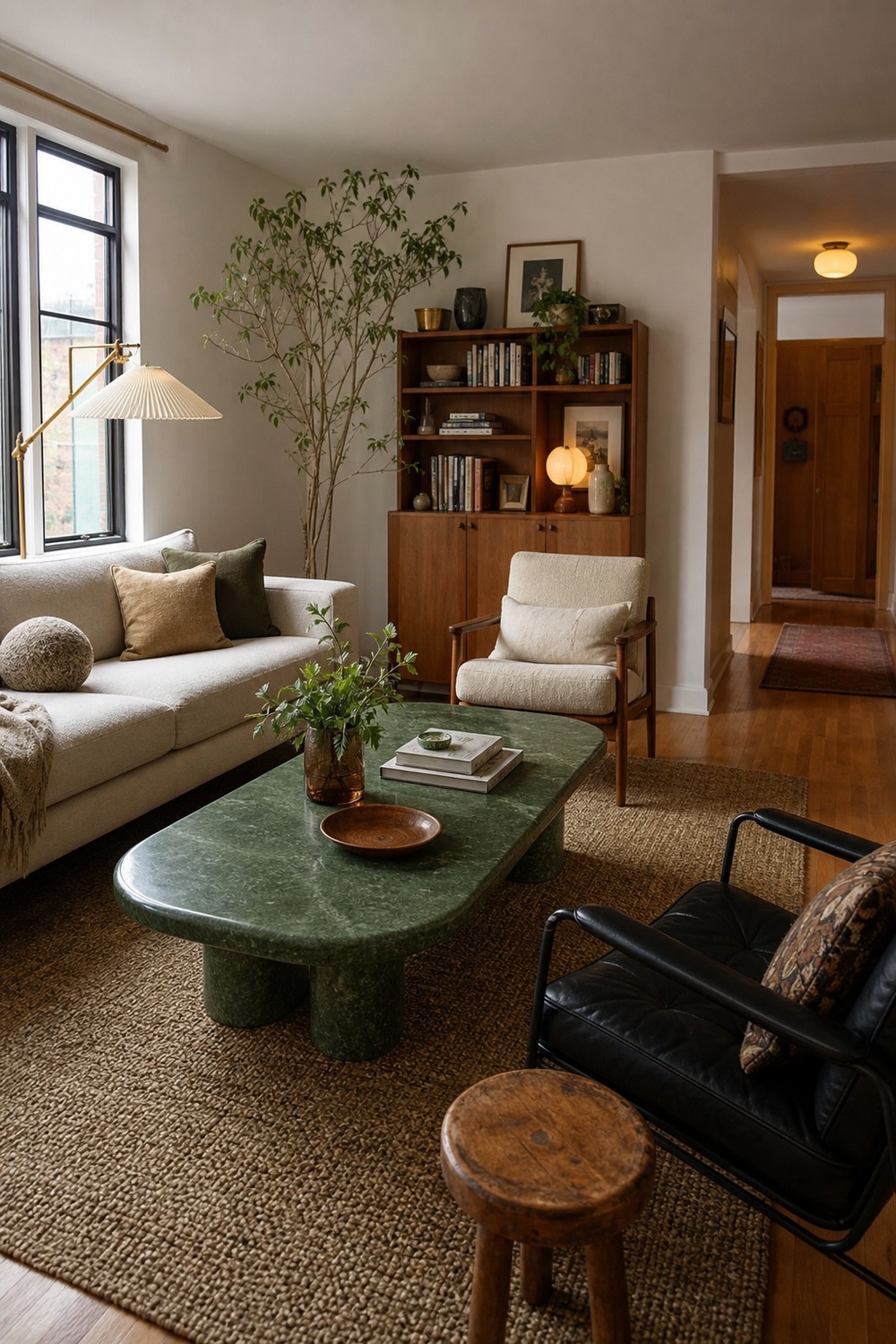
A full-room view like this shows how much the coffee table affects the entire seating area. The green piece pulls the sofa, chairs, rug, and lighting together, so the room feels designed without needing matching green furniture everywhere.
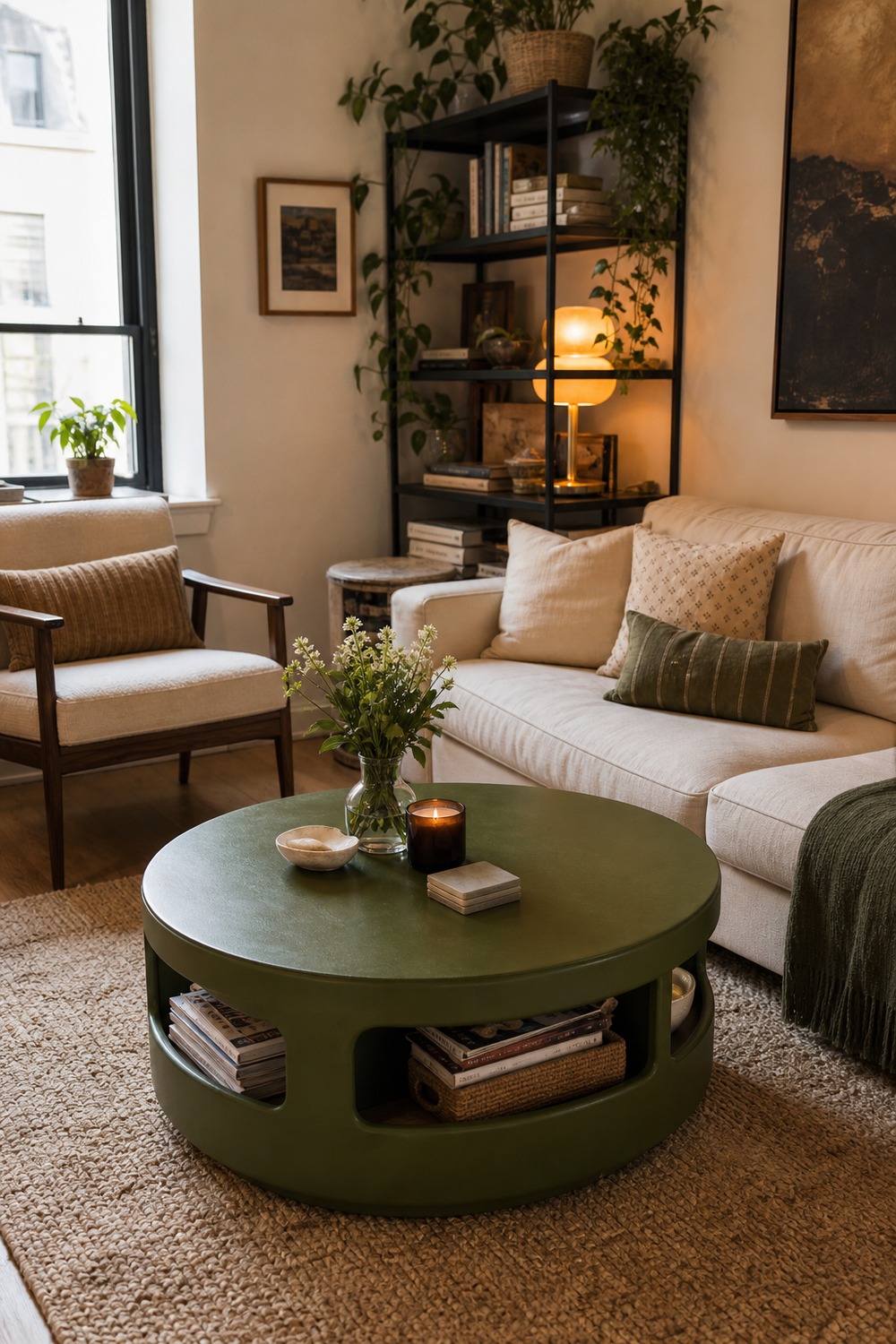
The storage corner is a smart reminder that coffee tables are not only for pretty trays. I like the way the table adds color while still helping with the boring stuff: stacked books, hidden clutter, and a surface that stays useful.
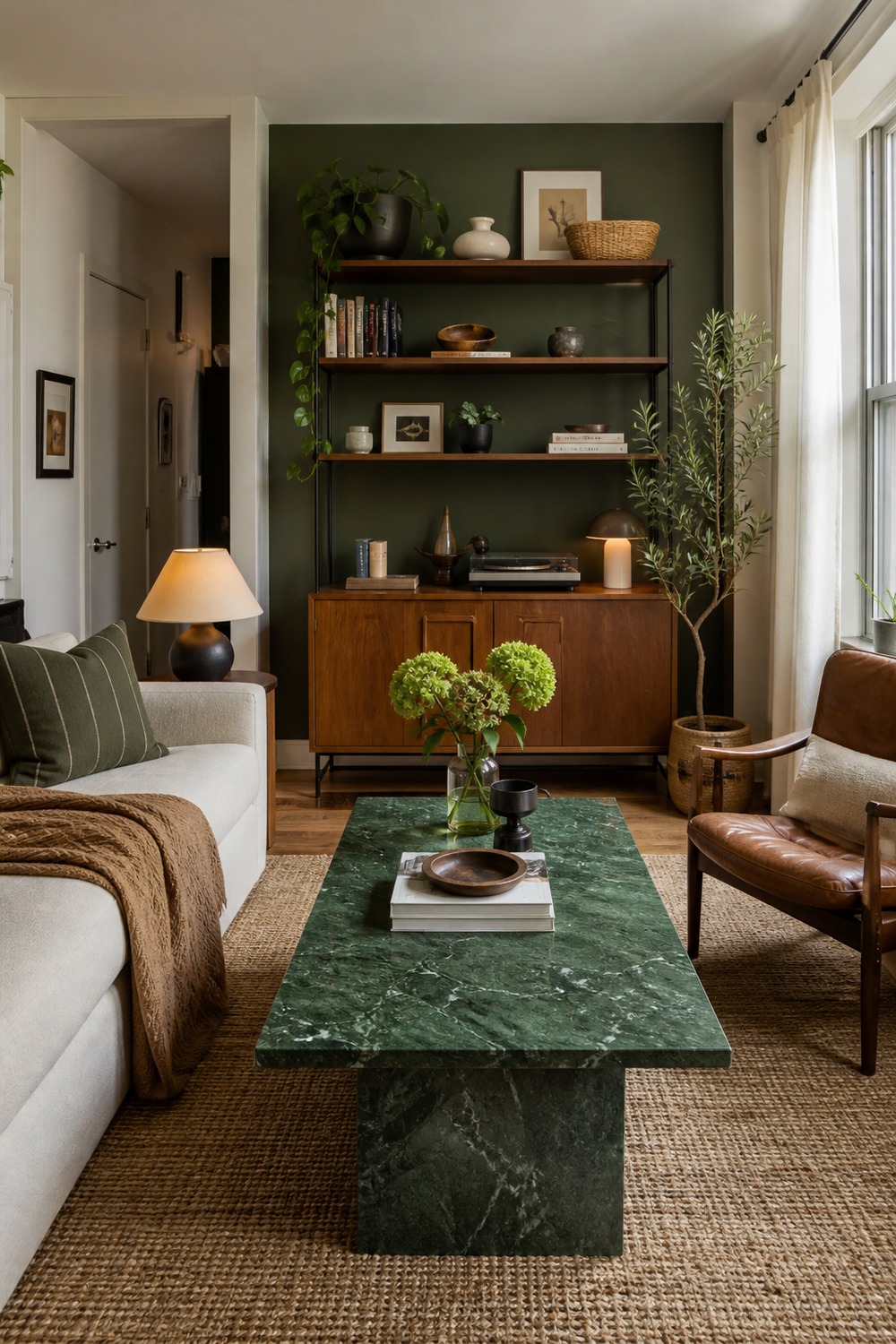
This last room feels cozy because the green table has a clear backdrop behind it. The shelving, warm light, and layered textures keep your eye in the seating area, while the coffee table gives the whole room a stronger center.
Green works best on a coffee table when the rest of the room gives it something to connect to. A little wood, soft fabric, layered lighting, and practical storage can make the table feel like the center of the room without making everything match.
Leave a comment