
Glass coffee tables can look light and expensive, but the good ones still need warmth, scale, and somewhere for real living-room stuff to land. I like them most when the glass top keeps the room open and the wood base adds enough texture that the sofa area does not feel cold.
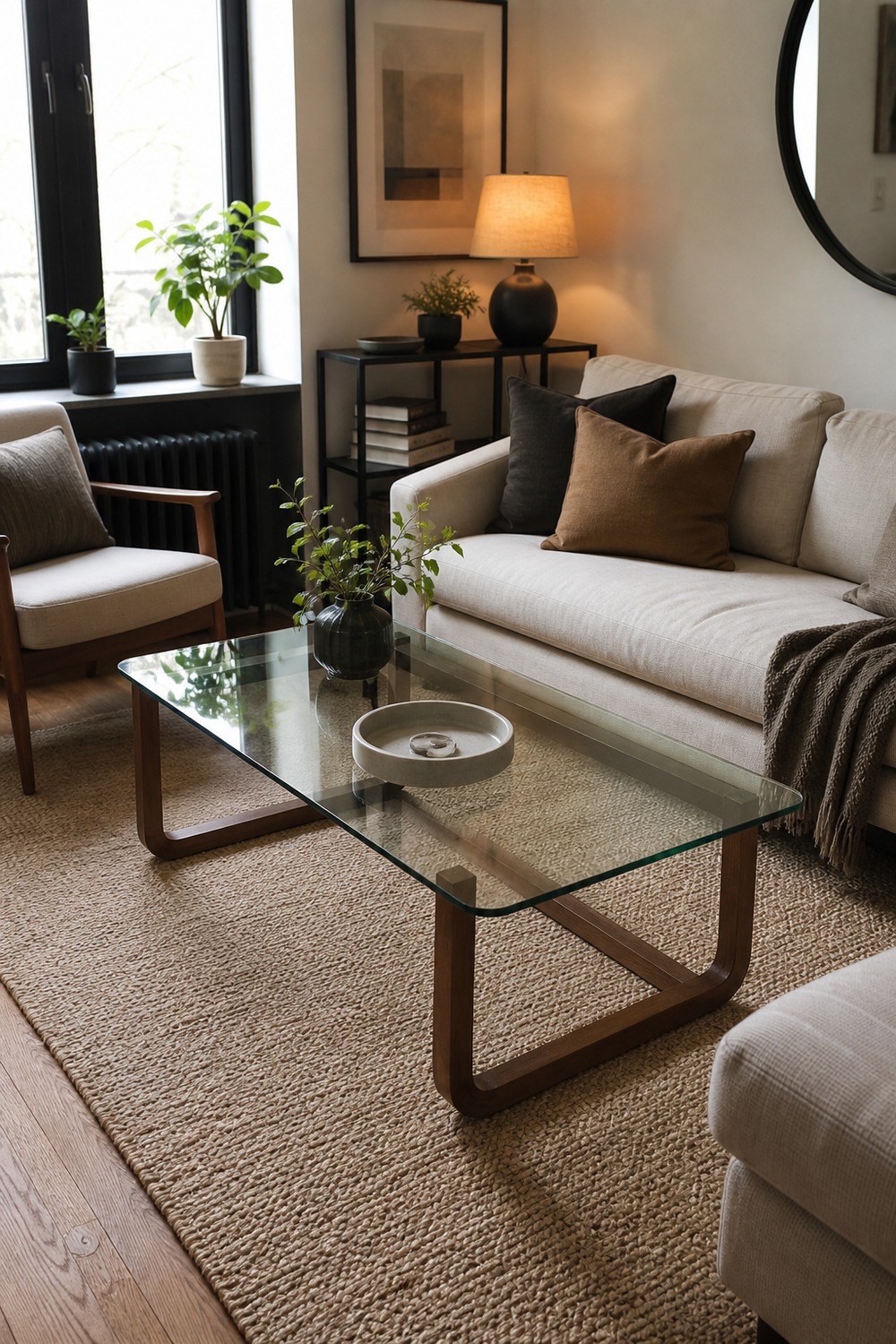
The clear top keeps this table from feeling heavy, which is exactly why it works with the deeper wood base. I like the way the walnut shape gives the rug a real center point while the glass still leaves the sofa area feeling open.
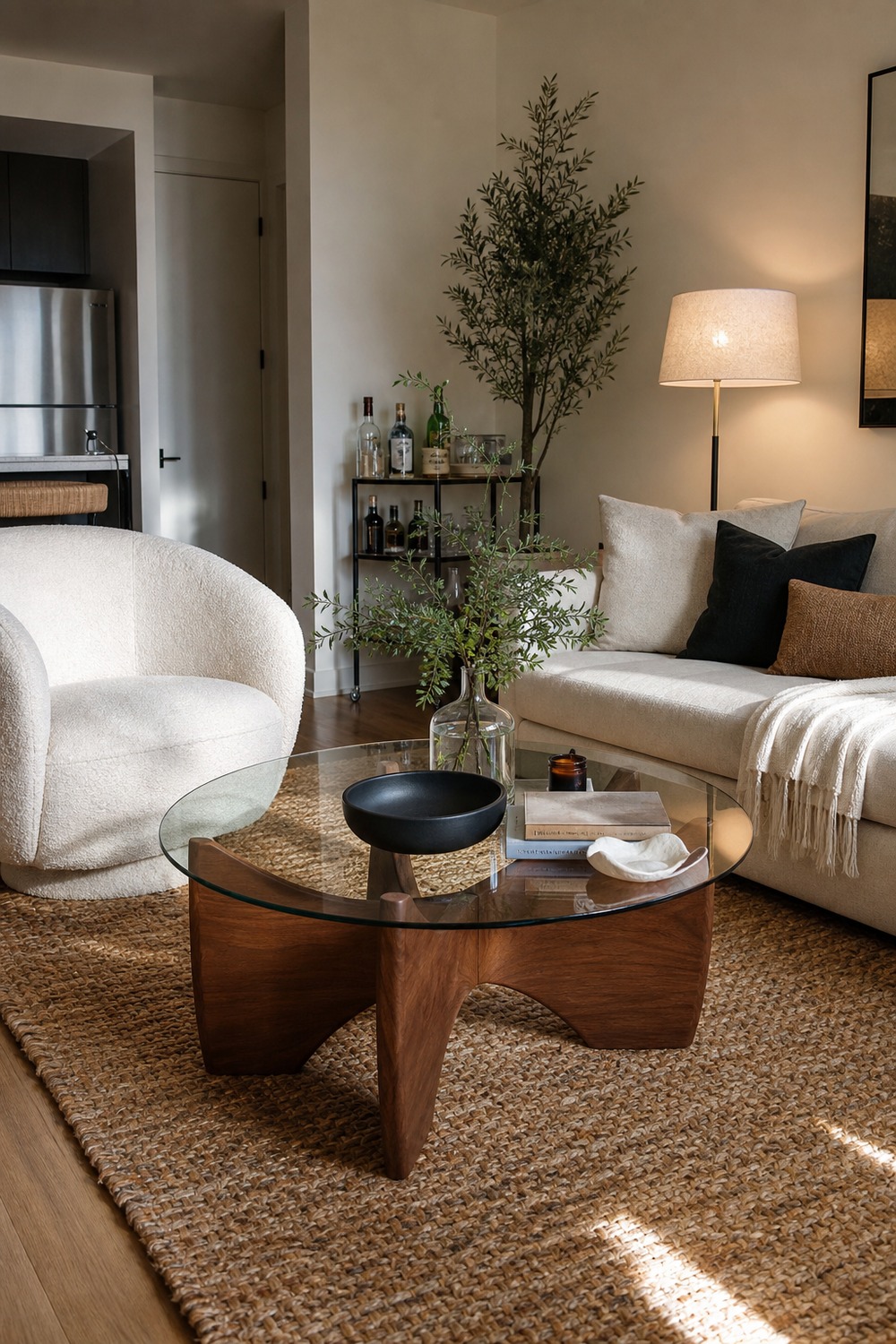
A round glass table is such a good move when the seating already has a lot of straight lines. The curved wood pedestal softens the sofa corner, and the clear top lets the rug pattern show through instead of chopping up the room.
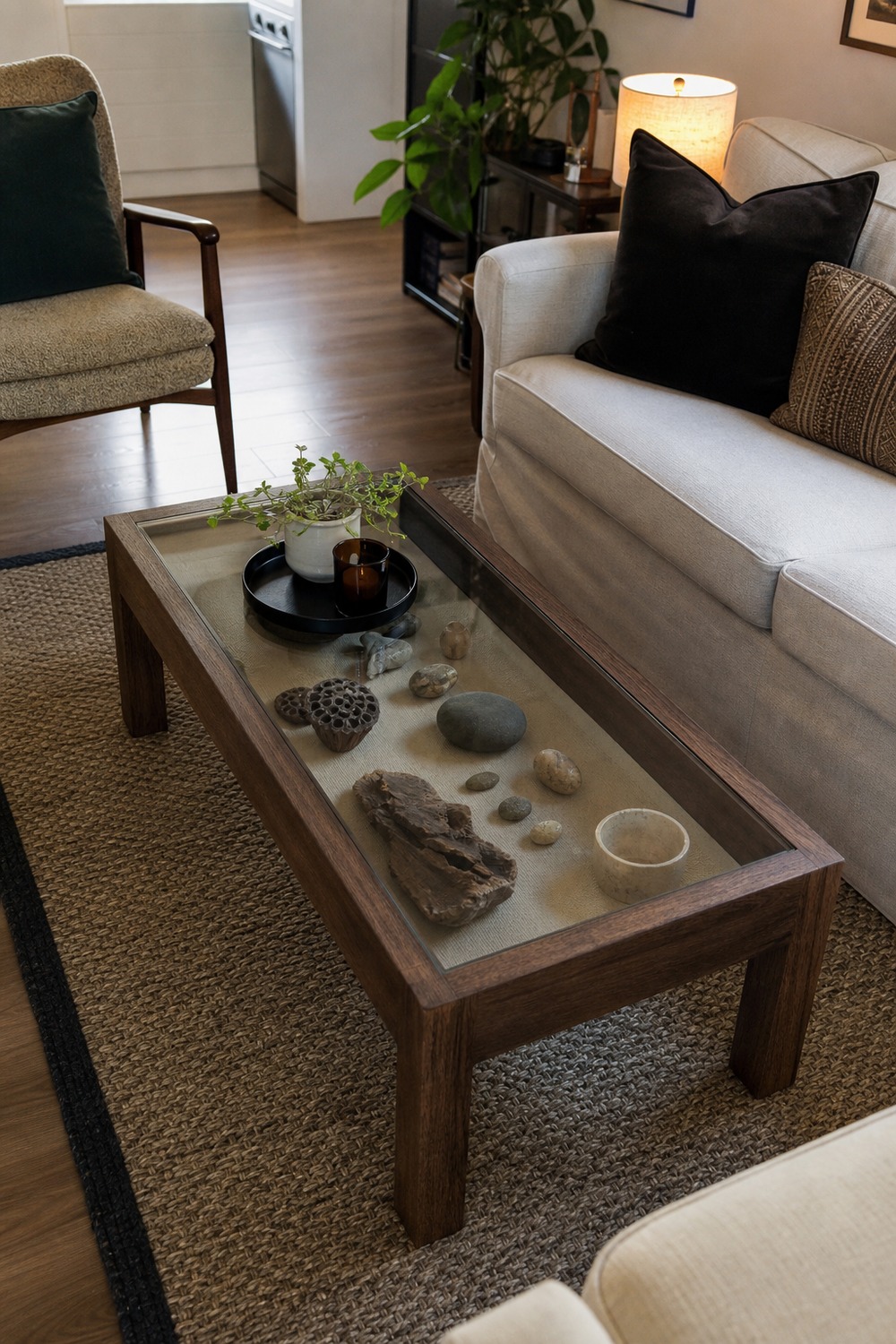
The shadow-box style is nice because the table gets to hold a little texture without looking messy on top. A few simple natural pieces under the glass make the whole coffee-table moment feel collected, but the surface still stays clear for drinks.
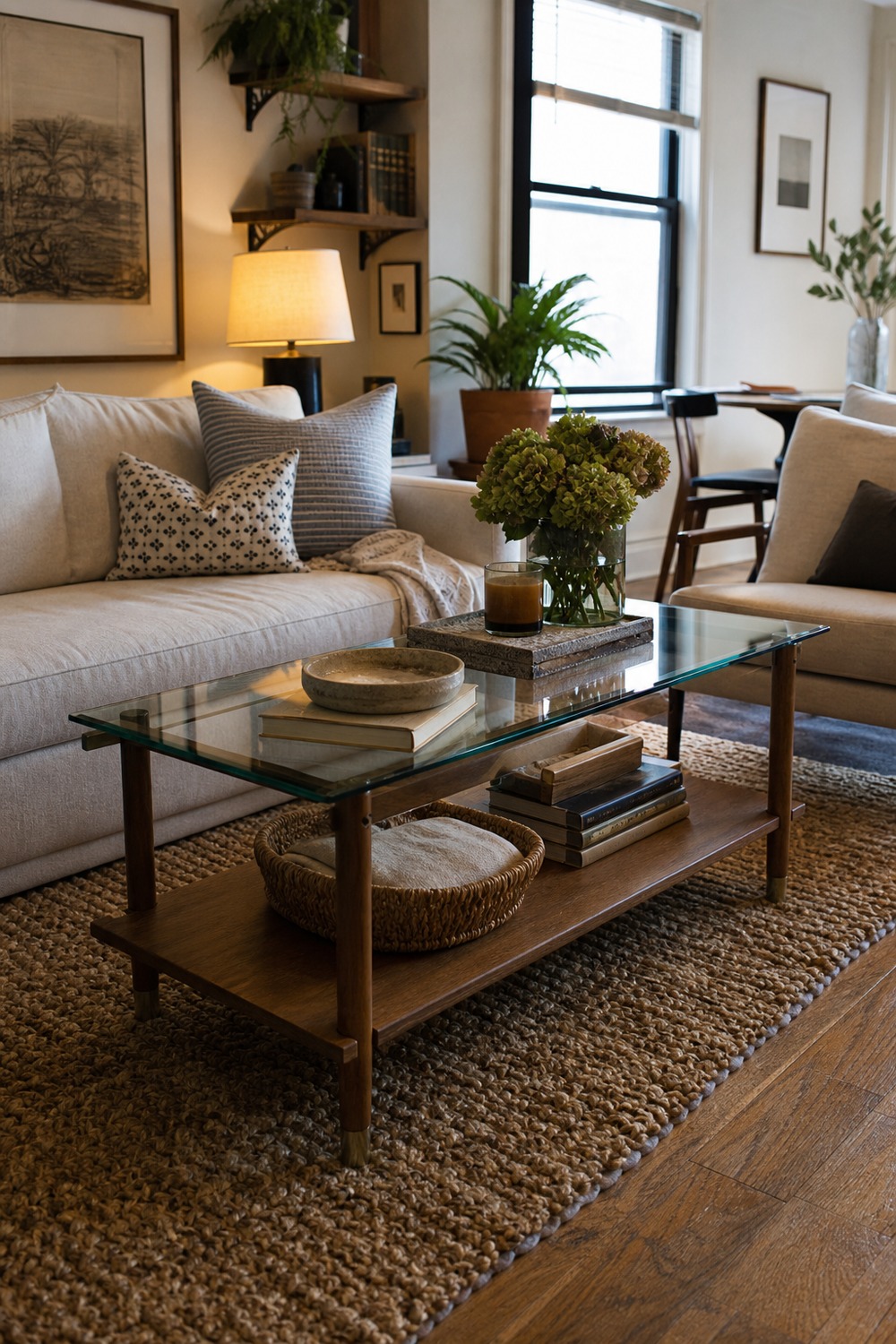
This two-tier version is probably the most practical kind of glass coffee table. The top can stay clean for cups and snacks, while the lower wood shelf gives baskets and books somewhere to live instead of piling up around the room.
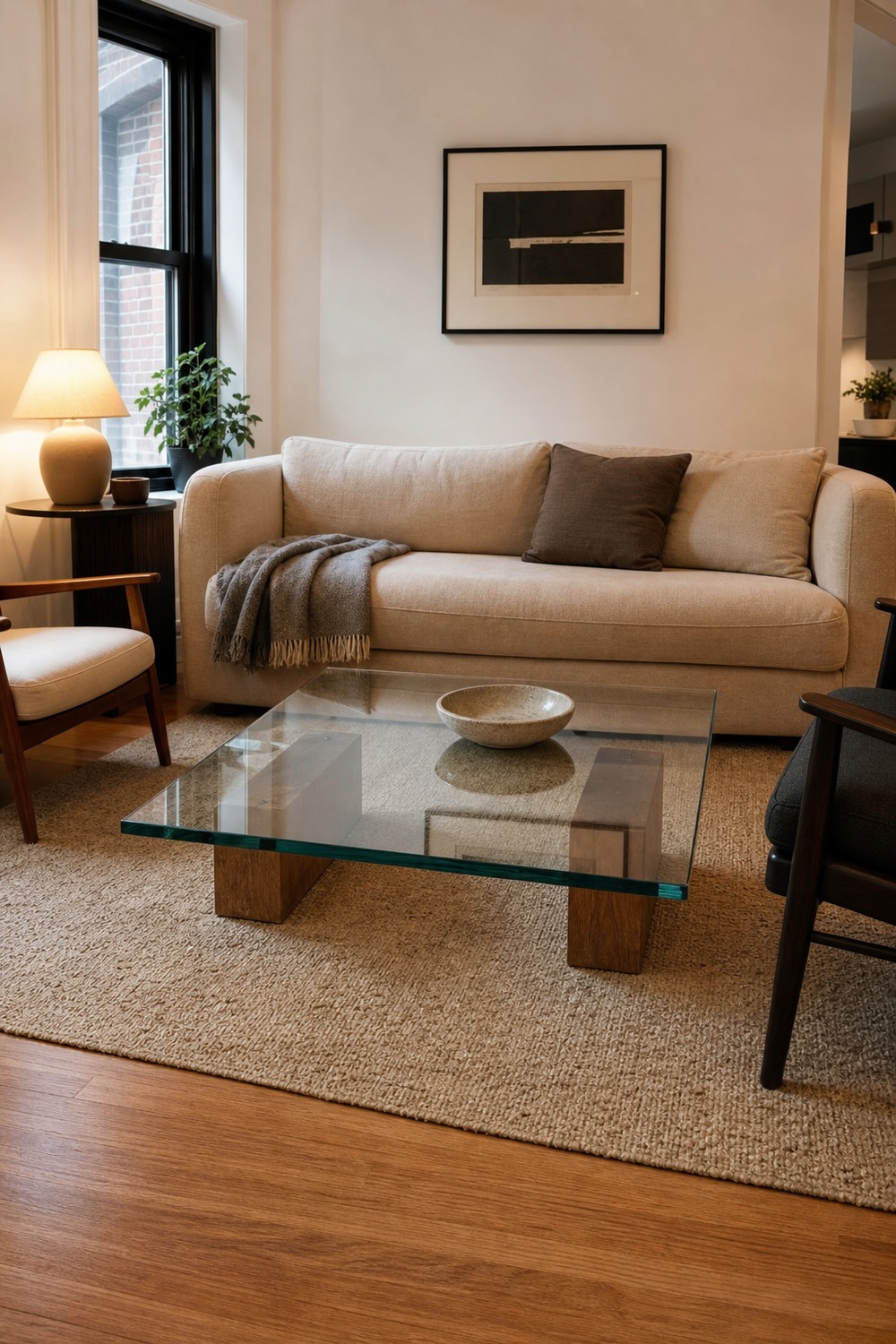
The thick glass slab has a quiet, sculptural look, but the wood blocks keep it grounded. I like that it feels minimal without being useless; there is still enough surface for a bowl, a tray, or the usual living-room clutter.
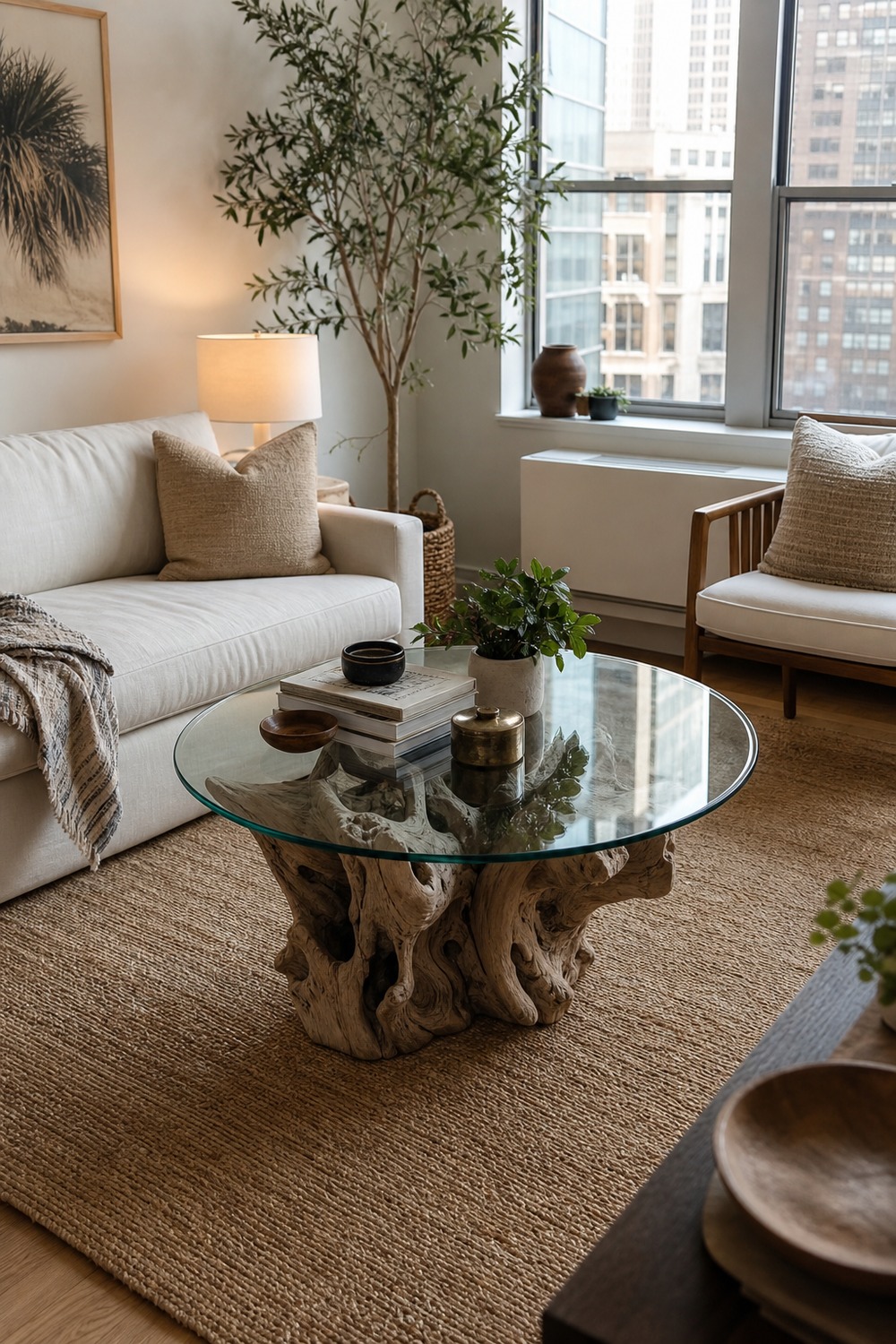
The driftwood base gives the glass top a more relaxed, coastal edge. It feels like a good option when a room needs one organic shape, especially with woven textures and neutral upholstery around it.
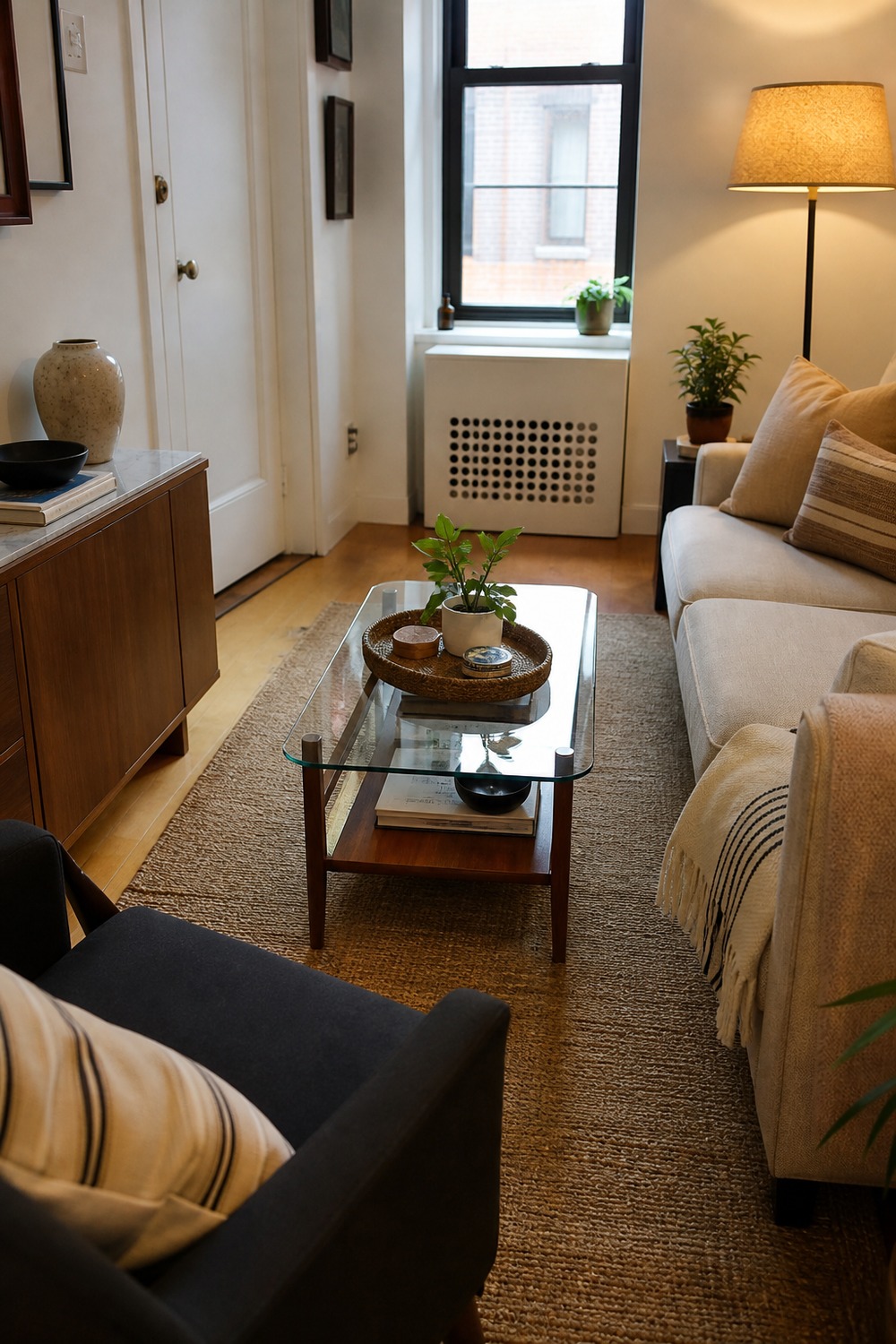
Small rooms need coffee tables that do not visually eat the floor, and this one gets that right. The glass top keeps the footprint light, while the wood detail gives it just enough warmth to avoid that temporary-apartment feeling.
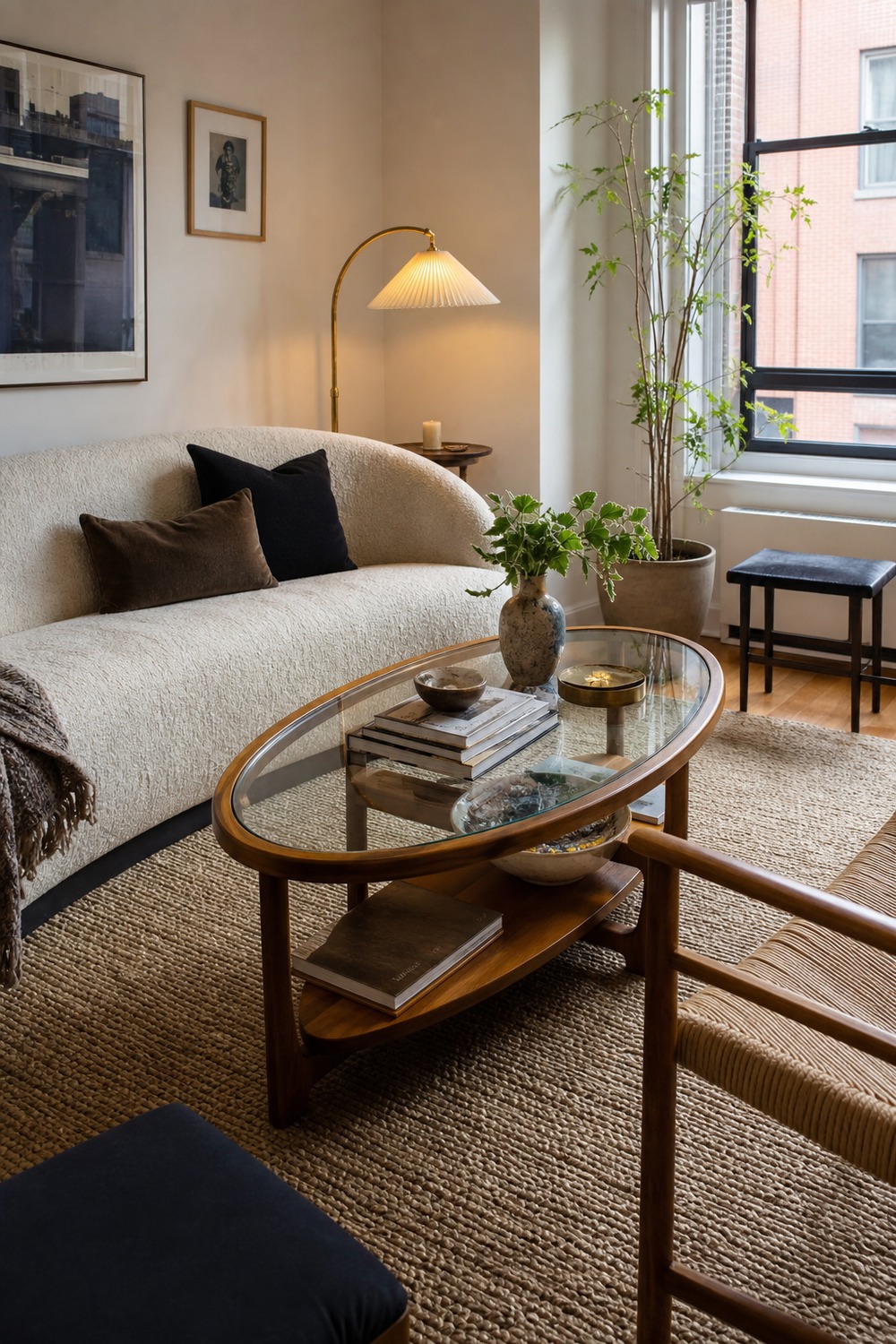
An oval glass top is easier to live around than a sharp rectangular table in a tighter seating area. The warm wood frame still gives the piece structure, but the rounded corners make the whole setup feel softer and easier to move through.
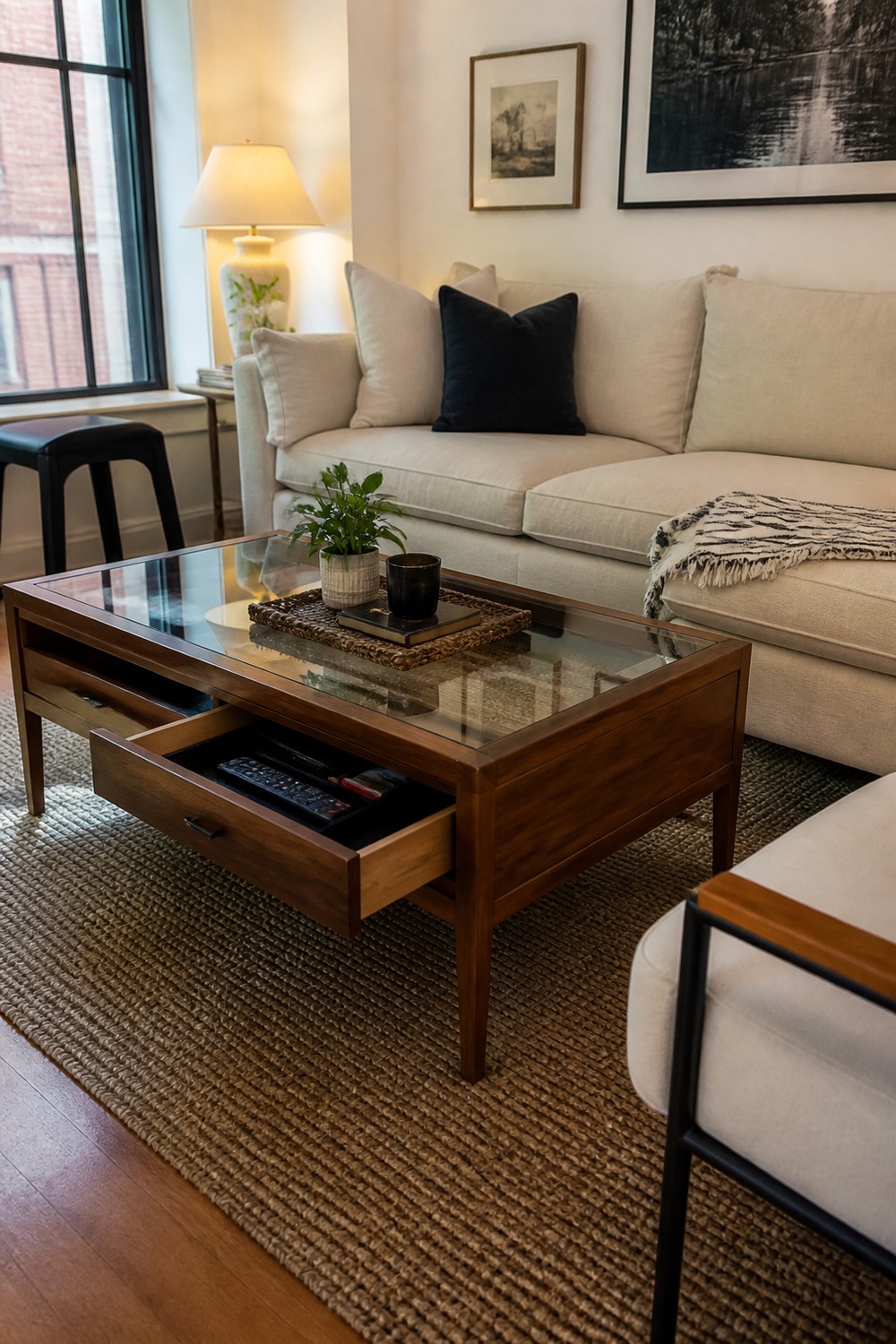
Drawers under a glass top are such a smart detail because they hide the annoying little things that always end up near the sofa. Remotes, coasters, and chargers can disappear, while the table still looks clean from above.
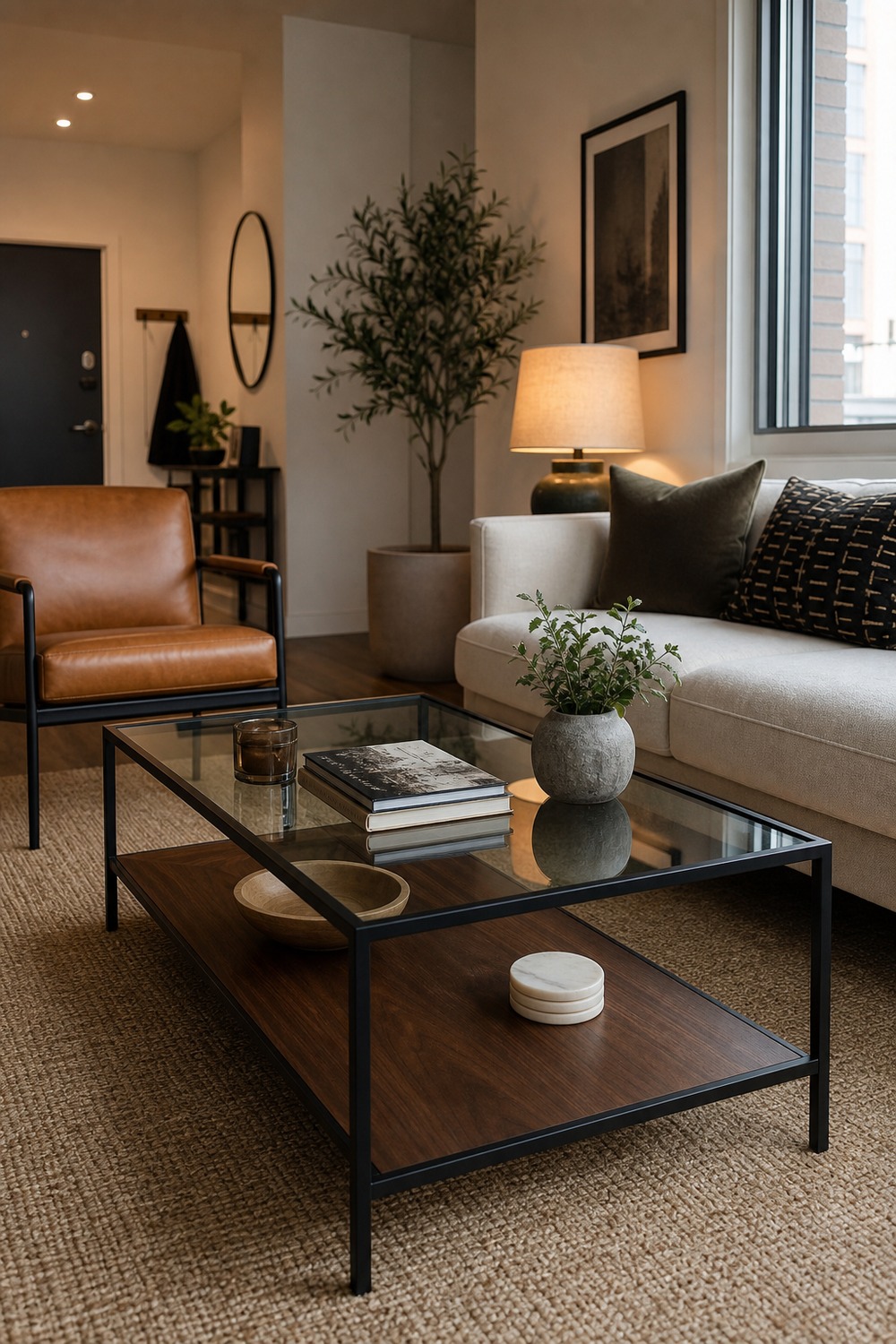
The black outline around the glass makes this table feel sharper and a little more tailored. The walnut shelf stops it from feeling too slick, and I like how the darker frame gives the neutral sofa something to play against.
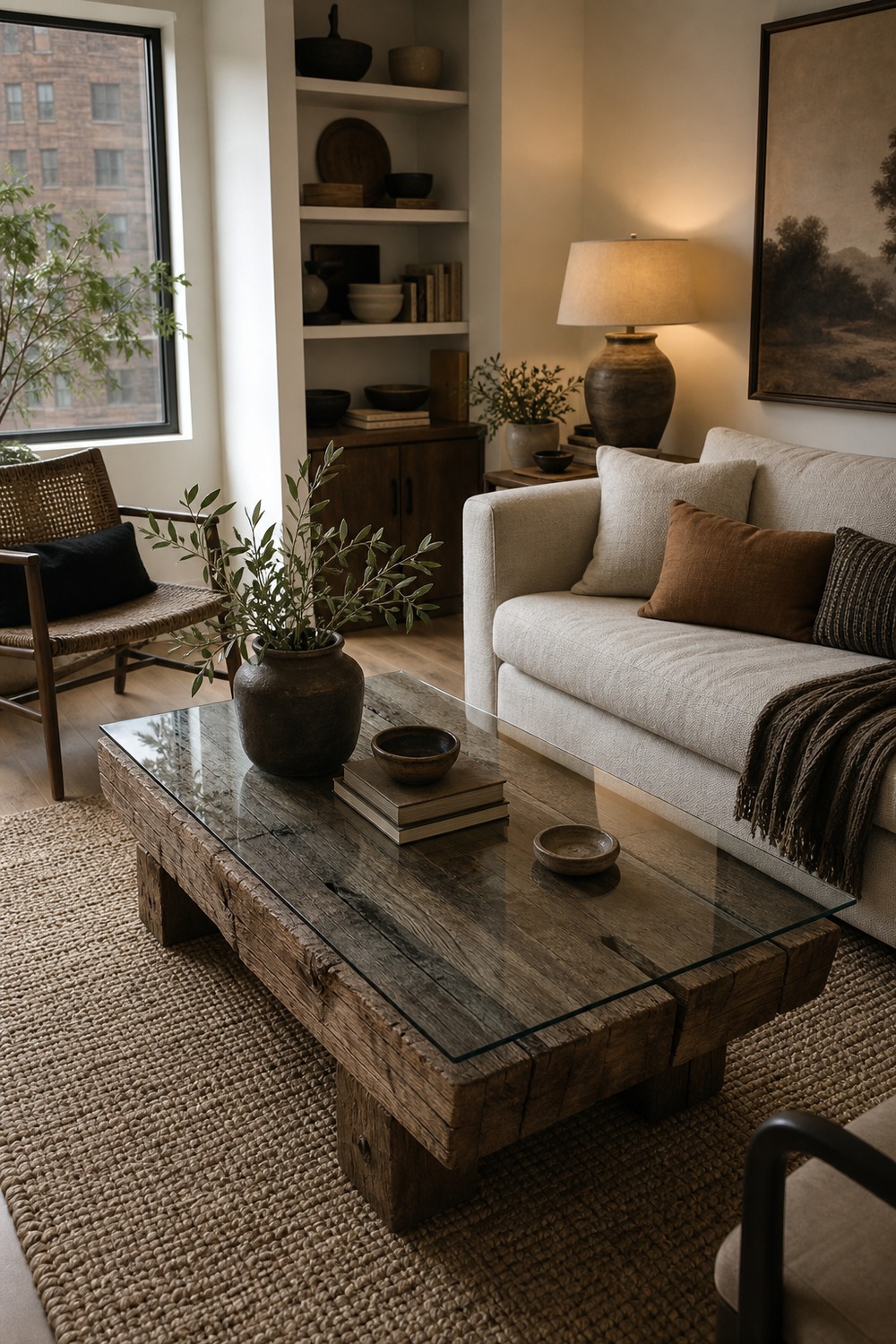
This rustic wood base keeps the glass from feeling too polished. The reclaimed texture brings in some character, while the clear top protects the surface and keeps the table from looking too heavy in the middle of the room.
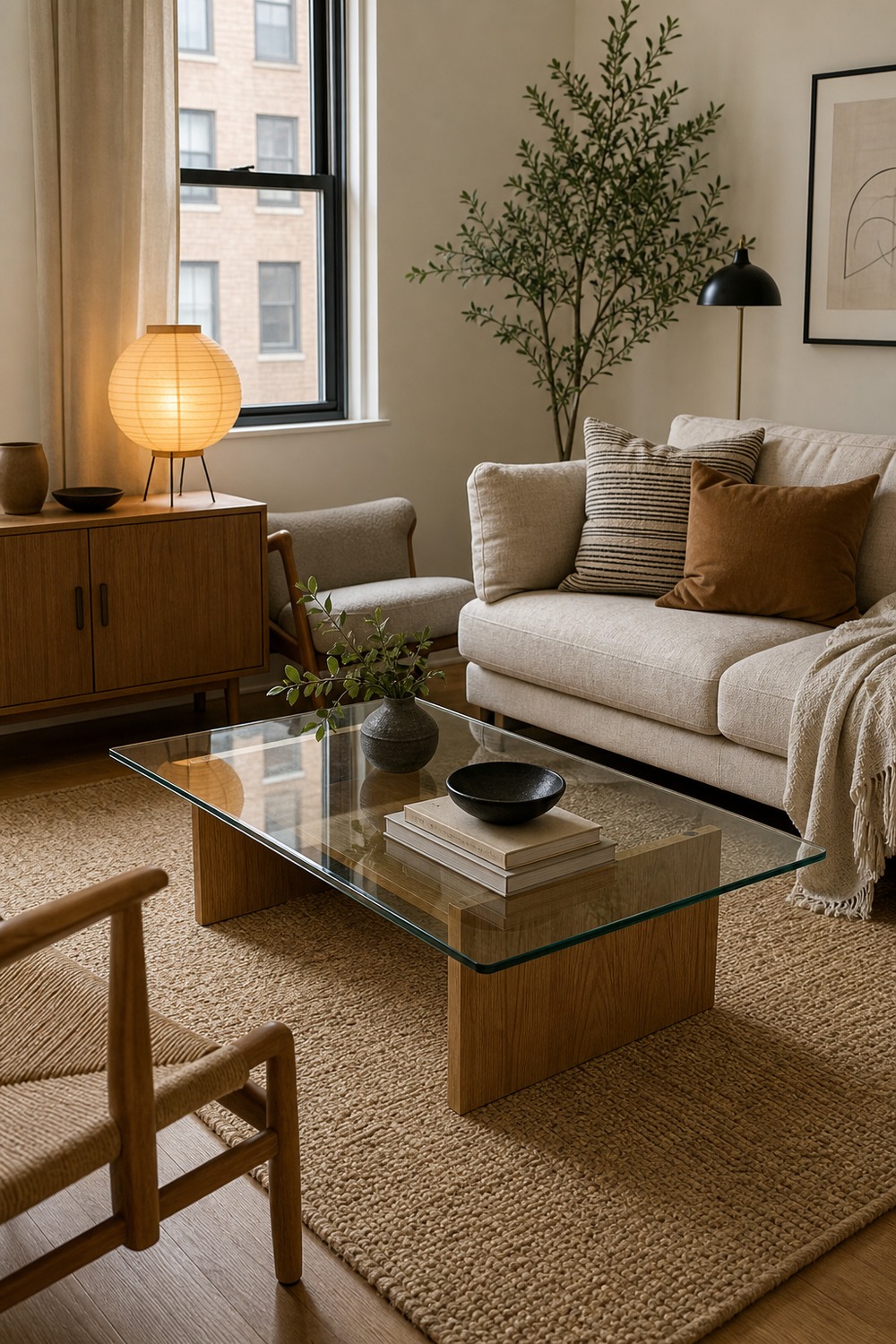
The Japandi-style table works because nothing is fighting for attention. Low oak, clear glass, a paper lamp, and linen seating all feel calm together, but the room still has enough texture to feel like someone actually uses it.
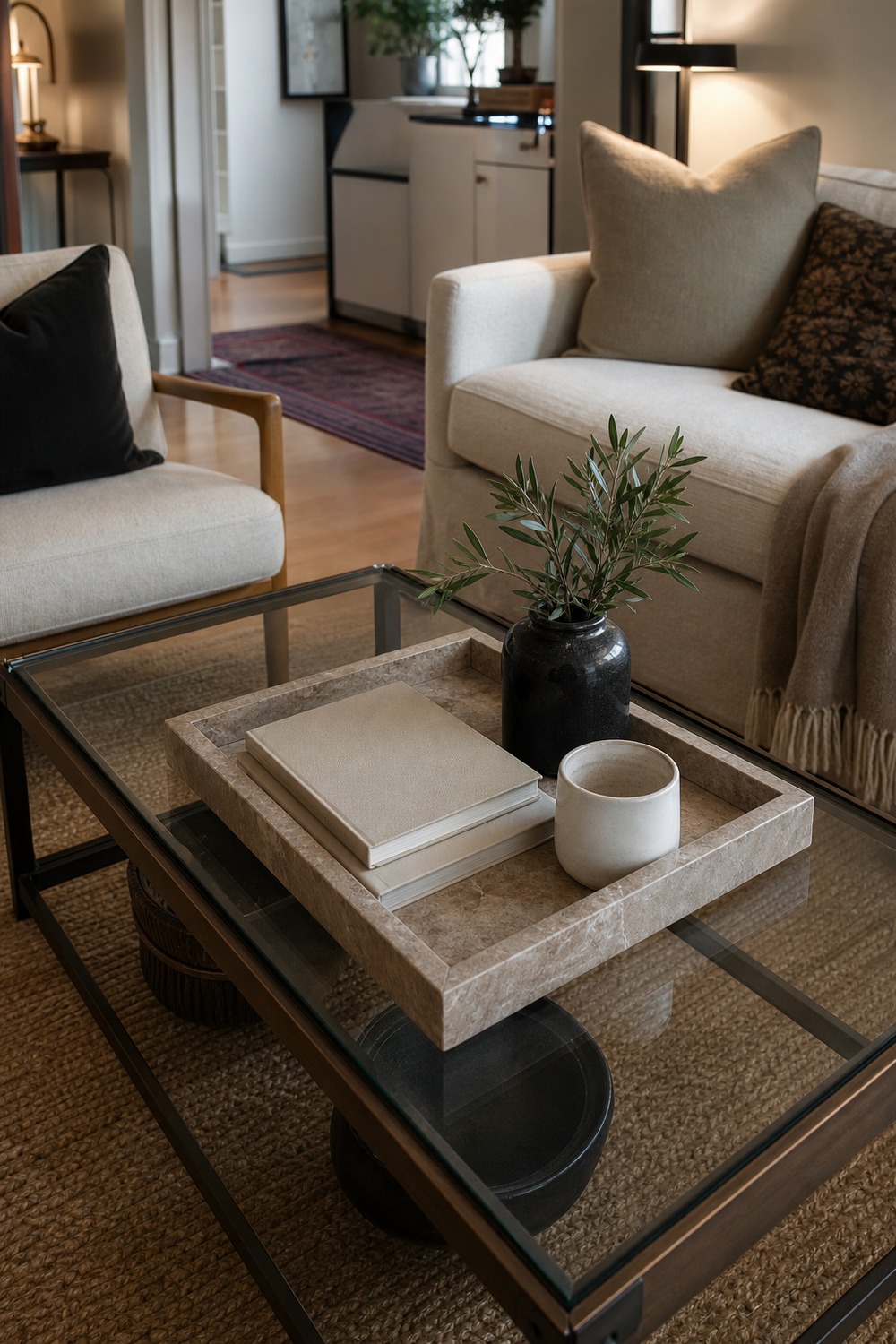
A styled tray on a glass coffee table can go wrong fast if it turns into a pile of tiny objects. This version stays simple with stone, blank books, and one cup, so the surface feels finished without becoming fussy.
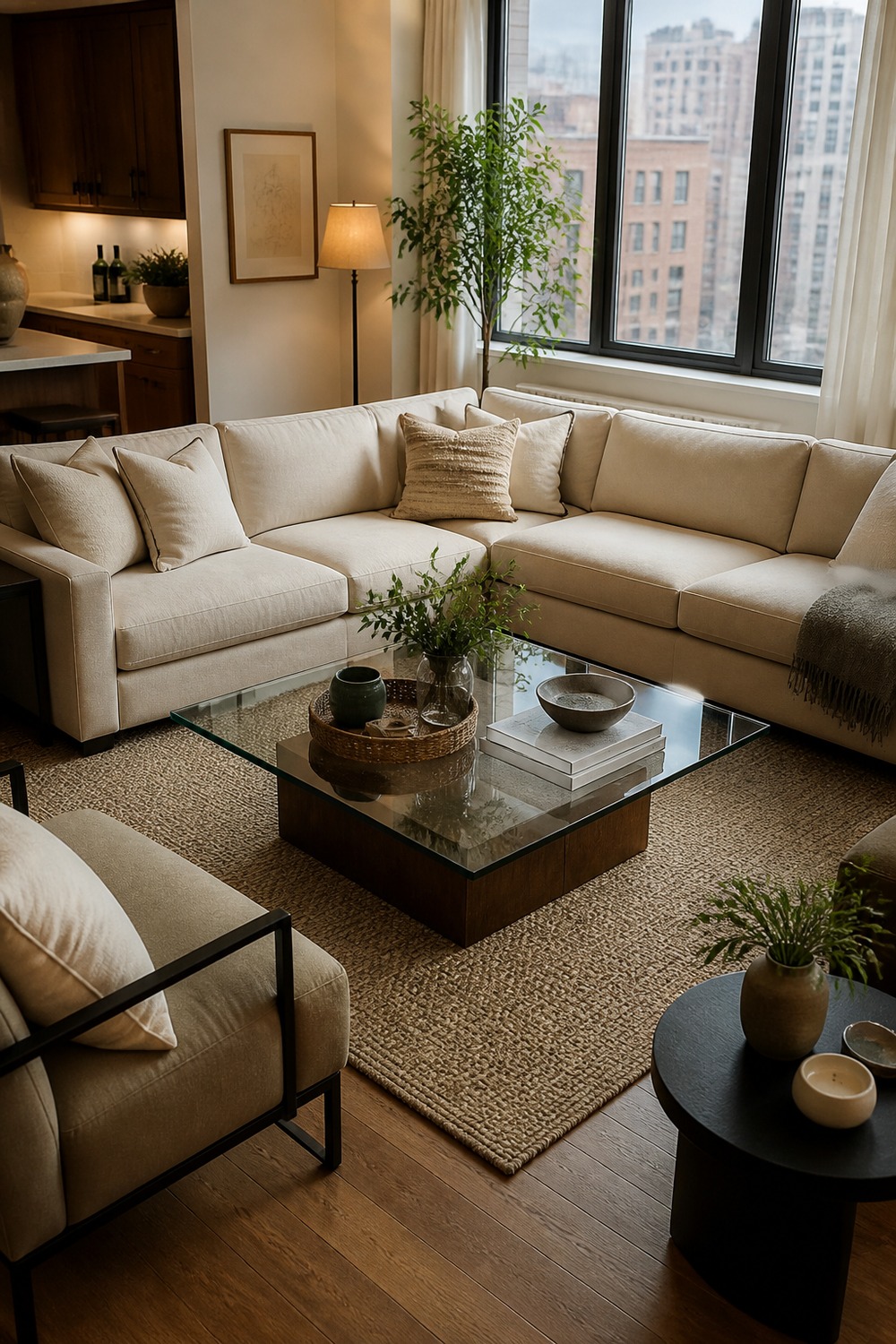
The square shape makes sense with a sectional because it gives every seat a reachable surface. The glass top keeps the large footprint from feeling too solid, and the thick wood base adds the weight the layout needs.
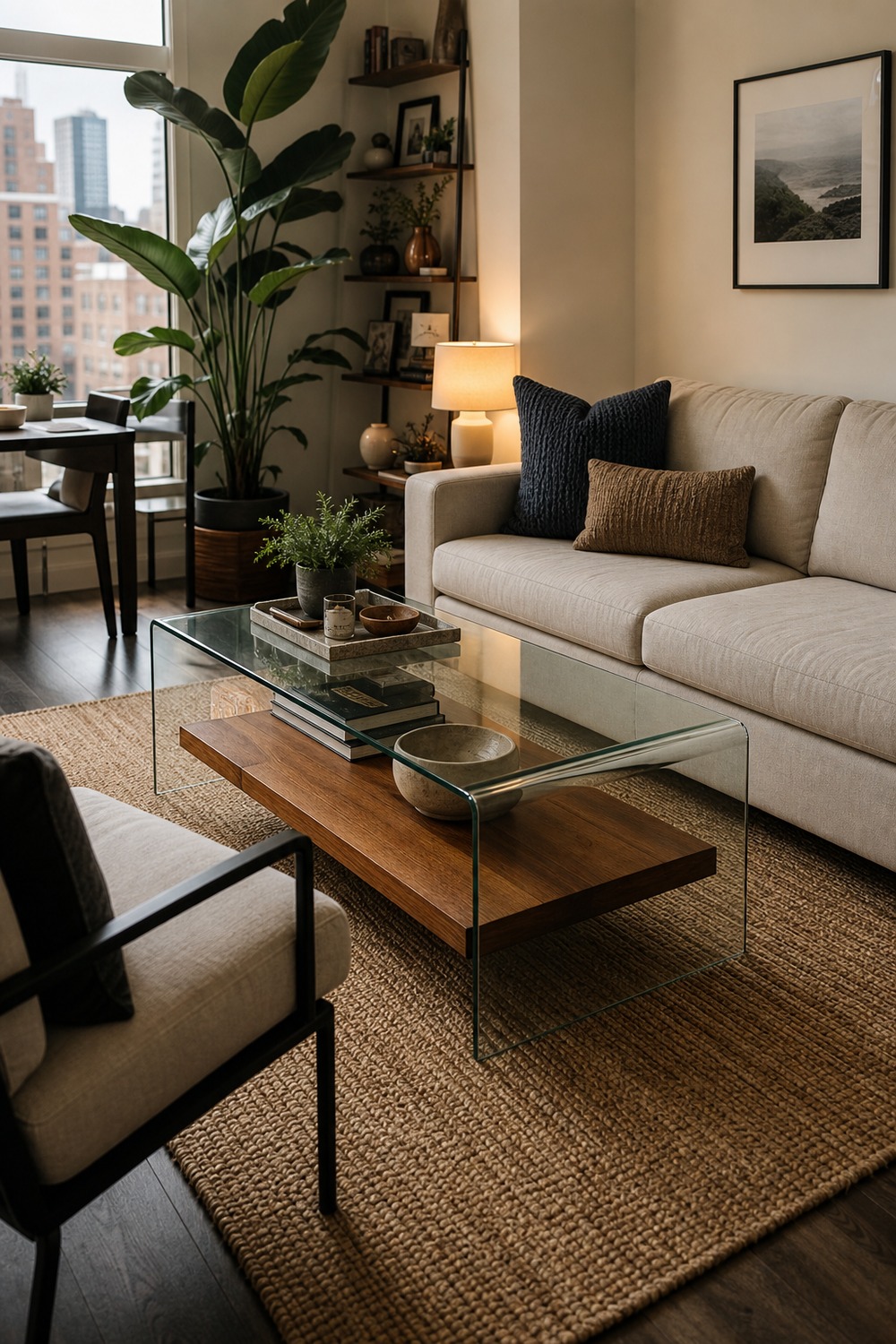
I like the waterfall glass here because it makes the table feel airy from the side. The wood insert underneath adds just enough storage and warmth, which keeps the piece from looking like a clear acrylic display stand.
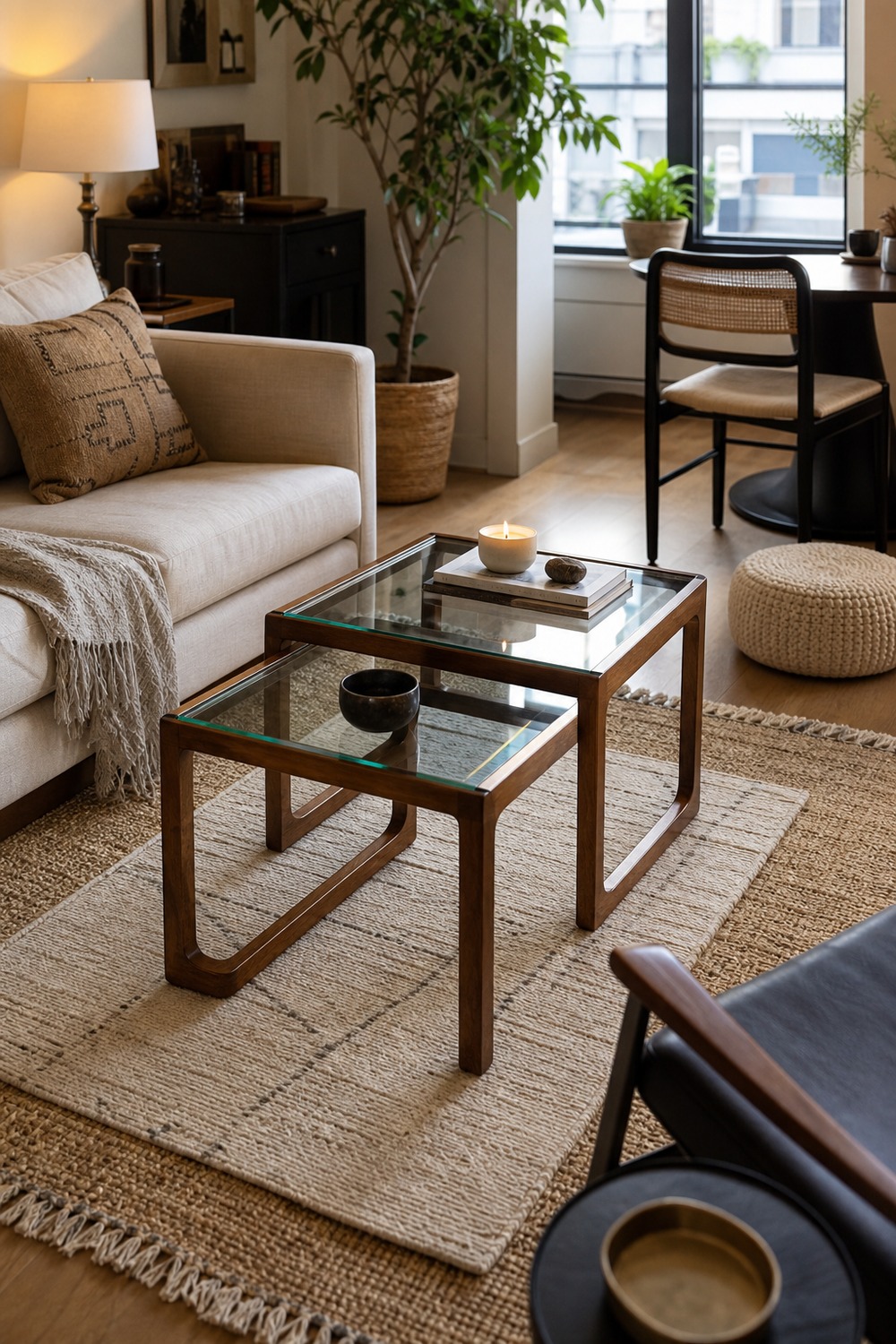
Nesting tables are useful when the living room has to shift between quiet nights and guests. The glass-and-wood mix keeps the smaller tables from looking cluttered, and they can spread out only when extra surface space is needed.
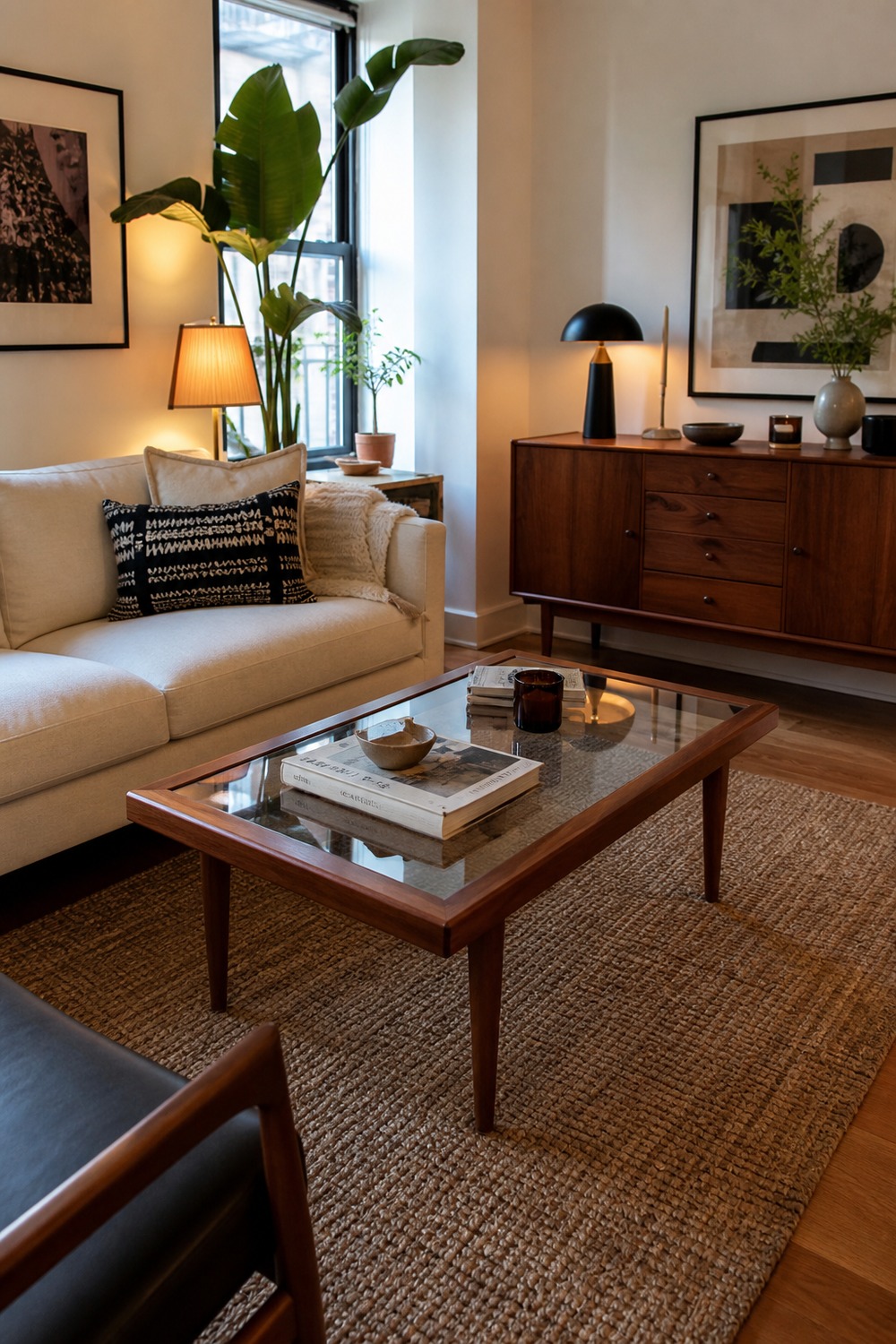
The midcentury frame gives this table a cleaner profile than a chunky storage piece would. Tapered legs, inset glass, and warm walnut all work together, so the room gets shape without losing that open center.
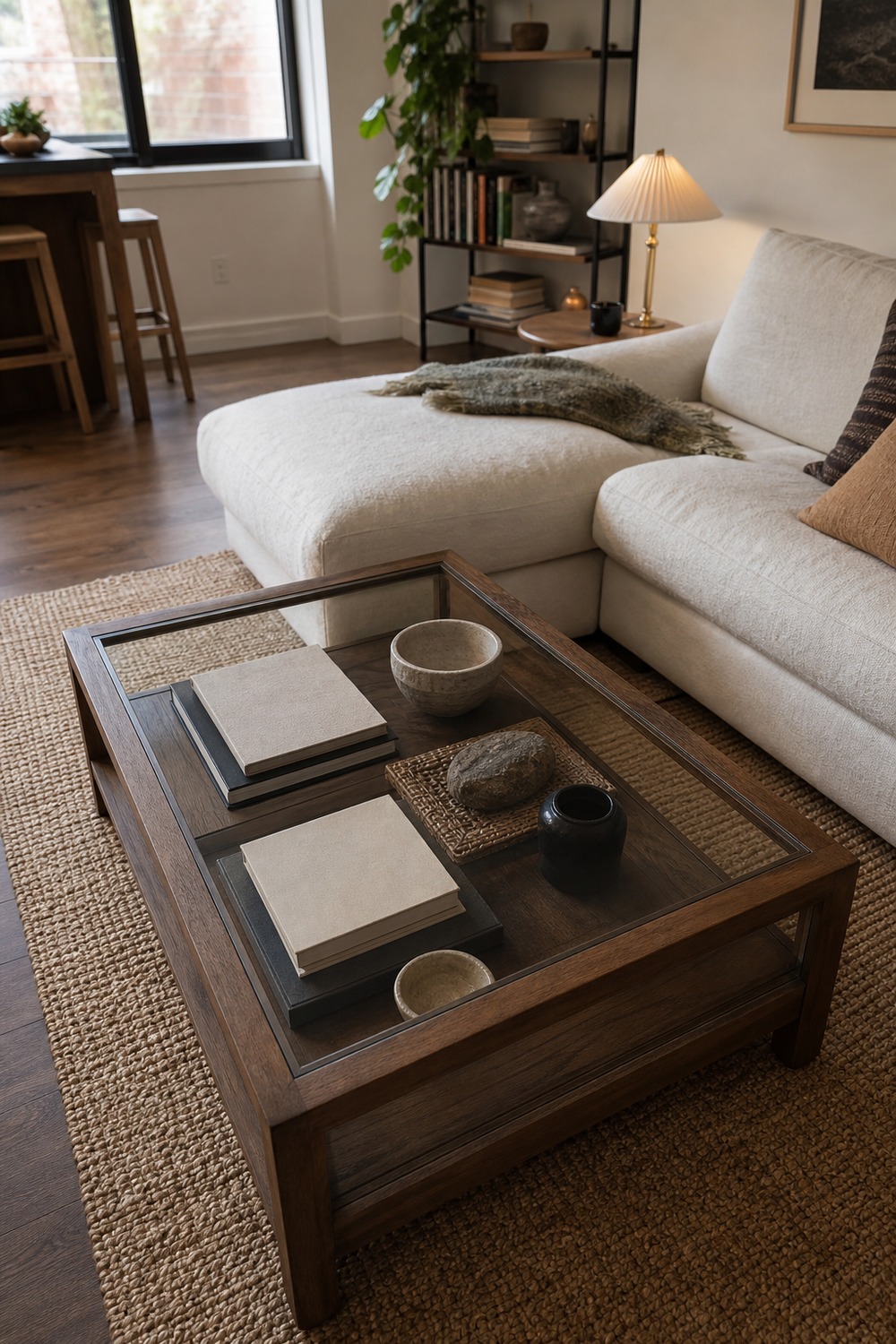
A display coffee table is a nice compromise when you want styling but hate moving decorations every time someone sits down. The glass top shows the books and textures inside, while the actual surface stays usable.
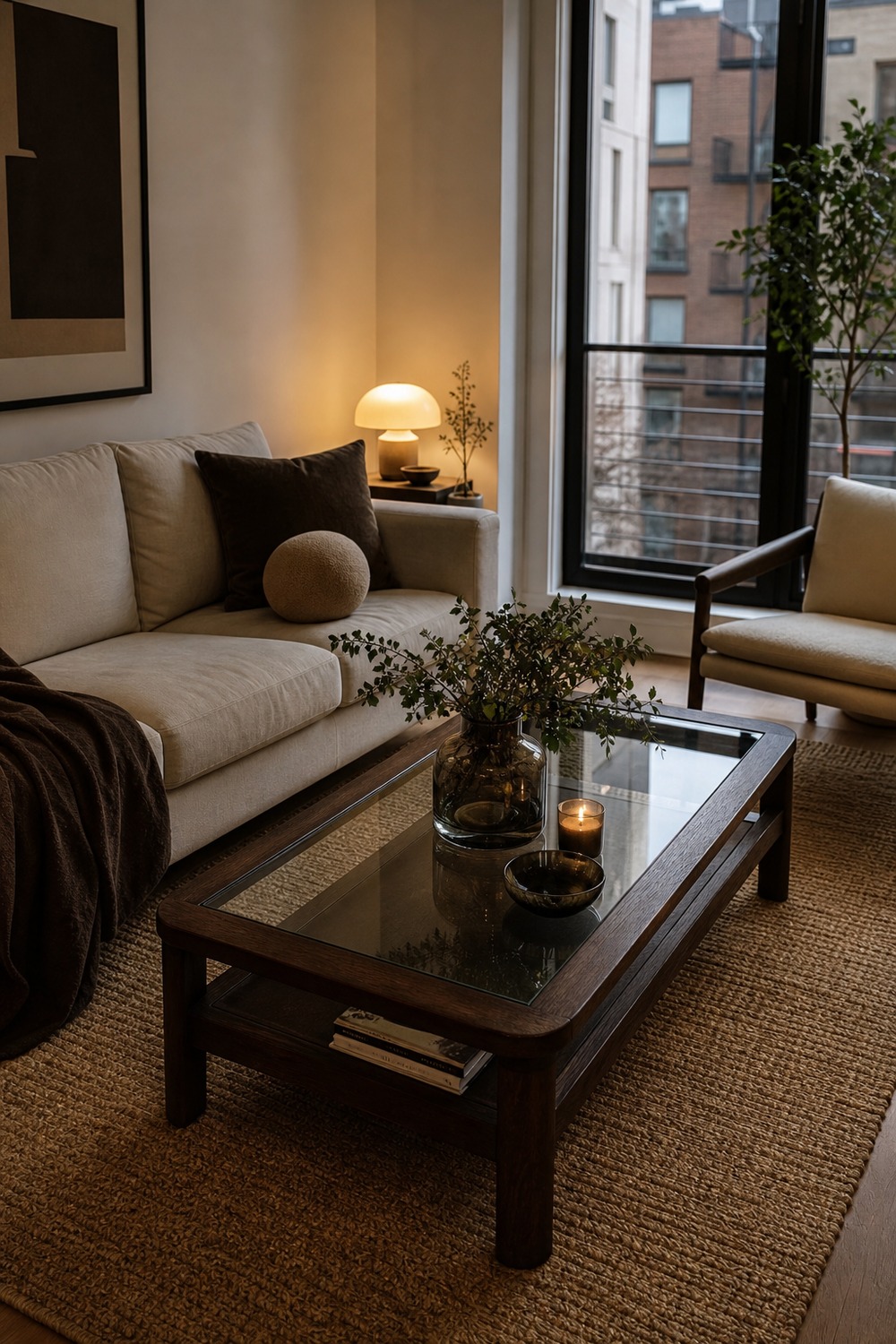
Dark wood under glass gives the table a stronger presence without making it feel oversized. The pale sofa and smoky vase help the contrast feel deliberate, and the clear insert keeps the whole seating area from feeling weighed down.
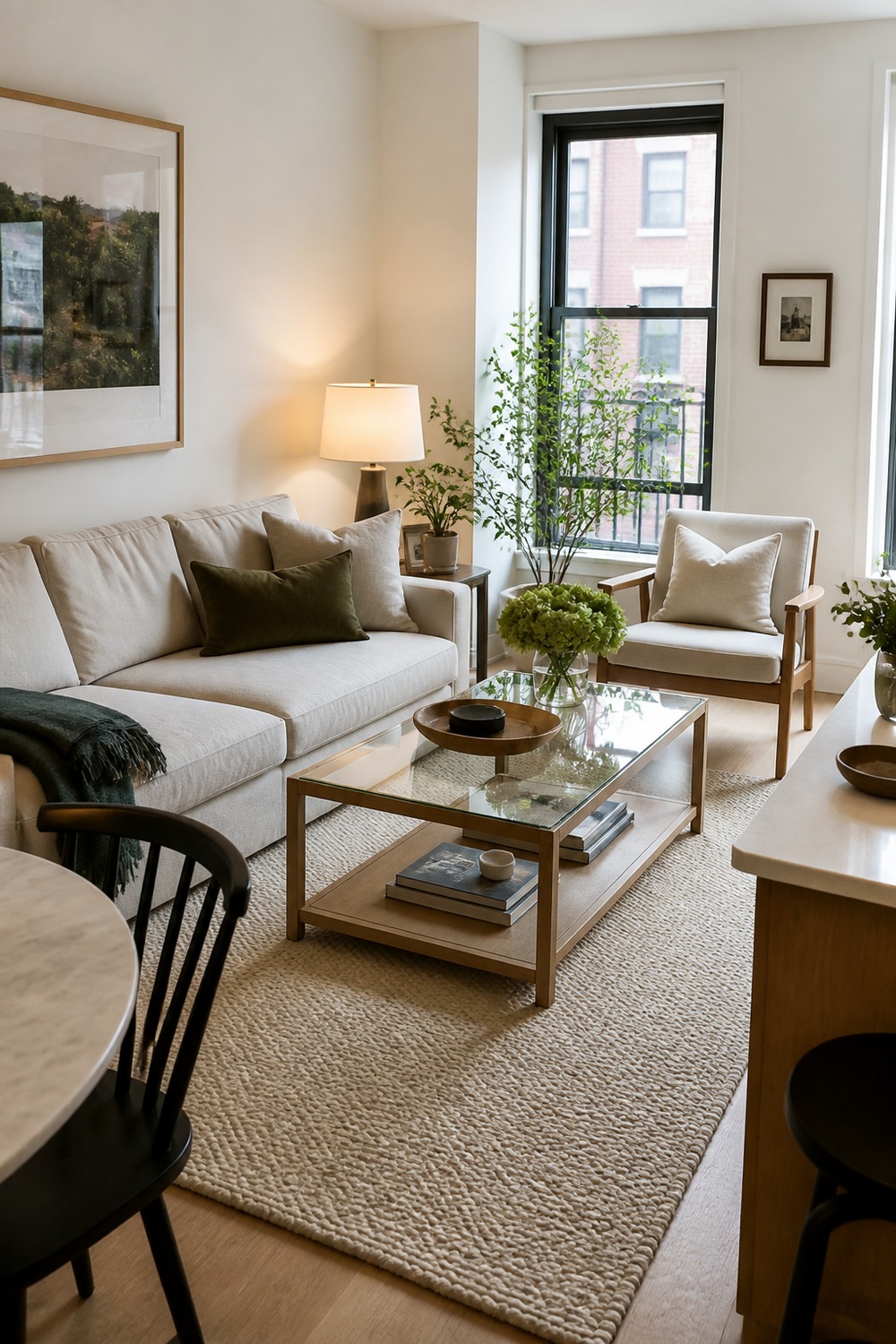
This lighter room shows why glass works so well with pale rugs and linen seating. The table keeps the center visually open, but the wood frame still gives your eye something warm to land on.
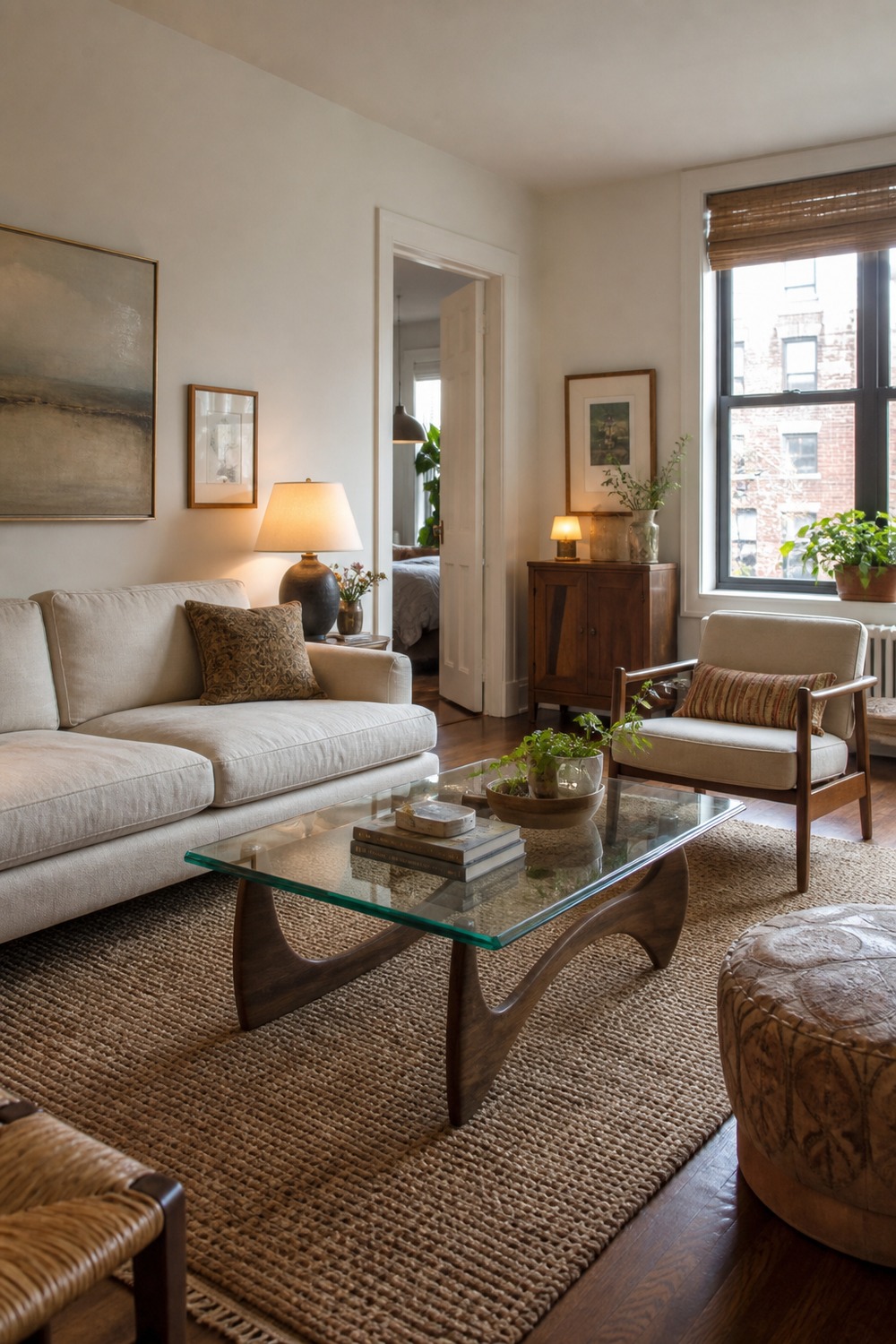
The full-room view makes the coffee table feel like part of the seating plan instead of a random object in the middle. Glass, wood, chairs, and the rug all line up in a way that feels finished but still easy to live with.
The easiest glass coffee table ideas are not the flashiest ones. A clear top, a wood detail, and one useful styling layer can make the whole living room feel lighter without losing the practical surface everyone still needs.
Leave a comment