
Brick already gives a front porch plenty of character, so I would not bury it under a mountain of seasonal decor. A strong door color, useful lighting, and a few well-scaled planters are usually enough to make the entry feel finished while leaving the steps easy to walk.
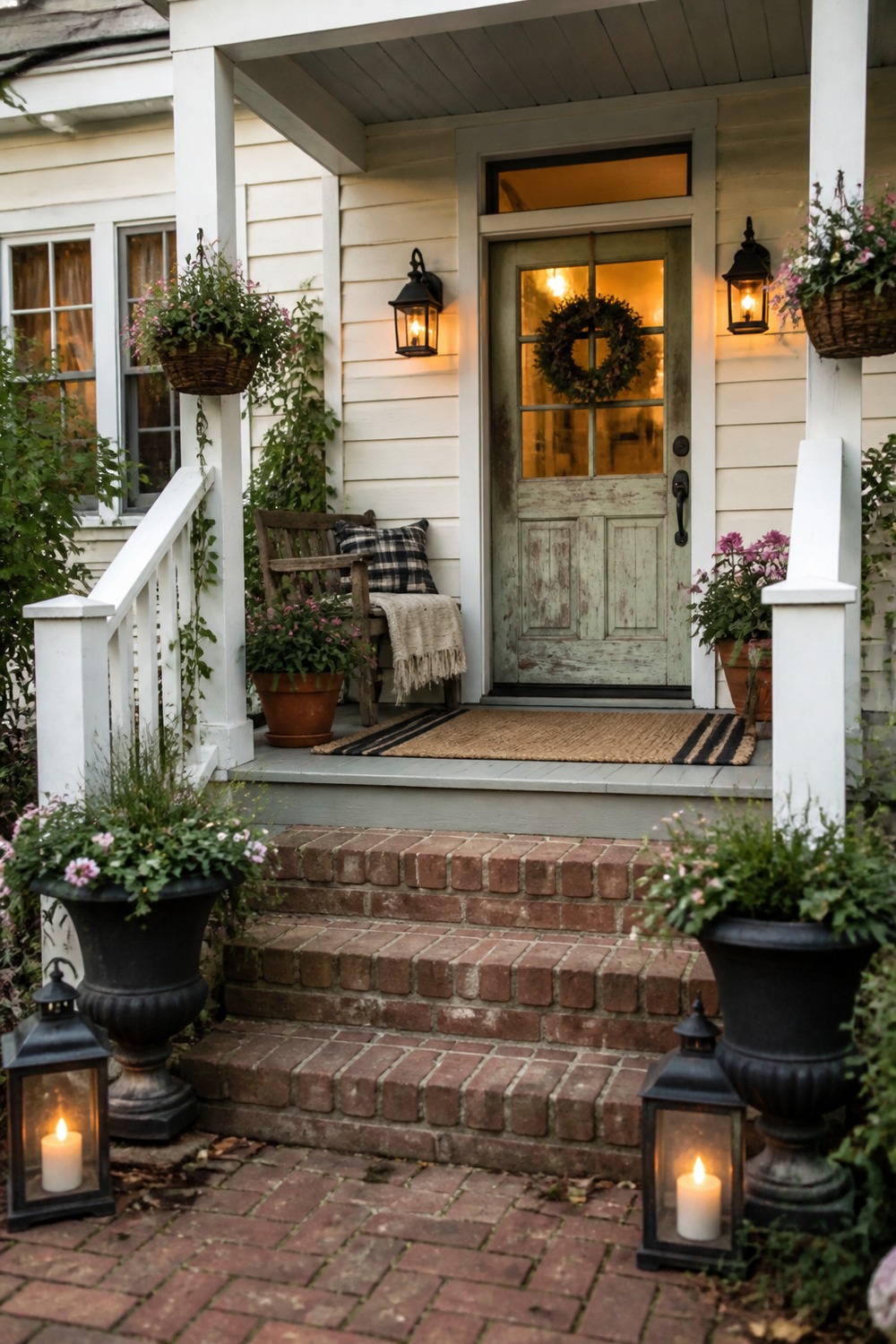
The black door and matching lanterns give this brick entry a crisp focal point. Two substantial urns soften the hard edges, while the open center of the steps still leaves a comfortable route for groceries and packages.
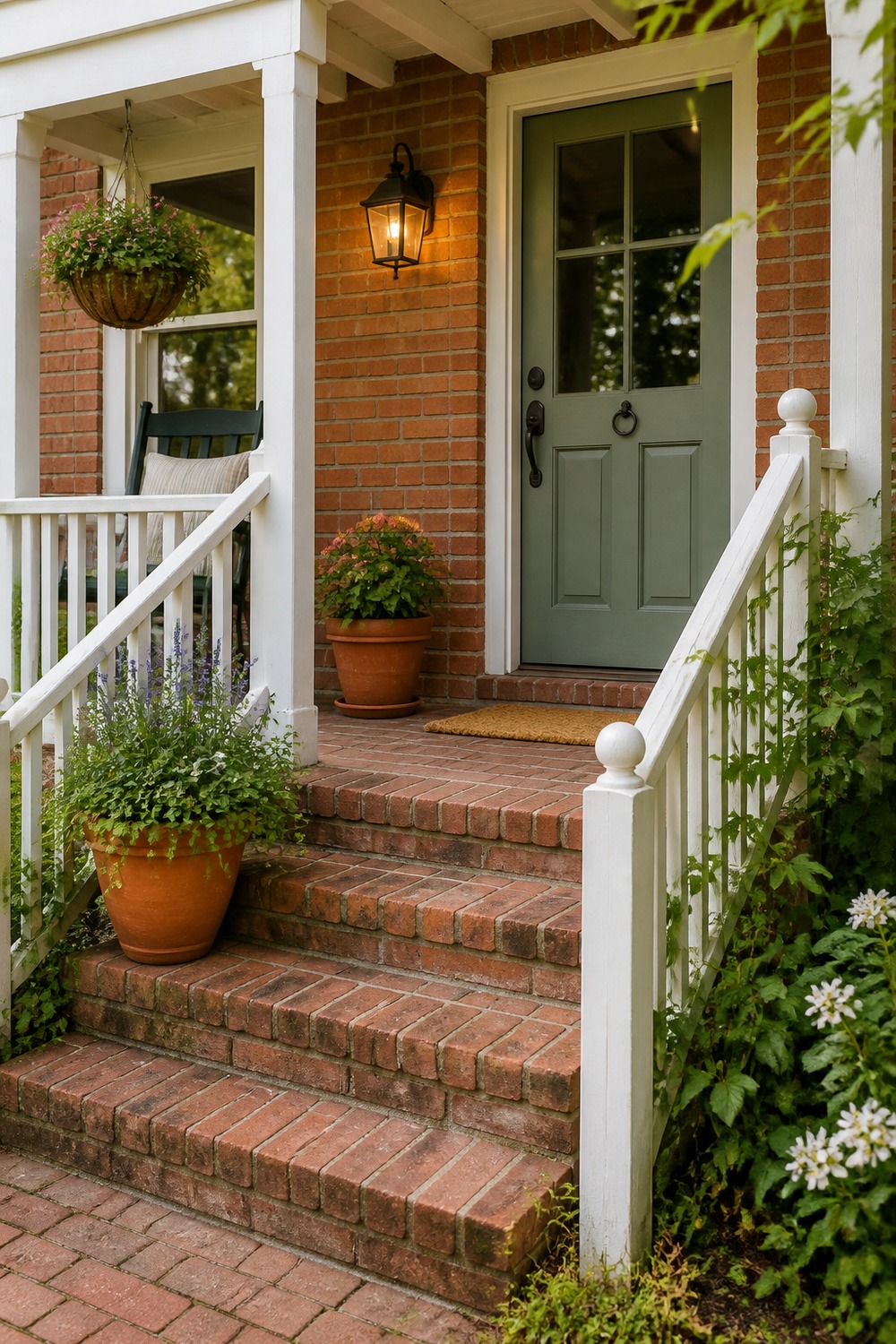
A muted painted door is an easy way to break up a large field of red brick. Terracotta pots echo the masonry without matching it exactly, and the simple woven mat keeps the threshold from becoming visually busy.
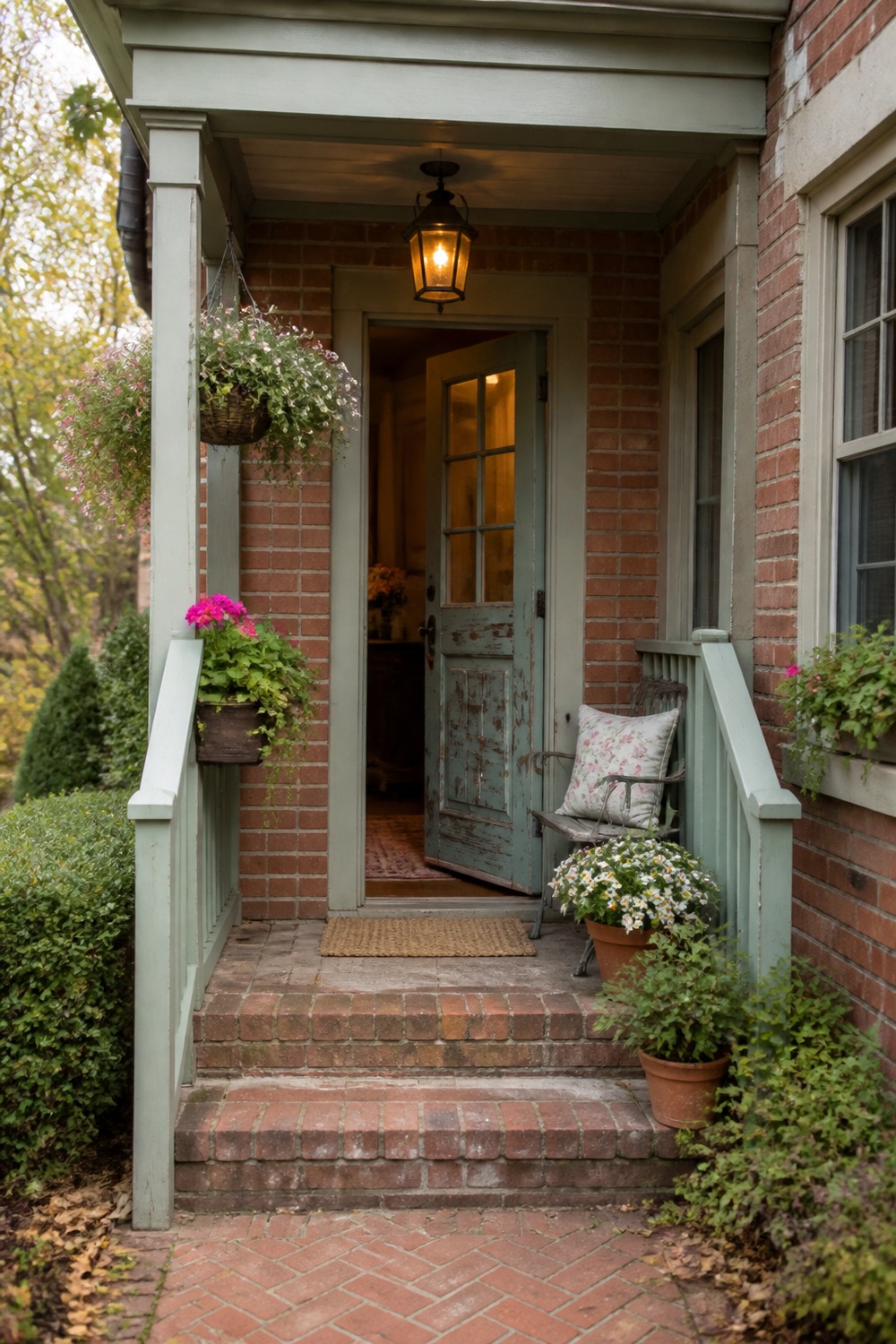
This narrow stoop proves that a tiny landing can still feel intentional. Slim planters hug the sides, the brick risers stay visible, and nothing interferes with the door swing or the handrail.
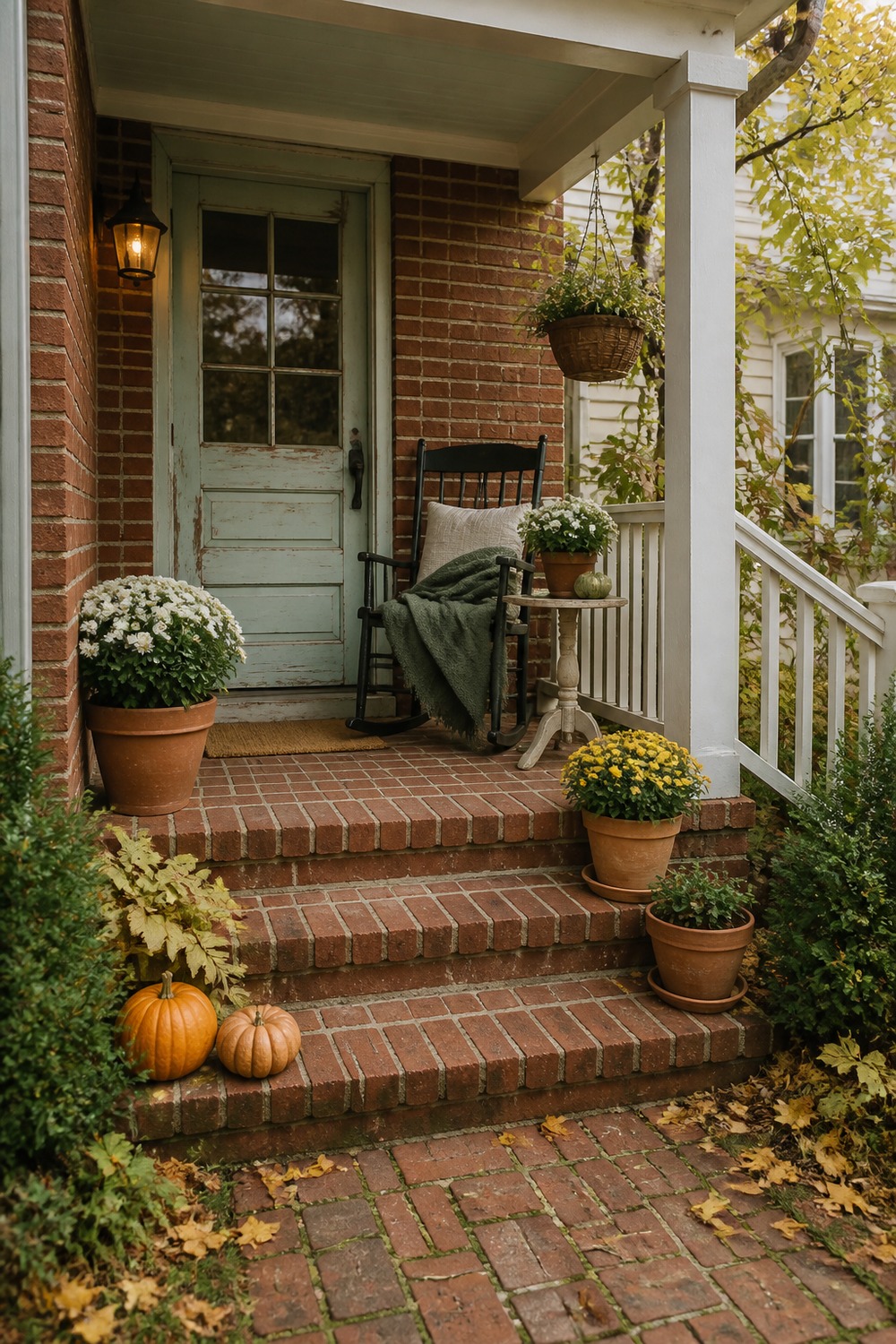
One chair is enough to turn a covered brick corner into a place to pause. The small side table holds a drink without crowding the walkway, and the greenery softens the transition from the house wall to the porch floor.
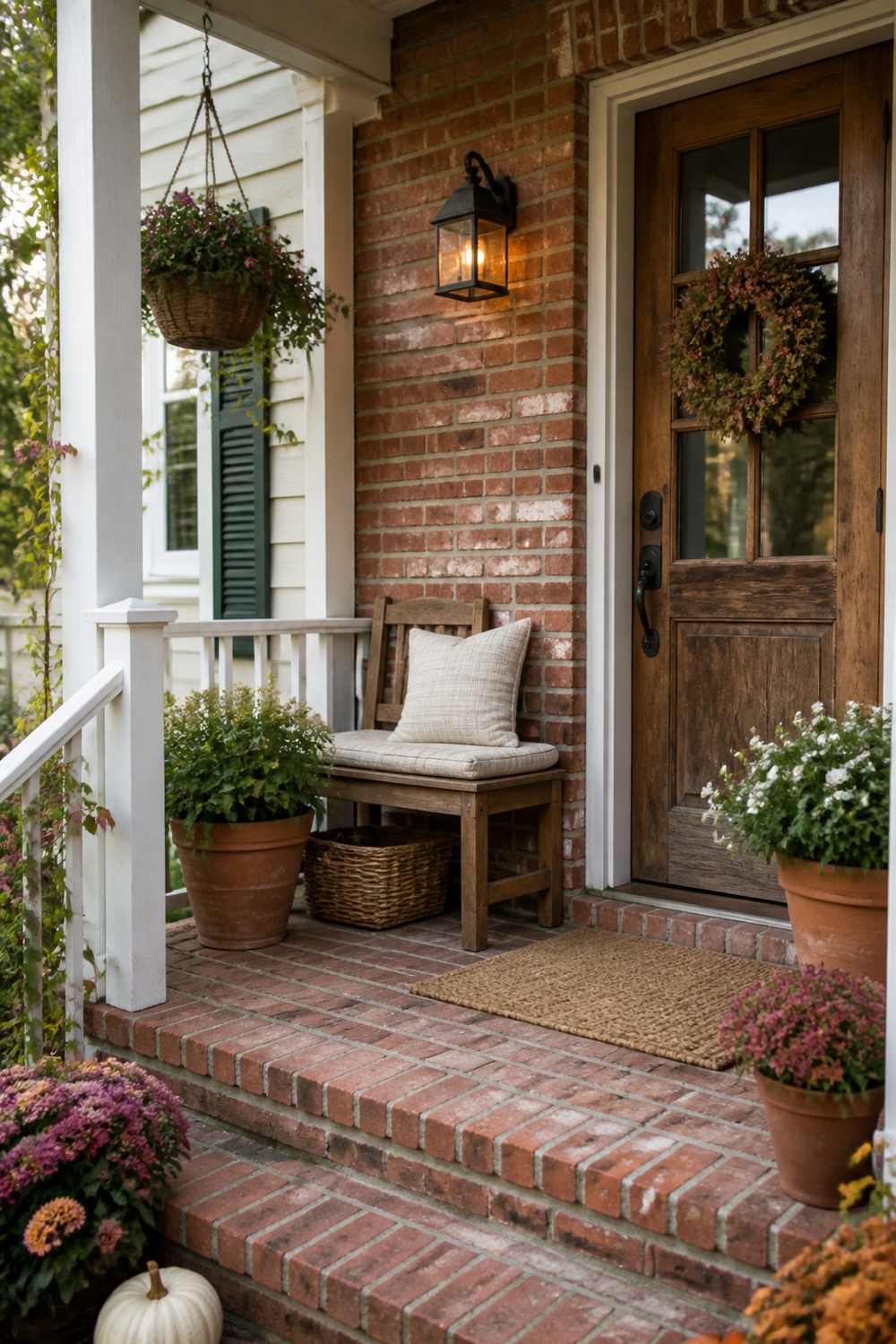
A compact bench makes practical use of the long wall beside the entry. I like the cushion against the rough brick and the basket tucked below, which gives shoes or garden odds and ends somewhere discreet to land.
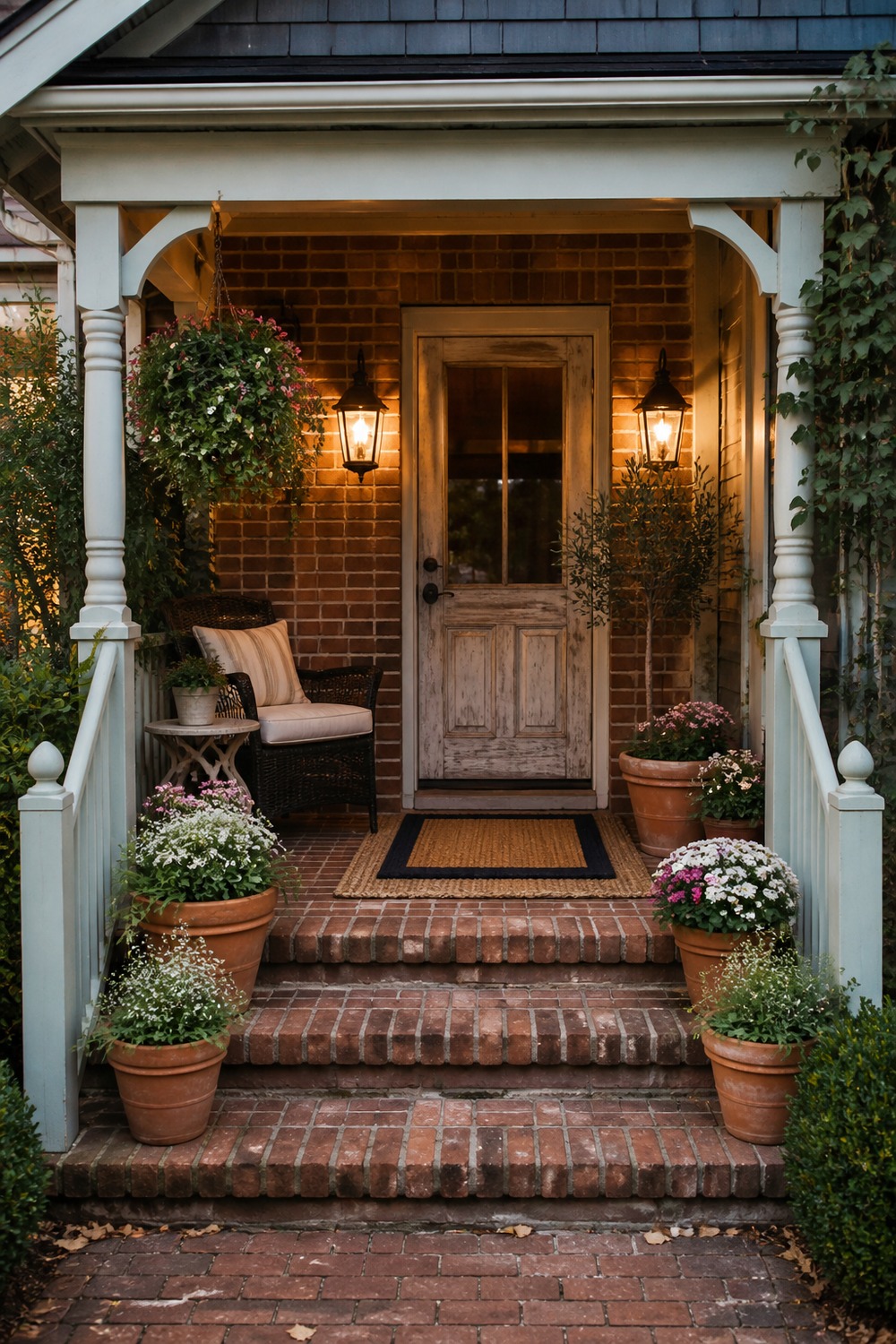
Paired lanterns make the brick texture look especially good after sunset. Their amber light reaches the steps as well as the lock, so the porch feels welcoming without relying on a row of decorative objects.
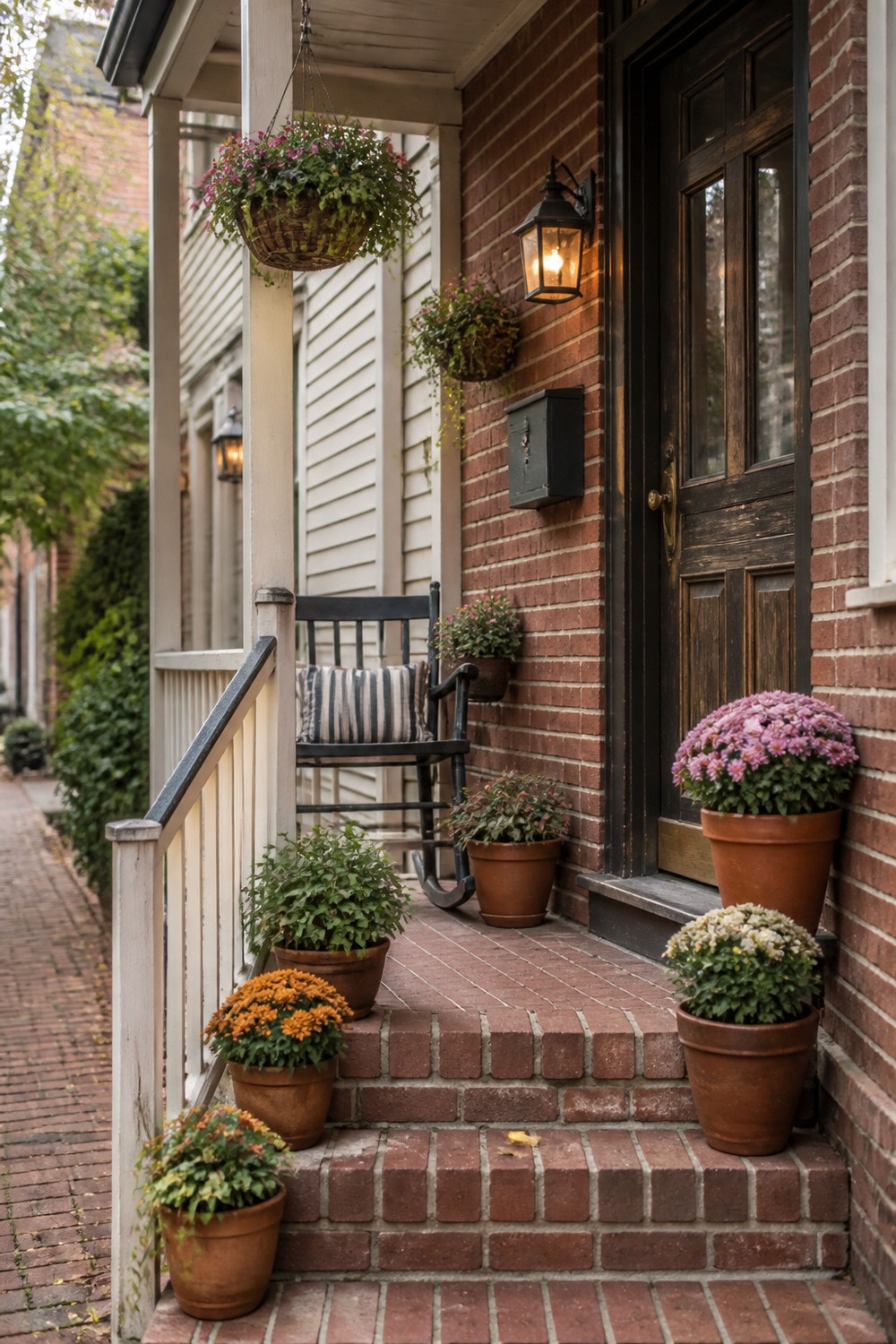
The long, angled view shows why vertical planters suit a narrow townhouse porch. They bring height beside the door while preserving the slim path along the brick wall and railing.
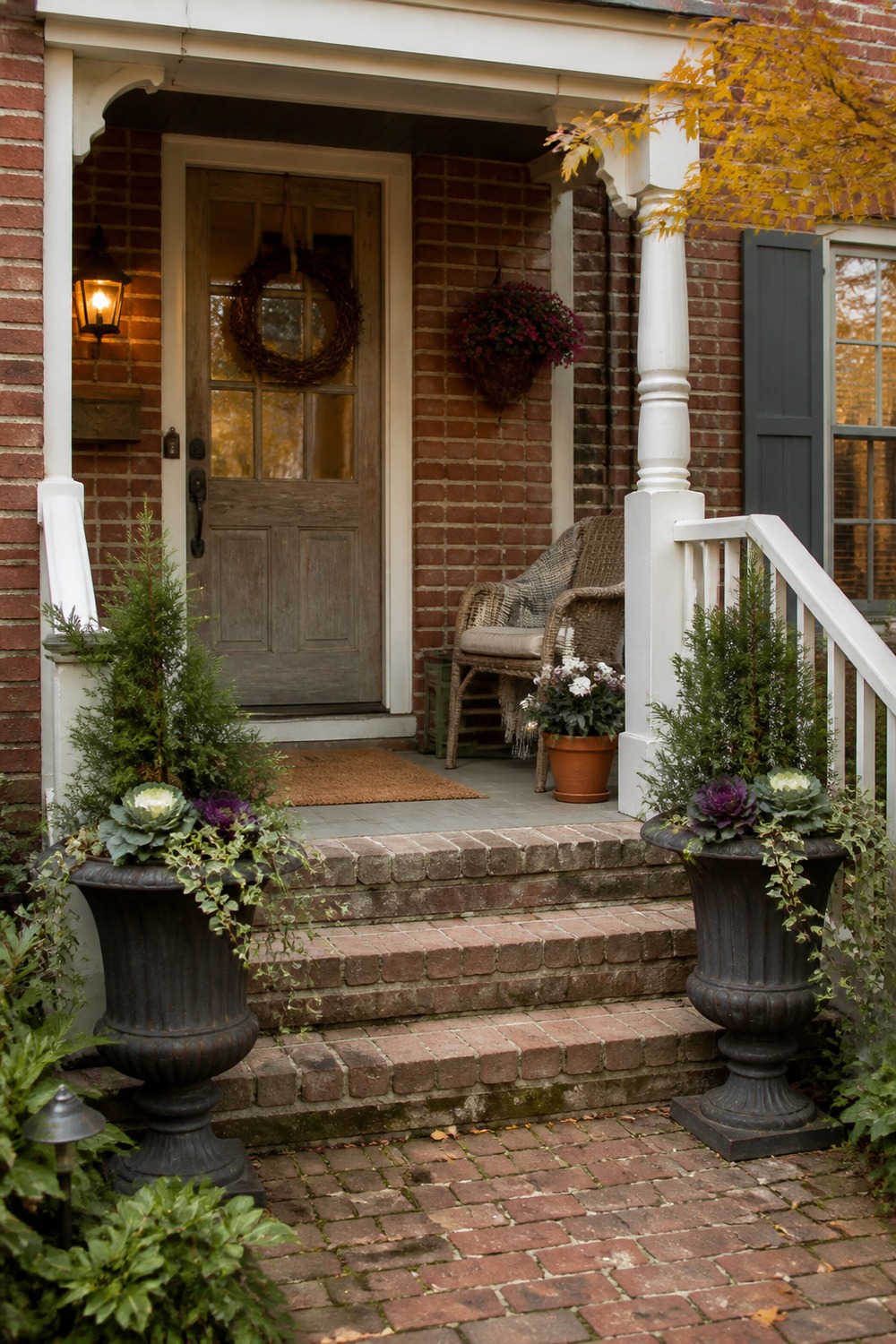
These tall urns have enough scale to stand up to the heavy brick steps. Seasonal branches can be changed easily, but the dark containers and simple door hardware would look grounded here all year.
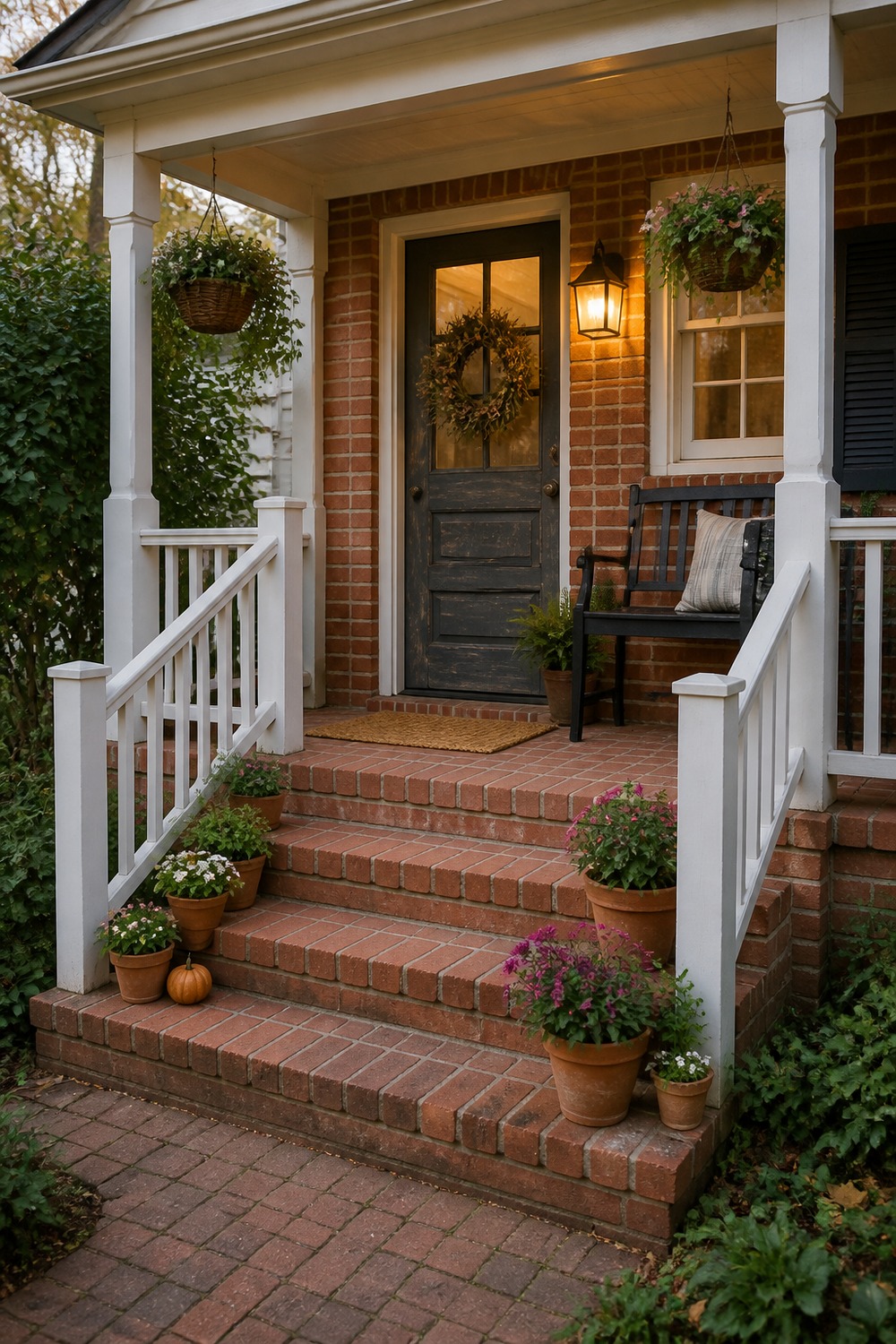
Painted rails and posts create a clean frame around the warmer masonry. Pots placed along the outer edge add color without reducing the clear walking space between the stairs and front door.
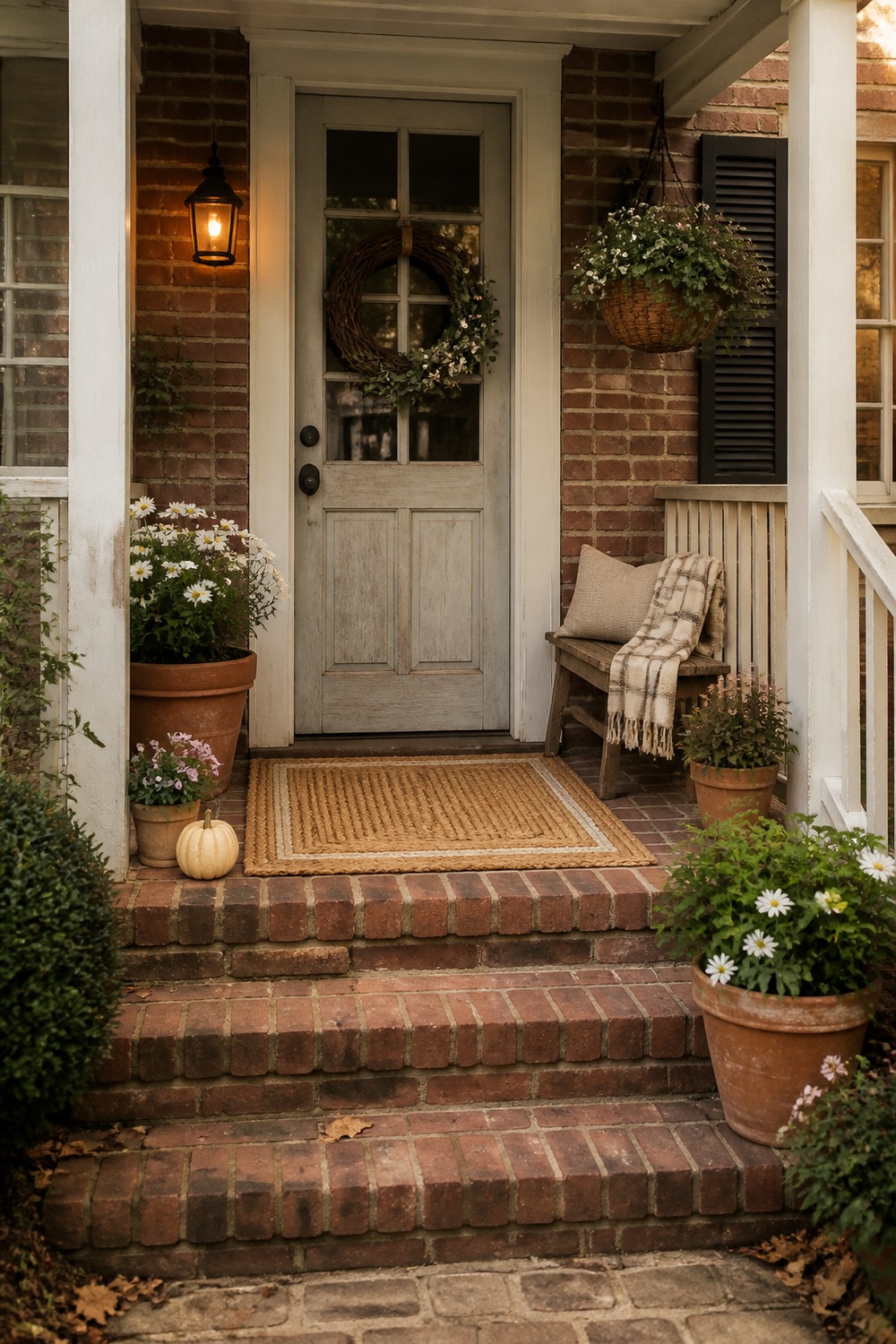
The layered doormats add softness right where brick can feel hardest. Keeping the colors quiet lets the bond pattern and worn edges of the steps remain part of the design instead of covering them up.
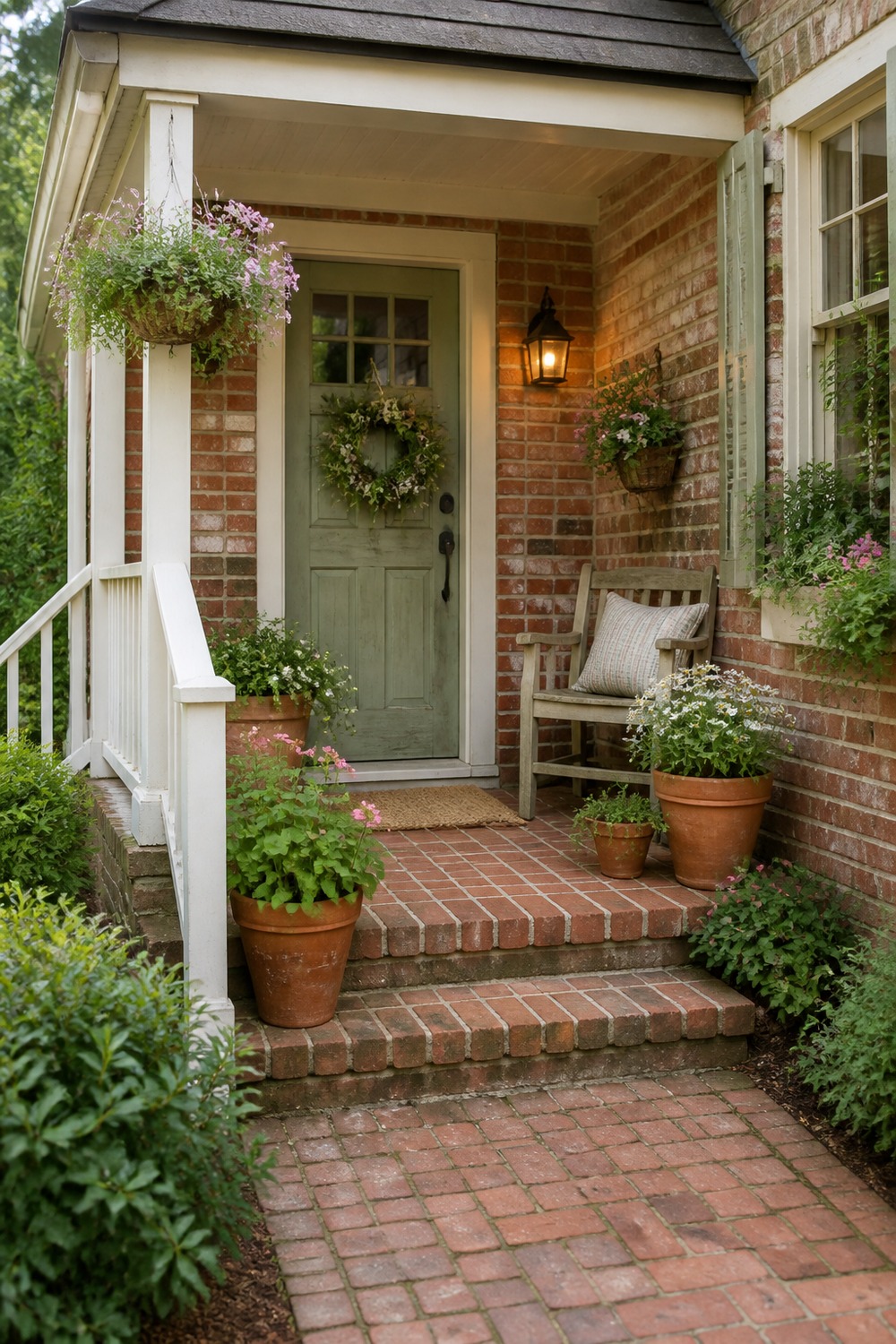
Clay pots and loose flowers give this cottage entry a relaxed look. The arrangement is asymmetrical enough to feel natural, yet the door and brick threshold remain the obvious center of the porch.
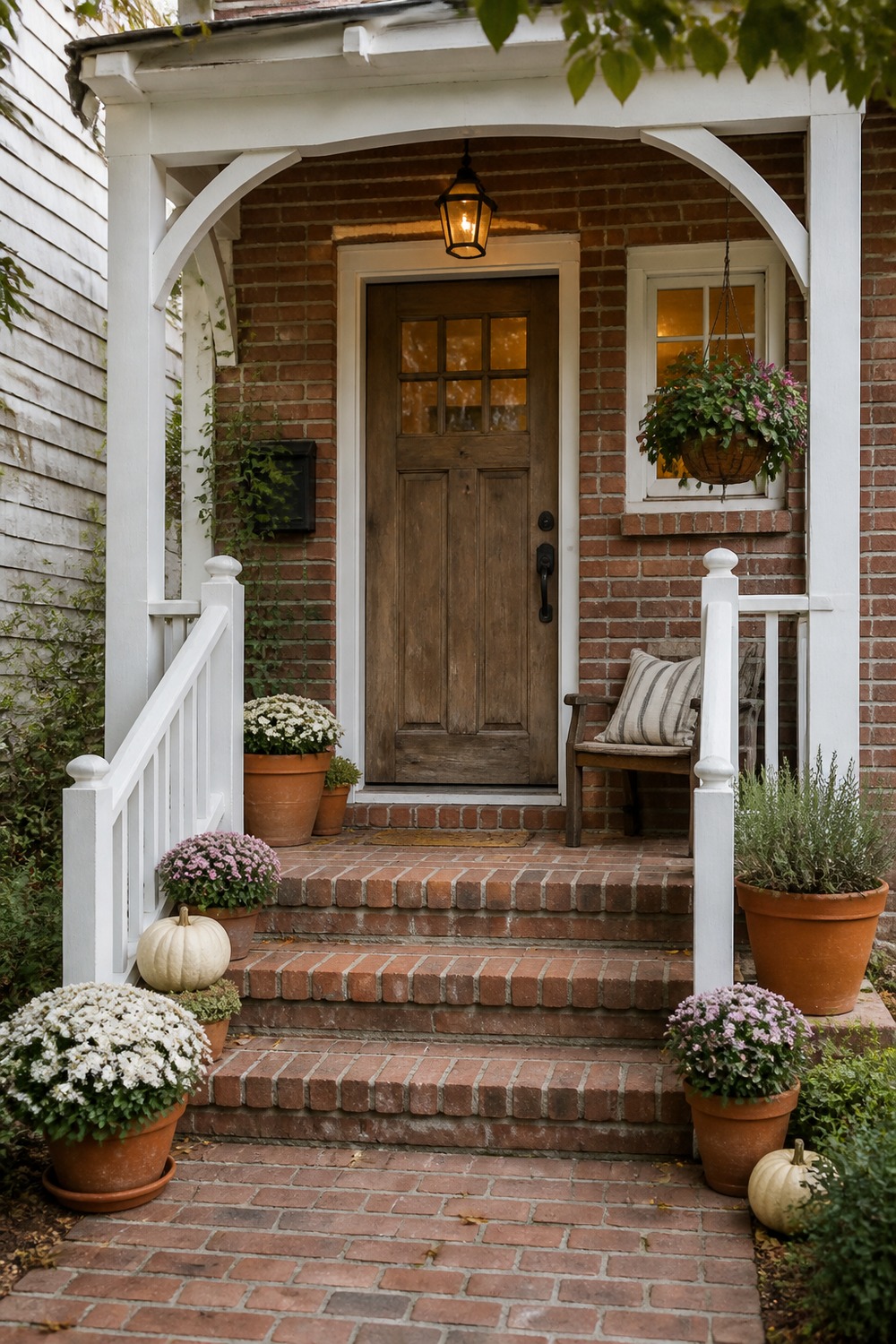
Modern restraint works surprisingly well with traditional brick. A dark door, two clean-lined containers, and strong proportions make the facade look updated without pretending the original material is not there.
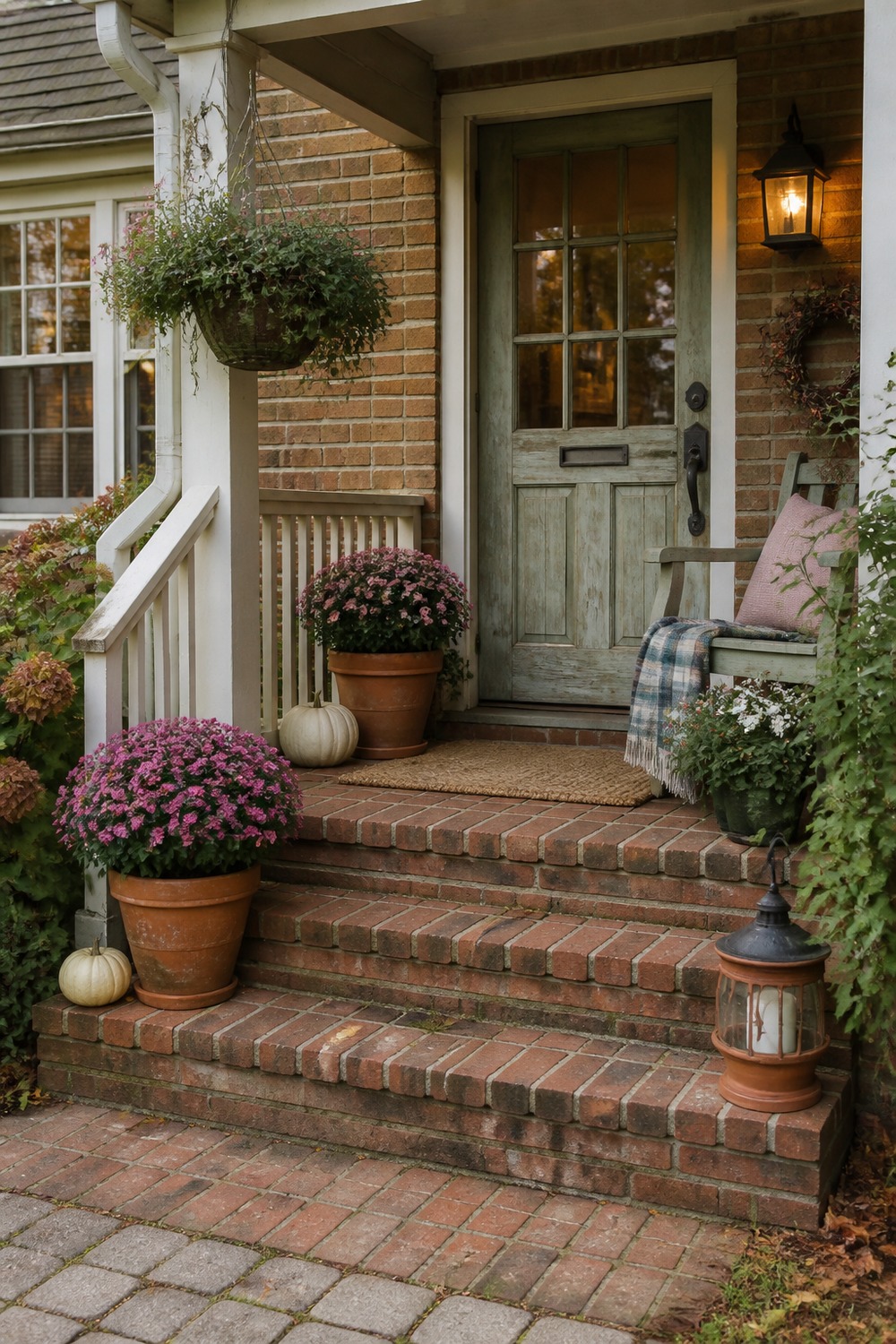
This close view is really about the small transition zone between path, step, and door. A lantern and one planter bring texture to the corner, while the brick tread stays clear and safe underfoot.
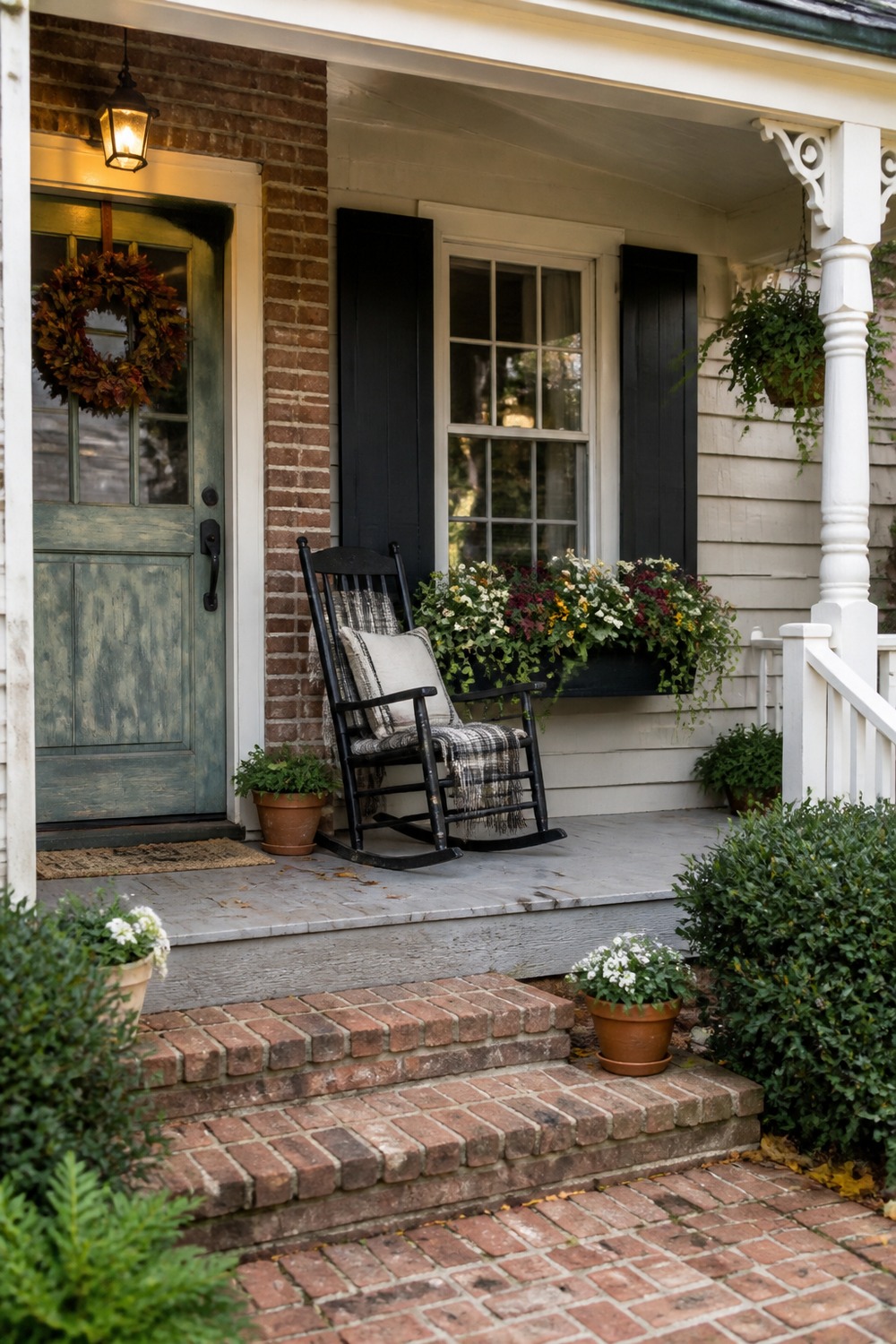
A window box pulls attention across the facade instead of concentrating everything beside the door. The greenery also breaks up the broad brick wall, and a small seat below makes the porch feel connected to the window.
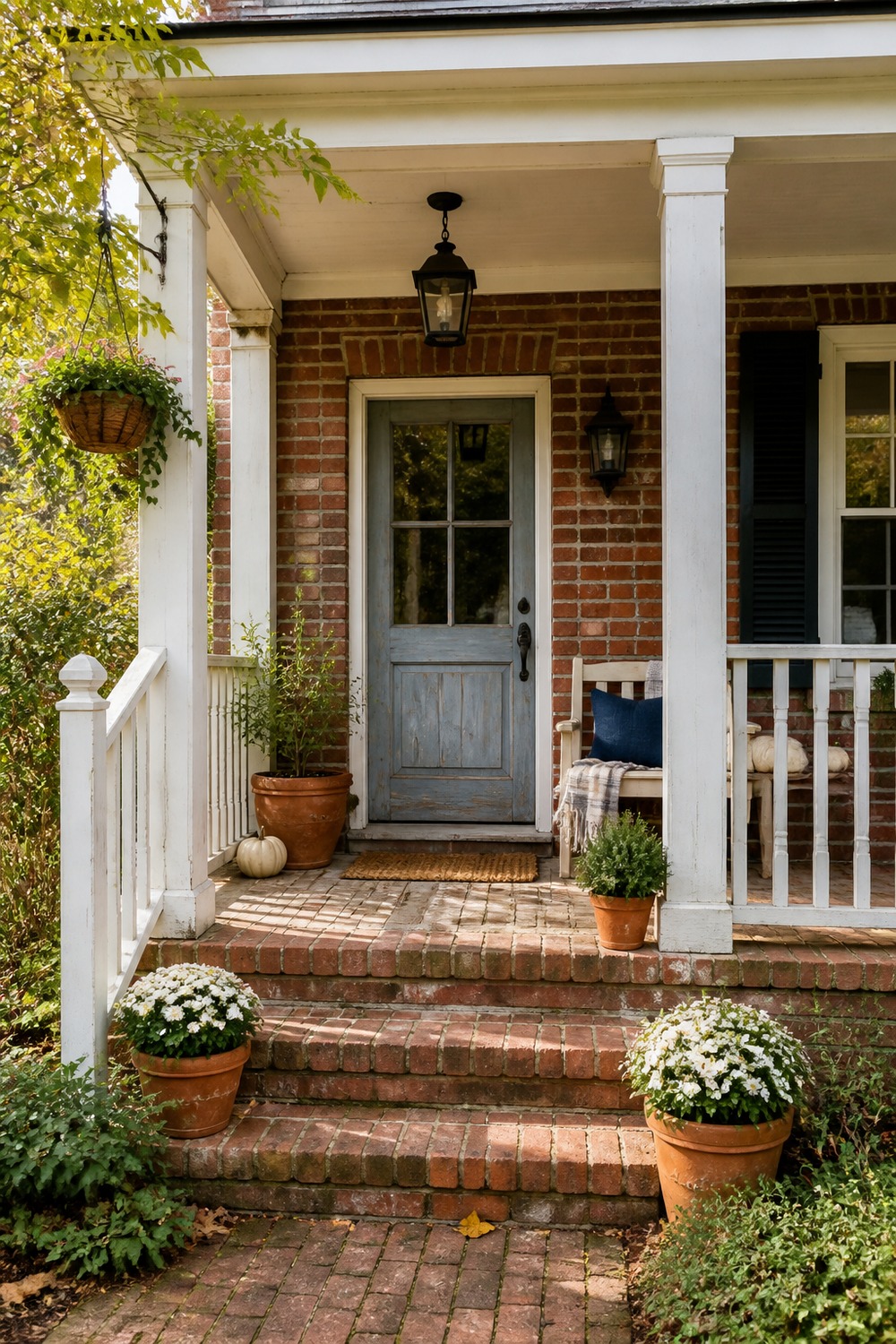
The columns give this porch a strong architectural rhythm before any accessories are added. Planters at the bases emphasize that frame, while the brick steps provide enough warmth to keep the white trim from feeling stark.
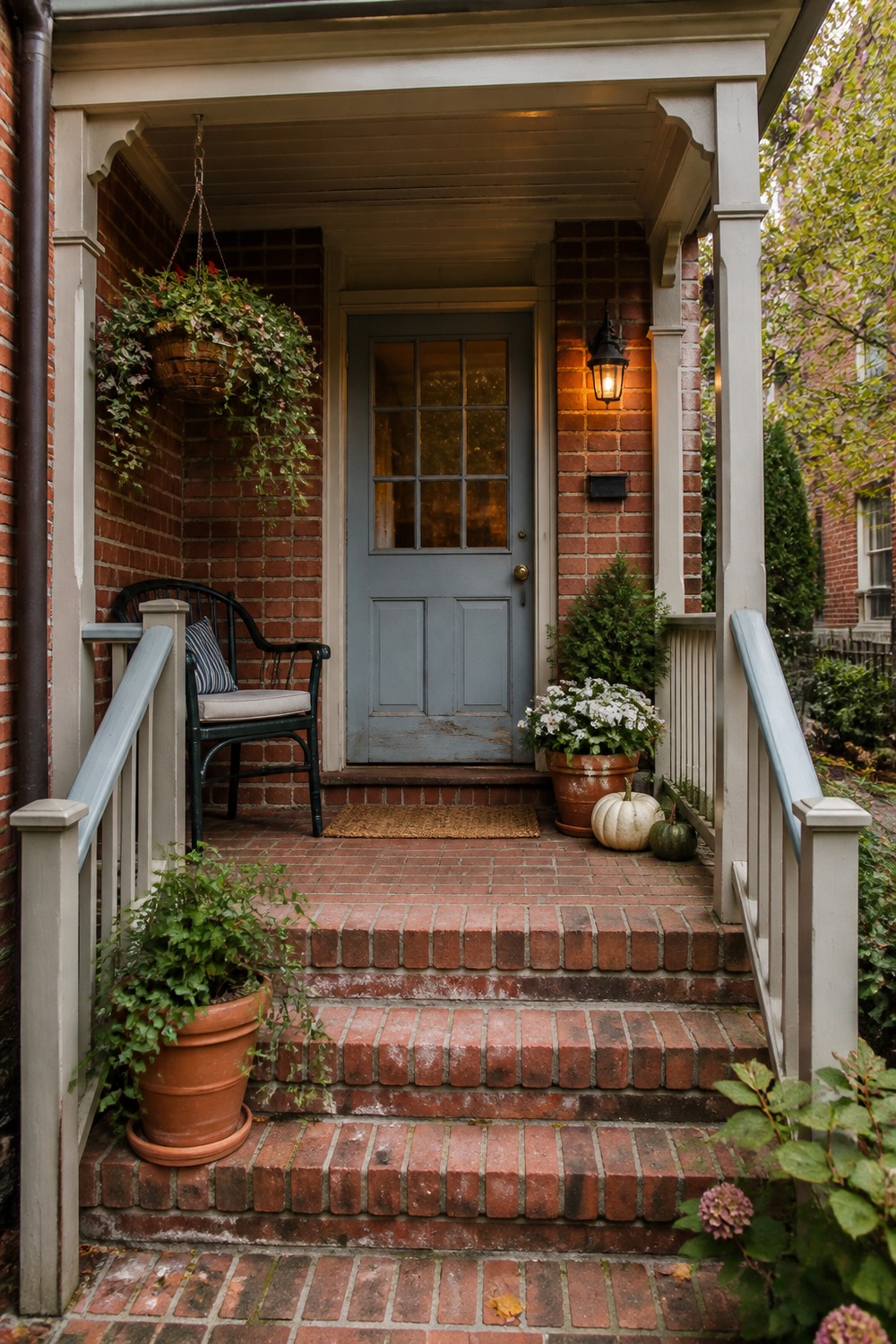
For an apartment or attached-home entry, compact pieces matter more than quantity. A narrow mat, wall-mounted light, and small pot define the landing without spilling into a shared path or covering the brickwork.
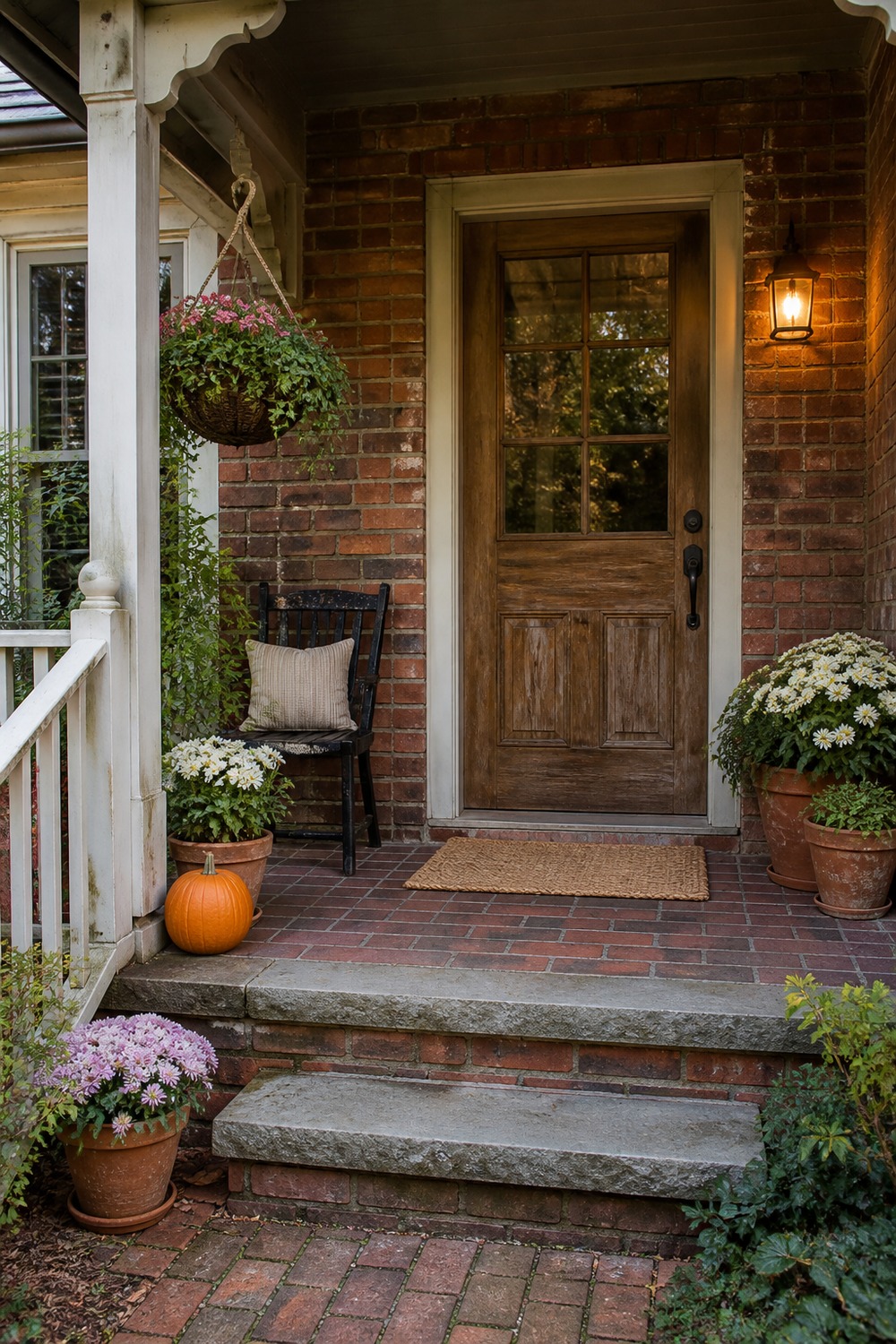
The stone threshold adds a cool contrast against the warmer brick facade. A wood door and aged-metal lantern bridge those materials nicely, so the mix looks collected rather than patched together.
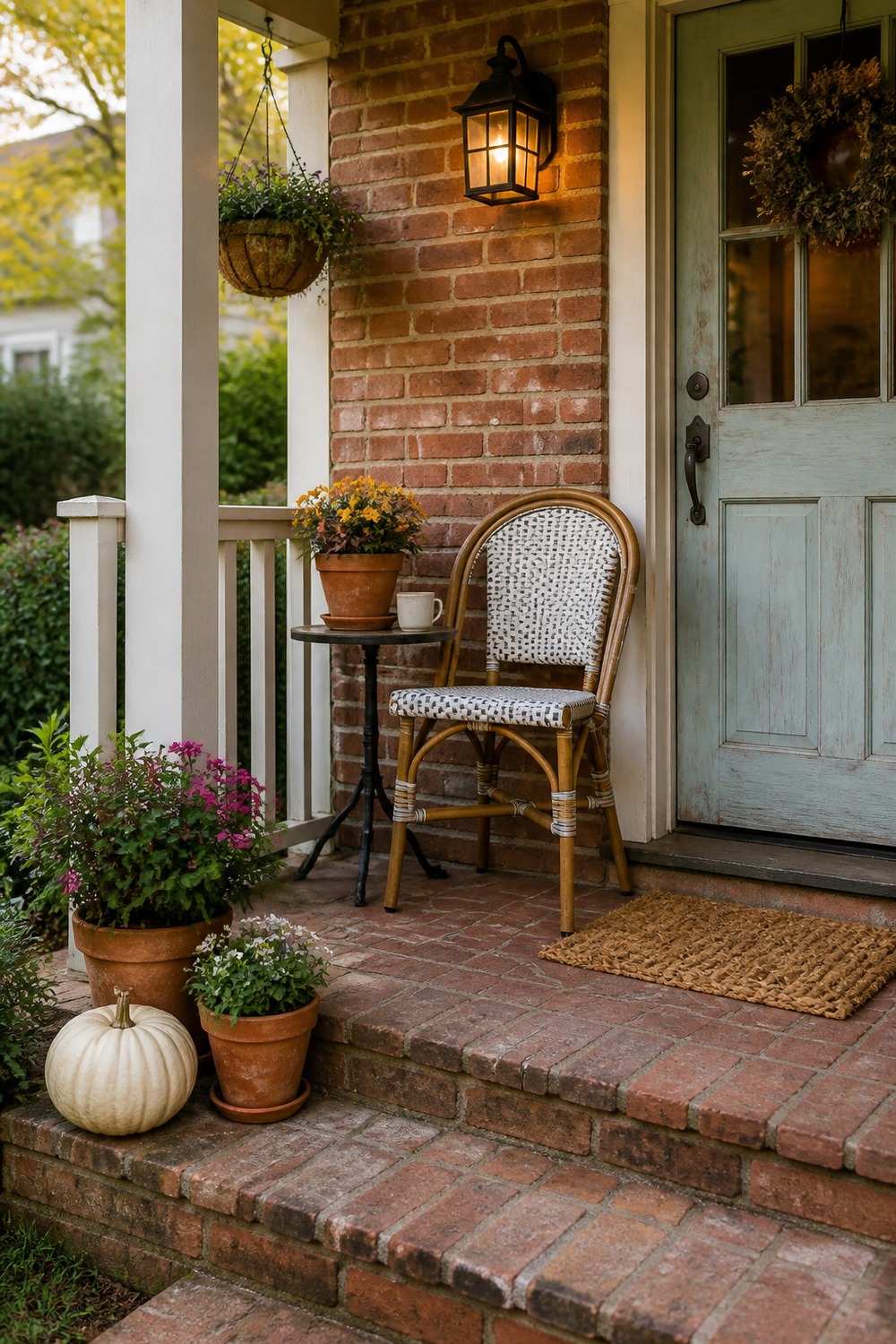
A single bistro chair makes sense on a porch that is too slim for a full seating set. The tiny table fits beside it, leaving the brick floor visible and enough room to reach the door comfortably.
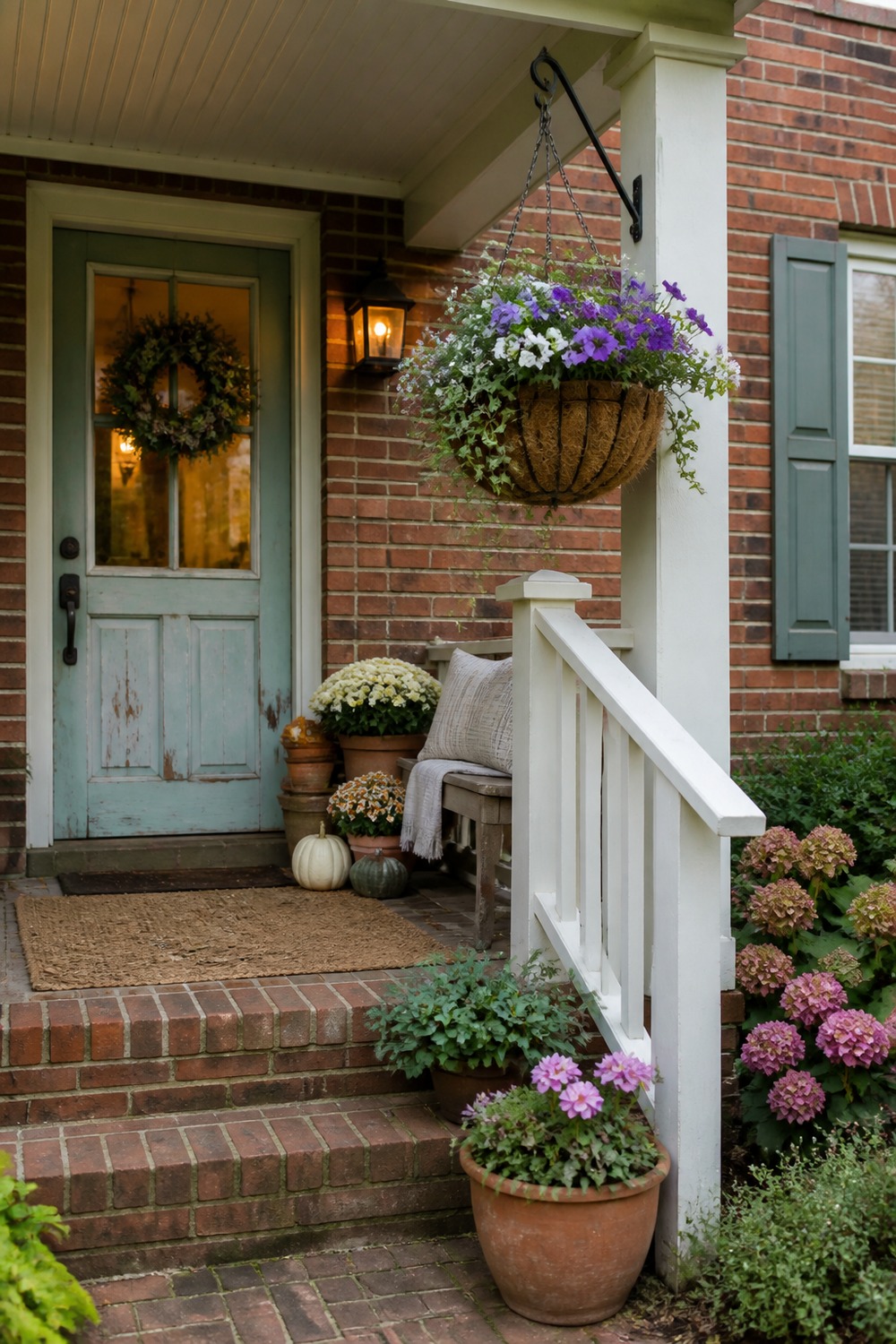
Hanging flowers bring color above the railing instead of using valuable floor space. That upward placement draws the eye to the porch roof and leaves the brick steps free of extra pots.
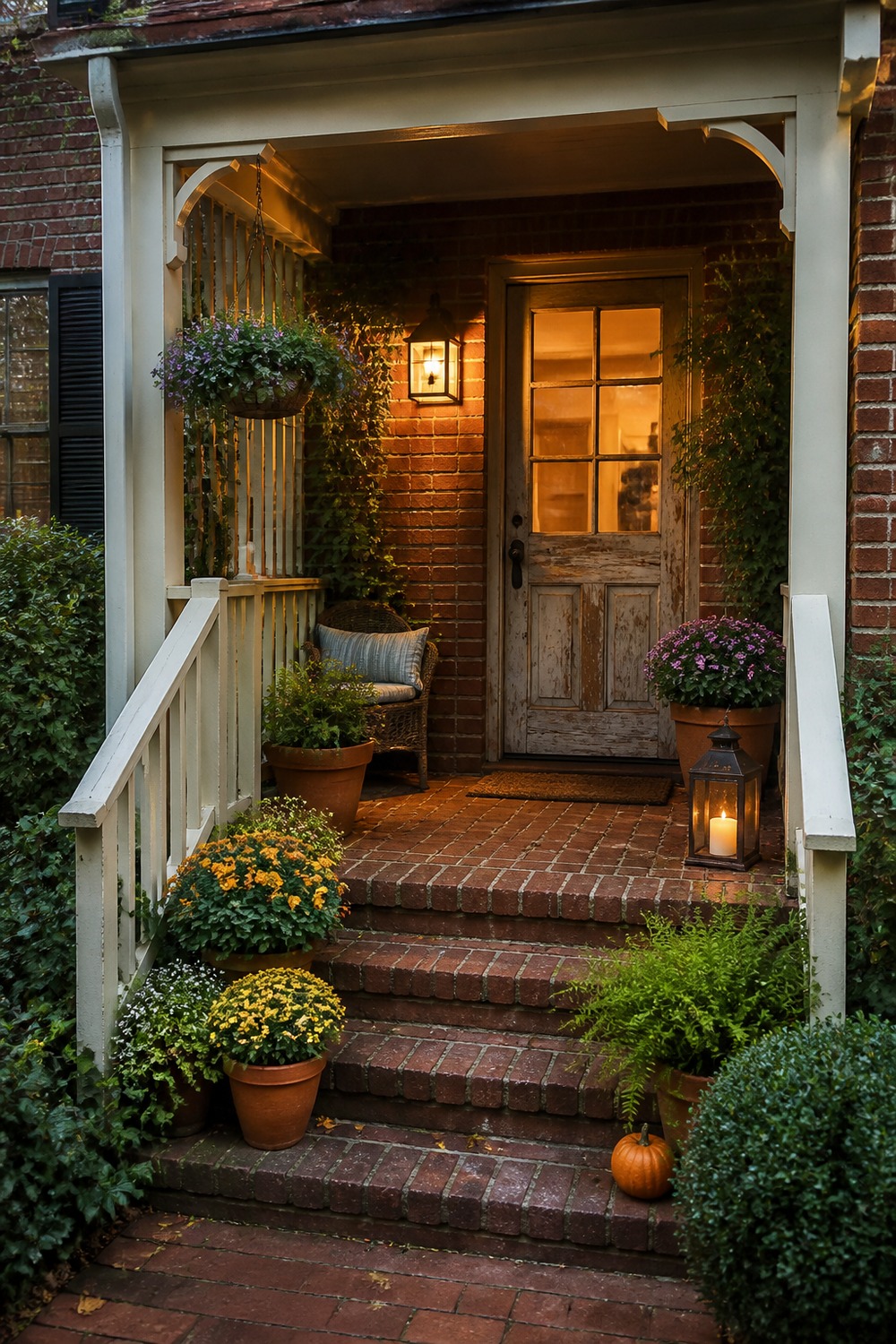
Evening light changes the whole mood of this brick entrance. Low lanterns mark the step edges, the wall sconce brightens the lock, and the plants catch just enough glow to keep the doorway from looking flat.
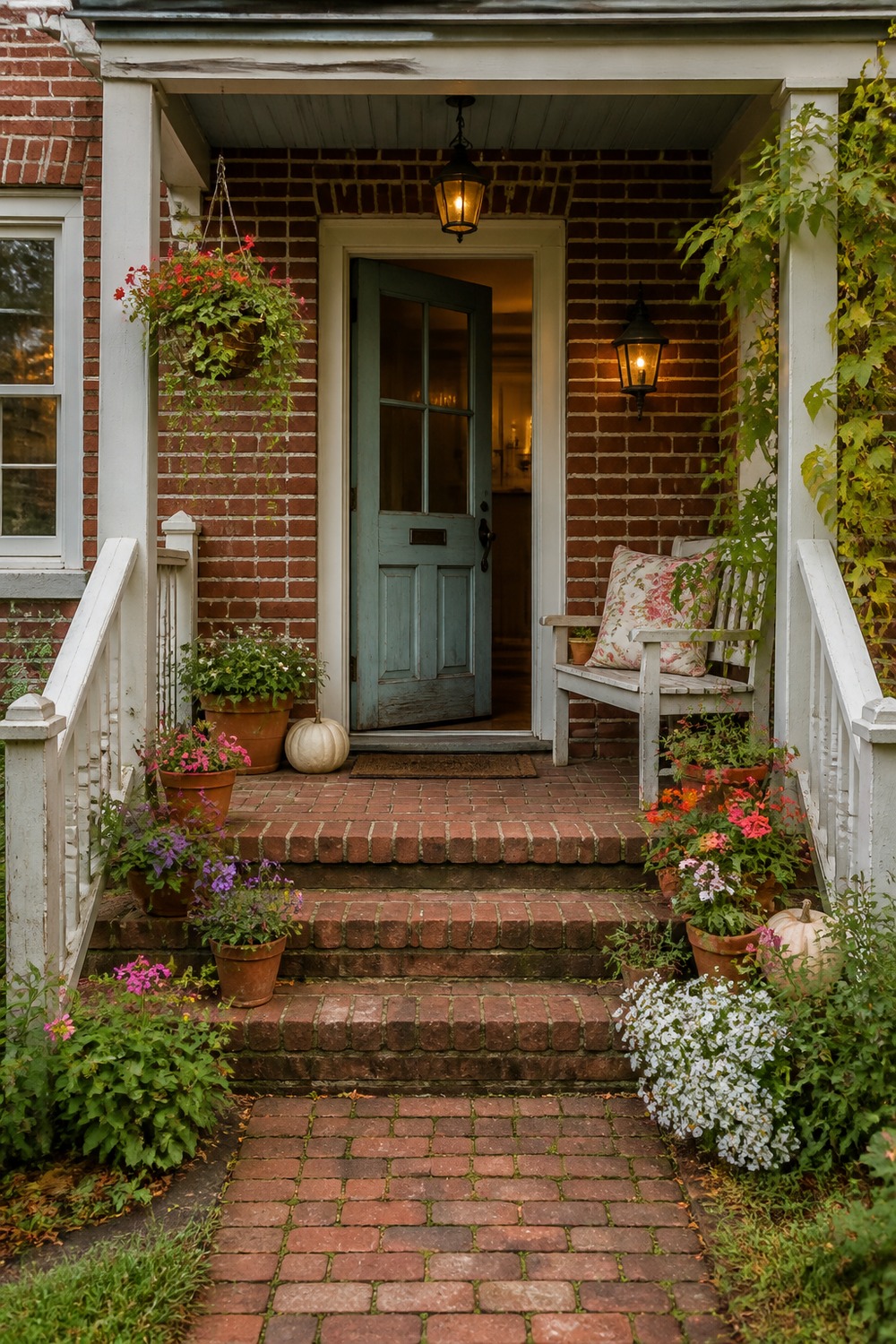
The wider reveal helps the seating, planters, railing, and walkway read as one arrangement. Brick ties the separate zones together, while the open path through the middle keeps the porch useful for everyday arrivals.
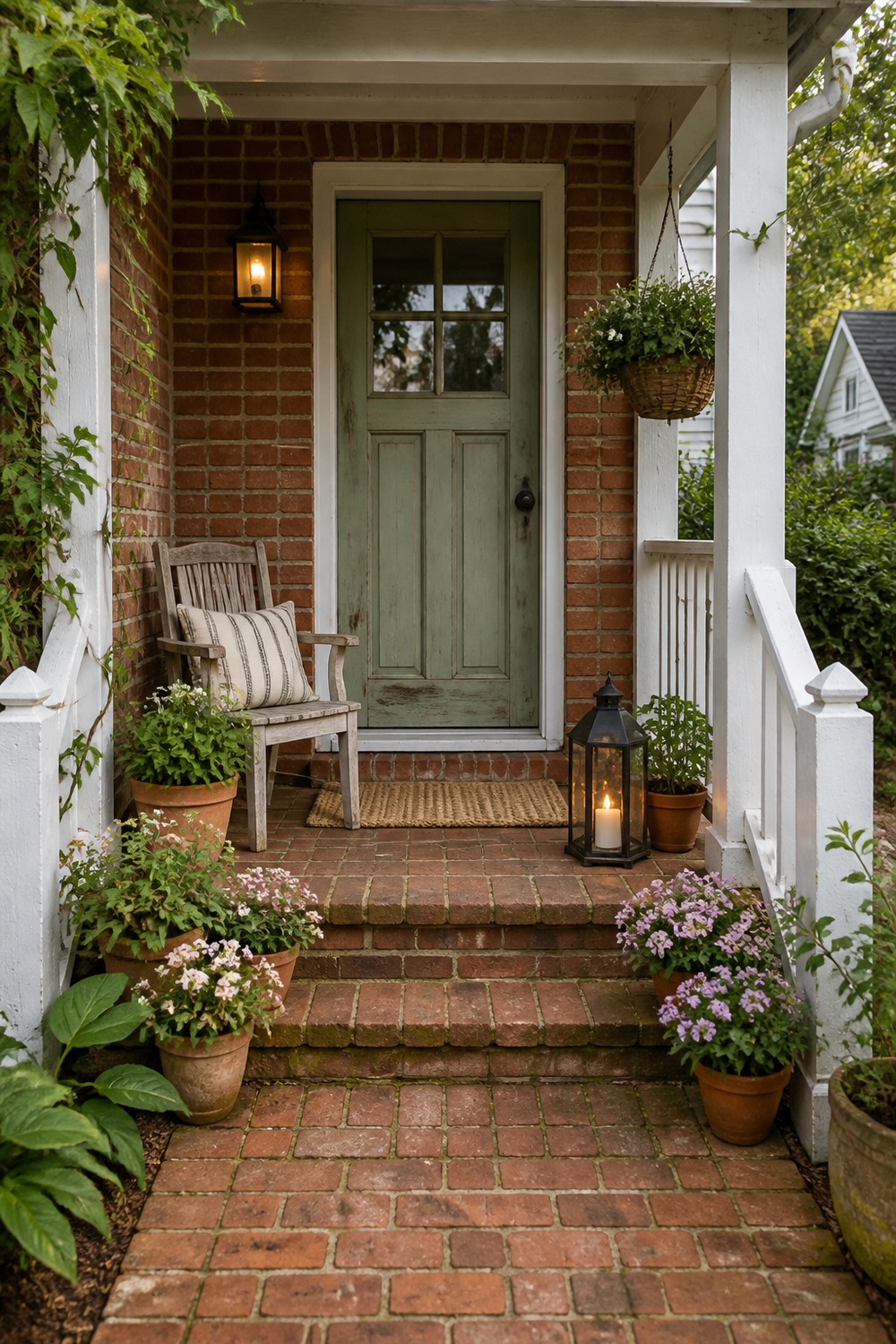
This refresh relies on pieces that are easy to find: a sturdy secondhand stool, an unfussy mat, and a couple of generous plants. The brick backdrop supplies most of the color and texture, so the additions do not need to be expensive.
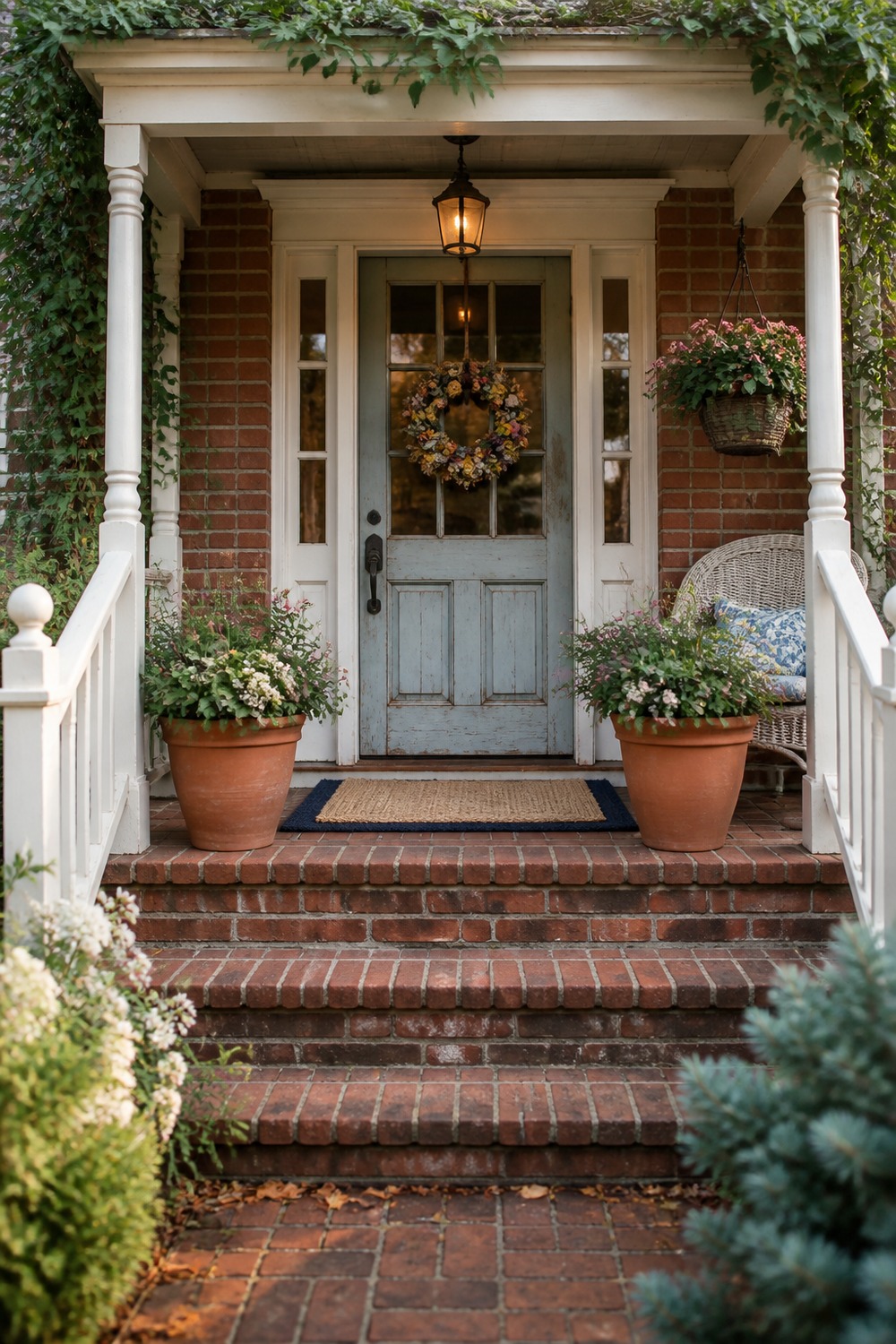
Matching pots bring calm to a formal front door and make the step edges feel balanced. Their rounded shapes are a nice counterpoint to the straight mortar lines, especially with the layered mat centered between them.
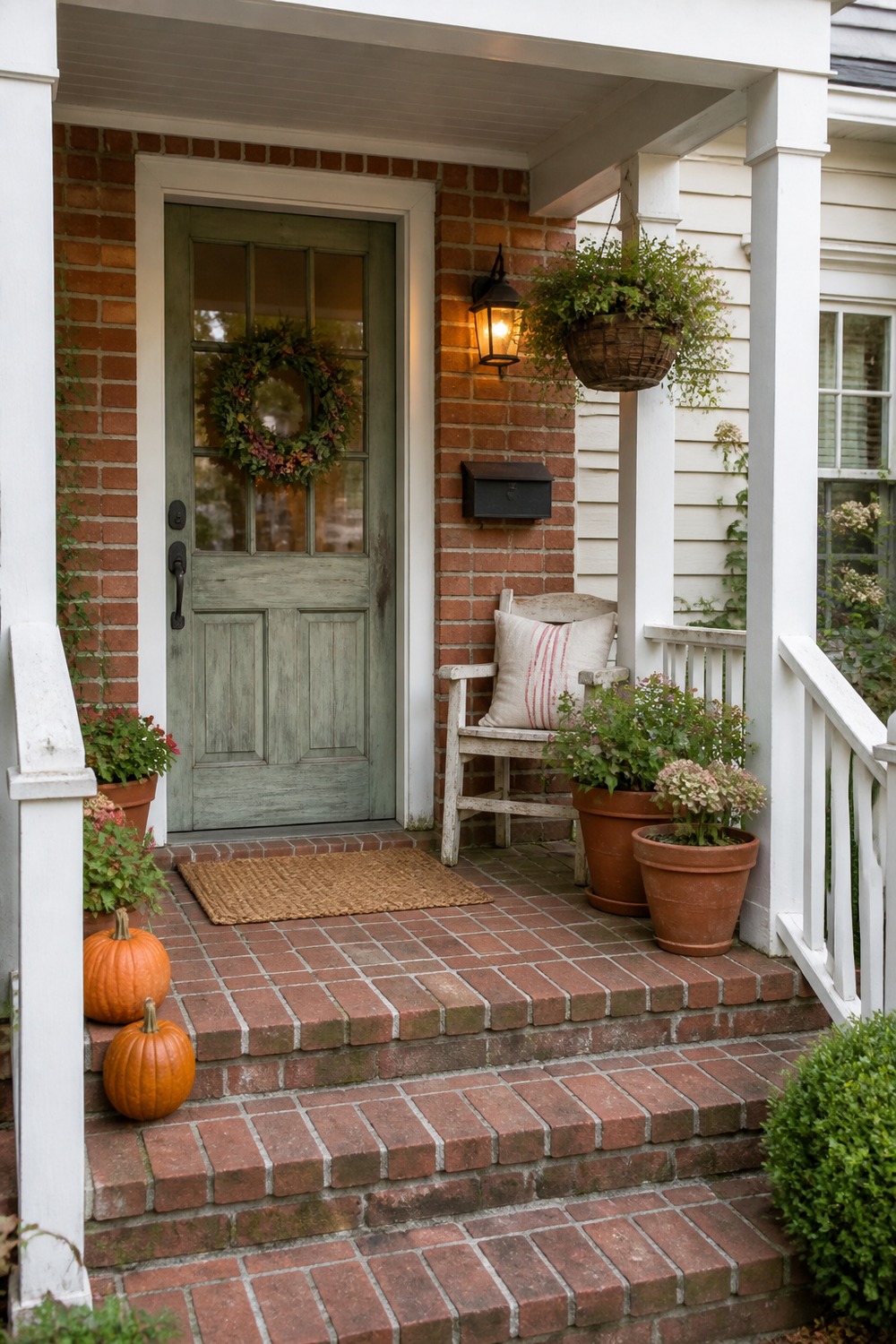
Woven fiber, clay, painted wood, and leafy greenery all sit well against brick because none of them looks overly slick. The close crop makes those textures the main event while still showing a clean, usable threshold.
The best brick porches do not need to hide the masonry. A few choices that improve light, scale, and movement can make the whole entrance feel more considered without turning it into a display.
Leave a comment