
Epoxy coffee tables can look incredible when the resin feels like part of the wood instead of a shiny afterthought. The best ones here keep the living room usable too: real sofa clearance, simple trays, visible wood grain, and resin colors that add interest without taking over the whole room.
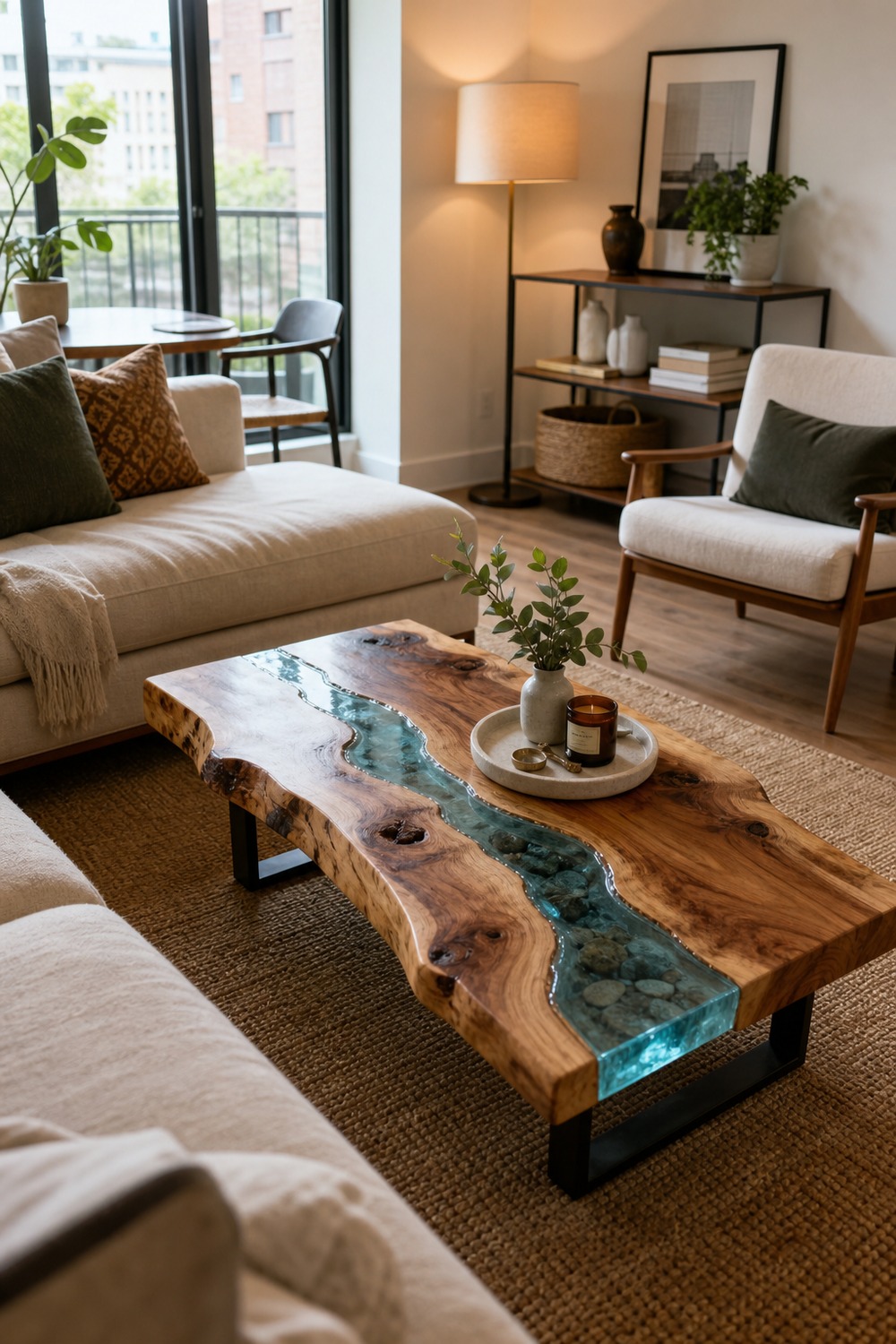
The clear river line is the thing that makes this table feel custom, but the rest of the room keeps it grounded. I like the cream sectional, woven rug, and simple tray because they let the epoxy show off without making the seating area feel too precious to use.
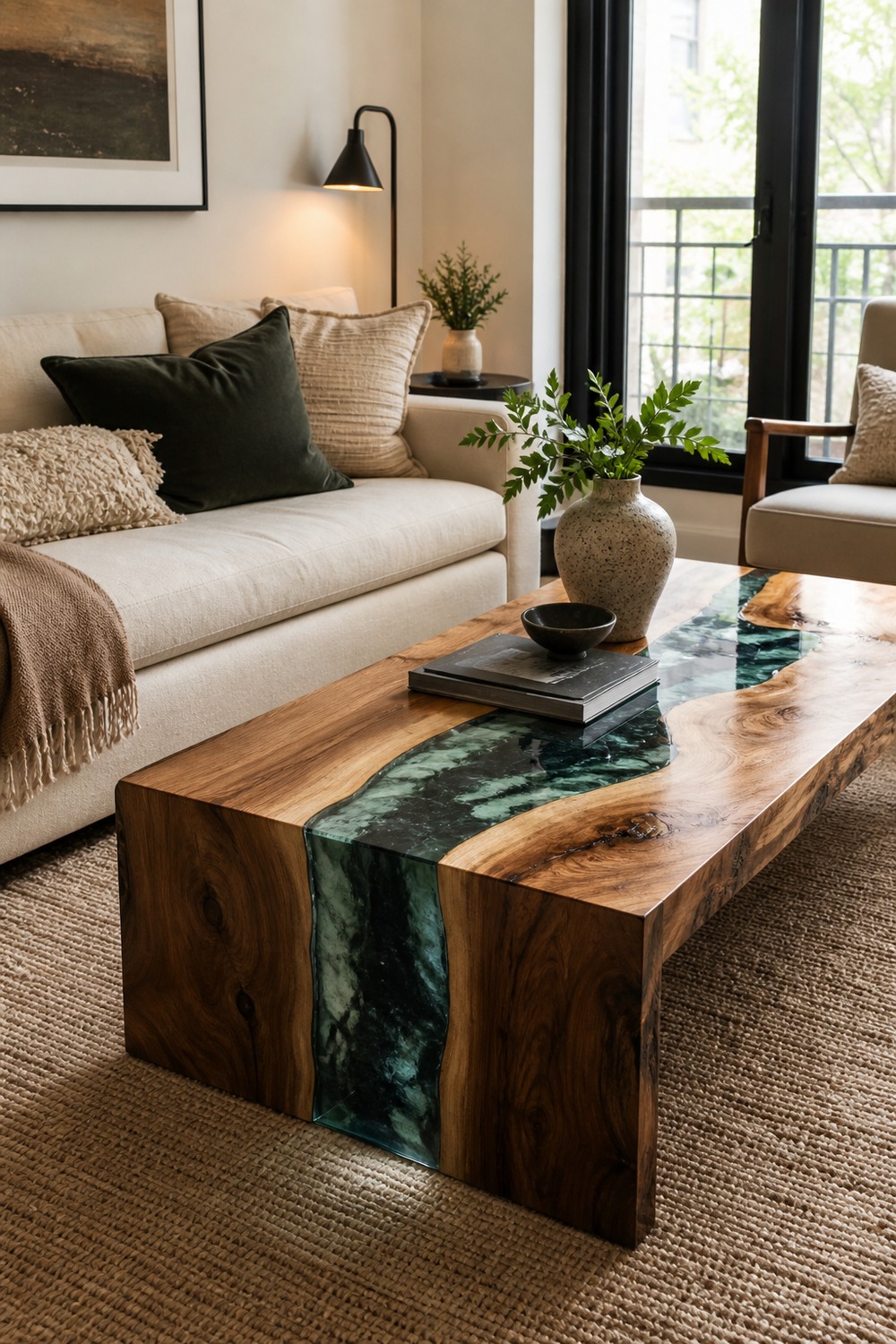
The waterfall-style resin edge makes this one feel more architectural than the usual slab table. I like that the styling stays low and simple, because a table with this much movement does not need a pile of decor fighting for attention.
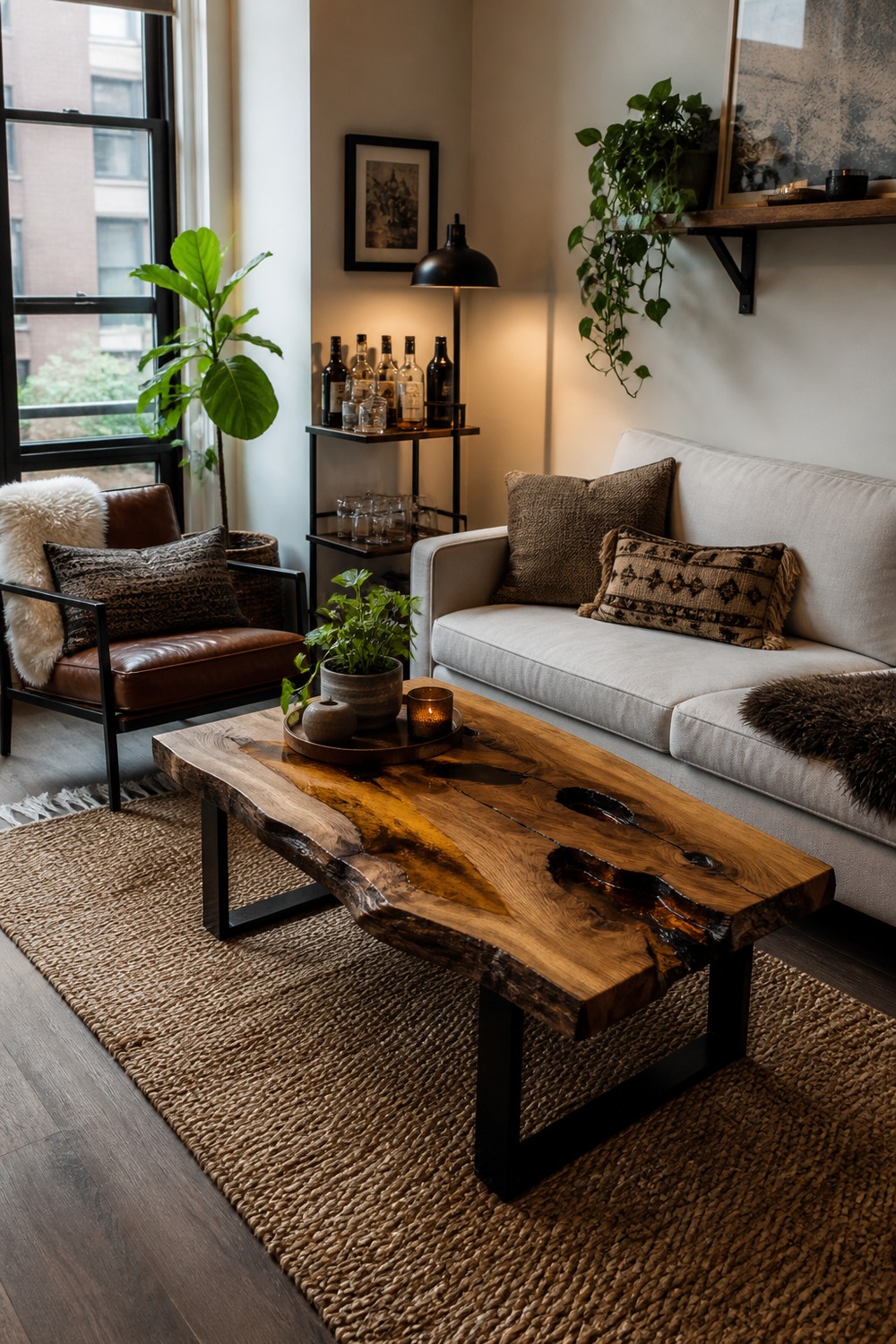
The amber-filled knots make this table feel rustic without turning the room into a cabin theme. It would be good for a living room that needs a sturdy center spot for trays, drinks, books, and all the small things that usually end up on the sofa arm.
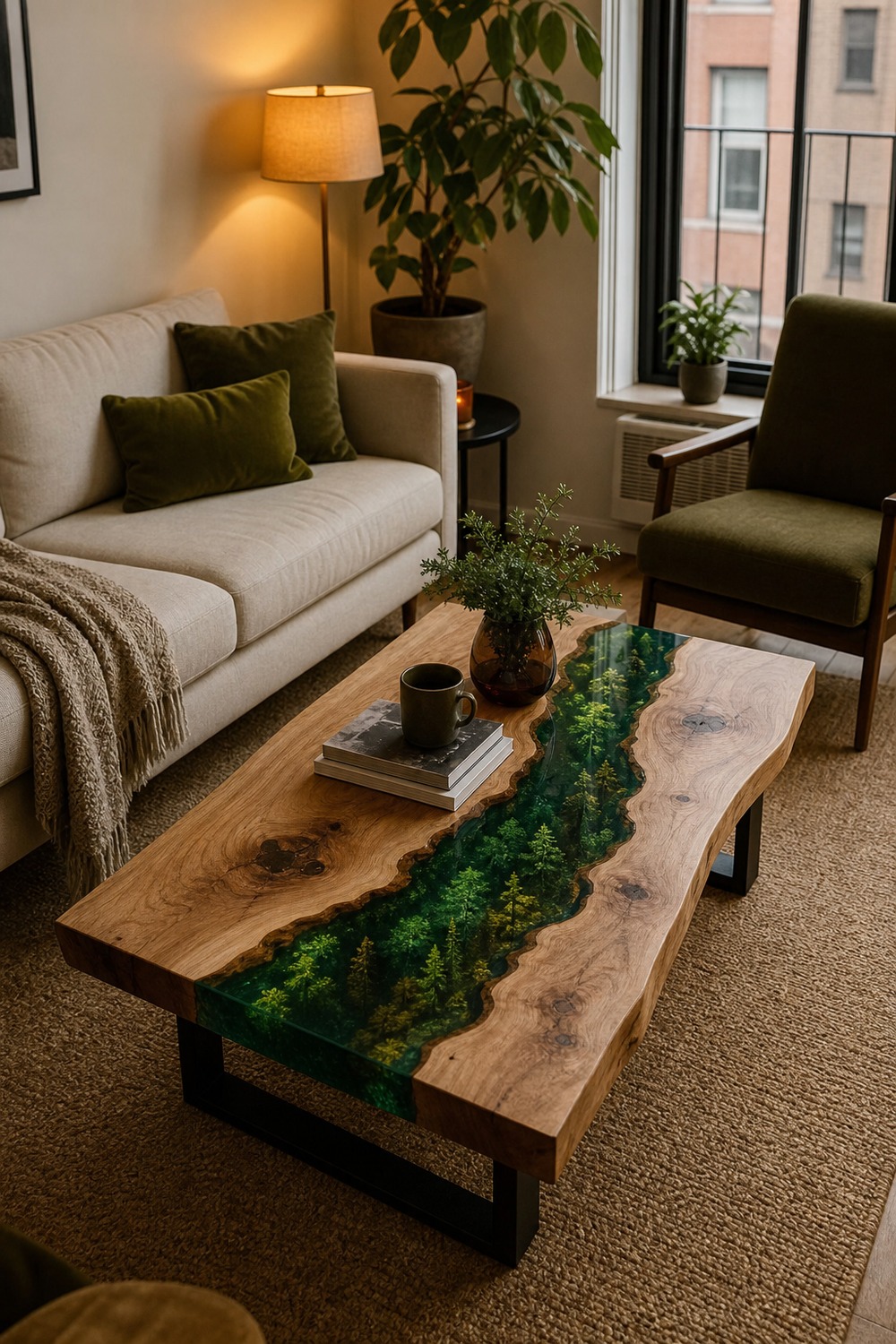
Deep green resin works because it picks up the plant and pillow tones instead of coming out of nowhere. The warm lamp and wood slab make the table feel earthy, almost like a forest color story, but still polished enough for an everyday sitting room.
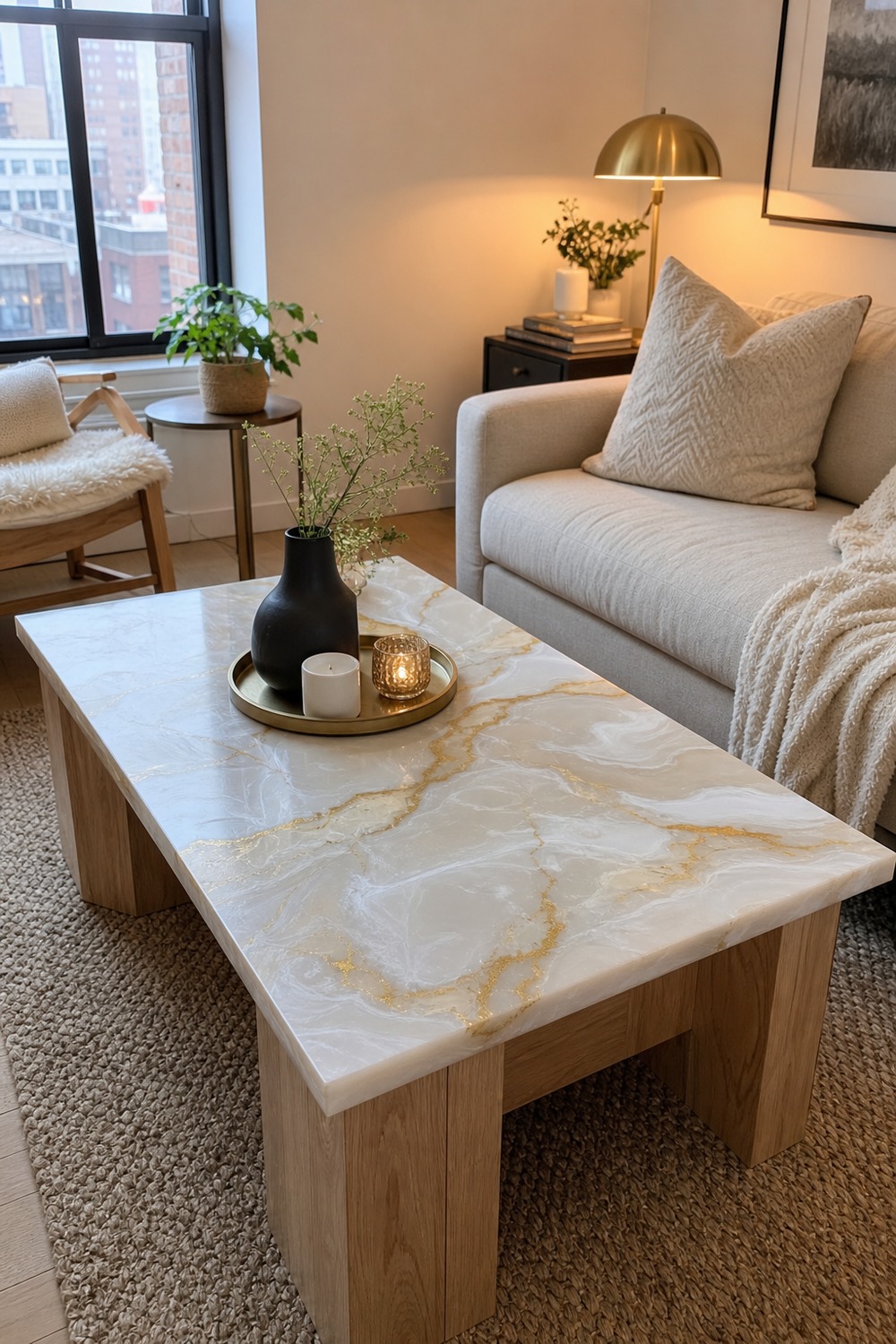
The pearly white epoxy with gold veining gives this table a softer, brighter look than the darker river styles. Brass lighting and a cream sofa make the finish feel intentional, not random, and the table still has enough wood warmth to avoid looking cold.
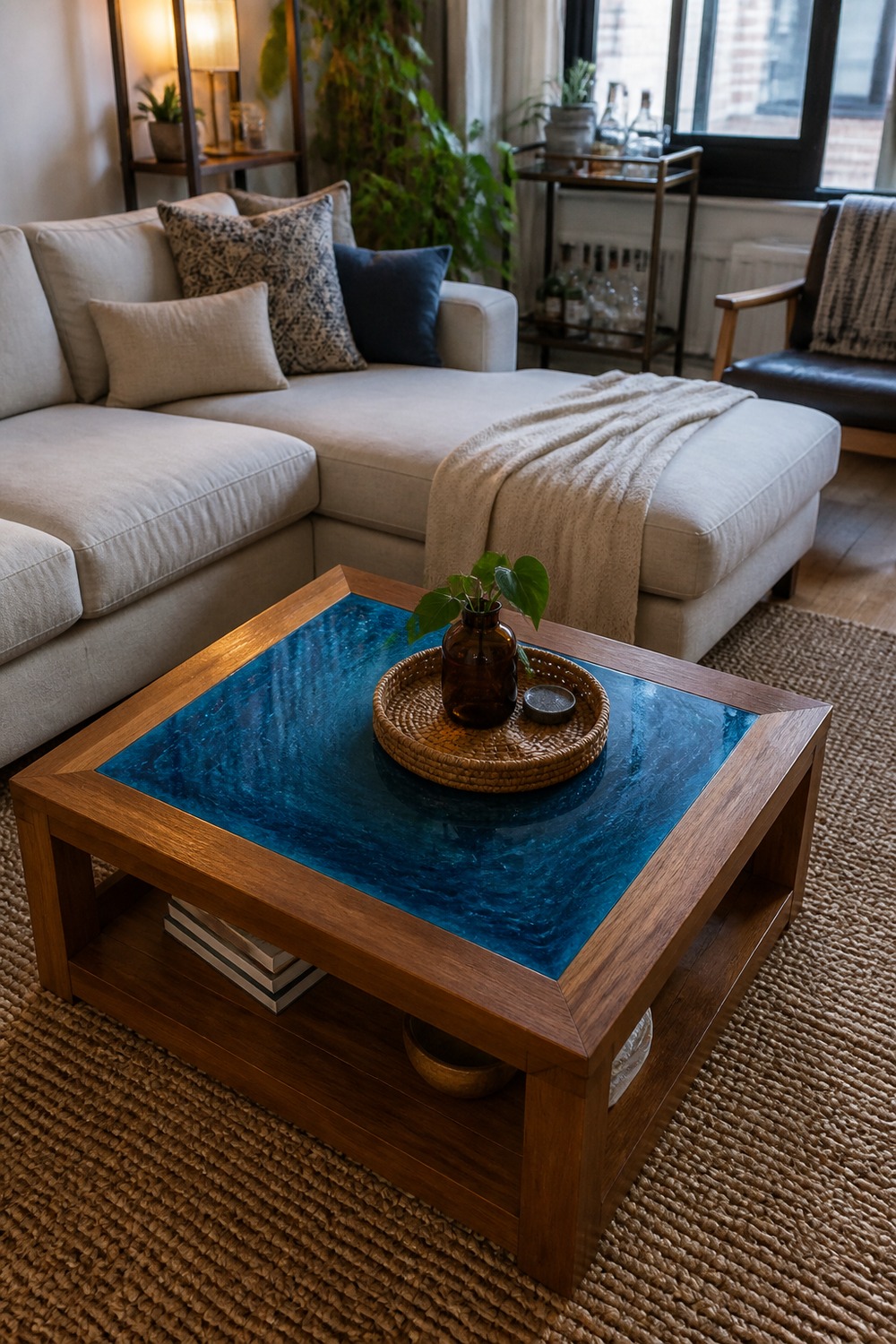
A square table can feel blocky, but the blue resin center breaks up the shape. This one works especially well with the sectional because the table gives the whole seating area a clear middle point without adding another bulky storage piece.
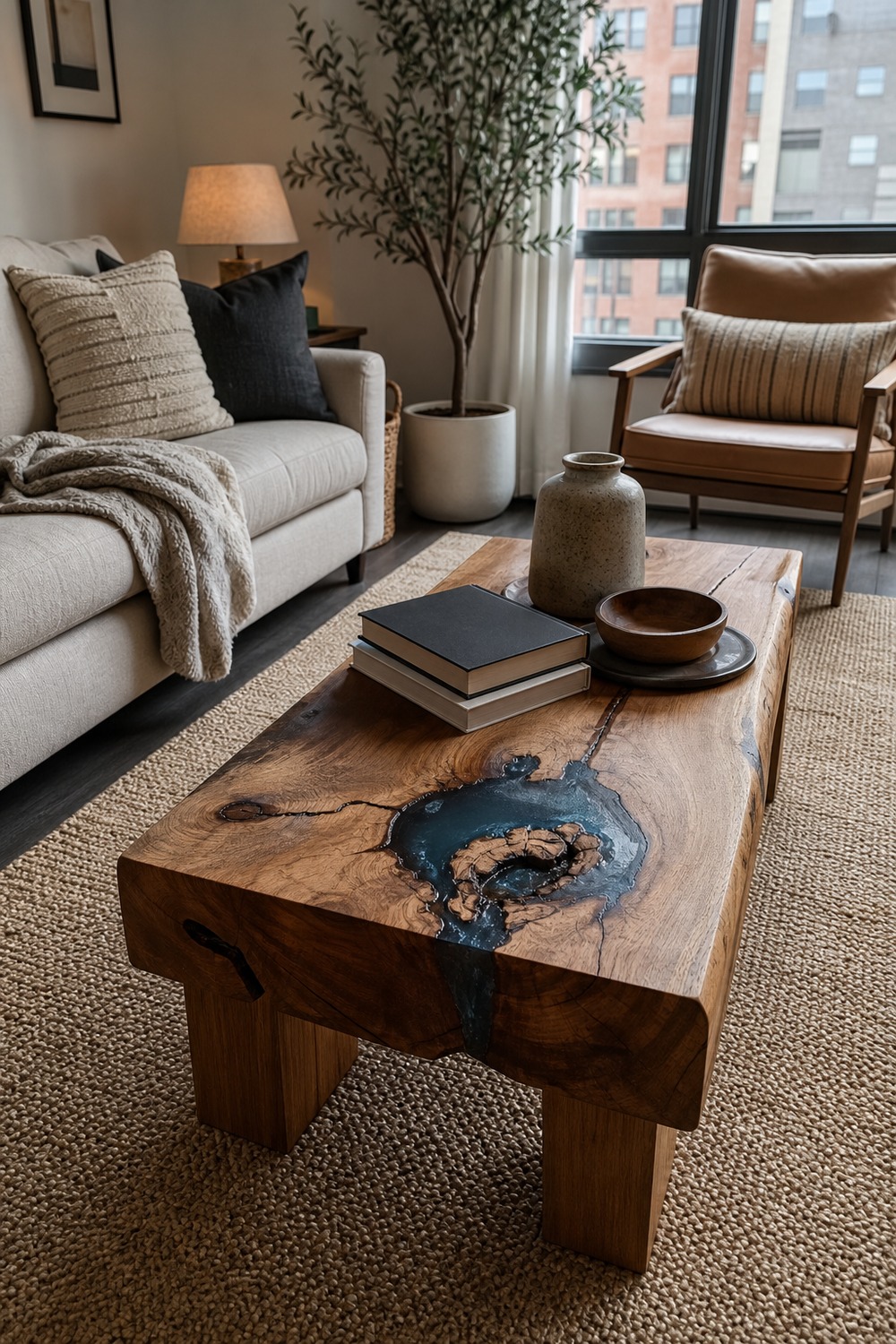
This resin-filled knot table feels more natural than flashy, which is why I like it. The little imperfections in the wood do the decorating, so the books, sofa, and rug can stay relaxed instead of competing with the tabletop.
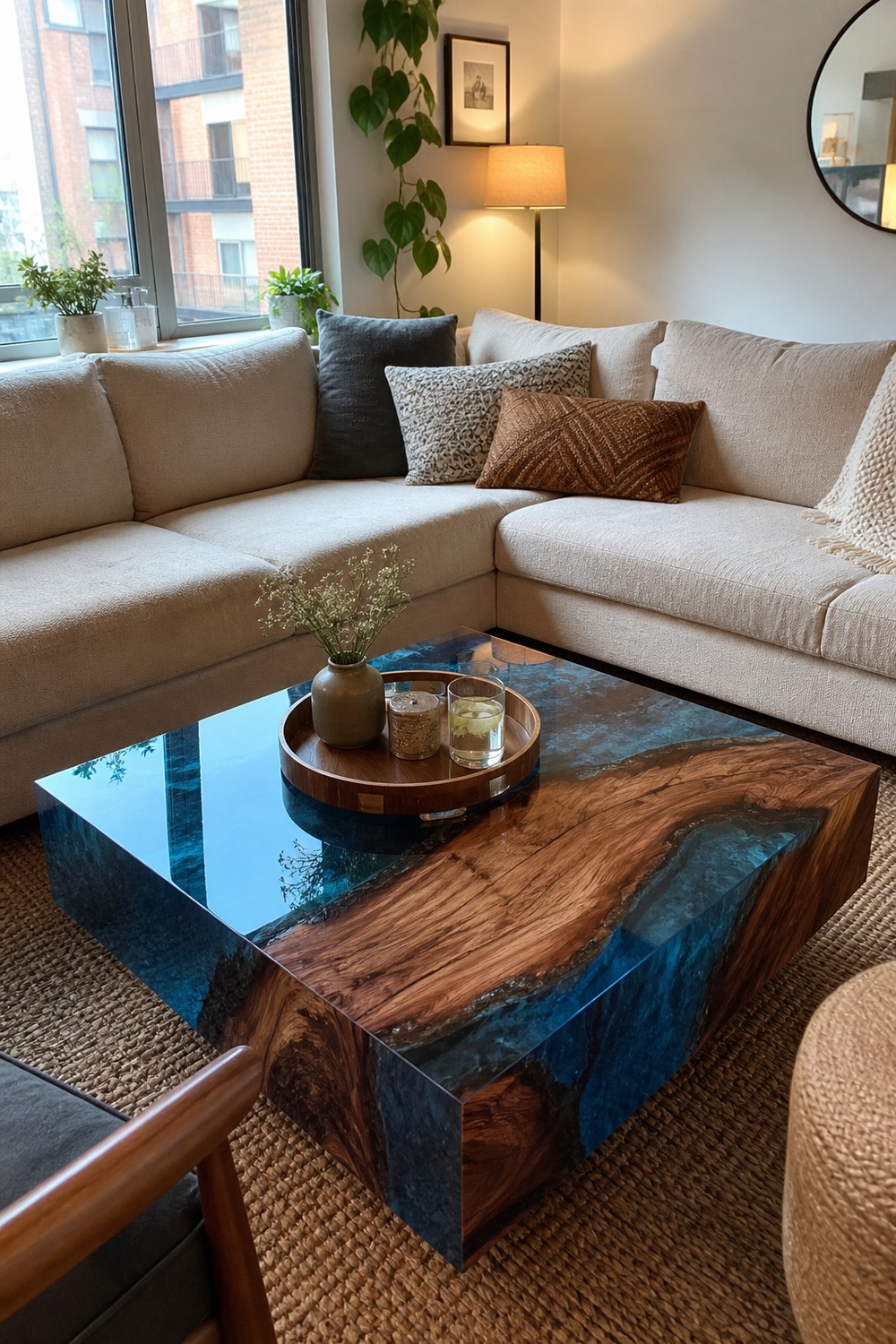
Transparent blue resin can look too artificial if the room is also busy, but this setup gives it breathing room. Soft neutral seating and daylight help the resin read like depth in the wood rather than a bright plastic stripe.
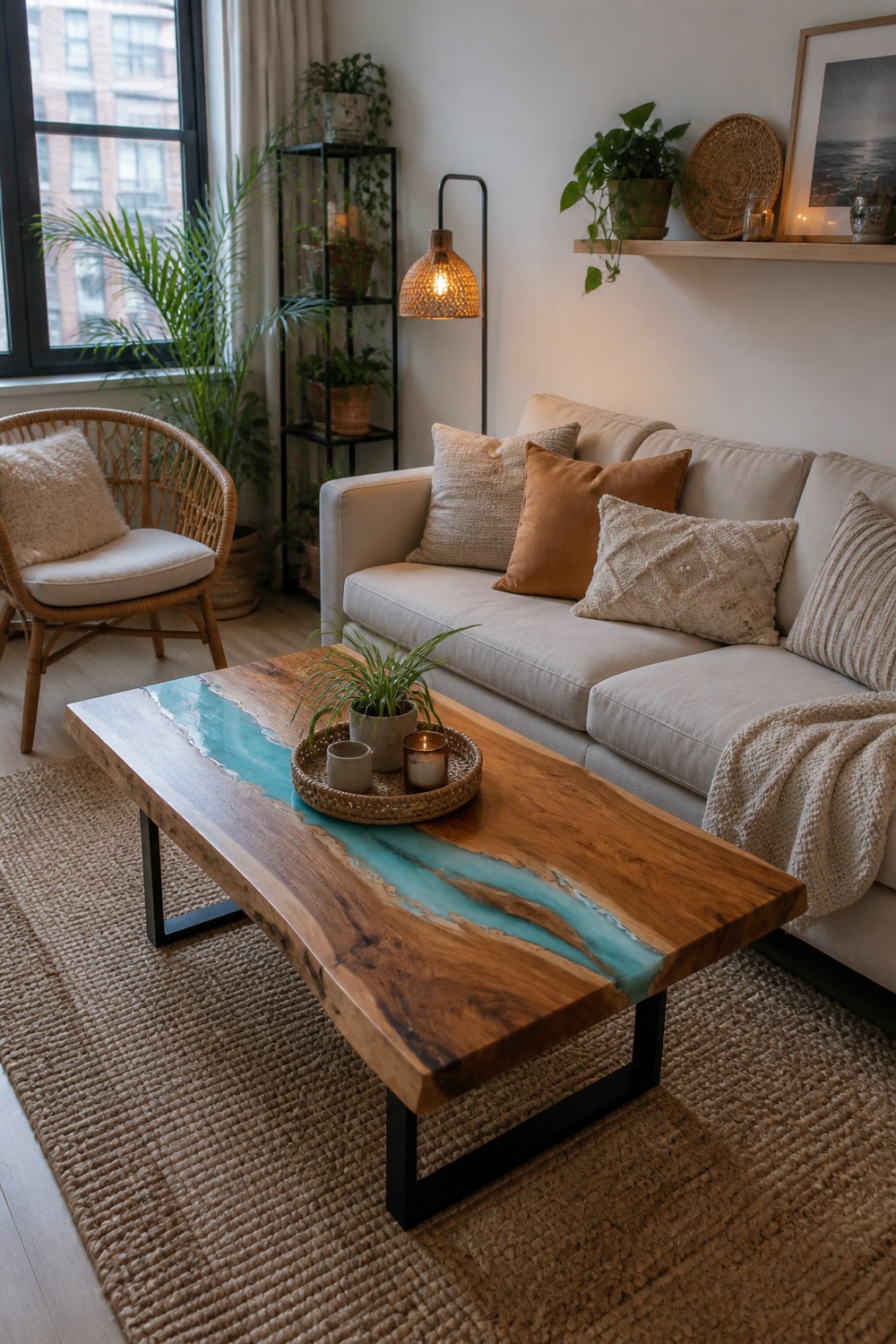
The turquoise streaks make this boho version feel playful, but the rattan chair and warm wood keep it from going beach-theme. It feels like a good table for someone who wants color in the room without painting the walls or changing the sofa.
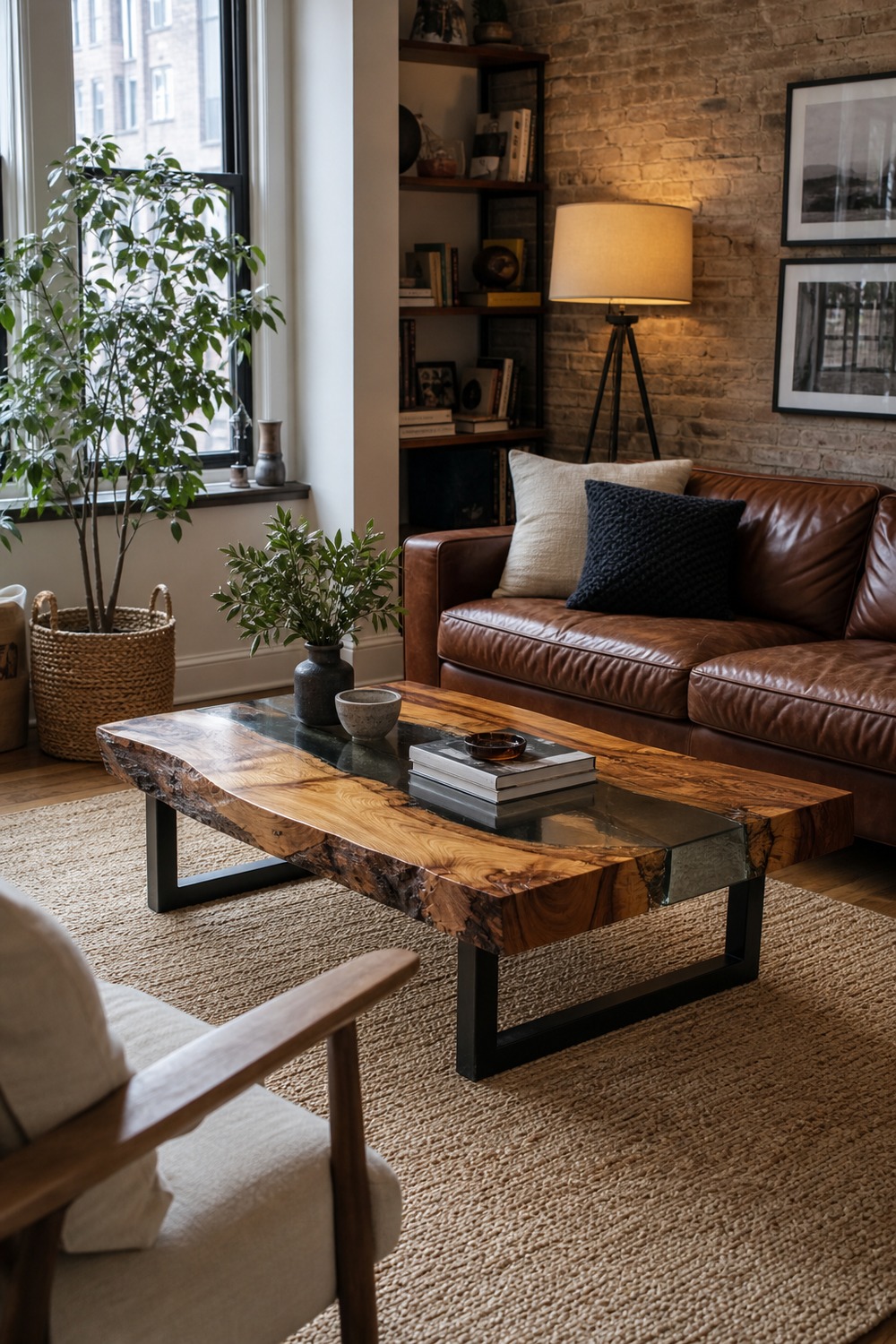
This industrial version has the right kind of weight for a leather sofa or brick wall. The black steel base, thick slab, and resin detail make the table feel durable, which matters if the living room actually gets used every day.
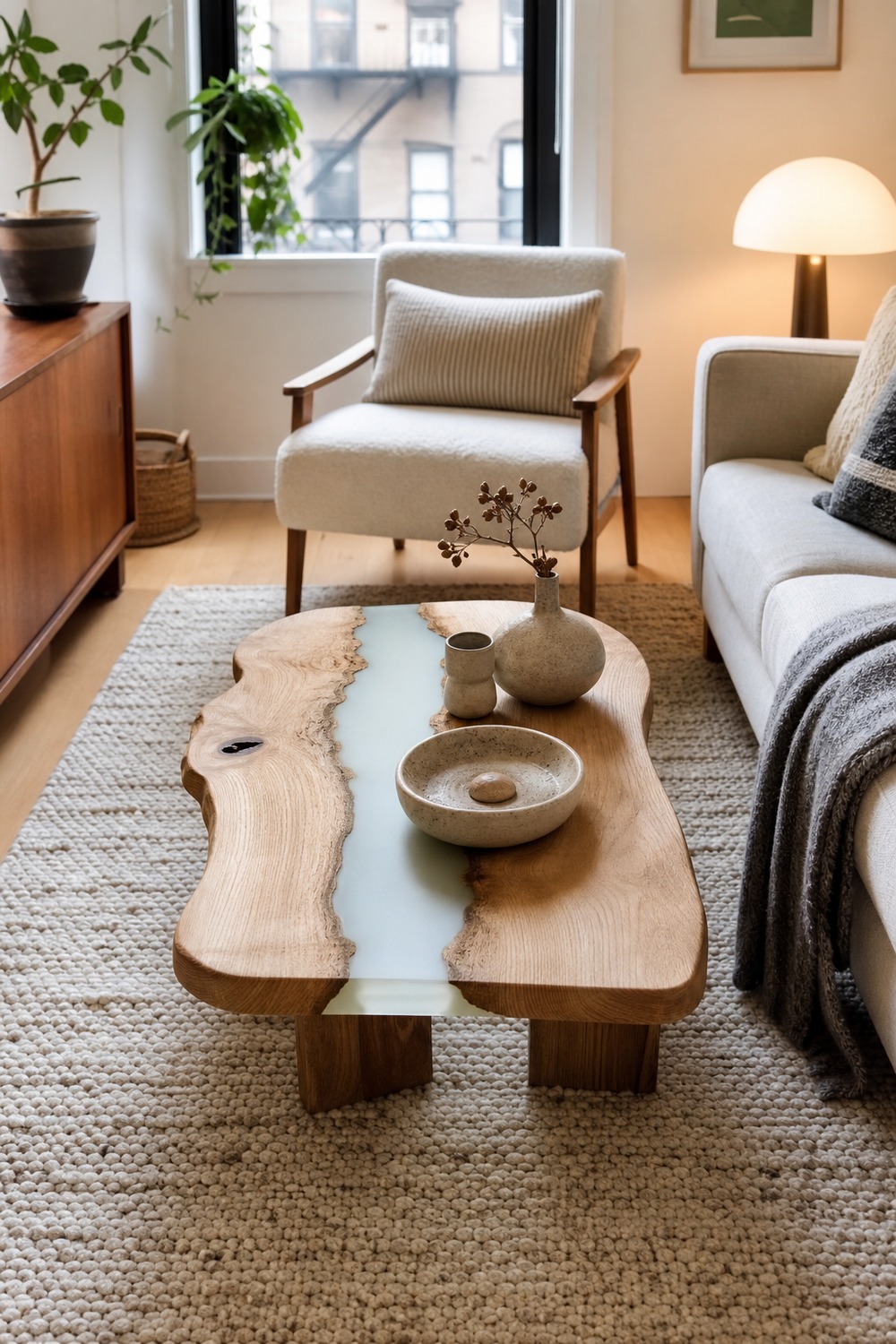
Light oak changes the mood completely. The pale resin fill, wool rug, and Scandinavian-style seating make the epoxy detail feel quiet and bright, which is useful if the room already has a lot of color or pattern elsewhere.
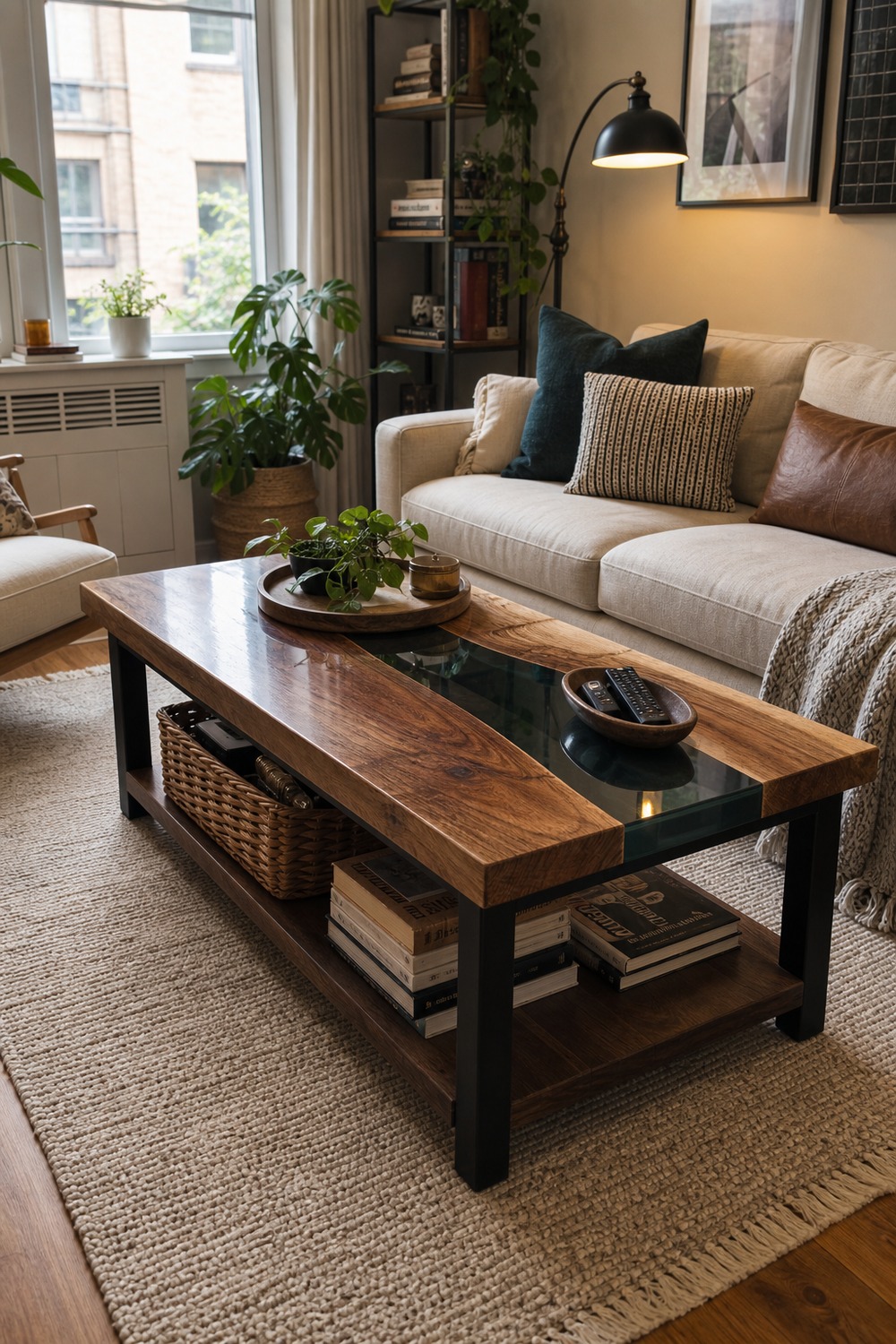
The lower shelf is the practical detail I notice first. A resin-top coffee table can still handle baskets, books, remotes, and the random living-room stuff underneath, which makes the custom look feel a lot easier to maintain.
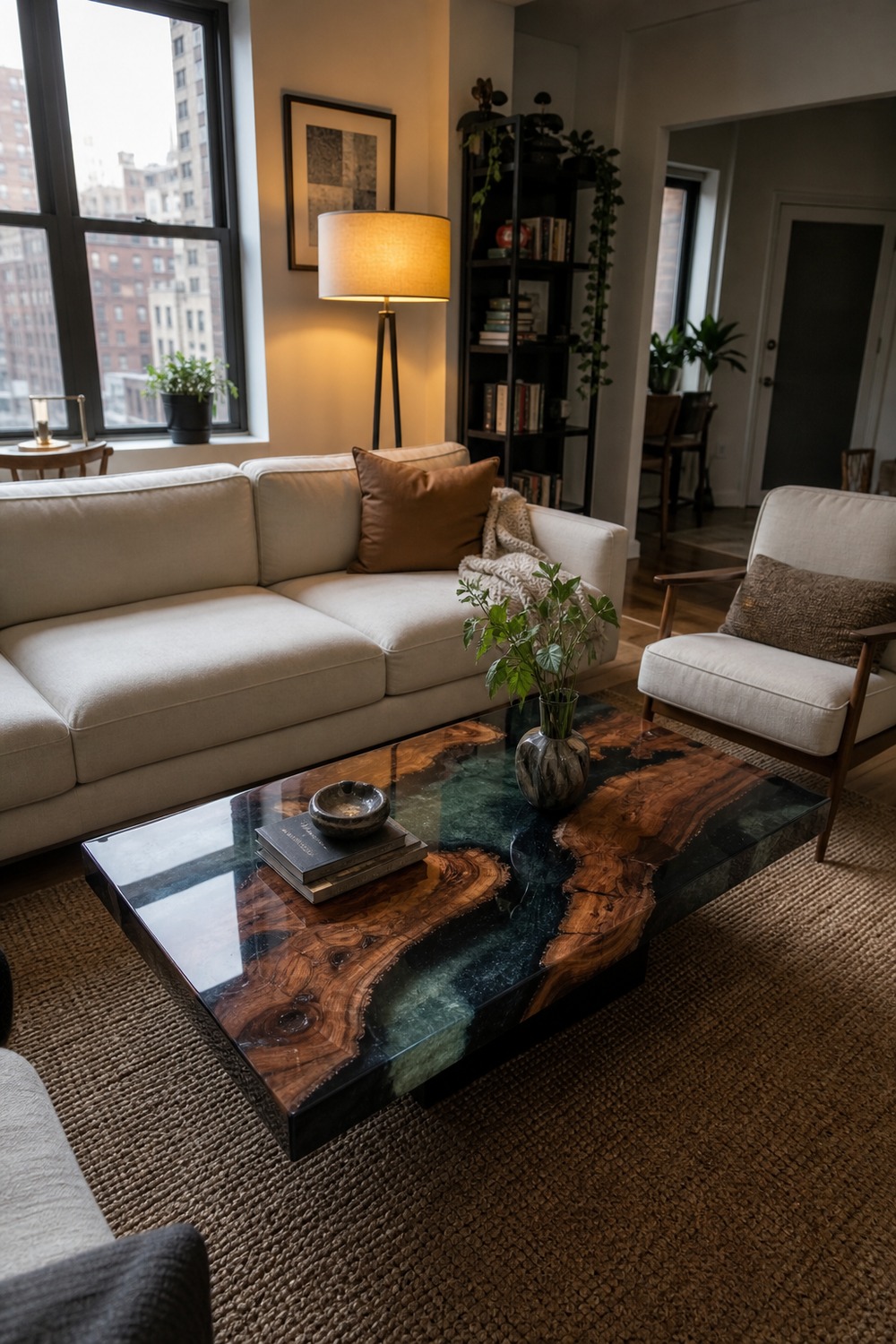
This full-room view shows why scale matters so much with epoxy coffee tables. The table is glossy and noticeable, but it still sits comfortably between the sofa, chairs, and rug instead of overpowering the entire seating plan.
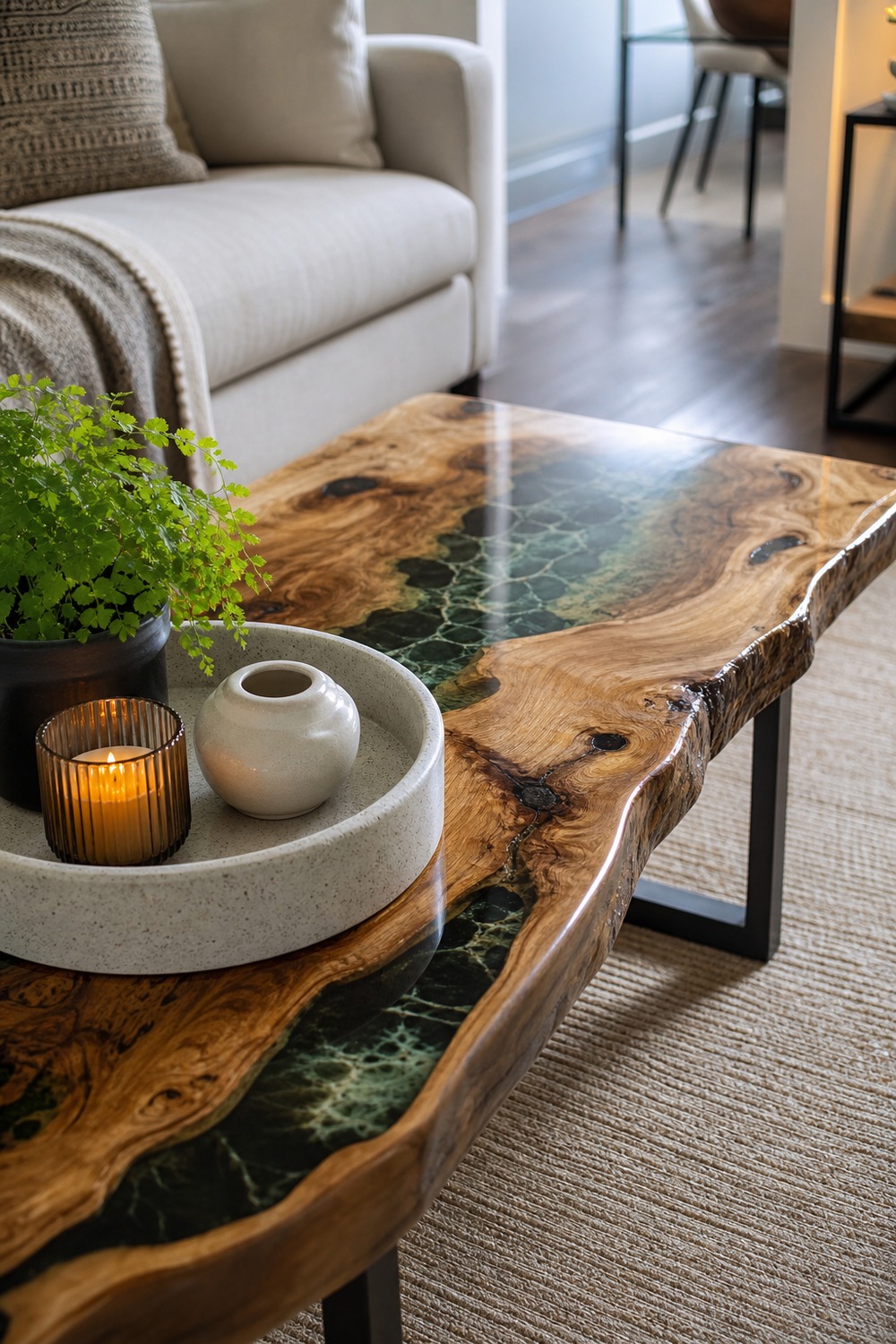
A close-up like this is useful because epoxy tables really depend on the surface detail. The resin depth, wood grain, and simple ceramic tray show how the table could look styled without hiding the part that makes it special.
Epoxy works best when the table still feels like furniture first and a statement piece second. A strong resin color, a good wood slab, and a little breathing room around the sofa can make the whole living room feel more intentional without making it feel untouchable.
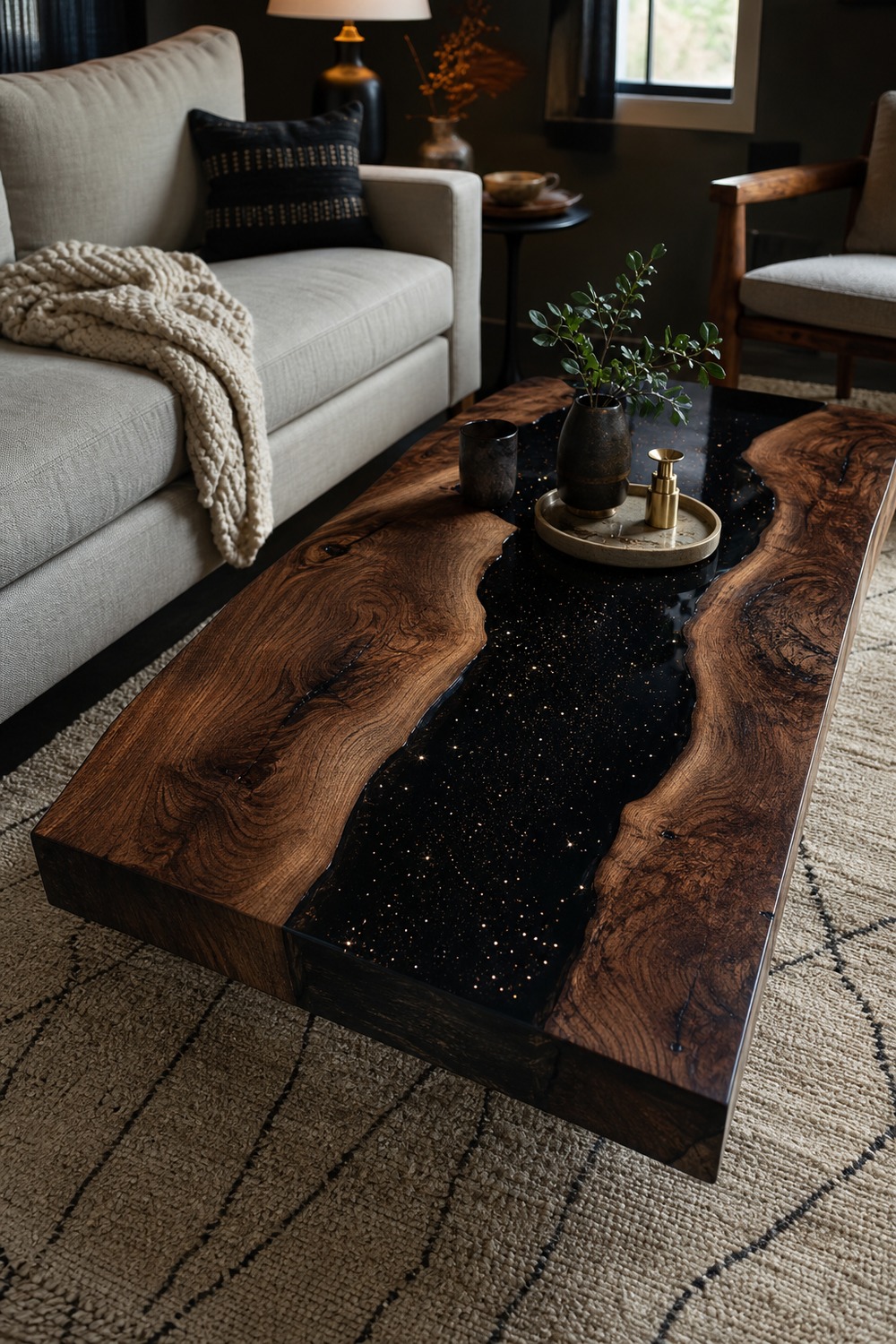
This black galaxy-style epoxy table feels stronger than a basic river pour because the surface has depth without turning into a novelty piece. The tiny mica flecks, dark walnut edges, and low living-room lighting make it feel custom, but the tabletop still leaves room for a tray, books, or drinks.
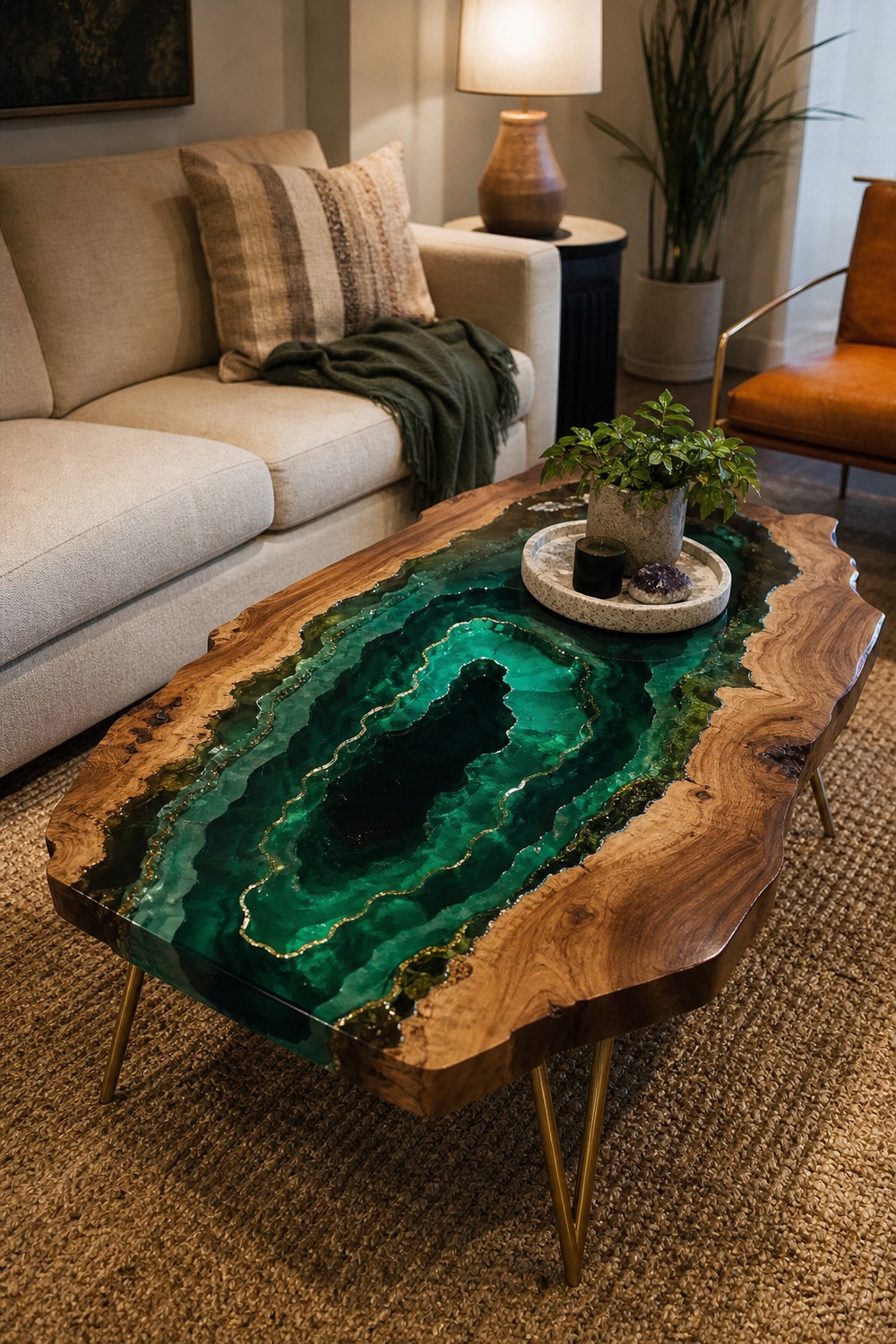
The emerald geode look is bold, but the brass legs and cream sofa keep it from feeling too loud. I like how the resin looks layered and dimensional, almost like a stone slice, while the wood edge keeps the table grounded as actual furniture.
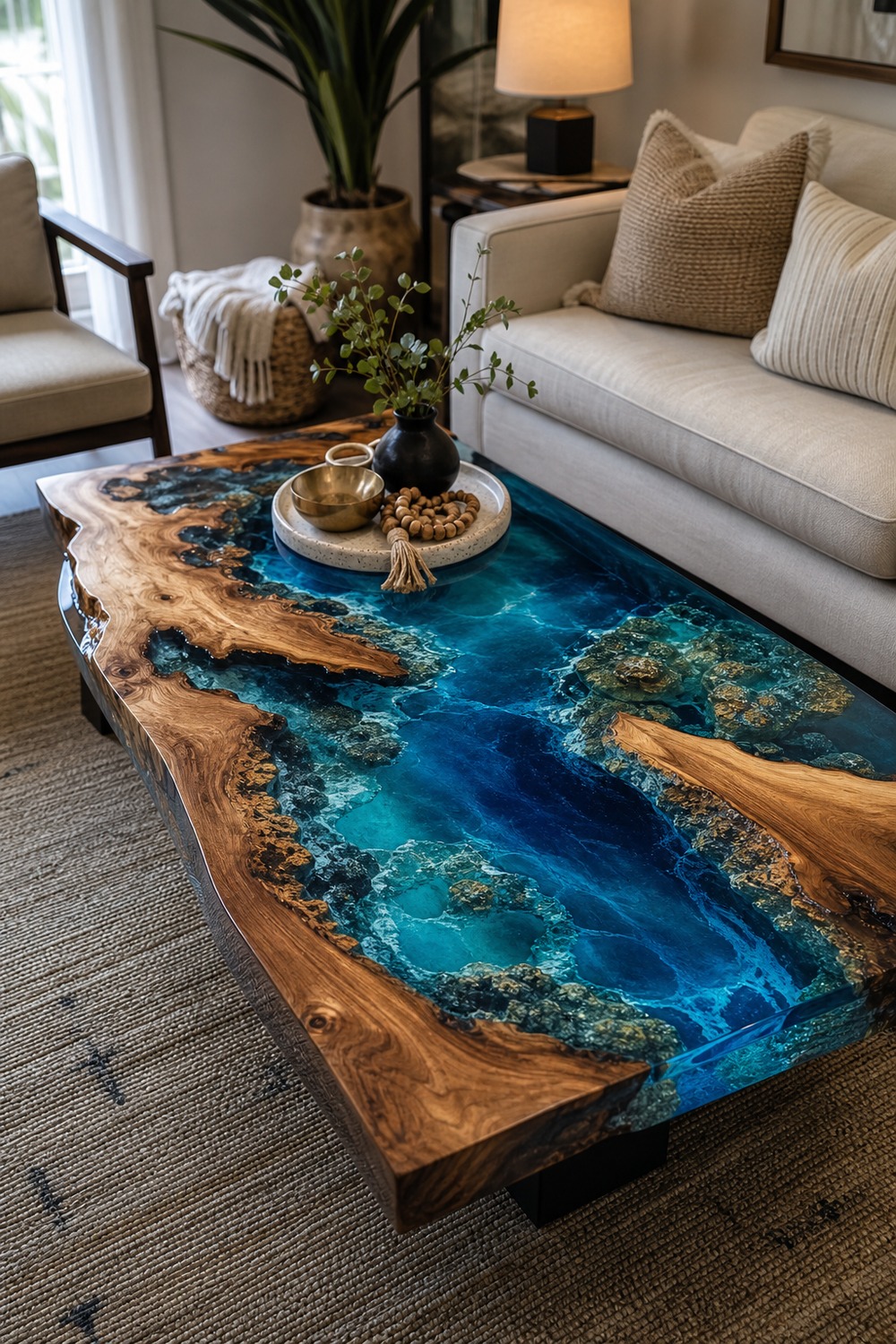
This ocean reef version has that watery resin movement people usually want from epoxy, but it feels more grown-up than a bright blue stripe. The pale wood, low sofa, and woven rug give the table enough breathing room so the color can be the main moment.
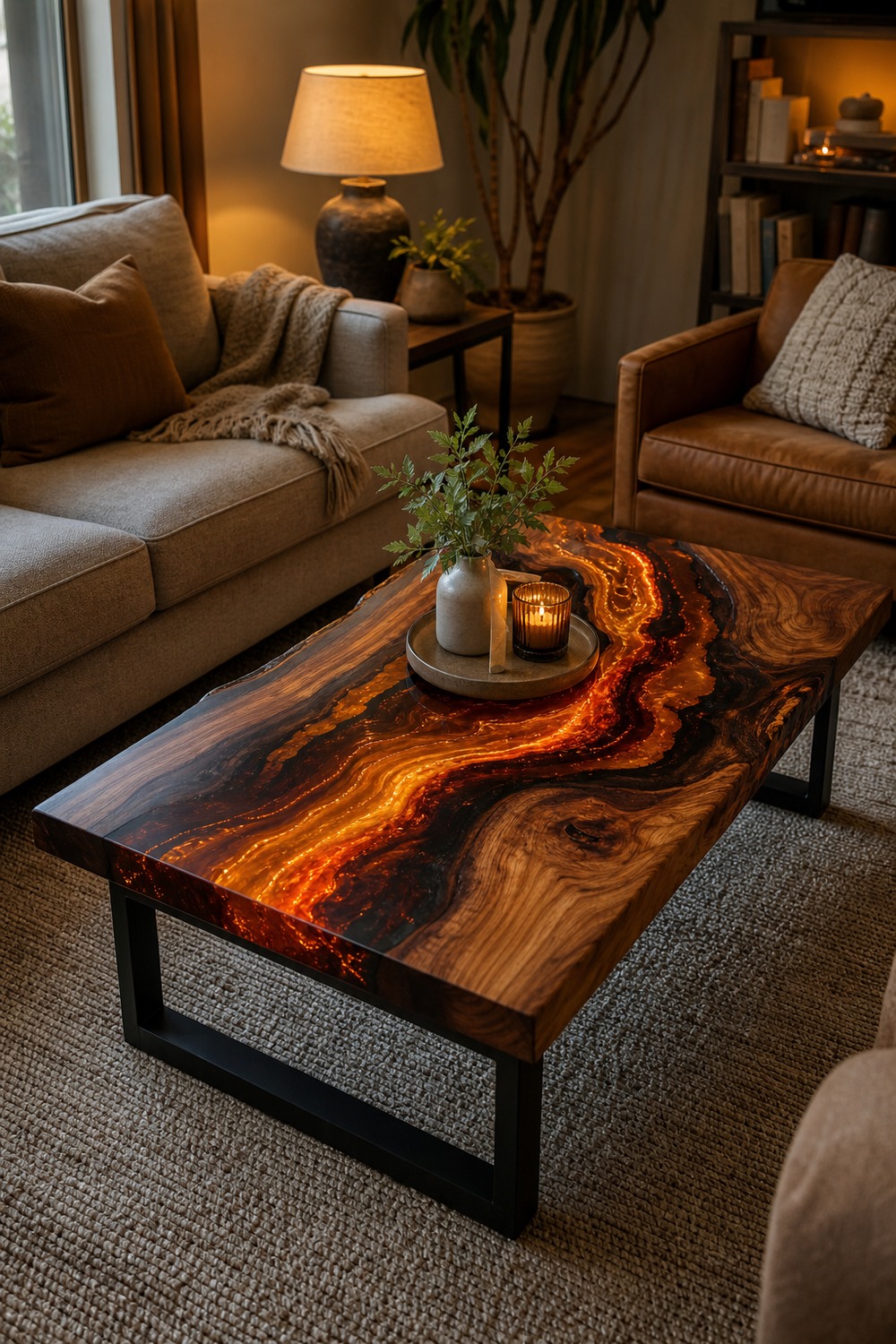
The amber lava resin gives this table a warmer, more dramatic personality. It would work so well in a living room with lamps, leather, or dark accents because the epoxy glows a little without needing extra decor on top.
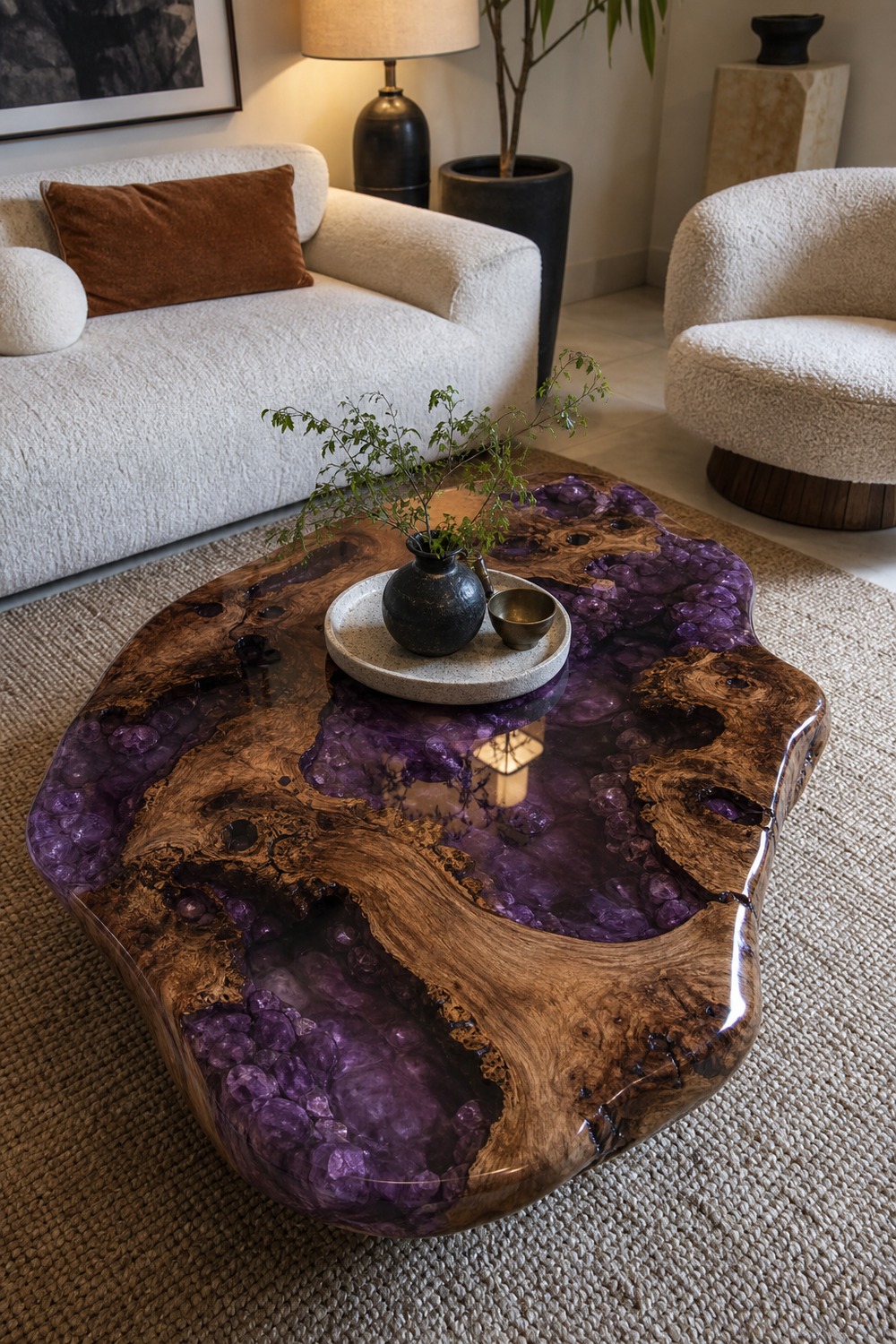
Purple epoxy can go kitschy fast, but this amethyst-burl version feels more collected. The resin pockets look like part of the wood grain, and the neutral seating around it keeps the color from taking over the whole room.
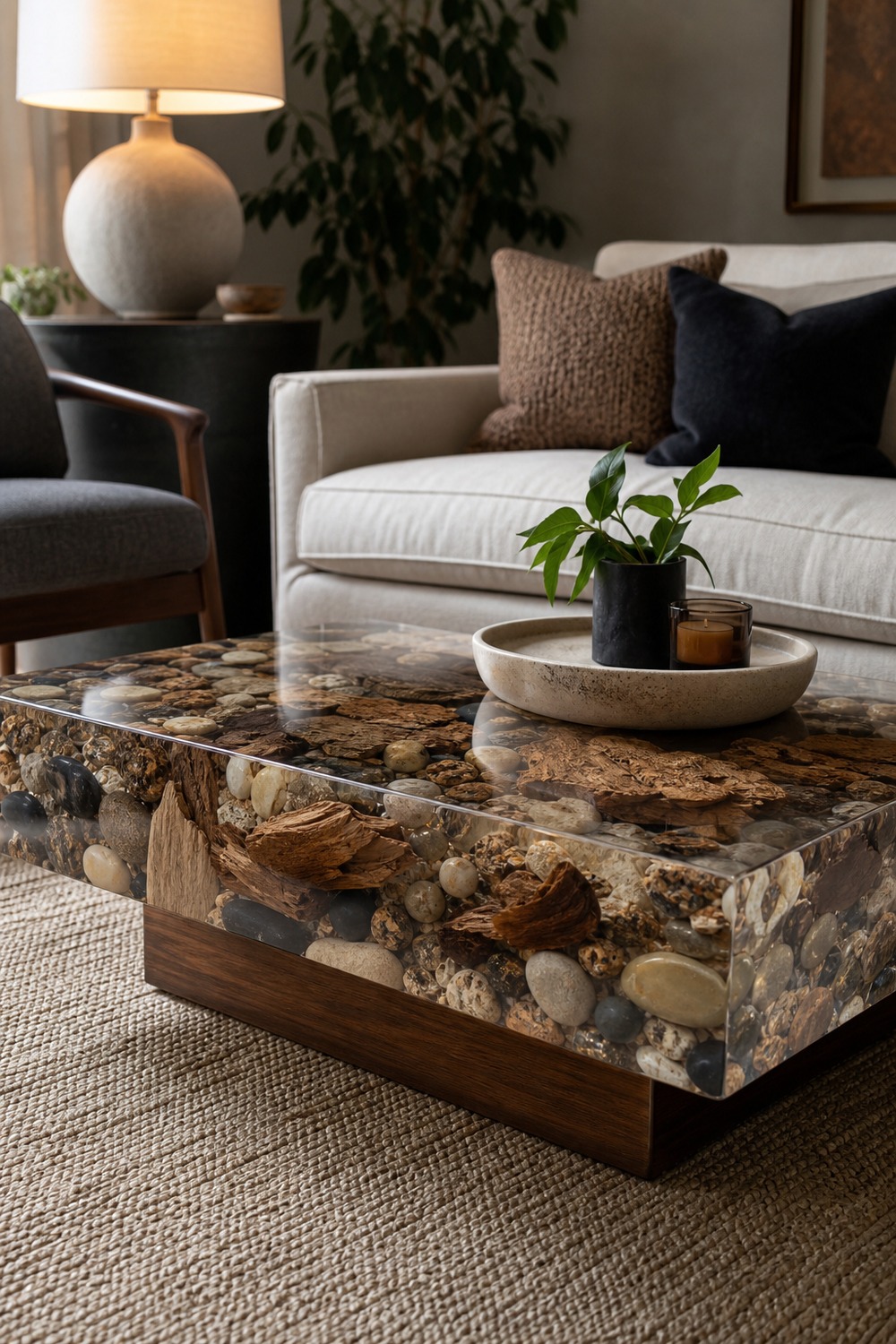
The clear suspended-stone idea is creative in a quieter way. Instead of relying on a bright resin color, the table uses depth, tiny shadows, and natural fragments, which makes the close-up surface feel interesting without making the room look busy.
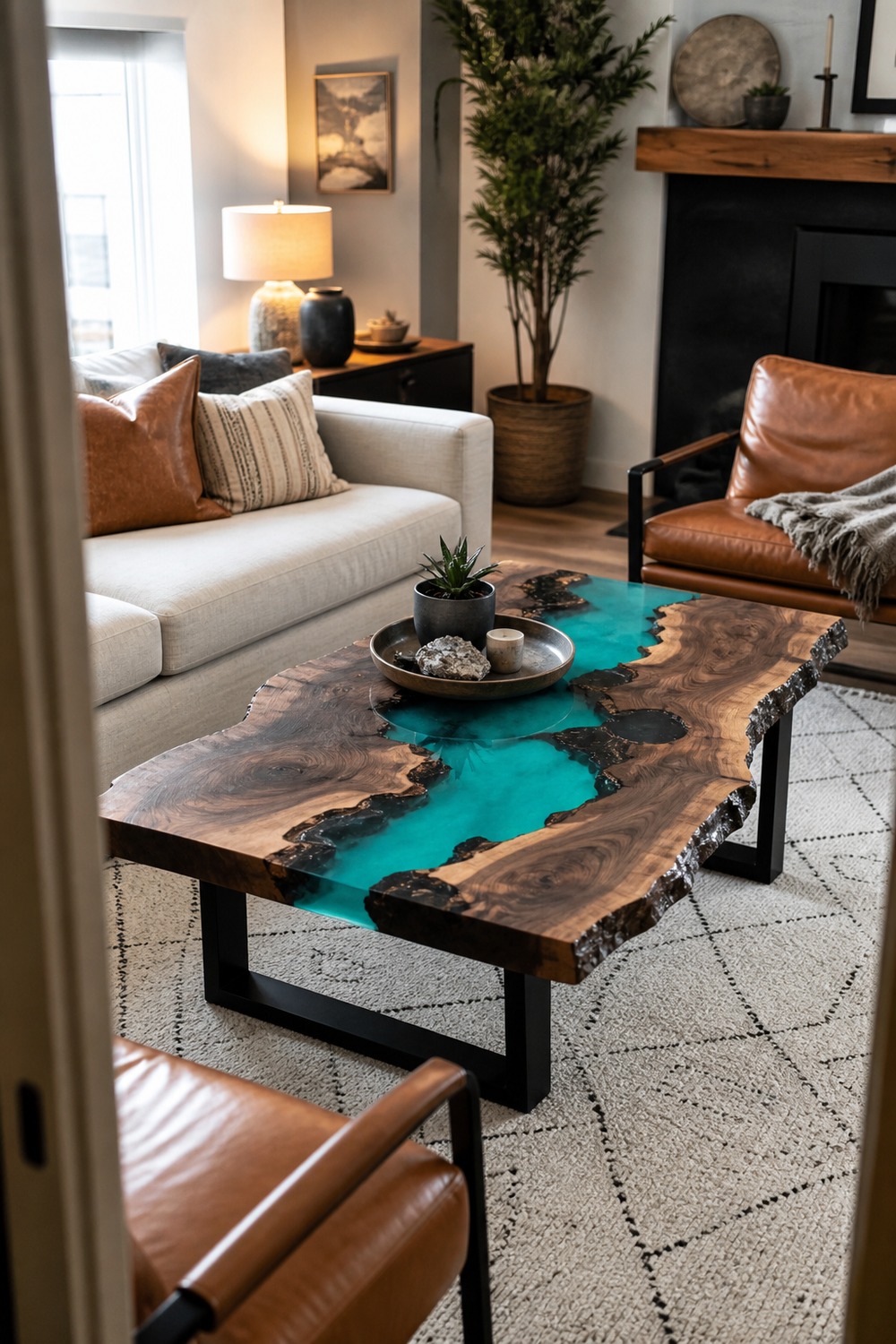
This turquoise canyon table has a lot of energy, especially against the rugged walnut. The desert tones around it help the resin feel intentional, and the black legs make the whole piece read modern instead of crafty.
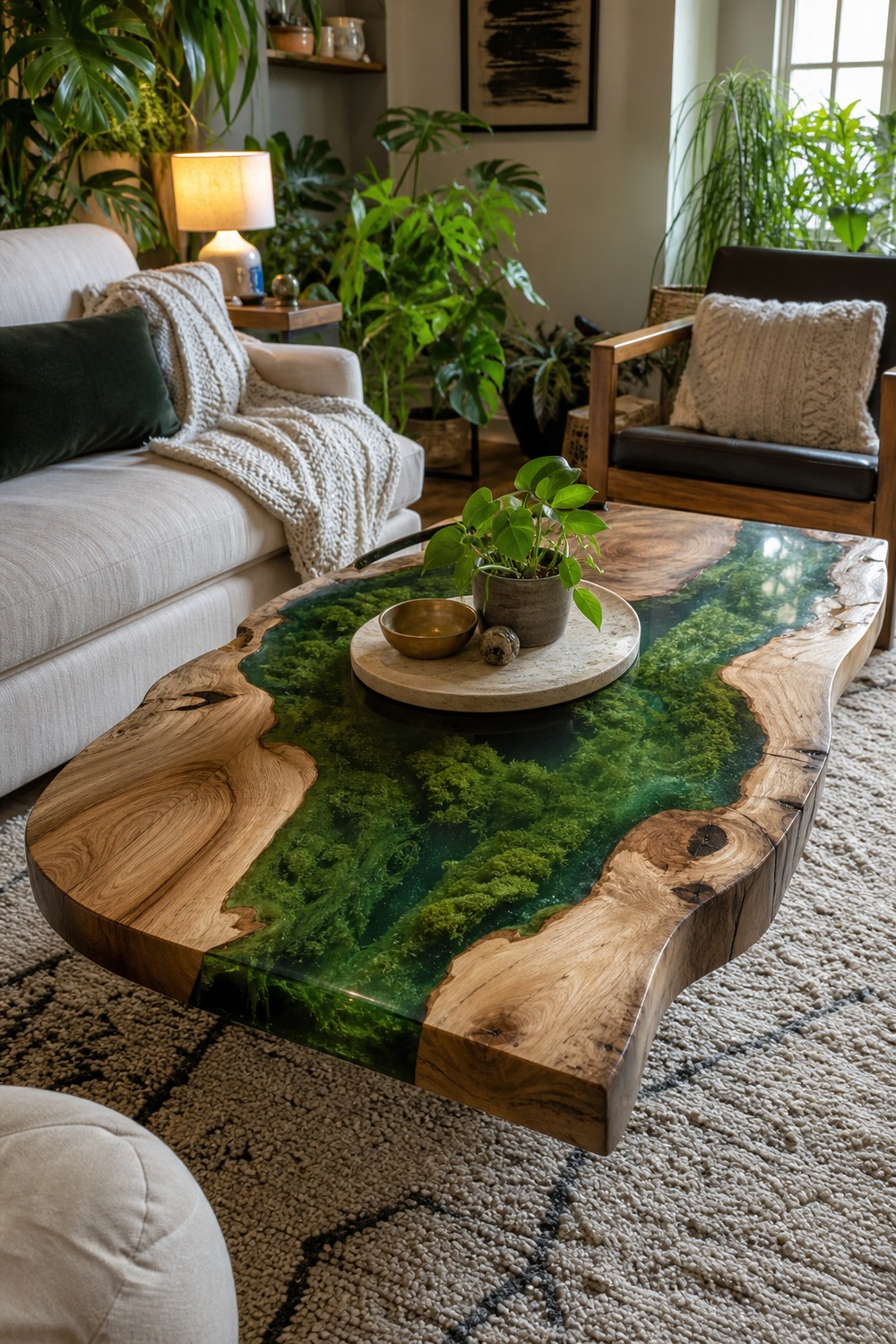
The botanical green inlay feels earthy without becoming a fake terrarium table. Plants around the room pick up the resin color, while the pale wood and daylight keep the whole setup fresh instead of heavy.
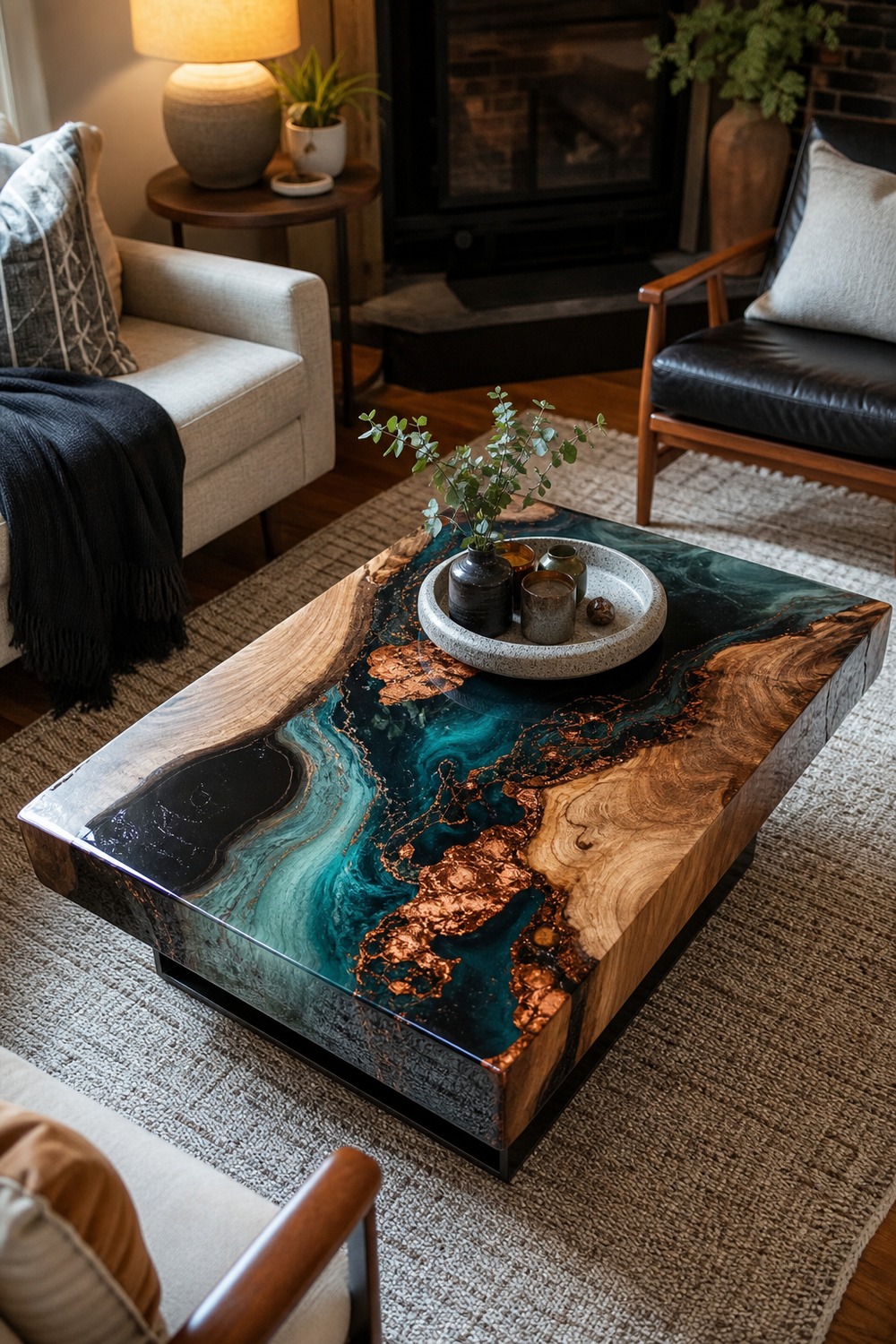
This mixed-color resin art table is the most statement-making one, but the simple furniture around it is what makes it usable. Teal, copper, black, and clear epoxy all show up on the surface, so the rest of the room wisely stays calm.
Leave a comment