
I do not want a DIY coffee table that looks like a random project dropped in the middle of the room. The best vintage versions still feel useful: old trunks, thrift flips, reclaimed boards, drawers, casters, and hardware that make the sofa area look collected instead of cluttered.
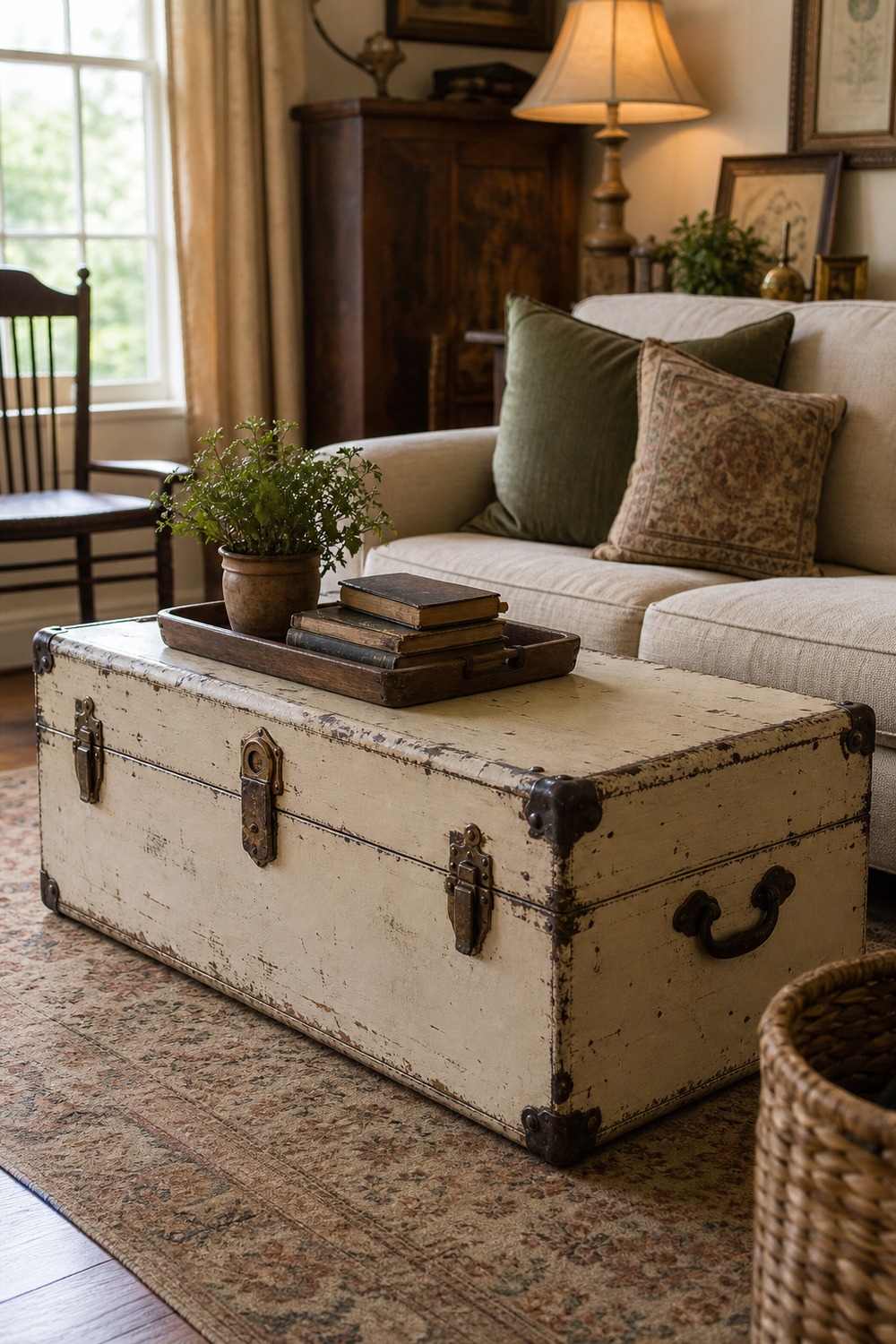
This painted antique trunk is the kind of coffee table that makes the room feel collected right away. The chipped paint, brass corners, and old leather straps give it that rescued-vintage look, while the flat top still works for books, a tray, and everyday drinks.
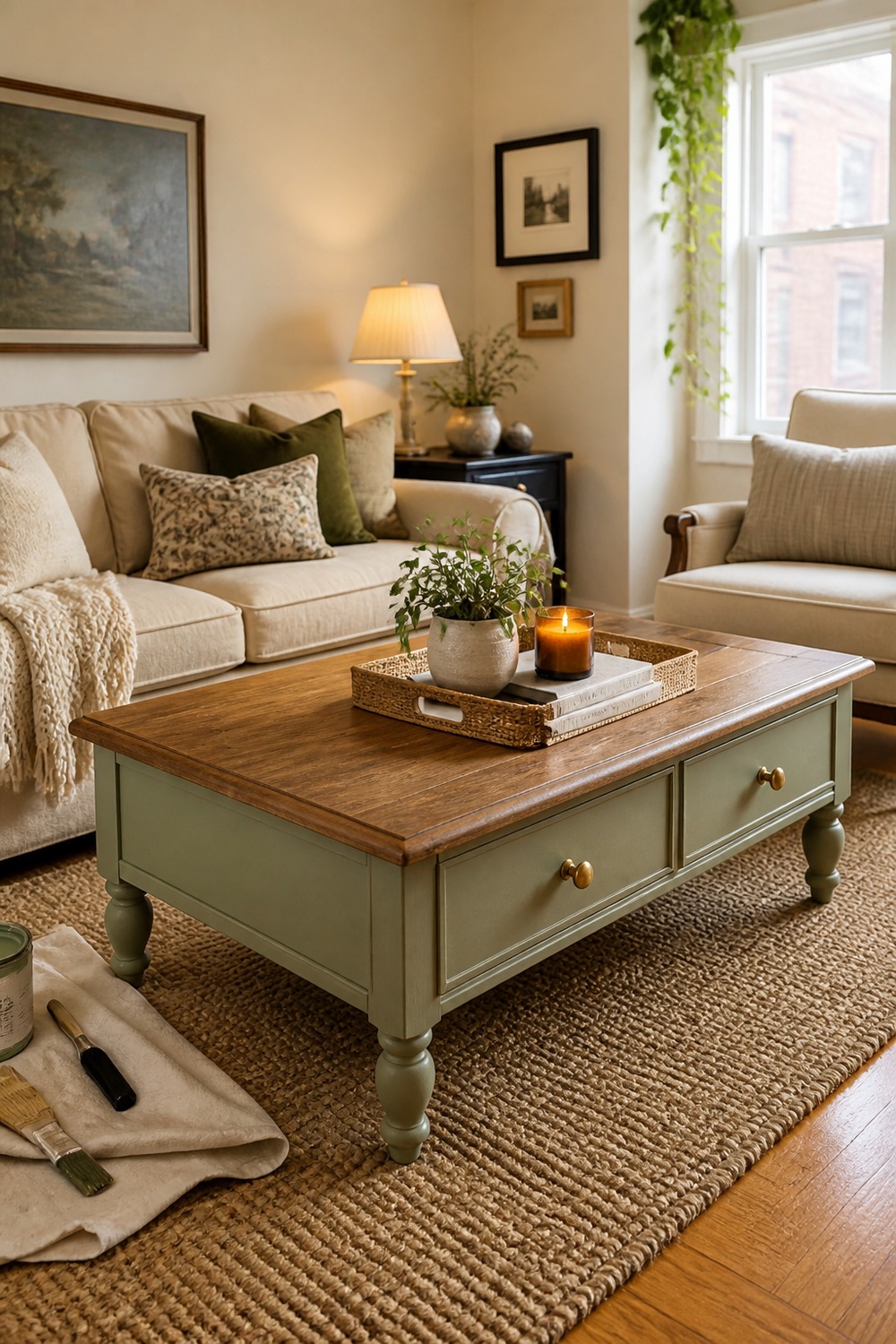
The chalk-painted thrift flip feels softer, but it still has enough worn edges to avoid looking too new. I like the mix of sage paint and stained wood because it shows the makeover without hiding the older table shape underneath.
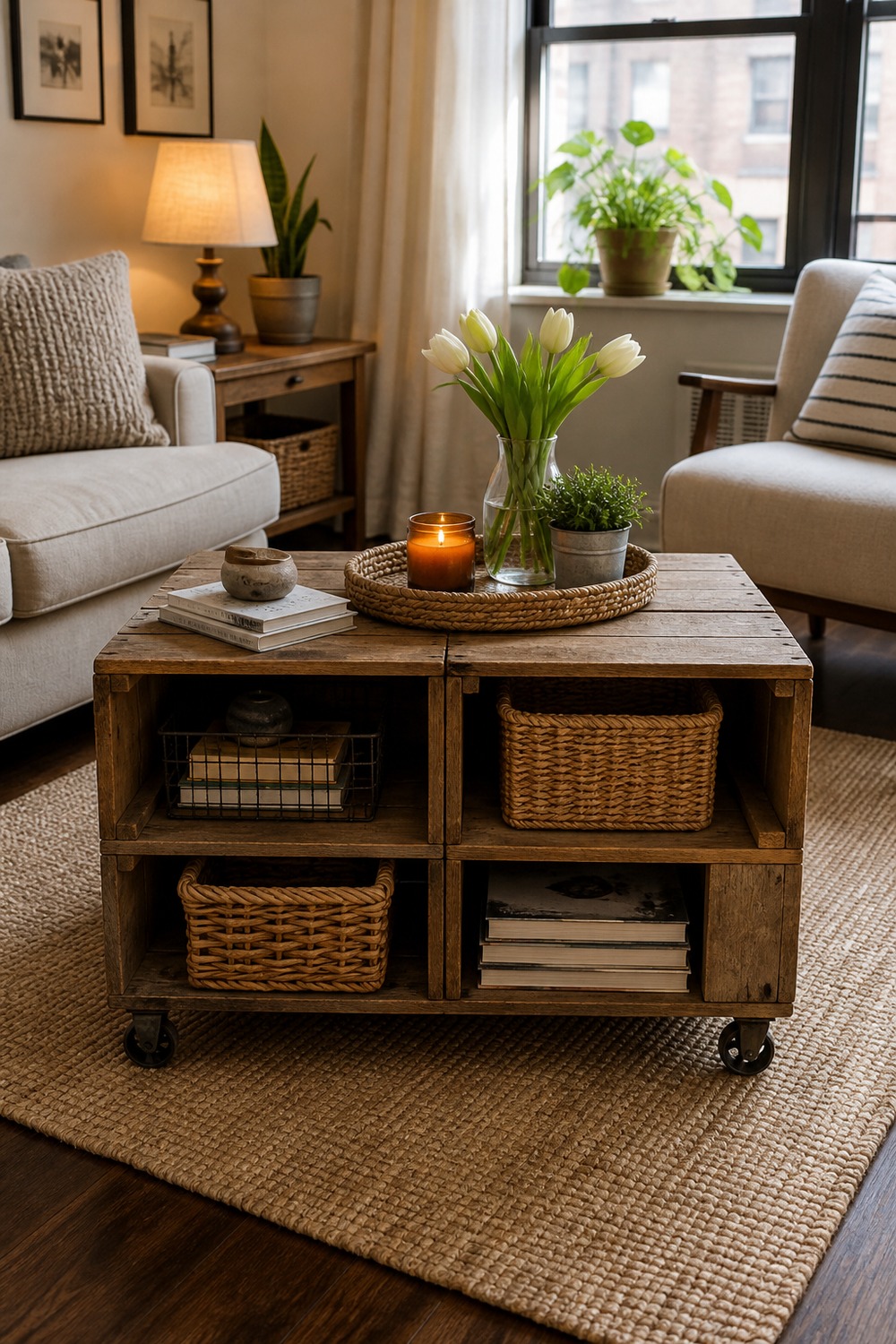
Crate coffee tables are easy to make too messy, but this one keeps the storage idea clean. The open cubbies, caster wheels, and mismatched reclaimed boards make it feel useful without turning the whole living room into a workshop project.
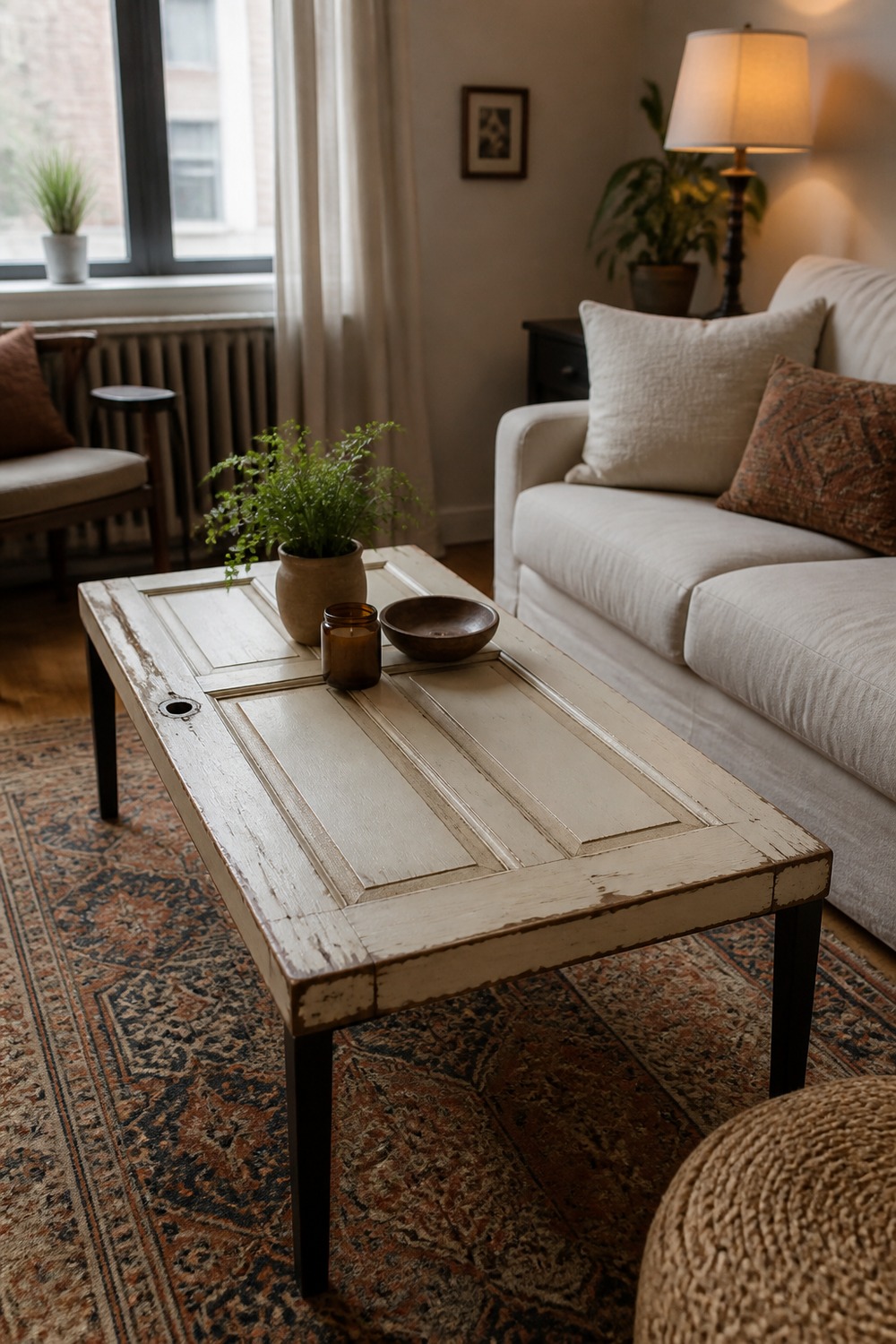
A salvaged paneled door works so well as a tabletop because the insets already bring built-in detail. The old knob hole, creamy worn paint, and simple black legs make the table feel handmade in a way that still looks intentional.
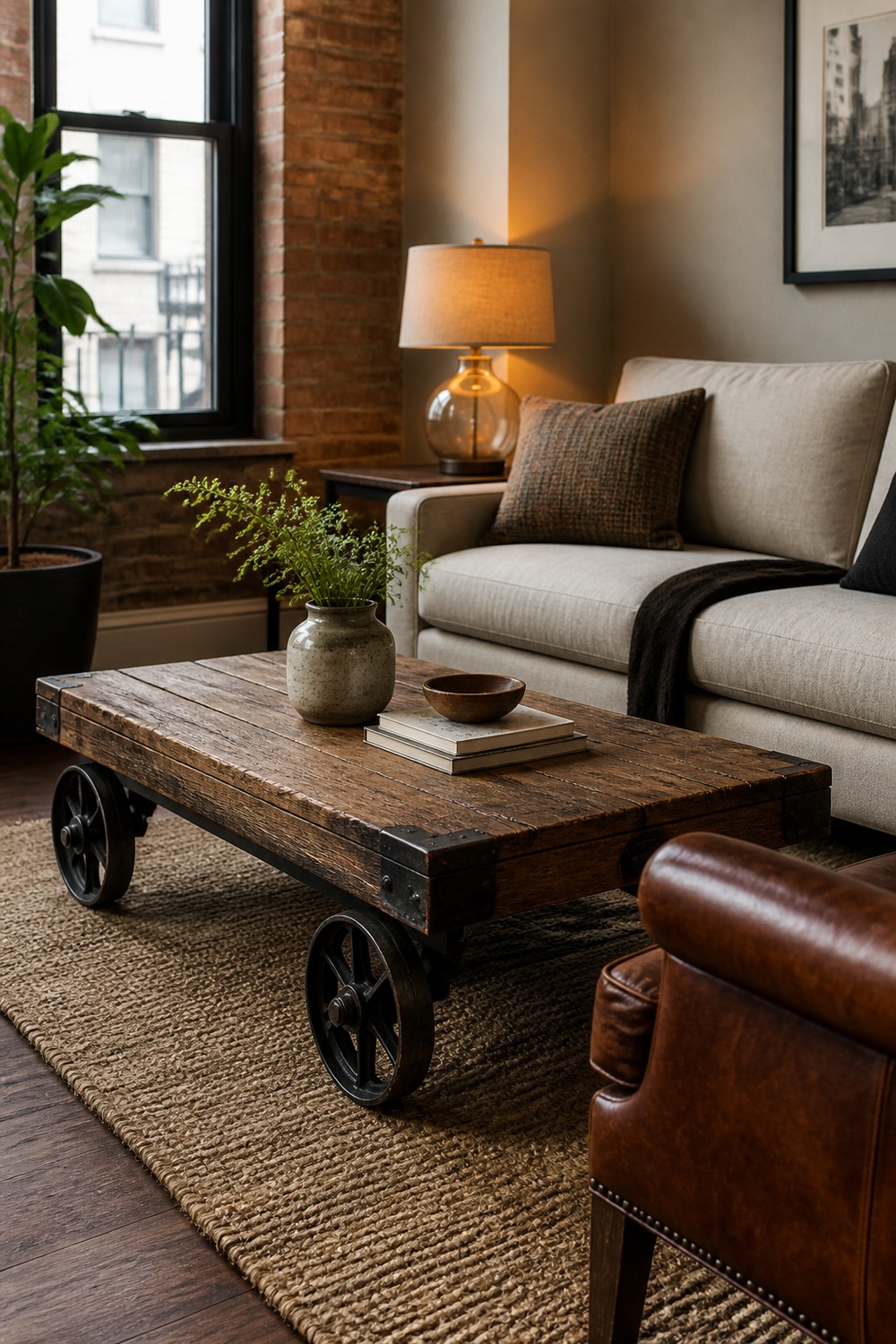
This factory cart version has more weight and grit, which is great if the sofa area needs something sturdier. The chunky wheels and reclaimed plank top make the piece feel like it had another life before it landed in the living room.
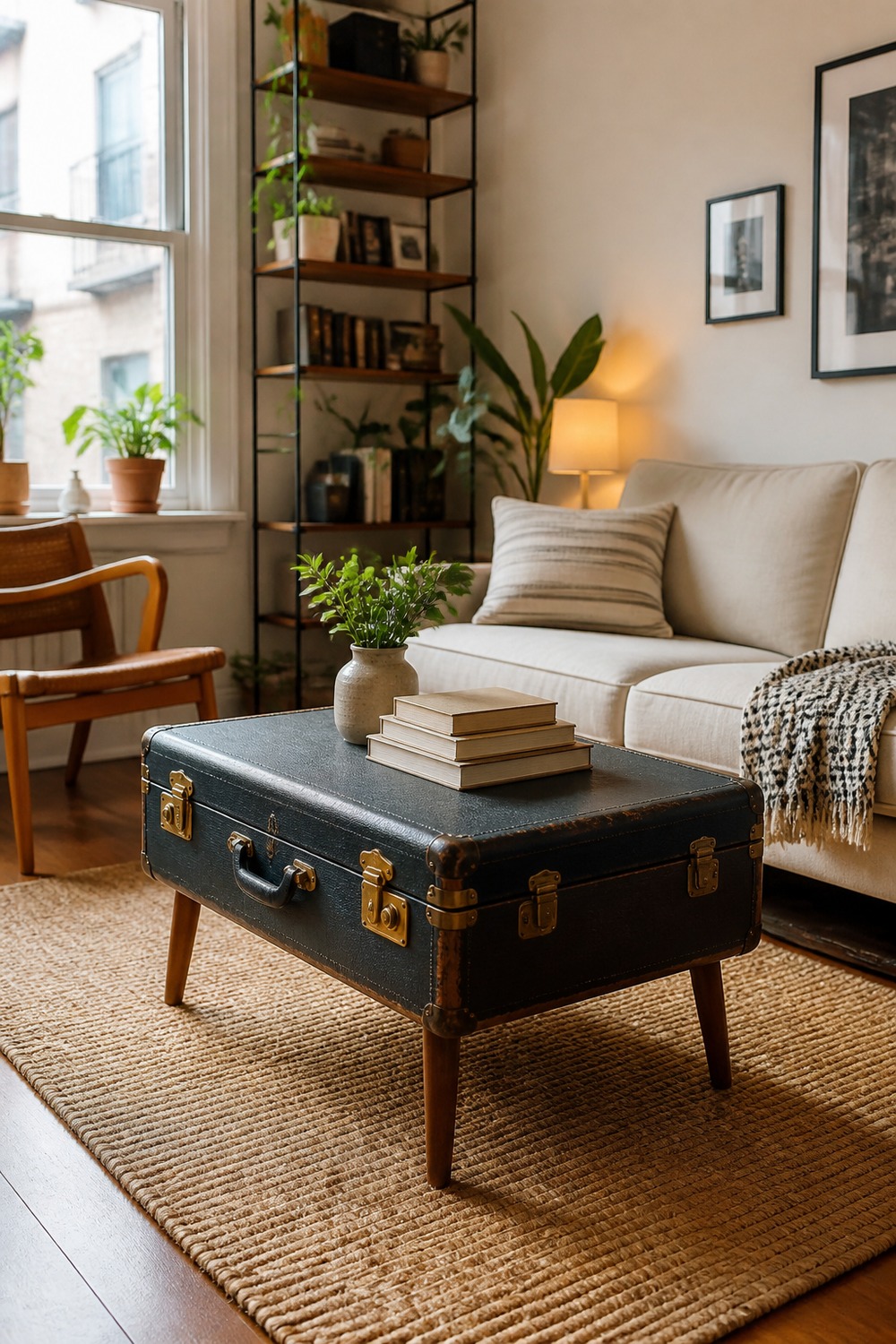
The suitcase table is a quieter vintage idea, but the latches and tapered legs give it a lot of charm. I like that it adds a little storage-story feeling without needing a big oversized trunk in the middle of the rug.
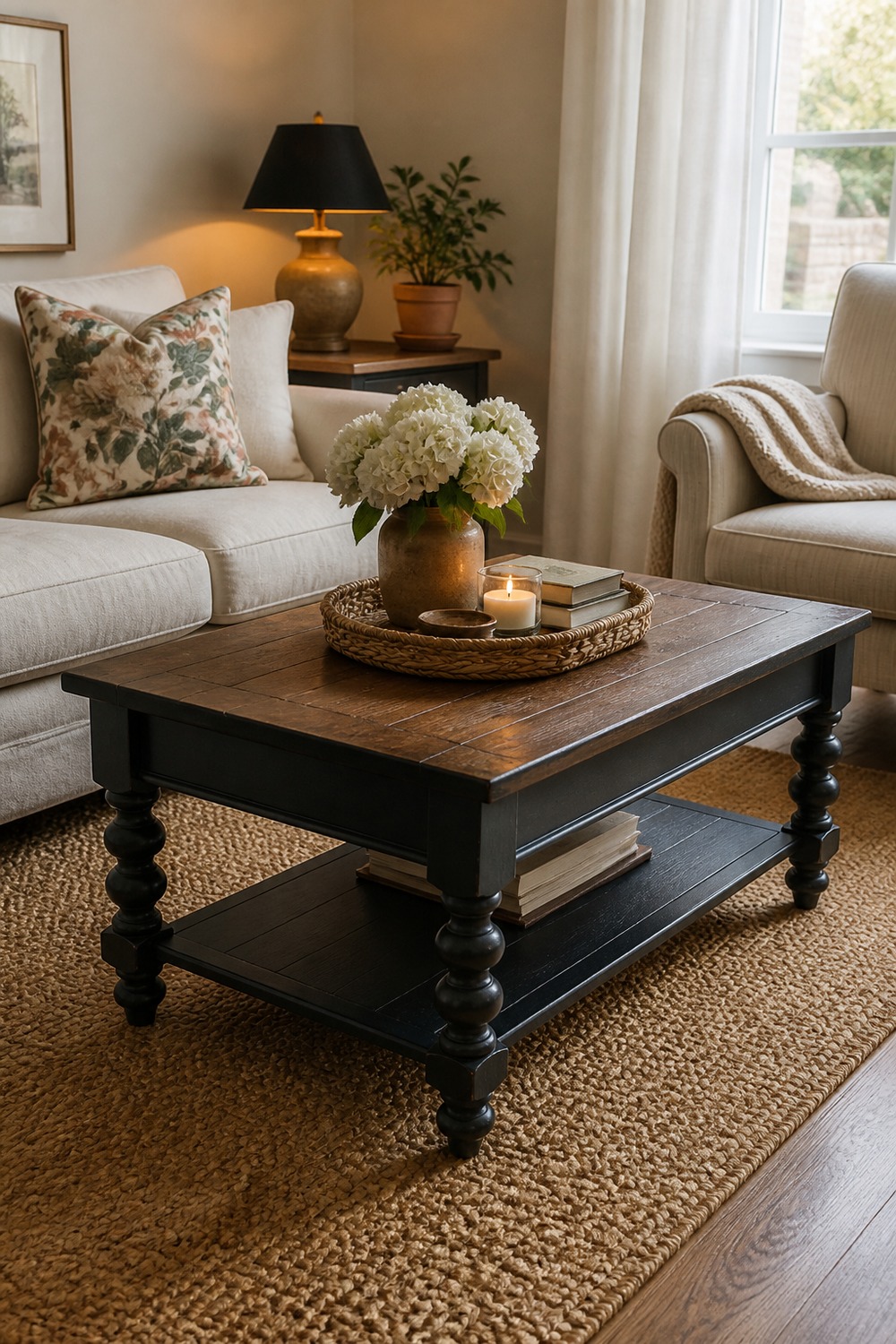
A spindle-leg makeover is perfect when the old table shape is worth keeping. The charcoal paint, distressed edges, and warm refinished top make the piece feel updated while the turned legs keep all the vintage character.
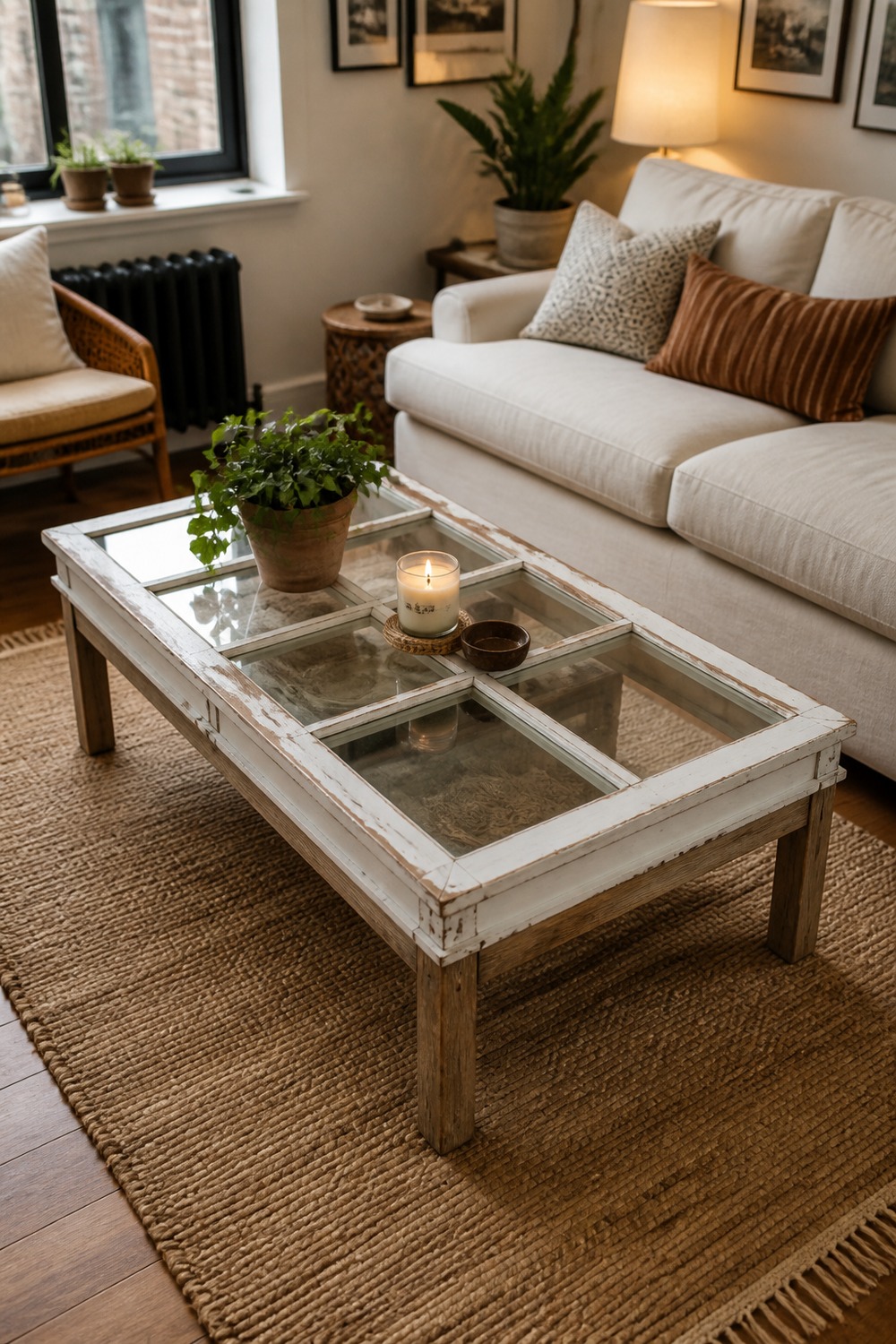
The window-frame coffee table has that flea-market detail I always notice first. The divided panes under glass make the top interesting, but the sturdy base keeps it from feeling like a fragile display piece.
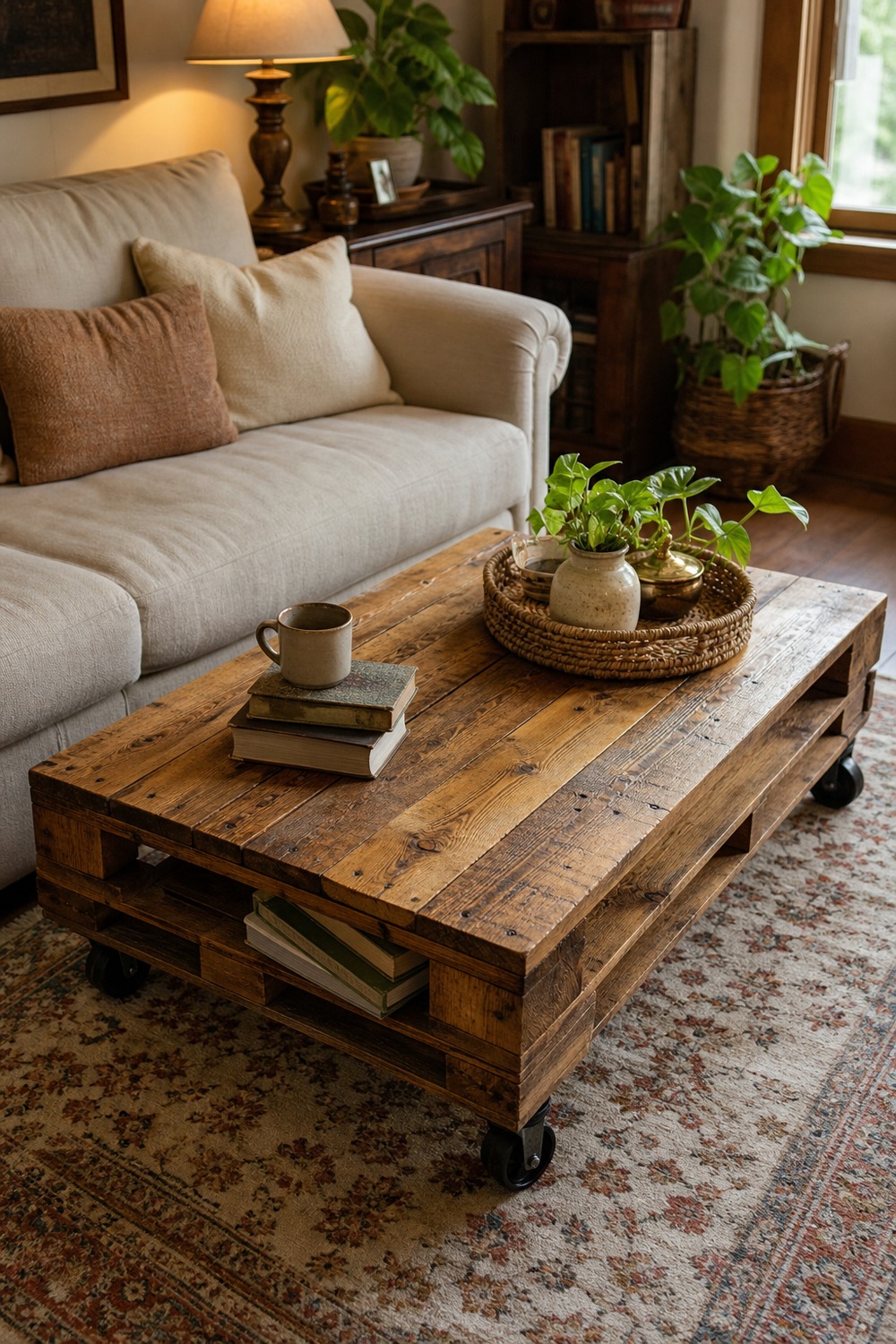
This pallet wood table is the most practical DIY idea in the set. The varied planks, lower shelf, and small casters make it feel handmade and movable, which helps if the room has to handle real-life traffic around the sofa.
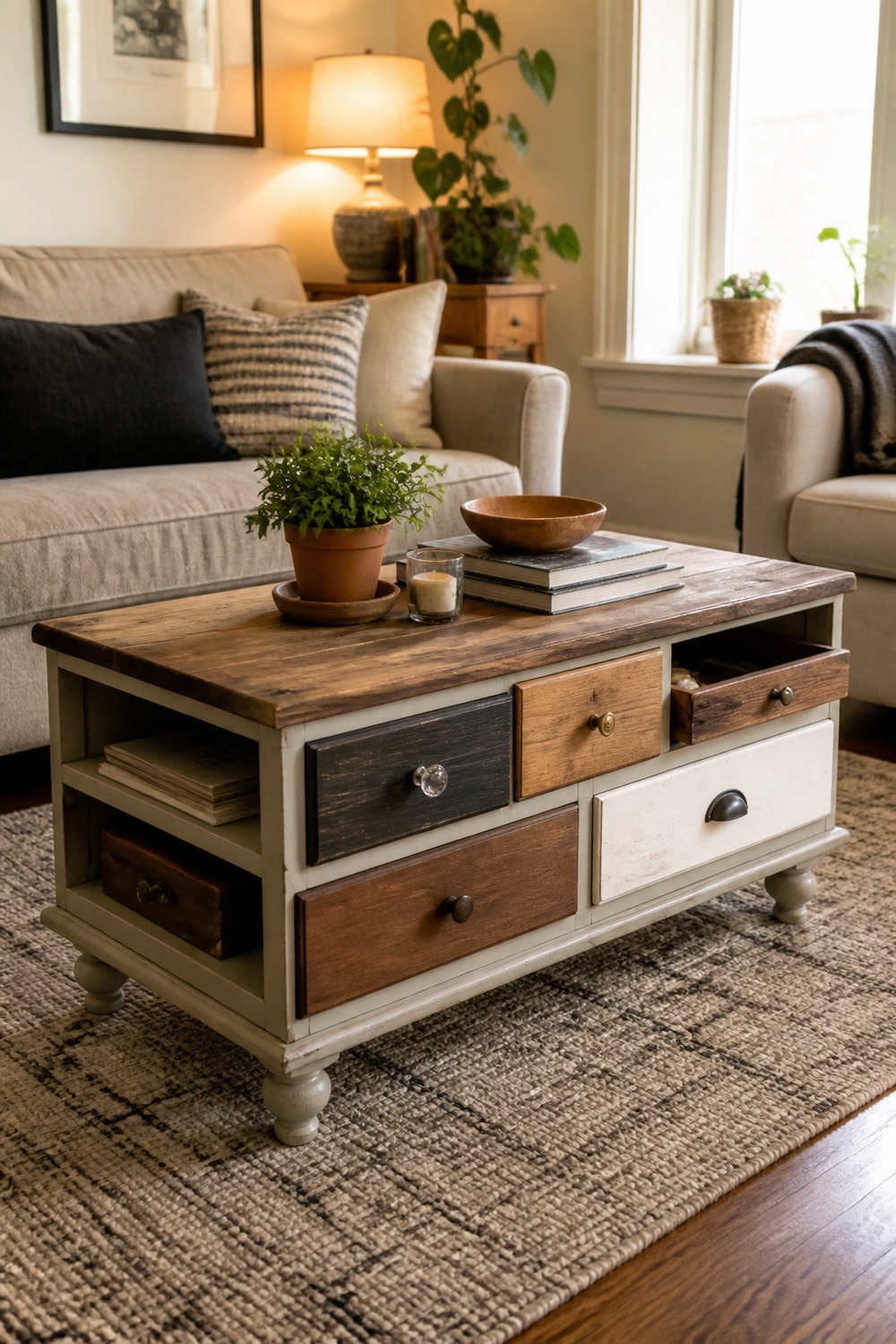
The stacked-drawer table is such a good storage trick because the hardware becomes part of the look. It feels like a salvaged dresser got a second life, with enough cubbies and surface space to handle remotes, books, and blankets.
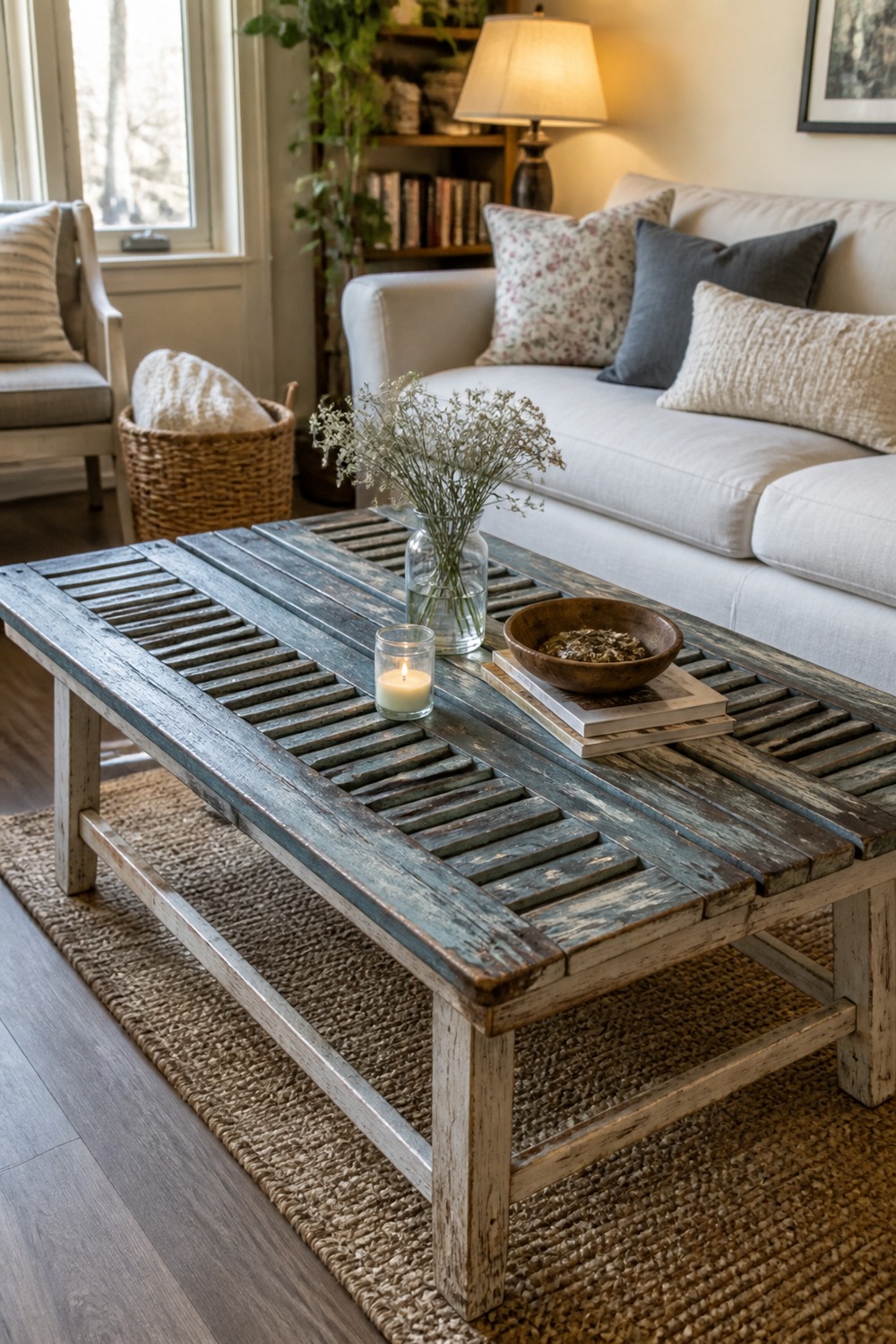
Old shutters bring texture without needing much extra styling. The slatted top and blue-gray distressed paint give the table a cottage feeling, while the simple room around it keeps the DIY detail from getting too cute.
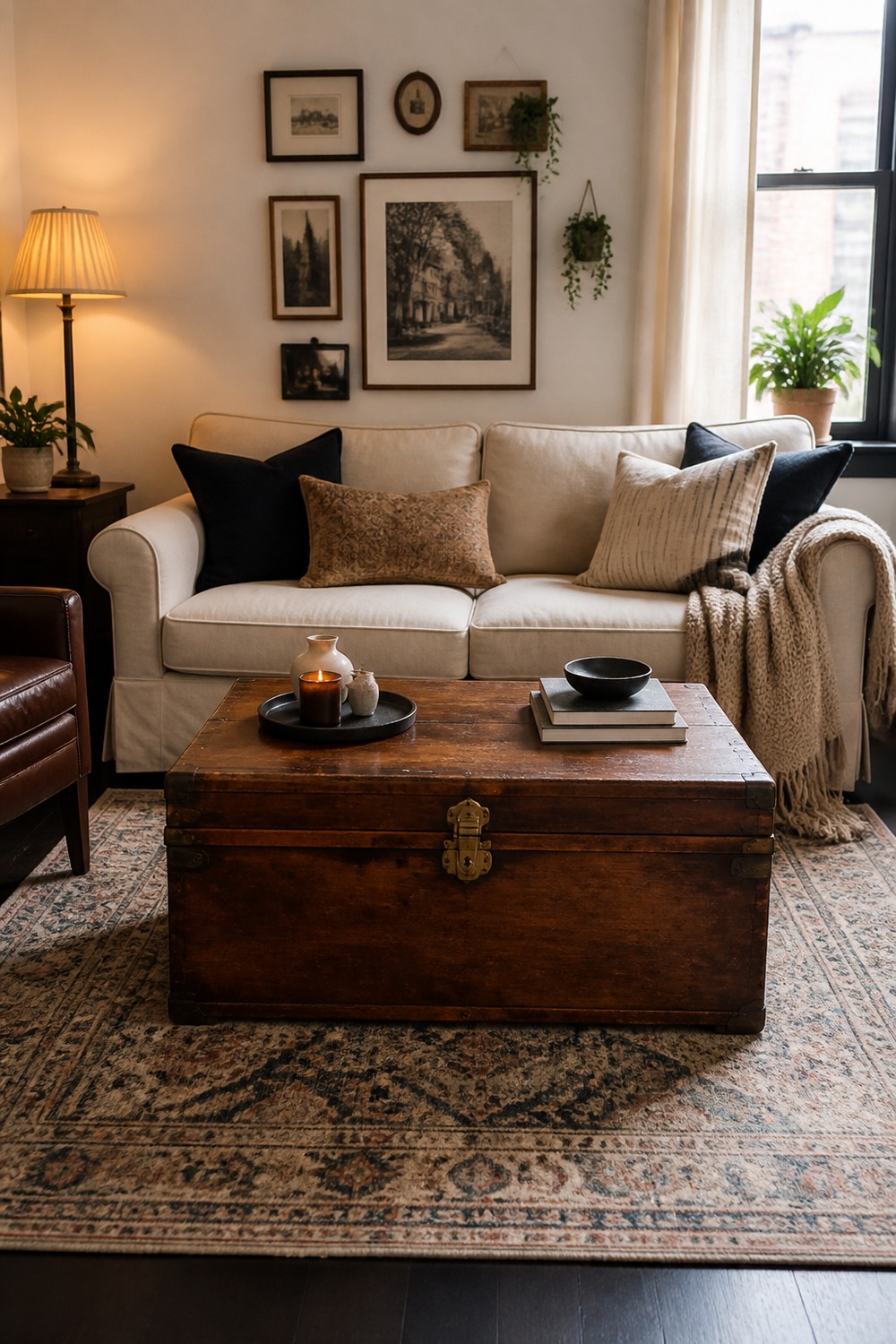
An antique chest coffee table always feels grounded because it has real weight and history. The patina, hinges, and brass hardware do most of the decorating, so the tabletop only needs a small tray or a few books.
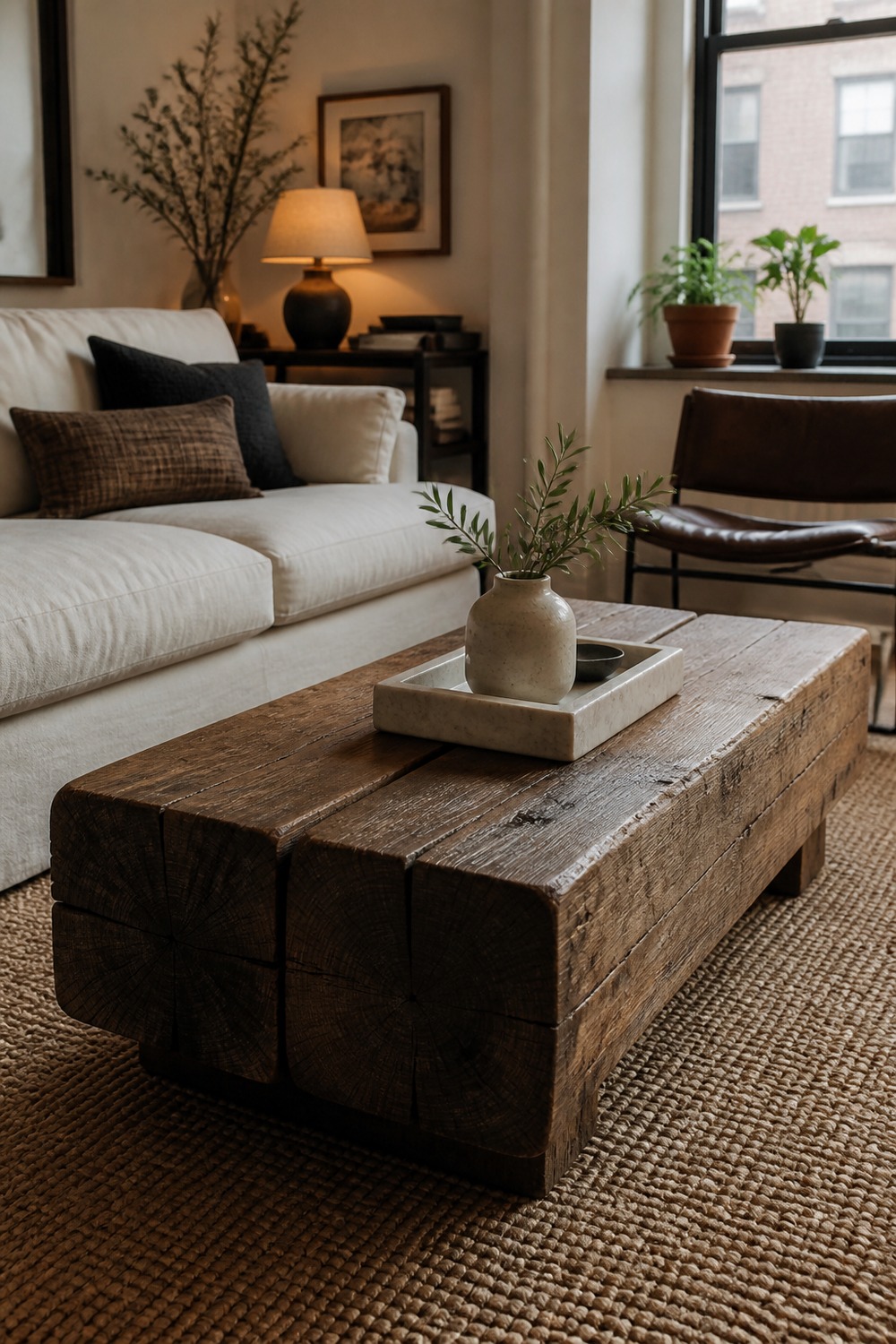
The reclaimed beam table is simple, but the material does the work. Nail marks, chunky wood, and a waxed finish make it feel handmade and solid instead of like a plain new rectangle from a furniture store.
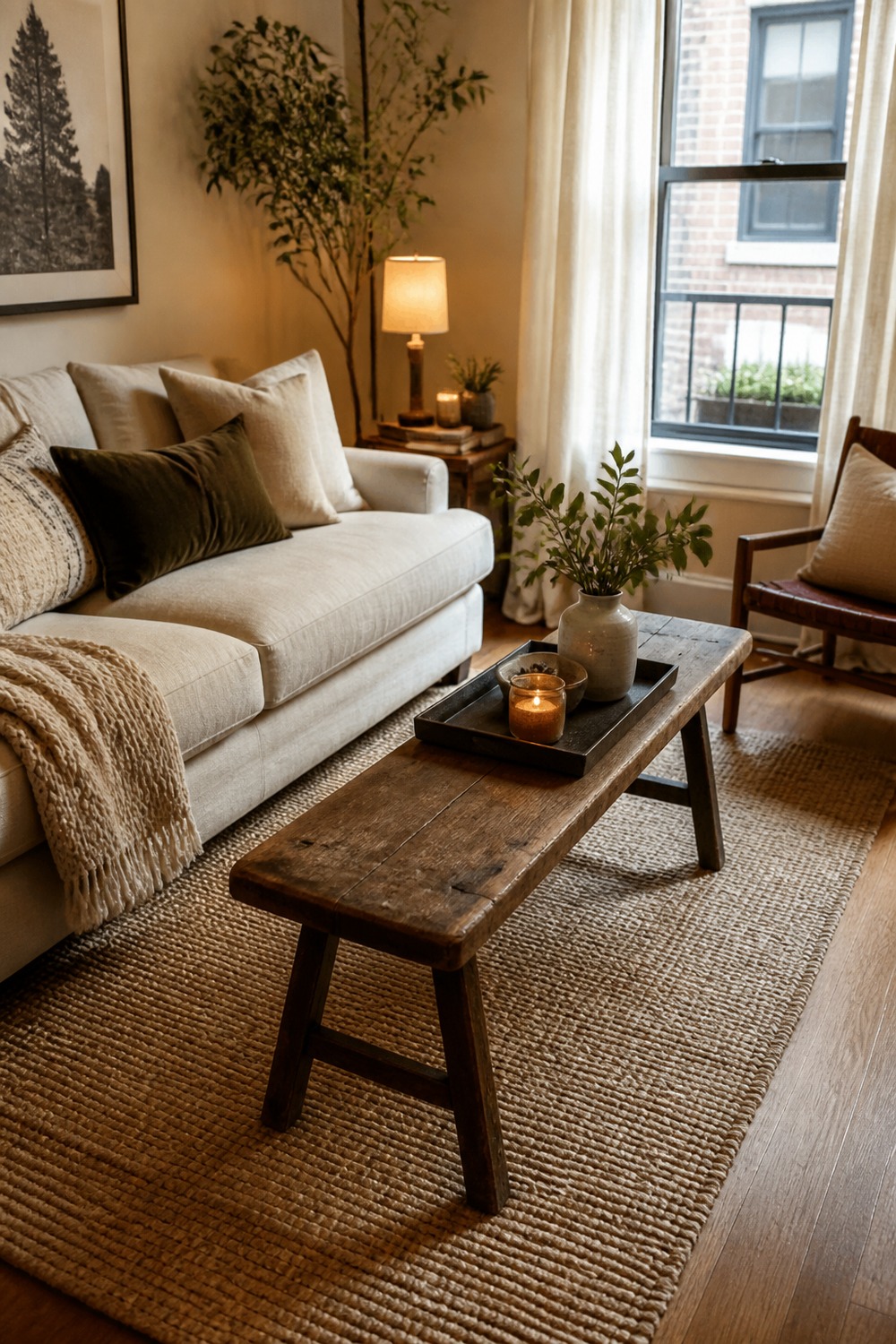
Turning an old bench into a coffee table is a smart move for narrow seating areas. The worn seat gives plenty of texture, and the slimmer shape leaves more walkway room than a bulky square table would.
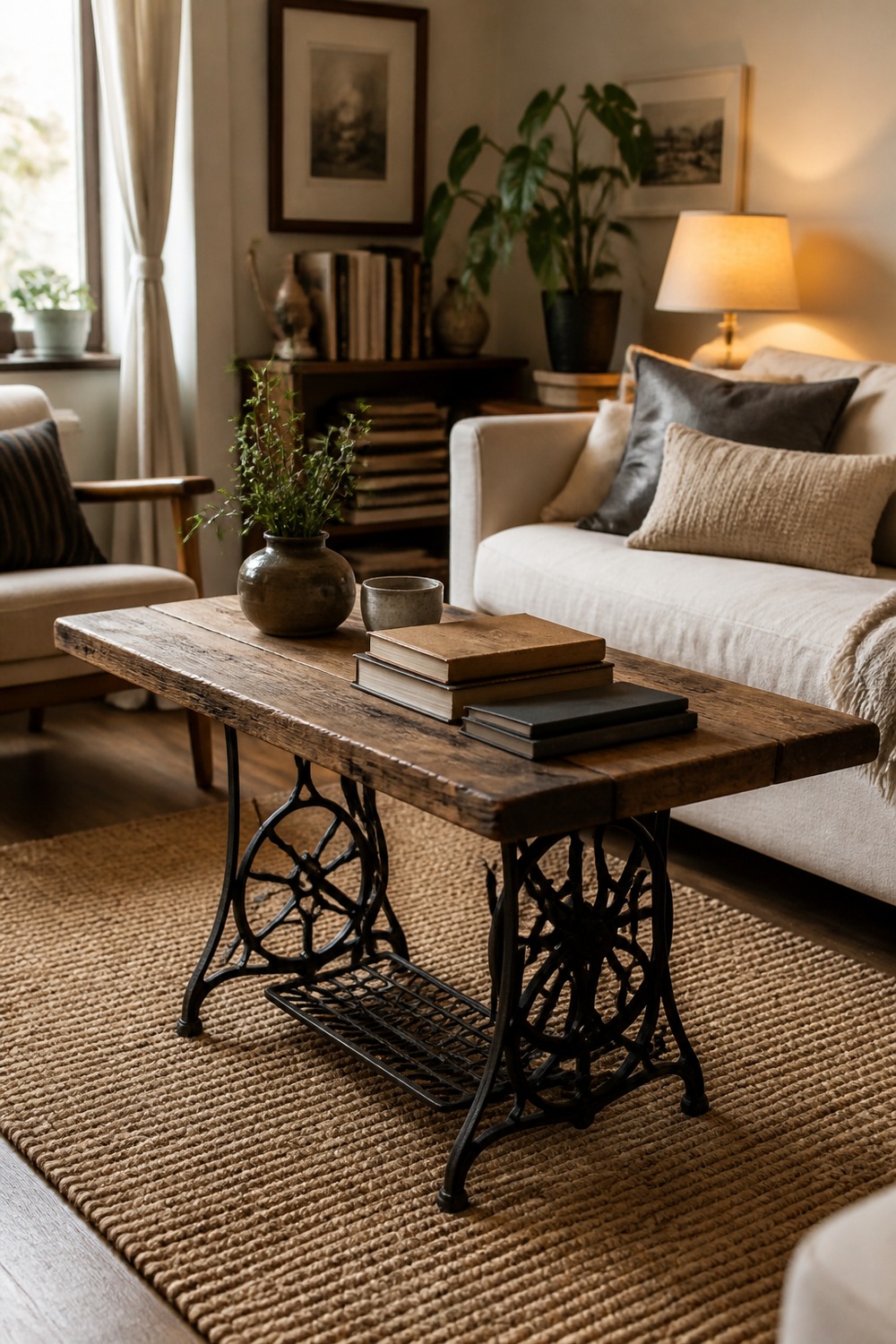
The sewing-machine base is one of the strongest vintage ideas because the iron legs are instantly recognizable. A reclaimed wood top keeps it usable, while the black metal base adds detail from every angle.
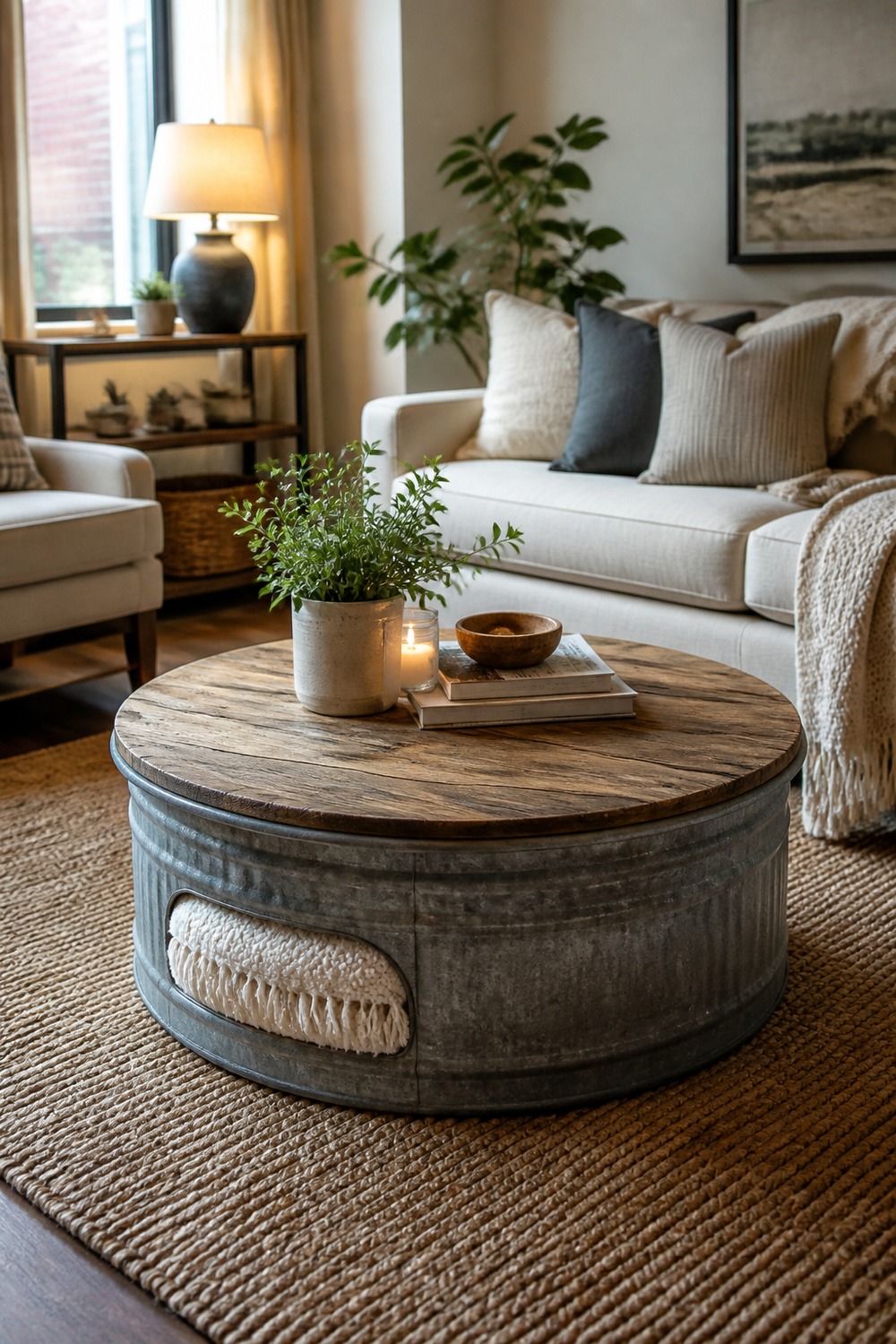
A galvanized washtub table brings in farmhouse storage without needing another basket or cabinet. The fitted wood lid gives it a real tabletop, and the aged metal makes the whole room feel a little more layered.
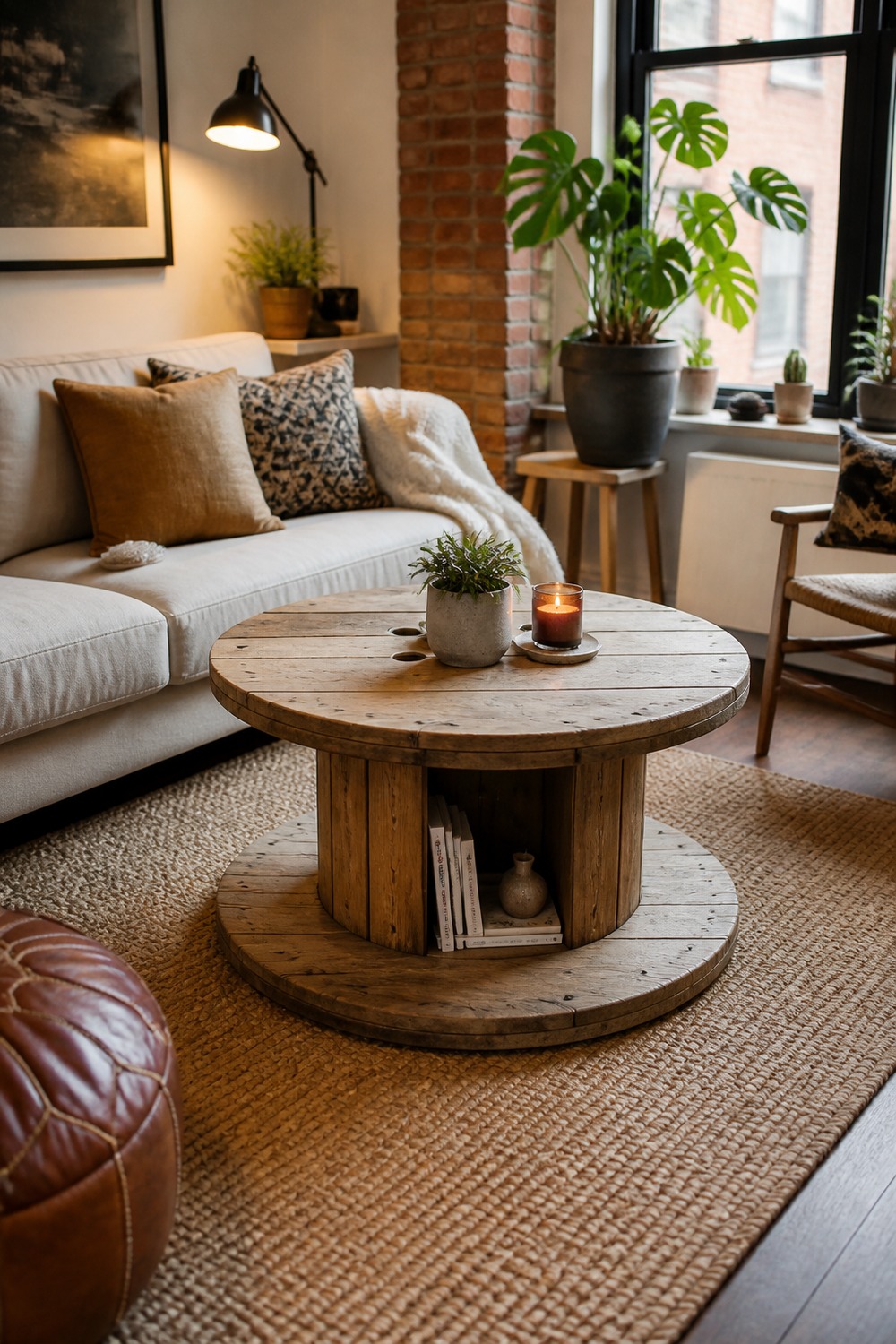
The cable spool table has that casual workshop-to-living-room feeling. The round shape breaks up all the straight sofa lines, and the visible spool construction makes the DIY part clear without needing any explanation.
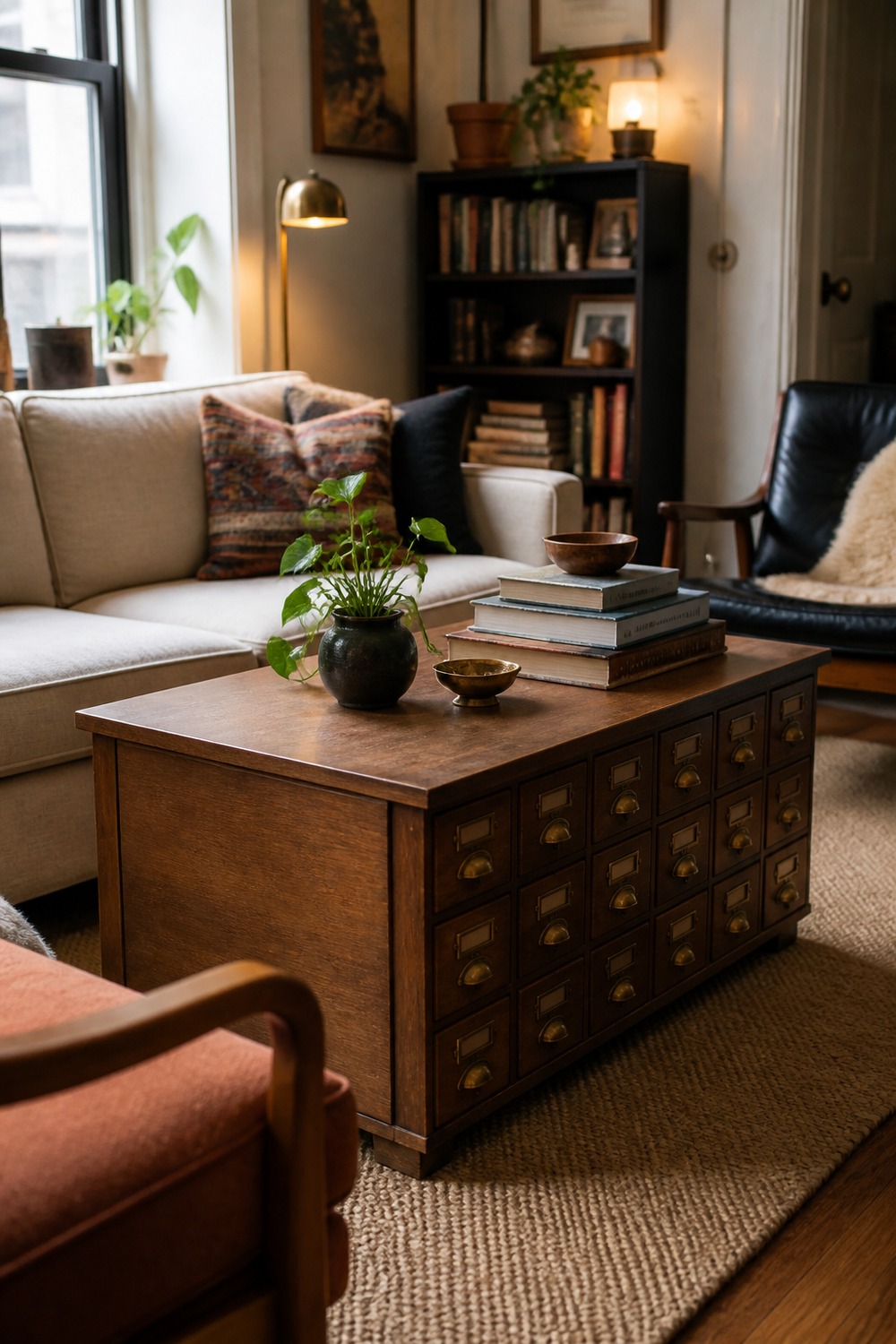
A card-catalog coffee table is such a good vintage storage piece because the tiny drawers become the feature. The brass pulls, low cabinet shape, and moody wood finish make it feel special but still practical.
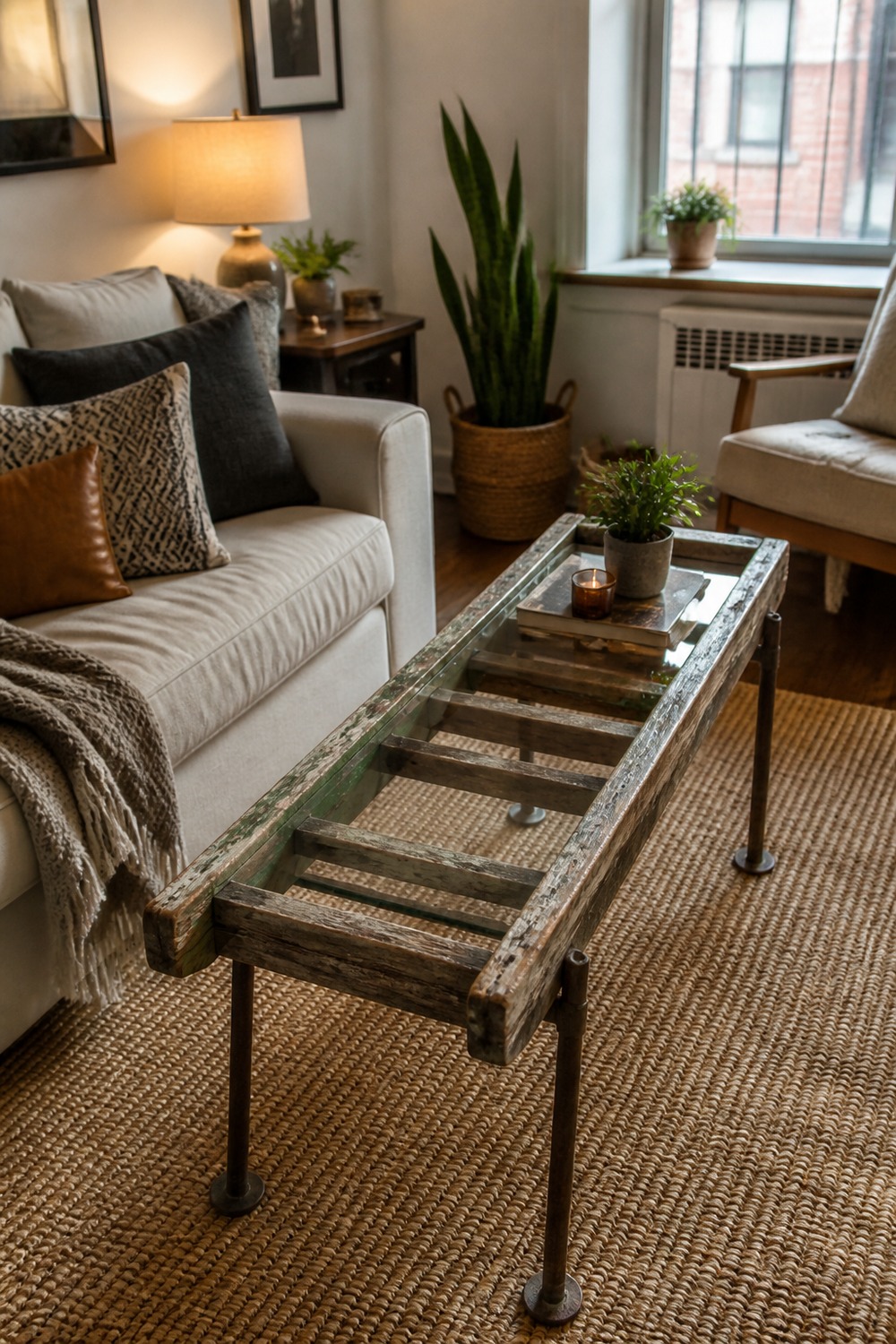
This salvaged ladder table feels lighter than a solid block of wood. The rungs under the glass or plank top add rhythm, and the worn paint makes it look like a real reclaimed piece instead of a fake rustic finish.
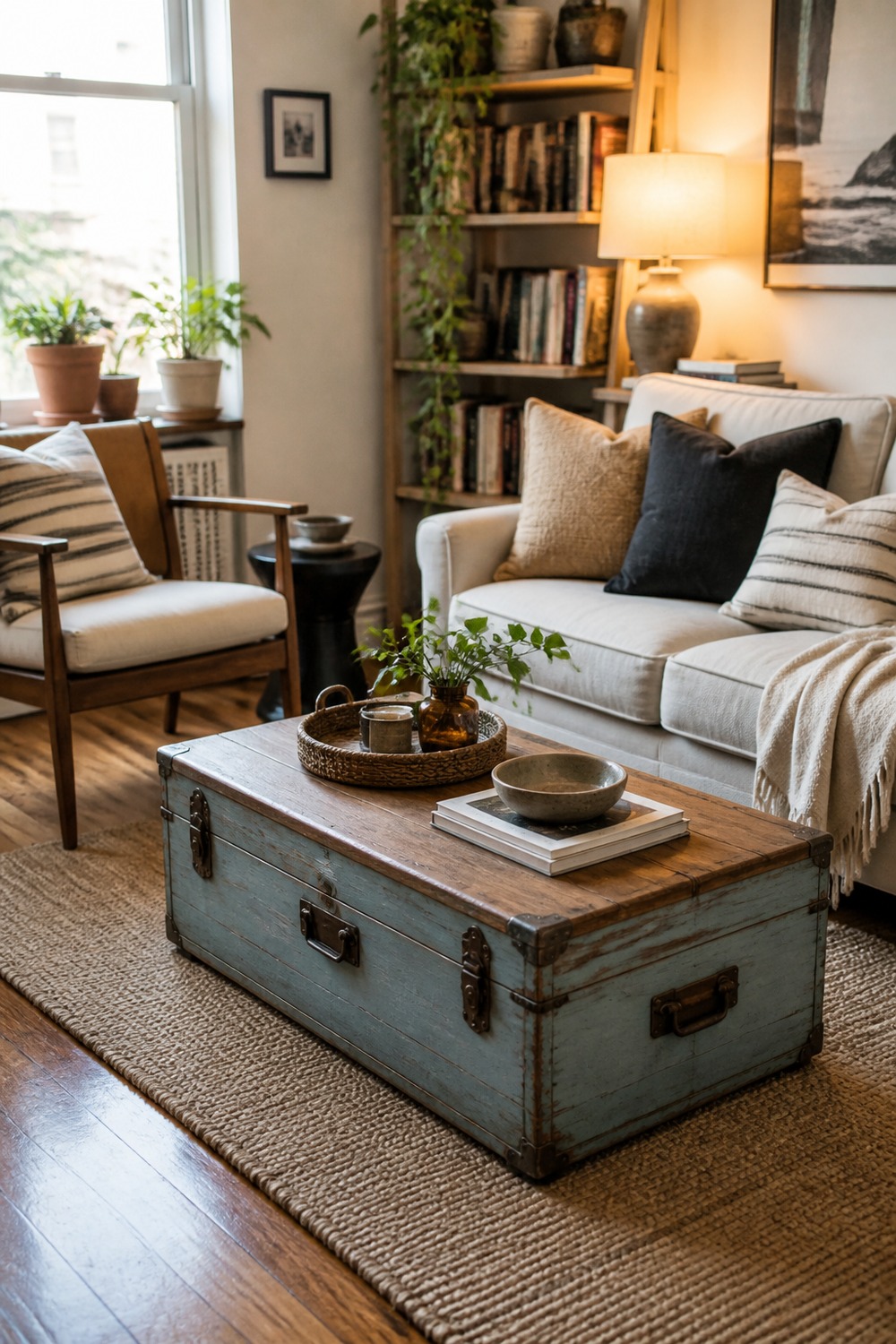
A painted curb-find table is the kind of idea that makes a room feel more personal. The muted blue paint, old hardware, and sanded edges show the rescue without making the table look unfinished.
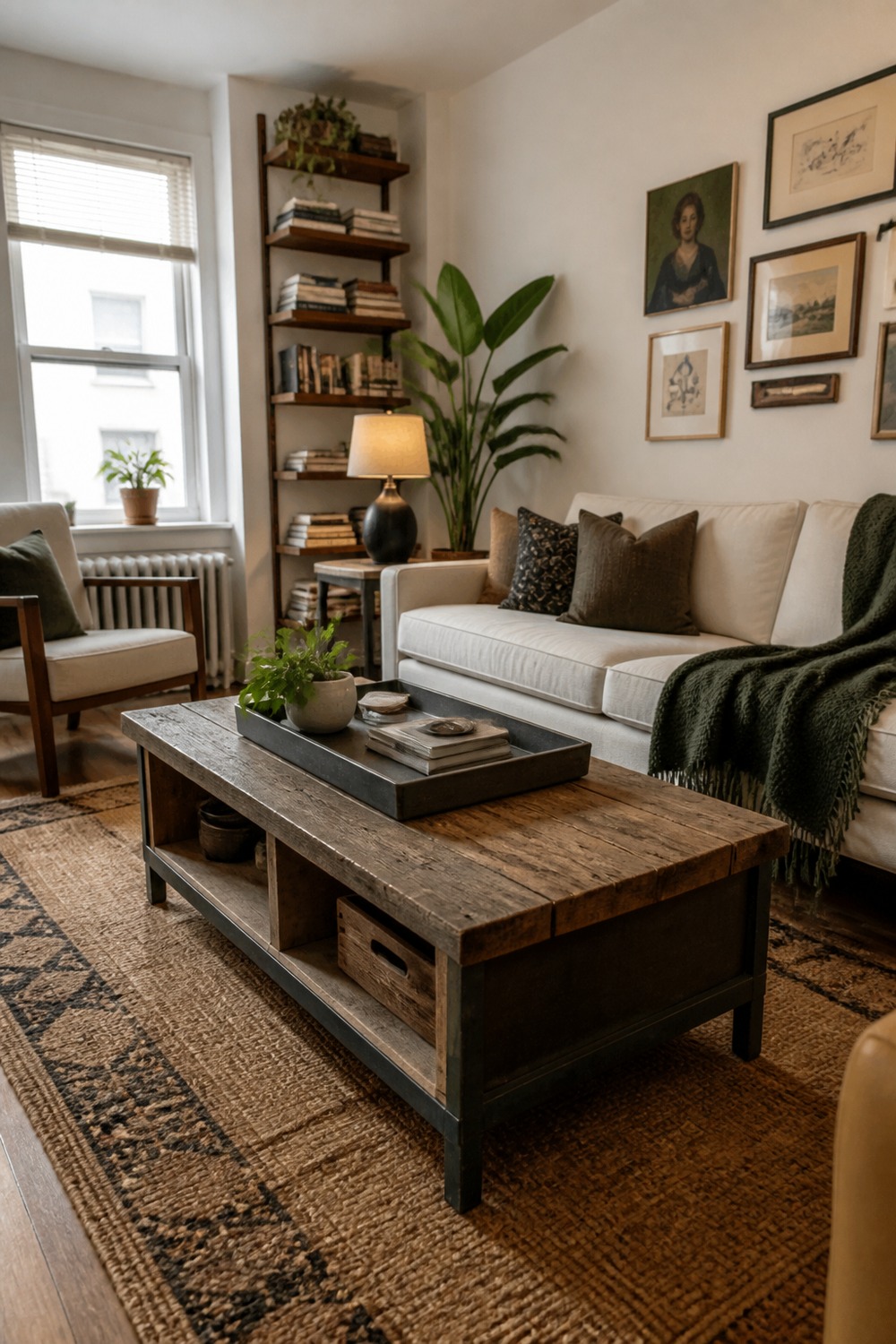
The full-room version ties everything together because the coffee table still looks handmade in context. The salvaged materials, patina, tray space, and warm seating around it show how a DIY vintage piece can anchor the room without taking over.
A vintage coffee table does not have to be perfect to work. Most of these ideas look better because the paint is chipped, the wood is worn, or the hardware already has a little history.
Leave a comment