
DIY coffee tables can look amazing, but the bad versions usually feel either too bulky or too crafty in the middle of the room. The ones I like most have a real job: storage, better scale, stronger texture, or a tabletop that can handle remotes, drinks, books, and the usual living-room drop zone.
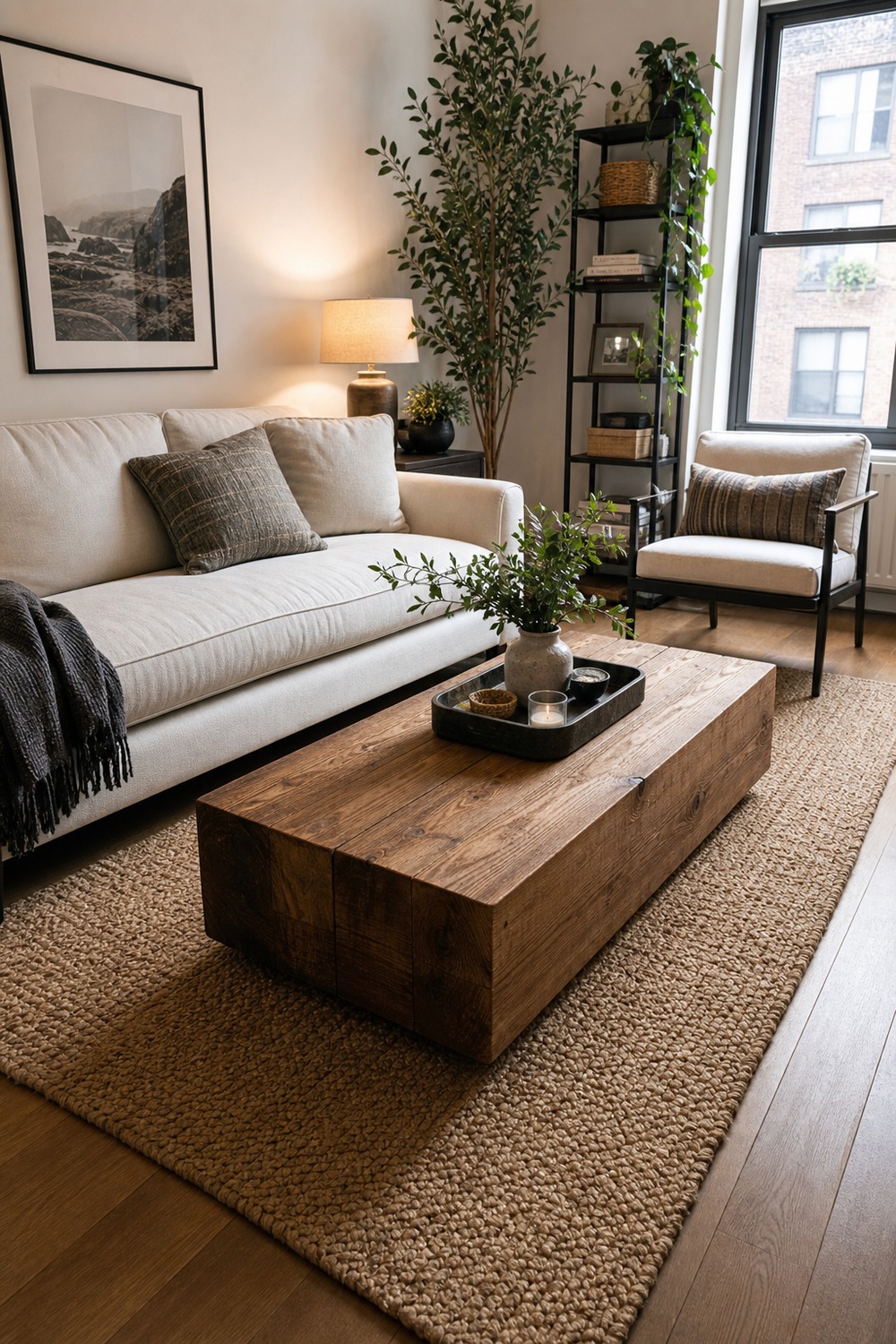
The chunky plank version feels like the kind of table that can handle real life, not just a styled tray. The thick wood grain gives the sofa area weight, and the simple shape leaves room for books, mugs, and a bowl without making the rug feel crowded.
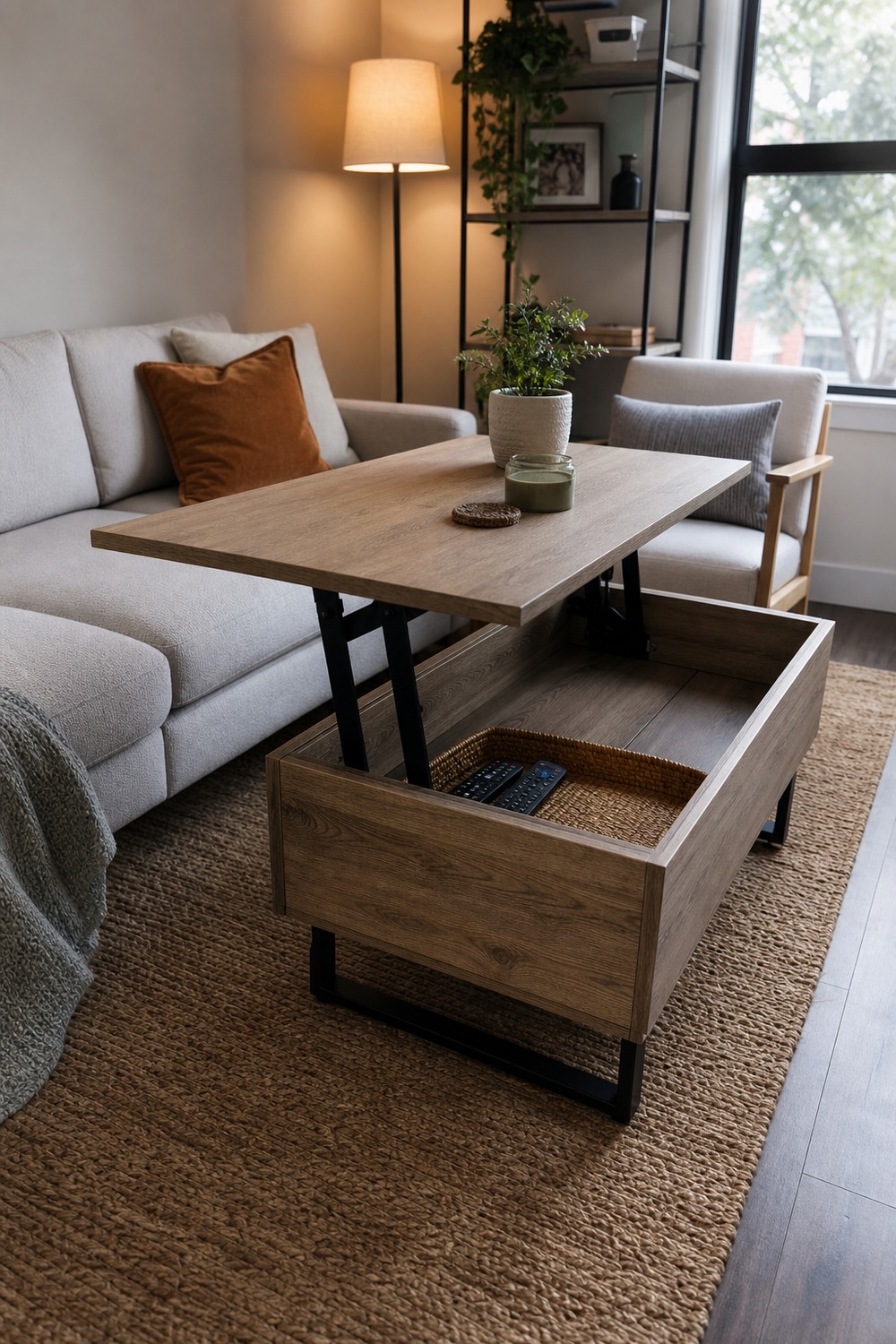
A lift-top table is one of those DIY ideas that actually solves a daily annoyance. I like that the top can pull closer for snacks or a laptop, while the hidden storage keeps remotes and chargers from living out in the open.
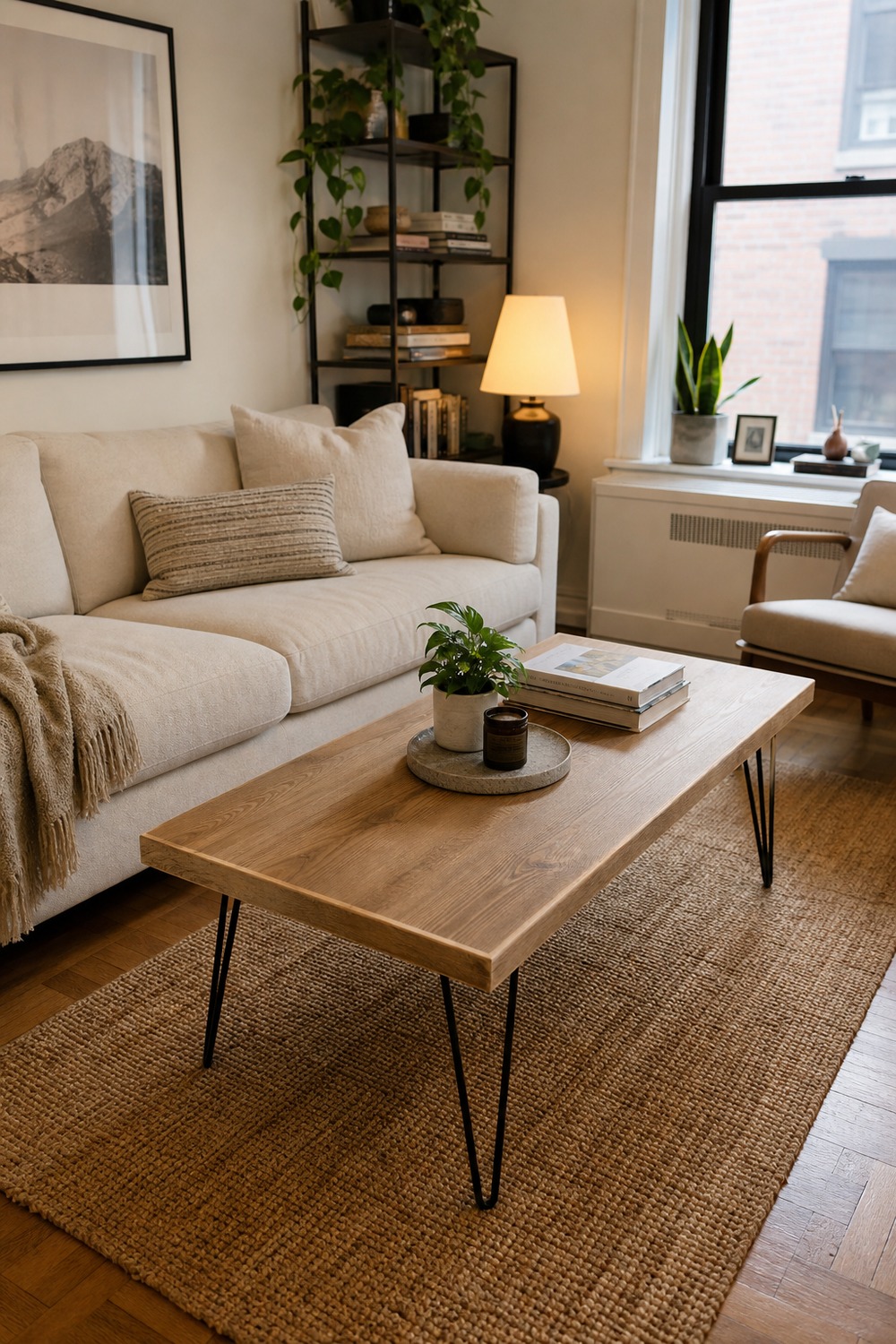
The hairpin legs keep this wood table from feeling heavy. It still has that handmade slab look, but the thin black metal base gives the living room a cleaner line and keeps the floor space feeling open.
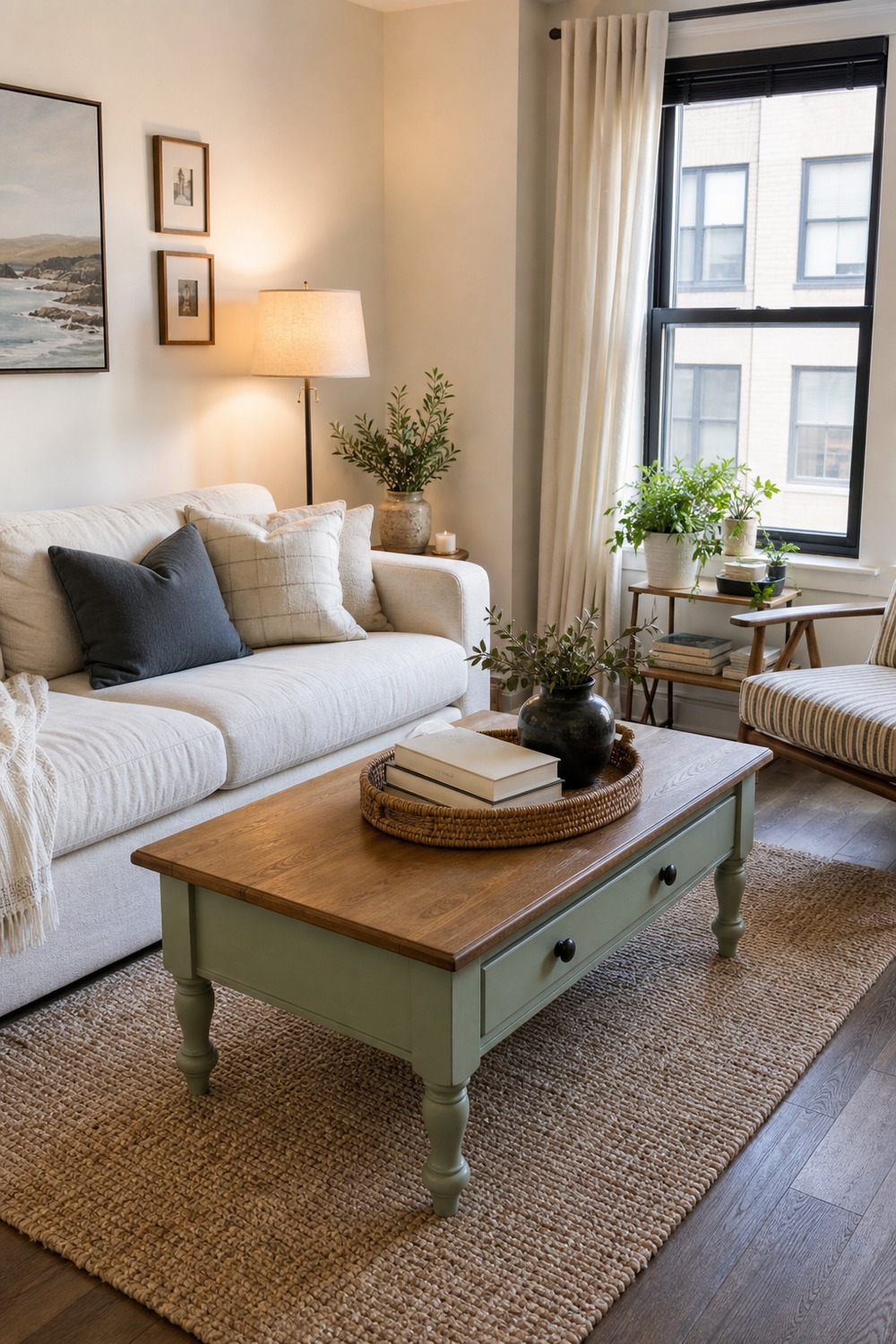
This thrift-flip table has the best kind of paint moment: enough color to feel intentional, but not so much that it takes over the room. The soft sage base and natural wood top make an old piece feel fresh without hiding its shape.
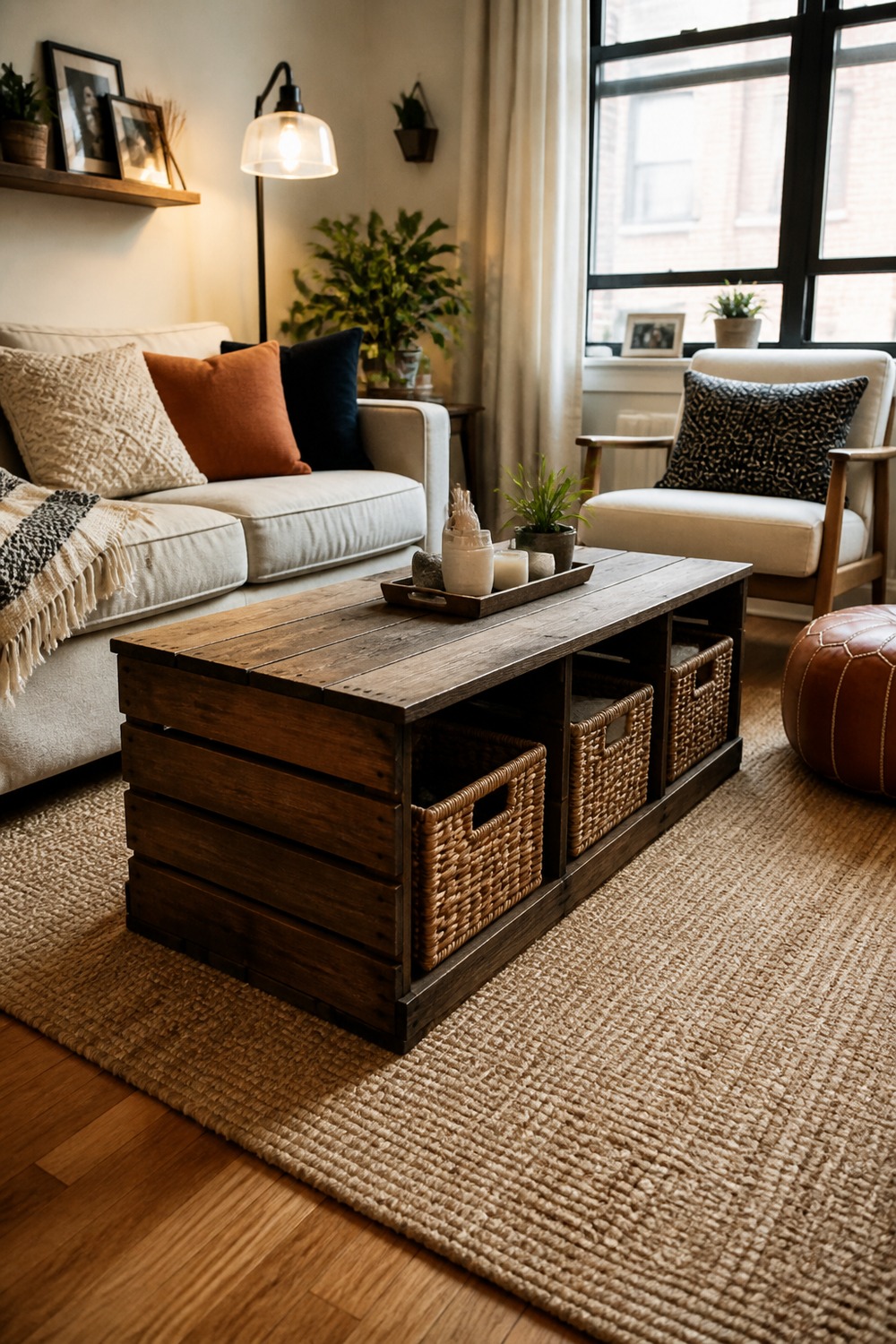
The crate-style table works because the storage is built into the design instead of added later. Those lower baskets give blankets, toys, or extra magazines a place to go, which makes the whole seating area feel calmer.
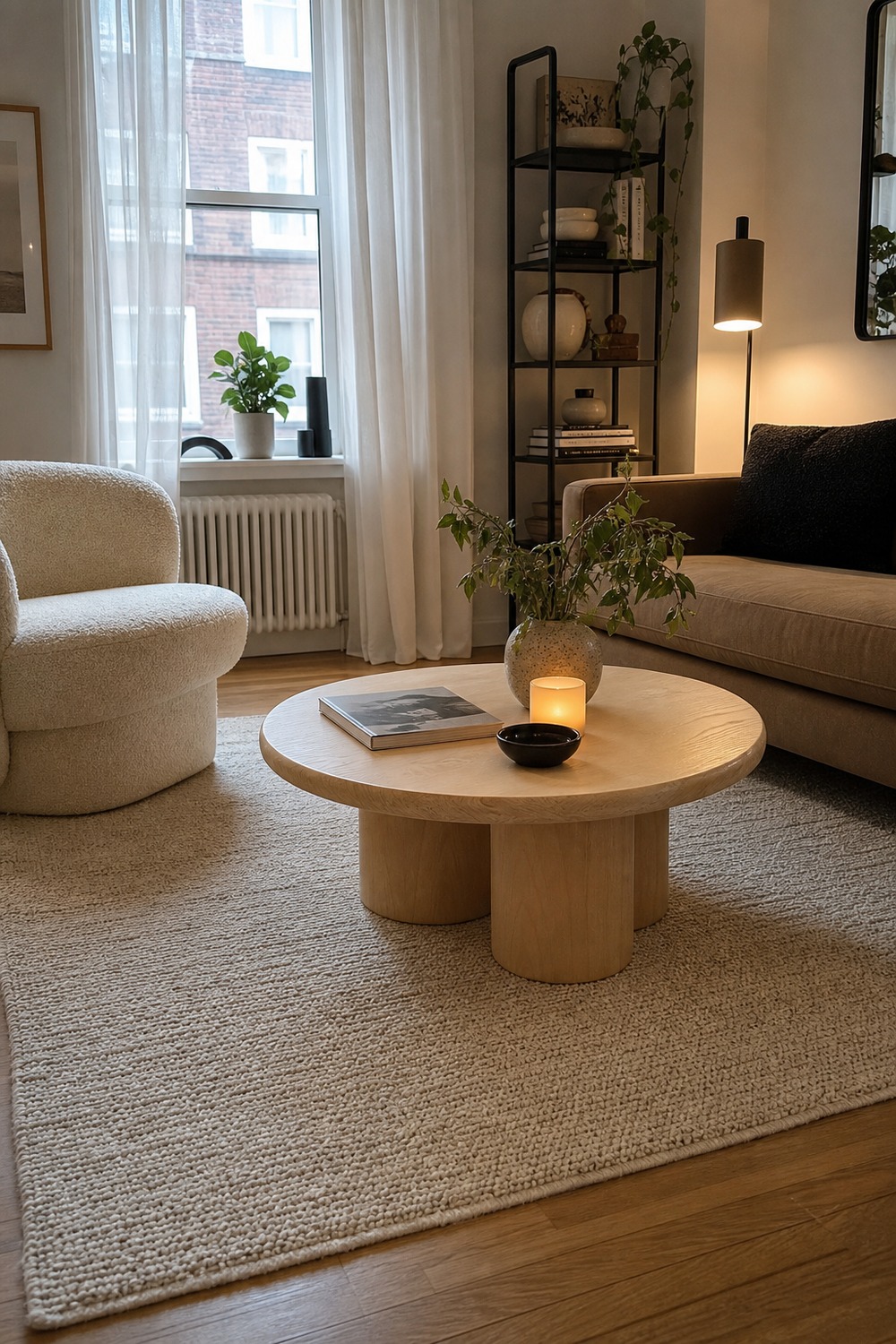
A round plywood table is a smart move when the sofa area already has a lot of straight lines. The smooth circular top, chunky base, and pale wood keep it simple, but it still feels like a real DIY focal point.
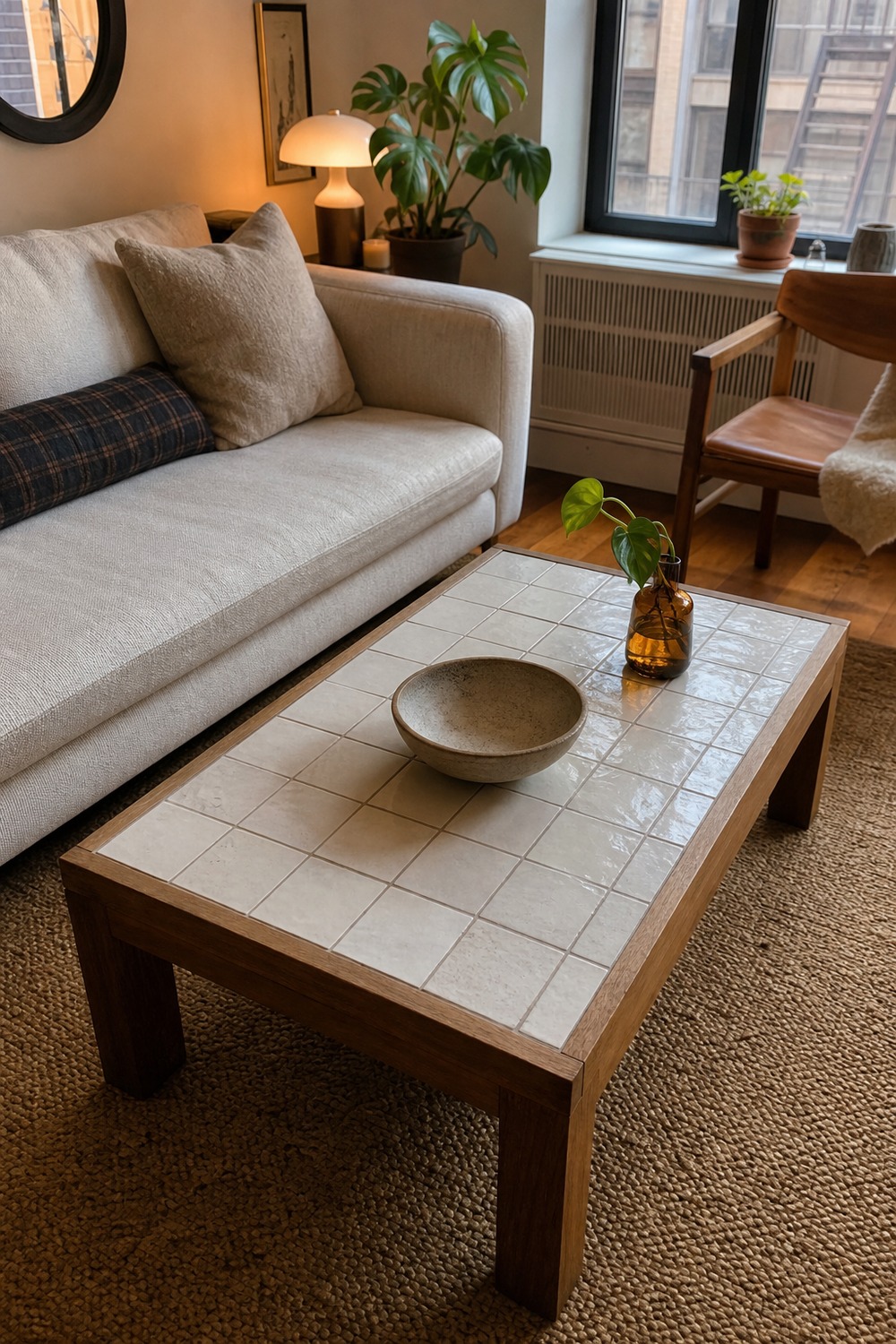
The tiled top gives this coffee table a more finished, custom look. I especially like the grout texture and wood frame because they make the project feel sturdy enough for drinks, trays, and everyday tabletop mess.
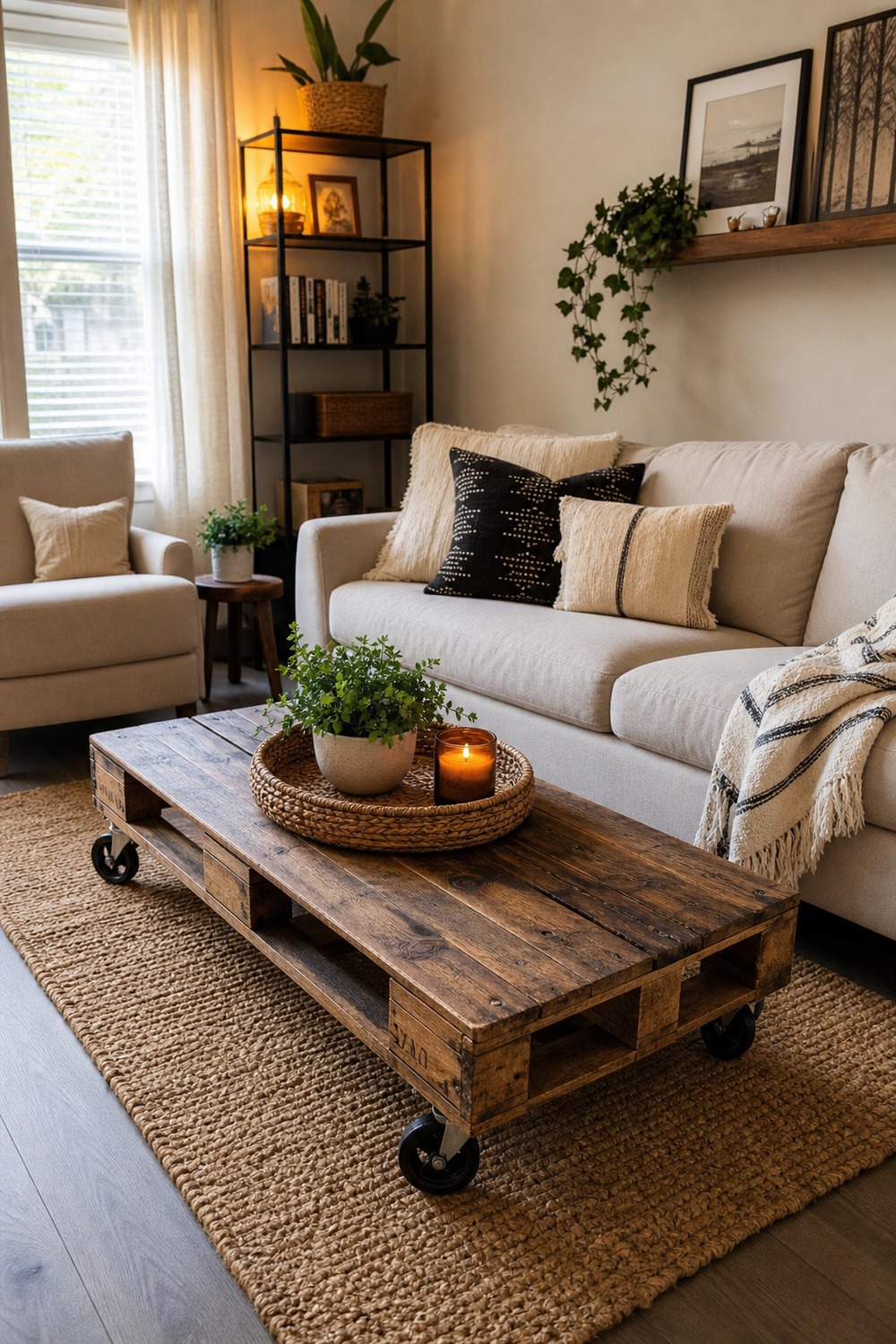
A pallet-style table can go rustic very quickly, but this one feels cleaned up and livable. The casters, sanded wood, and simple tray styling make it feel useful instead of rough, which is the difference that matters.
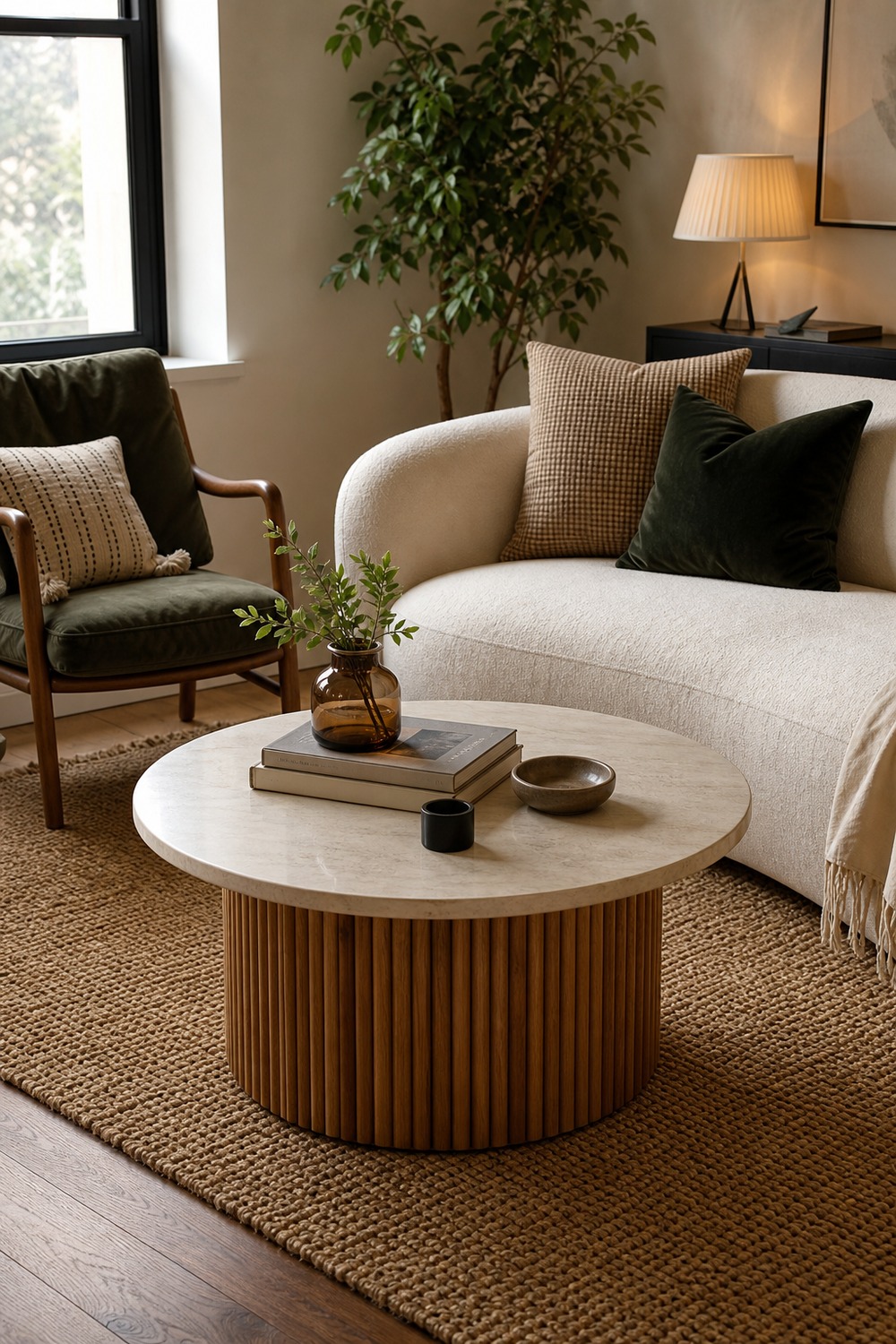
The fluted base makes this table feel more expensive than a basic round top. That ribbed wood texture adds movement under the tray, and it gives the room a handmade detail you would notice even from across the sofa.
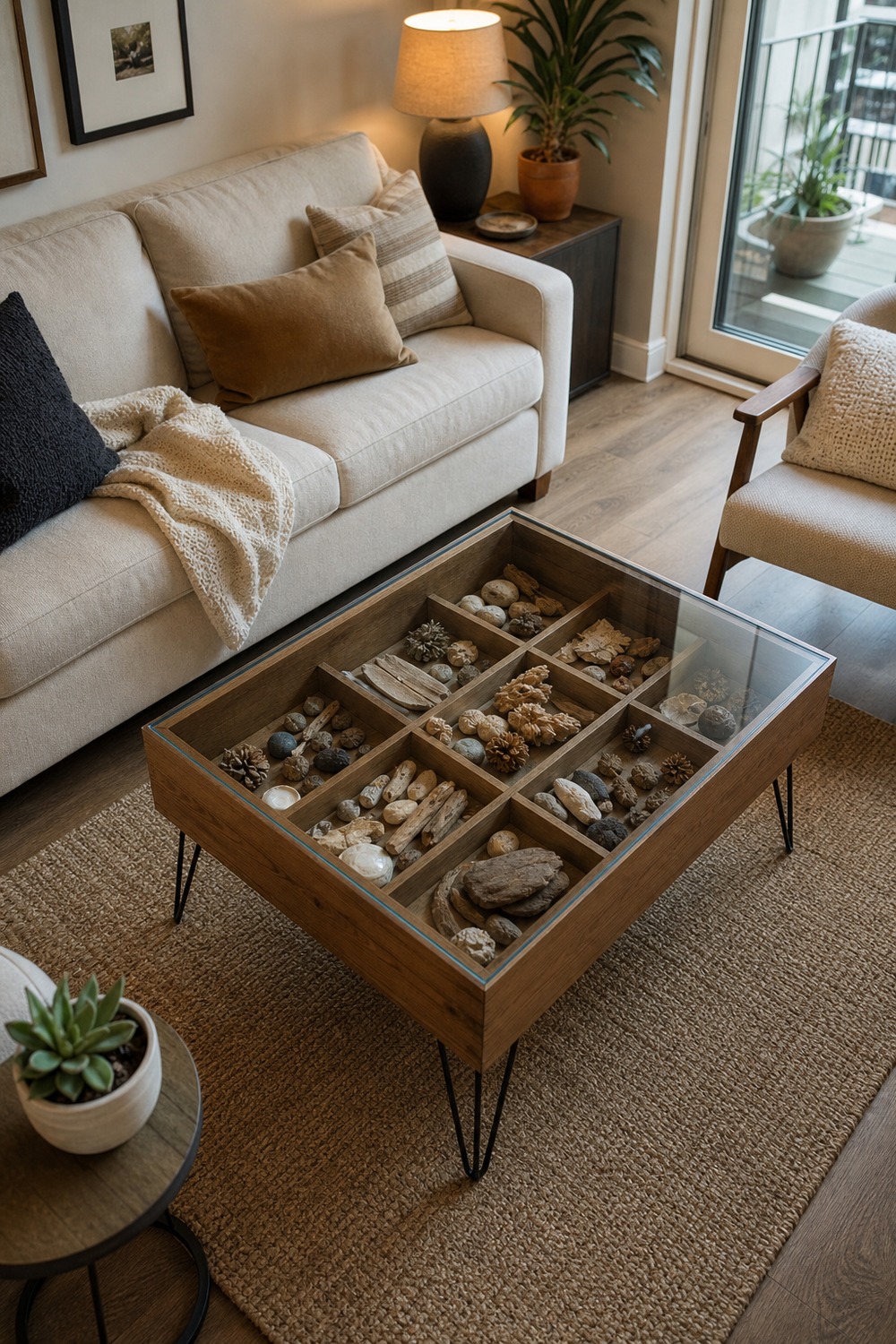
A shadow-box coffee table is a fun DIY idea when you want storage that still looks decorative. Keeping the objects inside simple and mostly neutral stops it from feeling cluttered, while the glass top still works for daily use.
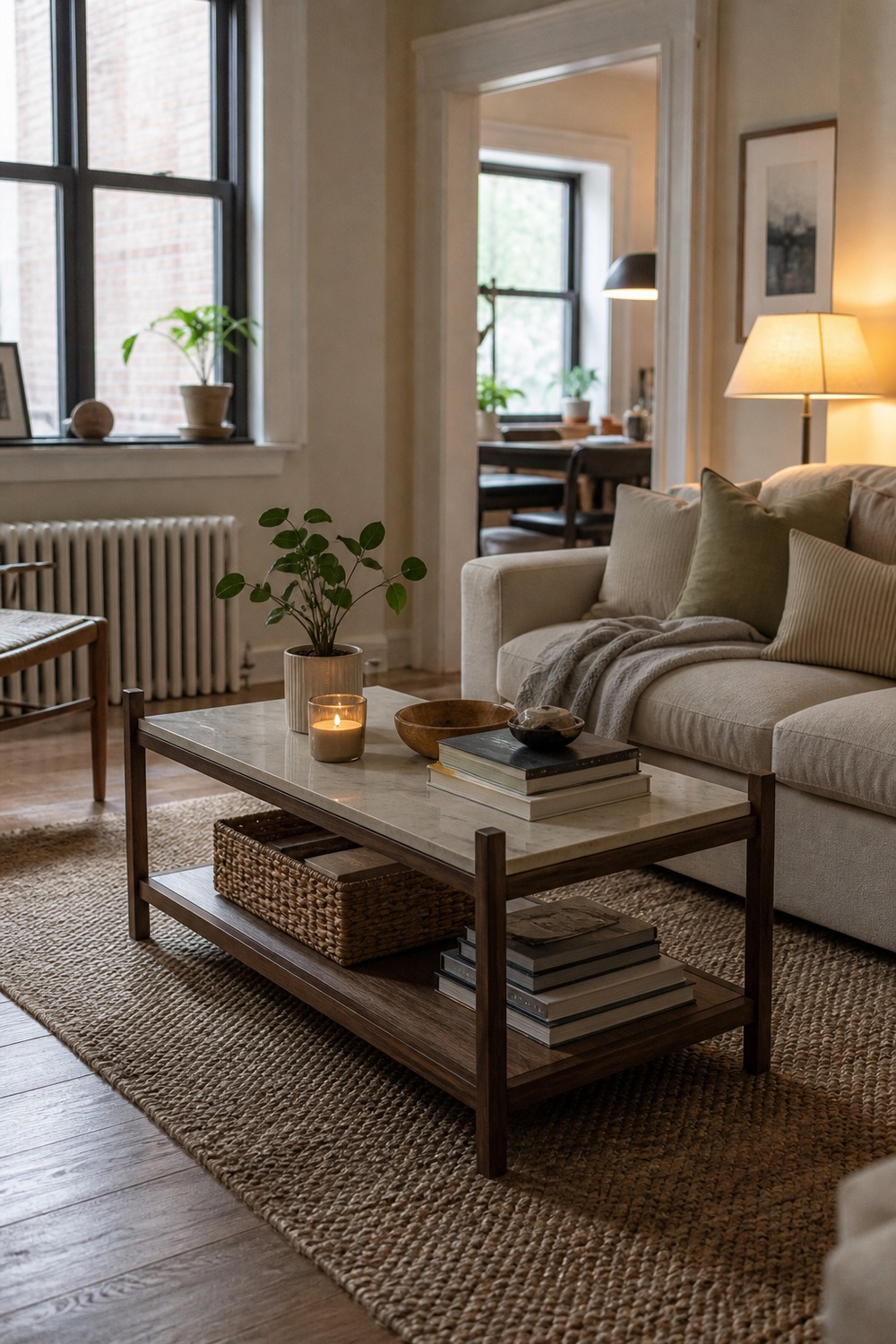
The lower shelf is the whole win here. A two-tier coffee table gives books, baskets, or board games a home, so the top can stay clear enough for a tray, a drink, and whatever lands there during the day.
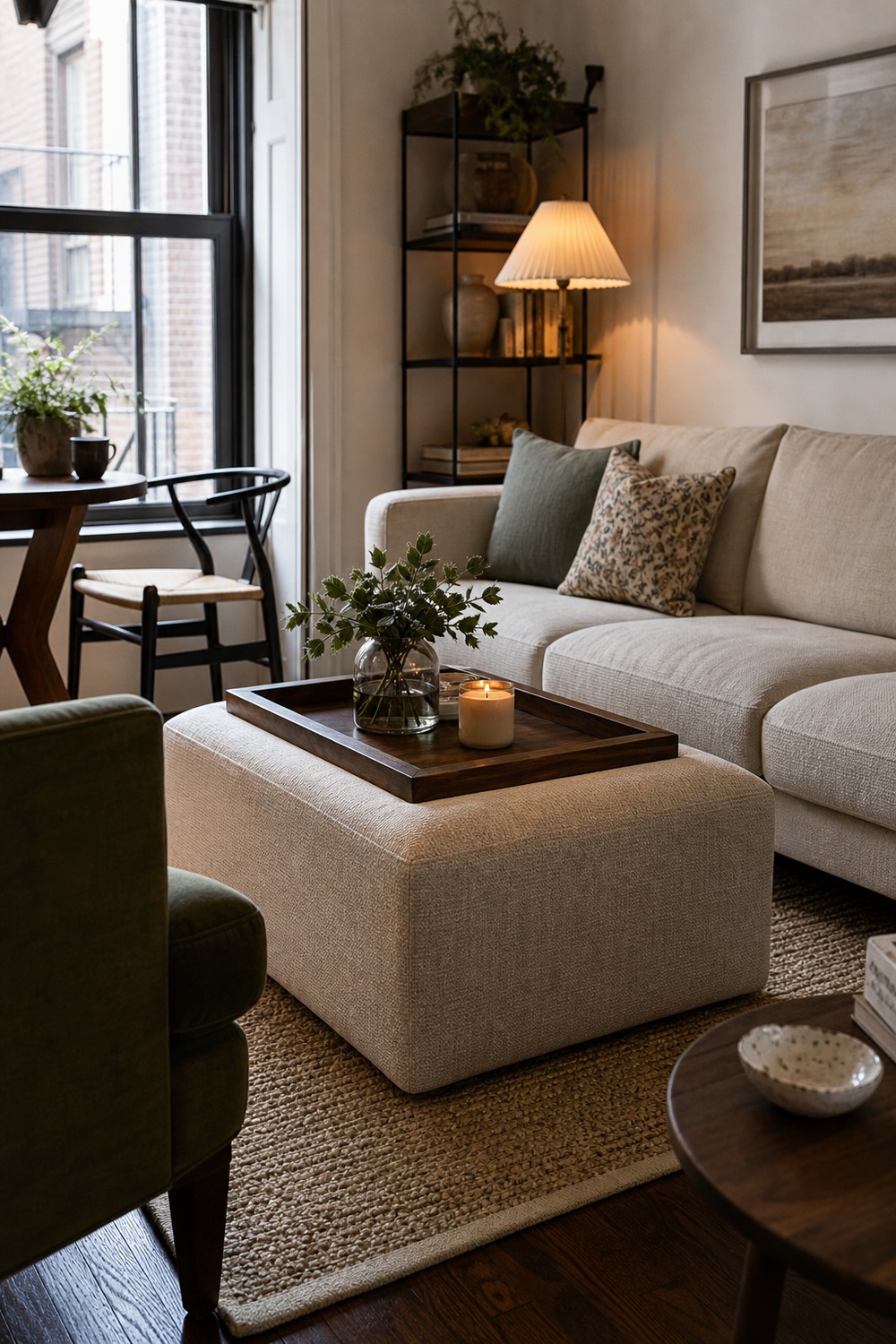
Turning an ottoman into a coffee table makes the room feel softer right away. The fitted wood tray keeps it practical for cups and candles, while the upholstered base is a lot more forgiving in a family room.
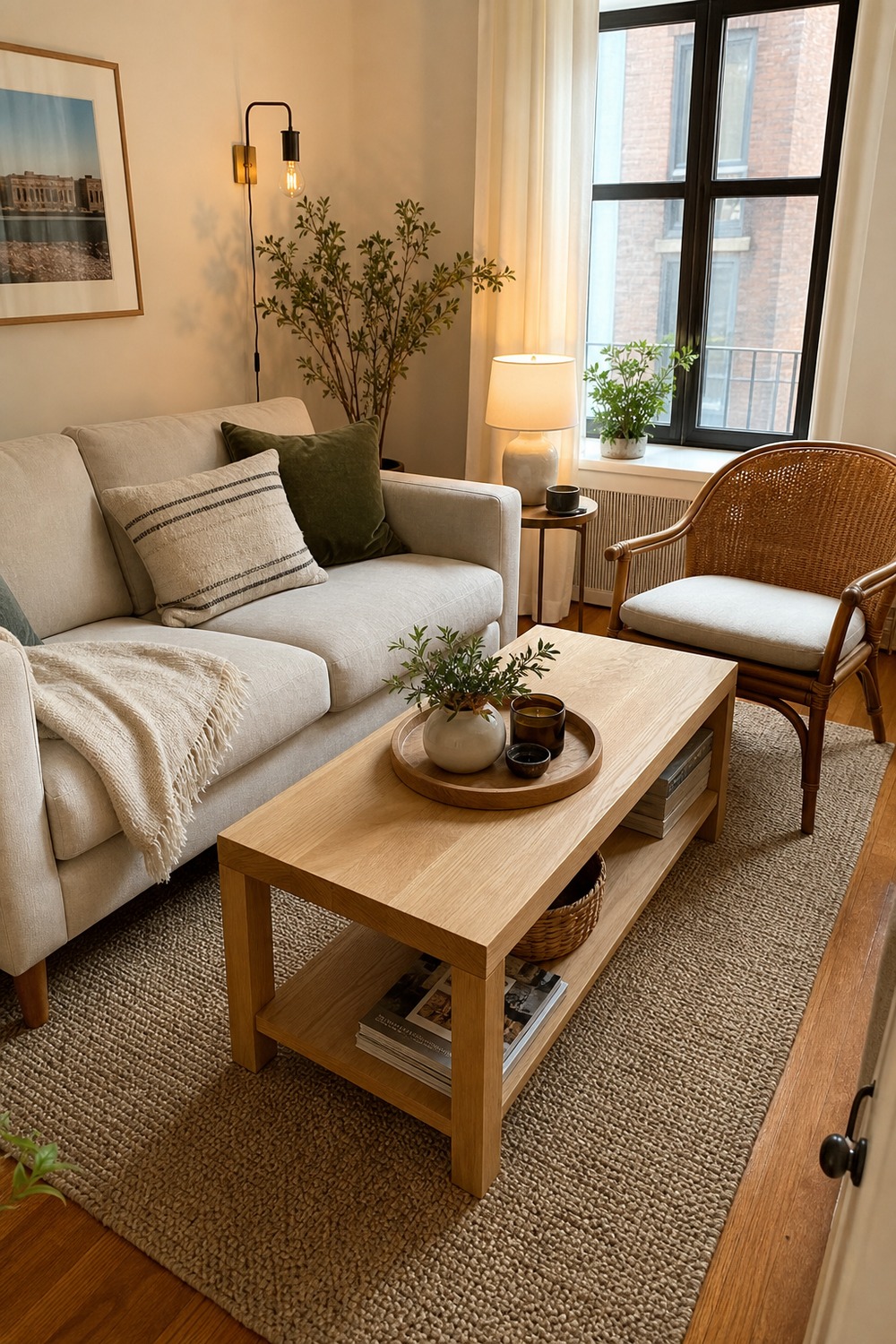
This small-apartment version gets the scale right. The table is narrow enough to leave a walking path, but it still gives the loveseat area a real center point instead of making everything feel pushed against the walls.
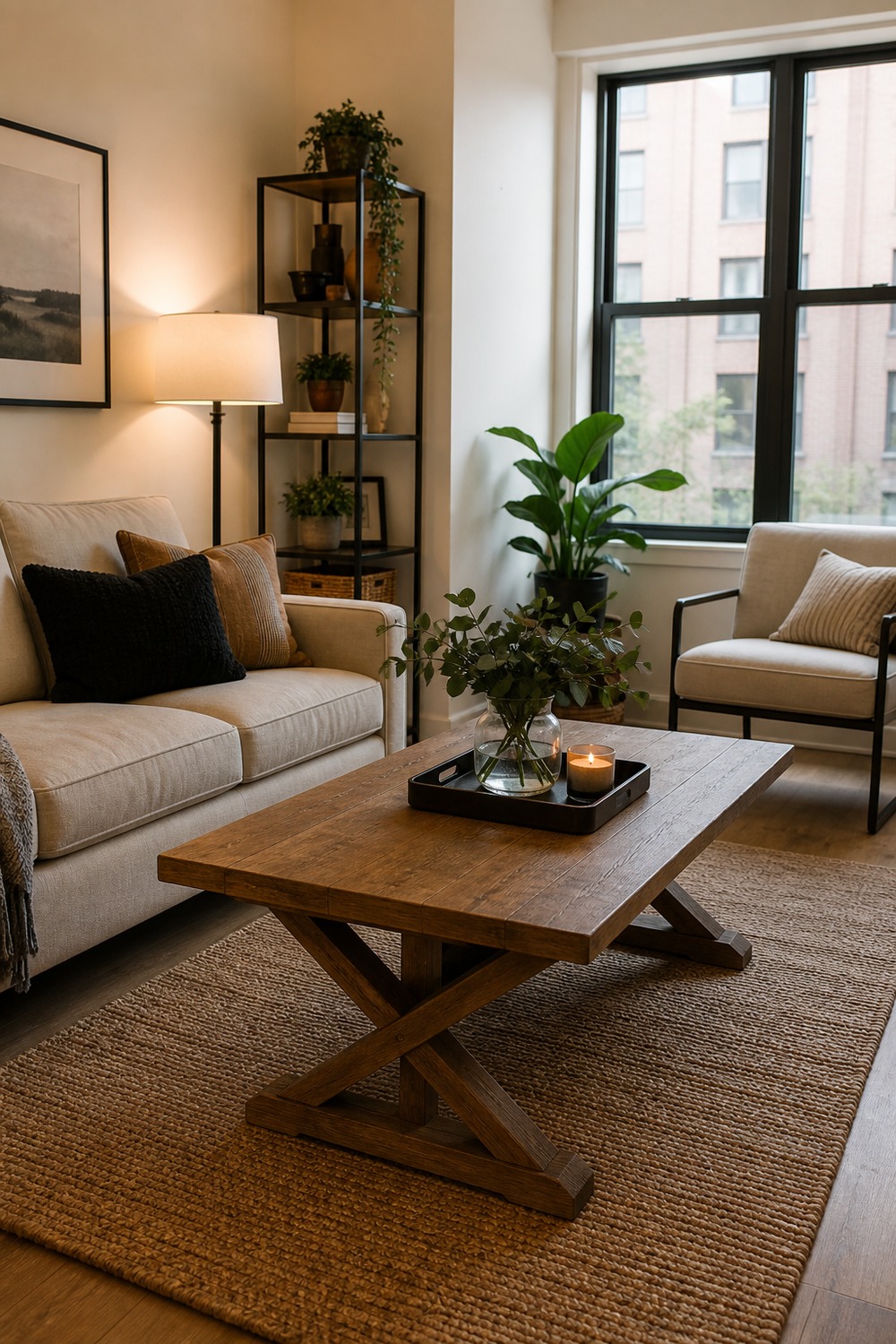
The farmhouse X-leg base gives this table that built-by-hand feeling without needing a fussy shape. Warm wood, a woven rug, and a simple sofa keep it grounded, so the table feels charming instead of theme-y.
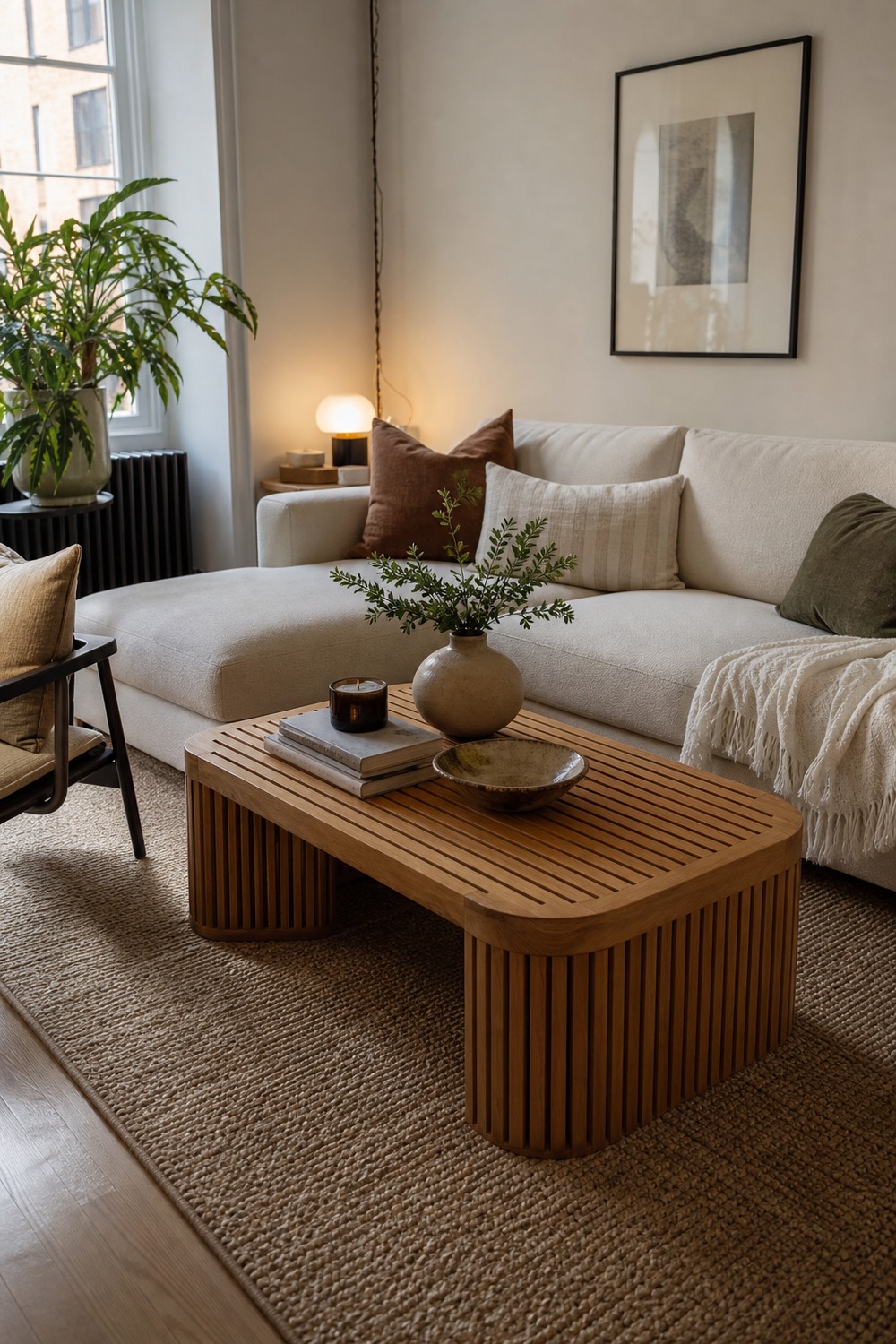
The slatted wood detail adds texture without adding clutter. I like this kind of DIY table for a neutral living room because the rounded edges and visible grain do a lot of the styling work on their own.
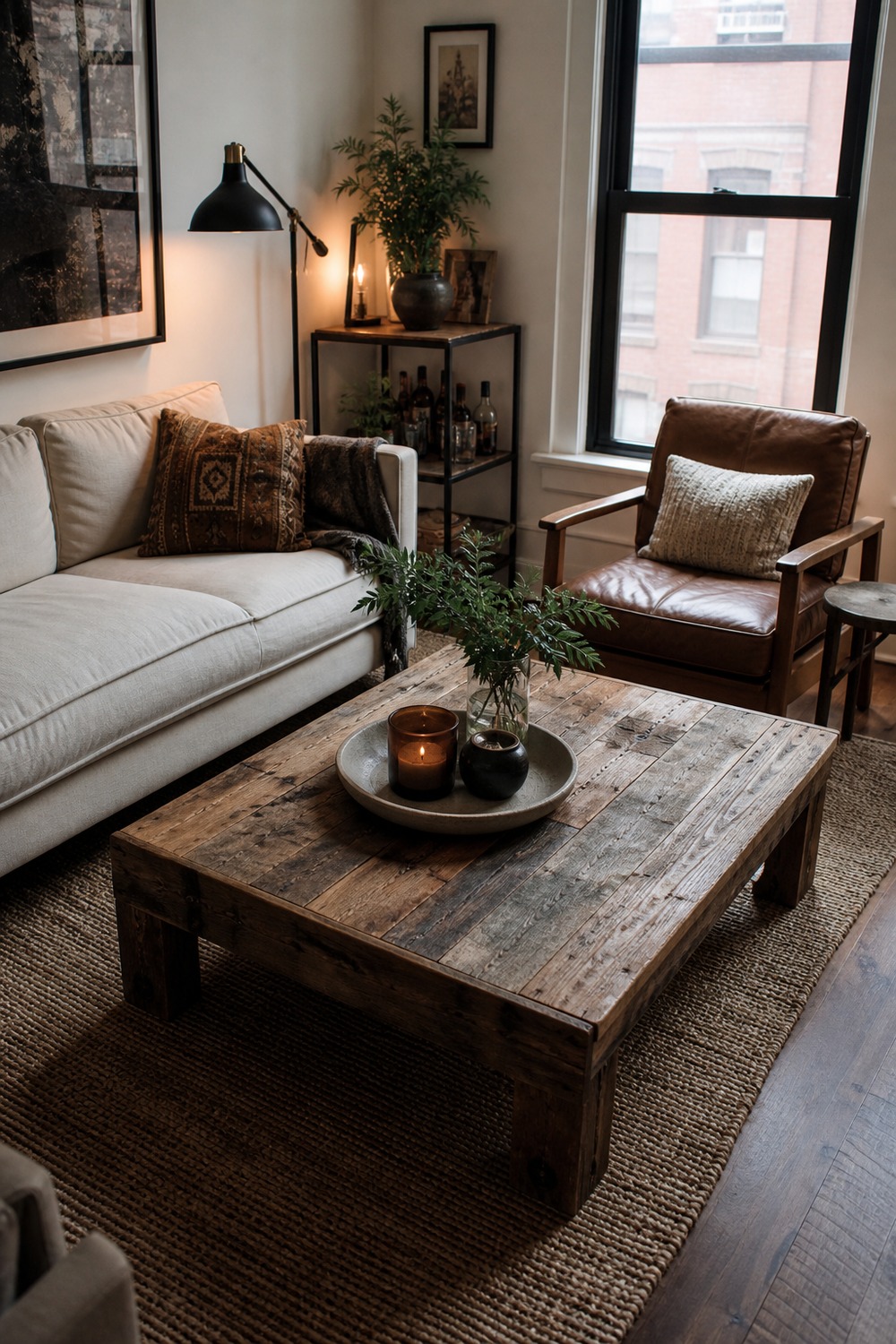
Reclaimed wood always looks better when the finish still feels usable. This table keeps the patched grain and worn character, but the matte surface and tidy proportions make it feel ready for a living room instead of a workshop.
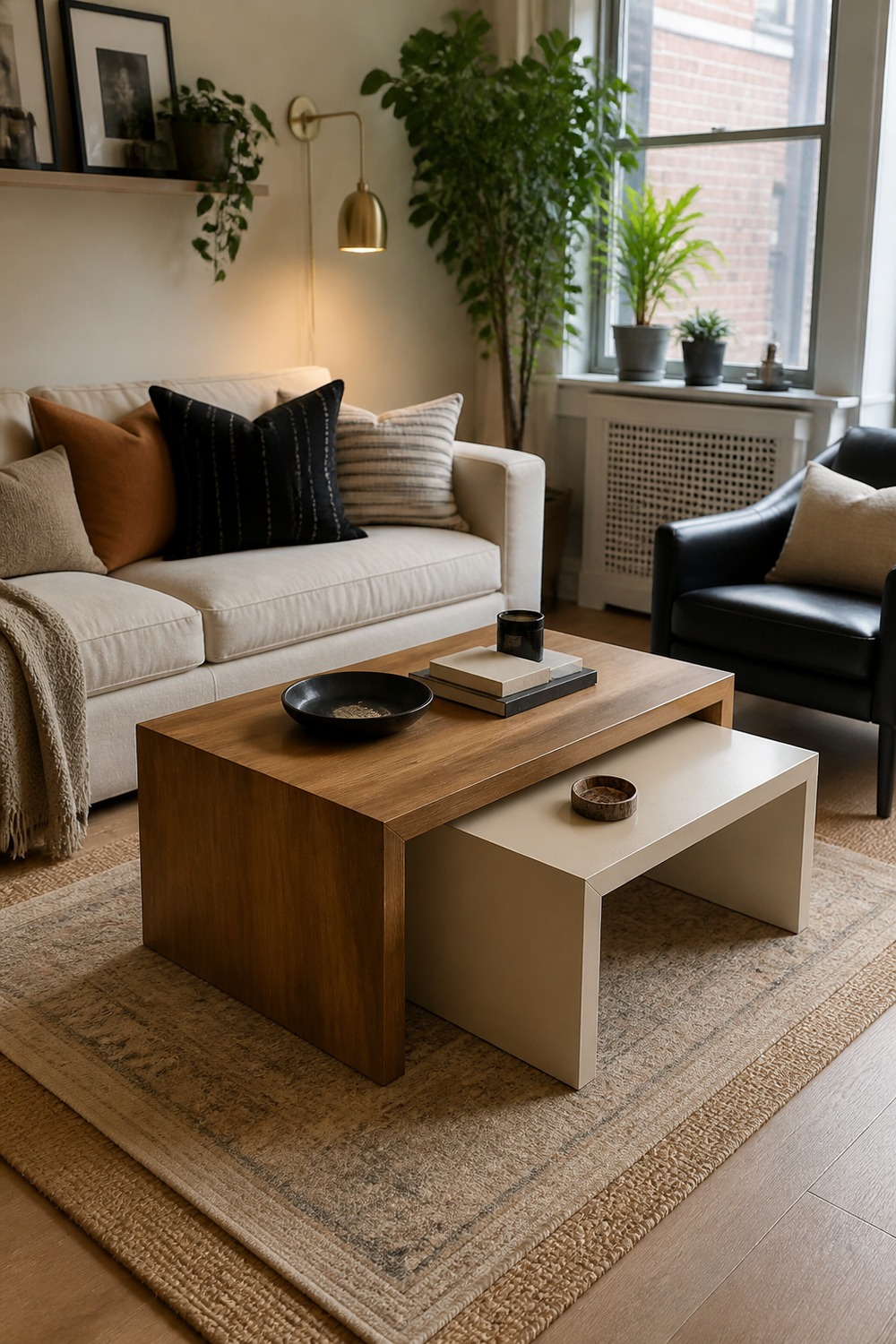
Nesting tables are underrated when a room has to flex. They can sit together like one coffee table most days, then separate when guests need somewhere to set a glass or plate.
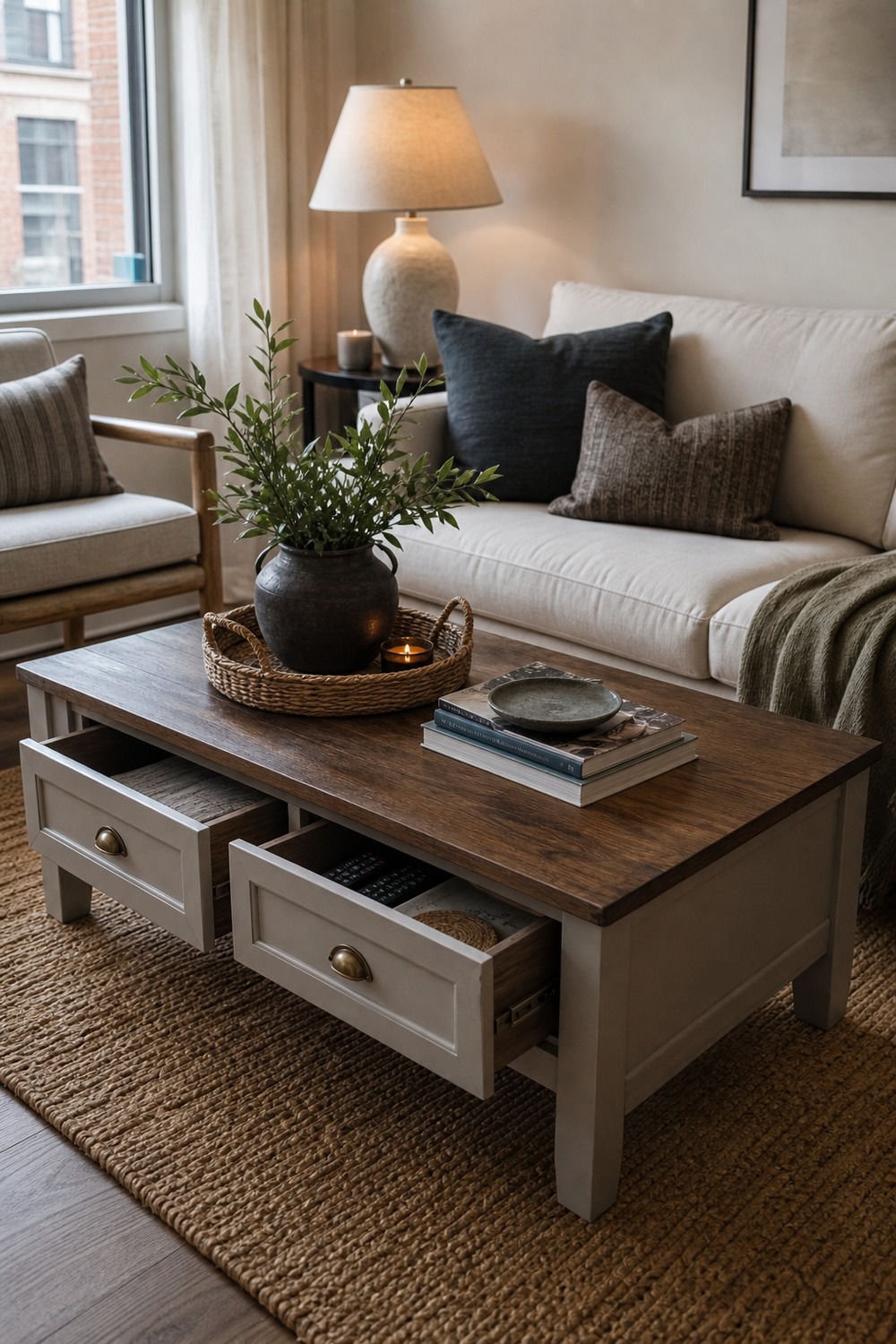
The drawer-front makeover is practical in the least boring way. Painted fronts and brass pulls make the piece feel updated, while the closed storage gives all the little living-room things somewhere to disappear.
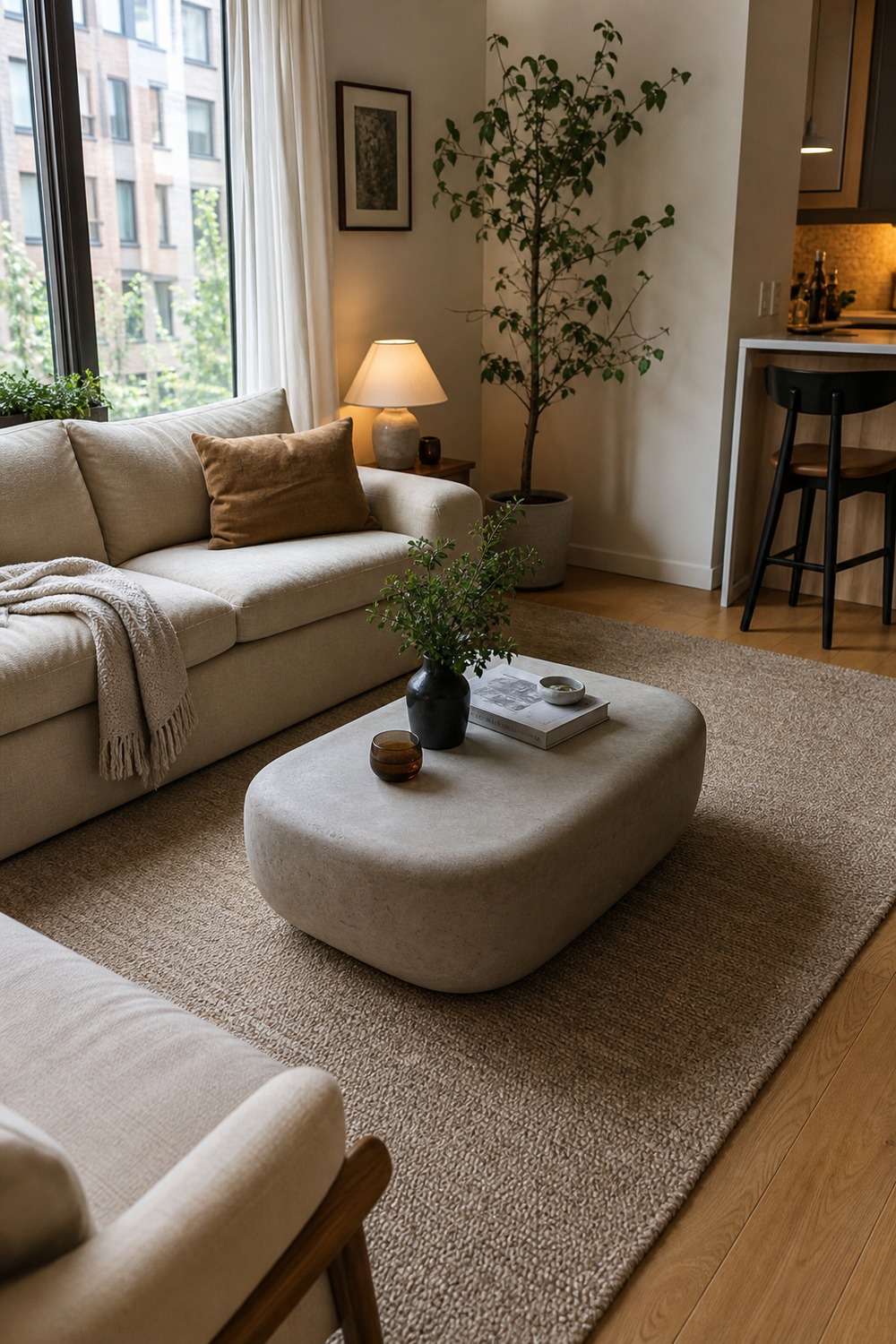
The concrete-look finish gives this DIY table a stronger modern edge. Because the corners are softened and the palette stays neutral, it still feels livable beside a beige sofa instead of too cold.
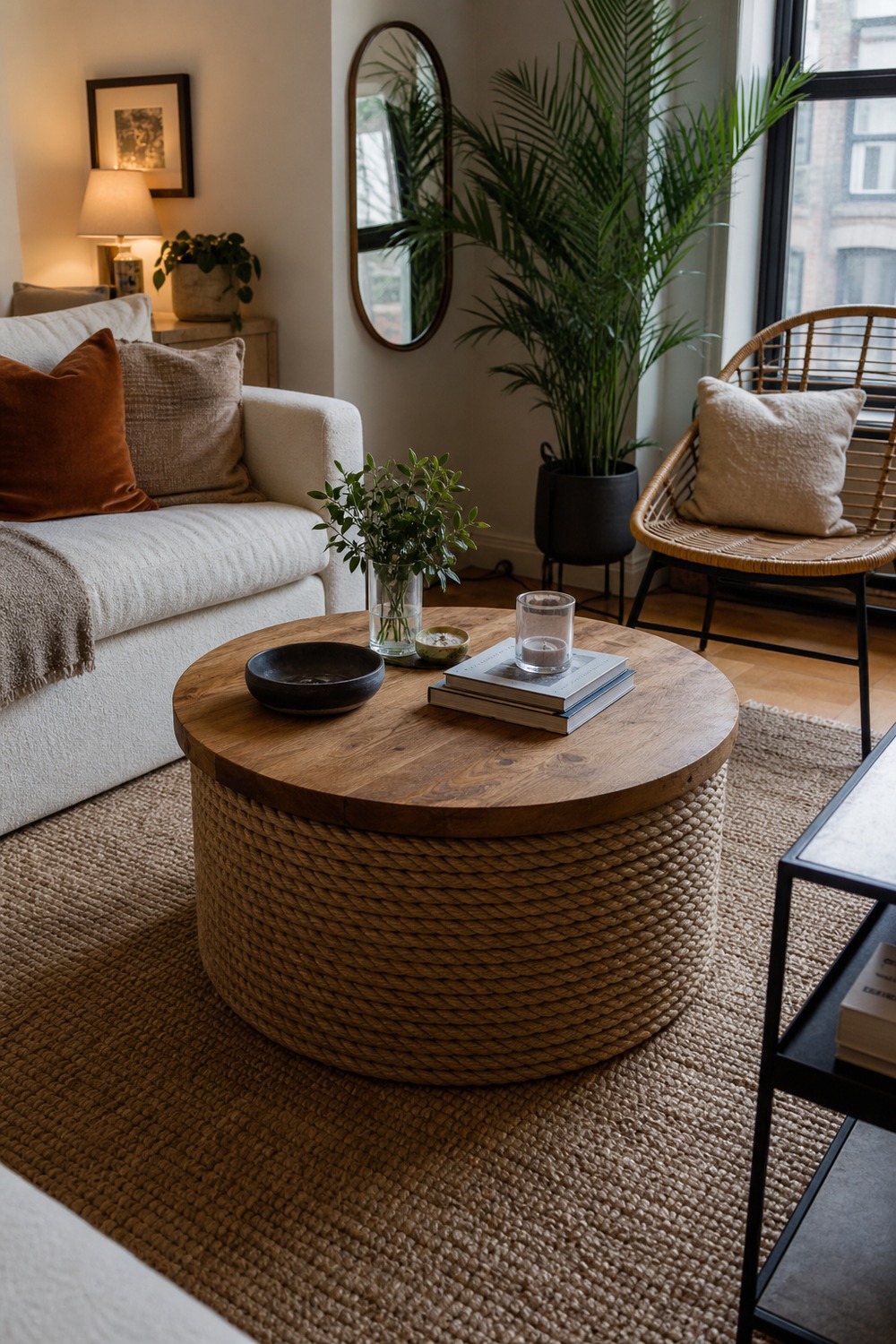
The rope-wrapped base brings in texture without needing a pile of extra decor. It has that relaxed boho feeling, but the wood top keeps the table practical enough for trays, books, and drinks.
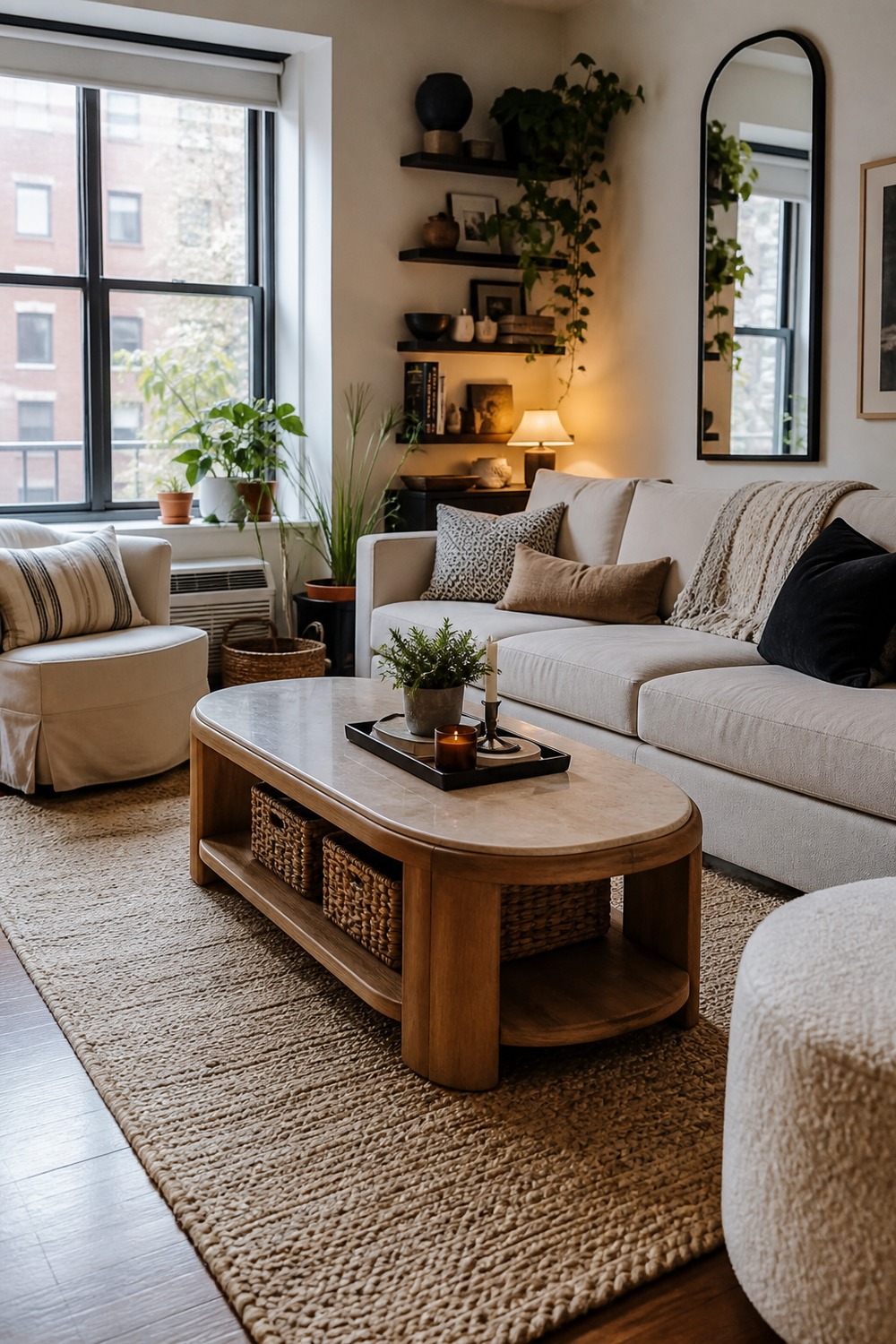
Rounded edges make this one feel especially realistic for a busy living room. The sturdy wood base, baskets nearby, and soft rug all make it look like a table that could handle kids, pets, and normal weeknight clutter.
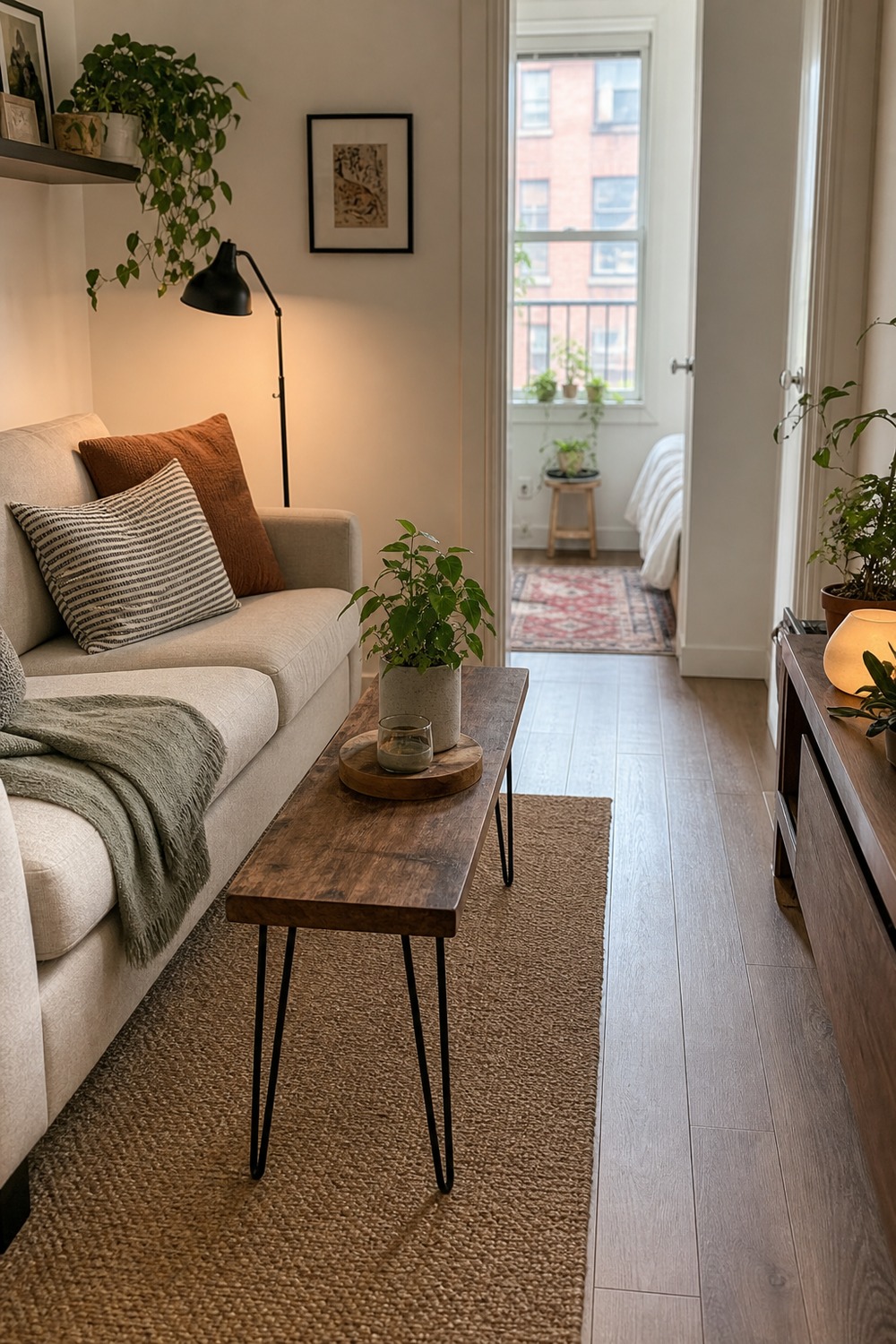
A narrow coffee table is a good fix when the sofa is close to the TV or walkway. This version still gives the room a surface for a plant and tray, but it does not eat up the space in front of the loveseat.
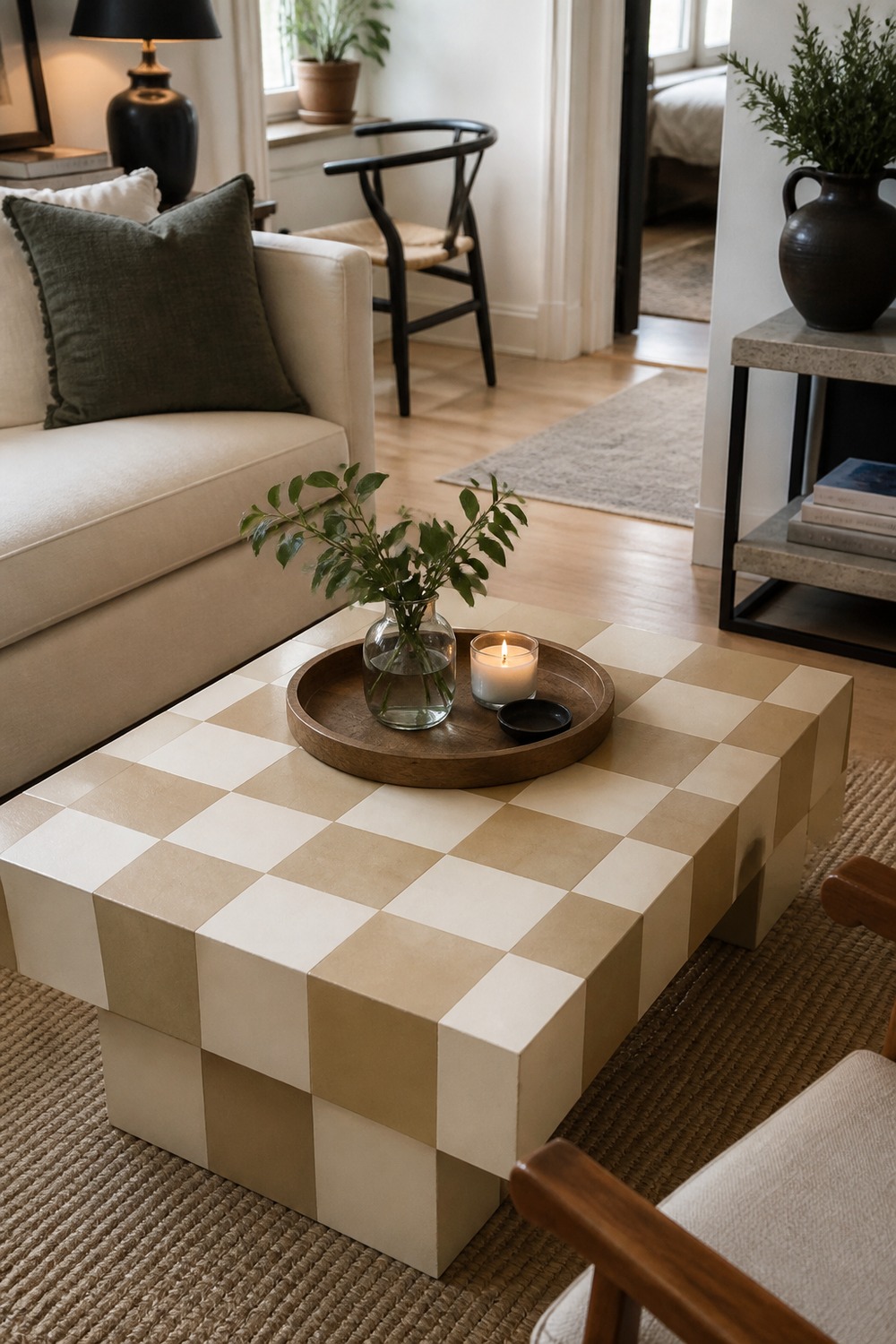
The checkerboard paint gives the table a playful DIY twist without making the whole room loud. Muted cream and tan keep it soft, and the simple tray on top helps the pattern feel styled instead of busy.
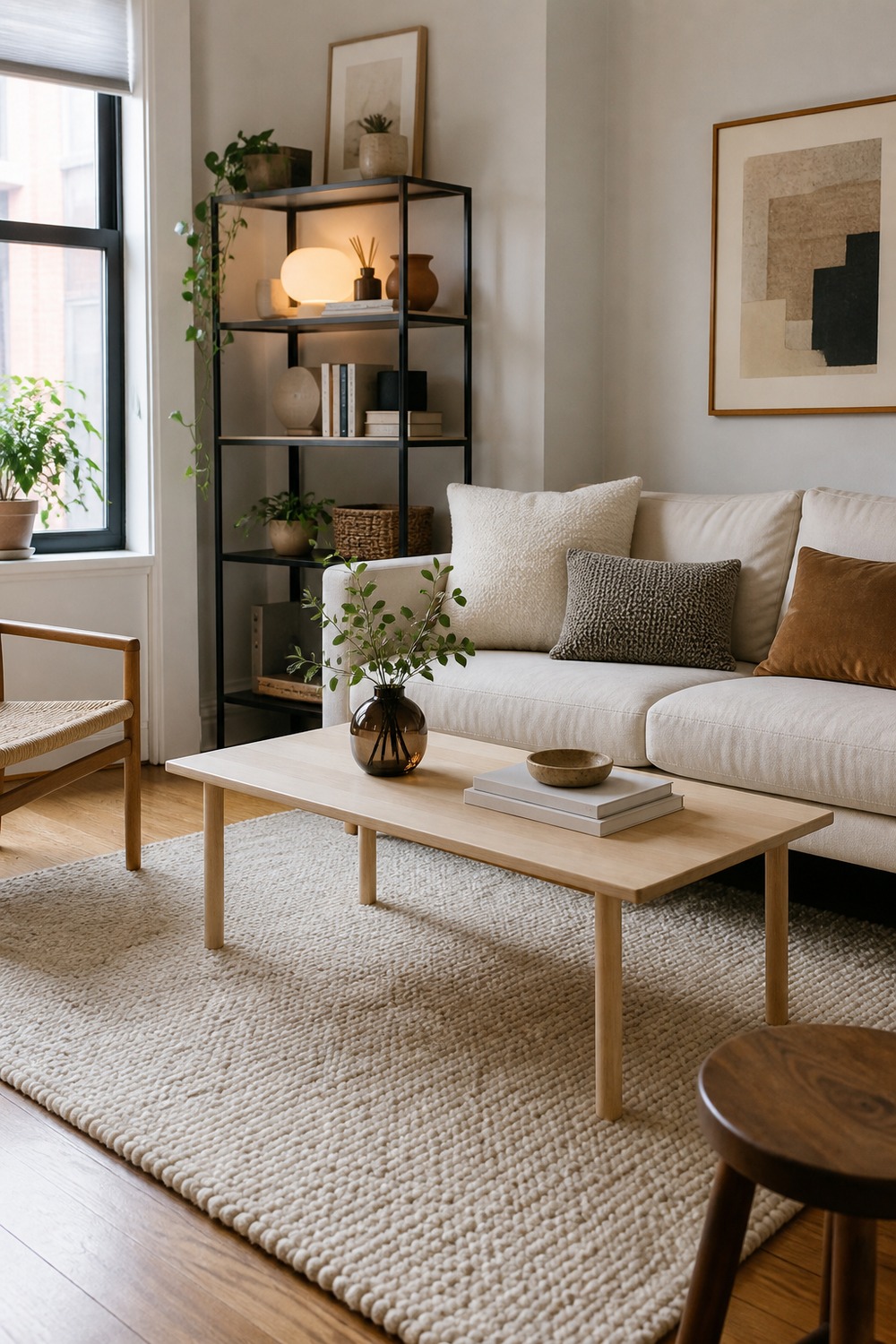
The dowel legs are a small detail, but they make the table feel custom. Pale wood, slim legs, and a light rug give the room an airy look while still keeping the coffee table useful.
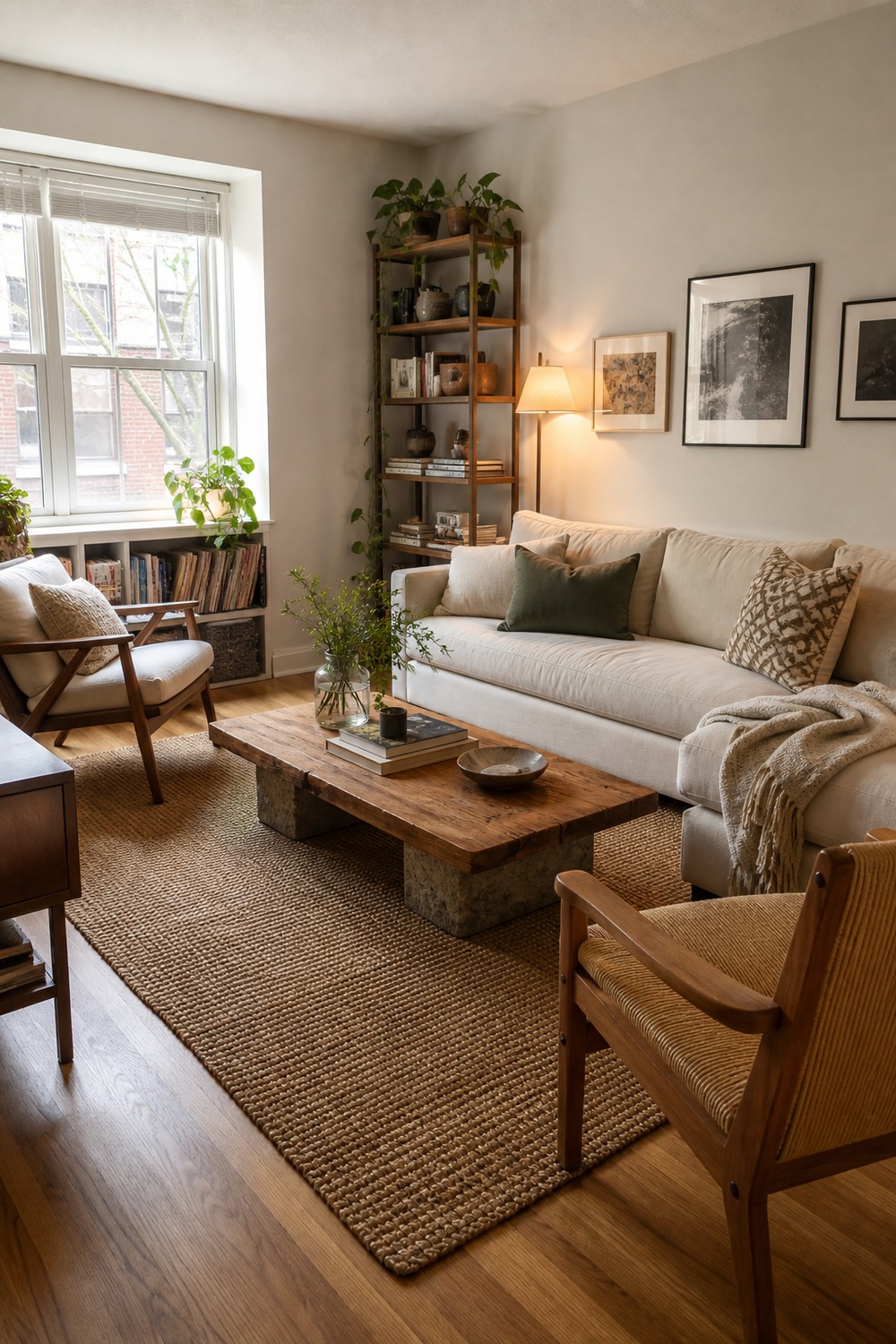
This full-room view shows why the coffee table matters so much. Once the sofa, rug, chairs, and handmade table all line up visually, the whole seating area feels finished without needing a lot of extra decoration.
A handmade coffee table does not have to look overly perfect to make the room feel pulled together. The best ideas here use shape, texture, storage, and scale in a way that still leaves the sofa area easy to live with.
Leave a comment