
Dark coffee tables are great when the room needs a little weight, but they can turn heavy fast if the shape, rug, and sofa colors are all fighting each other. The strongest versions use contrast on purpose: matte black, espresso wood, smoked glass, stone, or dark walnut with enough light fabric and open floor space around it.
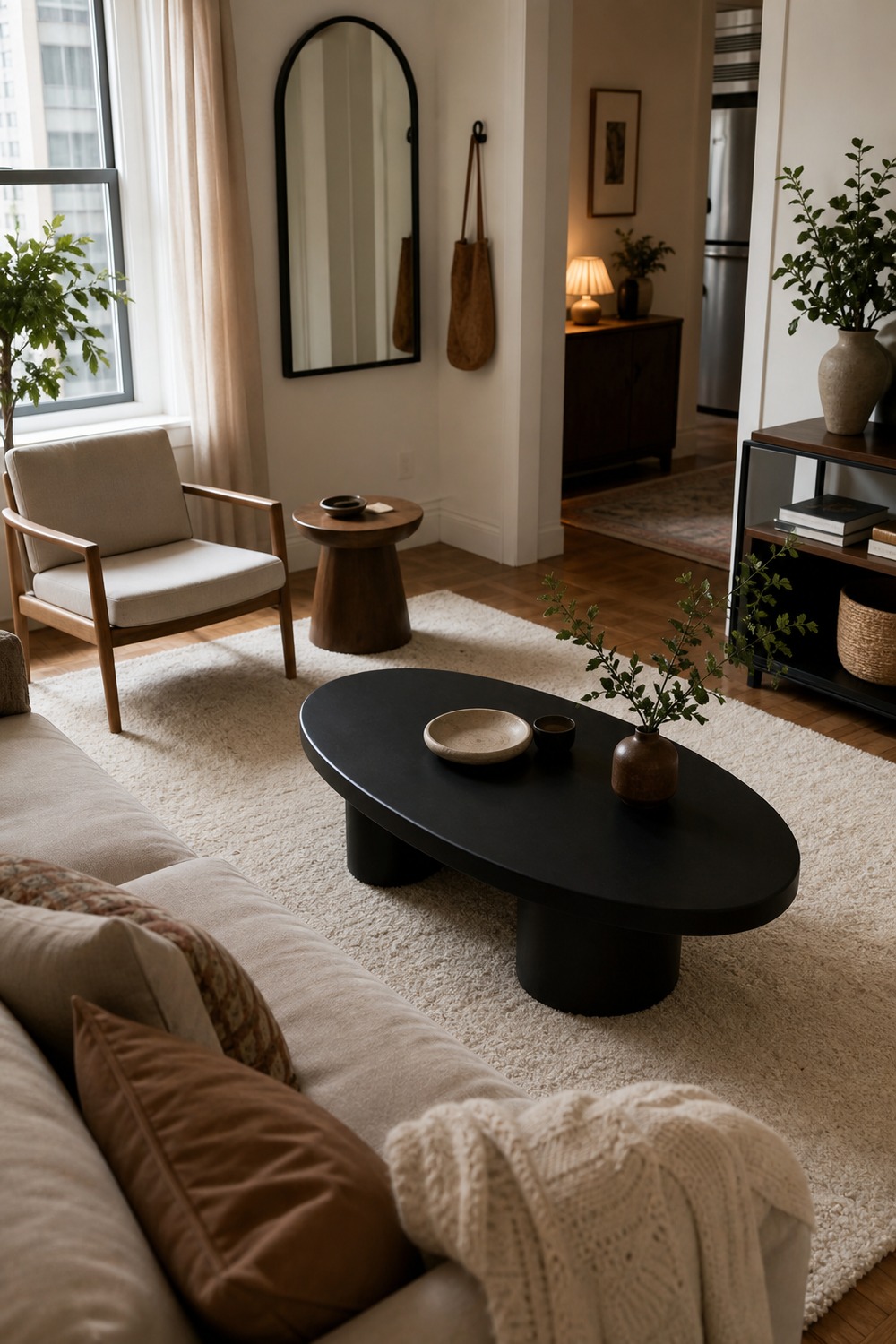
A matte black oval table is a nice way to add weight without making the sofa area feel boxed in. The rounded edge keeps the walkway softer, and the cream rug underneath gives the dark finish enough contrast to look intentional.
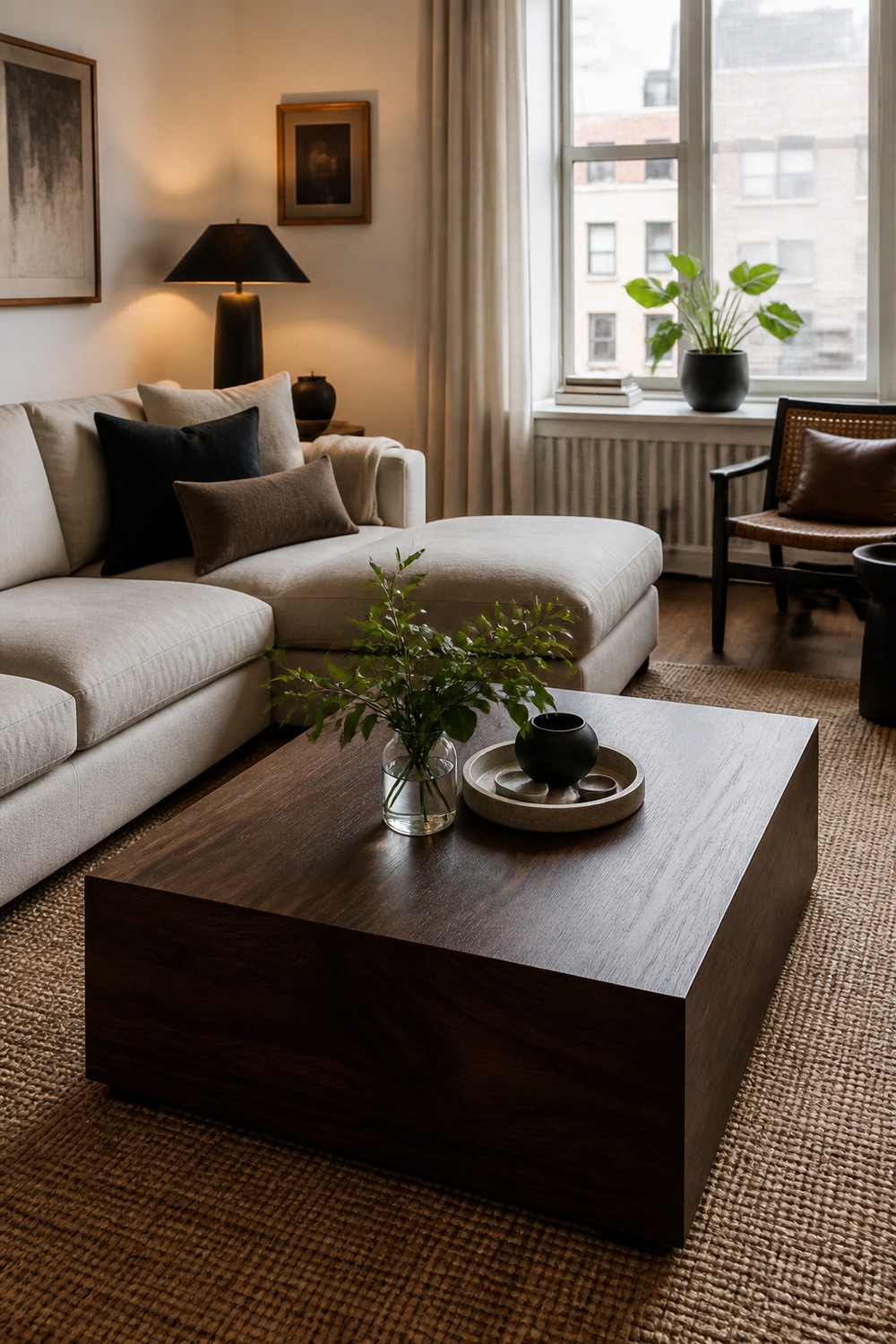
This dark walnut block table feels solid in the best way. I like the visible grain with the linen sectional because it gives the room a center point without needing a lot of extra styling on top.
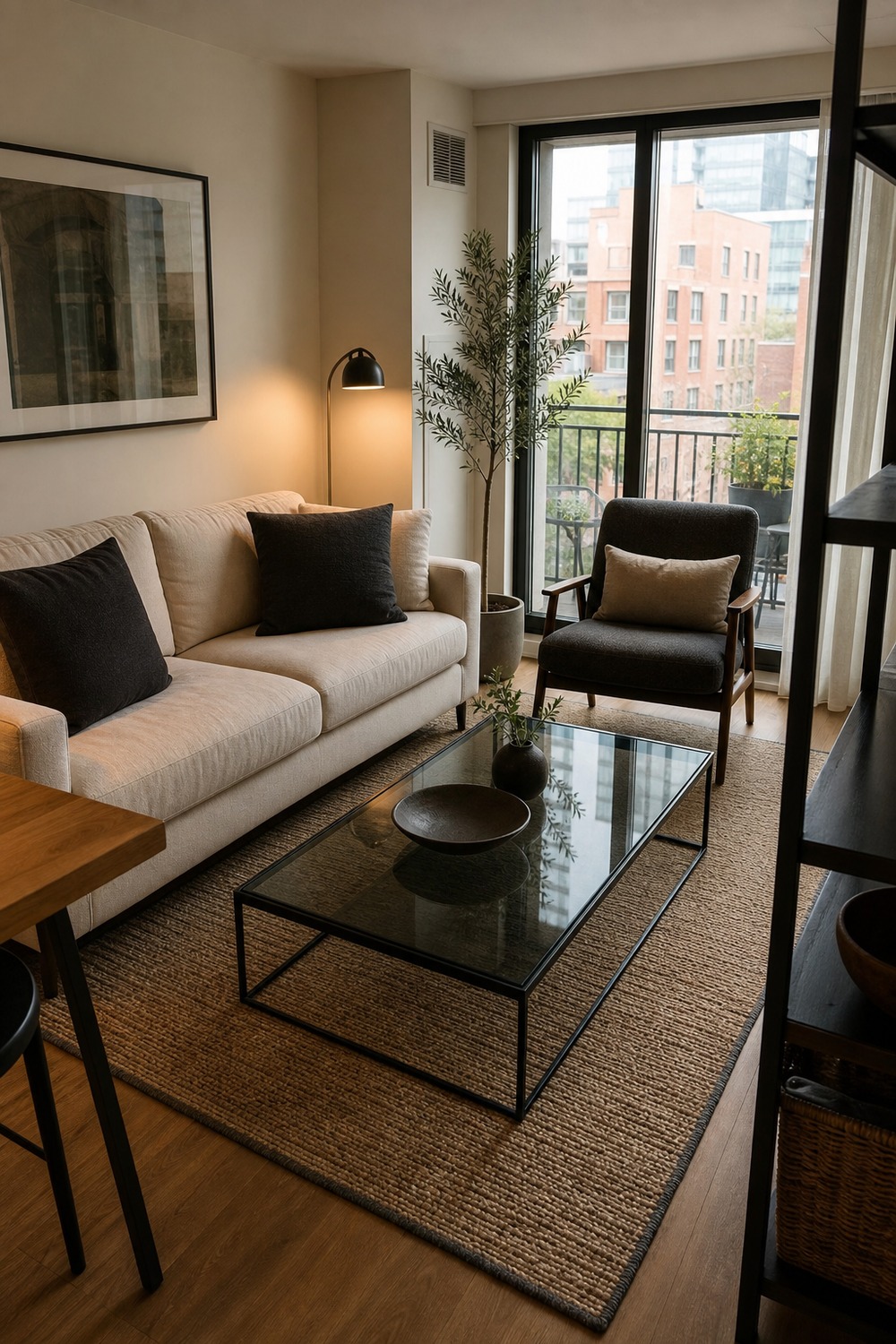
Smoked glass is a good choice when you want the darker look but still need the room to breathe. The slim black frame, soft reflections, and pale sofa keep the table from feeling too heavy for an apartment layout.
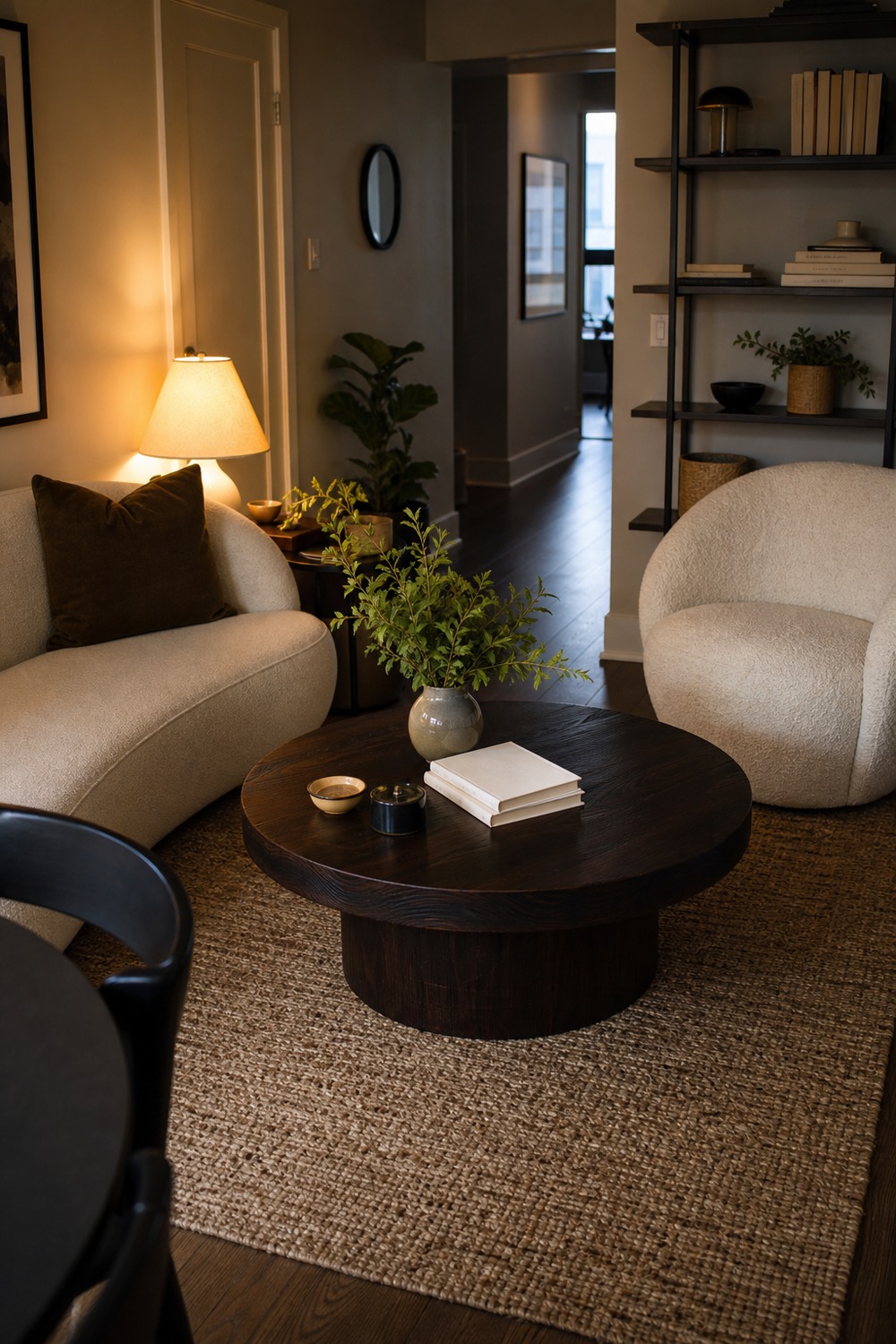
A round espresso table makes the whole seating area feel a little easier to move around. The curved sofa, textured rug, and warm lamp glow help the dark wood feel cozy instead of severe.
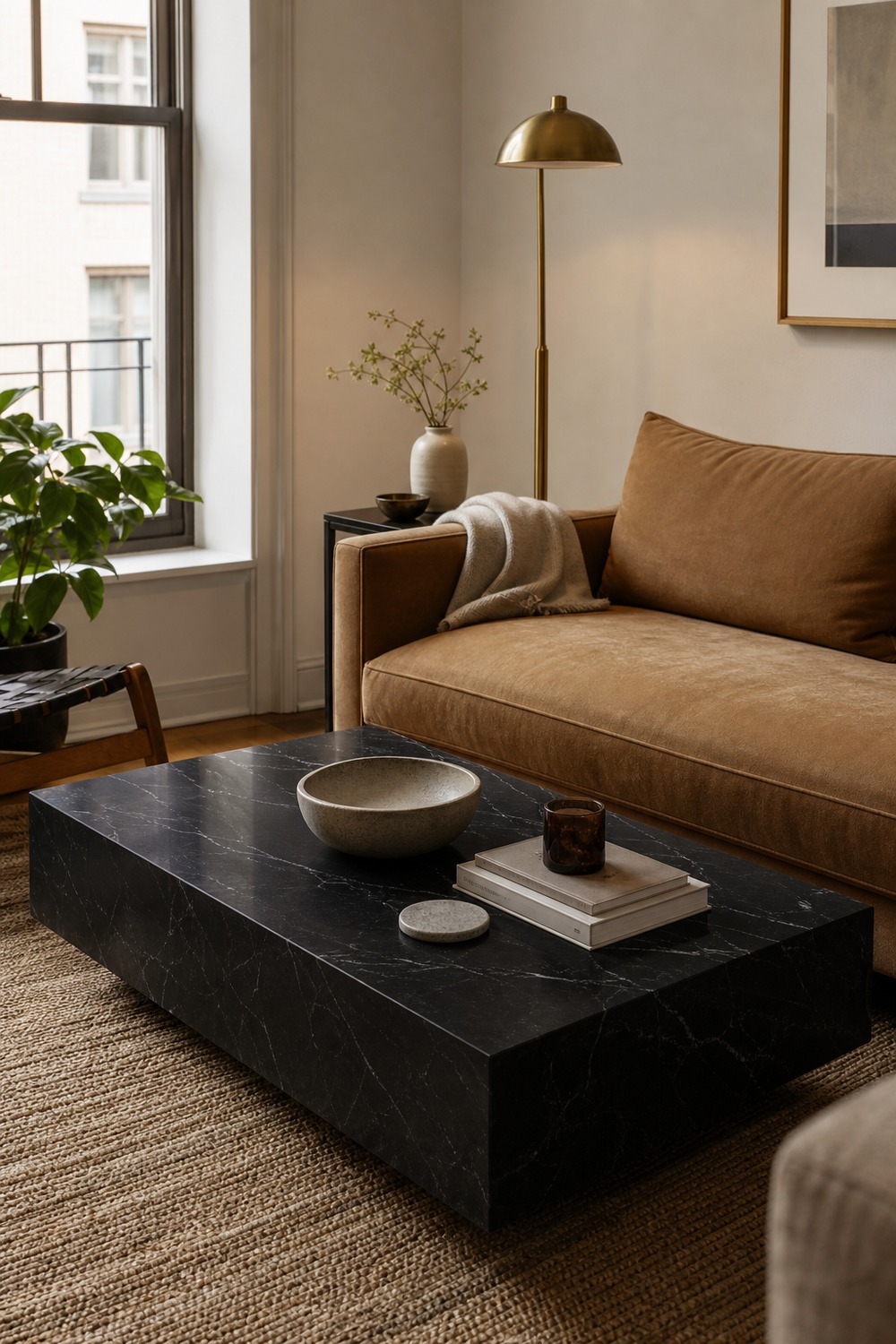
The black marble idea works because the surface has depth instead of looking like a plain black block. A brass lamp and tan sofa are exactly the kind of lighter pieces that stop dark stone from taking over the room.
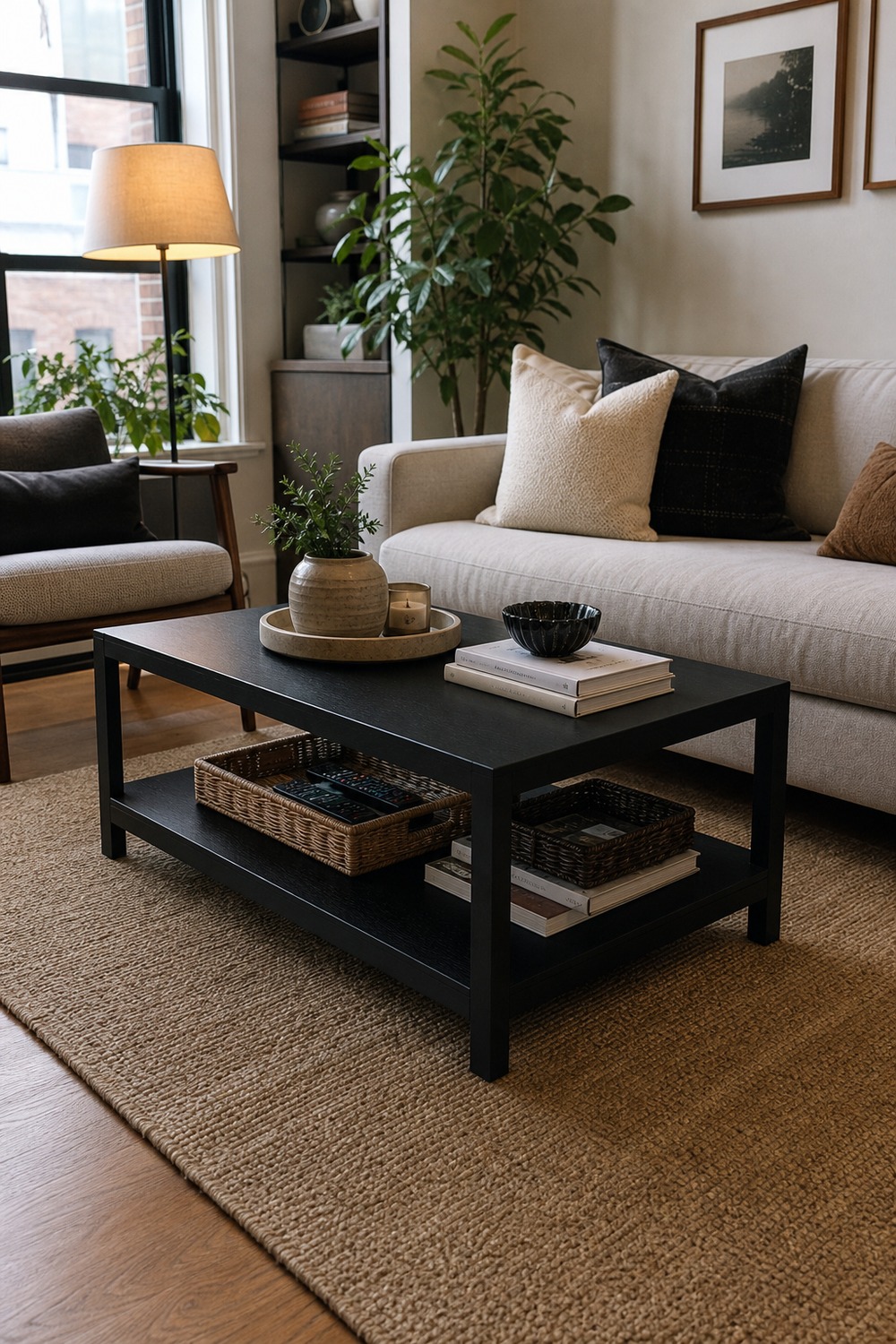
A two-tier black table is useful when remotes, books, and baskets need somewhere to go besides the tabletop. The lower shelf gives the room a cleaner first impression while still keeping everyday stuff close.
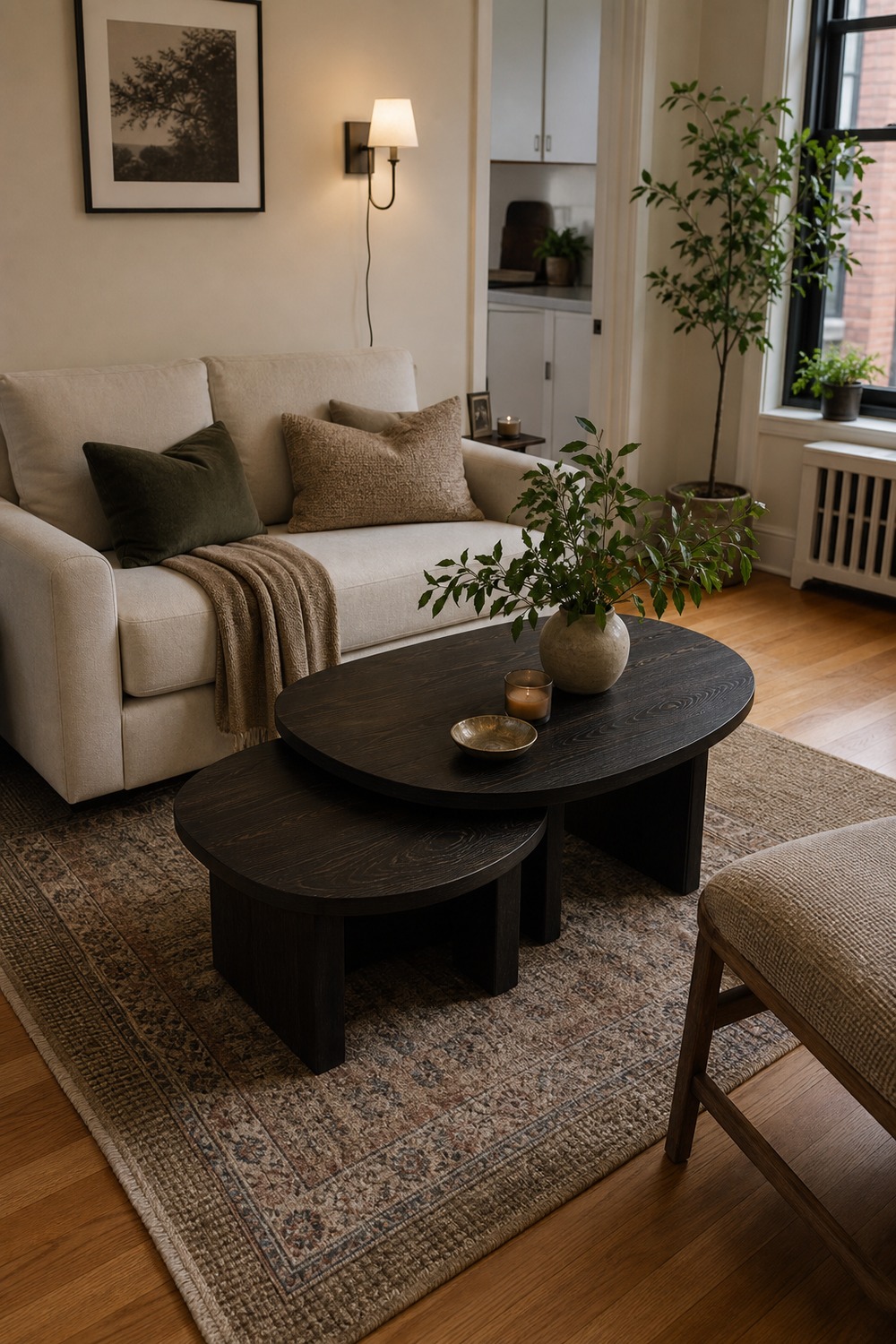
Nesting tables make a dark coffee table setup feel more flexible. One piece can slide out for drinks or snacks, but together they still read like one finished anchor in front of the loveseat.
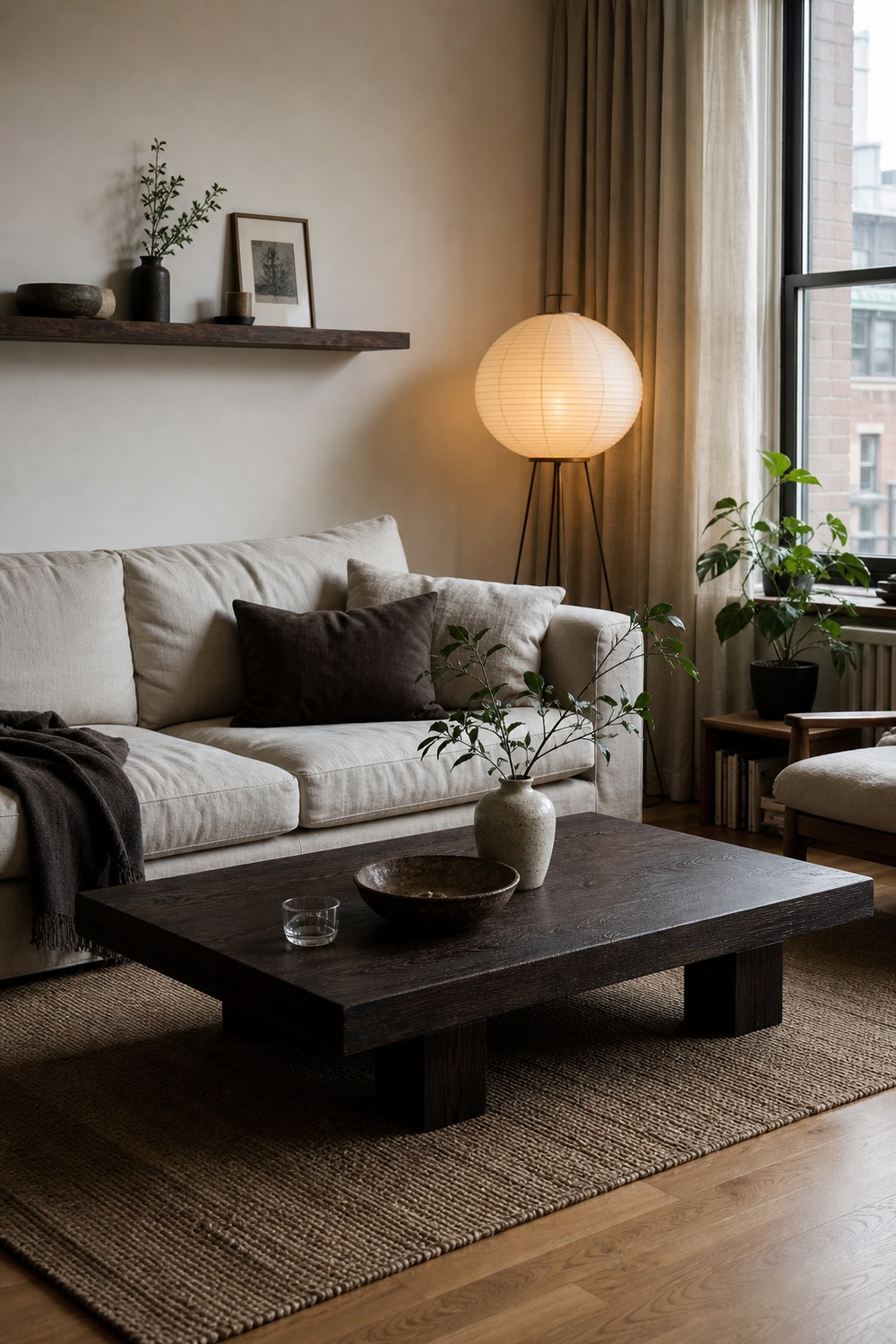
This low Japandi table has that calm, grounded look that works especially well with simple seating. The paper lamp and pale linen keep the dark oak from feeling cold, which is the part I like most.
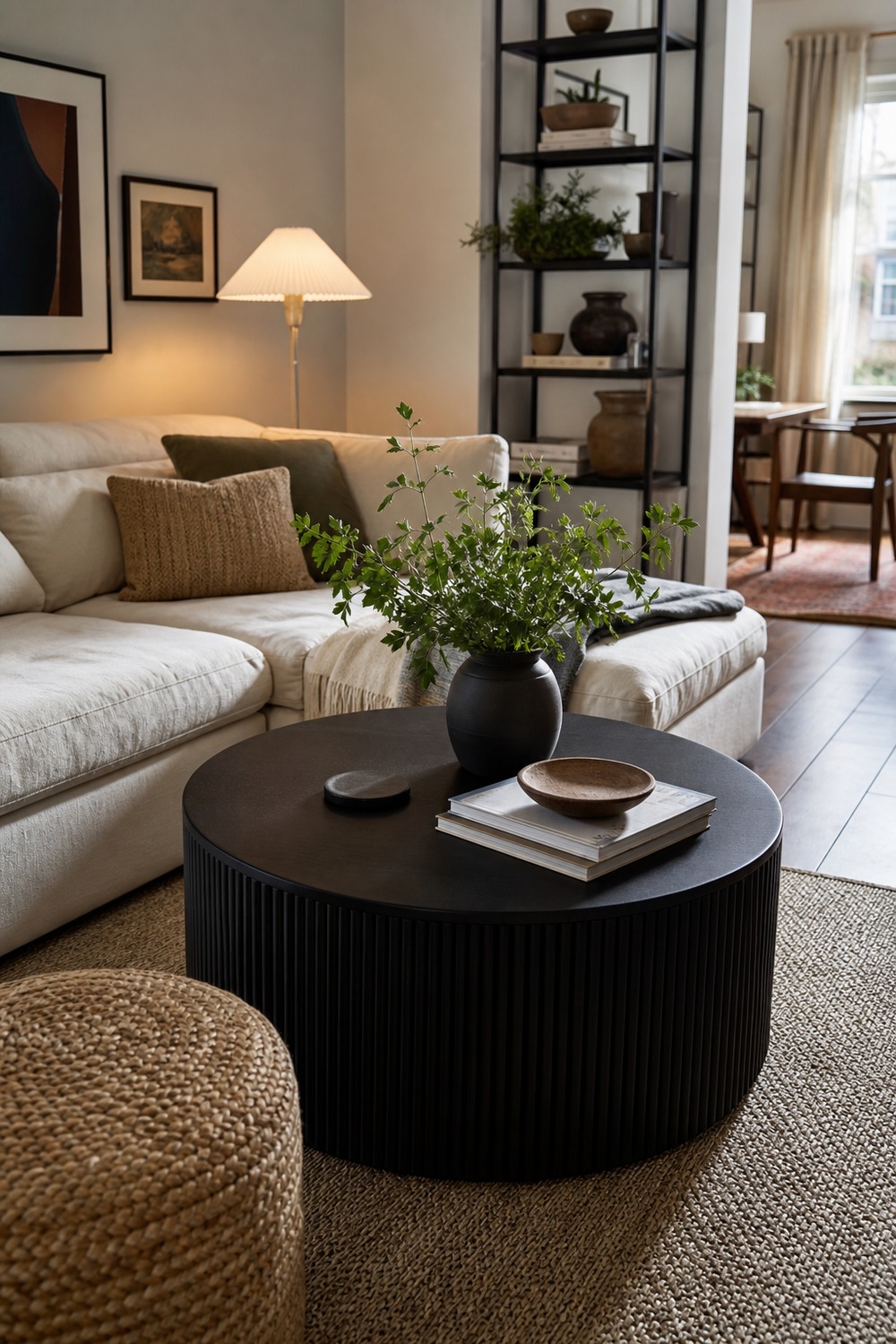
The fluted base gives this black drum table enough texture that it does not need much on top. It feels sculptural, but the round shape still looks friendly beside a cream sectional and woven ottoman.
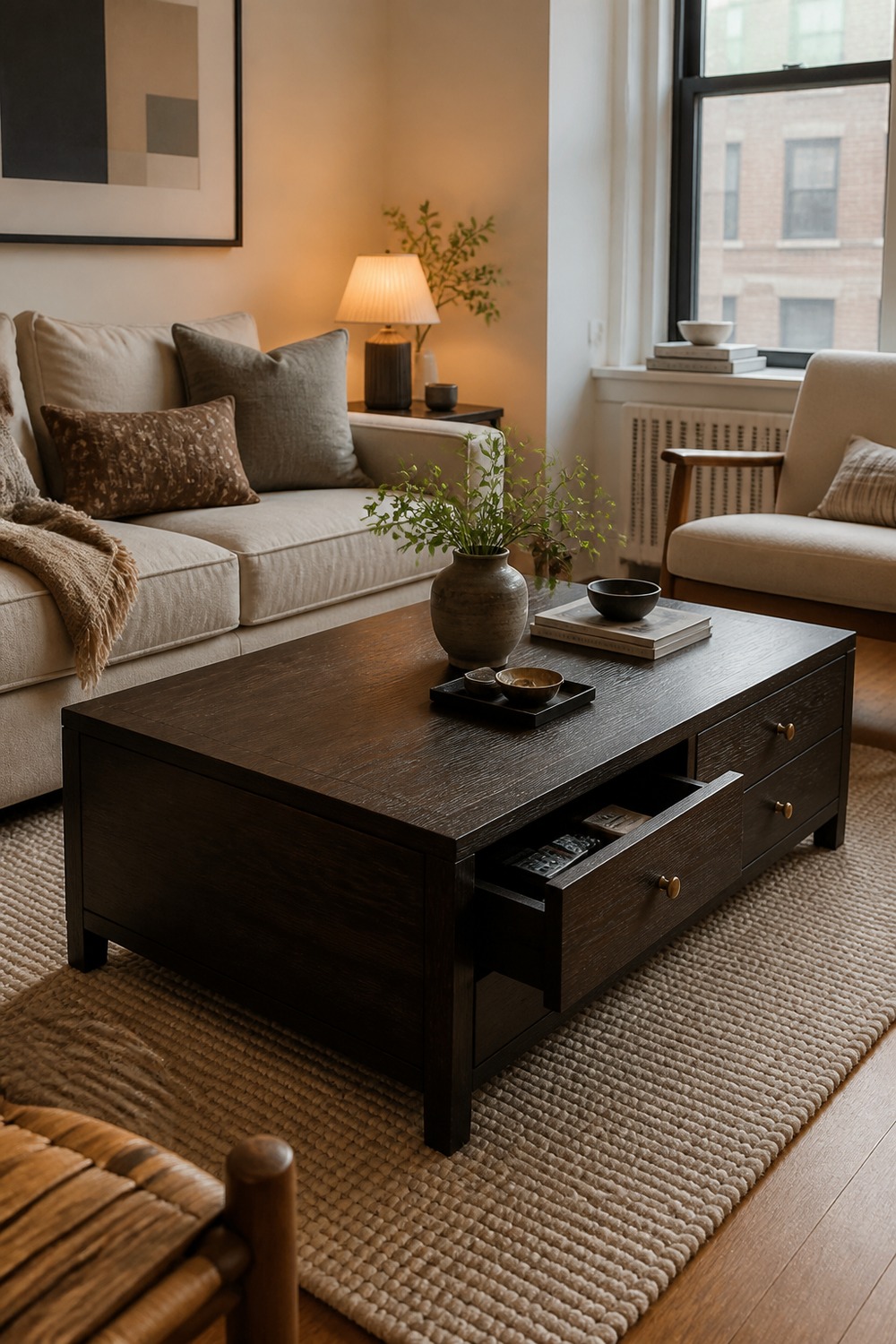
Drawers are one of those details that make a coffee table quietly practical. This one still looks clean from the sofa, but it gives small clutter a place to disappear before the room starts feeling messy.
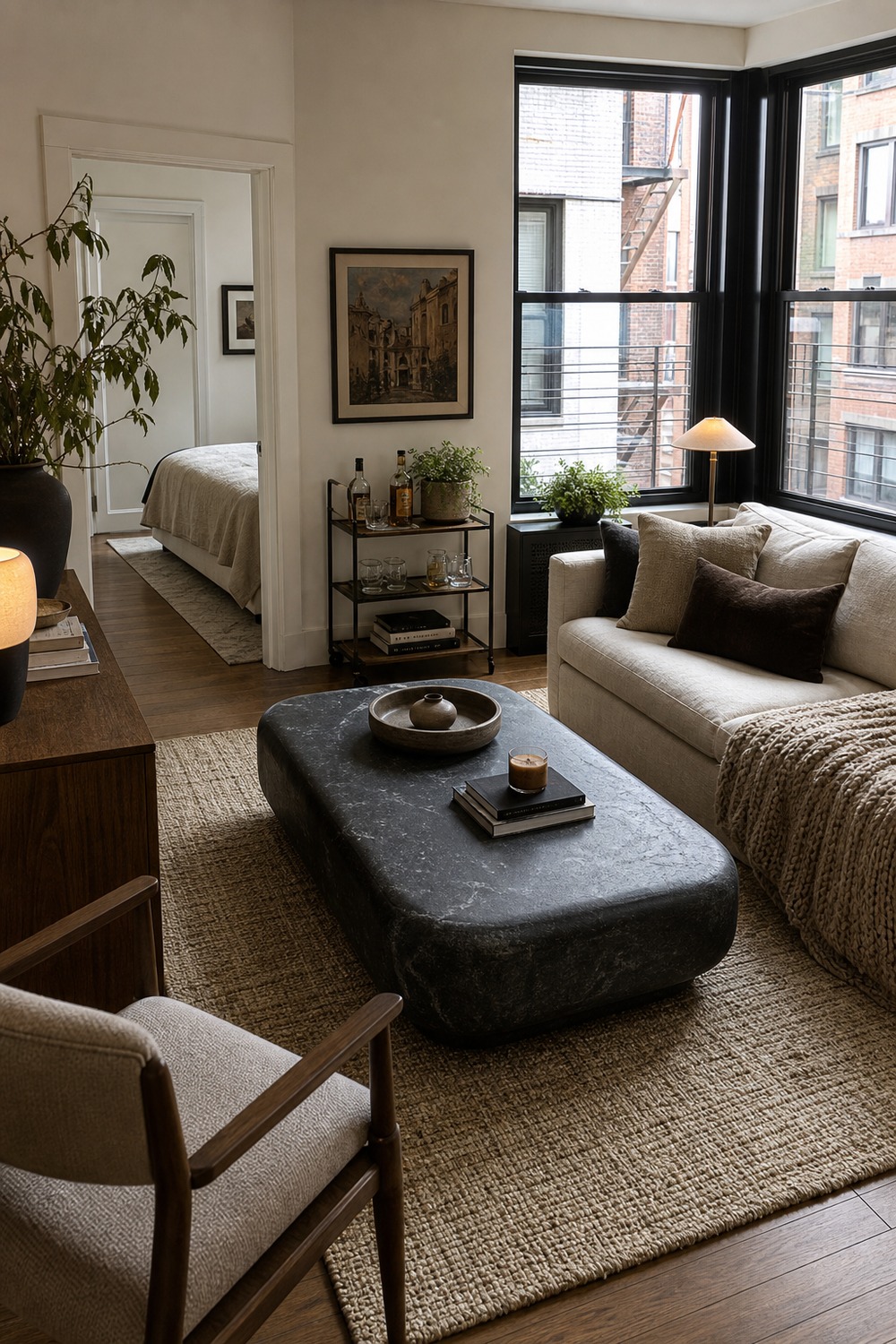
Charcoal stone feels softer here because the edges are rounded and the sofa stays pale. The matte tray and textured rug make the darker table feel layered rather than glossy or showroom-perfect.
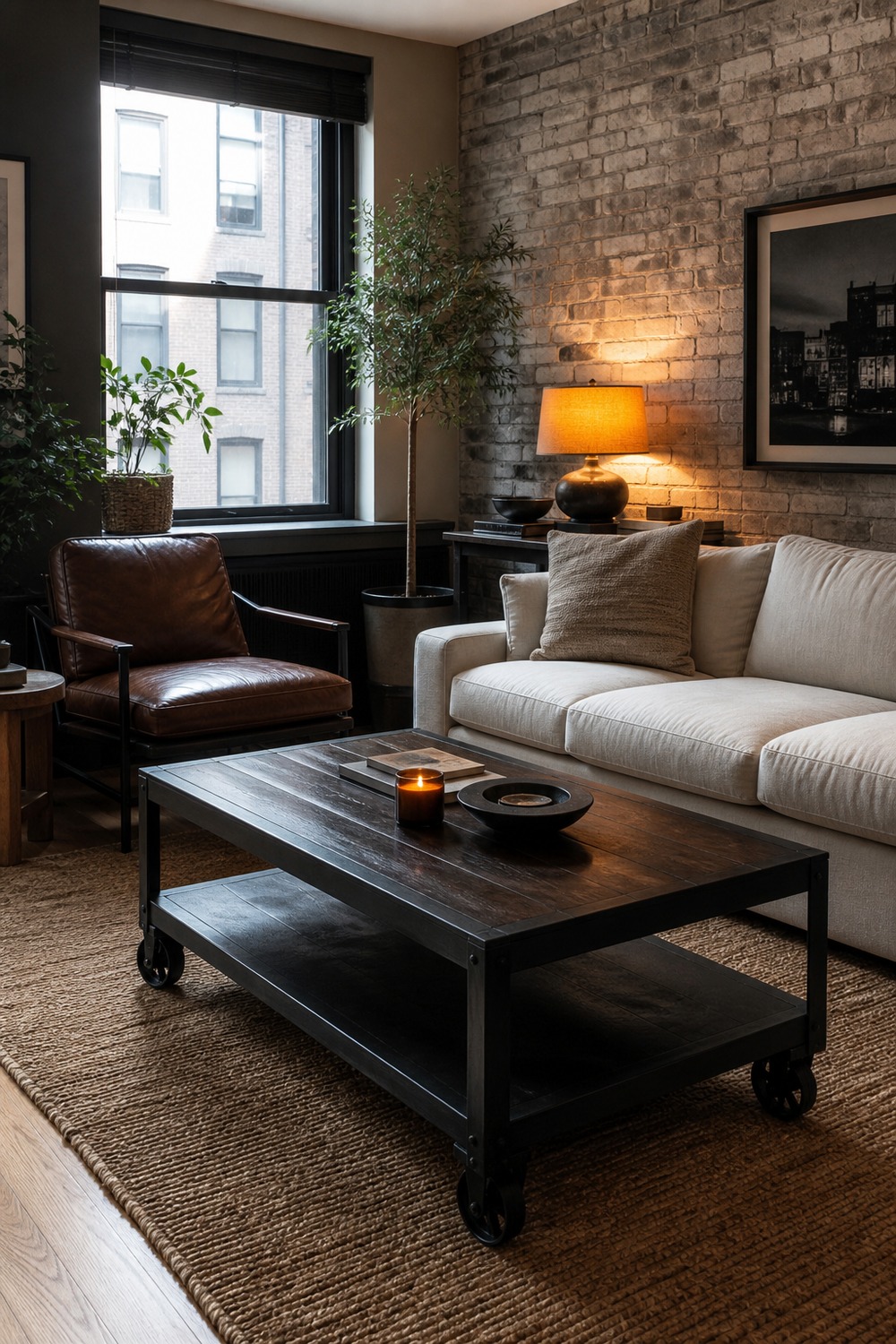
The industrial version works best when the metal has some warmth around it. Leather, limewash texture, and amber light keep the black frame from feeling like office furniture in the middle of the living room.
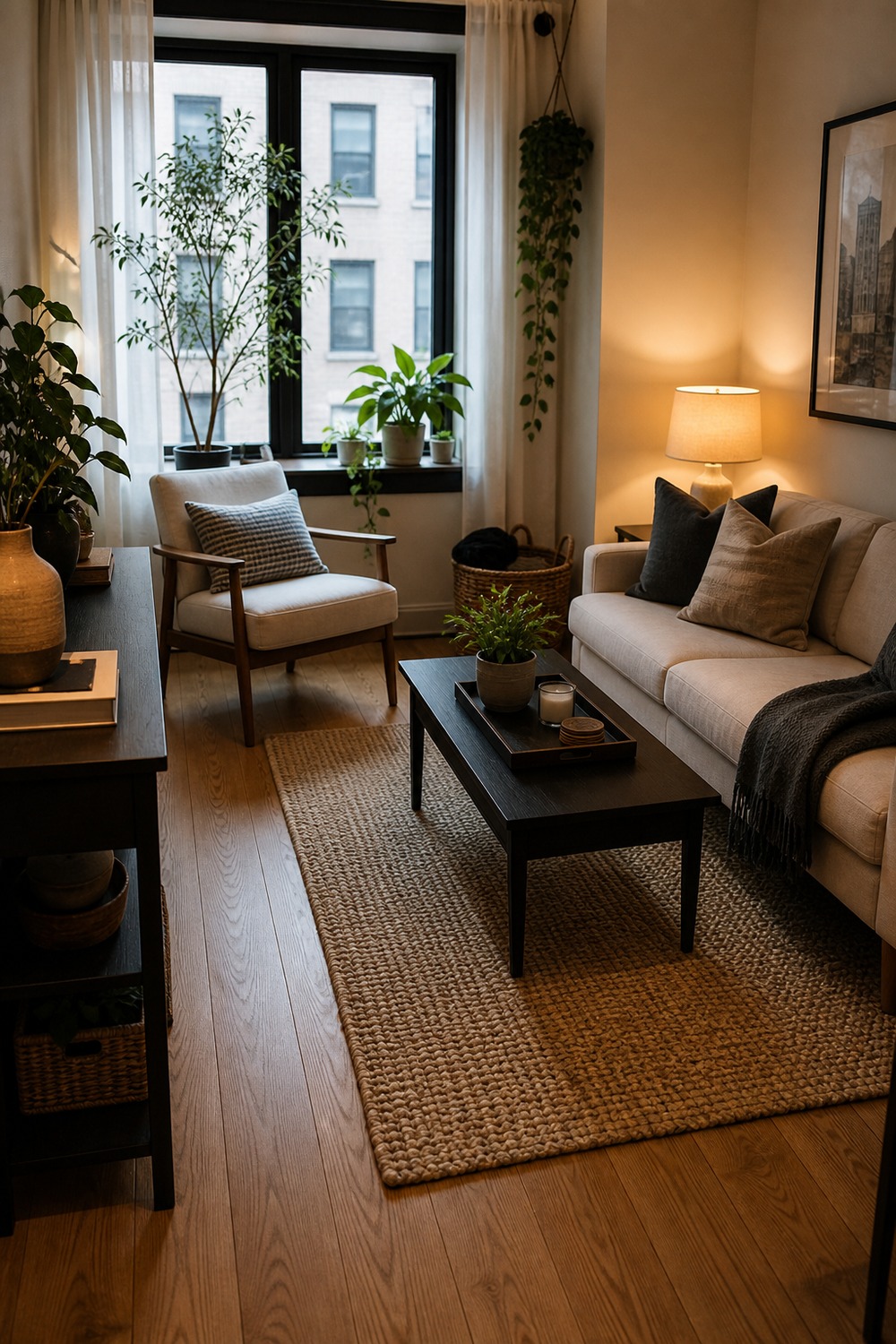
For a small apartment, the proportions matter more than the color. This compact dark table gives the sofa area a real landing spot while the slim legs and clear walkway keep the room from feeling crowded.
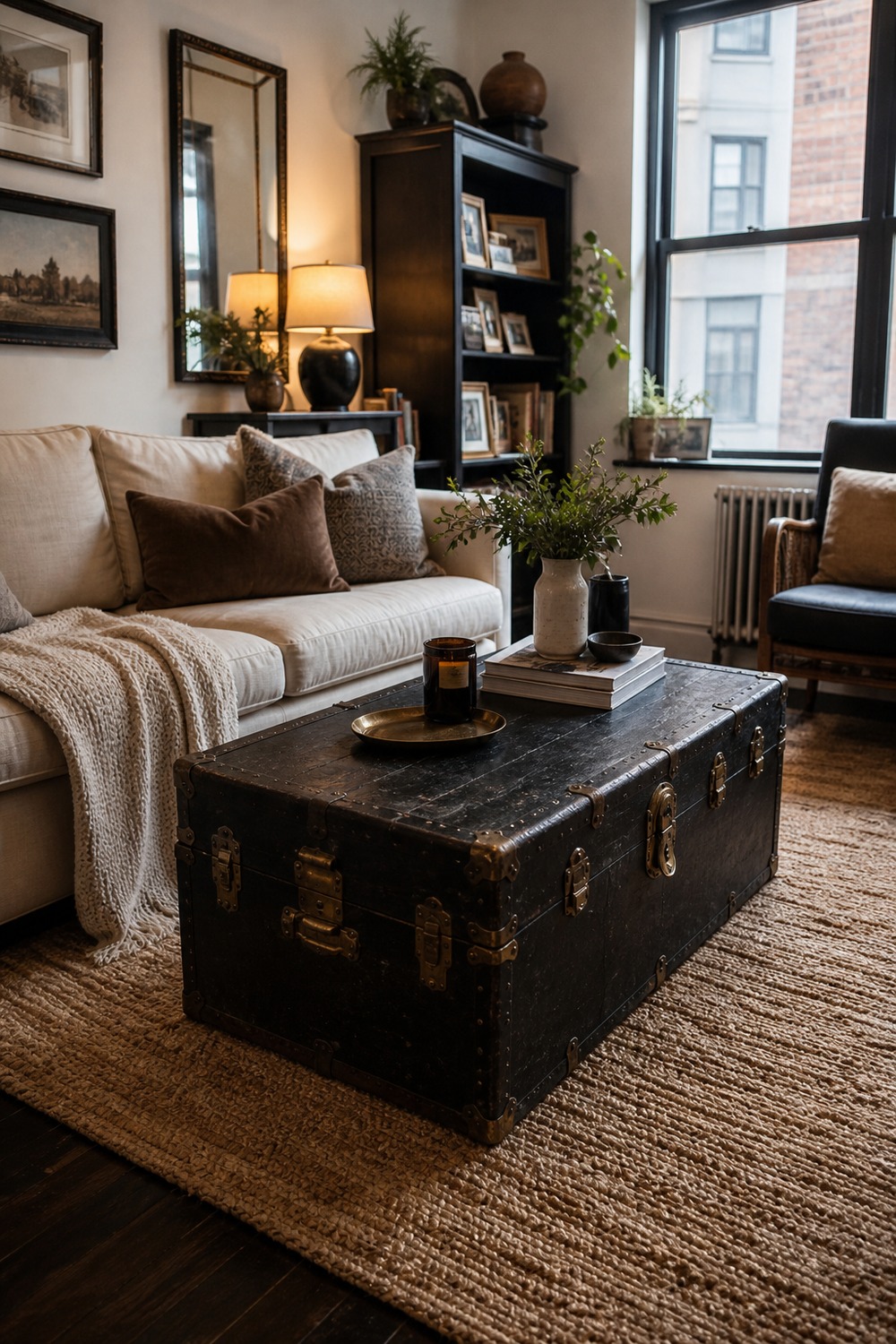
A dark trunk table is great when the room needs hidden storage and a little age. The brass latch details and folded throw make it feel collected, not like a random storage box dropped on the rug.
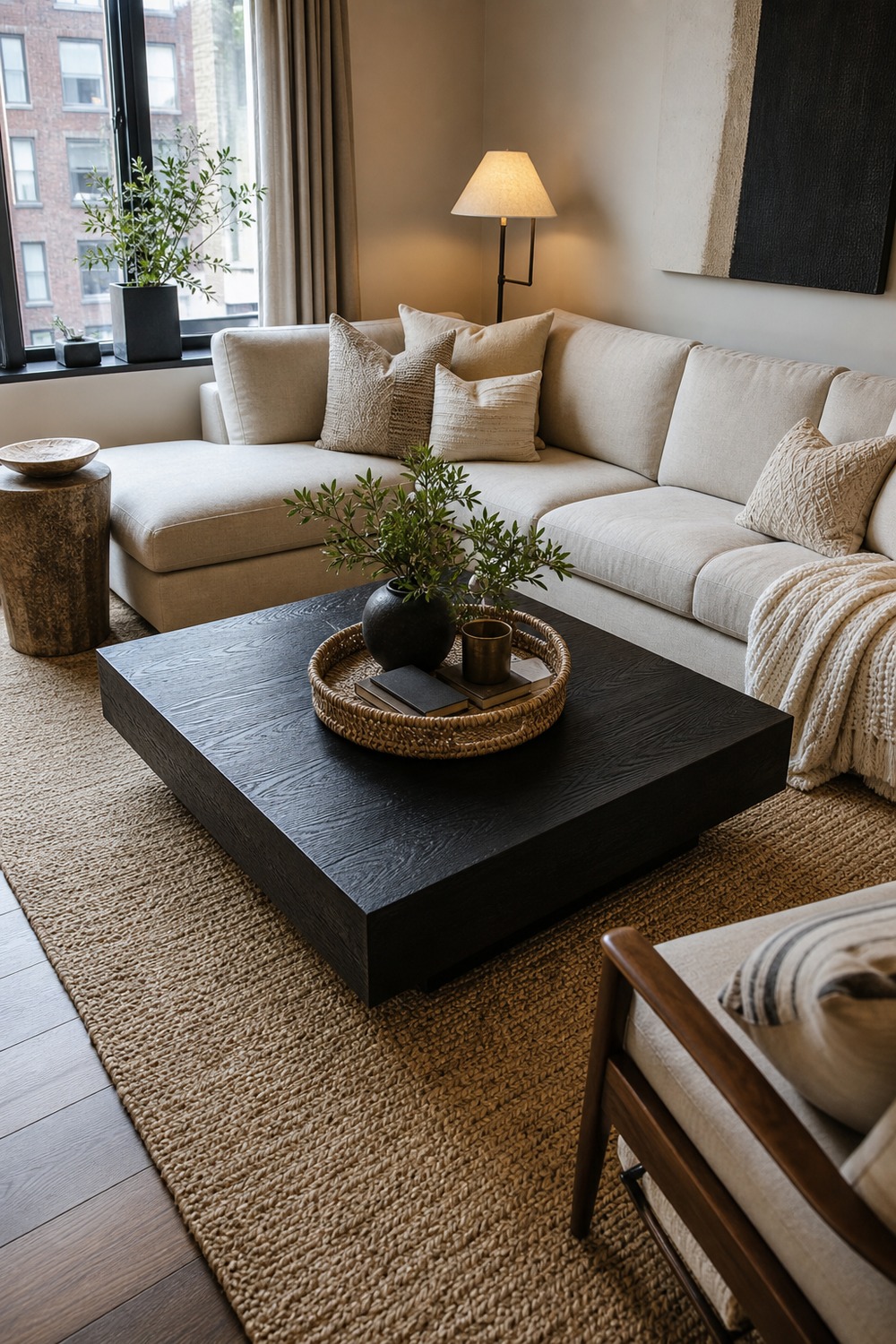
A square black table can handle a sectional because the scale matches the seating. The simple tray and open rug border are important here; they keep the large table from swallowing the whole conversation area.
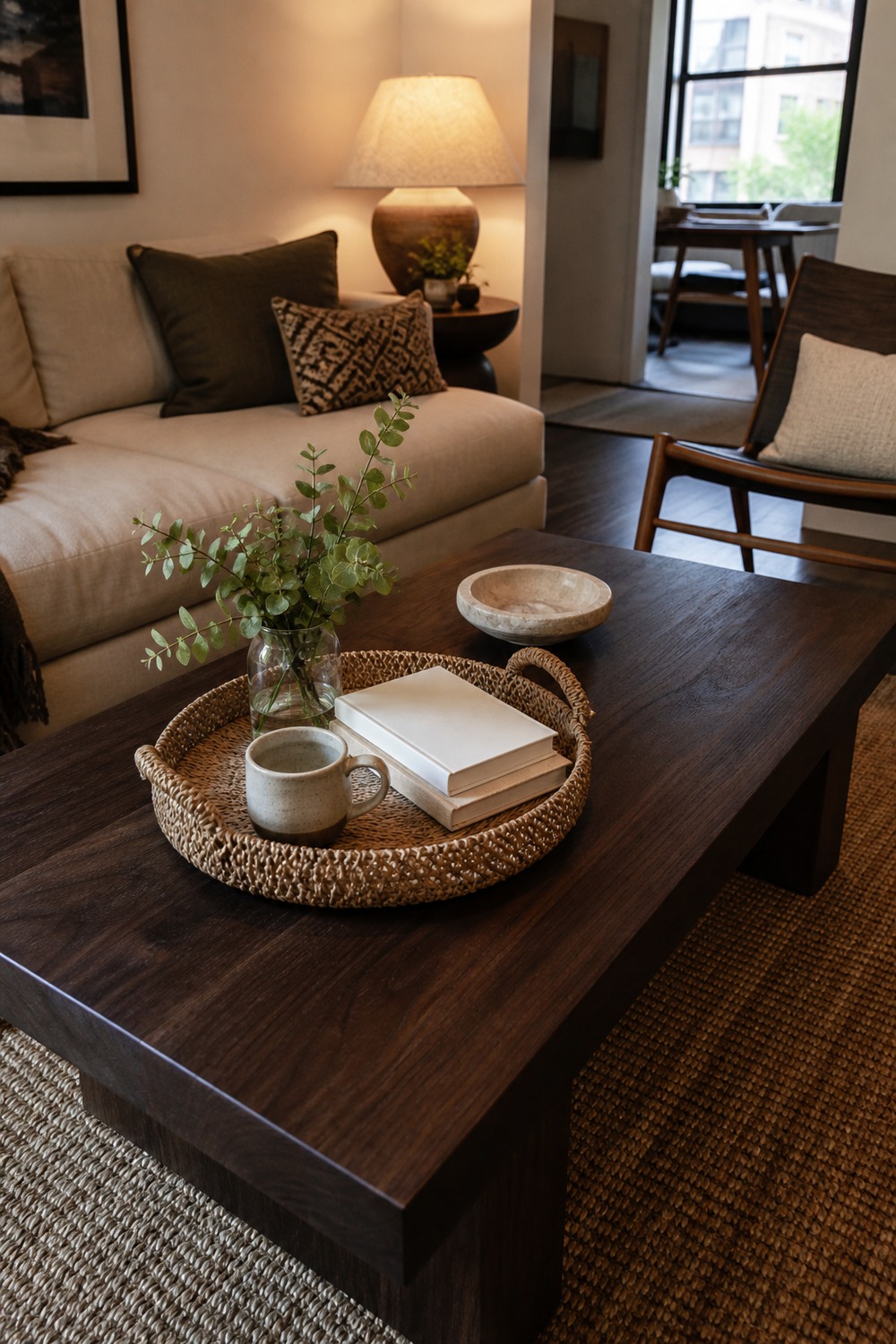
This woven tray softens the dark walnut immediately. It gives cups, candles, and blank books a defined spot, so the tabletop looks styled but still usable for normal living-room clutter.
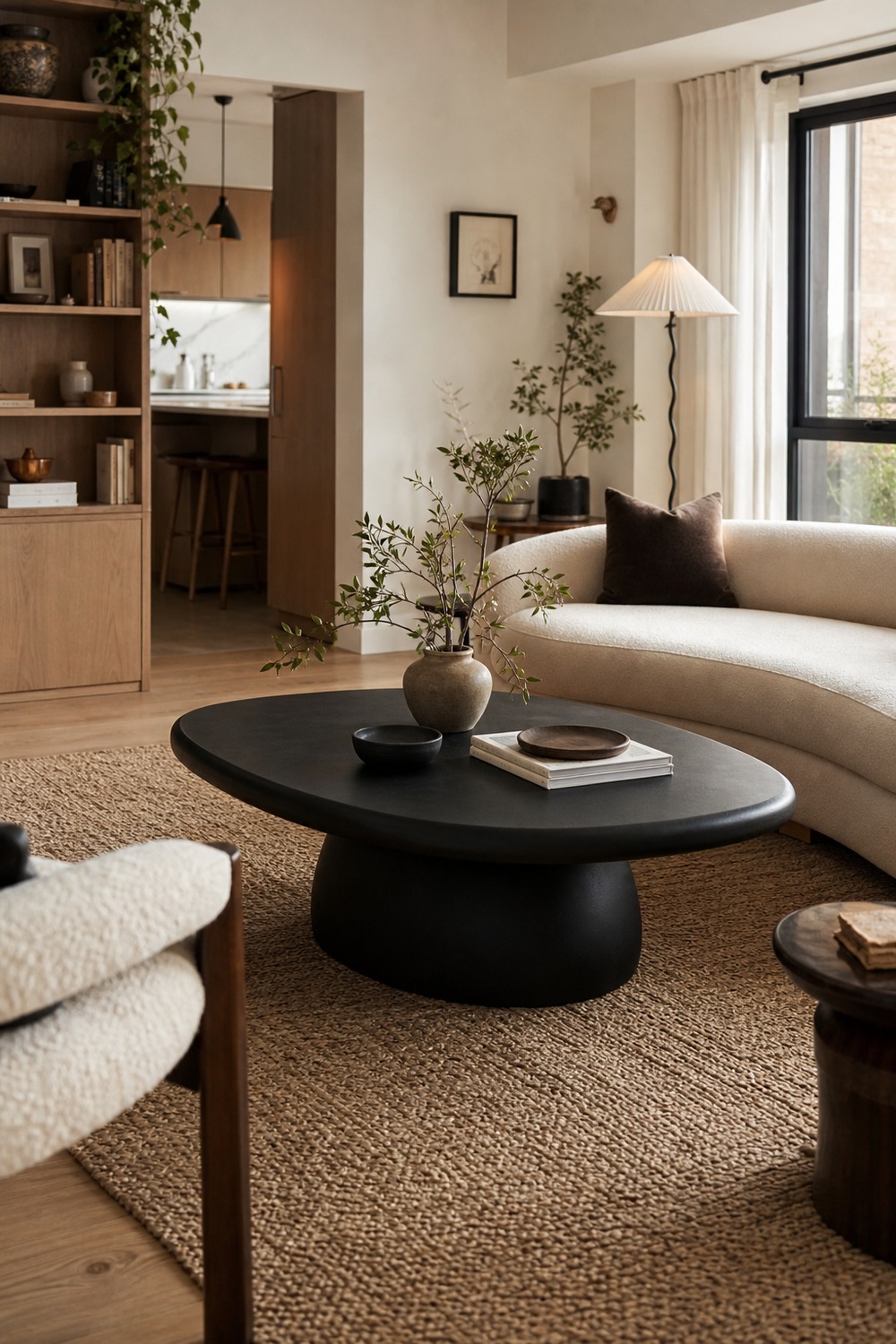
The pedestal shape makes this black table feel more sculptural than bulky. I like it with the curved sofa because both pieces have softer lines, so the dark color feels polished instead of harsh.
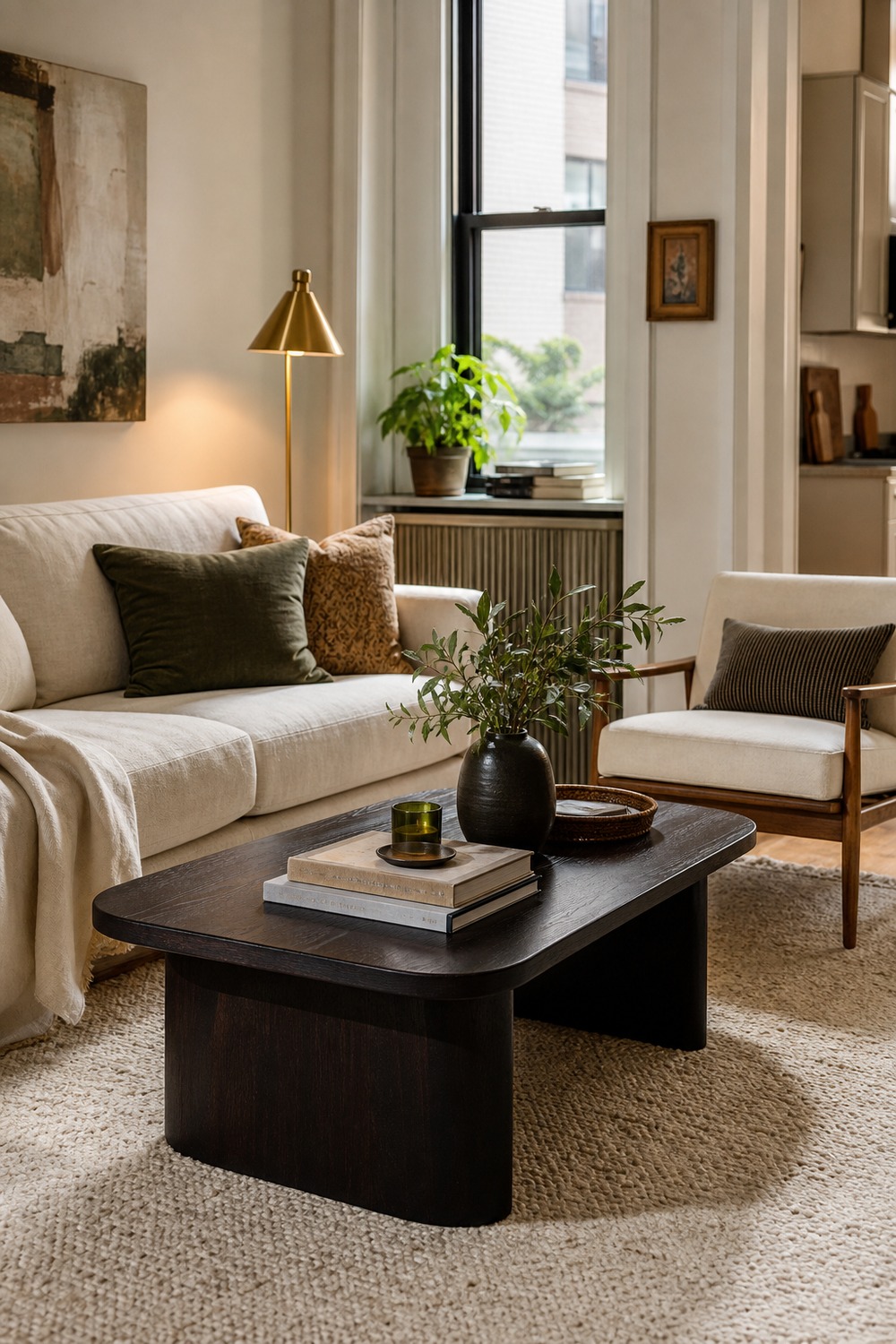
A light sofa is one of the easiest ways to make a dark coffee table look deliberate. The espresso finish grounds the room, while the pale rug, greenery, and brass lamp keep the center from feeling flat.
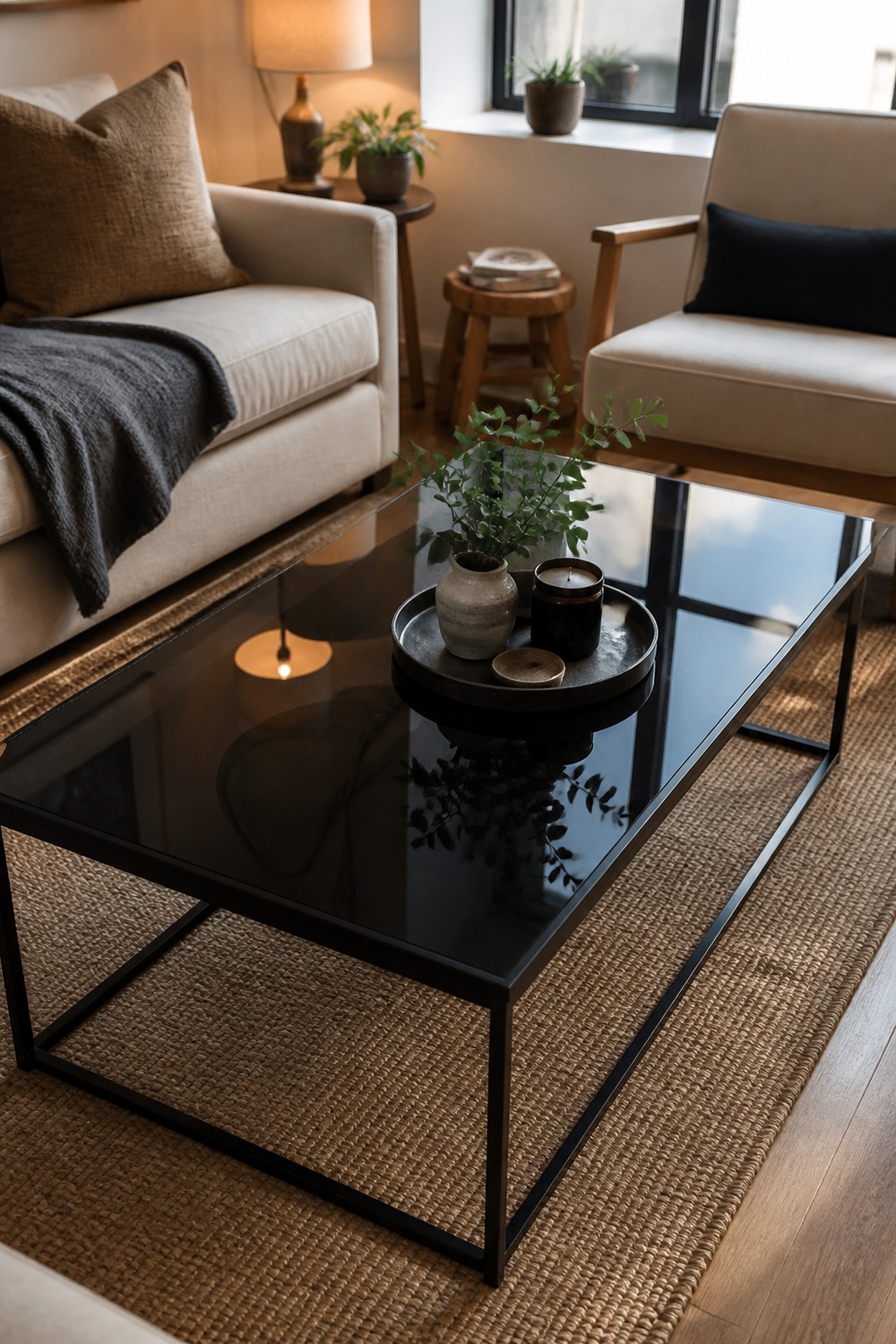
Dark glass gives the table a sleeker look without hiding the rug completely. The reflection on the top adds a little movement, and the simple metal base keeps the seating area from feeling overfilled.
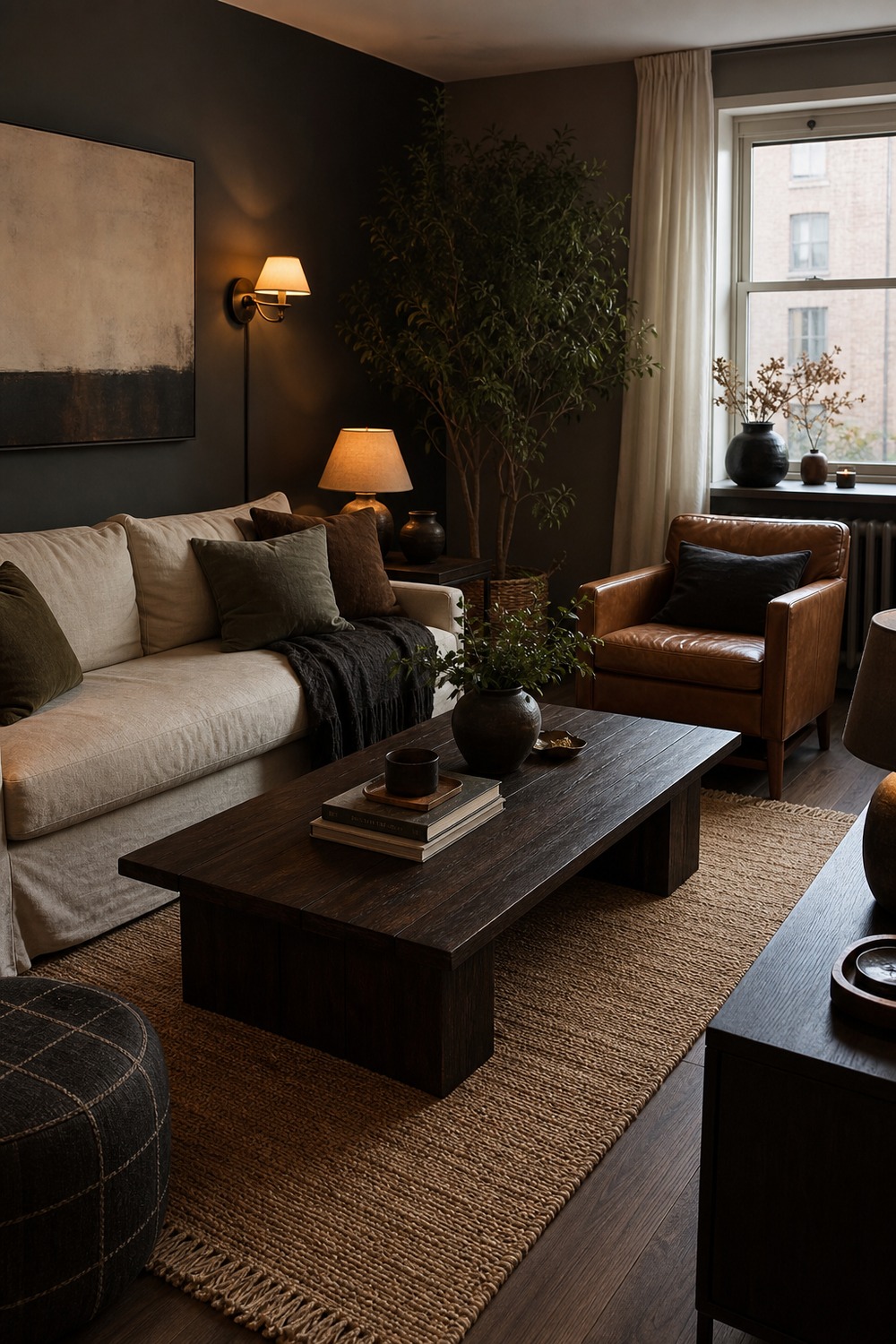
This moody room shows how good a dark table can look when the lighting is doing some of the work. The amber lamp pools, charcoal wall, and tan chair make the whole setup feel evening-ready without relying on clutter.
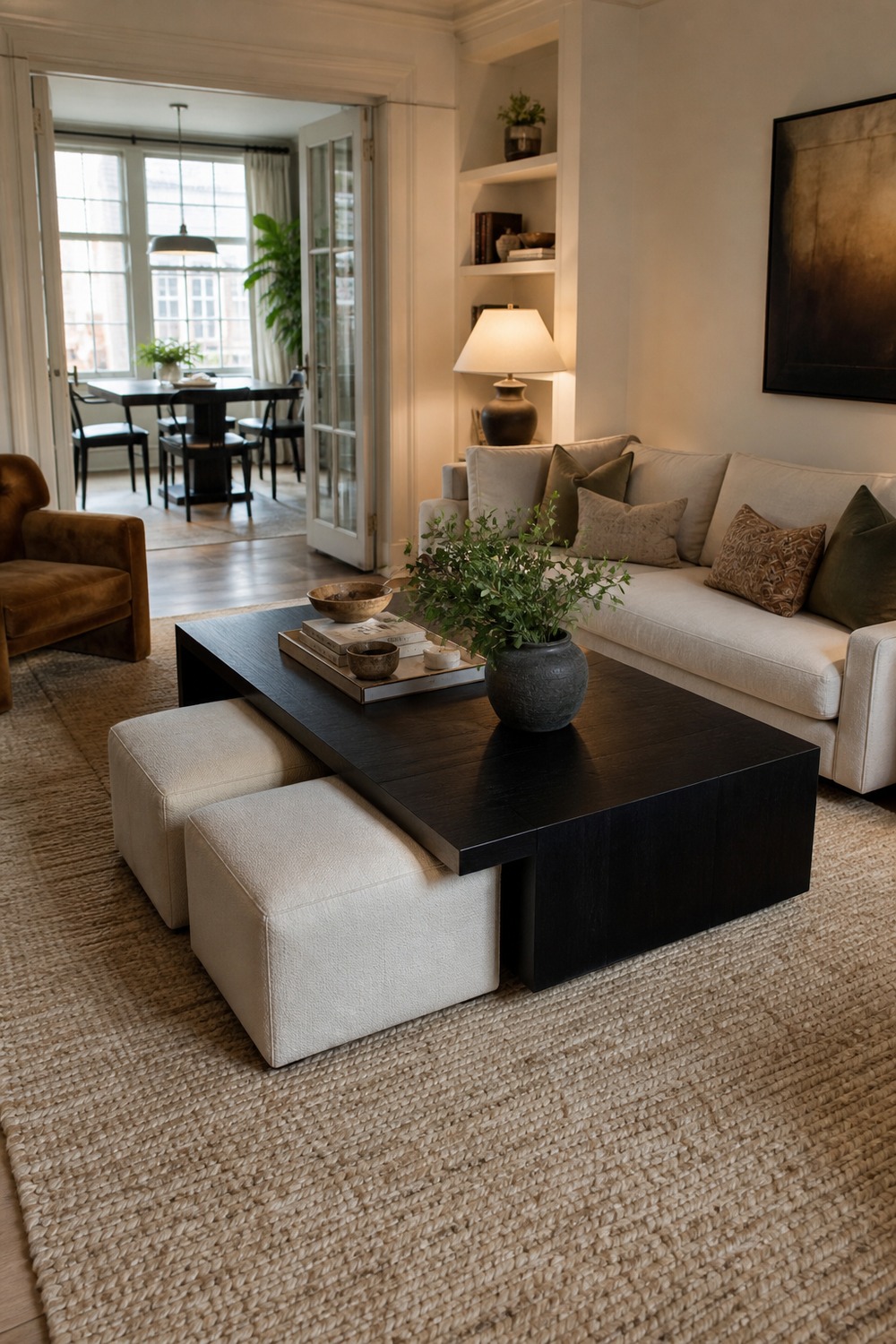
Pairing a dark rectangular table with small ottomans makes the layout feel more social. It gives guests somewhere to perch, but the table still keeps trays, drinks, and snacks in the center of the room.
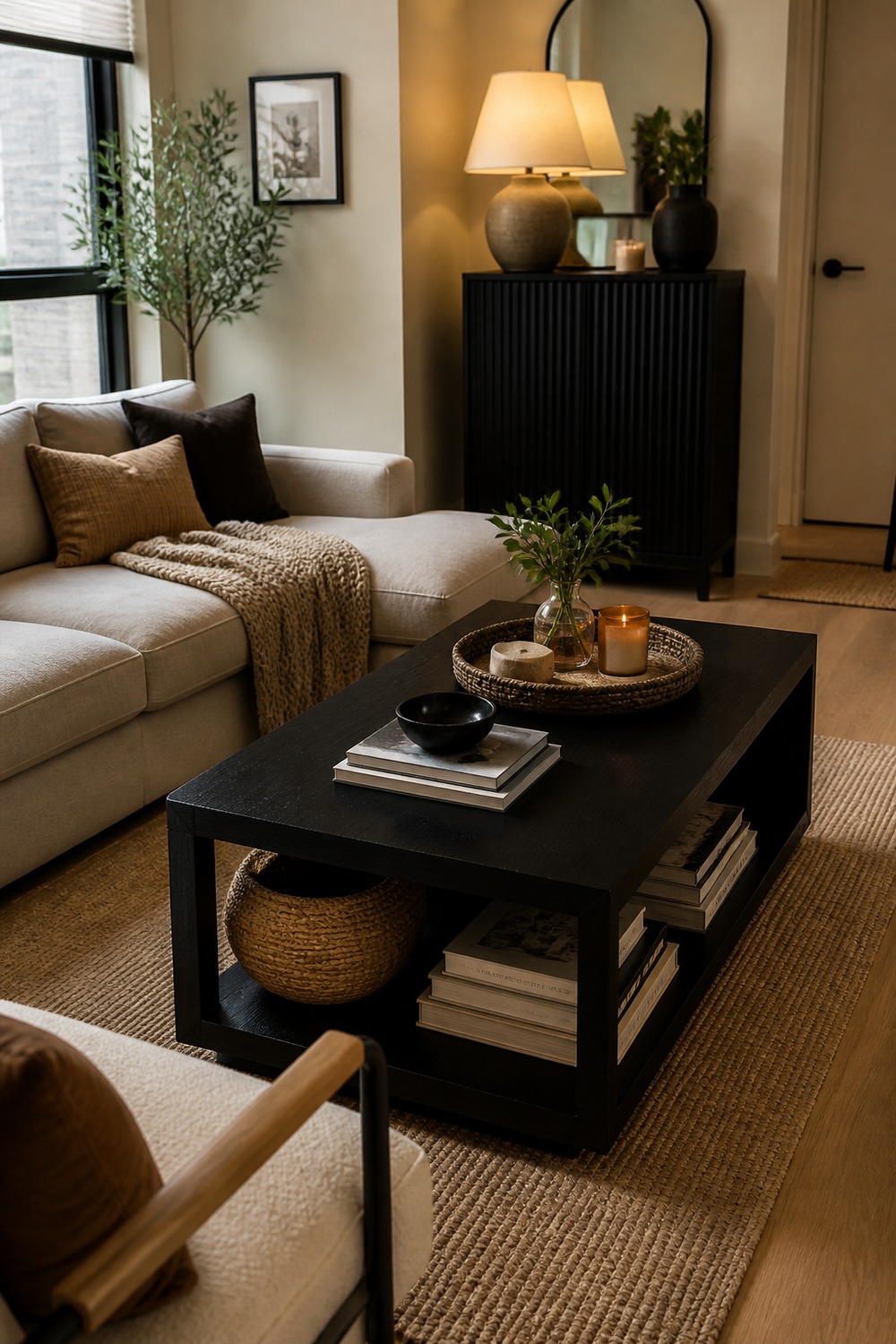
An open shelf is a good compromise when closed drawers feel too heavy. Baskets and books can sit underneath, while the black top stays clean enough for a tray or a couple of everyday pieces.
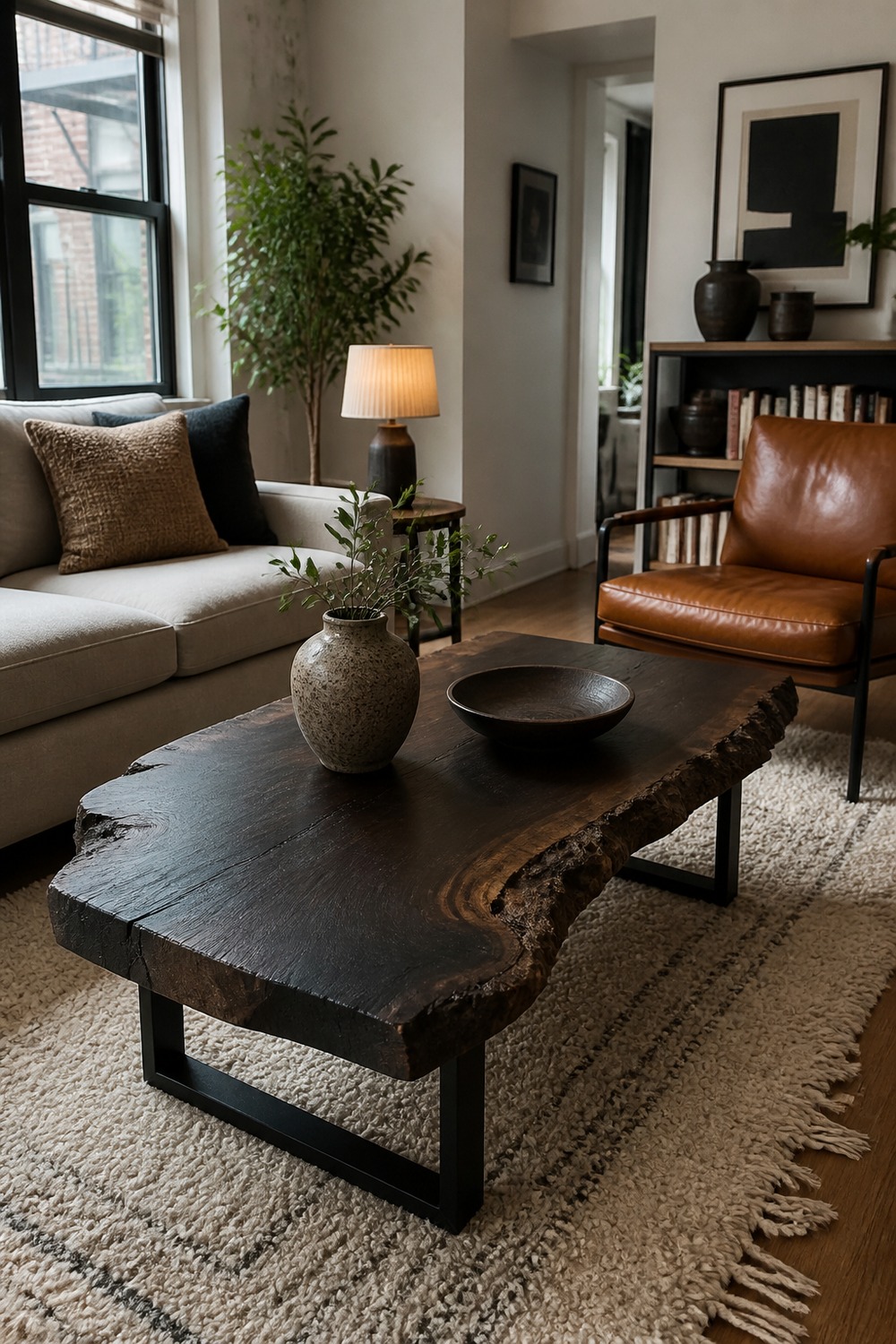
The live-edge version feels warmer because the dark wood still shows its organic shape. Black metal legs, pottery, and a leather chair give it that collected living-room look without making the table feel rustic in a forced way.
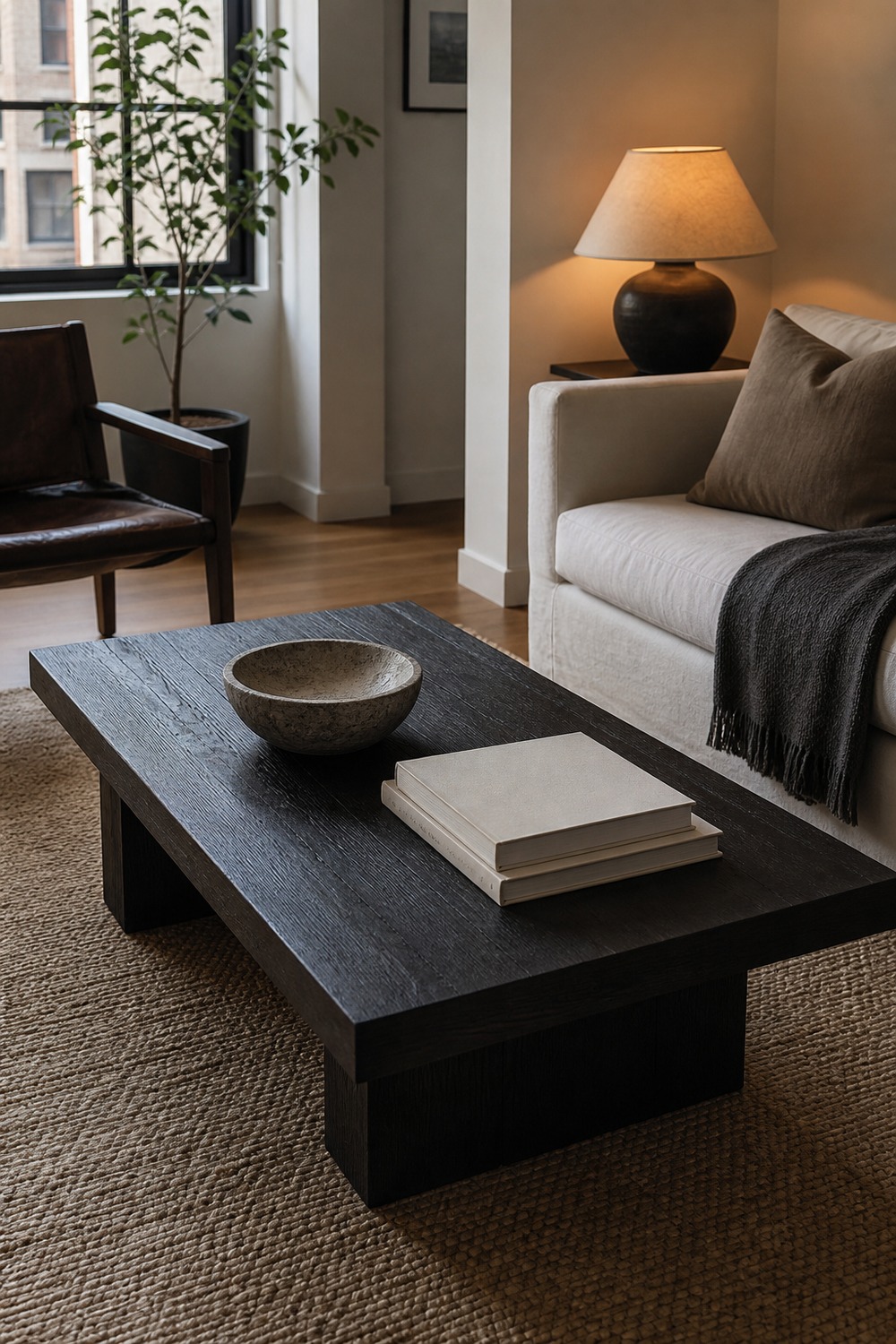
This minimal setup proves a dark coffee table does not need much to look finished. One stone bowl, a blank book stack, and quiet lamp light are enough when the surface and shape already have presence.
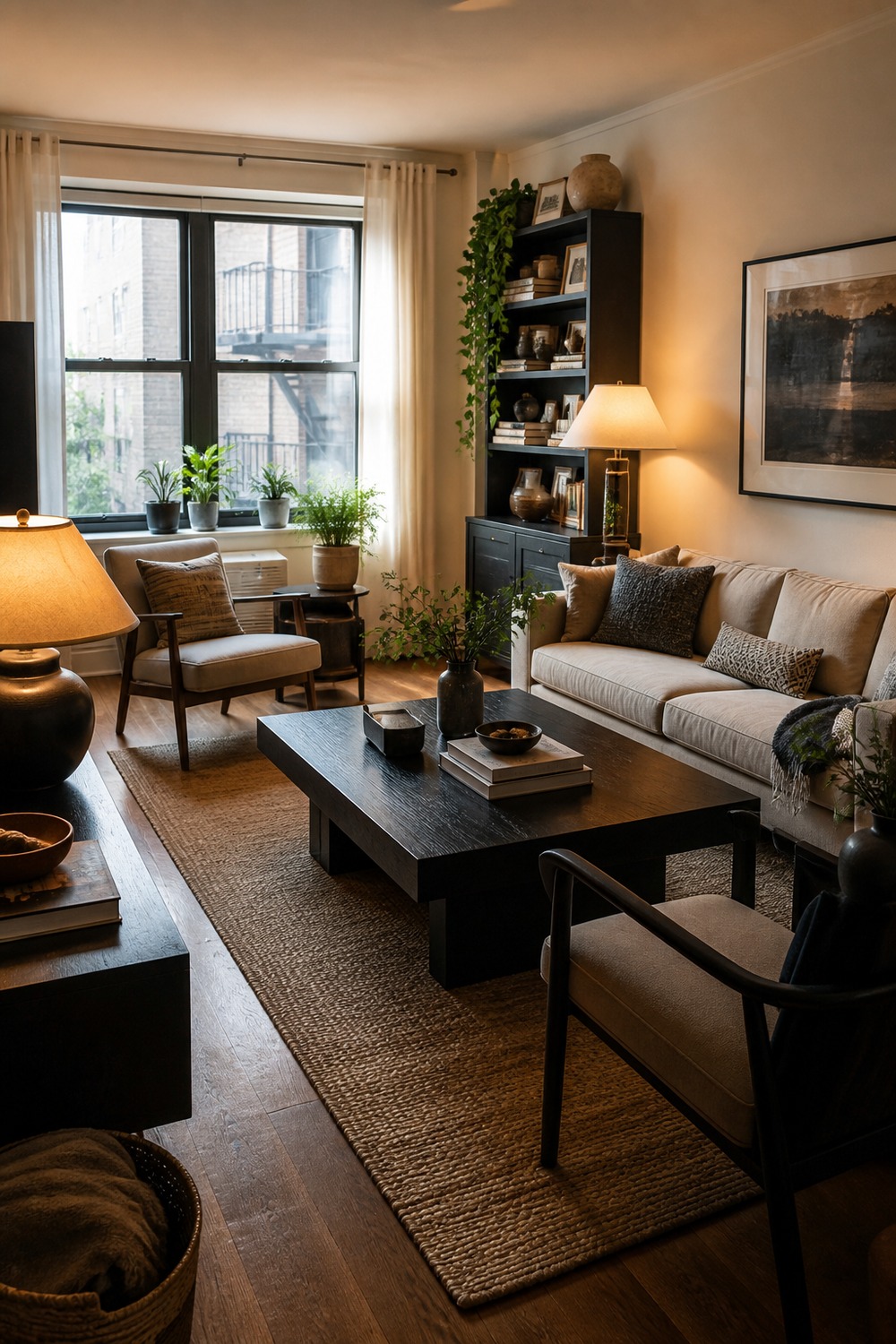
The full-room view is my favorite reminder that the table has to work with everything around it. The sofa, chairs, rug, lamps, and storage all point back to the dark coffee table without making the room feel staged.
Leave a comment