
Curtains in a home office have a harder job than they get credit for. They need to soften screen glare and give you privacy, but they also have to leave enough daylight for the desk to feel usable instead of cave-like.
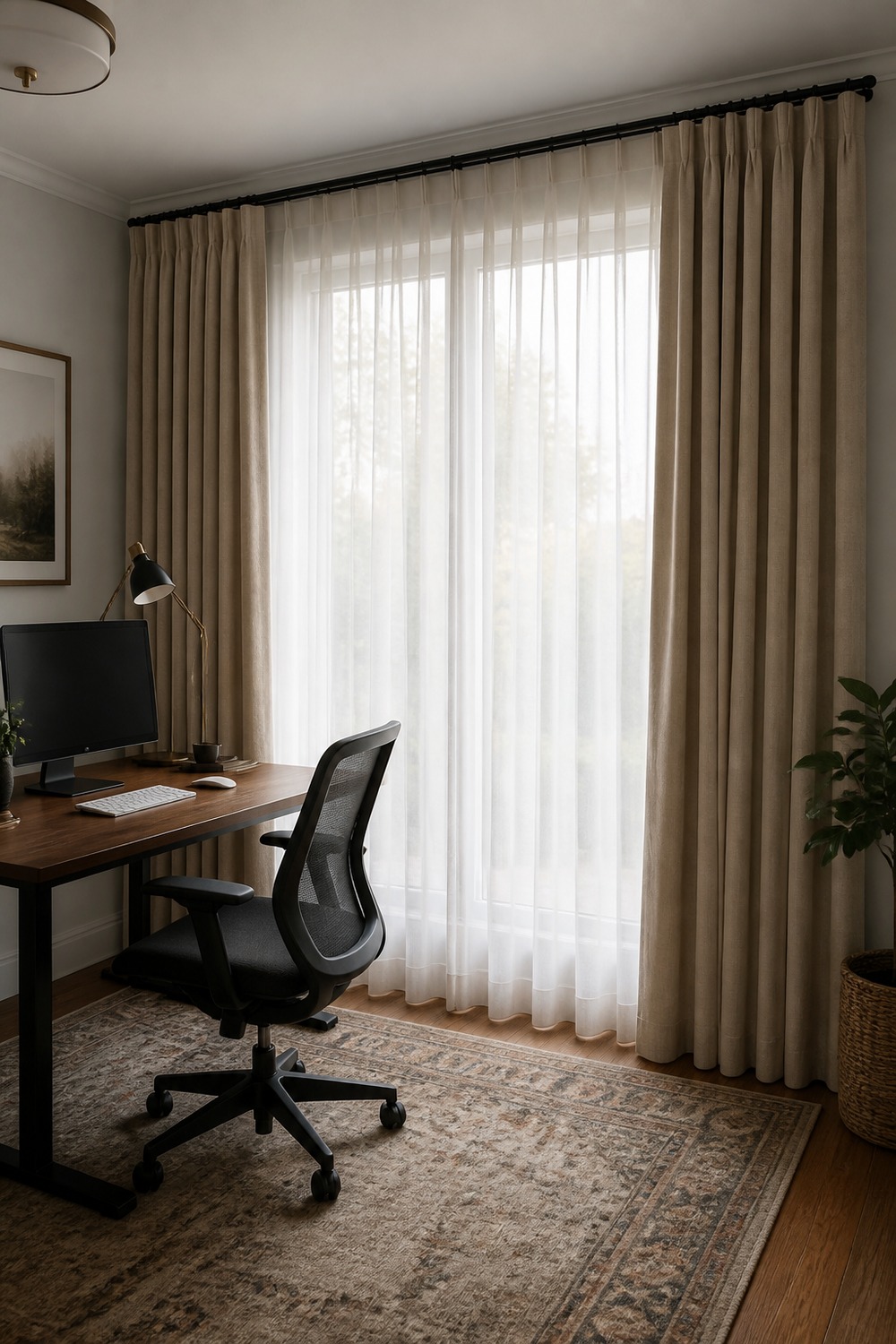
Layering white sheers with oatmeal blackout panels gives this desk two genuinely useful light settings. The sheers take the sharp edge off afternoon sun, while the heavier side panels can close when privacy or monitor glare matters more.
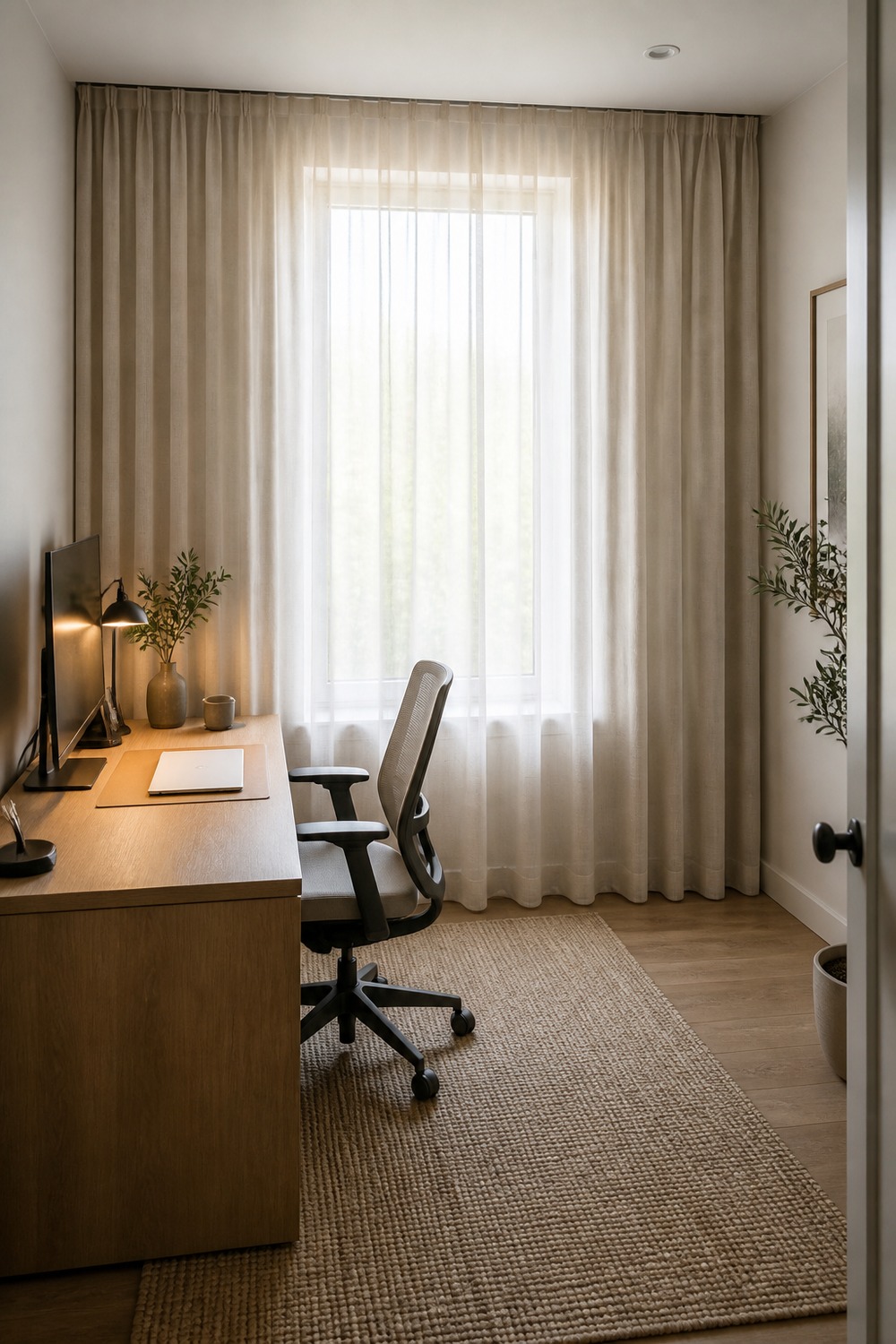
A slim ceiling track makes the curtains feel built into this compact office rather than squeezed beside the desk. Hanging the fabric high also draws the eye upward, which helps the shallow workstation feel less boxed in.
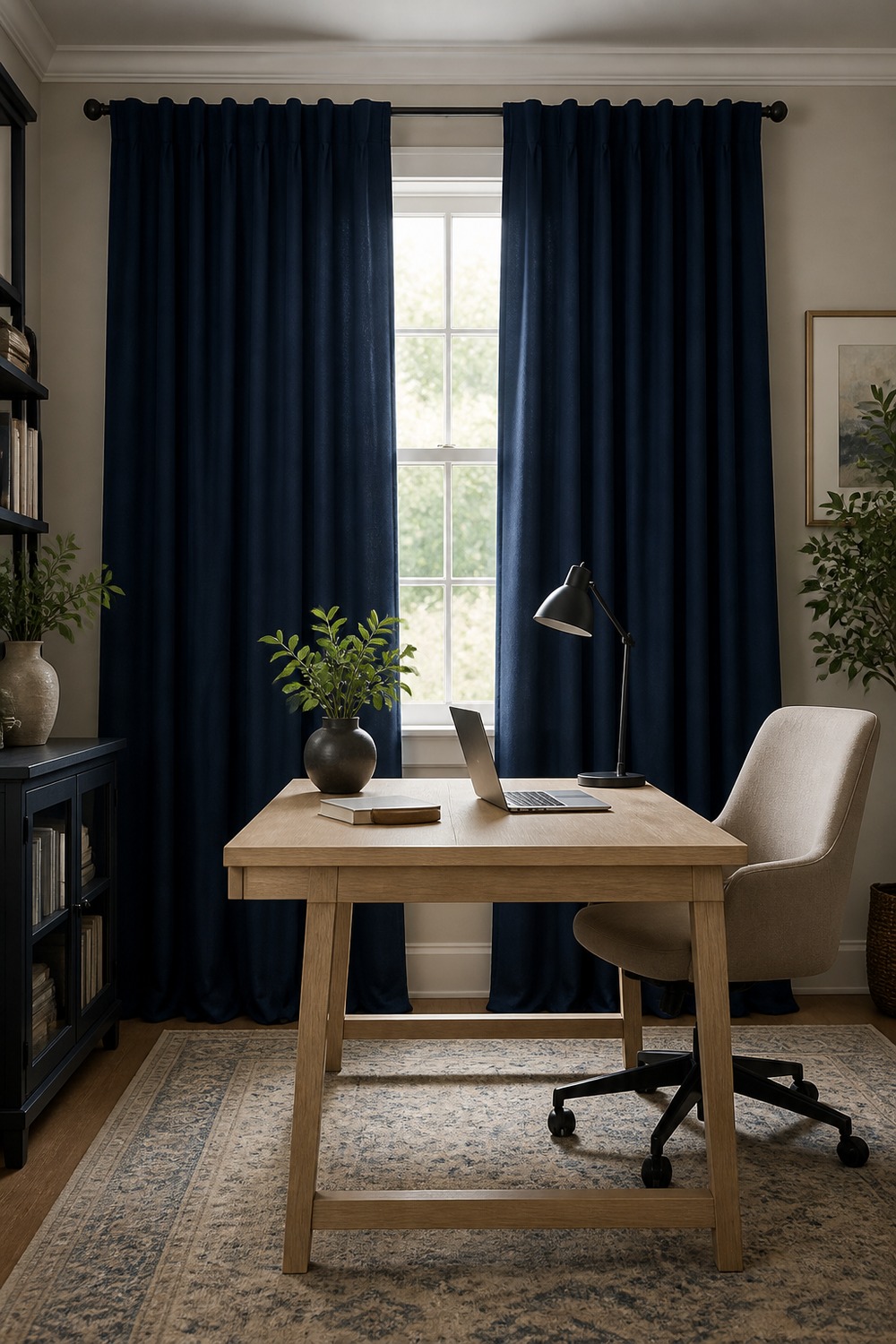
Deep navy panels give the pale oak desk a strong frame and stop the window from washing out the whole wall. I like the contrast here because it feels focused and polished without turning the room gloomy.
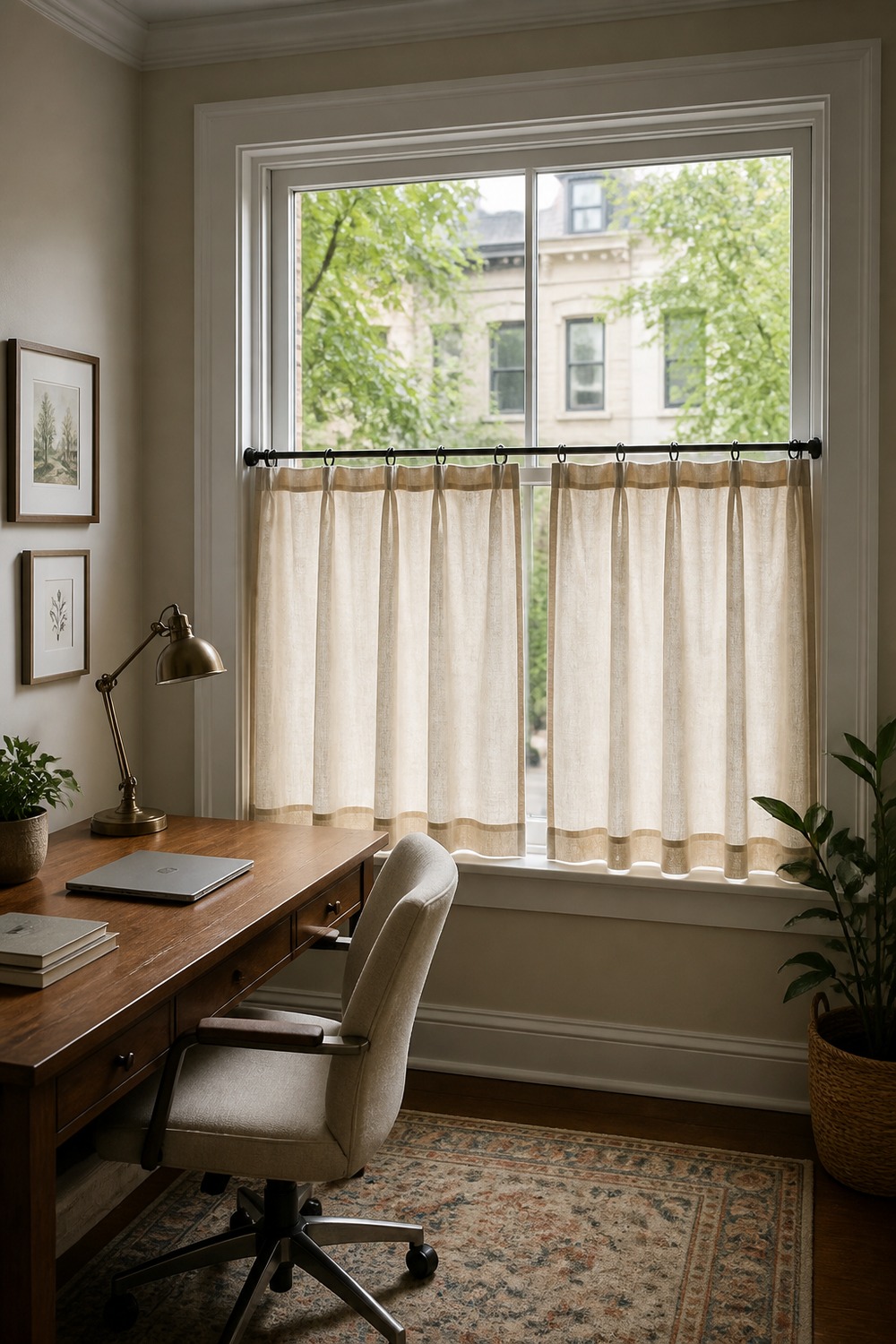
These half-height café curtains handle a street-facing window nicely: the lower glass stays covered, but daylight still comes through above eye level. That balance is especially smart when the desk sits close to the window.
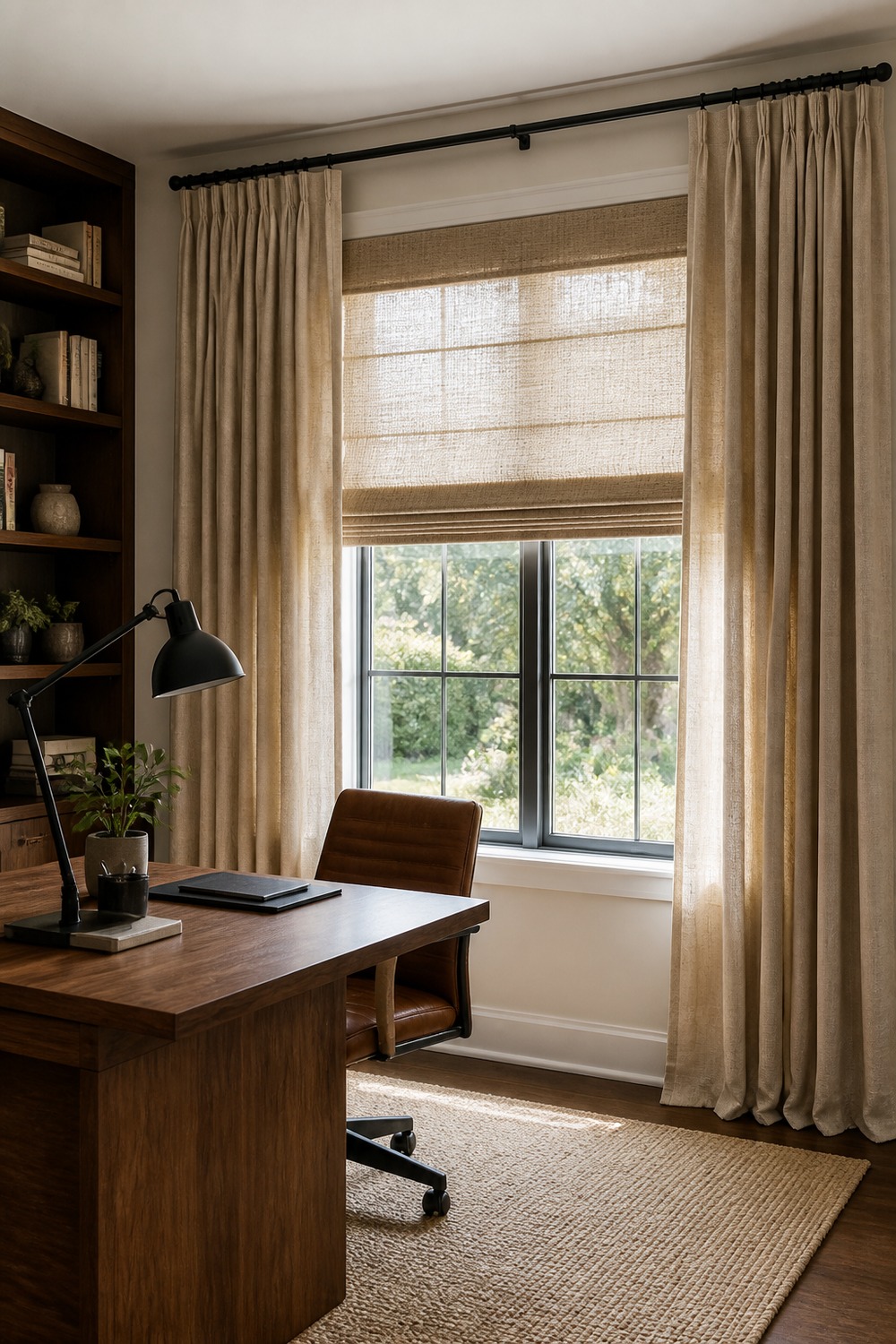
The woven Roman shade does the precise light control, while the relaxed linen panels soften the edges of the window. Together they look layered and finished, but the walnut desk still has plenty of breathing room.
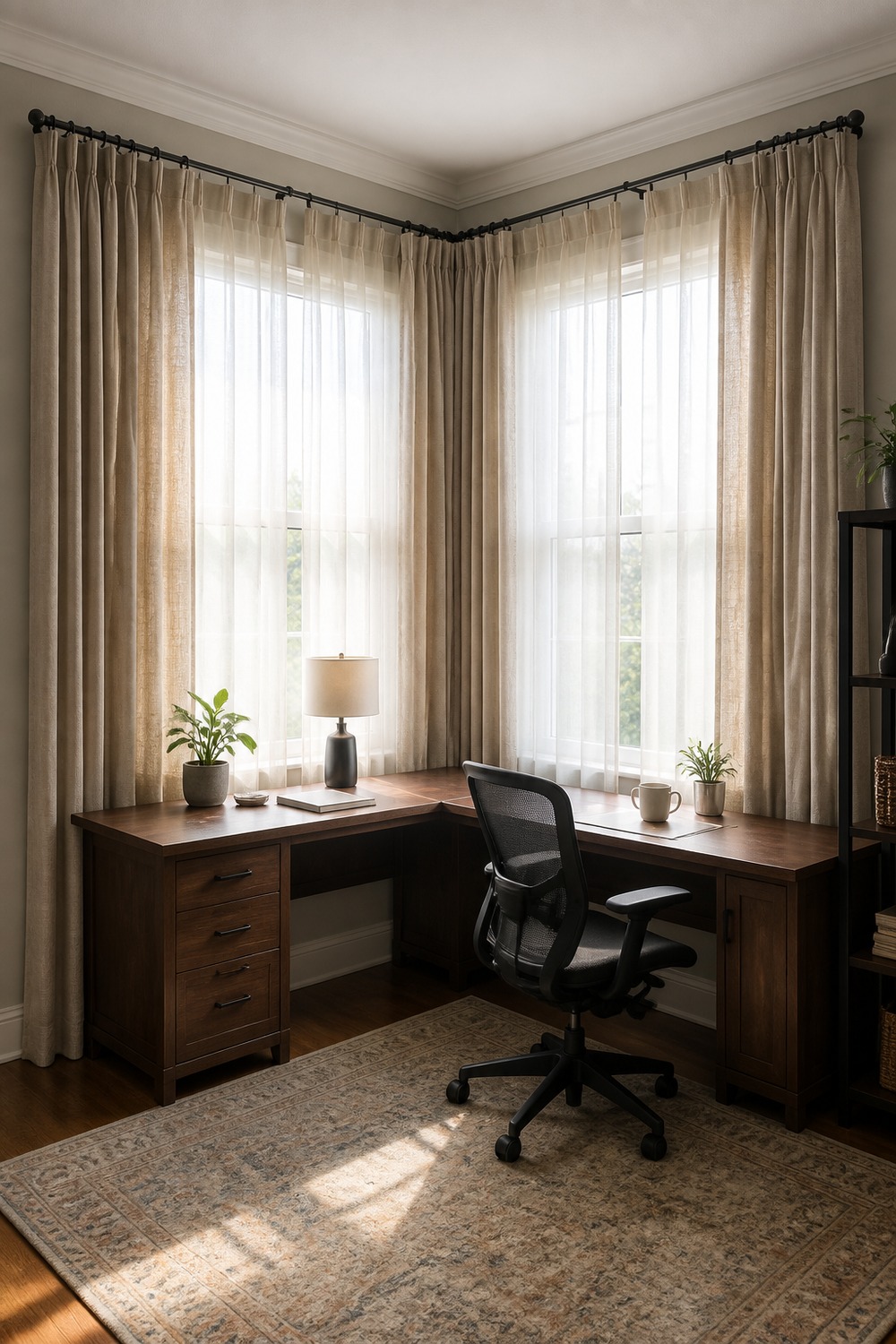
Corner windows can create awkward glare from two directions, so the coordinated curtains around this L-shaped desk are more than decoration. The matching fabric also ties both walls together and keeps the workstation from feeling visually split.
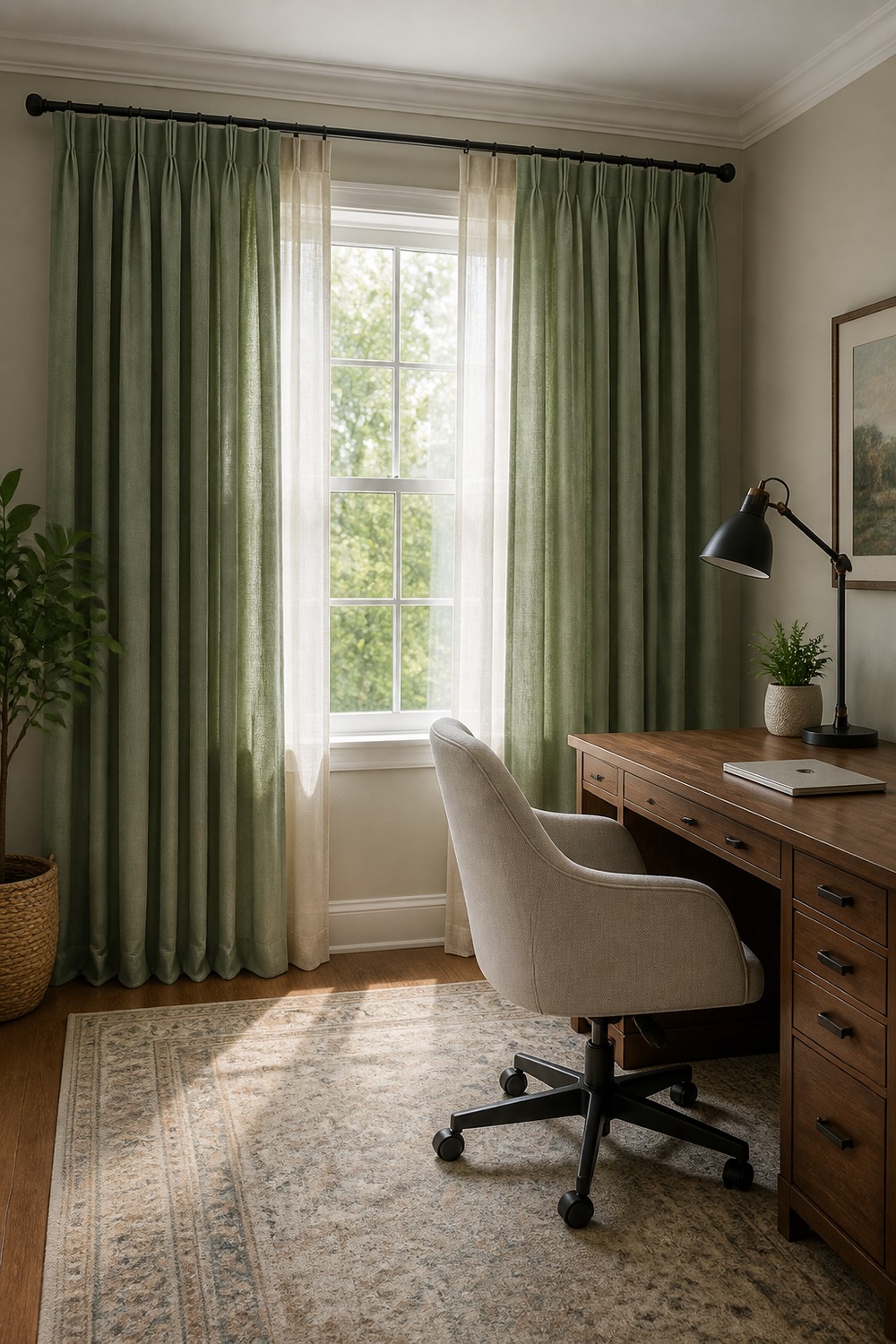
Sage green curtains bring color into the office without competing with the walnut desk or cream chair. The muted tone is easy on the eyes, and the full length gives this simple setup a much stronger vertical line.
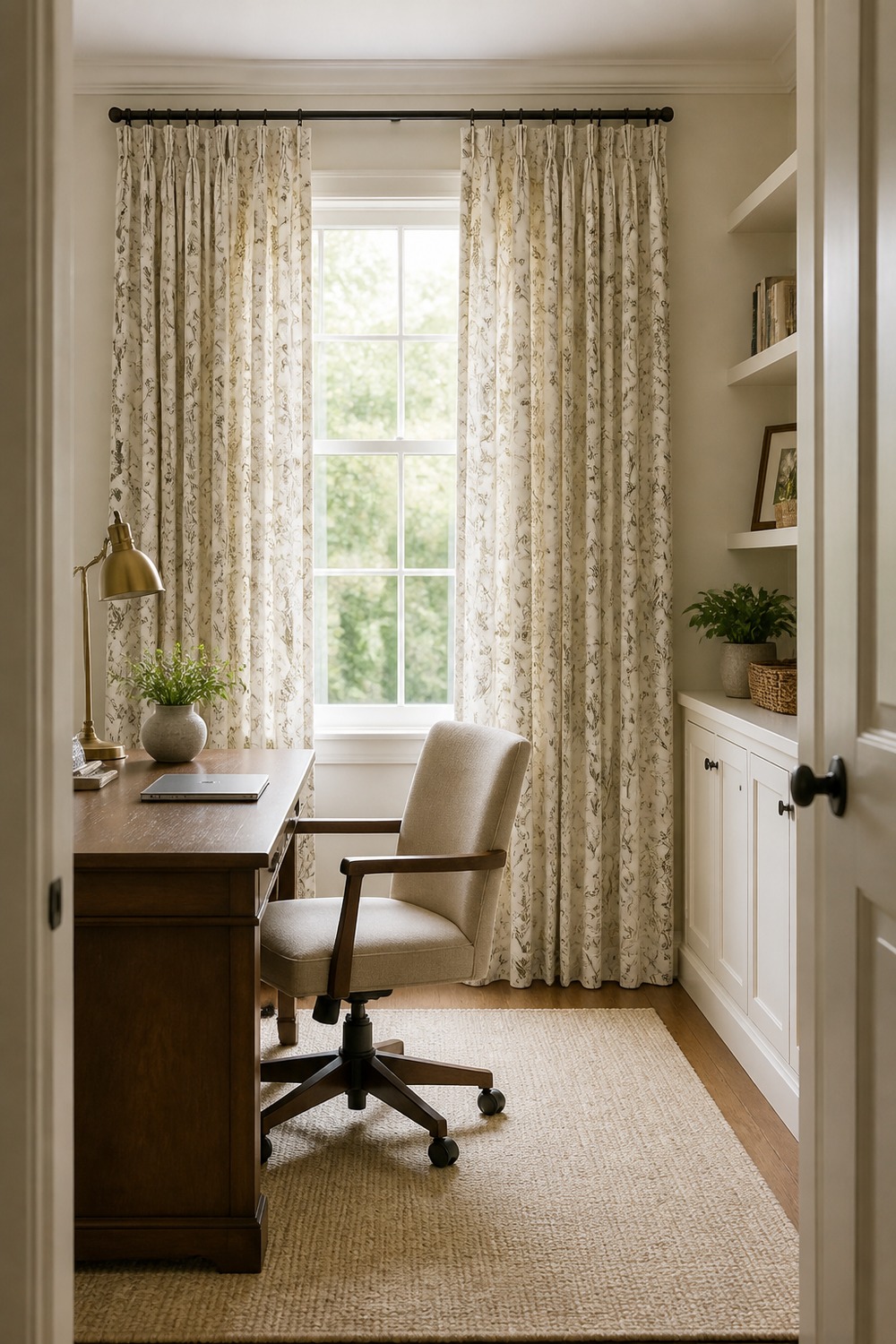
A restrained botanical print adds personality to a mostly cream office without making the wall behind the desk too busy. Closed storage keeps the rest of the room quiet, so the curtain pattern gets to be the focal detail.
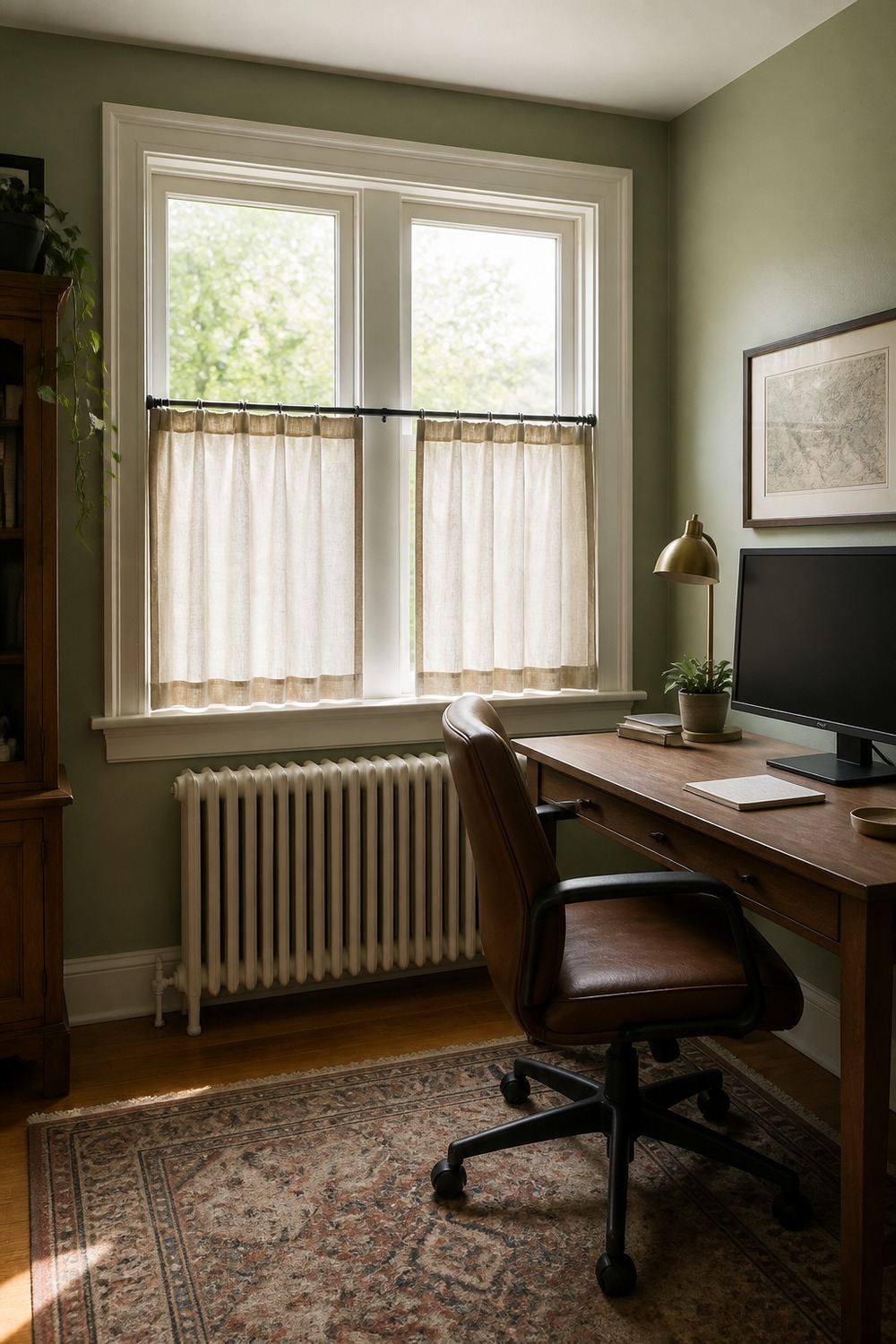
Sill-length curtains are the practical move when a radiator sits below the window. The hem stays clear of the heat source, and the shallow desk is offset enough that air can move without fabric bunching behind it.
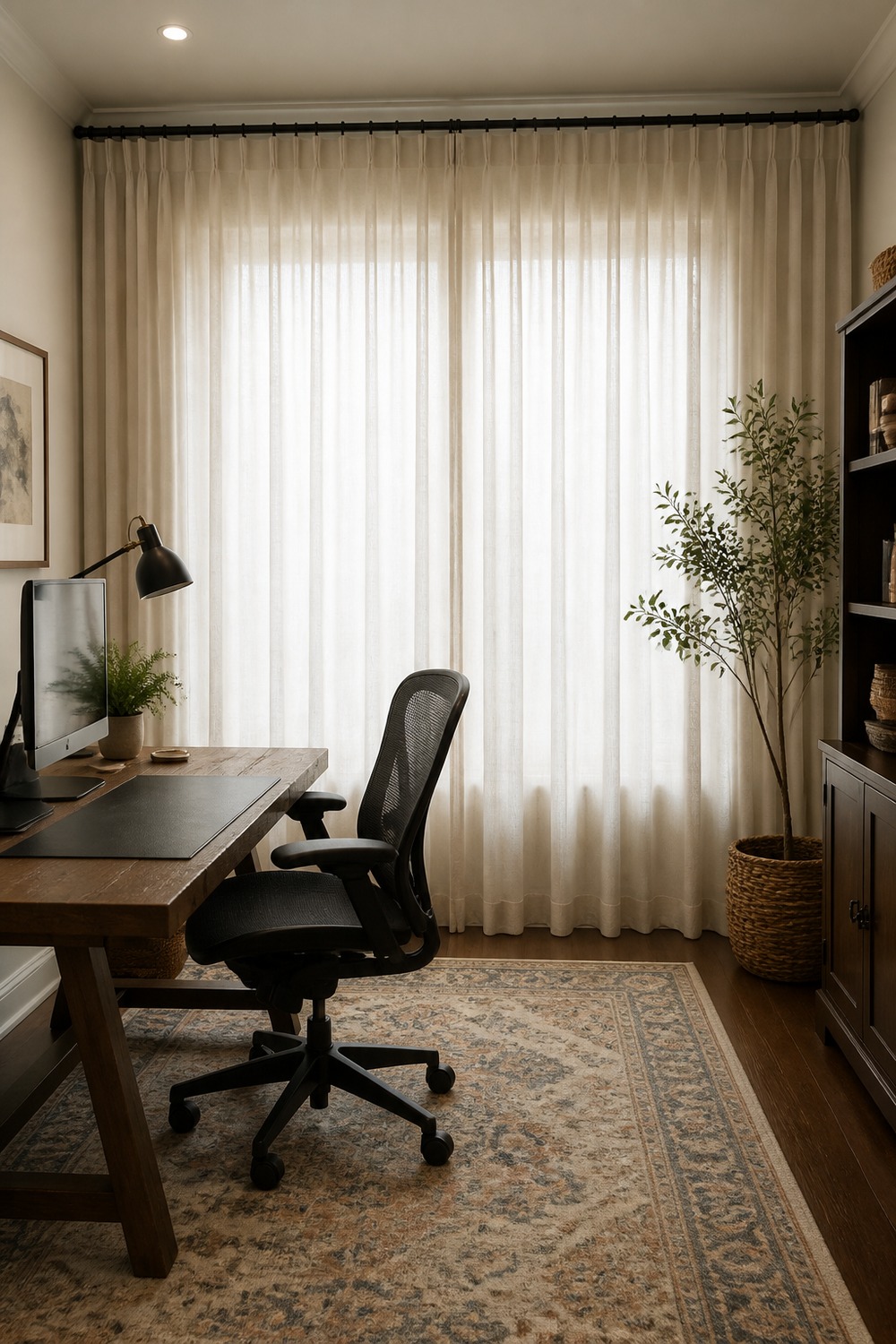
Wall-to-wall curtains turn the window side of this office into a calm, continuous backdrop. It is a useful trick for video calls too, since the soft folds hide visual clutter and keep the desk wall from looking patchy.
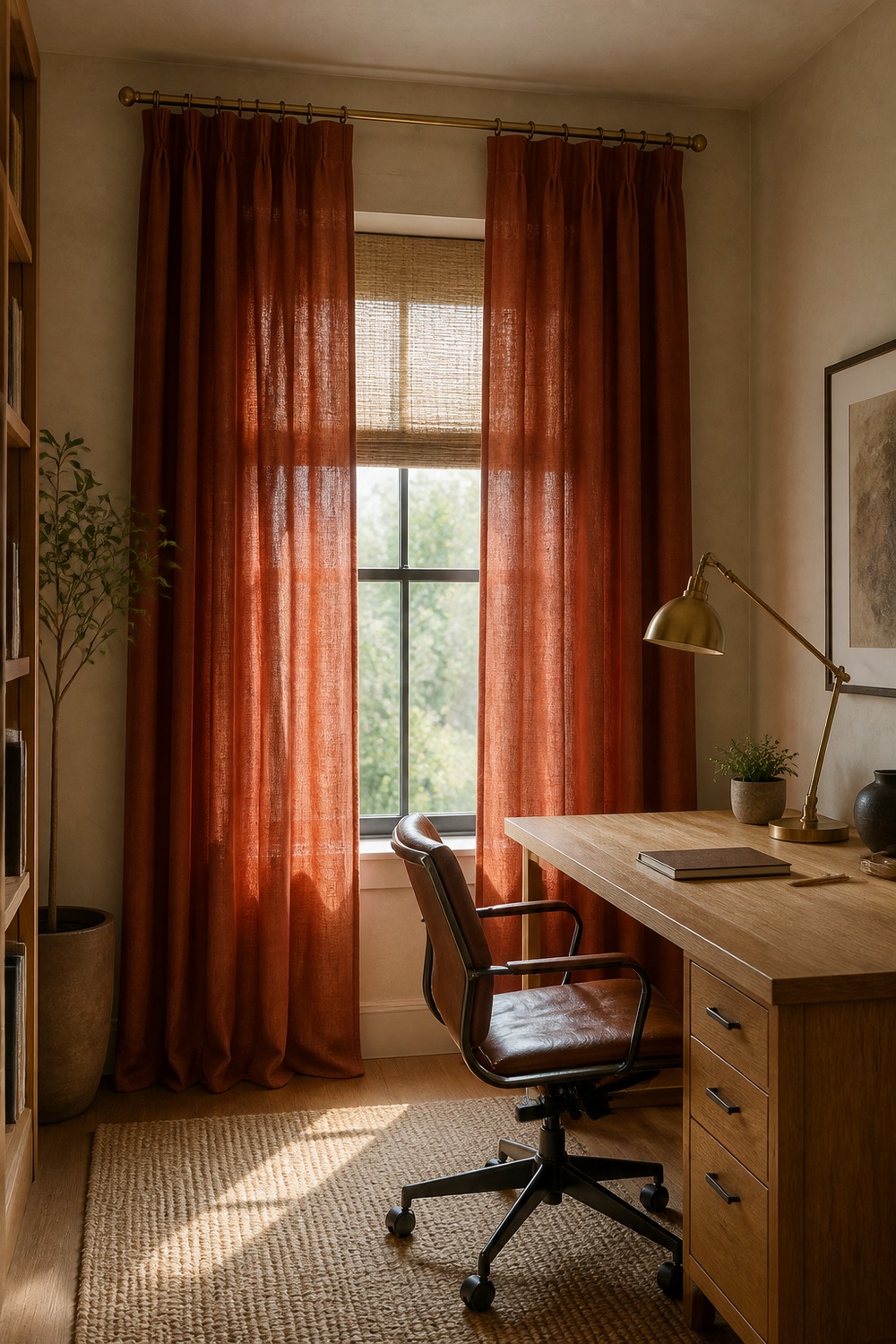
Terracotta linen warms up the plaster walls and pale oak desk without relying on lots of small decor. The brass task lamp picks up that warmth, so the room feels connected even though the palette is simple.
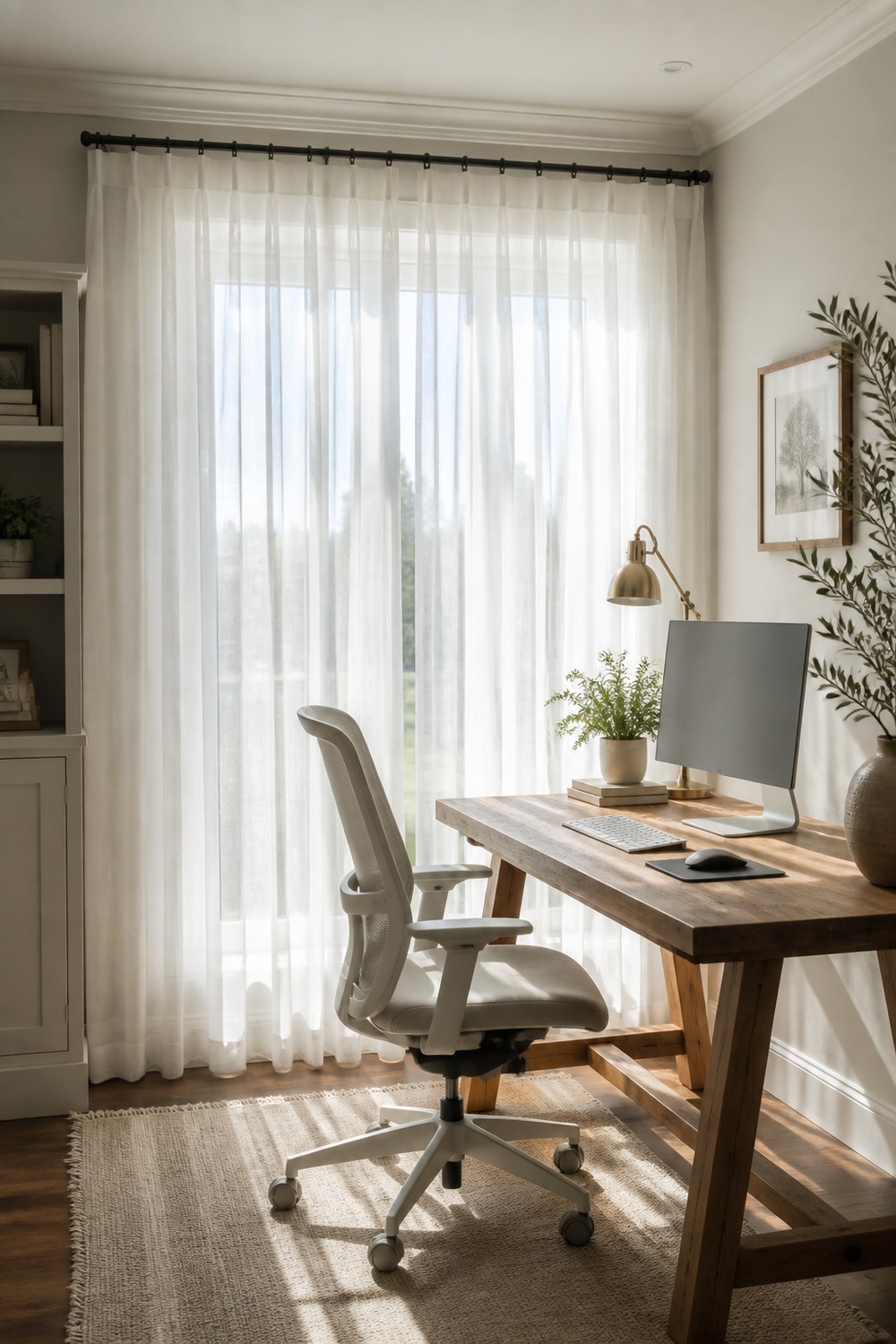
Full-length white sheers are doing exactly what this screen-side window needs: spreading daylight across the desk instead of letting one hard beam hit the monitor. The office stays bright, but the contrast is much easier to live with.
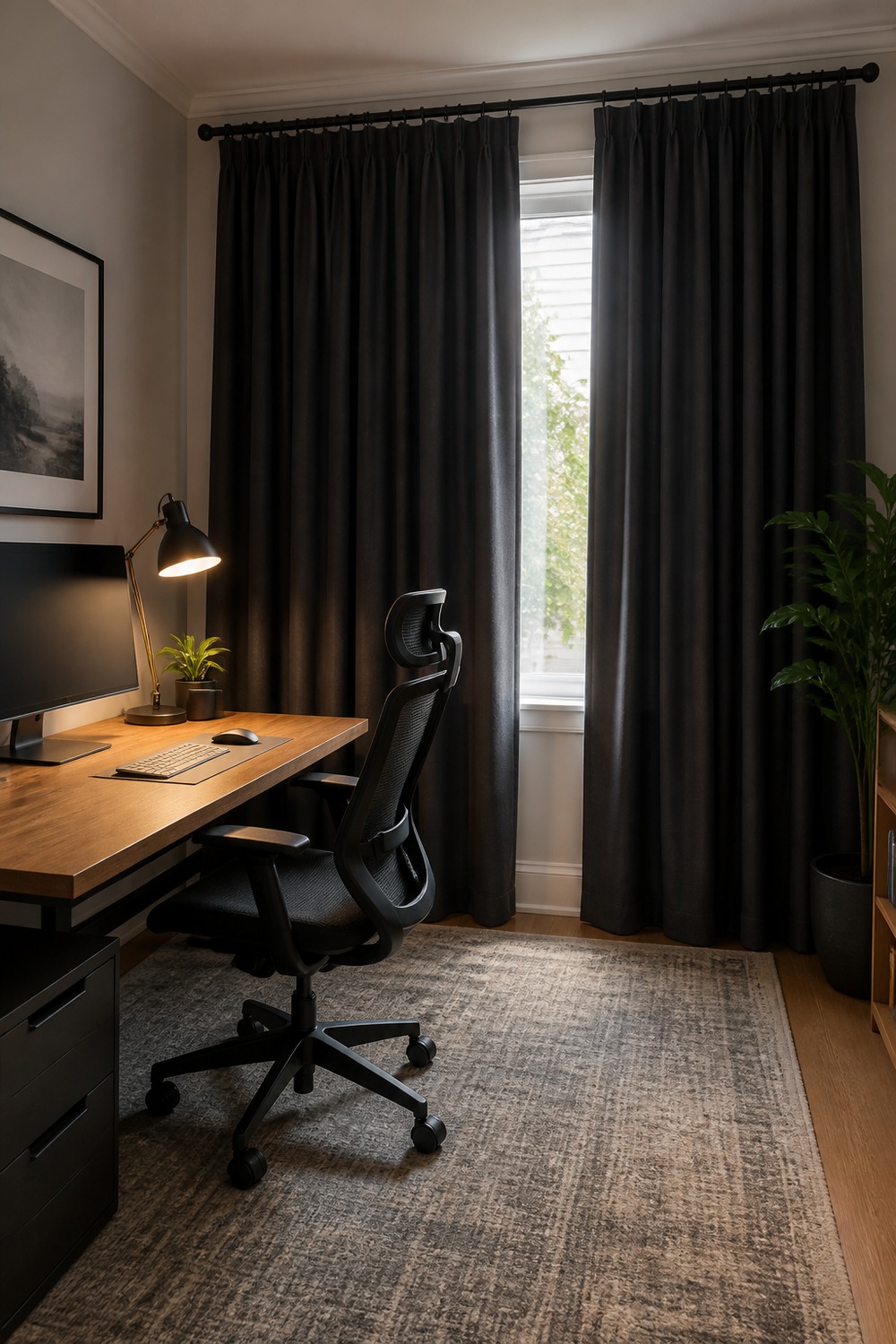
Charcoal blackout curtains make sense for a room used for long screen sessions. Partly closing one panel blocks the strongest light while the task lamp fills in the desk, giving the workspace more control than an all-or-nothing shade.
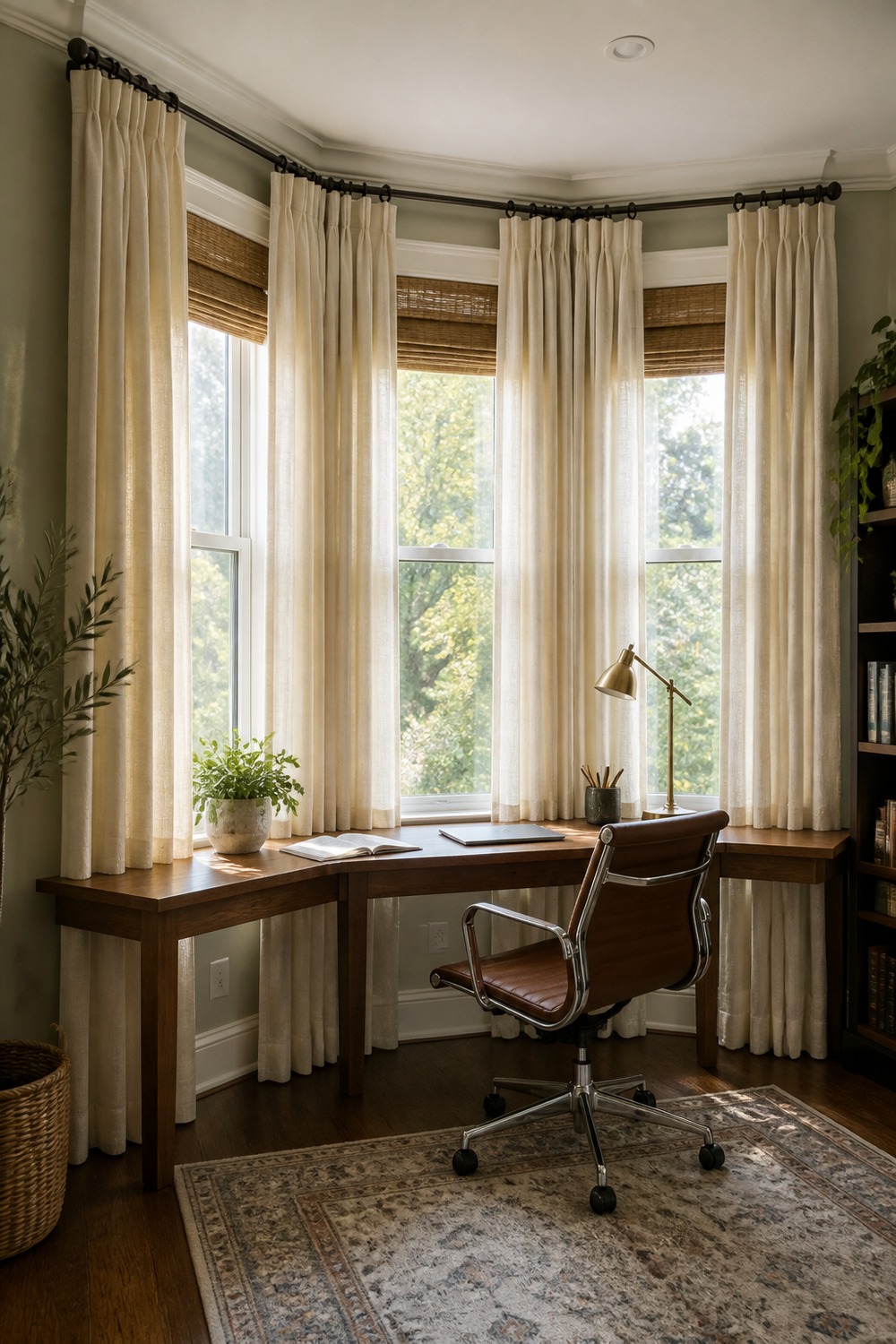
The bay window is treated as three connected sections, so each panel can move without tangling around the narrow desk. That keeps the architecture visible while still giving the chair and work surface enough clearance.
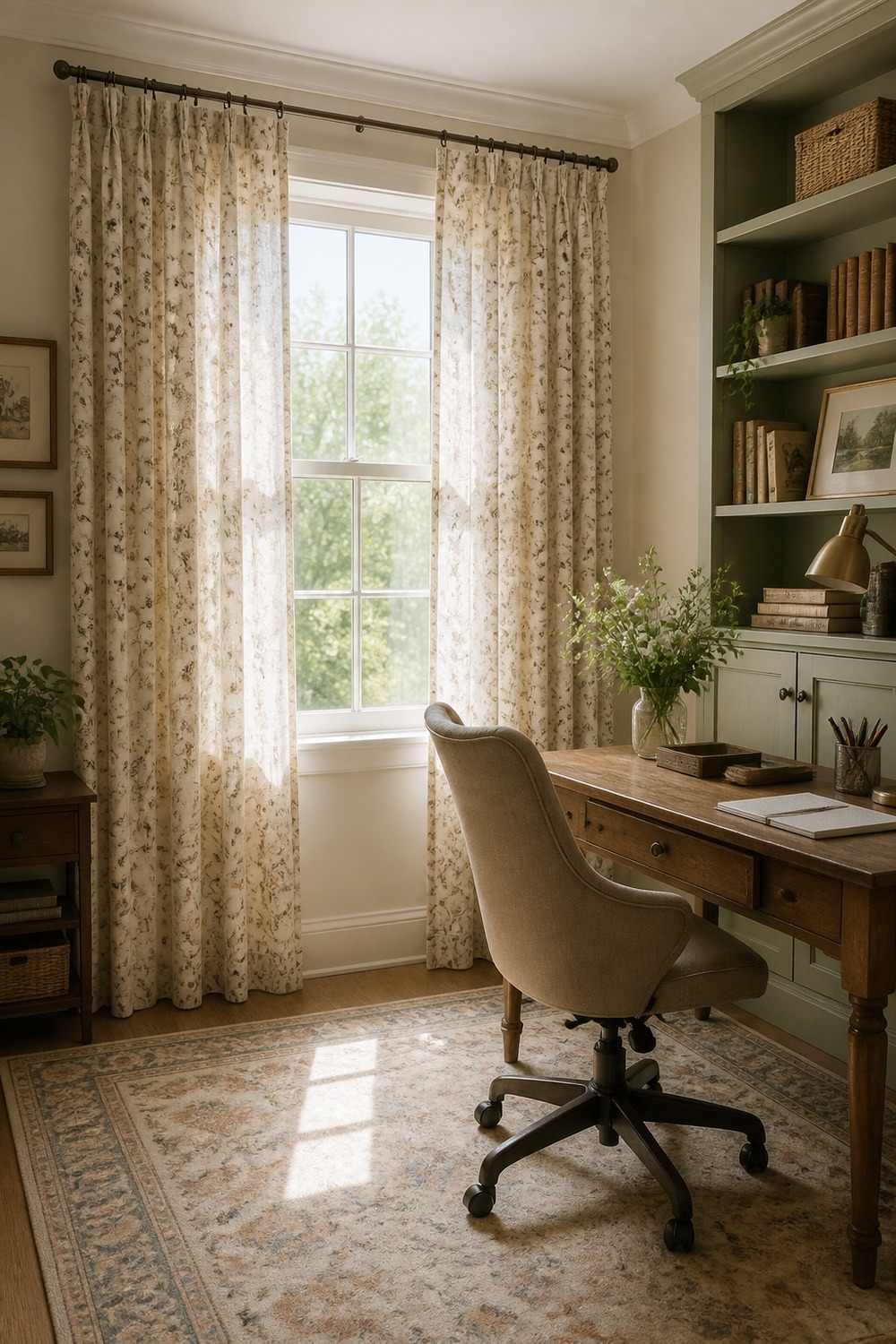
Small-scale floral linen suits this cottage office because it echoes the painted bookcase and vintage wood desk rather than fighting them. The pattern feels collected and personal, not like a loud feature wall behind a laptop.
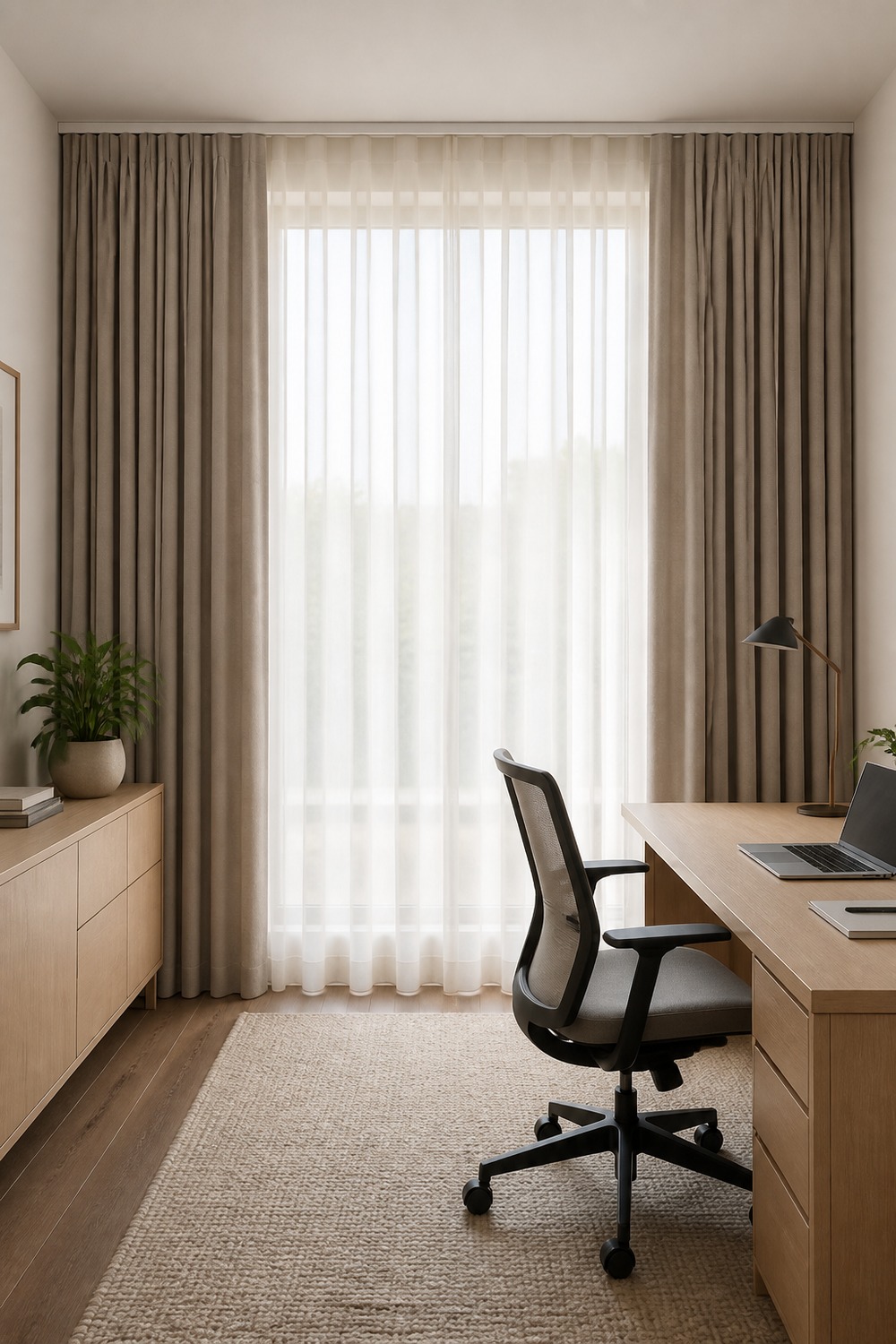
Ripple-fold curtains give this compact office a cleaner rhythm than bulky pleats would. The hidden track and even folds keep the window wall crisp, which works well with the pale desk and minimal closed storage.
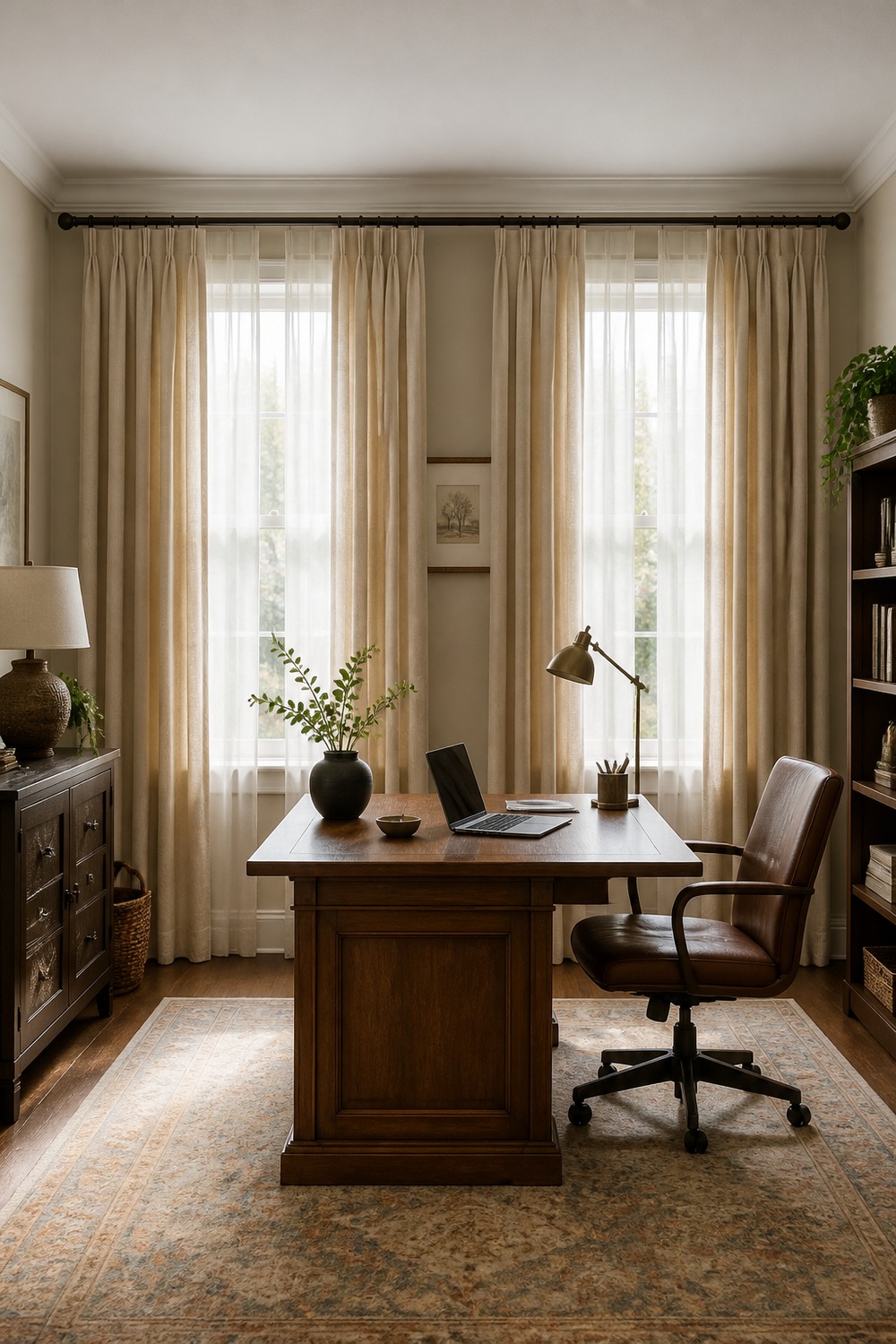
One long rod visually joins the two windows and makes the centered desk feel intentional. Balanced floor-length panels also leave the middle clear, so daylight reaches the work surface without fabric crowding either side.
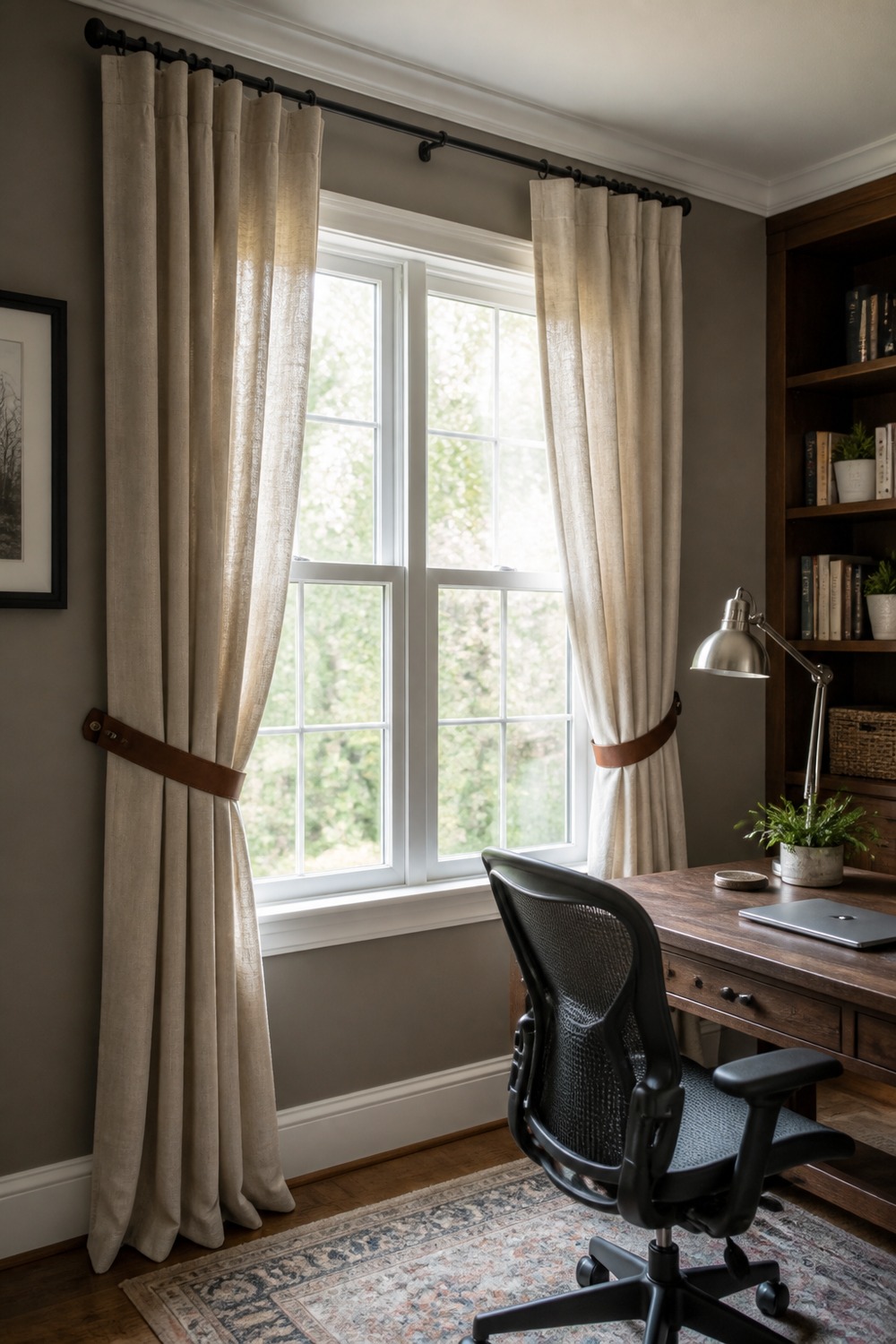
Simple leather tiebacks pull the linen away from the desk during working hours and expose more of the glass. They add a small material contrast too, which is enough detail for this otherwise quiet window treatment.
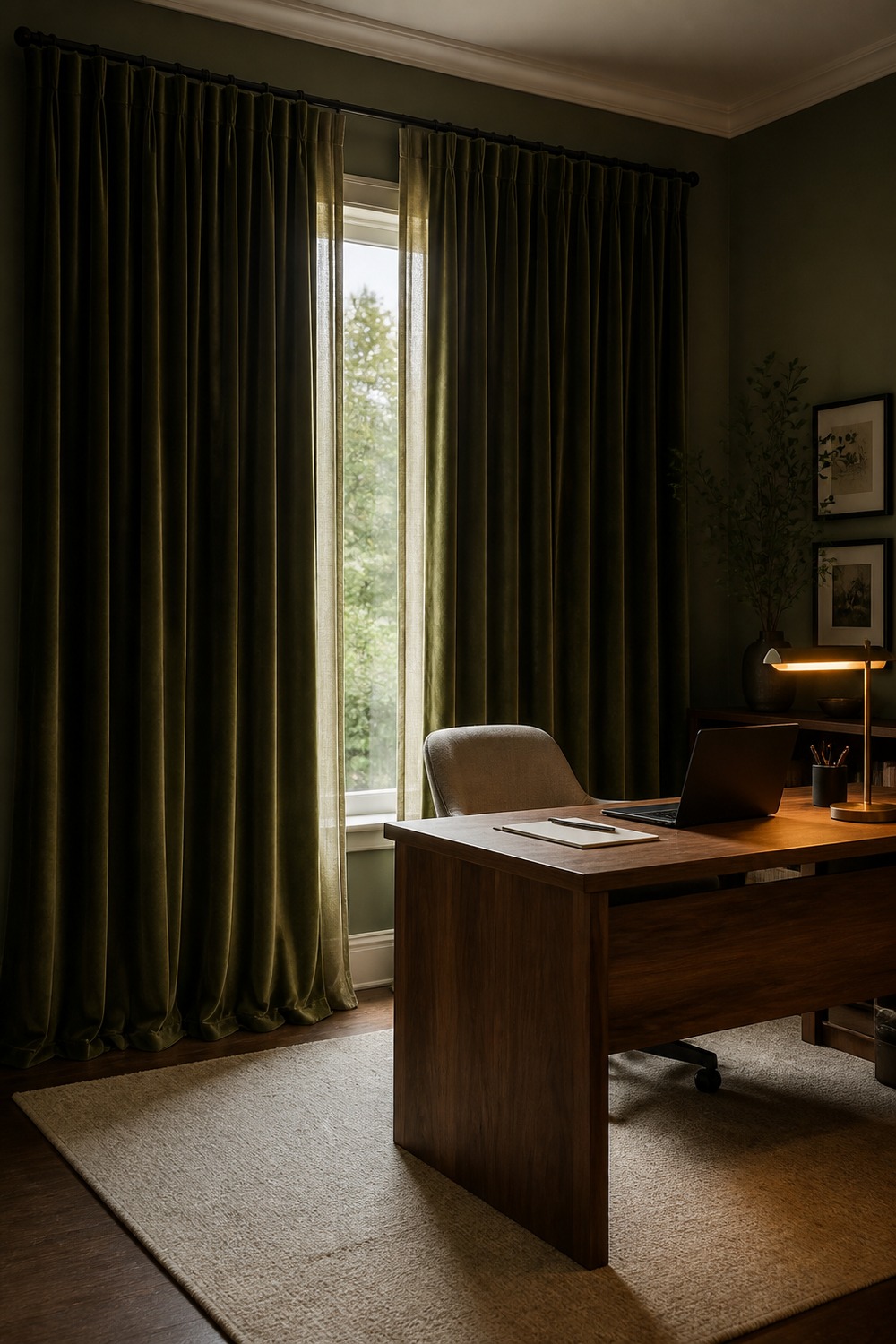
Olive velvet is a bold choice, but the low-glare lamp, cream rug, and walnut desk keep it from feeling too heavy. The thick fabric gives the room a cocooned evening mood and can help with both light and outside noise.
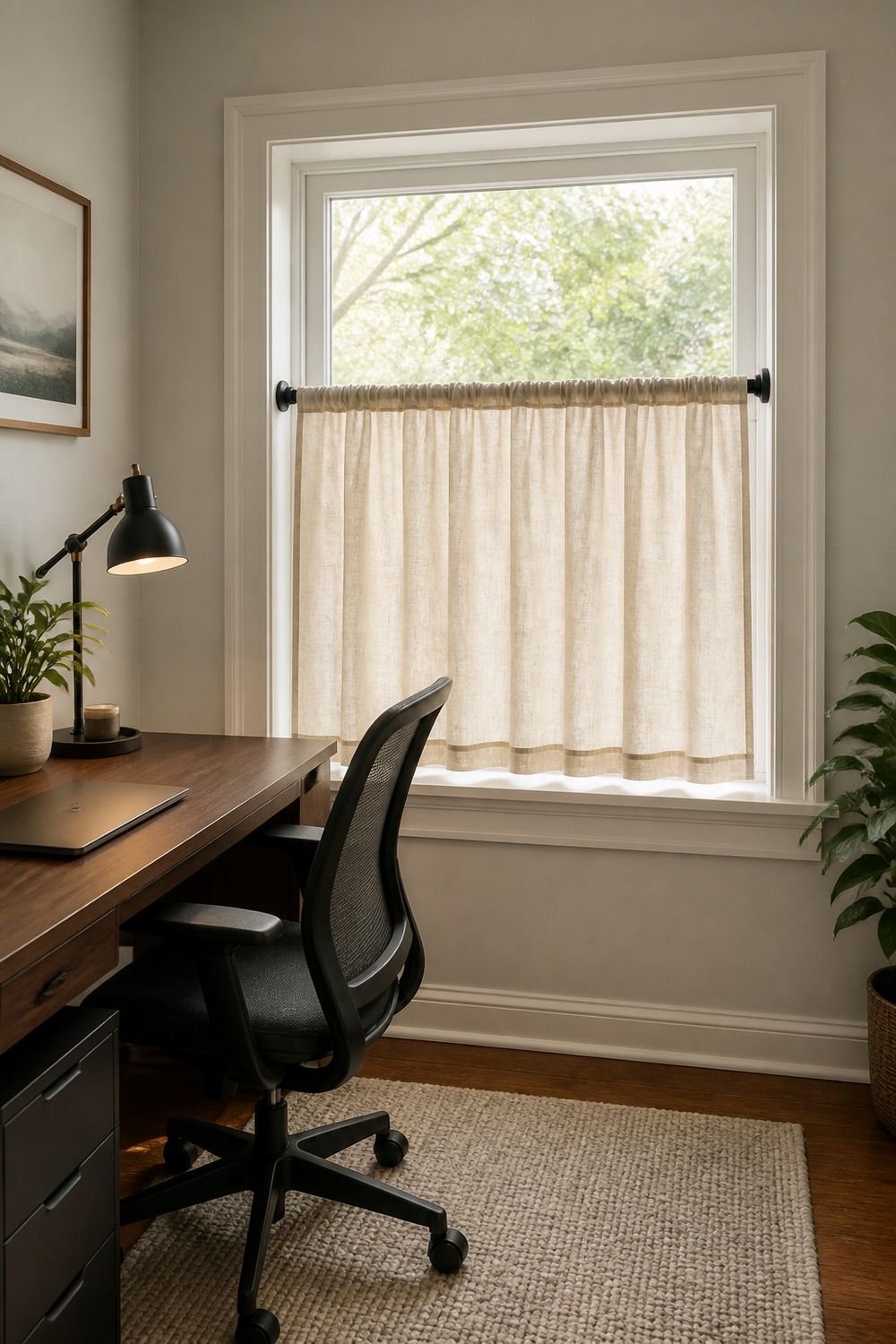
The pressure-fit rod sits inside the window recess, so this café curtain adds privacy without drilled brackets. That makes the idea useful for a rental, and the short fabric leaves the freestanding desk area completely unobstructed.
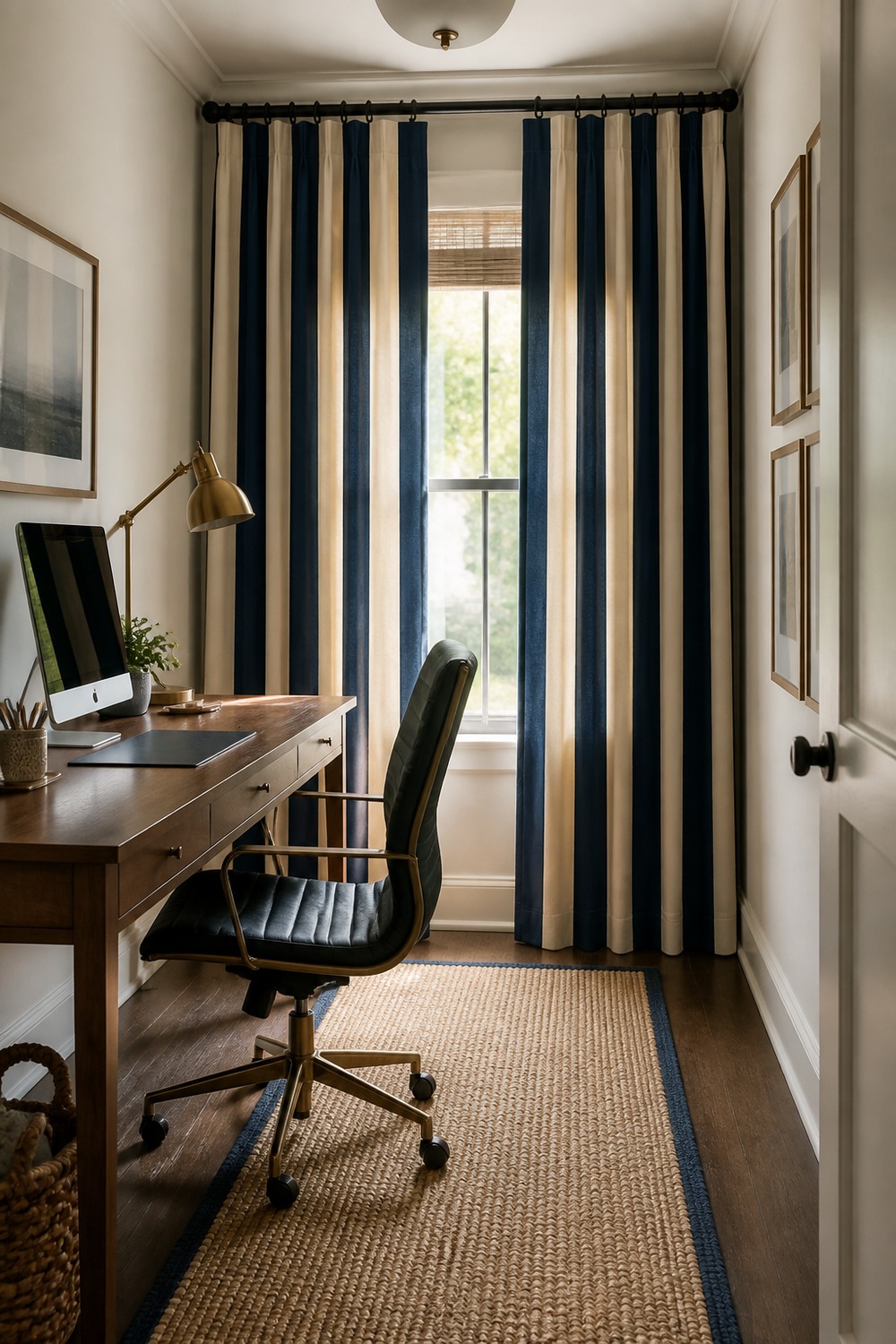
Bold navy-and-cream stripes emphasize the height of this narrow office instead of its tight width. The slim desk and open walkway prevent the pattern from overwhelming the room, while the curtains still read clearly from the doorway.
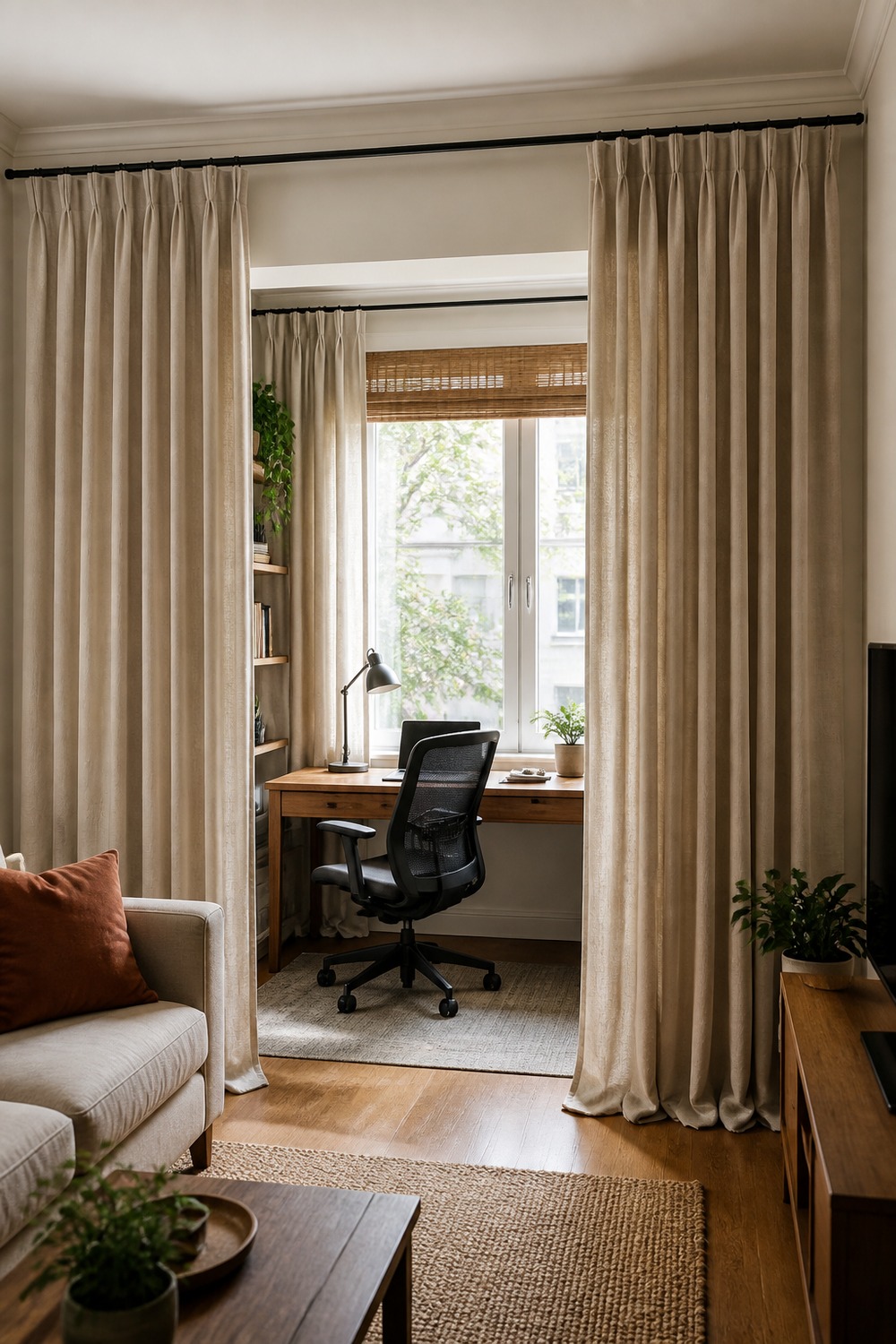
Full-height linen curtains can close this office nook off from the living room when work is finished. Open, they frame the desk; closed, they hide screens and paperwork without requiring a permanent partition.
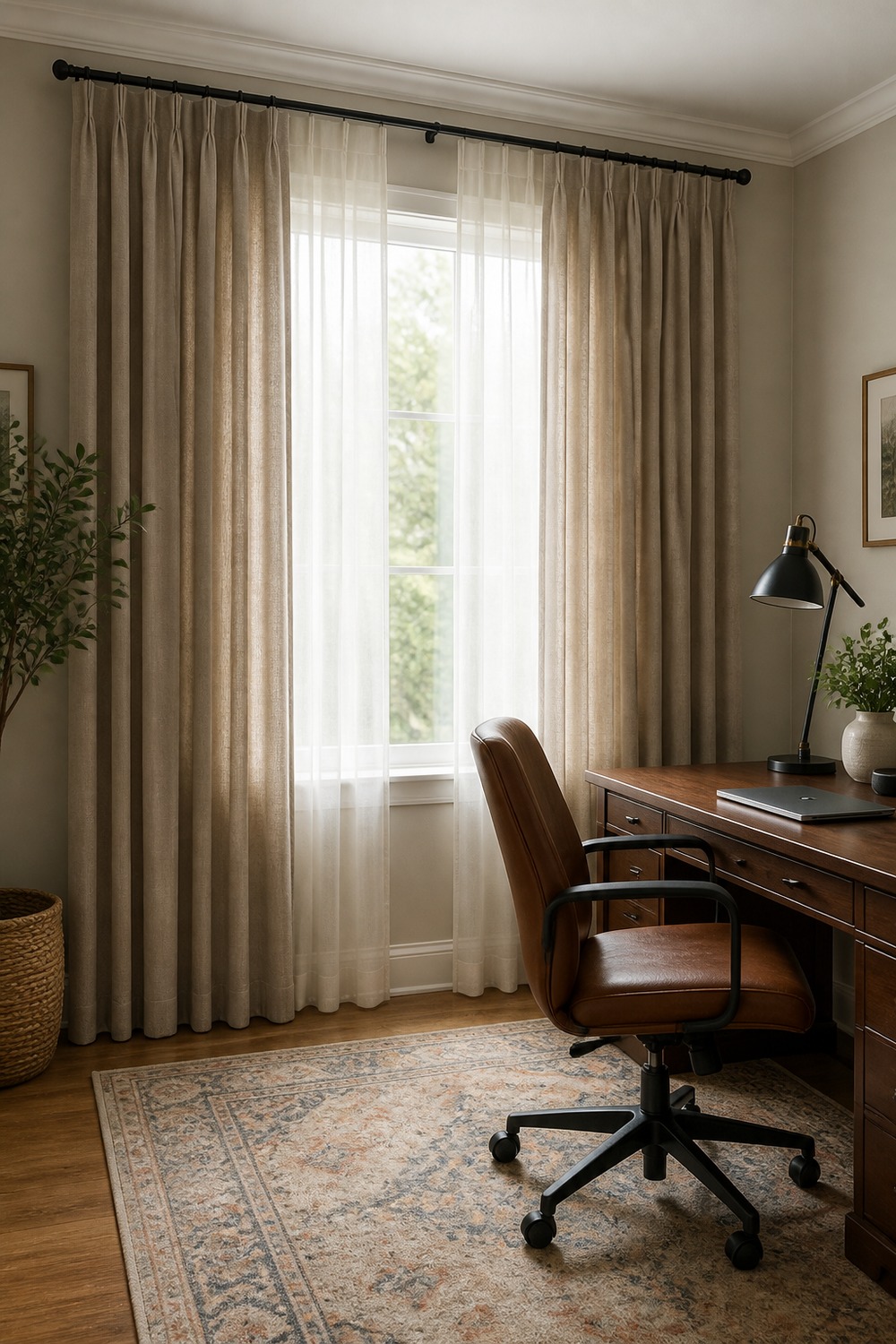
This final room gets the basics right at the same time: the rod sits high, the panels reach the floor, and the desk stays clear of the fabric. The result feels finished, but every choice still supports daylight, privacy, and an easy chair path.
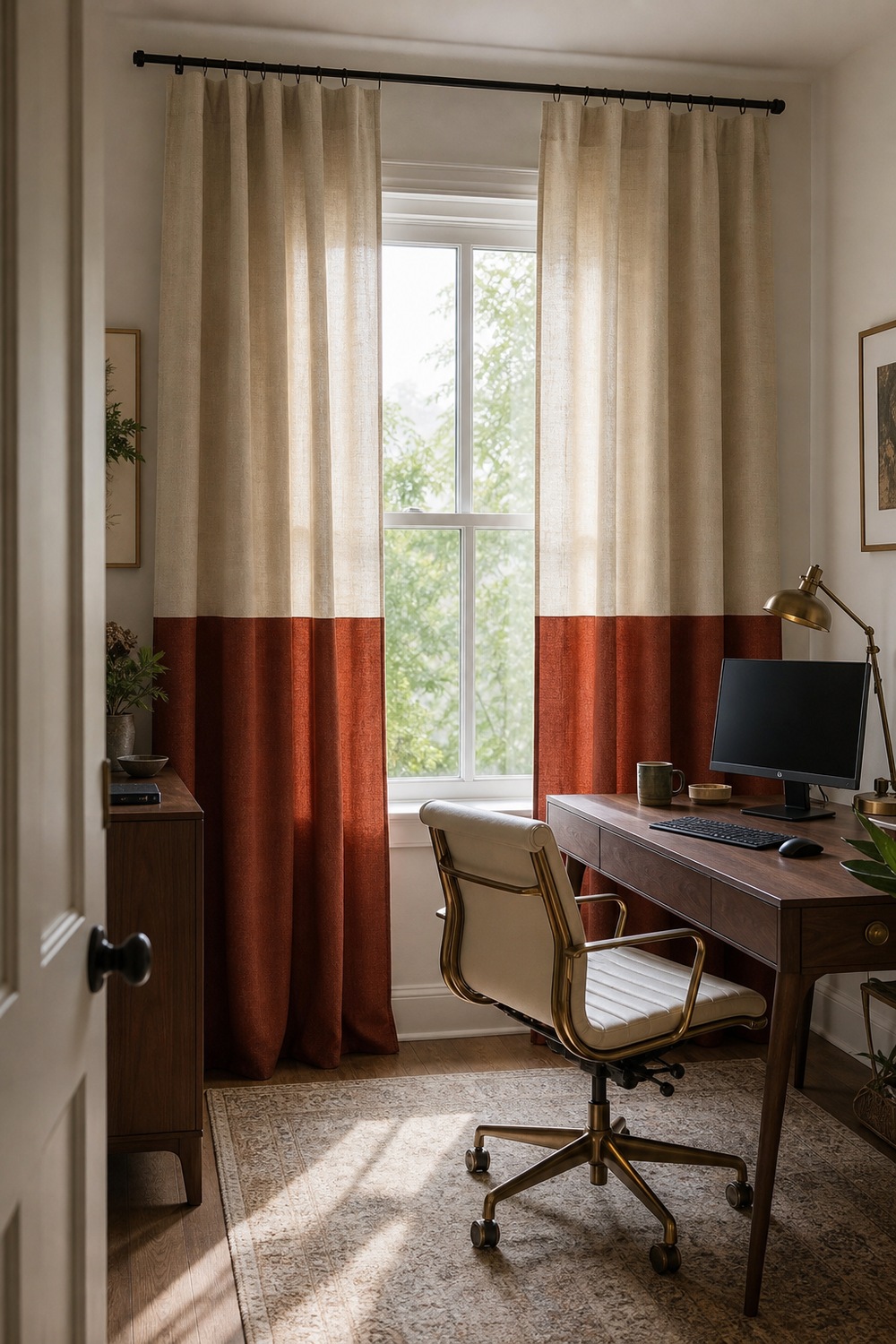
The two-tone panels bring in a real color moment without adding more objects around the desk. Keeping oatmeal near the window preserves the daylight, while the rust lower half gives the pale room enough weight to feel intentional.
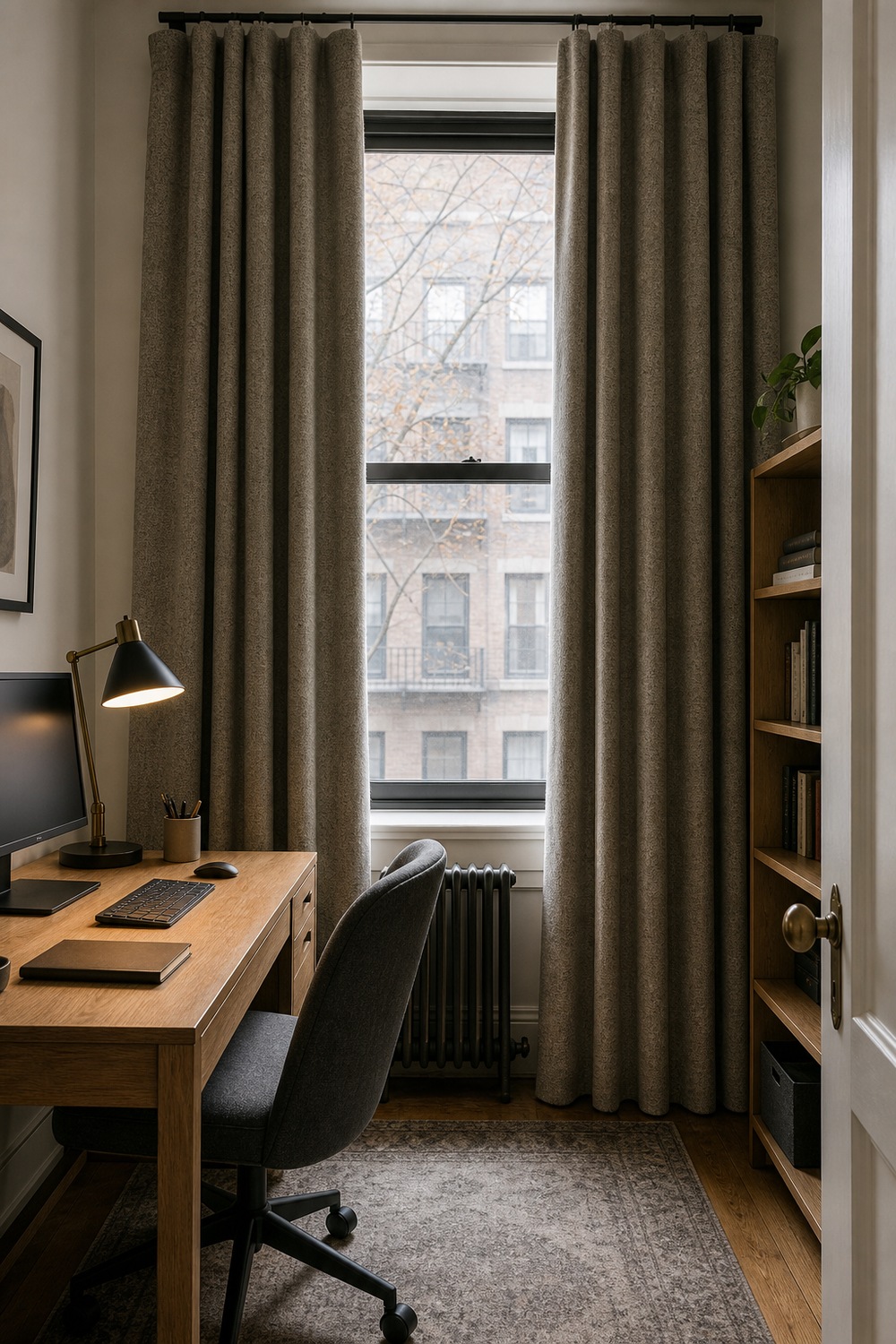
Heavy wool curtains are useful when the office faces a noisy street, and the heathered weave looks far softer than a technical acoustic panel. The radiator clearance matters here too; the hem stops safely above the heat instead of pooling behind the desk.
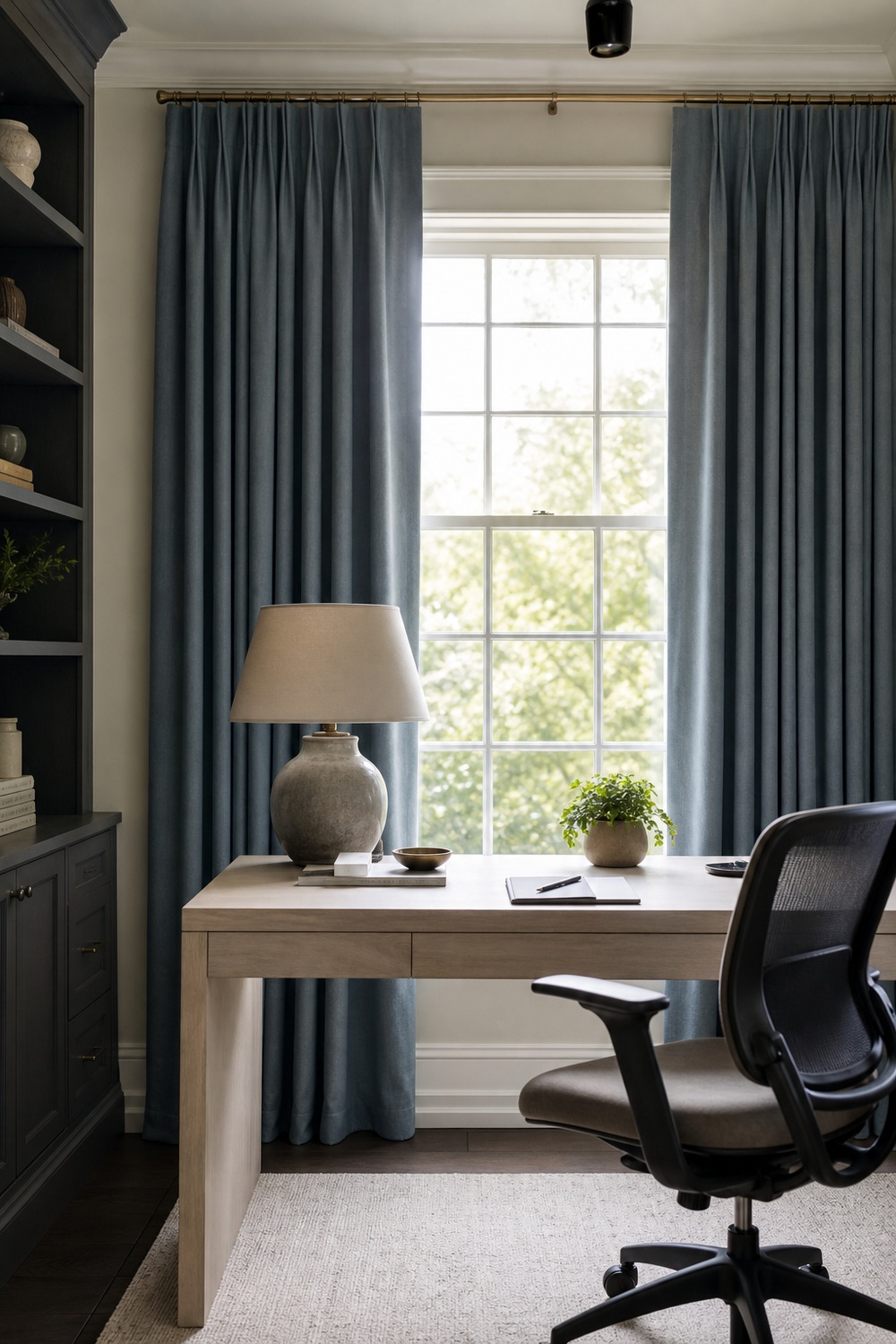
Pinch pleats give the blue fabric a crisp top line, but the slightly uneven folds keep the room from feeling overly formal. That narrow brass rod is a small detail that connects nicely with the lamp while leaving the desk wall visually quiet.
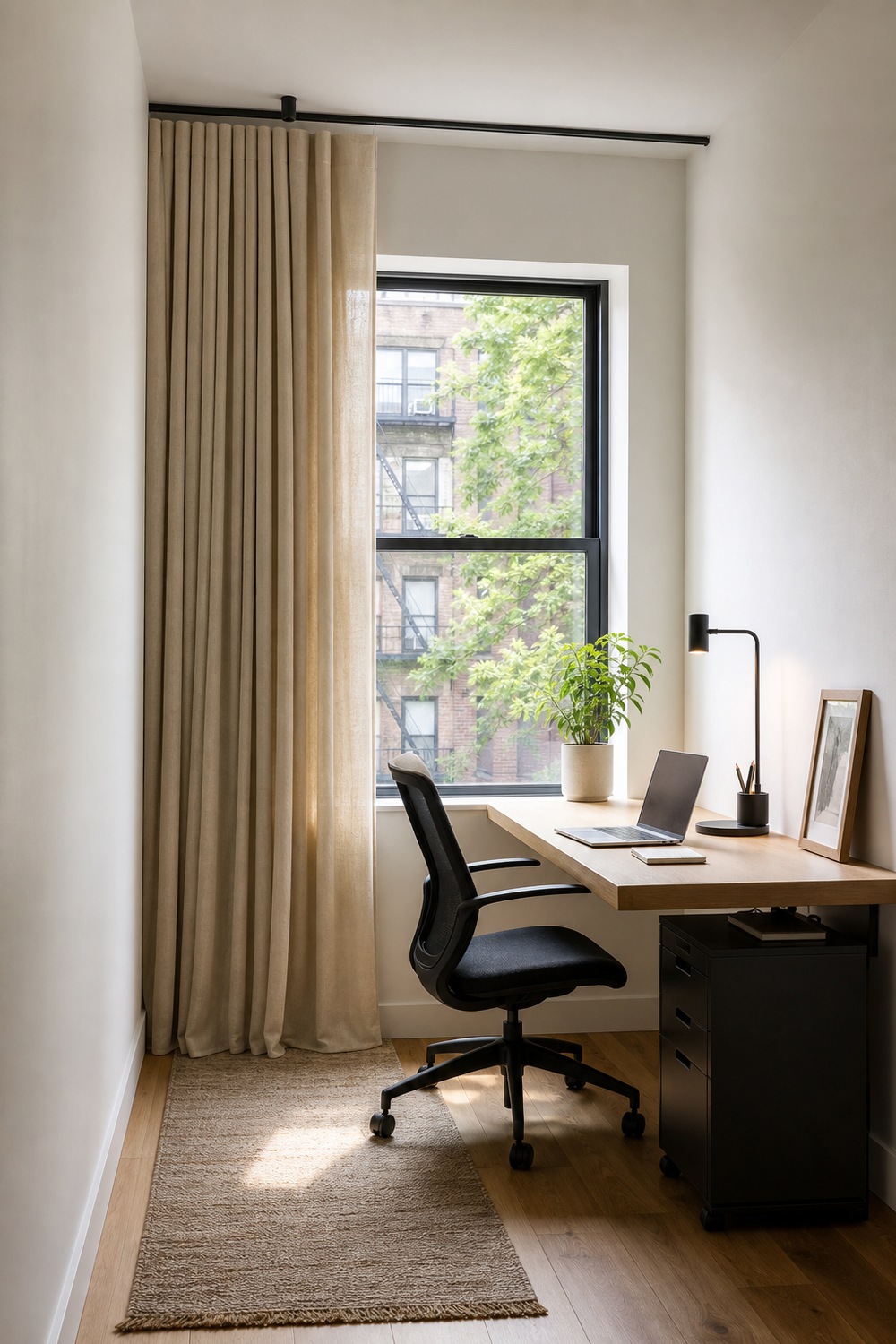
An off-center window does not always need matching panels. One generous curtain can stack completely away from the work surface, which leaves the narrow chair route open and avoids a wad of fabric pressed against the drawer unit.
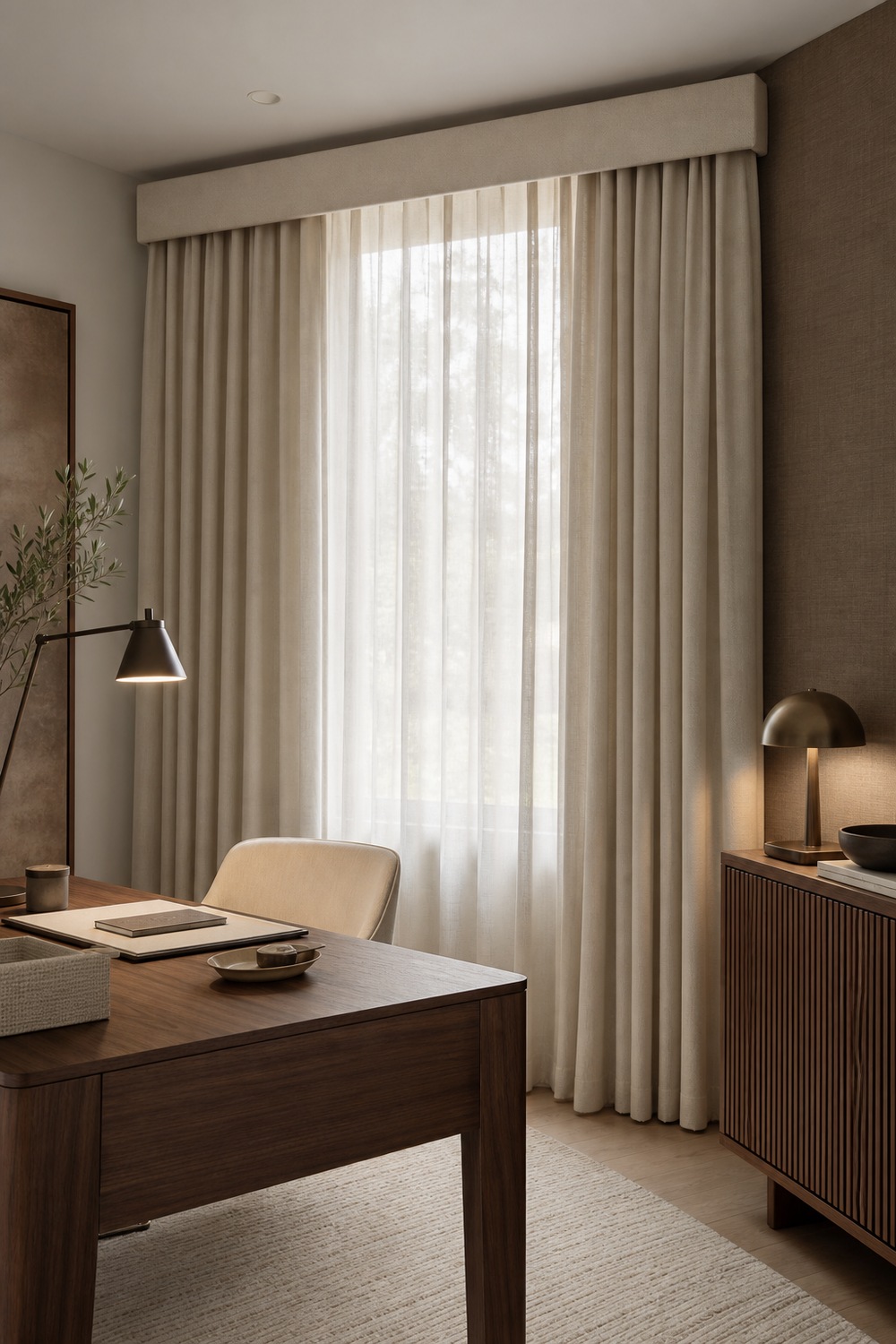
The shallow linen pelmet hides the track without turning the window into a heavy traditional valance. It makes the curtain drop look custom, and the clean top edge helps the ribbed cabinet and walnut desk read as one calm composition.
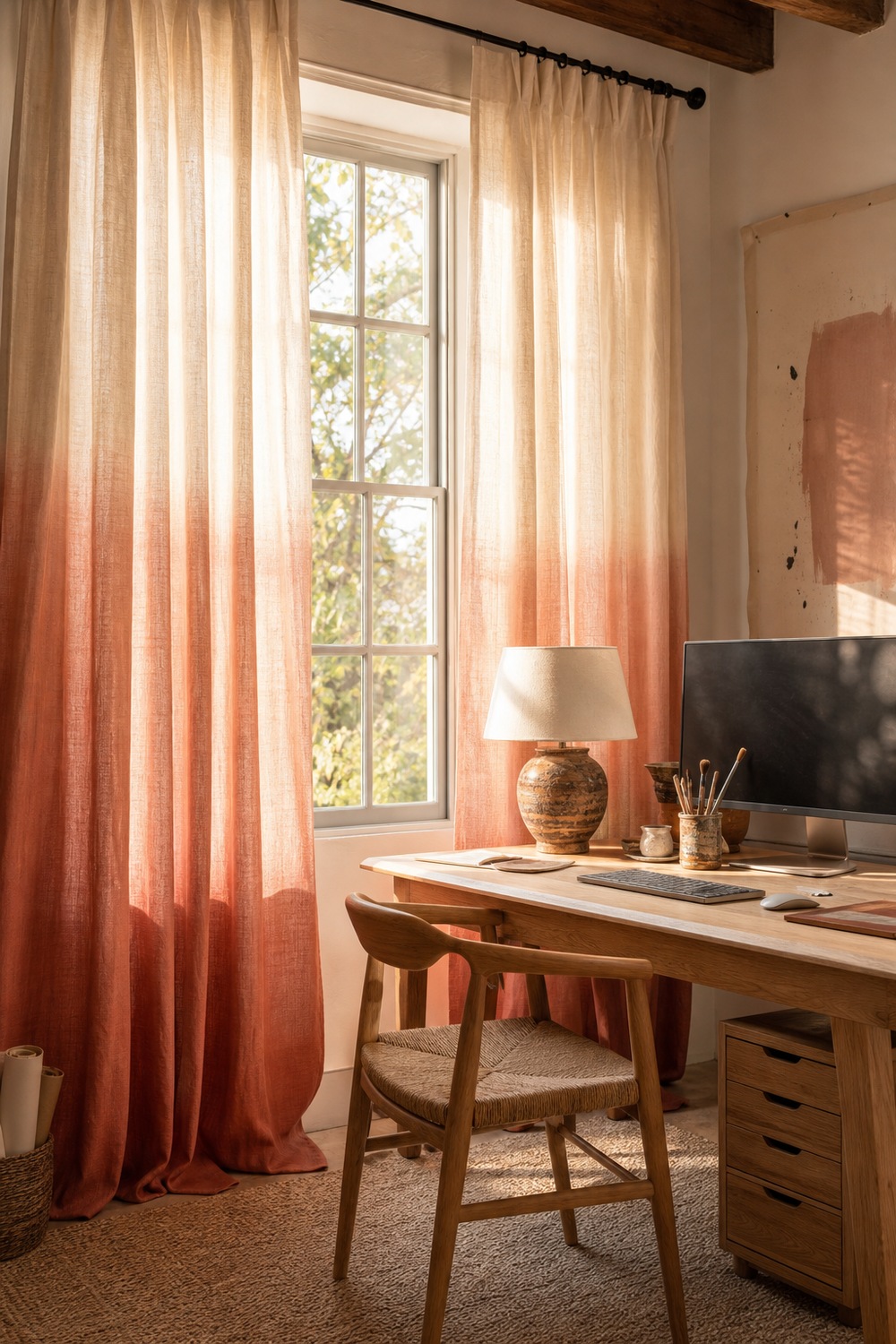
These ombre panels are playful, but the softened clay colors keep them out of craft-room territory. The light upper fabric still catches the sun, while the deeper terracotta at floor level grounds the simple oak desk.
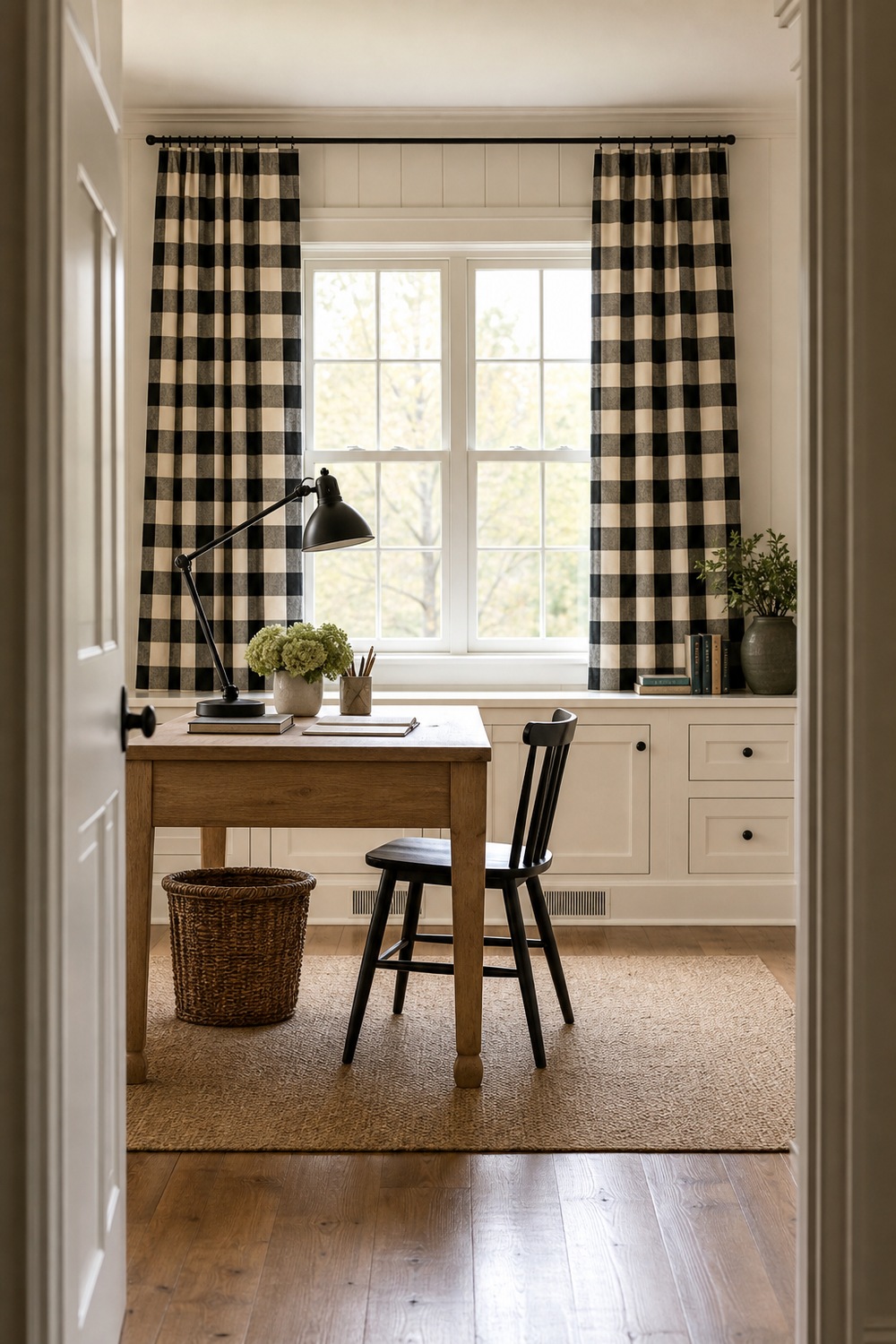
Large checks can get theme-y fast, so the plain oak desk and closed white storage are doing important work. With no word signs or fussy accessories, the curtain pattern feels graphic and fresh rather than like a farmhouse display.
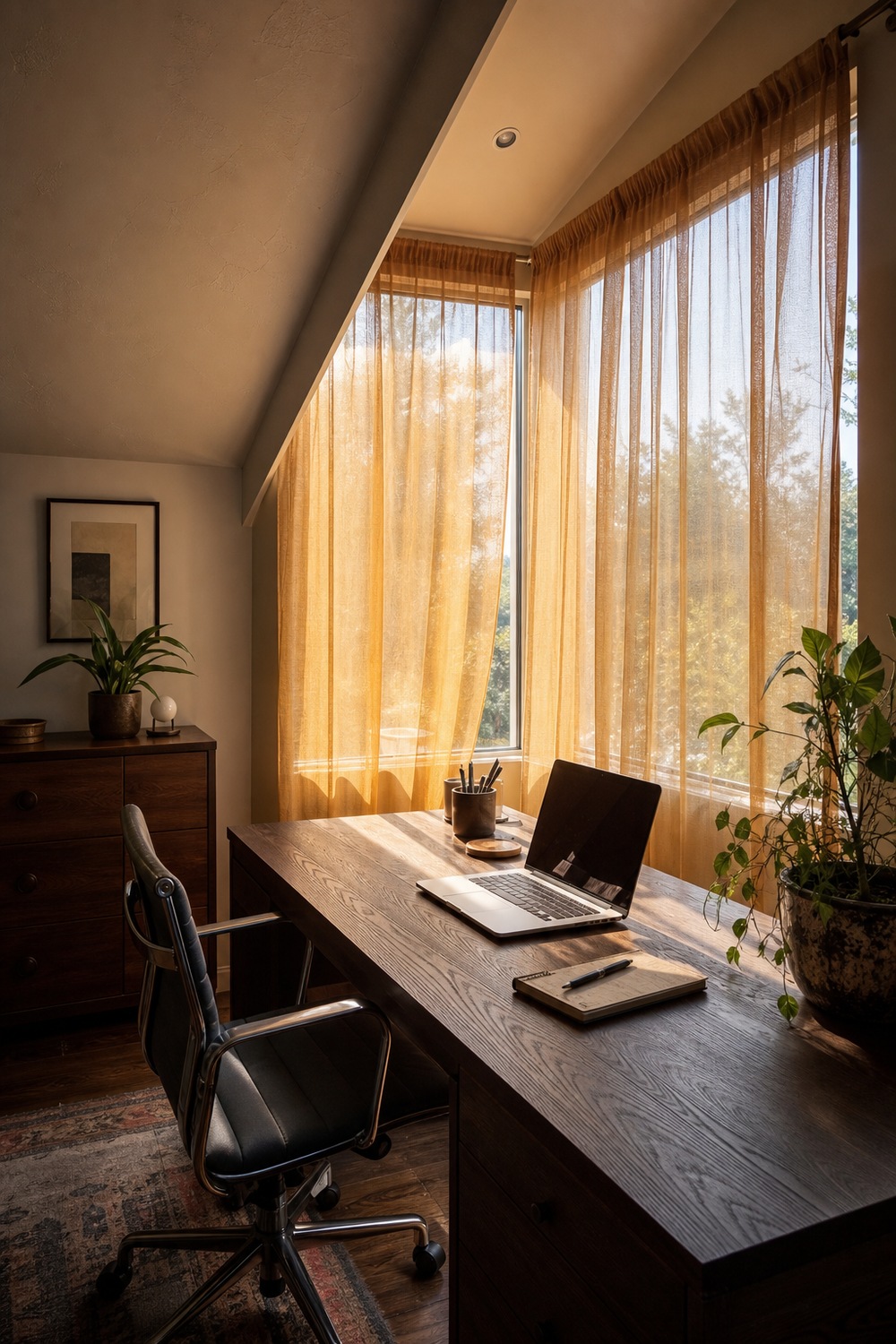
Amber sheers turn hard sunlight into a gentler glow across the dark desk. I especially like that the fabric stays translucent; the office gets warmth and glare control without losing the sense of an open corner window.
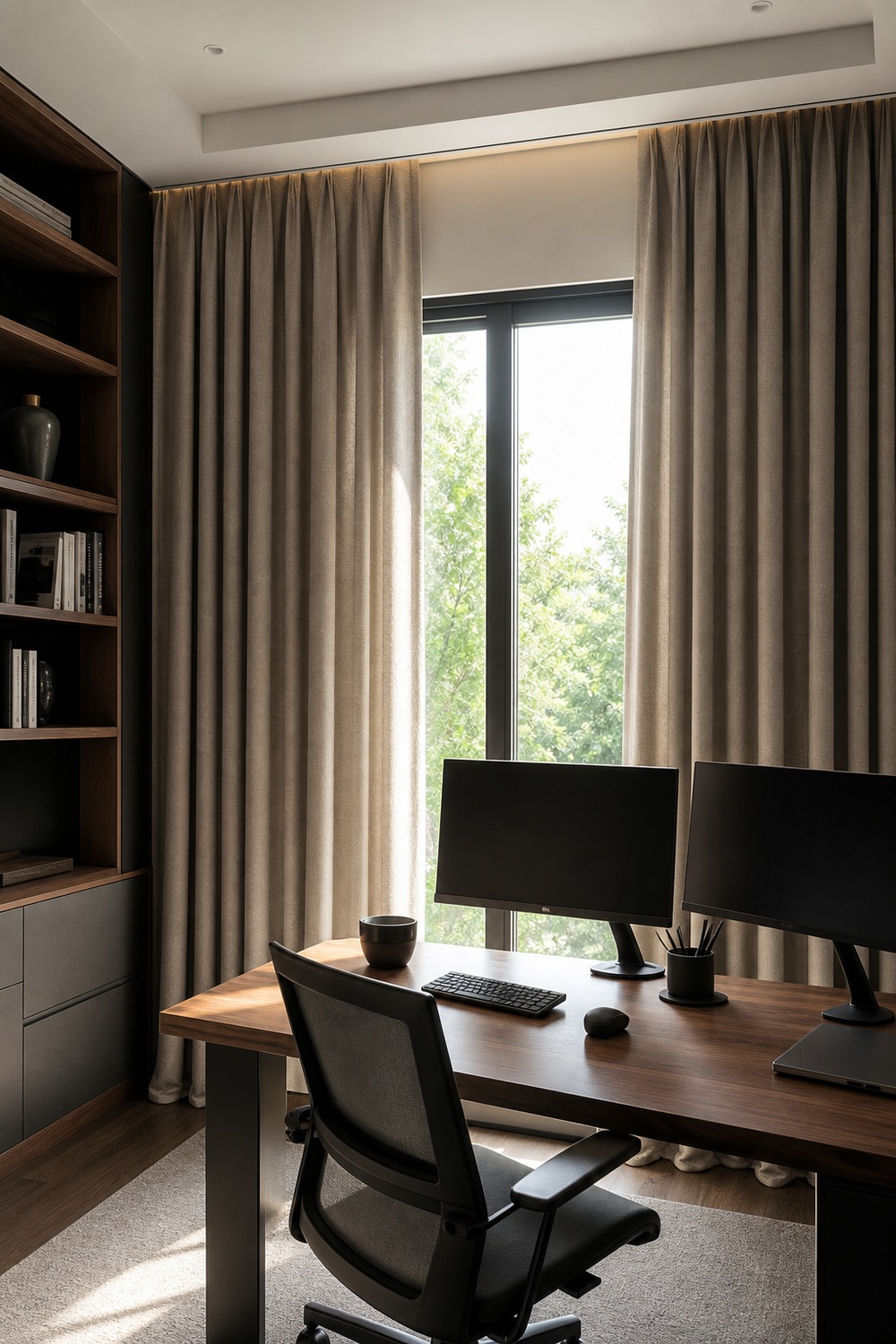
A recessed track makes sense behind two monitors, where bulky visible hardware would add another line across the window wall. The track nearly disappears, so the warm-gray folds still feel like a soft residential detail instead of office equipment.
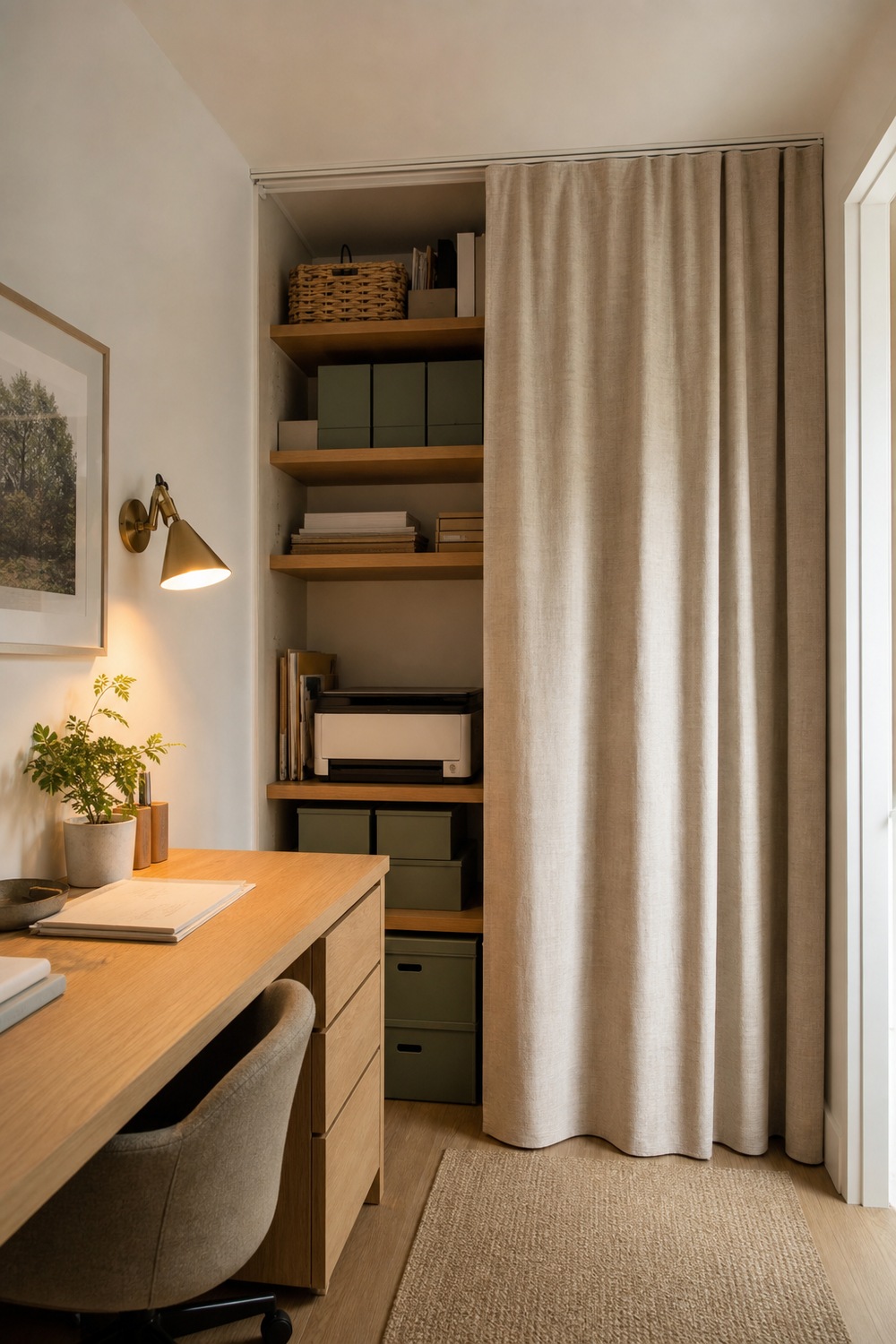
Using a curtain on the supply alcove gives this small office flexible closed storage without another bulky door. It can hide paper, boxes, and everyday work supplies after hours, then slide aside without stealing space from the chair or walkway.
The best option really depends on where the glare lands and how much privacy the room needs during the day. I would start with those two problems, then choose the fabric weight, length, and hardware that make the window easier to use from the desk.
Leave a comment