
Cottage coffee tables can look charming really quickly, but they can also turn into a pile of trays, books, flowers, and random remotes if the scale is off. I like the rooms where the table feels useful first, then pretty: worn wood, soft upholstery, baskets, a small lamp nearby, and enough breathing room around the sofa.
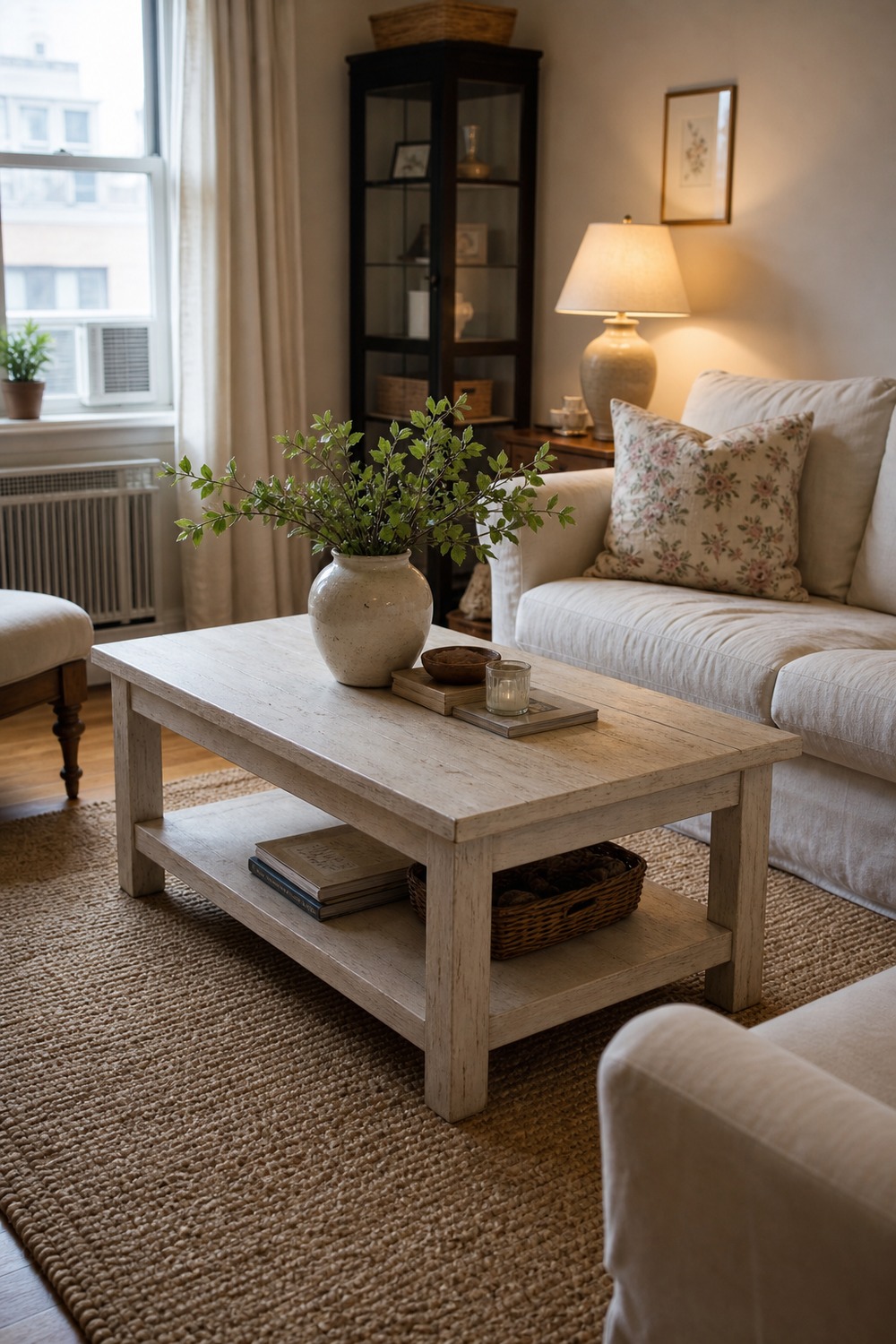
The whitewashed table sets the whole room up before anything else has to work too hard. I like the way the pale wood, cream slipcovered sofa, woven rug, and little vase of greenery all sit in the same soft palette, so the table feels collected instead of randomly placed in the middle of the room.
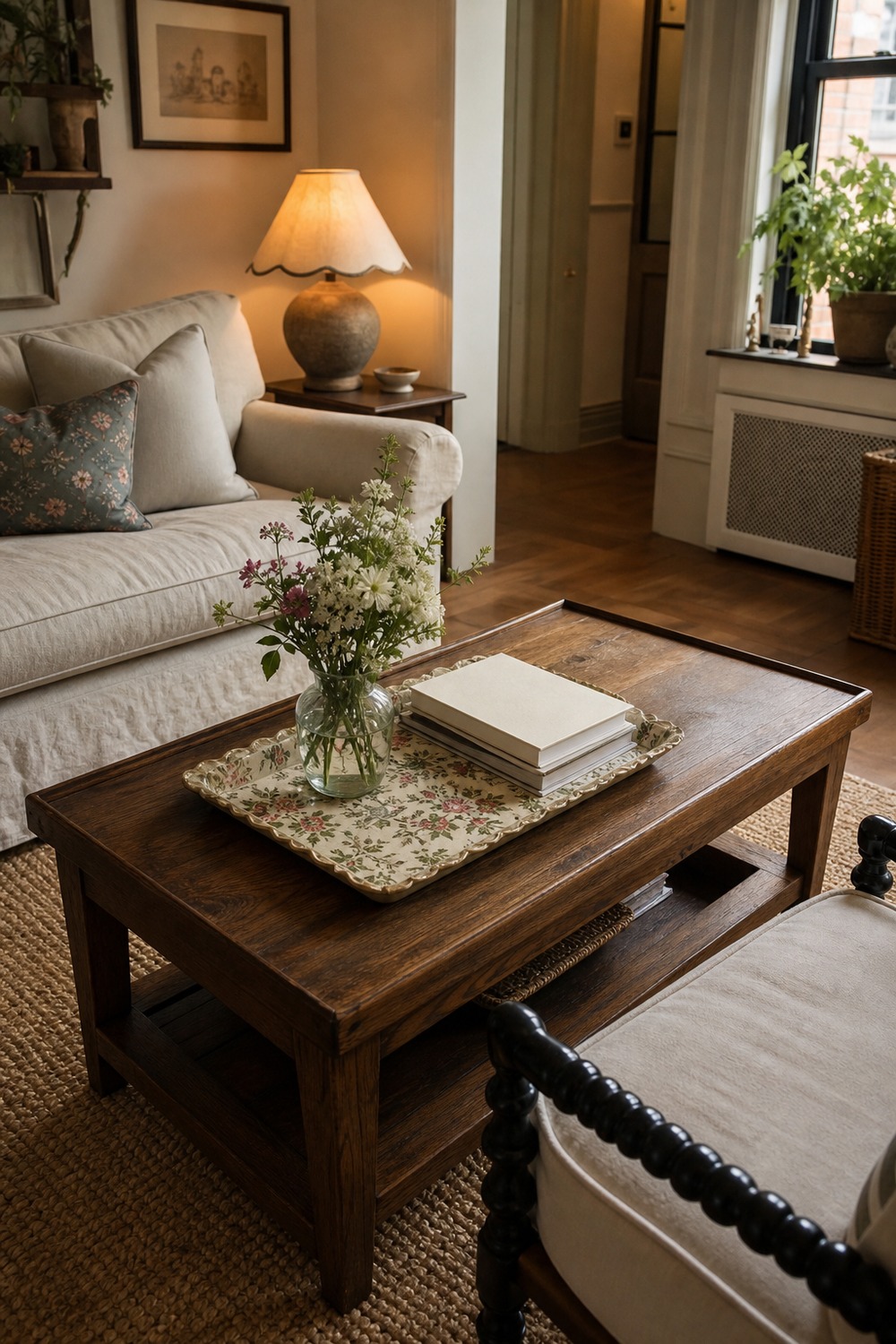
This floral tray moment feels sweet without becoming fussy. The dark wood table keeps the setup grounded, while the flowers, books, and shaded lamp give the surface a reason to be styled instead of looking like a store display.
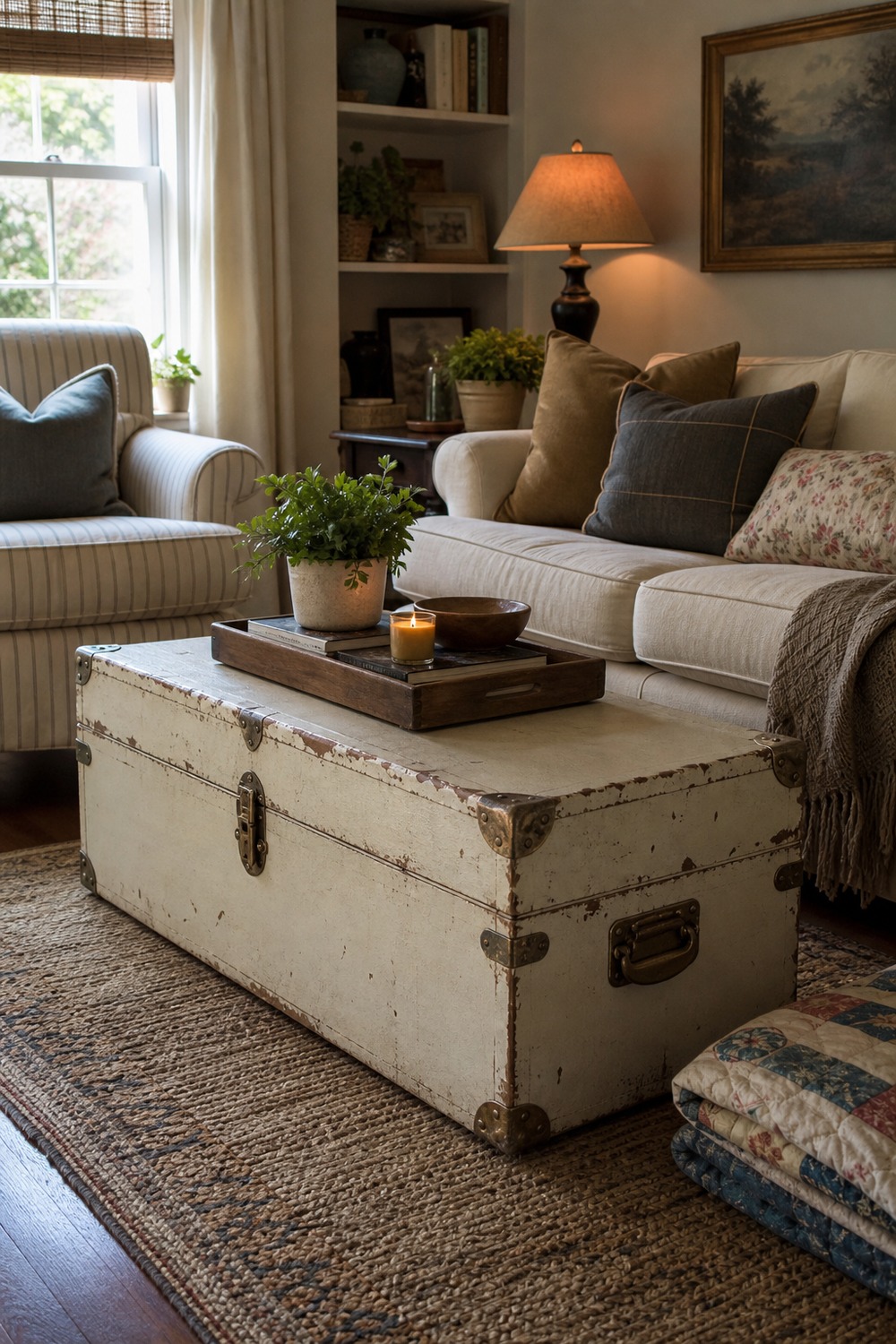
A vintage trunk is one of those cottage coffee table ideas that actually earns its space. It gives the room a stronger shape, hides extra blankets or games, and the worn paint plus brass latch make the seating area feel a little older and more lived-in.
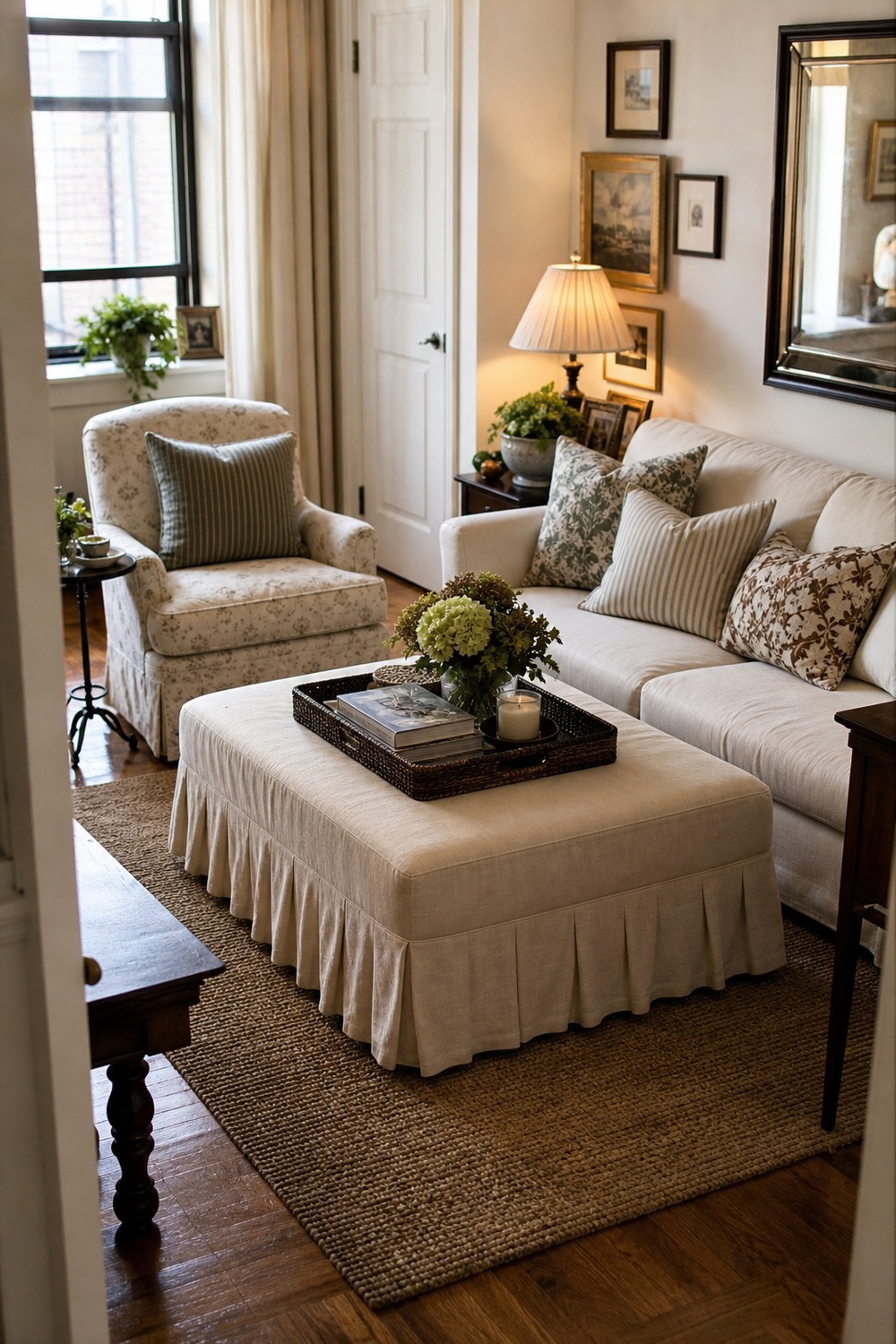
A skirted ottoman table makes sense when the room already has a lot of hard edges. The tray keeps drinks and flowers steady, but the fabric base makes the whole seating area feel softer and less formal.
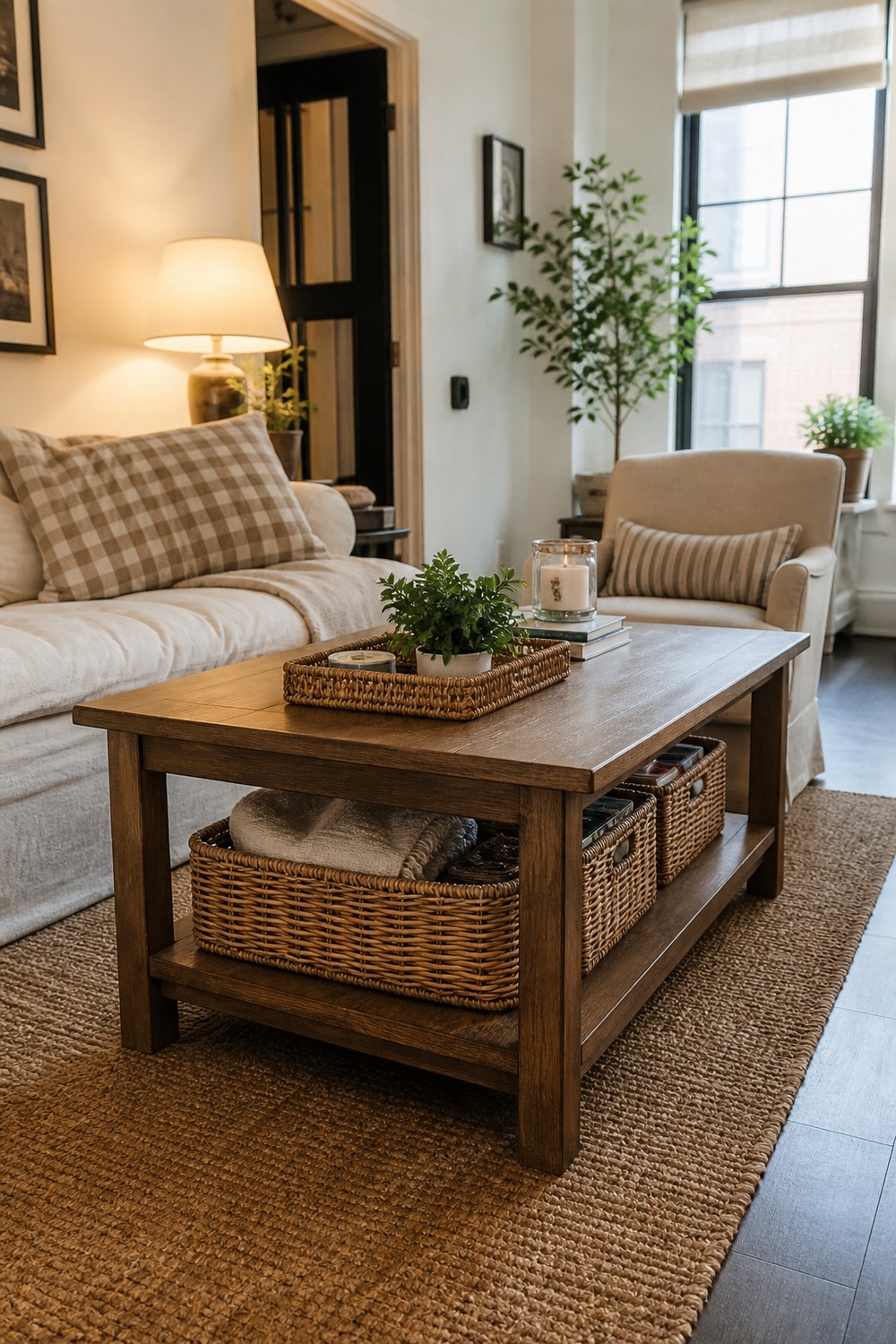
The lower shelf baskets are the detail I would notice first here. They give books, throws, or loose living-room clutter somewhere to go, and the checked throw on the sofa keeps the storage from feeling too utilitarian.
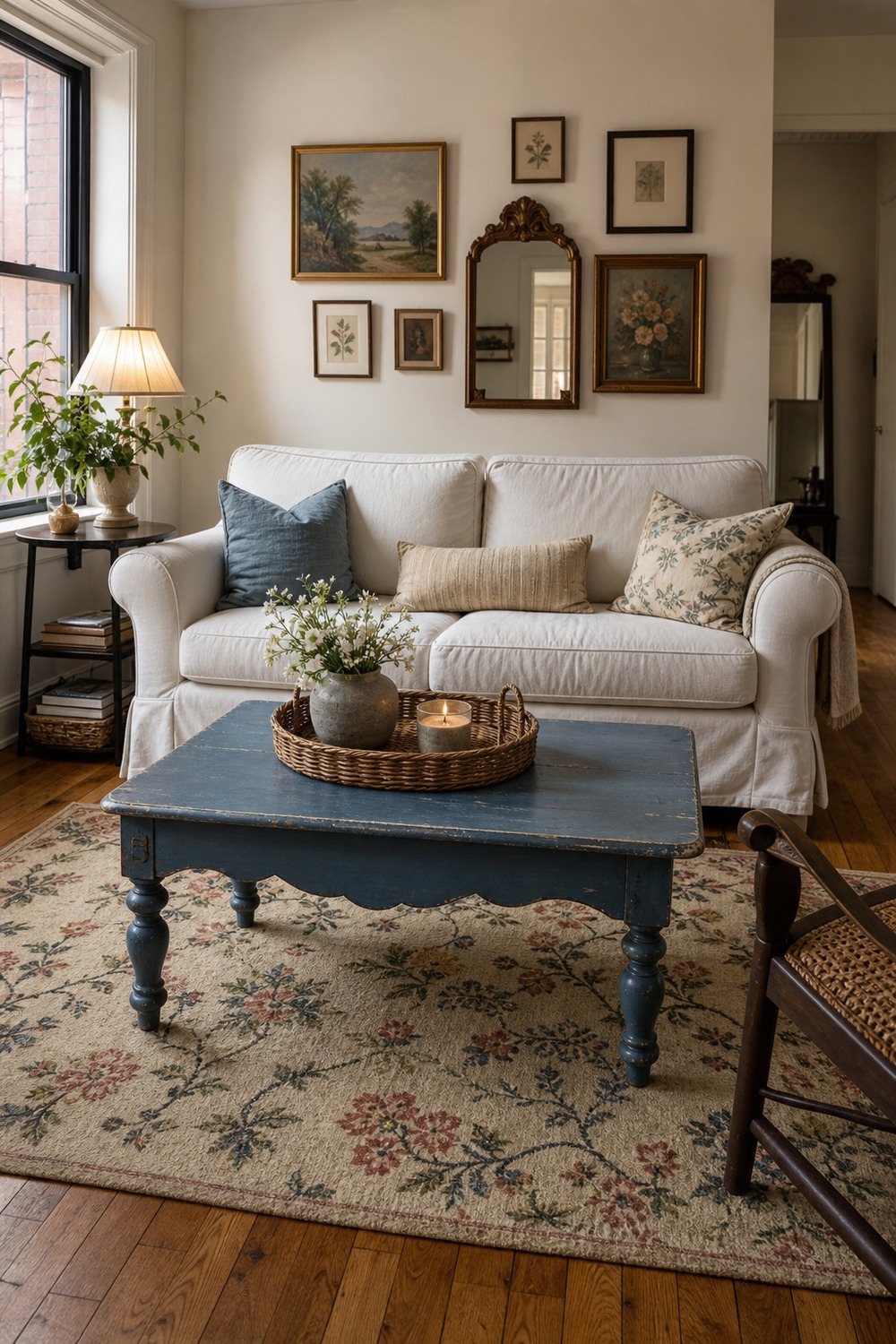
That dusty blue paint gives the coffee table enough personality without taking over the room. The chipped finish, floral rug, and warm floorboards make it feel like a piece that has been around for a while, which is exactly what cottage rooms usually need.
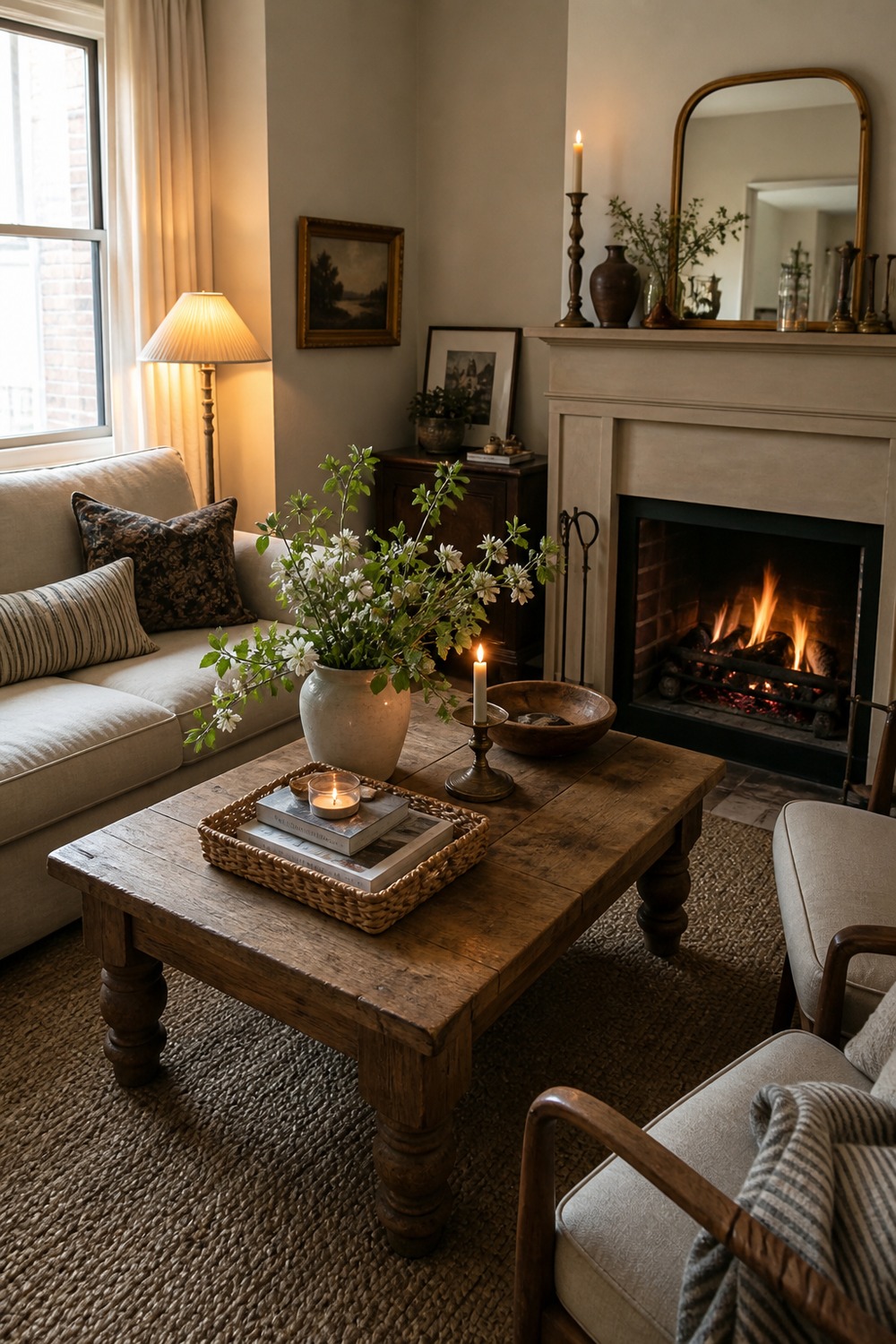
Putting the coffee table in front of the fireplace makes the seating area feel anchored from both sides. The candles and garden clippings are simple, but they work because the table is low enough that the mantel and sofa still get to breathe.
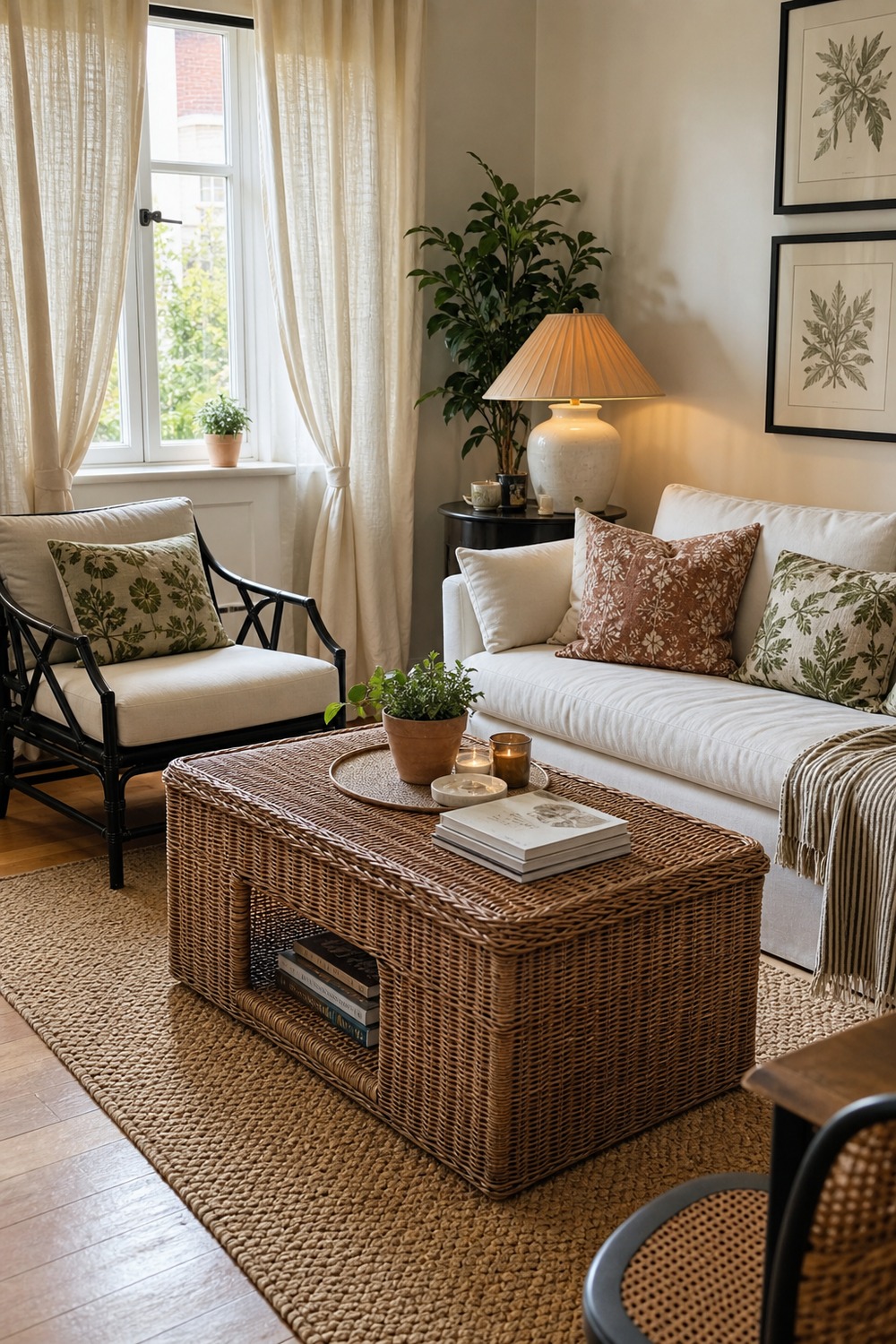
The rattan table brings in a lighter texture than another block of wood would. I like it with the white cushions and airy curtains because the room still feels bright, but the coffee table adds enough woven detail to keep it from looking flat.
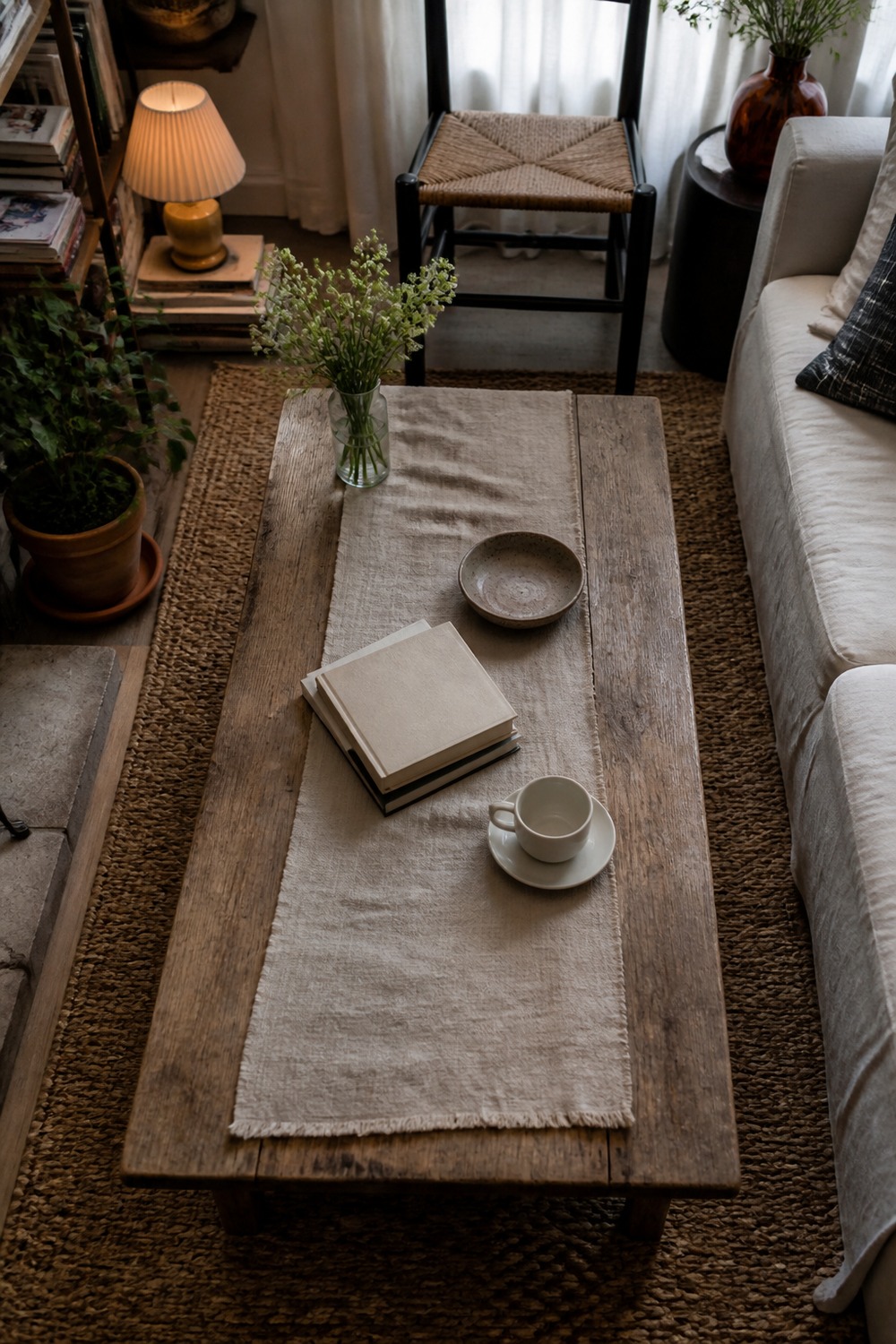
The close tabletop view works because the styling is restrained. A few blank books, a plain cup, and a ceramic dish are enough to make the wood surface feel used, not staged for a perfect photo nobody could live with.
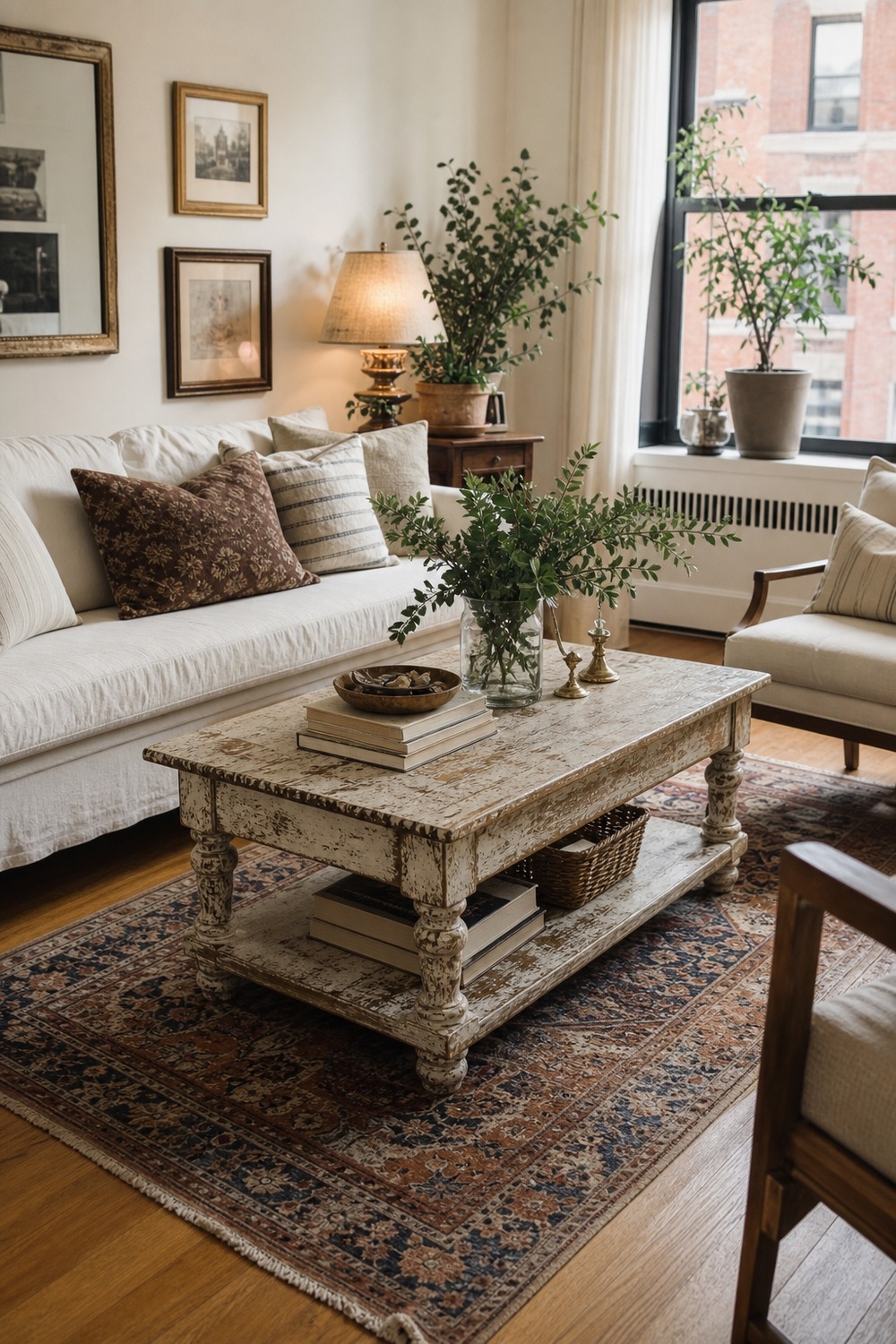
The weathered farmhouse table gives this room a sturdier cottage feel. Turned legs, chipped white paint, and the patterned rug all add texture, but the low simple shape keeps the sofa area from feeling crowded.
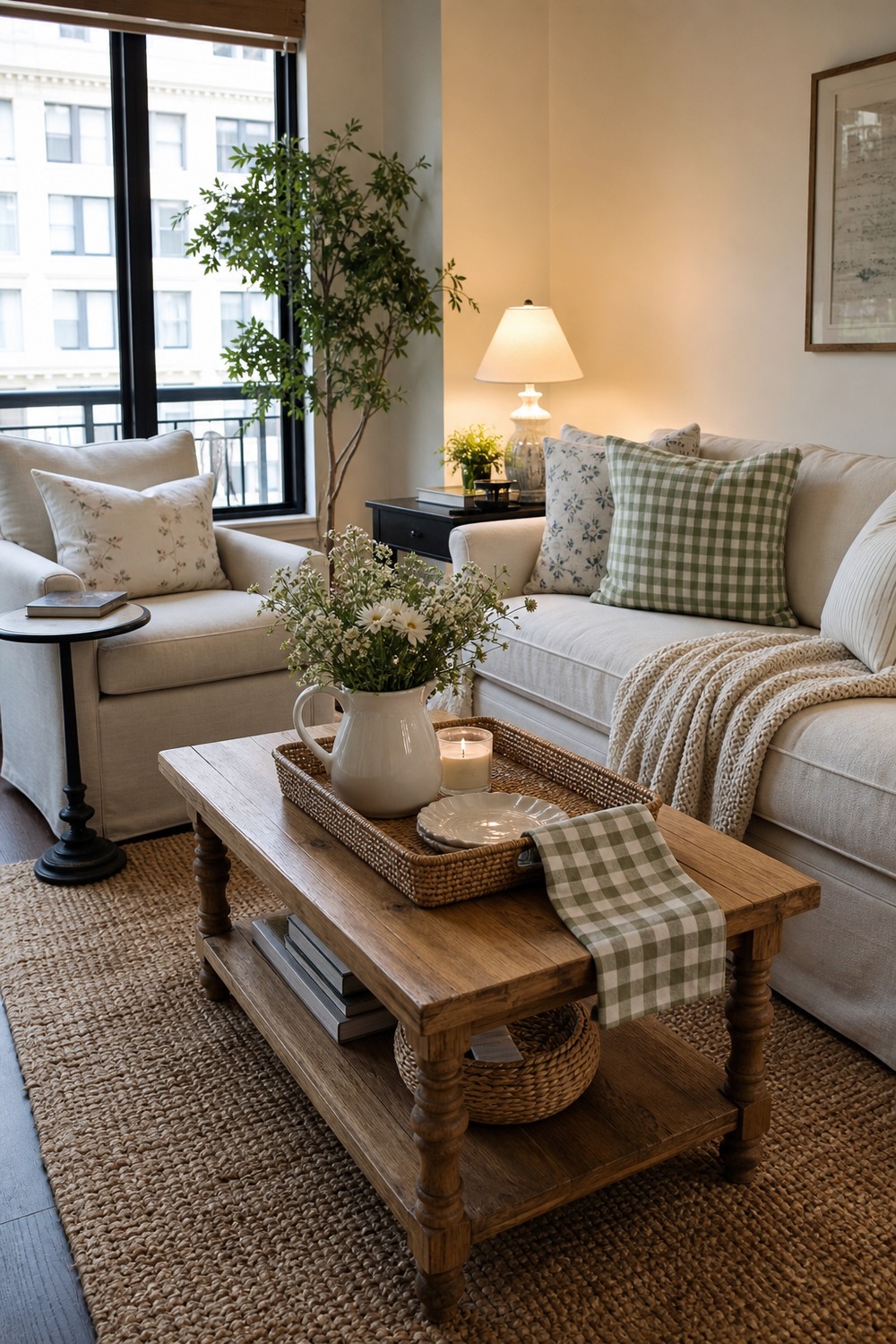
The little gingham detail is doing a lot here. It gives the table a cottage cue without needing signs or heavy themed decor, and the white pitcher keeps the styling useful enough for an everyday living room.
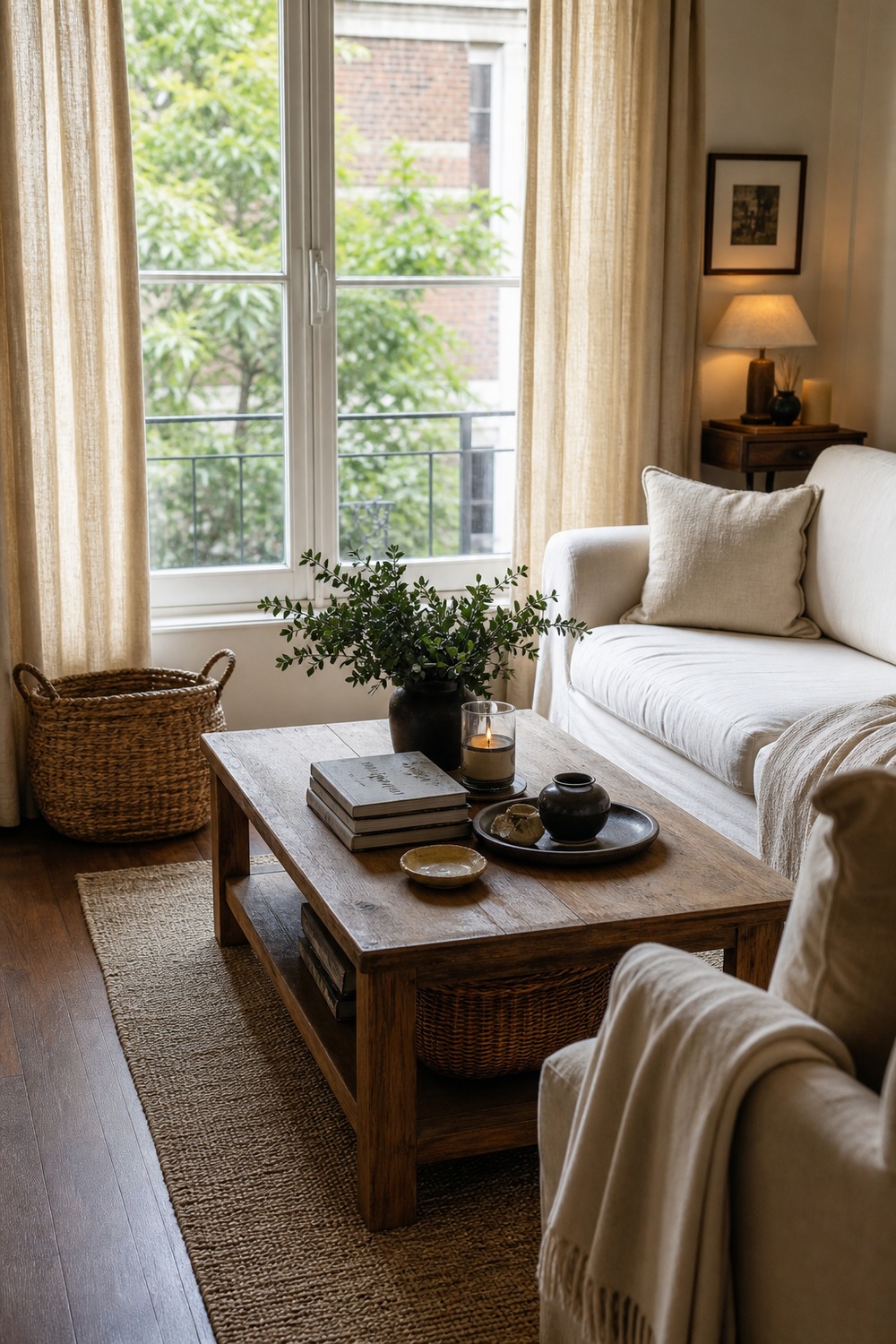
This window-side setup has that relaxed cottage feeling because the light does most of the work. The linen curtains, wood table, and simple tray styling make the nook feel calm without removing all the normal living-room function.
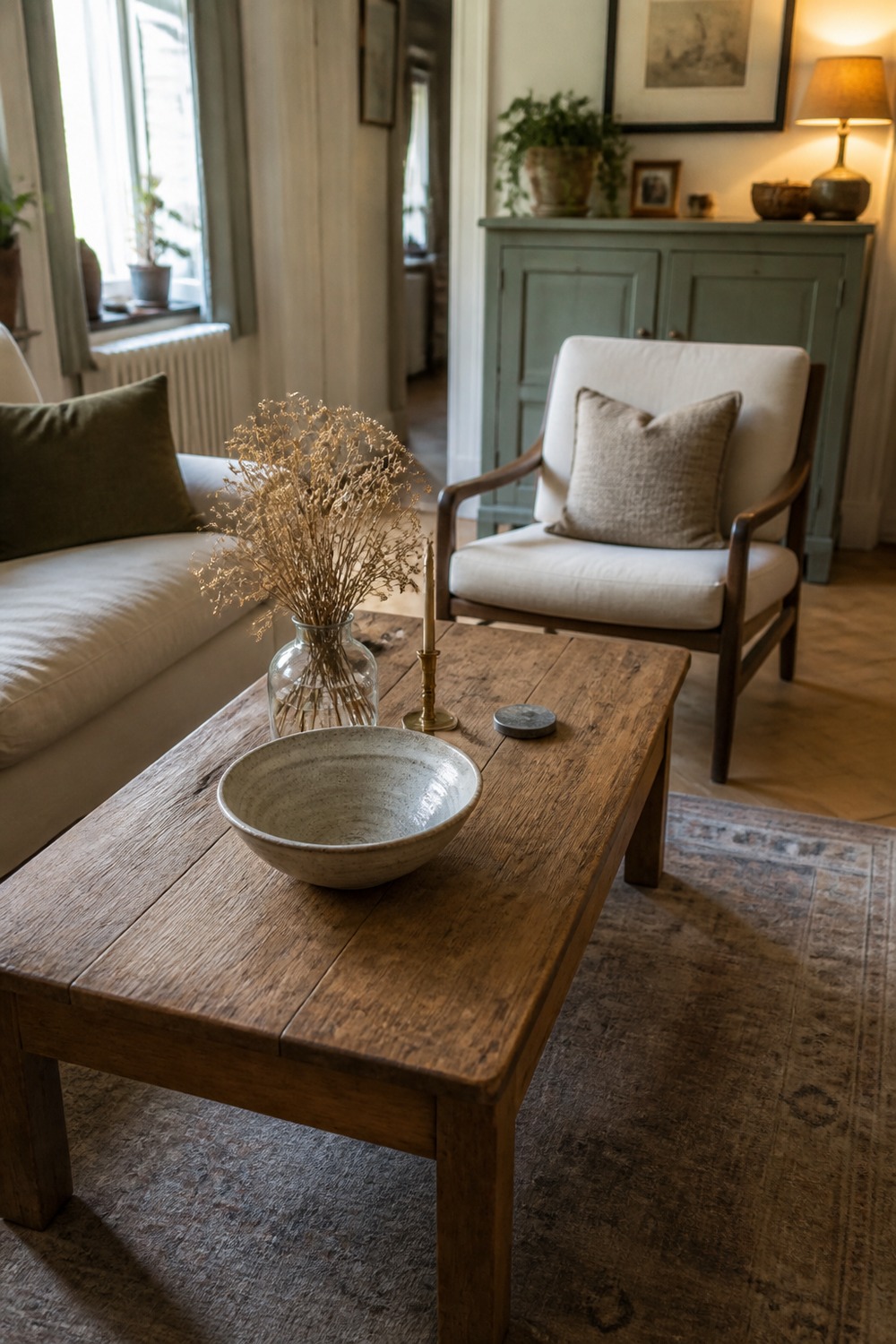
The stoneware bowl gives this table a heavier handmade detail, which I love against the softer rug and dried stems. It feels like the kind of surface that could handle keys, tea, books, or flowers without needing to be rearranged constantly.
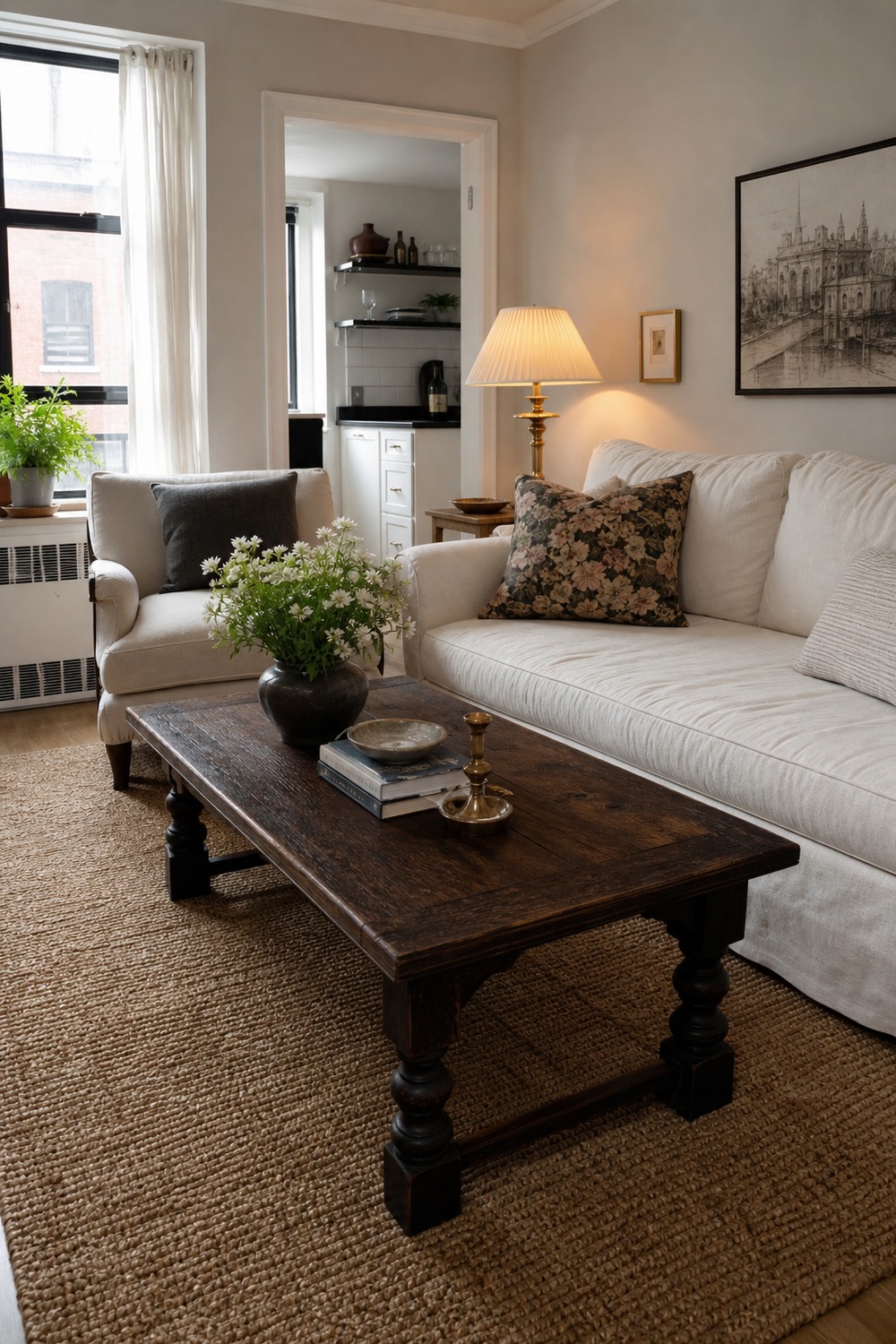
A darker wood coffee table can be really helpful in a pale cottage room. It gives the cream sofa and floral pillow something to sit against visually, so the whole seating area does not wash out into one soft beige blur.
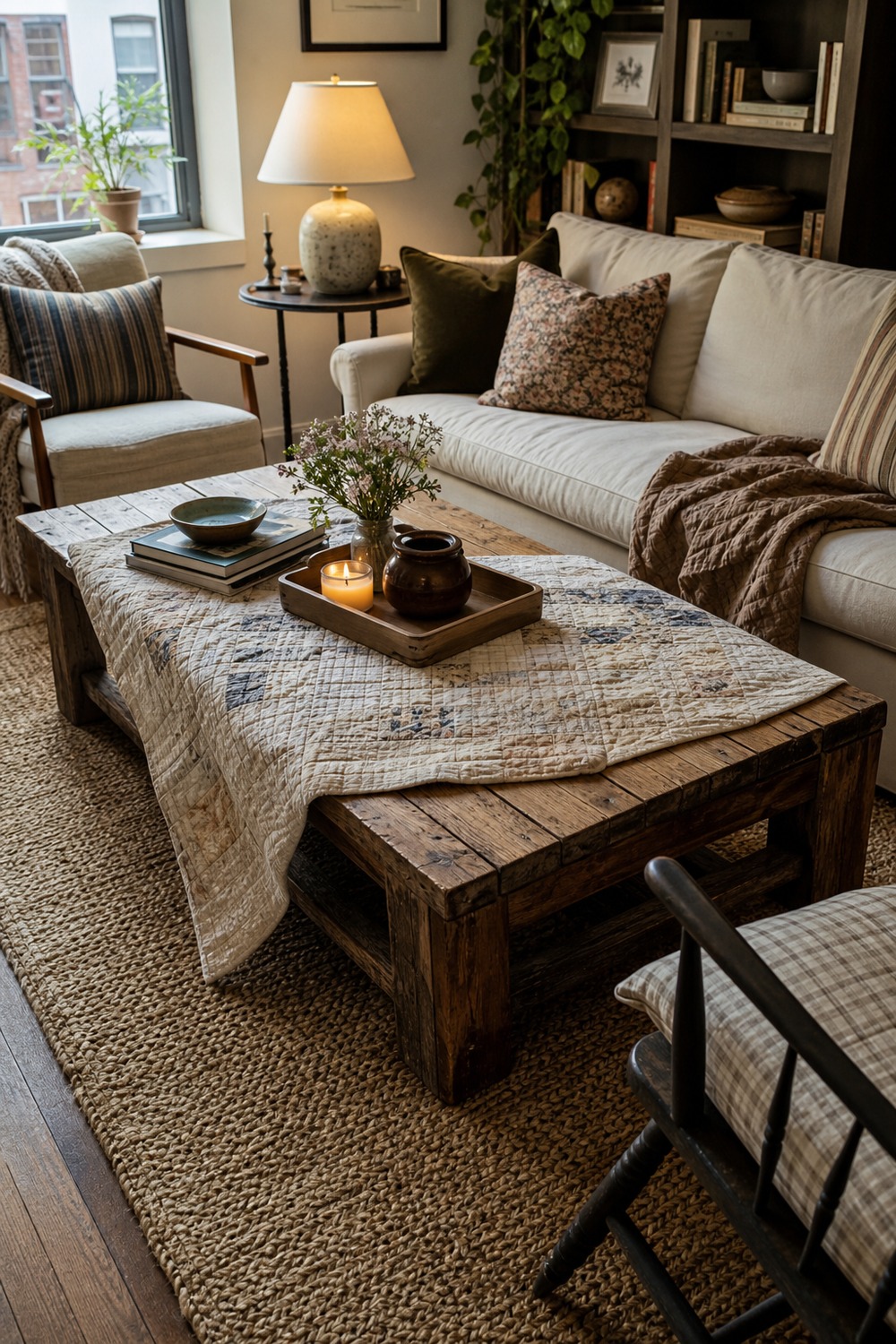
Layered textiles around a coffee table can get busy, but this works because the table still has a clear shape. The patterned cloth, woven rug, and linen cushions make the room feel relaxed while the tabletop stays simple enough to use.
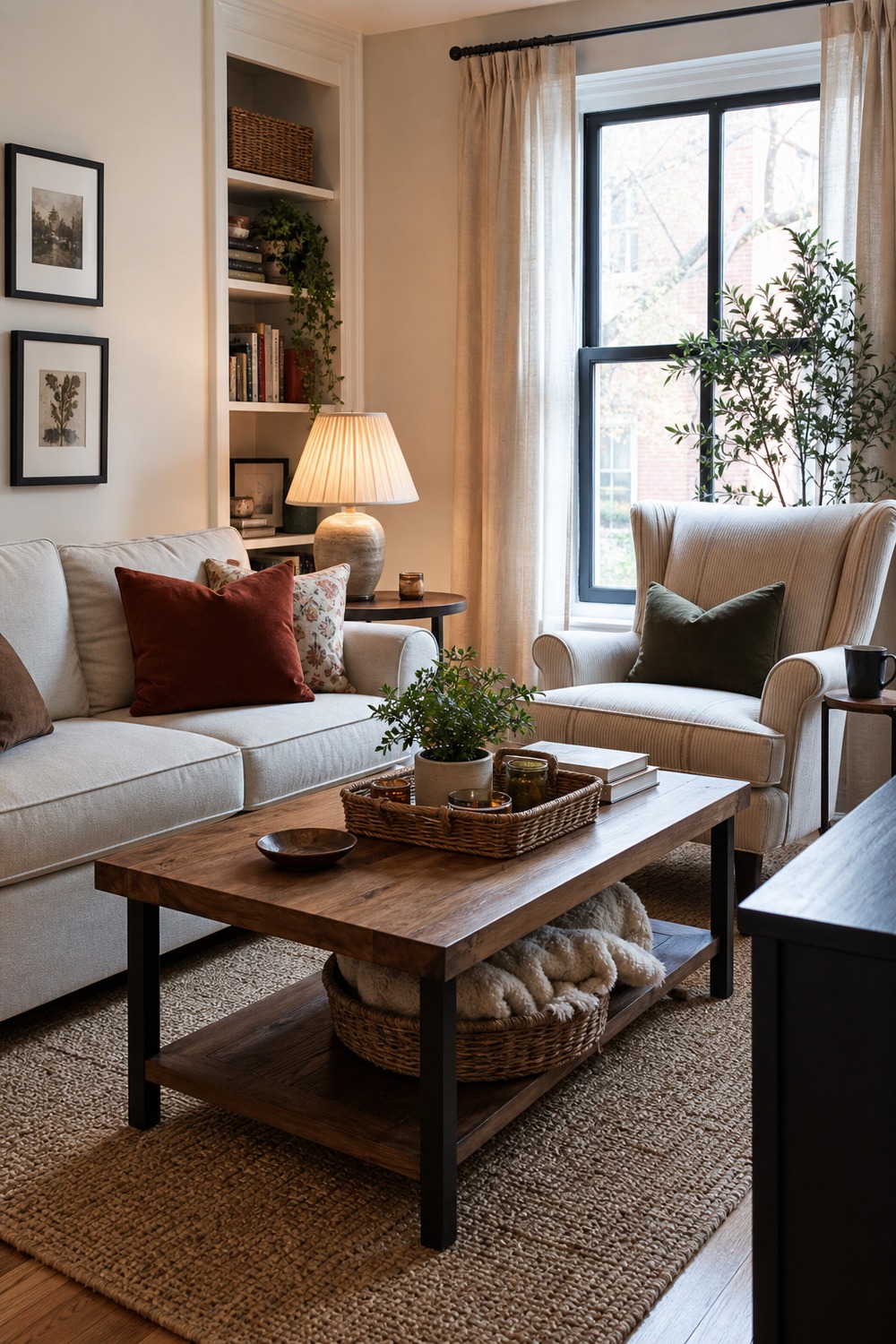
I like the way this table sits between the sofa and reading chair instead of floating in open space. The lamp, blanket basket, and small plant make it feel like a real corner where someone could sit down for more than five minutes.
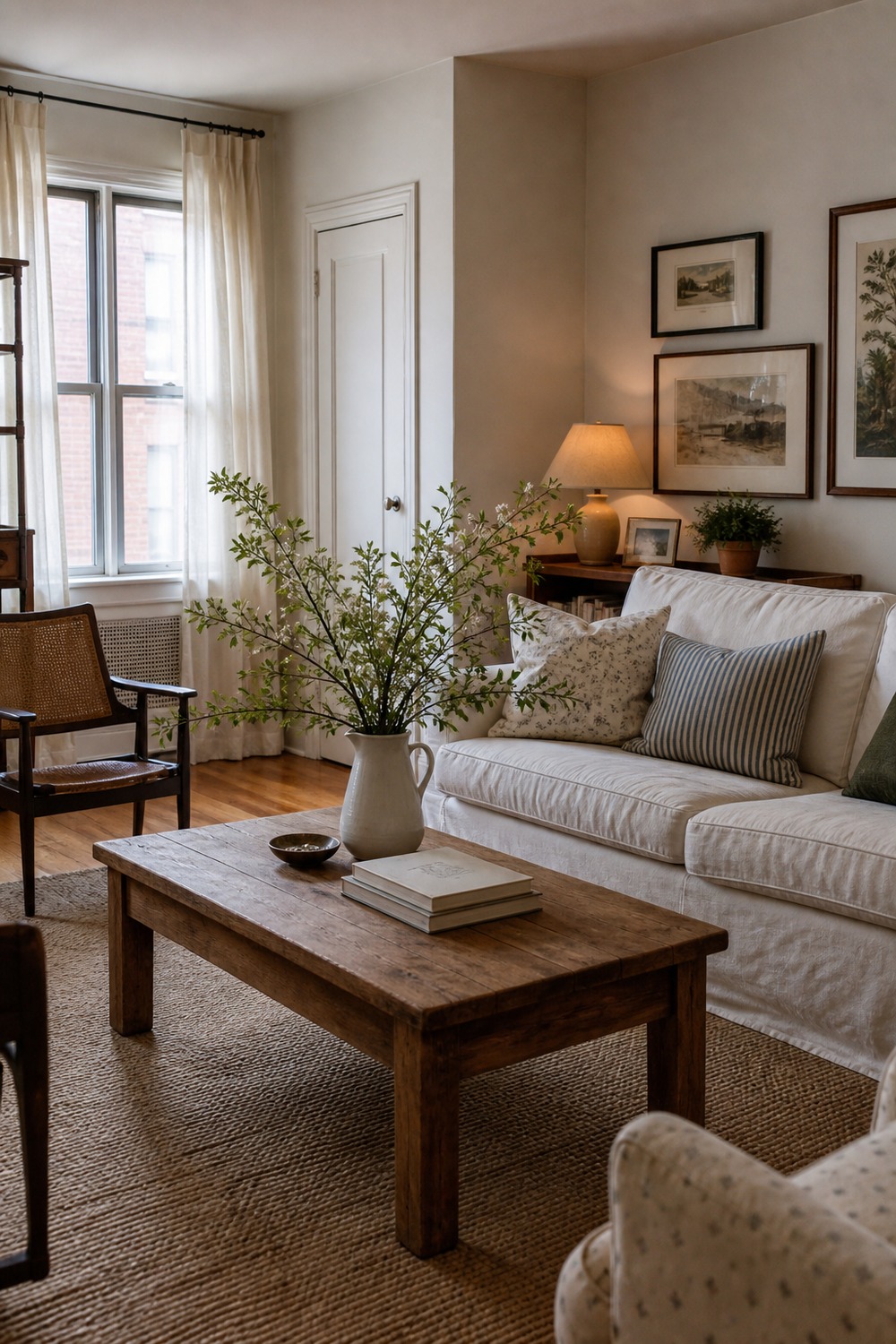
Fresh branches in a pitcher are such an easy cottage-table move because they add height without making the surface feel packed. The blank books and slipcovered sofa keep the styling quiet, which makes the greenery stand out more.
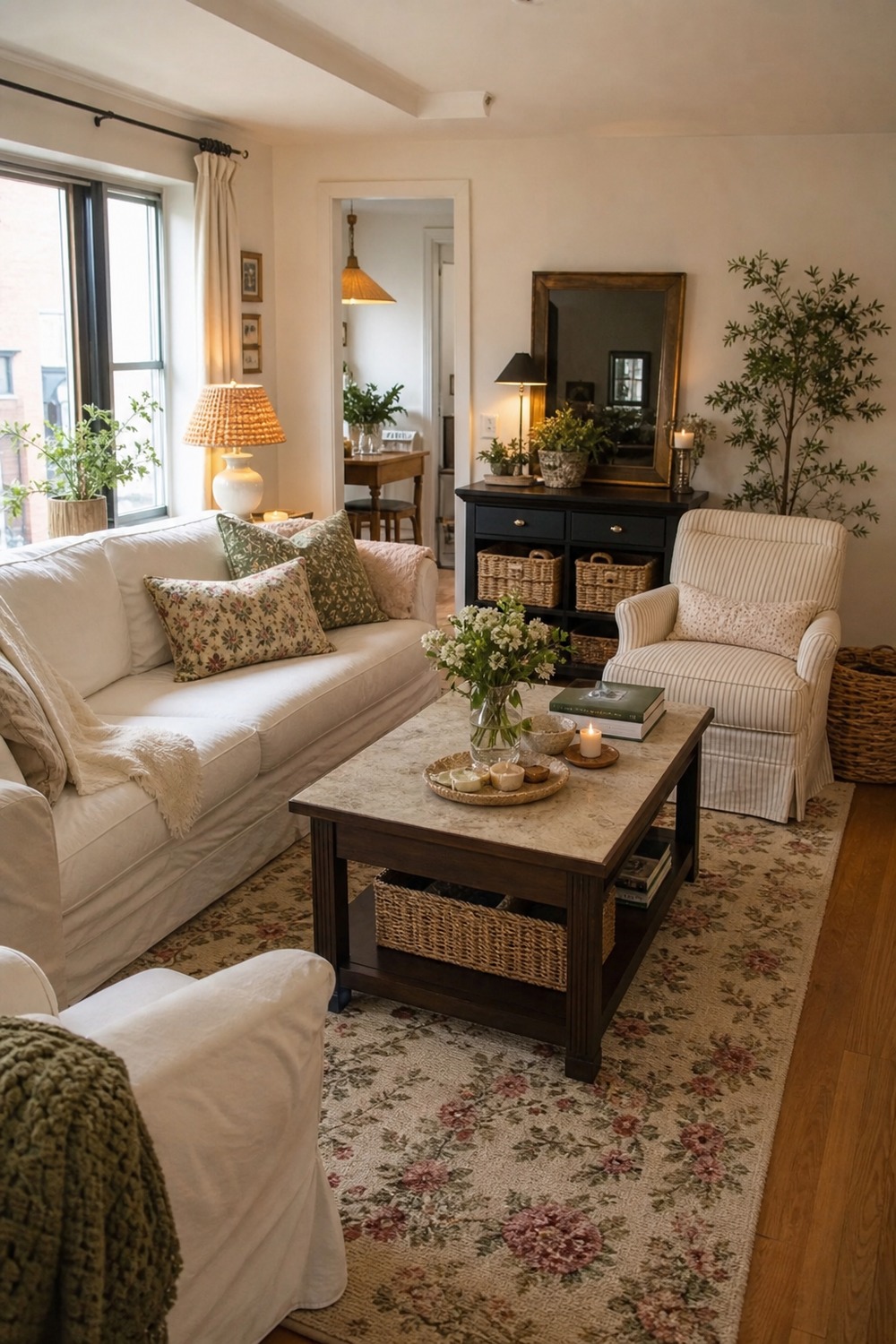
This full-room view feels polished because the coffee table connects the rug, sofa, baskets, and fireplace into one seating zone. Nothing has to be oversized; the table just gives all the soft cottage pieces a shared center.
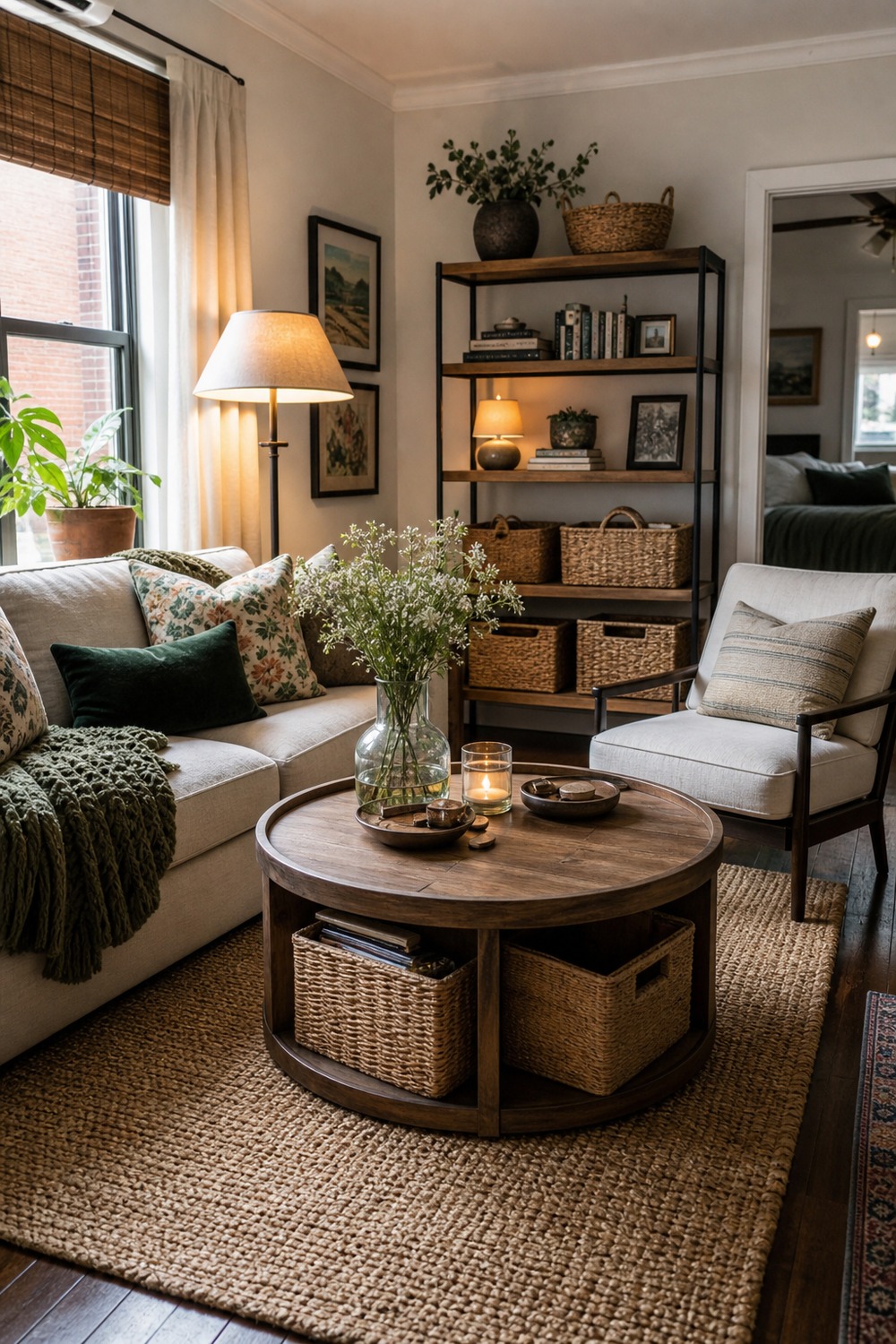
The storage corner works because it does not treat the coffee table as decoration only. The baskets, warm lamp, and nearby shelving make the table part of the room’s daily rhythm, especially if the space has to hold books, throws, and little extras.
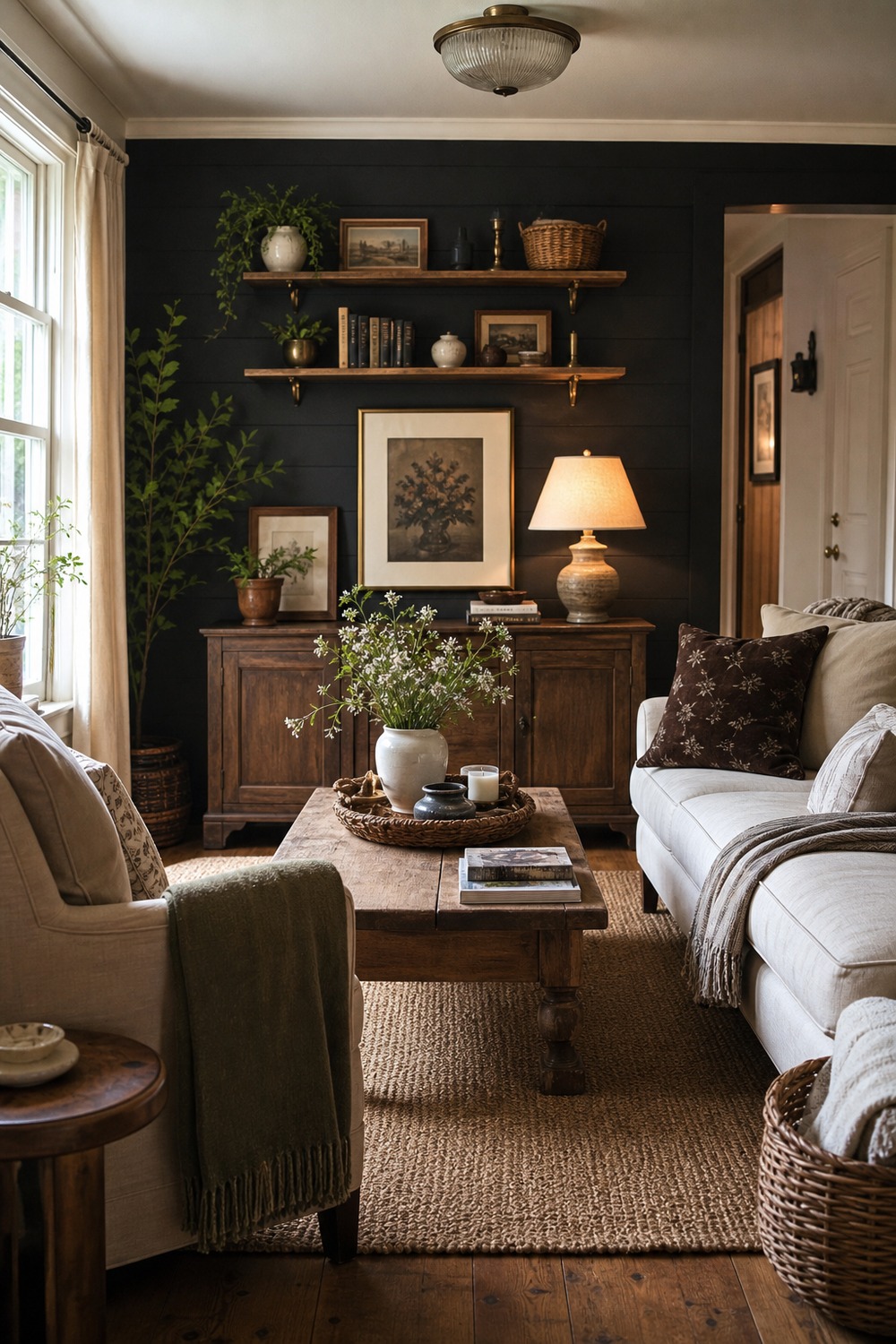
The darker focal wall gives this cottage room more depth, and the coffee table keeps the cozy seating from feeling too spread out. I like the mix of plants, wood, and soft upholstery because it feels layered without being precious.
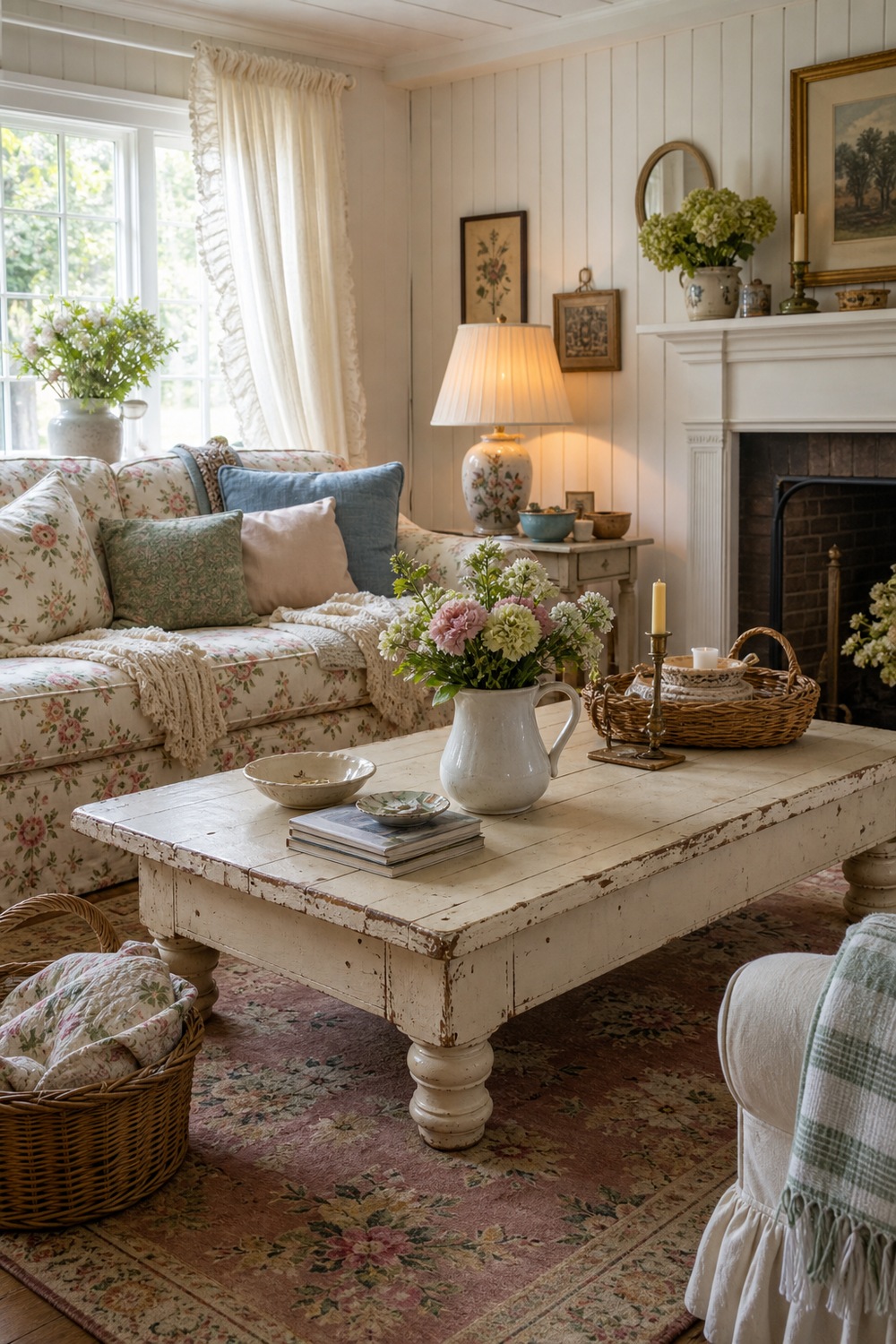
This is closer to the cottage-table feeling Vance was asking for because the table itself has real character, not just pretty styling on top. The worn cream paint, chunky legs, floral sofa, and faded rug make the whole living room feel like one cottage story instead of a random coffee table dropped into a neutral room.
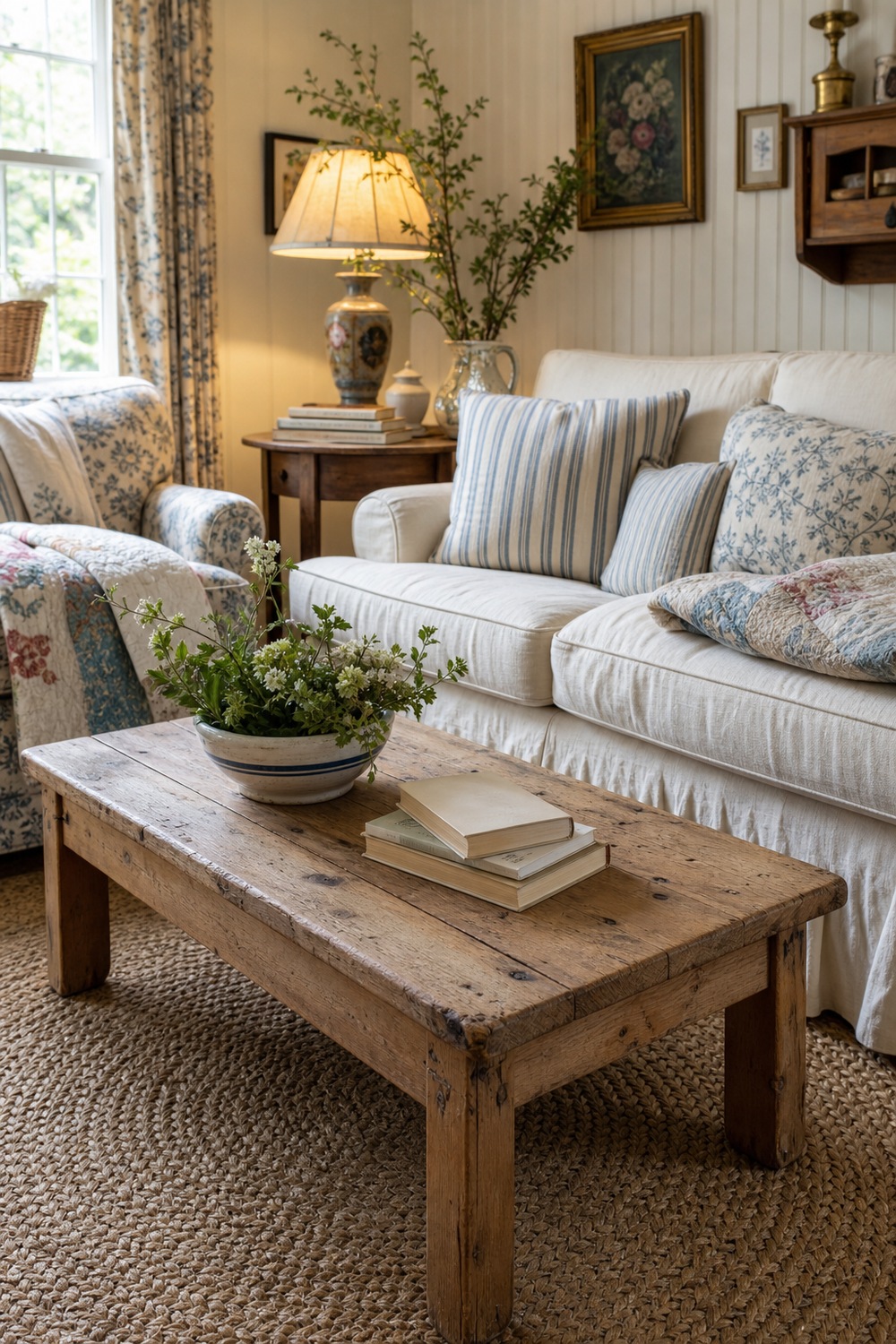
The aged pine table is the part that makes this work for me. It has that slightly imperfect planked top that feels right with a skirted sofa, ticking pillows, beadboard, and a braided rug, so the cottage mood comes from the furniture and room details rather than only from flowers.
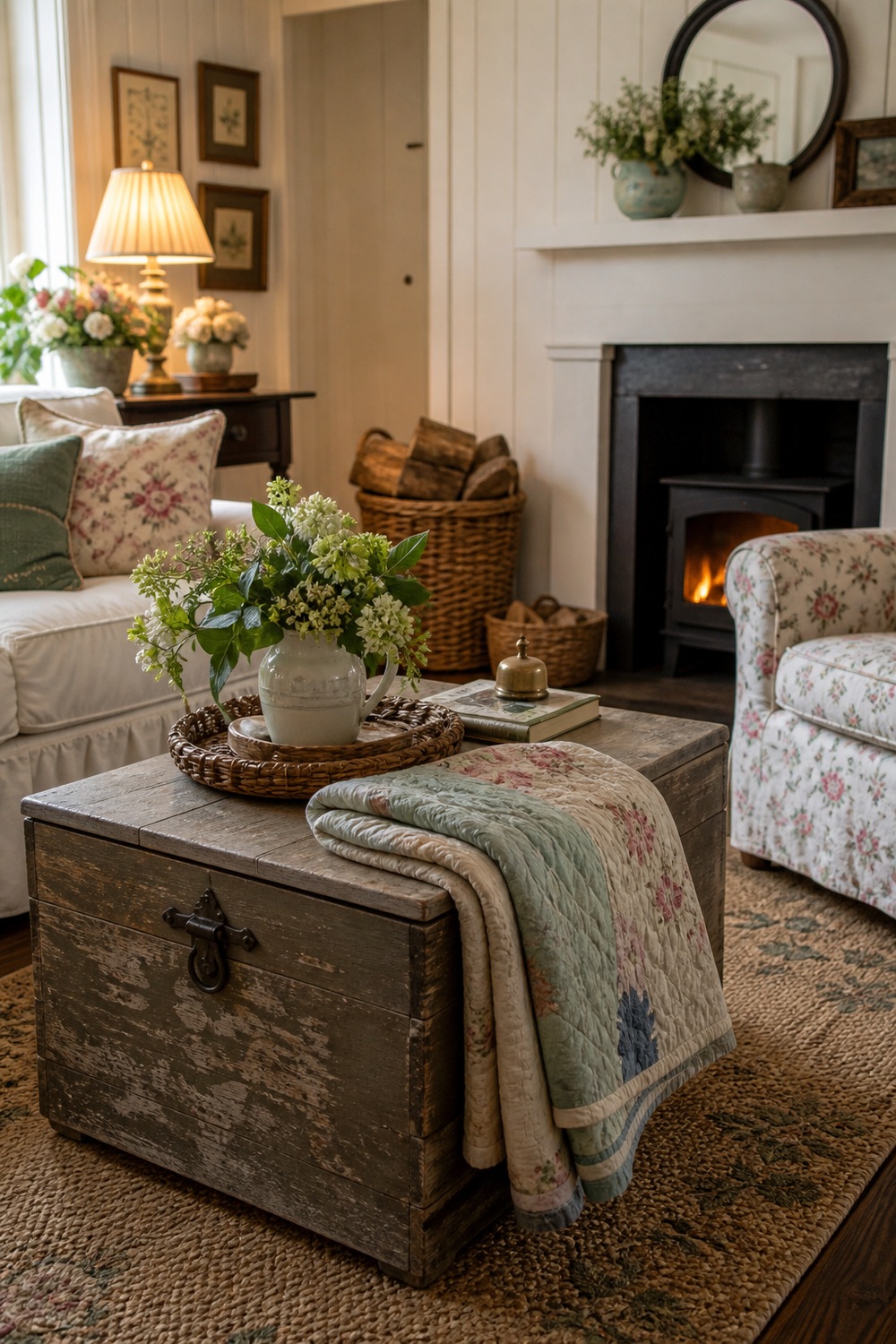
A trunk table instantly makes the room feel more cottage because it brings storage, age, and a little weight into the middle of the seating area. The quilt, fireplace, floral chair, and woven log basket make it feel like a real room that has been layered over time.
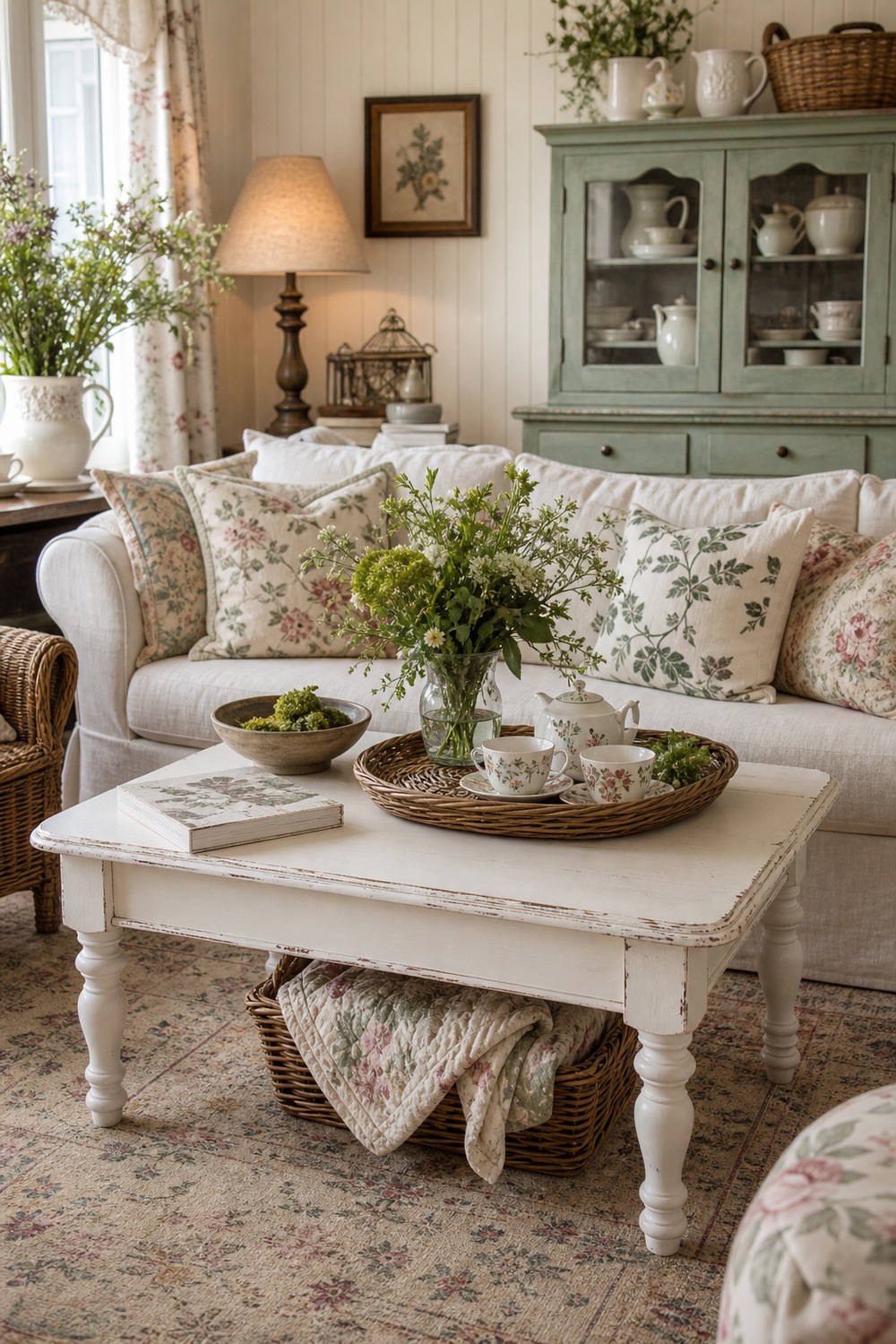
Turned legs make this coffee table feel much more cottage than a plain blocky shape would. The sage cabinet, botanical pillows, linen sofa, and little teacup tray keep the whole room soft, but the table still has enough detail to be the centerpiece.
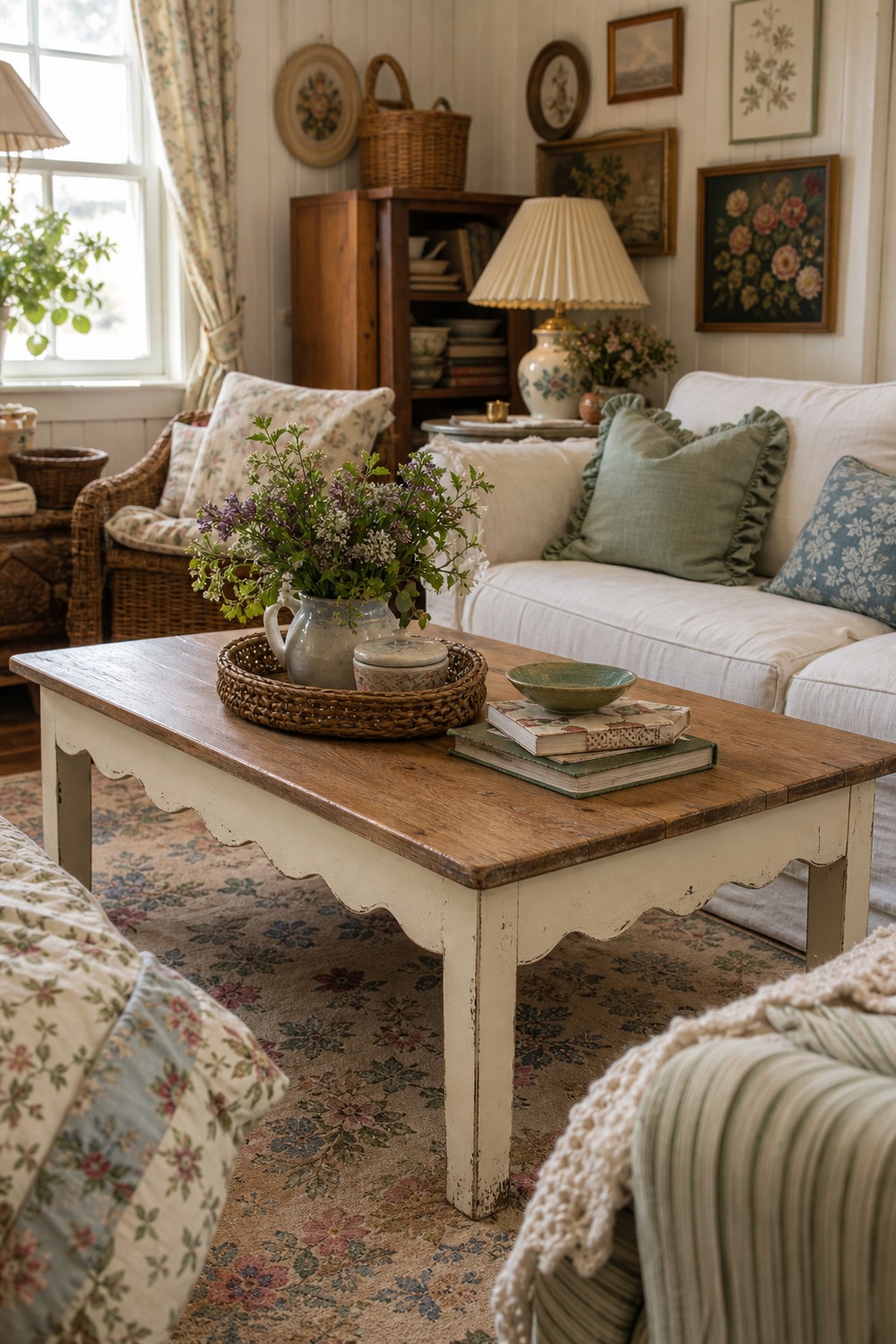
The scalloped edge is a small detail, but it changes the table from basic to cottage immediately. I like it with the layered floral rug and pleated lampshade because the room has enough softness without turning into a themed display.
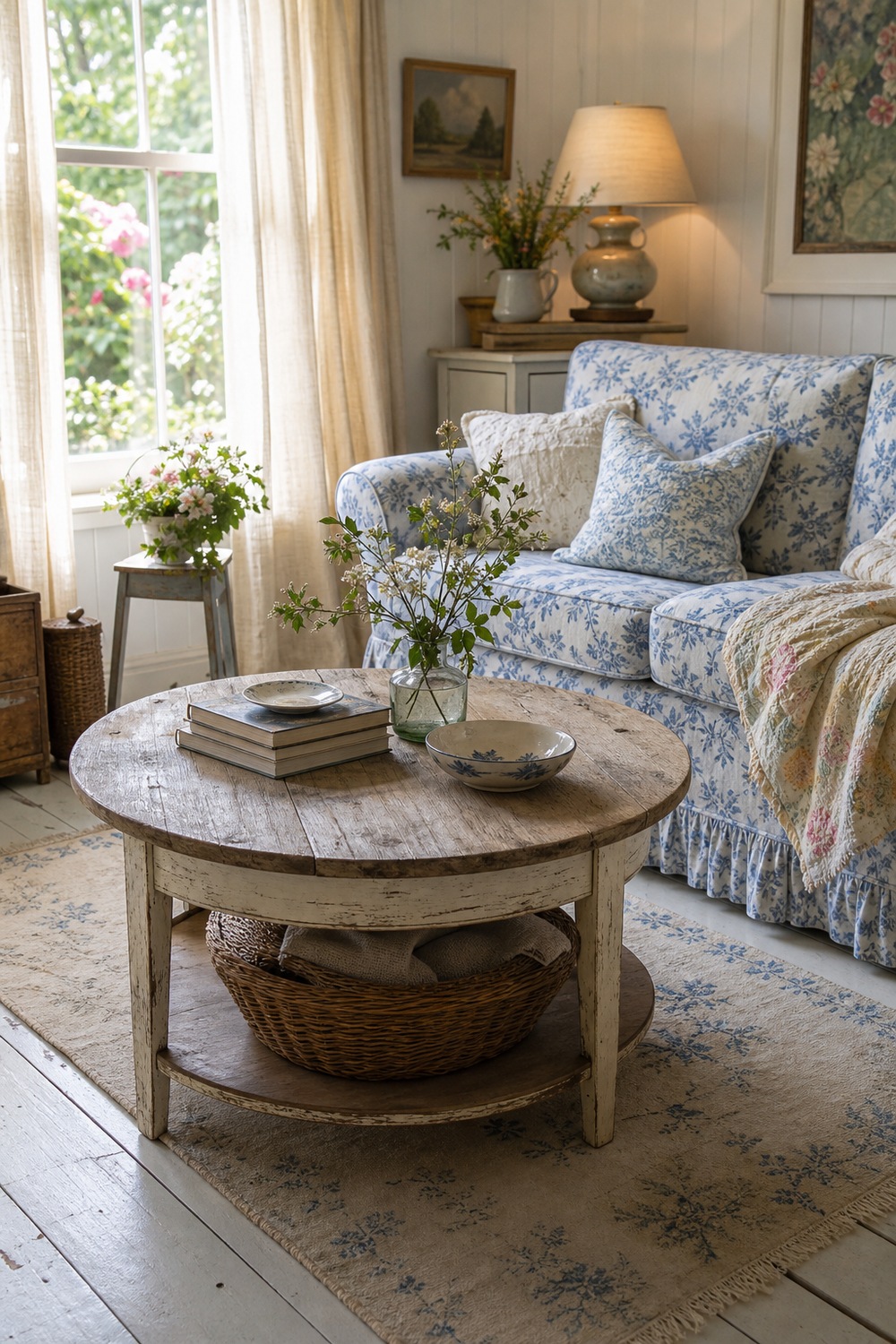
This one feels very cottage because the living room around the table is doing just as much as the tabletop. The blue floral sofa, garden light, pale floorboards, and weathered round table make the seating area feel collected instead of overly styled.
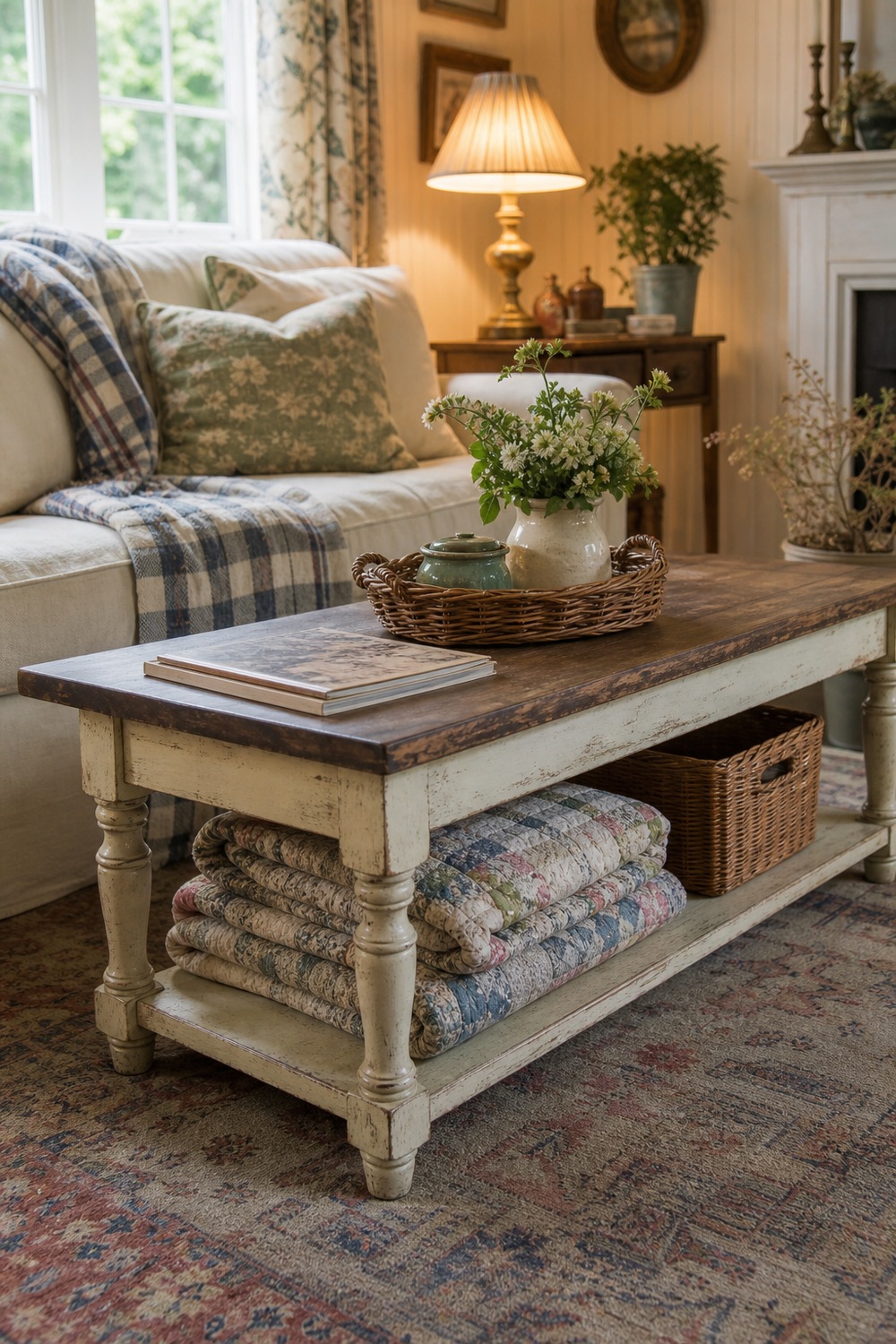
The lower shelf makes the table feel useful in a very cottage way. Folded quilts and baskets belong in the room visually, but they also solve the normal living-room problem of throws, books, and small clutter ending up everywhere.
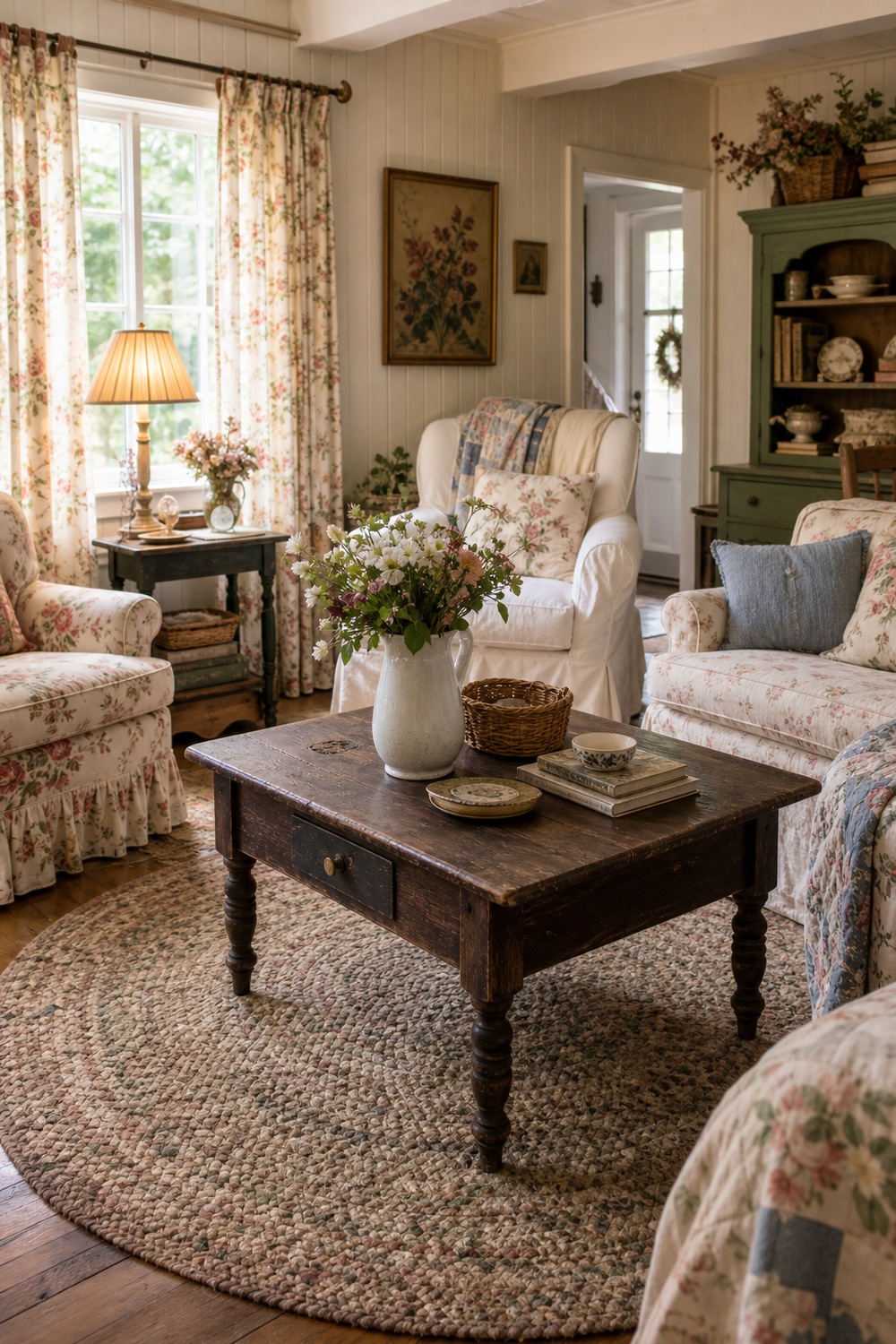
I like this because it shows the overall cottage living room, not just a cropped tabletop. The darker antique table grounds all the florals, slipcovers, curtains, and braided rug, so the room feels layered without losing the coffee table as the center.
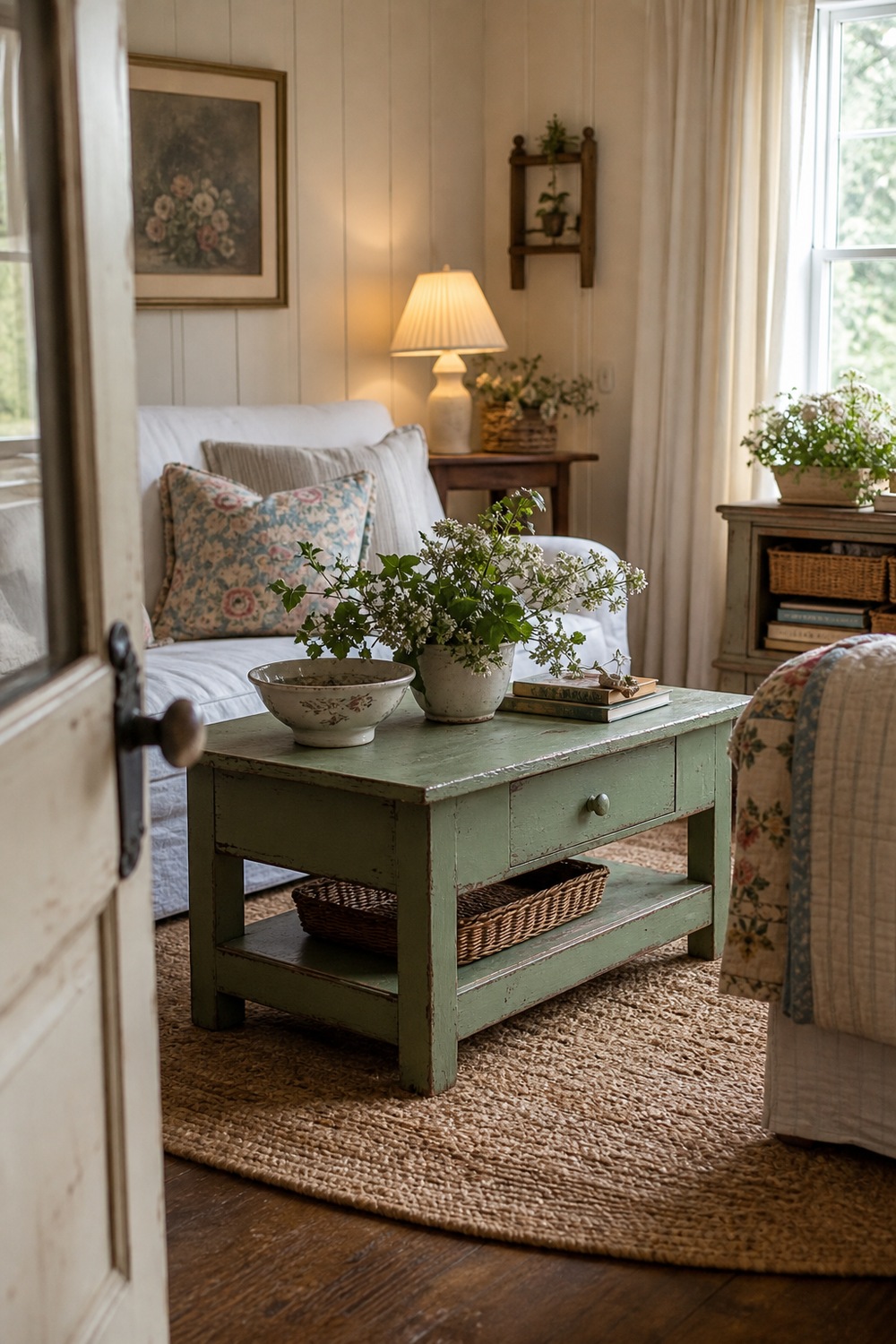
The sage painted table gives the room a softer cottage color without making everything pastel. With the paneled wall, cream sofa, floral cushion, and woven rug, the table feels connected to the room instead of sitting there as a separate accent piece.
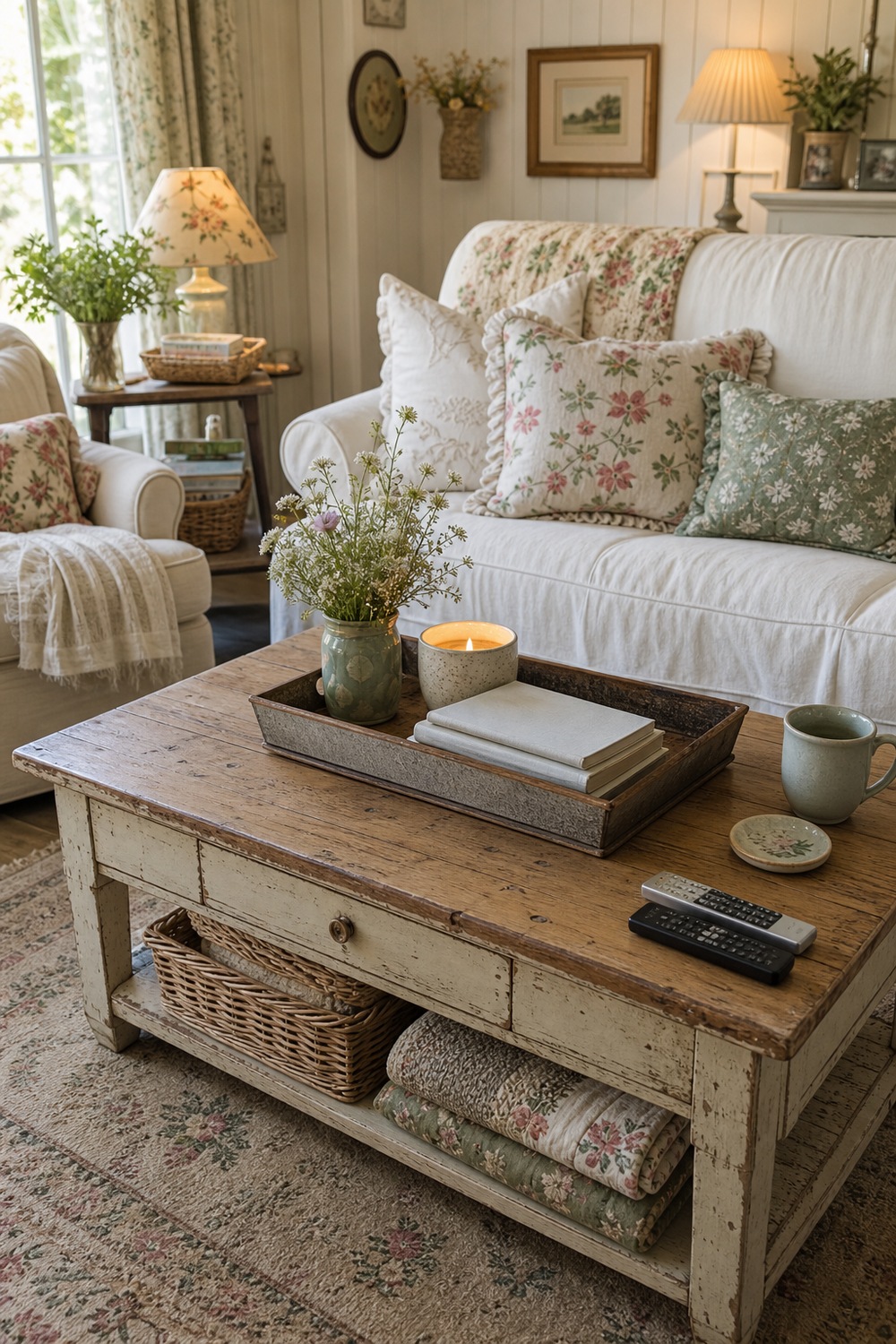
This tabletop is styled, but it still leaves room for normal life. The tray, blank books, wildflowers, slipcovered seating, and ruffled pillows all push the cottage theme, while the open surface keeps it from feeling like nobody is allowed to put a drink down.
The extra cottage-focused rooms make the table feel more connected to the whole living room. I like that mix best: a table with its own worn wood, painted detail, or useful shelf, surrounded by enough slipcovers, lamps, florals, baskets, and soft rugs that the cottage mood feels natural.
Leave a comment