
A coffee table in a kitchen-adjacent sitting area has to be useful without making the room feel like furniture got dropped in the walkway. The best versions give the sofa zone a real center point, but they still leave room for stools, chairs, trays, and everyday traffic around the kitchen.
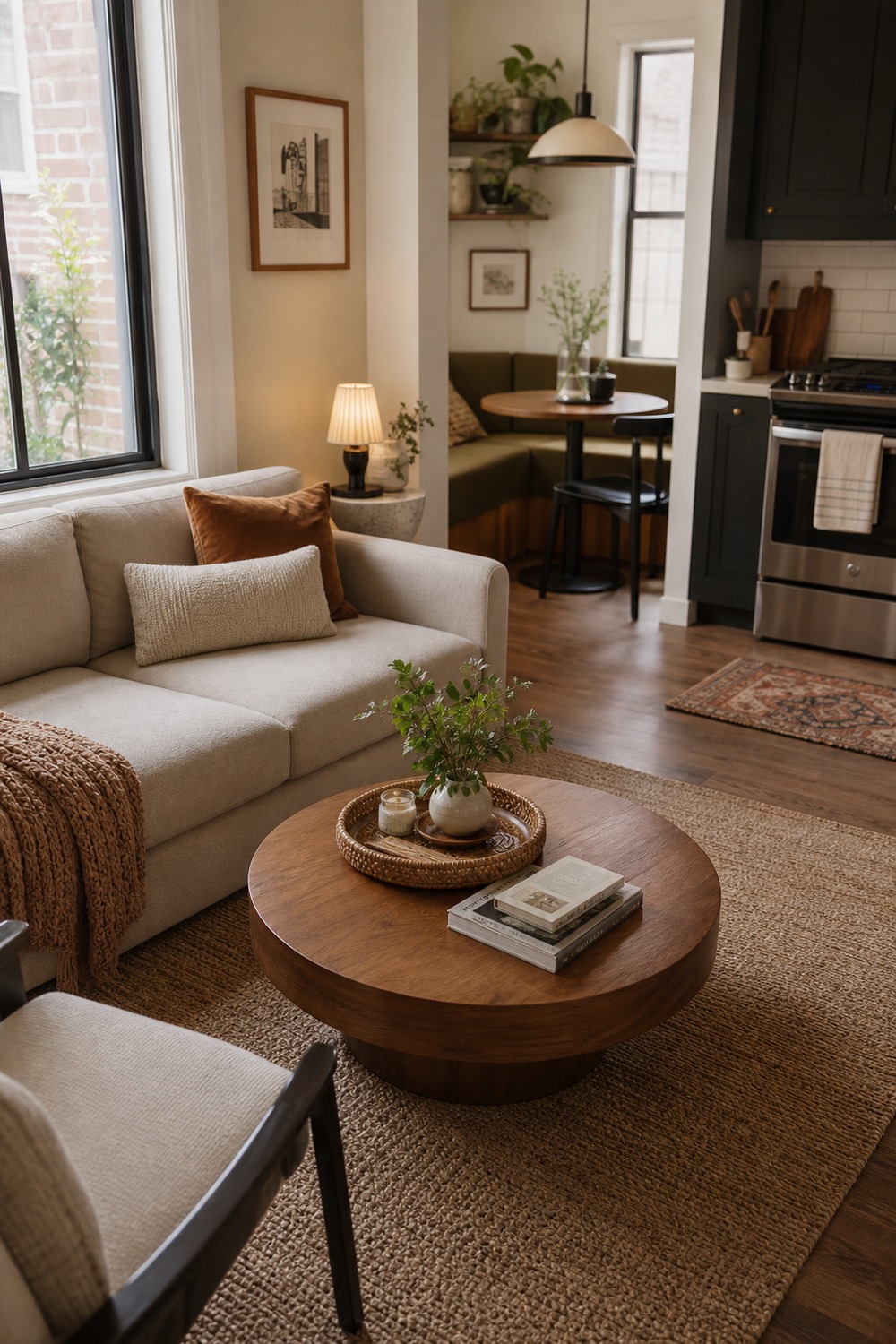
The round table is a smart move near a kitchen because there are no sharp corners sticking into the walking path. The low wood shape, woven rug, and nearby stools make the seating area feel intentional instead of squeezed beside the cabinets.
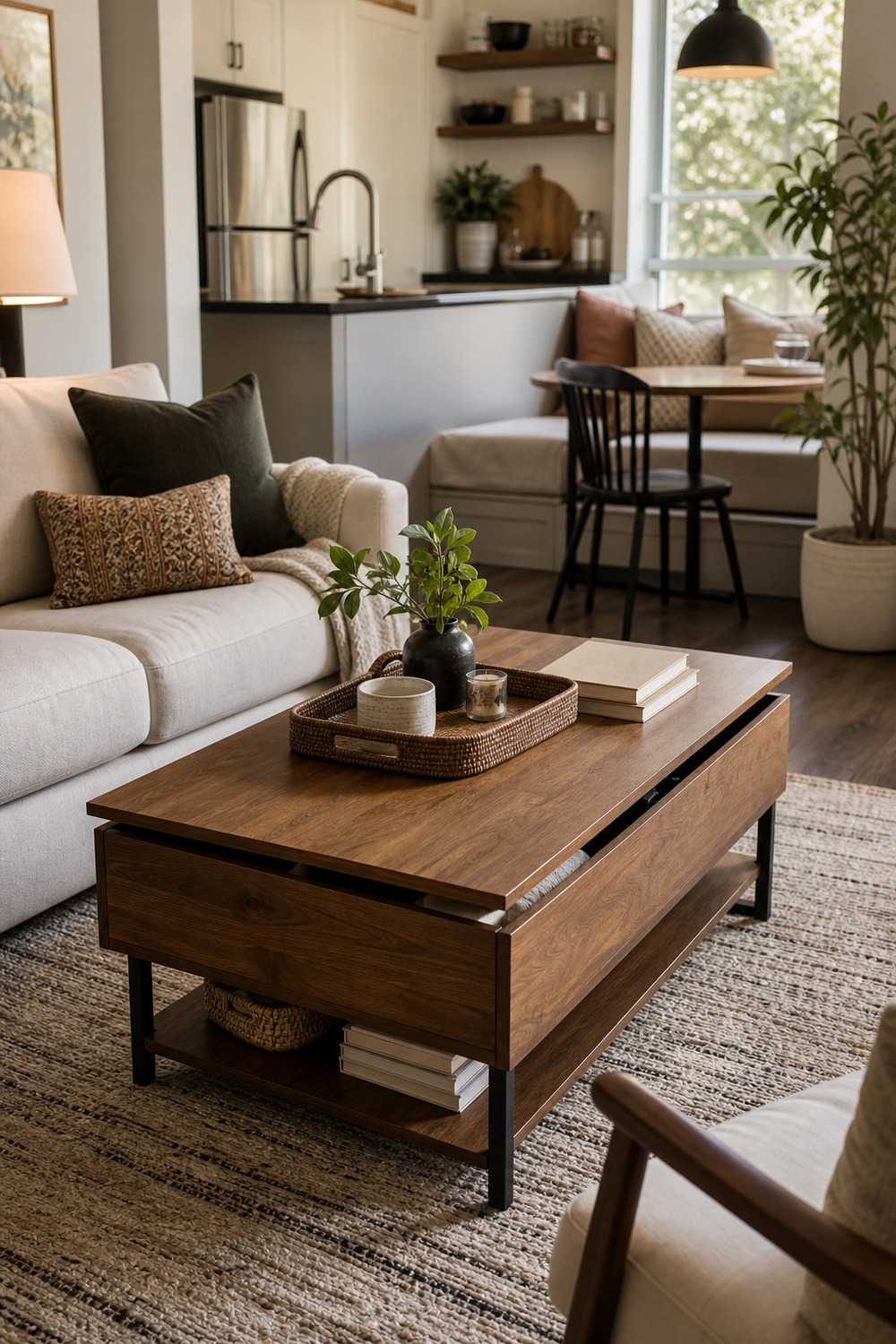
A rectangular storage table makes sense when the kitchen and sofa share the same room. The lower shelf gives baskets and books a place to go, while the clean tabletop still leaves space for a tray, a mug, or whatever lands there during dinner prep.
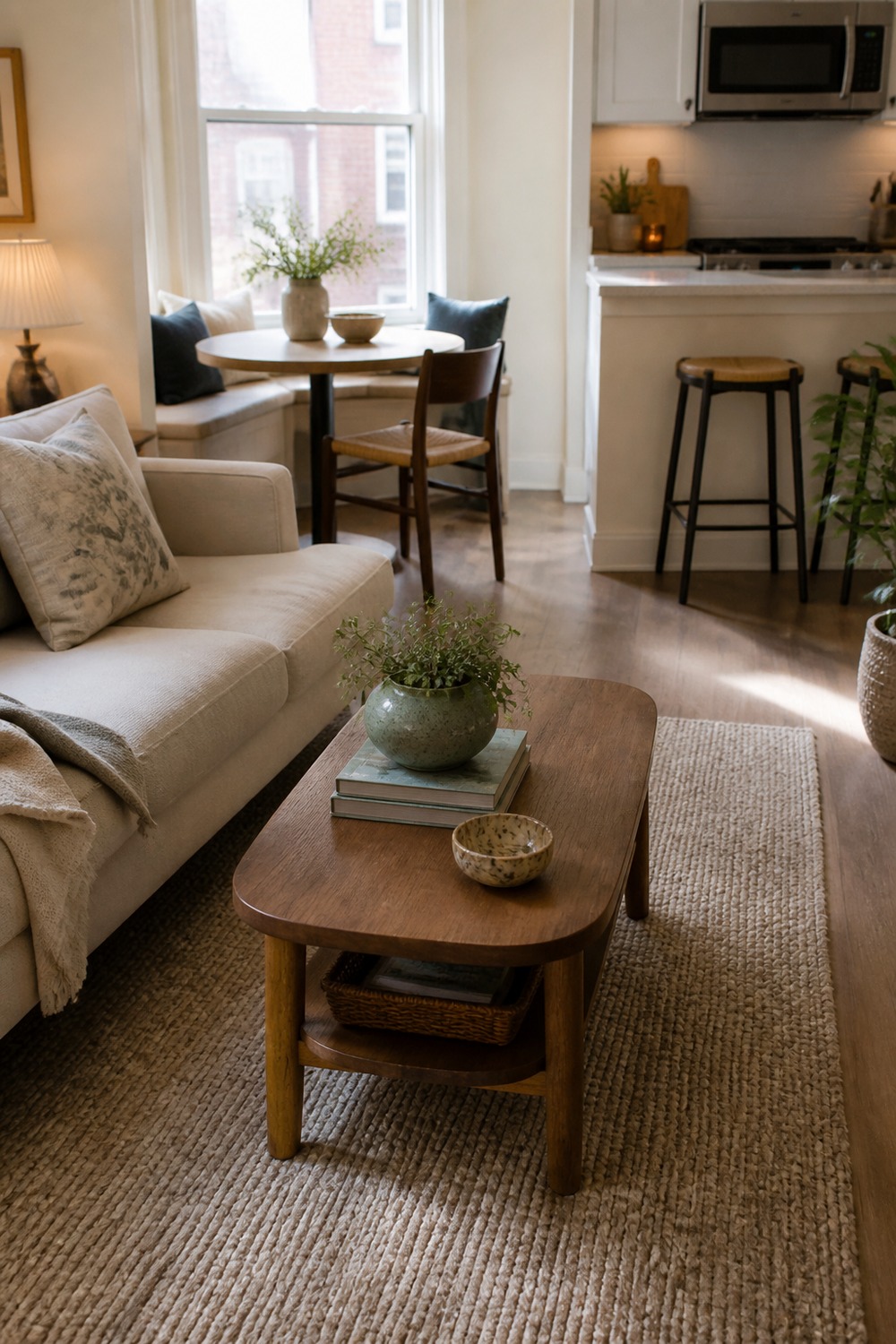
This small-apartment setup feels especially useful because the table does not fight the compact scale. The slim legs, soft rug, and visible kitchen edge keep the whole space open while still giving the sofa a proper center.
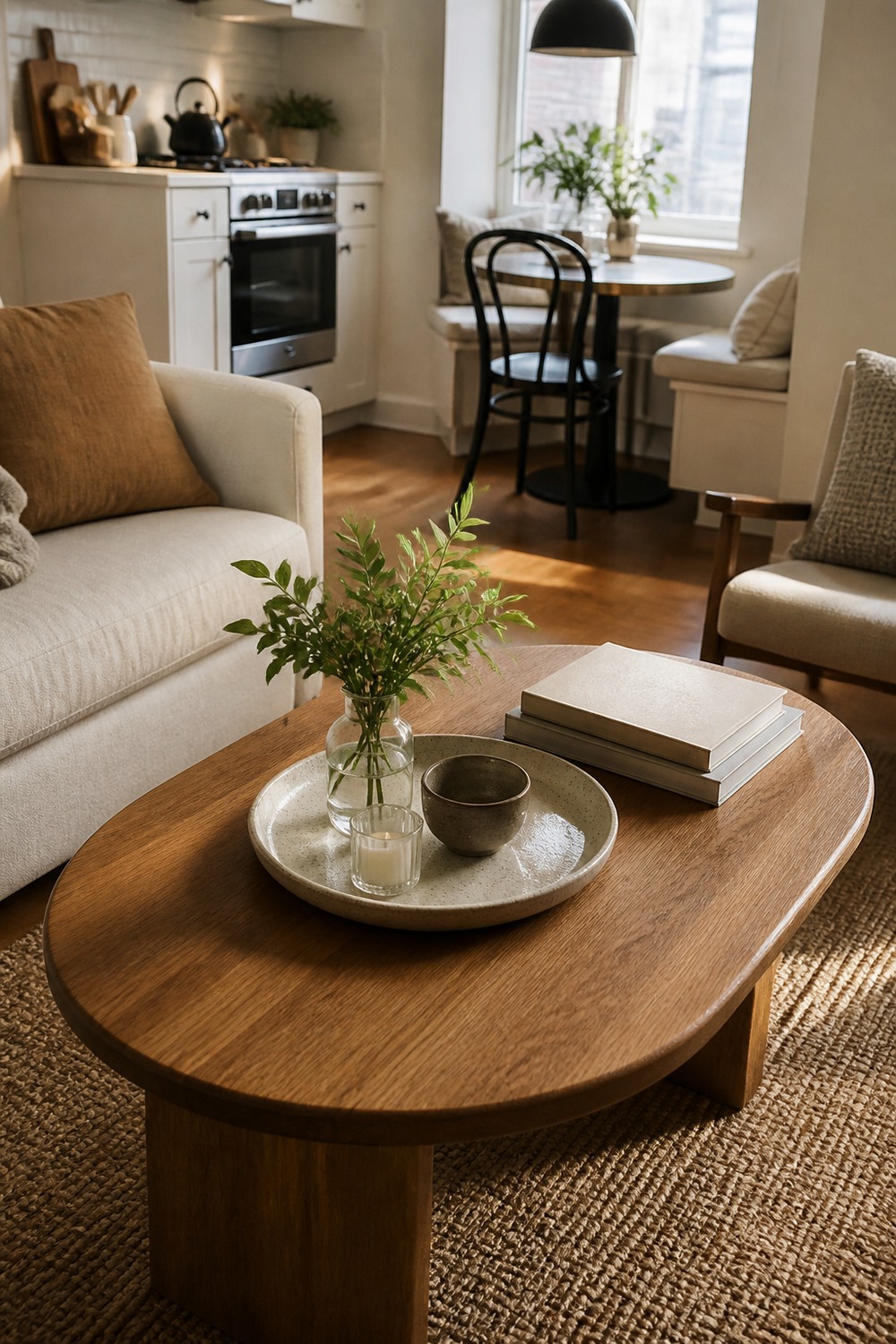
The tray styling is what keeps this coffee table from becoming a catch-all zone. A ceramic tray, one plant, and a few blank-cover books give the table shape, but there is still enough open surface for real life.
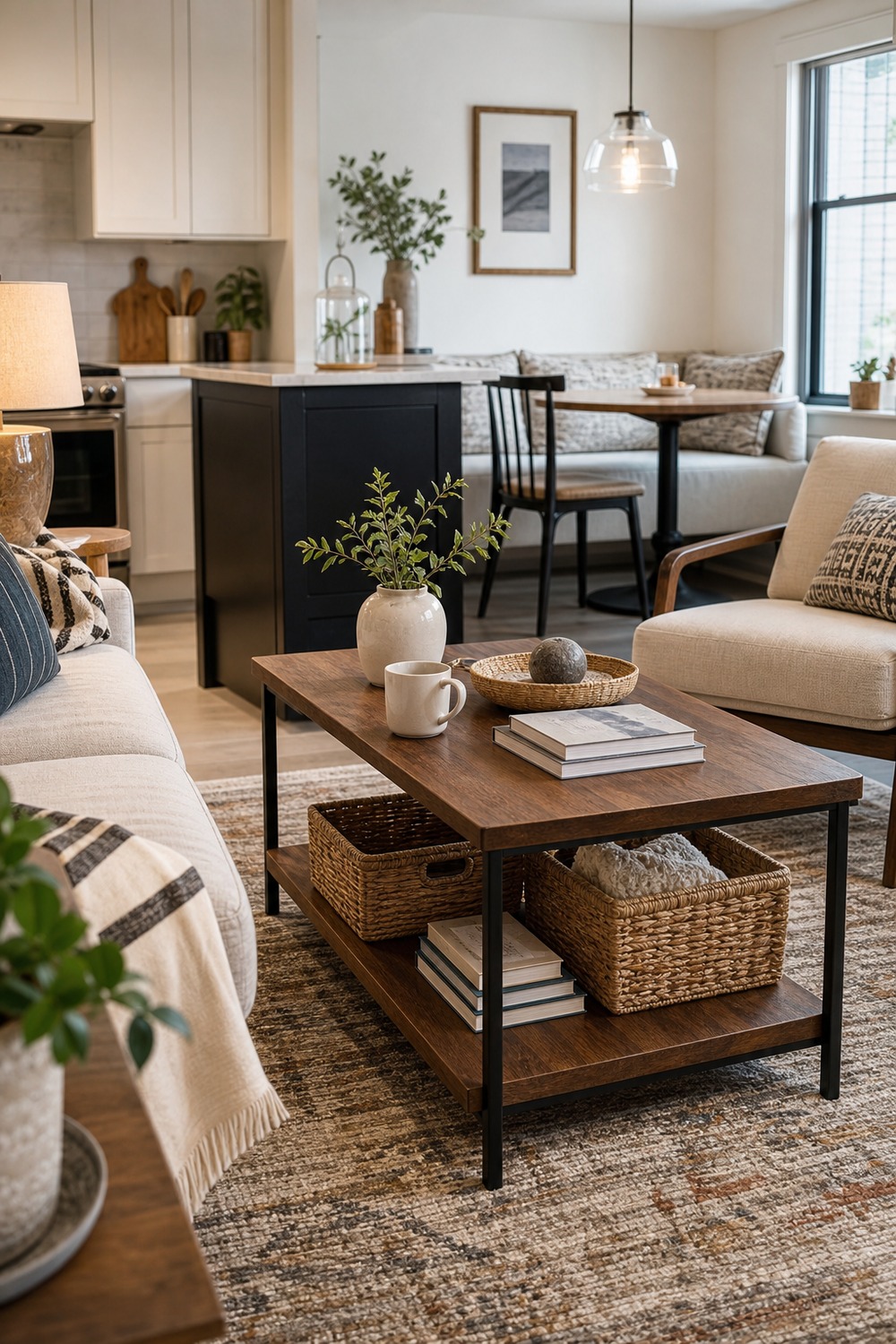
A two-tier table is practical in a kitchen sitting area because the lower shelf can hold the messy things quietly. The upper surface stays styled, and the open shelf keeps remotes, coasters, and small baskets from spreading across the room.
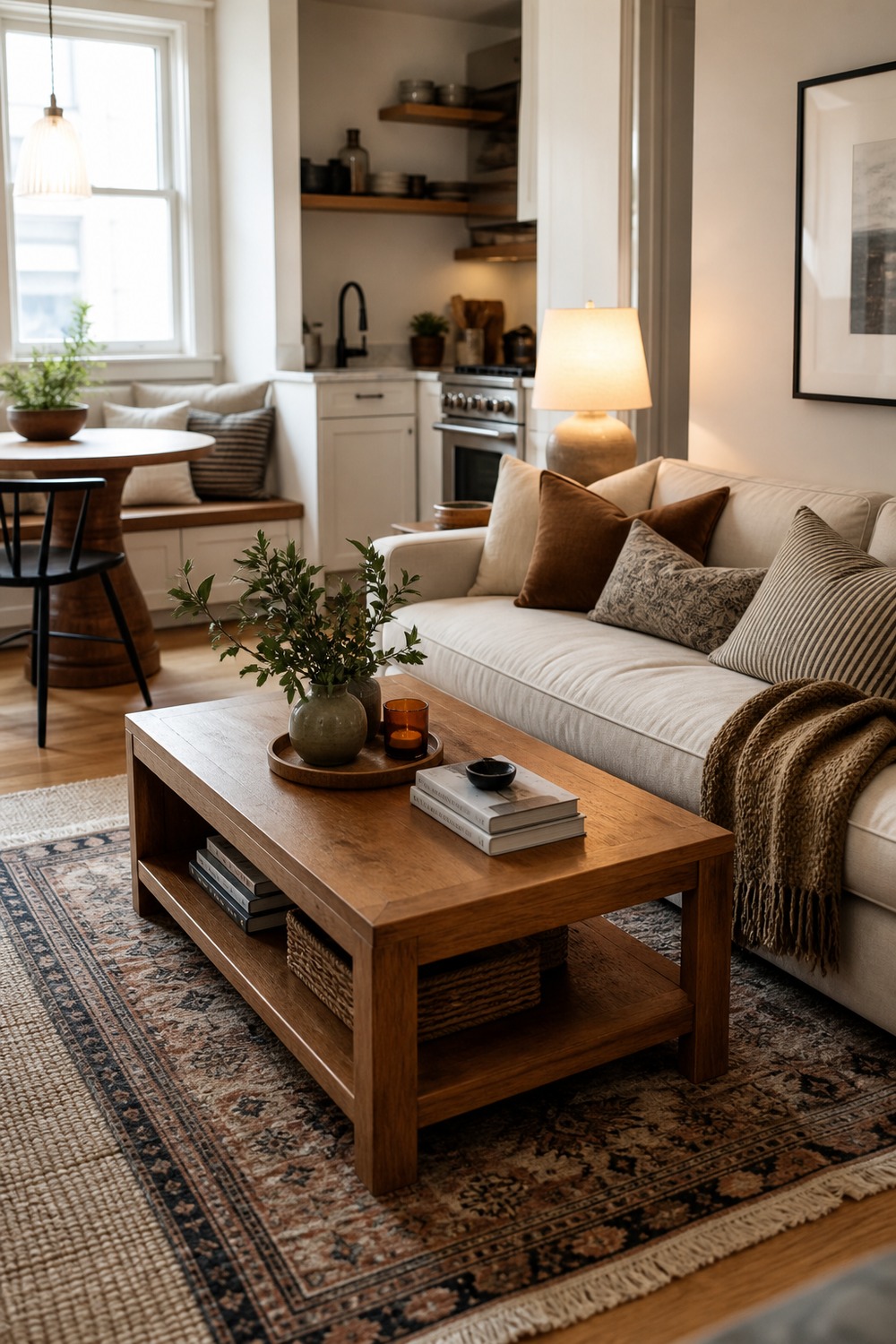
This cozy sofa corner works because the coffee table sits close enough to feel useful without blocking the kitchen path behind it. The soft upholstery, warm wood, and rug make the transition from cooking space to sitting space feel much smoother.
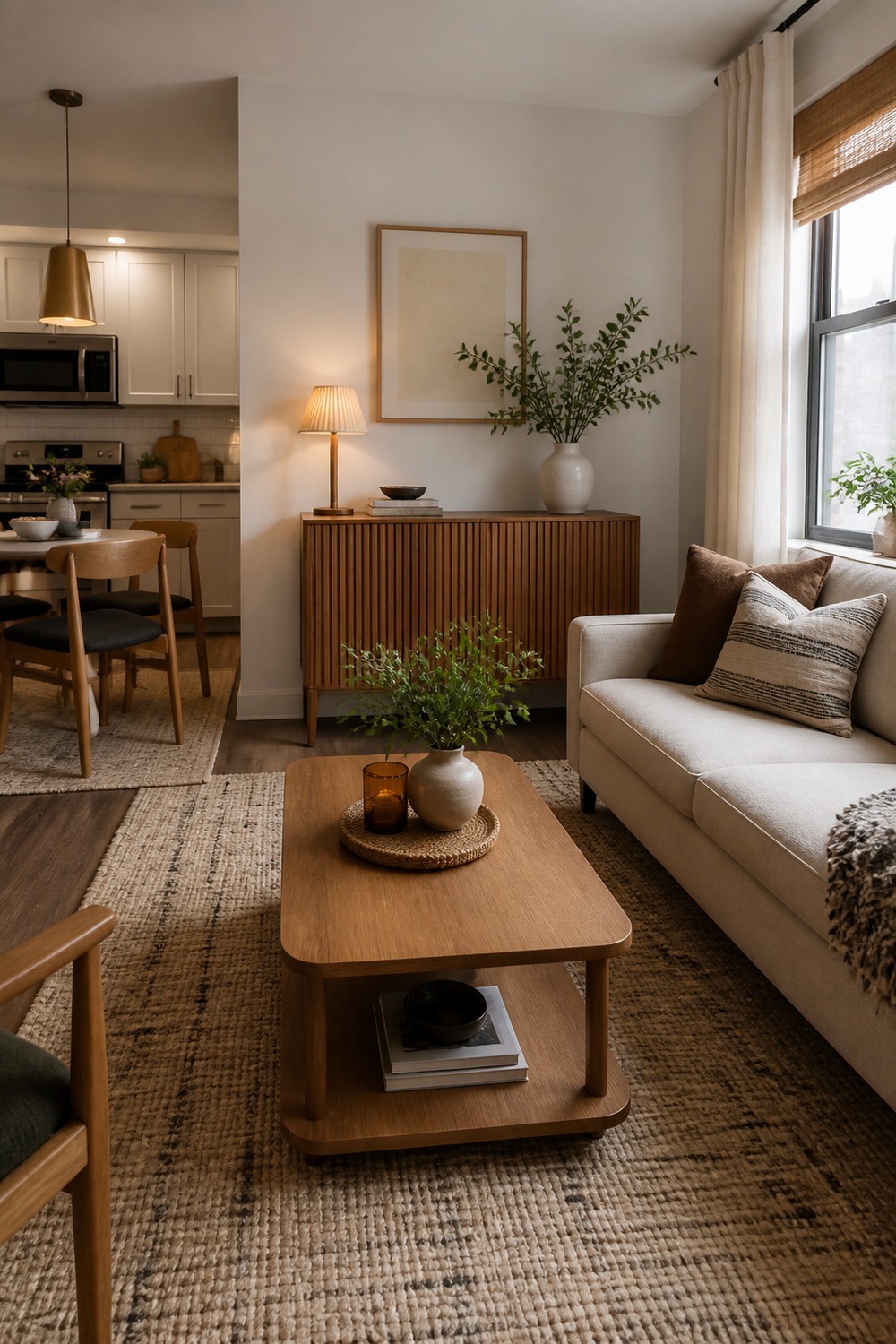
The focal wall helps the coffee table feel anchored instead of random. I like how the rug, sofa, and low table create a clear living zone even though the kitchen is still part of the same open room.
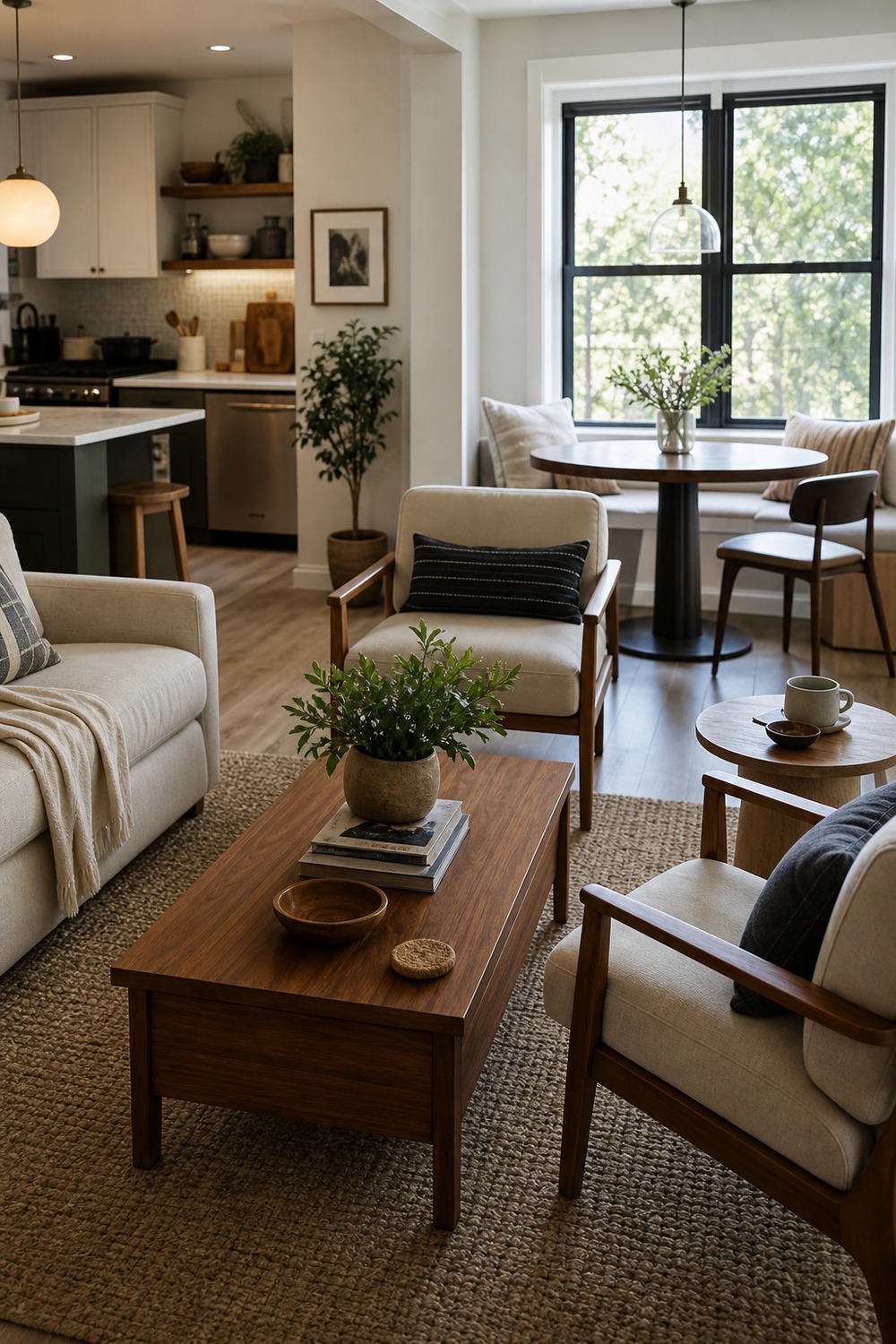
Accent chairs make this setup feel more like a little conversation spot than just a sofa facing a kitchen. The coffee table bridges the chairs and sofa, and the open space around it keeps the room from feeling crowded.
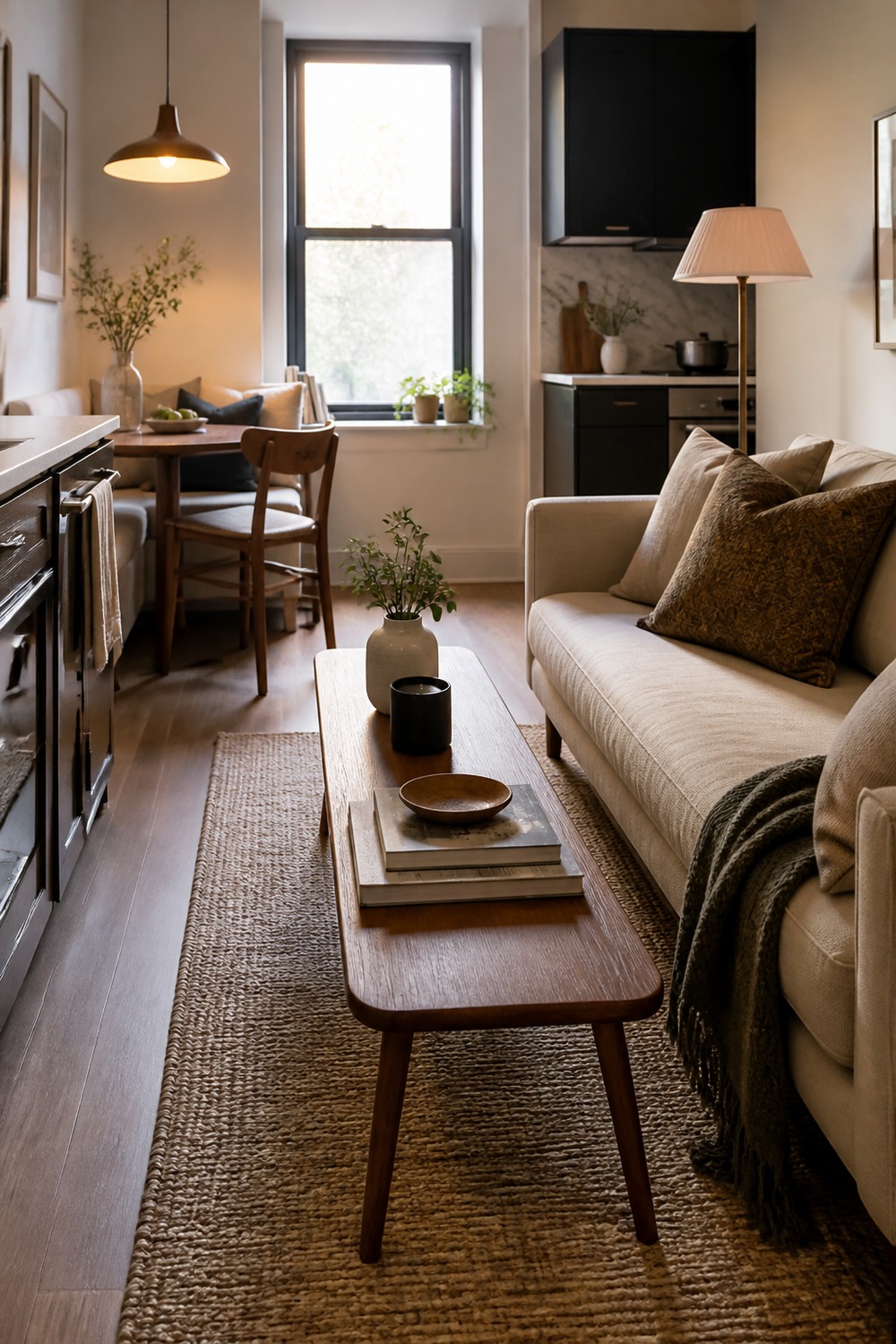
A narrow room needs a coffee table with restraint, and this one gets that right. The slim profile leaves a walking lane along the kitchen side, while the tabletop still gives the seating area somewhere useful to land drinks or books.
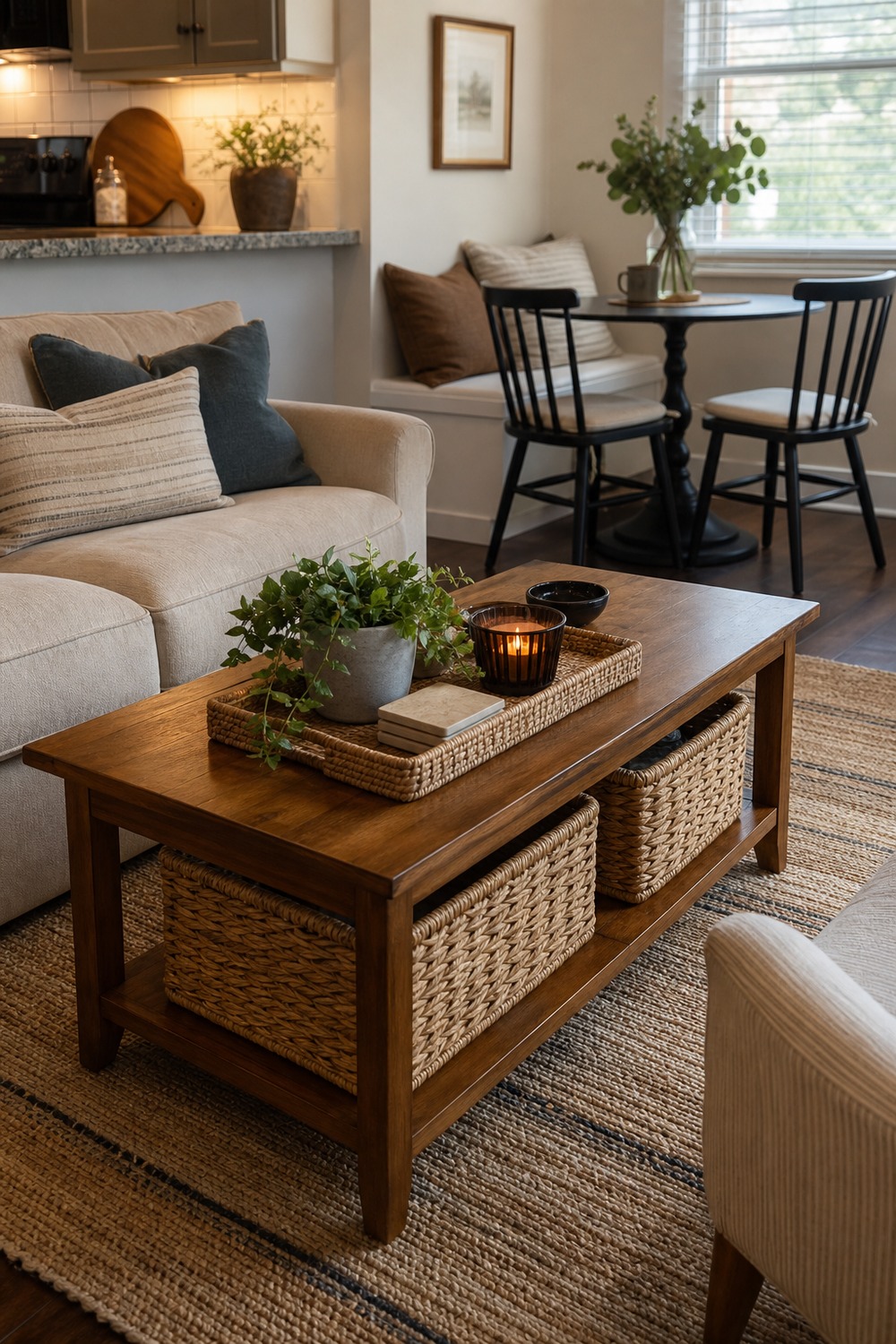
The basket shelf is the detail that makes this table feel realistic for a busy kitchen-adjacent room. It hides the little pieces that usually collect near the sofa, but the woven texture still looks warm instead of purely practical.
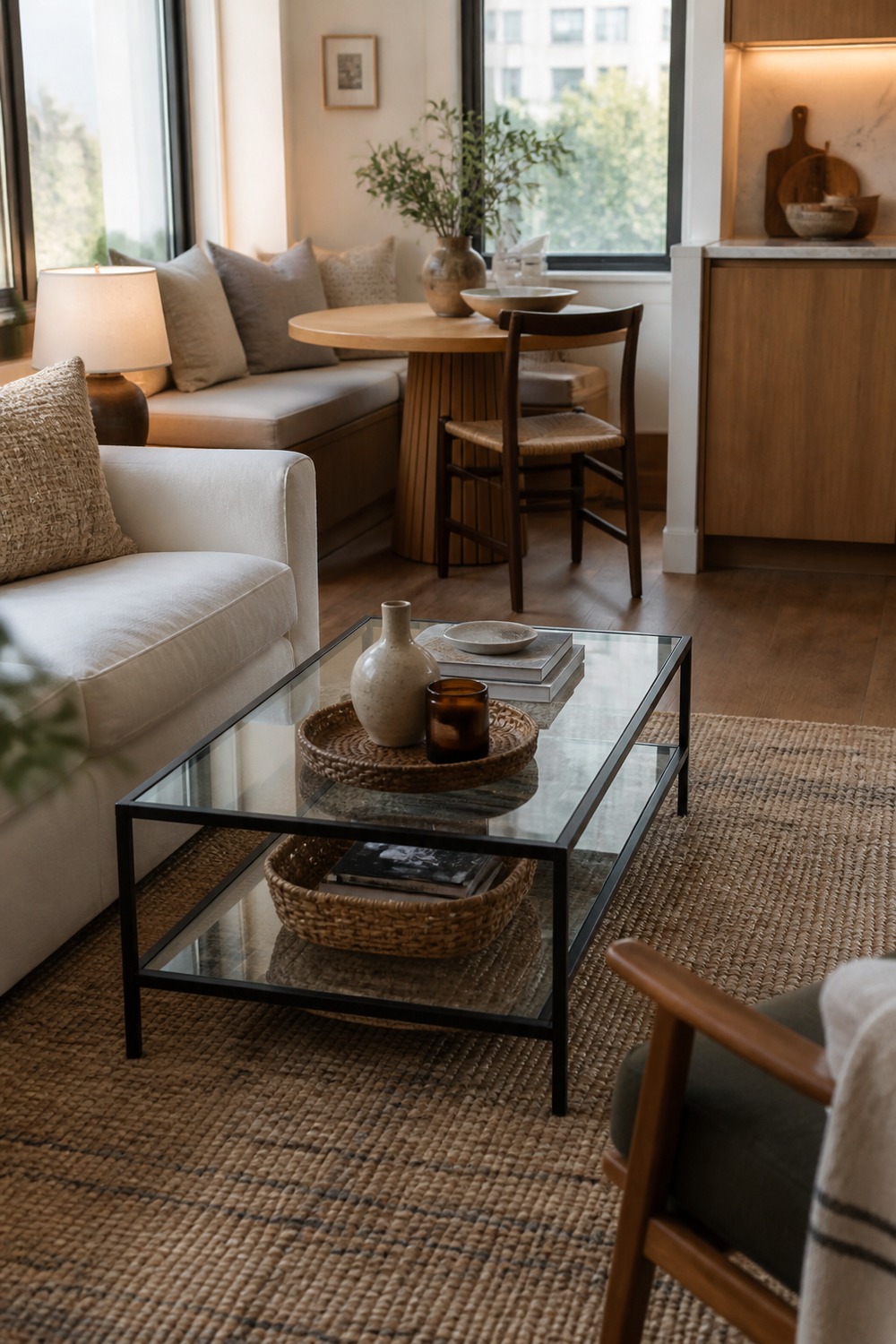
Glass and metal can work well here because they keep the table from visually weighing down the kitchen side of the room. The reflective surface feels polished, and the open base lets the rug and floor show through.
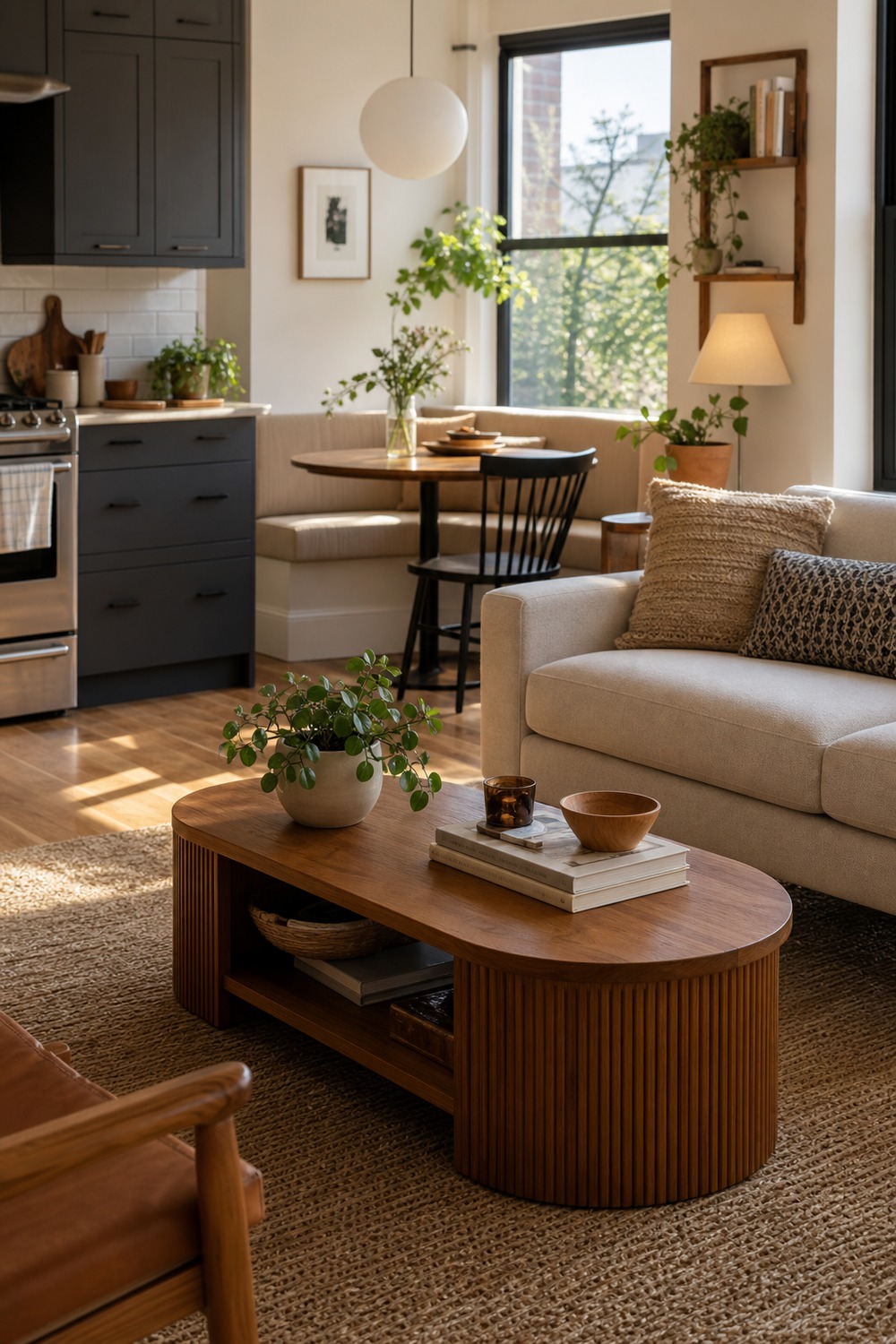
Warm wood is probably the easiest coffee table finish to blend with a kitchen. It picks up the cabinet tones, softens the seating area, and makes the sofa corner feel like part of the same room rather than a separate leftover spot.
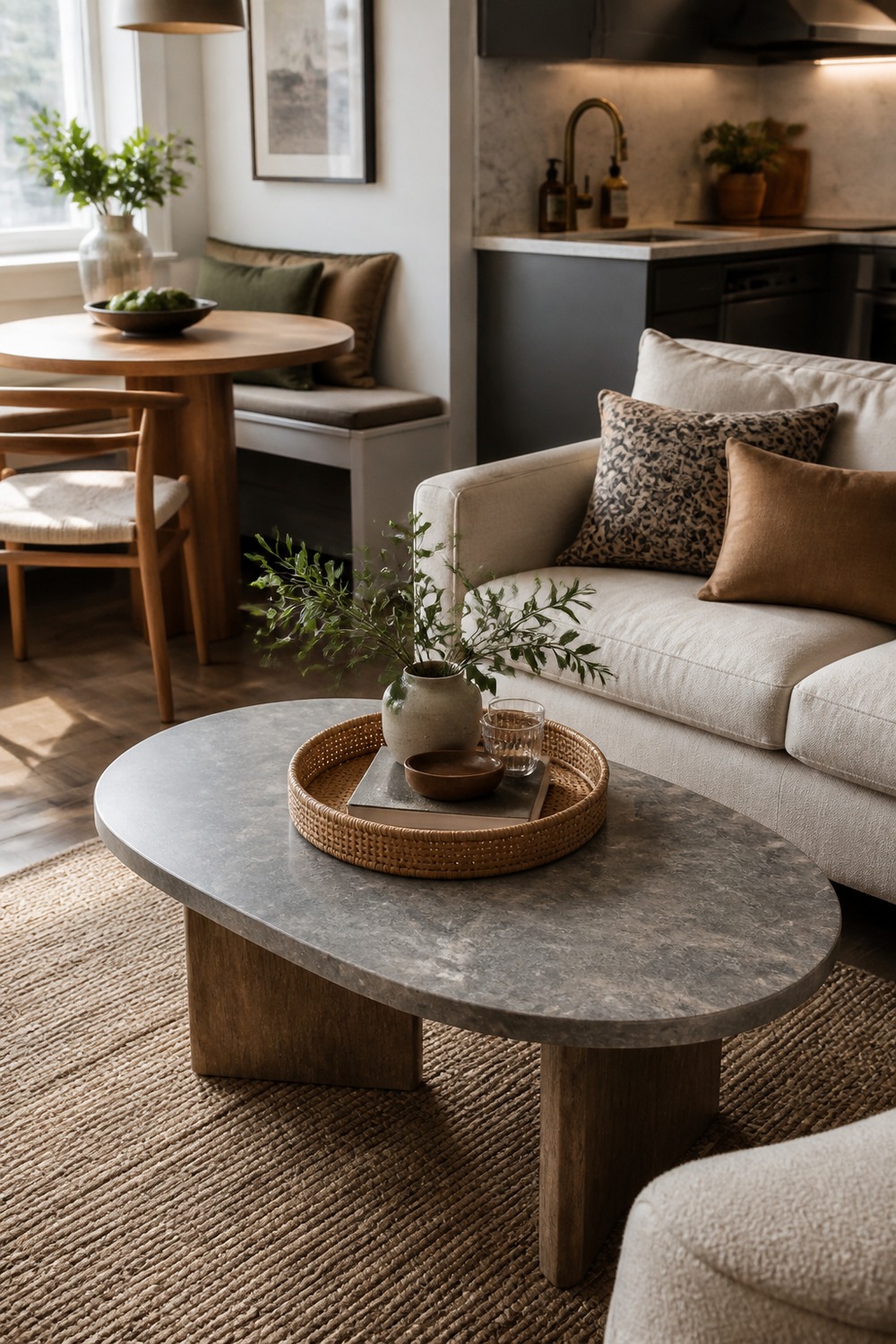
The stone top gives this table a more finished, grown-up feeling without needing much decor. I like the way the smooth surface plays against the softer rug and seating because it makes the whole open room feel cleaner.
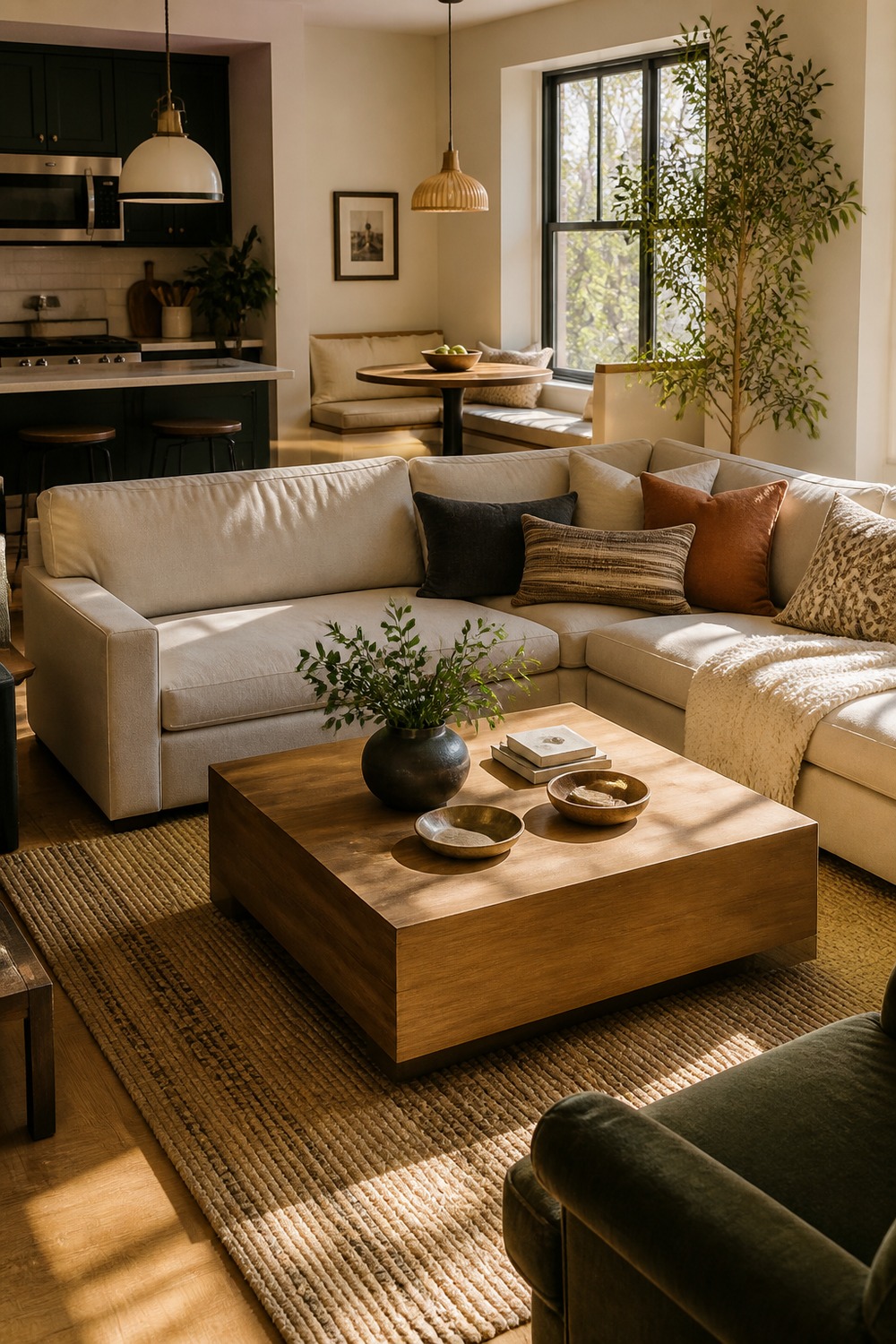
A square coffee table works nicely with a sectional because it fills the middle evenly. The key is leaving enough clearance around the edges, especially when the kitchen walkway is only a few steps away.
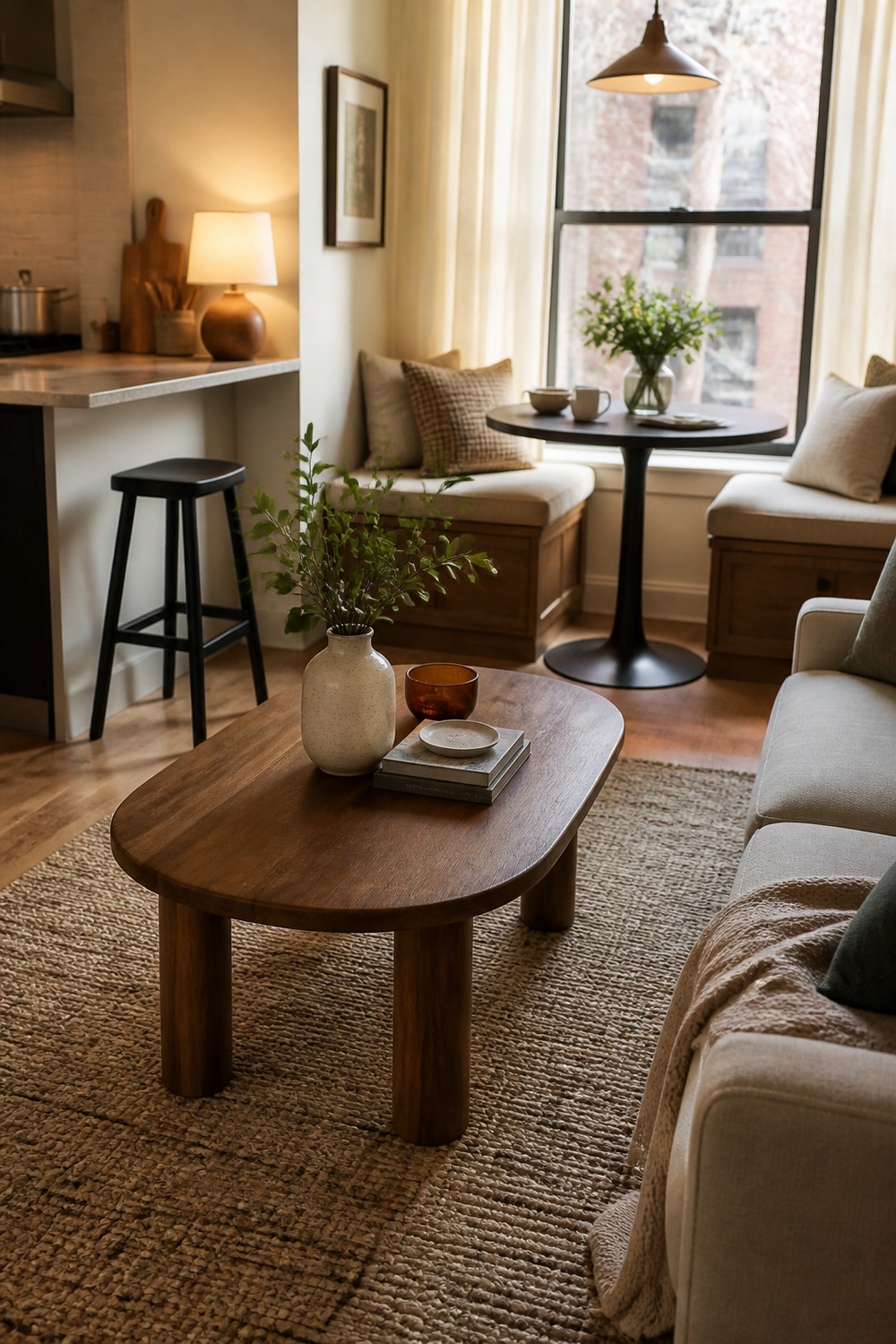
Window light makes this coffee table feel lighter and less bulky. The table gets a clear place in the room, while the nearby curtains, plant, and kitchen seating keep the whole corner from looking flat.
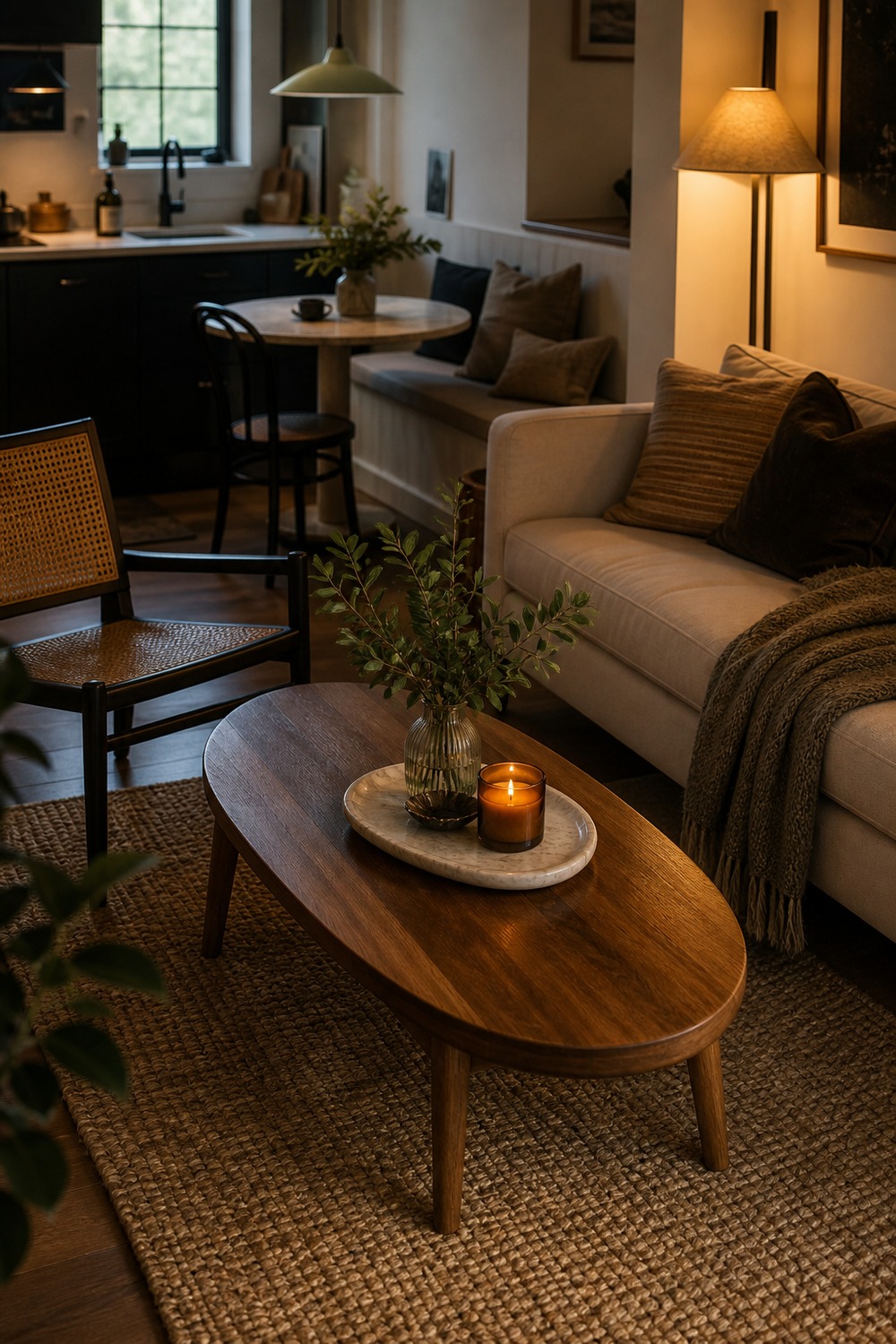
The evening lighting gives this setup a more relaxed kitchen-living feel. A low table, lamp glow, and soft rug make the room feel ready for after-dinner sitting instead of just looking staged for daytime.
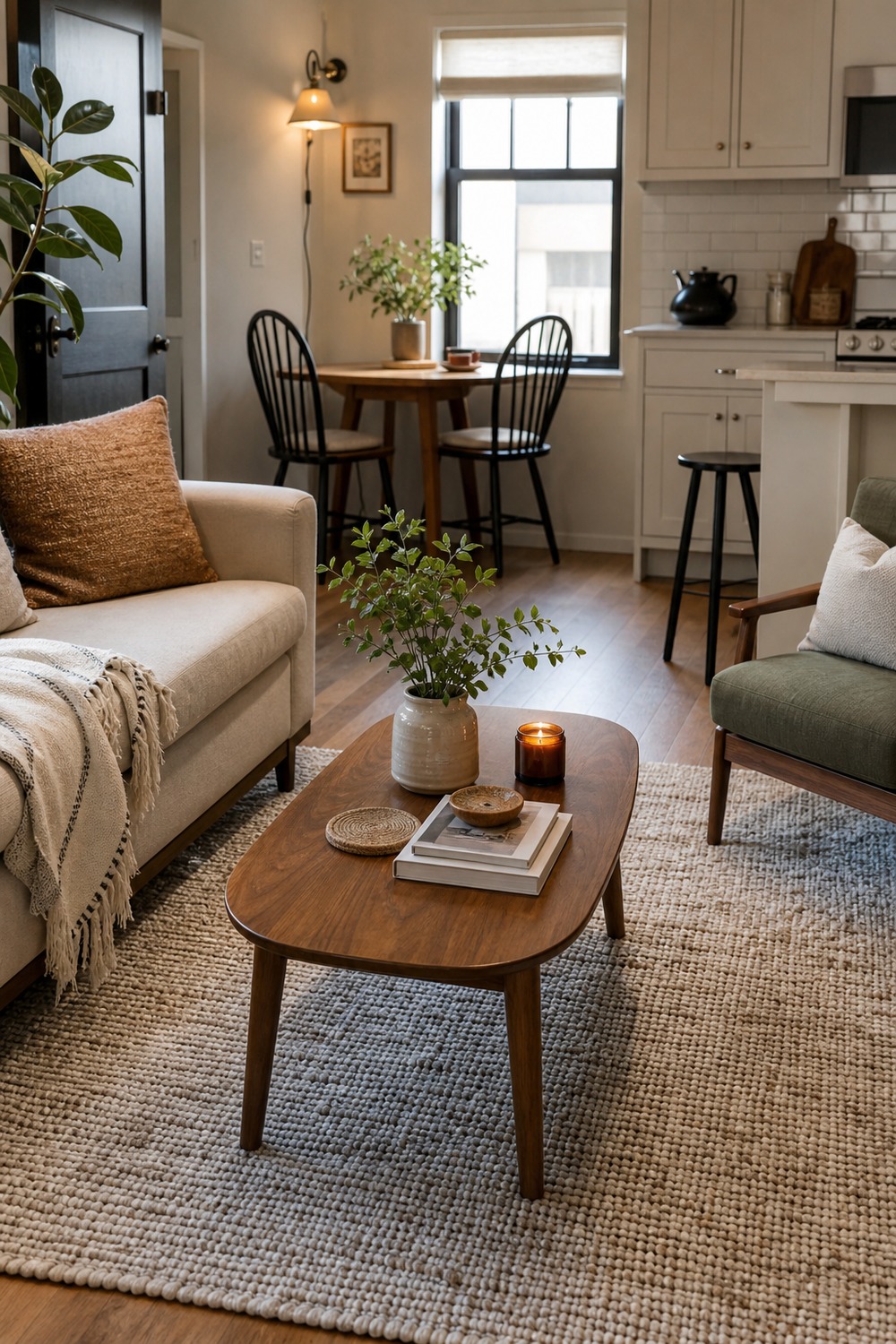
A textured rug is doing a lot of quiet work here. It defines the coffee table zone, adds softness under the table, and keeps the kitchen-adjacent seating from blending into one hard-surface open space.
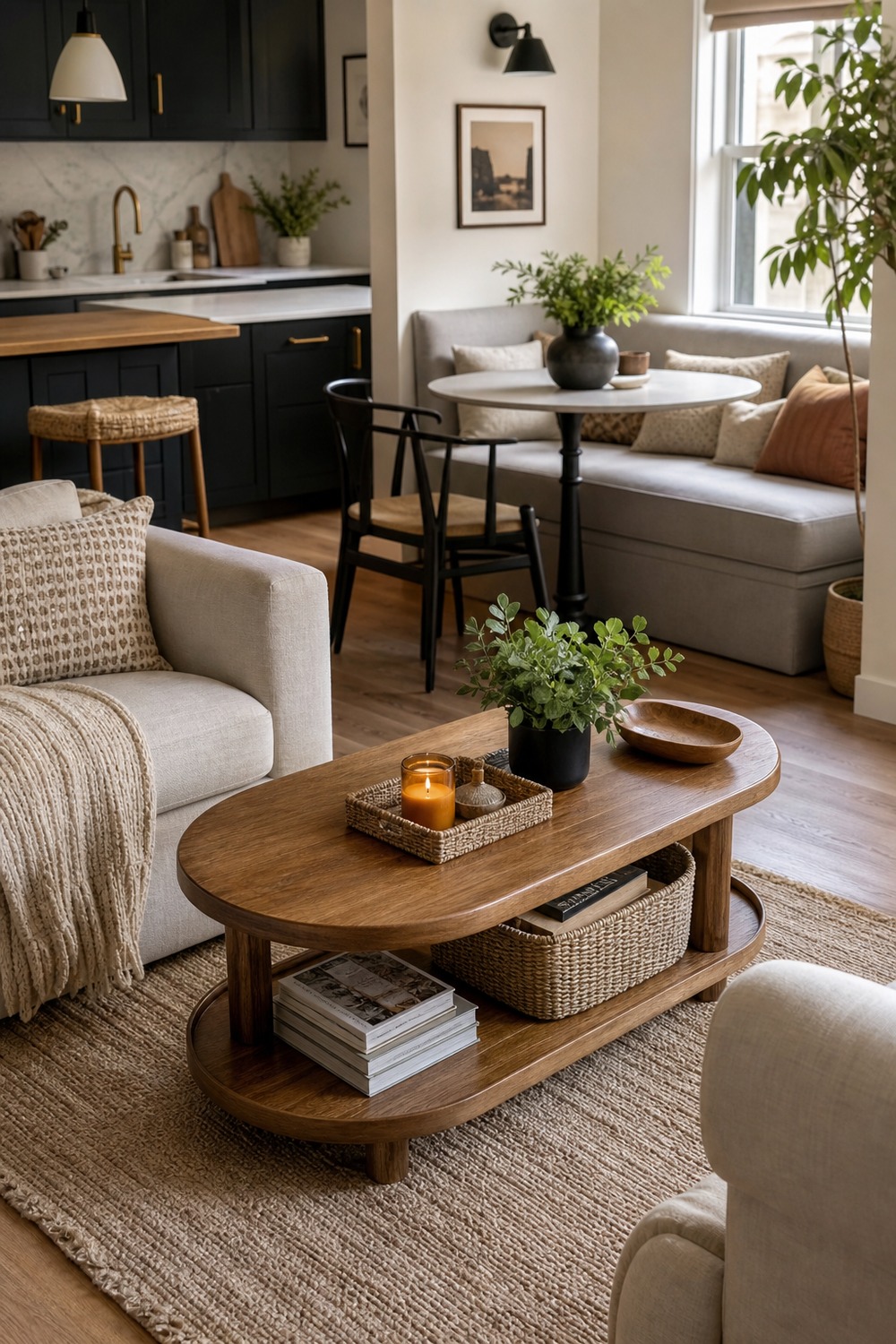
This family-friendly setup feels believable because the table is styled but not precious. There is room for baskets, books, and drinks, and the rounded edges make more sense in a room people are constantly walking through.
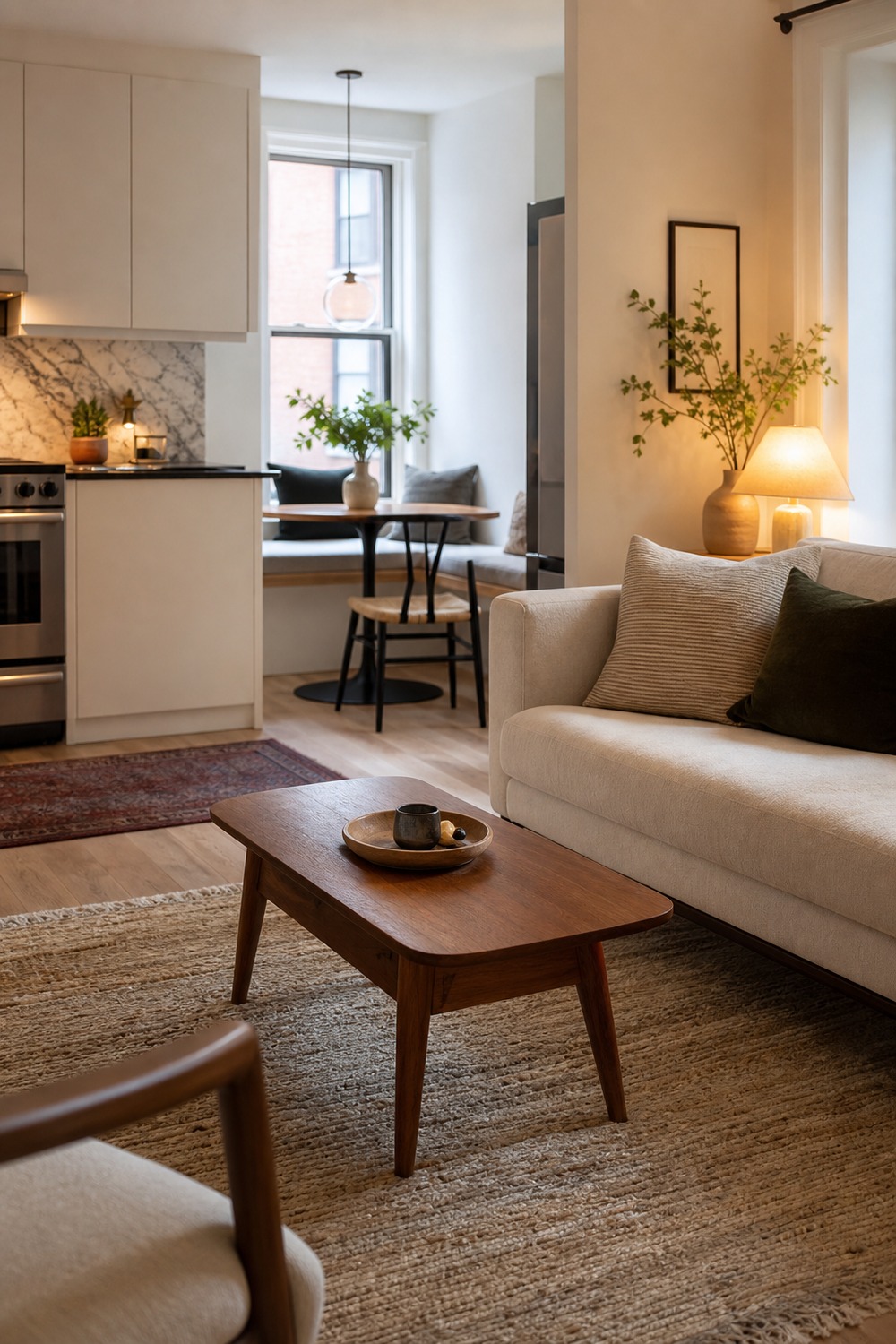
The minimal table proves that a kitchen seating area does not need a heavy centerpiece. The simple surface, open floor around it, and clean nearby cabinets make the whole room feel easier to move through.
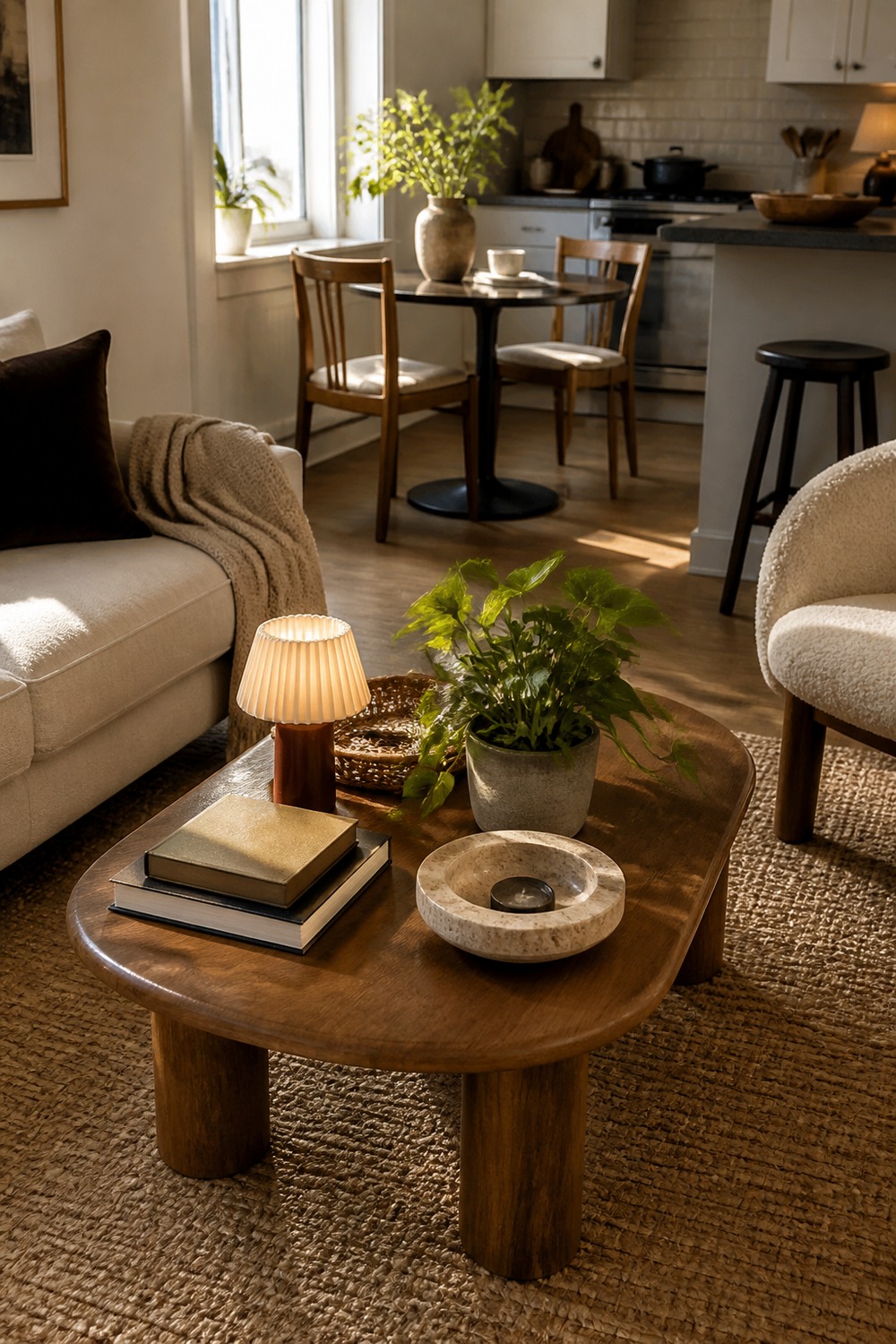
This collected vignette works because the tabletop has layers without feeling packed. A tray, a vase, and a couple of stacked pieces create a finished look, but there is still space for the everyday things that actually show up.
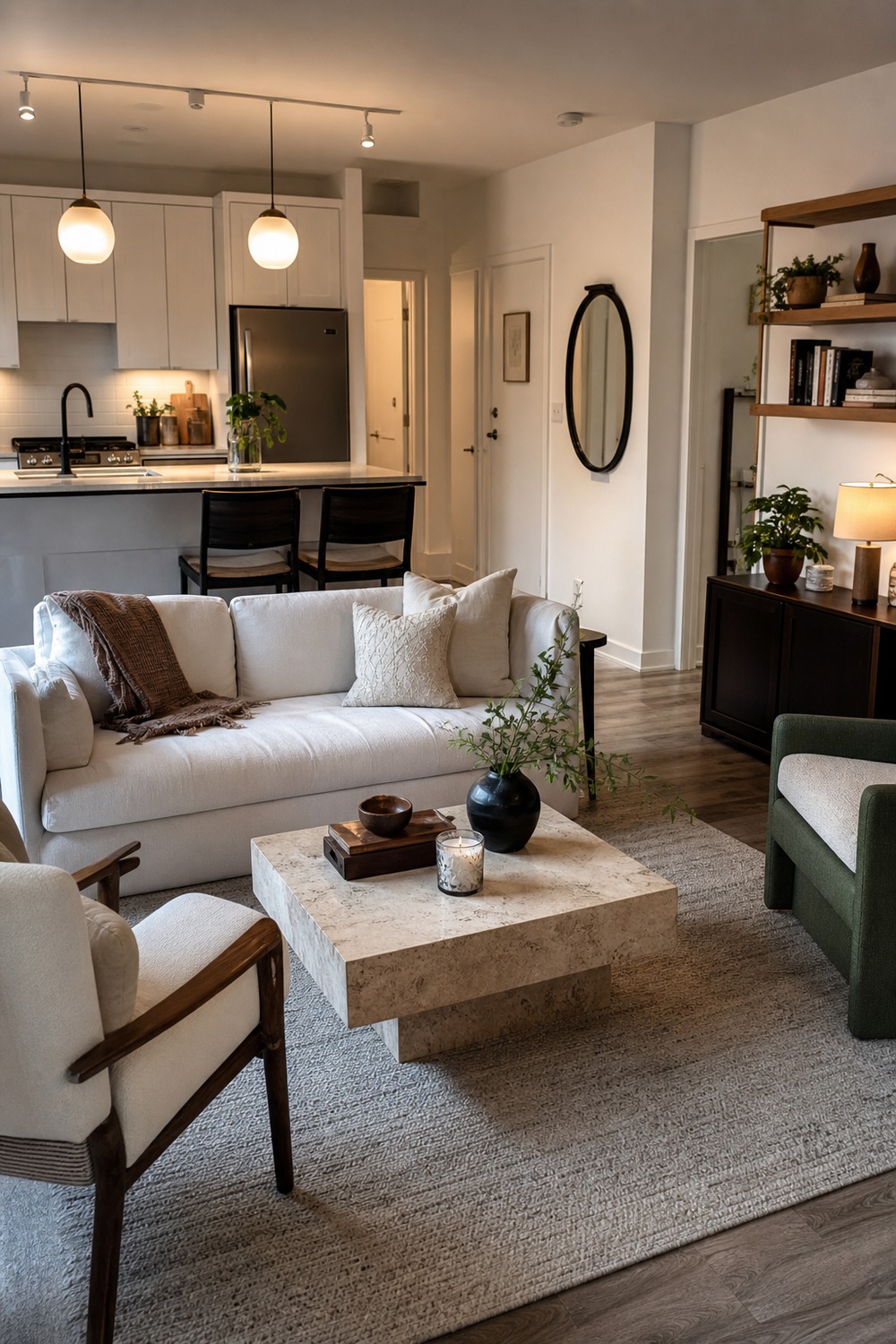
The full-room view shows how much the coffee table depends on everything around it. When the rug, sofa, chairs, and kitchen sightline all feel balanced, the table looks planned instead of like an extra piece squeezed into the room.
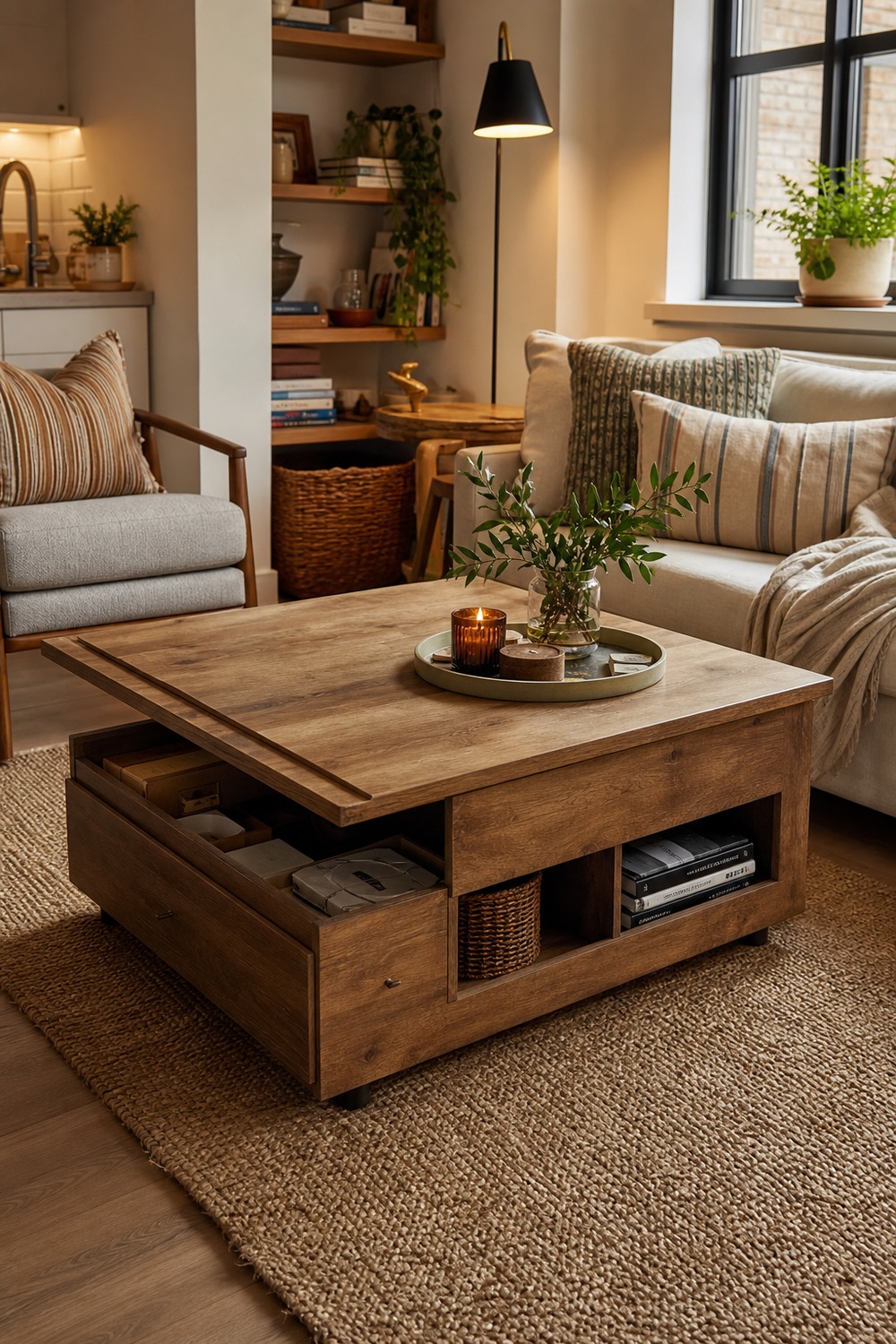
Storage near the kitchen is always useful, and this corner makes it look good. The low table keeps small items close, while the warm lighting and nearby shelves give the seating area a softer landing point.
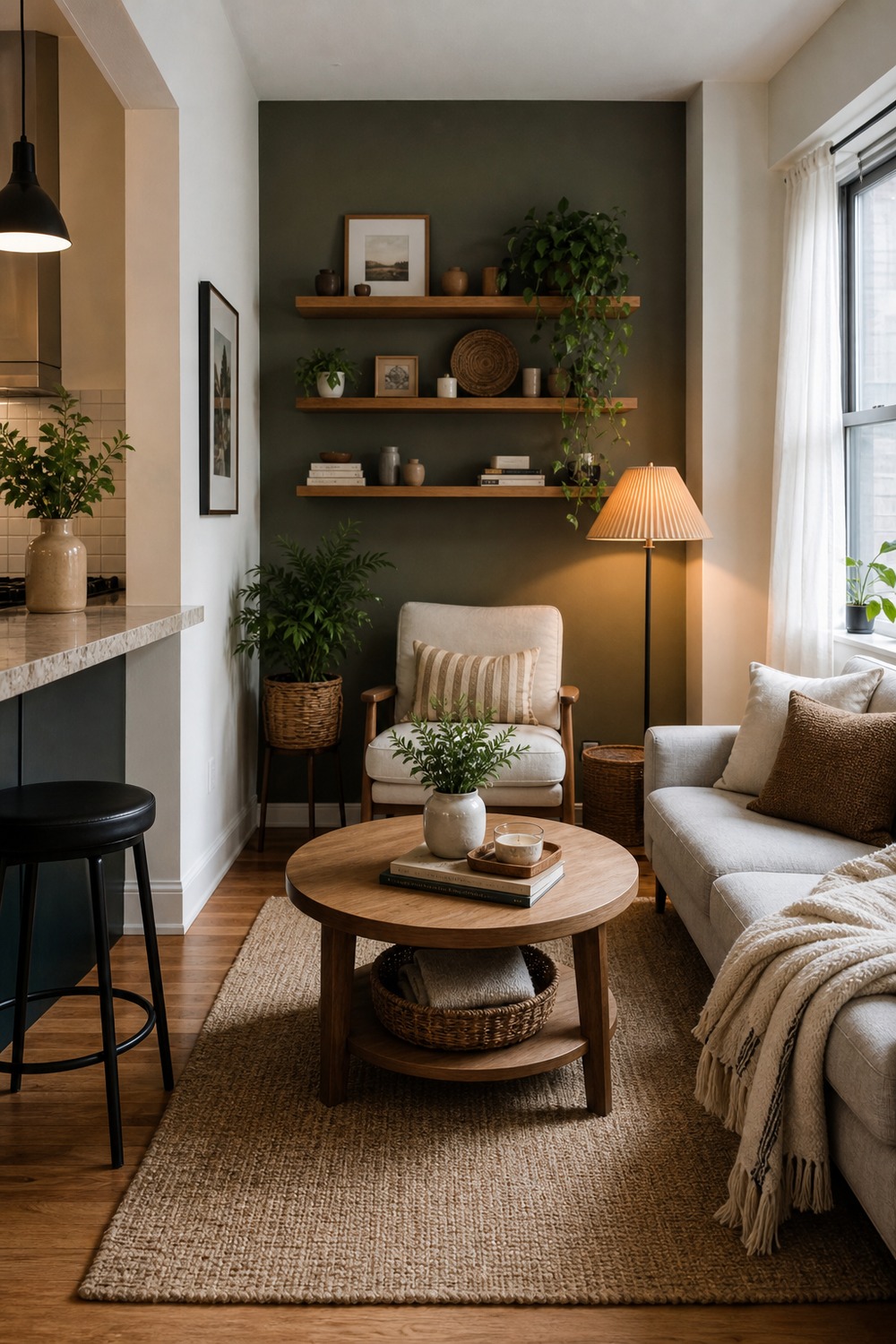
This final room feels finished because the coffee table lines up with the sofa, rug, and kitchen edge instead of floating on its own. The focal wall adds structure, but the table is still the piece that makes the sitting zone feel usable.
A kitchen coffee table works best when it feels connected to both parts of the room. The shape, rug, lighting, and storage all matter because that little middle piece has to handle real daily clutter while still making the open space feel intentional.
Leave a comment