
A coffee table earns its place when every seat can actually use it. These rooms show the difference that a few inches of clearance, the right table shape, and chairs angled toward the conversation can make—without turning the middle of the room into an obstacle course.
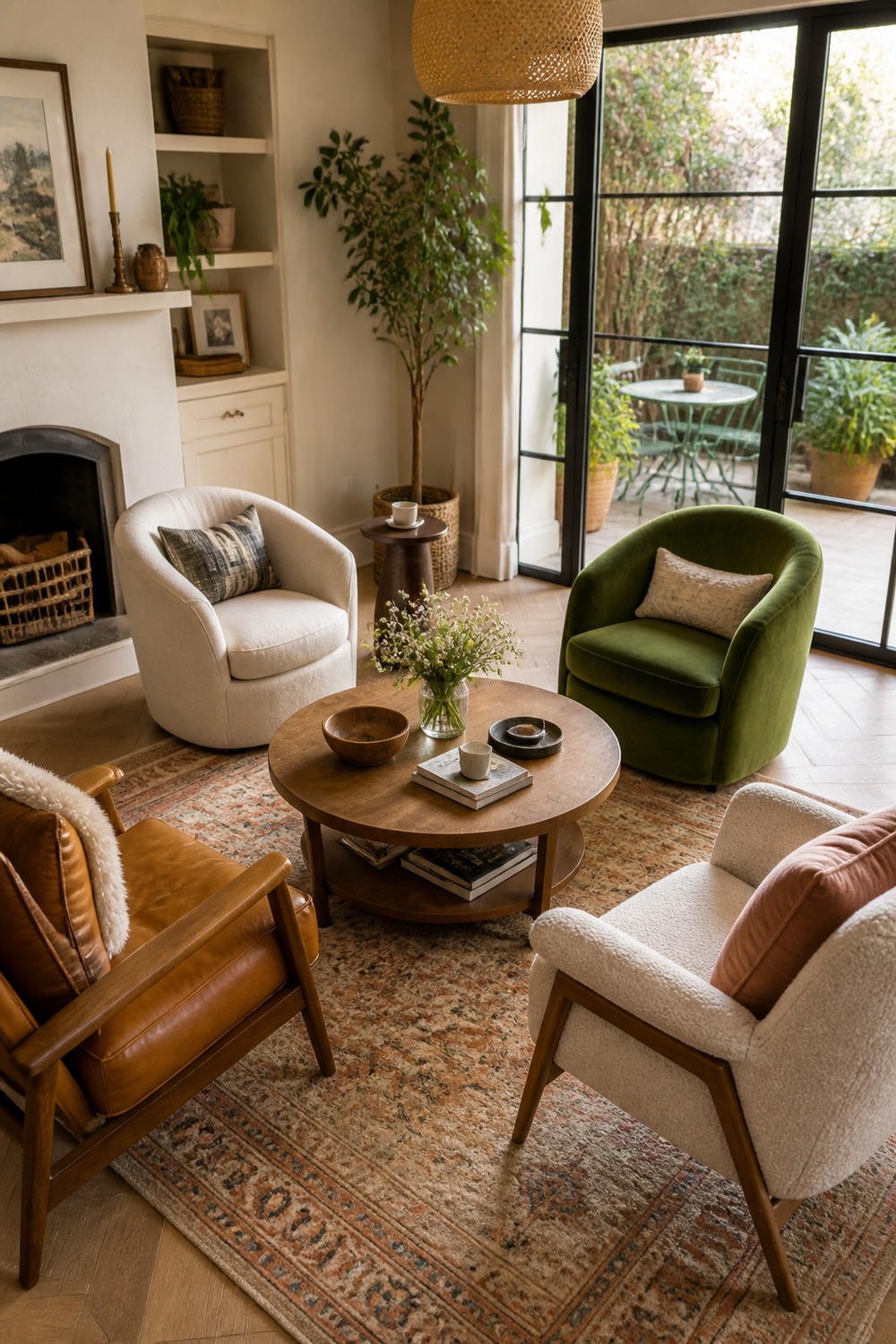
Four chairs around one round table makes the room feel genuinely social. The equal gaps between seats leave clean entry points, while the patterned rug keeps the circle from floating in the larger space.
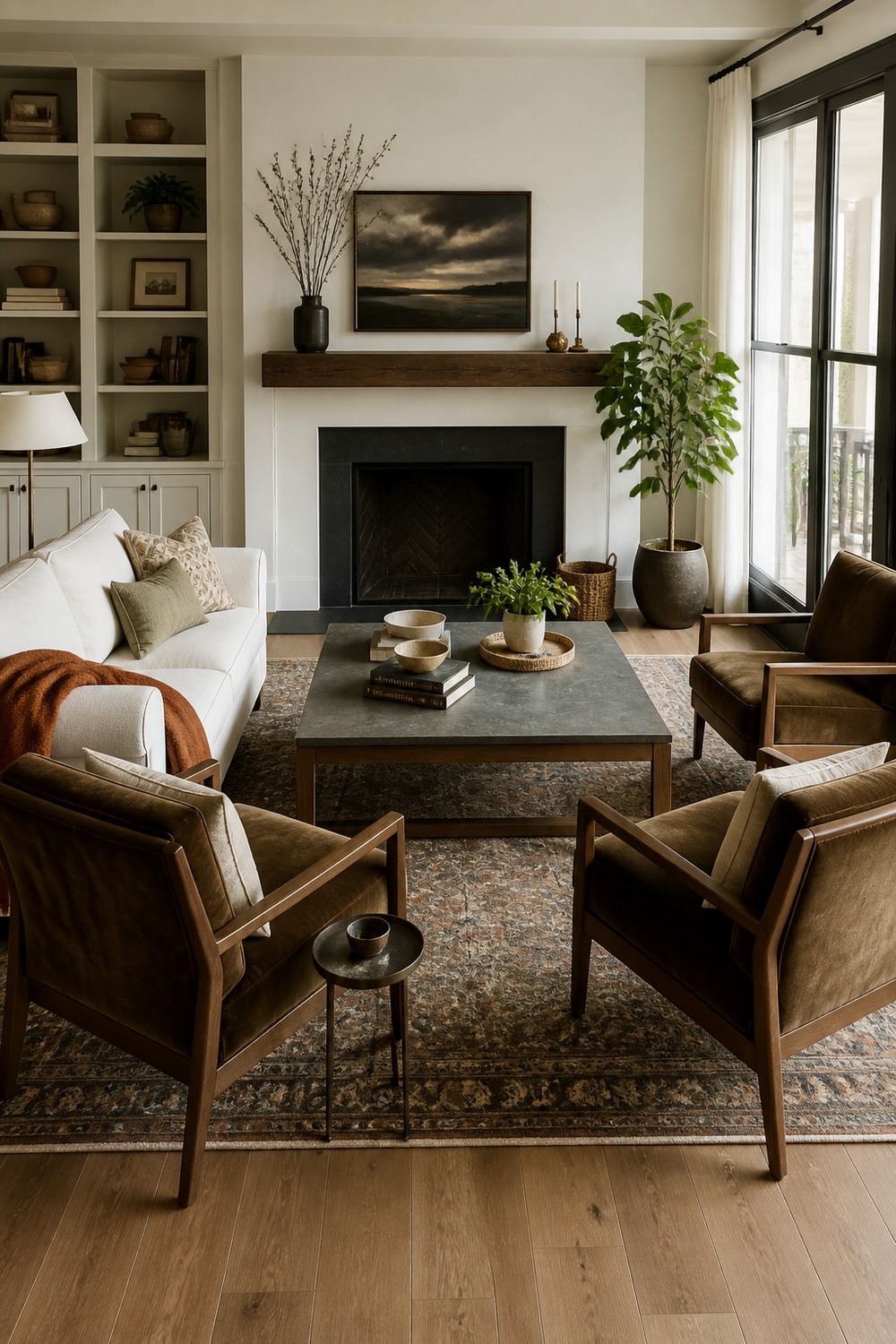
Two chairs facing the sofa gives this square table a clear job: serve both sides of the conversation. Its broad top suits the larger seating group, and the open perimeter keeps the formal arrangement from feeling boxed in.
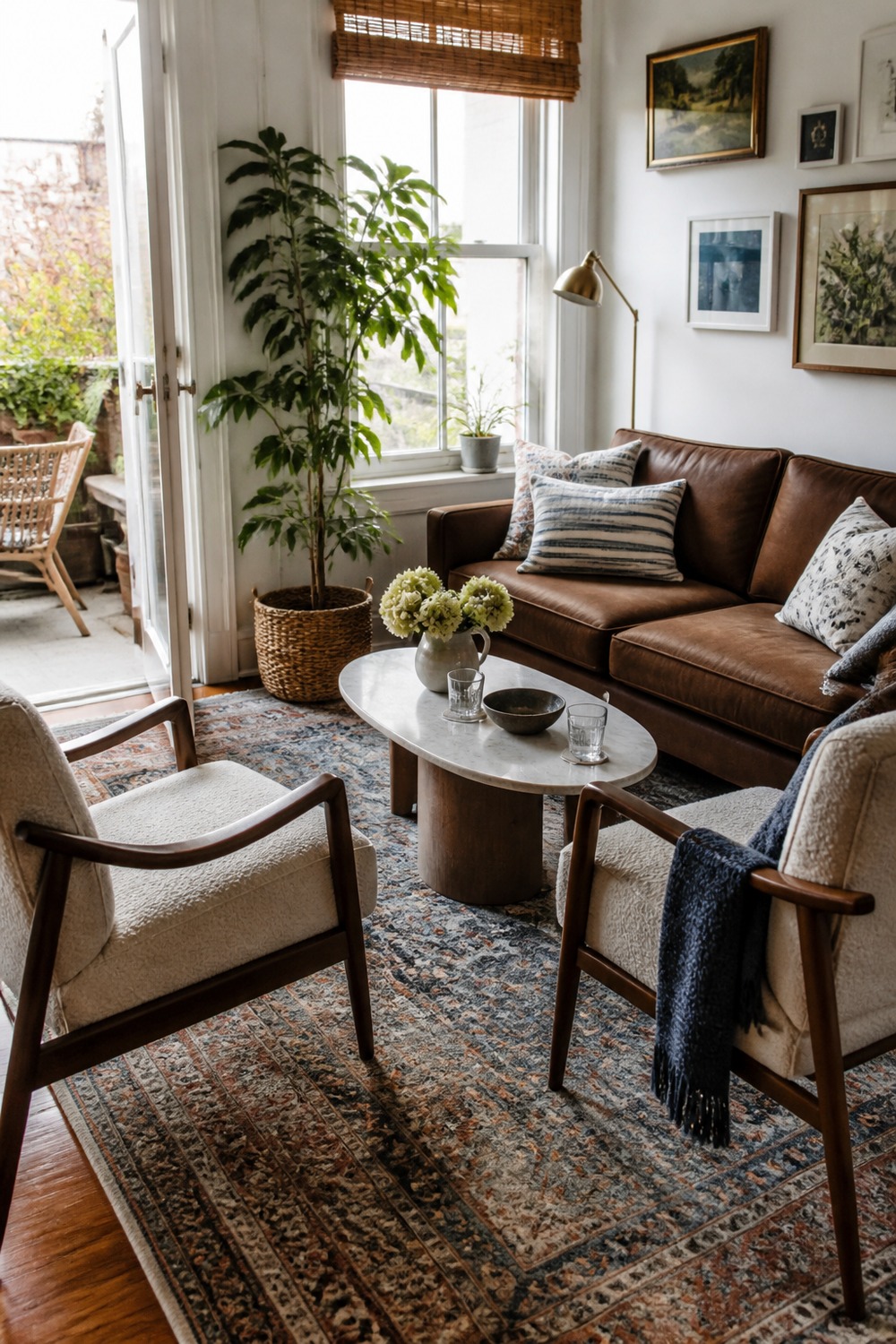
An oval table is a smart move in this smaller apartment because nobody has to squeeze past a sharp corner. Slim chair frames preserve the walkway, and pulling their front legs onto the rug makes the whole setup read as one zone.
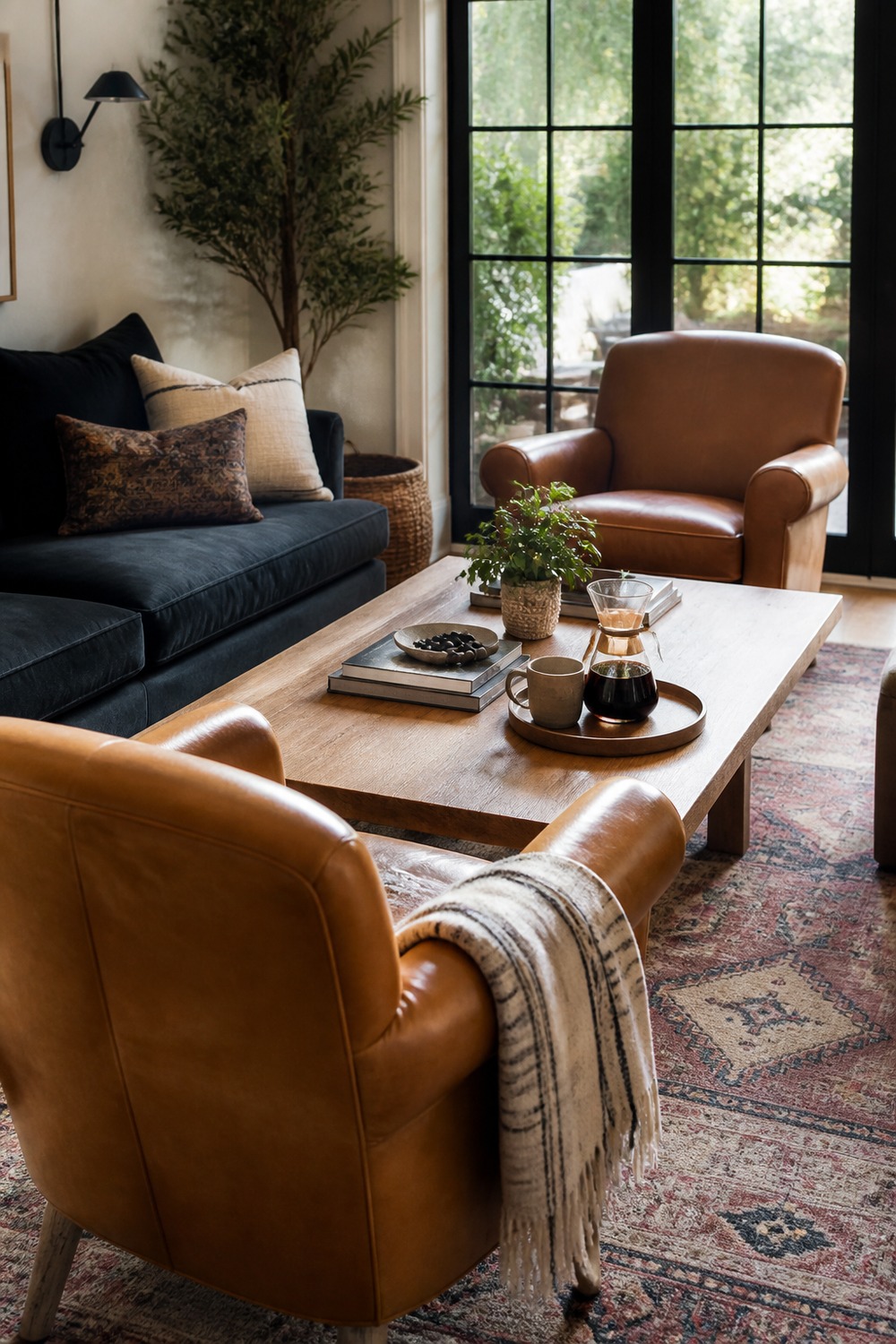
The leather chairs sit on a slight angle instead of lining up stiffly with the sofa. That small turn improves eye contact and leaves the rectangular table close enough for drinks without crowding anyone’s knees.
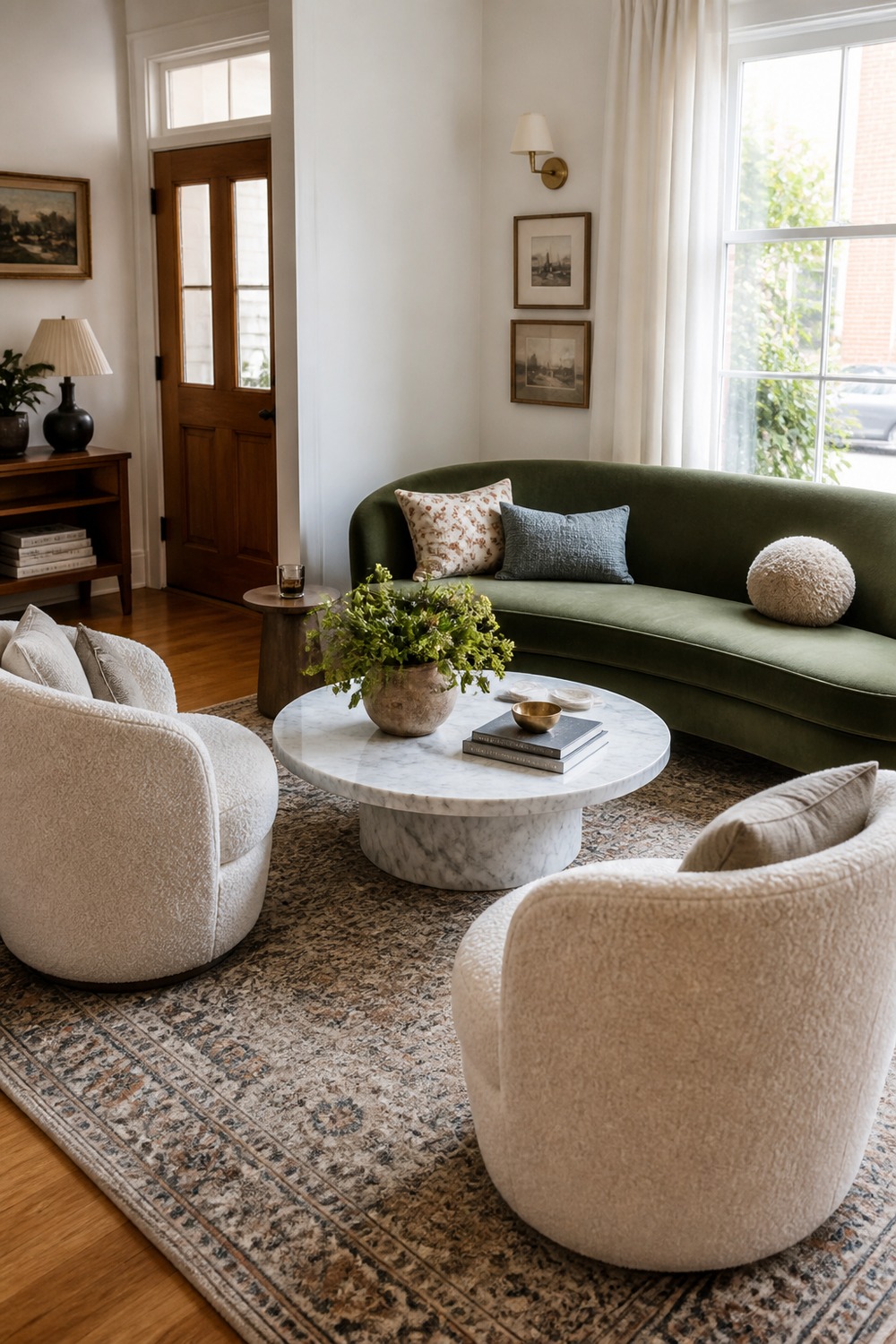
Swivel chairs make this layout more flexible than it first appears. Both seats can turn toward the sofa, window, or round marble table, and the curved furniture shapes keep the traffic path soft and easy.
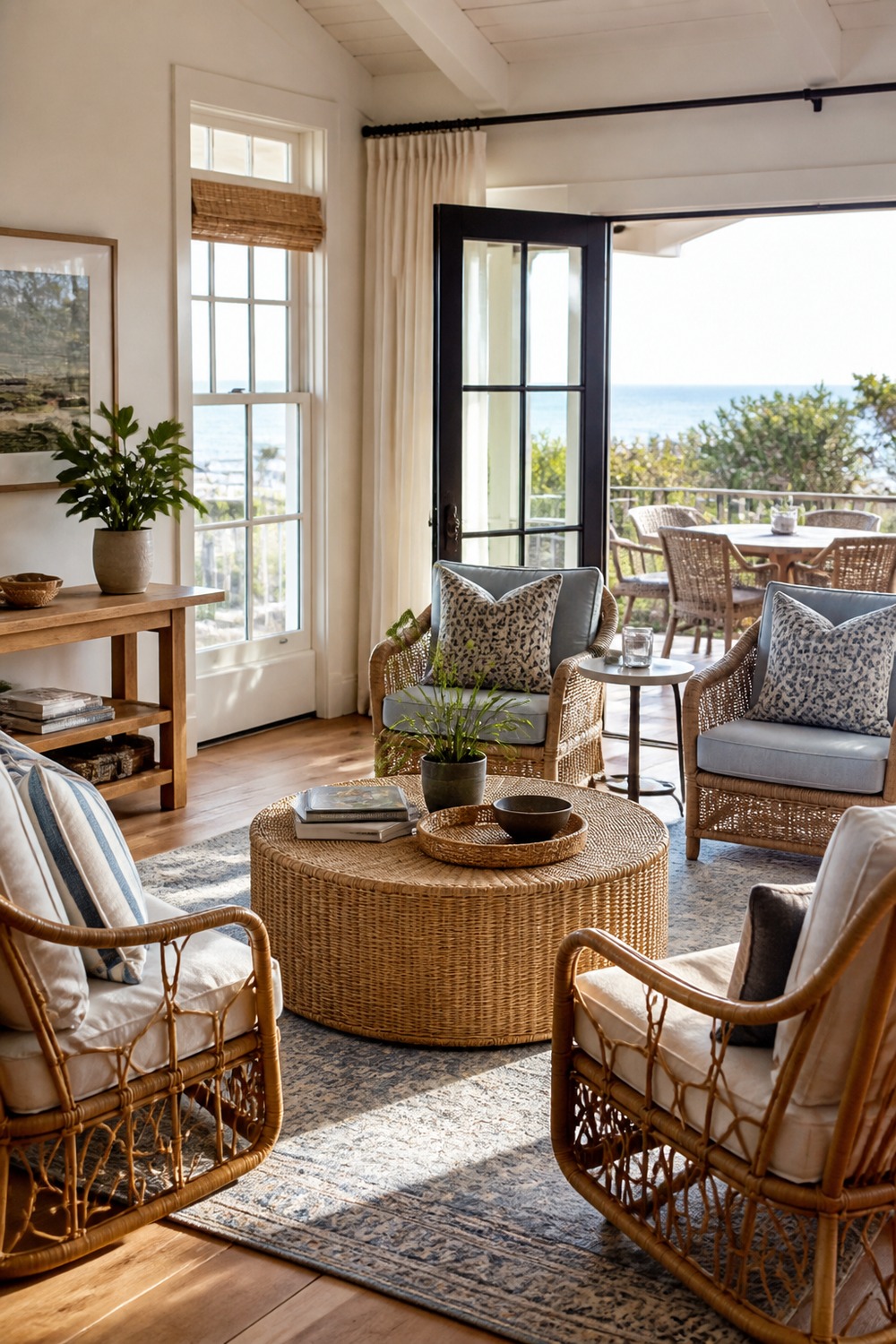
Rattan frames add a lot of texture without the visual weight of solid upholstered chairs. The woven coffee table repeats that airy material, while generous gaps between the seats keep the coastal arrangement usable.
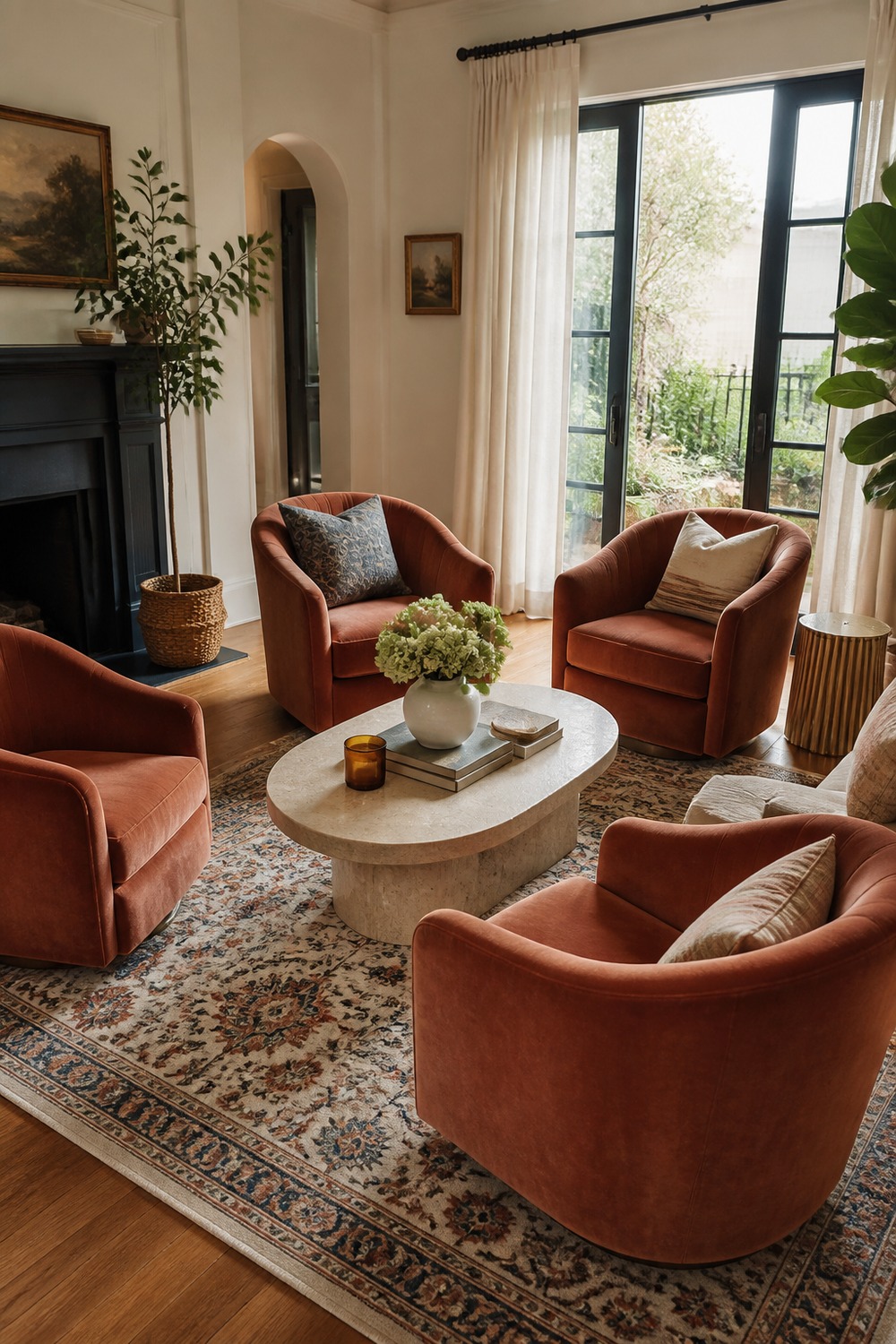
Terracotta chairs bring the color, so the pale oval table can stay visually quiet. Angling all four seats inward creates a real conversation circle, and the rounded edge gives each chair a little more foot room.
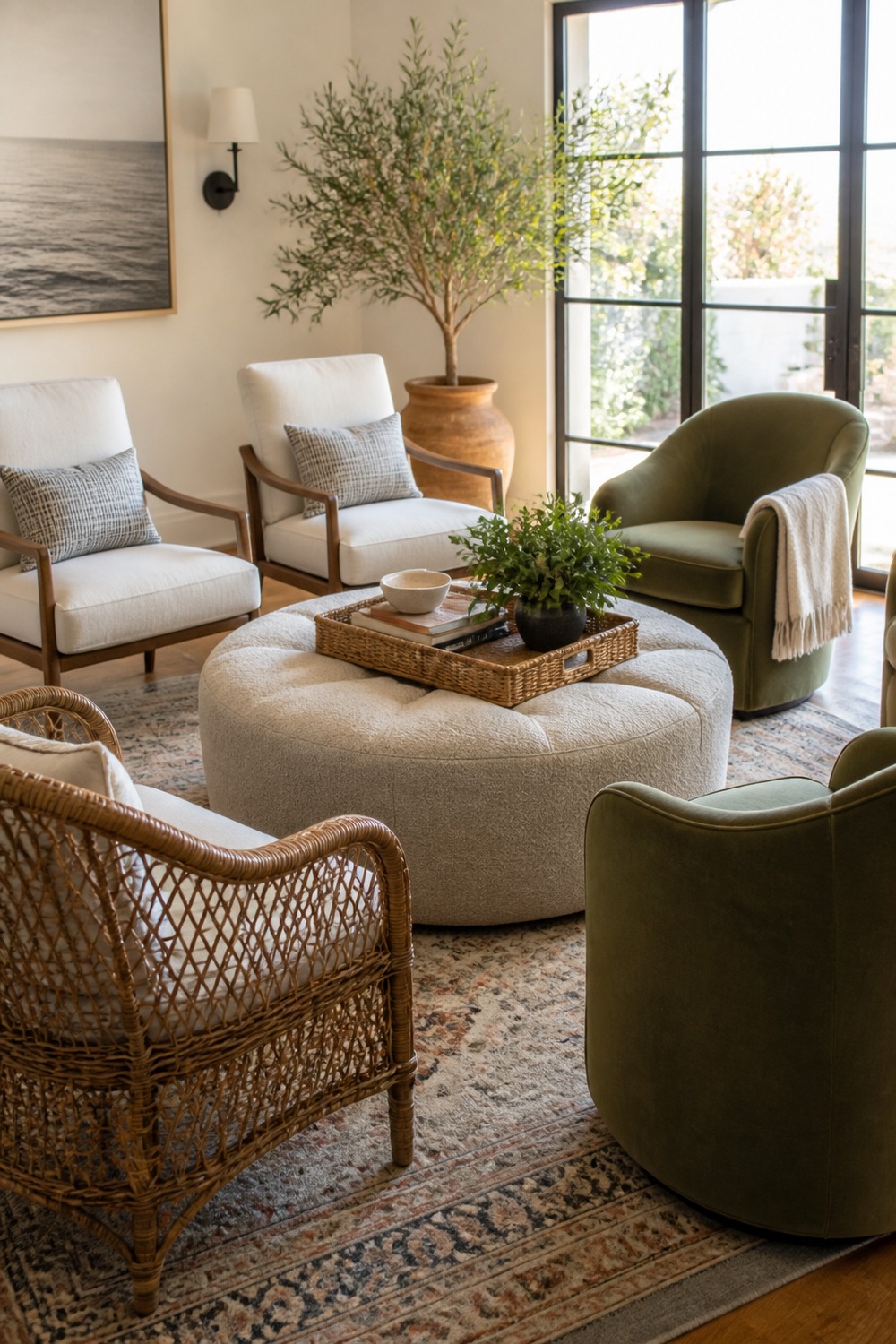
An upholstered ottoman works here because the tray creates one stable spot for mugs and glasses. The soft center is friendly for a family room, but the roomy chair spacing is what keeps the oversized piece from taking over.
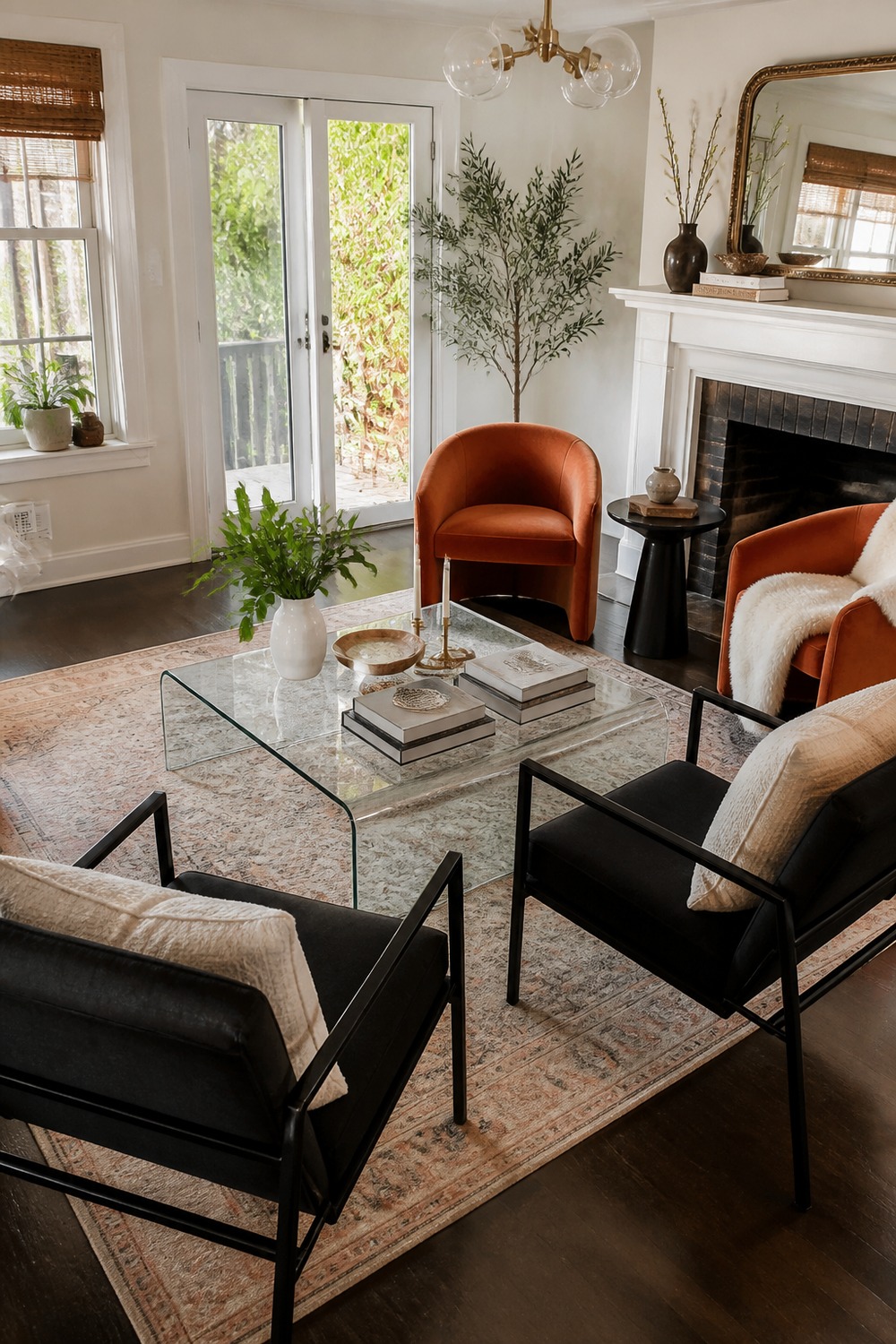
The glass top almost disappears between these slim black chairs, which helps a busy seating group feel lighter. You still get a useful shared surface while more of the rug and open floor remain visible.
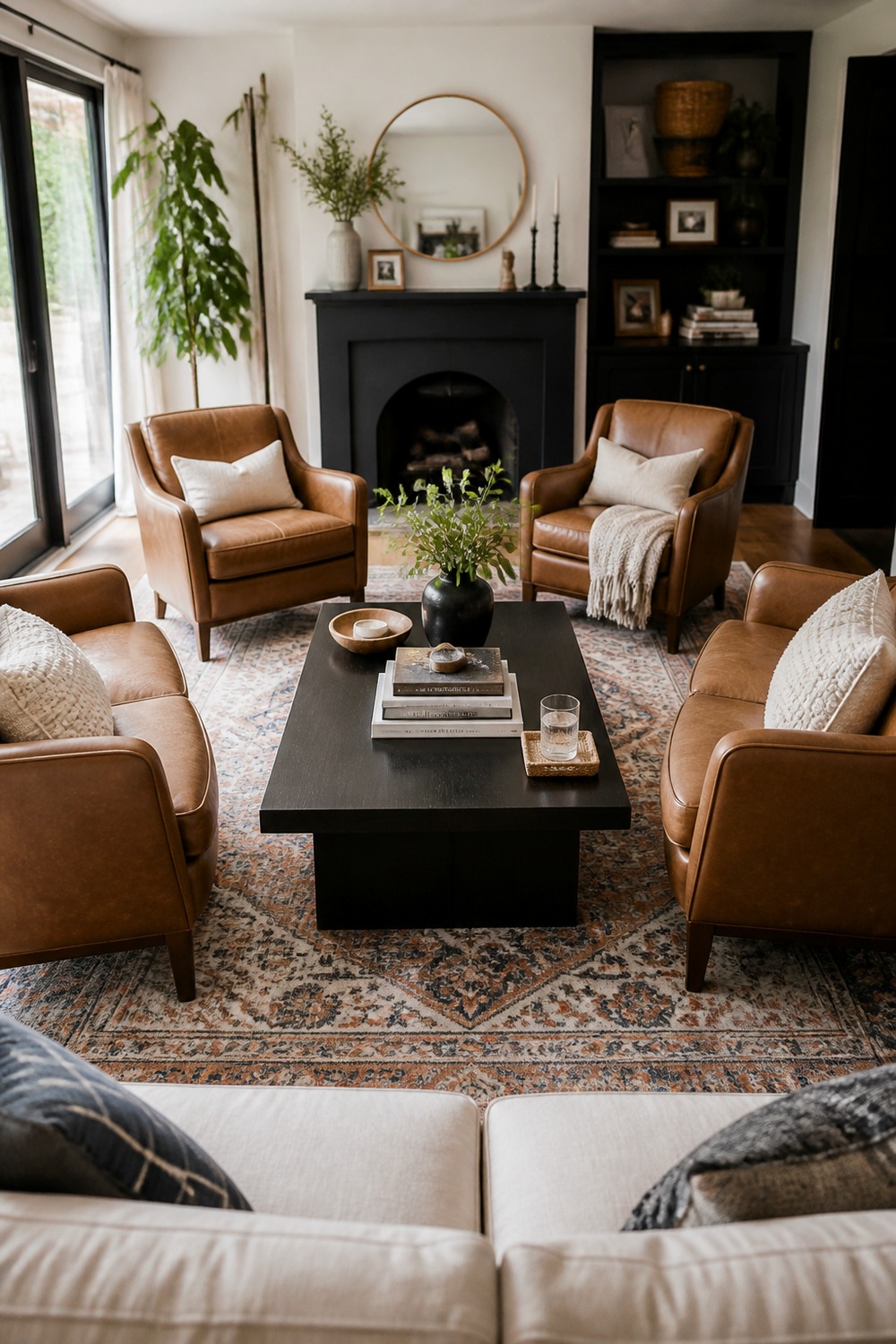
A low black table grounds the tan leather chairs without competing with their color. The contrast makes the center easy to read, and the chair fronts stop far enough back to preserve a comfortable stretch of knee room.
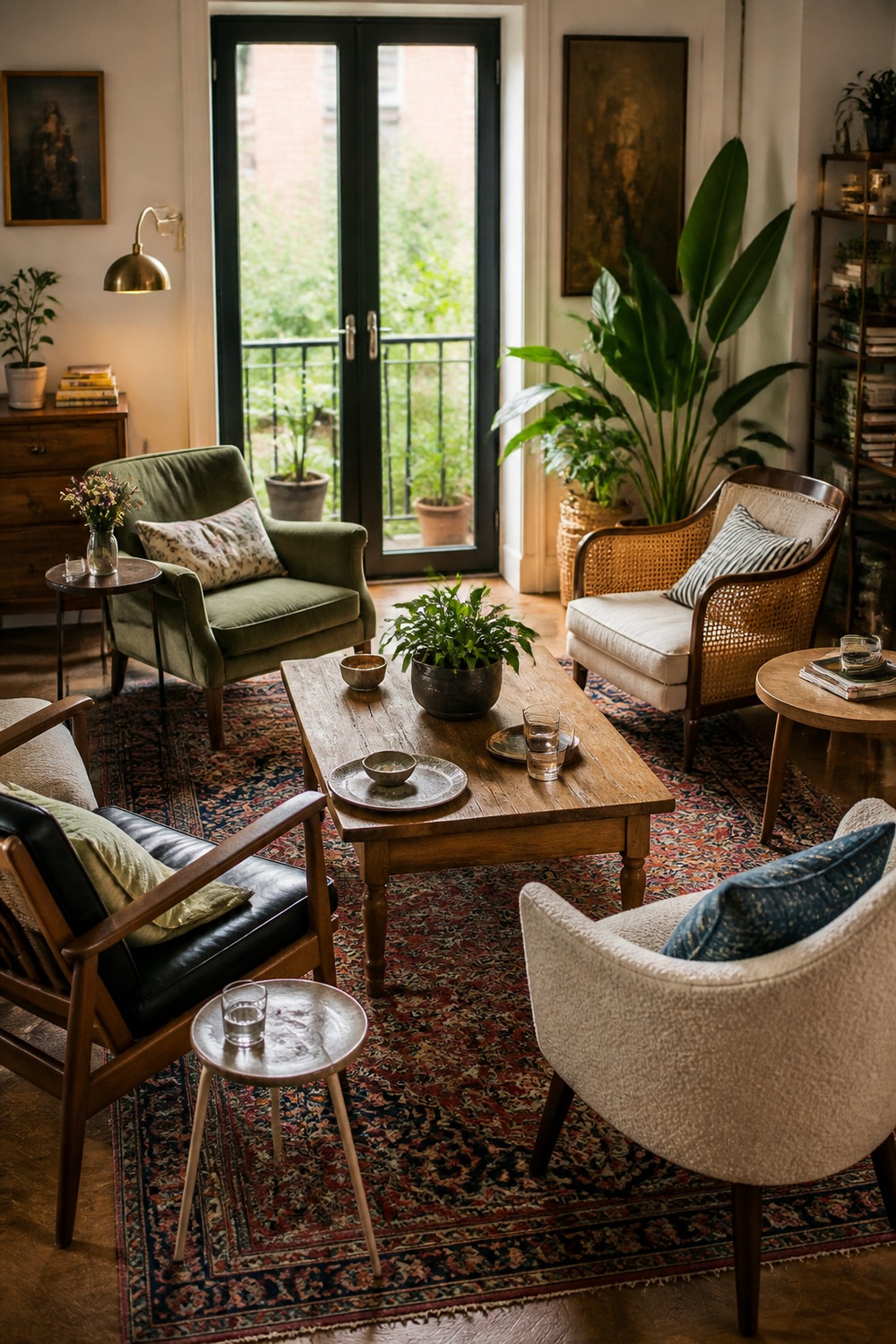
Mismatched vintage chairs can look collected rather than chaotic around one strong center. Here, the wood coffee table and layered rug give the different frames and fabrics a common visual anchor.
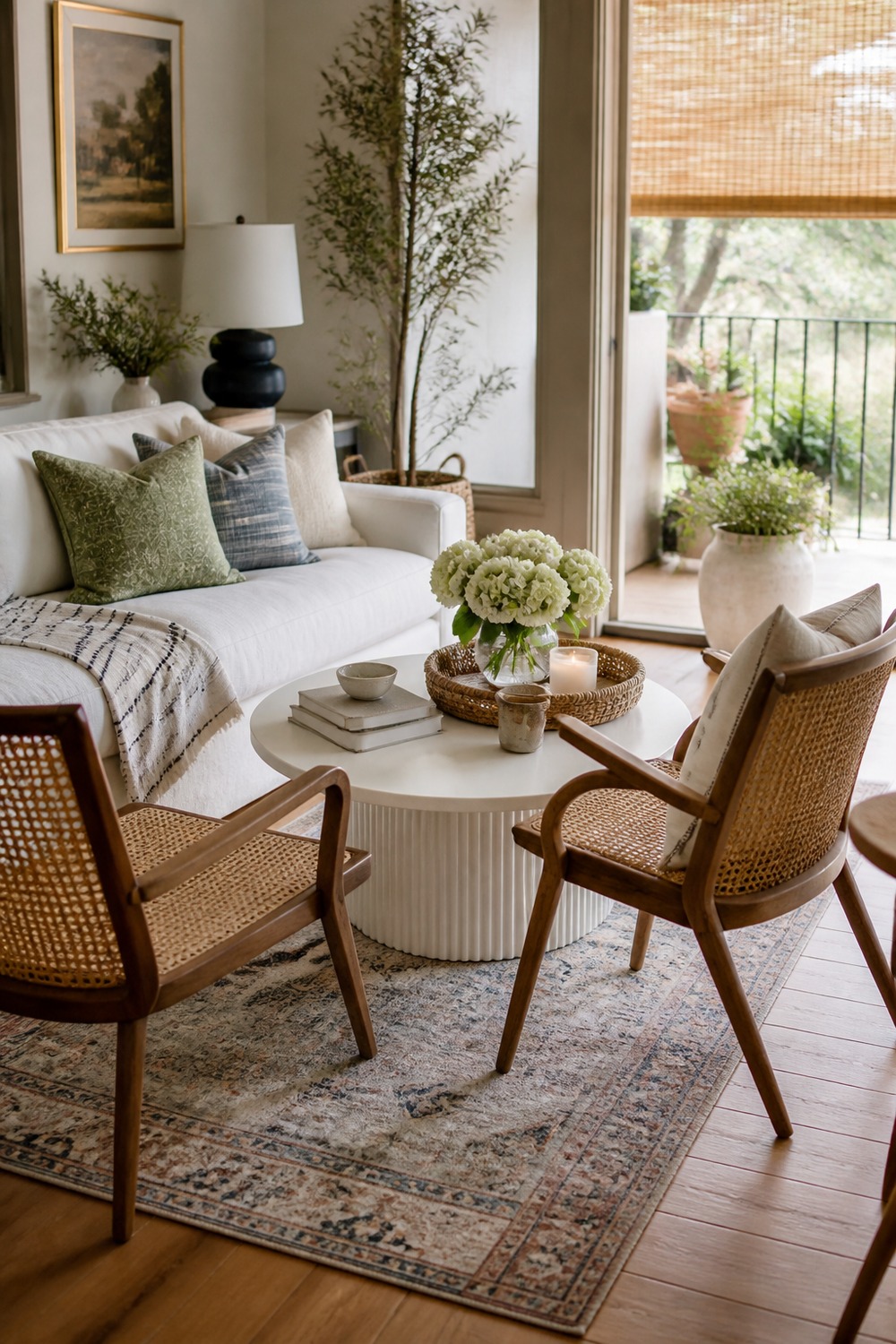
Cane backs and a fluted round table bring plenty of detail, so the arrangement does not need much extra styling. The chairs turn toward the sofa instead of the room edges, making the corner feel ready for conversation.
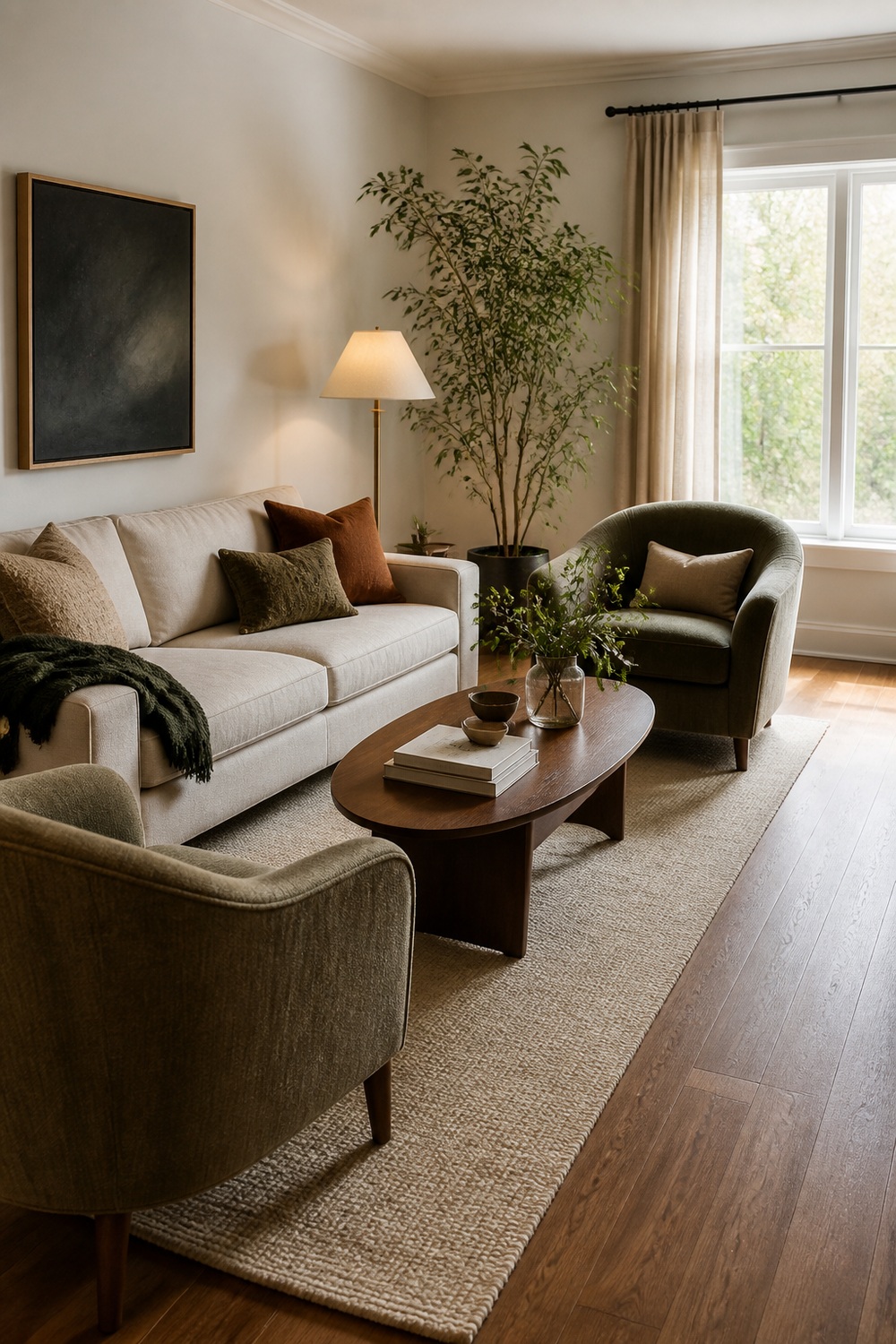
An oval table makes this sofa-and-chair grouping much easier to move through. The rounded ends leave a clear path beside the rug, while both olive chairs stay close enough for a drink or book without crowding anyone’s knees.
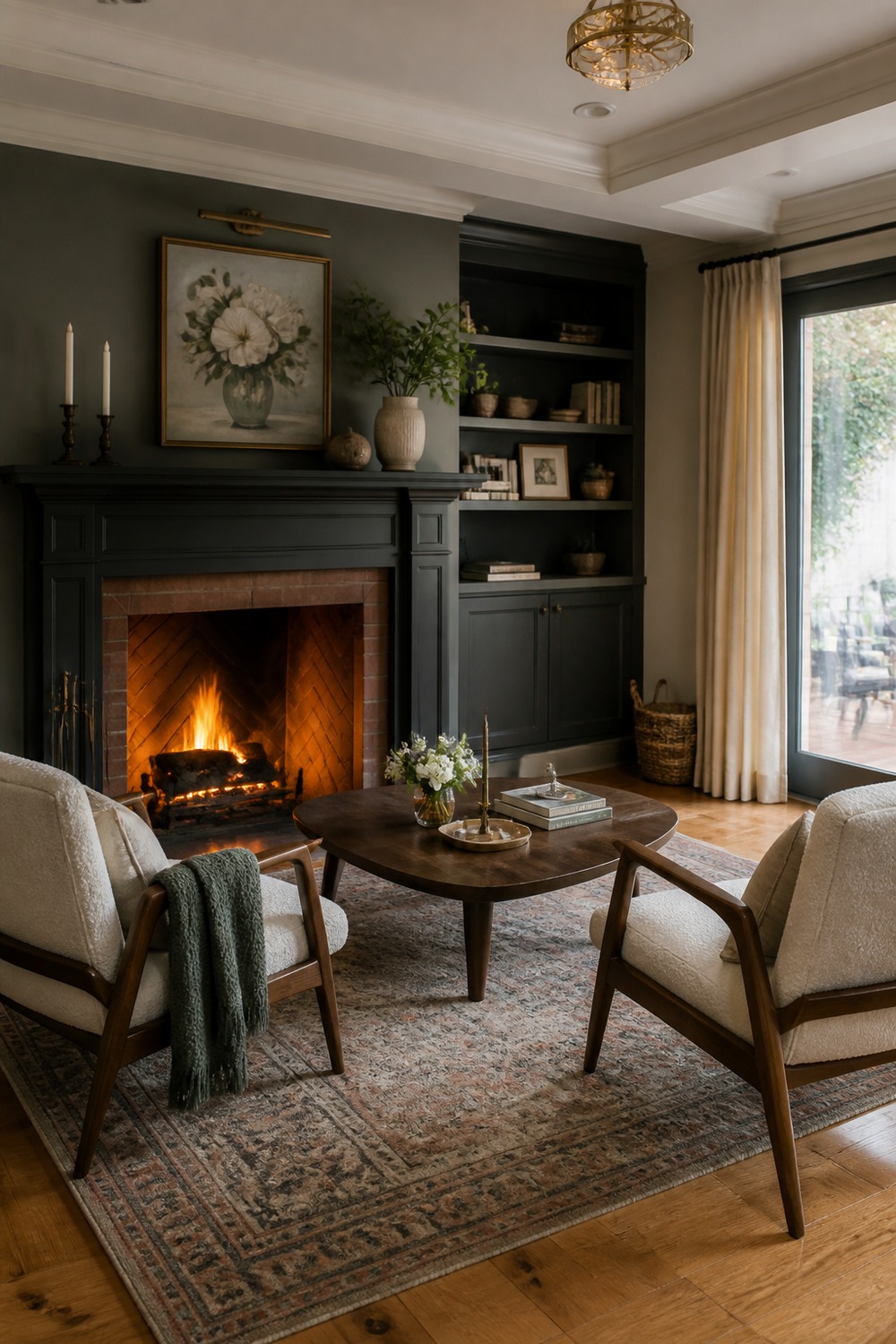
The fireplace stays the focal point, but the low coffee table keeps the chairs connected to each other. Leaving the hearth side open also prevents the seating group from interrupting the warmest part of the room.
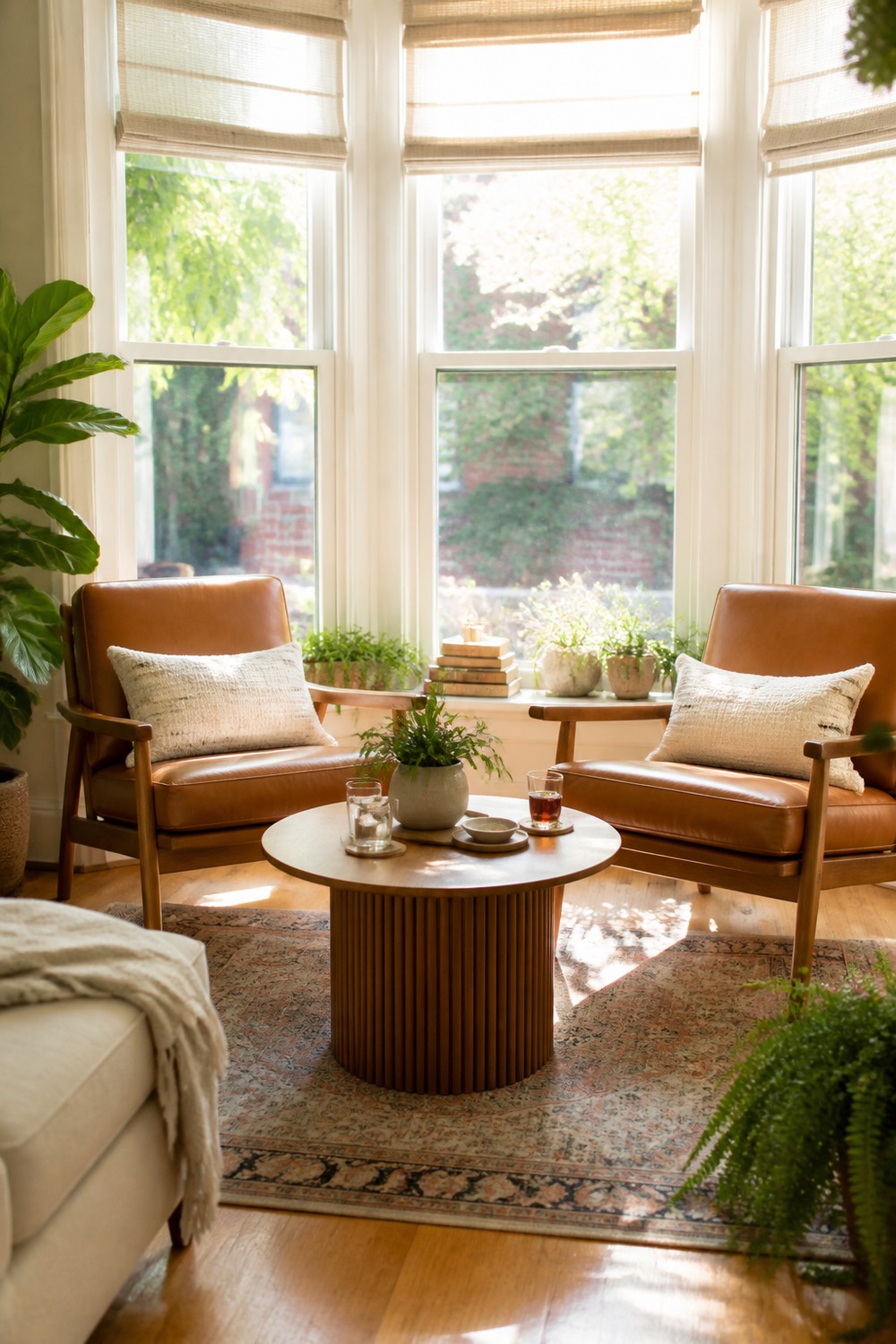
A pedestal base is especially helpful in this bay-window nook because chair legs and feet have fewer obstacles. The small round top handles two drinks and a book without swallowing the bright corner.
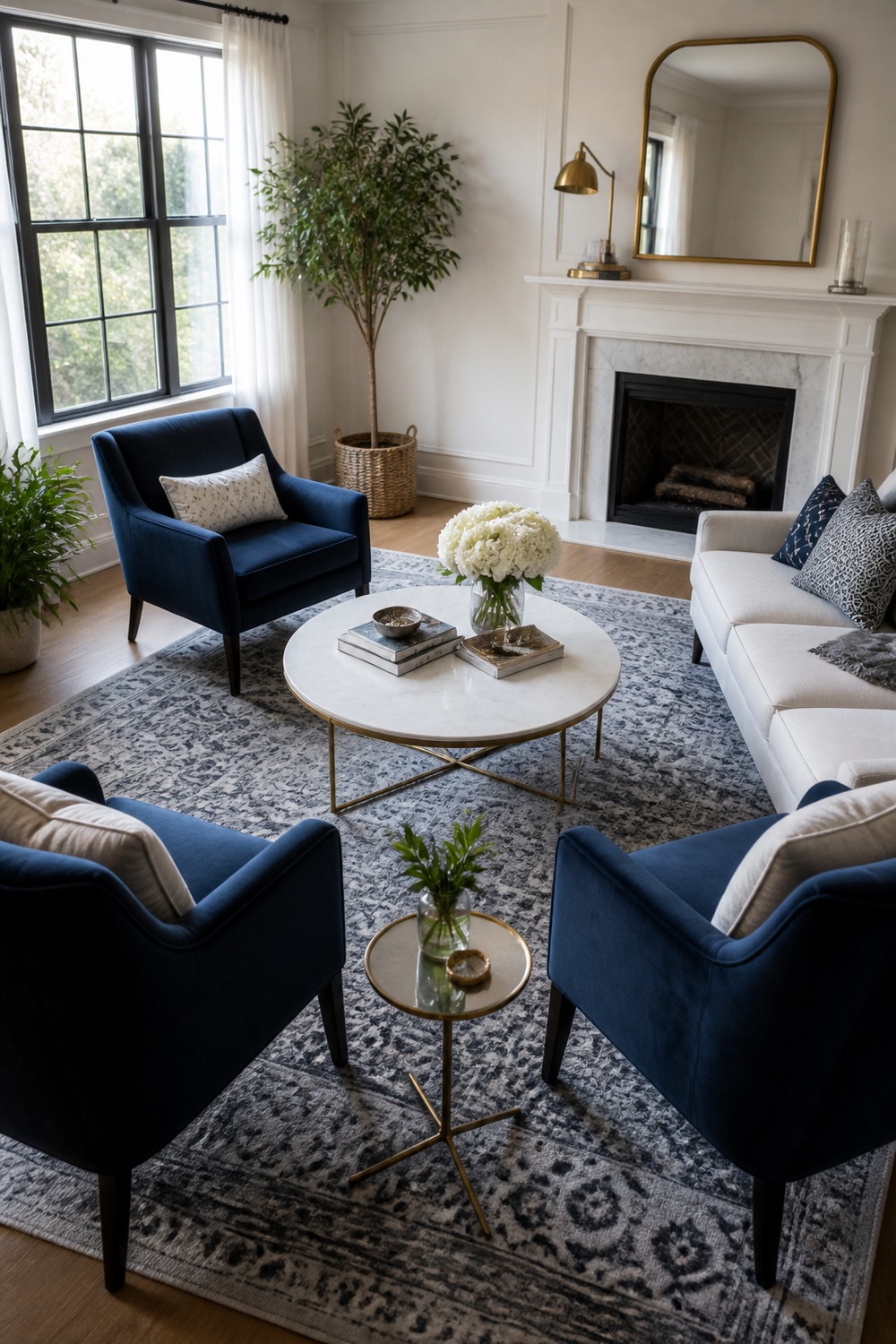
Deep navy chairs frame the white oval table beautifully, but the triangular placement is the practical win. Each seat has a direct line to the center, and the brass lamp adds useful light without consuming table space.
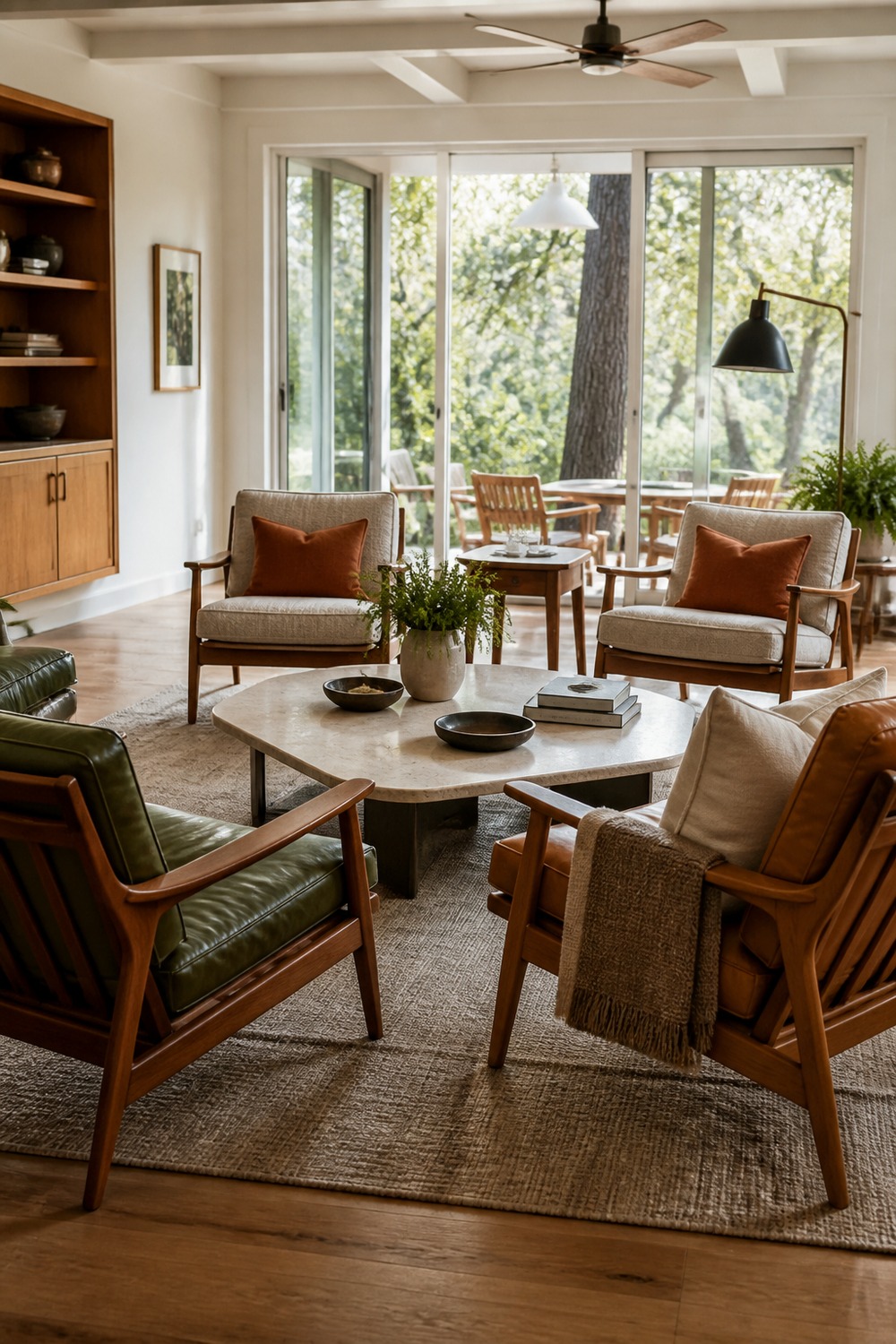
The pale stone table lines up nicely with the low wood chair arms, so nobody has to reach awkwardly up or down. An area rug separates this lounge from the dining zone behind it while keeping the open-plan route obvious.
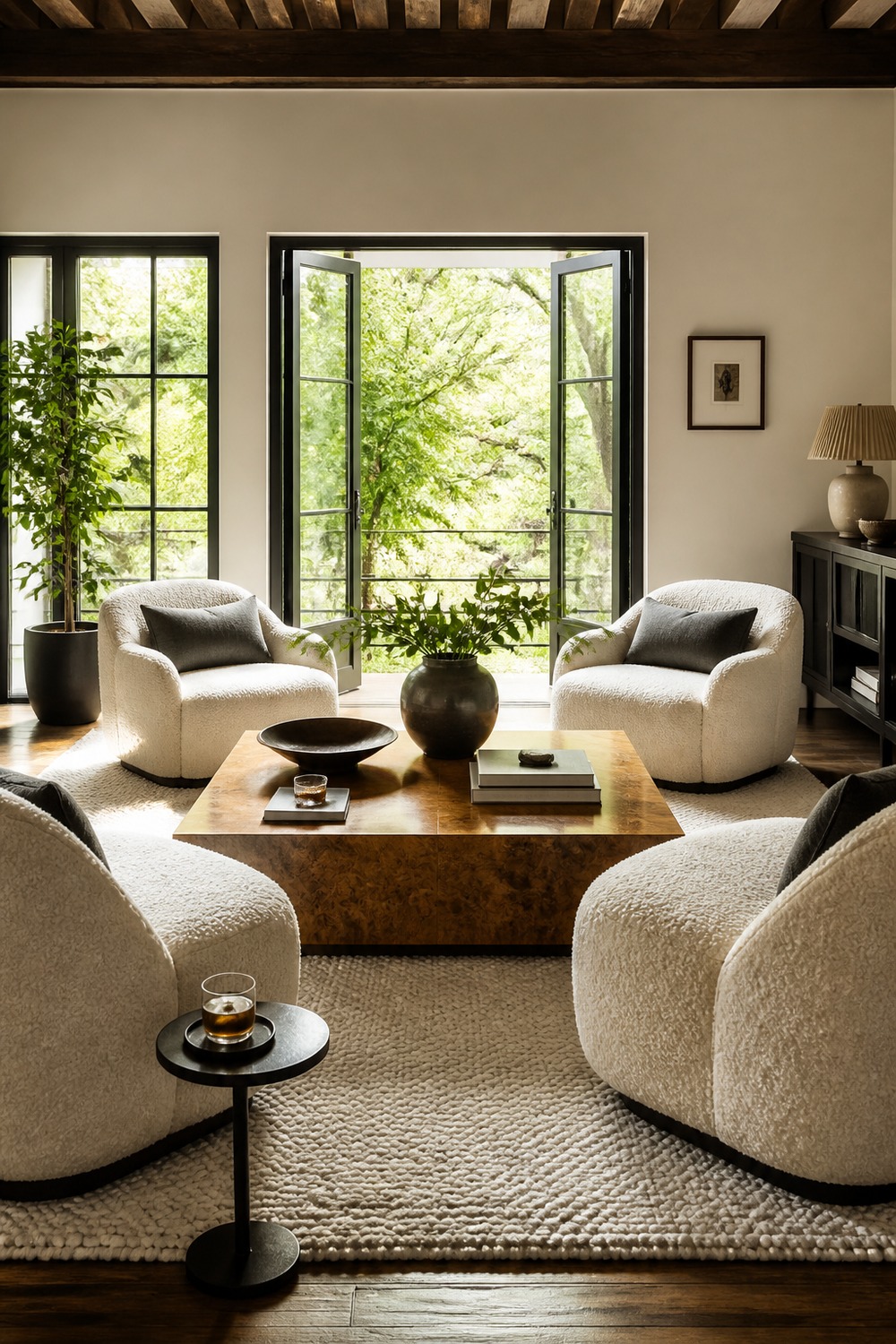
Chunky lounge chairs need a substantial center, and this square ottoman matches their scale. A tray handles hard-surface tasks, while the broad upholstered top can take a book stack or put-your-feet-up evenings.
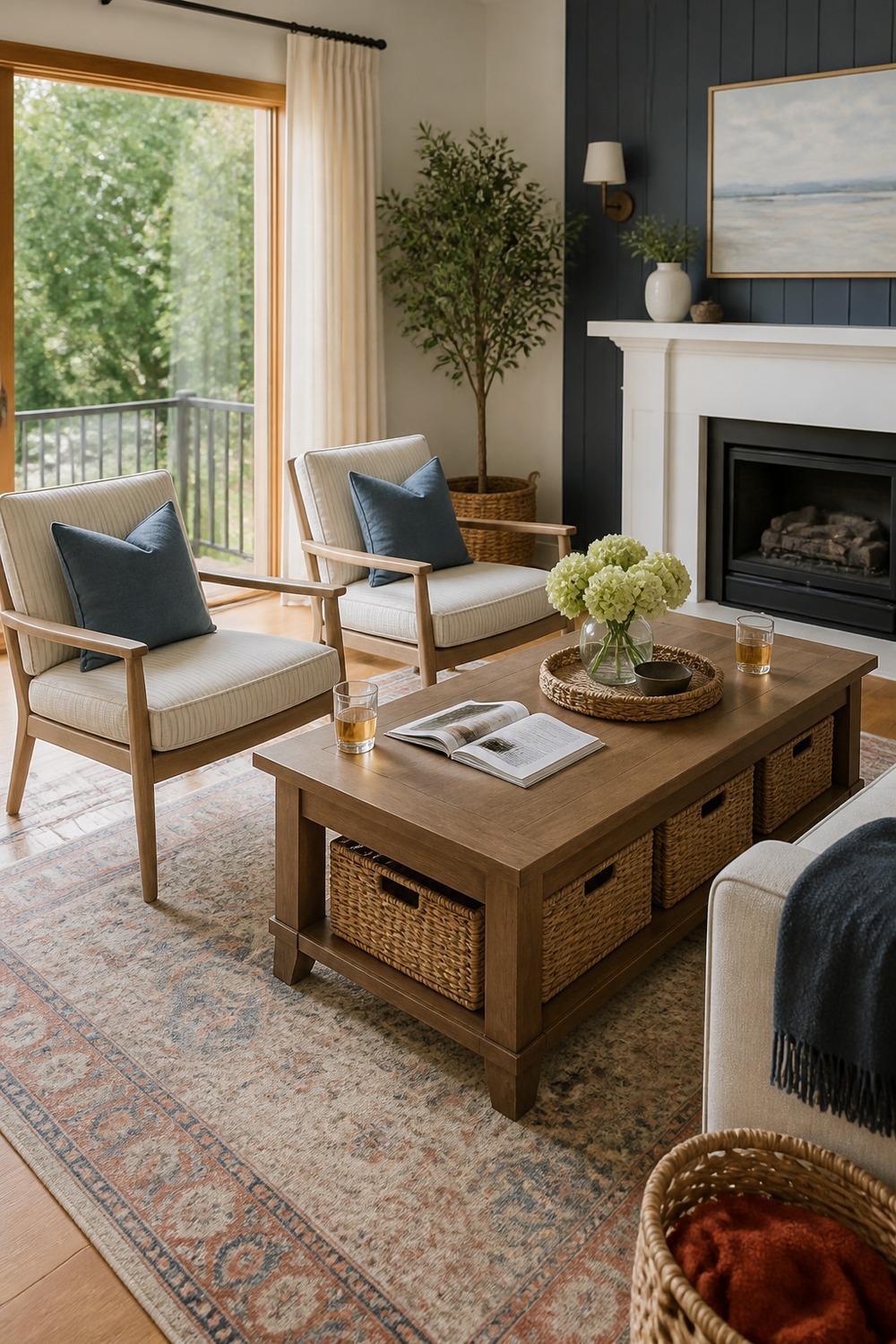
Built-in storage turns the coffee table into the quiet workhorse of this chair-and-sofa setup. Drawers keep remotes and charging cords out of sight, and the centered position lets both accent chairs use it equally.
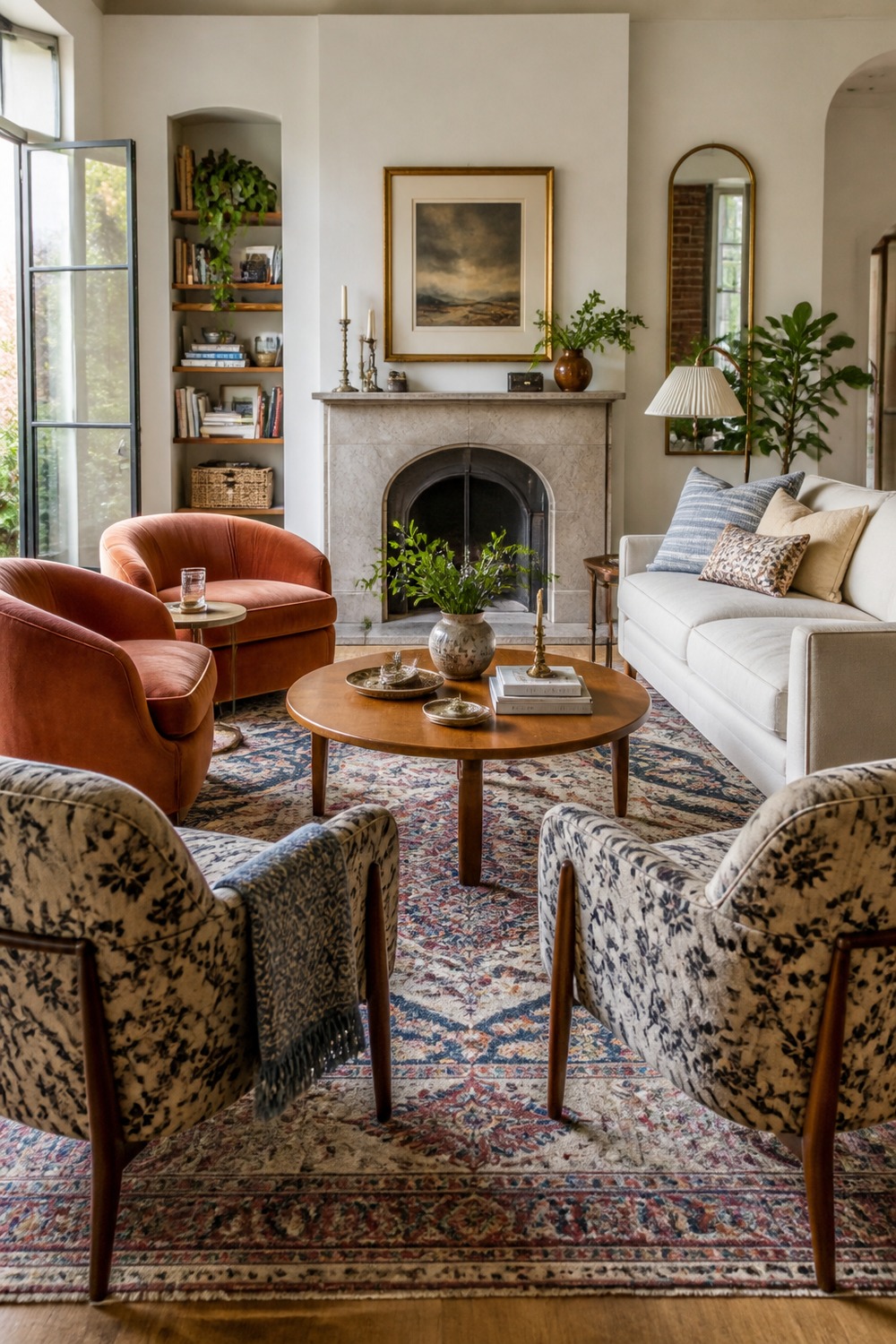
Patterned chairs already make a strong statement, so the simple round wood table is exactly enough. Its plain shape settles the mixed fabrics, and the rug catches the front legs of every seat to hold the group together.
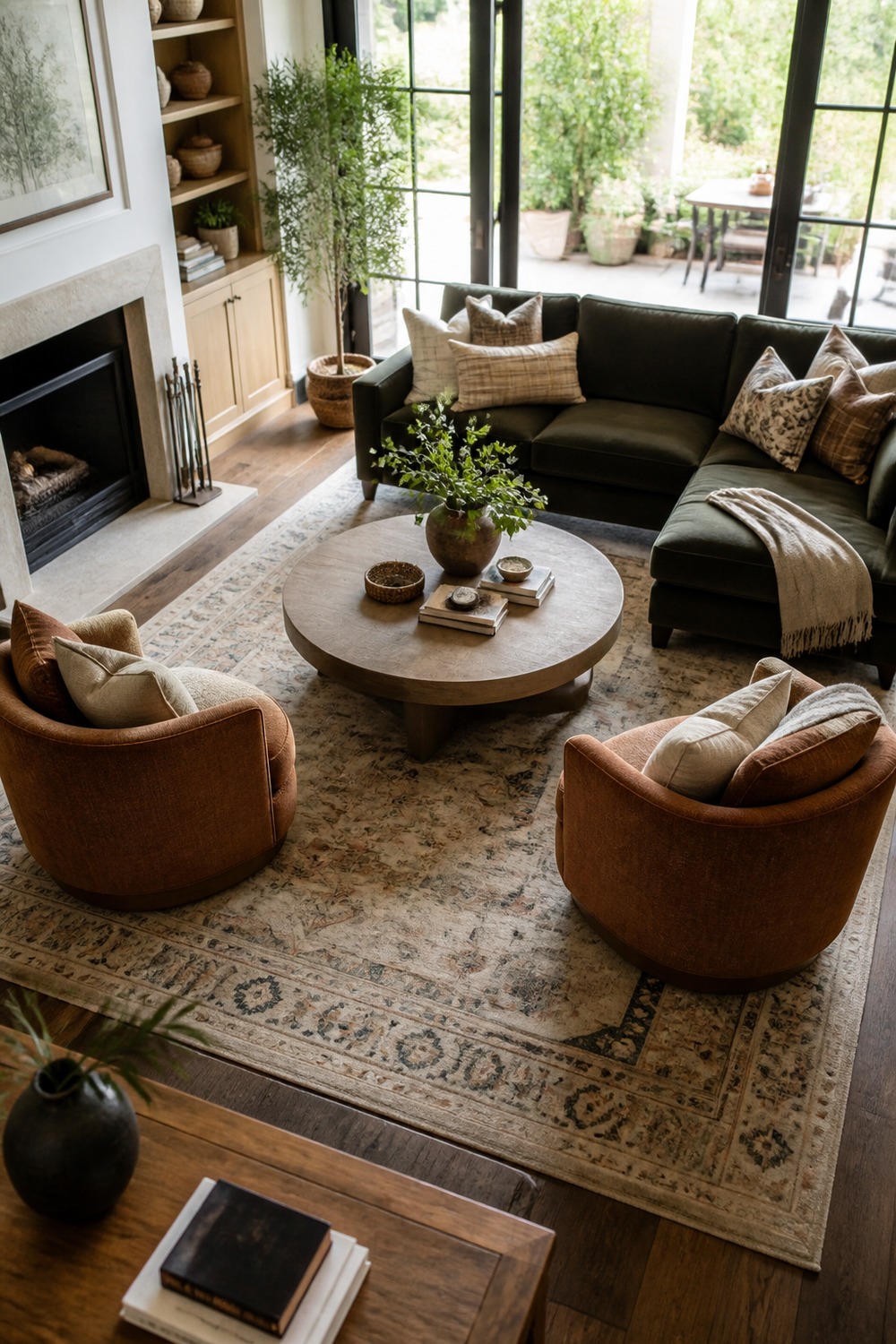
Swivel chairs solve the awkward gap beside a sectional because they can turn toward either end of the sofa. The round table leaves a forgiving path around its edge and keeps the conversation zone open to the rest of the room.
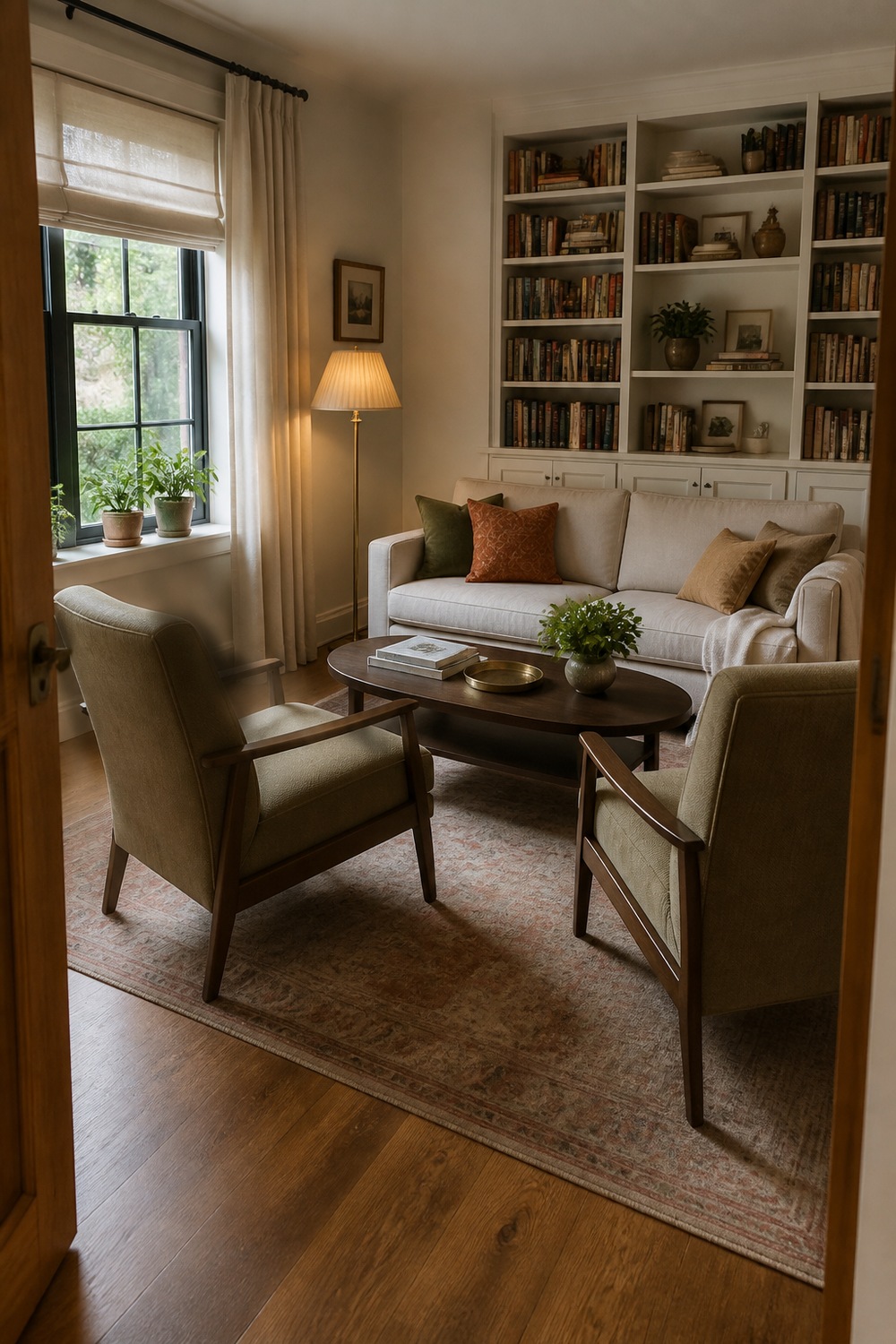
This replacement layout shows what a petite coffee table should do: sit low and central between two chairs and the sofa, not hover beside one seat like an end table. The oval top improves reach, and the doorway view makes the circulation gap easy to judge.
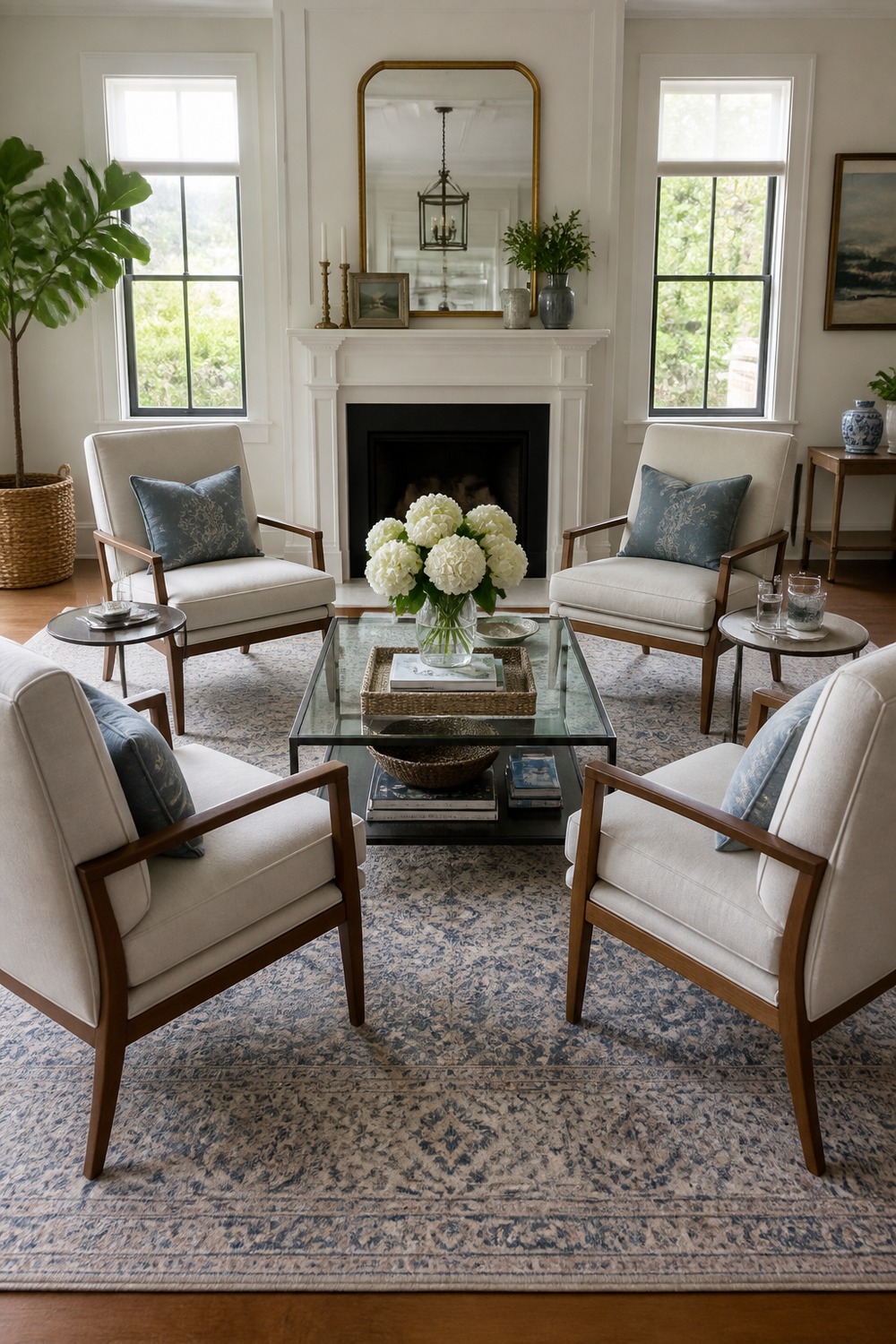
Four matching chairs and a glass table create a more formal room without making it feel heavy. The transparent top exposes the rug pattern, while symmetrical spacing gives every seat the same comfortable reach.
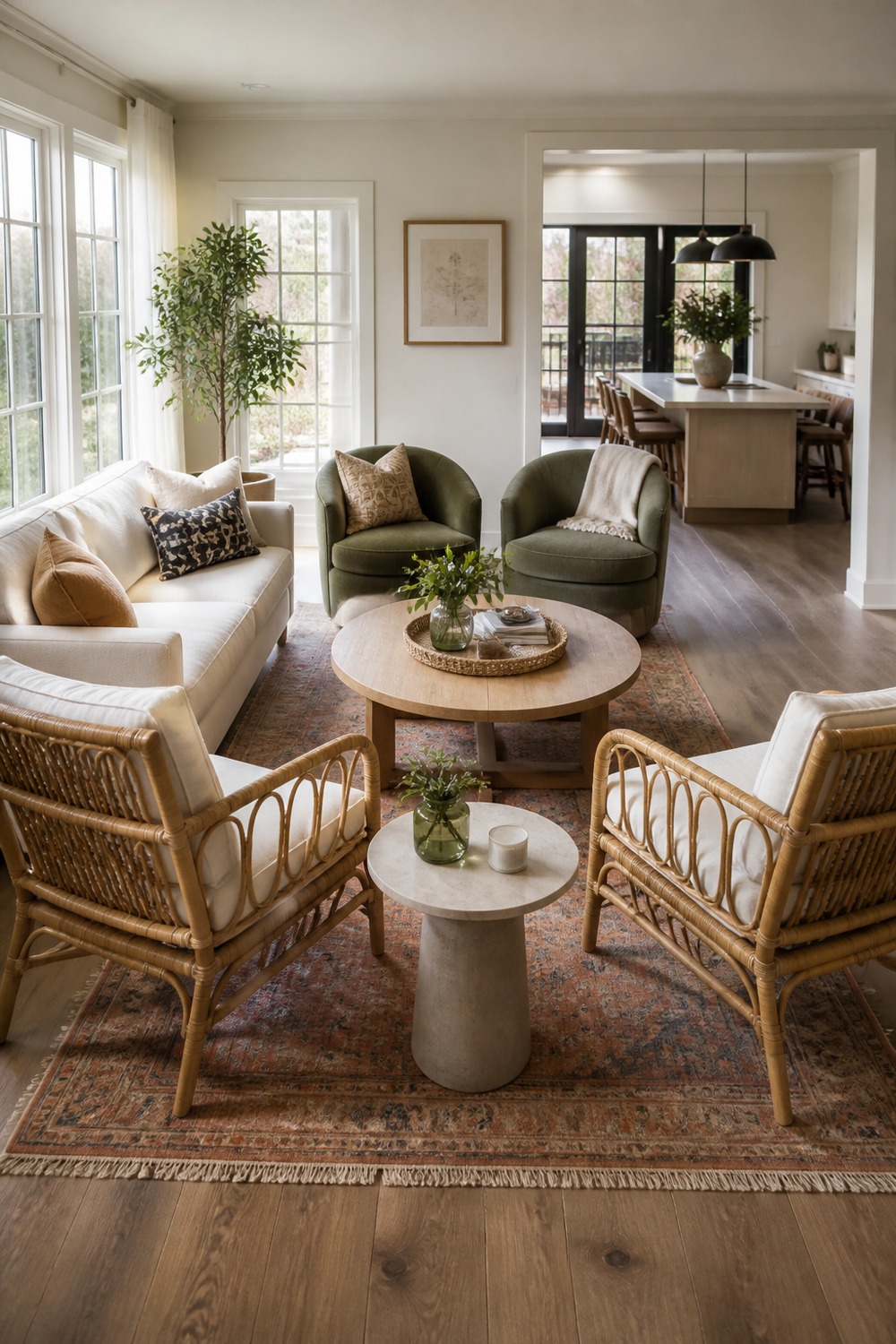
In an open-plan room, the rug and round table establish a clear lounge boundary without building a visual wall. Two chairs face into the sofa group, and the lane behind them stays open for movement between rooms.
The strongest layouts are not necessarily the biggest ones. A table that matches the chair height, leaves room for knees, and stays reachable from each seat will usually feel better than a more dramatic piece squeezed into the wrong footprint.
Leave a comment