
Small-space coffee tables have to do more than look cute in the middle of the rug. The best ones leave room for knees, sofa traffic, remotes, trays, books, and the occasional mug without making the living area feel blocked off.
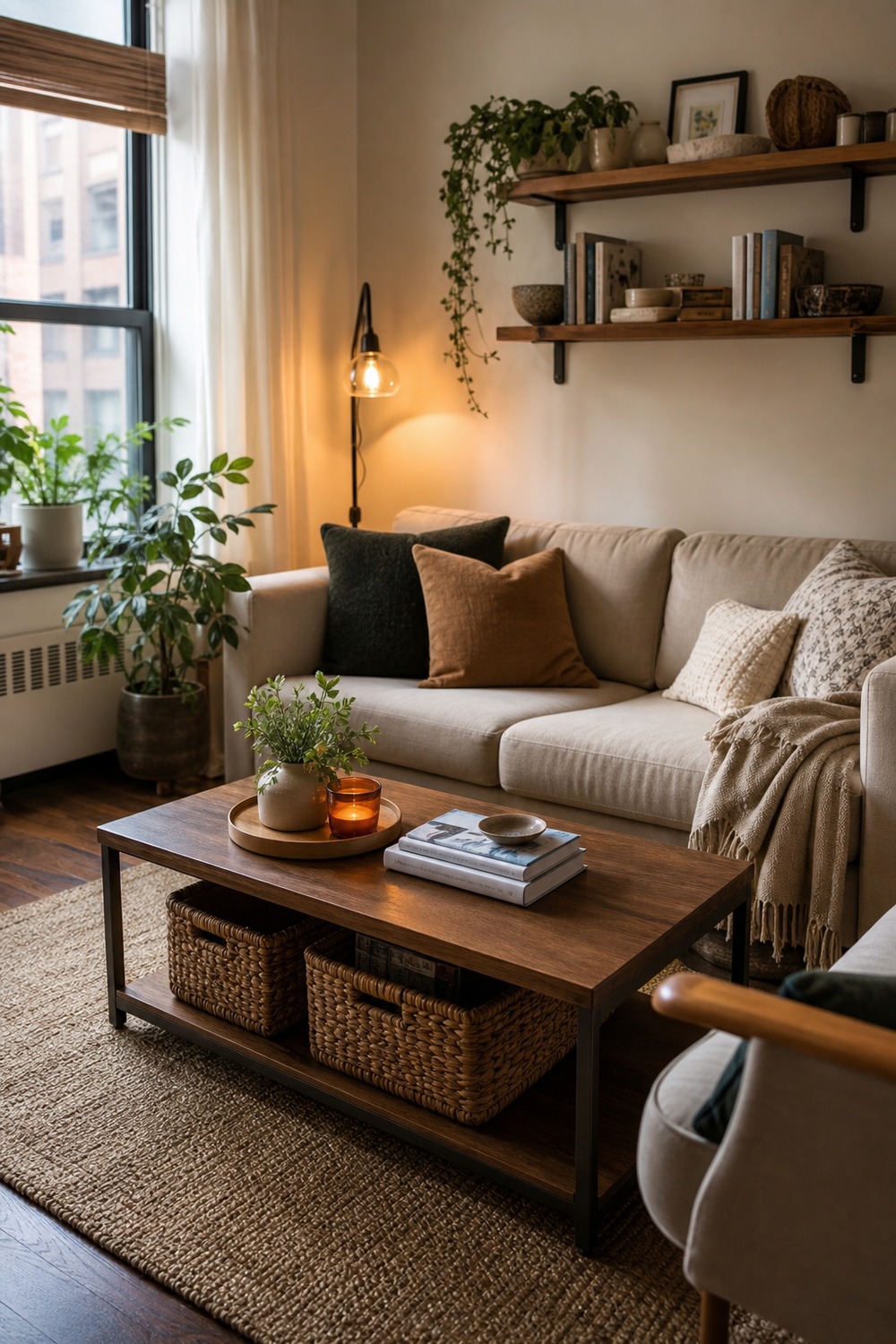
Storage baskets under the table are perfect for the things that never seem to have a home. They make blankets, toys, or extra chargers feel contained, while the shelf keeps the room from needing another bulky cabinet.
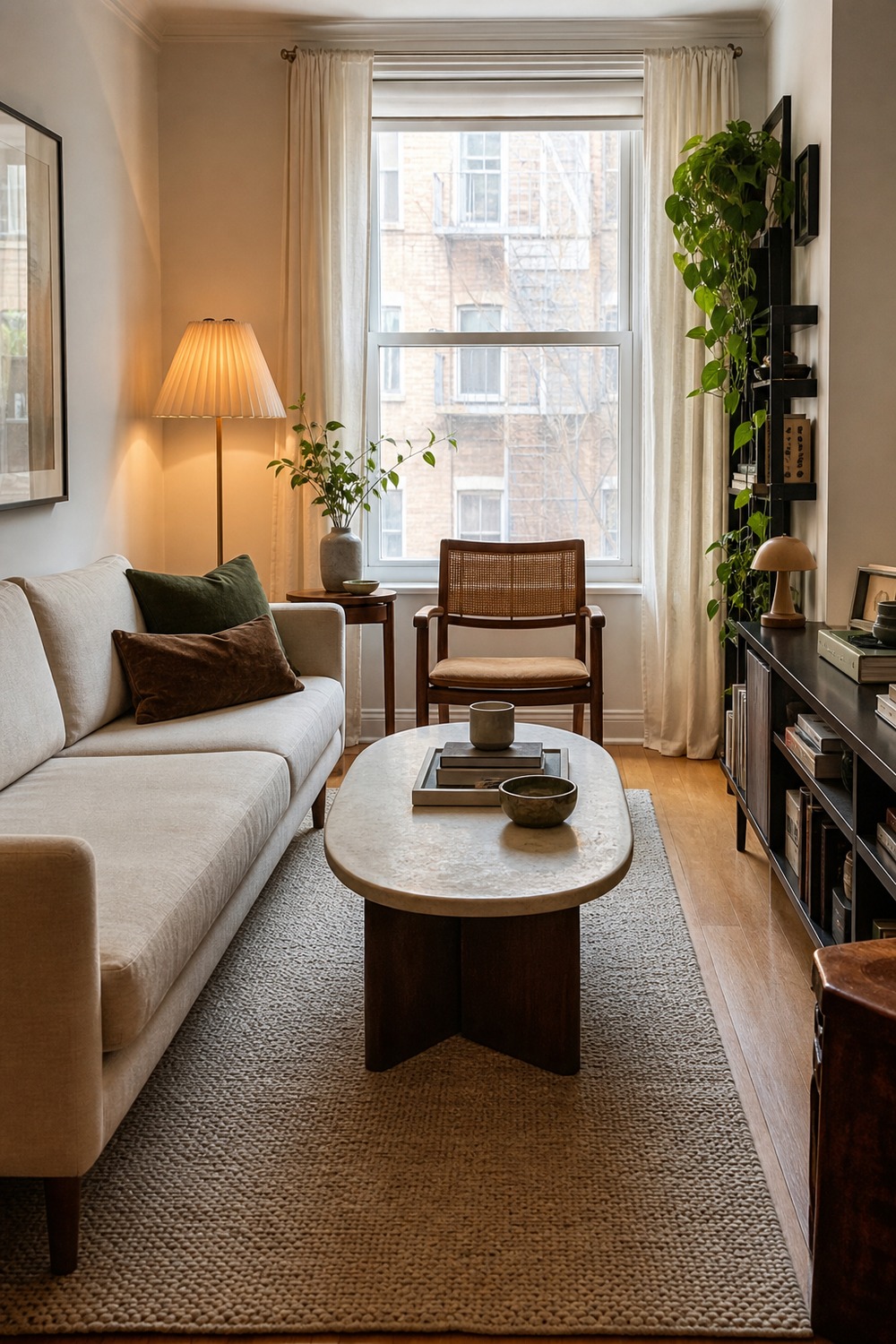
An oval table is a good compromise for a narrow living room. It gives more surface than a tiny round table, but the soft ends make the walking path feel less chopped up between the sofa and TV wall.
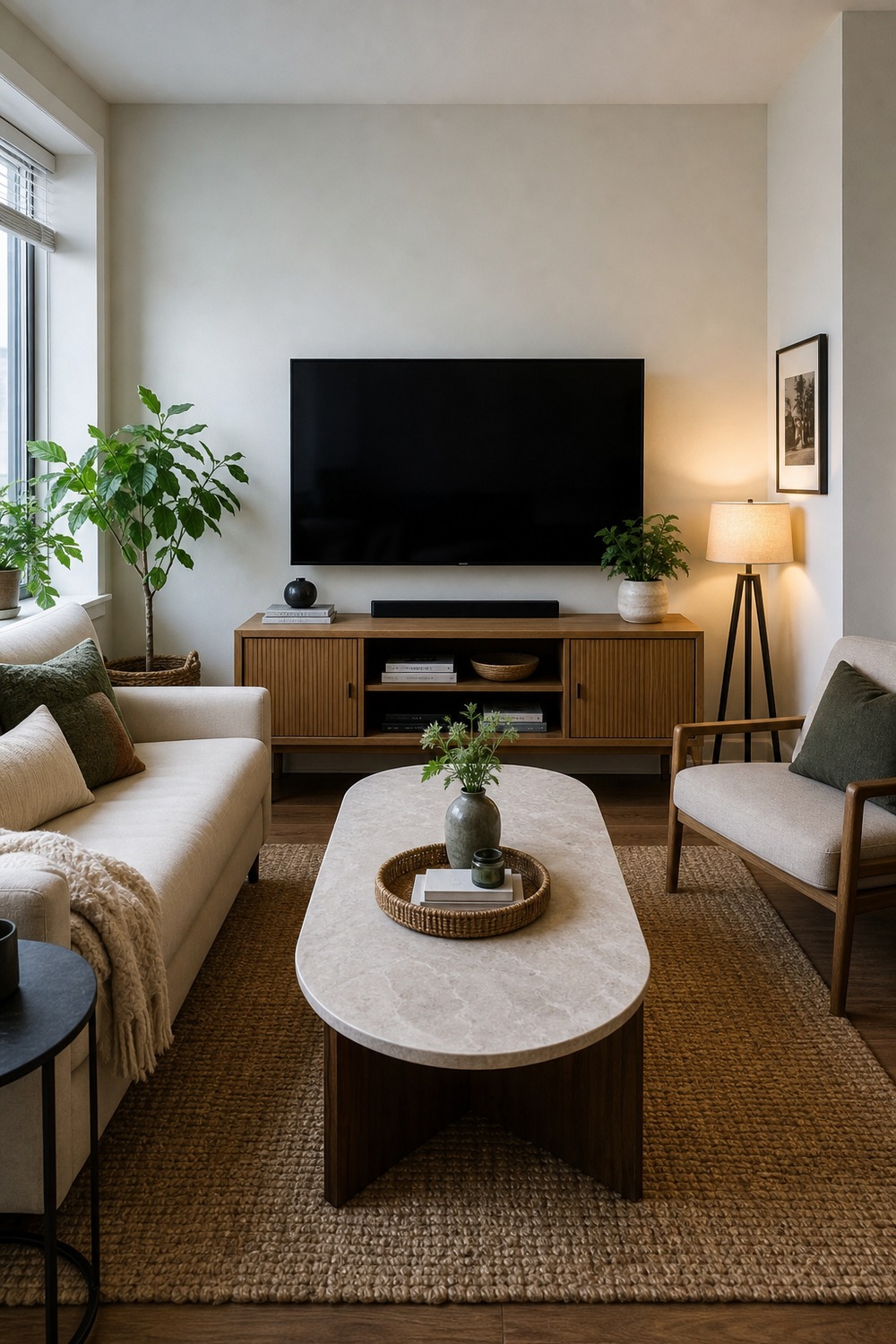
The media-wall setup feels pulled together because the coffee table lines up with the sofa instead of drifting randomly in the room. The TV stays quiet, the console handles storage, and the table gives the center of the space a clear purpose.
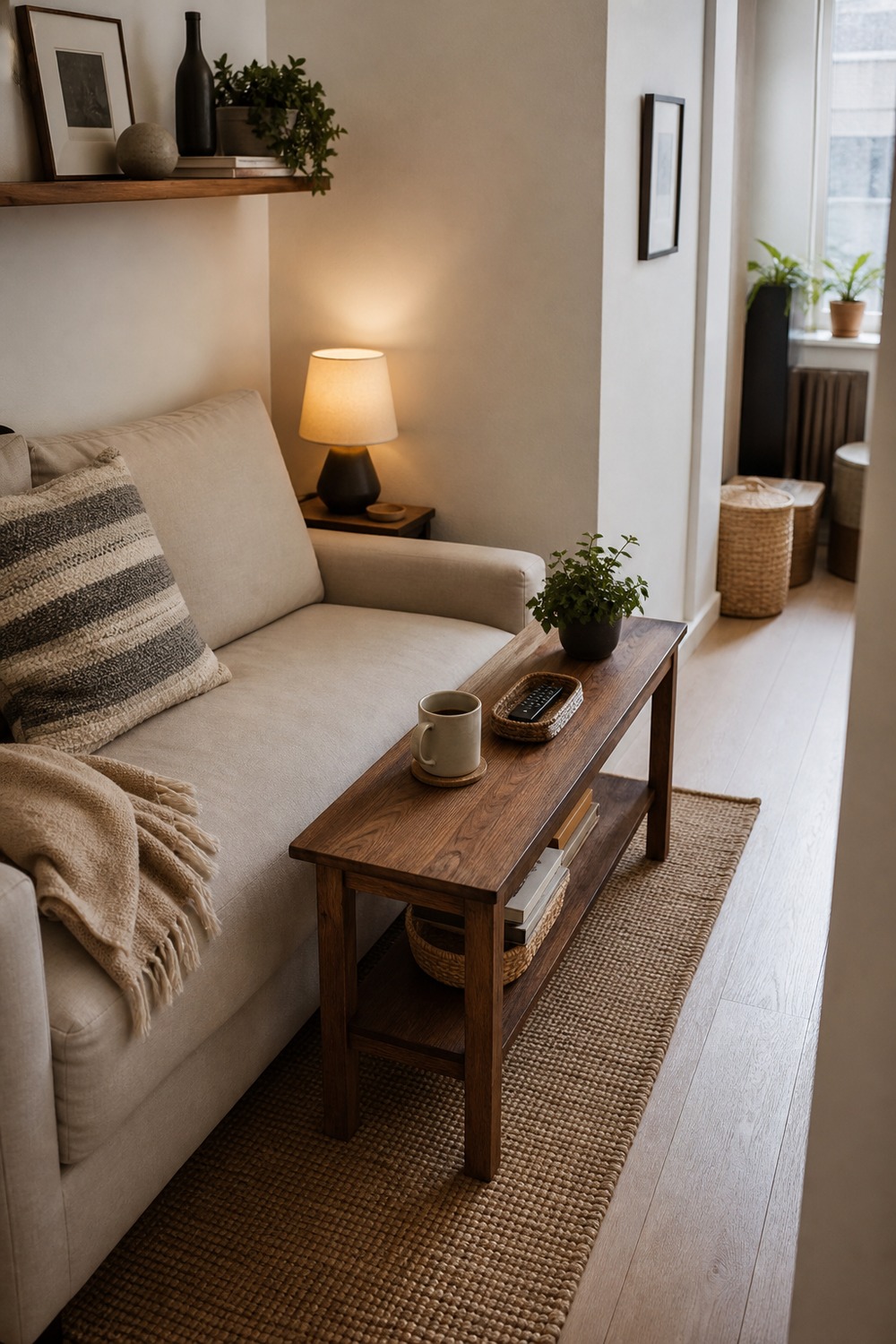
A slim table like this is useful when the sofa already sits close to the TV wall or walkway. The narrow top still gives you a landing spot for a mug and remote, but it does not make everyone sidestep around the furniture.
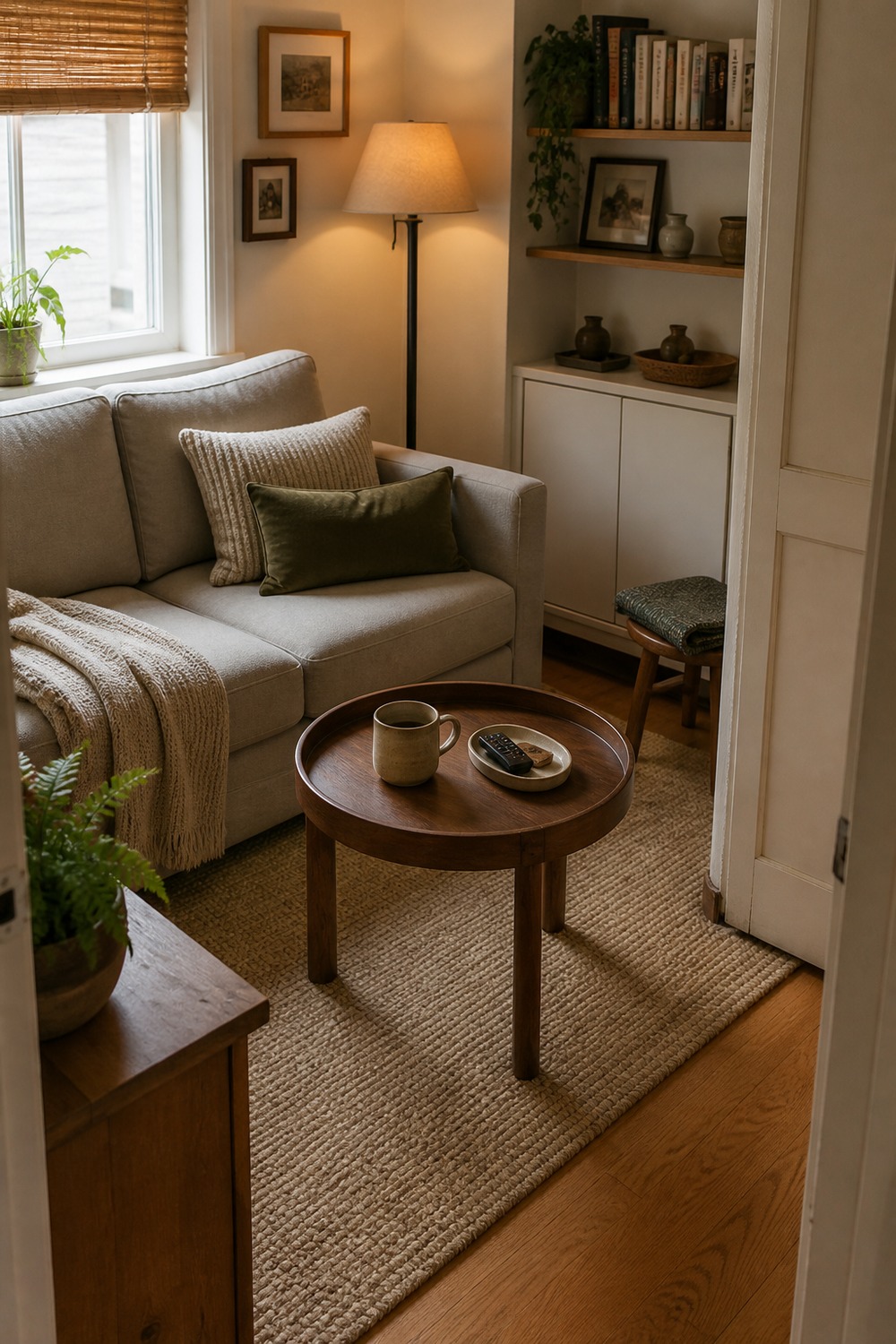
The raised tray edge is the small detail that makes this feel safer in a tight corner. It keeps a cup, candle, or little plant contained, and the round shape is easier to move around than another sharp rectangle in front of the loveseat.
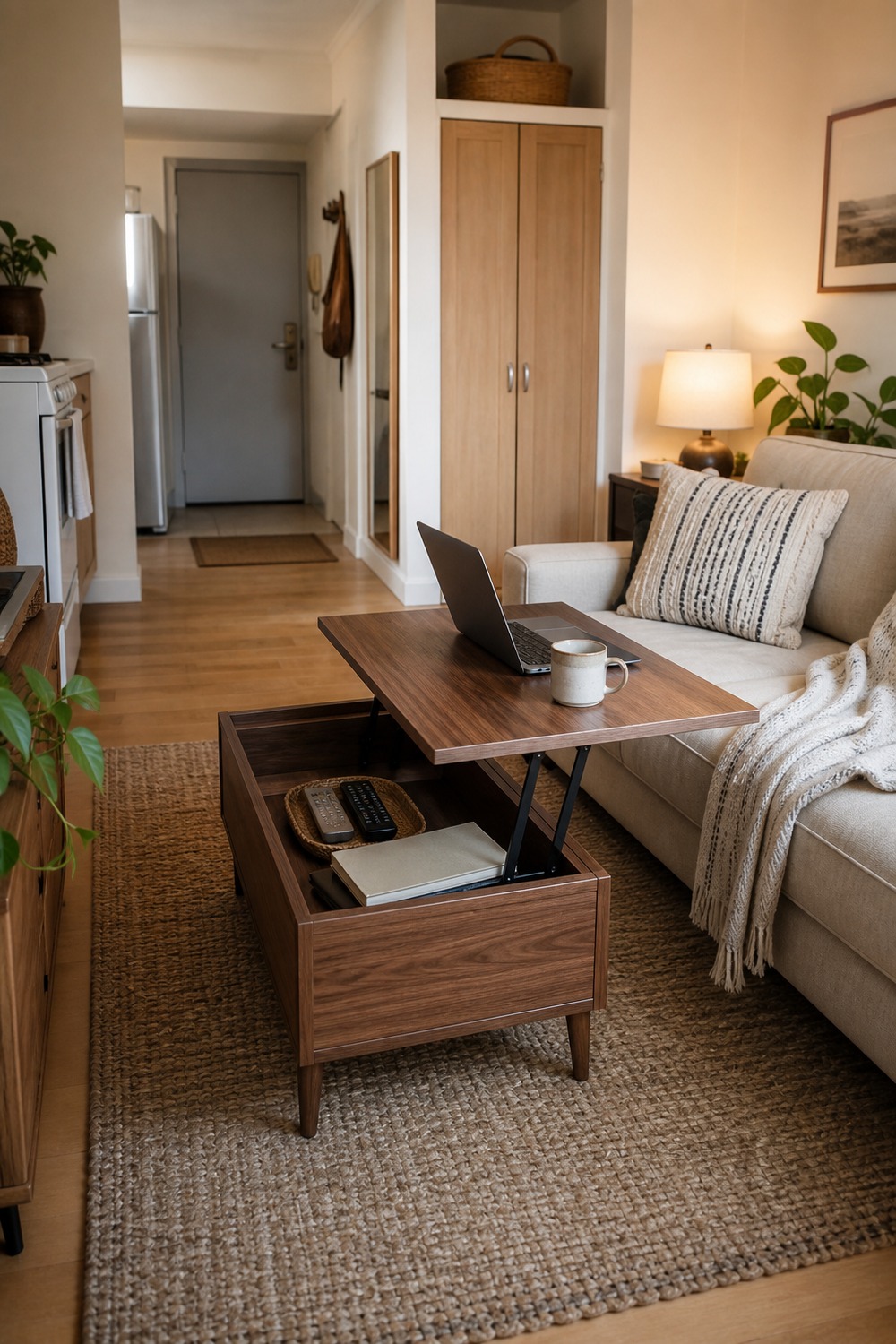
This is the kind of coffee table that makes sense when the living room also works as a laptop spot. The lift top brings the surface closer without adding a desk, and the hidden storage keeps cords and remotes from living out in the open.
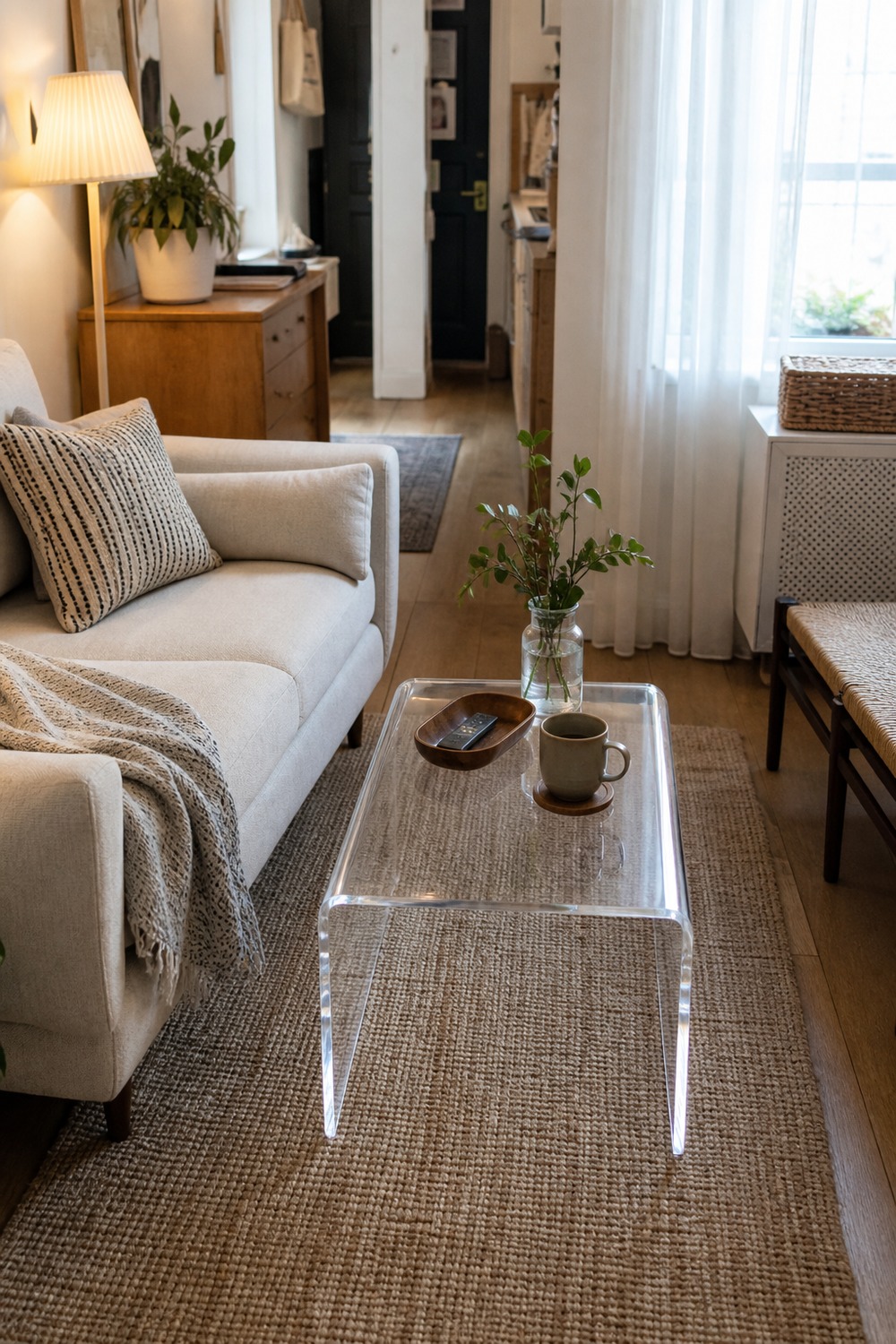
A clear acrylic table almost disappears, which can be exactly what a tiny room needs. You still get the function of a real coffee table, but the rug, sofa legs, and daylight keep showing through so the center of the room feels lighter.
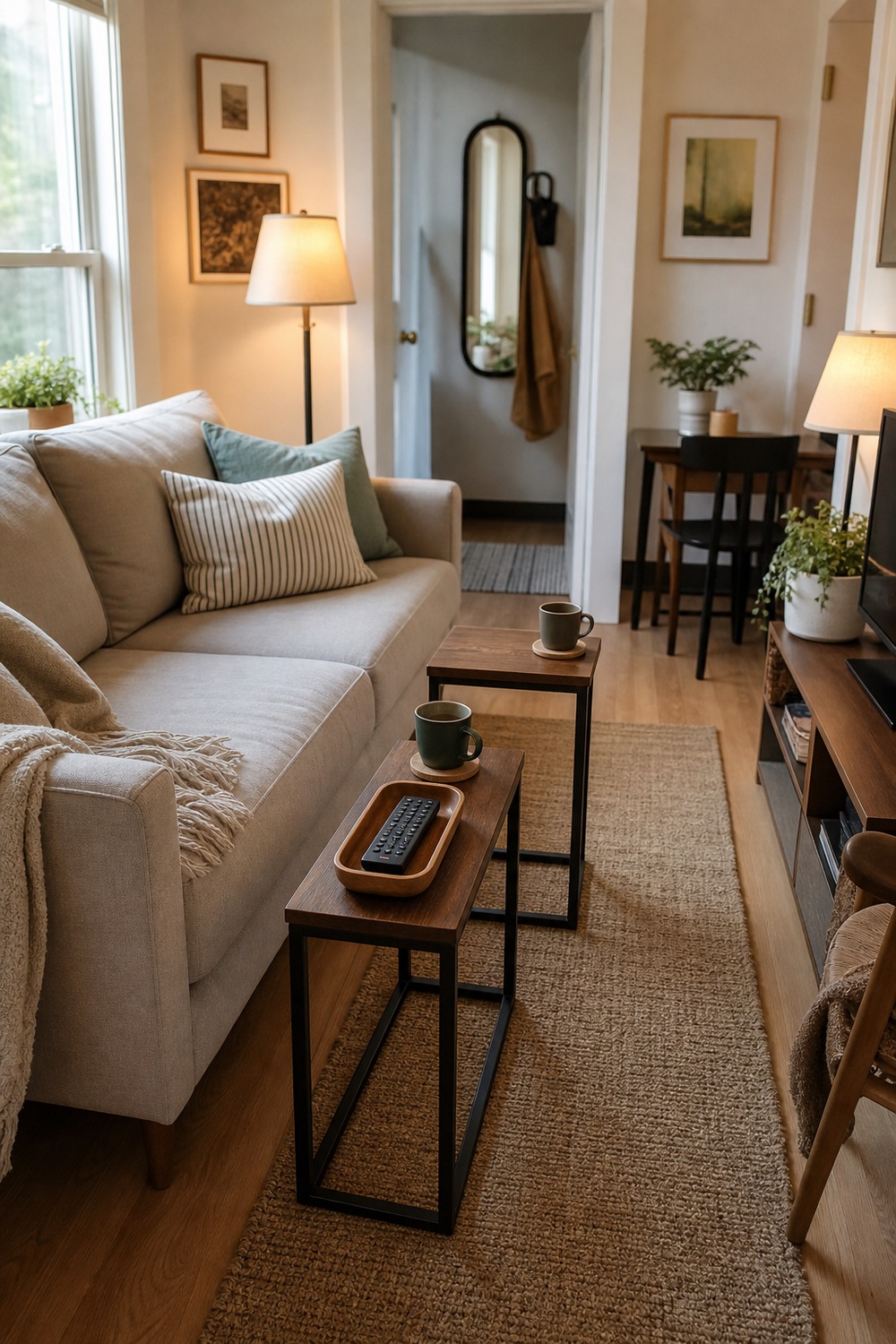
Two small C-tables can be smarter than one bulky coffee table if the room needs open floor space. They slide close when someone needs a drink or snack surface, then leave the middle of the seating area open the rest of the time.
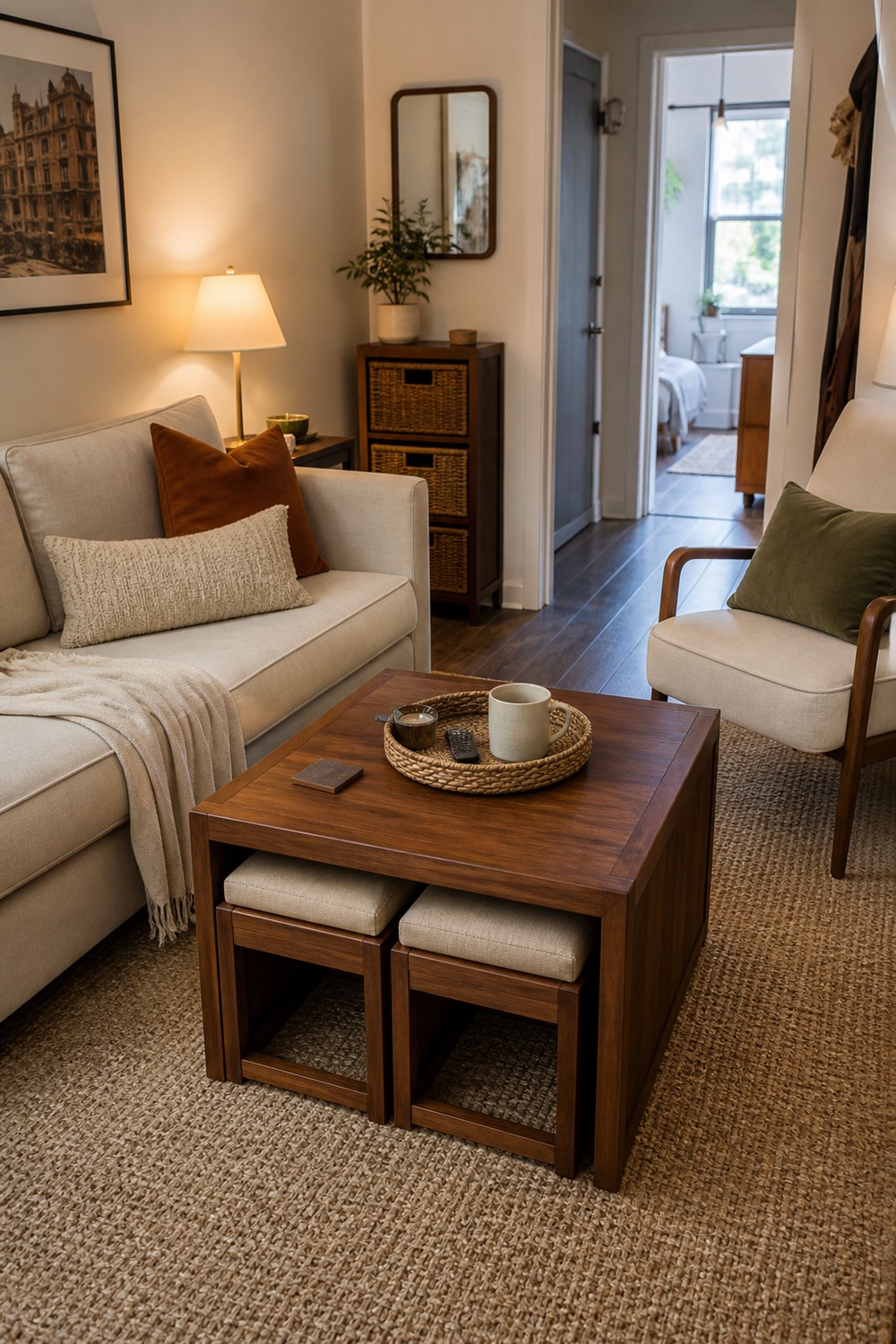
The tucked stools make this table work harder without making the room look more crowded. It gives guests a place to sit, but everything stores inside the footprint of the coffee table when the apartment needs to feel open again.
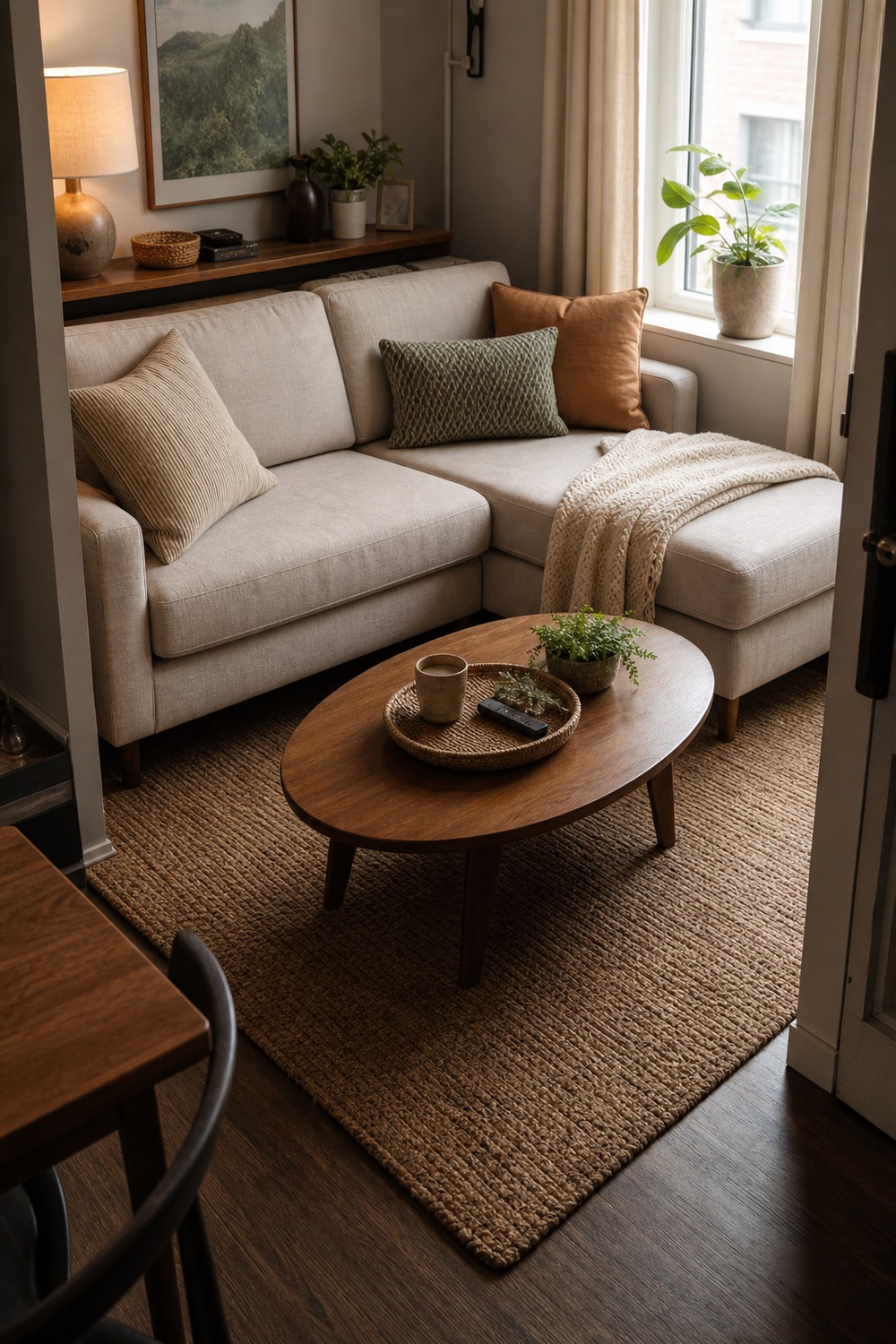
An oval table is a good match for a compact sectional because the corners are not fighting the walk path. The shape still anchors the rug and sofa, but it feels softer and less annoying in a room where every inch is noticeable.
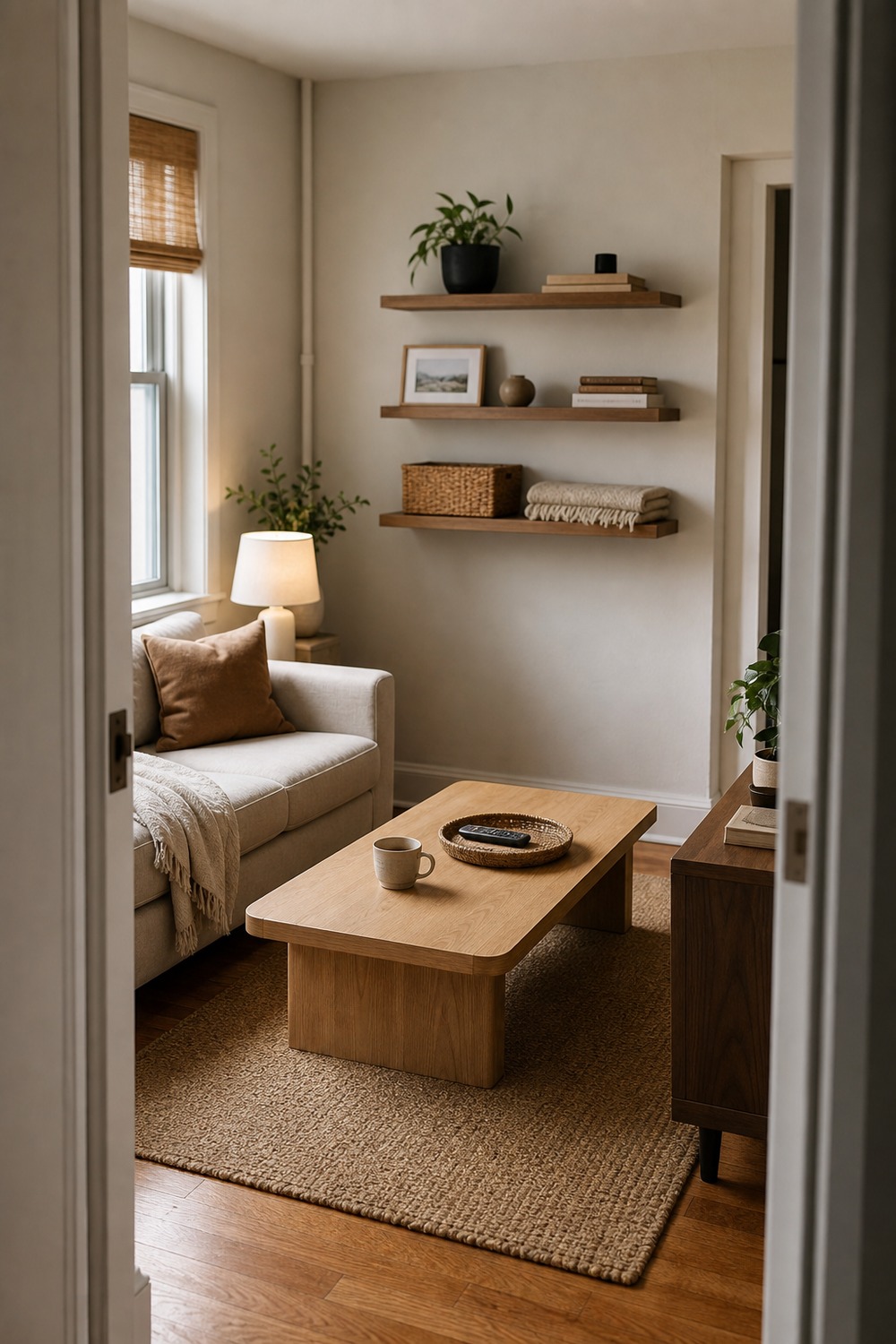
The wall shelves are what keep this low table from becoming the only storage surface in the room. Books, baskets, and little decor pieces can move upward, so the coffee table stays useful instead of turning into the apartment catchall.
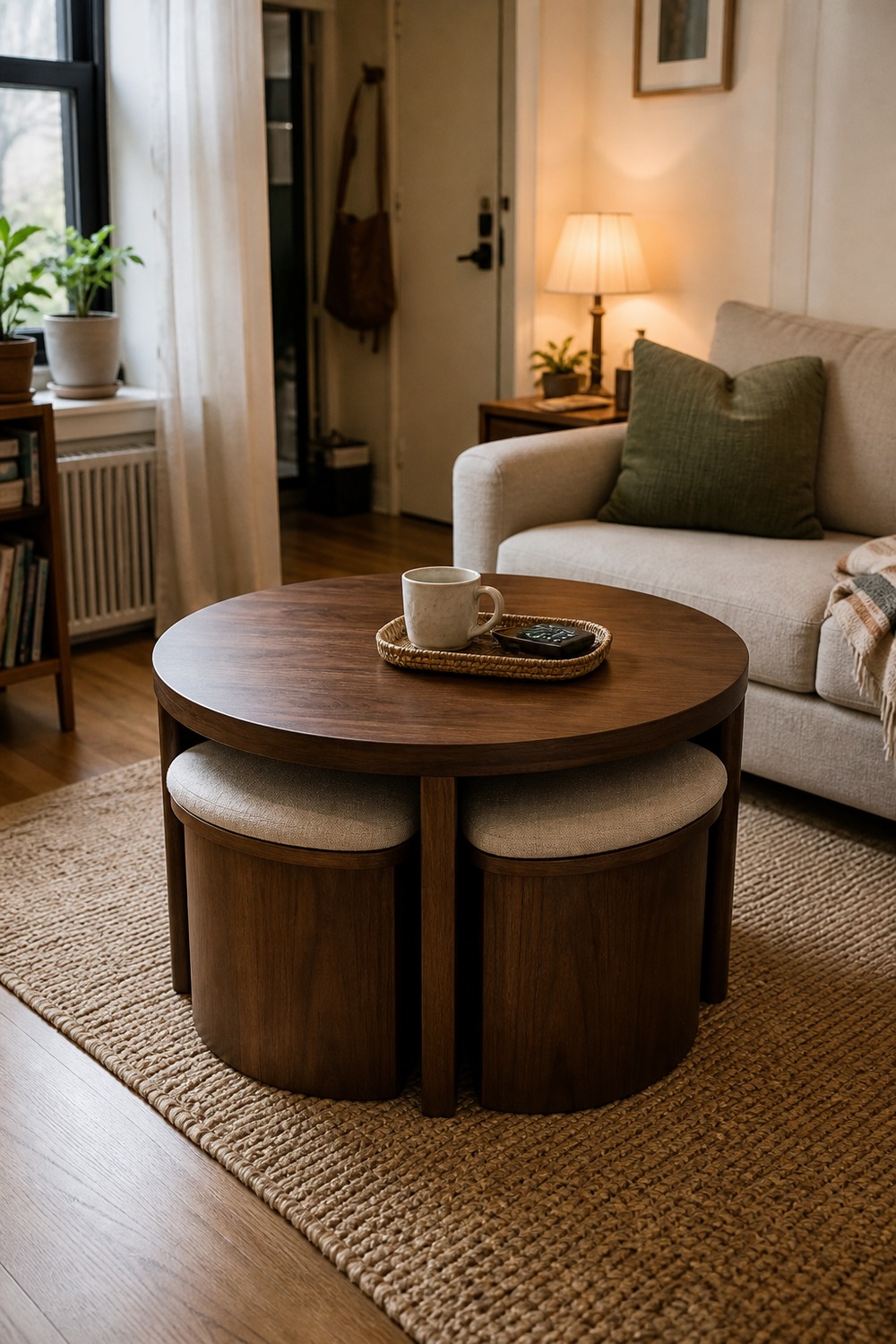
Nested stools under a round table feel especially practical for small rooms that need to flex. I like how the extra seats are there when needed, but the curved table keeps the whole setup from looking blocky or overfilled.
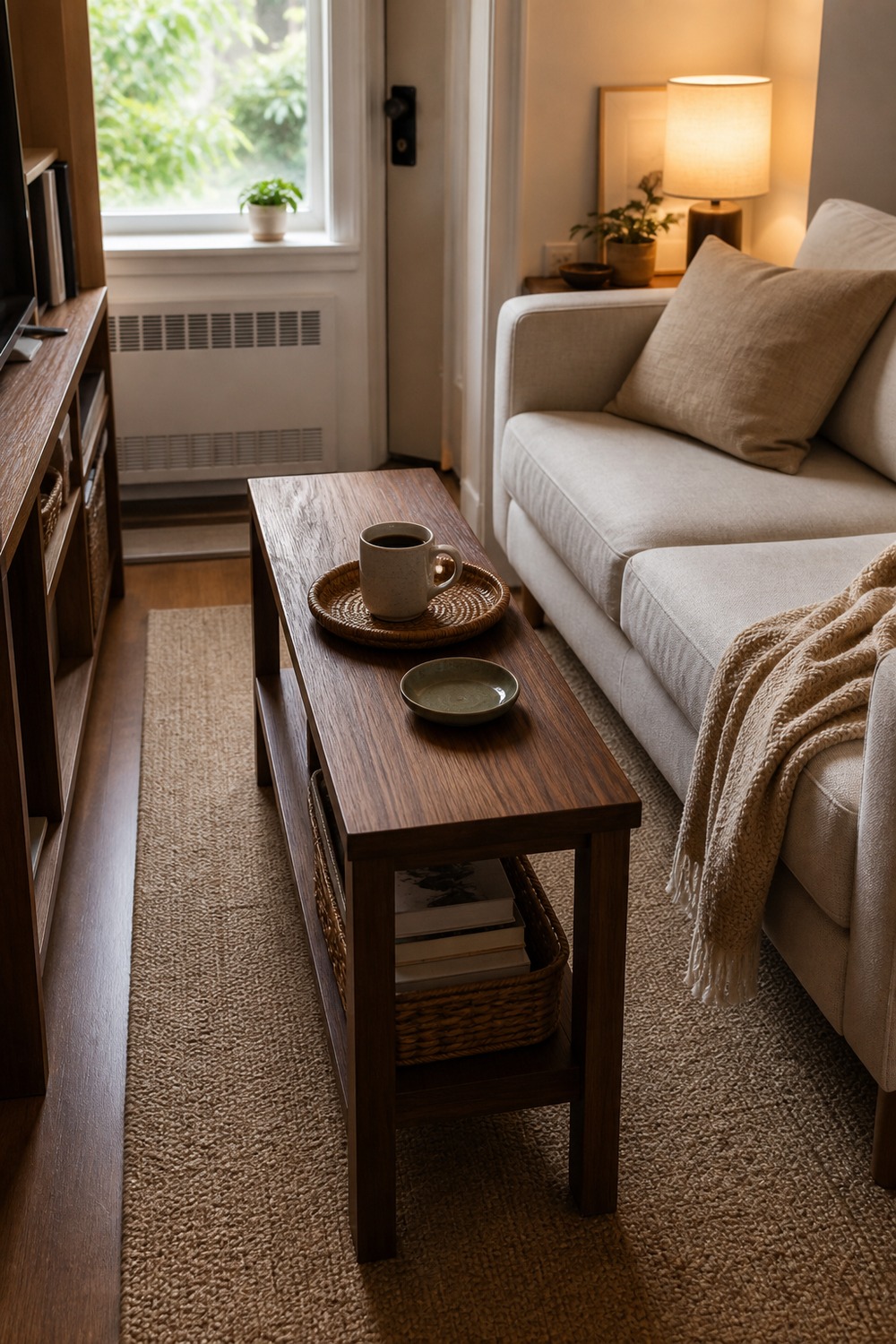
A narrow lower shelf gives this table a quiet storage win. Baskets and books sit underneath, the tabletop can stay mostly clear, and the long shape follows the sofa instead of cutting too far into the room.
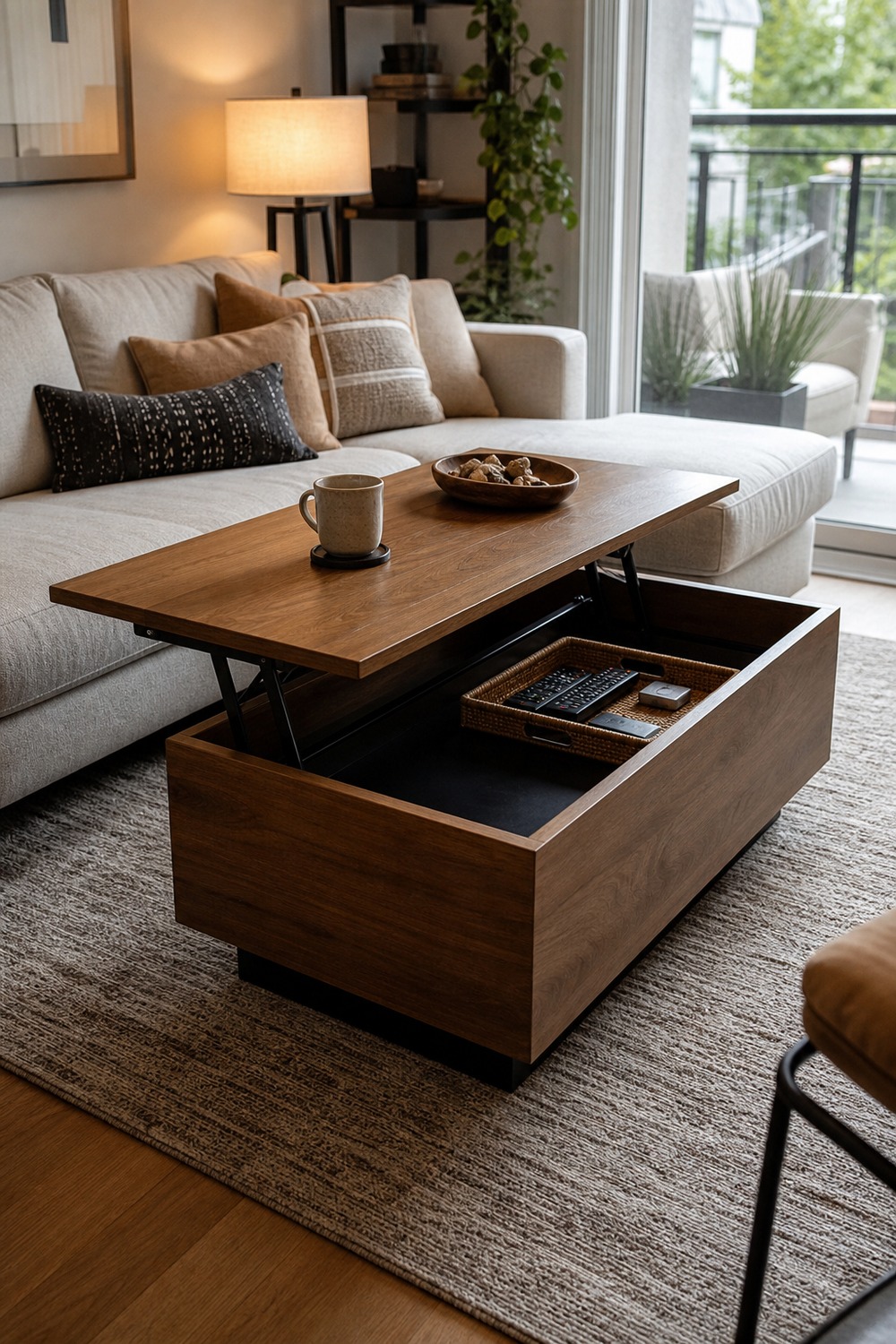
This lift-top table is the kind of piece I would want in a living room that has nowhere else to hide the daily stuff. The raised top gives you a quick work or snack surface, while the hidden compartment keeps remotes, chargers, and magazines from spreading across the sofa.
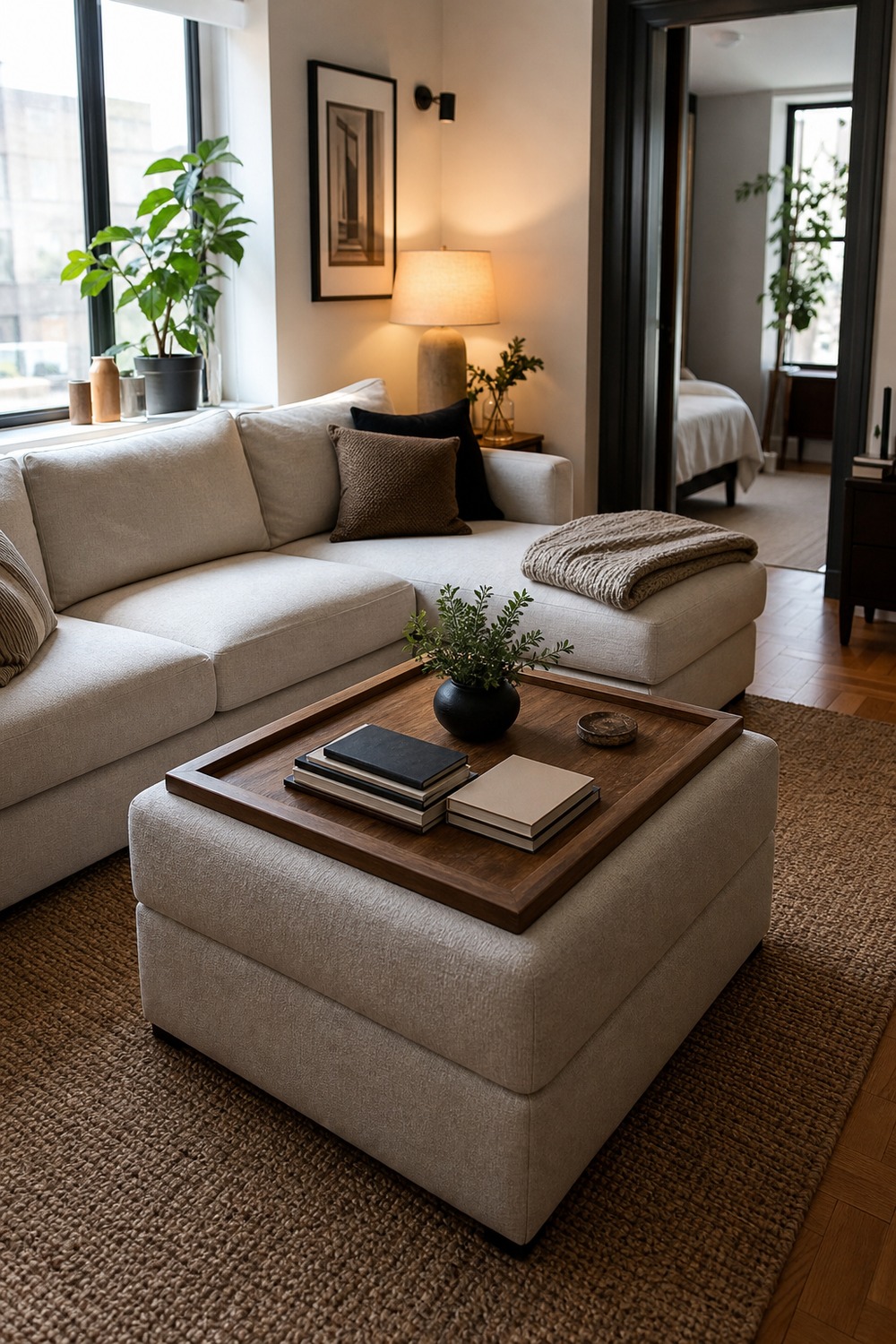
An upholstered ottoman table is nice when the room needs something softer in the center. The tray keeps mugs and decor steady, and the cushioned base makes the coffee table feel less like an obstacle in a studio or small apartment.
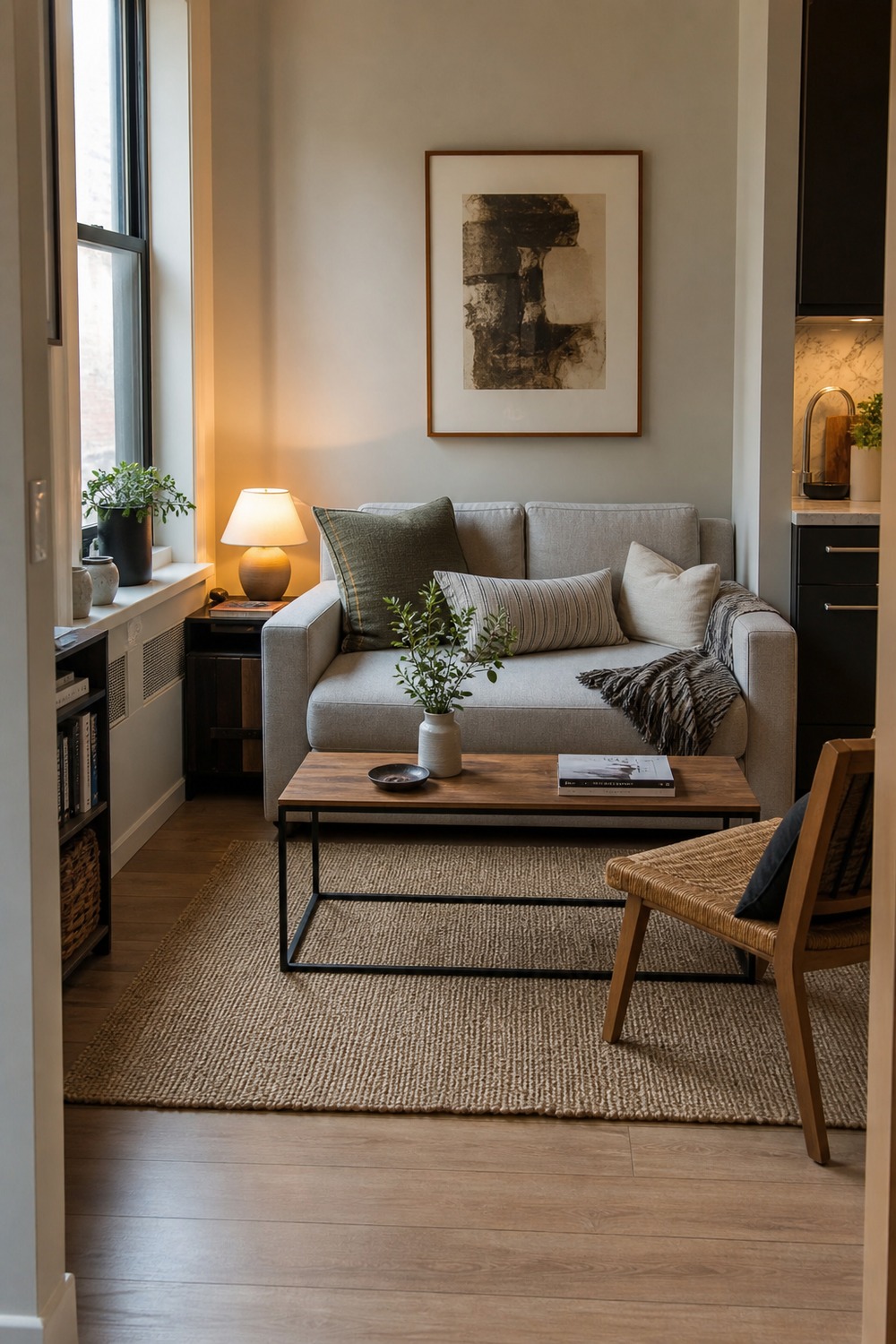
A slim rectangular table works best when the sofa is close and the walkway matters. The black frame gives it definition, but the narrow wood top keeps it from eating up the whole rug.
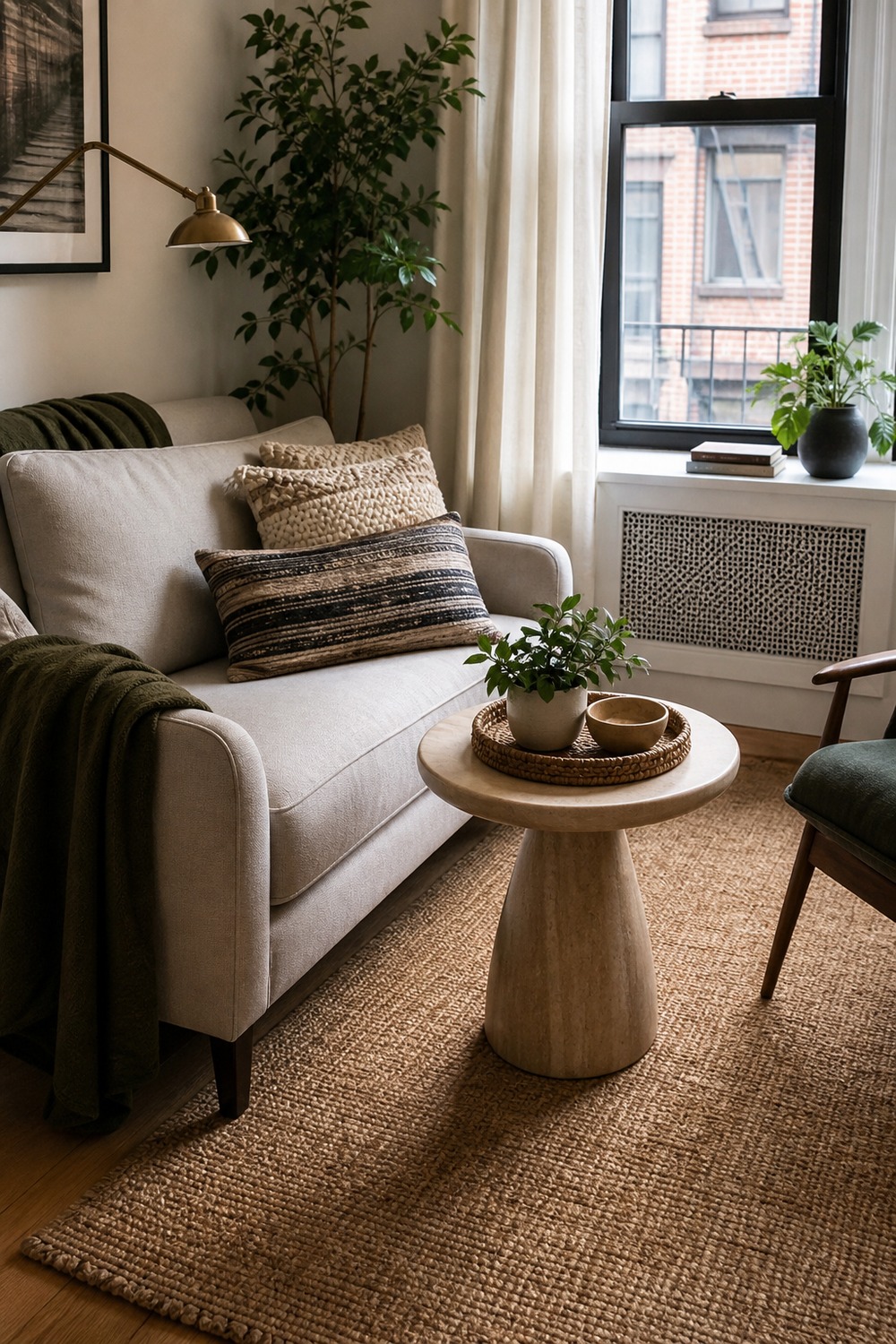
This little pedestal table has a softer presence than a bulky block-style coffee table. The single base leaves more visible floor around it, which helps the loveseat corner feel styled without closing in the seating area.
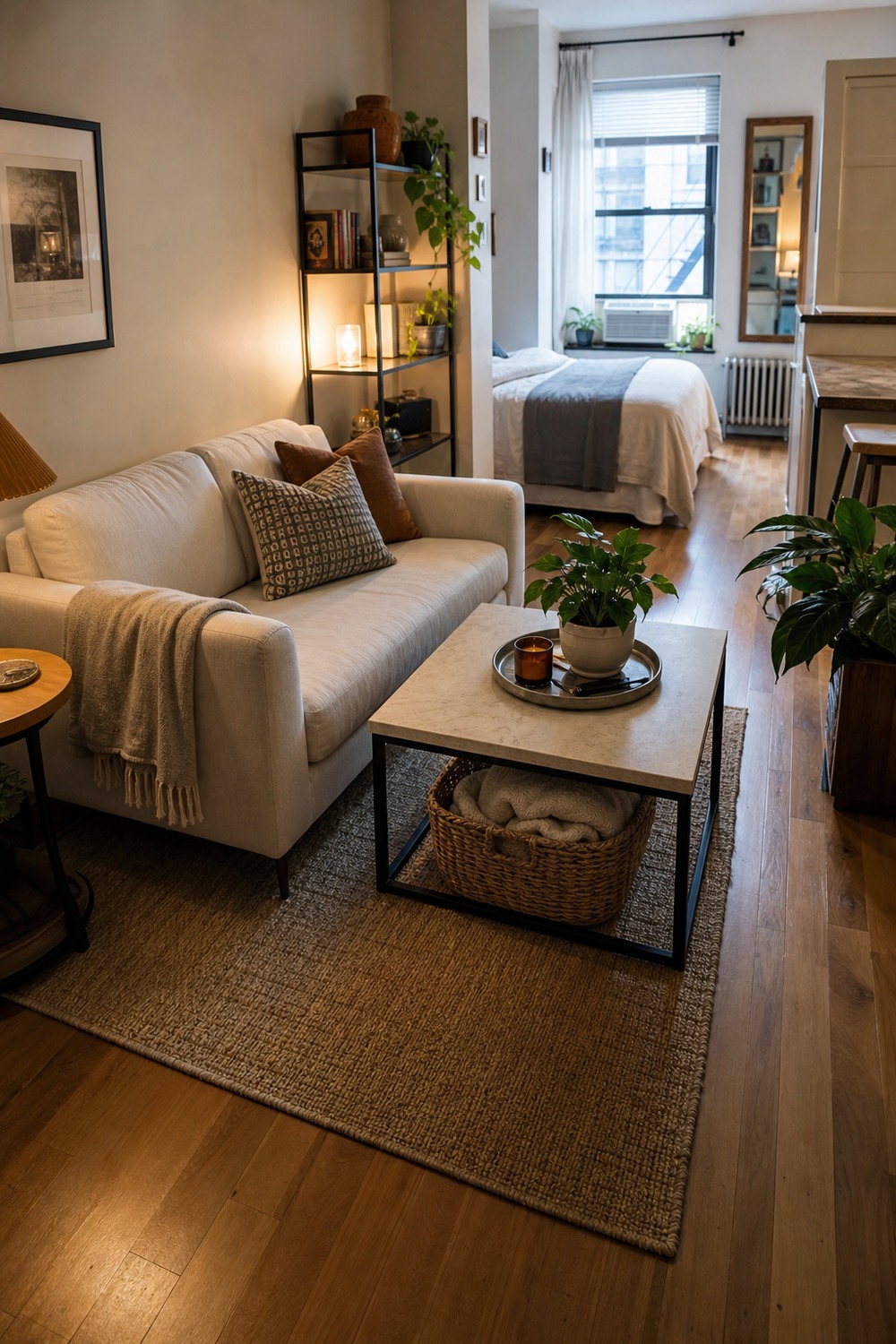
A square coffee table can work in a studio when it is scaled carefully and has storage underneath. The basket shelf helps contain the small stuff, and the defined shape makes the seating zone feel separate from the sleeping area behind it.
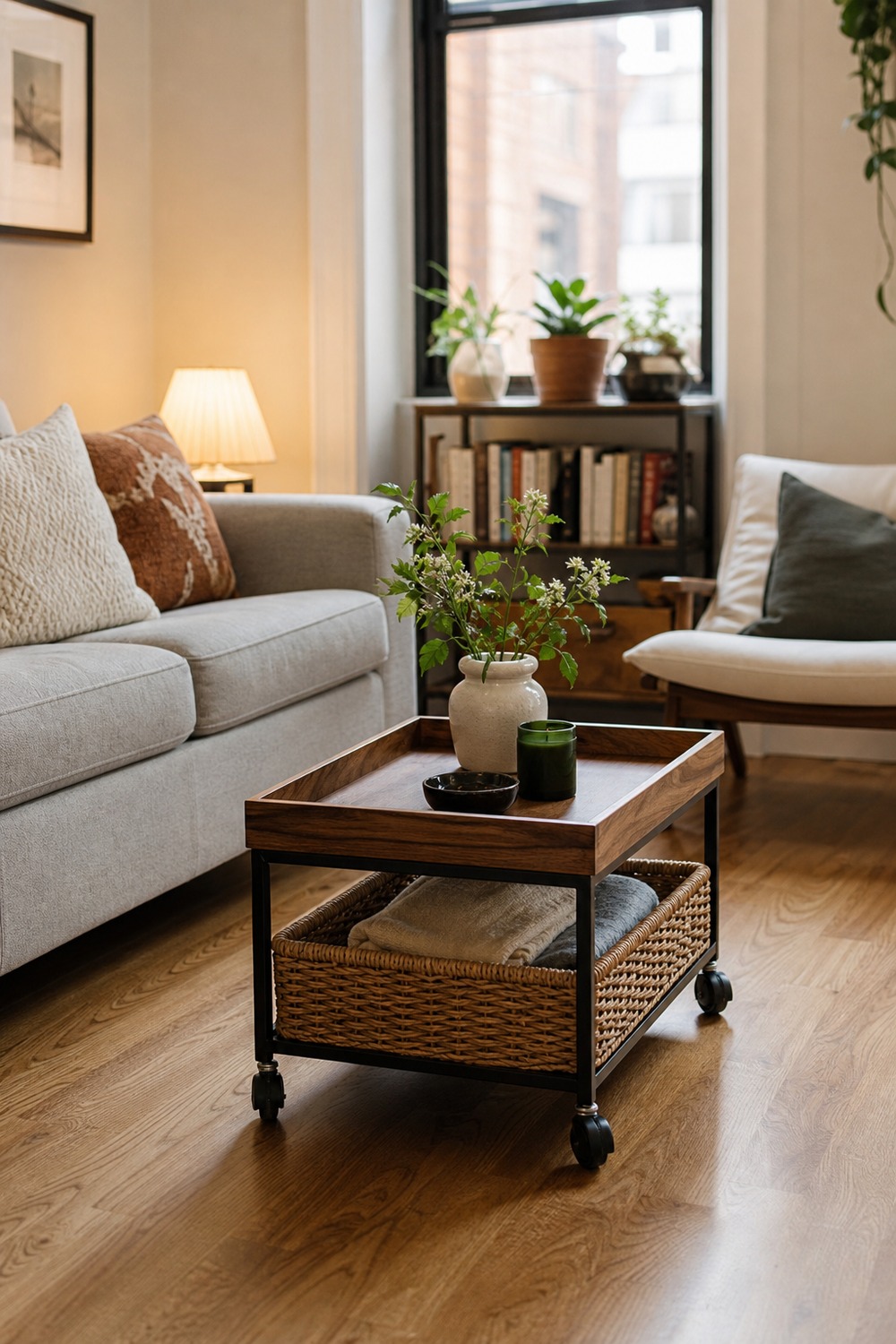
A rolling coffee table is useful when the room has to change jobs during the day. The casters make it easier to shift for cleaning, floor space, or a pull-out bed, and the lower basket keeps everyday pieces close without crowding the top.
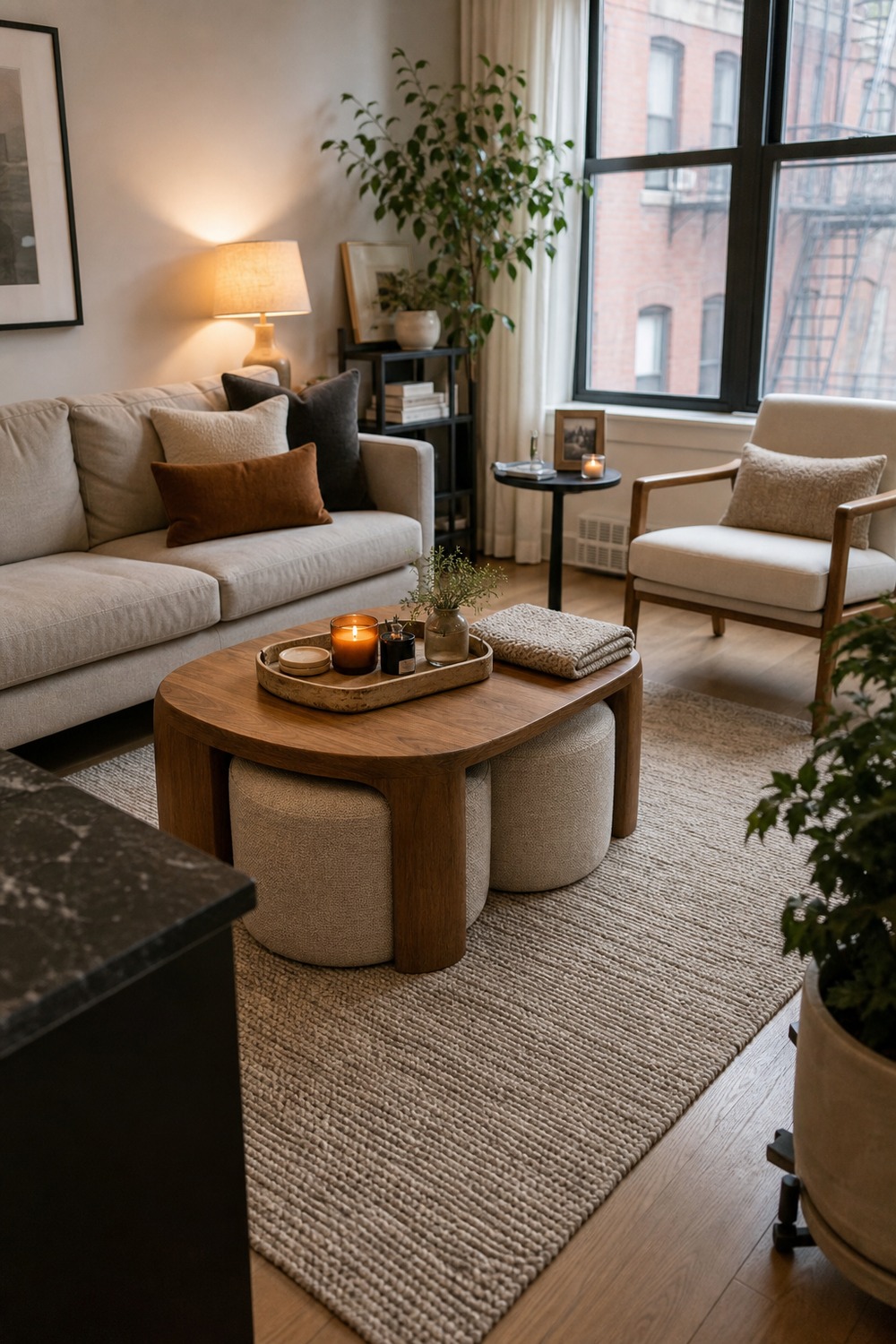
Tucked poufs under the coffee table make the seating area feel ready for extra people without adding another chair full-time. I like that the table still has a tray and surface space, but the storage underneath is doing real work.
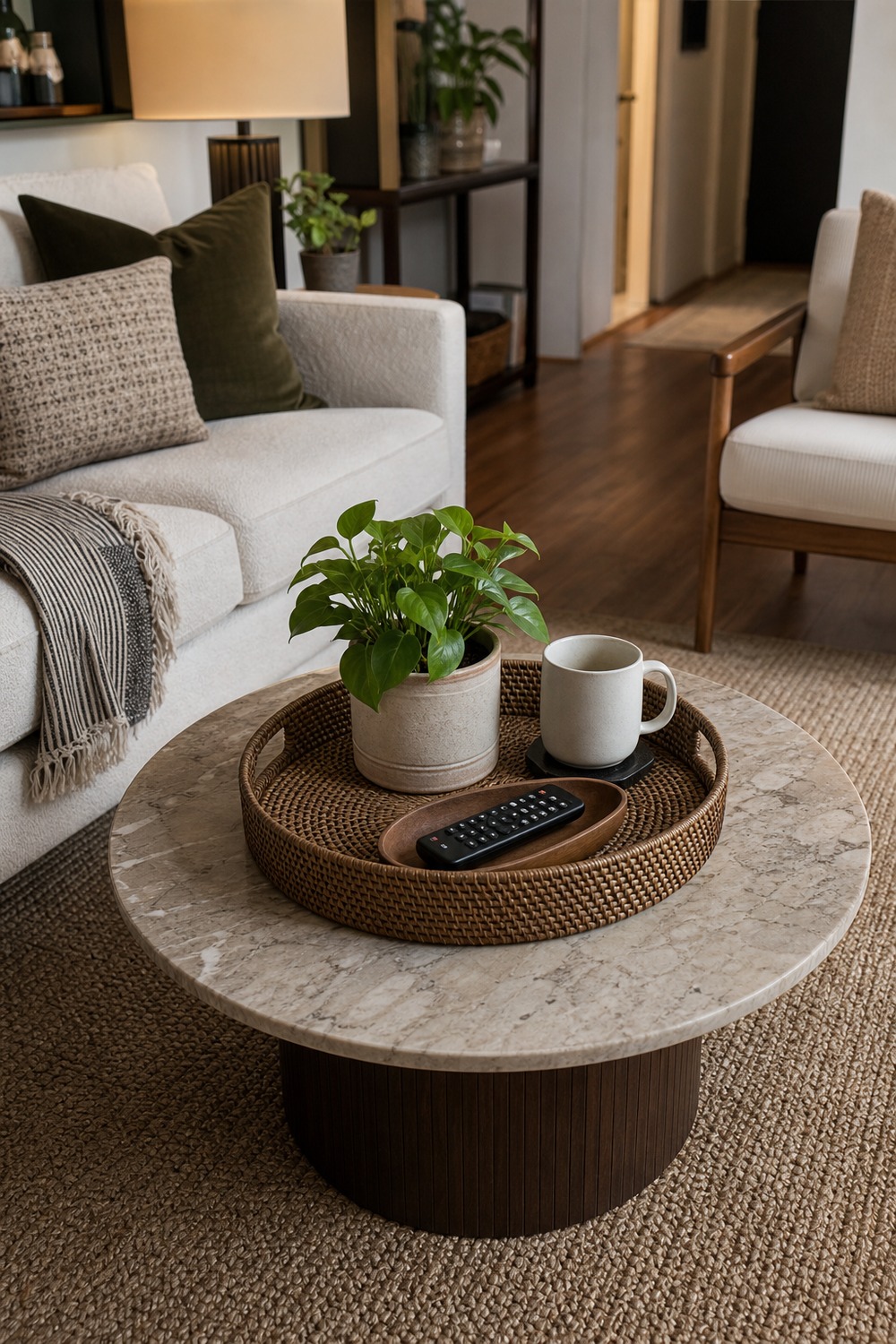
A small tabletop vignette works when it leaves room for actual life around it. The tray, mug, plant, and little dish add personality, but there is still enough open surface for remotes or a snack plate.
Leave a comment