
Black coffee tables can make a living room look sharper right away, but the wrong one can also feel like a heavy block in the middle of the rug. The strongest rooms break up that dark center with round edges, visible texture, smart storage, or lighter pieces around the sofa so the table feels grounded instead of overpowering.
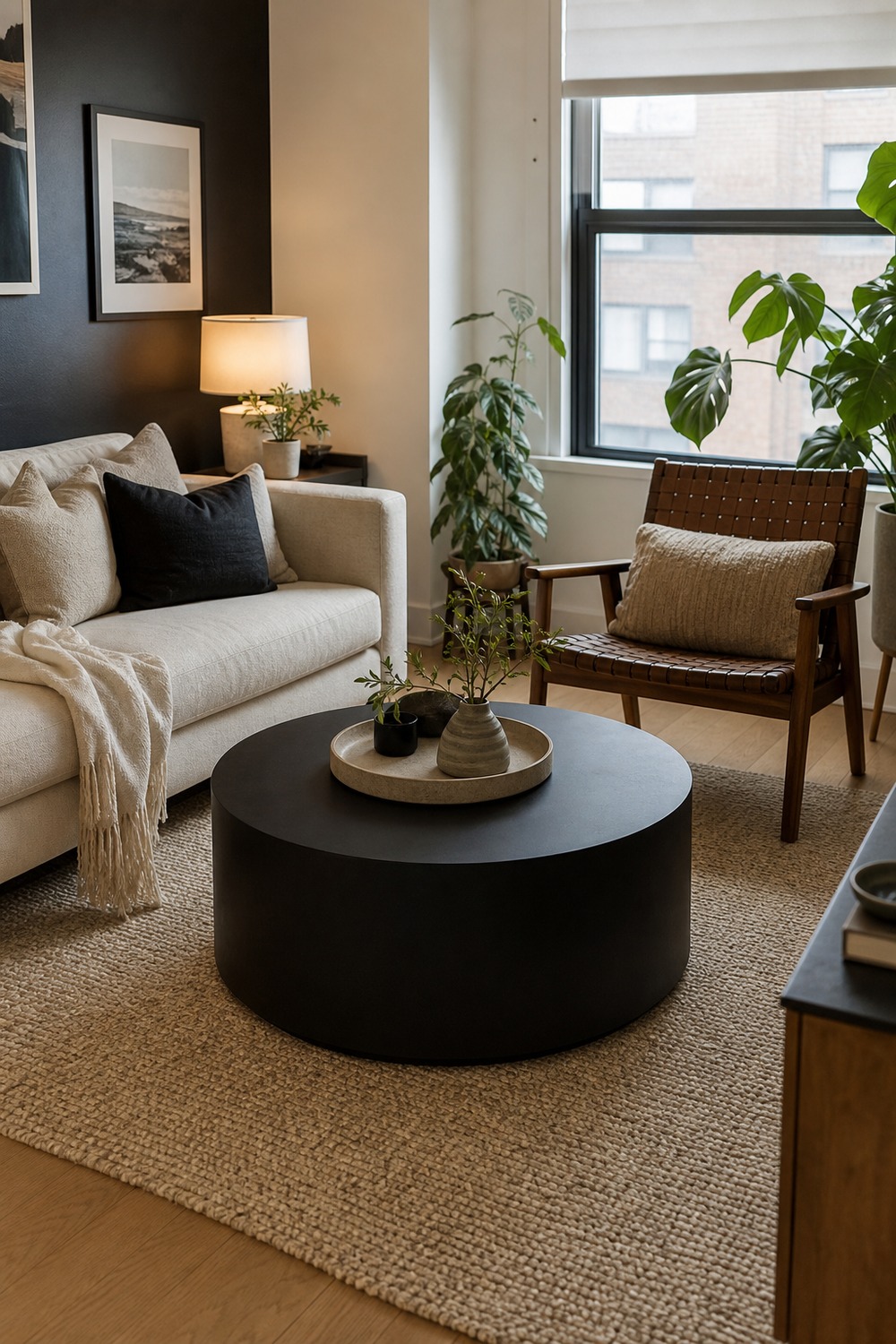
The round shape is what makes this one feel easy instead of heavy. A matte black table gives the sofa area a clear center, while the pale rug, wood chair, and simple tray keep the darker piece from taking over the whole room.
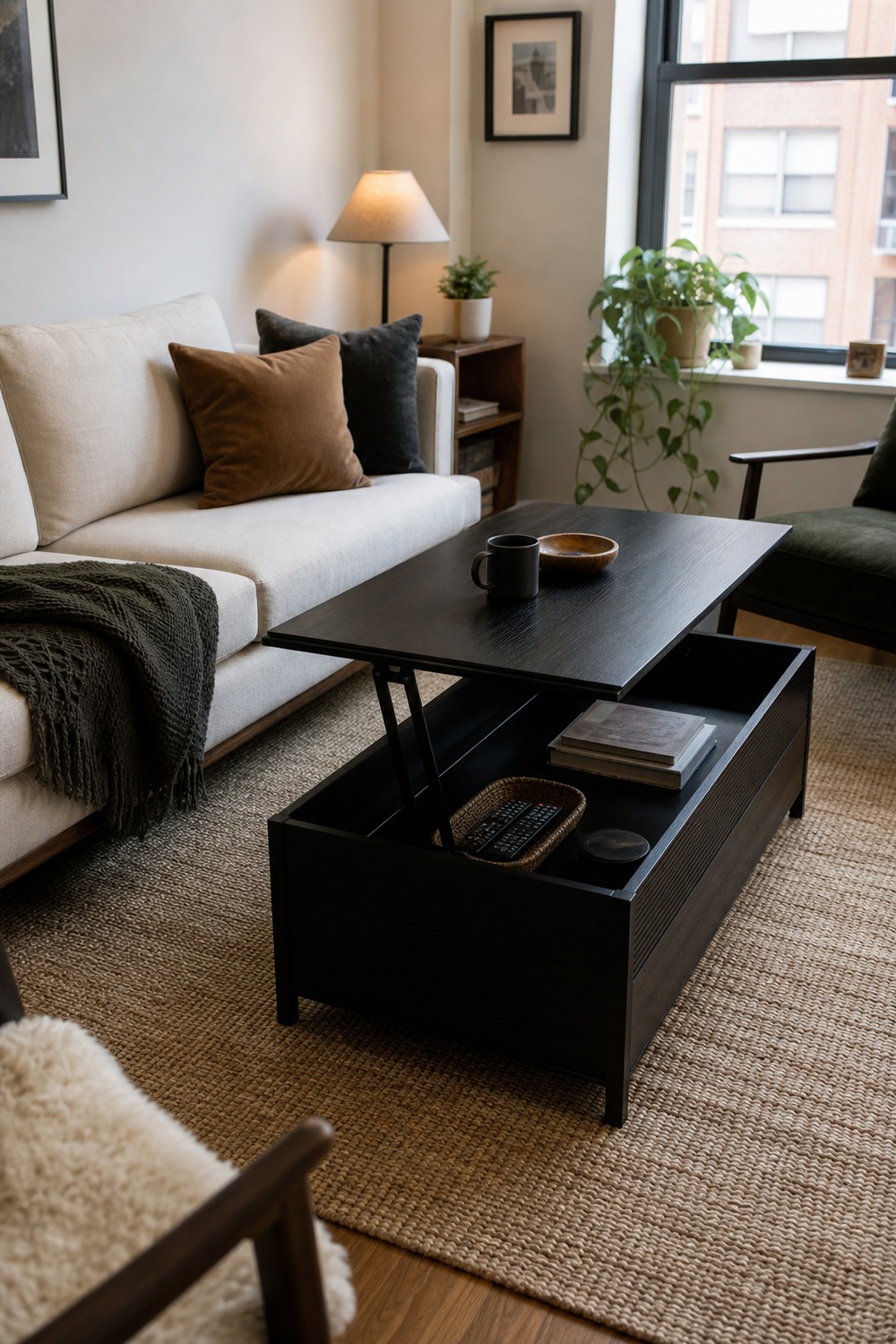
This is the kind of coffee table I would want in a smaller living room because it does more than sit there looking pretty. The lift-top storage gives remotes, chargers, and half-finished books somewhere to disappear, but the black finish still keeps the room feeling intentional.
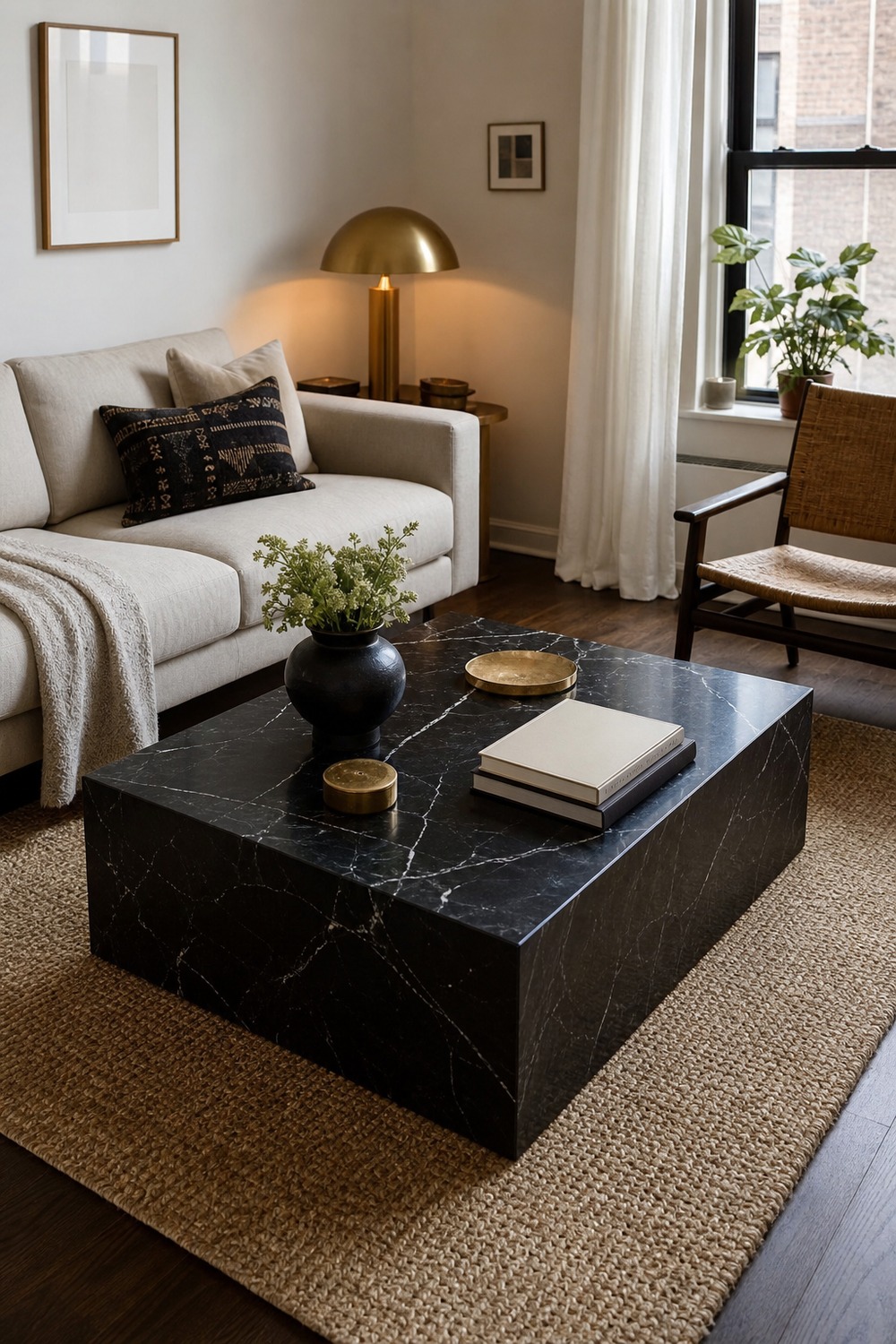
The black stone look feels a little dressier here, especially against the light sofa. I like the contrast of the heavier tabletop with the brass lamp and soft rug because it makes the room feel polished without turning cold.
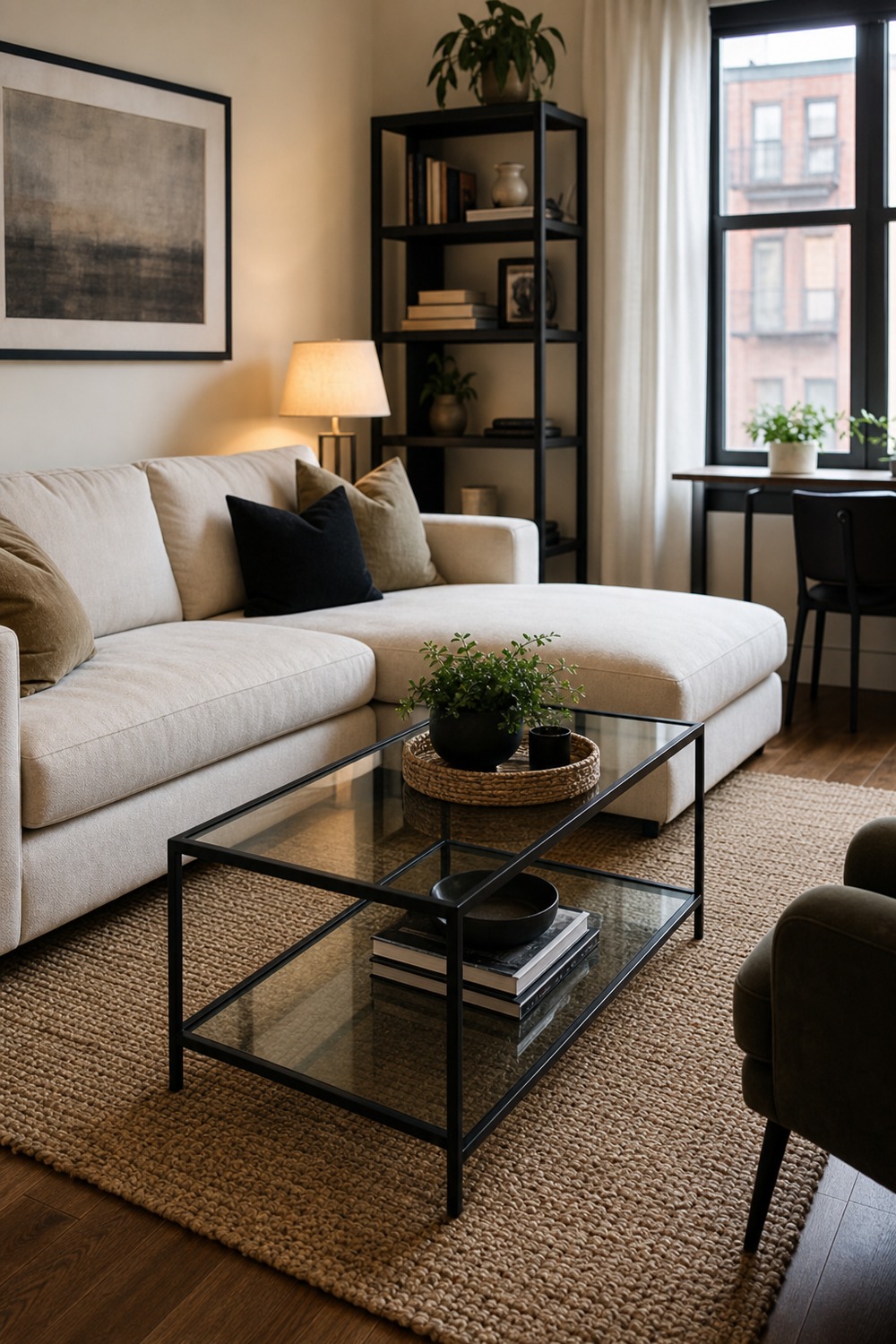
A thin metal frame is a good way to use black without making the center of the room feel blocked off. The glass top, woven rug, and cream sectional keep the whole setup airy while still giving the seating area that sharp black outline.
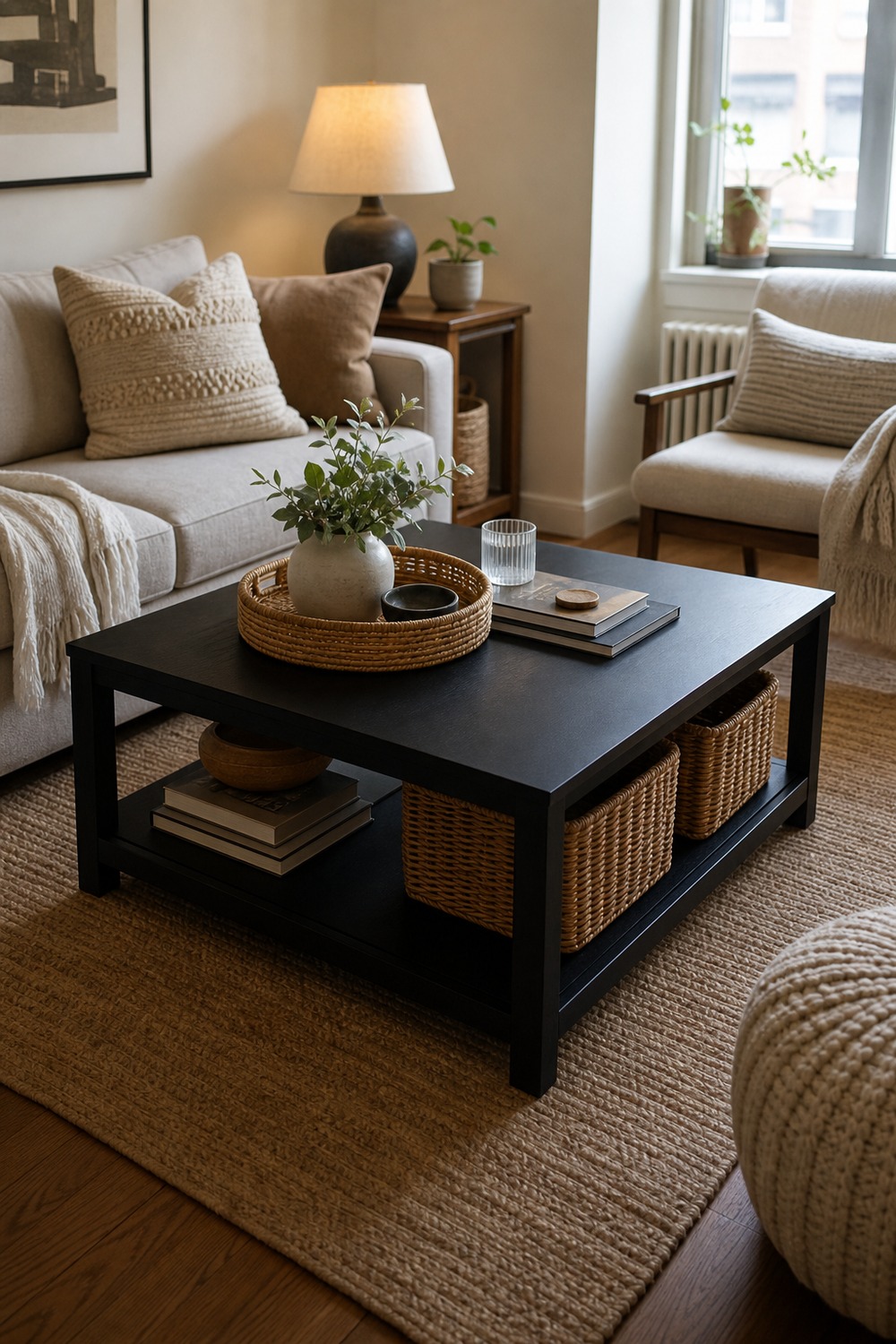
This square table feels like a good family-room option because the lower shelf is actually useful. Baskets and books can live underneath, so the top stays open enough for a tray, a drink, or whatever lands there by the end of the day.
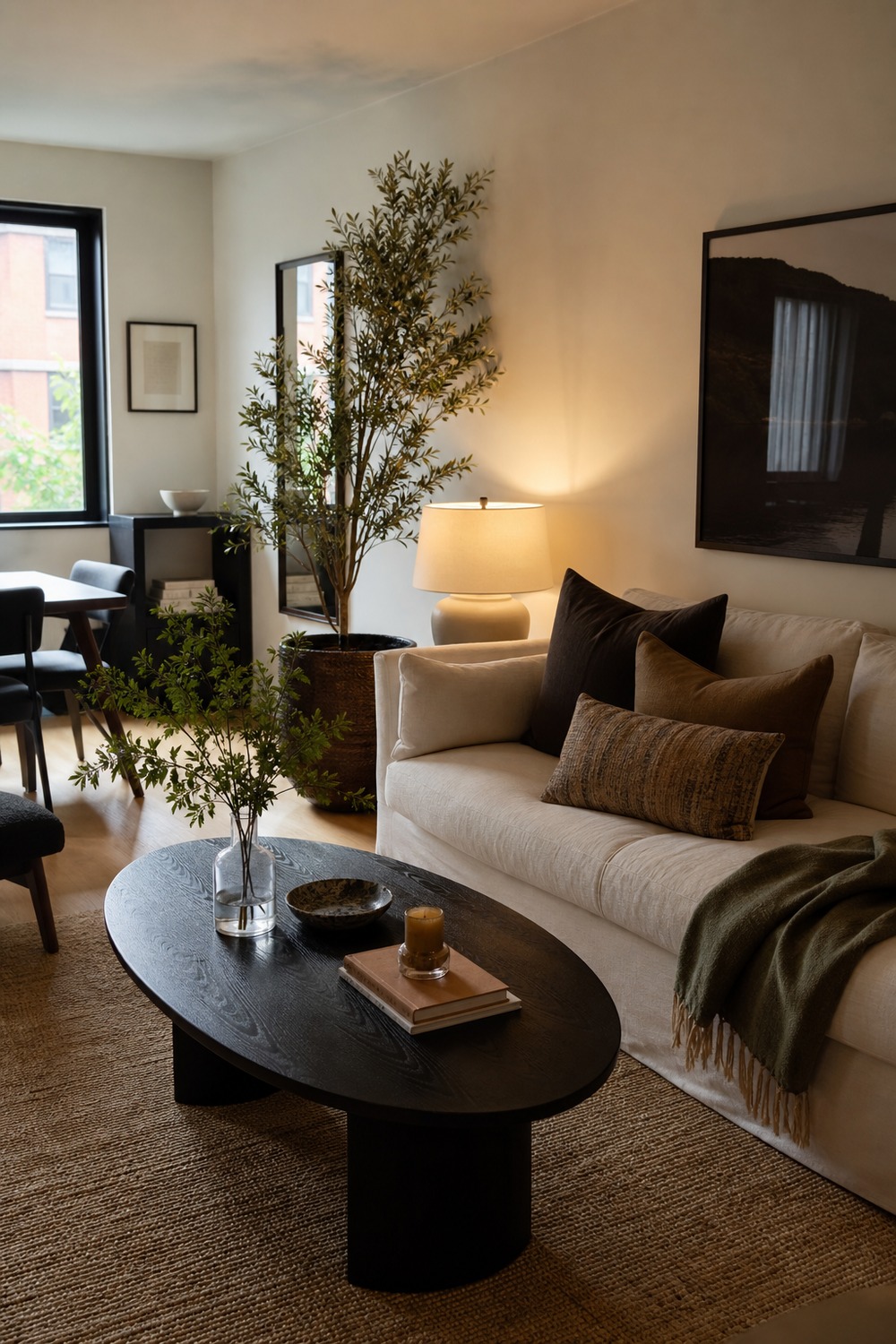
The oval shape softens the black finish in a really nice way. With the linen sofa, lamp glow, and visible wood grain, the table feels modern but not harsh, which is usually the balance I want in a living room.
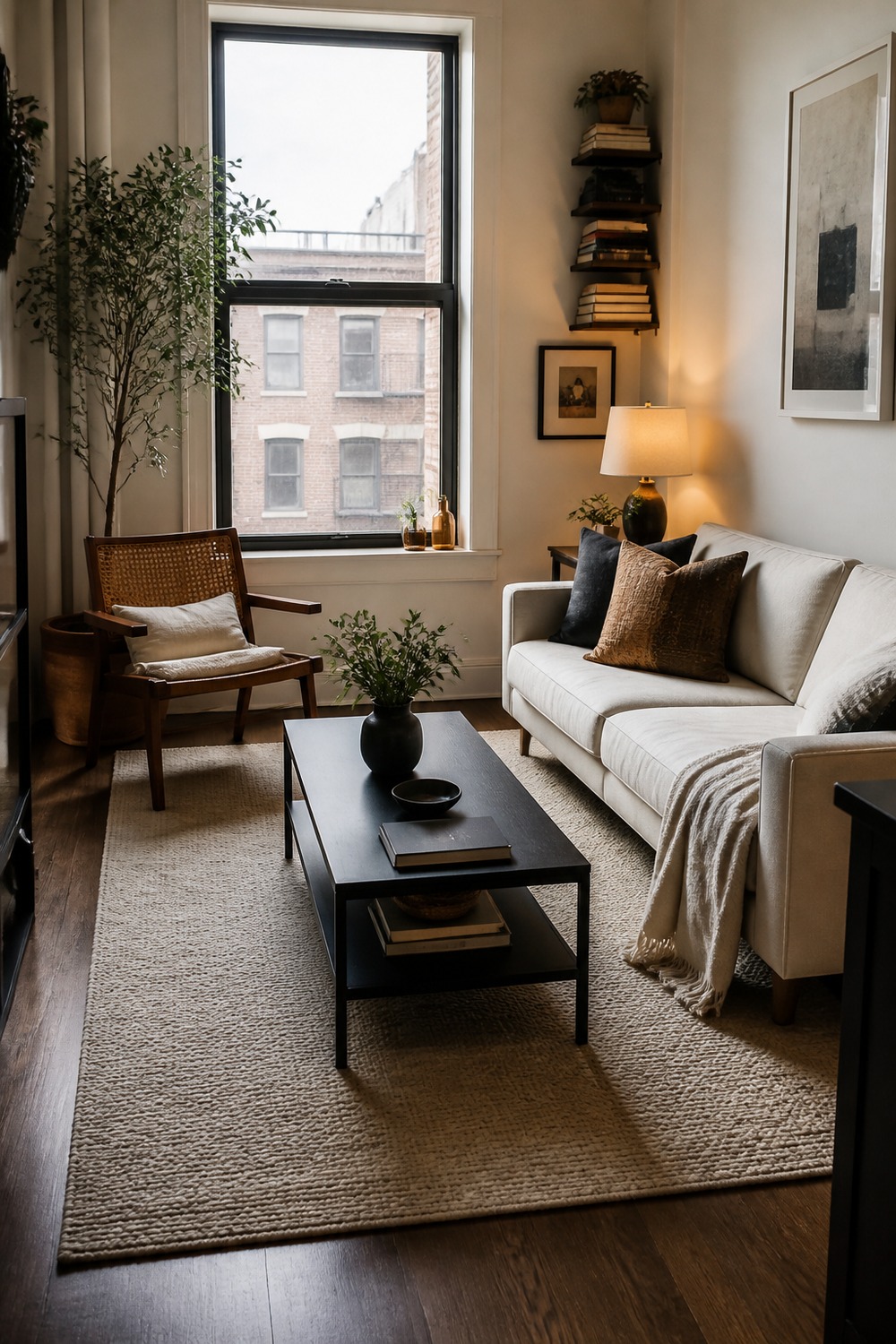
This small-space setup works because the table is scaled to the sofa instead of fighting it. There is still a clear walking path, and the black table gives the room structure without stealing all the floor space.
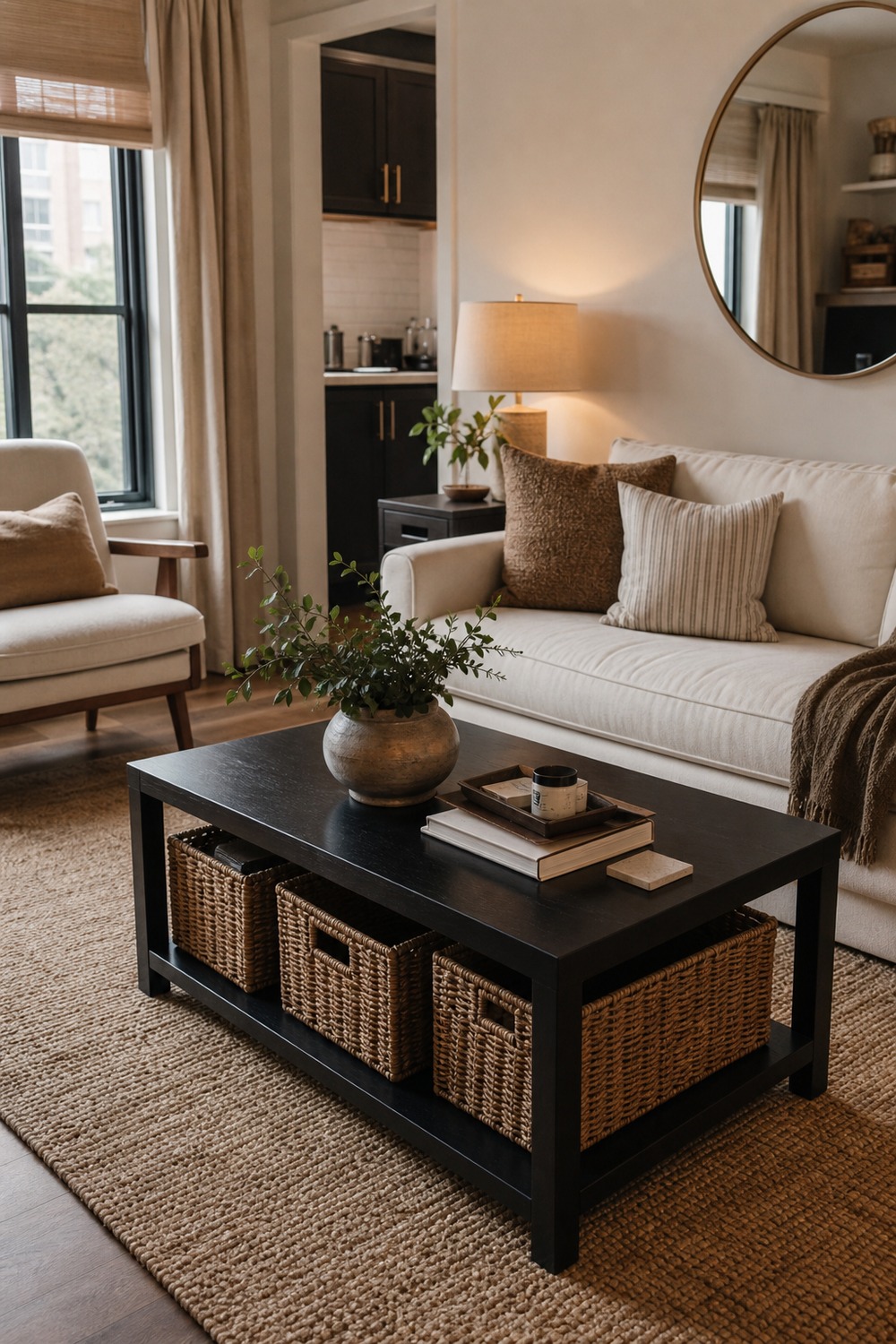
I like the woven baskets under this black coffee table because they take the edge off the darker finish. They also make the table feel useful for blankets, toys, or extra magazines without leaving everything scattered across the top.
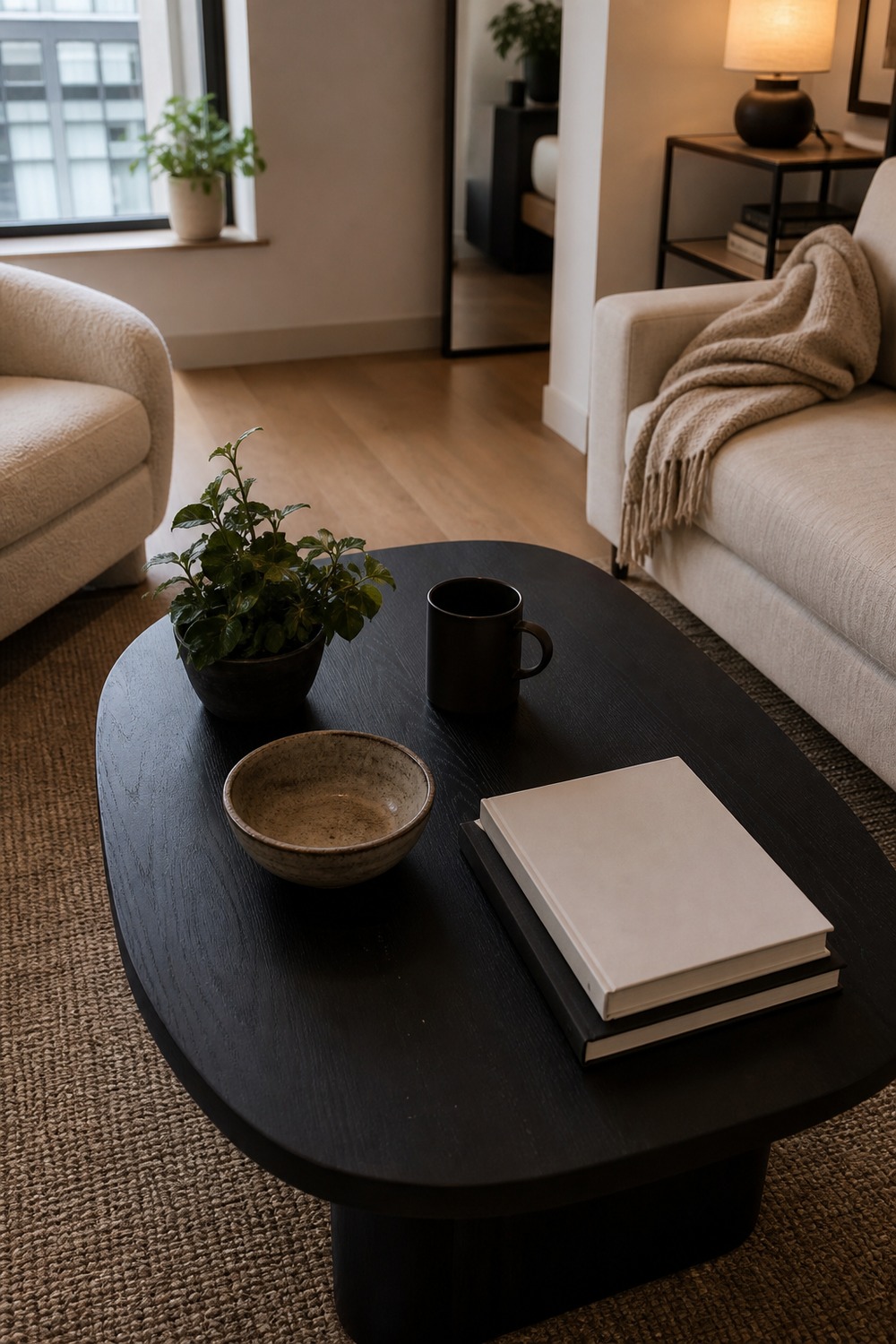
This close-up is a good reminder that a black coffee table does not need much styling. A ceramic bowl, a plain mug, and one small plant are enough because the dark tabletop already gives the vignette plenty of contrast.
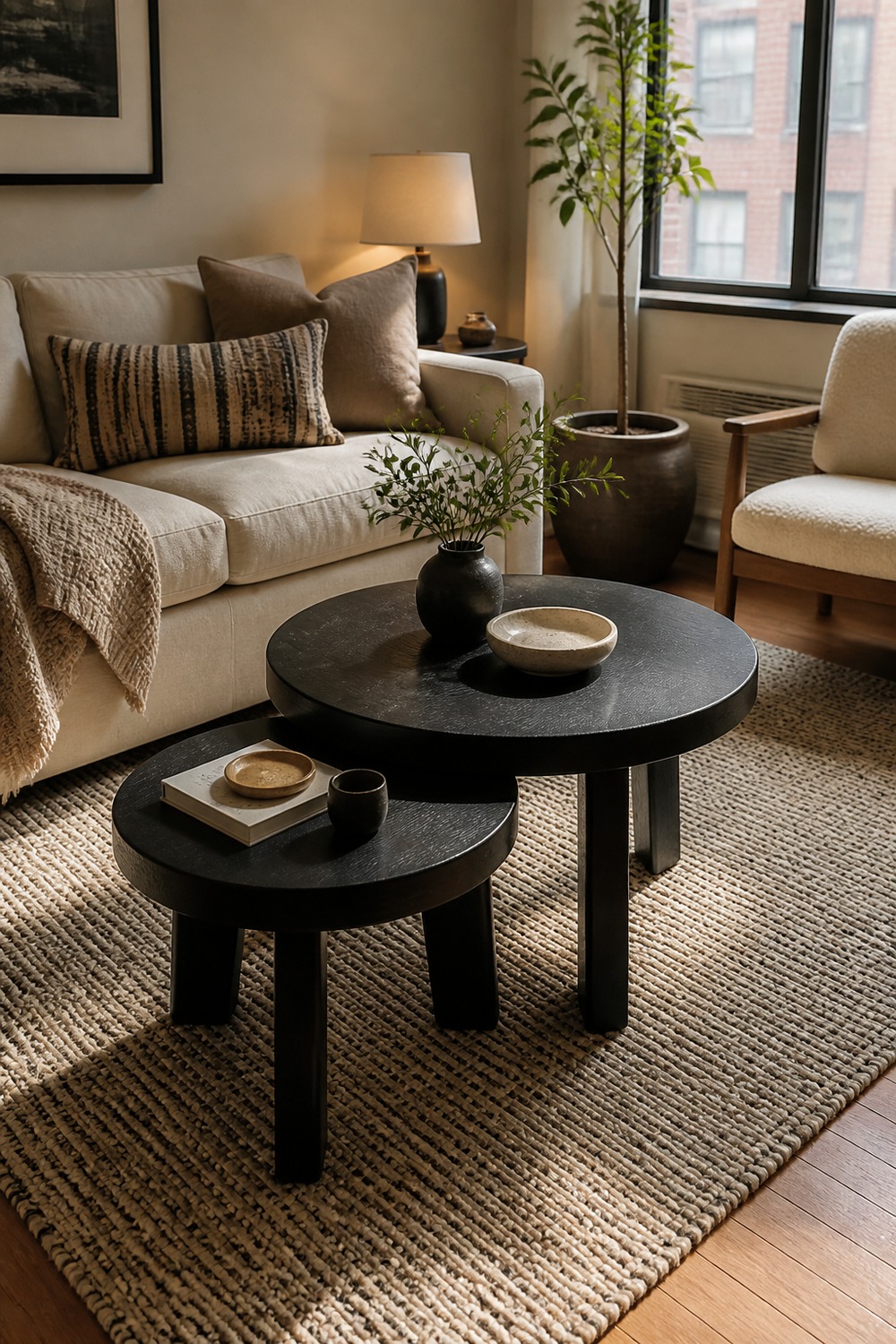
Nesting tables are nice when the room changes throughout the day. The two black pieces give you extra surface space when people are over, then tuck back into a cleaner shape when the living room needs to feel open again.
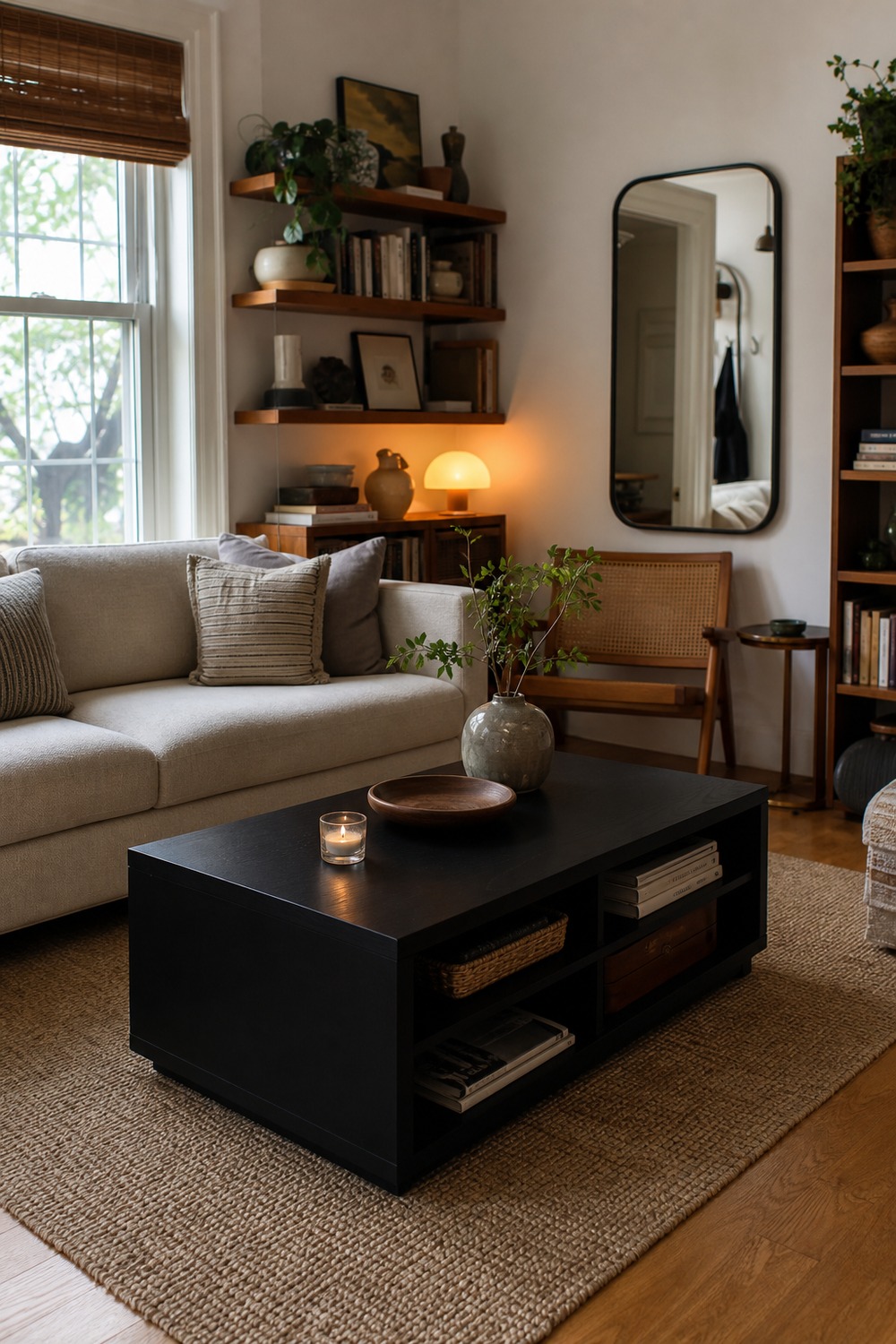
The warm wood around this setup keeps the black coffee table from feeling too stark. Shelves, soft seating, and amber light all help the table read as part of a layered room instead of one random dark piece in the middle.
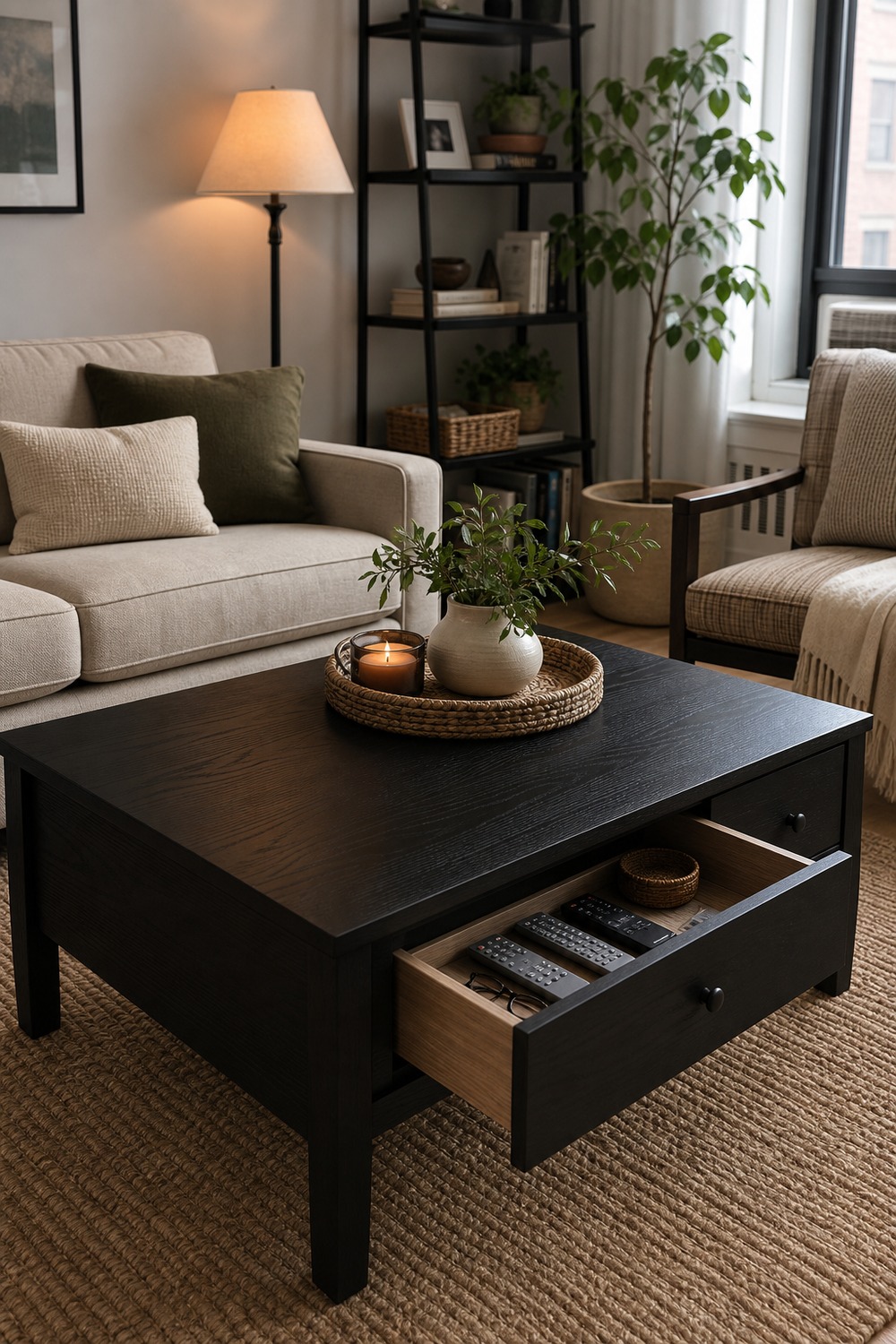
Drawer storage is one of those details that quietly makes a living room easier. The black table still looks clean from the outside, but the hidden storage means remotes, coasters, and small clutter have a real place to go.
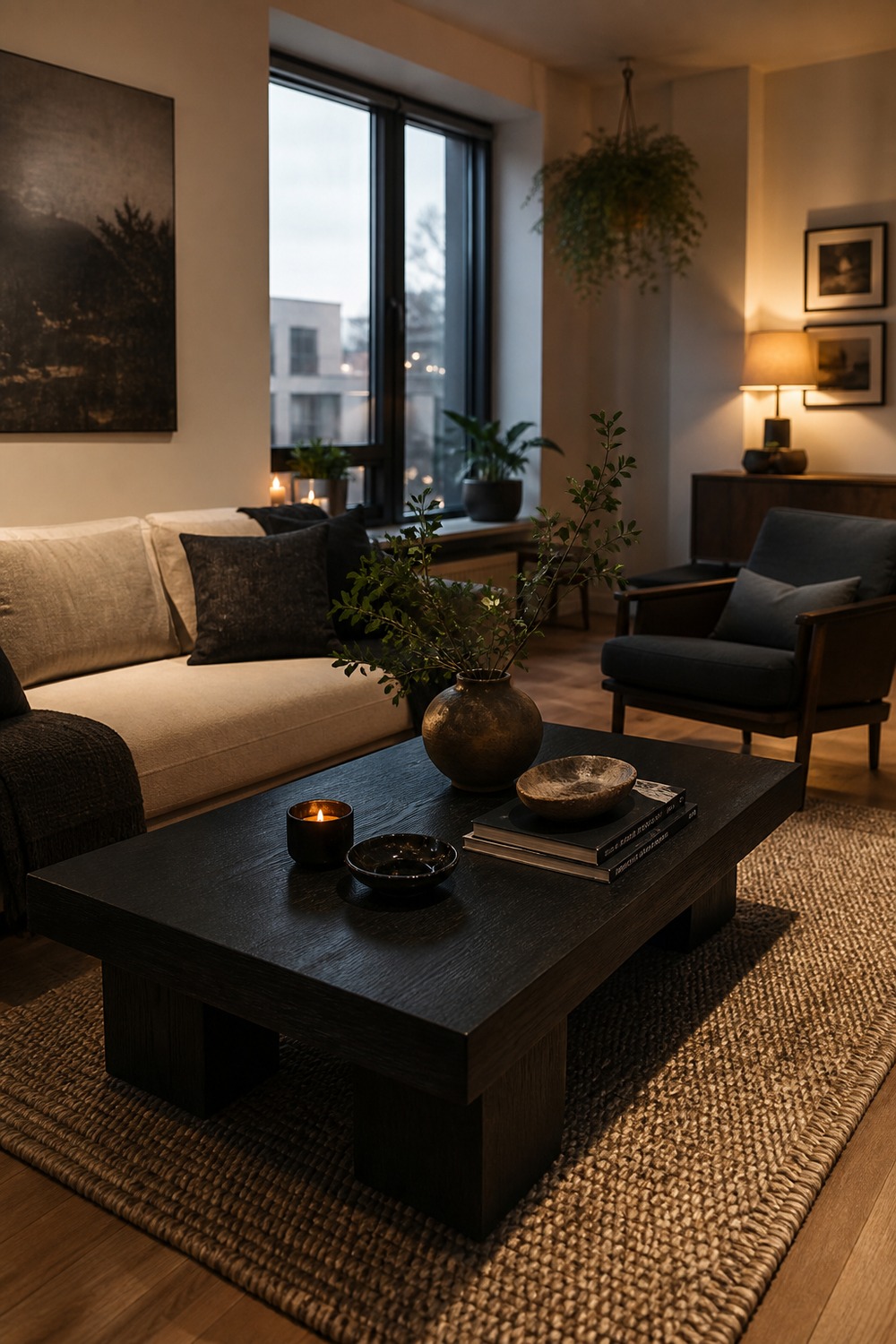
This moody version leans into the black table instead of trying to soften it too much. Charcoal accents, a textured rug, and low amber lighting make the room feel more evening-ready, almost like the table is grounding the whole seating zone.
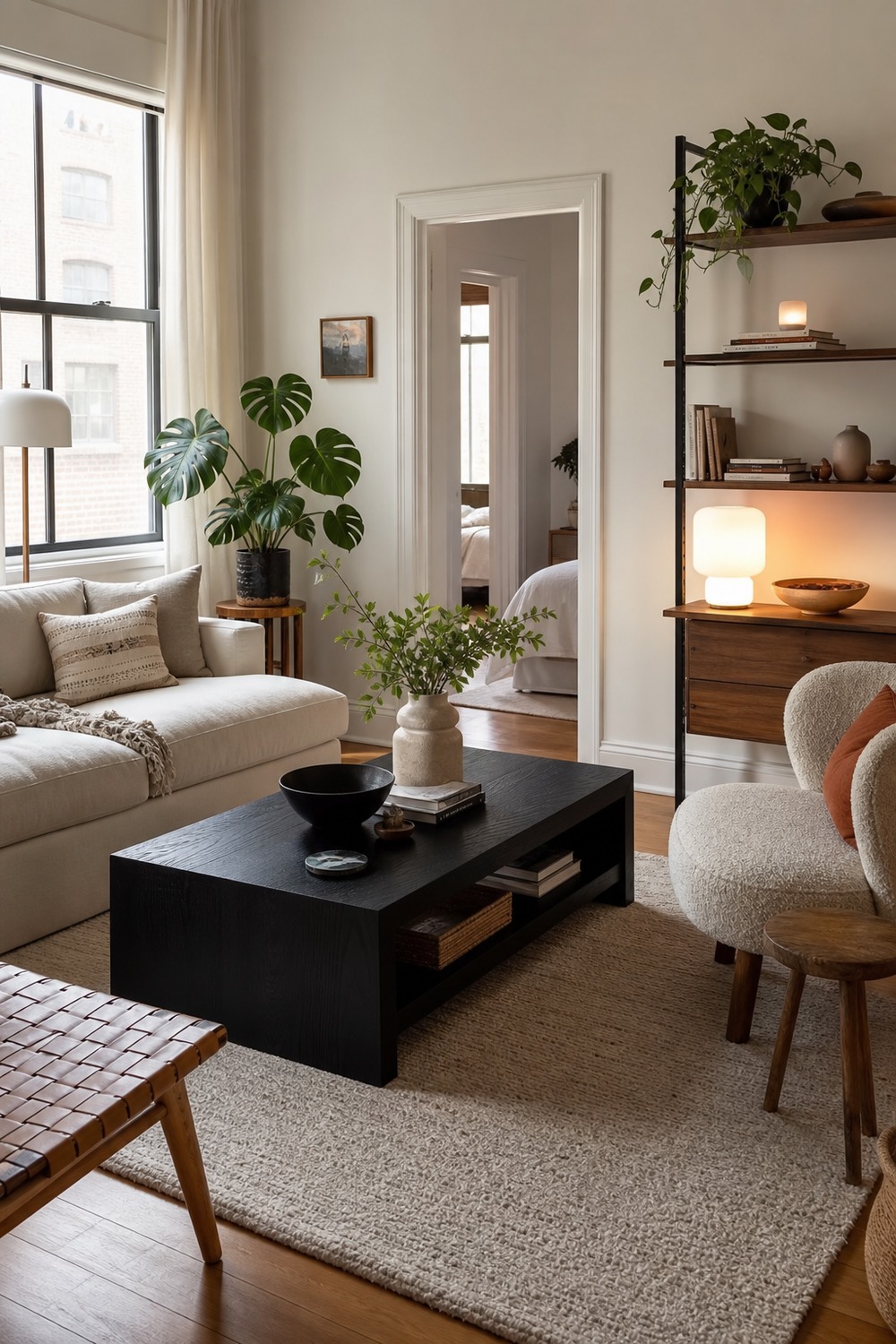
A bright room is one of the easiest places to use a black coffee table. The daylight, pale sofa, and light rug give the table enough breathing room, so the black piece adds definition without making the room feel dark.
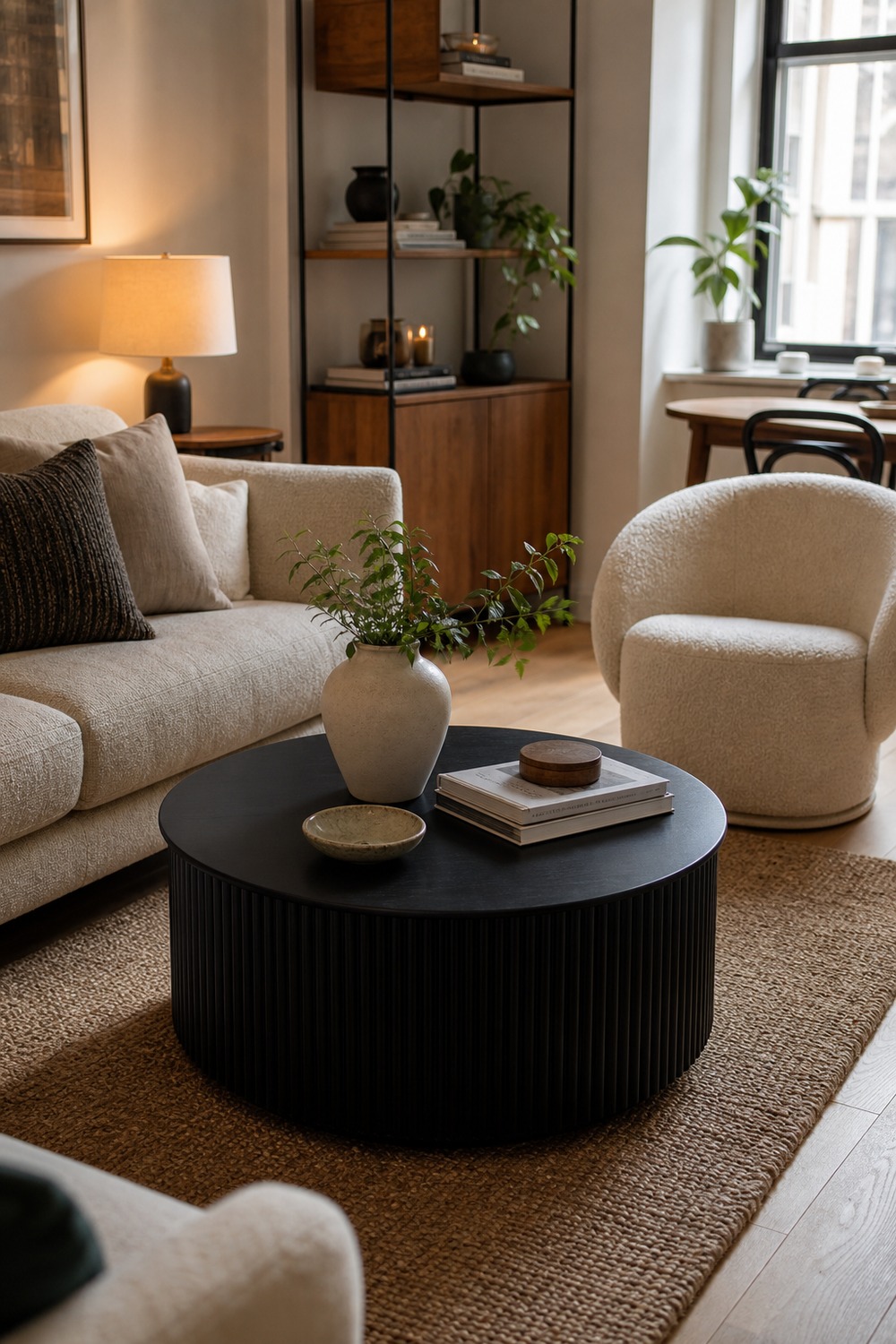
The fluted base makes this table feel more special than a plain round top. I like how the ribbed texture adds shadow and movement, especially beside softer pieces like a boucle chair, linen sofa, and simple ceramic vase.
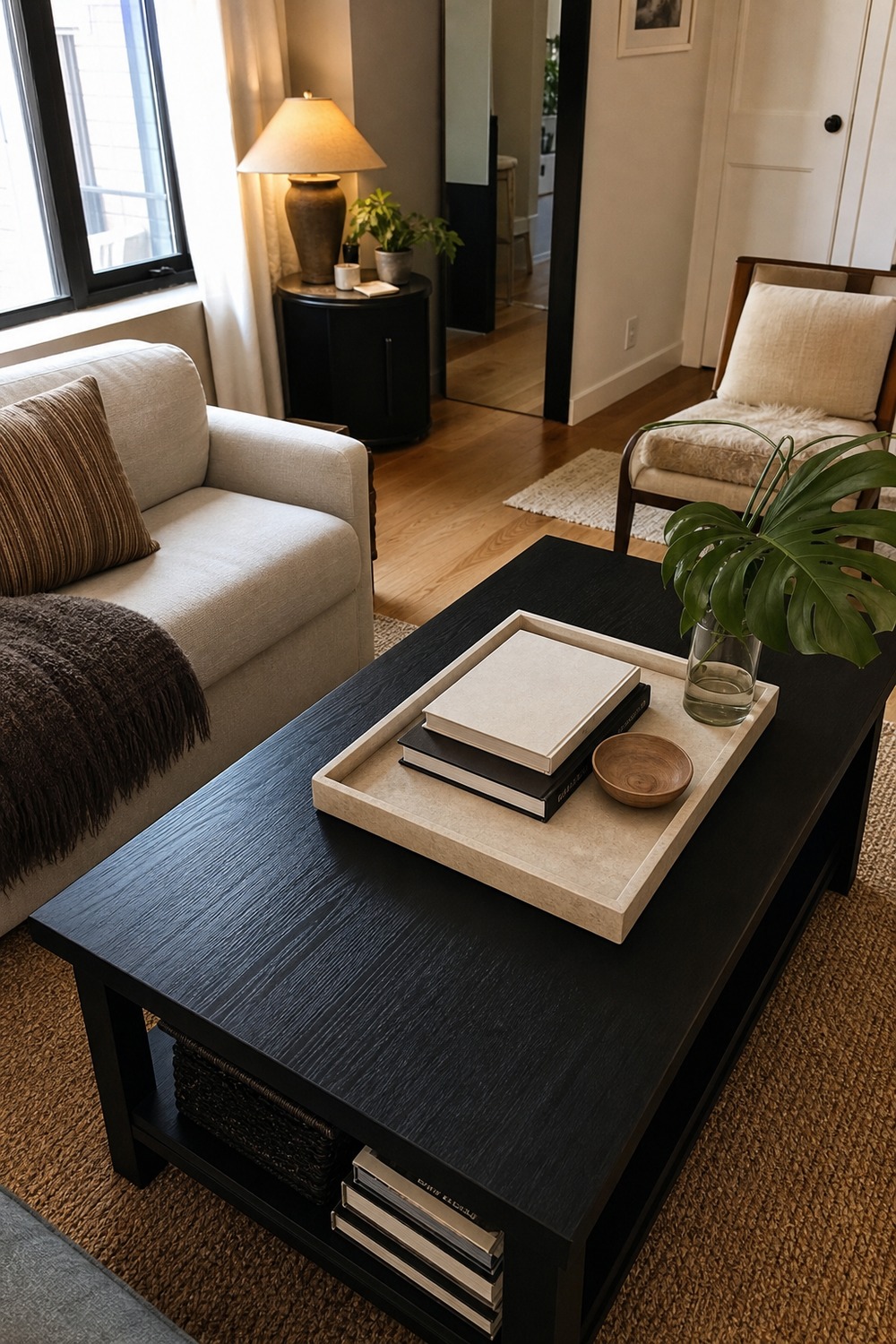
A light tray is a simple trick with a black coffee table because it breaks up the dark surface. It gives candles, bowls, and books a little boundary, so the styling feels collected instead of like random objects landed there.
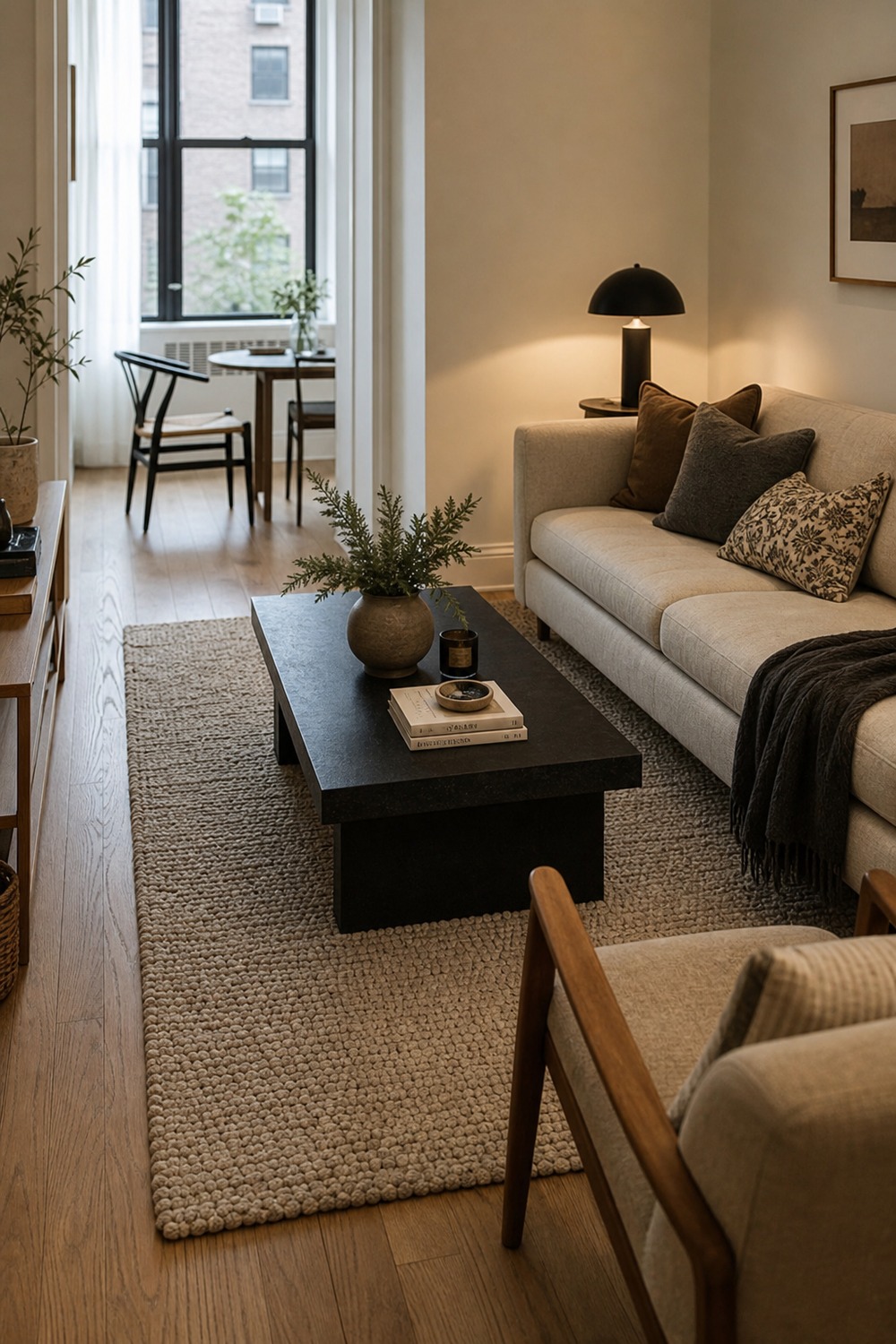
The neutral rug does a lot of work in this room. It keeps the black coffee table from feeling visually flat, and the beige sofa plus wood floor make the whole seating area feel warmer and more finished.
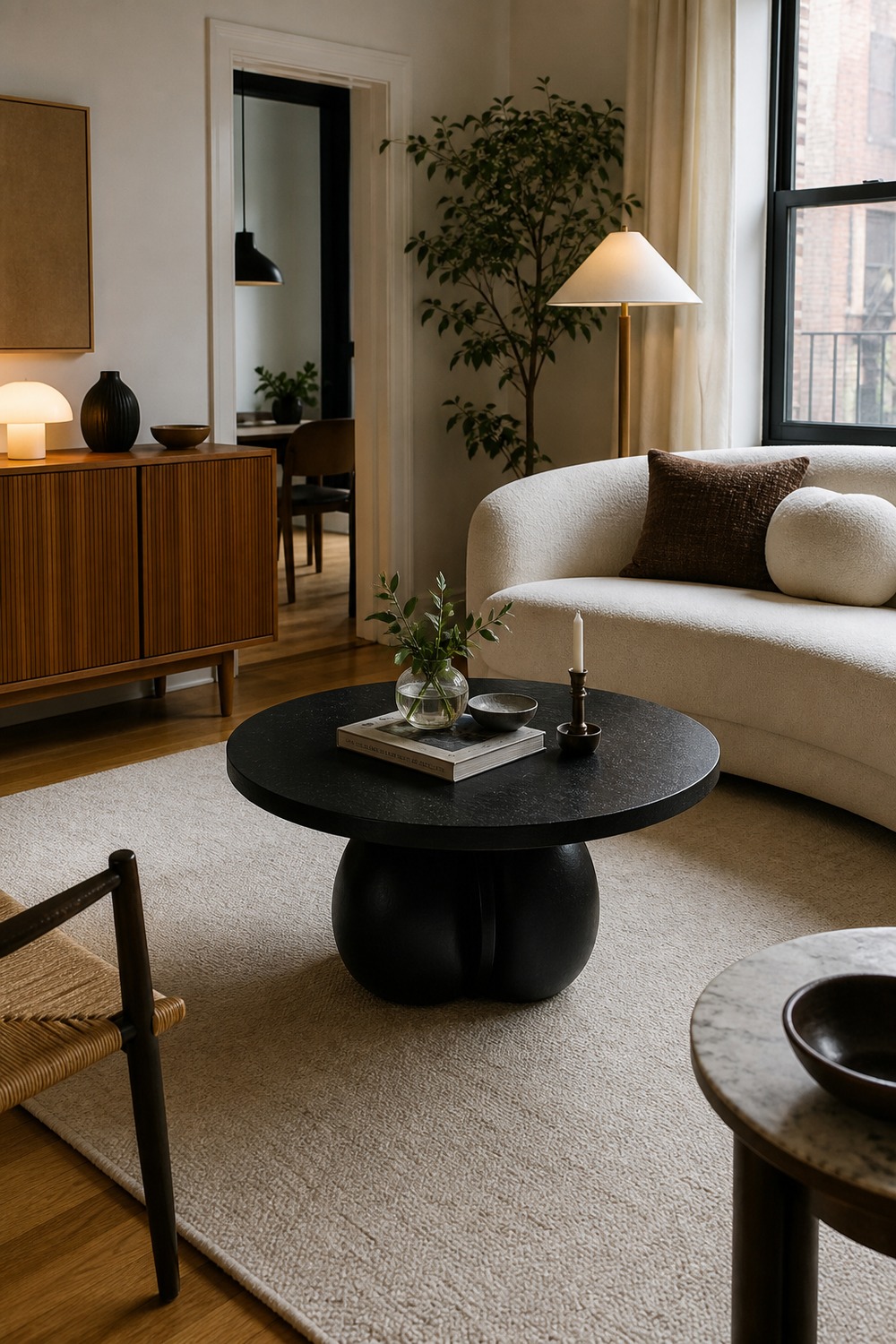
This pedestal style feels sculptural without being too fussy. The solid base makes the black table feel like a design feature, while the curved sofa and pale rug keep enough softness around it.
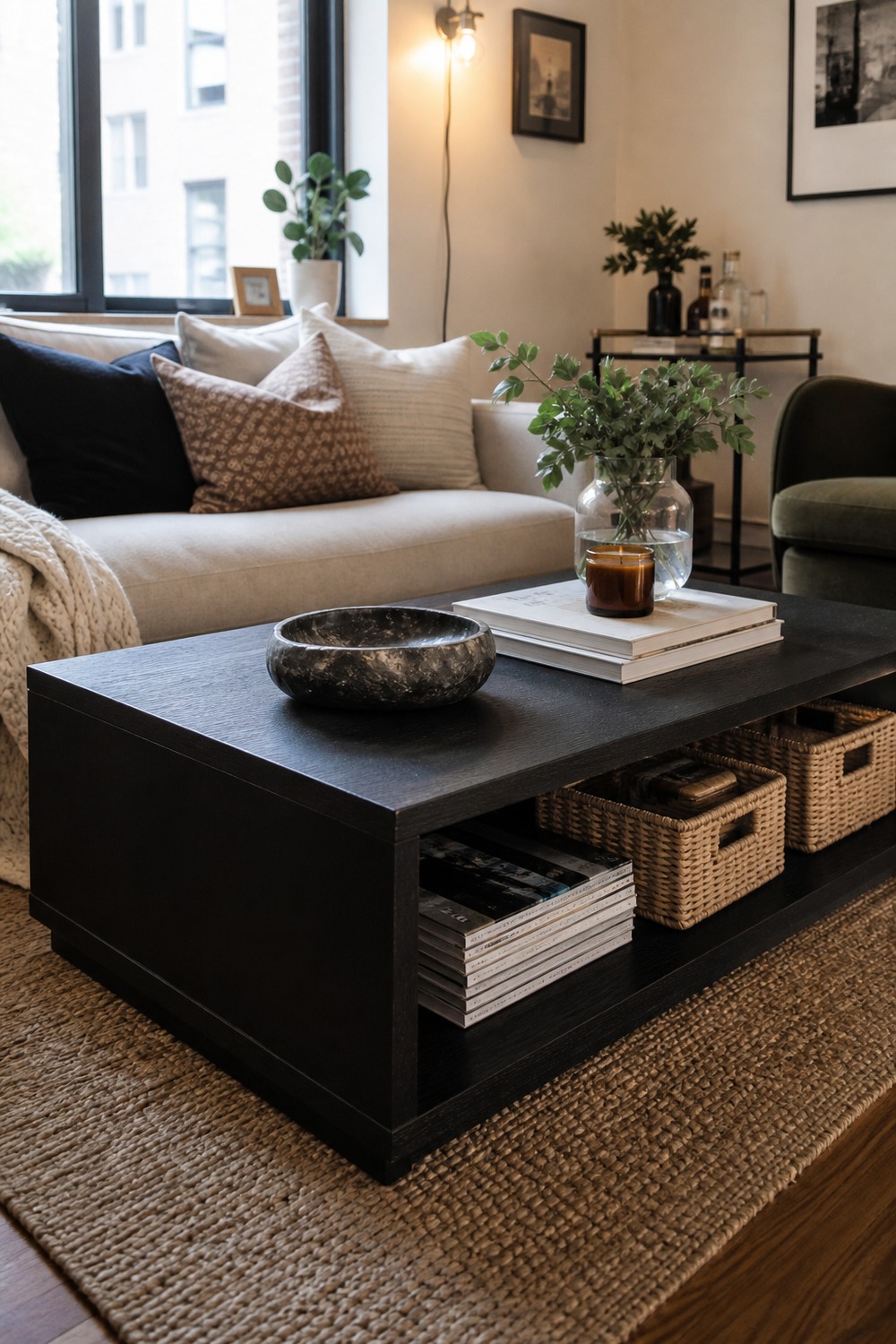
An open lower shelf is helpful when you want storage without a bulky cabinet feeling. The baskets and magazines sit low, the top stays cleaner, and the black frame still gives the room that strong center point.
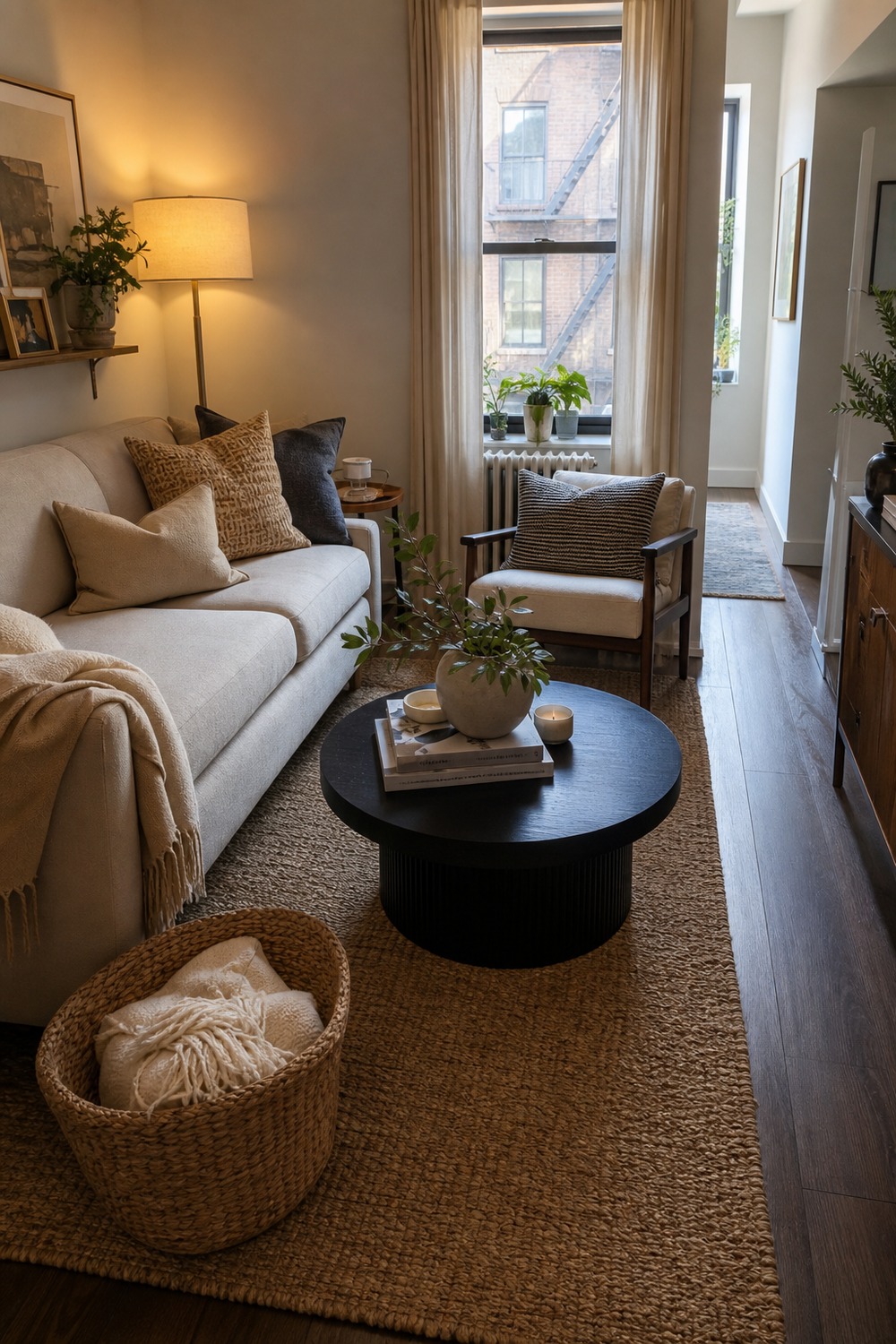
This small living room shows why spacing matters around a black table. The sofa, side chair, and narrow walkway all leave enough room to move, so the darker table feels deliberate rather than cramped.
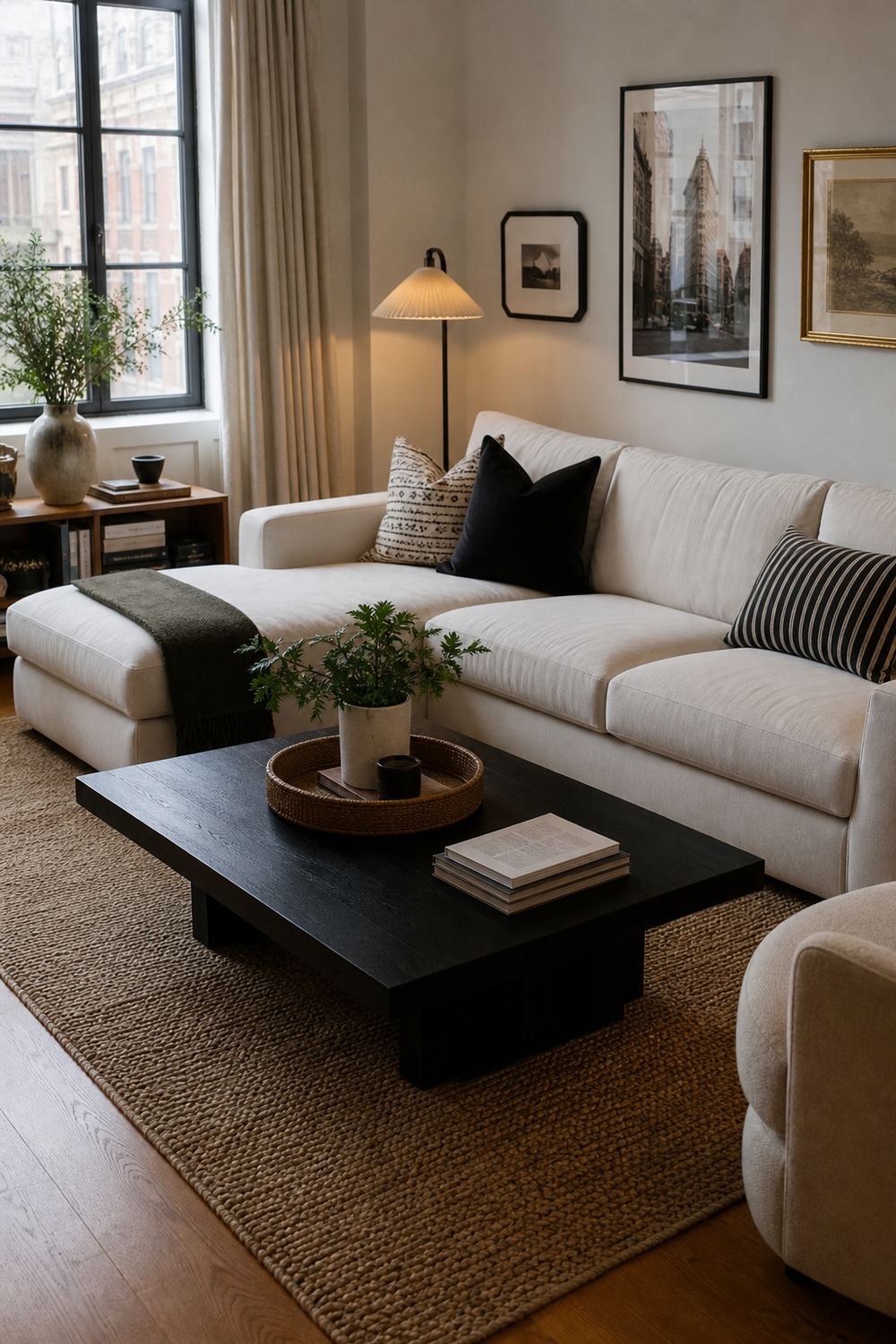
A white or cream sectional makes the black table stand out right away. The monochrome pillows and textured rug keep the contrast from feeling too sharp, and the low table height makes the seating area feel relaxed.
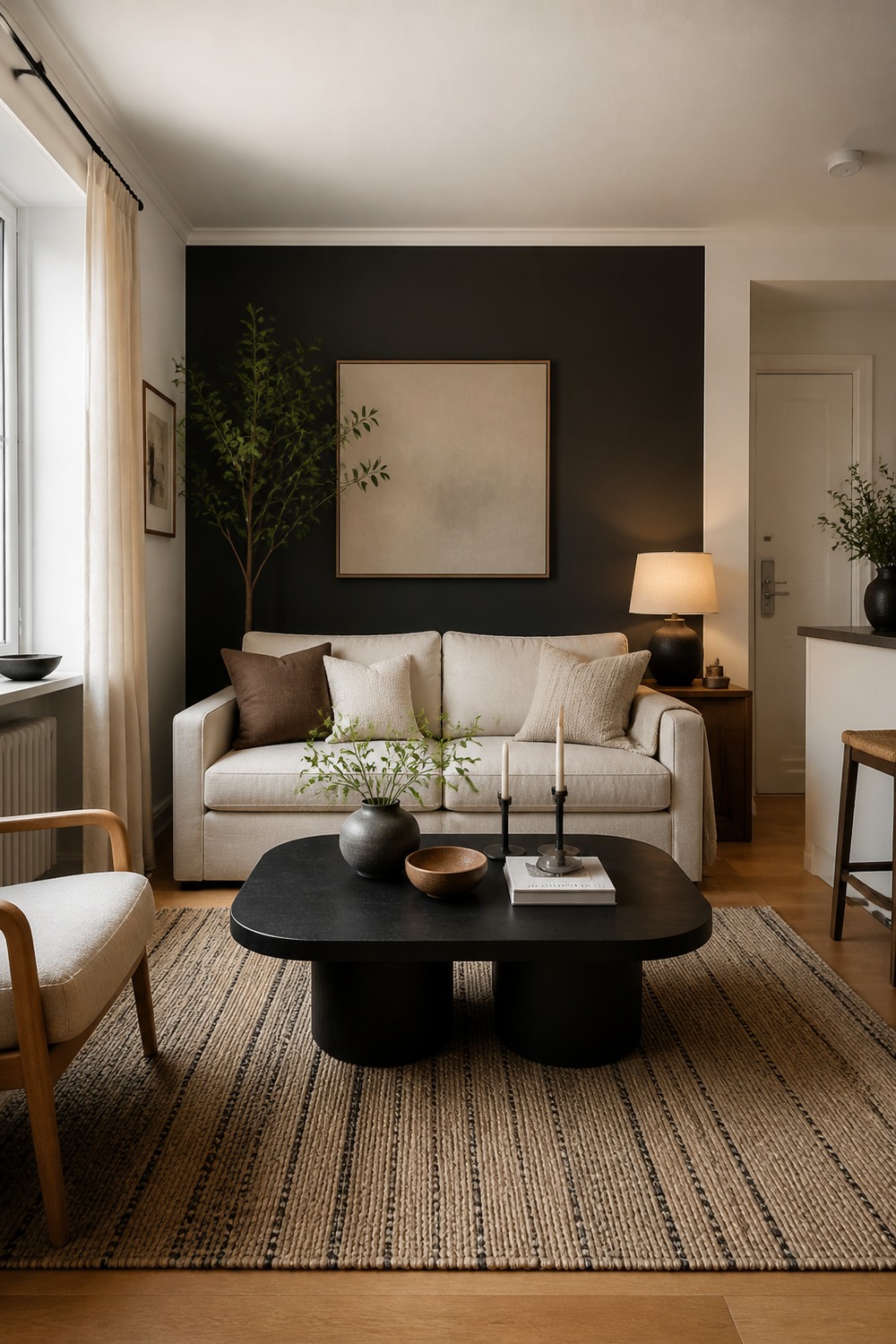
The focal wall behind this setup gives the coffee table more context. Instead of the black table floating by itself, the lamp, sofa, and wall detail pull everything into one clear living-room moment.
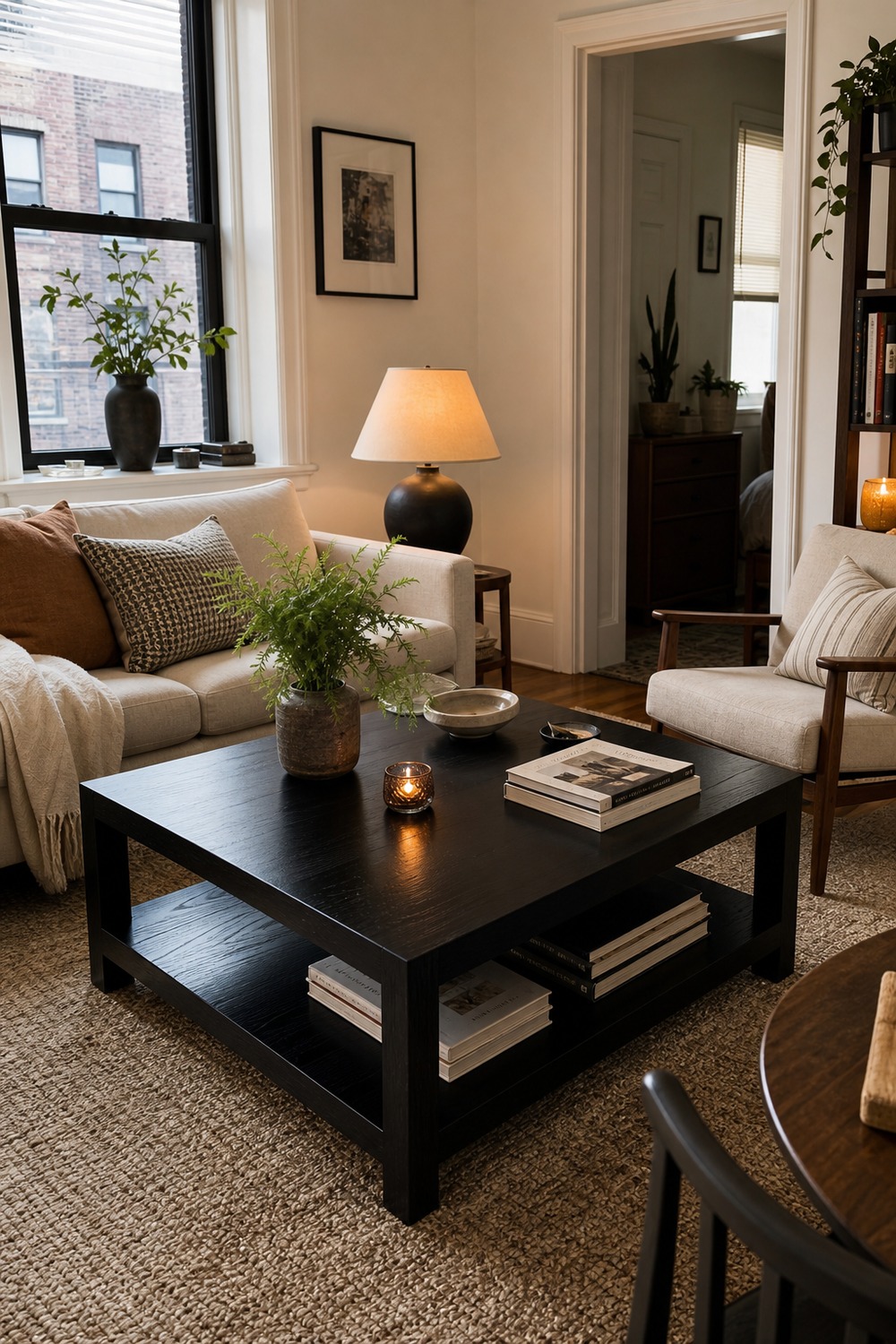
This last room feels like a polished refresh rather than a total makeover. The black coffee table, layered rug, and pillows make the sofa area look more finished, but the pieces still feel normal enough for everyday use.
A black coffee table usually works best when the rest of the room gives it a little contrast. Light rugs, warm wood, soft seating, and a few useful storage details can make the whole space feel more finished without making the table feel too severe.
Leave a comment