
Black and white coffee tables can look sharp in the best way, but the contrast has to feel intentional instead of harsh. The rooms that work best are the ones where the table, rug, sofa, and tray details all connect, so the center of the living room feels bold without turning cold.
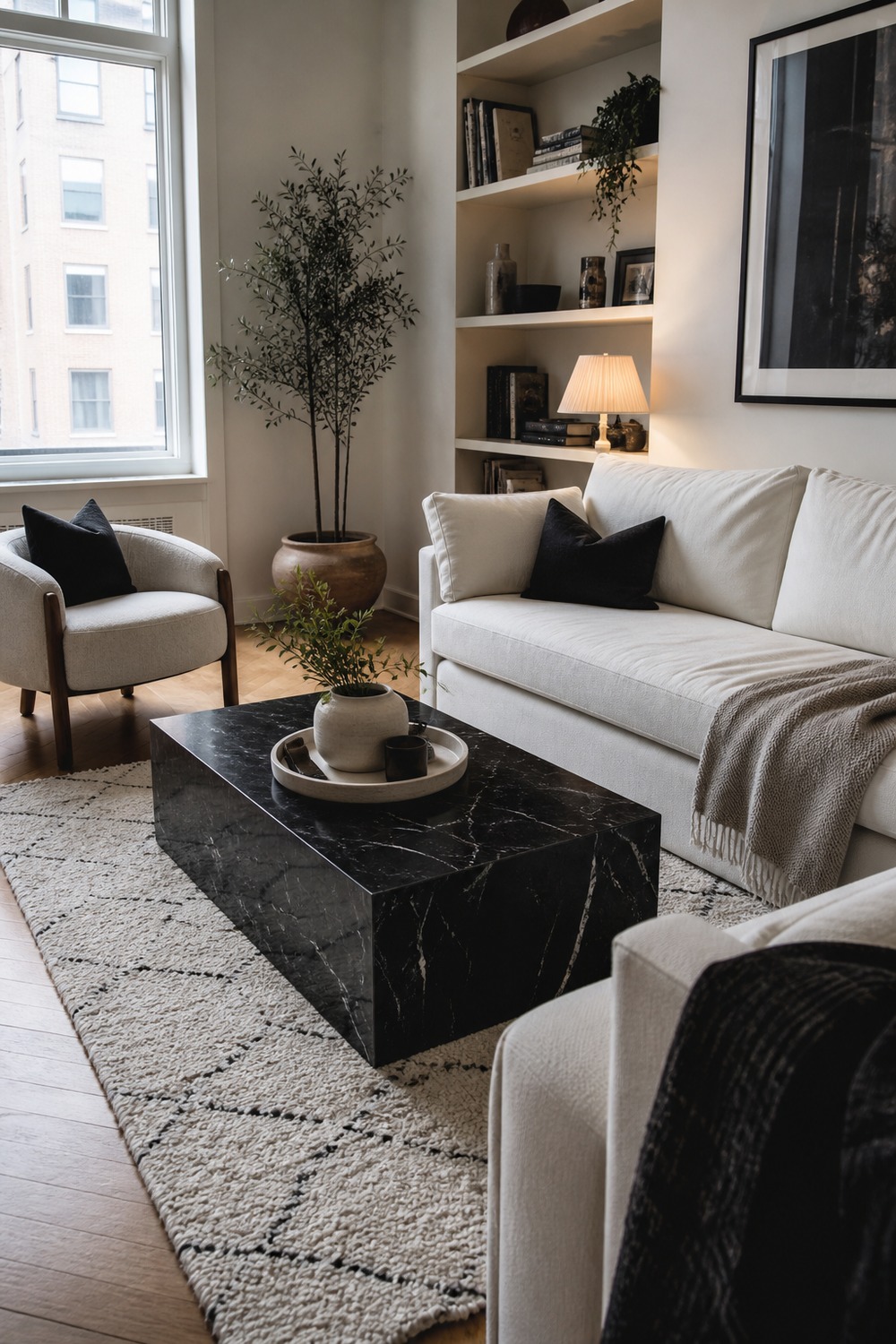
The black marble table gives this room a strong center without making the white sofa feel stark. I like the way the stone surface, pale upholstery, and small ceramic tray create contrast, but there is still enough softness from the rug and pillows for everyday lounging.
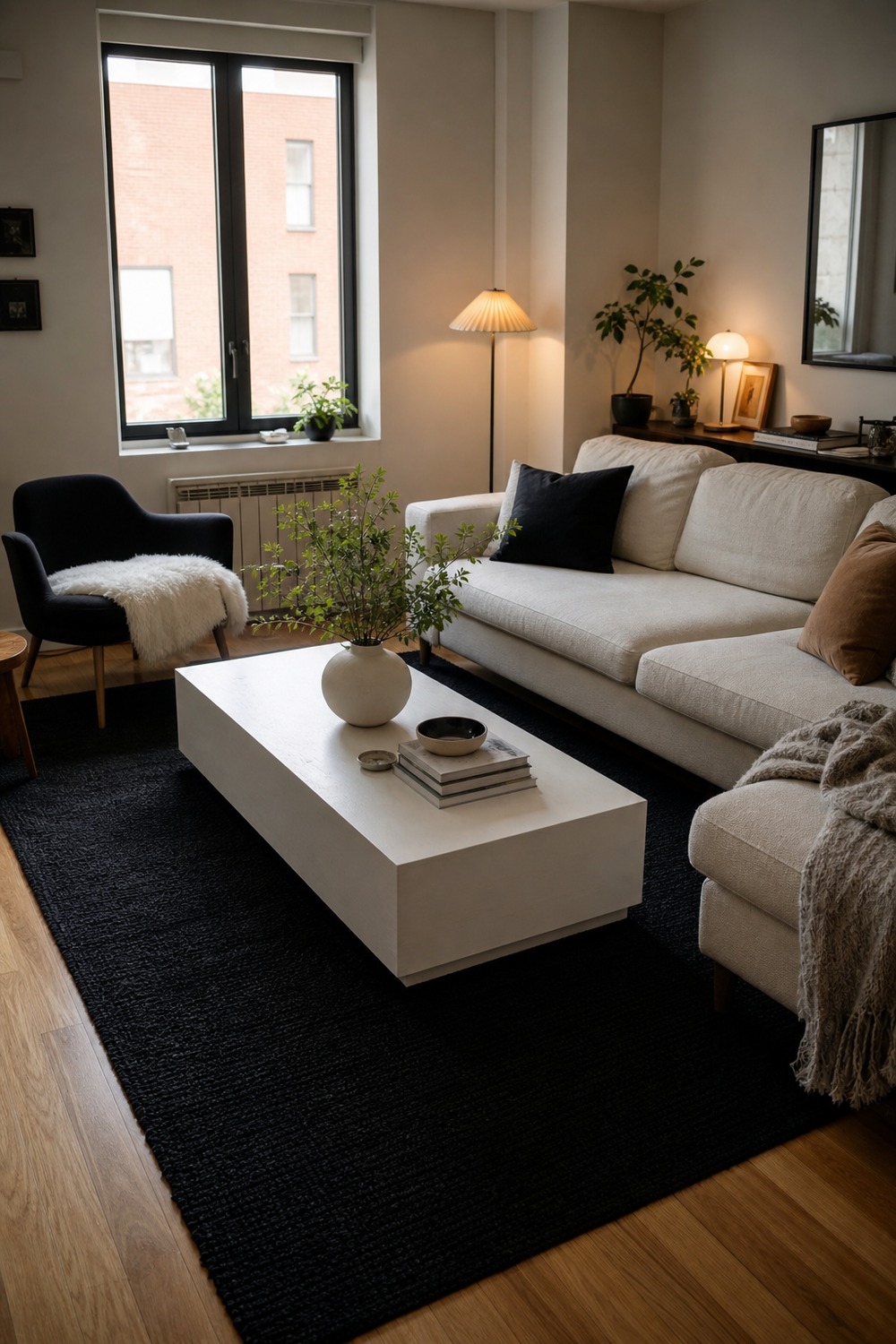
A white table on a dark rug is such a clean move when the seating area needs definition. The black rug frames the table like an outline, while the cream sectional keeps the room from feeling too heavy or graphic.
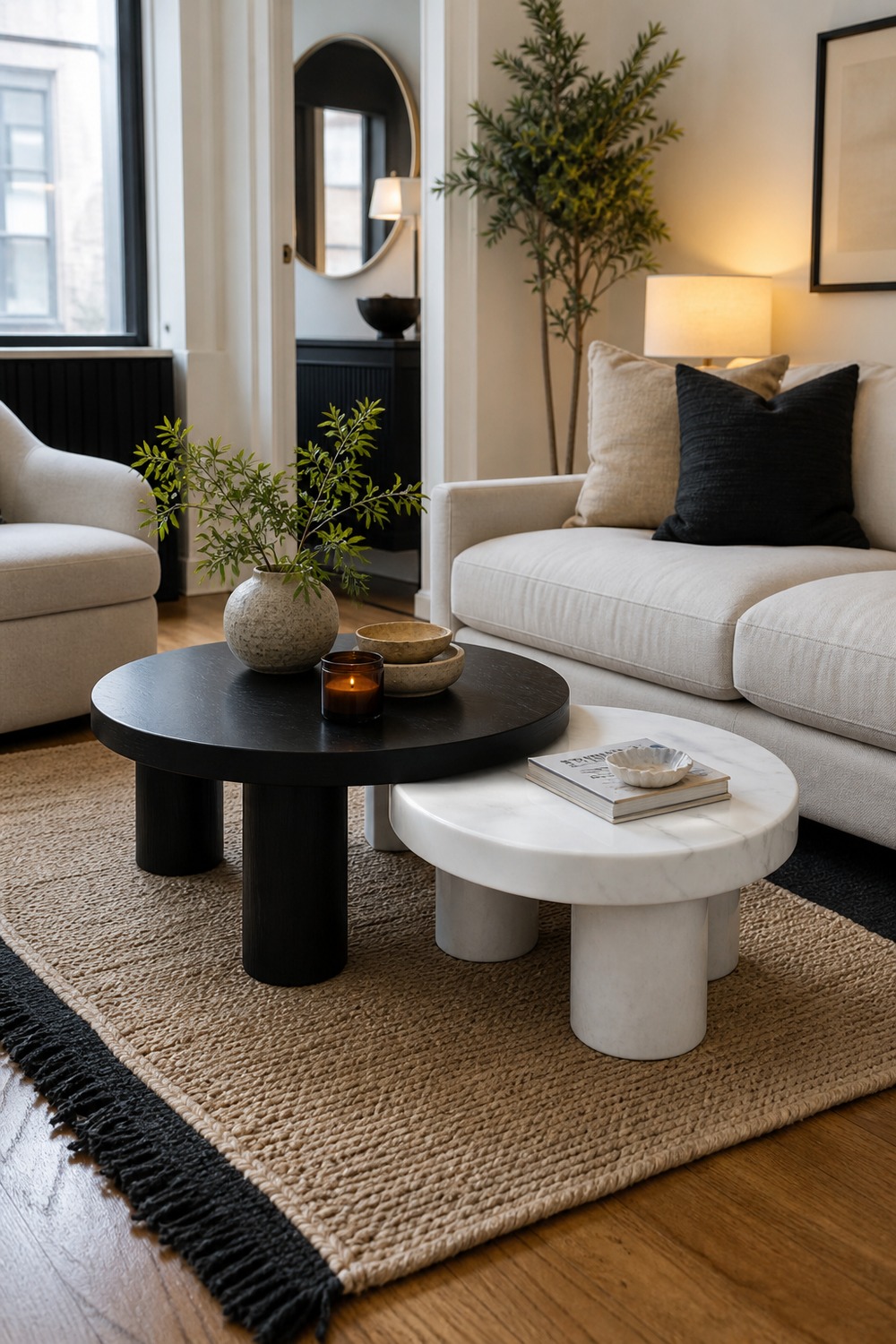
These two-tone nesting tables feel useful in a way a single oversized table sometimes does not. One piece can hold a tray or books, the smaller one can slide out for drinks, and the black-and-white mix keeps the layered shapes looking deliberate.
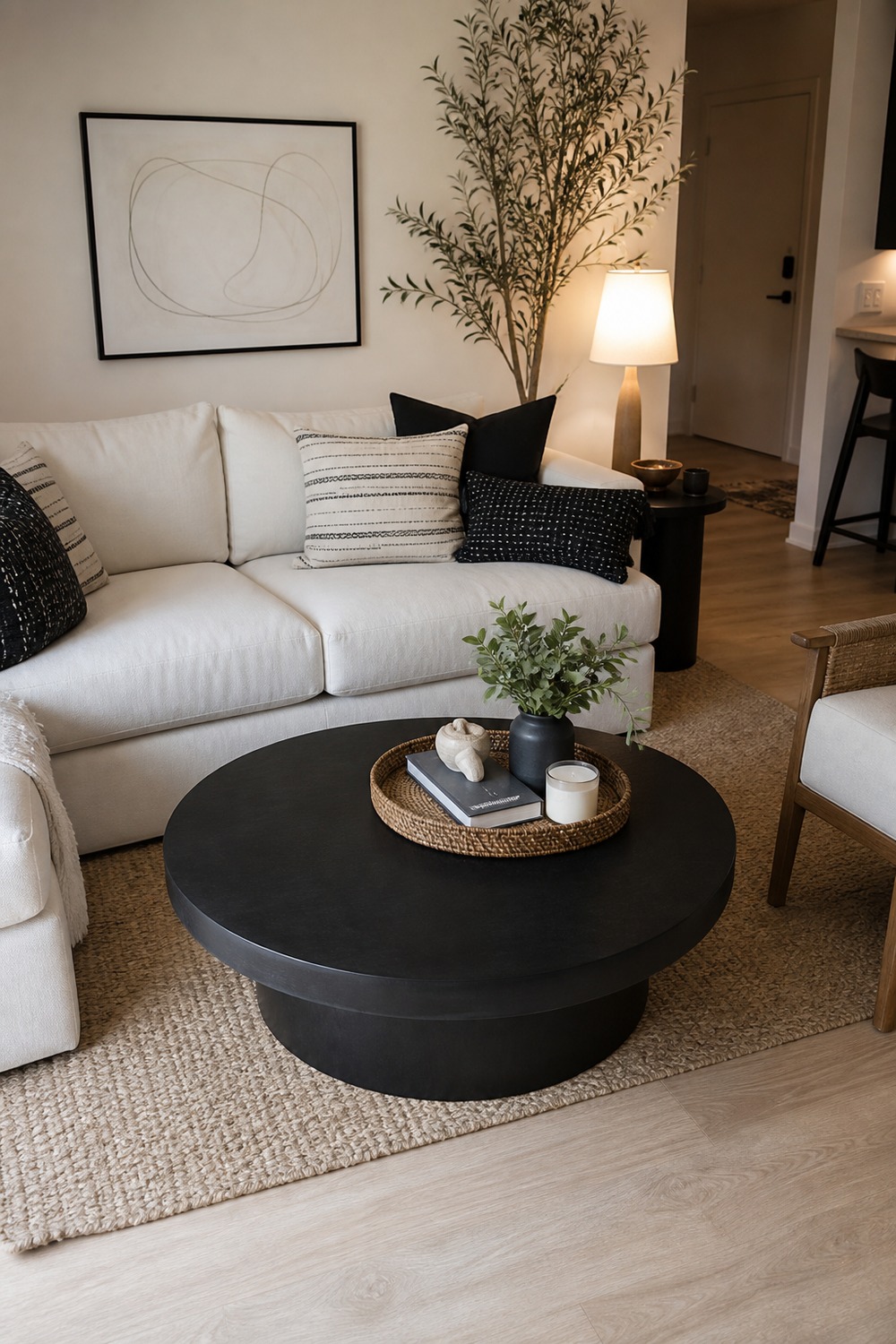
This round black table cuts through all the soft white seating in a really nice way. The shape matters here because it keeps the sectional area from feeling boxy, and the darker finish makes the middle of the room feel grounded.
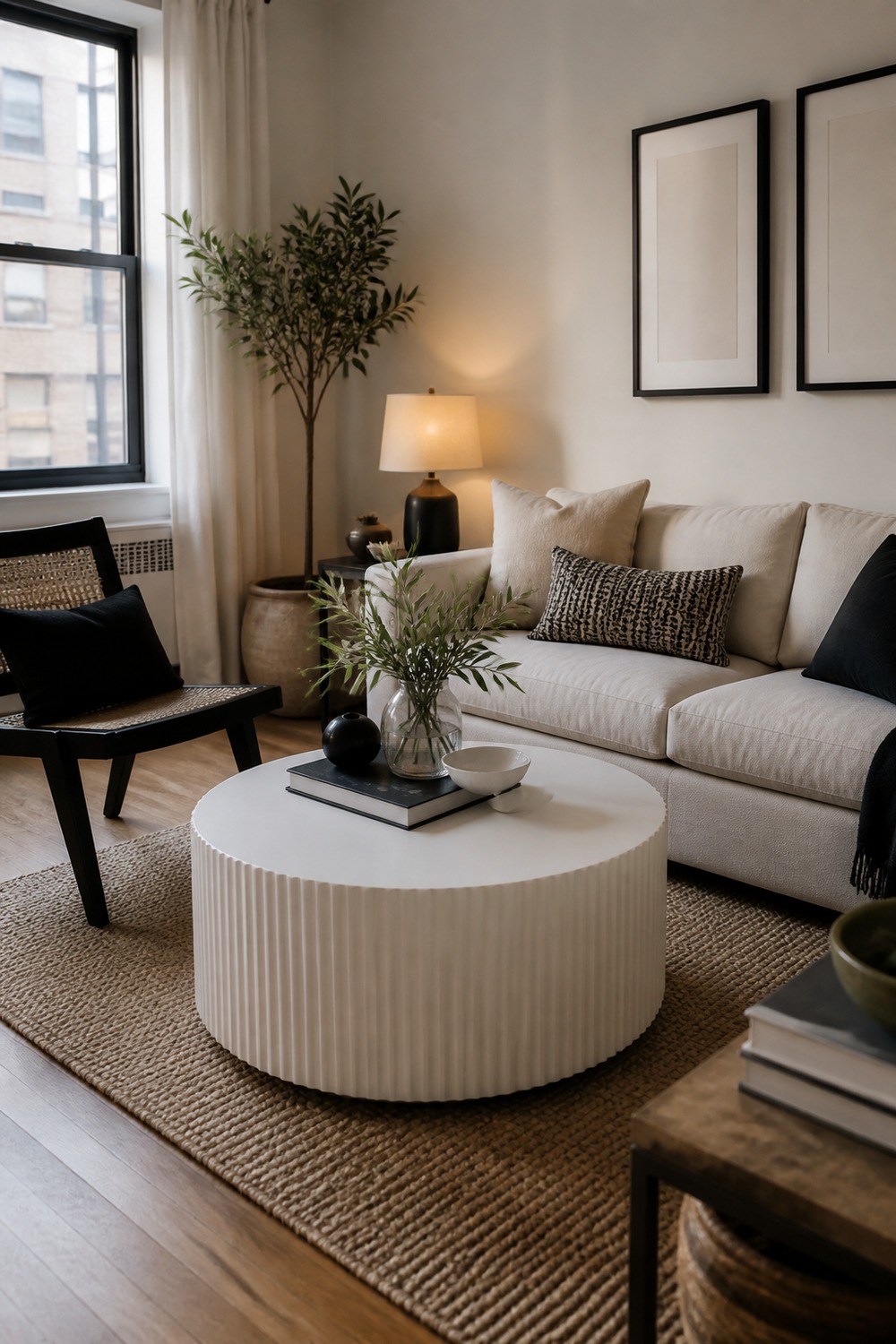
The fluted white table is the quieter version of a black-and-white living room. Instead of relying on a huge dark piece, the texture does the work, and the black chair and accents give it just enough edge.
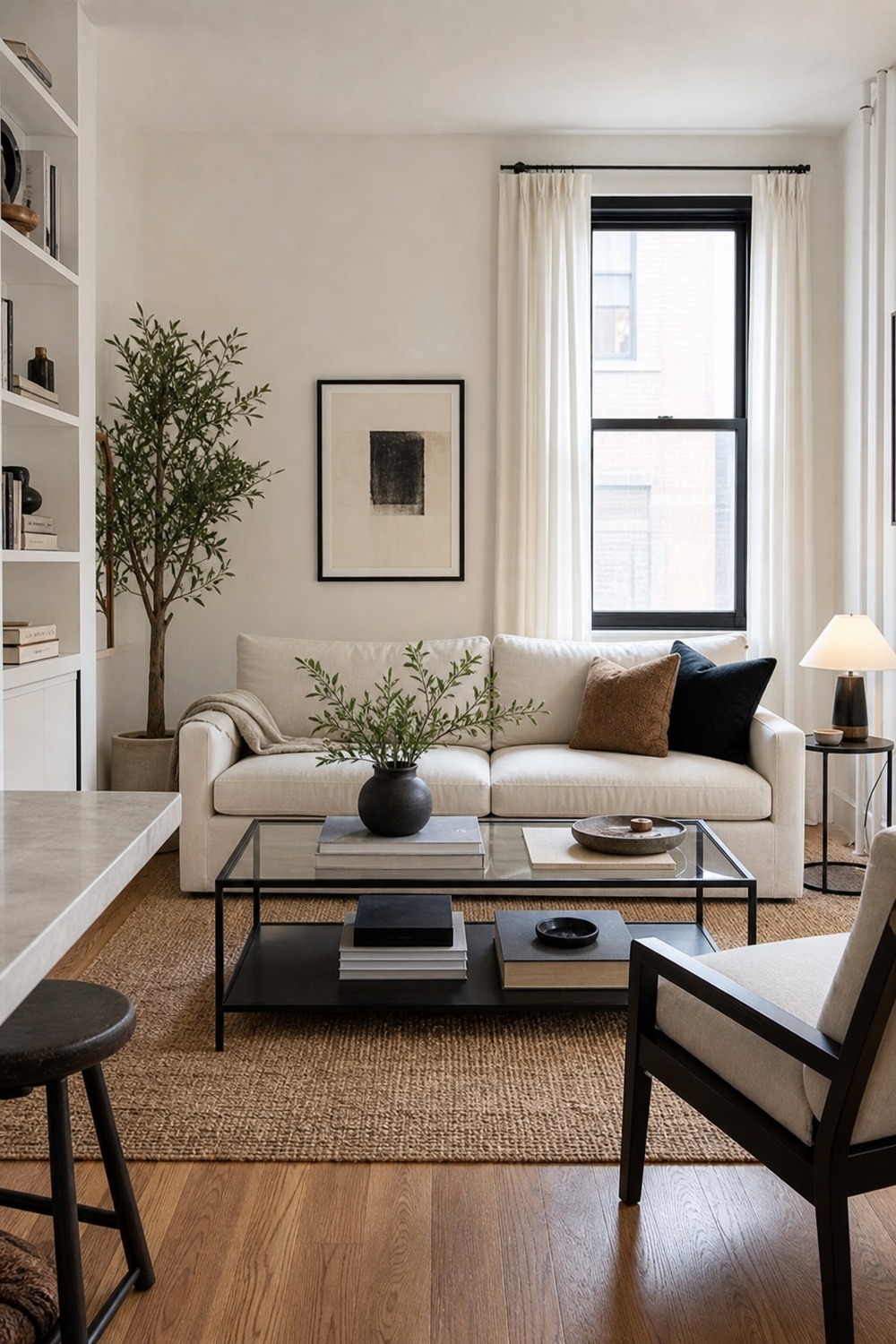
A slim black metal and glass table is a good choice when the room already has a lot of pale upholstery. It gives the coffee table a crisp outline without visually blocking the rug, which helps the space feel open but still finished.
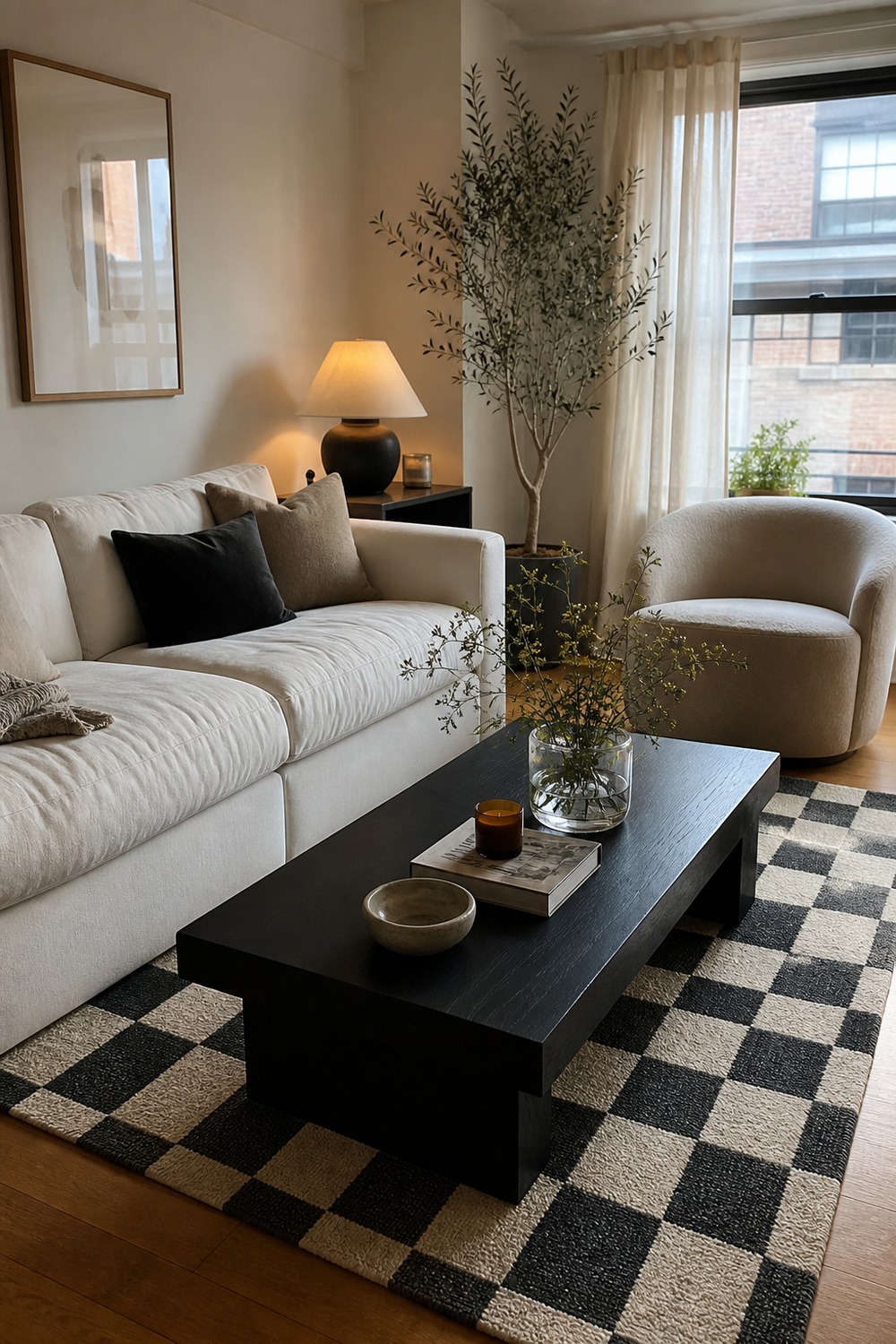
The checkerboard rug makes this setup feel more playful, but the simple table keeps it from going too busy. I like that the pattern sits low in the room while the table still leaves space for trays, remotes, and the normal stuff that collects in a living room.
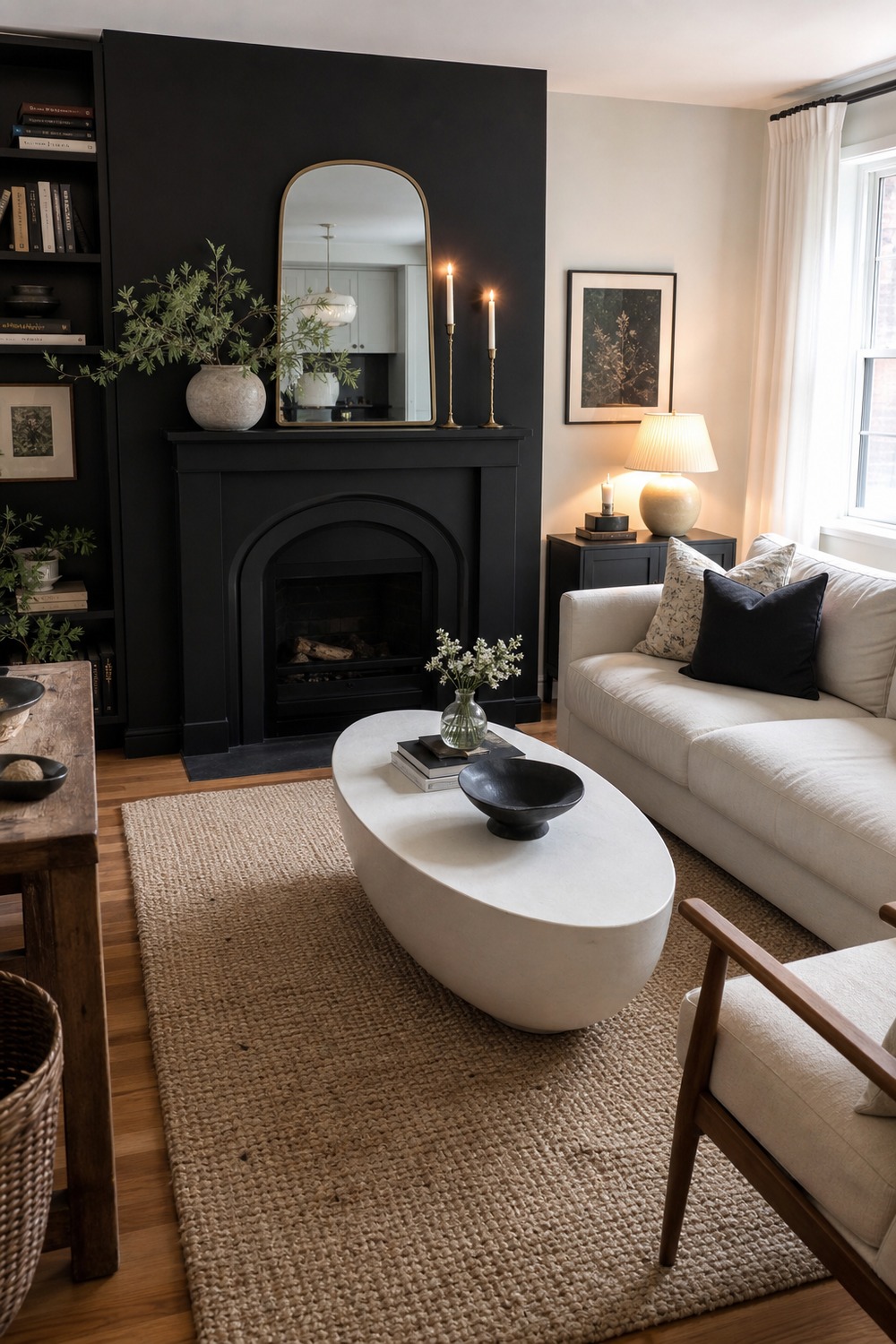
This white oval table works because it sits against a darker fireplace wall instead of disappearing into the room. The curved shape softens the black backdrop, and the sculptural bowl gives the table a styled focal point without adding clutter.
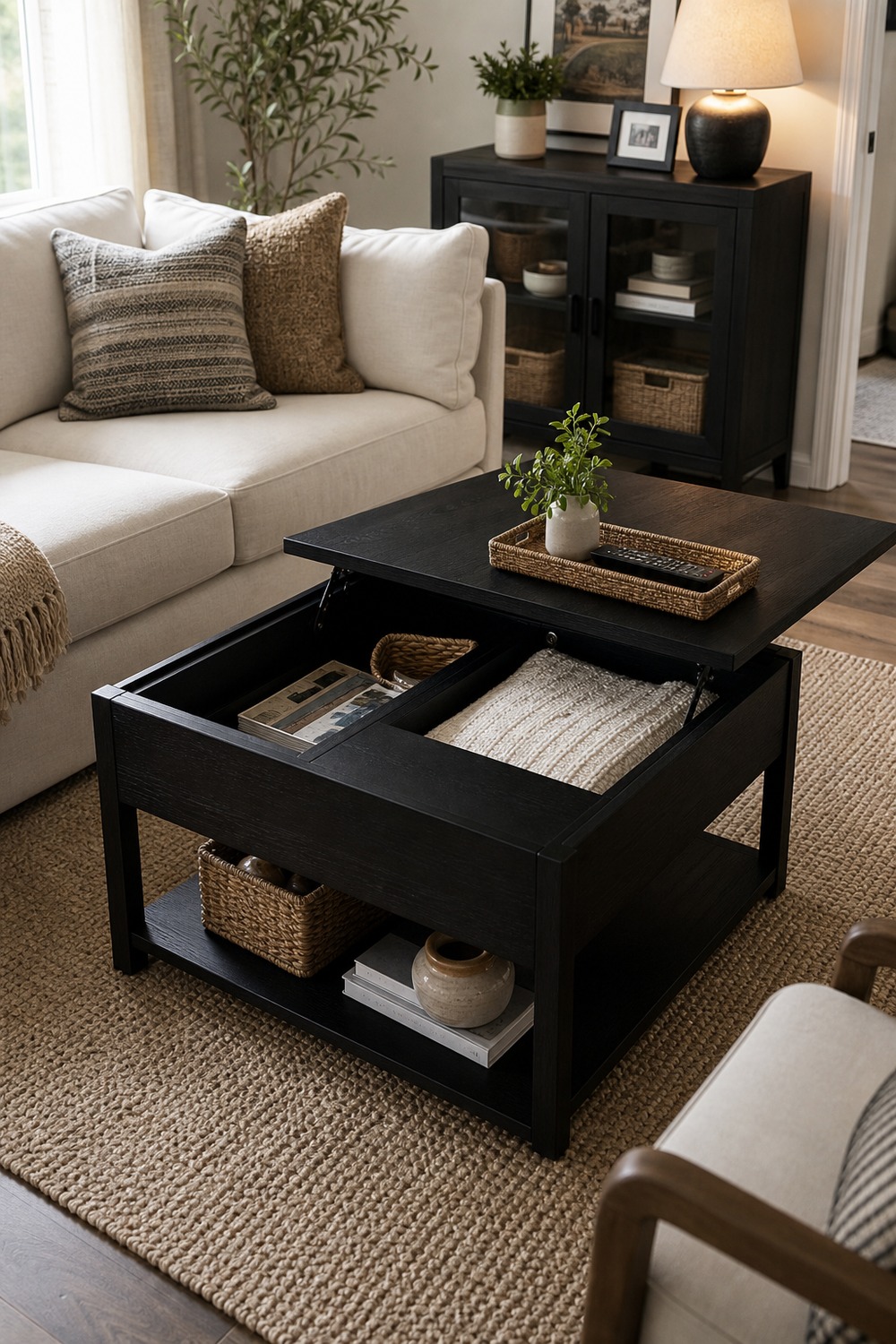
A square storage table is practical when the living room needs hidden function, not just a pretty surface. The black finish feels bold, but the lower shelf and clean top make it easy to imagine baskets, remotes, or magazines staying under control.
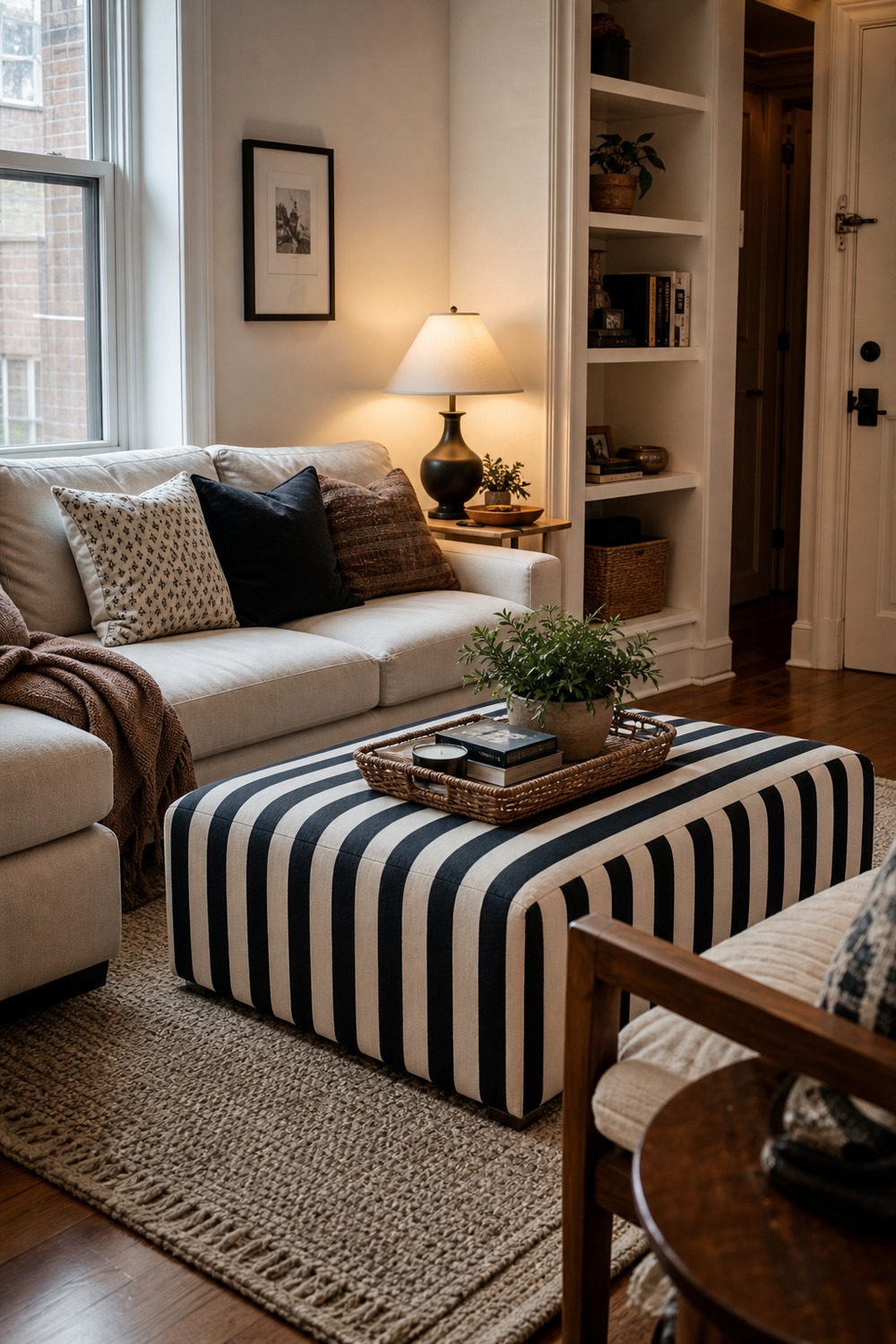
The striped ottoman-table brings in black and white without feeling too formal. A tray on top makes it usable for drinks or candles, and the soft upholstered shape is friendlier than another hard-edged table in front of the sofa.
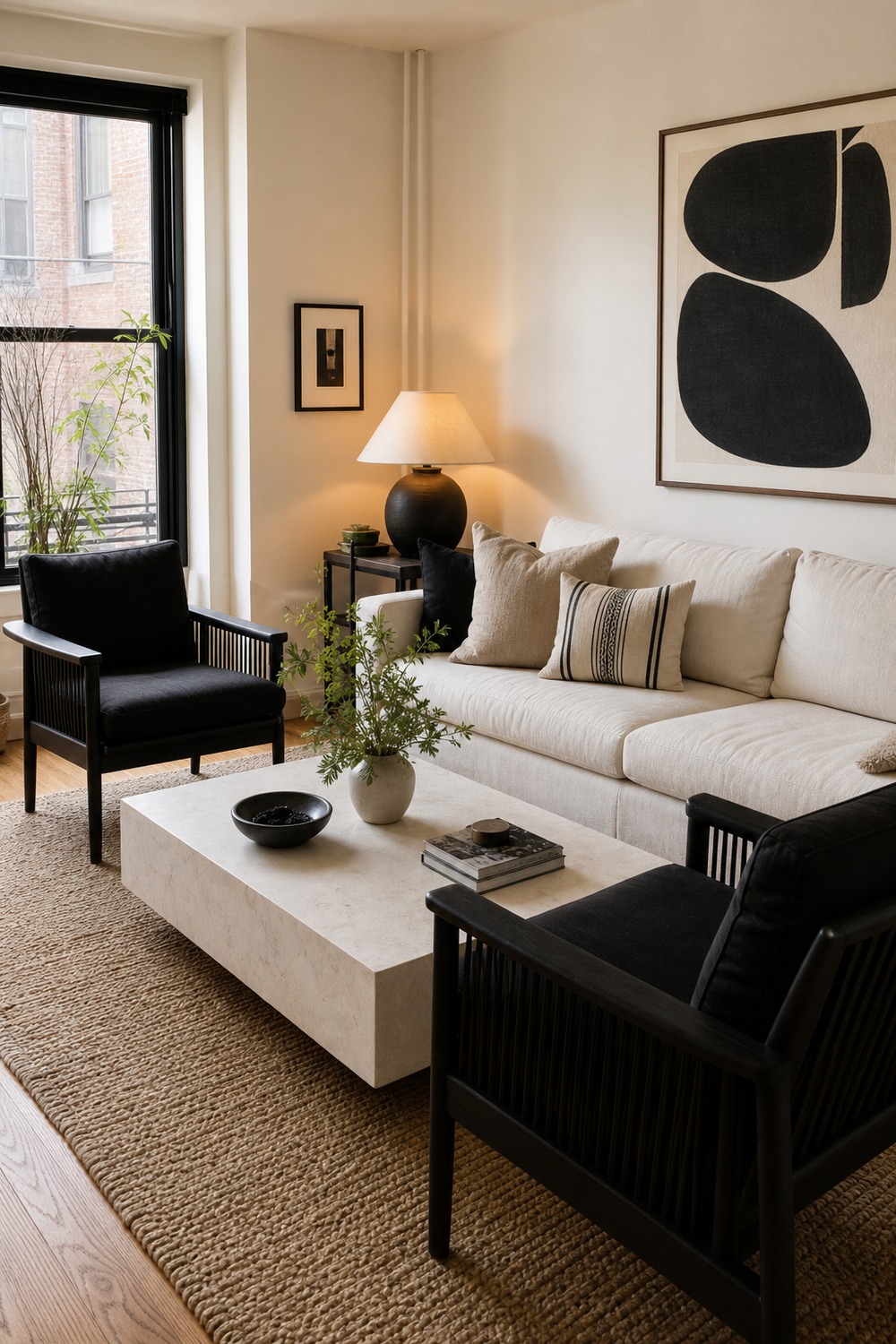
This chunky white slab table has a gallery-like look, especially with the black lounge chairs around it. What keeps it livable is the warm daylight and simple rug, so the room reads polished without feeling untouchable.
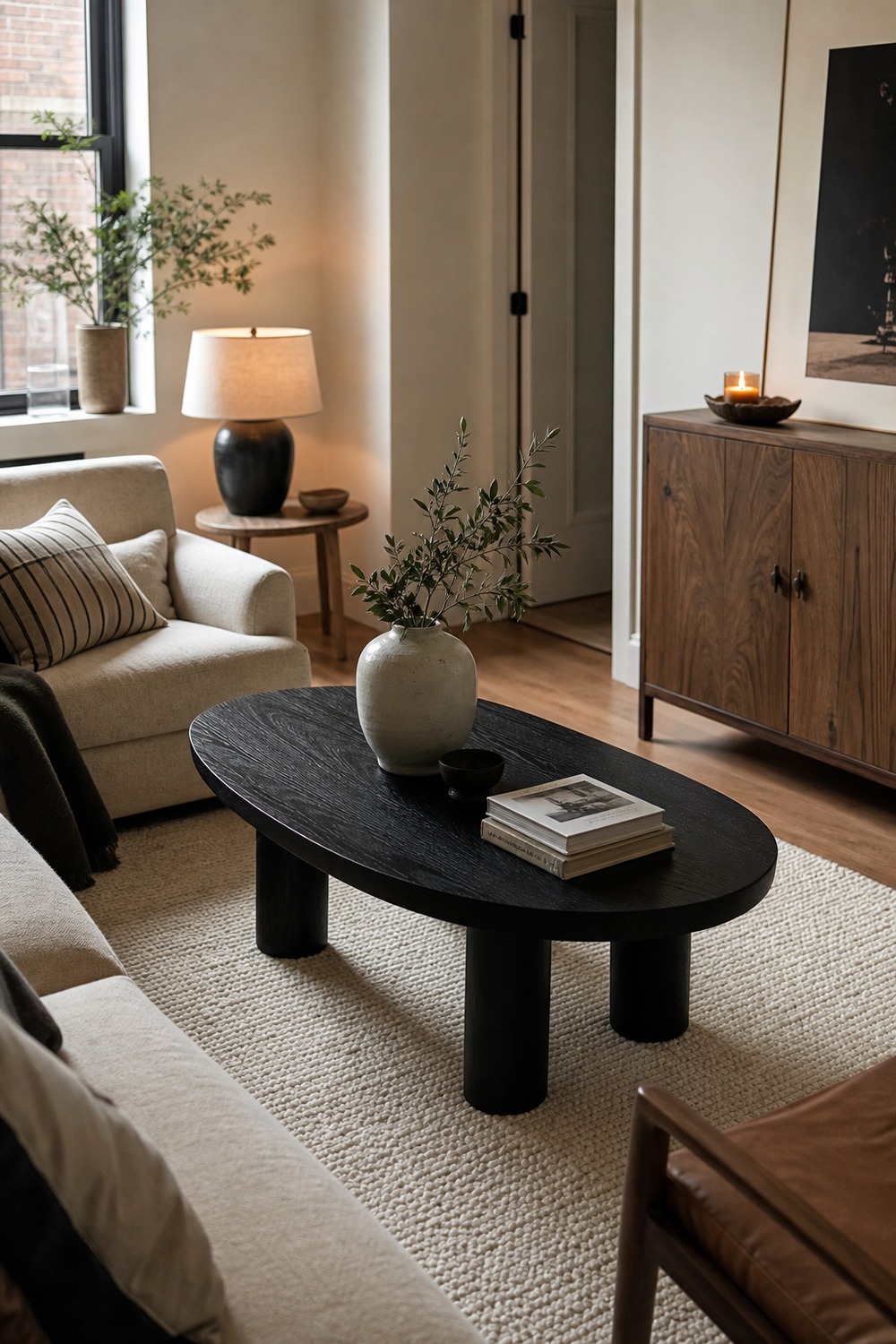
The black oval wood table is a nice middle ground between modern and relaxed. Its rounded edges help the white rug and linen sofa feel less rigid, and the darker wood tone makes the seating area feel anchored.
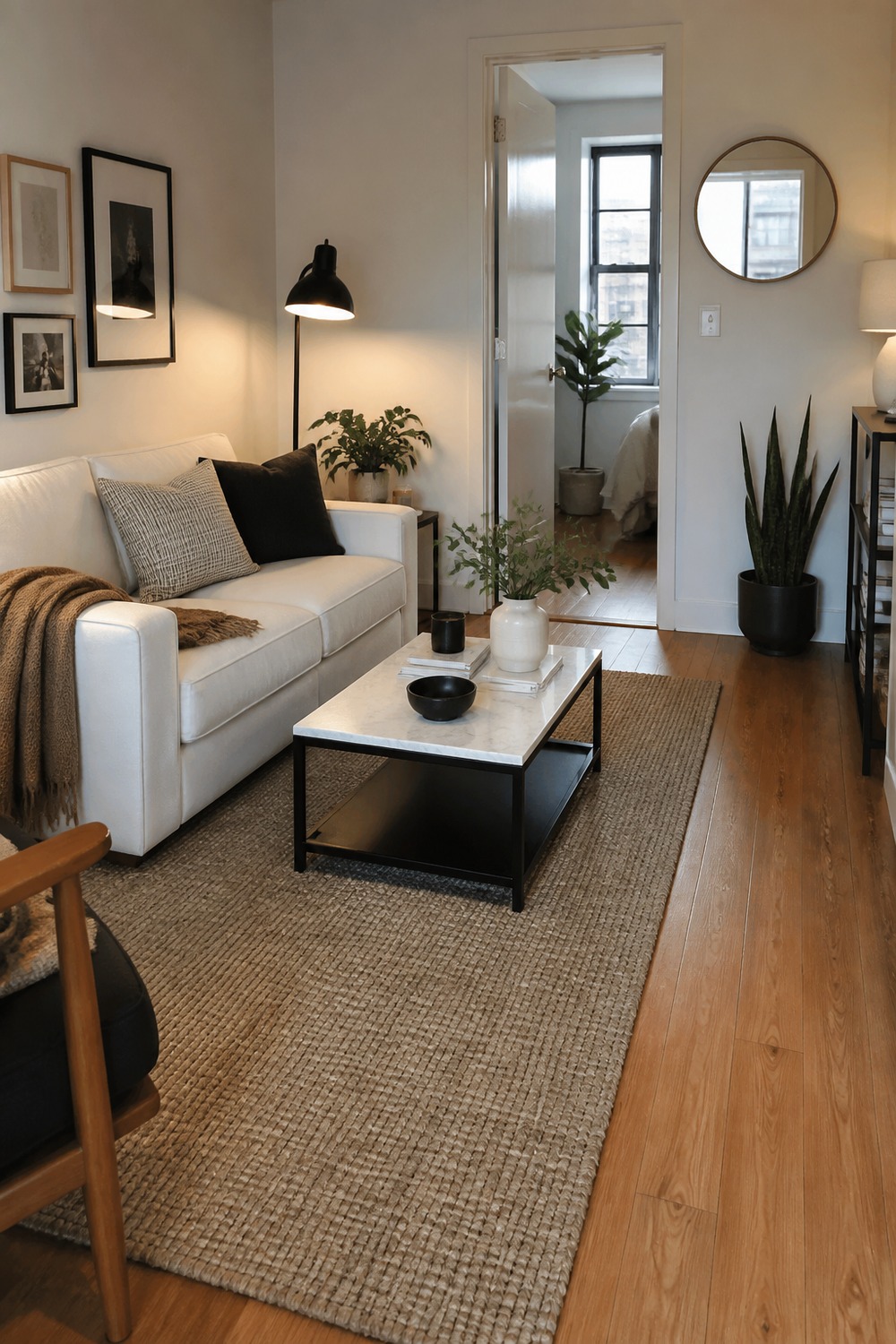
For a small apartment, this compact black-and-white table feels like the right scale. It gives the loveseat area a real center point, but the clear walking space around it keeps the room from feeling squeezed.
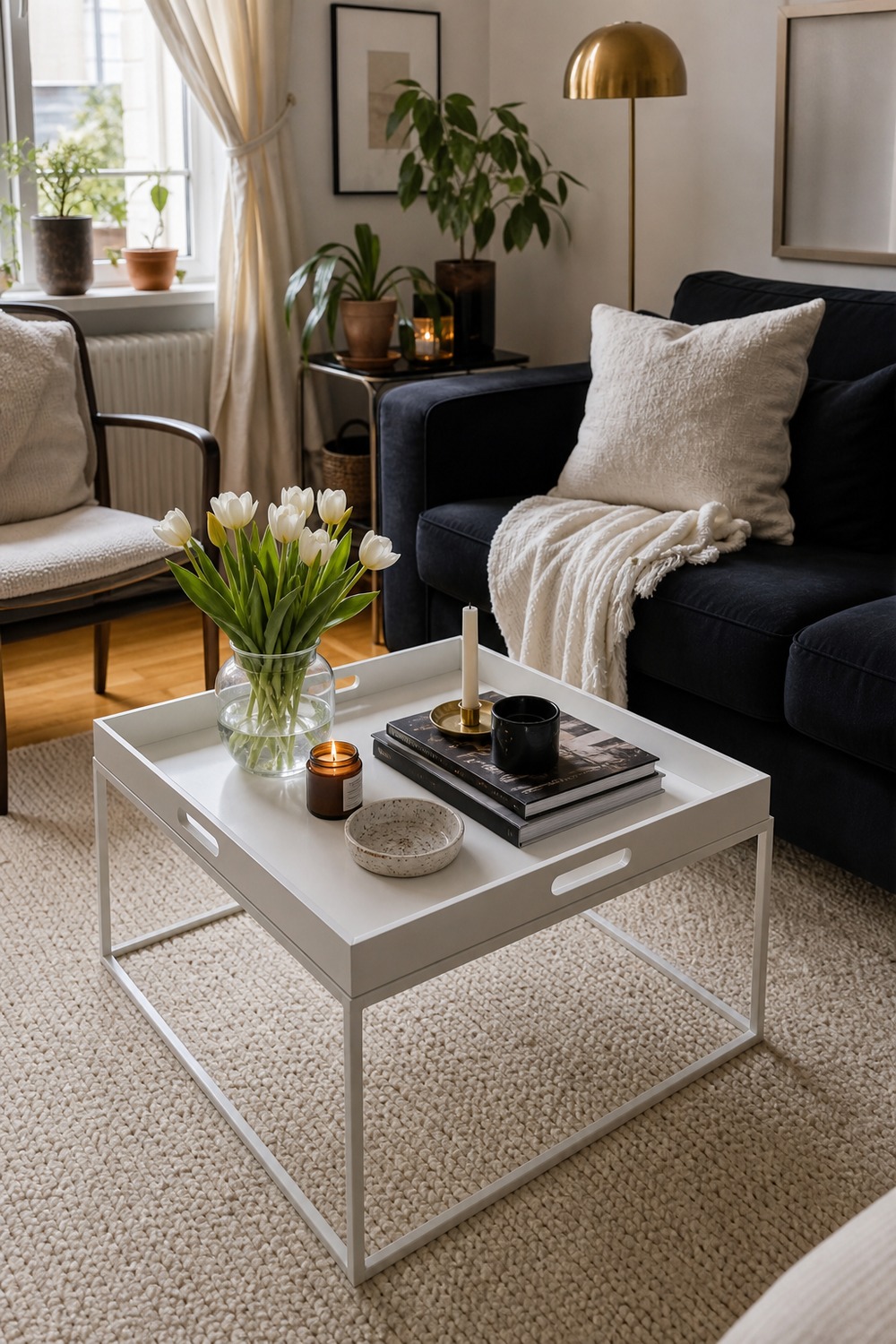
A white tray-style table next to a charcoal sofa is simple, but it has a lot of contrast. The raised tray edge is useful for mugs or books, and the brass lamp warms up the black-and-white palette so it does not feel flat.
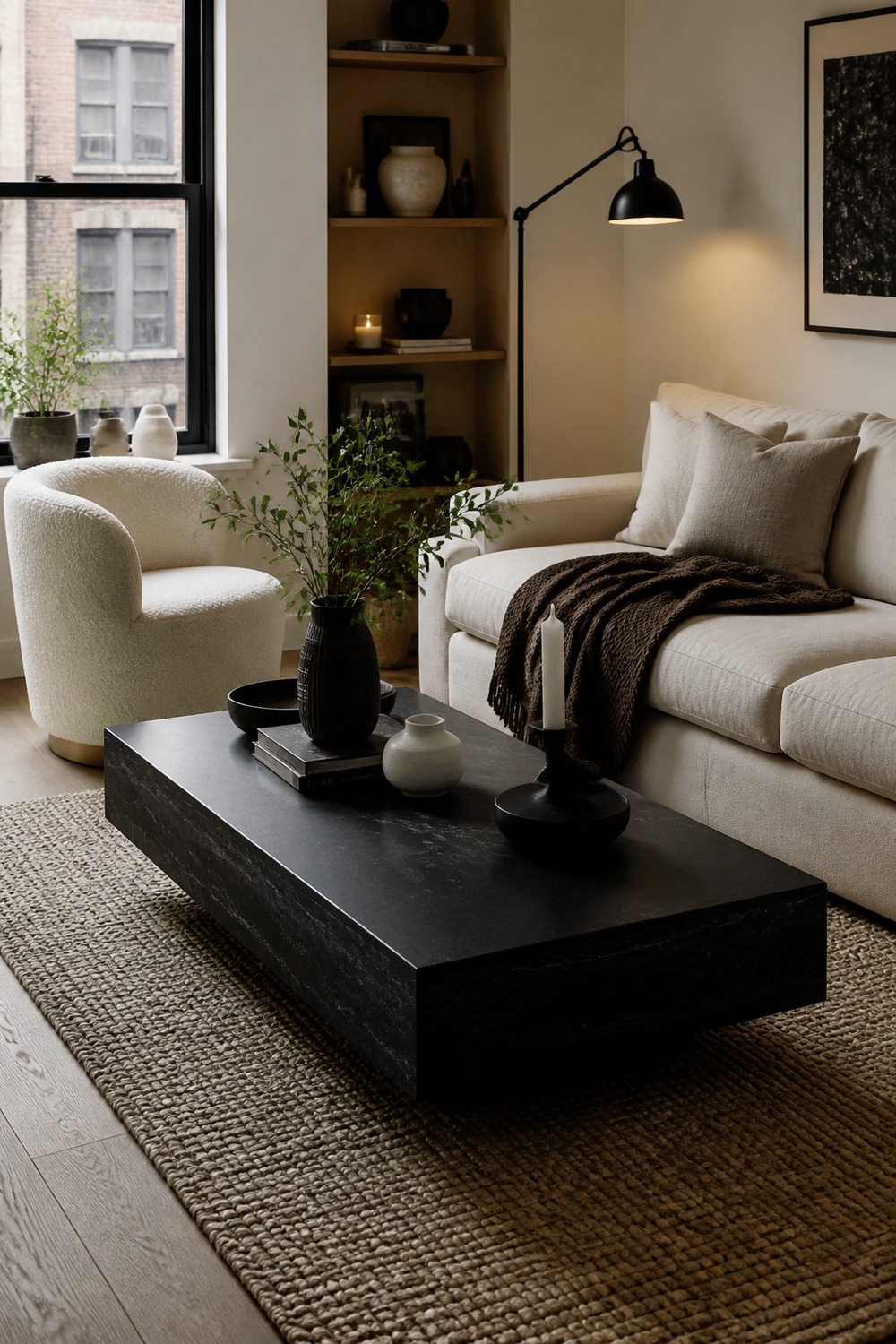
The low black stone table adds weight in the best way against the boucle seating. I like the mix of rougher stone, soft white fabric, and neutral rug because it makes the contrast feel textured instead of just color-blocked.
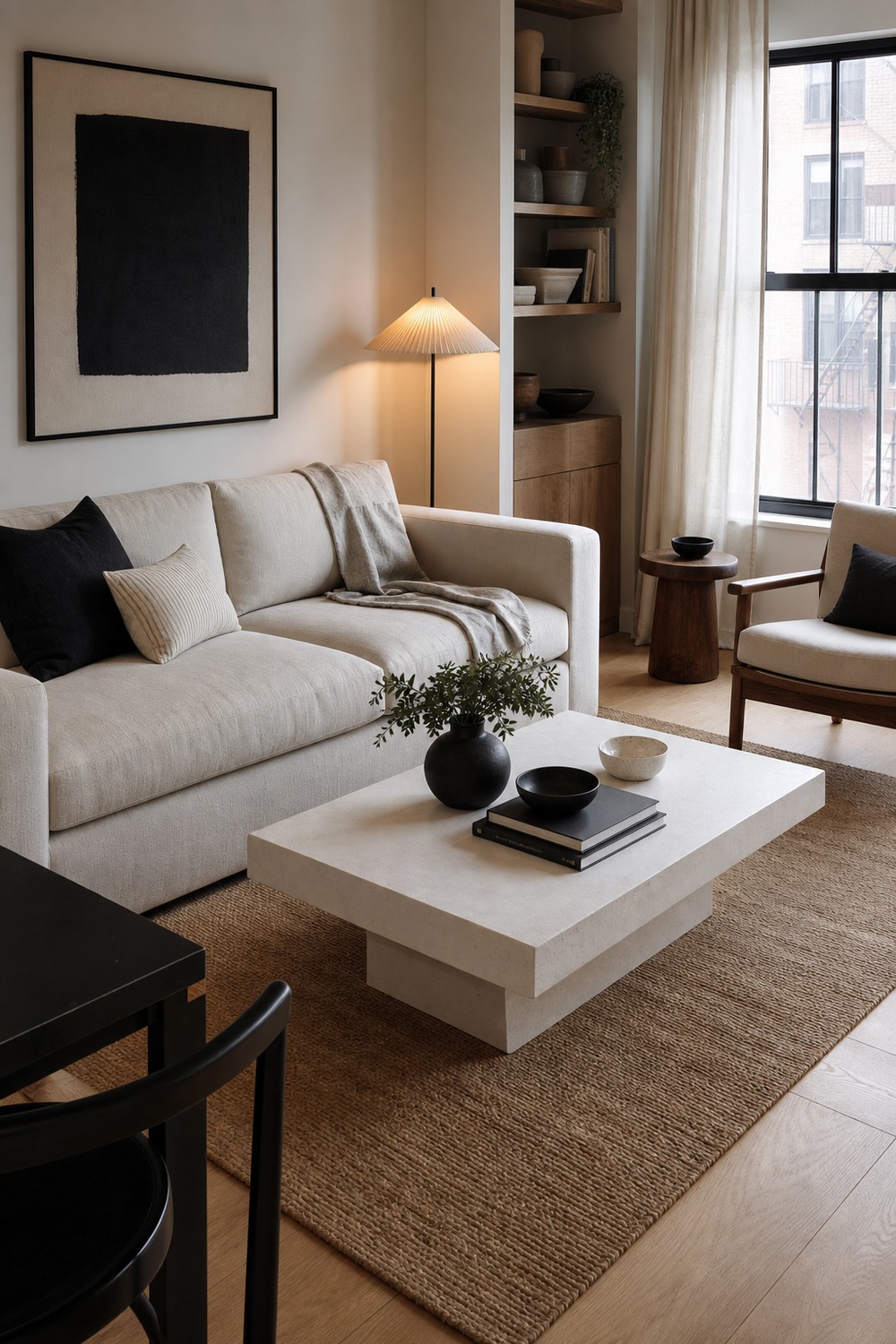
This minimal Japandi-style room keeps the black-and-white idea calm. The table is light and simple, but the dark accents, woven rug, and clean sofa lines give the whole setup enough structure.
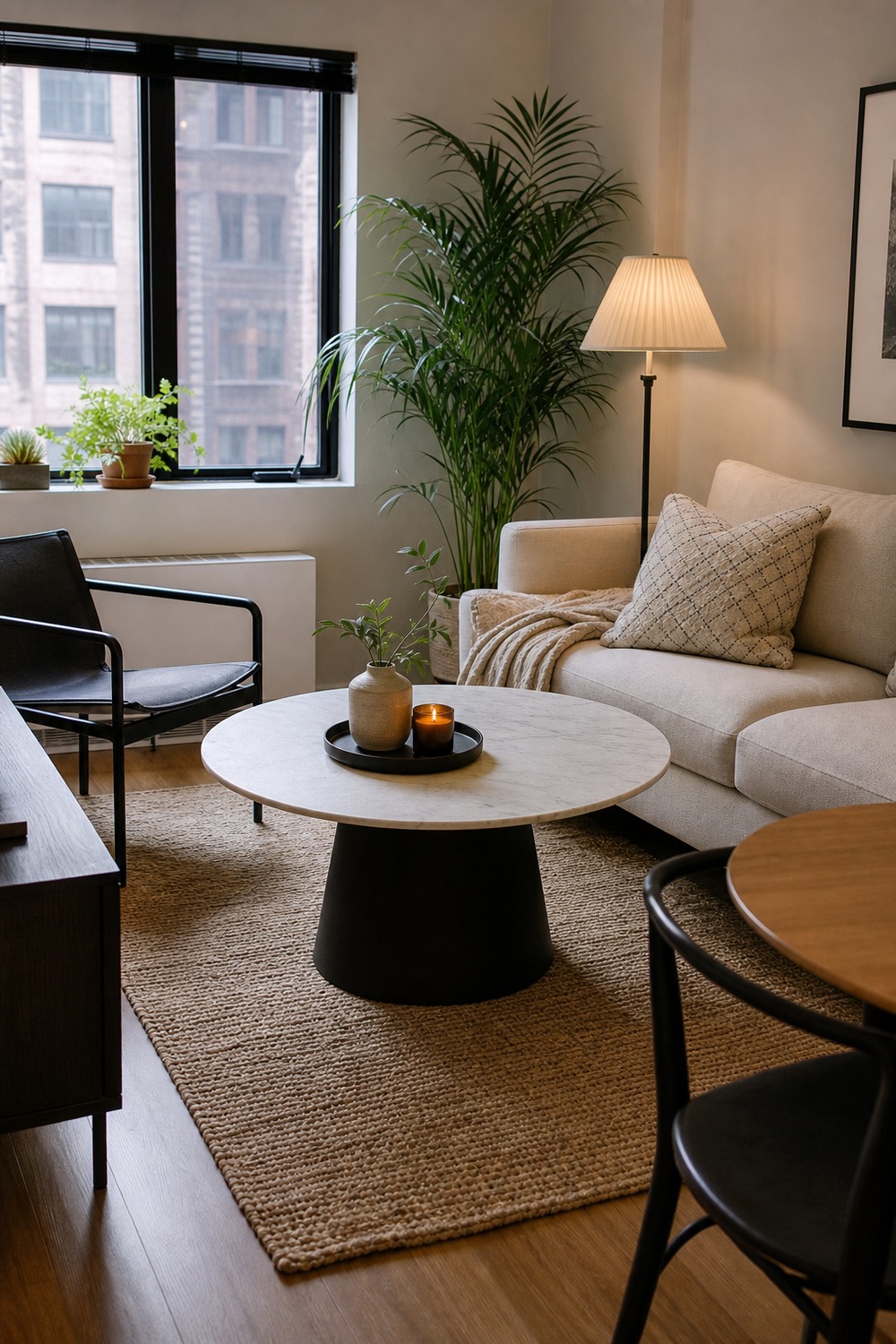
A white top with a black pedestal base is a smart way to get contrast without choosing a fully dark table. The round shape leaves easier movement around the sofa, and the black base ties back to the chair frame.
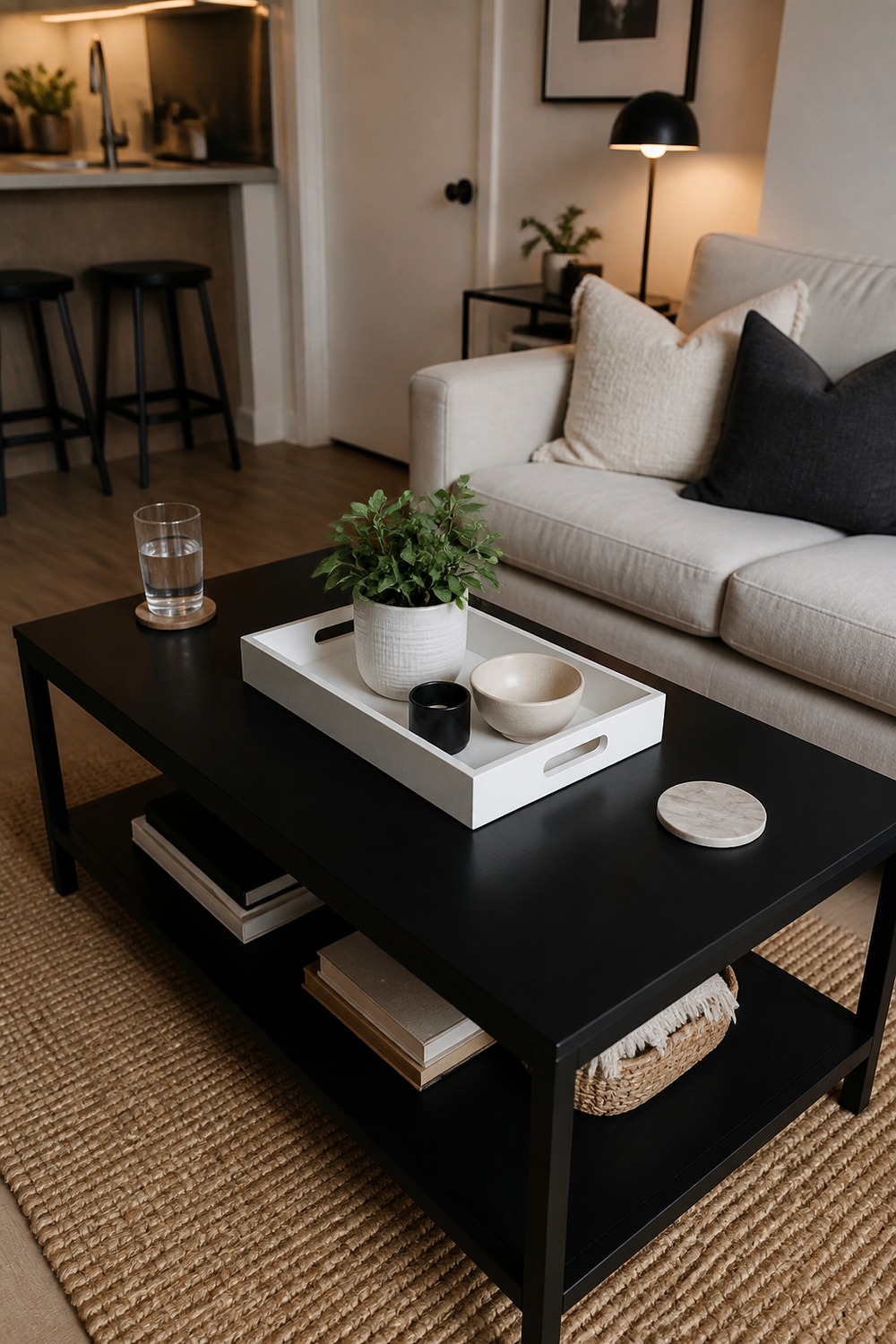
This black rectangular table looks best because the white tray breaks up the surface. It gives the room a spot for books, a plant, and remote-control clutter while still keeping the top from feeling like one big dark block.
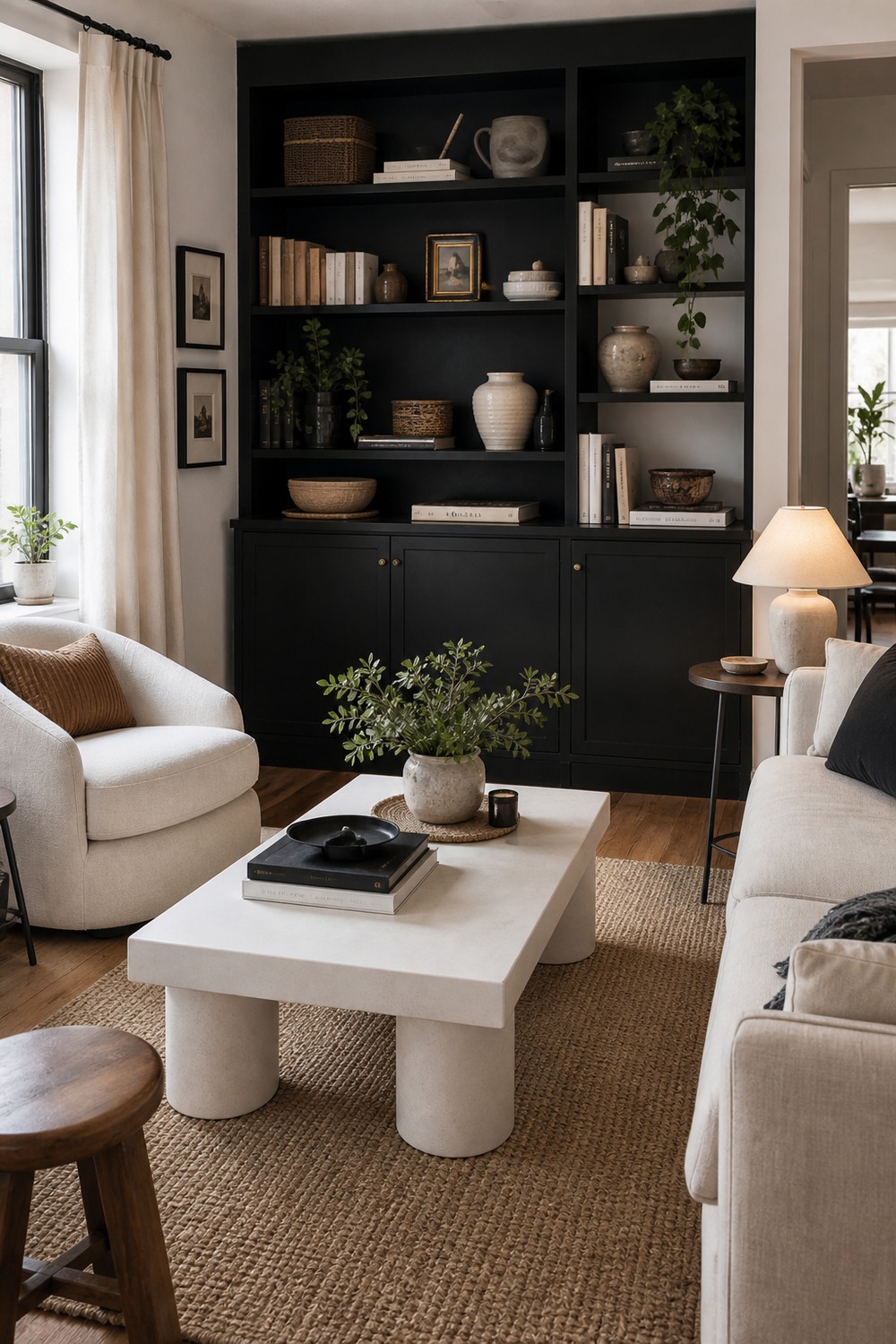
The white coffee table feels brighter because it is placed in front of black built-ins. That background contrast makes the table stand out, while the cream seating and subtle storage keep the room from looking too severe.
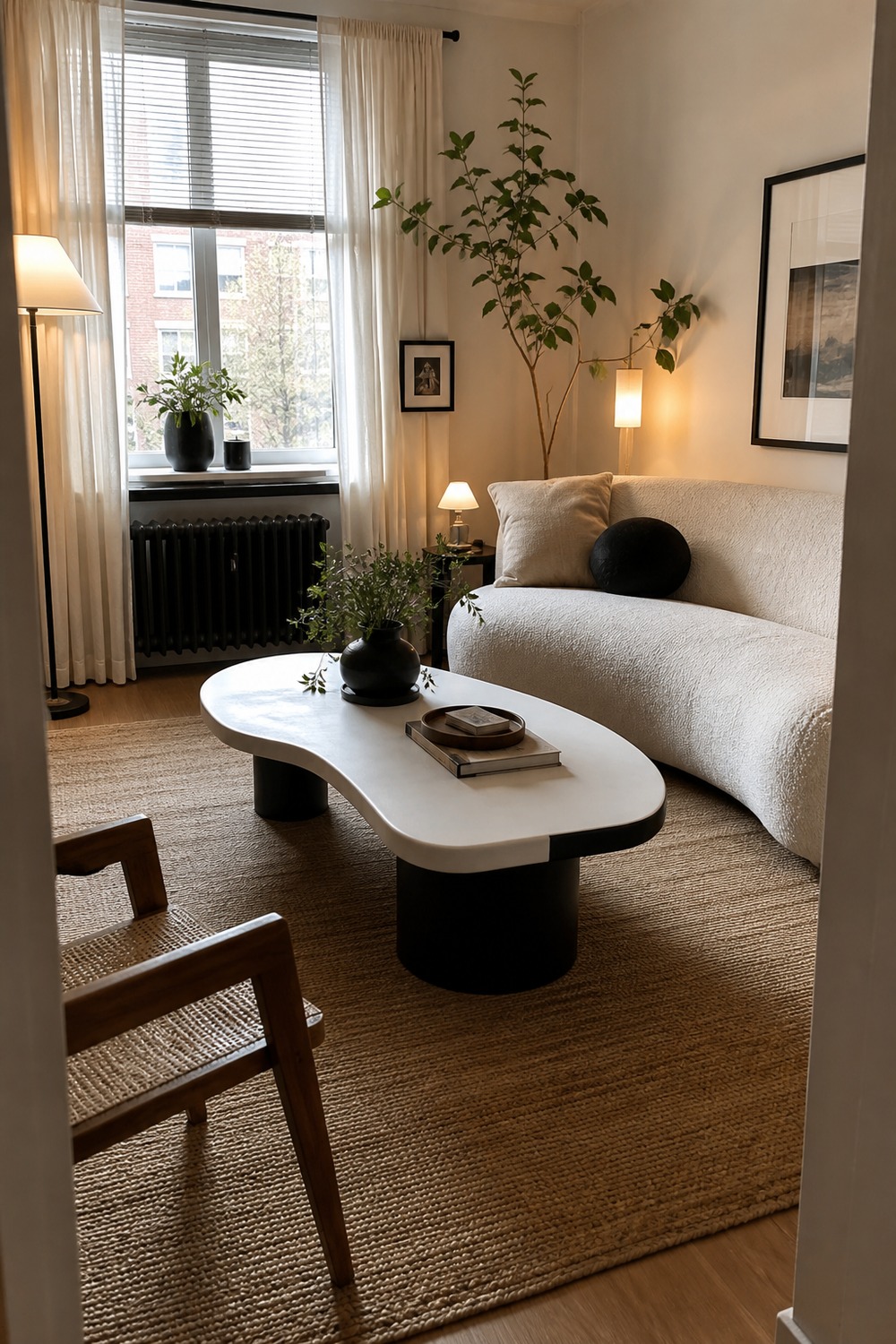
A sculptural black-and-white table is the kind of piece that can carry a simple living room. The trick is keeping the rest of the scene quiet, and here the curved sofa and neutral rug let the table be dramatic without fighting everything else.
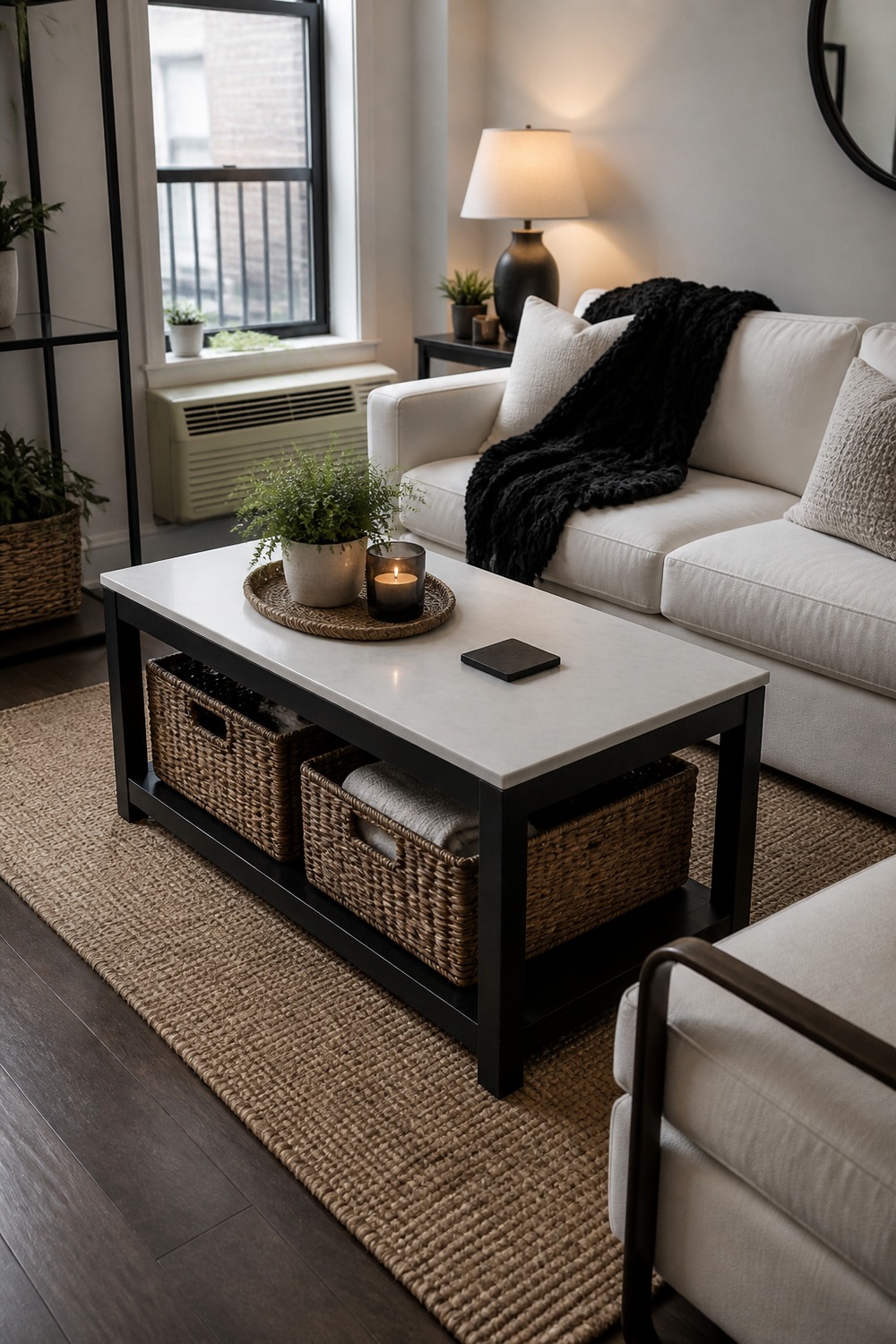
The basket storage under this monochrome table makes the whole idea feel more realistic to me. It still has the black-and-white look, but there is an actual place for throws, games, or loose living-room extras.
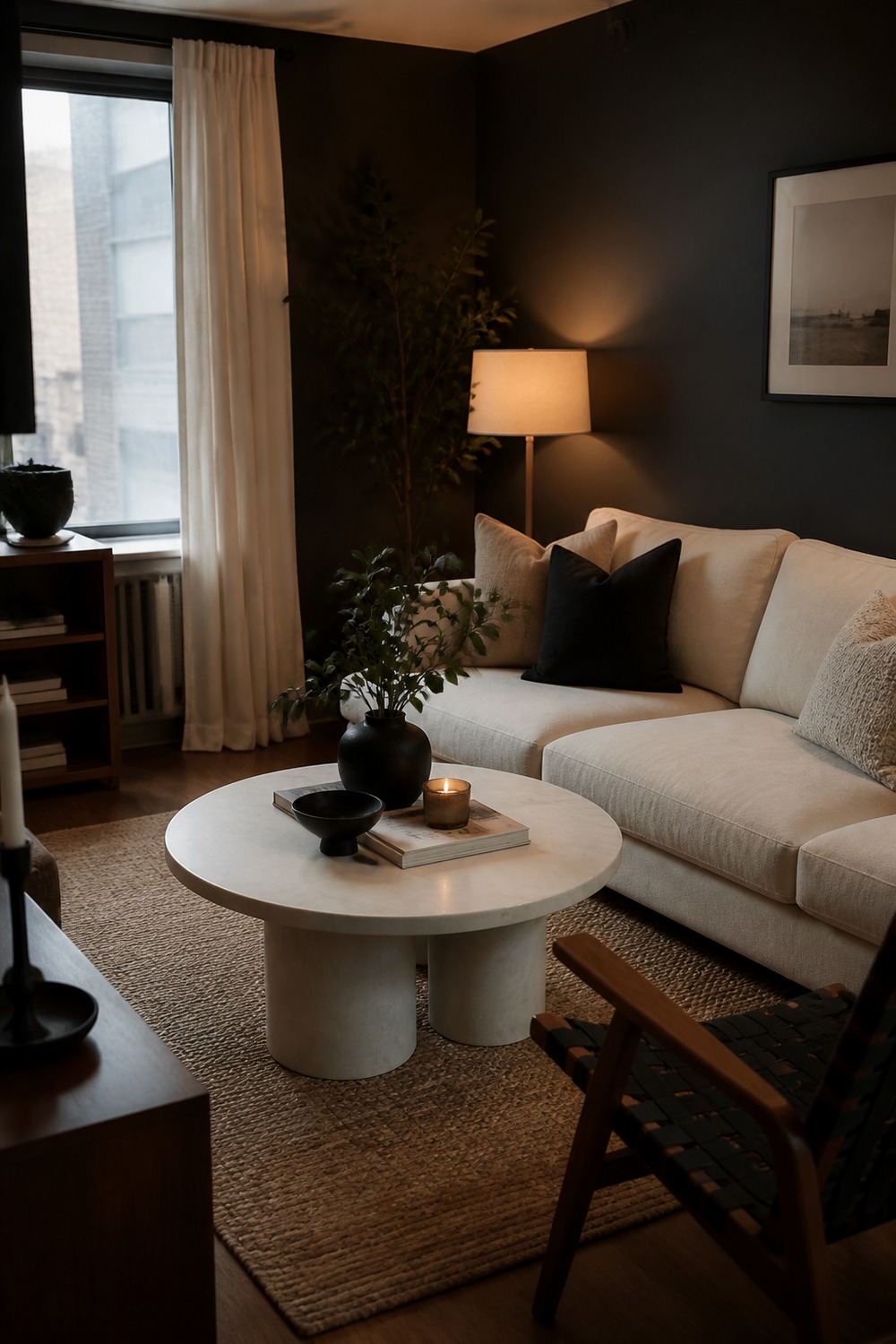
This white round table pops because the wall behind it is so dark. The contrast is bold, but the cream sofa and simple black accents keep the room feeling balanced instead of harsh.
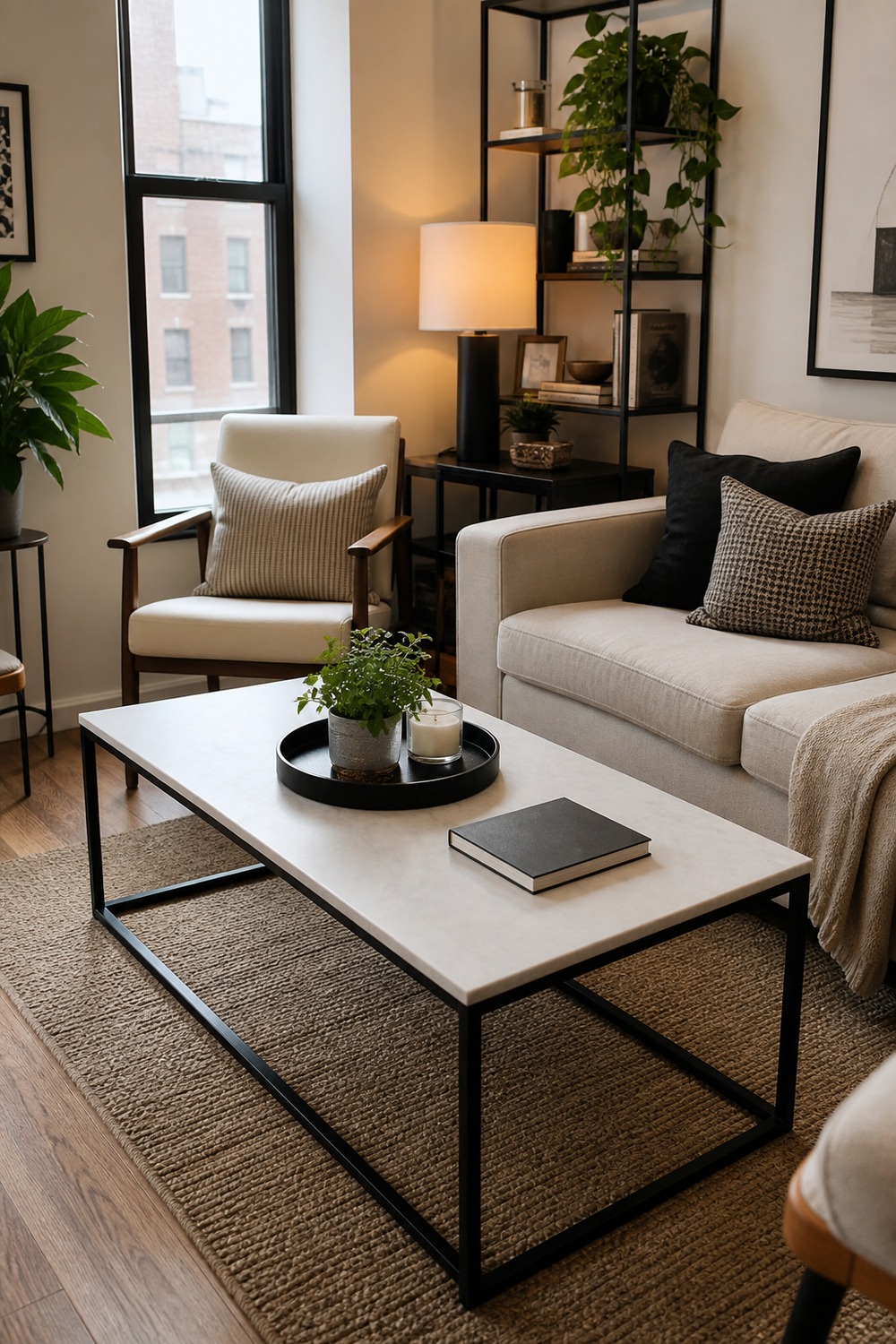
A black frame with a white tabletop is a clean choice when you want contrast but not a heavy solid table. The frame adds structure, the white top keeps things light, and the rug edge helps the table feel connected to the rest of the seating area.
A black and white coffee table works best when it feels connected to the rest of the room, not dropped in as a random contrast piece. Shape, rug color, storage, and a few soft details make the difference between sharp and cold.
Leave a comment